

Tag: Writing Tips

  • Next Level Strategies New Genres with an Established Author Platform

    Is your Author Platform Ready for the Next Level?

    In publishing, your author platform is your most valuable marketing asset. When writing across genres, it needs strategic adjustment to keep your audience, not reconstruction.

    How high does the sound board go? 11!

    The publishing industry rewards specialization, but creative writers rarely stay in a single lane. You’ve invested years building your author platform—your website, social media presence, and newsletter subscribers. Now, as you venture into a new genre, you face critical marketing decisions that will determine whether your existing audience follows you or falls away.

    Plans, hammer, house

    Grab your tool belt, writers, because we’re going to build onto that already established Author Platform with 5 great tools to help you hold onto your audience!

    The Multi-Genre Marketing Challenge: Industry Reality

     Professional authors understand that genre-switching creates specific marketing challenges. Industry experience suggests that without intentional platform adaptation, many readers don’t automatically follow authors to new genres—your thriller fans won’t necessarily pick up your romance novel simply because they enjoyed your previous work. This isn’t merely about announcing a new book—it requires strategic repositioning of your entire author brand within the publishing ecosystem.

    Under, construction, man, stairs, yellow

    Your Author Platform Blueprint

    1. Conduct a Platform Audit (Foundation Check)

     For this essential marketing exercise, systematically evaluate your website, email list, social media presence, media coverage, and author branding through two critical lenses: current effectiveness and genre flexibility.

    Your website might excel at showcasing your historical fiction but may lack architecture for your new romance titles. Your email marketing strategy might need to be targeted to these specific, and different, readers rather than general broadcasts. Possibly your author branding is overly tethered to your original genre, creating invisible barriers for potential readers of your new work.

    Authors who endure recognize that platform development isn’t just about growth—it’s about strategic alignment with your full creative range. This audit forms the foundation for all subsequent marketing decisions.

    2. Author-Centered Rebranding

    Your most valuable marketing asset transcends genre boundaries—it’s your unique authorial identity and worldview.

    Strategic Implementation: Create an “About the Author” narrative that emphasizes your creative journey across genres. Thriller author Gillian Flynn exemplifies this approach by positioning herself as exploring “the dark side of human psychology” rather than simply identifying as “a thriller writer,” maintaining brand consistency while writing across multiple market categories.

    Update your website architecture to showcase YOU as the central brand rather than a specific genre. Consider repositioning language: “Author of dark fiction and young adult romance exploring how we form profound connections in our lives.” This represents two genres while maintaining thematic continuity.

    3. Content Bridge Marketing

     Develop strategic content that connects your established genre with your new direction, facilitating reader transition.

    When shifting from romance to mystery, professional authors don’t simply announce the genre change—they create deliberate content bridges. This might include analyzing romantic subplots in classic mysteries, exploring detective-character relationships, or highlighting mystery elements in romance novels.

    This content marketing approach creates intellectual and emotional pathways for existing readers to follow you into new creative territory. Industry professionals recognize that reader migration requires scaffolding, not cold transitions.

    4. Strategic Collaboration Marketing

     Form tactical partnerships with established authors in your target genre to access their reader communities.

    hands, people

    Professional authors implement specific cross-promotion strategies:

    • Organize genre-blending anthologies featuring 3-5 authors from your target market
    • Host “Genre Crossroads” interview series on your blog, podcast, or live at literary events
    • Develop co-marketed reading bundles with complementary titles

    Industry Example: Kim Hornsby has masterfully expanded her readership by strategically participating in anthologies where authors rotate as featured contributors. This collaboration marketing approach has allowed her to extend her platform across multiple genres while maintaining audience continuity.

    5. Email Segmentation Marketing for your Audience

     Transform your email list from a basic announcement channel into a sophisticated marketing instrument with targeted audience segmentation.

    Begin with a strategic Reader Preference Survey distributed to your subscriber base:

    The focus: delivering precisely targeted content to each reader segment. Essential data points include:

    1. Which of your titles have resonated most strongly with each reader
    2. What genres comprise their overall reading diet
    3. Their specific interest level in your upcoming work in new categories

    Use these insights to implement segmented email marketing campaigns, allowing for differentiated communication with readers based on their genre preferences and relationship to your body of work.

    Measuring Your Multi-Genre Marketing Effectiveness

     Professional authors evaluate cross-genre success beyond simple sales metrics. Track these sophisticated performance indicators:

    • Cross-genre reader migration percentage (what proportion of existing readers follow you into new territory)
    • New audience acquisition rates by source
    • Platform growth velocity across distribution channels
    • Engagement metrics by reader segment

    Publishers and agents increasingly evaluate authors based on these metrics, as they demonstrate platform resilience and audience development capabilities—key factors in multi-book contract decisions.

     

    Construction, workers, house

    The most successful author platforms aren’t rigid constructions but flexible ecosystems designed to showcase your entire creative range. With strategic platform development and deliberate marketing approaches, you can build a sustainable readership that follows your work regardless of genre boundaries.


    Thank you for joining us for this Writer Toolbox Article

    A red toolbox with the words "What's in your toolbox

    There is so much to learn and do with Chanticleer!

    From our Book Award Program that has Discovered the Best Books since the early 2010s to our Editorial Book Reviews recognizing and promoting indie and traditional authors, Chanticleer knows your books are worth the effort to market professionally!

    Helpful Toolbox Articles:

    When you’re ready, did you know that Chanticleer offers editorial services? We do and have been doing so since 2011.

    Our professional editors are top-notch and are experts in the Chicago Manual of Style. They have and are working for the top publishing houses (TOR, McMillian, Thomas Mercer, Penguin Random House, Simon Schuster, etc.).

    If you would like more information, we invite you to email us at info@ChantiReviews.com for more information, testimonials, and fees.

    We work with a small number of exclusive clients who want to collaborate with our team of top-editors on an on-going basis. Contact us today!

    Chanticleer Editorial Services also offers writing craft sessions and masterclasses. Sign up to find out where, when, and how sessions being held.

    A great way to get started is with our manuscript evaluation service, with more information available here.

    And we do editorial consultations for $75. Learn more here.

  • On the 8th Day of Christmas, Chanticleer Brings to Me Cleaning Tips for my Writing Space| 12 Days of Christmas 2024!

    Celebrating the Twelve Days of Christmas – One Day at a Time

    On the 8th Day of Christmas…

    “But Jiminy Crickets, it is the 2nd of January! Is it not too late for the 12 Days of Christmas?” you say.

    Not to fear, Chanticleerians! The 12 Days of Christmas begins on December 26th! And it continues to the 6th of January – Three Kings Day. The four weeks leading up to Christmas is known as the Advent.

    So if you haven’t finished wrapping presents, sending out those cards, and baking cookies—don’t worry—you still have time! You have FIVE Days! 

    Happy Holidays to You from the Chanticleer Team! 

    On the Eighth day of Christmas, my true love sent to me

    Eight Maids A-Milking

    Seven Swans A-Swimming

    Six Geese A-Laying

    Five Golden Rings

    Four Calling Birds

    Three French Hens (Chanticleer’s favorite #justsaying)

    Two Turtle Doves

    And a Partridge in a Pear Tree 

    This lyric represents the common worker. We are so grateful to all those who make the wheels of the world turn who can be so easy to forget! An extra special Happy New Year to all workers!

    Happy Holidays to You from the Chanticleer Team! 

    On the Eighth Day of Christmas, Chanticleer brings to me…

    Tips to keep your workspace clean!

    On the 8th Day of Christmas, we’re diving into a very important tradition — keeping your space clean and your computer fresh as we head into the new year. Whether you’re writing your next masterpiece, editing your latest project, or just catching up on emails, your computer is one of your most valuable tools as a writer.

    But how often do we think about maintaining it?

    Just like your workspace, your computer—whether a desktop, laptop, or your trusty tablet—deserves a little TLC. After all, it’s where your creativity comes to life and where your stories begin to unfold. So, let’s take a moment this holiday season to give your computer the attention it deserves with a little cleaning and maintenance to keep it running smoothly in 2024.

    The Essential Clean-Up: Get Your Computer Ready for 2025

    1. Clean Your Keyboard, Mice, and Screens

    Your keyboard is where the magic happens—but did you know that it can also be a hotspot for dust, crumbs, and all sorts of nastiness? A quick clean-up is a small task with big rewards.

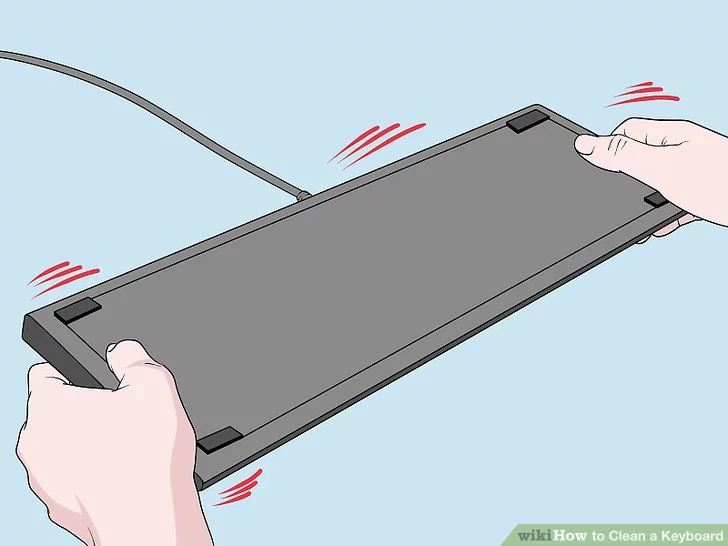
    • Keyboards: Wipe your keyboard down with a slightly damp microfiber cloth, then dry it with another cloth. Finish with a disinfectant wipe or a cloth dampened with rubbing alcohol to ensure you’re clearing away germs. Don’t forget to give it a gentle shake or tap upside down each week to remove the hidden debris!
    • Mice & Phones: Just like your keyboard, your mouse and phone need a little love too! Clean them regularly to remove oil and fingerprints, ensuring smooth interaction and a clear screen.


    1. Clear Your Screen for Better Viewing

    Editing with a dirty screen is like trying to read through foggy glasses! Let’s avoid that in the new year by cleaning our screens regularly.

    • Microfiber Cloth: The best way to clean any screen is with a microfiber cloth. Don’t spray cleaner directly on the screen—dab a little onto the cloth and gently wipe the screen in circular motions. You’ll be amazed at how much better everything looks once your screen is spotless!
    • Specialty Wipes: If you’re looking for a quick fix, consider using electronic wipes. These are great for clearing smudges from tablets, smartphones, and laptops—perfect for when you’re writing on the go or working from a coffee shop!

    1. Boost Your Computer’s Performance with Regular Maintenance

    It’s not just about the outside. Keeping your computer in tip-top shape means taking care of its inner workings too.

    • Clear Your Cache: Over time, your computer stores tons of temporary files. While they help speed up certain processes, they can also slow down your machine. Be sure to clear your browser cache and clean up unnecessary files to make your system run smoother.
    • Update Your Software: Outdated software can lead to performance issues and security vulnerabilities. Start the new year with the latest updates to your operating system, apps, and programs to ensure everything is running as efficiently as possible.
    1. Don’t Forget Your Other Devices!

    While you’re in cleaning mode, take a few minutes to clean your phone, tablet, Kindle, and even your remote controls. These everyday devices gather germs and dust, so a quick wipe-down can make them work better and last longer.

    A Fresh Start for a New Year of Writing

    Stay tuned for the 8th Day of Christmas!

    The Chaicleer Rooster logo wearing a santa hat

    Our favorite part about having the 12 Days of Christmas is that we can have the time we need to celebrate with our loved ones. We have time for wrapping our presents, meeting with friends for hot cocoa, and setting ourselves up in the New Year  for publishing success (with Chanticleer Professional Services and the Chanticleer Authors Conference).

    Wishing you Happy Holidays from Chanticleer from Kiffer, David, Dena, Scott, Anya, and Argus!

  • Chanticleer 10-Question Author Interview Series with David Calloway – Historical Fiction, African American History, Slavery & the Civil War

    CHANTICLEER 10-QUESTION AUTHOR INTERVIEW SERIES

    with Award-Winning Author, David Calloway

    Hello friends, we have another fabulous interview for you today.

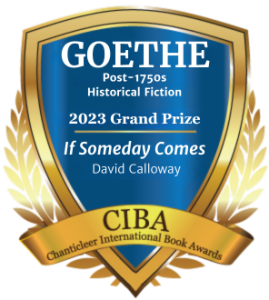
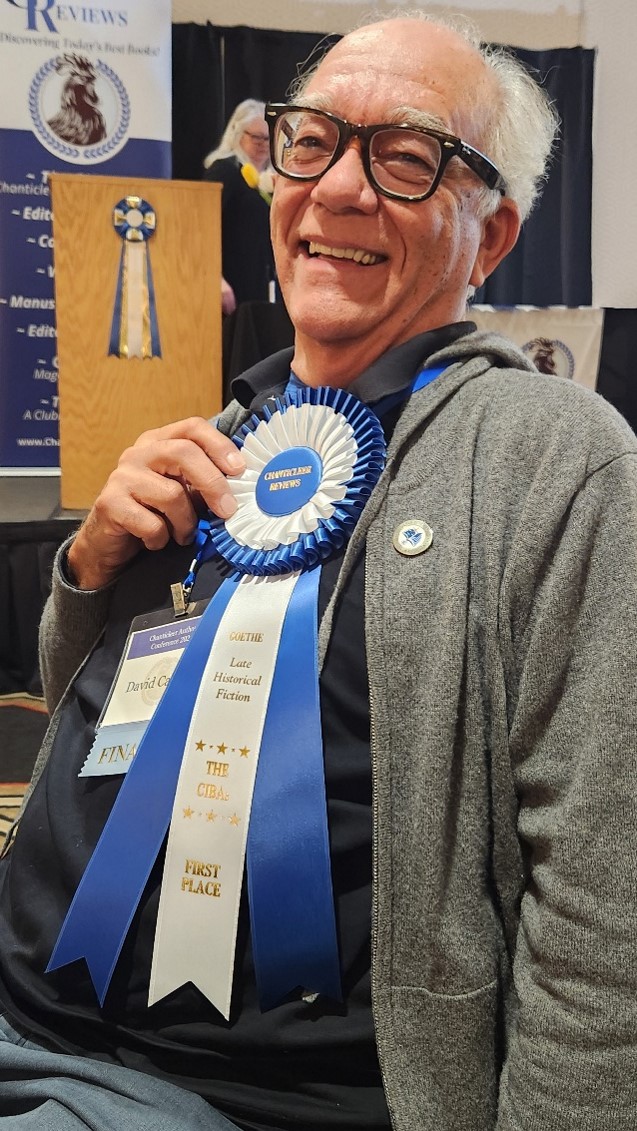
    In 2024, David Calloway took home the 2023 Chanticleer Grand Prize in the Goethe Awards division for his fascinating novel, If Someday Comes. Here, he tells us how he was inspired by his own family’s history to write If Someday Comes and the subsequent heights it is now reaching! Take a minute or two and get familiar with David to learn more about his ancestors’ amazing story. You won’t be sorry!

    Chanti: Your writing is very personal. What drove you to tell your family’s history?

    Calloway: The heart of my wish to write and to tell my family’s story was to record for the coming generations the stories I heard from the old folks as I was growing up. I wanted to preserve the struggles, hardships, and triumphs of my ancestors’ American lives.

    I think I always wanted to write, but put no real effort into it early in my life, as I was filled with self-doubts about my ability. Eventually I would overcome my inertia through the feedback and encouragement of close friends and family. In my professional life, I was in the motion picture and TV business, first as a cinematographer, then as a director, and then a producer. From day one, I read every screenplay – all revisions – and watched the words come to life on the screen.

    Slowly, I learned what worked to tell stories economically, so some story sense came by osmosis, some by study, some by practice. I took story structure classes, studied Robert McGee. I read Bird by Bird by Ann Lamott and On Writing by Stephen King. I talked with working writers about series and story arcs, plotting, character, and foreshadowing. I also attended writer workshops, retreats, and read other successful novelists.

    CIBA award, Grey sweater, David Calloway, black shirt, conference, awards banquet

    Chanti: When did you finally feel you were an author and add that to your extensive resume?

    Calloway: The day I opened the box that brought the proof copy of If Someday Comes! Up to that point, there were many moving parts, the manuscript, the proof reading, the cover art, the endless formatting. Here in my hand was a real book, something anyone might buy. Unbelievably, it had my name as writer on it. It’s been published for many months, and I still find it hard to introduce myself as an author.

    Chanti: Your ancestor’s story is so compelling. What genre best describes your book?

    Calloway: If Someday Comes is historical fiction, closely based on the true story of my great-grandfather’s life during the American Civil War. I grew up knowing where people were during that period, but their exact relationships were lost in time, so I filled out the characters and created the tone of the plot as I went. Comments from the old folks like “he was a nice man” are not enough. It’s hard to avoid retroactively applied values to those times, and I’m sure some of my twenty-first century “I have judgement” slipped in there somewhere, but the goal of getting his story into a book was my true goal.

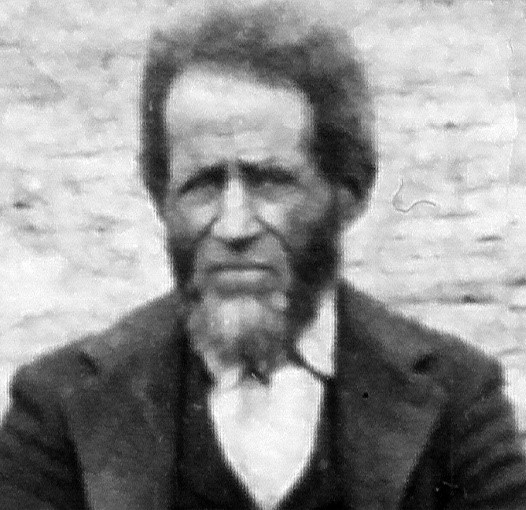
    Old photograph, African America, slavery, beard
    George Calloway

    Chanti: How did find the information you used to fill in the background of the story?

    Calloway: I read historical accounts of the period and subject, then added in my family’s tales of the past. I also created an outline of events for the story, and I used incidents I read about in books, letters, and newspapers for inspiration. The motivations of people never change for as far back as written history will allow us to see. Well-worn are the old trials of the human condition, and how often do we quote the Romans and Greeks on sex, greed, love, and jealousy. And of course, my own feelings on the same subjects.

    Chanti: That’s a rich way to develop both character and story! How do you approach your writing day? What is your routine?

    Calloway: “Sporadic” is my routine. I’ll write for several days, then none, then return to the page, then realize I need input, then read more history and other people’s work, stare at the blank screen, castigate my own procrastination, remind myself that no one is going to read this if I decide to cut it-so don’t worry. Then I despair that none will read the book anyway, convince myself that I’m hungry and a snack will get me going. I’ll check my email, take my dog for a walk, and then have lunch with old friends whom I’ve convinced my book is going great.

    Ad infinitum.

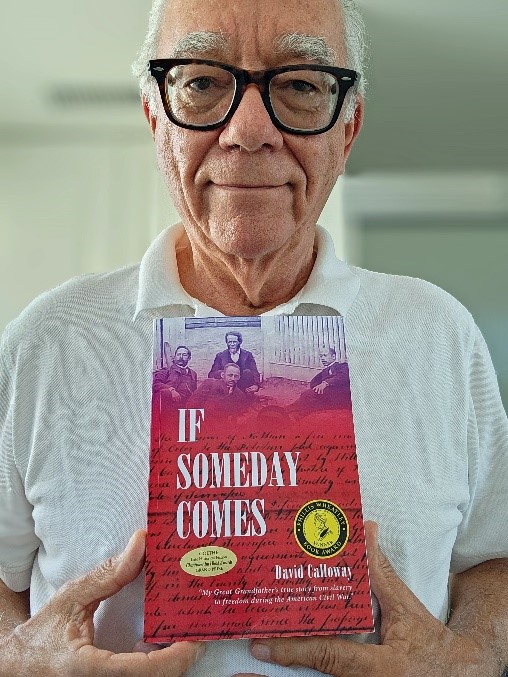
    David Calloway, If Someday Comes, White shirt, black glasses

    Chanti: What about writer’s block? How do you handle it when the words just won’t come to you?

    Calloway: Staring at an empty page with no ideas popping is tough. I write whatever comes to mind. It may have nothing to do with the book, or it may have a connection later on in the story. Some days are two sentence days, some are two-page days. I concentrate on my rights as an editor and will change or eliminate any thoughts, so I just jump right in.

    If I’m really stuck, taking a walk helps. I leave the phone at home, as I find stepping away from it resets the brain. Sometimes I imagine your main character with walking with me. And the phrase “I’ve got to sleep on it” is a maxim I refer to often, because problems are solved and ideas are generated by whatever part of the brain is working at night. It’s an approach that work for me… sometimes.

    Chanti: Those are great pieces of advice for breaking out of a block. Beyond writing, what sort of marketing tips do you have for authors?

    Calloway: Online ads are the only strategy that has worked for me. Spending lots of money in trade magazines has been a complete bust. I advertise on Amazon and Facebook. Set a budget and see how it works for you. Even so, It’s a struggle. Contacting public libraries, local papers, community clubs (Rotary, Elks, Chamber of Commerce) help – they always need luncheon speakers. I also make a point of being available for online book clubs and chats, and I have a website that has book reviews, awards, and links to other websites. www.IfSomedayComes.com. And I always encourage readers to write reviews online. It really helps others to decide to read the book.

    David Calloway, water, cap, grey, sky, land

    Chanti: What is your next project? Another story about a member of your family?

    Calloway: Yes! I am working on my Grandfather James’ story as historical fiction. He was born a slave in 1860, and grew up to become a surveyor and farmer. James and his brothers – all graduates of Fisk University – worked for and with Booker T. Washington in the building of Tuskegee Institute. James ran the farms and also taught farming. He was Tuskegee’s representative sent to Washington, DC to lobby for land grants to help finance the school. Later, James was hired by the German government and traveled to Togo to teach cotton farming.

    Chanti: Who are the perfect readers for If Someday Comes?

    Calloway: The book is a story of family, both before and during the Civil War. It highlights the close relationships between owner and slave, and as was so often the case, is about one large family separated by race and class.

    The story includes the good stuff, like love, courage, ingenuity, as well as the bad stuff of violence, cruelty, famine. Everyone suffered during the war; but remarkably, George (my Great Grandfather) kept everyone alive on both sides of the color line.

    It will be a book for anyone interested in the Civil War, the experience of slavery in East Tennessee, and the relationship of whites and blacks in the South.


    man, hat, yellow shirt, water, land, sky, David Calloway David Calloway was born in Chicago and grew up in Palo Alto and Berkeley. Calloway holds an MFA from UCLA in Film Production. His first job was as an Editor, progressing to Cinematographer, then a Producer of features and television. He is a member of the Producer’s Guild, the Director’s Guild, and the Academy of Television Arts and Sciences.

    Calloway is a Director on the board of the Angel’s Gate Cultural Center and on the board of the Offshore Racing Outreach Foundation.

    Calloway lives and works in Los Angeles, California. You can find out more about David Calloway’s writing on his website.

    If Someday Comes available on Amazon in print and Kindle, and as an Audible book.

  • The Art of Critique from the Desk of David Beaumier

    Understanding Peer Review and Feedback

    A Crucial Critique Skill for Authors

    Oftentimes when someone joins a critique group, it’s not because they’re in dire need of a free proofreader. They are looking to learn if their writing is any good, as Kiffer Brown says “Does it have a beat? Can you dance to it?”

    If you’d like to start your self-editing journey first, you can start here! Plus we have a secret solution to really get the feedback you need as an author! Read on to the end to learn what it is!

    While a work can be written in such a way that the errors make it unclear what the author wants to communicate. So, let’s get started.

    Ikebana is the Japanese art of arranging flowers. It can have more to do with writing than you would expect!

    What are the Guidelines for Critique?

    While every writing group will have extraordinarily varied suggestions for offering feedback, they often have a few golden rules:

    • Stay positive. We are critiquing, not criticizing.
    • Remember that suggestions should enhance the story through the author’s voice, rather than stating a variant of “this is how I would write it.”
    • We critique the work rather than the author. Look at what in the writing doesn’t work for you and address that.

    Let’s talk about each of those suggestions in greater detail.

    Staying Positive

    Not quite what we mean…

    No one wants to be in the group where people simply say “it was good, I liked it.” That’s not what we mean by positivity.

    The reason this rule is so common is that almost everyone who has ever submitted to a writing group has had at least one person thoroughly eviscerate a piece, calling it offensive, a waste of time, and of completely zero worth. This kind of feedback is about as helpful as “it was good I liked it,” because it doesn’t actually tell the author anything about the work.

    A sad looking Indian man in a blue shirt
    This guy isn’t getting actionable feedback!

    The best critiques often focus on direct observations or questions regarding the work. Pointing out contradictions and plot holes, or saying when a line rings true and why it rings true. For example, if your character is a member of the Canadian Royal Mounted Police, but doesn’t know how to ride a horse, there might be some questions as to why that is. Basics in Non-Violent Communication can really help get started in giving observational feedback (and hearing critique generally). You can read more about that here. For a less intensive and more focused look at just critique (as opposed to overall lifestyle), you can see this article by author and professor Brenda Miller here.

    In the end, the best critiques follow through and explain why the reader had the reaction to the text that they did.

    “Well, this is how I’d write it”

    Hopefully your critiques aren’t overwhelming the author

    Hopefully your critiques aren’t overwhelming the author

    Unless the reader is a co-author on the work in question, this statement is probably not geared toward helping the author’s voice come through.

    When writing my first book at around age ten, I tentatively showed it to my father. He added quite a bit to the first chapter, which focused on a tornado coming and whisking the main character away to a magical world where animals talked. Every place where he made a change stood out like someone had attempted to jam two different polaroids together with the hope no one would notice. –David

    Again, a focus on questions and observations can often help the author come up with the solution on their own.

    Friends, women, books, computer, smiling

    For example: “I noticed that there wasn’t a lot of setting description in this scene. Would there be a way to describe where the characters are having their conversation, both to add to the atmosphere of the story and to offer some beats that break up the dialogue?”

    This will let the author make the change instead of adding a new POV of the main character’s mother doing dishes and listening to smooth jazz in the background.

    We critique the Work, not the Author

    At this point, it seems clear that the focus is on the text. A character does things, and the author simply records them. However, while it’s always good to give the people critiquing work feedback, this is a crucial place to offer suggestions to the author.

    Remember that, as the author, people are not giving feedback as an attempt to sabotage the story or to make it worse. While all feedback isn’t useful, it is given with the intention of helping, and hearing it as something intended to help often makes listening to a critique easier.

    As such, here are a couple tips when receiving critique on your work.

    • Listen. Interrupting or arguing with the person giving you feedback means you have less time to receive a critique.
    • Remember that the work is yours. No one can force you to change your work, so there’s no need to quibble about what a reader sees as a must-have change that you won’t implement.
    • Ask questions. As you hear your critique, track places where you don’t understand where the reader is coming from or if you’re not sure you understand the motivation behind what they’re saying.
    • Say thank you. The best critiques are to improve your work, not review or judge it, and the reader’s work should be appreciated.

    Not sure how to get started on a group? Check out this article here to learn the ins and outs of forming a critique group!

    The Secret to get the Most out of your Critiques!

    The Secret to Successful Publishing

    Are you ready for this? The best thing you can do to guide the critique you receive is…

    Include specific questions and instructions for what you would like for your readers.

    The Number 1 request I get as an editor is to “Tear my work apart.” This guidance is about as helpful for an editor as “It was good” is helpful to a writer. – David

    By the time work is being submitted for critique, writers will hopefully have a good understanding of their own weaknesses. Setting, plot, and dialogue are common areas of focus. If you’re just getting started and not sure what to ask for, that’s alright! As you receive feedback, be sure to write down common feedback suggestions, like too many movie references that distract from the flow of the story, or not enough Star Trek references in your blogpost.

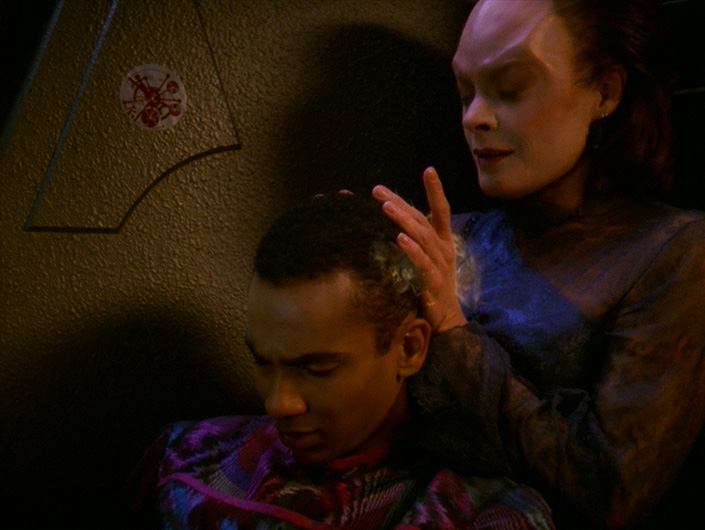
    We don’t recommend sacrificing all your creative energy at once to finish your work. Cirroc Lofton and Meg Foster as Jake Sisko and Onaya in the Deep Space 9 episode Muse

    Regardless of what your weaknesses might be, no editor is a mind reader. Many will be able to help, but the only way to guarantee you receive feedback on the craft elements you are most concerned for is to ask for it directly. Using a service like an MOV can be a great start to begin orienting your work to get the nitty gritty feedback of a Line Edit from a group before you commit to a professional Line Edit.

    Read Responsibly

    With that, you’re ready to go off and take a more active role in your writing community. We believe in you and know that you’ll do great!


    Thank you for joining us for this Writer Toolbox Article

    A red toolbox with the words "What's in your toolbox

    There is so much to learn and do with Chanticleer!

    From our Book Award Program that has Discovered the Best Books since the early 2010s to our Editorial Book Reviews recognizing and promoting indie and traditional authors, Chanticleer knows your books are worth the effort to market professionally!

    Helpful Toolbox Articles:

    When you’re ready,did you know that Chanticleer offers editorial services?We do and have been doing so since 2011.

    Our professional editors are top-notch and are experts in the Chicago Manual of Style. They have and are working for the top publishing houses (TOR, McMillian, Thomas Mercer, Penguin Random House, Simon Schuster, etc.).

    If you would like more information, we invite you to email us at info@ChantiReviews.com for more information, testimonials, and fees.

    We work with a small number of exclusive clients who want to collaborate with our team of top-editors on an on-going basis. Contact us today!

    Chanticleer Editorial Services also offers writing craft sessions and masterclasses. Sign up to find out where, when, and how sessions being held.

    A great way to get started is with our manuscript evaluation service, with more information available here.

    And we do editorial consultations for $75. Learn more here.

  • Unlock Your Creativity With These Keys to Break Through Writer’s Block from the desk of Dena Weigel

    A Writer’s Greatest Enemy: The Block!

    Your creativity is elusive and your imagination has taken a backseat to worry and anxiety.

    Don’t worry!

    We have time-tested tactics to break through writer’s block

    Writers Block, brick wall, computer, frustration, table

    Writers block is a common nemesis every writer faces at some point in our creative journey.

    It’s a frustrating experience when inspiration seems elusive, and every word feels like it’s buried under layers of mental fog. But fear not! In this blog post, we’ll explore practical strategies to help you conquer your creative blockade and break through what’s keeping your imagination at bay.

    Whether you’re a seasoned writer or just starting out, finding the keys that will unlock the door to your imagination and reclaim your writing flow.

    The secret tools against writer’s block are just ahead!

    Free write:

    The first draft is for you, so embrace your half-baked ideas and write with total freedom! Push your negative thoughts to the side and just start writing anything that comes to mind. Don’t worry about structure or grammar, or the areas of your story that haven’t yet come together. Starting out boldly, without regard to what comes next, can help get your creative juices flowing.

    Take breaks:

    If you’re feeling stuck, take a short break. Take a walk, play with your pet, go for a run or do some yoga. Physical activity or relaxation techniques like deep breathing can help clear your mind.

    Change of scenery:

    Sometimes a different environment can stimulate your mind. Try writing in a new location, such as a coffee shop, park, or library. If you don’t want to roam too far, explore another writing space at your home. I do this often and find that it acts as an eraser to all the noise that came before, freeing up my mind for new thoughts to come in.

    Headphones, man, beard, computer, phone, lamp, window

    Set small goals:

    Break down your writing task into smaller, manageable goals. For example, aim to write for 15 minutes without interruption or limit yourself to just one chapter. Sometimes I find seeing each chapter as its own super short story can help avoid feeling overwhelmed. You can read more about our suggestions of tracking productivity in your writing here.

    Read:

    Read books, articles, or even your own past work can inspire new ideas and perspectives. When we’re in the midst of writers block doubt can often seep in and stymie our writing process. By reviewing your own past work, you’ll see for yourself the wonderful writing we’ve delivered in the past. Need a new book? Check out our most recent reviews and add to your TBR!

    Brainstorming:

    You never know when inspiration will strike, so carry a notepad or use your smartphone to write down ideas, words, or phrases related to your topic so you can put into your story the next time you sit down to write. Overtime, that treasure chest of great ideas will be full of ideas for you to pull from on your next book, and the next, and so on!

    Friends, women, books, computer, smiling

    Talk it out:

    Discuss your ideas with someone else. Sometimes talking through your thoughts can help clarify them. We love to reach out to people in our Circle of Influence. You can learn more about forming a Circle of Influence here!

    Change your approach:

    If you’re stuck on a particular section, skip it and work on a different part of your writing. You can always come back to it later. Kiffer’s favorite advice we ever received is “Write Fast, Edit Slow.” Chanticleer Award Winner Michelle Rene goes into detail about why here!

    Eliminate distractions:

    Find a quiet space and eliminate distractions such as phones or social media to help you focus. If you find you are interrupted by people walking in and out of your writing space, clearly define your writing time and let them know you when you will once again be available.

    door, man, black suit, pushing, door handle, lock

    Set a routine:

    Establishing a regular writing routine can help train your brain to be more creative at specific times. Some writers rely on a pre-writing ritual that helps to clear their minds and put them in the right headspace to imagine the next plot twist. I like to make tea while listening to music that fits the scene I’ll be working on. YouTube has innumerable choices of background noise videos that help set the right mood, too.

    Use prompts:

    Sometimes a good writing prompt is all you need to do to get those creative juices flowing. Pick a photo, a phrase, something in the news, or something you overheard to get you started. Knowing this is just a one off, fun writing assignment, you can allow yourself to breath and enjoy the writing process once again.

    Seek feedback:

    All writers like to hear good reviews! Sharing your work-in-progress with others can provide fresh perspectives, constructive criticism, and even a whole lot of confidence that you can use like a sledgehammer to break through that writers block.

    Remember, writer’s block is a common challenge, and different techniques work for different people. So, try a few different ideas and see what works best for you!

    typewriter, woman, floor, paper


    Chanticleer Editorial Services – We’re ready when you are ready!

    Did you know that Chanticleer offers editorial services? We do and have been doing so since 2011!

    Tools of the Editing Trade

    Our professional editors are top-notch and are experts in the Chicago Manual of Style. They have and are working for the top publishing houses (TOR, McMillian, Thomas Mercer, Penguin Random House, Simon Schuster, etc.).

    If you would like more information, we invite you to email Kiffer or Sharon at KBrown@ChantiReviews.com or SAnderson@ChantiReviews.com for more information, testimonials, and fees.

    We work with a small number of exclusive clients who want to collaborate with our team of top-editors on an on-going basis. Contact us today!

    Chanticleer Editorial Services also offers writing craft sessions and masterclasses. Sign up to find out where, when, and how sessions being held.

    A great way to get started is with our manuscript evaluation service. Here are some handy links about this tried and true service: https://test.chantireviews.com/manuscript-reviews/

    Thank you for reading this Chanticleer Writer’s Toolbox article.

    Helpful links!

  • Making Character Introductions Memorable from the Desk of Editorial Assistant Scott Taylor

    Think of Characters like Speed Dating

    A white man around 40 gestures flirtatiously
    Is he actually cute?

    Who is This Guy and Why Should I Care?

    Writers often fall in love with our characters before their names ever appear on a page. They’re charming, intimidating, scrappy, and clever. Most of all, they matter to us.

    But how do you get the reader to agree that this brainchild of yours is worth checking out? Like all good first impressions, shaping how your character enters the story is important.

    This introduction will shade every other moment the character will have. Here are three tips to give your characters the best chance at a second date.

    Lights, Camera, Action!

    When the character enters they need to be doing something important. Maybe it’s key to the plot, maybe to themselves or another person—or, even better, both.

    We see characters through their actions: What they’re capable of, what they’re willing to do, what they want. And seeing what someone is in a position to do tells the reader almost everything they need to know about the role that person will play in the broader story.

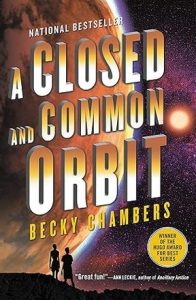
    In her sci-fi novel A Closed and Common Orbit, Becky Chambers introduces the character Owl by having her save a young girl’s life.

    She felt some spit hit the back of her leg.

    The voice changed. ‘Hey! This way! Come towards me!’

    There was no time for questions. Jane 23 ran at the voice.

    A machine stuck out from one of the scrap piles, a huge machine with thick sides and — and a door.

    Though Owl is only known as a nameless, disembodied voice at this point, she’s already a meaningful character—a sanctuary of kindness in an otherwise horrifying ordeal.

    This immediately establishes a dynamic between Owl & Jane 23—savior and saved. With this foundation, Chambers develops a deep and resonant relationship between the characters, as Owl guides Jane 23, encouraging her to keep going despite all the danger and hardship around her.

    This introduction also serves the function of pushing the plot forward. Jane 23 has her first real chance at survival. She escapes the beasts—for now.

    While not every character needs such a dramatic entrance, consider whether some of your characters might be well-illustrated by emphasizing them first with action. This may be delivering a casserole to a grieving widow, binding a magical beast in chains of cold iron, or stuffing a wedding invitation deep at the bottom of a cluttered drawer.

    And speaking of drawers…

    In what environment do we first find your character?

    A prison cell implies too much to list here. Go deeper. Ask yourself what does your character have on the wall of their prison cell? This is a great opportunity for contrast. You can show how your character relates to the world around them, how they clash or are at peace with it.

    This tells the reader what kind of power they hold. Remember, that also means what kinds they clearly do not. If your character visits wealthy distant relatives, are they put in an opulent guest room or are they relegated into the former servant’s quarters?

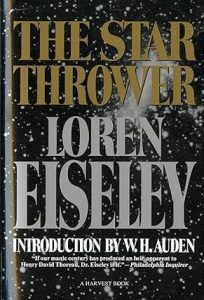
    Loren Eiseley opens his short story, The Star Thrower, with an impactful example of contrast and powerlessness. The protagonist muses on how he’s come to a place called Costabel, concluding that his arrival there might have been simply inevitable. He immediately relinquishes his agency, which is given significant meaning by the description of the beach itself.

    The beaches of Costabel are littered with the debris of life. Shells are cast up in windows; a hermit crab, fumbling for a new home in the depths, is tossed naked ashore, where the waiting gulls cut him to pieces. Along the strip of wet sand that marks the ebbing and flowing of the tide, death walks hugely in many forms.

    He isn’t just resigned to the idea that he would inevitably end up somewhere—but here. A place where uncaring fate casts vulnerable creatures to their deaths. It’s easy to see the kinship he shares with them.

    This gloomy introduction reveals his lack of self-worth and deep sorrow, which, crucially, frames the protagonist’s experiences and transformation through this story.

    What’s Your Problem?

    A young Asian woman is on a first date at a nice restaurant.
    So, why are you still single?

    Characters are most interesting when they’re actively dealing with their big conflict!

    This is obvious with protagonists, but especially consider also how you can flesh out the side characters or antagonists. A conflict-focused introduction establishes  where a character stands in the plot as well as their strengths and weaknesses.

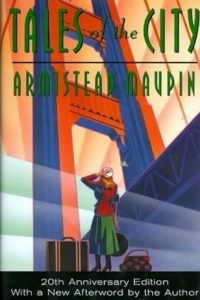
    Armistead Maupin opens Tales of the City by immediately connecting us with the inner conflict of the protagonist.

    We meet Mary Ann just as she’s made the decision not to come home to the Midwest, and instead stay in San Francisco. She has no job here, no apartment, but when she calls her mom about her decision, she’s resolute—more than resolute, she’s excited.

    “Her mother began to cry. ‘You won’t come back, I just know it.’

    ‘Mom… please… I will. I promise.’

    ‘But you won’t be… the same!’

    ‘No! I hope not.’”

    In much of Mary Ann’s following story, she embraces and struggles with the culture of 1970s San Francisco, as she’s pulled along by the bay winds of fate. And right here at the start, the contradictions in her character are established.

    She’s impulsive, terribly so. Desperate to be part of a wider world. Perhaps careless, maybe unprepared, a stranger in the place she now calls home, but she’s alive! Readers fall in love with Mary Ann because she needs to be free from the world she came from, and because she has the bravery to take that risk.

    This leads to a hint of trouble yet to come. As Mary Ann claims her adult life, she’ll struggle with new and changing relationships. Her impulsiveness enthralls the readers and stresses her emotional connections.

    Best Foot Forward

    Next time you introduce a character revisit these three tips. Even if you choose a different introduction method, examine the essential parts of your characters and how those elements shine through in their first appearance. That spark—what makes them curious, important, worth reading a story about—will seize your readers and carry them through to see not only what becomes of those characters, but what they become.


    Thank you for joining us for this Writer Toolbox Article

    A red toolbox with the words "What's in your toolbox

    There is so much to learn and do with Chanticleer!

    From our Book Award Program that has Discovered the Best Books since the early 2010s to our Editorial Book Reviews recognizing and promoting indie and traditional authors, Chanticleer knows your books are worth the effort to market professionally!

    When you’re ready,did you know that Chanticleer offers editorial services?We do and have been doing so since 2011.

    Our professional editors are top-notch and are experts in the Chicago Manual of Style. They have and are working for the top publishing houses (TOR, McMillian, Thomas Mercer, Penguin Random House, Simon Schuster, etc.).

    If you would like more information, we invite you to email us at info@ChantiReviews.com for more information, testimonials, and fees.

    We work with a small number of exclusive clients who want to collaborate with our team of top-editors on an on-going basis. Contact us today!

    Chanticleer Editorial Services also offers writing craft sessions and masterclasses. Sign up to find out where, when, and how sessions being held.

    A great way to get started is with our manuscript evaluation service, with more information available here.

    And we do editorial consultations for $75. Learn more here.


    Looking to add to your TBR?

    Check out the books mentioned in this article below:

    Even better, find a new Chanticleer Reviewed Book with a great introduction!

  • Creating Your Ideal Writing Space from the Desk of Dena Weigel – Reviews Editor – Writer’s Toolbox Article

    Lay Out the Welcome Mat for Productivity and Imagination

    Creating an effective writing space is more than just finding a quiet corner with a comfortable chair and a sturdy desk. It’s about creating an environment that nurtures your imagination, enhances focus, and inspires productivity. Whether you’re a seasoned writer or just starting out, the space in which you write plays a crucial role in your overall writing experience.

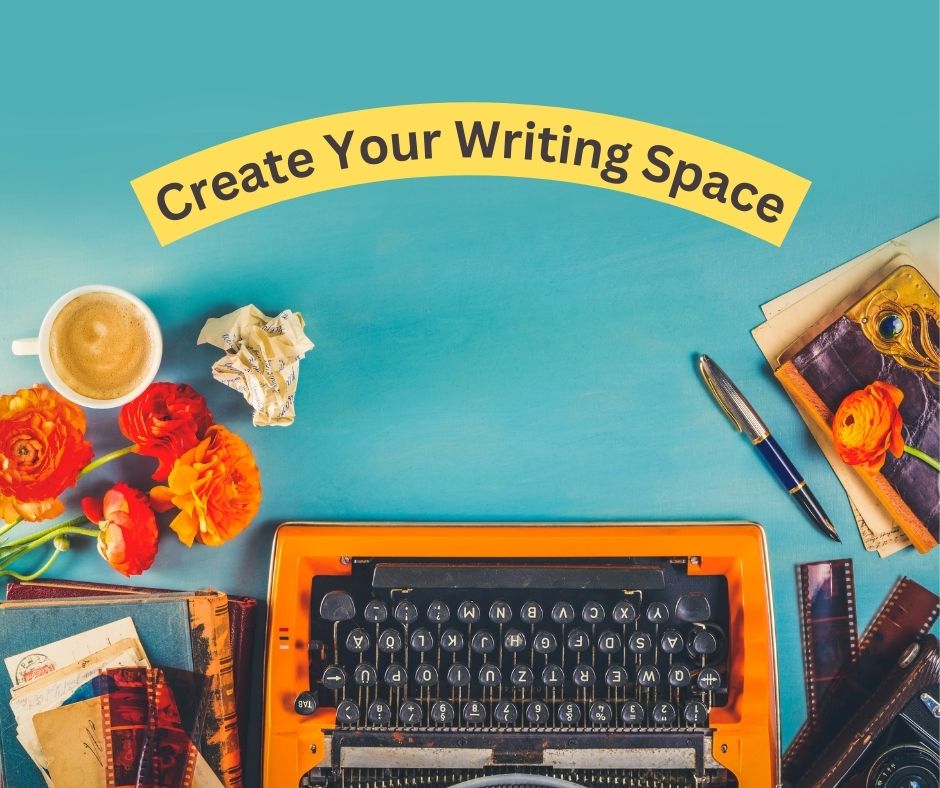
    Orange, teal, typewriter, flowers, pen, books, flowers

    Having a good writing space is crucial to a writer!

    Writers can find a million excuses to put off sitting in the chair and getting some thoughts on paper (well, okay – monitors), but by setting the right environment in your work space you’ll find it’s easier to get started, maintain the flow, and finish faster because a good work space can

    1. Minimizes Distractions: Whether it’s a separate room, a quiet corner, or even a specific coffee shop, having a designated area signals to the mind that it’s time to focus solely on writing.
    2. Boosts Creativity: Personalizing the space with inspiring decor, books, or artwork can stimulate ideas and encourage innovative thinking.
    3. Enhances Comfort and Ergonomics: A well-designed space ensures writers can work for extended periods without discomfort or strain.
    4. Creates a Routine: Having a consistent writing space helps establish a ritual around writing, making it easier to get into the flow and maintain momentum.
    5. Reduces Mental Barriers: When your space is personalized and clutter-free, writers can focus more on their ideas and less on external chaos.
    6. Inspires Discipline: Writers are more likely to stick to their writing goals when they have a dedicated area that reinforces their commitment to the craft.

    Writing space, keyboard, paper, pen, pencil, mouse, coffee, cup, journal, book

    Creating an effective writing space is a personalized process that balances functionality, comfort, and inspiration.

    Here are practical steps to help you design a writing space that enhances your productivity and creativity:

    1. Choose the Right Location: Select a quiet area in your home or a favorite spot where you feel comfortable and can focus without interruptions. Natural light is beneficial, so consider proximity to windows if possible.

    2. Personalize Your Space: Surround yourself with items that inspire you. Whether it’s motivational quotes, artwork, plants, or personal mementos, these can contribute to a positive and creative atmosphere. However, avoid clutter that could become distracting.

    ergonomics, chair, posture, computer, desk, keyboard, phone, plant

    3. Invest in Comfortable Furniture: Your writing desk and chair should be ergonomic and supportive. Ensure your desk height allows for comfortable typing or writing without strain. Consider a chair that promotes good posture and allows you to sit for extended periods without discomfort.

    4. Organize Your Supplies: Keep essential writing materials within easy reach. This includes pens, notebooks, reference books, and any other tools you frequently use. A tidy workspace contributes to mental clarity and reduces distractions.

    5. Manage Technology Wisely: Minimize digital distractions by organizing your computer desktop and using apps or tools that block social media or other distracting websites during focused writing sessions.

    Pens, scissors, computer, monitor, paper, windows, outdoors, pencil cup

    6. Ensure Good Lighting: Proper lighting is essential for reducing eye strain and maintaining alertness. If natural light is insufficient, invest in a desk lamp with adjustable brightness and color temperature.

    7. Create a Distraction-Free Zone: Establish boundaries with household members or roommates to respect your writing time and space. Consider noise-canceling headphones or background music if it helps you concentrate.

    8.Maintain Cleanliness and Order: Regularly de-clutter and organize your writing space to keep it conducive to creativity and productivity. A clutter-free environment promotes clear thinking and focus.

    Woman, writing, papers, desk, pink shirt, glasses, window

    9. Establish a Ritual: Develop a pre-writing ritual that signals your brain it’s time to write. This could involve making a cup of tea, lighting a candle, or reading a few pages from a favorite book to transition into a focused writing mindset.

    10. Evaluate and Adjust: Periodically assess your writing space to ensure it continues to meet your needs. Experiment with changes in layout, decorations, or routines to optimize your productivity and comfort.

    Minimize distractions and maximize your writing production by tailoring your writing space to support your workflow and see how your writing space transforms into a sanctuary for inspiration and productivity.


    Thank you for joining us for this Writer Toolbox Article

    A red toolbox with the words "What's in your toolbox

    There is so much to learn and do with Chanticleer!

    From our Book Award Program that has Discovered the Best Books since the early 2010s to our Editorial Book Reviews recognizing and promoting indie and traditional authors, Chanticleer knows your books are worth the effort to market professionally!

    When you’re ready,did you know that Chanticleer offers editorial services?We do and have been doing so since 2011.

    Our professional editors are top-notch and are experts in the Chicago Manual of Style. They have and are working for the top publishing houses (TOR, McMillian, Thomas Mercer, Penguin Random House, Simon Schuster, etc.).

    If you would like more information, we invite you to email us at info@ChantiReviews.com for more information, testimonials, and fees.

    We work with a small number of exclusive clients who want to collaborate with our team of top-editors on an on-going basis. Contact us today!

    Chanticleer Editorial Services also offers writing craft sessions and masterclasses. Sign up to find out where, when, and how sessions being held.

    A great way to get started is with our manuscript evaluation service, with more information available here.

    And we do editorial consultations for $75. Learn more here.


    Read more great articles from Chanticleer here!

  • Taking an Adventure in Writing, Travel Writing Basics from the desk of Dena Weigel


    Interested in travel writing? Here are just a few great authors writing about their adventures!

    Explore Europe on Foot

    travel writing

    In Cassandra Overby’s encyclopedic guide Explore Europe On Foot, readers are taken through a step-by-step process of dreaming, planning, and hopefully soon experiencing memorable, slow travel ventures of a lifetime. Whether it’s choosing a route and destination, deciding what to pack, finding appropriate accommodations and food options, or dealing with inevitable challenges, Overby supplies a world of information in this colossal foot travelers’ bible.

    Read more here!

    Square Up: 50,000 Miles in Search of a Way Home
    By Lisa Dailey

    Square Up Lisa Dailey

    Although she and her husband had planned to take their family on a ’round-the-world adventure, she didn’t expect their plans to come together on the heels of grief, after losing seven family members in five years. Square Up shows us that travel not only helps us understand and appreciate other cultures, but invites us to find compassion and wisdom, heal from our losses, and discover our capacity for forgiveness, as well as joy.

    Find a copy today!


    Thank you for joining us for this Writer Toolbox Article

    A red toolbox with the words "What's in your toolbox

    There is so much to learn and do with Chanticleer!

    From our Book Award Program that has Discovered the Best Books since the early 2010s to our Editorial Book Reviews recognizing and promoting indie and traditional authors, Chanticleer knows your books are worth the effort to market professionally!

    Writer Toolbox Helpful Links: 

    12 MUST-DO’s for AUTHORS by Kiffer Brown and Sharon Anderson

    The Ropes Around Research for the Accurate Writer by David Beaumier

    The traditional publishing tool that indie authors can use to propel their writing careers to new levels?  Check it out here!


    Do you have a book about travel that deserves to be discovered? You can always submit your book for an Editorial Review with Chanticleer!

    Chanticleer Editorial Review Packages are optimized to maximize your digital footprint. Reviews are one of the most powerful tools available to authors to help sell and market their books. Find out what all the buzz is about here.

    Have an Award Winner?

    I&I or Instruction & Insight Awards CIBA Badge

    The I&I Book Awards has a Category just for Travel Writing!

    The tiers of achievement for the CIBAs

    You can see our full list of Non-Fiction Book Awards is a great way to get your book discovered!

    Anytime you advance in the Chanticleer Int’l Book Awards, your name and book are promoted right here on our website, through our newsletter, and across social media. One of the best ways to engage in long tail marketing!

    Now pack your bags, grab your laptop, and get exploring, writing, and creating great stories!

  • What Catches the Eye: Description Techniques in Different POVs from Scott Taylor

    Your story’s point of view affects one thing above all else — description.

    Simply put, Point of View (POV) determines through what eyes we see, what ears we hear, what skin we feel, what nose we… well, you get it.

    Can you discover the Point of View?

    Readers tend to get invested in description that makes them think— about the characters, the setting, what will happen next. Different POVs have different limitations in what you can show, and how you can show it. But so too do they have particular strengths. So, how can we work with our chosen POV to make mentally-engaging prose?

    Let’s take a look at a few descriptive techniques that flourish within and illuminate the strengths of different POVs: First person, Third Person Limited, Third Person Omniscient, and Second Person.

    First Person — the Motivated Storyteller

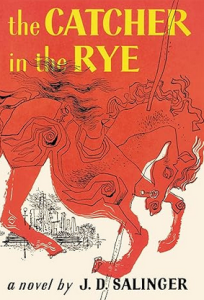
    The Catcher in the Rye by J.D. Salinger has a cover that features a carousel horse

    In this novel, Holden Caulfield takes him time revealing what’s bothering him. Slowly, his painful teenage life unfolds itself before the reader. He’s an untrustworthy narrator, so be careful with what you believe.

    There’s a special kind of intimacy in First Person. A vulnerability on both our parts. You’re the audience of a storyteller— me! And because it’s my story, surely I’m most qualified to decide on which details are important, right?

    Every smell on the wind, little shifting of another person’s posture, texture beneath my fingertips, it’s here because I want it to shape my tale. This is not the objective world, but a carefully-cut slice of it steeped in my thoughts. So, you should be able to put together my motivations and even beliefs based on how I describe my rival’s wine-stained manor, with its air of mismatched perfumes no doubt imported from some overworked farmland on the Rouge Isles, and fine fat jewels resting so brazenly in his family’s recently-designed crest.

    First Person and Third Person Limited — the Revealing Vision

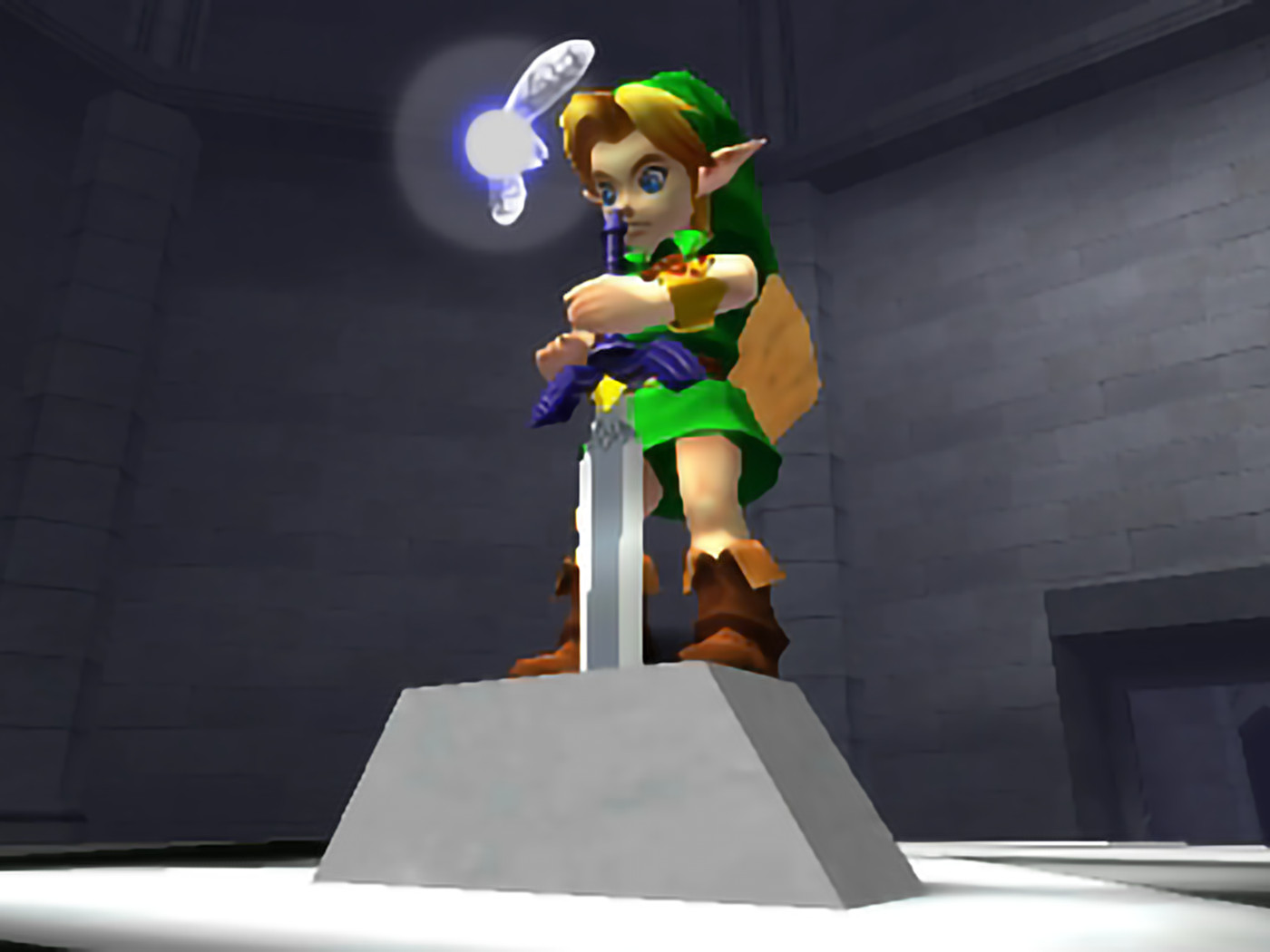
    Many videogames, like The Legend of Zelda – pictured above – use a literal Third Person Point of View that lets you follow directly behind your character as you play, but the camera always only sees your avatar.

    These two POVs share much in common, sometimes being nearly identical except for the pronouns. And while these narrators can be intentional with their descriptions (even unreliable), sometimes the details in the prose can reveal more about them than they would ever choose to tell.

    What sensory information the POV character notices will say something about who they are, how they feel, and even their connections to other characters. Fear might draw their eyes to the heavy doors, the arched roof with its fingers of shadow scratching at the beams, the way the thick walls seem to snuff all sound to a breathless mumble. A former musician, finished with their old craft, might walk down a long tunnel with their footsteps bouncing through the air in soft, irrepressible vibrato rhythm. Someone who spends all day cooped up in an office might bask in the cardinal feathers of a sunset — or fail to notice them at all, as the asphalt presses a growing soreness up through their back.

    Third Person Limited — the Reframed Importance

    Harry Potter is a classic example of third person limited. Everything happens from Harry’s perspective and is colored by his opinion, but sometimes the reader has a chance to catch view of something beyond what Harry sees.

    One way that Limited often varies from First is in its use of multiple perspectives. Not all Limited books have these, of course, but those that do can employ a powerful means of recontextualization.

    How does one character experience a setting, event, or interaction as opposed to how the next character does? Do they see each other differently than they each see themselves? Can they plant a question in the reader’s mind?

    A ‘sweet smile and warm handshake’ from the mountain guide might show Francis to be merely trusting in her own perspective, but that same guide’s ‘wolfish grin and cloying grip’ from Gabriel’s perspective would reframe Francis’s trust to actually be naiveté. Or, perhaps Gabriel has some paranoia eating away at him. Guess you’ll have to keep reading to find out.

    Third Person Omniscient — the Two-Faced Medium

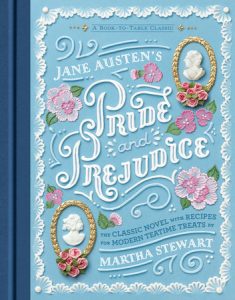
    Blue Pride and Prejudice Cover

    In Pride and Prejudice the narrator moves easily from person to person, showing you what everyone feels and thinks. You know what Mr. Darcy’s opinion is when it’s important, and you know what Elizabeth Bennett’s opinion is almost all the time.

    Finally, the objective truth of things. Where First Person is a personal storyteller, this narrator is like that of a Greek play, come to reveal all the narrative’s most interesting corners — no matter how well hidden.

    Omniscient prose has a powerful ability to indulge in two opposed modes.

    On the one hand, the narrator can use their voice to match information and detail to the sincere experience of the characters, keeping readers close. A spacefaring diplomat might walk down a quiet observation deck, cool glass soothing the tension out of his fingers, an endless crowd of stars looking on in support of his mission of peace with a strange alien species. But elsewhere, deep in the space station, a bomb ticks down.

    This contrast of perspective can radically alter the tone of descriptions, even so much as to invert them completely — a slow, contemplative walk becomes dreadful, every detail the narrator lingers on meaning a few more ticking seconds.

    Second Person — What do You Have to Do with It?


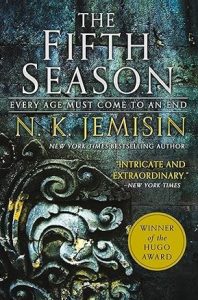
    The Hugo Award winning start to the Broken Earth Trilogy has one third of the story told in the second person. The story follows a “you” named Essun who goes on a journey to save her daughter.

    Second Person is more commonly used in instructional or how-to guides. “You should then add peanut butter” would be an example. This is an uncommon point of view in prose writing as it can invite the reader to identify with someone who shares very little in common with them. That sharing of identities can disconcert the reader, but it can also make them more receptive to even more creative styles of storytelling.

    Locating the reader in Second Person gives them a chance to experience and imagine a world totally outside of their own realm of understanding.

    These techniques are useful beyond POV

    Unreliable narrators don’t have to speak in first person, and dramatic irony can easily be used with multiple limited POVs. These are guidelines, not rules. But, when you’re working through your writing — editing a passage or trying to tease out exactly how to paint a mental picture — consider how you can use the inherent abilities of your chosen perspective to get the sparks flying in your readers’ minds.


    Thank you for joining us for this Writer Toolbox Article

    A red toolbox with the words "What's in your toolbox

    There is so much to learn and do with Chanticleer!

    From our Book Award Program that has Discovered the Best Books since the early 2010s to our Editorial Book Reviews recognizing and promoting indie and traditional authors, Chanticleer knows your books are worth the effort to market professionally!

    When you’re ready, did you know that Chanticleer offers editorial services? We do and have been doing so since 2011.

    Our professional editors are top-notch and are experts in the Chicago Manual of Style. They have and are working for the top publishing houses (TOR, McMillian, Thomas Mercer, Penguin Random House, Simon Schuster, etc.).

    If you would like more information, we invite you to email us at info@ChantiReviews.com for more information, testimonials, and fees.

    We work with a small number of exclusive clients who want to collaborate with our team of top-editors on an on-going basis. Contact us today!

    Chanticleer Editorial Services also offers writing craft sessions and masterclasses. Sign up to find out where, when, and how sessions being held.

    A great way to get started is with our manuscript evaluation service, with more information available here.

    And we do editorial consultations for $75. Learn more here.  
  • Top Revision Tips Before a Manuscript Overview from the desk of David Beaumier

    You’ve arrived at the last page of your story and written those crucial, beautiful words: “The End.”

    A young Asian woman leans back from her computer, done with her work in a generic room.
    Finished at last!

    Well done! You deserve some time to rest before you dive into the next step of editing your story.

    Now, one key piece of advice here is there isn’t a wrong time to put your work in front of a professional for feedback. While this article will take you through steps that will bring your book to be as strong as you can possibly make it on your own, we all are of different skillsets, so if something isn’t for you, that’s when you bring in a professional editor.

    To start out with, what is a Manuscript Overview?

    Someone hard at work on a Manuscript Overview

    Perhaps the easiest definition can be pulled from our page on providing Manuscript Overviews (MOVs).

    It is an objective evaluation of a story idea that is fully formed with a beginning, middle, and end, but still in an early draft stage. The MOV comes before Line Editing and Copy Editing.

    No matter who you pick to perform a Manuscript Overview for your book, you should get one. The amount of time and money it saves on editing by being more general and help you go further with your own writing is on thing, but the most important part is it helps keep your book focused and your narrative strong. Traditional Publishing Houses use them, and it makes sense to follow suit.

    Typically, an MOV will cover

    • compelling nature of story
    • dialogue
    • character development
    • does the scenery and setting work with the story
    • backstory issues
    • professionalism of editing & formatting
    • continuity of storyline
    • plotting and plot-hole issues
    • writing craft

    So, the question remains, how do you get your book to that point: fully formed with a beginning, middle, and end. How do you get it to the best point you can do on your own?

    The Reverse Outline

    A Red Uno Reverse Card

    Once you’ve finished your manuscript, even if you already have an outline, you can create one that reflects the actual book you’ve written. From this point, you can edit that outline of your book as is. Working within the outline to create a roadmap to revision often feels much more approachable.

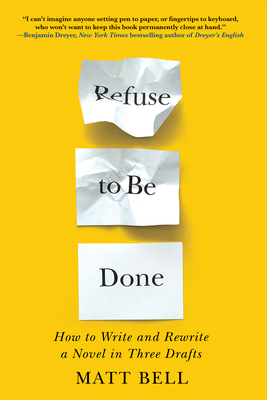
    Next off, we have a recommendation from Matt Bell, author of Refuse to Be Done.

    Rewrite your book.

    You can have the draft you wrote printed out, off to the side, on a separate monitor, whatever feels comfortable, but rewrite it using your new outline as a guide.

    Refuse to Be Done has a yellow cover with the title written out across 3 pieces of paper

    Bell’s theory behind this is that you will copy and paste a bad line (or duplicate scene). But you won’t rewrite a bad line.

    Not sure where to start in creating your outline? Jessica Brody’s beat sheet from Save the Cat! Writes a Novel can help. Brody breaks down the story into actionable beats you can aim for to keep your book flowing along. Check out her breakdown of story beats here!

    Once you’re done rewriting the book, it helps to go through and check to see if you’ve met the goals of a new outline. Ask yourself if your story has a beat and if you can dance to it.

    After all that work, you’re probably ready for a Manuscript Overview.

    What to do while you wait

    A standard Chanticleer MOV takes 6-9 weeks to finish. While that’s going on, we recommend following D.D. Black’s critical advice whenever you’re in writing limbo: Write the next thing.

    D.D. Black presented at CAC24! Check out his incredible series here!

    Not only will that get you out of your head and allow you to be more objective with your manuscript when it comes back, but it will put you ahead of the game for the next book.

    What do our authors say about our MOVs? Read recent testimonials here!

    Wow, huge thank you for this second review! It’s so detailed and very much what I was hoping for. The specifics about moving content and clarity are spot on. I knew it needed structural improvements but I was too close to do it. Please pass on my sincere thanks for this work! I’ve only started some of it & already feel a better flow. I’m hoping to possibly even cut about 10k words to make it tighter. – Sheridan Genrich author of REWIRED: Optimise Your Genetic Potential


    I’m writing to gratefully acknowledge receipt of the Manuscript Overview of my book. I am so pleased to have this close reading and incredibly helpful insights. These comments are far more beneficial than anything I had expected. It will be a pleasure addressing the editor’s critiques and trying out his concrete suggestions. Please extend to him my genuine gratitude. Chanticleer crows again! – John Feist, author of Edged in Purple and many more


    I finally got this copied and read. It’s just what I wanted it to be—a skillful job. I knew there were the kind of holes the editor mentioned, but he’s given me a plan for the revisions. Please pass on my thanks. – Linda Brugger, columnist and accidental author


    Please thank the reviewer for a very relevant and detailed review of my manuscript, ANKANAM. I plan to incorporate all his notes! – Vee Kumari, author of Ankanam.


    This was just what I needed. I am looking at the book with a new focus and have already started working up the suggested changes. The first thing I did was remove those items the editor mentioned should be deleted. It was a bit painful but necessary. There was plenty of meat in his review, which took me a while to digest, but changes are on the way. These will take some time, but I will likely be interested in the Manuscript Reconciliation process. I can tell the editor spent quite some time researching some of the issues raised in the book, which I greatly appreciated. It helped me see the book more from the reader’s perspective than mine. Please pass along my sincere thanks. – Jim Leonard


    Thank you for joining us for this Writer Toolbox Article

    A red toolbox with the words "What's in your toolbox

    There is so much to learn and do with Chanticleer!

    From our Book Award Program that has Discovered the Best Books since the early 2010s to our Editorial Book Reviews recognizing and promoting indie and traditional authors, Chanticleer knows your books are worth the effort to market professionally!


    When you’re ready, did you know that Chanticleer offers editorial services? We do and have been doing so since 2011.

    Our professional editors are top-notch and are experts in the Chicago Manual of Style. They have and are working for the top publishing houses (TOR, McMillian, Thomas Mercer, Penguin Random House, Simon Schuster, etc.).

    If you would like more information, we invite you to email us at info@ChantiReviews.com for more information, testimonials, and fees.

    We work with a small number of exclusive clients who want to collaborate with our team of top-editors on an on-going basis. Contact us today!

    Chanticleer Editorial Services also offers writing craft sessions and masterclasses. Sign up to find out where, when, and how sessions being held.

    A great way to get started is with our manuscript evaluation service, with more information available here.

    And we do editorial consultations for $75. Learn more here.  

    Writer Toolbox Helpful Links: 

    The traditional publishing tool that indie authors can use to propel their writing careers to new levels?  Check it out here!