Tag: Writing Craft

  • Three Rules for Writing Historical Fiction That Will Transport Readers Back in Time

    There is magic in historical fiction.

    Magic that takes you to another time and place. In a time machine, you might say, with a beautiful cover and pages in between.

    That’s what readers expect when reading historical fiction. A time machine. They want to immerse themselves in a world that once was and now can only be visited in their imaginations. But who is this storyteller, this weaver of time, and how, exactly, does this time machine transport readers into the past?

    Books, clock, purple, blue, red

    Let’s look under the hood of that writer’s time machine and get to know the rules of historical fiction!

    1. Immerse Readers in the Past

    Historical fiction requires authenticity. Placing the reader in a world that once existed means they have a sense of that world based on their own experiences and knowledge. This doesn’t mean you can’t shape their beliefs, but to do so you must adhere to the way that world existed. 

    Before you tap one key on your computer, do your research. Immerse yourself in your characters world. Be a reporter from that time and ask yourself the who, what, why, and how questions that will help you set the tone and create the authenticity to make your story ring true.

    Make sure your sources are relevant and reliable. Readers of historical fiction tend to be well-versed in the time periods they are interested in reading about, so it’s up to the writer to make sure the details they put into their story are as accurate as possible.

    2. Characters That Live in the Past and Thrive in the Present

    They say the more things change, the more they stay the same. This thought can be applied to the characters your readers will meet in your story. Styles change, trends evolve, and what was once acceptable in society no longer is, but some things never change. 

    To make relatable characters in historical fiction you must blend the societal norms of their era with issues that can still resonate with readers today. You see this in the anguish over someone’s death, or the joy of seeing your destination after a long, difficult journey. Humanity has always shared similar desires and calamities, use them to bridge the gap between readers and the characters in your imaginary world.

    Blending the past and present is also needed for other details within your story. Maybe it’s clothing or language, or a specific smell or sound that places the reader in the past. Slip inside your character’s skin, but keep in mind the thru lines that humans have always shared.

    Books, hand, sleeve

    3. Restrain Your Research

    If you enjoy writing historical fiction, there’s a good chance you love learning about the past, and that’s where our good intentions can derail our writing process. Each turn of the page generates a new idea for your story, and time slips away before you realize your research has sucked up all the time you’d set aside for actually working on the manuscript.

    To protect yourself from this fast road to nowhere we suggest blocking out dedicated time for the research portion of your designated work time. Set an alarm for a specific time and commit to ending that day’s research no matter where you are in the process so you don’t miss out on writing. That is what timers are for!

    Be clear in your goals for your research to ensure you get what you want from the time spent researching. Organize the appropriate resources and tools you’ll need before sitting down so they’ll be within reach, and write a list of the things you want to accomplish before getting started. If you find yourself straying from your goals, refer to the list to find your next subject to research.

    Create steps for your research to break down the work into manageable tasks. You could do it by subject matter, or resource material, or anything that fits your specific needs. The point is to make it less overwhelming as you move through the tasks. Prioritizing the tasks to get the most important or urgent ones done first will also help you to streamline the process further.
    Don’t forget to take breaks from your research to get out of your headspace and refresh. Sometimes we can become so involved in the worlds we are researching that it’s hard to get into the world of our imagination. By taking a break to refresh, it gives our brain time to process the information and see it anew to incorporate into a plot.

    book, glasses, old, buckles

    Buckle Up for a Long Ride

    There’s no way around it—good research takes time and effort. But the payoff can be amazing for your readers. The more you can place them in the time period of your story, the more the story will infiltrate into their imaginations. The devil is in the details, but the details need to make sense. So don’t rush the process. Set boundaries, work toward goals, and find good, reliable sources and you’ll surely find the valuable information that will take your readers back in time on a magical historical fiction ride all the way to the very last page!

    For more tips on streamlining your research check out these Chanticleer articles:


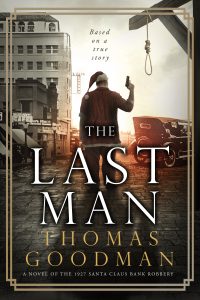
    The Last Man cover

    The Last Man
    Thomas Goodman
    CIBA Grand Prize Winner in the Laramie Division

    In The Last Man: A Novel of the 1927 Santa Claus Bank Robbery by Thomas Goodman, four men in a small, depression-era Texas town lay in wait to carry out their unique plan for a holiday heist.

    It’s December 23 and a man in a Santa Claus suit walks into a bank. But rather than his bag full of Christmas surprises, he’s brought a gun. With the element of surprise on their side, the robber and his two partners would collect the cash, while another partner waited in the getaway car. It all seemed so simple.

    At the time, Texas bankers—in order to deter crimes such as this—promised a $5,000 reward for any dead bandits, “and not one cent” for the capture of a live one. Should anything go wrong, the possibilities for disaster were clear as a Greek tragedy, but what could go wrong?

    Guns blaze within minutes of entering the bank.
    Read more here…

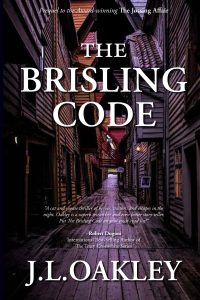
    The Brisling Code

    In The Brisling Code, a fast-paced first installment of her historical thriller series, Oakley weaves a brilliant portrayal of the perils met by the Norwegian Resistance during WWII.

    Layered perspectives—from resistance workers, traitors, and even an SS Officer—create a rich world through which readers can understand the sacrifices that were made to free our world from the tyranny of Nazi Germany.

    Immersed in volatile Nazi-occupied Bergen, Norway, fearless young intelligence agent Tore Haugland and his team of organizers work tirelessly to protect the essential work of the Norwegian resistance.
    Read more here…

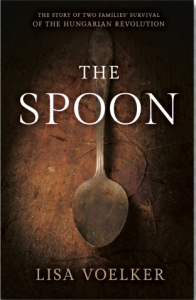
    The Spoon Lisa Voelker

    The Spoon
    By

    Lisa Voelker’s historical fiction novel, The Spoon, takes us back to the 1950s in Hungary during the daring student uprising, and attempted revolution, in Buda and Pest. The author weaves historical facts with fiction in the form of family lore that has been handed down for generations.

    We follow scores of people whose lives intersected during this uprising of 1956. The revolution was, at its inception, a time of joyous upheaval, but in less than two weeks became one of devastating dissolution. People fled Hungary by the thousands, but not before giving the Soviet Union a taste of their discontent.
    Read more here..

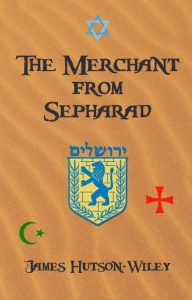
    The Merchant from Sepharad

    Joshua Ibn Elazar, the eager son of a Jewish merchant, travels to al-Andalus (the Iberian Peninsula under Muslim rule) to prove himself in his father’s business. But he finds an unwelcoming, degrading society waiting for him, and begins a journey of misfortune and anger in James Hutson-Wiley’s historical fiction novel, The Merchant from Sepharad.

    Shortly after arriving in the city of Lishbunah, al-Andalus, Joshua is tricked out of the gold for his living expenses. Worse yet, he learns that Jews in Lishbunah suffer under oppressive laws, holding far less status than Muslim citizens. He can only find help in Lishbuna’s Jewish community, meeting Rabbi Hiyya al-Daudi and his son Yaish, who house and feed him.
    Read more here…

    A Siren Called Truth Cover

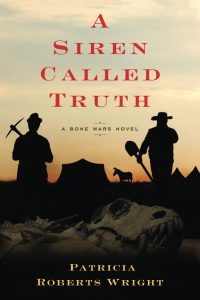
    A Siren Called Truth

    Patricia Roberts Wright’s A Siren Called Truth plunges into the fierce rivalry of the Bone Wars, a real-life scientific feud between paleontologists Edward Cope and O.C. Marsh. Blending history, ambition, and human drama, this gripping historical novel explores the cost of discovery and the lengths people will go to secure their legacy.

    A Siren Called Truth is a character-driven exploration of rivalry. Edward Cope, a self-taught genius, is determined to unearth America’s prehistoric past, but O.C. Marsh stands in his way, a well-funded and politically savvy adversary. Their battle for dominance in paleontology is not just about fossils—it’s about reputation, power, and the relentless pursuit of truth.

    A Siren Called Truth’s prose transports readers to the rugged landscapes where fossils lie buried beneath layers of time.

    Read more here…


    Recognition for Historical Fiction Excellence
    Chaucer, Goethe, Laramie, Hemingway, CIBA, Awards

    Don’t miss out on your chance to submit to these fabulous Historical Fiction Awards!

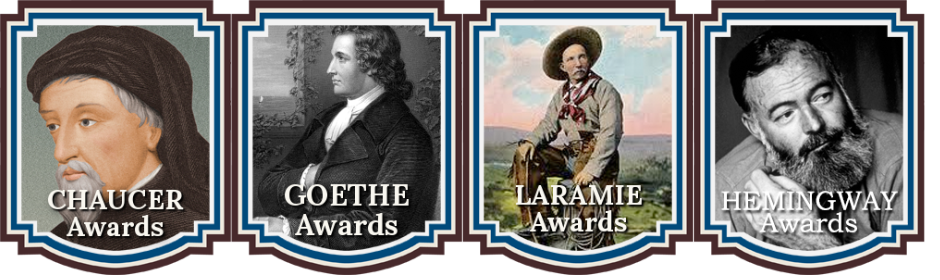
    Whether you’re writing pure historical fiction or adding bits of history into other genres, professional recognition celebrates the craft behind effective tales from the past. The Chanticleer International Book Awards recognize outstanding fiction across multiple divisions that dive into the past:

    Chaucer Awards ~ Perfect for Early Historical Fiction (Pre-1750s Historical Fiction Novels

    Goethe Awards ~ Ideal for Late Historical (Post-1750s Fiction Novels

    Laramie Awards ~ Excellent for Western, Pioneer, Civil War, First Nations Fiction Novels and other Historical Fiction Books 

    Hemingway Book Awards ~ Fitting for 20th & 21st century Wartime Historical Fiction Novels

    The 2025 deadline is August 31st! These awards recognize the skillful writing in genres that creates memorable, impactful historical fiction.

    Historical fiction is about creating emotional experiences that resonate in the modern world long after the final page. Whatever your primary genre, adding in great period details, creating relatable characters, and sticking to a good process all the way to the finish can transform good stories into unforgettable ones.

    Submit before August 31 and let professional judges recognize your skill in crafting compelling, historical fiction.


  • Chanticleer 10 Question Author Interview Series with Rae Knightly – Grand Prize Award-winning Author of Exostar

    CHANTICLEER 10 QUESTION AUTHOR INTERVIEW SERIES
    with Award-Winning Author, Rae Knightly

    Gertrude Warner 2023 GP Winner Exostar Rae Knightly

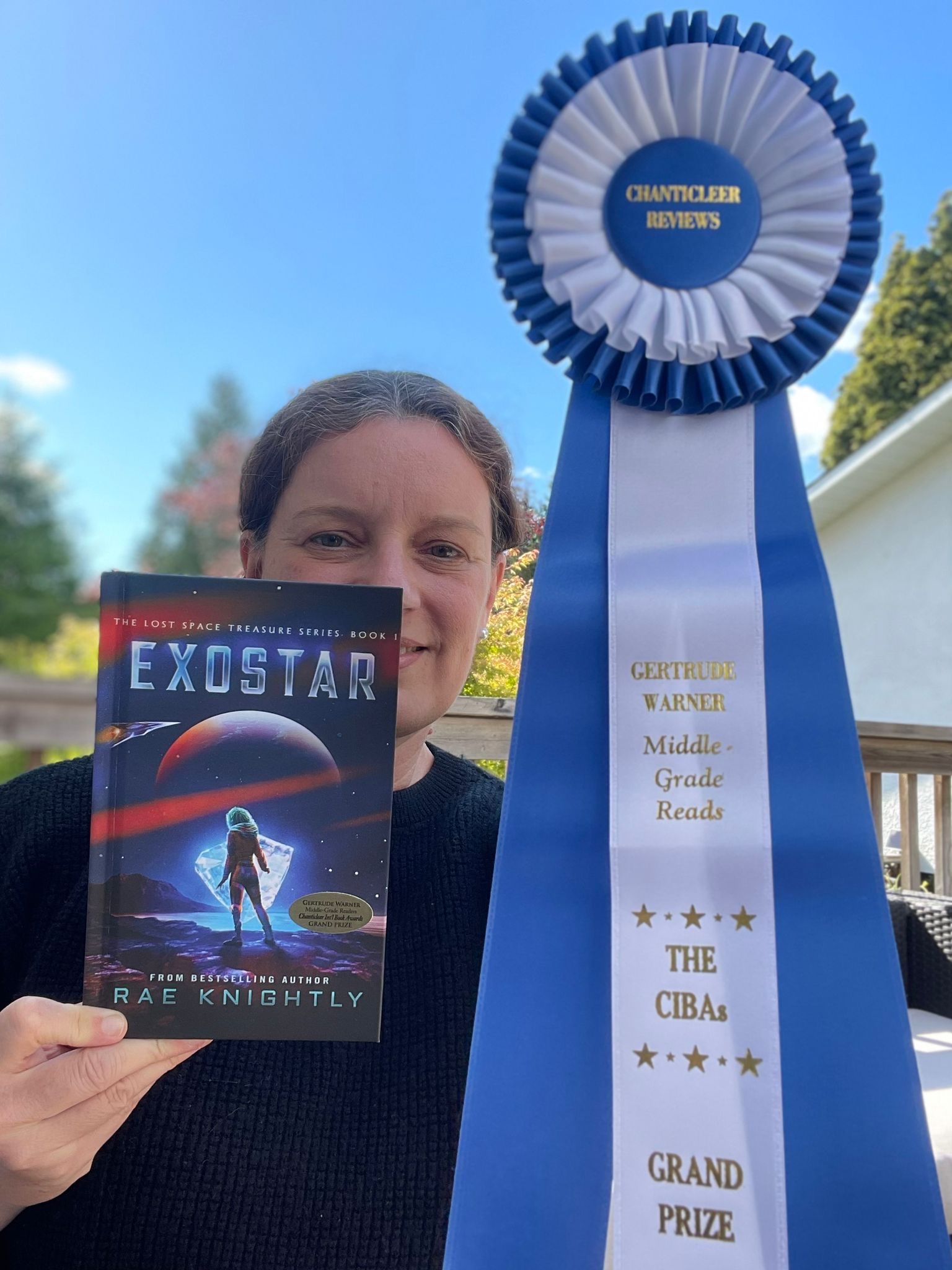
    Hello friends! We have another fabulous interview for you today, with author Rae Knightly! Her book Exostar took home the Chanticleer 2024 CIBA Grand Prize Award in the Gertrude Warner Division for Middle Grade Fiction, and we are excited to share with you the globe-trotting, star-gazing journey she took to becoming an author and what she’s planning next. Take a minute or two and get familiar with Rae and her incredible journey to becoming award-winning author!


    Chanti: Like all great heroes, we’d love to start with your origin story. Have you always considered yourself a writer, or was that an identity that developed over time?

    Rae Knightly, book, scarfKnightly: I was a reader before I became a writer. As a single child, I would devour books up until my teenage years. Fictional characters were my friends. I would go to my local library on Fridays after school, pick out three books (the maximum allowed) and read those until it was Friday again. The problem was that, after a while, I felt like I had gone through the middle-grade section. It was time for me to head downstairs to the adult section. Unfortunately, the switch proved too big of a step. I couldn’t find anything to my liking among the big boring-looking adult books. Where was the fantasy, science fiction and adventure section for my age? I guess “young adult” books weren’t a thing back then. So, instead, I turned to my imagination and carried on the stories I liked or created new ones in my mind.
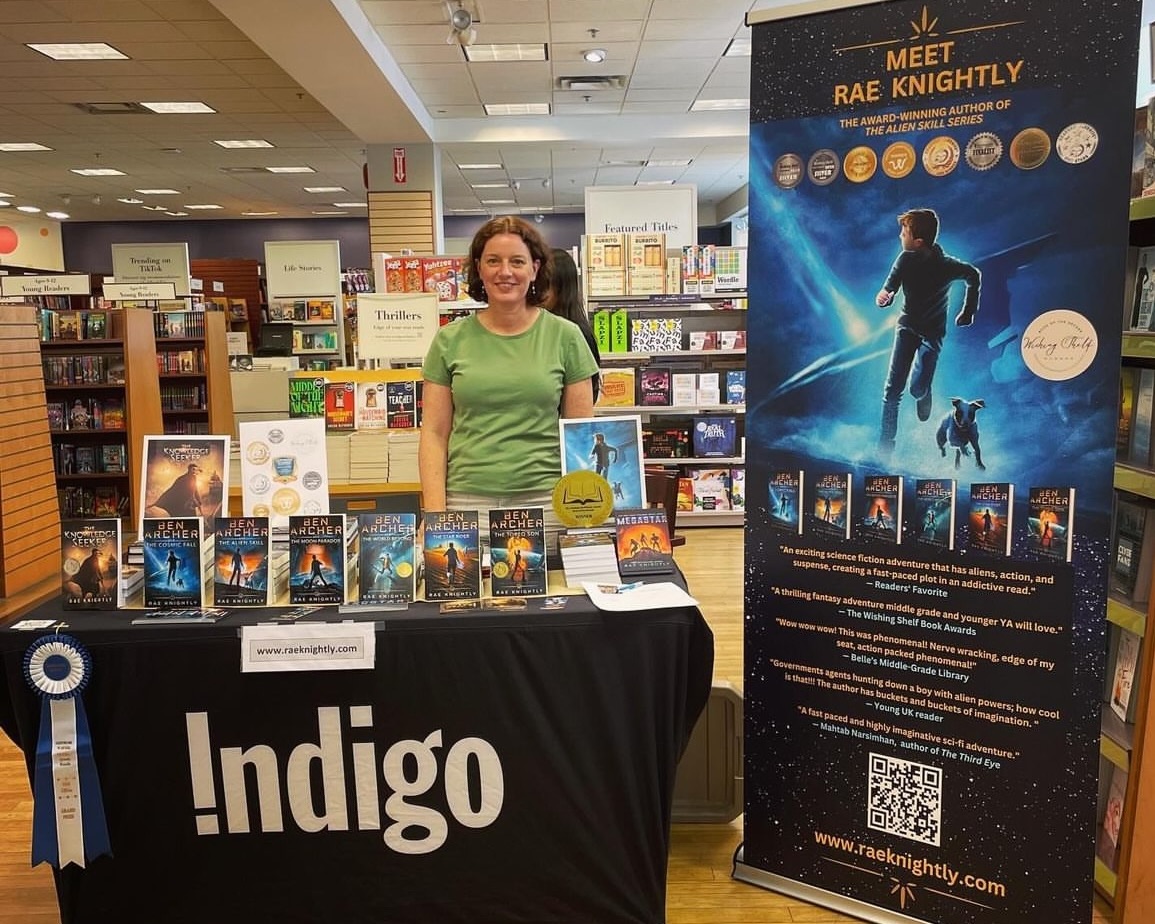
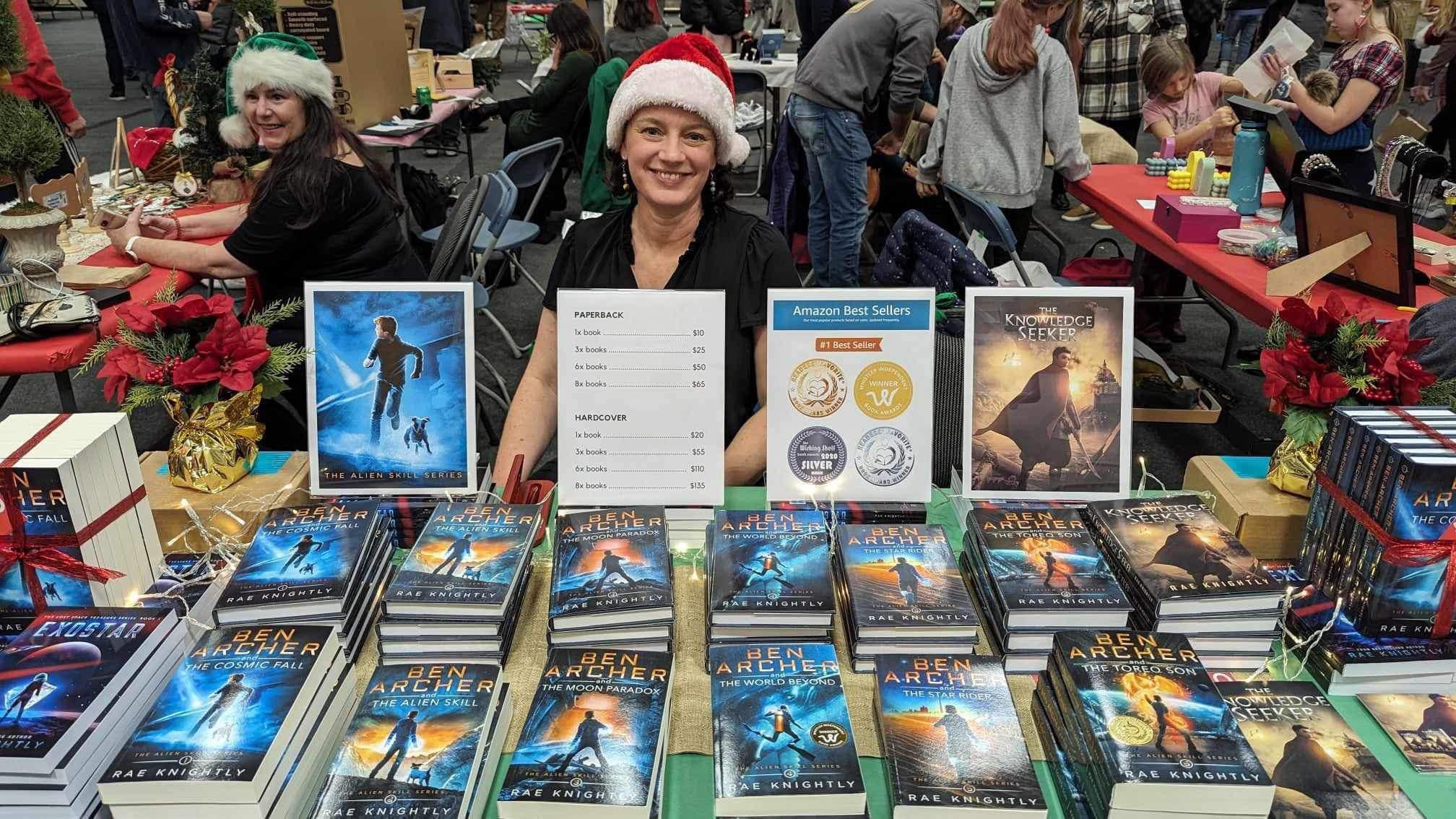
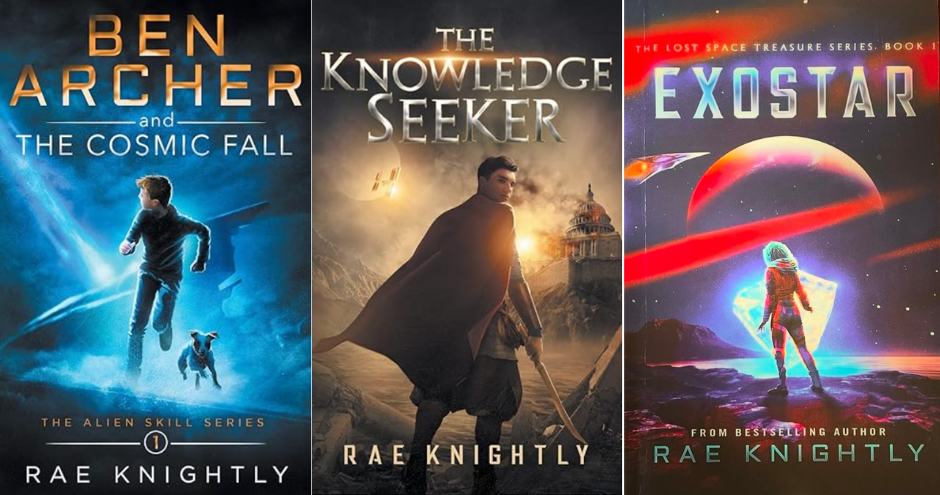
    It would be another thirty years before I got the chance to write these stories down. Once I had penned my first book, Ben Archer and the Cosmic Fall, I felt like a fish in water and knew that this was what I was born to do. You could say the books I am writing today strive to recreate the sense of wonder that I experienced as a middle-grade reader.

    Rae Knightly, bookstore, books, poster

    Chanti: What a beautiful way to describe it—recreating that sense of wonder! That really is the “write what you love” philosophy in action. What specifically inspires your science fiction storytelling?

    Knightly: I grew up in Africa where I became fascinated with the night sky. It made me ask profound questions: What is out there? Who are we? Why are we here? Are we alone in the Universe? Is there something beyond the Universe?

    Science fiction can be just as magical as fantasy and—in my mind—is even more so because this type of ‘magic’ might be real. Aliens might exist, we might settle on Mars one day, interstellar travel might be invented in the future, a young reader might invent clean energy when he/she grows up… I think it is vital in this day and age to inspire young people through science fiction because this could lead them to become compassionate scientists, inventors and politicians who will find answers to today’s challenges.

    I understand, though, that topics such as aliens, destructive inventions and climate change can be scary to young readers, so I strive to incorporate them in page-turning, thrilling adventures that are easier to absorb and understand. In this way, I hope to awaken a fascination for the marvels of our world and beyond—just as I was fascinated and inspired by the night skies as a child.

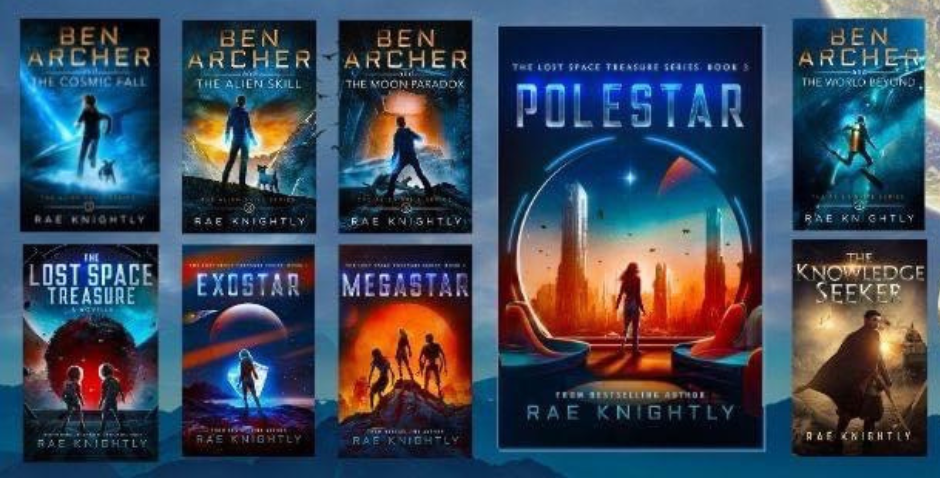
    I’m best known for the Ben Archer Series, which includes aliens, UFOs, superpowers and messages about how we treat our environment. My other series, The Lost Space Treasure, is a fun space opera in its purest form and appeals to fans of Star Wars. Exostar is book 1 in this series.

    Rae Knightly, books, awards, badges

    Chanti: That mission to inspire future scientists through storytelling is incredible! Do you find yourself following conventional writing rules, or do you prefer to chart your own course?

    Knightly: I highly doubt that I follow the rules. Middle-grade science fiction is not a common genre and I knew I was taking a big risk by writing it. But this was the genre I enjoyed above all as a child and I was disappointed when I couldn’t find more options to read. I also write from multiple points-of-view, which is not typical for middle-grade, and my main characters are loners. They don’t have a Hermione Granger or Ron Weasley tagging along.

    Adults play a huge role in my stories. This goes against the norm where middle-grade characters find themselves battling evil on their own, without adults around to help. Note that most middle-grade characters are orphans. Ben Archer is not one of them. In fact, the dad-figure in his adventures is a pretty big deal! As for Trin Moonrise in Exostar, she is a unique hero. Not only does she travel from one planet to another and encounter all kinds of alien civilizations, but she faces a hundred challenges while wearing a prosthetic leg.

    Rae KNightly, santa hat, books, people

    Chanti: Including adults and having more solo characters definitely pushes back against what we often seen in middle grade. When you’re not creating these amazing worlds and characters, how do you spend your time? What do you do to recharge and find inspiration?

    Knightly: I used to love exploring and got a lot of inspiration from visiting different places—especially ancient ones. I love reading about archeological and astronomical discoveries. The history of humankind fascinates me and I believe we still have a lot to discover when it comes to what our ancestors were capable of.

    I also love walking in nature and stopping every two minutes to take a picture of a leaf, a sunset, a landscape… I never make it very far because beautiful details are everywhere if you learn how to look. However, my walking and exploring days have been drastically reduced after I was diagnosed with a chronic illness called moderate ME/CFS. This mysterious illness has made it difficult for me to leave the house and I am currently spending most of my time learning how to manage symptoms.

    Fortunately, writing about superheroes has taught me what it means to be brave: it means that you have to stay true to yourself in the face of adversity. You can’t let the bad things that happen to you define you. I can still write and enjoy the company of my family. Also, my imagination allows me to travel way beyond the boundaries of Earth and I have explored many distant planets from the comforts of my sofa as I wait to get better.

    book covers, science fiction, rae knightly, blue, gold, red, black

    Chanti: The kind of resilience definitely shows up in your book and storytelling. When it comes to creative process, where do you say your ideas for those stories come from?

    Knightly: I get most of my ideas from small newspaper articles. Ben Archer and the World Beyond pulled inspiration from different newspaper articles related to our oceans. Some years ago, Keith Davis—a marine biologist—mysteriously disappeared while out at sea. He was researching factory ships that empty the oceans of fish (tuna, in this case). Another article revealed that, in 2019, Russia released hundreds of beluga whales and orcas from an illegal whale jail located in Srednyaya Bay, where they were being trained or sold. Unfortunately, this type of news does not hit the headlines much.

    The Knowledge Seeker was inspired by a short newspaper article reporting that several countries had restricted access to the internet. It made me wonder how a small group of people could take away access to knowledge to millions of citizens. The plot of The Knowledge Seeker—which takes place in the distant future—took form based on these questions: should everyone have access to all information everywhere and all the time? And, if not, who should have the right to decide what should/shouldn’t be made available? The main character, Eodain, fights to return knowledge to the people, while his arch-nemesis wants to keep knowledge for himself because knowledge is power. But even Eodain struggles with the meaning of free knowledge when he is forced to provide instructions on how to build a deadly weapon.

    And, lastly, Exostar and its sequels dive into the wonders of science and the Universe. Could we travel between the stars using quantum mechanics? What color is the sky on other planets? What do aliens on other planets look like according to their environment, gravity, evolution, etc.? Do exploding stars (supernovas) provide the necessary elements to create life? When you have civilizations where robots, androids, ancient aliens, and mortal beings interact, what does it mean to be human?

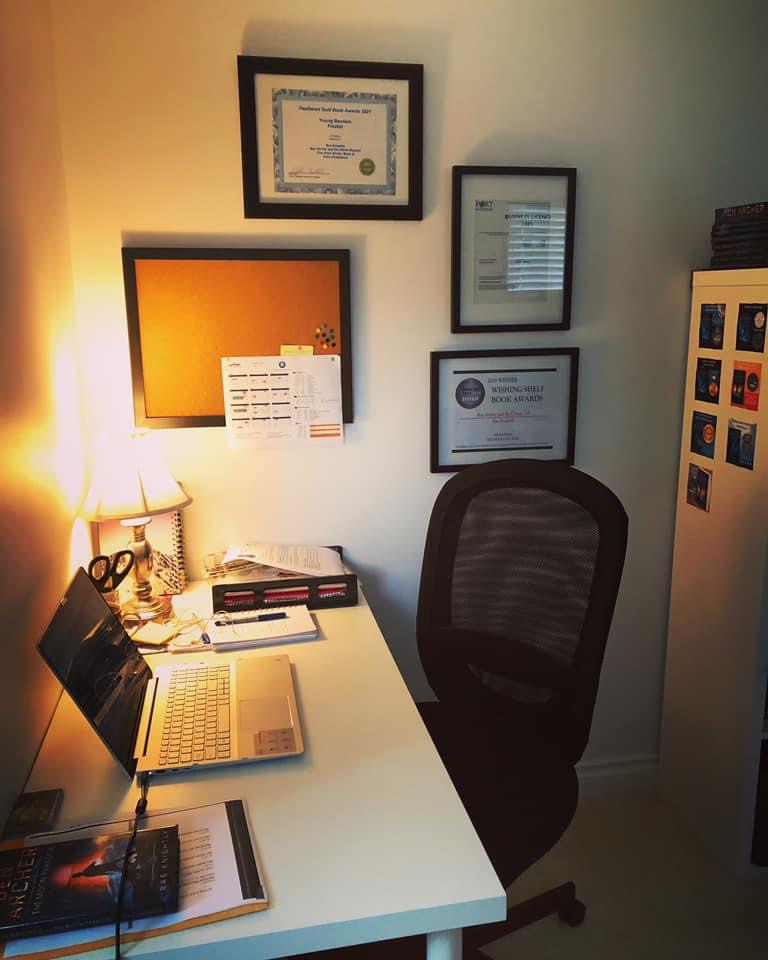
    office, chair, pictures, computer

    Chanti: Fascinating how you transform real-world issues into compelling science fiction! When it comes to your actual writing process, how organized are you? Do you plan everything out, or do you discover the story as you write?

    Knightly: By the time I sit down to write a new book, I have the full story well laid out in my head. It is very important to me to know the ending of a story and I will rarely start writing until I have figured that out. In fact, I often come up with the ending of a story first and then work my way backwards! This was crucial when I wrote The Knowledge Seeker, as the plot twist at the end had to blow the reader’s mind. The final sequel in the Exostar series will also have a mind-boggling ending.

    Since I have the plot all laid out, I am able to write a first draft in a short amount of time. I can write a 50,000 word book in five weeks. However, that’s when the hard work starts. This is when I go over the manuscript multiple times, one sentence at a time, one paragraph at a time, and back-and-forth and back-and-forth with the help of my editor, Cristy Watson. I also seek advice from beta readers who follow my work, know the characters and can point out errors in the manuscript. I will do seven or eight complete edits of the story before I’m satisfied, and this can take several months.

    book covers, science fiction

    Chanti: Working backwards from the ending makes a lot of sense! Can you talk a little bit about some of your literary influences, and how have they shaped your work?

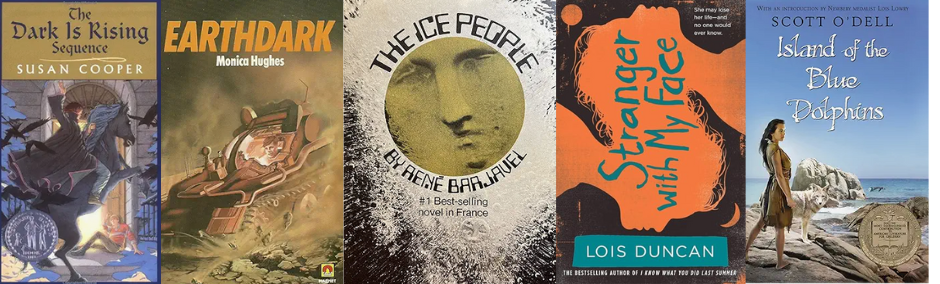
    Knightly: The Dark is Rising Trilogy by Susan Cooper opened my eyes to the power of imagination. Why? Because this Arthurian fantasy story took place in the real world and made me want to find ‘magic’ everywhere. It made me wonder if ‘magic’ was just around the corner, or hiding in the mist, or lost deep under the ocean. I love fantasy and science fiction stories that take place in the real world because they make the reader wonder, “What of this were true?” I sought to recreate this sense of ‘magic in the real world’ in my Ben Archer books.

    Monica Hughes was my go-to author while growing up. She wrote thrilling middle-grade science fiction like Earthdark, Space Trap or Ring-Rise, Ring-Set. The stories are exciting and ask interesting questions. They inspired me to write Exostar.

    The Ice People by French author Rene Barjavel is one of those books that stays with you long after you’ve finished it. It leaves you with the question: if humans have been around for tens of thousands of years, would it be possible that they developed advanced civilizations that are now lost and buried under the Arctic ice, under the dunes of the Sahara desert or in the deep trenches of the ocean? This fascinating question also lingers in the back of the Ben Archer and Lost Space Treasure Series.

    Lois Duncan’s Stranger with my Face is another of those stories that takes place in the real world but has elements of mystery in it. The characters in the author’s books face haunting topics such as telepathy, astral projection, spirit channeling, eternal life, etc. These themes make you wonder about the limits of the human mind and elements of this have seeped into Exostar and its sequels.

    Island of the Blue Dolphins by Scott O’Dell was a heart-shattering story that stayed with me for years. However hard the story, I believe that tough subjects in middle-grade books can teach young readers to better face real-life hardships as adults. For example, learning to deal with a fictional death might prepare readers to deal with it a little better in the real world. I channeled some of those raw, heart aching feelings in Ben Archer and the Alien Skill.

    Chanti: That is a rich tapestry of influences! With such a creative imagination constantly at work, do you ever hit those dreaded writer’s block moments?

    Knightly: Yes, I experience writer’s block. I guess it’s the bane of every author’s existence.

    However, I no longer shy from this debilitating fear of the blank page. I find that if I am unable to write, it usually means that my brain is saturated and I need to take a break. This break can last from a couple of days to several months, but I have learned to trust the process. Once an author, always an author, is my motto! Imagination never really leaves you. Creativity can come and go, like the ebb and flow of waves crashing on a beach, and if my characters are not talking to me, then perhaps it’s time to do something else for a while.

    Rae Knightly, CIBA winner, ribbon, exostar, book

    Chanti: That’s such a healthy perspective on the creative process! You’ve achieved remarkable success with your award-winning books. What marketing advice can you share with other authors?

    Knightly: The things that have helped sell over 120,000 books:

    • Paying for great, on-target book covers
    • Knowing who my readers are (10 to 14 year olds)
    • Always delivering as promised in a regular, timely manner
    • Learning to run Amazon ads
    • Creating clean, fun adventure stories that captivate readers
    • Joining joint book promotions and doing newsletter swaps
    • Creating excitement for the next book on social media
    • Putting up the next book for pre-order and adding links in the back-matter

    rae knightly, books, cover, science fiction

    Chanti: All fantastic, practical advice! As we wrap up, what exciting projects are you working on now? What can your devoted readers look forward to next?

    Knightly: The Lost Space Treasure Series continues. After writing book 1, Exostar, I published books 2 and 3: Megastar and Polestar. I am currently editing book 4: Grimstar.

    Trin Moonrise travels the stars in search of her identity which might be hidden on a legendary spaceship thought to hold the greatest treasure in the known galaxy. However, her arch-nemesis, the evil Remnant Supreme Leader, is always one step behind.

    Next, I plan on delving deeper into my young adult dystopian series, The Knowledge Seeker, and my readers have let me know that they would love to read more Ben Archer books.

    Even though middle-grade science fiction is less popular, I hope to continue exploring the genre for many years to come.

    Thank you, Rae Knightly, for sharing your writing journey with us and for bringing great young adult sci-fi to readers around the world! 


    Rae Knightly, water, woman, mountains

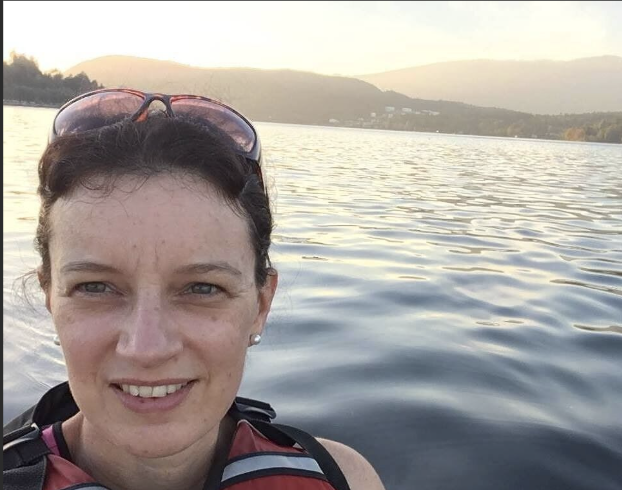
    Rae Knightly is an award-winning and Amazon bestselling author specializing in middle-grade and young adult fiction, with over 160,000 books distributed. She is the author of The Alien Skill SeriesThe Lost Space Treasure Series, and The Knowledge Seeker. Knightly was raised in various locations on Earth, during which time she picked up four languages and came to appreciate this blue pebble floating in the confines of space. Her current human mission is to keep the stars shining in her two children’s eyes, while hopefully igniting new ones within others across the globe. Rae spends her time spirit travelling to distant galaxies or exploring the breathtaking landscapes of British Columbia, Canada, before returning with more adventures for her Alien Skill Series.

  • A Chanticleer 10-Question Author Interview with Gail Avery Halverson – Historical Fiction, Colonial America, Slavery

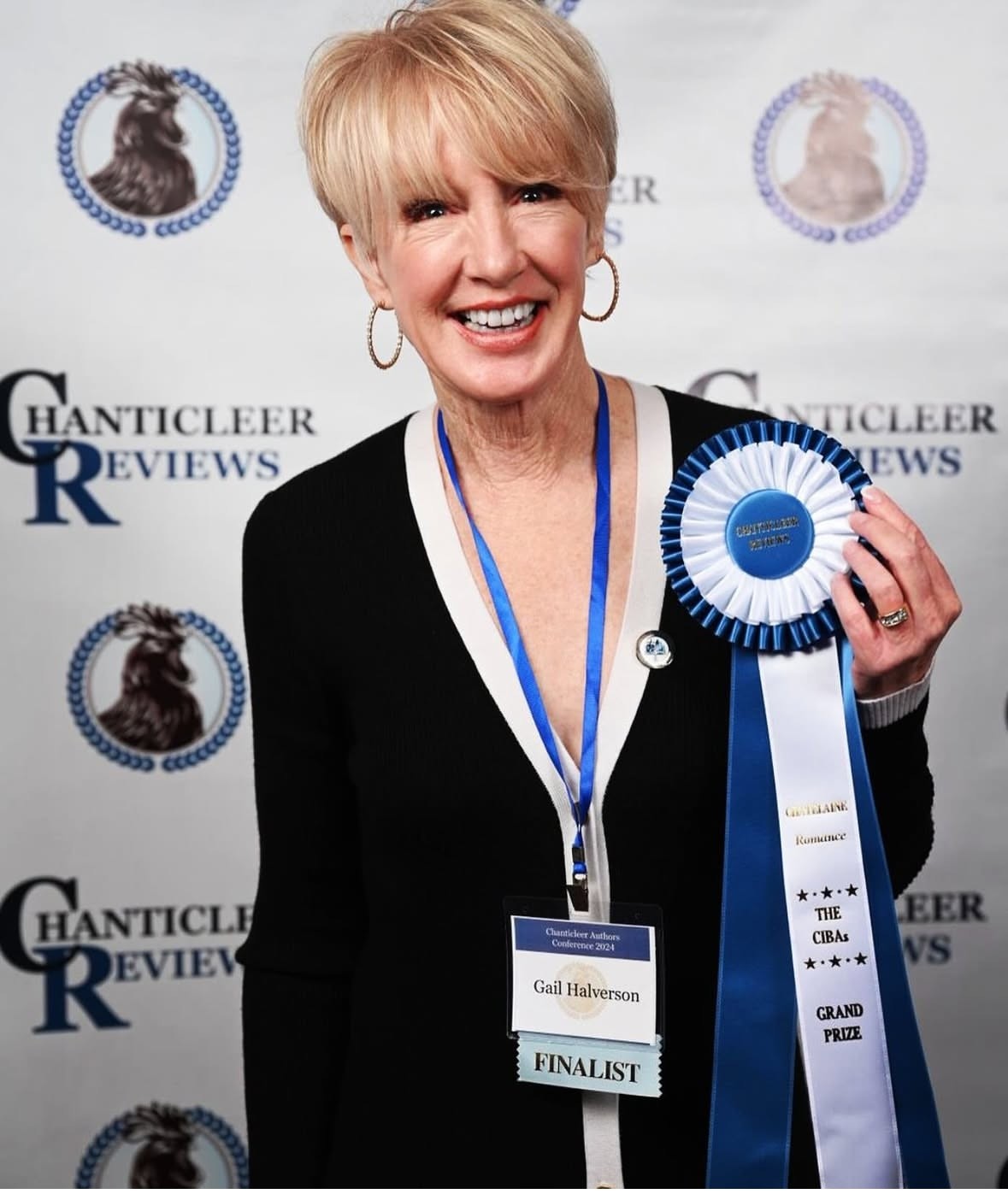
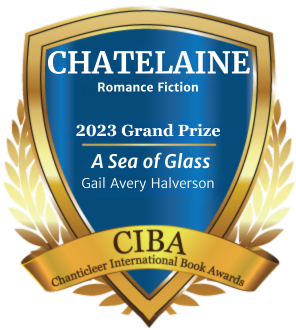
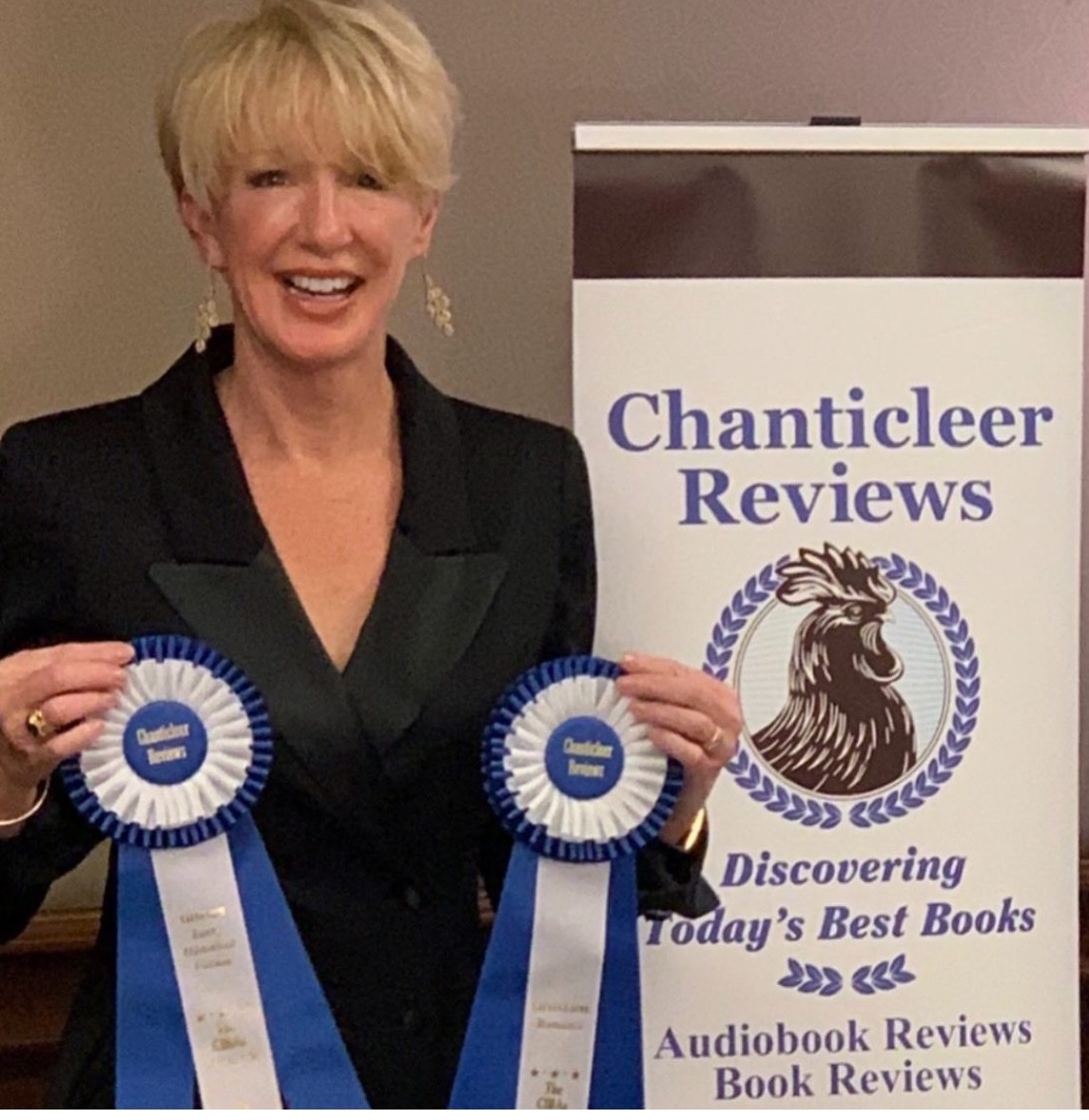
    blue and gold badge recognizing A Sea of Glass by Gail Avery Halverson for winning the 2023 Chatelaine Grand Prize For Historical Fiction RomanceHistorical Fiction Romance Author Gail Avery Halverson sat down for a 10-Question Interview with Chanticleer!

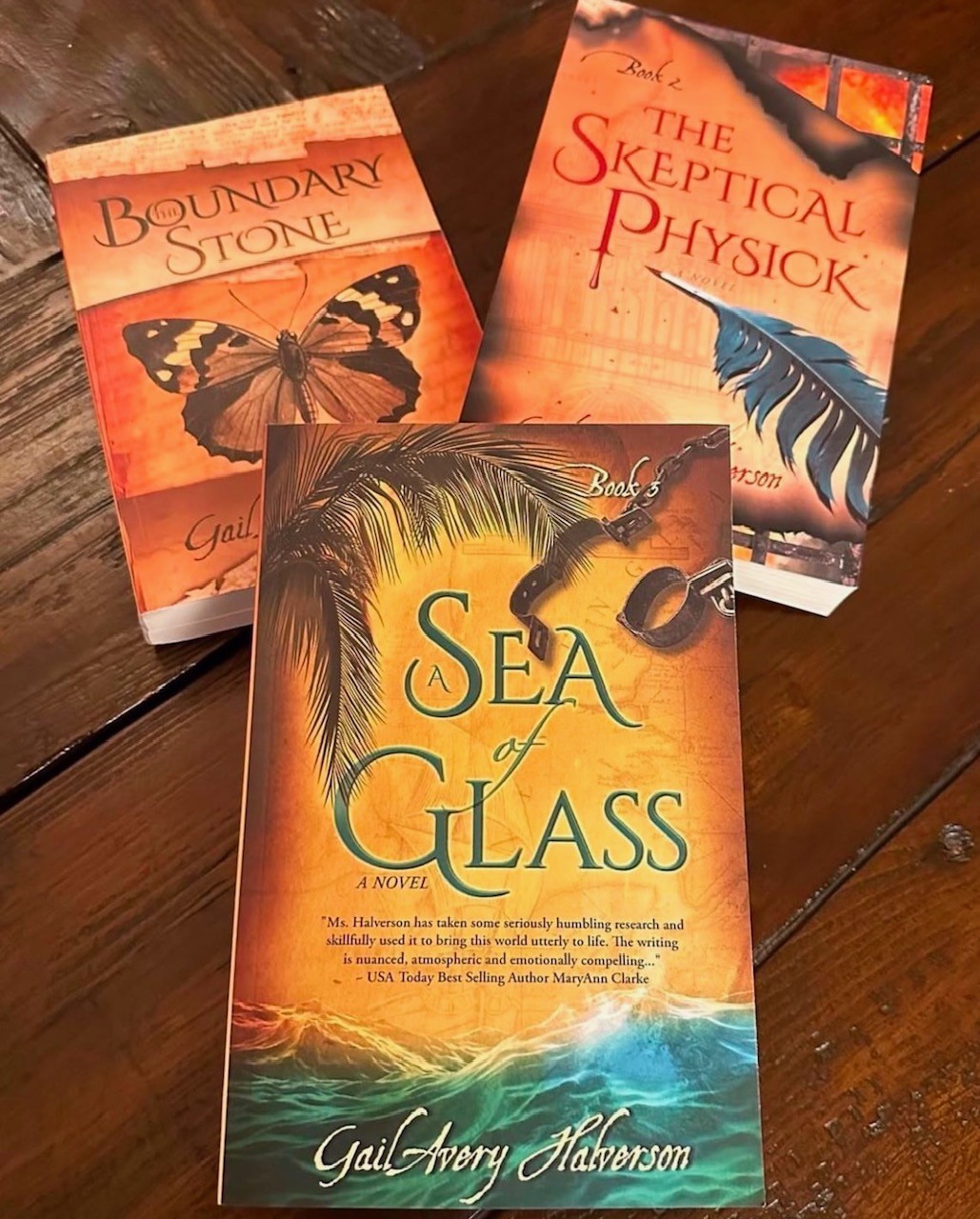
    We had the pleasure of speaking with Gail Avery Halverson recently. The author of the historical fiction romance novel Sea of Glass, Book Three in her Stockbridge Series. Avery Halverson took home the 2023 Chatelaine Grand Prize for Romance for Sea of Glass, and she’s sharing her journey to becoming an award-winning author with us today!

    Here’s what we talked about:


    Chanti: Your romance novel, Sea of Glass, also falls under the category of historical fiction. Can you talk about what drew you to both of these genres?

    Avery Halverson: I began writing in my twenties when I was a flight attendant and had a lot of days off during any given month. At first, I wrote mostly spec scripts for existing half-hour sitcoms to practice the craft of conveying a story through only what can be seen or heard. One of those spec scripts found its way to an agent in LA and after signing with her, I wrote two movie screenplays which were both optioned by Longbow Productions, but not made.

    I took some time away from writing to raise my son, and when he was a sophomore in high school, I began to toy with the idea of writing a novel. When I heard the story of ‘The Plague Village” in England, I knew I had my novel. From there, I had to learn a new style of writing that encompassed all the senses, in addition to creating accurate historical story arcs and believable, very real characters a reader would care about. After writing the first book, I was completely hooked!

    Chanticleer Book Reviews, CIBAs, woman, blonde, ribbons

    Chanti: Have you always been a writer? When did you realize you could write?

    Avery Halverson: There were several points along the way, and while I can’t say that any one of them were really a defining moment, when I was in third grade, I wrote a story about a little girl that had gone through the 1906 San Francisco earthquake. I knew in my heart the minute I finished the assignment that it was an A+ story. It turned out that the grade was exactly that, and when the teacher handed my story back, she told me that I had a real talent.

    The other defining writing moments were those early screenplay options; when I read the reviews of the first book; when I won the Chanticleer awards for all three books; and when a London agent at the agency representing Julian Fellows said I was very talented (sadly, due to a personal emergency, she was not taking on new writers). Although as all writers know, the most exciting, validating, and I think, thrilling “writer” moment, was the moment when I opened that first box of books with my name on the cover.

    Chanti: I can tell you have a good eye for accurate period details in your books. What draws you to write historical fiction?

    Avery Halverson: As I mentioned, the first fictional story I ever wrote was about a little girl going through the 1906 San Francisco earthquake, and as I think of it, that may be where my love of writing historical fiction began. Funnily enough, I don’t particularly read historical fiction – my tastes run more toward action – Ken Follet, Clive Cussler and the like, but I find I absolutely love the research involved in writing historical fiction. If I were to refine if further, I love using fictional characters to bring to light actual women in history who did not get the recognition they deserved for accomplishing some amazing things.

    books, covers, wood, planks

    Chanti: What areas in writing am I most confident about in writing?

    Avery Halverson: I feel very confident in two areas of the writing process. The first is story arc, and the second is dialogue. As to the former, I’ll insert another Chanticleer author question here – which is, which craft book(s) have helped the most. The answer to that question is the book How to Write a Screenplay in 30 Days by Viki King. She wrote the book many years ago, and while it was intended for screenplays, the information also applies beautifully to novels, as well. In the book, Ms. King describes a story arc as a clothesline, with clothespins evenly spaced. The clothespins are plot points, and the corresponding visual reference in her book made perfect sense to me, in that each book has a story arc, each chapter has a story arc, and each character has a story arc. In the case of my Stockbridge trilogy, I had to create an all-encompassing, three book story arc, as well, and I find the construction of all that fascinating. As to dialogue, I can only credit being a bit of a natural mimic – and many, many years of flying, listening carefully to not only a multitude of accents, but the vocabulary and word choices, the cadence, tone and even underlying sub-text of the conversations I heard from passengers.

    With respect to my books, I did a tremendous amount of research into the letters and formal writings of people in the 1600’s, not only in England but in early America as well and had to interpret that formality so that it captured the essence of what was being said, but did not sound as stilted as it did while reading the material. I also had to consider which social class a character belonged to and the way each group spoke, as well as in the case of Book Three, A Sea of Glass, the way a young, African American woman born in America, might have spoken. So, in terms of advice to a new writer, I would say eavesdrop all you can, then read your dialogue out loud after you’ve written it. Every single person on this planet has a different way of speaking – young vs. old, male vs. female, etc., and I’m always amazed when dialogue sounds stilted. People rarely, if ever, speak in grammatically correct sentences. Also, to a new writer, use the “find” button on your computer and try your very best to eliminate every single “ly’ adverb. Create a new way to say it – your writing will be clearer and far more concise.

    Chanti: Those are wonderful tips for writers getting started, and great advice for editing. Can you talk about what happens when you stall (if you do), with writer’s block?

    Avery Halverson: On occasion, I’ll run up against a brick wall where nothing comes to mind. When that happens, I usually dig deeper into history – nothing made up could ever top some of the things that actually happened. At one point in The Skeptical Physick, I needed a side character with a talent, which could then be something my heroine could learn. At that time, the Great Fire had just decimated nearly all of London, and my heroine had natural artistic talent, so I searched the history books and found Lady Elizabeth Wilbraham, a real-life 17th Century architect. Perfect. Lady Wilbraham and her story became that side character. I also try to read a few chapters leading up to wherever I am to get in the flow and that will usually get me started again. I also find that doing something else away from the computer – laundry, gardening, errands, or even soaking in the bath – allows my mind to wander and the creativity or solution to the current writing puzzle usually comes.

    Garden, flowers, house, blue door, terra cotta, pink, white, red

    Chanti: Taking time away from the screen can be one of the most valuable tools for moving forward. Would you talk a little bit about your writing “comfort zone?” Are you a structured writer, or do you write when the moment feels right?

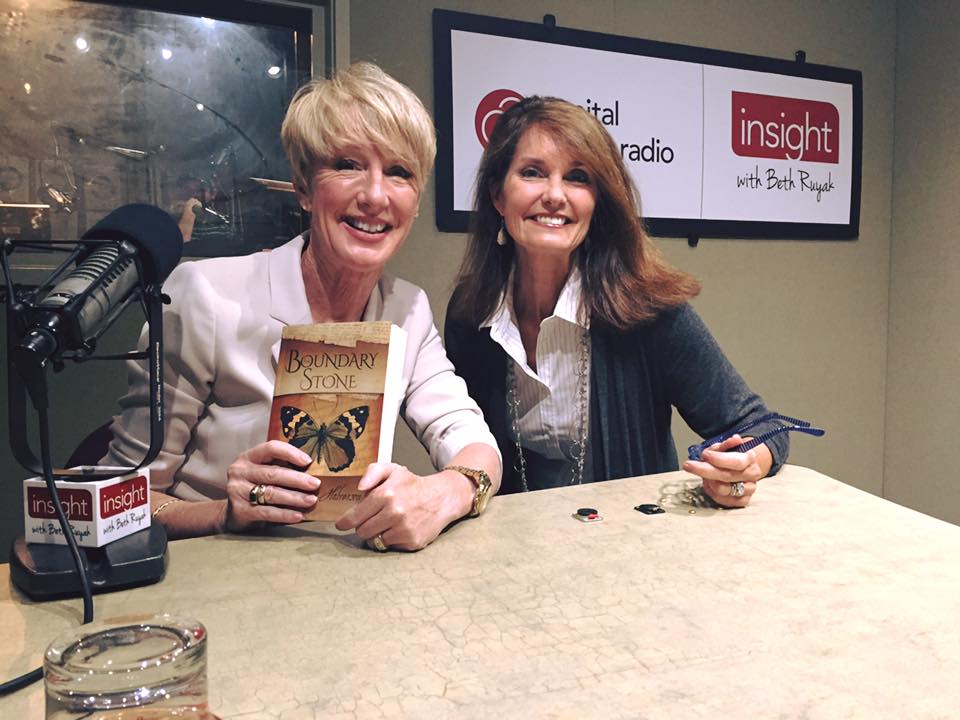
    Avery Halverson: When I started writing my novels, I was very disciplined. At first, I tried every desk and office area in my house, but finally ended up sitting on the couch, feet up on the coffee table in front of the fire. I would start at 9am sharp and write until noon. If I hadn’t written 1500 words, I’d began again at 3:00pm, then continue until I hit that number. With that structure, I finished my first book, The Boundary Stone in six months.

    I confess that I relaxed a bit on the next two books in the trilogy. I still tried to meet that 1500 word a day goal, but if a natural break point came and I’d only written 750 words, I would not panic, but I would spend the other hours editing or researching. I had a lot more fun that way, rather than forcing myself to reach a hard goal. Interestingly, I found that on most days, I would still exceed that 1500-word goal.

    Chanti: 1500 words a day is impressive! What excites you most about writing to keep that drive?

    Avery Halverson: What excites me most about writing are those two magical words, “The End.” I absolutely love accomplishing a goal I’ve set for myself, and I don’t think there’s a more exciting moment than finishing a novel. I also love those writing days when the words just seem to flow out, and the days when I don’t even look at the word count until I close the computer for the night and find I’ve written far more than I thought I had. I love writing a great scene, or even a great sentence, and I especially love the research into and writing about the extraordinary accomplishments of ordinary people long forgotten by history – especially women.

    two women, studio, book, cover design, blonde, brunette, blazer, white jacket

    Chanti: Your love of extraordinary people is clear in your intriguing cast of characters, absolutely! Who is the perfect reader for those forgotten stories of brilliant women?

    Avery Halverson: I think anyone who likes historical fiction with strong, intelligent characters and a touch of elegant romance. I’m not one for stories where someone deliberately makes a bad decision and ruins the lives of everyone else around them. I much prefer to write the stories of good people who are thrust into circumstances beyond their control and how they use their intelligence, their wits and their integrity to survive. It’s funny, I thought the trilogy would appeal to mostly women, but some of the best reviews I’ve had have been from men, so I hesitate to limit the category of readers.

    Chanti: I believe there are a lot of men who love romantic adventures! How do you come up with ideas?

    Avery Halverson: I read everything! I’ll read everything from the National Enquirer to Neuroscience News and anything in between, but my favorite thing to do is to go down Google rabbit holes. I’ll start with Wikipedia for a general introduction to historical figure or event, then start to dig from there, and in that digging I very often find the story.

    Gail AVery Halverson, bookstore, bench, coat, purse

    Chanti: Reading deeply is definitely crucial! What about for readers? What is the most important thing they can do to support an author who they want to read more of?

    Avery Halverson: I’ve found that the most important things a reader can do to help an author is to post reviews on Amazon, Goodreads and other reader sites, to create social media posts about the books, and to generate interest via word of mouth and any other promotional ideas they can think of, and an especially helpful thing is to invite an author to their book clubs. All authors are tremendously grateful to any reader offering to help promote their books!


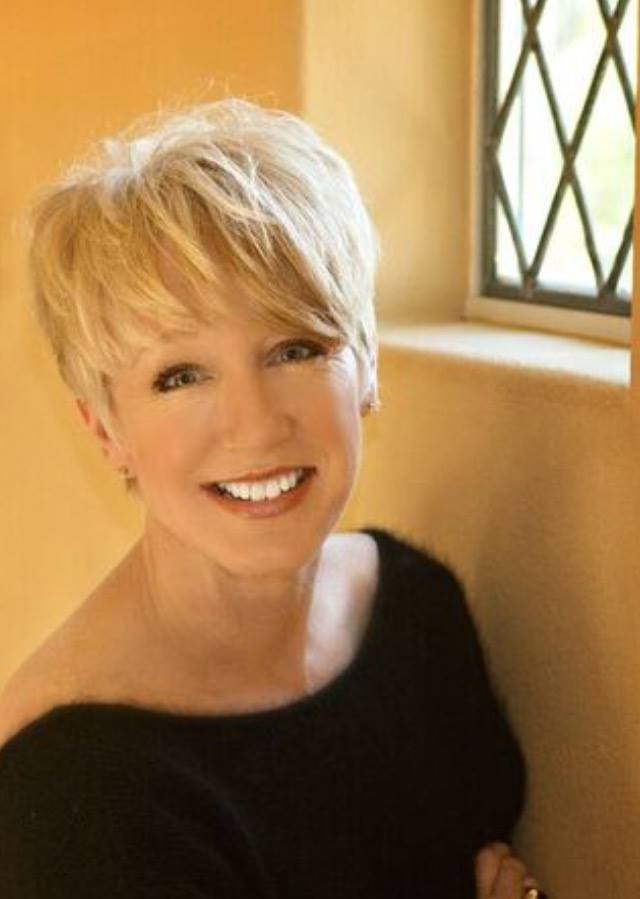
    blonde, woman, teeth, window, headshot, block, make up

    Award-winning writer, Gail Avery Halverson, is the author of The Boundary Stone, and its sequel, The Skeptical Physick, a historical romance novel set in 1666 England at the time of the Great Fire and the Scientific Revolution. The Boundary Stone is a Chaucer Award First Place winner (historical fiction) and The Skeptical Physick won First Place in the Chaucer Awards and 2019 Grand Prize in the Chatelaine Award. Sea of Glass was awarded Grand Prize in the Chatelaine Award in 2023. 

    Ms. Halverson is also the writer/producer for “Take it From The Top,” (sitcom pilot, Twin One Productions, Inc.), as well as the playwright and composer of musical plays that have been performed for nearly 300,000 children since 2004. Writing for both theater and television, she holds a B.A. in English Literature/Communications from the University of California, Davis, and is currently at work on the third novel in the Stockbridge Series. She lives in Northern California with her husband and son.

  • Mastering the Four Styles of Narrative Writing, a Chanticleer Toolbox Article from Dena Weigel and David Beaumier

    Narrative writing is one of the most powerful ways to tell stories.

    chalkboard, message, white, black, wood

    Giving your story a voice that readers connect with creates a world for them to become a part of as the story unfolds. Whether you’re crafting a novel, penning a memoir, or writing a short story, telling it as narrative will bring readers closer to your characters.

    What is Narrative Writing?

    This can be thought of simply as any type of writing that follows a plot and story bounded by time. It may be easiest to think of Narrative writing in terms of what it isn’t, which is prescriptive writing. Prescriptive writing is how-to, sometimes self-help, and cookbooks – anything that tells you how to do something rather than relating a sequence of events. Narrative writing, each with its own unique approach and purpose, are effective tools for crafting an interesting, compelling story. Understanding the purpose of the different types of narrative writing can help you fine-tune your storytelling skills and choose the right type to propel your story’s plot along.

    In this post, we’ll break down four types of narrative writing, explore its key characteristics, and offer tips on how to each type effectively in your writing. Whether you’re a seasoned writer or just starting out, mastering these different approaches will deepen your ability to captivate your readers and communicate your ideas with clarity and impact.

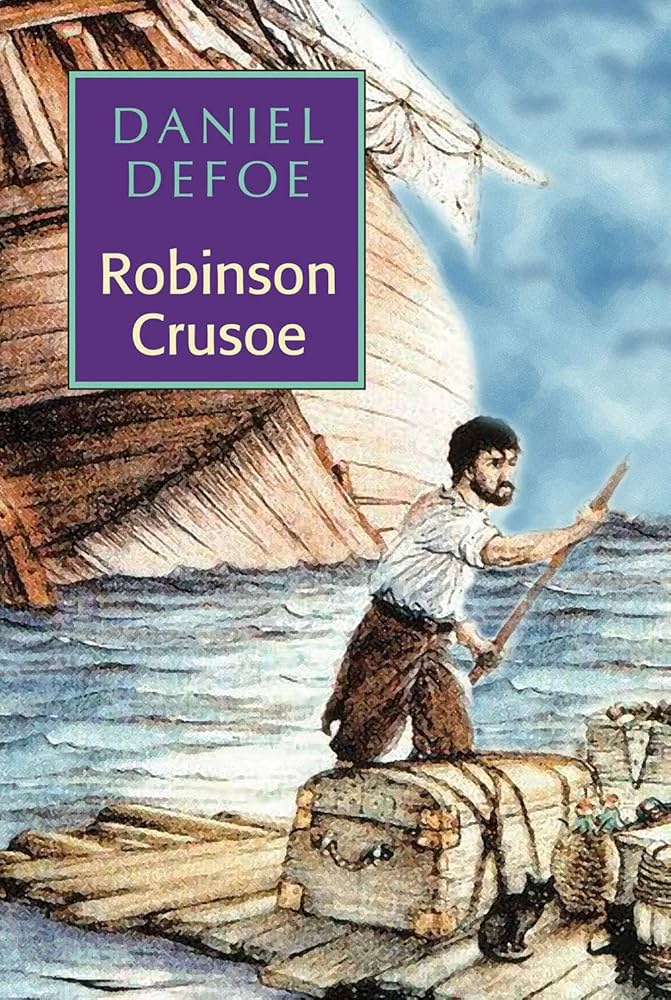
    Robinson Crusoe, book cover

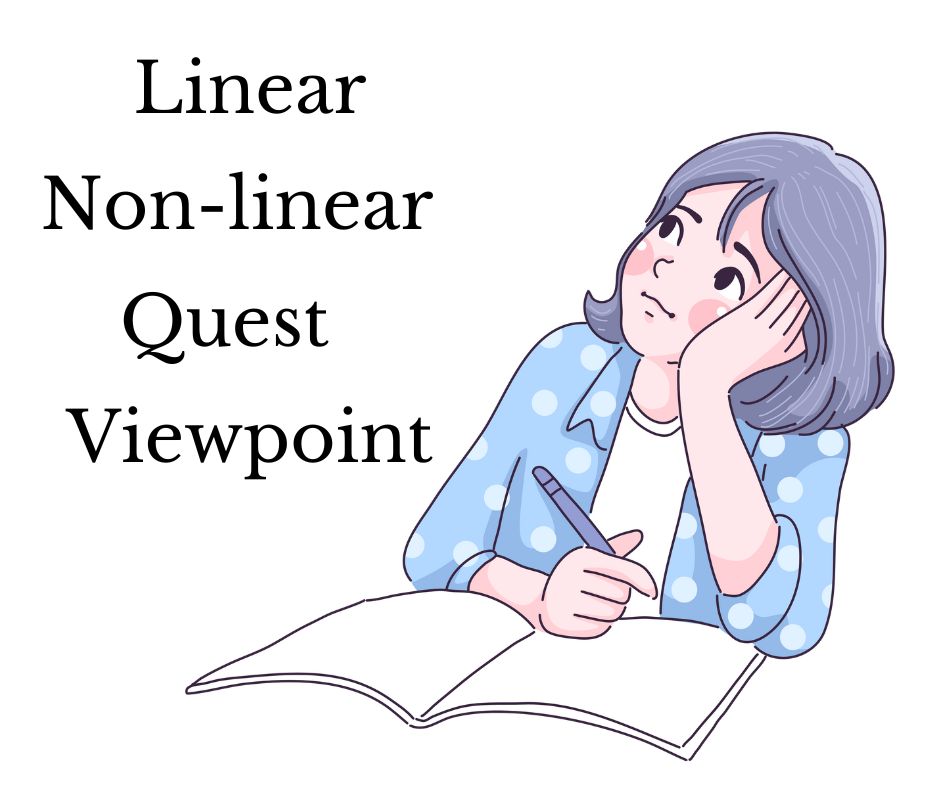
    1. Linear Narrative.

    A linear narrative presents events in the order they happen, taking the reader on a straightforward journey through time. This structure can be found in personal essays, autobiographies, and novels where clarity and progression are paramount. Robinson Crusoe by Daniel Defoe serves as a solid example as readers follow Crusoe’s daily life and struggles chronologically, experiencing his survival and growth in real time.

    Why choose linear storytelling?

    Linear narratives are perfect for stories where clarity and immersion are key. They allow readers to step into the protagonist’s shoes and experience events as they happen, fostering a sense of immediacy and intimacy. For authors, this structure helps maintain a steady pace and ensures that every event naturally builds upon the last, making it easier to keep the narrative focused and cohesive. Linear storytelling is probably the most common type of narrative, which makes it particularly effective for readers.


    2. Non-linear Narrative.

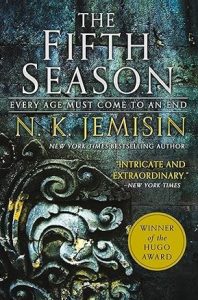
    Non-linear narratives present events out of chronological order, using flashbacks, flash-forwards, and shifts in perspective. This structure allows readers to piece together the story like a puzzle, often uncovering thematic connections and emotional truths along the way. These stories, which we’re about to talk about, are often rife with spoilers. A stunning example of this storytelling style is N.K. Jeminsin’s The Fifth Season, which intertwines timelines and perspectives to reveal more about that world than a linear viewpoint could and culminates in a groundbreaking twist that will drive readers to turn the pages again and again. The fragmented structure mirrors the fractured realities of the story’s characters, creating an emotionally resonant and intellectually stimulating story for readers.

    Why choose Non-Linear Storytelling?

    Authors can be drawn to non-linear narratives for the opportunity to build suspense, deliver surprises, and exploring intricate themes without being hampered by a strict timelines. For readers, this style can draw them in as they actively work to piece together the narrative. It invites them to experience the story on multiple levels, often increasing the joy of not only reading the book, but re-reading it. Other great examples of non-linear narratives in media are the TV show Lost and the movie Pulp Fiction.

    3. Quest Narrative.

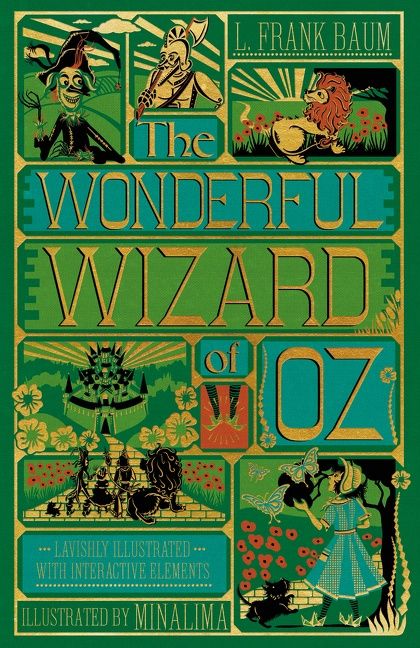
    A quest narrative centers on a protagonist who embarks on a journey to achieve a specific goal. This structure can be see in Frank Baum’s The Wizard of Oz, where Dorothy travels through strange lands, faces challenges, and learns valuagle lessons, all in pursuit of returning home to Kansas. As her journey unfolds, she makes friends, finds mentors, and confronts her fears, all leading to a story of transformation.

    Why choose Quest Storytelling?

    Similar to linear narratives in many ways a quest narrative could be considered our first “subset” of narrative style. However, quest storytelling, like the romance genre, has a few key points that must be touched upon. The protagonist must overcome external obstacles and internal struggles to achieve their goal, and at the end they must have gone through a transformation. Quests fit best for stories where growth is a central theme. Readers connect deeply with quest narratives because of the way they mirror universal experiences of striving, learning, and triumphing against all odds. This timeless framework excels at emotional resonance and a satisfying payoff.


    4. Viewpoint Narrative.

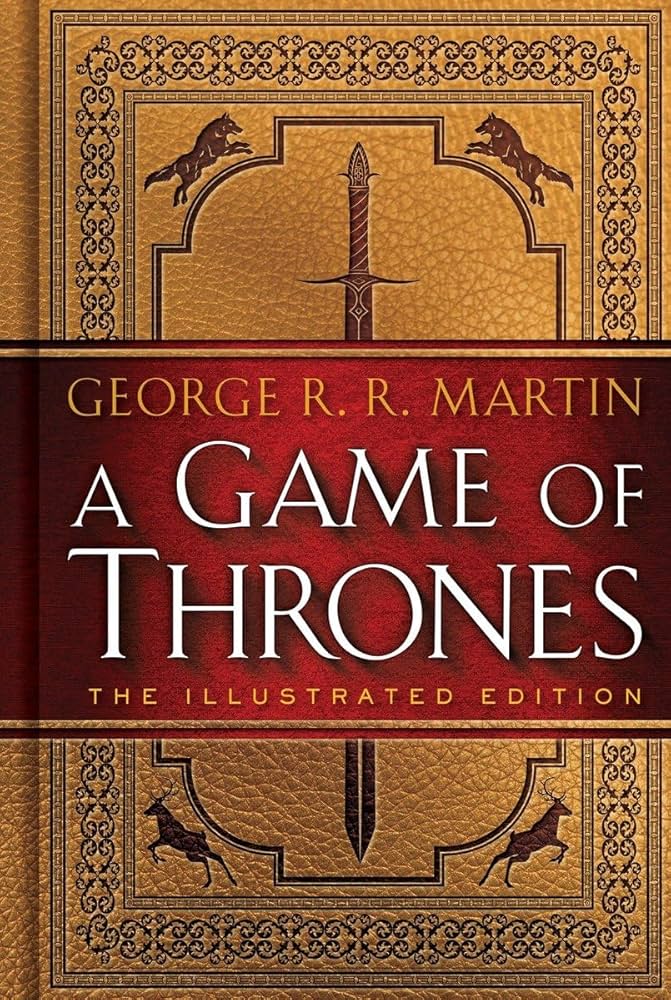
    Viewpoint narratives delve into the lives and perspectives of multiple characters, offering a kaleidoscopic view of the story. George R.R. Martin’s A Game of Thrones shines as an example of this structure, with each chapter revealing events and motives from the point of view of difference characters. This multifaceted approach allows for a deeper view of plot that reveals layers of intrigue as the readers are able to see what happens through a diverse variety of lenses.

    Why choose Viewpoint Storytelling?

    Viewpoint narratives create rich, multifaceted worlds where the reader can explore the depth of multiple characters and storylines. For authors, this structure adds a layer of complexity to their tales as the shifting perspectives can unveil hidden truths, add suspense, and explore contrasting ideologies. Readers are drawn into the intricacy of the narrative, finding their loyalties and perceptions constantly tested, making for an immersive and dynamic storytelling experience.

    Why Narrative Style Matters

    quill, candle, arm

    First off, this is hardly a comprehensive list of narrative styles, just examples of some of the ones most commonly seen today. There’s plenty of overlap as well between these, as you could have a non-linear, quest focused story with multiple viewpoints.

    Each narrative structure—linear, non-linear, quest, or viewpoint—shapes the way readers connect with your story. By experimenting with different styles, you can tailor your storytelling to match the themes and emotions you want to evoke.

    As an exercise, we recommend trying to write the same scene following different styles. Including quest adds a fun element of tone to explore as you go through it! If you don’t have a story, you can try rewriting parts from our own David Beaumier’s short story Medusa, which  you can read here.

    A promotional image for the incredible Everything Everywhere All At Once movie featuring Michelle Yeoh
    Think of the exercises like balancing the universes in Everything Everywhere All At Once
    • Linear Narrative: Your story may already be like this, but if not, remember to focus in on moving from one point to another, and exploring what it would mean for a non-linear story to come out in order.
    • Non-Linear Narrative: Here the question is what comes first and what comes last? Does it need to overlap in different ways (possibly with multiple perspectives) to make this story work? Thinking of Medusa would we need to see Melody’s interrogation from her perspective first and then have a flashback to the attack with her brother?
    • Quest Narrative: Thinking of a classic story like The Hobbit, what is the call to action for this story? What is the external and internal adversity faced by the main character, and then how do they transform by the end? Medusa would need to be expanded to do that, but Allison could be well on her way to creating a home and safe place for people with strange and unusual powers where they won’t be harmed by the mysterious Visitation.
    • Viewpoint Narrative: What does everyone in the scene think? If way your story is written only has one character is there an object that could have a viewpoint? Is someone listening in? Or is there another scene that can be added from the point of view of the person who the characters are talking about?

    Understanding these narrative techniques will help maximize your creativity and craft stories that captivate, surprise, and stay with your readers long after “The End.”


    Chanticleer Editorial Services – We’re ready when you are ready!

    Did you know that Chanticleer offers editorial services?

    We do and have been doing so since 2011!

    Tools of the Editing Trade

    Our professional editors are top-notch and are experts in the Chicago Manual of Style. They have and are working for the top publishing houses (TOR, McMillian, Thomas Mercer, Penguin Random House, Simon Schuster, etc.).

    For more information, please reach out to us at info@ChantiReviews.com.

    We work with a small number of exclusive clients who want to collaborate with our team of top-editors on an on-going basis. Contact us today!

    Chanticleer Editorial Services also offers writing craft sessions and masterclasses. Sign up to find out where, when, and how sessions being held.

    A great way to get started is with our manuscript evaluation service: https://test.chantireviews.com/manuscript-reviews/

  • Building Frankenstein’s Monster: Creating Characters That Move Your Readers

    “Beware; for I am fearless, and therefore powerful.”
    Mary Shelley, Frankenstein

    Writers of every genre all face the challenge of creating meaningful, memorable characters that are fully fleshed out and believable. It’s a feat of magic that, if done right, creates the kind of characters that readers connect with and may even glance something they recognize within themselves.

    Frankenstein, lab, monster, igor, movie, black and white

    Get out your scalpels my writing friends, because today we’re going to dissect how to create a great character!

    When a writer sets out to create a memorable character they assume the role of a mad scientist, taking pieces of a person’s physical, intellectual, and emotional self and mixing them together to create their version of the type of person they need for their plot. It’s a delicate procedure of hitting the right mark, without going over the top or leaving them flat and uninteresting. If done right, a writer can create an unbreakable link between their characters and the reader, regardless of whether it’s a human, animal, or even a monster!

    Mary Shelley’s Frankenstein is a great example of this. The plot’s profound exploration of human nature, ethics, and the consequences of scientific ambition makes for fertile ground for showing the complexities of her realistic and fantastical characters. The sympathy Shelley is able to elicit from the reader for her “Monster” makes the novel resonate with readers across all boundaries and offers rich lessons for writers looking to craft their own unforgettable personas.

    Vitruvian Man, leonardo da vinci, black, white, circle, square

    Here’s a deep dive into how Shelley developed her characters and what we can learn from her approach.

    1. Complex Protagonists

    One of the most striking features of Frankenstein is its dual protagonists: Victor Frankenstein and his creation, often referred to as “the Monster.” Both characters are distinctly different, multi-dimensional, and able to elicit empathy despite their flaws.

    Lesson: Embrace Complexity

    When creating characters, avoid the temptation to make them purely good or evil. Victor is ambitious and passionate, but his hubris leads to tragedy. The Monster, on the other hand, starts as a blank slate, driven by a desire for companionship and understanding but ultimately succumbs to despair and violence. By portraying your characters with a mix of virtues and vices, you invite readers to explore the complexities that are ingrained inside each character.

    2. Strong Drive

    Shelley provides compelling motivations for her characters, which drive the narrative forward. Victor’s desire to have dominion over life and death through his creation stems from a blend of intellectual curiosity and personal loss. The Monster’s longing to find his humanity in the love and acceptance he expects to receive from others illustrates the fundamental human need for connection.

    Lesson: Define Clear Motivations

    When crafting your characters, think deeply about what drives them. Their goals should be relatable, allowing readers to understand their choices, even when those choices lead to tragic outcomes. Clear motivations can create a strong emotional bond between the reader and the character, which makes each individual journey more impactful.

    people, heart, books, colors

    3. Relationships that Shape Identity

    The relationships between characters in Frankenstein are critical in shaping their identities and trajectories. Victor’s relationships with his family, friends, and the Monster highlight themes of isolation, responsibility, and the consequences of neglect. The Monster, a blank slate at his incarnation, responds to Victor’s mishandling of his care with a combination of confusion and sadness until he eventually becomes a dark force who turns to self-imposed isolation to save himself.

    Lesson: Develop Interconnected Relationships

    As you build your characters, consider how their relationships influence their development. Interactions with others can reveal vulnerabilities and strengths, adding depth to your characters. Show how relationships can uplift or destroy, creating a dynamic that enriches the narrative.

    4. Thematic Depth

    Shelley’s characters are not just vehicles for the plot; they embody the novel’s themes of ambition, isolation, and the quest for understanding. The struggles of both Victor and the Monster reflect broader questions about humanity’s place in the world.

    Lesson: Infuse Characters with Thematic Significance

    Think about how your characters can serve as representations of the themes you want to explore. Their experiences should resonate with the central ideas of your story, prompting readers to reflect on larger questions. When characters embody your themes, their journeys become more profound and thought-provoking.

    red, black, two people, man, woman

    5. Evolution Through Conflict

    Both Victor and the Monster undergo significant transformations throughout the novel. Their encounters with conflict force them to confront their values, desires, and the repercussions of their actions.

    Lesson: Allow Characters to Grow and Change

    Conflict is essential for character development. Whether it’s internal struggles or external challenges, ensure your characters face obstacles that force them to grow. By the end of their journey, they should reflect on their experiences and provide a satisfying arc that resonates with the reader.

    Mad science, scientist, lab, skulls, light

    Mary Shelley’s Frankenstein offers a masterclass in character creation. By embracing complexity, defining clear motivations, developing meaningful relationships, infusing thematic depth, and allowing for character evolution through conflict, you can craft characters that leave a lasting impression on your readers.

    As you write, remember that characters are not just components of your story; they are the heart and soul that breathe life into your narrative. Take a page from Shelley’s playbook, and let your characters inspire, challenge, and engage your audience in a dialogue that transcends time and space.


    Thank you for joining us in celebrating a literary icon, Mary Shelley!

    Do you have a book that deserves to be discovered? You can always submit your book for an Editorial Review with Chanticleer!Chanticleer Editorial Review Packages are optimized to maximize your digital footprint. Reviews are one of the most powerful tools available to authors to help sell and market their books. Find out what all the buzz is about here.

    Is your book an Award Winner?

    The tiers of achievement for the CIBAs

    Submitting to Book Awards is a great way to get your book discovered! Anytime you advance in the Chanticleer Int’l Book Awards, your name and book are promoted right here on our website, through our newsletter, and across social media. One of the best ways to engage in long tail marketing!

    The Shelley Awards for Paranormal Fiction features an image of Mary Shelley at her writing desk

    The Shelley Awards for Paranormal & Supernatural Fiction are open through Oct 31st!

    Don’t miss out on your chance to introduce your characters to new readers!


    Chanticleer Editorial Services – when you are ready

    Did you know that Chanticleer offers editorial services? We do and have been doing so since 2011.

    Tools of the Editing Trade

    Our professional editors are top-notch and are experts in the Chicago Manual of Style. They have and are working for the top publishing houses (TOR, McMillian, Thomas Mercer, Penguin Random House, Simon Schuster, etc.).

    If you would like more information, we invite you to email Kiffer or David at KBrown@ChantiReviews.com or DBeaumier@ChantiReviews.com for more information, testimonials, and fees.

    We work with a small number of exclusive clients who want to collaborate with our team of top-editors on an on-going basis. Contact us today!

    Chanticleer Editorial Services also offers writing craft sessions and masterclasses. Sign up to find out where, when, and how sessions being held.

    A great way to get started is with our manuscript evaluation service. Here are some handy links about this tried and true service: https://test.chantireviews.com/manuscript-reviews/

    And we do editorial consultations. for $75.  https://test.chantireviews.com/services/Editorial-Services-p85337185

    Writer’s Toolbox

    Thank you for reading this Chanticleer Writer’s Toolbox article.

    Writers Toolbox  a few more Helpful Links: 

    The INCITING INCIDENT: STORY, SETBACKS and SURPRISES for the PROTAGONIST – A Writer’s Toolbox Series from Jessica Morrell’s Editor’s Desk

    ESSENCE of CHARACTERS – Part One – From the Jessica Morrell’s Editor’s Desk – Writer’s Toolbox Series

  • Finding Your Writing Voice: A Journey to Authenticity from the desk of Dena Weigel

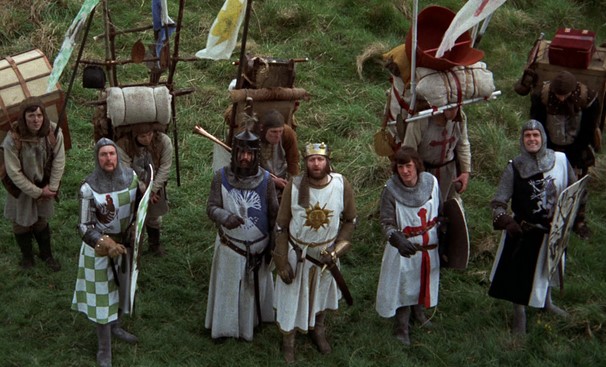
    Finding your writing voice can feel like a quest for the Holy Grail of self-expression.

    And hopefully no one will smell of elderberries by the time you find your writing voice!

    Your writing voice is the unique blend of style, tone, and personality that makes your writing distinct and yours. Whether penning a novel, crafting an essay, or composing a blog post, discovering and honing your voice is crucial for resonating with your audience and truly connecting through your words.

    Here’s a guide to help you on your journey to finding your authentic writing voice:

    computer, notebook, phone, pens, writing

    Write Regularly and Freely

    The first step in uncovering your writing voice is to write regularly. Set aside time each day or week to write without worrying about perfection. Free writing, journaling, or even experimenting with different genres can help you explore various styles and tones. The more you write, the more you’ll start to notice patterns and preferences that signal your natural voice, and this will define your voice.

    Even committing to five minutes a day can work wonders. Many find setting either a time or a word count goal to keep themselves accountable leads to the best results.

    Experiment and Iterate

    Finding your voice is an iterative process. Experiment with different styles, tones, and formats. Don’t be afraid to take risks and push boundaries. Through trial and error, you’ll refine your voice and discover what works best for you. And, remember, your voice may evolve over time, and that’s a natural part of growth as a writer. Just go with it and trust your instincts.

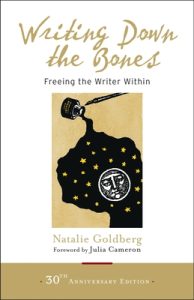
    Prompt books like Natalie Goldberg’s Writing Down the Bones can help you delve even deeper into different styles until you find the one that fits you best.

    Writing down the Bones by Natalie Goldberg cover

    With insight, humor, and practicality, Natalie Goldberg inspires writers and would-be writers to take the leap into writing skillfully and creatively. She offers suggestions, encouragement, and solid advice on many aspects of the writer’s craft: on writing from “first thoughts” (keep your hand moving, don’t cross out, just get it on paper), on listening (writing is ninety percent listening; the deeper you listen, the better you write), on using verbs (verbs provide the energy of the sentence), on overcoming doubts (doubt is torture; don’t listen to it)—even on choosing a restaurant in which to write. Find it here.

    Read Widely and Deeply

    Expose yourself to a range of voices by reading diverse authors and genres. Try different methods, from reading one author and analyzing their language, structure, and tone, to reading a selection of books in different genres from a variety of authors to see what standards exist in each different genre, and how that might impact your own writing. Jessica Brody’s Save the Cat! Writes a Novel can be a great starting point to understanding genre, while George Saunders A Swim in a Pond in the Rain offers a masterclass in a book for how to analyze literature (at least Russian literature).

    Pay attention to what resonates with you and why. Analyze how different writers use language, structure, and tone to convey their message. This not only broadens your understanding of different styles but also helps you identify elements you want to incorporate into your own writing.

    Clouds, thinking, cartoon

    Reflect on Your Influences

    You know about the canon of literature you had to study in school. What is your own personal canon? Daniel Handler, AKA Lemony Snicket of the Series of Unfortunate Events fame details his own personal literary canon in his memoir And then? And then? What else? Consider what would be put into your own canon of reading to build up to your style of writing and inspiration. How does your relationship with those books change when you think of htem as your own personal canon. Understanding these influences can help you pinpoint the qualities you wish to integrate into your own voice while still making it uniquely yours.

    Write for Yourself

    Ultimately, writing for yourself is the most crucial step. Write what you’re passionate about and in a way that feels natural to you. When you focus on expressing your own ideas and emotions honestly, your voice will emerge naturally. Remember, writing is a personal journey, and your voice is a reflection of your unique perspective.

    Love yourself, beach, water, ocean, waves, sky

    Embrace Your Authentic Self

    Your writing voice is a reflection of who you are. Embrace your quirks, perspectives, and experiences. Don’t be afraid to let your personality shine through your writing. Authenticity resonates with readers more than a polished, but impersonal, style. Write from your heart and trust that your genuine voice will come through.

    Seek Feedback

    While we are often told writing is a solitary activity, you being here reading these words just shows how much community is needed for writing and writers to succeed! Writing groups can often be found at your local bookstore or through your local library. You can also join online communities like The Roost, which feature regular write-ins, online workshops, and so much more!

    Email AuthorOutreach@Chantireviews.com to learn more about The Roost, where Authors like to Perch!

    You can learn about all sorts of writing groups here.

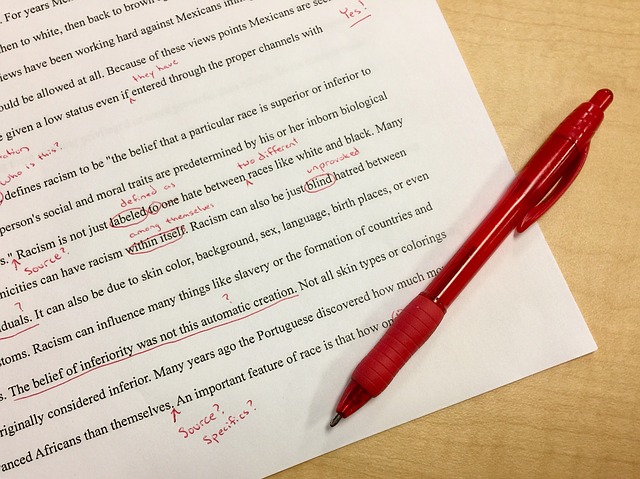
    Once you get feedback from those in community, the next step is to hire a professional to look at your work. In the Big Five Traditional Publishing Houses over 40 pairs of eyes will look at your work. If indie publishing or publishing through a small press, hiring a professional for a Manuscript Overview, or other Editorial Services like Developmental Editing, Line Editing, Copy Editing, or Proofreading is crucial to standing out from the millions of books that are published every year!

    Trust in Yourself and Let Your Voice Be Heard!

    Finding your writing voice is a rewarding journey of self-discovery and creative expression. By writing regularly, exploring various influences, and staying true to your authentic self, you’ll gradually uncover a voice that’s uniquely yours. Embrace the process with patience and curiosity, and remember that your voice is an evolving aspect of your writing. Happy writing!


    Chanticleer Editorial Services – when you are ready

    Did you know that Chanticleer offers editorial services? We do and have been doing so since 2011.

    Tools of the Editing Trade

    Our professional editors are top-notch and are experts in the Chicago Manual of Style. They have and are working for the top publishing houses (TOR, McMillian, Thomas Mercer, Penguin Random House, Simon Schuster, etc.).

    If you would like more information, we invite you to email Kiffer or David at KBrown@ChantiReviews.com or DBeaumier@ChantiReviews.com for more information, testimonials, and fees.

    We work with a small number of exclusive clients who want to collaborate with our team of top-editors on an on-going basis. Contact us today!

    Chanticleer Editorial Services also offers writing craft sessions and masterclasses. Sign up to find out where, when, and how sessions being held.

    A great way to get started is with our manuscript evaluation service. Here are some handy links about this tried and true service: https://test.chantireviews.com/manuscript-reviews/

    And we do editorial consultations. for $75.  https://test.chantireviews.com/services/Editorial-Services-p85337185

    Writer’s Toolbox

    Thank you for reading this Chanticleer Writer’s Toolbox article.

    Writers Toolbox  a few more Helpful Links: 

    The INCITING INCIDENT: STORY, SETBACKS and SURPRISES for the PROTAGONIST – A Writer’s Toolbox Series from Jessica Morrell’s Editor’s Desk

    ESSENCE of CHARACTERS – Part One – From the Jessica Morrell’s Editor’s Desk – Writer’s Toolbox Series

  • The Art of Critique from the Desk of David Beaumier

    Understanding Peer Review and Feedback

    A Crucial Critique Skill for Authors

    Oftentimes when someone joins a critique group, it’s not because they’re in dire need of a free proofreader. They are looking to learn if their writing is any good, as Kiffer Brown says “Does it have a beat? Can you dance to it?”

    If you’d like to start your self-editing journey first, you can start here! Plus we have a secret solution to really get the feedback you need as an author! Read on to the end to learn what it is!

    While a work can be written in such a way that the errors make it unclear what the author wants to communicate. So, let’s get started.

    Ikebana is the Japanese art of arranging flowers. It can have more to do with writing than you would expect!

    What are the Guidelines for Critique?

    While every writing group will have extraordinarily varied suggestions for offering feedback, they often have a few golden rules:

    • Stay positive. We are critiquing, not criticizing.
    • Remember that suggestions should enhance the story through the author’s voice, rather than stating a variant of “this is how I would write it.”
    • We critique the work rather than the author. Look at what in the writing doesn’t work for you and address that.

    Let’s talk about each of those suggestions in greater detail.

    Staying Positive

    Not quite what we mean…

    No one wants to be in the group where people simply say “it was good, I liked it.” That’s not what we mean by positivity.

    The reason this rule is so common is that almost everyone who has ever submitted to a writing group has had at least one person thoroughly eviscerate a piece, calling it offensive, a waste of time, and of completely zero worth. This kind of feedback is about as helpful as “it was good I liked it,” because it doesn’t actually tell the author anything about the work.

    A sad looking Indian man in a blue shirt
    This guy isn’t getting actionable feedback!

    The best critiques often focus on direct observations or questions regarding the work. Pointing out contradictions and plot holes, or saying when a line rings true and why it rings true. For example, if your character is a member of the Canadian Royal Mounted Police, but doesn’t know how to ride a horse, there might be some questions as to why that is. Basics in Non-Violent Communication can really help get started in giving observational feedback (and hearing critique generally). You can read more about that here. For a less intensive and more focused look at just critique (as opposed to overall lifestyle), you can see this article by author and professor Brenda Miller here.

    In the end, the best critiques follow through and explain why the reader had the reaction to the text that they did.

    “Well, this is how I’d write it”

    Hopefully your critiques aren’t overwhelming the author

    Hopefully your critiques aren’t overwhelming the author

    Unless the reader is a co-author on the work in question, this statement is probably not geared toward helping the author’s voice come through.

    When writing my first book at around age ten, I tentatively showed it to my father. He added quite a bit to the first chapter, which focused on a tornado coming and whisking the main character away to a magical world where animals talked. Every place where he made a change stood out like someone had attempted to jam two different polaroids together with the hope no one would notice. –David

    Again, a focus on questions and observations can often help the author come up with the solution on their own.

    Friends, women, books, computer, smiling

    For example: “I noticed that there wasn’t a lot of setting description in this scene. Would there be a way to describe where the characters are having their conversation, both to add to the atmosphere of the story and to offer some beats that break up the dialogue?”

    This will let the author make the change instead of adding a new POV of the main character’s mother doing dishes and listening to smooth jazz in the background.

    We critique the Work, not the Author

    At this point, it seems clear that the focus is on the text. A character does things, and the author simply records them. However, while it’s always good to give the people critiquing work feedback, this is a crucial place to offer suggestions to the author.

    Remember that, as the author, people are not giving feedback as an attempt to sabotage the story or to make it worse. While all feedback isn’t useful, it is given with the intention of helping, and hearing it as something intended to help often makes listening to a critique easier.

    As such, here are a couple tips when receiving critique on your work.

    • Listen. Interrupting or arguing with the person giving you feedback means you have less time to receive a critique.
    • Remember that the work is yours. No one can force you to change your work, so there’s no need to quibble about what a reader sees as a must-have change that you won’t implement.
    • Ask questions. As you hear your critique, track places where you don’t understand where the reader is coming from or if you’re not sure you understand the motivation behind what they’re saying.
    • Say thank you. The best critiques are to improve your work, not review or judge it, and the reader’s work should be appreciated.

    Not sure how to get started on a group? Check out this article here to learn the ins and outs of forming a critique group!

    The Secret to get the Most out of your Critiques!

    The Secret to Successful Publishing

    Are you ready for this? The best thing you can do to guide the critique you receive is…

    Include specific questions and instructions for what you would like for your readers.

    The Number 1 request I get as an editor is to “Tear my work apart.” This guidance is about as helpful for an editor as “It was good” is helpful to a writer. – David

    By the time work is being submitted for critique, writers will hopefully have a good understanding of their own weaknesses. Setting, plot, and dialogue are common areas of focus. If you’re just getting started and not sure what to ask for, that’s alright! As you receive feedback, be sure to write down common feedback suggestions, like too many movie references that distract from the flow of the story, or not enough Star Trek references in your blogpost.

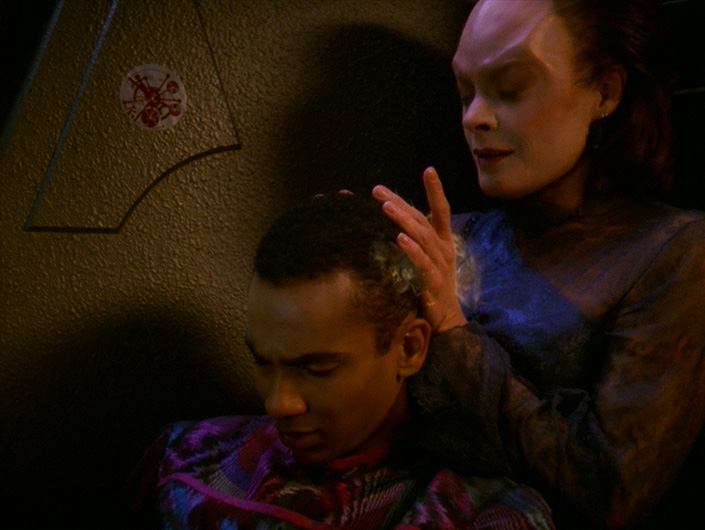
    We don’t recommend sacrificing all your creative energy at once to finish your work. Cirroc Lofton and Meg Foster as Jake Sisko and Onaya in the Deep Space 9 episode Muse

    Regardless of what your weaknesses might be, no editor is a mind reader. Many will be able to help, but the only way to guarantee you receive feedback on the craft elements you are most concerned for is to ask for it directly. Using a service like an MOV can be a great start to begin orienting your work to get the nitty gritty feedback of a Line Edit from a group before you commit to a professional Line Edit.

    Read Responsibly

    With that, you’re ready to go off and take a more active role in your writing community. We believe in you and know that you’ll do great!


    Thank you for joining us for this Writer Toolbox Article

    A red toolbox with the words "What's in your toolbox

    There is so much to learn and do with Chanticleer!

    From our Book Award Program that has Discovered the Best Books since the early 2010s to our Editorial Book Reviews recognizing and promoting indie and traditional authors, Chanticleer knows your books are worth the effort to market professionally!

    Helpful Toolbox Articles:

    When you’re ready,did you know that Chanticleer offers editorial services?We do and have been doing so since 2011.

    Our professional editors are top-notch and are experts in the Chicago Manual of Style. They have and are working for the top publishing houses (TOR, McMillian, Thomas Mercer, Penguin Random House, Simon Schuster, etc.).

    If you would like more information, we invite you to email us at info@ChantiReviews.com for more information, testimonials, and fees.

    We work with a small number of exclusive clients who want to collaborate with our team of top-editors on an on-going basis. Contact us today!

    Chanticleer Editorial Services also offers writing craft sessions and masterclasses. Sign up to find out where, when, and how sessions being held.

    A great way to get started is with our manuscript evaluation service, with more information available here.

    And we do editorial consultations for $75. Learn more here.

  • Making Character Introductions Memorable from the Desk of Editorial Assistant Scott Taylor

    Think of Characters like Speed Dating

    A white man around 40 gestures flirtatiously
    Is he actually cute?

    Who is This Guy and Why Should I Care?

    Writers often fall in love with our characters before their names ever appear on a page. They’re charming, intimidating, scrappy, and clever. Most of all, they matter to us.

    But how do you get the reader to agree that this brainchild of yours is worth checking out? Like all good first impressions, shaping how your character enters the story is important.

    This introduction will shade every other moment the character will have. Here are three tips to give your characters the best chance at a second date.

    Lights, Camera, Action!

    When the character enters they need to be doing something important. Maybe it’s key to the plot, maybe to themselves or another person—or, even better, both.

    We see characters through their actions: What they’re capable of, what they’re willing to do, what they want. And seeing what someone is in a position to do tells the reader almost everything they need to know about the role that person will play in the broader story.

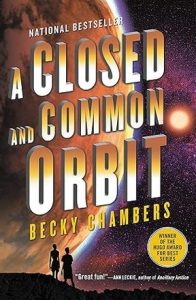
    In her sci-fi novel A Closed and Common Orbit, Becky Chambers introduces the character Owl by having her save a young girl’s life.

    She felt some spit hit the back of her leg.

    The voice changed. ‘Hey! This way! Come towards me!’

    There was no time for questions. Jane 23 ran at the voice.

    A machine stuck out from one of the scrap piles, a huge machine with thick sides and — and a door.

    Though Owl is only known as a nameless, disembodied voice at this point, she’s already a meaningful character—a sanctuary of kindness in an otherwise horrifying ordeal.

    This immediately establishes a dynamic between Owl & Jane 23—savior and saved. With this foundation, Chambers develops a deep and resonant relationship between the characters, as Owl guides Jane 23, encouraging her to keep going despite all the danger and hardship around her.

    This introduction also serves the function of pushing the plot forward. Jane 23 has her first real chance at survival. She escapes the beasts—for now.

    While not every character needs such a dramatic entrance, consider whether some of your characters might be well-illustrated by emphasizing them first with action. This may be delivering a casserole to a grieving widow, binding a magical beast in chains of cold iron, or stuffing a wedding invitation deep at the bottom of a cluttered drawer.

    And speaking of drawers…

    In what environment do we first find your character?

    A prison cell implies too much to list here. Go deeper. Ask yourself what does your character have on the wall of their prison cell? This is a great opportunity for contrast. You can show how your character relates to the world around them, how they clash or are at peace with it.

    This tells the reader what kind of power they hold. Remember, that also means what kinds they clearly do not. If your character visits wealthy distant relatives, are they put in an opulent guest room or are they relegated into the former servant’s quarters?

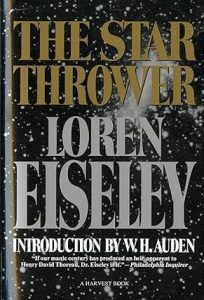
    Loren Eiseley opens his short story, The Star Thrower, with an impactful example of contrast and powerlessness. The protagonist muses on how he’s come to a place called Costabel, concluding that his arrival there might have been simply inevitable. He immediately relinquishes his agency, which is given significant meaning by the description of the beach itself.

    The beaches of Costabel are littered with the debris of life. Shells are cast up in windows; a hermit crab, fumbling for a new home in the depths, is tossed naked ashore, where the waiting gulls cut him to pieces. Along the strip of wet sand that marks the ebbing and flowing of the tide, death walks hugely in many forms.

    He isn’t just resigned to the idea that he would inevitably end up somewhere—but here. A place where uncaring fate casts vulnerable creatures to their deaths. It’s easy to see the kinship he shares with them.

    This gloomy introduction reveals his lack of self-worth and deep sorrow, which, crucially, frames the protagonist’s experiences and transformation through this story.

    What’s Your Problem?

    A young Asian woman is on a first date at a nice restaurant.
    So, why are you still single?

    Characters are most interesting when they’re actively dealing with their big conflict!

    This is obvious with protagonists, but especially consider also how you can flesh out the side characters or antagonists. A conflict-focused introduction establishes  where a character stands in the plot as well as their strengths and weaknesses.

    Armistead Maupin opens Tales of the City by immediately connecting us with the inner conflict of the protagonist.

    We meet Mary Ann just as she’s made the decision not to come home to the Midwest, and instead stay in San Francisco. She has no job here, no apartment, but when she calls her mom about her decision, she’s resolute—more than resolute, she’s excited.

    “Her mother began to cry. ‘You won’t come back, I just know it.’

    ‘Mom… please… I will. I promise.’

    ‘But you won’t be… the same!’

    ‘No! I hope not.’”

    In much of Mary Ann’s following story, she embraces and struggles with the culture of 1970s San Francisco, as she’s pulled along by the bay winds of fate. And right here at the start, the contradictions in her character are established.

    She’s impulsive, terribly so. Desperate to be part of a wider world. Perhaps careless, maybe unprepared, a stranger in the place she now calls home, but she’s alive! Readers fall in love with Mary Ann because she needs to be free from the world she came from, and because she has the bravery to take that risk.

    This leads to a hint of trouble yet to come. As Mary Ann claims her adult life, she’ll struggle with new and changing relationships. Her impulsiveness enthralls the readers and stresses her emotional connections.

    Best Foot Forward

    Next time you introduce a character revisit these three tips. Even if you choose a different introduction method, examine the essential parts of your characters and how those elements shine through in their first appearance. That spark—what makes them curious, important, worth reading a story about—will seize your readers and carry them through to see not only what becomes of those characters, but what they become.


    Thank you for joining us for this Writer Toolbox Article

    A red toolbox with the words "What's in your toolbox

    There is so much to learn and do with Chanticleer!

    From our Book Award Program that has Discovered the Best Books since the early 2010s to our Editorial Book Reviews recognizing and promoting indie and traditional authors, Chanticleer knows your books are worth the effort to market professionally!

    When you’re ready,did you know that Chanticleer offers editorial services?We do and have been doing so since 2011.

    Our professional editors are top-notch and are experts in the Chicago Manual of Style. They have and are working for the top publishing houses (TOR, McMillian, Thomas Mercer, Penguin Random House, Simon Schuster, etc.).

    If you would like more information, we invite you to email us at info@ChantiReviews.com for more information, testimonials, and fees.

    We work with a small number of exclusive clients who want to collaborate with our team of top-editors on an on-going basis. Contact us today!

    Chanticleer Editorial Services also offers writing craft sessions and masterclasses. Sign up to find out where, when, and how sessions being held.

    A great way to get started is with our manuscript evaluation service, with more information available here.

    And we do editorial consultations for $75. Learn more here.


    Looking to add to your TBR?

    Check out the books mentioned in this article below:

    Even better, find a new Chanticleer Reviewed Book with a great introduction!

  • What Catches the Eye: Description Techniques in Different POVs from Scott Taylor

    Your story’s point of view affects one thing above all else — description.

    Simply put, Point of View (POV) determines through what eyes we see, what ears we hear, what skin we feel, what nose we… well, you get it.

    Can you discover the Point of View?

    Readers tend to get invested in description that makes them think— about the characters, the setting, what will happen next. Different POVs have different limitations in what you can show, and how you can show it. But so too do they have particular strengths. So, how can we work with our chosen POV to make mentally-engaging prose?

    Let’s take a look at a few descriptive techniques that flourish within and illuminate the strengths of different POVs: First person, Third Person Limited, Third Person Omniscient, and Second Person.

    First Person — the Motivated Storyteller

    The Catcher in the Rye by J.D. Salinger has a cover that features a carousel horse

    In this novel, Holden Caulfield takes him time revealing what’s bothering him. Slowly, his painful teenage life unfolds itself before the reader. He’s an untrustworthy narrator, so be careful with what you believe.

    There’s a special kind of intimacy in First Person. A vulnerability on both our parts. You’re the audience of a storyteller— me! And because it’s my story, surely I’m most qualified to decide on which details are important, right?

    Every smell on the wind, little shifting of another person’s posture, texture beneath my fingertips, it’s here because I want it to shape my tale. This is not the objective world, but a carefully-cut slice of it steeped in my thoughts. So, you should be able to put together my motivations and even beliefs based on how I describe my rival’s wine-stained manor, with its air of mismatched perfumes no doubt imported from some overworked farmland on the Rouge Isles, and fine fat jewels resting so brazenly in his family’s recently-designed crest.

    First Person and Third Person Limited — the Revealing Vision

    Many videogames, like The Legend of Zelda – pictured above – use a literal Third Person Point of View that lets you follow directly behind your character as you play, but the camera always only sees your avatar.

    These two POVs share much in common, sometimes being nearly identical except for the pronouns. And while these narrators can be intentional with their descriptions (even unreliable), sometimes the details in the prose can reveal more about them than they would ever choose to tell.

    What sensory information the POV character notices will say something about who they are, how they feel, and even their connections to other characters. Fear might draw their eyes to the heavy doors, the arched roof with its fingers of shadow scratching at the beams, the way the thick walls seem to snuff all sound to a breathless mumble. A former musician, finished with their old craft, might walk down a long tunnel with their footsteps bouncing through the air in soft, irrepressible vibrato rhythm. Someone who spends all day cooped up in an office might bask in the cardinal feathers of a sunset — or fail to notice them at all, as the asphalt presses a growing soreness up through their back.

    Third Person Limited — the Reframed Importance

    Harry Potter is a classic example of third person limited. Everything happens from Harry’s perspective and is colored by his opinion, but sometimes the reader has a chance to catch view of something beyond what Harry sees.

    One way that Limited often varies from First is in its use of multiple perspectives. Not all Limited books have these, of course, but those that do can employ a powerful means of recontextualization.

    How does one character experience a setting, event, or interaction as opposed to how the next character does? Do they see each other differently than they each see themselves? Can they plant a question in the reader’s mind?

    A ‘sweet smile and warm handshake’ from the mountain guide might show Francis to be merely trusting in her own perspective, but that same guide’s ‘wolfish grin and cloying grip’ from Gabriel’s perspective would reframe Francis’s trust to actually be naiveté. Or, perhaps Gabriel has some paranoia eating away at him. Guess you’ll have to keep reading to find out.

    Third Person Omniscient — the Two-Faced Medium

    Blue Pride and Prejudice Cover

    In Pride and Prejudice the narrator moves easily from person to person, showing you what everyone feels and thinks. You know what Mr. Darcy’s opinion is when it’s important, and you know what Elizabeth Bennett’s opinion is almost all the time.

    Finally, the objective truth of things. Where First Person is a personal storyteller, this narrator is like that of a Greek play, come to reveal all the narrative’s most interesting corners — no matter how well hidden.

    Omniscient prose has a powerful ability to indulge in two opposed modes.

    On the one hand, the narrator can use their voice to match information and detail to the sincere experience of the characters, keeping readers close. A spacefaring diplomat might walk down a quiet observation deck, cool glass soothing the tension out of his fingers, an endless crowd of stars looking on in support of his mission of peace with a strange alien species. But elsewhere, deep in the space station, a bomb ticks down.

    This contrast of perspective can radically alter the tone of descriptions, even so much as to invert them completely — a slow, contemplative walk becomes dreadful, every detail the narrator lingers on meaning a few more ticking seconds.

    Second Person — What do You Have to Do with It?


    The Hugo Award winning start to the Broken Earth Trilogy has one third of the story told in the second person. The story follows a “you” named Essun who goes on a journey to save her daughter.

    Second Person is more commonly used in instructional or how-to guides. “You should then add peanut butter” would be an example. This is an uncommon point of view in prose writing as it can invite the reader to identify with someone who shares very little in common with them. That sharing of identities can disconcert the reader, but it can also make them more receptive to even more creative styles of storytelling.

    Locating the reader in Second Person gives them a chance to experience and imagine a world totally outside of their own realm of understanding.

    These techniques are useful beyond POV

    Unreliable narrators don’t have to speak in first person, and dramatic irony can easily be used with multiple limited POVs. These are guidelines, not rules. But, when you’re working through your writing — editing a passage or trying to tease out exactly how to paint a mental picture — consider how you can use the inherent abilities of your chosen perspective to get the sparks flying in your readers’ minds.


    Thank you for joining us for this Writer Toolbox Article

    A red toolbox with the words "What's in your toolbox

    There is so much to learn and do with Chanticleer!

    From our Book Award Program that has Discovered the Best Books since the early 2010s to our Editorial Book Reviews recognizing and promoting indie and traditional authors, Chanticleer knows your books are worth the effort to market professionally!

    When you’re ready, did you know that Chanticleer offers editorial services? We do and have been doing so since 2011.

    Our professional editors are top-notch and are experts in the Chicago Manual of Style. They have and are working for the top publishing houses (TOR, McMillian, Thomas Mercer, Penguin Random House, Simon Schuster, etc.).

    If you would like more information, we invite you to email us at info@ChantiReviews.com for more information, testimonials, and fees.

    We work with a small number of exclusive clients who want to collaborate with our team of top-editors on an on-going basis. Contact us today!

    Chanticleer Editorial Services also offers writing craft sessions and masterclasses. Sign up to find out where, when, and how sessions being held.

    A great way to get started is with our manuscript evaluation service, with more information available here.

    And we do editorial consultations for $75. Learn more here.  

  • Top Revision Tips Before a Manuscript Overview from the desk of David Beaumier

    You’ve arrived at the last page of your story and written those crucial, beautiful words: “The End.”

    A young Asian woman leans back from her computer, done with her work in a generic room.
    Finished at last!

    Well done! You deserve some time to rest before you dive into the next step of editing your story.

    Now, one key piece of advice here is there isn’t a wrong time to put your work in front of a professional for feedback. While this article will take you through steps that will bring your book to be as strong as you can possibly make it on your own, we all are of different skillsets, so if something isn’t for you, that’s when you bring in a professional editor.

    To start out with, what is a Manuscript Overview?

    Someone hard at work on a Manuscript Overview

    Perhaps the easiest definition can be pulled from our page on providing Manuscript Overviews (MOVs).

    It is an objective evaluation of a story idea that is fully formed with a beginning, middle, and end, but still in an early draft stage. The MOV comes before Line Editing and Copy Editing.

    No matter who you pick to perform a Manuscript Overview for your book, you should get one. The amount of time and money it saves on editing by being more general and help you go further with your own writing is on thing, but the most important part is it helps keep your book focused and your narrative strong. Traditional Publishing Houses use them, and it makes sense to follow suit.

    Typically, an MOV will cover

    • compelling nature of story
    • dialogue
    • character development
    • does the scenery and setting work with the story
    • backstory issues
    • professionalism of editing & formatting
    • continuity of storyline
    • plotting and plot-hole issues
    • writing craft

    So, the question remains, how do you get your book to that point: fully formed with a beginning, middle, and end. How do you get it to the best point you can do on your own?

    The Reverse Outline

    A Red Uno Reverse Card

    Once you’ve finished your manuscript, even if you already have an outline, you can create one that reflects the actual book you’ve written. From this point, you can edit that outline of your book as is. Working within the outline to create a roadmap to revision often feels much more approachable.

    Next off, we have a recommendation from Matt Bell, author of Refuse to Be Done.

    Rewrite your book.

    You can have the draft you wrote printed out, off to the side, on a separate monitor, whatever feels comfortable, but rewrite it using your new outline as a guide.

    Refuse to Be Done has a yellow cover with the title written out across 3 pieces of paper

    Bell’s theory behind this is that you will copy and paste a bad line (or duplicate scene). But you won’t rewrite a bad line.

    Not sure where to start in creating your outline? Jessica Brody’s beat sheet from Save the Cat! Writes a Novel can help. Brody breaks down the story into actionable beats you can aim for to keep your book flowing along. Check out her breakdown of story beats here!

    Once you’re done rewriting the book, it helps to go through and check to see if you’ve met the goals of a new outline. Ask yourself if your story has a beat and if you can dance to it.

    After all that work, you’re probably ready for a Manuscript Overview.

    What to do while you wait

    A standard Chanticleer MOV takes 6-9 weeks to finish. While that’s going on, we recommend following D.D. Black’s critical advice whenever you’re in writing limbo: Write the next thing.

    D.D. Black presented at CAC24! Check out his incredible series here!

    Not only will that get you out of your head and allow you to be more objective with your manuscript when it comes back, but it will put you ahead of the game for the next book.

    What do our authors say about our MOVs? Read recent testimonials here!

    Wow, huge thank you for this second review! It’s so detailed and very much what I was hoping for. The specifics about moving content and clarity are spot on. I knew it needed structural improvements but I was too close to do it. Please pass on my sincere thanks for this work! I’ve only started some of it & already feel a better flow. I’m hoping to possibly even cut about 10k words to make it tighter. – Sheridan Genrich author of REWIRED: Optimise Your Genetic Potential


    I’m writing to gratefully acknowledge receipt of the Manuscript Overview of my book. I am so pleased to have this close reading and incredibly helpful insights. These comments are far more beneficial than anything I had expected. It will be a pleasure addressing the editor’s critiques and trying out his concrete suggestions. Please extend to him my genuine gratitude. Chanticleer crows again! – John Feist, author of Edged in Purple and many more


    I finally got this copied and read. It’s just what I wanted it to be—a skillful job. I knew there were the kind of holes the editor mentioned, but he’s given me a plan for the revisions. Please pass on my thanks. – Linda Brugger, columnist and accidental author


    Please thank the reviewer for a very relevant and detailed review of my manuscript, ANKANAM. I plan to incorporate all his notes! – Vee Kumari, author of Ankanam.


    This was just what I needed. I am looking at the book with a new focus and have already started working up the suggested changes. The first thing I did was remove those items the editor mentioned should be deleted. It was a bit painful but necessary. There was plenty of meat in his review, which took me a while to digest, but changes are on the way. These will take some time, but I will likely be interested in the Manuscript Reconciliation process. I can tell the editor spent quite some time researching some of the issues raised in the book, which I greatly appreciated. It helped me see the book more from the reader’s perspective than mine. Please pass along my sincere thanks. – Jim Leonard


    Thank you for joining us for this Writer Toolbox Article

    A red toolbox with the words "What's in your toolbox

    There is so much to learn and do with Chanticleer!

    From our Book Award Program that has Discovered the Best Books since the early 2010s to our Editorial Book Reviews recognizing and promoting indie and traditional authors, Chanticleer knows your books are worth the effort to market professionally!


    When you’re ready, did you know that Chanticleer offers editorial services? We do and have been doing so since 2011.

    Our professional editors are top-notch and are experts in the Chicago Manual of Style. They have and are working for the top publishing houses (TOR, McMillian, Thomas Mercer, Penguin Random House, Simon Schuster, etc.).

    If you would like more information, we invite you to email us at info@ChantiReviews.com for more information, testimonials, and fees.

    We work with a small number of exclusive clients who want to collaborate with our team of top-editors on an on-going basis. Contact us today!

    Chanticleer Editorial Services also offers writing craft sessions and masterclasses. Sign up to find out where, when, and how sessions being held.

    A great way to get started is with our manuscript evaluation service, with more information available here.

    And we do editorial consultations for $75. Learn more here.  

    Writer Toolbox Helpful Links: 

    The traditional publishing tool that indie authors can use to propel their writing careers to new levels?  Check it out here!