Tag: Character Development

  • Mastering the Four Styles of Narrative Writing, a Chanticleer Toolbox Article from Dena Weigel and David Beaumier

    Narrative writing is one of the most powerful ways to tell stories.

    chalkboard, message, white, black, wood

    Giving your story a voice that readers connect with creates a world for them to become a part of as the story unfolds. Whether you’re crafting a novel, penning a memoir, or writing a short story, telling it as narrative will bring readers closer to your characters.

    What is Narrative Writing?

    This can be thought of simply as any type of writing that follows a plot and story bounded by time. It may be easiest to think of Narrative writing in terms of what it isn’t, which is prescriptive writing. Prescriptive writing is how-to, sometimes self-help, and cookbooks – anything that tells you how to do something rather than relating a sequence of events. Narrative writing, each with its own unique approach and purpose, are effective tools for crafting an interesting, compelling story. Understanding the purpose of the different types of narrative writing can help you fine-tune your storytelling skills and choose the right type to propel your story’s plot along.

    In this post, we’ll break down four types of narrative writing, explore its key characteristics, and offer tips on how to each type effectively in your writing. Whether you’re a seasoned writer or just starting out, mastering these different approaches will deepen your ability to captivate your readers and communicate your ideas with clarity and impact.
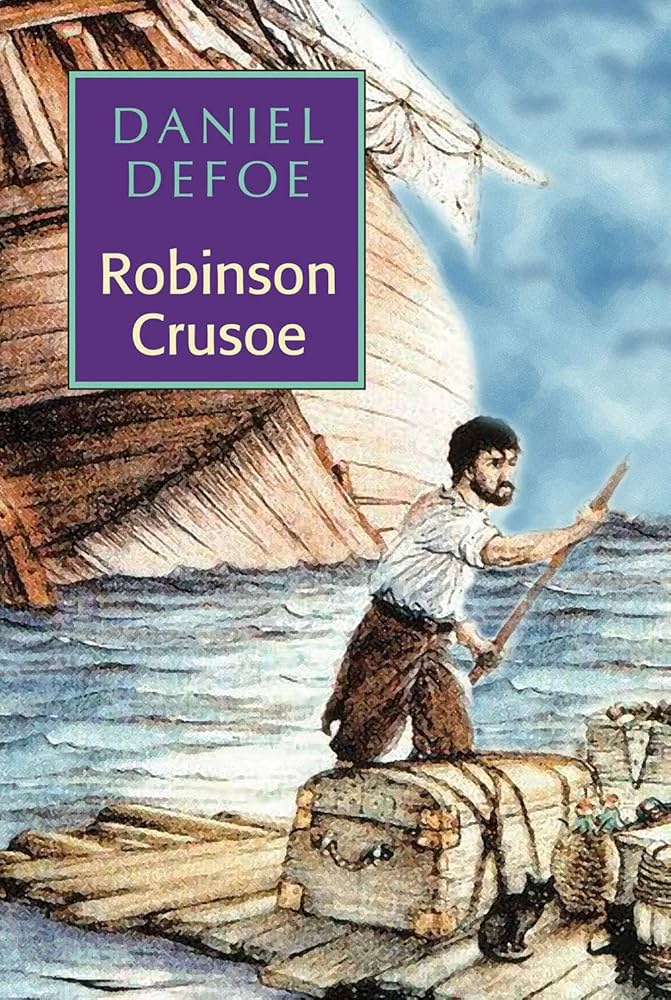
    Robinson Crusoe, book cover

    1. Linear Narrative.

    A linear narrative presents events in the order they happen, taking the reader on a straightforward journey through time. This structure can be found in personal essays, autobiographies, and novels where clarity and progression are paramount. Robinson Crusoe by Daniel Defoe serves as a solid example as readers follow Crusoe’s daily life and struggles chronologically, experiencing his survival and growth in real time.

    Why choose linear storytelling?

    Linear narratives are perfect for stories where clarity and immersion are key. They allow readers to step into the protagonist’s shoes and experience events as they happen, fostering a sense of immediacy and intimacy. For authors, this structure helps maintain a steady pace and ensures that every event naturally builds upon the last, making it easier to keep the narrative focused and cohesive. Linear storytelling is probably the most common type of narrative, which makes it particularly effective for readers.
     

    2. Non-linear Narrative.

    Non-linear narratives present events out of chronological order, using flashbacks, flash-forwards, and shifts in perspective. This structure allows readers to piece together the story like a puzzle, often uncovering thematic connections and emotional truths along the way. These stories, which we’re about to talk about, are often rife with spoilers. A stunning example of this storytelling style is N.K. Jeminsin’s The Fifth Season, which intertwines timelines and perspectives to reveal more about that world than a linear viewpoint could and culminates in a groundbreaking twist that will drive readers to turn the pages again and again. The fragmented structure mirrors the fractured realities of the story’s characters, creating an emotionally resonant and intellectually stimulating story for readers.

    Why choose Non-Linear Storytelling?

    Authors can be drawn to non-linear narratives for the opportunity to build suspense, deliver surprises, and exploring intricate themes without being hampered by a strict timelines. For readers, this style can draw them in as they actively work to piece together the narrative. It invites them to experience the story on multiple levels, often increasing the joy of not only reading the book, but re-reading it. Other great examples of non-linear narratives in media are the TV show Lost and the movie Pulp Fiction.
    3. Quest Narrative.

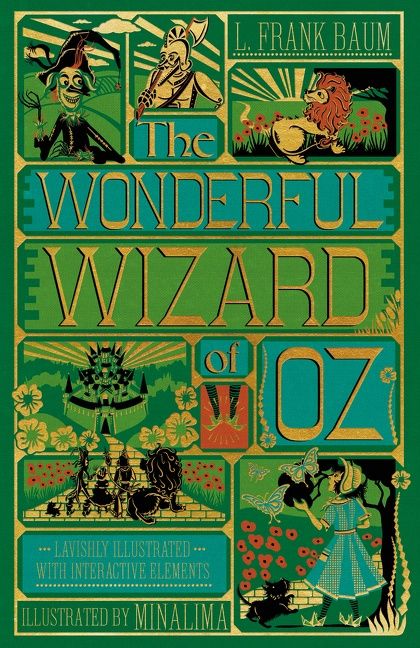
    A quest narrative centers on a protagonist who embarks on a journey to achieve a specific goal. This structure can be see in Frank Baum’s The Wizard of Oz, where Dorothy travels through strange lands, faces challenges, and learns valuagle lessons, all in pursuit of returning home to Kansas. As her journey unfolds, she makes friends, finds mentors, and confronts her fears, all leading to a story of transformation.

    Why choose Quest Storytelling?

    Similar to linear narratives in many ways a quest narrative could be considered our first “subset” of narrative style. However, quest storytelling, like the romance genre, has a few key points that must be touched upon. The protagonist must overcome external obstacles and internal struggles to achieve their goal, and at the end they must have gone through a transformation. Quests fit best for stories where growth is a central theme. Readers connect deeply with quest narratives because of the way they mirror universal experiences of striving, learning, and triumphing against all odds. This timeless framework excels at emotional resonance and a satisfying payoff.
    4. Viewpoint Narrative.

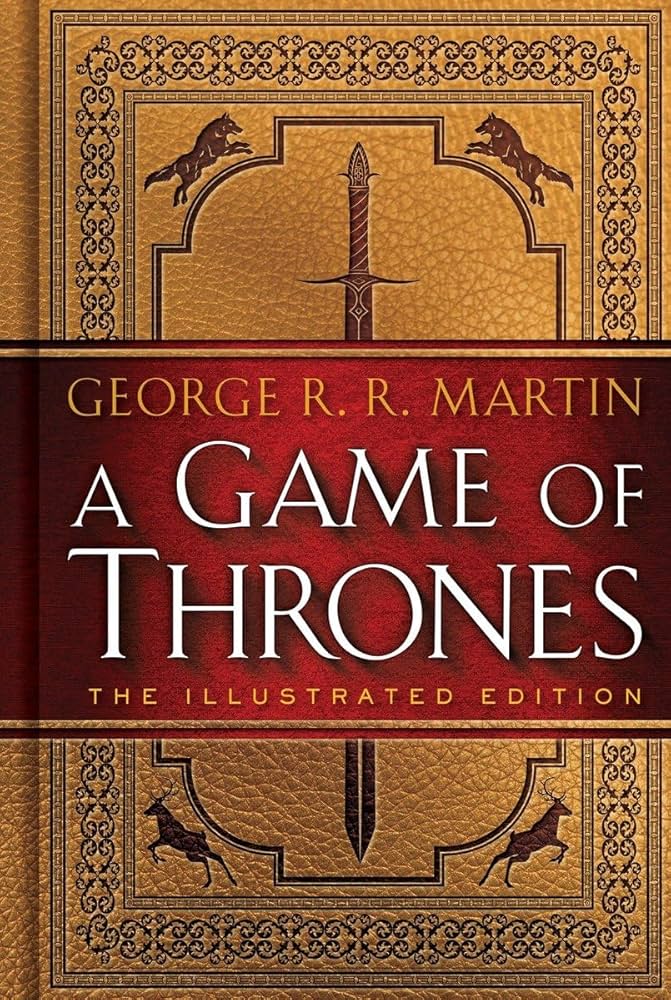
    Viewpoint narratives delve into the lives and perspectives of multiple characters, offering a kaleidoscopic view of the story. George R.R. Martin’s A Game of Thrones shines as an example of this structure, with each chapter revealing events and motives from the point of view of difference characters. This multifaceted approach allows for a deeper view of plot that reveals layers of intrigue as the readers are able to see what happens through a diverse variety of lenses.

    Why choose Viewpoint Storytelling?

    Viewpoint narratives create rich, multifaceted worlds where the reader can explore the depth of multiple characters and storylines. For authors, this structure adds a layer of complexity to their tales as the shifting perspectives can unveil hidden truths, add suspense, and explore contrasting ideologies. Readers are drawn into the intricacy of the narrative, finding their loyalties and perceptions constantly tested, making for an immersive and dynamic storytelling experience.

    Why Narrative Style Matters

    quill, candle, arm

    First off, this is hardly a comprehensive list of narrative styles, just examples of some of the ones most commonly seen today. There’s plenty of overlap as well between these, as you could have a non-linear, quest focused story with multiple viewpoints.

    Each narrative structure—linear, non-linear, quest, or viewpoint—shapes the way readers connect with your story. By experimenting with different styles, you can tailor your storytelling to match the themes and emotions you want to evoke.

    As an exercise, we recommend trying to write the same scene following different styles. Including quest adds a fun element of tone to explore as you go through it! If you don’t have a story, you can try rewriting parts from our own David Beaumier’s short story Medusa, which  you can read here.

    A promotional image for the incredible Everything Everywhere All At Once movie featuring Michelle Yeoh
    Think of the exercises like balancing the universes in Everything Everywhere All At Once
    • Linear Narrative: Your story may already be like this, but if not, remember to focus in on moving from one point to another, and exploring what it would mean for a non-linear story to come out in order.
    • Non-Linear Narrative: Here the question is what comes first and what comes last? Does it need to overlap in different ways (possibly with multiple perspectives) to make this story work? Thinking of Medusa would we need to see Melody’s interrogation from her perspective first and then have a flashback to the attack with her brother?
    • Quest Narrative: Thinking of a classic story like The Hobbit, what is the call to action for this story? What is the external and internal adversity faced by the main character, and then how do they transform by the end? Medusa would need to be expanded to do that, but Allison could be well on her way to creating a home and safe place for people with strange and unusual powers where they won’t be harmed by the mysterious Visitation.
    • Viewpoint Narrative: What does everyone in the scene think? If way your story is written only has one character is there an object that could have a viewpoint? Is someone listening in? Or is there another scene that can be added from the point of view of the person who the characters are talking about?

    Understanding these narrative techniques will help maximize your creativity and craft stories that captivate, surprise, and stay with your readers long after “The End.”


    Chanticleer Editorial Services – We’re ready when you are ready!

    Did you know that Chanticleer offers editorial services?

    We do and have been doing so since 2011!

    Tools of the Editing Trade

    Our professional editors are top-notch and are experts in the Chicago Manual of Style. They have and are working for the top publishing houses (TOR, McMillian, Thomas Mercer, Penguin Random House, Simon Schuster, etc.).

    For more information, please reach out to us at info@ChantiReviews.com.

    We work with a small number of exclusive clients who want to collaborate with our team of top-editors on an on-going basis. Contact us today!

    Chanticleer Editorial Services also offers writing craft sessions and masterclasses. Sign up to find out where, when, and how sessions being held.

    A great way to get started is with our manuscript evaluation service: https://test.chantireviews.com/manuscript-reviews/
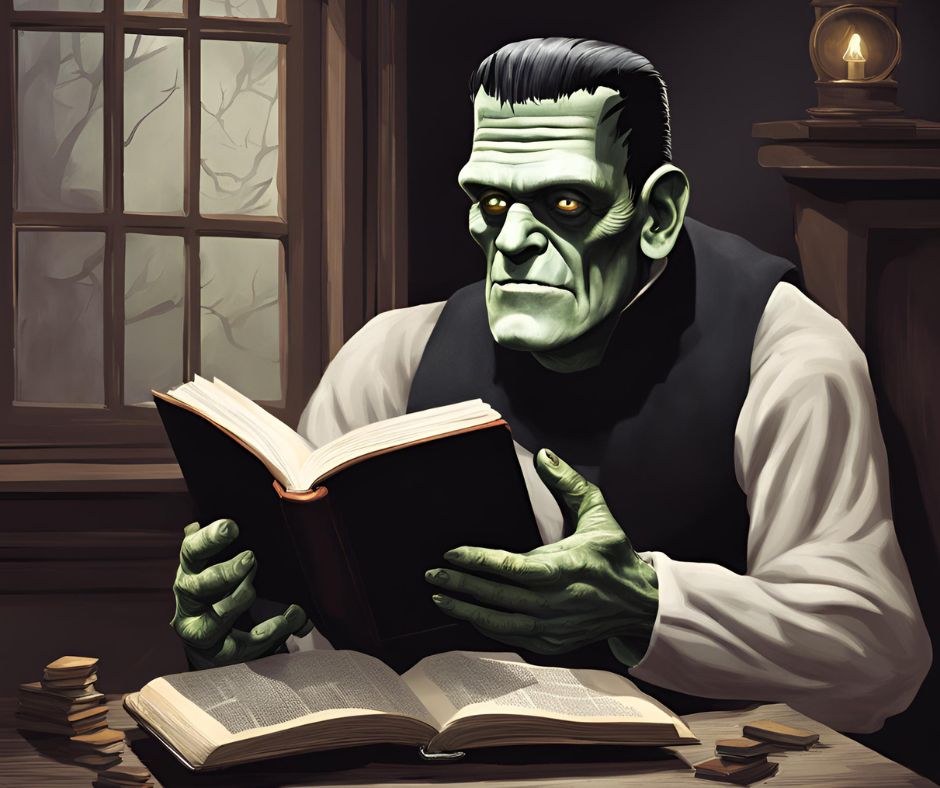

  • Building Frankenstein’s Monster: Creating Characters That Move Your Readers

    “Beware; for I am fearless, and therefore powerful.”
    Mary Shelley, Frankenstein

    Writers of every genre all face the challenge of creating meaningful, memorable characters that are fully fleshed out and believable. It’s a feat of magic that, if done right, creates the kind of characters that readers connect with and may even glance something they recognize within themselves.

    Frankenstein, lab, monster, igor, movie, black and white

    Get out your scalpels my writing friends, because today we’re going to dissect how to create a great character!

    When a writer sets out to create a memorable character they assume the role of a mad scientist, taking pieces of a person’s physical, intellectual, and emotional self and mixing them together to create their version of the type of person they need for their plot. It’s a delicate procedure of hitting the right mark, without going over the top or leaving them flat and uninteresting. If done right, a writer can create an unbreakable link between their characters and the reader, regardless of whether it’s a human, animal, or even a monster!

    Mary Shelley’s Frankenstein is a great example of this. The plot’s profound exploration of human nature, ethics, and the consequences of scientific ambition makes for fertile ground for showing the complexities of her realistic and fantastical characters. The sympathy Shelley is able to elicit from the reader for her “Monster” makes the novel resonate with readers across all boundaries and offers rich lessons for writers looking to craft their own unforgettable personas.

    Vitruvian Man, leonardo da vinci, black, white, circle, square

    Here’s a deep dive into how Shelley developed her characters and what we can learn from her approach.

    1. Complex Protagonists

    One of the most striking features of Frankenstein is its dual protagonists: Victor Frankenstein and his creation, often referred to as “the Monster.” Both characters are distinctly different, multi-dimensional, and able to elicit empathy despite their flaws.

    Lesson: Embrace Complexity

    When creating characters, avoid the temptation to make them purely good or evil. Victor is ambitious and passionate, but his hubris leads to tragedy. The Monster, on the other hand, starts as a blank slate, driven by a desire for companionship and understanding but ultimately succumbs to despair and violence. By portraying your characters with a mix of virtues and vices, you invite readers to explore the complexities that are ingrained inside each character.

    2. Strong Drive

    Shelley provides compelling motivations for her characters, which drive the narrative forward. Victor’s desire to have dominion over life and death through his creation stems from a blend of intellectual curiosity and personal loss. The Monster’s longing to find his humanity in the love and acceptance he expects to receive from others illustrates the fundamental human need for connection.

    Lesson: Define Clear Motivations

    When crafting your characters, think deeply about what drives them. Their goals should be relatable, allowing readers to understand their choices, even when those choices lead to tragic outcomes. Clear motivations can create a strong emotional bond between the reader and the character, which makes each individual journey more impactful.

    people, heart, books, colors

    3. Relationships that Shape Identity

    The relationships between characters in Frankenstein are critical in shaping their identities and trajectories. Victor’s relationships with his family, friends, and the Monster highlight themes of isolation, responsibility, and the consequences of neglect. The Monster, a blank slate at his incarnation, responds to Victor’s mishandling of his care with a combination of confusion and sadness until he eventually becomes a dark force who turns to self-imposed isolation to save himself.

    Lesson: Develop Interconnected Relationships

    As you build your characters, consider how their relationships influence their development. Interactions with others can reveal vulnerabilities and strengths, adding depth to your characters. Show how relationships can uplift or destroy, creating a dynamic that enriches the narrative.

    4. Thematic Depth

    Shelley’s characters are not just vehicles for the plot; they embody the novel’s themes of ambition, isolation, and the quest for understanding. The struggles of both Victor and the Monster reflect broader questions about humanity’s place in the world.

    Lesson: Infuse Characters with Thematic Significance

    Think about how your characters can serve as representations of the themes you want to explore. Their experiences should resonate with the central ideas of your story, prompting readers to reflect on larger questions. When characters embody your themes, their journeys become more profound and thought-provoking.

    red, black, two people, man, woman

    5. Evolution Through Conflict

    Both Victor and the Monster undergo significant transformations throughout the novel. Their encounters with conflict force them to confront their values, desires, and the repercussions of their actions.

    Lesson: Allow Characters to Grow and Change

    Conflict is essential for character development. Whether it’s internal struggles or external challenges, ensure your characters face obstacles that force them to grow. By the end of their journey, they should reflect on their experiences and provide a satisfying arc that resonates with the reader.

    Mad science, scientist, lab, skulls, light

    Mary Shelley’s Frankenstein offers a masterclass in character creation. By embracing complexity, defining clear motivations, developing meaningful relationships, infusing thematic depth, and allowing for character evolution through conflict, you can craft characters that leave a lasting impression on your readers.

    As you write, remember that characters are not just components of your story; they are the heart and soul that breathe life into your narrative. Take a page from Shelley’s playbook, and let your characters inspire, challenge, and engage your audience in a dialogue that transcends time and space.


    Thank you for joining us in celebrating a literary icon, Mary Shelley!

    Do you have a book that deserves to be discovered? You can always submit your book for an Editorial Review with Chanticleer!Chanticleer Editorial Review Packages are optimized to maximize your digital footprint. Reviews are one of the most powerful tools available to authors to help sell and market their books. Find out what all the buzz is about here.

    Is your book an Award Winner?

    The tiers of achievement for the CIBAs

    Submitting to Book Awards is a great way to get your book discovered! Anytime you advance in the Chanticleer Int’l Book Awards, your name and book are promoted right here on our website, through our newsletter, and across social media. One of the best ways to engage in long tail marketing!

    The Shelley Awards for Paranormal Fiction features an image of Mary Shelley at her writing desk

    The Shelley Awards for Paranormal & Supernatural Fiction are open through Oct 31st!

    Don’t miss out on your chance to introduce your characters to new readers!


    Chanticleer Editorial Services – when you are ready

    Did you know that Chanticleer offers editorial services? We do and have been doing so since 2011.

    Tools of the Editing Trade

    Our professional editors are top-notch and are experts in the Chicago Manual of Style. They have and are working for the top publishing houses (TOR, McMillian, Thomas Mercer, Penguin Random House, Simon Schuster, etc.).

    If you would like more information, we invite you to email Kiffer or David at KBrown@ChantiReviews.com or DBeaumier@ChantiReviews.com for more information, testimonials, and fees.

    We work with a small number of exclusive clients who want to collaborate with our team of top-editors on an on-going basis. Contact us today!

    Chanticleer Editorial Services also offers writing craft sessions and masterclasses. Sign up to find out where, when, and how sessions being held.

    A great way to get started is with our manuscript evaluation service. Here are some handy links about this tried and true service: https://test.chantireviews.com/manuscript-reviews/

    And we do editorial consultations. for $75.  https://test.chantireviews.com/services/Editorial-Services-p85337185

    Writer’s Toolbox

    Thank you for reading this Chanticleer Writer’s Toolbox article.

    Writers Toolbox  a few more Helpful Links: 

    The INCITING INCIDENT: STORY, SETBACKS and SURPRISES for the PROTAGONIST – A Writer’s Toolbox Series from Jessica Morrell’s Editor’s Desk

    ESSENCE of CHARACTERS – Part One – From the Jessica Morrell’s Editor’s Desk – Writer’s Toolbox Series

  • Making Character Introductions Memorable from the Desk of Editorial Assistant Scott Taylor

    Think of Characters like Speed Dating

    A white man around 40 gestures flirtatiously
    Is he actually cute?

    Who is This Guy and Why Should I Care?

    Writers often fall in love with our characters before their names ever appear on a page. They’re charming, intimidating, scrappy, and clever. Most of all, they matter to us.

    But how do you get the reader to agree that this brainchild of yours is worth checking out? Like all good first impressions, shaping how your character enters the story is important.

    This introduction will shade every other moment the character will have. Here are three tips to give your characters the best chance at a second date.

    Lights, Camera, Action!

    When the character enters they need to be doing something important. Maybe it’s key to the plot, maybe to themselves or another person—or, even better, both.

    We see characters through their actions: What they’re capable of, what they’re willing to do, what they want. And seeing what someone is in a position to do tells the reader almost everything they need to know about the role that person will play in the broader story.

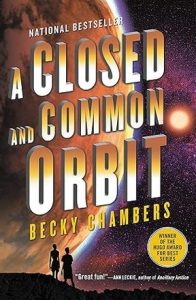
    In her sci-fi novel A Closed and Common Orbit, Becky Chambers introduces the character Owl by having her save a young girl’s life.

    She felt some spit hit the back of her leg.

    The voice changed. ‘Hey! This way! Come towards me!’

    There was no time for questions. Jane 23 ran at the voice.

    A machine stuck out from one of the scrap piles, a huge machine with thick sides and — and a door.

    Though Owl is only known as a nameless, disembodied voice at this point, she’s already a meaningful character—a sanctuary of kindness in an otherwise horrifying ordeal.

    This immediately establishes a dynamic between Owl & Jane 23—savior and saved. With this foundation, Chambers develops a deep and resonant relationship between the characters, as Owl guides Jane 23, encouraging her to keep going despite all the danger and hardship around her.

    This introduction also serves the function of pushing the plot forward. Jane 23 has her first real chance at survival. She escapes the beasts—for now.

    While not every character needs such a dramatic entrance, consider whether some of your characters might be well-illustrated by emphasizing them first with action. This may be delivering a casserole to a grieving widow, binding a magical beast in chains of cold iron, or stuffing a wedding invitation deep at the bottom of a cluttered drawer.

    And speaking of drawers…

    In what environment do we first find your character?

    A prison cell implies too much to list here. Go deeper. Ask yourself what does your character have on the wall of their prison cell? This is a great opportunity for contrast. You can show how your character relates to the world around them, how they clash or are at peace with it.

    This tells the reader what kind of power they hold. Remember, that also means what kinds they clearly do not. If your character visits wealthy distant relatives, are they put in an opulent guest room or are they relegated into the former servant’s quarters?

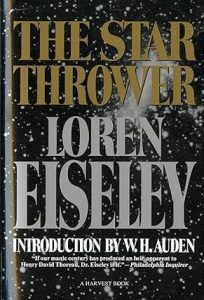
    Loren Eiseley opens his short story, The Star Thrower, with an impactful example of contrast and powerlessness. The protagonist muses on how he’s come to a place called Costabel, concluding that his arrival there might have been simply inevitable. He immediately relinquishes his agency, which is given significant meaning by the description of the beach itself.

    The beaches of Costabel are littered with the debris of life. Shells are cast up in windows; a hermit crab, fumbling for a new home in the depths, is tossed naked ashore, where the waiting gulls cut him to pieces. Along the strip of wet sand that marks the ebbing and flowing of the tide, death walks hugely in many forms.

    He isn’t just resigned to the idea that he would inevitably end up somewhere—but here. A place where uncaring fate casts vulnerable creatures to their deaths. It’s easy to see the kinship he shares with them.

    This gloomy introduction reveals his lack of self-worth and deep sorrow, which, crucially, frames the protagonist’s experiences and transformation through this story.

    What’s Your Problem?

    A young Asian woman is on a first date at a nice restaurant.
    So, why are you still single?

    Characters are most interesting when they’re actively dealing with their big conflict!

    This is obvious with protagonists, but especially consider also how you can flesh out the side characters or antagonists. A conflict-focused introduction establishes  where a character stands in the plot as well as their strengths and weaknesses.

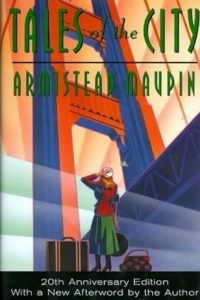
    Armistead Maupin opens Tales of the City by immediately connecting us with the inner conflict of the protagonist.

    We meet Mary Ann just as she’s made the decision not to come home to the Midwest, and instead stay in San Francisco. She has no job here, no apartment, but when she calls her mom about her decision, she’s resolute—more than resolute, she’s excited.

    “Her mother began to cry. ‘You won’t come back, I just know it.’

    ‘Mom… please… I will. I promise.’

    ‘But you won’t be… the same!’

    ‘No! I hope not.’”

    In much of Mary Ann’s following story, she embraces and struggles with the culture of 1970s San Francisco, as she’s pulled along by the bay winds of fate. And right here at the start, the contradictions in her character are established.

    She’s impulsive, terribly so. Desperate to be part of a wider world. Perhaps careless, maybe unprepared, a stranger in the place she now calls home, but she’s alive! Readers fall in love with Mary Ann because she needs to be free from the world she came from, and because she has the bravery to take that risk.

    This leads to a hint of trouble yet to come. As Mary Ann claims her adult life, she’ll struggle with new and changing relationships. Her impulsiveness enthralls the readers and stresses her emotional connections.

    Best Foot Forward

    Next time you introduce a character revisit these three tips. Even if you choose a different introduction method, examine the essential parts of your characters and how those elements shine through in their first appearance. That spark—what makes them curious, important, worth reading a story about—will seize your readers and carry them through to see not only what becomes of those characters, but what they become.


    Thank you for joining us for this Writer Toolbox Article

    A red toolbox with the words "What's in your toolbox

    There is so much to learn and do with Chanticleer!

    From our Book Award Program that has Discovered the Best Books since the early 2010s to our Editorial Book Reviews recognizing and promoting indie and traditional authors, Chanticleer knows your books are worth the effort to market professionally!

    When you’re ready,did you know that Chanticleer offers editorial services?We do and have been doing so since 2011.

    Our professional editors are top-notch and are experts in the Chicago Manual of Style. They have and are working for the top publishing houses (TOR, McMillian, Thomas Mercer, Penguin Random House, Simon Schuster, etc.).

    If you would like more information, we invite you to email us at info@ChantiReviews.com for more information, testimonials, and fees.

    We work with a small number of exclusive clients who want to collaborate with our team of top-editors on an on-going basis. Contact us today!

    Chanticleer Editorial Services also offers writing craft sessions and masterclasses. Sign up to find out where, when, and how sessions being held.

    A great way to get started is with our manuscript evaluation service, with more information available here.

    And we do editorial consultations for $75. Learn more here.


    Looking to add to your TBR?

    Check out the books mentioned in this article below:

    Even better, find a new Chanticleer Reviewed Book with a great introduction!

  • NaNoWriMo or Not, here comes November!

    NaNoWriMo or Not, here comes November!

    Time to start your engines because, NaNoWriMo or not, you’re a writer and ideas are key to jump-starting your writing!

    Inspired by Editor and Friend of Chanticleer, Jessica Morrell, let’s dive in!

    The NaNoWriMo logo, a shield crest with a Viking Helm depicting coffee, a computer, pens, and a large stack of blank paper

    For those who may not know, NaNoWriMo is a community effort where people around the world join together, each trying to write 50,000 words of a story in the month of November. For some, 50,000 words is a pittance of what they can normally create in a month; for others, it’s an impossibility.

    No matter where you fall, NaNoWriMo is a great tool to put words on the page and to write with a community rather than all alone.

    Woman in Pink Long Sleeve Shirt Sitting Beside Woman in Green Long Sleeve Shirt
    It’s a myth that writers are solitary creatures

    In the week before you get started, take care of all the basic necessities – i.e. finish your procrastination tasks. Clean your house, stock up on brain food for the upcoming month and write down easy meal ideas. Don’t forget to make sure you have all the coffee and tea you need to fuel you, and then please be sure your laundry is done.

    Ready? Set. WriMo!

    The point of a first draft is to exist. As Stephen King says, the first time you write something down, you’re telling the story to yourself. One of the best ways to motivate your story is to know your characters well. Studying modern characters is a great way to start off.

    Station 11 by Emily St. John Mandel

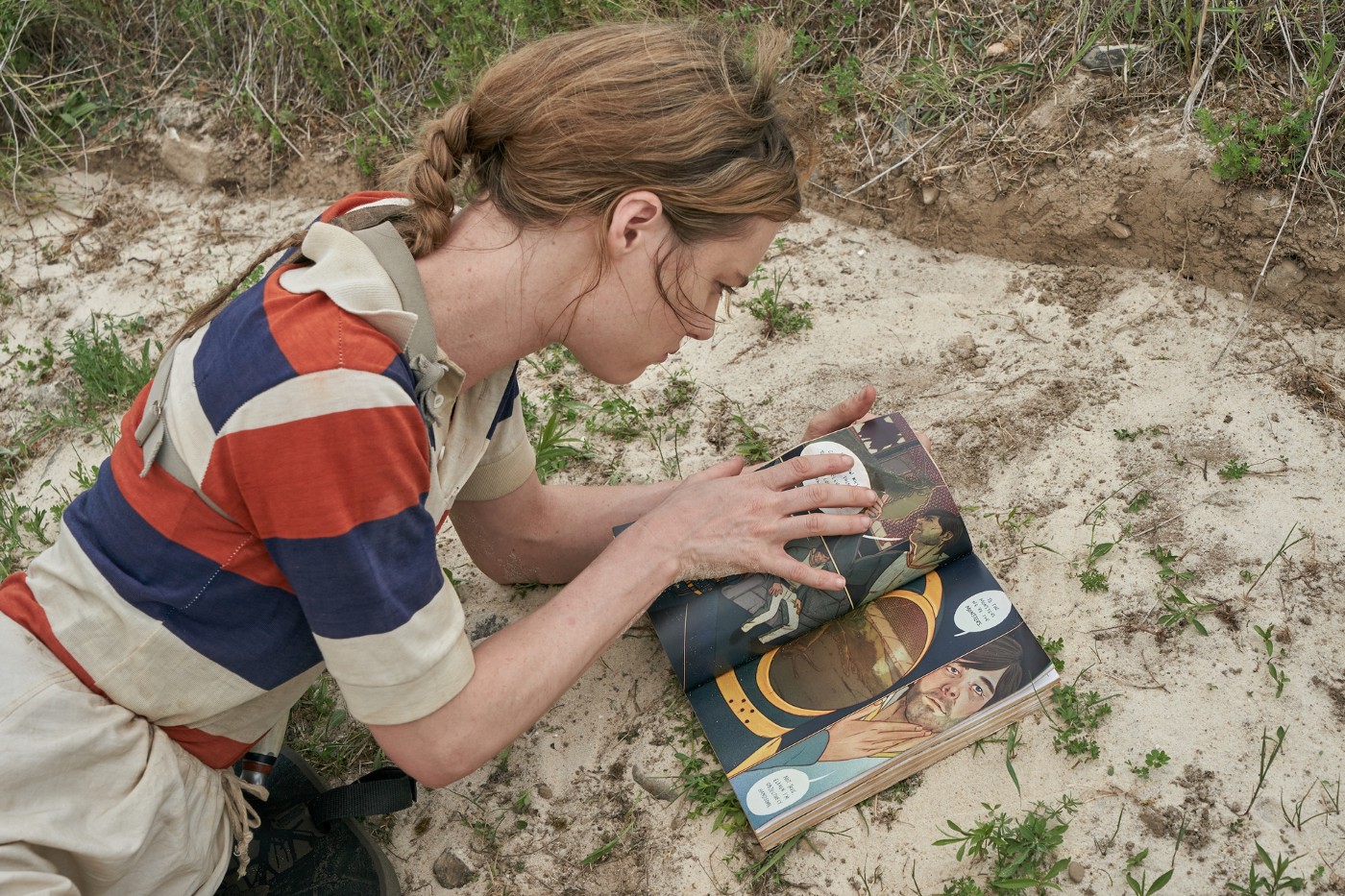
    Kirsten Raymonde reading the titular Station 11 comic book, played by MacKenzie Davis

    Child actor Kirsten Raymonde’s life is forever changed when she witnesses the death of actor Arthur Leander, sending her world into chaos hours before the world is decimated by the Georgia Flu. With the collapse of civilization and the death of her parents and little brother, Kirsten holds on tight to her passion for acting as she grows up, joining the Traveling Symphony and protecting the players and musicians there as if they were her own flesh and blood.

    The Rings of Power on Amazon Prime, based on The Lord of the Rings by J.R.R. Tolkien

    Arondir (Ismael Cruz Córdova) almost shares a romantic moment with Bronwyn (Nazanin Boniadi)

    Arondir is an elf responsible for the safety of a large swath of human lands in the aftermath of the battles with Morgoth. However, most elves regard the humans with a suspicion that engenders deep distrust between the two races. This prevents him from gathering crucial information about a recent poisoning. On top of that, neither the human inhabitants nor his elven companion approves of the close connection he has with the local healer Bronwyn, who seems quite taken with the handsome Arondir.

    What do we notice?

    Both these characters are firmly set in their backstory, which shows us the goals they have in the status quo at the start. Once the status quo is disrupted, you have the character’s motivation to return to a state of equilibrium, because they are now frustrated in meeting their goals.

    Consider questions from Mastering Suspense Structure & Plot by Jane K. Cleland:

    • What does this character keep secret?
    • What does this character fear?
    • How does this character respond when their secret is in danger of being exposed?
    • How does this character act when afraid?
    Blue cover for Mastering Suspense Structure and Plot by Jane K. Cleland
    The Roost’s Writing Craft Book Group for November

    Understanding these elements of your character under pressure will help create believable and compelling people for your readers to want to watch and study.

    Remember, even for NaNoWriMo, you need an engine to start!

    Conflict is the engine of your story. What is the conflict in yours? For Station 11, it’s the looming threat of the mysterious Prophet who is terrorizing the communities who are the audience and friends of the Traveling Symphony. In Rings of Power, it’s the growing strength of Sauron, Morgoth’s most loyal disciple. How does this conflict put pressure directly on your main characters?

    HANDY REMINDERS

     If you are NOT participating in NaNoWriMo, then we hope that this post will spur you on as write your work-in-progress (w-i-p) or your next work.

    RULE # 1

    WRITE FAST! 

    EDIT SLOW! 

    Don’t edit your first draft as you write it!

    Writing your first draft should be a mad dash to get your story out of your brain. Don’t hinder it by worrying about each little detail. There will be time for that later. NaNoWriMo or not.

    Not taking our word for that piece of advice?

    Chelsea Cain, a bestselling thriller author (with a TV series to her credit),  gives this piece of advice:

    Write the bare-bones version of the scene first using mostly dialogue, and then move on and in the second draft flesh out the scenes with description and action.

    “Action is dialogue. Dialogue is action.” – Robert Dugoni, Amazon Bestselling Author

    What is YOUR STORY?

    Story is essentially a problem that needs solving for the protagonist. – Jessica Morrell

    • What is your protagonist’s problem that must be solved—or else?
    • What is the worst thing that can happen next to your protagonist?
    • Remember that it is not your problem. It is your protagonist’s problem, obstacle, impossible dream.
    • Start at least one subplot. This subplot(s) should also complicate the protagonist’s goals.

    No matter when the problem begins (it’s always in Act One) the problem is weighty and vexing, perhaps insurmountable. If the problem is not immediately personal, it should become so that it will create a bond (connection) between the protagonist and antagonist. Classic examples are the connection between Sherlock Holmes and Jim Moriarty and Harry Potter and Voldemort. 

    What is the inciting event or threat? 

    The inciting incident might lead to the problem. This event will disrupt the status quo, demand response, and set actions in motion. It’s a threat that unbalances the story world and creates dilemmas that must be dealt with.

    To name a few:

    • The tornado incident in the Wizard of OZ
    • Katniss’s little sister selected for the Hunger Games
    • Luke Skywalker ‘seeing’ and hearing Princess Leia calling for help in Star Wars
     These excerpts above are from The Inciting Incident blogpost


    Environment (internal and external)

    These are great tips to get your creativity groove on!

    • Remember you want to send your protagonist into new emotional territory with new challenges and pressures.
    • And at the same time, she will need to deal with new physical territories such as a new school (Footloose) or a different culture (Dances with Wolves) or a different legal society with different norms (Handmaid’s Tale) or a new environment (Deadwood)  or a different time ( Outlander) or galaxy (Farscape).
    • Don’t be afraid to stage danger in benign or lovely settings or conversely gentle scenes in dangerous and gruesome settings.

    Kiffer’s Note:  I just saw this bucolic scene while watching The Wheel of Time first episode. All white coats and white tents. And then, bam! We learn that the guys in white are not the “good guys” —at all—even if their name is Children of the Light.

    Bucolic looking camp scene in Wheel of Time inhabited by these characters all in white.

    Atmosphere

    • Allow the overall atmosphere and mood to imbue your writing from the get-go.
    • The atmosphere lends itself to the overall tone and mood of a work. Allow it to permeate your work as you write.

    The atmosphere in Shadow and Bone series by Leigh Bardugo

    Or Sex in the City by Carrie Bradshaw

    Why use atmosphere in your first draft? (or during NaNoWriMo)? 

      • Because it will affect your mood and approach to your story.
      • It will make you focus on creating unease–a necessary ingredient not always considered in early drafts.
      • Unease contributes to writing a page-turner.
      • Atmosphere underlines themes–even if you don’t have your themes nailed down yet.

    Here is the link to our Writer’s Toolbox article on Atmosphere

    Emotional Baggage

    • Know your protagonist’s main emotional wound, sometimes called baggage in real life. How is it going to affect his or her ability to solve the story problem? (See the questions below to jumpstart creativity.)

    Remember that Writers (that is you) should carry a notebook everywhere you go. You never know when a brilliant solution is going to appear. Jessica Morrell

      If I could offer a single piece of advice about creating characters it would be this (Jessica Morrell):

      • Take risks with your main characters.
      • Make them stand out from the myriads of fiction published each year.
      • And don’t be afraid to allow eccentricities, quirks, and oddball ways of seeing reality.

      More questions for your protagonist from Jessica Morrell—these are guaranteed to get your creative wheels turning:

      First, ask yourself these questions and then “ask” your protagonist. Have your protagonist go into depth. Find out what your protagonist’s iceberg under the waterline is all about.

      Photo taken in Greenland’s waters.

      Kiffer suggests that you take a walk when you are considering these questions. Be sure to either take notes or record your thoughts on your smartphone while you explore your protagonist’s emotional baggage. Walk a mile in your protagonist’s shoes. 

      • What’s the most embarrassing thing that has ever happened to you?
      • What is your biggest regret?
      • What is your superpower?
      • Who do you cherish most in the world?
      • If you could change one thing about your world, what would it be?
      • What is your average day or schedule?
      • What 5-6 words sum up your values?
      • What do you do after a really bad day?
      • How do you celebrate?
      • The secret you’d never tell your significant other? Your mother? Your sibling?
      • What reminds you of home?
      • What item must you always take along when traveling?
      • Favorite drink?
      • Secret vice?
      • Pizza or tacos? Cookies or tequila?
      • Favorite climate?
      • Reading or television to unwind?
      • Breakfast or coffee only?

      We hope that we helping you, Dear Writer, to arm and prep yourself to get down to the writing of your next work—the reckoning.


      Ernest Hemingway:  There is nothing to writing. All you do is sit down at a typewriter and bleed.


      Chanticleer Editorial Services

      When you’re ready…

      Did you know that Chanticleer offers editorial services? We do and have been doing so since 2011.

      Our professional editors are top-notch and are experts in the Chicago Manual of Style. They have and are working for the top publishing houses (TOR, McMillian, Thomas Mercer, Penguin Random House, Simon Schuster, etc.).

      If you would like more information, we invite you to email Kiffer or David at KBrown@ChantiReviews.com or DBeaumier@ChantiReviews.com for more information, testimonials, and fees.

      We work with a small number of exclusive clients who want to collaborate with our team of top editors on an ongoing basis. Contact us today!

      Chanticleer Editorial Services also offers writing craft sessions and masterclasses. Sign up to find out where, when, and how sessions are being held.

      A great way to get started is with our manuscript evaluation service, a tried and true resource you can learn about here.

    • The Myth of the Unlikeable Character – A Chanticleer Toolbox Article By David Beaumier

      The Myth of the Unlikeable Character – A Chanticleer Toolbox Article By David Beaumier

      “No one likes my characters”

      You’re handing your precious book over to a beta reader to see if it’s worthwhile, ready, perhaps, for a Chanticleer Book Review or to be entered into the Chanticleer Int’l Book AwardsThey look at you over the cover that you worked so many long hours on with your designer and say with all the authority of fate: “I just don’t think your main character is very likeable,” they say. “Can’t you make them more likeable? All characters should be likeable.”

      A grumpy older white man
      Are your grumpy readers right?

      Writer, they are wrong

      You can of course have an unlikeable main character! If they were only willing to read for ten minutes though, you may have a more difficult problem on your hands than whether or not your character is someone they want to be friends with. Some of the most compelling characters in literature aren’t someone I’d want to share a hotel room with anytime soon. 

      A creepy character peering into a room
      We can sleep in separate bedrooms. Really, it’s okay.

      The key isn’t to worry about whether or not your protagonist is “likeable” (which is a tricky word to define), but about whether or not they are interesting.

      • Are the actions they take moving the plot forward while engaging the reader at the same time? Those two things must be true of anything that happens in your story. 

      Manuscript Overviews and Editing

      Now, if the majority of your readers are coming back to you and letting you know these early drafts aren’t working, we highly recommend a Manuscript Overview. A manuscript overview (MOV) is a broad overview of your manuscript – what’s working and what isn’t from all aspects of your story: structure, plot, pacing, character development, dialogue, etc. We are here to offer our guidance on what you need next. Save time and money by honing your work before you begin the editorial process.

      Here, we’ll go through a few basic checks to make sure that your character is compelling. 

      A person writing in a journal

      On Writing Compelling Characters

      There are a few questions you’ll want to ask to see if your complex character is someone who will grab your reader’s attention. 

      • What is the Status Quo your character inhabits? 
      • What is your character’s Desire?
      • How does the Conflict impede the character’s Desire?
      • Cats

      If you simply need help developing your character, consider reviewing this article on Secondary Characters here. Otherwise, read on!

      Speaking of Secondary Characters, Severus Snape, Professor of Potions from the Harry Potter series is a prime example of uncompelling compelling character.

      Severus Snape

      Status Quo

      This is the classic way you engage readers with your story. The story is introduced, and something happens to break the status quo. One story where this jumps to mind is Neal Stephenson’s Seveneves. With cannibalism and the end of the world, there’s no lack of unlikeable characters in this book, but all the characters rivet your attention. 

      Seveneves begins with the moon blowing up. Well, more accurately, with it being split into four pieces. Up until the catalyst (the breaking of the status quo), the four chunks of the moon are a point of fascination, friendly enough to have one chunk named “The Bean.” Then the status quo changes when one of the moon chunks hits another and they start to fragment even more. This gives all the characters a goal to work for: Save the Human Race. Having a strong focus for your characters will help readers empathize with them and want to know what’s happening.

      Our favorite editor Jessica Morrell has an excellent article detailing even more ways to stir up trouble for your characters here.

      Character Desire

      Similar to the breaking of the status quo, your characters will all want something different out of the world you’ve written them in. Of course, like the breaking of the status quo, this problem won’t be easy for them to solve. 

      An artful rendition of Tom Ellis as Lucifer with the words "What is it you truly desire?"
      Tom Ellis as Lucifer from Netflix

      There are two common methods of frustrating your character’s ability to achieve their desire. The first is simply to make it difficult to do. Anything that takes a lot of work and will make them struggle. The other excellent choice is to have them try to solve the wrong thing. So often characters misunderstand what will make them happy or they struggle to find the correct solution to their problem. By having them do the wrong thing, the reader will be able to enjoy a much more interesting story than an unlikeable person succeeding at everything they do and never growing or developing. 

      Cats

      Who doesn’t love cats? We love cats at Chanticleer, that’s for sure!

      Two kittens sleeping while spooned together
      The newest additions to the Chanticleer family: Tiefen and Biscuit at 15-weeks-old

      Now the connection between cats and what to do with your unlikeable character might not be immediately clear, and it might sometimes be a metaphor rather than an actual cat. The tried and true advice is you have a character who might be a little rough around the edges save a cat early on in the story. This shows that, despite their flaws, they do care about the world around them, and they will help a creature in need. Of course, this doesn’t have to be a literal cat, but it’s something sweet the character chooses to do without being pressured. 

      For those of you in The Roost, Chanticleer’s online community, you know that we have been reading SAVE THE CAT, WRITES a NOVEL by Jessica Brody (based on the screenwriting books by Blake Snyder) in our Writing Craft Book Group. There is even a reading guide by Chanticleer’s David Beaumier uploaded to the  activity feed.

      The opposite can happen too! In Lower Decks, the irreverent Star Trek cartoon that’s currently playing on Paramount+, Beckett Mariner kills a holographic character to establish herself as the villain in a fantasy program she designed. 

      Mariner dressed as Vindicta dressed as an intergalactic pirate
      Beckett Mariner as Vindicta in “Crisis Point” from Star Trek Lower Decks

      It’s fairly easy to flip through the first pages of your book to see if there’s a cat who your narrator can save in the early pages of your work, and then see if you can find a few beta readers to poll on their feelings. 

      To consider more of the timing and development of plot in relation to your characters, review this article here.

      “There’s no such thing as writer’s block or plotter’s block. There’s only perfectionist’s block.” Jessica Brody

      Go forth and write!


      When you’re ready, did you know that Chanticleer offers editorial services? We do and have been doing so since 2011.

      Our professional editors are top-notch and are experts in the Chicago Manual of Style. They have and are working for the top publishing houses (TOR, McMillian, Thomas Mercer, Penguin Random House, Simon Schuster, etc.).

      If you would like more information, we invite you to email Kiffer or Sharon at KBrown@ChantiReviews.com or SAnderson@ChantiReviews.com for more information, testimonials, and fees.

      We work with a small number of exclusive clients who want to collaborate with our team of top-editors on an on-going basis. Contact us today!

      Chanticleer Editorial Services also offers writing craft sessions and masterclasses. Sign up to find out where, when, and how sessions being held.

      A great way to get started is with our manuscript evaluation service, with more information available here.

      And we do editorial consultations for $75. Learn more here.  

      If you’re confident in your book, consider submitting it for a Editorial Book Review here or to one of our Chanticleer International Awards here.

      Also remember! Our 10th Anniversary Chanticleer Authors Conference (CAC22) will be April 7-10, 2022, where our 2021 CIBA winners will be announced. Space is limited and seats are already filling up, so sign up today!  CAC22 and the CIBA Ceremonies will be hosted at the Hotel Bellwether in Beautiful Bellingham, Wash. Sign up and see the latest updates here!

      Writer’s Toolbox

      Thank you for reading this Chanticleer Writer’s Toolbox article.

      Writers Toolbox Helpful Links: 

      AMPLIFY, MAGNIFY, & STIR UP TROUBLE for Your Main Characters – by Jessica Morrell

      Supporting Cast – Taking Risks with Your Secondary Characters – by Jessica Morrell

      Character Development, Dialogue, and Beats – by David Beaumier

      The traditional publishing tool that indie authors can use to propel their writing careers to new levels?  The Seven Must-Haves for Authors – Unlocking the Secrets of Successful Publishing Series by Kiffer Brown

    • Character Development, Dialogue, and Beats, a Chanticleer Writers Toolbox Article by David Beaumier

      Character Development, Dialogue, and Beats, a Chanticleer Writers Toolbox Article by David Beaumier

      Understanding What Makes Good Character Development

      Character Development is a tricky matter. In this article we’ll go through the basics of setting up what your character does and how you describe them, coupled with the idea of beats in dialogue.

      A character sketch model covered in paint
      Artists all over use character models!

      Consider the following excerpt from a recent work in progress from a friend of Chanticleer:

      In the guest room we have spider plants that have often refused to die in the past. They grow everywhere and propagate like mad, their white and green spear-like leaves overflowing any pot we put them into. We keep them trimmed back carefully, letting them give us plenty of fresh oxygen while at the same time making sure our space isn’t entirely overrun.

      This description comes in the middle of getting something for another character, and there are 4 paragraphs of plant and room descriptions. Four! That’s too much narrative description that adds little to the story and does nothing to build tension. Now look at the revision of all those paragraphs:

      I head out to the kitchen. I don’t see Mom, but this is the week we’re supposed to water the plants, so I fill up our yellow watering pail with a comically long spout that aids in watering closer to the base on the plants. The red and green leafed crotons in the kitchen next to the sink are first, then the fishtail palm in the bathroom that always wants more water despite the wetness of its location, the spider plants in the office, my kalanchoe was watered last week, and then I finish with the lemon tree. The lemon trees petals are almost all gone, which means we’ll have meyer lemons soon, but any sweet smell it had recently is gone.

      Red and Green Succulent Plant

      Now, in addition to understanding that the character is looking for their mother. The plants appear in a flash, coupled with the action of being watered, and we end on the lemon tree, which promises something good, but right now seems rather lackluster, which mirrors the mood of the overall scene. This quick summary helps the story move from prolonged description that will make the reader’s eyes glaze over, and instead moves us from one point to the next.

      Interested more in secondary characters? Learn more about them from the one and only Jessica Morrell here. For more that focuses on general background characters, try this article from Skip Ferderber here.

      So when do we put in a little summary for the character?

      Renni Browne and Dave King say the following in their book Self-Editing for Fiction Writers:

      If your characters actually act the way your summaries say they will, the summaries aren’t needed. If they don’t, the summaries are misleading. Either way, your fiction is likely to be more much effective without the character summary

      In terms of time progression in a story summary is a way of storytelling where a little is described to cover a large period of time. It helps to have it balanced with scenes where action and time are equivalent, or moments of interiority where a lot happens in almost always a slow point in the narrative. However you choose to do it, make sure there’s a good balance in terms of time in your work, and that scene is often the driving force.

      A balance scale holding two question marks.

      Looking for tips to streamline your dialogue? Make it more potent with tips from Jessica Morrell here.

      Unobtrusive ways to develop Character

      • Learn their history so that when you write them it will come out intuitively
      • Show how other characters react to them directly.
      • Show how the world interacts with them as they move through it.

      That’s well and good, but how do you measure your character development? Well, we’re glad you asked:

      • How much time do you spend describing characters?
      • Are you telling us characteristics that will show up later in dialogue and action?
      • How much of the character’s history have you explored with the reader? Does the reader need all of that information, or does the story read well without it? If so, when do they need to know it

      Dialogue Mechanics

      A famous author once called dialogue the purest form of scene.

      Dialogue bubble, Photo booth props free printables

      Obviously there are moments where this is wrong, such as when the dialogue is done as a form of telling.

      “Hi Joe, I haven’t seen you since the divorce with June after you came back from the war!”

      A person answering the phone in a friendly manner
      You may remember plays where it starts out with someone answering the phone and setting up the plot by responding to the person on the other end.

      However, the idea of telling that sneaks its way most prominently into dialogue mechanics is the dialogue tag, often accompanied by an adverb. Consider Newgate Callander of The New York Times Book Review take on the wildly successful Bourne Ultimatum series:

      Mr. Ludlum has other peculiarities. For example, he hates the “he said” locution and avoids it as much as possible. Characters in “The Bourne Ultimatum” seldom “say” anything. Instead, they cry, interject, interrupt, muse, state, counter, conclude, mumble, whisper (Mr. Ludlum is great on whispers), intone, roar, exclaim, fume, explode, mutter. There is one especially unforgettable tautology “‘I repeat,’ repeated Alex.’

      The book may sell in the millions, but it’s still junk.

      Let’s take it further and look at even more examples of redundant or overemphasized dialogue tags:

      • “I’ll kill your whole family,” he hissed maliciously.
      • “You can’t be serious,” she said in astonishment.
      • “Give it to me,” she demanded
      • “Here it is,” he offered.
      • “Is it loaded?” she inquired?

      These all share one thing—they fear the use of “said.” Sure, sometimes a word other than “said” will help break things up for variety’s sake, but “said” is almost always proper and good to use.

      “Said” is essentially a punctuation mark for readers. It serves the purpose of helping them track who said what in a dialogue.

      See what Peter Greene says about realistic dialogue in his interview here.

      Adverbs: Friend or Foe

      2016-2017 Psychic Yes Or No Oracle - Get Accurate Answers
      To be or not to be

      Adverbs are the enemy much of the time in dialogue. There is almost always a better word to use. Putting in a prop like the dreaded -ly will make your dialogue seem weak, even if it isn’t.

      The only real exception to the rule is with the dialogue tag “said” because it’s so ubiquitous that it can allow for some extra description on occasion. Remember, the dialogue will often do the work of setting the tone for you.

      Gabriel García Márquez would eliminate all adverbs from his writing, choosing instead to use the word in another form.

      For example, instead of “he said softly” I would write “he said, his voice soft”

      A few general tips:

      • Pronoun substitutions are fine
      • Renaming the character can be wonky. Dave, Mr. Winchester, The Sheriff, the officer, the lawman, CHOOSE!
      • New speaker/new action means a new paragraph!
      • Ending with a dialogue tag uses a comma. Ending with an action uses a period. Ex: “Hey there,” he said. vs “Hey there.” He scratched his chin.
      • This indicates interruption: “Now wait just—”
      • This indicates trailing off: “Now wait just a second…”

      Again, consider how you measure these things.

      • Check your dialogue for explanations. Consider bringing a highlighter for this job.
      • Cut the explanations and reread your dialogue. If it reads worse, you may need to rewrite your dialogue.
      • Mark every adverb related to dialogue. How many of them are based on adjectives describing emotion? Which ones can you cut?

      Woman student highlighting with text marker in document

      Beats in Character Development

      Let’s pause here to talk a little bit about beats and figure out how to us them to balance out dialogue. Again, using an example from Self-Editing:

      “But didn’t you promise…” Jessie said.

      “I did nothing of the sort,’ Tyrone said.

      “Now, look, you two—” Dudley said.

      You stay out of this,” Tryon said.

      VS.

      “But didn’t you promise…” Jessie said.

      “I did nothing of the sort,’ Tyrone said.

      Dudley stepped between them and held up his hands. “Now, look, you two—”

      Tyrone spun on him. “You stay out of this.”

      Just like the saids, there can be too many beats, so be careful how you balance it.

      Think about white space in a sketch for a painting. All the lines that make up the body of the work are the dialogue of your piece–it gives the plot, characters, and conflict a structure to work within. The beats are the color the fill it in, showing the reader a complete picture of what’s taking place. As you write, ask yourself if you’re better at overwriting and then trimming back or underwriting and fleshing out. Play to your strengths for your first draft, and then come back ready to adjust for any areas you know you’ll be weak.

      Glass Painting : 10 Steps (with Pictures) - Instructables

      The beats tie your dialogue together. Map them by marking the descriptions you have interspersed within your dialogue.

      Make your beats sing by seeing what Margie Lawson has to say about rhythm and cadence here.


      Chanticleer Editorial Services – when you are ready

      Did you know that Chanticleer offers editorial services? We do and have been doing so since 2011.

      Tools of the Editing Trade

      Our professional editors are top-notch and are experts in the Chicago Manual of Style. They have and are working for the top publishing houses (TOR, McMillian, Thomas Mercer, Penguin Random House, Simon Schuster, etc.).

      If you would like more information, we invite you to email Kiffer or Sharon at KBrown@ChantiReviews.com or SAnderson@ChantiReviews.com for more information, testimonials, and fees.

      We work with a small number of exclusive clients who want to collaborate with our team of top-editors on an on-going basis. Contact us today!

      Chanticleer Editorial Services also offers writing craft sessions and masterclasses. Sign up to find out where, when, and how sessions being held.

      A great way to get started is with our manuscript evaluation service. Here are some handy links about this tried and true service: https://www.chantireviews.com/manuscript-reviews/

      And we do editorial consultations. for $75.  https://www.chantireviews.com/services/Editorial-Services-p85337185

      Writer’s Toolbox

      Thank you for reading this Chanticleer Writer’s Toolbox article.

      Writers Toolbox Helpful Links: 

      Supporting Cast – Taking Risks with Your Secondary Characters – From the Editor’s Desk of Jessica Morrell

      Putting More Character into Your Characters – by Skip Ferderber

      How He Increased Book Sales, Writes Realistic Dialogue, and Structures His Writing — Award-winning Author Peter Greene Shares His Tips and Tools

      TIPS for POTENT DIALOGUE by Jessica Morrell

      Rhythm and Cadence and Beats, Oh Yes! by Margie Lawson

      The traditional publishing tool that indie authors can use to propel their writing careers to new levels?  https://www.chantireviews.com/2016/05/15/the-seven-must-haves-for-authors-unlocking-the-secrets-of-successful-publishing-series-by-kiffer-brown/

    • CHARACTER NAMES are SIGNIFICANT in FICTION – Part Three: LANGUAGE and NAME-CRAFT in WRITING FICTION – a Chanticleer Writers Toolbox Blogpost by Jessica Morrell

      CHARACTER NAMES are SIGNIFICANT in FICTION – Part Three: LANGUAGE and NAME-CRAFT in WRITING FICTION – a Chanticleer Writers Toolbox Blogpost by Jessica Morrell

      I once taught a workshop when a writer proudly announced that he’d written an entire novel where none of the characters had names. It’s a story I never want to read. All plants, animals, objects, places and people have names that identify them.

      Naming people and things in fiction has a practical purpose because it appeals to the reader’s logic, imagination, and memory. We name characters to differentiate them, to suggest their age, social standing and personality, to make them solid and distinctive, and signal readers that the story person is worth noting.

      Jessica Page Morrell
      Jessica Page Morrell

      Since the reader will encounter your characters’ names again and again, bestow names  with care, and add subtle layers of meaning to a story via their names. Generally, the more complicated your character, the more distinct his or her name should be, (think Ebenezer Scrooge or Hannibal Lector) keeping in mind that names, like characters evoke a response in readers.

      Toolbox Tip:

      • All fiction writes need to collect names in a writer’s notebook or story bible, starting with the standard methods of gathering names by perusing phone books, obituaries, and baby name books.

      Be especially careful with a villain’s name, and don’t choose a name that works against type. You wouldn’t select a name for an arch villain that suggests a softie, nor would you give a good guy a name that has dark connotation.

      Kiffer’s Note:  Although, one of my favorite Firefly characters is named Jayne. He is a bad-ass, no-neck, muscular guy who named his favorite weapon in his arsenal Vera. No one would dare make fun of his name to his face and live to tell about it. Also he wore (proudly) an absurd orange knit cap  with ear flaps, that his mother made for him. And speaking of names, the ship he served on was named Serenity. Life was anything but serene on Serenity.

      Jayne’s favorite hat
      Jayne was good to have on your side in a fight.

      If your story has a true villain, his name should reflect menace, coldness, and/or strength. You might consider using hard consonants and sounds to suggest menace or other characteristics. For example in Stephen King’s The Dark Half, a writer’s villainous alter ego is named George Stark.  Then there is Tolkien’s Gollum and Ian Fleming’s Auric Goldfinger.  Conversely, good guys will have names that suggest goodness, or perhaps strength, such as Tolkein’s characters Frodo, Sam, Merry, and Pippin.

      The best names reflect the genre and suggest the character’s traits such as Voldemort in the Harry Potter series.  On the other hand, the head master is Albus Dumbledore. Albus is from the Latin word alba, white, and his last name is Old English for bumblebee. So the headmaster’s name suggests honor and a hard-working nature. Sirius Black is Harry’s godfather. His first name is the dog star, appropriate for a wizard who can transform into a black dog.

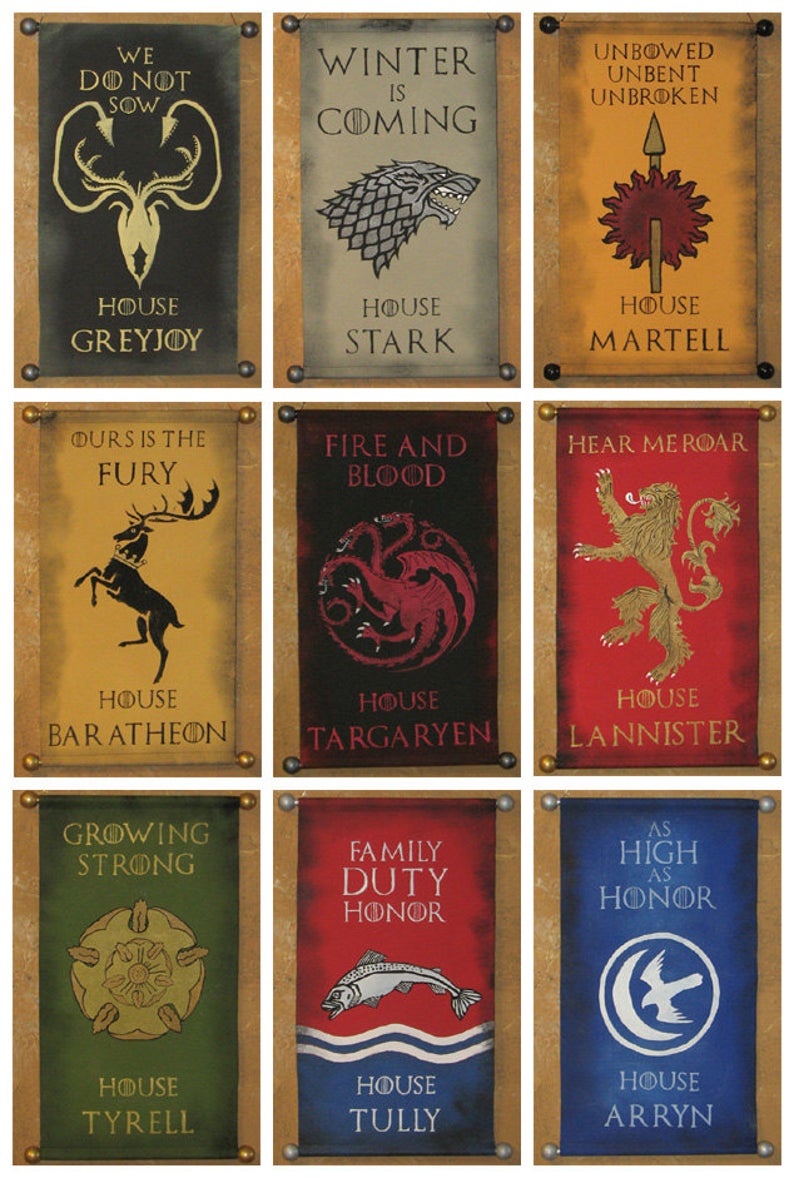
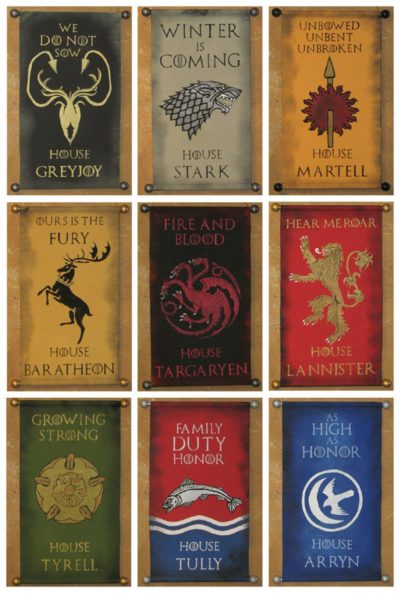
      George R.R. Martin’s fantasy series A Song of Ice and Fire is replete with terrific and memorable names: Mance Rayder, Tywin Lannister, Walder Frey and Jon  Snow. In fact, the series has such a crowded cast it comes with an appendix cataloging names. One royal family is also named Stark. The family is from a kingdom of the north, Winterfell and the Starks are tough and cunning and hardened, with a lower hall filled with the bones of their ancestors.

      It often works best to give tough, plain spoken, or unsentimental types, equally unsentimental names. Thus, your straight-shooting, beer-loving cop likely wouldn’t be named Julian or Florian, (no offense to the Julians and Florians of the world) but instead might be Jake or Jesse or Max. An alpha type needs an alpha-sounding name as does James (Jamie) Fraser in Diana Gabaldon’s Outlander series.  Of course this works for women too as shown in Ma Joad of The Grapes of Wrath. Many writers use names that are suggestive such as Romeo suggesting romance, Holly Golightly suggesting a light hearted nature, and Scarlett O’Hara a beautiful flirt.

      In Dean Koontz’s Forever Odd he gets the names just right and the villainess is called Datura which reflects her kinkiness, coldness, and cruelty. However, Koontz cleverly has chosen a name with layers of meaning, something fiction writers are always striving for. Datura is a flowering plant that is also called Devil’s Trumpets and Angel’s Trumpet. The Datura species, which has beautiful trumpet-like flowers exudes a narcotic-like scent, especially at night and is considered a sacred visionary plant. Datura plants have been used in many regions and by many cultures for medicinal and spiritual reasons, especially by shamans who use it for its clairvoyant powers. It is also interesting to note that all the Datura species contain potent alkoids which when taken in sufficient quantity have the power to kill.

      Of course, like all parts of fiction sometimes writers go awry when naming characters. One problem is that they take this technique too far. Examples are naming a macho private eye Rod Magnum or Sam Blaster or naming a seductress Jezebel Flower.

      Choose a character name that is age-appropriate and don’t make the mistake of choosing a name that is popular now for an adult character but wasn’t popular at the time of the character’s birth. To research the etymology and history of first names go to www.behindthename.com. If you’re writing historical fiction, it’s crucial that your names are historically accurate. Thus you wouldn’t name a 16th century character Tiffany or Shawna. But Geoffrey, Humphrey, and Giles have an authentic ring as do Eleanor, Phillipa, and Thomasina. And while Hester Prynne works for moniker of the scarlet woman of seventeenth century, her name wouldn’t work for a contemporary woman.

      Kiffer’s Note: In The Twilight series by Stephanie Meyer, naming characters had its own special conundrums. The characters exist in contemporary U.S.A. but may be from the 1918 such as Edward Cullen or Carlisle Cullen who was born in the 1640s. Meyer wanted the names to appropriate for the time period when they were born and that would not seem weird in contemporary America. Cullen is the name that Carlisle gave his Olympic coven.

      Edward Cullen, born 1901
      Carlisle Cullen, born 1640

      What to avoid in naming

      Another problem is featuring a story with too many names that sound alike—Jana, Jen, Jed, and Janine. Or names that rhyme like Ted and Ned. Or names that share the same vowels sounds like Sean and Dawn.  So you want your cast names to have contrast and variety. Other problems are naming a character after a real person as in William Washington Clinton, Prime Minister of the Federated Territories.

      Avoid also cutesy spellings or the alphabet soup syndrome most often found in science fiction or fantasy where the reader is left wondering how to pronounce oddball names like Aarghe or Zyyxr or T’muhra.   You might try combining two contemporary names or twisting a contemporary name to change it somewhat, or use mythological names or simply ones that are easy to pronounce like Bilbo Baggins from Lord of the Rings.

      Other TIPS:

      • Avoid androgynous names (unless that is part of your story)
      • Do pair unusual first names with simpler last names (Clark Bartholomew)
      • Or simple last names with complex first names (Reginald Clark)
      • Don’t use a name where the last letter of the first name is the first letter of the last name (Thomas Sinclair)
      • The more populated the story, the more the names should differ. (GOT examples – Jon Snow, Daeneys, Arya Stark, Cersei Lannister, Tormund Giantsbane…)
      • Avoid pairing characters with obvious names such as a bad guy named Damon or Rafe and a sweet heroine named Angela.

      Names are a terrific way to anchor a story with authenticity as Mario Puzo did in The Godfather with the Sicilian immigrant Don Vito Corleone and his sons, the tough quick-tempered one is Santino, Frederico is the weaker son, and Michael, the good son. Well, at least he starts out the story as the good son. Then there was Lucca Brazi who ended up sleeping with the fishes and Johnny Fontane, the singer whose name suggests the era.

      It’s also helpful to know how your character feels about his name. Many people don’t like their names, don’t believe their names suit them, or shorten or change their names—James is called Jim, Margaret shorten end to Meg, Jerome to Jerry. And that in itself can lend sub-context to your story.

      TITLES — that is an entirely different subject… Just imagine if the Twilight Saga kept its working title Forks. So stay tuned. If you haven’t subscribed, we invite you to do so! 

      Keep writing, keep dreaming, have heart. Jessica

      Keep creating magic! Kiffer 


      HANDY LINKS to Other Chanticleer Writers Toolbox blog-posts on Character Names and Language in Fiction. 

      Language and Names in Writing Fiction Part 1

      Language and Name Craft in Writing Fiction Part 2


      Jessica Page Morrell

      Jessica Page Morrell is a top-tier developmental editor for books and screenplays. Her articles have appeared in Writer’s Digest and The Writer magazines. She is known for explaining the hows and whys of what makes for excellent writing and for sharing very clear examples that examine the technical aspects of writing that emphases layering and subtext. Her books on writing craft are considered “a must have” for any serious writer’s toolkit.

      Jessica will teach the Master Craft Writing Classes at the Chanticleer Authors Conference VIRTUAL Conference that will be held from Tuesday, Sept 8 – Sunday, Sept. 13, 2020. She will present sessions and Master Classes during the conference. She and Kiffer will also host a fun kaffeeklatch for Word Nerds at CAC20.

      Did you know that Chanticleer offers editorial services? We do and have been doing so since 2011.

      And that our professional editors are top-notch and are experts in the Chicago Manual of Style. They have and are working for the top publishing houses (TOR, Macmillan, Thomas Mercer, Penguin Random House, etc.) and award-winning independent presses. If you would like more information, we invite you to email Kiffer or Sharon at KBrown@ChantiReviews.com or SAnderson@ChantiReviews.com.

      Click here to read more about our Editorial services: https://www.chantireviews.com/services/Editorial-Services-p85337185

      A great way to get started is with our manuscript evaluation service. Here are some handy links about this tried and true service:

      https://www.chantireviews.com/manuscript-reviews/

      We work with a small number of exclusive clients who want to collaborate with our team of top-editors on an on-going basis. Contact us today!

      Writer’s Toolbox

      Thank you for reading this Chanticleer Writer’s Toolbox article. 

      We encourage you to stay in contact with each other and with us  during this stint of practicing physical distancing to prevent the spread of COVID-19 — especially at this time of re-opening.

      Let us know how you are doing, what is going on where you live, how are you progressing on your writing projects.

      I invite each of you to join us at The Roost – a private online Chanticleer Community for writers and authors and publishing professionals. You are welcome to email me for more info also.

      We are active on Facebook, Twitter, and Instagram. You can find us by using our social media handle @ChantiReviews

      Minimize physical contact! Maximize social connecting!

      Be well. Stay safe. Keep writing! Keep Creating! 

    • CREATING UNFORGETTABLE SECONDARY CHARACTERS – Part Two of ESSENCE of CHARACTERS from Jessica Morrell’s Editor’s Desk – Writer’s Toolbox Series

      CREATING UNFORGETTABLE SECONDARY CHARACTERS – Part Two of ESSENCE of CHARACTERS from Jessica Morrell’s Editor’s Desk – Writer’s Toolbox Series

      Many writers struggle to create vibrant and complex secondary characters. After all, complicated main characters are hard enough to create. Memorable secondary characters, however, can make or break a story.  Think about Yoda (Star Wars), Pippin (LOTR), Jane Bennet (Pride and Prejudice), Thomas Pullings (the Aubrey – Maturin series by Patrick O’Brian), and …

      Jane Bennet – Pride and Prejudice
      Thomas Pullings of the Aubrey-Maturin Patrick O’ Brian series

      I always view secondary characters as a measuring stick for a writer’s prowess. Jessica


      Here’s a vivid example of a memorable secondary character from Leif Enger’s beautiful Virgil Wander

      His name is Rune–so here’s a simple trick, give your characters resonant names.

      In this case, rune has mystical, mysterious associations. The day after the protagonist Virgil survives a car accident in the opening moments of the story he walks to the waterfront of the forbidding, ever-changing Lake Superior. Enger is introducing an oft-used device: a mysterious Stranger comes to town.


      I ended up at the waterfront. It’s not as though there’s any other destination in Greenstone. The truth is that I moved here largely because of the inland sea. I’d always felt peaceful around it–a naive response give it fearsome temper, but who could resist that wide throw of horizon, the columns of morning steam? And the sound of a continual tectonic bass line. In a northeast gale this pounding adds a layer of friction to every conversation in town.

      At the foot of the city pier stood a threadbare stranger.  He had eight-day whiskers and fisherman hands, a pipe in his mouth like a mariner in a fable, and a question in his eyes. A rolled-up paper kite was tucked under his arm–I could see bold swatches of paint on it.

      There was always a kite in the picture with Rune, as it turned out.

      He watched me. He carried an atmosphere of dispersing confusion, as though he were coming awake. “Do you live in this place?” he inquired.

      I nodded.

      “Is there are motor hotel? There used to be a motor hotel. I don’t  remember where.”

      His voice was high, with a rhythmic inflection like short smooth waves. For some reason it gave me a lift. He had a hundred merry crinkles at his eyes and long-haul sadness in his shoulders.

      “Not anymore–not exactly.” If I’d had more words, I’d have described Greenstone’s last operational motel, the Voyageur, a peeling L-shaped heap with scraggy whirlwinds of litter roaming the parking lot. Though technically “open,”  the Voyageur is always full, its rooms permanently occupied by the ower’s grown children who failed to rise on the outside.

      “Oh well,” he said,shaking himself like a terrier. He peered round at the Slake International taconite plant, a looming vast trapezoid which had signified bustling growth in the 1950s and lingering decline ever since. Its few tiny windows were whitewashed or broken; its majestic ore dock rose out of the water on eighty-foot pilings and cast a black-boned reflection across the harbor. No ship had loaded her in so long that saplings and ferns grew wild on the planking. We had a little forest up there. I looked at the  kite scrolled under his arm. He’d picked the wrong day for that, be then he looked like a man who could wait.

      He said, “You here a long time?”

      “Twenty-five years.”

      At this something changed in him. He acquired an edge. Before I’d have said he looked like many a good-natured pensioner making do without a pension. Now in front of my eyes he seemed to intensify.

      “Twenty-five years? Perhaps you knew my son. He lived here. Right in this town,” he added looking round himself, as though giving structure to a still-new idea.

      “Is that right. What’s his name?”

      The old man ignored the question. He pulled a kitchen match from his pocket, thumbnailed it, and relit his pipe, which let me tell you held the most fragrant tobacco–brisk autumn cedar and coffee and orange peel. A few sharp puffs brought it crackling and he held it up to watch smoke drift off the bowl. The smoke ghosted straight up and hung there undecided.


      Writer’s Toolbox

      Did you notice how this small scene multi-tasks? 

      Techniques to borrow:

      • Sharply observed first impressions (carried an atmosphere of dispersing confusion as though coming awake, a good-natured pensioner making do without a pension, looked like a man who could wait)
      • Props (kite and tobacco, kitchen match, pipe)
      • Smells (tobacco)
      • Iconic or mythic comparisons (rune, mariner in a fable)
      • Indelible physical features: (fisherman’s hands, question in his eyes, a hundred merry crinkles as this eyes and a long-haul sadness to his shoulders)

      Here’s a tip: When you need to describe a character or objects or setting ask yourself what does this remind me of?

      As you walk around your world, really notice your surroundings and ask yourself the same question.

      The next post will be about noticing and nurturing your imaginings with paying attention to small details with a novelist’s eye.

      Here is the link to Part One of the Essence of Characters series: https://www.chantireviews.com/2019/06/01/essence-of-characters-part-one-from-the-jessica-morrells-editors-desk-writers-toolbox-series/

       

      Until then, Keep writing, keep dreaming, have heart.  Jessica

      Jessica Morrell is a top-tier developmental editor and a contributor to Chanticleer Reviews Media and to the Writer’s Digest magazine. She teaches Master Writing Craft Classes at the Chanticleer Authors Conference that is held annually along with teaching at Chanticleer writing workshops that are held throughout the year. 


      A Chanticleer Reviews – Writer’s Toolbox blog post on Character Development by Jessica Page Morrell

      Did you know that Chanticleer offers editorial services? We do and have been doing so since 2011.

      And our professional editors are top-notch and are experts in the Chicago Manual of Style. They have and are working for the top publishing houses (TOR, McMillian, Thomas Mercer, Penguin Random House, etc.) and elite indie presses.

      We work with a small number of exclusive clients who want to collaborate with top-editors on an on-going basis.

      Contact us today! If you would like more information, we invite you to email Kiffer or Sharon at KBrown@ChantiReviews.com or SAnderson@ChantiReviews.com


    • ESSENCE of CHARACTERS – Part One – From the Jessica Morrell’s Editor’s Desk – Writer’s Toolbox Series

      ESSENCE of CHARACTERS – Part One – From the Jessica Morrell’s Editor’s Desk – Writer’s Toolbox Series

      When a character is introduced in a story he or she needs to make a strong impression. (Walk-on and minor characters are sometimes the exceptions.) This means when you create characters after you make decisions about physical appearance and their essential role in the story, then start refining his or her essence and key personality traits. Some of the decisions about your character will happen without you making decisions because characters have a way of emerging and evolving in our deeper consciousness.

      • Fiction equals characters.
      • Characters make us care, worry, empathize.
      • Characters need to be knowable.

      No matter your process, it’s crucial to nail a character’s humanity and complexity on the page. And to nail his or her essence from the first breath he/she takes in your story.

      Senua’s Sacrifice: Hellblade

      Within the personality spectrum, there are endless possibilities. There are also layers to one’s personality, and it seems to me that the inner layers are a character’s essence.

      Let’s list some possibilities: quiet, serious, boisterous, buoyant, innocent, worldly, full of laughter, cautious, always ready for adventure. Let’s consider other options: practical, frivolous, introverted, extroverted, questioning, plays by the rules, respects the status quo, rebellious, rigid, creative, uptight, light-hearted.

      Samwise Gamgee – LOTR

      Virgil Wander

      I recently read Leif Enger latest beautiful novel, Virgil WanderIt’s now number one on my Top 10 Favorite Novels of All-time list. One thing I like best about Enger’s stories is that he creates fascinating and sometimes oddball characters you’ve never met before and will never forget. He toes the line between creating ordinary-extraordinary story people you want to spend a lifetime with. 

      And while complicated, they’re knowable  They typically face uncommon, vexing problems and dilemmas and seem as human as my next-door neighbor. Virgil Wander, the protagonist of this wending tale, is no exception. I don’t want to give away too much, but he starts the story with a head injury and owns a failing theater in a small town. 

      The failing town is perched on the ever-changing and blustery Lake Superior and skies, wind, and storms play a big role in the story. If you’ve never visited Lake Superior, the largest body of fresh water on the planet, it’s a primal, massive inland sea.

      One of the many moods of Lake Superior

      Toss in a pipe-smoking, kite-flying Norwegian, a mysterious prodigal son millionaire, a missing baseball player, several boys who need a father, and a local handyman on a downward arc. The setting is tightly woven into all aspects of the tale, but it’s the characters who will live in me forever.

      Here’s an example of how Enger introduces a character, the aforementioned missing ballplayer, while capturing his essence and adding to the mystery of his disappearance: Most people knew about Alec Sandstrom, or thought they knew, could be traced to a silken Sports Illustrated article published on the anniversary of his death.

      The magazine’s expenditure of four thousand words on a failed minor-league pitcher testifies to Alec’s magnetism. In two seasons of small-time baseball, Alec was often compared to eccentric Detroit phenom Mark Fyrich, who is remembered for speaking aloud to the ball itself as though recommending a flight path. Alec didn’t talk to baseballs–his quirk adored by fans of the Duluth-Superior Dukes, was to break out laughing during games. Anything could set him off: an elegant nab by the second baseman, a plastic bag wobbling like a jellyfish across the diamond, a clever heckle directed at himself. His merriment was unhitched from his success. Sometimes he laughed softly while leaning in for signs. His fastball was a blur, its location rarely predictable even to himself. Sprinting on-field to start the game, limbs flailing inelegantly, Alec always seemed sure his time had arrived. 

      “Reality wasn’t strictly his deal,” Beeman recalled. “My God he was fun to watch.”

      Engaging as Alec could be, he’d never have received the elegiac Sports Illustrated treatment had he not strapped himself into a small plane at dawn, lifted off in a light westerly, and banked over Lake Superior never to return.  

      Untethered from his success. Sigh. Pardon me while I indulge in writer’s envy. As you can tell, Alec is an original. And notice how his essence is joyful?  Stay tuned, I’m going to reveal a few more of his characters’ essence in an upcoming post.

      Keep writing, keep dreaming, have heart. Jessica

      Jessica Page Morrell


      Jessica Morrell is a top-tier developmental editor and a contributor to Chanticleer Reviews Media and to the Writer’s Digest magazine. She teaches Master Writing Craft Classes at the Chanticleer Authors Conference that is held annually along with teaching at Chanticleer writing workshops that are held throughout the year. 

      Did you know that Chanticleer offers editorial services? We do and have been doing so since 2011.

      And our professional editors are top-notch and are experts in the Chicago Manual of Style. They have and are working for the top publishing houses (TOR, McMillian, Thomas Mercer, Penguin Random House, etc.) and elite indie presses.

      We work with a small number of exclusive clients who want to collaborate with top-editors on an on-going basis.

      Contact us today! If you would like more information, we invite you to email Kiffer or Sharon at KBrown@ChantiReviews.com or SAnderson@ChantiReviews.com


      A Chanticleer Reviews – Writer’s Toolbox blog post on Character Development by Jessica Page Morrell    

      Writer’s Toolbox