Tag: Blockchain and publishing

  • Chanticleer Reviews Magazine sets a First World Wide Record!

    Chanticleer Reviews Magazine sets a First World Wide Record!

    This exciting news is just in from Bookchain, by Scenarex.

    Bookchain® is a brand-new platform bringing a refreshingly flexible way to publish and distribute ebooks, based on blockchain technology.

    Through smart contracts, the platform enables the configuration of the security, trace ability, attribution, and distribution settings of an e-book.

    Bookchain® was specifically designed to fit the different needs of all those involved in the digital publishing industry. They created it to be fully adaptable to the reality of publishers, indie publishers and self-publishing authors.

    And now Bookchain publishes digital magazines on the blockchain!

    Chanticleer Reviews magazine is the first magazine to be published on the blockchain!

    What is so important about blockchain? 

    Blockchain is the foundation of a New Era of the Internet —

    “Publishing is at the epicenter of digital disruption.”Paul Michelman, MIT & MIT Sloan.

     

    Simon-Pierre Marion, CEO of Scenarex and its Bookchain division that is headquartered in Montreal, Canada, has reported to me that

    The Chanticleer Reviews magazine is the very first magazine to be published on the blockchain and using blockchain technology.

    An impromptu celebration for this historic news in publishing!

    [Editorial Note: Even magazines published about the blockchain are not on the blockchain. They are available to download, but they are not available on different devices like our magazine is the one of Bookchain. – kb]

    The Colibrio Reading System that is headquartered in Gothenburg, Sweden, has made this possible with their new innovative Reading System SDK, built on the Modern Web Platform. It is a web first engine, developed using 2019 (and moving into 2020) technologies and practices and built to support new upcoming standards, as well as the current publishing formats. Bookchain uses the Colibrio Reading System.

    “The Colibrio Reader focuses on preserving authors, publishers and designers original visual style. It is the only Digital Reading System which can configure detailed rules for pagination to avoid orphans, widows, split boxes and much more, regardless of document structure and semantics.”  

    Get your history making e-zine today at Bookchain! Click on this link to purchase this special edition Chanticleer Reviews e-zine for $3.99  that features interviews with J.D. Barker, Ron Yates, and celebrates the CIBA 2018 winners.  https://catalogue.bookchain.ca/book/0xb142dc94bba0957512c6731bb2b82af8b95c9c60

    We are going to have our past digital issues of the Chanticleer Reviews magazine published on Bookchain’s platform along with new issues.

    Our advice? Set up your account today with Bookchain! 

    Don’t worry! Bookchain makes it easy. 

    What makes Bookchain’s e-pubs so different?

    Their e-zines and e-pubs are downloadable  on any device! You are not locked into a single device. You alternate devices. Read on your smart phone. Read on desktop. Read on your laptop when you are on the go. The freedom of reading your ebooks on different devices–because it is will be in YOUR LIBRARY that is stored in the super secure blockchain by Bookchain.

    Your library — digitized and portable!

    The first four things to know and understand about the Bookchain selling platform for digital publishing are:

    1. You do NOT need cryptocurrency (aka Bitcoin, etc.) to sign up.
    2. You will NOT be paid in cryptocurrency (unless you want to) if you sell your books on the Bookchain platform.
    3. It is endorsed and underwritten by the Canada Media Fund, NRC, and the Canada Ministry of Economie.
    4. It is secure!

    As an author, the blockchain provides a way for you to securely publish your book and keep control of your digital rights. It allows your published book to be treated more like a physical book, allowing your readers to own the digital book forever (as opposed to being allowed to checkout via Kindle). 

    Thank you, Simon-Pierre Marion and your team at Bookchain, for making this possible. We are excited to be a pioneer in this new age of digital publishing.

    Chanticleer Reviews has always been steeped in technology—thanks to our technology wizard and COO, Argus Brown.  Our “under-the-hood technology” has propelled Chanticleer Reviews “to the ranks of the premier, respected trade reviews in the industry” as quoted from award-winning author, Michael Hurley. Chanticleer Reviews has received the Technology Alliance Group award for our technology platform that helps to increase the digital footprint on the Internet of our reviews and of the Chanticleer International Book Awards winning titles and their authors.

    And that is why we are honored to have Bookchain as an affiliate of Chanticleer Reviews & Media. It is a perfect pairing of content and technology! 

    Bookchain is also a partner member of The Roost at Chanticleer. 

    Now that is something to crow about! 


    Here are some handy links to articles that have been published on the Chanticleer website if you would like to read more about blockchain and the BookChain E-book and magazine distribution platform.

    What is Blockchain? And Why Authors and Publishers Should Care

    PIRACY — Not Just on the High Seas – by award-winning author Susan Faw

    CRYPTOCURRENCY – Protecting Your Coin from Pirates by Award-Winning Author Susan Faw – Cryptocurrency, Book Sales, Book Marketing

  • CHAINING PIRACY: How to Save Your Damsel in Distress – Part 3 by Susan Faw – BlockChain, Book Piracy, Publishing

    CHAINING PIRACY: How to Save Your Damsel in Distress – Part 3 by Susan Faw – BlockChain, Book Piracy, Publishing

    In the days when piracy was the number one concern for seafaring merchants, ships were built with one purpose in mind—to repel attacks from pirates. It was thought that a floating fortress, and a crew as ruthless as those they faced, could protect the cargo stashed in the cavernous holds.

    Painting by Ambroise Louis Garneray

    Bristling with cannons, the Spanish and English galleons were thought to be untakable. The pirates soon convinced them otherwise, but by the time news reached the merchant houses in both nations, ships had been lost or commandeered, and their own guns turned on newly arriving ships. Soon, the pirates had captured so many ships, their flotillas outnumbered those of their prey.

    Human beings were treated and traded as cargo, just as gold or silk, sugar or tea. All were equally valued by pirates, as booty for gain.

    The island of Jamaica is just one example of a place that was populated by the pirate trade. The proceeds of piracy were traded on the market until the pirated cargo could no longer be traced to the stolen goods.

    Today, books are stolen, given a new title and a new cover, and then resold in the publishing industry’s market place.

    Our book baby is all grown up, just waiting to be stolen away by nefarious means, and resold on some island (read market), not of our choosing. How can we, the merchant owner of our books, protect our damsel/damoiseau in distress? How can we keep the pirates from raiding our ships, and stealing our coin?

    Blockchain.

    It is that simple, and that complex.

    What is blockchain, you ask?

    According to Investopedia “blockchain is a distributed, decentralized, public ledger.”

    The block is made up of three distinct structures.

    The first aspect is that the block stores information about transactions, such as the dollar amount of a purchase, and the date and time it was purchased. This information is recorded in a ledger contained within the block.

    The second aspect is that the block records the ‘who’ of the transaction. It keeps a record of the purchaser as a digitally encrypted signature, which is a permanent entry on the ledger.

    The third aspect is that the block records each transaction as a unique feature called a hash. Every transaction within the block has its own unique coding. No two are alike.

    Why is this relevant to your damsel/damoiseau in distress, you ask?

    The biggest risk factor, to the distribution of any form of electronic art, is piracy. That is the ability for that work to be stolen. The oceans of digital publishing are ripe with pirates, who are happy to steal any e-book at any time.

    But they don’t even need to go that far. We practically invite the pirates to steal our work, any time we give away or sell anything on the internet because there is nothing protecting the digital rights of that book. A few words of copyright in a manuscript do nothing to prevent your work from being reproduced in any currently known format, anywhere on the planet.

    Once that book is “out there” there is no getting it back. Bye, bye, sweet damsel! Dare I say it again?  Not to be outdone, you send cease and desist emails to every site that has your book baby illegally uploaded for sale. Of course, they ignore you. The pirate’s code trumps all.

    Blockchain.

    Digitalizing your book into blocks of code, blockchain has the power to prevent your work from being stolen. That pirate ship on the horizon will smack into a reef, impossible to cross. They may try to lob a few cannon shots at your ship, to no avail.

     Book Pirates be Foiled!

    The only way to get to your book IS TO PAY FOR IT. Isn’t that wonderful? What a novel concept, actually being paid for your work.

    “But… what will keep them from reselling it once they have a copy?” you ask.

    Ah, good question. Because blockchain is an encrypted source file, your entire book is encrypted. To access that work, you must have a key, a token, to unlock it. But the token can only be used by the purchaser. It will not work for anyone else. Web-based, blockchain books are read in browsers. Currently, this means that an internet connection is required. The book is owned by the purchaser, but it still exists virtually.

    A book published in blockchain cannot be copied, resold, or redistributed in any manner. It can only be read by the purchaser, using the token given to them on purchase.

    Other advantages to blockchain include being able to create digital limited editions, with serial numbers attached to them to confirm they are truly limited additions. These unique books could contain anything from visual and audio art and files, interviews, etc. Anything that can be digitalized, could become part of this unique format.

    So, a book in blockchain cannot ever be resold?

    Ah, well that power is in your control. As the owner of the rights to distribution (by virtue of it being block chained) you can authorize a book to be resold, under rights and terms that you set. For example, let’s say that a customer bought a $50.00 limited edition from you. You could make it part of the blockchain code that resales are permitted, but that 50% of every resale comes to you. The blockchain, because of the unique coding attached to the original transaction, will know that it is that exact copy being resold and enforce the 50% deposit to your account when the transaction occurs.

    If this is such a wonderful technology, why isn’t everyone using it?

    Blockchain first came into being in 1991. As with all new technologies, it has to be tested and tried, before becoming mainstream. As it moves into its third decade of existence, the world of commerce is paying attention. Start-up companies, such as Bookchain, are cropping up and will be the wave of the future. As more and more of these types of companies appear in the market place, the retail organizations will be forced to adopt the technology.

    I see pressure coming from the big five publishing houses, as they look for better ways to protect their investments.

    Blockchain Could Put Authors At Center of Publishing Universe

    The Alliance of Independent Authors (Chanticleer Reviews is a vetted partner member of ALLi) agrees:

    “If this decentralized technology fulfills its promise, the outcome could be a creator-led publishing industry.

    While indie authors, and the companies that serve them, are a growing presence and power in publishing, large corporate intermediaries such as Amazon still stand between authors and their readers and dominate the self-publishing marketplace. Blockchain tech may help to build the road that leads to true independence for self-publishers.”  April 2018 – London Book Fair

    Change comes with a cost, and the big retailers will be reluctant to embrace such technologies, as they make money off of the pirates as surely as those island ports of old. Change will have to be forced on them.

    E-book piracy can be combated, we only need the sword of technology in hand and move forward.

    Read the first two articles of this series by Susan Faw by clicking the links below: 

     Piracy Not Just on the High Seas  Part 1 of 3 by Susan Faw

    https://www.chantireviews.com/2019/06/14/piracy-not-just-on-the-high-seas-by-award-winning-author-susan-faw/

    CRYPTOCURRENCY – Protecting Your Coin from Pirates  Part 2 of 3 by Susan Faw

    https://www.chantireviews.com/2019/06/29/cryptocurrency-protecting-your-coin-from-pirates-by-award-winning-author-susan-faw-cryptocurrency-book-sales-book-marketing/

    Join us on the High Seas to the New Territories of  DIGITAL BOOK PUBLISHING

    Sailing – making great time! Fair waves and following seas! All is good!

    For more information on Blockchain Technology, read Kiffer and Argus Brown’s article “What is Blockchain? And Why Should Authors and Publishers Care about It.” 

    If you are interested in publishing your works on blockchain, you may want to check out Bookchain by Scenarex.

    The first five things to know and understand about the Bookchain platform are:

    1. You do NOT need cryptocurrency (aka Bitcoin, etc.) to sign up
    2. You will NOT be paid in cryptocurrency (unless you want to be)
    3. It is endorsed and underwritten by the Canada Media Fund, NRC, and the Canada Ministry of Economie.
    4. It is secure! (Or more secure than just about anything on the internet – by design).
    5. Your works can still be available on other selling platforms.

    Bookchain by Scenarex is a vetted partner of the  The Roost at Chanticleer a Community of Authors and Publishers


    Susan Faw is the award-winning author of the Spirit Shield Saga, young adult fantasy and dystopian series.

    You can read her 10 Questions Interview on Book Marketing, Increasing Book Sales with Sharon Anderson here. 

    You can purchase her books on Bookchain and she will get the lion’s share of the booty!

    https://catalogue.bookchain.ca/?author=faw


  • What is Blockchain? And Why Authors and Publishers Should Care

    What is Blockchain? And Why Authors and Publishers Should Care

    Blockchain is the foundation of a New Era of the Internet —

    “Publishing is at the epicenter of digital disruption.” Paul Michelman, MIT & MIT Sloan.

    Why is blockchain important for commerce and business (and, lest we forget,  publishing is business)?

    Because

    It is a persistent, transparent, and its end goal is to cut down on middlemen, which is considered to be the new age of economicsCryptoeconomics.

    “Cryptoeconomics” is the practical science of building distributed systems, where properties of those systems are secured by financial incentives, and where the economic mechanisms are guaranteed by cryptography. It is the general term for the practice of designing and scaling blockchains like Ethereum and Bitcoin.

    Bookchain by Scenarex utilizes Ethereum for its digital bookselling platform. We will circle back around to Bookchain and Ethereum. But first, join me as I explore blockchain to try to understand this technology that is shaping the publishing industry.

    Blockchain is a type of internet network that runs on hundreds of thousands of computers worldwide. There are dozens of blockchain internet network platforms running 24/7 globally. And, yes, blockchain was invented to support bitcoin transactions. However, it is now being utilized for recording many different types of information.


    As for real-world applications, here is one that validates blockchain technology commercial use:

    Deloitte (a “Big Four” accounting organization) recently surveyed 1,000 companies across seven countries about integrating blockchain into their business operations. Their survey found that 34% already had a blockchain system in production today, while another 41% expected to deploy a blockchain application within the next 12 months. In addition, nearly 40% of the surveyed companies reported they would invest $5 million or more in blockchain in the coming year. – Investopedia

    Blockchain is a digital ledger on all platforms. Blockchain apps act as a third party and allow us to trade one-on-one but on a global scale.

    Arizona’s Electronic Transactions Act 2017

    “‘Blockchain technology means distributed ledger technology that uses a distributed, decentralized, shared and replicated ledger, which may be public or private, permissioned or permissionless, or driven by tokenized crypto economics or tokenless. The data on the ledger is protected with cryptography, is immutable and auditable and provides an uncensored truth.”

    It is decentralized. It isn’t controlled by any government or company.

    As we prepare to head into the third decade of blockchain, it’s no longer a question of “if” legacy companies will catch on to the technology — it’s a question of “when.”  – Investopedia

    [ Editor’s Note: In 2020, just a half a year away, Facebook is planning on launching its own cryptocurrency, Libra, on its own blockchain platform called Calibra. Whether are not that platform will be decentralized is a concern—a major concern. Google is also planning on launching BigQuery – with its own cryptocurrency. ]

    Reread: It is decentralized. It isn’t controlled by any government or company that is until Facebook and Google have their own platforms…Amazon can’t be far behind…

    Are you with me so far…? 

    Blockchain =  a block of digital information that is stored in a public database known as the chain.

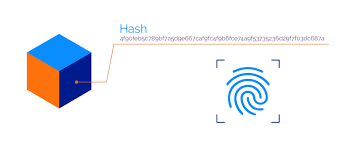
    Illustration from Blockchain Simply Explained

    Each digital record is a “block.” Changes can only be made to the “block” by adding new information to the end that references previous transactions on that particular block. Each change is called a “hash.” Each block of information is added by a chain. 

    A “hash” is a unique fingerprint for each bit of added information to the chain of information (blocks)

    Rubygarage.org

    WHY, again,  am I reading this article? 

    The goal of blockchain is to allow digital information to be recorded and distributed, but not edited (or hacked or pirated). This is what makes blockchain a natural for ebook distribution.

    For our purposes, we are going to discuss Ethereum, the world’s leading programmable blockchain app.

    Now to circle back around to Bookchain by Scenarex and Ethereum. Bookchain uses Ethererum for its digital bookselling platform.

    COOL TIP > check out Eretheum just to see this new type of artwork called NFT (non-fungible token –NFTs also find potential use in digital art, by helping prove authenticity and ownership.) I don’t quite understand what it is, but the graphic is fun to watch as it morphs on the Ethereum.org site.  Blockchain has given rise to this new form of graphics and art. And allows the creators to benefit from their works.

    This logo joins together the artwork of five artists. You can see this artwork in motion at Eretheum.org @liliashka lead the art project.

    The Ethereum community is the largest and most active blockchain community in the world. It includes core protocol developers, cryptoeconomic researchers, cypherpunks, mining organizations, ETH holders, app developers, ordinary users, anarchists, fortune 500 companies, and individuals. 

    There is no company or centralized organization that controls Ethereum. Ethereum is maintained and improved over time by a diverse global community of contributors who work on everything from the core protocol to consumer applications. This website, just like the rest of Ethereum, was built – and continues to be built – by a collection of people working together.

    As of February 1, 2018, Ethereum was running on approximately 28,000 nodes (computers across the globe). That number has significantly increased in 2019.
    Ethereum is a global, open-source platform for decentralized applications. On Ethereum, you can write code that controls digital value, runs exactly as programmed, and is accessible anywhere in the world.

    Now, we can say that Ethereum is decentralized. It isn’t controlled by any government or company.

    Ethereum is a foundation for a new era of the internet that utilizes blockchain technologies:

    • An internet where money and payments are built in.
    • An internet where users can own their data, and your apps don’t spy and steal from you.
    • An internet where everyone has access to an open financial system.
    • An internet built on neutral, open-access infrastructure, controlled by no company or person.

    Are you still with me…? 

    “…attacks are further thwarted because the cost of changing the contents of old blocks is compounded by each new block that gets added to the chain. When a new block is made, it contains the hash of the one before it. Any changes in old blocks will result in invalid hashes for all subsequent blocks.  In that lock analogy, it’s as though the design for the lock at the end of the chain depends on all the locks that came before it. So changing one lock in the middle of the blockchain means having to find new keys for every lock after it.”  IEEE SPECTRUM

    “Ensuring irreversibility becomes necessary only when you invite anyone and everyone to take part in the curation of a ledger.” This is why blockchain technology platforms run on tens of thousands of nodes and computers. The information is decentralized, thereby making it almost impossible to steal, alter, or lose. 

    Blockchain

    Why authors and publishers should care about blockchain

    Any information (this includes books, novellas, short stories, graphics, photos, transactions…) that can be digitized can be recorded using blockchain technology. This digitized record can be referenced through a ledger entry on the intended blockchain platform which decentralizes it over its thousands of network nodes.  Any time the blockchain is accessed it is timestamped with another block of digitized information.

    As an author, the blockchain provides a way for you to securely publish your book and keep control of your digital rights. It allows your published book to be treated more like a physical book, allowing your readers to own the digital book forever (as opposed to being allowed to checkout via Kindle).

    How do I get my book published on a blockchain platform?

    There are a couple of different companies out there that provide the front end support to get your book published on the blockchain.

    Bookchain utilizes the Eretheum blockchain to create a brand-new platform bringing a refreshingly flexible way to publish and distribute ebooks, based on blockchain technology. Through smart contracts, the platform enables the configuration of the security, traceability, attribution, and distribution settings of an ebook. 

    The first four things to know and understand about the Bookchain platform are:

    1. You do NOT need cryptocurrency (aka Bitcoin, etc.) to sign up
    2. You will NOT be paid in cryptocurrency (unless you want to)
    3. It is endorsed and underwritten by the Canada Media Fund, NRC, and the Canada Ministry of Economie.
    4. It is secure!

    Why are we so into Bookchain?

    We became interested in Bookchain when one of OZMA Grand Prize winners, Susan Faw, informed us that she is now publishing on Bookchain because her books were pirated! Yes, pirated!

    Read about how and what happened to her and her published works here (from her blog posts on Chanticleer Reviews):

    PiracyNot Just on the High Seas  https://www.chantireviews.com/2019/06/14/piracy-not-just-on-the-high-seas-by-award-winning-author-susan-faw/

    CRYPTOCURRENCY – Protecting Your Coin from Pirates  https://www.chantireviews.com/2019/06/29/cryptocurrency-protecting-your-coin-from-pirates-by-award-winning-author-susan-faw-cryptocurrency-book-sales-book-marketing/

    Join us on the High SEAS to the New Territories of  DIGITAL BOOK PUBLISHING

    Sailing – making great time! Fair waves and following seas! All is good!

    What are your experiences? What are your thoughts?

    Do let us know!

    Links to Resources Used and Quoted in this Article:

    I have listed a few of the Youtube videos that I watched while trying to understand this new technology. They discuss what makes blockchain hard to hack and the concept of “consensus” that allows blockchain to exist. Stay tuned as we ride the waves of blockchain!

    Blockchain Simply Explained:  https://www.youtube.com/watch?v=SSo_EIwHSd4

    Blockchain for Dummies by Edureka:  https://www.youtube.com/watch?v=daQZt_klZhA

    IEEE SPECTRUMmagazine – by Morgen E. Peck

    Blockchains: How they work and why they will change the world https://spectrum.ieee.org/computing/networks/blockchains-how-they-work-and-why-theyll-change-the-world

    How Blockchains Work  https://spectrum.ieee.org/computing/networks/how-blockchains-work

    What’s in a Blockchain? With New Tools, Anyone Can Find Out   https://spectrum.ieee.org/tech-talk/computing/networks/whats-in-a-blockchain-with-these-new-tools-anyone-can-find-out

    Ethereum  https://www.ethereum.org/

    The Verge https://www.theverge.com/2018/3/7/17091766/blockchain-bitcoin-ethereum-cryptocurrency-meaning

    WIRED https://www.wired.com/story/ambitious-plan-behind-facebooks-cryptocurrency-libra/?mbid=GuidesLearnMore

    https://www.wired.com/story/guide-blockchain/

    And our own, Argus Brown, CTO & COO of Chanticleer Reviews & Media.