
Tag: 5 Star Book Review

  • The SUNKEN FOREST by R. Barber Anderson – Thriller & Suspense Action Fiction, Literary Fiction, Military Thrillers

    The SUNKEN FOREST by R. Barber Anderson – Thriller & Suspense Action Fiction, Literary Fiction, Military Thrillers

    American timber company, NTI, flies over a remote area of the Congo with sophisticated instrumentation. Data shows an immense, deep depression in the jungle floor, a giant caldera from an extinct volcano. Despite the depth of the crater, the canopy level above remains constant and gives no clue of what lies below. To NTI, this could be an indication of tropical hardwoods beneath, potentially the size of mature redwoods. To the indigenous tribes, the sunken forest is a forbidden zone guarded by a legendary black devil who brings sure death to trespassers.

    NTI sends a group in to explore and determine if their data is correct, that what lies beneath is an untapped bonanza of timber. The group persuades a few local tribe members to guide them. They make it to the edge of the caldera and are never heard from again. When the tribal guides return home, they suffer banishment for showing strangers the way to the forbidden zone.

    Zora de Rycken, an outdoor adventurer with exceptional jungle survival skills and Special Forces training, is enlisted to guide NTI scientist Carver Hayden to discover the fate of the first group and to complete their unfinished mission.

    Once in their expedition staging area in Brazzaville, Congo, the second NTI team encounters an unscrupulous Russian billionaire, Oleg Levkov, with a timber company of his own. Though it would seem they are in competition, Oleg assures them his only interest is in the legendary black devil. Oleg is a big game hunter with a fascination for big cats. He is sure through his own research that the black devil is a giant black lion no one has seen before, and he wants to be the first to kill one.

    When the NTI team arrives at their basecamp, the nearest open ground in the vicinity of the caldera big enough to land a helicopter, and the starting point for the previous NTI team, Oleg is already there. Oleg’s team has secured a native guide, Ngiome. Oleg’s helicopter departs just as the NTI team arrives, and Zora is sure she sees members of Ngiome’s tribe aboard. Has Oleg kidnapped these people to secure Ngiome’s services?

    One thing is certain, no matter which company wins the timber rights to The Sunken Forest, the result will be the same. Pristine jungle unlike any in the world will be laid waste leaving nothing but an empty muddy scar on the Congo.

    Barber Anderson weaves a captivating tale that lays out the consequences of Industrial greed and conservation set against a thrilling backdrop of jungle, violence, and sex.




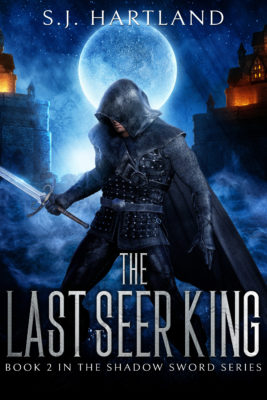
  • The LAST SEER KING (The Shadow Sword series Book 2) by S.J. Hartland – Dark Fantasy, Sword & Sorcery, Dark Fantasy Horror

    The LAST SEER KING (The Shadow Sword series Book 2) by S.J. Hartland – Dark Fantasy, Sword & Sorcery, Dark Fantasy Horror

    When it comes to fantasy novels, one thing is certain, as was famously said in the venerated musical, The Music Man, “You gotta know the territory.”

    Author S.J. Hartland clearly does.

    In The Last Seer King, the second volume in her Shadow Sword epic fantasy series, the creates a world with a granular intensity that envelopes the reader from page one. You see this world clearly in all its dark details. You also feel the power, the all-too-human intricacies of its leading characters. This is a world that feels authentic, as though the writer lived there and let us see it as clearly as her own first-person experience. Simply put, it works.

    There are well-developed characters here who fight on despite their emotional challenges. Dannon, who, despite his prowess on battlefields, yearns to belong to a people, to someone. Kaell, who dies and whose soul enters into the body of a woman who is coveted by a male warrior. The woman just happens to be the dead sister of the king of the Isles. Can Kaell possibly be a woman to a man when he is still a man and a warrior?

    What is less straightforward is summarizing the plot. Hartland helps us with the book’s logline: “It’s the secrets we hide from ourselves that gives others power…” Dark? Yes! Foreboding? Absolutely! It’s everything we love about S. J. Hartland and more.

    Readers are gifted a 600-page second in the series novel with dark and twisted plots and characters that would sooner kill you than look at you. There are warring territories, each with their own agendas. The leading characters come into this story with the ancient battles of their people still fresh in mind. Heath, Kaell, Vraymorg (also known as Val Arques) and Dannon, are constantly in some state of flux with each other. There is magic at hand: the power to insert one’s essence into the body of another, the ability to be both a human and a blood-sucking ghoul, the creation of “death riders” who live on and do their evil for centuries.

    This is rich and delicious stuff, made more so by a full cast of characters and their interwoven relationships. The glossary of characters at the end of the book, listed by their “tribes,” and a drill-down of their familial relations, is a major Rosetta Stone for readers to better understand what is happening. Trying to understand these relationships without it adds a layer of difficulty in reading this compelling, and oftentimes, complicated book. Besides, you want to know every detail, right?

    Another helpful tip: read, The 19th Bladesman, (The Shadow Sword series Book 1) that introduces the major characters in The Last Seer King. And be prepared to pick up the third book in the series due to be released in 2020.

    For readers who love fantasy, this novel is clearly a strong contender for a reader’s attention, in much the same way Tolkien’s Lord of the Rings series, or J.R.R. Martin’s Game of Thrones. Simply put, The Last Seer King by S. J. Hartland is an exciting well-crafted, epic-fantasy worthy of your time.


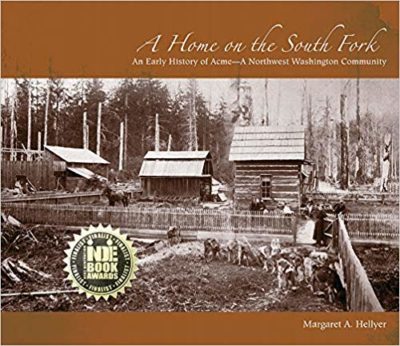
  • A HOME on the SOUTH FORK – An Early History of ACME – A Northwest Washington Community by Margaret A. Hellyer – Pacific Northwest History, Narrative Non-Fiction, Small Town Histories

    A HOME on the SOUTH FORK – An Early History of ACME – A Northwest Washington Community by Margaret A. Hellyer – Pacific Northwest History, Narrative Non-Fiction, Small Town Histories

    For untold millennia, the region that would come to be known as Whatcom was occupied by the indigenous conglomerate of tribes known as the Salish, who were peaceful and civilized. The Nooksack, who are a part of the Coast Salish, spent their time fishing, building canoes, weaving, and farming. In the 1850s, that began to change as the native peoples had to learn to co-exist with a new incursion of settlers—hardy people from the Eastern states and as far away as Europe.

    They came to the region with the lure of inexpensive land ownership that had been made possible by the Homestead Act. A few had drifted in earlier when false rumors of gold were sounded, those early explorations revealing arable land and an abundance of natural resources.

    Early homesteaders found the resources both sustaining and at times, daunting. For example, the trees themselves were so enormous that felling them was perilous, and logjams were frequent, cutting off the river’s flow. The winters were harsh and the summers, bug-infested. But families like the Galbraiths (the author’s ancestors) were hardy and determined. By the early 1900s, a thriving town had been established.

    Readers who think of the early 20th century as ancient times will be surprised by Hellyer’s lively account of how an organized and industrious outpost developed out of a nearly uninhabited wilderness. Not long after the first settlers arrived, cabins and then houses soon bloomed into handsome estates, some of which still stand today in Acme and elsewhere. Along with the settlers came schools and school districts. Roads changed from dirt trails to cement highways, while railroads transported logs and shingles out and new visitors in. Modern conveniences such as a town water system, churches, electricity, and the postal service arrived to make life easier. Readers will be amused by the telephones, with party lines that allowed everyone in the community to know everyone else’s business.

    People of Acme had to travel to a dentist, and, for a while, the town had a doctor who dealt with a variety of contagious diseases, delivered babies, and reattached severed fingers. At one time, citizens also had access to a local pharmacy to help with their aches and pains. Acme’s General Merchandise store sold everything from dry goods to salt meats, run by the Zobrist family, original settlers of the South Fork region. Recreation for the fully established town included hiking trips, concerts, and dances open to “woodmen and the general public.”

    Hellyer was born in Whatcom County and has remained, pursuing a career in graphic design while enjoying a personal interest in photography and writing about local history. Her family photos and recollections are a small but significant part of this story. Illustrated with black and white images on nearly every page, Hellyer’s historical account of the settling of the South Fork will enthrall both a regional audience and those curious about American pioneering in the Great Pacific Northwest.


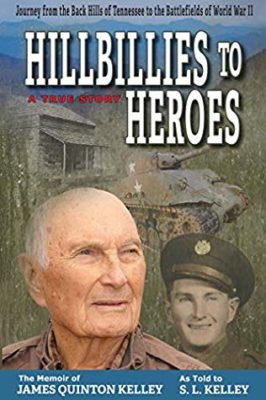
  • HILLBILLIES to HEROES: Journey from the Back Hills of Tennessee to the Battlefields of World War II – The Memoir of James Quinton Kelley by S.L. Kelley – World War II Biography, American Heroes, World War II History

    HILLBILLIES to HEROES: Journey from the Back Hills of Tennessee to the Battlefields of World War II – The Memoir of James Quinton Kelley by S.L. Kelley – World War II Biography, American Heroes, World War II History

    World War II veteran Quinton Kelley recounted his life story to an avid biographer – his daughter, S. L. Kelley, a documentarian and award-winning video producer.

    Kelley’s tale begins in Coker Creek, Tennessee, where he was raised on an 80-acre farm, in a log cabin that he described as rough, but “brightened” with flowers. Taught to be honest and hardworking by his parents, he grew up with kerosene lamps for light, a fireplace for warmth and a wood stove for cooking. His recollections are colorful, with language that recalls his roots.

    As a boy, he wore shoes only to church or to town and attended a church that doubled as a one-room schoolhouse. Everyone in the region knew someone who made moonshine, “a scruffy bunch,” Kelley called them; the local country store had bullet holes in the walls from fights between that bunch and the storekeeper. In his teens, he began work away from the farm, first for a local gold prospector, then for the TVA. Then in 1940 he heard about World War II and knew he’d be drafted.

    The second part of the book shows Kelley leaving Coker Creek for Camp Beale, California, where he became the company carpenter. Assigned to an armored division, the former farm boy showed his worth as the only member of his group who did not need the training to drive a tank. He met fellow recruits from all over America, and despite the manly joshing and rough language among them, the boys in his platoon once generously gave him money to get home when his sister was dangerously ill.

    He drove into combat, first in France, then in Germany, as part of an initiative that ultimately saw the end of Hitler’s Third Reich. Kelley (who passed away before the publication of his memoir) did not glorify himself in recounting his war exploits, but vividly described what it’s like to sit in a tank, looking at the action through a tiny window, always in danger of being killed while trapped inside the metal box. There’s not much room, he opined, for mistakes in battle.

    In his Tennessee argot, he states that combat “made me a bit jubrous.” Still a homeboy at heart, courting a girl by mail, Kelley noted that French and German people were good farmers, though still using horses, and very orderly in their houses and fields. Camped near Berchtesgaden after victory, he refused to go see Hitler’s former hangout: “I didn’t want to waste a minute on that sorry ol’ scudder.” Once back in the US, marriage to his sweetheart soon followed.

    Two books in one, this substantial memoir can be read equally avidly by nostalgic southern and mountain folk as a wide-ranging recreation of simpler times, or by anyone who is drawn to tales of war – both the battles and the long days and hours waiting and watching for the next conflict – as seen up close and personal. Using her writer’s instinct and flair, S.L. Kelley has done a remarkable job of combining her father’s spoken words, his accent, and slant, with those of fellow combatants, and others. Her book would make a splendid gift for old-timers, and a wholesome educational read for younger generations who would do well to remember and revere the sacrifices of America’s soldiers, and a heartfelt recollection that those who make history can be kindhearted and good!

    Kiffer’s favorite quote from this book: “…it took all of our personal sacrifices to go from war to peace.”  Quinton Kelley

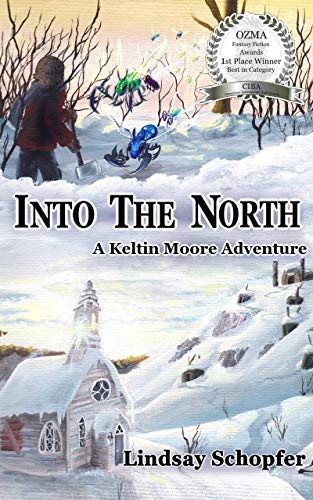
  • INTO the NORTH: A Keltin Moore Adventure by Lindsay Schopfer – Epic Fantasy, Steampunk, Action/Adventure

    INTO the NORTH: A Keltin Moore Adventure by Lindsay Schopfer – Epic Fantasy, Steampunk, Action/Adventure

    If Jack London had written about hunting fantastic beasts in a fantasy-tinged “Great White North” during a gold rush, instead of real animals in the Klondike, he’d have created a hunter like Keltin Moore and a beast like the Ghost of Lost Tap.


    The adventures of Keltin Moore read a lot like London’s best adventure stories, only written as if they were inspired by Larry Correia’s Monster Hunter International series. The combination leads to a chilling story (in more ways than one) about a professional beast hunter and his companions on a quest to make some money and save a town from a beast that no one has survived. Still, everyone has seen the aftermath of its depredations.

    They call it the Ghost of Lost Tap because it moves like a ghost. Or something supernatural. And no one has been able to catch it, certainly not the little band of shakedown artists calling themselves the Hunter Guild that has sprung up in the ramshackle boomtown of Lost Tap.

    The story focuses on the character of Keltin Moore, the last of a long and storied family of professional beast hunters. Keltin learned his trade at his father’s knee, and like his father, is used to hunting alone. But in his second adventure, he is traveling with an apprentice, young Jaylocke, who needs to learn a trade to earn his place as an adult among his own people.

    In Lost Tap, Keltin and Jaylocke band together with old friends that they fought with in the first book of Keltin’s adventures, The Beast Hunter. While they hunt the “Ghost,” Keltin finds himself meditating on the nature of leadership, his need to be alone versus his understanding that he needs others to bring down this unstoppable beast, and his feelings of responsibility to those under his care and in his heart.

    Keltin is a fascinating character. This second installment of the series provides a thought-provoking perspective on his profession, his responsibilities as a leader, and his desire to save people, often from their own mistakes.

    At the same time, the world that Keltin inhabits, as much as it will remind readers of London’s tales of the Klondike, is a fantasy world and not London’s historical one. Except for the beasts themselves, with atypical and strangely asymmetric biology, there is little magic in this world or not that is seen in this story.

    Beasts are killed with guns, not spells. No matter how unnatural they seem, a bullet to the brain, once Keltin manages to determine where a beast’s brain actually is, kills them just fine. But the places Keltin refers to, and the sentient nonhumans that he meets and befriends, remind the reader that this is a different world with its own history.

    While these reminders are not enough to make the reader feel they have missed too much by starting with this second book in the series, they do serve to tease the reader that there are stories yet to be told. We love this adventure/fantasy so much, we happily recommend readers to start with the first book in the series and then move on.

    Into the North: A Keltin Moore Adventure by Lindsay Schopfer is such a terrific story on its own that readers will feel compelled to pick up the other stories just to catch up on all the action! Highly recommended.

    Into the North: A Keltin Moore Adventure won First Place in the CIBA 2018 OZMA Awards for Fantasy Fiction.


  • A QUEST for TEARS: Surviving Traumatic Brain Injury by Seán Dwyer – Memoir, Traumatic Brain Injury, Inspirational

    A QUEST for TEARS: Surviving Traumatic Brain Injury by Seán Dwyer – Memoir, Traumatic Brain Injury, Inspirational

    Journey Narrative Non Fiction 1st Place Best in Category CIBA Award gold an blue badge.


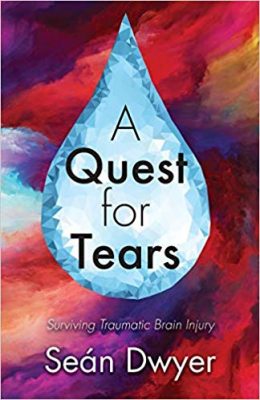
    A Quest for Tears by Sean Dwyer is a captivating memoir written four years after the author suffered a Traumatic Brain Injury (TBI) as the result of a rear-end car collision.

    While such casualties often foster long-term, unpredictable damage and seem a medical mystery, here Dwyer’s goal is to share his unique roadmap of struggles and experiences, while also advocating for fellow TBI survivors.

    At age fifty-four, Dwyer was a college educator, fluent in Spanish, and a creative writer who had authored two novels and a work of nonfiction. A prolific songwriter, he was also blessed with an excellent memory, supportive of the talent of colleagues, and was always able to display his emotions easily. But in the aftermath of his January 29, 2015 accident, life changed.

    Initially diagnosed with whiplash, back sprains, a leg wound, and soft-tissue damage to his arm, subsequent tests revealed a concussion and TBI. Now, in addition to dealing with the expected discomfort of his outer physical injuries, Dwyer was forced to navigate the arduous, mired path of debilitations faced by those dealing with head trauma. From a first-person perspective showcasing determination and resilience, Dwyer journeys through a slow, laborious labyrinth towards recovery. With a touch of wit, he applies the moniker

    “Sean 2.0” to his injured self, and like a software upgrade, he begins to explore the new cognitive alterations of his brain.

    Dwyer now faces life with an extreme sensitivity to light. Also, there is the absence of the familiar “earworm” that once inspired music and stories. His now quiet brain struggles for words has difficulty reading and lost the sense of musical enjoyment. Minimal laughter and a noticeable inability to shed tears lead him to wonder, “Am I going to be an emotional zombie for the rest of my days?

    Dwyer went from being a man with high regard for hygiene and fashion standards to an individual preferring comfortable attire and choosing vibrant novelty socks that delighted his injured brain. Painful head movements during a simple haircut caused him to eliminate the grooming event for two years. This was the new Dwyer.

    Dwyer seeks numerous treatments over several months, from physical therapy and acupuncture to neuropsychologists and craniosacral practitioners. During a visit with a priest, he looked for help from the sacrament of healing. Attending conferences with fellow TBI survivors proves an essential part of his recovery, as he learns progress can still occur well beyond the one-year mark of the initial injury. Lightening the intensity of this autobiographical account, Dwyer distinguishes the one-year “smashiversary” of his accident with a celebration at a local Mexican restaurant. Along with a cathartic, hanging car pinata, a gifted plaque featuring the accident photo Dwyer was always quick to produce in conversation, is humorously preserved with the fitting caption “stronger than steel.”

    The importance of the much-needed understanding and support he received from his wife and family, the medical community, and a vast tribe of friends, students, and colleagues continues to be imperative in Dwyer’s recovery.

    Mock classroom set-ups helped him acclimate to possibilities for teaching, while fellow writers proved compassionate in fueling his need to find new pathways for creative expression. Dwyer weaves poignant moments throughout his story, including an unexpected conversation with a wheelchair-bound boy who inspired him to push through his newfound obstacles. He also highlights the guiding force of his beloved elder feline companion, Sophie, who proved the utmost source of comfort throughout his ordeal.

    Written primarily as a resource for TBI survivors, their caregivers, and members of the medical community who often fail to distinguish the difference between intelligence and brain health, Dwyer’s A Quest For Tears is a remarkable achievement. Ultimately it proves a positive affirmation of the human spirit, focusing on the ability to learn and adapt when faced with the unique challenges brought on by sudden brain injury — a powerful and inspiring read.

    A Quest for Tears won First Place in the CIBA 2018 Journey Awards for Memoir/Biographical works.


  • SHORT LINE to DEATH by Molly Flewharty – Female Sleuth, Cozy Mystery, Humorous Mystery

    SHORT LINE to DEATH by Molly Flewharty – Female Sleuth, Cozy Mystery, Humorous Mystery

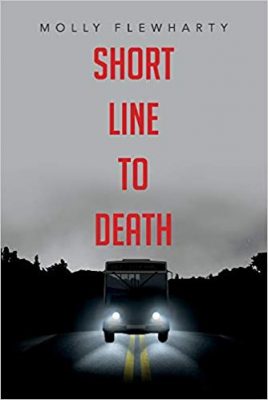
    An upcoming divorcee has no idea that her life is about to change when she gets involved in a murder investigation in Molly Flewharty’s, Short Line to Death.

    Madeline Williams moves from New York to the small town of Cross Keys, Pennsylvania. She hopes the change will do her good since she’s in the throes of a divorce. Madeline decides to take the bus over driving on the long commute to her Manhattan job. Traveling is lonely since she is the new kid on the block among a group of regulars. That changes when Tom Firemark, the handsome owner of The Opossum, sits next to her during their daily trips.

    Madeline and Tom’s growing friendship shifts when they become eyewitnesses to a mysterious murder on the bus, which is the second murder that has occurred in the town over the last few months. Since Police Chief Billy West is over his head trying to solve the first crime, Tom, who has PI experience, takes it upon himself to do his investigations on this newest incident. Because Madeline was an innocent bystander at the scene of the crime, he invokes Madeline to join him in sleuthing.

    Teaming together proves to be better than Madeline imagines as the two become more comfortable with each other amid processing a flurry of possible suspects. But as the puzzle pieces begin to fall in place, Madeline finds herself way over her head. Whether or not she can complete the investigation unscathed remains to be seen.

    First-time author, Molly Flewharty, spins a host of red herrings in Short Line to Death. She pulls from her own experience commuting from Manhattan to Pennsylvania to create the small-town setting and accompanying atmosphere replete with a well-rounded mix of elusive characters. Top on that chart is Roberta Carlson (whose ultimate demise is shocking yet a welcome to those who were tired of her surly disposition) is at the center of Tom and Madeline’s investigation. Now with the most obnoxious person out of the way, sniffing out the murderous culprit may be tougher than the team anticipates.

    Chapters filled with detailed descriptions of various Cross Keys establishments and homes alternate between the police chief’s frustrating search behind the death of the town’s miscreant, Bart Grickly; Tom and Madeline’s investigation; and Madeline’s struggles with her broken marriage and new-found feelings towards Tom.

    Flewharty delivers a tension-filled mystery banquet of suspects ranging from ordinary people with personal problems to those we’re sure “did the deed.”

    Short Line to Death will have mystery fans lined up to see what’s next from Flewharty. Highly recommended.


  • AFTER OLYMPUS: A Work of Quasi-Fiction by Santiago Xaman – Magic Realism, Literary Fiction, Multi-Cultural

    AFTER OLYMPUS: A Work of Quasi-Fiction by Santiago Xaman – Magic Realism, Literary Fiction, Multi-Cultural

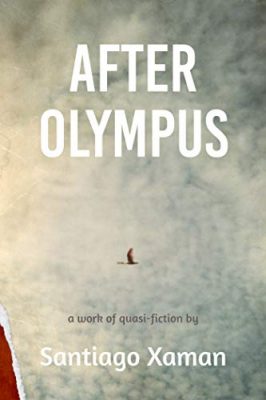
    Reviewers note:  Consider the term, “quasi-fiction” in the subtitle of this novel by Santiago Xaman. It’s key to reading and understanding this deeply compelling and innovative work. The book begins with two definitions of quasi-fiction:  1. A narrative combining fictional characters with published facts of minor historical significance. 2. The form of realism evoked by quasi-fictional content. Having completed the book, I find I must smile at the term, “realism,” as used in the second definition.

    In this groundbreaking novel, what is real – and what isn’t – is always the heart of the matter. There are elements of reality in the fantastical, and there are elements of magic realism in the rather ordinary. After Olympus is a novel about characters who don’t just think outside the box; they are outside the box.

    Intrigued? You should be. We don’t see novels like this every day, but this one will find its way into the hands of the most discerning readers.

    After Olympus is arranged into six sections: Alpha, Beta, Gamma, Delton, Epsilon, and Omega. Yes, Greek letters, very appropriate for a work laced with mythic associations, associations that will take the reader, as the title notes. Santiago Xaman tells his story via a manuscript found on his property in California. We learn of his childhood in Guatemala in the 1950s and early 1960s, his plea to Xaman Ek, the North Star, for the power of invisibility. We meet his sister who wants to fly like the Mancho bird that nests where the rainbow ends. A fire will change the tide of Santiago’s life, eventually bringing him to the United States, where adoptive American parents raise him.

    Throughout his adult life, he will live with a Russian woman raised in the communist Soviet Union and who has burdensome secrets that will impact Santiago’s life in ordinary and extraordinary ways. One night, Santiago witnesses what he thinks is a falling star but is fuselage falling from a Soviet spacecraft. The event brings two international Stanford scientists to his door and a puzzle of a quest begins, one that will encompass the themes of schism and reconciliation, myopia and sight, and inequity and prosperity.

    Gus, a businessman with a dream to be the “Yahoo of the medical world,” will join this group that Santiago comes to refer to as “magicians.” They will accomplish things that might seem magical, but just as one must carefully observe a magician for sleight of hand, the reader should follow the words of this enigmatic narrative with complete focus.

    The magicians’ projects include designing new frameworks to analyze and make use of neuropsychological testing, intersections of social and political media, employment opportunities for young women with small children, and a gamut of concepts intended to make the world a better place through the removal of hurdles and the dissolving of problems. If technical innovation can be decapitalized and the profits realized by those most deserving of them, the economy can be reinvented. But there are villains on the scene as well and what they do to counter the magicians’ is astounding.

    The ultimate triumph of After Olympus is that it’s not just one book. It will be different books for different people. Included in it is the old and classic story of the blind men who describe an elephant in entirely different ways. What one brings to this book may influence what one thinks they’re reading. The ending alone will make readers wonder if they really know the difference between tusk and tail.

    After Olympus is a superb selection for any book group interested in a novel that is so thoroughly outside the box, so uncaged, that it’s a bit wild, in the best of ways.


  • HOW DACHSHUNDS CAME to BE: A Tall Tale About a Short Long Dog by Kizzie Jones – Children’s Books, Mythology & Folk Tale, Children’s Dog Books

    HOW DACHSHUNDS CAME to BE: A Tall Tale About a Short Long Dog by Kizzie Jones – Children’s Books, Mythology & Folk Tale, Children’s Dog Books

    Author Kizzie Jones creates a beautiful origin story about how the lovable dog species – the Dachshund – came to be with the help of illustrator Scott Ward.

    In an enchanted time and place, a little girl walks every day along a beautiful beach, delighting in the sea stars, anemones, mussels, and barnacles that are revealed when the tides sweep out. She combs the beach for treasured “friends” of shells and sand dollars. A pod of humpback whales visits the beach twice yearly, and the little girl thrills to see the whales and their newborn calves. But the little girl is lonely and more than anything, wishes for an animal friend to take home with her.

    Kizzie Jones loves dachshunds (she has three) and lives near the Salish Sea, where Orcas and Humpback whales and other sea life frolic and play. This familiar setting provides a rich environment for her charming stories to take root. How Dachshunds Came to Be: A Tall Tale About a Short Long Dog, is Kizzie Jones’ first book, and like the other books in her series, A Tall Tale About a Dachshund and a Pelican: How a Friendship Came to Be, and her very latest book in the series,  A Tall Tale  About Dachshunds in Costumes: How MORE Dogs Came to Beartist Scott Ward’s illustrations perfectly match the mood of Jones’ narrative – bright, fresh, almost etheric colors of sea, sand, and the whimsical renderings of the little girl and those who love and surround her. Each page number is highlighted on the back of a dachshund, and the three dogs that rush to befriend the little girl are simply adorable. This sweet collaboration makes a perfect “read-to” for parents and grandparents of toddlers and an engagingly accessible tale for older children to delve into on their own.

    Shortly after the little girl leaves the beach for home, the whales decide to find a companion for her. This friend would need to be a warm-blooded mammal – able to breathe fresh air. Each creature has ideas about the ideal companion. A barnacle suggests giving it a long nose; seals advise a “long sleek body” just right for cuddling; anemones think it needs soft wavy whiskers and eyebrows. The octopus naturally suggests 8 limbs. Still, the group settles on four, with padding on the ends of their legs – suitable for walking on land.

    By the time the little girl awakens and returns to the beach, she finds not one but three new friends – black, brown-red, and golden dachshunds. They run to her, ready for cuddles and loves.


  • GENERAL in COMMAND – The Life of Major General John B. Anderson by Michael M. Van Ness – Military History, WWII Biographies, Military & Spy Biographies

    GENERAL in COMMAND – The Life of Major General John B. Anderson by Michael M. Van Ness – Military History, WWII Biographies, Military & Spy Biographies

    Michael M. Van Ness, the grandson of “the general in command,” has created a remarkable biography chronicling the adventures of a farm boy who rose high rank in the US military and served with distinction in two world wars as a combatant, officer, and sage observer.

    Born in 1891, John Benjamin Anderson must have had considerable intelligence as well as patriotism and grit, since he was accepted at West Point Military Academy at age 19, an honor conferred on only 130 applicants per year—and finished in the top third of his class. He would soon serve under General Pershing in the Mexican War, giving him the experience of combat and coincidentally, his first ride in an automobile. That deployment earned him inclusion in Pershing’s ranks in World War I. It was then his diaries began, and though he protested humorously that “I hate to write,” these personal recollections give readers an up-close picture of the devastation of warfare.

    Anderson also describes, in straightforward prose, the grim conditions of foot soldiers in that terrible war—in muddy water up to their waists in the trenches, and always carrying two gas masks. The war gave him a chance for advancement through the ranks, and admiration for his fellow fighters, including the “bulldog tenacity of the British.”

    His welcome home included giving a speech to the locals along with the realization that the military would be his lifetime profession, as the family had died or scattered. He studied to attain the rank of major and then lieutenant colonel, married happily, worked in Washington, DC, and had an assignment with the CCC (Civilian Conservation Corps) during the Great Depression.

    In 1942, as a new war was rumbling once more in Europe, he took charge of training an infantry division. In 1944, he met with Winston Churchill; in fact, at one time he escorted Winston Churchill and Field Marshal Montgomery over the Rhine River. General William Simpson was a dear friend of Anderson’s and the pair maintained contact for years. He wrote letters to his wife, daughter, and mother-in-law; his homey descriptions included seeing a cart drawn by a dog, and noting foreign celebrations of Christmas. His XVI corps served in the Rhineland campaign, and he personally oversaw the liberation of the Dutch city of Roermond, where his name is revered to this day.

    After the war, Anderson retired but often attended reunions with his military cohort and continued to receive civilian recognition. However, unlike many others, including his friend Simpson, he did not receive a post-war promotion. A rise to lieutenant general would fairly reflect his actual role in World War II, so Van Ness and others continue to petition for this honor—a third star—to be bestowed posthumously, as it is undoubtedly merited.

    Van Ness served in the Navy in a medical capacity and shares a deep understanding of his outstanding forebear in this well-organized life story, which offers a thorough, thoughtful exploration of the many issues that arose during his grandfather’s wartime service. General in Command – The Life of Major General John B. Anderson will resound those who have served their country, either at home or abroad, their families, and with military history buffs. Highly recommended.