Category: Reviews

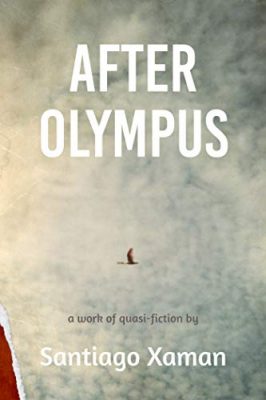
  • AFTER OLYMPUS: A Work of Quasi-Fiction by Santiago Xaman – Magic Realism, Literary Fiction, Multi-Cultural

    AFTER OLYMPUS: A Work of Quasi-Fiction by Santiago Xaman – Magic Realism, Literary Fiction, Multi-Cultural

    Reviewers note:  Consider the term, “quasi-fiction” in the subtitle of this novel by Santiago Xaman. It’s key to reading and understanding this deeply compelling and innovative work. The book begins with two definitions of quasi-fiction:  1. A narrative combining fictional characters with published facts of minor historical significance. 2. The form of realism evoked by quasi-fictional content. Having completed the book, I find I must smile at the term, “realism,” as used in the second definition.

    In this groundbreaking novel, what is real – and what isn’t – is always the heart of the matter. There are elements of reality in the fantastical, and there are elements of magic realism in the rather ordinary. After Olympus is a novel about characters who don’t just think outside the box; they are outside the box.

    Intrigued? You should be. We don’t see novels like this every day, but this one will find its way into the hands of the most discerning readers.

    After Olympus is arranged into six sections: Alpha, Beta, Gamma, Delton, Epsilon, and Omega. Yes, Greek letters, very appropriate for a work laced with mythic associations, associations that will take the reader, as the title notes. Santiago Xaman tells his story via a manuscript found on his property in California. We learn of his childhood in Guatemala in the 1950s and early 1960s, his plea to Xaman Ek, the North Star, for the power of invisibility. We meet his sister who wants to fly like the Mancho bird that nests where the rainbow ends. A fire will change the tide of Santiago’s life, eventually bringing him to the United States, where adoptive American parents raise him.

    Throughout his adult life, he will live with a Russian woman raised in the communist Soviet Union and who has burdensome secrets that will impact Santiago’s life in ordinary and extraordinary ways. One night, Santiago witnesses what he thinks is a falling star but is fuselage falling from a Soviet spacecraft. The event brings two international Stanford scientists to his door and a puzzle of a quest begins, one that will encompass the themes of schism and reconciliation, myopia and sight, and inequity and prosperity.

    Gus, a businessman with a dream to be the “Yahoo of the medical world,” will join this group that Santiago comes to refer to as “magicians.” They will accomplish things that might seem magical, but just as one must carefully observe a magician for sleight of hand, the reader should follow the words of this enigmatic narrative with complete focus.

    The magicians’ projects include designing new frameworks to analyze and make use of neuropsychological testing, intersections of social and political media, employment opportunities for young women with small children, and a gamut of concepts intended to make the world a better place through the removal of hurdles and the dissolving of problems. If technical innovation can be decapitalized and the profits realized by those most deserving of them, the economy can be reinvented. But there are villains on the scene as well and what they do to counter the magicians’ is astounding.

    The ultimate triumph of After Olympus is that it’s not just one book. It will be different books for different people. Included in it is the old and classic story of the blind men who describe an elephant in entirely different ways. What one brings to this book may influence what one thinks they’re reading. The ending alone will make readers wonder if they really know the difference between tusk and tail.

    After Olympus is a superb selection for any book group interested in a novel that is so thoroughly outside the box, so uncaged, that it’s a bit wild, in the best of ways.


  • HOW DACHSHUNDS CAME to BE: A Tall Tale About a Short Long Dog by Kizzie Jones – Children’s Books, Mythology & Folk Tale, Children’s Dog Books

    HOW DACHSHUNDS CAME to BE: A Tall Tale About a Short Long Dog by Kizzie Jones – Children’s Books, Mythology & Folk Tale, Children’s Dog Books

    Author Kizzie Jones creates a beautiful origin story about how the lovable dog species – the Dachshund – came to be with the help of illustrator Scott Ward.

    In an enchanted time and place, a little girl walks every day along a beautiful beach, delighting in the sea stars, anemones, mussels, and barnacles that are revealed when the tides sweep out. She combs the beach for treasured “friends” of shells and sand dollars. A pod of humpback whales visits the beach twice yearly, and the little girl thrills to see the whales and their newborn calves. But the little girl is lonely and more than anything, wishes for an animal friend to take home with her.

    Kizzie Jones loves dachshunds (she has three) and lives near the Salish Sea, where Orcas and Humpback whales and other sea life frolic and play. This familiar setting provides a rich environment for her charming stories to take root. How Dachshunds Came to Be: A Tall Tale About a Short Long Dog, is Kizzie Jones’ first book, and like the other books in her series, A Tall Tale About a Dachshund and a Pelican: How a Friendship Came to Be, and her very latest book in the series,  A Tall Tale  About Dachshunds in Costumes: How MORE Dogs Came to Beartist Scott Ward’s illustrations perfectly match the mood of Jones’ narrative – bright, fresh, almost etheric colors of sea, sand, and the whimsical renderings of the little girl and those who love and surround her. Each page number is highlighted on the back of a dachshund, and the three dogs that rush to befriend the little girl are simply adorable. This sweet collaboration makes a perfect “read-to” for parents and grandparents of toddlers and an engagingly accessible tale for older children to delve into on their own.

    Shortly after the little girl leaves the beach for home, the whales decide to find a companion for her. This friend would need to be a warm-blooded mammal – able to breathe fresh air. Each creature has ideas about the ideal companion. A barnacle suggests giving it a long nose; seals advise a “long sleek body” just right for cuddling; anemones think it needs soft wavy whiskers and eyebrows. The octopus naturally suggests 8 limbs. Still, the group settles on four, with padding on the ends of their legs – suitable for walking on land.

    By the time the little girl awakens and returns to the beach, she finds not one but three new friends – black, brown-red, and golden dachshunds. They run to her, ready for cuddles and loves.


  • GENERAL in COMMAND – The Life of Major General John B. Anderson by Michael M. Van Ness – Military History, WWII Biographies, Military & Spy Biographies

    GENERAL in COMMAND – The Life of Major General John B. Anderson by Michael M. Van Ness – Military History, WWII Biographies, Military & Spy Biographies

    Michael M. Van Ness, the grandson of “the general in command,” has created a remarkable biography chronicling the adventures of a farm boy who rose high rank in the US military and served with distinction in two world wars as a combatant, officer, and sage observer.

    Born in 1891, John Benjamin Anderson must have had considerable intelligence as well as patriotism and grit, since he was accepted at West Point Military Academy at age 19, an honor conferred on only 130 applicants per year—and finished in the top third of his class. He would soon serve under General Pershing in the Mexican War, giving him the experience of combat and coincidentally, his first ride in an automobile. That deployment earned him inclusion in Pershing’s ranks in World War I. It was then his diaries began, and though he protested humorously that “I hate to write,” these personal recollections give readers an up-close picture of the devastation of warfare.

    Anderson also describes, in straightforward prose, the grim conditions of foot soldiers in that terrible war—in muddy water up to their waists in the trenches, and always carrying two gas masks. The war gave him a chance for advancement through the ranks, and admiration for his fellow fighters, including the “bulldog tenacity of the British.”

    His welcome home included giving a speech to the locals along with the realization that the military would be his lifetime profession, as the family had died or scattered. He studied to attain the rank of major and then lieutenant colonel, married happily, worked in Washington, DC, and had an assignment with the CCC (Civilian Conservation Corps) during the Great Depression.

    In 1942, as a new war was rumbling once more in Europe, he took charge of training an infantry division. In 1944, he met with Winston Churchill; in fact, at one time he escorted Winston Churchill and Field Marshal Montgomery over the Rhine River. General William Simpson was a dear friend of Anderson’s and the pair maintained contact for years. He wrote letters to his wife, daughter, and mother-in-law; his homey descriptions included seeing a cart drawn by a dog, and noting foreign celebrations of Christmas. His XVI corps served in the Rhineland campaign, and he personally oversaw the liberation of the Dutch city of Roermond, where his name is revered to this day.

    After the war, Anderson retired but often attended reunions with his military cohort and continued to receive civilian recognition. However, unlike many others, including his friend Simpson, he did not receive a post-war promotion. A rise to lieutenant general would fairly reflect his actual role in World War II, so Van Ness and others continue to petition for this honor—a third star—to be bestowed posthumously, as it is undoubtedly merited.

    Van Ness served in the Navy in a medical capacity and shares a deep understanding of his outstanding forebear in this well-organized life story, which offers a thorough, thoughtful exploration of the many issues that arose during his grandfather’s wartime service. General in Command – The Life of Major General John B. Anderson will resound those who have served their country, either at home or abroad, their families, and with military history buffs. Highly recommended.


  • The BOOKMINDER by M.K. Wiseman – Fantasy, Coming of Age, Magic

    The BOOKMINDER by M.K. Wiseman – Fantasy, Coming of Age, Magic

    More than anything, Liara just wants to belong. As an orphan “fey” child in the seventeenth century, Liara has been a ward of the Church for ten of her sixteen years. Grateful to be taken in and cared for by Father Phenlick, she knows most of the villagers want her gone.

    The product of a rape by a magical creature, Liara is imbued with magic and in many ways is magic itself. The powerful wizard who created the creatures responsible for the attack during the attack on the valley, knows nothing of her existence. Father Phenlick enlisted the help of Nagareth, the wizard of the woods, to shield Liara and the village from further assaults all while outlawing the very power he is secretly trusting.

    At St. Sophia, Liara is safe until she steals from the village busybody. When Liara’s extensive hidden stash is discovered in a “magicked” hollow tree, the Venetian soldiers who protect the valley force Father Phenlick to ostracize Liara. Abandoned by even her friends, Liara is taken in by Nagareth, who promises Phenlick that he will not teacher Liara his craft. Liara begs Nagareth for magical instruction, but he only allows her to care for his extensive magical library. Gradually, Nagareth sees great potential in his new ward, but when everyone in Dvigard is killed by a mysterious plague, he begins to fear that he can’t protect her from her powerful creator who will want her powers for his own if she is discovered.

    Liara cannot see the danger around her, and as her own magical knowledge grows through her maintenance of Nagareth’s books, her only goal is to exact revenge against her father. As her abilities grow so does her anger and confusion at the only person standing between her and her destruction.

    Liara is a complex, dynamic character. Her history gives her more than normal teenage problems. Liara’s mother was driven crazy by the rape and was never able to truly care for or love Liara, leaving Liara to the cruelty of the villagers. Without Father Phenlick, Liara would never have survived, and though he tries to give her a home, he isn’t able to fill the emptiness deep within her. Liara desperately needs something and somewhere of her own, which is why she steals–to fill her life with things that are her own. In creating her hollow-tree hiding place, she creates that place where she isn’t afraid to be herself. Though she is unaware of her own magic, it is as much a part of her as her history.

    In the beginning, all Liara wants is to grow that power. She desires the very thing others accuse her of having to give her what she has never had, but it’s a double-edged sword. She is hated for her supposed abilities even before she shows evidence of magic, but when she finds the magic she wants so badly, it will define her. She wants others to see she has feelings and dreams, but in the very thing she wants most, this undeniable power, people will see only that. She limits herself to this magical creature, and that drive quickly becomes an obsession. Only too late does she see Nagarath’s minimal use of magic isn’t a waste. She almost allows her prejudiced idea that magic should be grandiose to cloud the important lesson she learns about living simply, living for love and not power. As she grows through her relationship with Nagareth, she learns what magic should truly be.

    The evolving bond between Liara and Nagareth is a beautiful story. Only nine years Liara’s senior, Nagareth sees Liara as a child in the beginning, but over the novel’s development, he begins to see Liara as a true companion. The joy she brings to his life, the peace she makes him feel, even though she annoyingly begs him to teach her magic, becomes invaluable to the lonely wizard.

    He wants to make sure she has a life of stability, not fear. As he opens himself up more and more, he becomes her friend. He realizes she has given him more than he has returned and relents in his promise not to teach her. Nagareth grows as much as his precious ward.

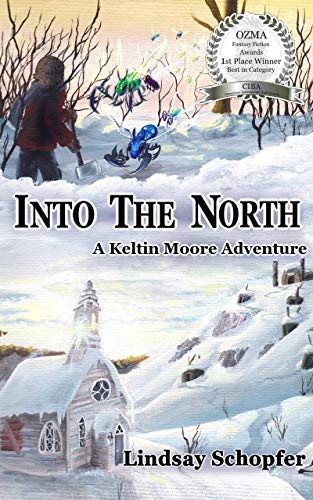
    The Bookminder won 1st Place in the CIBA 2017 OZMA Awards for Fantasy Fiction.


  • Daughter of Aithne: The Silver Web Series, Book 3 by Karin Rita Gastreich – Romance Fantasy, Sword & Sorcery, Magic Realism

    Daughter of Aithne: The Silver Web Series, Book 3 by Karin Rita Gastreich – Romance Fantasy, Sword & Sorcery, Magic Realism

    Writer and ecologist Karin Rita Gastreich draws inspiration from her trips to the magical forests of Costa Rica to bring life to the Silver Web series. An unforgettable journey, Daughter of Aithne, is the finale to the epic story of Queen Eolyn the High Maga, set in a world of seemingly never-ending war where female practitioners of magic (maga) are feared.

    Set ten years after the conclusion of Gastreich’s second installment in the series Sword of ShadowsDaughter of Aithne begins during an era of abundant peace. That peace quickly turns to turmoil when a group of Eolyn’s magical progeny commits an act of grave betrayal by kidnapping Princess Elisara, daughter of the former Queen Taesara.

    The Mage King Akmael immediately orders all maga to lay down their arms and have their magic bound. For years magas have been prosecuted for having magic and were all but annihilated by the crown. Except for a small amount that managed to escape hoping to one day be able to live their lives of magic according to their beloved culture. Fear of women’s magic is still alive in the kingdom, and the King, wishing only to protect his queen and her daughters, attempts to avoid an outbreak of war by banning all magas use of their craft.

    Gastreich uses vivid language to transport readers into the story. An overarching theme of distrust and vying for loyalties in and among kingdoms presented in this third installment of the Silver Web series is reminiscent of other high fantasy series such as George R. R. Martin’s A Song of Ice and Fire. Gastreich masterfully executes an effective use of narrative misdirection throughout the story.

    Karin Rita Gastreich has an apparent love for the magic of nature and breathes that into the heart of her books, but she also successfully sets real-world issues at the forefront. She follows a common trope within the Young Adult genre by taking an issue from today and melding it into her narrative. Here, the main element in the Silver Web trilogy is the stark contrast of beliefs and opinions centering around magic and especially female magic welders. Many fear their magic and believe magas are dangerous, but then have little or no issue with male mages.

    A triumphant story of adversity, Daughter of Aithne is the exciting conclusion to the Silver Web series. Readers of all ages may hope this is not the last time Gastreich will return to her fantastical world of magic.

    Daughter of Aithne won 1st Place in the CIBA 2017 OZMA Awards for Fantasy novels.


  • WHAT GOES AROUND COMES AROUND – A Guide to How Life REALLY Works by Rob Davis – Philanthropy & Charity, Motivational Management & Leadership, Business Motivation & Self-Improvement

    WHAT GOES AROUND COMES AROUND – A Guide to How Life REALLY Works by Rob Davis – Philanthropy & Charity, Motivational Management & Leadership, Business Motivation & Self-Improvement

    Combining personal vignettes with sage advice, Rob Davis demonstrates how the saying, What Goes Around Comes Around, connects to other sources of wisdom, indeed to our everyday lives. As an adult involved in business, family, and sports, he came to recognize how true the saying is.

    As a child, he often heard the expression, “As you sow, so shall you reap.” As an adult, he saw in numerous situations, including the experiences of friends, business partners, and in his own life, how the results we reap do come from the actions we sow.

    It was some time until he realized that “sow” referred to the planting of seeds and had nothing to do with needles and thread. Also, that “reap” referred to how successful or disappointing the resulting harvest would be.

    One example referred to the Ponzi scheme run by Bernie Madoff, the notorious financier who had built what appeared to be a thriving business until being exposed as a fraud who stole $millions, even from widows, orphans, and charities. Madoff is now in prison, most likely for the rest of his life.

    Suppose Davis suggests, that early on, Madoff had called together those involved, and “fessed up?” While the consequences would have been painful, they would not likely have been anything as disastrous as the total ruin he and his family ended up experiencing.

    The lesson here is that the longer one lets the deception continue, the more bottomless the pit they dig for themselves when the light finally catches up to them.

    Much of the book’s theme rests on the significance of choice. When it appears that we have no other option in a given situation, the right choice probably seems like the most challenging thing to do. Here Davis cautions us to set our sights on the high road to avoid losing the chance for the most positive possible outcome.

    Of course, not all choices are wrong, and not all comebacks are bad. A friend and running buddy described by Davis wrecked his car after having had a few too many drinks at a party. His driver’s license was suspended for three months, along with the requirement to attend weekly classes. Despite the problematic consequences, his friend turned this self-created slip into an example for his children, by accepting the full measure of his punishment and making the best of it.

    Some of Davis’ stories are his own, such as the time he was kicking himself for not living up to his commitment to helping a friend who had organized a charitable fund-raising event. The result led to his creation of a new organization supported by alternative, investment industry people for the prevention and treatment of child abuse.

    His book concludes with positive “Thoughts to Live By,” such as – I Choose HappinessI Cooperate for the Greatest GoodI Take the High Road, and I Expect to Be Happy.

    His philosophy, as expressed here, makes effective use of humor, humility, and a hefty helping of logic! Drawing insight from personal parables, Davis has constructed a manual of straightforward and sensible life skills designed for those who genuinely want “what goes around” to yield the best outcomes!


  • BLACK FRIDAY: An American Jihad by Greg J. Gardner – Thriller, Military Thriller, War

    BLACK FRIDAY: An American Jihad by Greg J. Gardner – Thriller, Military Thriller, War

    Art imitates life and life imitates art. When Greg J. Gardner was writing his highly suspenseful novel, Black Friday, An American Jihad, the mass shooting at the Walmart in El Paso had not yet occurred. Taking place on Labor Day weekend, the shooter knew the store would be filled with people taking advantage of sales on school supplies as students prepare for the first day of class. Customers and their children became targets as the store was turned into a carnage-filled scene.

    Why is this relevant? In Gardner’s book, scenes of mass violence take place in many Walmart stores in the United States on the busiest shopping day of the year, Black Friday. The killers, in this case, however, aren’t American; they’re 50 jihadists who have been training for years for a series of precisely timed and sequenced attacks that will result in the deaths of thousands and derail American life in a manner never seen before. Just when people think the attacks have stopped, they’ll begin again at other retail locations.

    This is a story with nuance. The author considers the critical questions of why and how this jihad was undertaken. He avoids fairytale extremes of good and evil and delves into the harrowing events that produced an assassin, a mastermind able to motivate a team of men to turn Black Friday into “Bloody Friday.”

    The media barely has time to digest the latest attack before the next shooting rampage occurs. Stores become war zones, but the United States has no defense in place because only the terrorists know when and where the next attack will take place. The hours roll forward, and Americans continue to be perfunctorily slaughtered. An assembly line of meticulous mass scale murder is underway.

    Chaos begets chaos. In this era of immediate reporting on social media, Facebook declares, “We cannot allow these images to propagate through our platform.” Twitter and Snapchat agree while Instagram crashes, and YouTube shuts down its servers. Walmart stores across the nation close. Vigilantes attack mosques, American gangs attack each other, and looters are on the prowl. ATM machines run out of money, and thousands of businesses close.

    The National Guard is deployed, and the President eventually declares Marshall Law. With their liberties curtailed and life essentially shut down, the only thing left for Americans to do is watch CNN, a reporter now one of the most important people in their lives. America is no longer the country its citizens recognize, and it all happened so quickly.

    This is a fast-paced, heart-pounding narrative in which we meet many characters, most only briefly. There are poignant moments of would-be heroism cut all too short but also a few genuinely bright spots in a reign of terror.

    Gardner notes in the epilogue that he, of course, hopes his book will never be a reality. Nonetheless, this is a novel that will stay with you, that you’ll think of as you’re shopping, as you’re noticing a security guard in a parking lot, and certainly as you’re watching the evening news. Once you’ve been taken to the brink and given a glimpse of what could be, the concept of safety itself is in question.


  • The BUTCHER’S BILL (The Linus Schag, NCIS Thrillers Book 2) by Martin Roy Hill – Int’l Mystery & Crime, Military Thriller, Suspense

    The BUTCHER’S BILL (The Linus Schag, NCIS Thrillers Book 2) by Martin Roy Hill – Int’l Mystery & Crime, Military Thriller, Suspense


    Bill Butcher can’t take it anymore. He’s played by the rules and lost. Now he’s making up his own rules. He’s determined to assert his own justice upon the people he identified as secretly betraying him and the troops who serve the country.

    In this novel, part of the conspiracy against Bill Butcher is the publishing of a fraudulent list of demands supposedly written by him. The media nicknames the list The Butcher’s Bill. How can he fight? Follow the money trail, is all he can do – and what he hopes Linus Schag will do. It’s clear by now that Bill Butcher is a tormented man; terminated from NCIS (Naval Criminal Investigative Service) after his deployment in Iraq under accusations he’s unstable.

    In every sense, this is a page-turner that readers won’t want to miss as Bill Butcher conducts his own subversive investigation to exact revenge. Is he out of his mind? Or, are his instincts right? This second book in the Linus Schag series by author Martin Roy Hill will keep you up nights.

    Agent Schag has a reputation for impatience with authority, hidden secret guilt from his previous assignment, and boredom with his current exile in San Diego. He is the best in the business, and he is the only person Bill Butcher trusts to do the right thing. But when Butcher commits a crime so outrageously brutal, that Agent Schag is called in to bring him to justice. The question is, what kind of justice should be administered, and to whom?

    Despite all obstacles before him, Bill Butcher relentlessly pursues the man he suspects is the source of the corruption. He will put an end to this man or die trying.

    Linus Schag analyzes the evidence while keeping a vigilant watch against treachery. As he reviews the case, his concern grows. It is at this point, Lt. Commander Kendra Clarke of the Medical Corps steps in and diagnoses Butcher’s behavior as severe psychosis from a drug administered by naval officials. This new information may explain the gruesome messaging Butcher leaves behind at the crime scenes.

    This is a smart thriller that will keep you guessing until the very last page. Martin Roy Hill builds the suspense skillfully, placing you just where he wants you: on the edge of your seat.

    Martin Roy Hill is well-versed in the culture and commitment of those who serve in the military, especially the Navy. Even the term, “The Butcher’s Bill” is an old naval slang for the list of killed and wounded after a battle and takes on an additional meaning as it also represents the number of dead left behind as the book’s plot advances. Hill relates a compelling picture of service. These are professionals against a smart setting.

    Be ready to puzzle through the trail of evidence as it is uncovered and analyze the potential motives of characters who are not always as they appear. This thriller engages the reader to solve the ultimate twisted solution.  A thrilling work of fiction inspired by historical fact will leave readers wondering how closely art imitates life. Highly recommended.

    The Butcher’s Bill won 1st Place in the 2017 CIBAs CLUE Awards for Suspense/Thriller novels.


  • SOULSTROLLER: Experiencing the weight, whispers, & wings of the world by Kayce Stevens Hughlett – Women’s Biographies, Personal Transformations, Self-Help

    SOULSTROLLER: Experiencing the weight, whispers, & wings of the world by Kayce Stevens Hughlett – Women’s Biographies, Personal Transformations, Self-Help

    In a creative blend of existential memoir and artful travel journal, Kayce Stevens Hughlett’s SoulStroller takes readers along on an adventurous journey of self-discovery. Reminiscent of Elizabeth Gilbert’s popular Eat, Pray, Love, Hughlett focuses on family issues, ancestral memories, and dreams explored within the context of personal travels, focusing on the importance of moving beyond our comfort zones.

    Here we come to learn that a SoulStroller is a term used for an individual who ventures into the fullest version of their true selves. Guided by intuition and spiritual essence, they stroll through life with a feeling of curiosity, compassion, contentment, and gratitude. Like a pilgrim on a quest, they follow their heart, rather than move ahead with a tourist mentality of set goals and to-do lists.

    Raised with the traditional expectations of the “good girl,” Hughlett lived the first 30 years of her life within 150 miles of Oklahoma City, an area of white, middle-class, conservatives. The blinders came off when she moved to Seattle. Divorced, and remarried with two children, Hughlett indicates that when everything is FINE, sometimes that refers to the acronym for “fucked up, insecure, neurotic, and exhausted.”

    It is during a trip to Mexico in search of a therapeutic boarding school for her troubled son that she finds a sense of peace and a firm idea of place as she falls in love with the desert landscape. With the outstretched arms of the saguaro cactus offering a sense of peace, it is in this moment that everything changes.

    Hughlett’s journeys go far beyond visits to the likes of the Eiffel Tower and Louvre. Whether enjoying the delicacy of an eggplant and cheese sandwich on the banks of the Seine or meeting a charmingly eccentric and her poodle, Hughlett learns to distinguish the essential rhythms of her own life.

    Hughlett writes with a comfortable conversational voice that invites readers into her world view; one that she approaches with both exuberance and trepidation. The overall narrative unfolds in a generally chronological sequence, though journal entries and recollections can at times reflect past memories or events.

    Insightful words from several authors, poets, scholars, and artists are used to grace the opening of each chapter, including contributions as varied as those of Roald Dahl, Thich Nhat Hanh, Gloria Steinem, and Henry Miller. Mark Twain’s quote seems to epitomize the central “SoulStroller” sentiment in “Sail away from the safe harbor. Catch the trade winds in your sails. Explore. Dream. Discover.”

    Each section of the book concludes with a simple practicum highlighting suggestions for readers to venture into their own SoulStrolling mindset. Exercises range from quiet meditation and writing prompts, to practicing self-kindness and ideas for travels off the beaten path.

    While Hughlett considers that her story may be too personal or esoteric for some readers, her work speaks to her positive growth, as her travels and experiences have allowed her to trust her own voice and value the lessons of her own journey. This is a book that strings together individual pearls of wisdom that have universal appeal.

    SoulStroller by Kayce Stevens Hughlett won 1st Place in the CIBA 2018 Journey Awards for Narrative Non-Fiction.


  • A TALL TALE ABOUT DACHSHUNDS in COSTUMES: How MORE Dogs Came to Be by Kizzie Jones – Children’s Books, Children’s Dog Books, Children’s Fantasy & Magic Books

    A TALL TALE ABOUT DACHSHUNDS in COSTUMES: How MORE Dogs Came to Be by Kizzie Jones – Children’s Books, Children’s Dog Books, Children’s Fantasy & Magic Books

    A unique fairytale by author Kizzie Jones, A Tall Tale About Dachshunds in Costumes: How MORE Dogs Came to Be adds the third book her series that began with How Dachshunds Came to Be: A Tall Tale about a Short Long Dog, followed by the award-winning title, A Tall Tale about a Dachshund and a Pelican: How a Friendship Came to Be.

    This tall tale begins on the beach one autumn day where a big storm is fast approaching a girl and her dogs, stopping their play and forcing them to retreat indoors. The next day the girl and the dogs decide to go clean up the debris left by the storm, and it is not long before they see what sort of costumes they can create with the various kinds of debris scattered along the beach.

    The dressed-up dogs ask the girl if she would be upset if they stayed dressed up.  The girl wonders if the dogs would change on the inside as well. they reply,

     “We’d be changed and transformed—we’d be diff’rent outside. Yet, inside, our hearts are still caring and kind.”

    That night the girl sends her wish to the ocean for the dogs to become the dogs they costumed themselves to be and goes to sleep hoping her wish will be granted.

    It is easy to see that author Kizzie Jones has a deep love for her dachshunds and nature, but it is also clear that she loves to teach through her books. With assistance from USDA Forest Service, Jones fills her story with accurate plant life as well as lots of terms for different dog colorings and patterns, all of which she includes in a glossary at the end of the book.

    Dachshunds in Costumes is a creative story that gives a lighthearted explanation for how the different breeds of dogs came to be, and as Jones’s previous books, we see the gift of self-acceptance. Also present is a meter that has a lilting and soothing quality. The meter pairs well with the wonderful illustration work from Scott Ward that has a unique and uniform shading style that readers of all ages will admire.

    Kizzie Jones’ newest addition is perfect for the curious and inquisitive child who will surely spend hours curled up studying all that A Tall Tale About Dachshunds in Costumes: How MORE Dogs Came to Be has to offer.

    This title will be released on November 3, 2019, in English and in Spanish! If you would like more information, please sign up on Kizzie’s blog here.