We’re Delighted to be having the Chanticleer Authors Conference during Earth Day!
If you want to get down to Earth this Earth Day, we highly recommend signing up for the Chanticleer Authors Conference (VCAC21)

Thinking of submitting to the Chanticleer International Book Awards for Earth Day? While we don’t have a specific category for environmental work, you can find all sorts of eco-focused work in our Global Thriller Awards, Journey Awards, Little Peeps Awards, and our Cygnus Awards.

The origins of Earth Day…
Can be traced back to Rachel Caron’s book Silent Spring which caused people to sit up and begin taking seriously the concerns that had been brought up for centuries about how the land was treated by imperialist powers. Carson’s book is cited as inspiration for the founding of the Environmental Protection Agency under the Nixon administration. After the book’s publication, she was hounded by those who promoted pesticides like DDT who said Carson’s would return us to an era where insects and vermin ruled the world.

Earth Day’s foundation was a bipartisan venture in the United States, supported by both major political parties at the time of founding. By 1990, it became an international holiday around the world for all people to celebrate! It is now the largest non-secular holiday celebrated worldwide.
What is considered environmental writing?
Environmental writing or eco-fiction is most often described as a sub genre. Some people will claim that it just doesn’t exist, probably because of how nebulous it can be, but there definitely is a market for any book that examines the environment at large. From Leanne Betasamosake Simpson and Terry Tempest Williams, to Annie Dillard and Ralph Waldo Emerson, the variety of people and forms for writing about the environment is endless.
So What is Eco-Fiction?
Eco-Fiction, at a minimum, needs to highlight the environment in some way. With that definition, something like Moby Dick could even count as eco-fiction because it features a whale and lots of time at sea, including the impact of whaling at large. What almost all eco-fiction does though is look at the world through a syncretic lens.
What we mean by syncretic is that it crosses borders. For a long time, the unrecognized leaders of environmental writing have been Indigenous thinkers and writers. This, by necessity, ties up the question of environmentalism with economic policy, racism, and colonialism in fascinating and important ways that draw in readers.

While Non-Fiction Environmental work often looks at the questions of where we are and what can we do, Eco-Fiction will ask what is happening and what will the world look like when we continue on this path? Work like that of Octavia Butler and NK Jemisin (renowned scifi writers) show us, using cross-cultural syncretism, the worst paths our current choices could lead us down.
Whether we decide to accept Eco-Fiction as real or not, no one can say that environmental fiction and non-fiction can’t be marketed.
Join us in looking at some of the wonderful books that draw inspiration from our Earth and environmental themes.
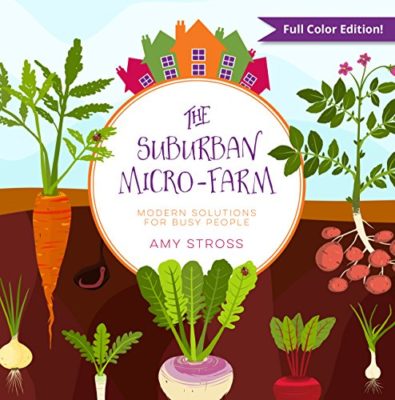
The Suburban Micro-Farm: Modern Solutions for Busy People
by Amy Stross
5-Star Book Review
1st Place Winner in the Instructional & Insightful Awards

Author, educator, and urban farmer Amy Stross offers a comprehensive look at how to repurpose a small yard in the city for basic sustenance and so much more.
Award-winning writer Stross has composed a thoroughly practical guide to everything a reader would need to know to do what she did: transform a yard into a farm. Acknowledging that the ground surrounding a town dwelling is hardly what one thinks of when one thinks farmland, Stross draws from her personal experience to show precisely how the transformation can take shape. Her colorfully illustrated manual gives the basics for managing an ample garden space, or micro-farm, almost down to the minute (in fact, seven minutes twice a day).
DARK SEED (book 1)
by Lawrence Verigin

Genetic engineering, murder, corporate-conglomerate profiteering, Interpol, and a plot to control humanity make Dark Seed, by Lawrence Verigin, a suspenseful thriller novel.
When jaded journalist Nick Barnes learns that Dr. Carl Elles has contacted him to say that Barnes’ recent article about the positive contributions of Naintosa Corporation is all wrong, Barnes feels compelled to educate the scientist about information laundering—the strategic planting of false information in the media so the planting organization can quote the media later for their own benefit. “It makes total sense,” Dr. Elles replies. “Naintosa employs that strategy on a regular basis.” Nick was about to explain to the scientist why he needed to check Dr. Elles’ information, when the scientist soon proves to Nick that the journalist is the lazy dupe who just published Naintosa’s propaganda in a complimentary article.
WANDERS FAR
by David Fitz-Gerald
5-Star Book Review
First Place Winner in the Laramie Awards

In the early 1100s, in a region now known to us as the Adirondack Mountains of northern New York, a small band of tribal people is living in longhouses, growing crops, fishing, hunting, and enjoying certain rituals such as face and body painting, occasional migration for food survival, and even seasonal “vacations,” all while willingly obeying a simple form of governance with elements of basic democracy. In this tribe, we meet Wanders Far, a child who earns his nickname after showing a propensity to disappear and explore since he could walk. His mother, Bear Fat, is the recognized chieftainess of their group, mother of a large brood, one of whom is stolen as the book opens. Wanders Far would be considered an unusual child in any society, gifted with a highly accurate memory and the ability to visualize future events. He can also run like the wind, and with his love for travel, he is often the first to see and warn his people of danger, such as a cadre of warriors from a hostile tribe heading towards his home settlement.
BLOSSOM — The Wild Ambassador of Tewksbury (Audiobook Review)
by Anna Carner
5-Star Book Review

Author Anna Carner lived in a horse-friendly farming area of New Jersey in 1999, when she encountered a newborn fawn, barely breathing, near her home. The animal seemed to be communicating its need to her, and, with some experience of animal and human care, Carner set out to revive the fawn. She took the baby deer into her house and nursed her back to health. When she and her husband, Pino, saw the fawn curled up asleep with the family dog, the couple knew they had a new pet. Her name, Blossom, seemed suited to her sweetness and soft, gentle beauty.
The ONLY ONE LEFT (The Neema Mysteries, Book 3)
by Pamela Beason
First Place Winner in the Clue Awards

While spending some time with his sweetheart, animal behavior scientist Grace McKenna and her adopted family of gorillas, Detective Matthew Finn finally endures a kiss from Neema while keeping an eye on the huge silverback Gumu. He accepts a ‘toy’ from their baby, Kanoni. But upon further inspection, Matt and Grace believe the object might be part of a human finger bone. Where did it come from? How did it get in the gorillas’ remodeled barn? The homicide detective knows he’ll need to investigate, but just then, his cell phone chirps.
Desk Sergeant Greer of the Evansburg, Washington, Police Department tells Matt to get back on duty and head directly to the Gorge Amphitheatre, where the Sasquatch Festival has just ended. A car belonging to a 17-year-old girl, last seen by her parents in Bellingham, Washington, three days earlier, has been found abandoned next to a tent in the Amphitheatre campground.
BUCK: Keeper of the Meadow
by Gloria Two-Feathers

In this engaging children’s tale by author Gloria Two-Feathers, a young colt named Buck will learn how to obey, how to defend, and how to strike out on his own.
The scene is set in the Great Plains, where a river named Minisose divides a sea of tall green prairie grass. Many animals call that grassland their home, and the most magnificent is the herd of wild horses led by a dark stallion named Plenty Coups and his chosen mate, the lovely cream-colored mare, Cloud. By tradition and instinct, Plenty Coups protects the herd from attackers, while Cloud leads them to safety.
Chanticleer Editorial Services – when you are ready

Did you know that Chanticleer offers editorial services? We do and have been doing so since 2011.
Tools of the Editing Trade
Our professional editors are top-notch and are experts in the Chicago Manual of Style. They have and are working for the top publishing houses (TOR, McMillian, Thomas Mercer, Penguin Random House, Simon Schuster, etc.).
If you would like more information, we invite you to email Kiffer or Sharon at KBrown@ChantiReviews.com or SAnderson@ChantiReviews.com for more information, testimonials, and fees.
We work with a small number of exclusive clients who want to collaborate with our team of top-editors on an on-going basis. Contact us today!
Chanticleer Editorial Services also offers writing craft sessions and masterclasses. Sign up to find out where, when, and how sessions being held.
A great way to get started is with our manuscript evaluation service. Here are some handy links about this tried and true service: https://www.chantireviews.com/manuscript-reviews/
And we do editorial consultations. for $75. https://www.chantireviews.com/services/Editorial-Services-p85337185

Writer’s Toolbox
Thank you for reading this Chanticleer Writer’s Toolbox article.
Writers Toolbox Helpful Links:
The full list and calendar of all our CIBAs
The traditional publishing tool that indie authors can use to propel their writing careers to new levels? https://www.chantireviews.com/2016/05/15/the-seven-must-haves-for-authors-unlocking-the-secrets-of-successful-publishing-series-by-kiffer-brown/
 Author, educator, and urban farmer Amy Stross offers a comprehensive look at how to repurpose a small yard in the city for basic sustenance and so much more.