Writer and ecologist Karin Rita Gastreich draws inspiration from her trips to the magical forests of Costa Rica to bring life to the Silver Web series. An unforgettable journey, Daughter of Aithne, isthe finale to the epic story of Queen Eolyn the High Maga, set in a world of seemingly never-ending war where female practitioners of magic (maga) are feared.
Set ten years after the conclusion of Gastreich’s second installment in the series Sword of Shadows, Daughter of Aithne begins during an era of abundant peace. That peace quickly turns to turmoil when a group of Eolyn’s magical progeny commits an act of grave betrayal by kidnapping Princess Elisara, daughter of the former Queen Taesara.
The Mage King Akmael immediately orders all maga to lay down their arms and have their magic bound. For years magas have been prosecuted for having magic and were all but annihilated by the crown. Except for a small amount that managed to escape hoping to one day be able to live their lives of magic according to their beloved culture. Fear of women’s magic is still alive in the kingdom, and the King, wishing only to protect his queen and her daughters, attempts to avoid an outbreak of war by banning all magas use of their craft.
Gastreich uses vivid language to transport readers into the story. An overarching theme of distrust and vying for loyalties in and among kingdoms presented in this third installment of the Silver Web series is reminiscent of other high fantasy series such as George R. R. Martin’s A Song of Ice and Fire. Gastreich masterfully executes an effective use of narrative misdirection throughout the story.
Karin Rita Gastreich has an apparent love for the magic of nature and breathes that into the heart of her books, but she also successfully sets real-world issues at the forefront. She follows a common trope within the Young Adult genre by taking an issue from today and melding it into her narrative. Here, the main element in the Silver Web trilogy is the stark contrast of beliefs and opinions centering around magic and especially female magic welders. Many fear their magic and believe magas are dangerous, but then have little or no issue with male mages.
A triumphant story of adversity, Daughter of Aithne is the exciting conclusion to the Silver Web series. Readers of all ages may hope this is not the last time Gastreich will return to her fantastical world of magic.
Daughter of Aithne won 1st Place in the CIBA 2017 OZMA Awards for Fantasy novels.
The Cygnus Book Awards recognize emerging new talent and outstanding works in the genre of Science Fiction, Steampunk, Alternative History, and Speculative Fiction. The Cygnus Awards is a genre division of Chanticleer International Book Awards and Novel Competitions (The CIBAs).
Chanticleer International Book Awards is looking for the best books featuring space, time travel, life on other planets, parallel universes, alternate reality, and all the science, technology, major social or environmental changes of the future that author imaginations can dream up for the CYGNUS Book Awards division. Hard Science Fiction, Soft Science Fiction, Apocalyptic Fiction, Cyberpunk, Time Travel, Genetic Modification, Aliens, Super Humans, Interplanetary Travel, and Settlers on the Galactic Frontier, Dystopian, our judges from across North America and the U.K. will put them to the test and choose the best among them.
Congratulations to the 2019 CYGNUS Book Awards for Science Fiction Semi-Finalists! All Semi-Finalists will be recognized at the 2020 Chanticleer Authors Conference and the 2019 CIBA banquet and ceremony.
Presenting the 2019 CYGNUS Book Awards Semi-Finalists:
Lawrence Brown – David: Savakerrva, Vol. 1
William X. Adams – Intelligent Things
Erick Mars & Mike Wood – A Legacy of Wrath
Richard Mann – Purpose
Callie Smith and Maura Smith – Fort Snow
Andrew Lucas McIlroy – Earthling
Paul Ian Cross – The Lights of Time
Robert M. Kerns – It Ain’t Over…
J. I. Rogers – The Korpes Agenda
Paul Werner – Mustang Bettie
Mart Sander – The Goddess Of the Devil
Rey Clark – Titan Code: Dawn of Genesis
Trever Bierschbach – Embers of Liberty
Tim Cole – Insynnium
Sandra J. Jackson – Playing in the Rain
Samuel Winburn – Ten Directions
Jacques St-Malo – Cognition
Timothy S. Johnston – The War Beneath
Shami Stovall – Star Marque Rising
Terry Persun – BIOMASS Rewind
Darrell Lee – The Apotheosis
David C. Crowther – City of Drowned Angels
Stephen Martino – The Final Reality
K.N. Salustro – Light Runner
Good luck to all as your works move on the next rounds of judging for the limited 2019 1st Place Category Positions and the 2019 CYGNUS Book Awards Grand Prize.
The 2019 CYGNUS Grand Prize Winner and the Five First Place Category Position award winners along with the Semi-Finalists will be recognized at theApril 18th, 2020 Chanticleer International Book Awards Annual Awards Gala,which takes place at the Chanticleer Authors Conference, Bellingham, Wash.
We are now accepting submissions into the 2020 CYGNUS Awards writing competition. The deadline for submissions is April 30th, 2020. The winners will be announced on April 2021.
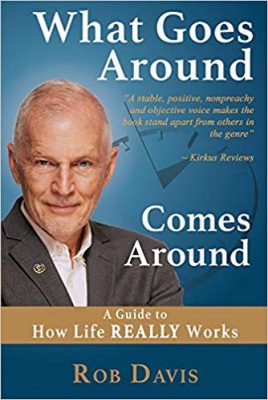
Combining personal vignettes with sage advice, Rob Davis demonstrates how the saying, What Goes Around Comes Around, connects to other sources of wisdom, indeed to our everyday lives. As an adult involved in business, family, and sports, he came to recognize how true the saying is.
As a child, he often heard the expression, “As you sow, so shall you reap.” As an adult, he saw in numerous situations, including the experiences of friends, business partners, and in his own life, how the results we reap do come from the actions we sow.
It was some time until he realized that “sow” referred to the planting of seeds and had nothing to do with needles and thread. Also, that “reap” referred to how successful or disappointing the resulting harvest would be.
One example referred to the Ponzi scheme run by Bernie Madoff, the notorious financier who had built what appeared to be a thriving business until being exposed as a fraud who stole $millions, even from widows, orphans, and charities. Madoff is now in prison, most likely for the rest of his life.
Suppose Davis suggests, that early on, Madoff had called together those involved, and “fessed up?” While the consequences would have been painful, they would not likely have been anything as disastrous as the total ruin he and his family ended up experiencing.
The lesson here is that the longer one lets the deception continue, the more bottomless the pit they dig for themselves when the light finally catches up to them.
Much of the book’s theme rests on the significance of choice. When it appears that we have no other option in a given situation, the right choice probably seems like the most challenging thing to do. Here Davis cautions us to set our sights on the high road to avoid losing the chance for the most positive possible outcome.
Of course, not all choices are wrong, and not all comebacks are bad. A friend and running buddy described by Davis wrecked his car after having had a few too many drinks at a party. His driver’s license was suspended for three months, along with the requirement to attend weekly classes. Despite the problematic consequences, his friend turned this self-created slip into an example for his children, by accepting the full measure of his punishment and making the best of it.
Some of Davis’ stories are his own, such as the time he was kicking himself for not living up to his commitment to helping a friend who had organized a charitable fund-raising event. The result led to his creation of a new organization supported by alternative, investment industry people for the prevention and treatment of child abuse.
His book concludes with positive “Thoughts to Live By,” such as – I Choose Happiness, I Cooperate for the Greatest Good, I Take the High Road, and I Expect to Be Happy.
His philosophy, as expressed here, makes effective use of humor, humility, and a hefty helping of logic! Drawing insight from personal parables, Davis has constructed a manual of straightforward and sensible life skills designed for those who genuinely want “what goes around” to yield the best outcomes!
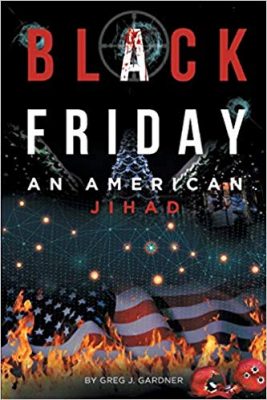
Art imitates life and life imitates art. When Greg J. Gardner was writing his highly suspenseful novel, Black Friday, An American Jihad, the mass shooting at the Walmart in El Paso had not yet occurred. Taking place on Labor Day weekend, the shooter knew the store would be filled with people taking advantage of sales on school supplies as students prepare for the first day of class. Customers and their children became targets as the store was turned into a carnage-filled scene.
Why is this relevant? In Gardner’s book, scenes of mass violence take place in many Walmart stores in the United States on the busiest shopping day of the year, Black Friday. The killers, in this case, however, aren’t American; they’re 50 jihadists who have been training for years for a series of precisely timed and sequenced attacks that will result in the deaths of thousands and derail American life in a manner never seen before. Just when people think the attacks have stopped, they’ll begin again at other retail locations.
This is a story with nuance. The author considers the critical questions of why and how this jihad was undertaken. He avoids fairytale extremes of good and evil and delves into the harrowing events that produced an assassin, a mastermind able to motivate a team of men to turn Black Friday into “Bloody Friday.”
The media barely has time to digest the latest attack before the next shooting rampage occurs. Stores become war zones, but the United States has no defense in place because only the terrorists know when and where the next attack will take place. The hours roll forward, and Americans continue to be perfunctorily slaughtered. An assembly line of meticulous mass scale murder is underway.
Chaos begets chaos. In this era of immediate reporting on social media, Facebook declares, “We cannot allow these images to propagate through our platform.” Twitter and Snapchat agree while Instagram crashes, and YouTube shuts down its servers. Walmart stores across the nation close. Vigilantes attack mosques, American gangs attack each other, and looters are on the prowl. ATM machines run out of money, and thousands of businesses close.
The National Guard is deployed, and the President eventually declares Marshall Law. With their liberties curtailed and life essentially shut down, the only thing left for Americans to do is watch CNN, a reporter now one of the most important people in their lives. America is no longer the country its citizens recognize, and it all happened so quickly.
This is a fast-paced, heart-pounding narrative in which we meet many characters, most only briefly. There are poignant moments of would-be heroism cut all too short but also a few genuinely bright spots in a reign of terror.
Gardner notes in the epilogue that he, of course, hopes his book will never be a reality. Nonetheless, this is a novel that will stay with you, that you’ll think of as you’re shopping, as you’re noticing a security guard in a parking lot, and certainly as you’re watching the evening news. Once you’ve been taken to the brink and given a glimpse of what could be, the concept of safety itself is in question.
Fiction features a problem that needs solving and only the protagonist can solve it.
In short stories, the problem is often introduced by the inciting incident–an event that triggers or launches what follows.
In longer fiction, the inciting incident might lead to the problem. This event will disrupt the status quo, demand response, and set actions in motion. It’s a threat that unbalances the story world and creates dilemmas that must be dealt with.
The Wizard of Oz – Inciting Incident
A simple plot structure is a protagonist struggling to solve an intolerable problem and re-establish order. Jessica Morrell
No matter when the problem begins (it’s always in Act One) the problem is weighty and vexing, perhaps insurmountable. If the problem is not immediately personal, it should become so that it will create a bond (connection) between the protagonist and antagonist. (A classic example is the connection between Sherlock Holmes and Jim Moriarty).
Sherlock Holmes and Jim Moriarty
As you know, in real-life problems are sometimes unsolvable and don’t fit neatly into a satisfying narrative arc. Across the globe, there are ‘forever’ problems of climate change, financial inequities, immigrants who need homes, corporate greed, and fascism. No shallow fixes will work, though incremental changes can chip away at underlying issues.
Closer to home, you might be dealing with a job that drives you crazy, but you cannot leave; family members who refuse to reconcile; health or mental health issues that can only be coped with, not cured; or agonizing decisions about caring for elderly family members. In fact, studies have shown that depression can be linked to seemingly unsolvable problems.
This is why some people turn to fiction. Where love wins in the end, crimes are solved and justice is served, and friends or families reconcile. But in well-told tales, success never comes easy and it always exacts a toll. Often success comes from the protagonist tapping into inner resources he or she hadn’t accessed before.
Frodo and the Ring – LOTR
A FEW STORY TIPS and HANDY REMINDERS from Jessica Morrell
As the story progresses the protagonist forms a plan. Now the plan can be shaky, untested, or desperate, but readers need a strategy at work.
Force your character to solve smaller problems along the way to resolving the major story problem. A detective can dig up a much-needed witness or help a vulnerable street kid.
Endow your protagonist with specific, interesting skills and personality attributes that won’t waver and make him or her suited to the task.
Create a protagonist who is somehow lacking in something he or she needs for happiness or fulfillment.
Burden him or her with emotional baggage and needs, personal demons or addictions, then toss in cast members and subplots that distract, undermine, or hinder.
Understand how the problem makes the protagonist feel in each scene: hesitant, unaware, outgunned, overwhelmed, weak, unqualified, terrified.
Setbacks and surprises should be baked into the plot.
Oh, and the protagonist should fail, fall on his face at least a few times along the way to the climax. Because your job as the master manipulator (aka author) is to blindside, torment, and thwart your characters. Again and again, so the outcome is in question and your readers are compelled to keep turning the pages.
Jessica Page Morrell
Keep writing, keep dreaming, have heart. – Jessica
Jessica Morrell is a top-tier developmental editor and a contributor to Chanticleer Reviews Media and to the Writer’s Digest magazine. She teaches Master Writing Craft Classes at the Chanticleer Authors Conference that is held annually along with teaching at Chanticleer writing workshops that are held throughout the year.
Chanticleer Editorial Services
Did you know that Chanticleer offers editorial services? We do and have been doing so since 2011.
Our professional editors are top-notch and are experts in the Chicago Manual of Style. They have and are working for the top publishing houses (TOR, Macmillan, Thomas Mercer, Penguin Random House, Simon Schuster, etc.).
If you would like more information, we invite you to email Kiffer or Sharon at KBrown@ChantiReviews.com or SAnderson@ChantiReviews.com for more information, testimonials, and fees.
We work with a small number of exclusive clients who want to collaborate with our team of top-editors on an on-going basis. Contact us today!
Chanticleer Editorial Services also offers writing craft sessions and masterclasses. Sign up to find out where, when, and how sessions being held.
A great way to get started is with our manuscript evaluation service. Here are some handy links about this tried and true service:
Bill Butcher can’t take it anymore. He’s played by the rules and lost. Now he’s making up his own rules. He’s determined to assert his own justice upon the people he identified as secretly betraying him and the troops who serve the country.
In this novel, part of the conspiracy against Bill Butcher is the publishing of a fraudulent list of demands supposedly written by him. The media nicknames the list The Butcher’s Bill. How can he fight? Follow the money trail, is all he can do – and what he hopes Linus Schag will do. It’s clear by now that Bill Butcher is a tormented man; terminated from NCIS (Naval Criminal Investigative Service) after his deployment in Iraq under accusations he’s unstable.
In every sense, this is a page-turner that readers won’t want to miss as Bill Butcher conducts his own subversive investigation to exact revenge. Is he out of his mind? Or, are his instincts right? This second book in the Linus Schag series by author Martin Roy Hill will keep you up nights.
Agent Schag has a reputation for impatience with authority, hidden secret guilt from his previous assignment, and boredom with his current exile in San Diego. He is the best in the business, and he is the only person Bill Butcher trusts to do the right thing. But when Butcher commits a crime so outrageously brutal, that Agent Schag is called in to bring him to justice. The question is, what kind of justice should be administered, and to whom?
Despite all obstacles before him, Bill Butcher relentlessly pursues the man he suspects is the source of the corruption. He will put an end to this man or die trying.
Linus Schag analyzes the evidence while keeping a vigilant watch against treachery. As he reviews the case, his concern grows. It is at this point, Lt. Commander Kendra Clarke of the Medical Corps steps in and diagnoses Butcher’s behavior as severe psychosis from a drug administered by naval officials. This new information may explain the gruesome messaging Butcher leaves behind at the crime scenes.
This is a smart thriller that will keep you guessing until the very last page. Martin Roy Hill builds the suspense skillfully, placing you just where he wants you: on the edge of your seat.
Martin Roy Hill is well-versed in the culture and commitment of those who serve in the military, especially the Navy. Even the term, “The Butcher’s Bill” is an old naval slang for the list of killed and wounded after a battle and takes on an additional meaning as it also represents the number of dead left behind as the book’s plot advances. Hill relates a compelling picture of service. These are professionals against a smart setting.
Be ready to puzzle through the trail of evidence as it is uncovered and analyze the potential motives of characters who are not always as they appear. This thriller engages the reader to solve the ultimate twisted solution. A thrilling work of fiction inspired by historical fact will leave readers wondering how closely art imitates life. Highly recommended.
The Butcher’s Bill won 1st Place in the 2017 CIBAs CLUE Awards for Suspense/Thriller novels.
In a creative blend of existential memoir and artful travel journal, Kayce Stevens Hughlett’s SoulStroller takes readers along on an adventurous journey of self-discovery. Reminiscent of Elizabeth Gilbert’s popular Eat, Pray, Love, Hughlett focuses on family issues, ancestral memories, and dreams explored within the context of personal travels, focusing on the importance of moving beyond our comfort zones.
Here we come to learn that a SoulStroller is a term used for an individual who ventures into the fullest version of their true selves. Guided by intuition and spiritual essence, they stroll through life with a feeling of curiosity, compassion, contentment, and gratitude. Like a pilgrim on a quest, they follow their heart, rather than move ahead with a tourist mentality of set goals and to-do lists.
Raised with the traditional expectations of the “good girl,” Hughlett lived the first 30 years of her life within 150 miles of Oklahoma City, an area of white, middle-class, conservatives. The blinders came off when she moved to Seattle. Divorced, and remarried with two children, Hughlett indicates that when everything is FINE, sometimes that refers to the acronym for “fucked up, insecure, neurotic, and exhausted.”
It is during a trip to Mexico in search of a therapeutic boarding school for her troubled son that she finds a sense of peace and a firm idea of place as she falls in love with the desert landscape. With the outstretched arms of the saguaro cactus offering a sense of peace, it is in this moment that everything changes.
Hughlett’s journeys go far beyond visits to the likes of the Eiffel Tower and Louvre. Whether enjoying the delicacy of an eggplant and cheese sandwich on the banks of the Seine or meeting a charmingly eccentric and her poodle, Hughlett learns to distinguish the essential rhythms of her own life.
Hughlett writes with a comfortable conversational voice that invites readers into her world view; one that she approaches with both exuberance and trepidation. The overall narrative unfolds in a generally chronological sequence, though journal entries and recollections can at times reflect past memories or events.
Insightful words from several authors, poets, scholars, and artists are used to grace the opening of each chapter, including contributions as varied as those of Roald Dahl, Thich Nhat Hanh, Gloria Steinem, and Henry Miller. Mark Twain’s quote seems to epitomize the central “SoulStroller” sentiment in “Sail away from the safe harbor. Catch the trade winds in your sails. Explore. Dream. Discover.”
Each section of the book concludes with a simple practicum highlighting suggestions for readers to venture into their own SoulStrolling mindset. Exercises range from quiet meditation and writing prompts, to practicing self-kindness and ideas for travels off the beaten path.
While Hughlett considers that her story may be too personal or esoteric for some readers, her work speaks to her positive growth, as her travels and experiences have allowed her to trust her own voice and value the lessons of her own journey. This is a book that strings together individual pearls of wisdom that have universal appeal.
SoulStroller by Kayce Stevens Hughlett won 1st Place in the CIBA 2018 Journey Awards for Narrative Non-Fiction.
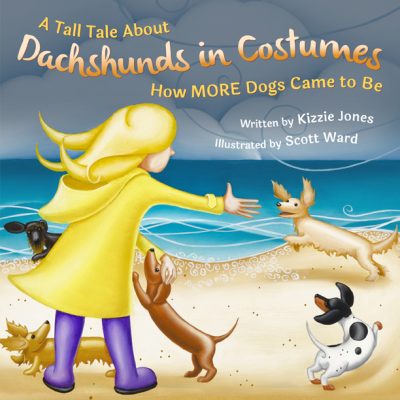
A unique fairytale by author Kizzie Jones, A Tall Tale About Dachshunds in Costumes: How MORE Dogs Came to Be adds the third book her series that began with How Dachshunds Came to Be: A Tall Tale about a Short Long Dog, followed by the award-winning title, A Tall Tale about a Dachshund and a Pelican: How a Friendship Came to Be.
This tall tale begins on the beach one autumn day where a big storm is fast approaching a girl and her dogs, stopping their play and forcing them to retreat indoors. The next day the girl and the dogs decide to go clean up the debris left by the storm, and it is not long before they see what sort of costumes they can create with the various kinds of debris scattered along the beach.
The dressed-up dogs ask the girl if she would be upset if they stayed dressed up. The girl wonders if the dogs would change on the inside as well. they reply,
“We’d be changed and transformed—we’d be diff’rent outside. Yet, inside, our hearts are still caring and kind.”
That night the girl sends her wish to the ocean for the dogs to become the dogs they costumed themselves to be and goes to sleep hoping her wish will be granted.
It is easy to see that author Kizzie Jones has a deep love for her dachshunds and nature, but it is also clear that she loves to teach through her books. With assistance from USDA Forest Service, Jones fills her story with accurate plant life as well as lots of terms for different dog colorings and patterns, all of which she includes in a glossary at the end of the book.
Dachshunds in Costumes is a creative story that gives a lighthearted explanation for how the different breeds of dogs came to be, and as Jones’s previous books, we see the gift of self-acceptance. Also present is a meter that has a lilting and soothing quality. The meter pairs well with the wonderful illustration work from Scott Ward that has a unique and uniform shading style that readers of all ages will admire.
Kizzie Jones’ newest addition is perfect for the curious and inquisitive child who will surely spend hours curled up studying all that A Tall Tale About Dachshunds in Costumes: How MORE Dogs Came to Be has to offer.
This title will be released on November 3, 2019, in English and in Spanish! If you would like more information, please sign up on Kizzie’s blog here.
Meet Peter Greene, CIBA Award-Winning author of High-Seas Action Adventure novels that appeals to all ages!
If you’ve ever been to a CAC (Chanticleer Authors Conference), you might recognize author Peter Greene. He’s the one that sits on the outside aisle, quiet and unassuming. Well kids, don’t be fooled! Peter has one of the best imaginations I know of—and there is a reason for his works are award-winning! You’ll just have to read on to discover it yourself!
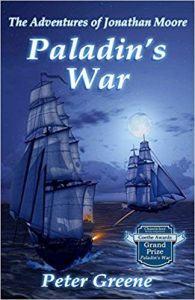
Peter Greene took home the Goethe Book Awards Grand Prize in the 2017 CIBAs for Historical Fiction for Paladin’s War.
CIBA 2017 Goethe Book Awards Winners Joe Vitovic & Peter Greene
Chanticleer: Tell us a little about yourself: How did you start writing?
Greene: My parents were both prolific storytellers, and they were amazingly descriptive, especially my Father. He would act out the voices and mannerisms of all the people. I learned a lot from trying to outdo them. Then in high school, when I took a creative writing class, my teacher, Mrs. Beem, would just yell out something like “a story with lots of movement” or “use the words ‘freedom’ and ‘cheesecake’ in a short story” and I would just go. The other kids sat and struggled, but I already had a plot, characters, and all that in seconds. She gave me A’s all the way through.
Structure: Pantzer or Plotter?
Chanti: That sounds like a great way to be introduced to storytelling!
So just how structured are you in your writing work?
Greene: Very structured, but only in the process, not in the structure of the piece.
I first list “essentials” – just the essential things I want in the story, in no order, and some may make it in there, some may not. This way I get ideas out of my head before they are lost in the ether!
Then comes some basic research, which is ongoing through the process of course, but I just want to make sure I’m building my fiction on a solid, believable foundation.
I then outline like a madman, very detailed at times, sometimes with partial chapters written out, sometimes with crude drawings! These outlines are dozens of pages long, and I print them and literally wallpaper my office with them! The outline for Paladin’s War covered three walls in my office!
Finally, I start the actual writing, usually in chronological order, but that is a rule I break depending on my mood.
When I’m done, I have my wife read the book out loud to me so I can hear the rough spots-that is critical— I find so much that makes me cringe: from unnatural dialogue to foggy descriptions to just clunky passages. I judge a competition and this is the advice that I tell almost every beginning author who enters the contest.
Then, I send to the editor for evaluation. But all of these steps are ‘writing’ to me. And I love all of it.
Authors Who Have Influenced Your Work
Chanti: That’s a good way to approach your writing! I like the Madman Outliner… sounds like the title of your next book! Name five of your favorite authors and describe how they influence your work.
1) Kurt Vonnegut, mostly his later stuff, like Breakfast of Champions because he became so irreverent after his ‘mainstream’ success. He taught me that style can change, and be ANYTHING as long as it has something valuable to say.
2) Erma Bombeck, again showing that style, if it is true, can let you do anything. I would read her columns, and even though I was about twenty-two years old and a single man in Los Angeles when I discovered her, I identified with her message and I laughed. Her writing seems so effortless! I miss her.
4) David McCullough. This is cliché, but he makes history come alive, and his writing voice (as well as his speaking voice), is so crystal clear. No extra stuff, just the best, most important things are covered in a wonderful manner that intrigues us. He never put his opinion in his works, because he doesn’t have to. History is history, and it is interesting enough.
5) J.R.R. Tolkien because he is the best at everything: plot, character, situation, excitement, humanity, emotion, poetry, prose and adventure. I have read the Silmarillion at least ten times and Lord of Rings each year since I was fourteen. I am always amazed at the scope of his stories, and the languages – truly amazing. I have learned from him that no matter how good I think I can be at times, I am no master. He is the true master. I would never try epic fantasy because the bar has been raised so high.
About Dialogue
Chanti: Great insights – and choices! You’ve given us something to chew on. What areas in your writing are you most confident in? What advice would you give someone who is struggling in that area?
Greene: Dialogue is pretty easy and natural for me, maybe because of my theatre training. As far as advice for others who struggle with dialogue, I’d say this: if you are always looking for a witty, snappy, clever, smart ways for your characters to speak, STOP! It will all come out cliché, and no one talks in clichés. It will read like an episode of some seventies, low-budget television series. J.D. Barker said at the last CAC19 that he sits in a Starbucks, has a cup of coffee and listens to what the people around him say, and he types it into his laptop! That is brilliant. It’s natural. I tried it. It was a blast!
JD Barker presented at CAC19!
Expanding Readership and Promoting Literacy
Chanti: Ah, that’s my favorite thing to do! What do you do in your community to improve/promote literacy?
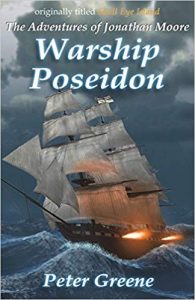
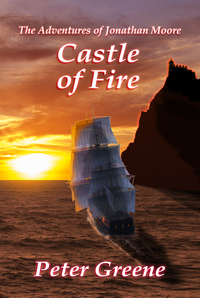
Greene: For the Adventures of Jonathan Moore series, I specifically targeted YA readers. I consciously write each book to graduate the reader from the fourth-fifth grade reading level with Warship Poseidon, to the sixth-seventh grade level with Castle of Fire, then Paladin’s War finishes on the ninth-tenth grade level. If a youngster reads all three, he jumps several reading levels! I also donate books to schools and libraries in the area and have done a few talks to writing classes.
Honestly, my book reviews from Chanticleer after my winning the Goethe award in 2018 and the (Chanticleer) review of Paladin’s War exploded my sales. I increased my sales by over 400%, so that worked for me! – Peter Greene
Marketing and Sales Tips
Chanti: That’s awesome! So, you give away books and present writing classes, what else do you do to market your books? What’s worked to sell more books, gain notoriety, and expand your literary footprint?
Greene: I don’t do enough, but when I learn something, I do it. I enter contests that are legit. Advertising can work, it just depends on finding what works for you. Honestly, my book reviews from Chanticleer after my winning the Goethe award in 2018 and the (Chanticleer) review of Paladin’s War exploded my sales. I increased my sales by over 400%, so that worked for me! You just have to try everything, meet people, and spread the word – without saying “Hey, I wrote this great book, you should read it.” Let others speak for you, and most of all, let your writing speak for you.
Let others speak for you, and most of all, let your writing speak for you. – Peter Greene
How do you separate your books in a crowded marketplace?
Chanti: That is incredible! I love that – especially how Chanticleer Reviews helped to boost your book sales by 400%! I think we need that on a t-shirt…
What is different about your series from other YA books out there?
Greene: Two things: I avoided all magic, superpowers and paranormal material. That’s all fun – but there is too much of it out there already. None of us will ever discover we have wizards or Olympians for parents or have a mystical ability. For this series, I wanted to point out that real heroes do exist, and they have throughout history.
I also decided to take it easy on the terminology and more unsavory aspects of life at sea. I’ve always loved the classic sea stories in Stevenson’s Treasure Island, Forester’s Horatio Hornblower, and O’Brian’sJack Aubrey series, but I couldn’t help thinking that for most of us, unless one had supporting texts and companion guides to get through all the jargon and technicalities, one could easily become lost-and maybe surrender to something easier to read. That would be too bad. And the things you do really need to know, well, wouldn’t it be best to learn that along with the characters? The ones that started out as land-lubbers just like you and your kids?
The Adventures of Jonathan Moore books are about one would-be hero and his friends who try to succeed using only their courage, their wits and industry alone – no magic necessary. And though I will never fill the shoes of Stevenson, Forester or O’Brian, I can attempt to follow in their footsteps.
Chanticleer: That’s great! But you never know…you may be the one to fill their shoes if “Adventures of Jonathan Moore” are any indication!
Now we would really do need to know a little bit more about when did you realize you that you were an author?
Greene: I got my degree in Theatre from Illinois State, and a playwriting professor said I had a “knack for dialogue and physical humor.” That made me continue writing. I wrote screenplays after college, and a studio exec at 20th Century Fox pulled me aside and said “you really can write, keep it up” – then years later, my first novel, Warship Poseidon won the Adventure Writers Competition’s Grandmaster award, and Clive and Dirk Cussler chose the winner. When Clive announced my name, he said “I read your book, you know. Beautifully written.” THAT made me think that maybe I have a little writing ability. So when I write, I always think “maybe Clive and Dirk will read this so it better be my best effort.”
Editor’s Note: Clive Cussler’s books have been published in more than 40 languages in more than 100 countries. They are New York Timesand international bestsellers. He has written 17 books in a row that reached the New York Times’ fiction best selling list. He is of a select group of authors to achieve this status. Cussler has also published more than 50 novels—quite the back list that keeps him on the list of richest authors in the world.
Chanticleer: Holy Moley, man! That’s Clive & Dirk Cussler! I can’t… I just need a moment… Okay then, what led you to write what you write?
Greene: I write a lot of different stuff in different genres, because, why not? The Adventures of Jonathan Moore series is YA historical fiction, and it all happened by accident. One night, as I was putting my children to bed, I realized that I was tired of reading the books available on our bookshelf. Knowing they were crazy about the Pirates of the Caribbean movie, I just said, “Tonight I’m going to tell you a story about twelve-year-old Jonathan Moore who lived in a dark and filthy alley, and how he ended up a hero on a tall sailing ship.” I kept telling a little bit each night, making it up as I went. My wife, who was listening to the stories each night, suggested that I write it as a novel. Ten years later I have three books in the series!
Chanti: And so the magic began… How do you come up with your ideas for a story?
Greene: Good question! Usually, something just clicks that I observe or realize, and off I go. For example, I was thinking about hidden social casts in America and I thought “Wow. People don’t see it, do they?” So BAM! This Sci-Fi idea hits me for a novel, the characters came quickly and then a plot and now the outline is almost finished. I’m starting it now. It’s a strong female character who uses history and propaganda to, well, you will have to read it!
Chanti: A SciFi novel! We can’t wait to read it! Are you going to enter it into the Cynus Book Awards?
Greene: Definitely!
Chanti: Thank you, Peter Greene with an “e,” and we look forward to seeing you at CAC20!
The Journey Book Awards recognize emerging new talent and outstanding works in the genre of Narrative Non-Fiction and Memoir. The Journey Book Awards is a genre division of Chanticleer International Book Awards and Novel Competitions (CIBAs).
Chanticleer International Book Awards is looking for the best books featuring true stories about adventures, life events, unique experiences, travel, personal journeys, global enlightenment, and more. We will put books about true and inspiring stories to the test and choose the best among them.
These titles have moved forward in the judging rounds from SLUSH pile to the 2019 JOURNEY Book Awards LONG LIST and have advanced to the 2019 JOURNEY Shortlist. The Short Listers will for the Semi-Finalists positions. The SemiFinalists will compete for the limited First Place Category Winners in the final rounds of judging. All Semi-Finalists will be recognized and CAC20. The First Place Category Winners, along with the division grand prize winners, will be announced at the CIBAs Banquet and Ceremony on Saturday, April 18th, 2020 at the luxurious Hotel Bellwether in Bellingham, Wash.
These titles have moved forward in the judging rounds from SLUSH pile to the 2019 JOURNEY Book Awards LONG LIST and have advanced to the 2019 JOURNEY Shortlist. The Short Listers will for the Semi-Finalists positions. The SemiFinalists will compete for the limited First Place Category Winners in the final rounds of judging. All Semi-Finalists will be recognized and CAC20. The First Place Category Winners, along with the division grand prize winners, will be announced at the CIBAs Banquet and Ceremony on Saturday, April 18th, 2020 at the luxurious Hotel Bellwether in Bellingham, Wash.
The following works have advanced to the 2019 Journey Book Awards for Narrative Non-Fiction
T.S. Lewis – The Why of War: An Unorthodox Soldier’s Memoirs
Susan Murphy – Toppled World
Anna Carner – Blossom ~ The Wild Ambassador of Tewksbury
Rebecca Faye Smith Galli – Rethinking Possible: A Memoir of Resilience
Maya Castro – The Bubble: Everything I Learned as a Target of the Political, and Often Corrupt, World of Youth Sports
Donna Hill – Yes, The World Is Round
Linda Gartz – Redlined: A Memoir of Race, Change, and Fractured Community in 1960s Chicago
John Hoyte – Persistence of Light
Nikki West – The Odyssey of the Chameleon
Chris Register – Conversations With US – Great Lakes States
J. Bronson Haley – The Depth of Grace: Finding Hope at Rock Bottom
Julie MacNeil –The 50-Year Secret
Whitney Elleby – Autism Uncensored: Pulling Back the Curtain
Judy Bebelaar and Ron Cabral – And Then They Were Gone: Teenagers of Peoples Temple from High School to Jonestown
Ted Neill – Two Years of Wonder
Anthony Suarez – Politically Indicted: The Real Story Behind the Jersey Sting
Dena Moes – The Buddha Sat Right Here: A Family Odyssey Through India and Nepal
Laureen Pittman – The Lies That Bind: An Adoptee’s Journey Through Rejection, Redirection, DNA, and Discovery
Nancy Canyon – STRUCK: A Memoir
Carol E. Anderson – You Can’t Buy Love Like That: Growing Up Gay in the Sixties
Steffanie Strathdee and Thomas Patterson – The Perfect Predator: A Scientist’s Race to Save Her Husband from a Deadly Superbug
Barbara Clarke – The Opposite of Hate
Juliet Cutler – Among the Maasai
Andy Chaleff – The Last Letter
John Egenes – Man & Horse: The Long Ride Across America
David Wienir – Amsterdam Exposed
Rod Baker – I Need my Yacht by Friday – True Tales from the Boat Repair Yard
Lance Brewer – Back Story Alaska
Lisa Dailey – Square Up
Julie L. Seely – Skinny House -A Memoir of Family
J. Bronson Haley – The Depth of Grace: Finding Hope at Rock Bottom
Patrick Hogan – Silent Spring – Deadly Autumn of the Vietnam War
These titles will compete for the 2019 Journey Semi-Finalists positions.
Good luck to all as your works move on the next rounds of judging.

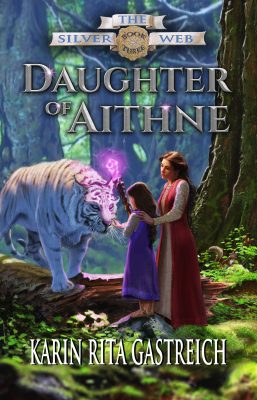
 Writer and ecologist Karin Rita Gastreich draws inspiration from her trips to the magical forests of Costa Rica to bring life to the Silver Web series. An unforgettable journey, Daughter of Aithne, is the finale to the epic story of Queen Eolyn the High Maga, set in a world of seemingly never-ending war where female practitioners of magic (maga) are feared.
 The Cygnus Book Awards recognize emerging new talent and outstanding works in the genre of Science Fiction, Steampunk, Alternative History, and Speculative Fiction. The Cygnus Awards is a genre division of Chanticleer International Book Awards and Novel Competitions (The CIBAs).








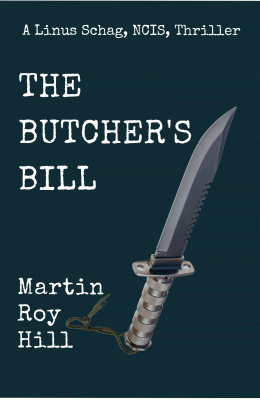
 Bill Butcher can’t take it anymore. He’s played by the rules and lost. Now he’s making up his own rules. He’s determined to assert his own justice upon the people he identified as secretly betraying him and the troops who serve the country.
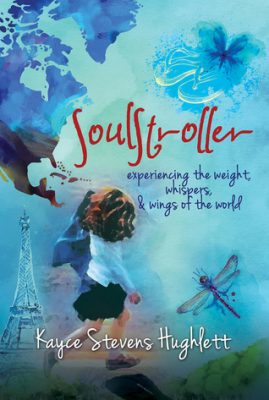
 In a creative blend of existential memoir and artful travel journal, Kayce Stevens Hughlett’s SoulStroller takes readers along on an adventurous journey of self-discovery. Reminiscent of Elizabeth Gilbert’s popular Eat, Pray, Love, Hughlett focuses on family issues, ancestral memories, and dreams explored within the context of personal travels, focusing on the importance of moving beyond our comfort zones.




 The Journey Book Awards recognize emerging new talent and outstanding works in the genre of Narrative Non-Fiction and Memoir. The Journey Book Awards is a genre division of Chanticleer International Book Awards and Novel Competitions (CIBAs).