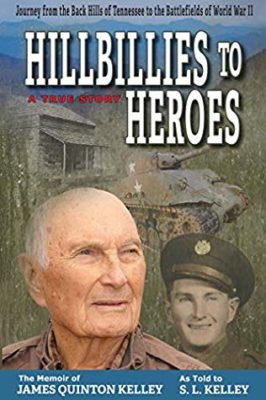
World War II veteran Quinton Kelley recounted his life story to an avid biographer – his daughter, S. L. Kelley, a documentarian and award-winning video producer.
Kelley’s tale begins in Coker Creek, Tennessee, where he was raised on an 80-acre farm, in a log cabin that he described as rough, but “brightened” with flowers. Taught to be honest and hardworking by his parents, he grew up with kerosene lamps for light, a fireplace for warmth and a wood stove for cooking. His recollections are colorful, with language that recalls his roots.
As a boy, he wore shoes only to church or to town and attended a church that doubled as a one-room schoolhouse. Everyone in the region knew someone who made moonshine, “a scruffy bunch,” Kelley called them; the local country store had bullet holes in the walls from fights between that bunch and the storekeeper. In his teens, he began work away from the farm, first for a local gold prospector, then for the TVA. Then in 1940 he heard about World War II and knew he’d be drafted.
The second part of the book shows Kelley leaving Coker Creek for Camp Beale, California, where he became the company carpenter. Assigned to an armored division, the former farm boy showed his worth as the only member of his group who did not need the training to drive a tank. He met fellow recruits from all over America, and despite the manly joshing and rough language among them, the boys in his platoon once generously gave him money to get home when his sister was dangerously ill.
He drove into combat, first in France, then in Germany, as part of an initiative that ultimately saw the end of Hitler’s Third Reich. Kelley (who passed away before the publication of his memoir) did not glorify himself in recounting his war exploits, but vividly described what it’s like to sit in a tank, looking at the action through a tiny window, always in danger of being killed while trapped inside the metal box. There’s not much room, he opined, for mistakes in battle.
In his Tennessee argot, he states that combat “made me a bit jubrous.” Still a homeboy at heart, courting a girl by mail, Kelley noted that French and German people were good farmers, though still using horses, and very orderly in their houses and fields. Camped near Berchtesgaden after victory, he refused to go see Hitler’s former hangout: “I didn’t want to waste a minute on that sorry ol’ scudder.” Once back in the US, marriage to his sweetheart soon followed.
Two books in one, this substantial memoir can be read equally avidly by nostalgic southern and mountain folk as a wide-ranging recreation of simpler times, or by anyone who is drawn to tales of war – both the battles and the long days and hours waiting and watching for the next conflict – as seen up close and personal. Using her writer’s instinct and flair, S.L. Kelley has done a remarkable job of combining her father’s spoken words, his accent, and slant, with those of fellow combatants, and others. Her book would make a splendid gift for old-timers, and a wholesome educational read for younger generations who would do well to remember and revere the sacrifices of America’s soldiers, and a heartfelt recollection that those who make history can be kindhearted and good!
Kiffer’s favorite quote from this book: “…it took all of our personal sacrifices to go from war to peace.” Quinton Kelley
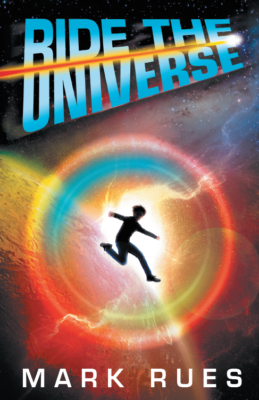
A young boy goes on a journey through the solar system searching for the spirit of his sister, discovers the basics of science and spirituality with the help of a mystic teacher and a super-powered cat.
Teddy DeXue’s ride around the universe begins in the summer of 1963, just as his amazing catch wins the Little League Championship for his team. But it doesn’t really start there. It really began the year before when Teddy’s sister Jean died, and his family fractured into broken, grieving pieces.
Teddy has a secret. He believes that his sister is out there, somewhere, and that the moon, the big, bright full moon that helped him make his game-winning catch, is going to help him find her. With training from a mysterious spiritual master, a bit of scientific knowledge gleaned from his dad and guarded by Henry, his strange and slightly super-powered cat, how can he fail?
While his best friend, Tem, thinks that Teddy’s quest is nothing more than wishful thinking, he goes along for the ride – and what a ride it is!
As Teddy searches through the stars for his sister, his engineer father introduces him to scientific concepts about the nature of the universe; even the many ways that light can be refracted, reflected, and split. In his dreams, Master Fu-Hsi teaches him the spiritual side of what his father’s talking about. It’s up to Teddy to put that knowledge together to make his journey into the stars – and back.
The story and the way it proceeds is reminiscent of the way the best-selling novel, Sophie’s World by Jostein Gaarder introduced young Sophie to the basic concepts and history of philosophy while pulling readers along for the fascinating journey.
There’s also an element of the classic YA SF novel, A Wrinkle in Time by Madeleine L’Engle in Teddy’s search among the stars for his lost sister.
The combination of the two elements draws readers on Teddy’s journey as he finds his way to his sister and back. Along the way, he grows up and learns what it is to love, even as his family finds their way back from heartbreak.
Ride the Universe crosses genres of Sci-Fi, Fantasy, and Philosophy, as it uses those tropes and more than a bit of magical realism to tell its story.
Ride the Universe is a multi-genre novel with heart. Fasten your seatbelt! For those searching for something a bit more outside the box, look no further, Ride the Universe is a magic Thunderbird of a ride – in an actual, honest-to-goodness, T-bird.
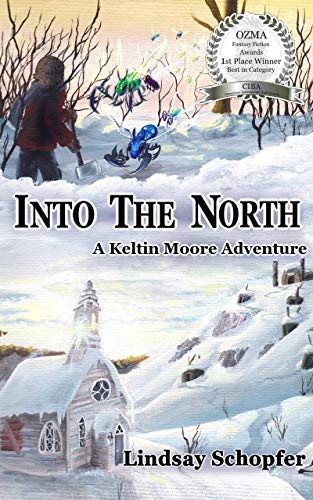
If Jack London had written about hunting fantastic beasts in a fantasy-tinged “Great White North” during a gold rush, instead of real animals in the Klondike, he’d have created a hunter like Keltin Moore and a beast like the Ghost of Lost Tap.
The adventures of Keltin Moore read a lot like London’s best adventure stories, only written as if they were inspired by Larry Correia’s Monster Hunter International series. The combination leads to a chilling story (in more ways than one) about a professional beast hunter and his companions on a quest to make some money and save a town from a beast that no one has survived. Still, everyone has seen the aftermath of its depredations.
They call it the Ghost of Lost Tap because it moves like a ghost. Or something supernatural. And no one has been able to catch it, certainly not the little band of shakedown artists calling themselves the Hunter Guild that has sprung up in the ramshackle boomtown of Lost Tap.
The story focuses on the character of Keltin Moore, the last of a long and storied family of professional beast hunters. Keltin learned his trade at his father’s knee, and like his father, is used to hunting alone. But in his second adventure, he is traveling with an apprentice, young Jaylocke, who needs to learn a trade to earn his place as an adult among his own people.
In Lost Tap, Keltin and Jaylocke band together with old friends that they fought with in the first book of Keltin’s adventures, The Beast Hunter. While they hunt the “Ghost,” Keltin finds himself meditating on the nature of leadership, his need to be alone versus his understanding that he needs others to bring down this unstoppable beast, and his feelings of responsibility to those under his care – and in his heart.
Keltin is a fascinating character. This second installment of the series provides a thought-provoking perspective on his profession, his responsibilities as a leader, and his desire to save people, often from their own mistakes.
At the same time, the world that Keltin inhabits, as much as it will remind readers of London’s tales of the Klondike, is a fantasy world and not London’s historical one. Except for the beasts themselves, with atypical and strangely asymmetric biology, there is little magic in this world or not that is seen in this story.
Beasts are killed with guns, not spells. No matter how unnatural they seem, a bullet to the brain, once Keltin manages to determine where a beast’s brain actually is, kills them just fine. But the places Keltin refers to, and the sentient nonhumans that he meets and befriends, remind the reader that this is a different world with its own history.
While these reminders are not enough to make the reader feel they have missed too much by starting with this second book in the series, they do serve to tease the reader that there are stories yet to be told. We love this adventure/fantasy so much, we happily recommend readers to start with the first book in the series and then move on.
Into the North: A Keltin Moore Adventure by Lindsay Schopfer is such a terrific story on its own that readers will feel compelled to pick up the other stories just to catch up on all the action! Highly recommended.
Into the North: A Keltin Moore Adventure won First Place in the CIBA 2018 OZMA Awards for Fantasy Fiction.
The Dante Rossetti Book Awards recognize emerging new talent and outstanding works in Young Adult Fiction. The Dante Rossetti Book Awards is a genre division of the Chanticleer International Book Awards (#CIBAs).
Named in honor of the British poet & painter Dante Gabriel Rossetti who founded the Pre-Ralphaelite Brotherhood in 1848.
Chanticleer International Book Awards is looking for the best books featuring stories of all shapes and sizes written to an audience between the ages of about twelve to eighteen (imaginary or real). Science Fiction, Fantasy, Dystopian, Mystery, Paranormal, Historical, Romance, Literary, we will put them to the test to discover the best.
These titles have moved forward in the judging rounds from SLUSH pile to the 2019 Dante Rossetti Book Awards LONG LIST and now have progressed to the 2019 SHORTLIST.
Congratulations to the 2019 Dante Rossetti Shortlisters!
Navya Sarikonda – The Enchanters’ Child
J.A. Roth – When The Bee Stings
Veronica Myers – Winter’s Progeny
Zachary Ryan – High School Queens
Julieanne Lynch – Beneath the Lighthouse
Jacinta Jade – Change of Darkness
Kelly Watt – The India Diaries: Book One Tiger’s Rock
J. Taylor Baker – The Cardorian Complex
Glen Sobey – No Fences in Alaska
Jan Von Schleh – But Not Forever
Michelle Rene – Manufactured Witches
Nancy Thorne – Victorian Town
Ted Neill – Jamhuri, Njambi & Fighting Zombies
A. Cort Sinnes – Quicksilver
Leslea Wahl – Where You Lead
C.R. Stewart – Britfield and the Lost Crown
Susan Brown – Twelve
J.T. Blossom – The Tunes of Lenore
James M Roberts – The Crossroads of Logan Michaels
Sandra L Rostirolla – Cecilia Futuris
Kristina Bak – Nowever
Zachry Wheeler – Max and the Multiverse
V. A. Givens – Sealed with a Twist
Tom Edwards – The Honourable Catherine
Michael Bialys – The Chronicles of the Virago: Book I The Novus
David Patneaude – Fast Backward
John Middleton – Dillion & The Curse of Arminius
Good luck to all!
Which of these works will move forward in the judging rounds for the 2019 Dante Rossetti Book Awards for Young Adult Fiction?
These entries are now in competition for 2019 Dante Rossetti Semi-Finalists positions. Semi-Finalists will be announced and recognized at the CAC20 banquet and ceremony. The First Place Category Winners, along with the CIBA Division Grand Prize winners, will be selected from the 16 CIBA divisions Semi-Finalists. We will announce the 1st Place Category winners and Grand Prize Division Winners at the CIBAs Banquet and Ceremony on Saturday, April 18th, 2020 at the luxurious Hotel Bellwether in Bellingham, Wash.
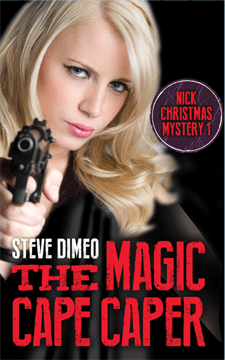
A lighthearted, modern reimagining of the classic dime detective novel, The Magic Cape Caper is an assemblage of fun pop culture references in a contemporary setting.
A former police detective, and a newly licensed private eye, Nick Christmas is hired by Mrs. James, the wife of scientist and inventor of an invisibility device, Dr. Bert James. She refuses to believe the conclusions of the police who believe Dr. Bert is dead after an apparent kidnapping. With no other cases and a dwindling case-flow, Nick and his young “Girl Friday” receptionist Miranda “Randi” Degrotti accept the challenge to get to the bottom of what is going on.
A former English teacher, Author Steve Dimeo keeps a very lighthearted and upbeat tone throughout the novel which makes for a rather easy read. But, he also makes use of a sophisticated vocabulary that will have most of us crack open a few dictionaries.
The natural chemistry between Nick and Randi is one of the more entertaining qualities of The Magic Cape Caper. It will likely be a defining presence in future installments of the series. As individual characters, they struggle to branch away from being classic characterizations. Nick is the wise-cracking detective and middle-aged male who can’t help but fixate on the female body; while his beguiling Girl Friday, Randi, “the blonde bombshell” surprises Nick with her ability to be a tough and intelligent woman.
For those seeking a fun and lighthearted private-eye stories (Moonlighting and Castle fans take notice), The Magic Cape Caper delivers.
Pop-culture references from past generations permeate the work. When Nick makes these, it is a positive and endearing character trait. However, perhaps the author should reconsider having the younger characters render the same references when they are clearly out of context unless they are immersed in it as a sub-culture, which could happen if the backstory was woven in. In the thinly veiled crime/romantic comedy PI series, Castle, this was done with aplomb with the episode on Steampunk Culture (Punked).
In almost every chapter, the literary form of the male gaze is prevalent. Frequently, Nick has to take note of what Randi is wearing and how attractive it makes her look. It is even canon within the novel that Nick hired her because of her looks and how he could use them to his advantage in investigations, while her education and other skills were a surprising bonus.
The Magic Cape Caper has a lot of heart, and the series has the potential to develop characters that become a favorite for devotees of smart but goofy and fun “detective” series that have a touch of romance in the air.
The CLUE Book Awards recognize emerging new talent and outstanding works in the genre of Suspense and Thriller Fiction. The Clue Book Awards is a division of the Chanticleer International Book Awards (The #CIBAs).
Chanticleer International Book Awards is seeking the best books featuring suspense, thrilling adventure, detective work, private eye, police procedural, and crime-solving, we will put them to the test to discover the best! (For lighter-hearted Mystery and Classic Cozy Mysteries please check out our Mystery & Mayhem Awards).
These works have survived the infamous slush pile and have advanced to the 2019 CLUE Book Awards Long List. They will compete in the next rounds of judging for the CLUE 2019 Short List.
Good luck to all!
J.J. Clarke – Dared to Return
Richard Conrath – Blood Moon Rising
RIP Converse – Maelstrom Part One
Harold Benjamin – Phase III
L. J. Martin – The Blue Pearl
Nancy Adair – RABYA
J.P. Kenna – Joel Emmanuel
J.P. Kenna – Toward a Terrible Freedom
Timothy S. Johnston – The Savage Deeps
Tracey Pepper – Dead On Arrival
Lonna Enox – Untold Agony
Stephen F. Frost – The Alaskan Alibi
Nanci Rathbun – Honor Kills
Russell Heath – Rinn’s Crossing
Bert Entwistle – Murder in the Dell
John W Feist – Blind Trust
Liese Sherwood-Fabre – The Adventure of the Murdered Midwife
Marian Exall – A Splintered Step
Joanne Jaytanie – Salvaging Truth, Hunters & Seekers, Book 1
Ronald Lamont – Smoke and Mirrors
Carl Roberts – The Trial of Connor Padget
Nick Mancuso – Fever
Edgar Swamp – Amber Hollow
Steve Dimeo – The Magic Cape Caper
Janet K. Shawgo – Legacy of Lies
Maureen Joyce Connolly – Little Lovely Things
T.K. Ambers – A Fox in the Fold
Deborah Serani – The Ninth Session
Ken Oder – The Judas Murders
Melodie Hernandez – Forgotten Rage
Chris Norbury – Straight River
Jode Millman – The Midnight Call
Barbara Brett – Secret Agenda
Barb Warner Deane – And Then There Was You
Ken Malovos – Sweet Justice
Mary Adler – Shadowed by Death: An Oliver Wright WWII Mystery
Matt Witten – The Necklace
Matt Witten – Free For All
V. & D. Povall – Jackal in the Mirror
E. L. Diamond – The Wolf of God
Carl Vonderau – Murderabilia
M. J. Simms-Maddox – Mystery in Harare
Courtney Leigh Pahlke – Life Force Preserve
Michelle Cox – A Veil Removed
Kevin G. Chapman – Righteous Assassin: A Mike Stoneman Thriller
Kaylin McFarren – High Flying
Wally Duff – bada-BOOM!
Alexandrea Weis and Lucas Astor – Death by the River
Joni M Fisher – West of Famous
D. J. Adamson – Let Her Go
Kirk Millson – Serpents of Old
Lori A. Witt – Incel
Thomas Galvin – The Auction
Sonny Kruger – Killing Set In Motion
D. J. Adamson – At the Edge of No Return
Which of these works will advance?
The excitement continues to build for the 2019 CIBAs!
These titles have moved forward in the judging rounds from SLUSH pile to the 2019 CLUE Book Awards LONG LIST. These entries are now in competition for 2019 CLUE Shortlist. The ShortListers’ works will compete for the Semi-Finalists positions.Semi-Finalists will be announced and recognized at the CAC20 banquet and ceremony. The First Place Category Winners, along with the CIBA Division Grand Prize winners, will be selected from the 16 CIBA divisions Semi-Finalists. We will announce the 1st Place Category winners and Grand Prize Division Winners at the CIBAs Banquet and Ceremony on Saturday, April 18th, 2020 at the luxurious Hotel Bellwether in Bellingham, Wash.
The 16 divisions of the 2019 CIBAs’Grand Prize Winners and the Five First Place Category Position award winners along with recognizing the Semi-Finalists will be announced at theApril 18th, 2020 Chanticleer International Book Awards Annual Awards Gala,which takes place at the Chanticleer Authors Conference that will be held in Bellingham, Wash.
Register today for the 2020 Chanticleer Authors Conference and the 2019 CIBA ceremony and banquet that will be held in Bellingham, Wash. at the luxury waterfront Hotel Bellwether, April 17 – 19, 2020. Seating is limited. Reservations are required.
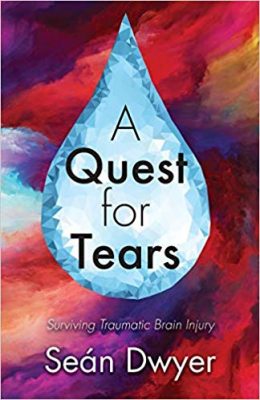
A Quest for Tears by Sean Dwyer is a captivating memoir written four years after the author suffered a Traumatic Brain Injury (TBI) as the result of a rear-end car collision.
While such casualties often foster long-term, unpredictable damage and seem a medical mystery, here Dwyer’s goal is to share his unique roadmap of struggles and experiences, while also advocating for fellow TBI survivors.
At age fifty-four, Dwyer was a college educator, fluent in Spanish, and a creative writer who had authored two novels and a work of nonfiction. A prolific songwriter, he was also blessed with an excellent memory, supportive of the talent of colleagues, and was always able to display his emotions easily. But in the aftermath of his January 29, 2015 accident, life changed.
Initially diagnosed with whiplash, back sprains, a leg wound, and soft-tissue damage to his arm, subsequent tests revealed a concussion and TBI. Now, in addition to dealing with the expected discomfort of his outer physical injuries, Dwyer was forced to navigate the arduous, mired path of debilitations faced by those dealing with head trauma. From a first-person perspective showcasing determination and resilience, Dwyer journeys through a slow, laborious labyrinth towards recovery. With a touch of wit, he applies the moniker
“Sean 2.0” to his injured self, and like a software upgrade, he begins to explore the new cognitive alterations of his brain.
Dwyer now faces life with an extreme sensitivity to light. Also, there is the absence of the familiar “earworm” that once inspired music and stories. His now quiet brain struggles for words has difficulty reading and lost the sense of musical enjoyment. Minimal laughter and a noticeable inability to shed tears lead him to wonder, “Am I going to be an emotional zombie for the rest of my days?”
Dwyer went from being a man with high regard for hygiene and fashion standards to an individual preferring comfortable attire and choosing vibrant novelty socks that delighted his injured brain. Painful head movements during a simple haircut caused him to eliminate the grooming event for two years. This was the new Dwyer.
Dwyer seeks numerous treatments over several months, from physical therapy and acupuncture to neuropsychologists and craniosacral practitioners. During a visit with a priest, he looked for help from the sacrament of healing. Attending conferences with fellow TBI survivors proves an essential part of his recovery, as he learns progress can still occur well beyond the one-year mark of the initial injury. Lightening the intensity of this autobiographical account, Dwyer distinguishes the one-year “smashiversary” of his accident with a celebration at a local Mexican restaurant. Along with a cathartic, hanging car pinata, a gifted plaque featuring the accident photo Dwyer was always quick to produce in conversation, is humorously preserved with the fitting caption “stronger than steel.”
The importance of the much-needed understanding and support he received from his wife and family, the medical community, and a vast tribe of friends, students, and colleagues continues to be imperative in Dwyer’s recovery.
Mock classroom set-ups helped him acclimate to possibilities for teaching, while fellow writers proved compassionate in fueling his need to find new pathways for creative expression. Dwyer weaves poignant moments throughout his story, including an unexpected conversation with a wheelchair-bound boy who inspired him to push through his newfound obstacles. He also highlights the guiding force of his beloved elder feline companion, Sophie, who proved the utmost source of comfort throughout his ordeal.
Written primarily as a resource for TBI survivors, their caregivers, and members of the medical community who often fail to distinguish the difference between intelligence and brain health, Dwyer’s A Quest For Tears is a remarkable achievement. Ultimately it proves a positive affirmation of the human spirit, focusing on the ability to learn and adapt when faced with the unique challenges brought on by sudden brain injury — a powerful and inspiring read.
A Quest for Tears won First Place in the CIBA 2018 Journey Awards for Memoir/Biographical works.
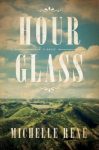
I wrote the first draft of my award-winning historical novel,Hour Glass, in sixteen days.You read that correctly—sixteen days. My experimental novella,Tattoo, was written in about three weeks. Both have been released in 2018.
Though I am intensely proud of this accomplishment, I’m not telling you this to brag. I’m telling you that you can do this, too.
“Sit down every day to write. Even if you don’t want to. A little every day.” – Michelle Rene
Sounds like a line you’ve heard before, right? Yeah, me too. It’s not that this is bad advice. Far from it. Many people find this the best way for them to consistently write draft after draft. But if you really want to knock that rough draft out of the park, I’m going to ask you to kick that notion to the curb.
I’m not magical; I’m a binge writer, and none of the ideas in this article are uniquely mine. Most of them are exercises I’ve stolen from other writers. I used to be just like you because I was led to believe novels should take years to write. I would write a chapter, go back and edit it, and then proceed to the next one. A first draft took me over a year to complete.
It wasn’t until I decided I really needed to finish my novel, I Once Knew Vincent, that I decided to shove my face in the cold, scary, deep end of the writing ocean. I went away to a writer’s retreat and forced myself to write as much as I could every day. I wrote the lion’s share of that book in six days, and those chapters were by far the best in the book.
Why is that?
Isn’t it counterintuitive that the chapters written in a whirlwind of typing be the best? I’m glad you asked, nebulous reader voice in my head. Let’s delve into that.
Why Write This Fast?
Nothing kills a book faster than never finishing that initial draft. A malaise sets in, often slowing a writer down to a crawl while they chip away over a long time and often give up entirely.
“Will I ever finish this book?” the writer asks, (fists raised to the sky for dramatic effect).
Maybe. Maybe not. That first draft is possible if you pick yourself up by your metaphorical bootstraps and do the work every day, but a large percentage of writers never cross the finish line. What a shame that is!
Strangely, there is a raw emotion that comes from writing something so fast you don’t have time to noodle it to death.
How excited are you when you first start fleshing out a story? How amazing does it feel to start naming your characters and setting up their scenes in your mind? Fan-freaking-tastic!
This is because you are in the beginning of abook affair.
Writing a book is like having a relationship. In the beginning, it’s like a honeymoon! You feel all the emotions. Love and pain and excitement and lust. Well, okay. Maybe not lust. Paper cuts hurt, so let’s not go there.
“Writing a book is like starting a new relationship.” Michelle Rene
The point is the first draft should be all elation and honeymoon. Leave the nitty-gritty for your fifteenth edited draft. You don’t want to be sitting in a rocking chair with your first draft complaining about how much he snores before you even get to edit. Taking years to write that first draft can land you in complacency town before you cross the finish line. Pour your heart and soul into the rough draft with reckless abandon.
“Pour your heart and soul into the rough draft with reckless abandon.”– Michelle Rene
“But nothing good can come from my sloppy first draft if I write it in a few weeks,” says the nebulous reader voice in my head that’s starting to sound whiny.
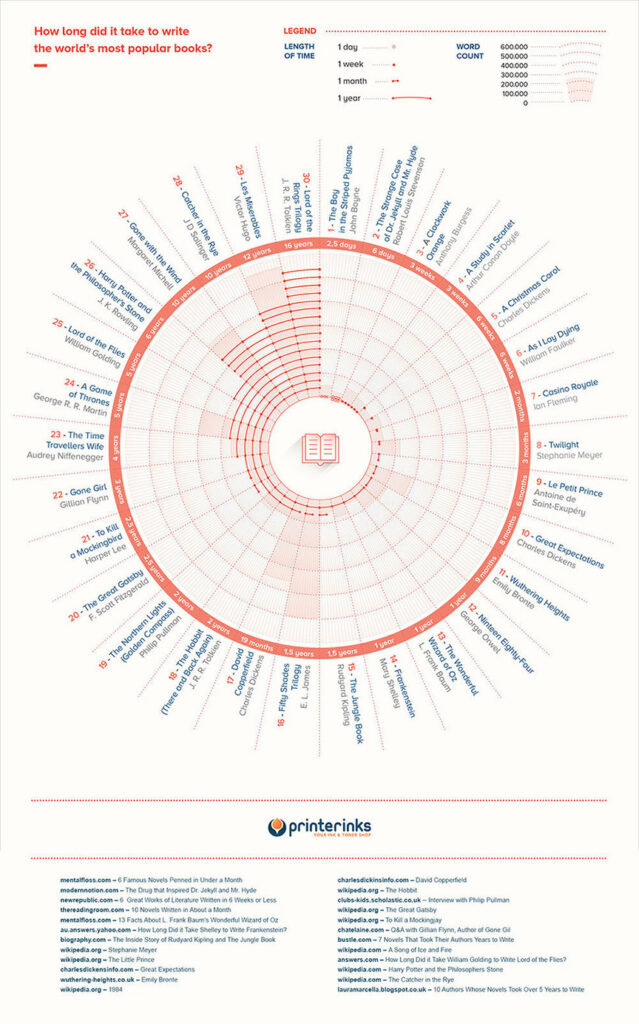
Please refer to the infographic below. It lists some of the most popular books and how long it took the writer to finish them. WhileLord of The Ringstook a whopping sixteen years to complete (no shocker there), I’d like to direct your attention to roughly a quarter of the chart that indicates books written under three months. If theBoy in the Striped Pajamaswas written in two and a half days, you can write something of quality in four weeks.
How Do I Start?
Let’s begin with talking about the snarky, three-hundred-pound elephant in the back of your mind. Your inner editor. We are going to bind and gag that jerk, and it may take fifty shades worth of rope because it’s three-hundred pounds and takes up a lot of headspace.
Sara Bale, an extremely prolific romance writer, has similar advice for your would-be-elephant editor.
“I think the biggest mistake an author makes when writing a rough draft is stopping and rereading/editing their work. The key is to keep moving forward and get the whole story out. Know the beginning and the ending. If you have those elements, the rest is easy.”
Sara Bale
“The key is to keep moving forward and get the whole story our.” Sara Bale
The passionate ideas come when the critic in our mind is silenced.
Your visceral idea is key, and I will not accept the old “I don’t know what to write about” excuse. You are here to pour your heart and soul into a story. If you are having a hard time with inspiration, here’s a handy dandy exercise to help that I stole from a writer’s workshop I attended.
Sit down with a piece of paper and a pen. Yes, a real piece of paper and pen. No cheating with keyboards. I know, I know. Your handwriting is horrible because all you do is type now. My handwriting looks like a serial killer’s ransom note, so I totally understand, but stick with me.
Next, set a timer for ninety seconds.
Hit start, write the first thing that comes to your mind and don’t stop until that timer goes off. No contemplating it. No editing your idea and wondering if Stephen King has already done it. He probably has. Just write, no excuses, for the whole ninety seconds.
Go ahead… I’ll wait…
You back? Okay. I’m not a betting woman, but I would put money on what you wrote was pretty damn good.
Whether or not that is the idea you run with doesn’t matter. It’s an exercise to get the creative juices flowing. Use that. Build your characters. Plot the story fast and loose. Fall in love with your story. Get down and dirty in that honeymoon phase…but not literally because remember the paper cuts. We talked about that.
And finally, outline! For the love of all that is holy, outline your story! Do not do this flying by the seat of your pants. That is a sure-fire way to crash and burn. It doesn’t need to be an in-depth outline. On the contrary, keep that pretty loosey-goosey, too.
My outlines are often little more than a few sentences for each chapter.
Time Management
Okay, you have your outline, your idea, and your story. Let’s do this. The clock begins when you type “Chapter One” or “Prologue” if you want to be fancy. Let’s use NaNoWriMo (National Write a Novel in a Month) rules as I find these to be the best guidelines: 50,000 words in four weeks.
So four weeks. That’s your mission.
Select a four-week span of time in your life that you can devote to writing. Don’t sabotage yourself by doing this during a family vacation or when it’s the busy season at work. Choose a month that will allow you some time to devote to this endeavor because it is important.
For that month, give up on being the best mom, husband, wife, etc. Let your family know that this is going to be what you are doing for this month, and they can have you back after it’s over. The laundry can wait. Order in food. Maybe shower because, well, hygiene.
Editor’s Note: I totally agree with Michelle. November can be an impossible time for many because of increased work demands, family demands for the approaching holidays, the doldrums due to shorter and shorter days. The main thing is to pick a time that works for you. It can be NaFebWriMo if you have to put in overtime starting in November for the holiday season, or NaJulyWriMo – if you are a teacher. Find a time period that works for you and stick with it! Put it on your calendar. Alert your friends and family.
I highly, highly, highly recommend you track your progress. Doing a rough draft during NaNoWriMo is a great idea. This happens in November, and the organization sets you up for a win. You have a word tracker, writer friends to cheer you on, and helpful articles when you get stuck. If November is not a good month for you, try a program like WriteTrack. It will help you keep up with your progress.
Insider secret: Don’t shoot for the minimum goal. If your tracker says you need to write 2,000 words that day, shoot for 3,000 or 4,000. It’s easy to fall behind only doing the bare minimum; but if you’re always ahead, you have a little breathing room.
The Black Hole of the Internet
Can someone say distractions? Turn those notifications off! Set your phone to do not disturb except for emergencies. Hang a banner on your doorknob with a picture of Gandalf saying, “Thou shall not pass!” Get away from the addicting vacuum of social media. It will be there when you get back.
“That’s all well and good if you are writing something you just made up, but what about people who need to research their content?” asks nebulous reader voice again.
WithHour Glass, I wrote a historical fiction novel about Calamity Jane. There was definitely some research involved there. I did as much as I could before the writing began, mainly broad stroke things: dates, places, and a few good details relevant to the story. Nothing more.
Research is the most unassuming trap in writing. You’re on a good writing jag, everything is flowing, and then you hit a spot where you need the name of a city or a date or a vocabulary word. You have to have that accurate information, right? So you switch to the internet and start researching. Well, that first page on a website leads you to another, which leads you to Facebook; and then before you know it, it’s been three hours, and you lost your momentum.
Broad stroke your research before you start; but while you’re writing, don’t research. If you need the name of a city, don’t go looking. Just write something like, “He rode into the sunset hoping his horse knew the way to {insert city name}.” Get the story down, and go back in later to fill in those brackets.
Write your story from the heart and with passion. Research and accuracy can be added later.
The Middle Stick
It’s right around the 30,000-word mark that this happens. The Middle Stick is what I call the point where your initial enthusiasm begins to wane, and your progress gets sluggish. What began as “yay, I’m writing a book” turns into “I don’t know if I can do this.” It happens to everyone.
This is where participating in programs like NaNoWriMo can be helpful. Having other writers in the same place can be encouraging, and they can hold you accountable. If you aren’t doing NaNoWriMo, I suggest getting a group of like-minded author friends to do this together. This is also where writing ahead of your minimum word count helps because The Middle Stick will almost certainly slow you down.
Here are some other helpful tips.
Try that writing something in ninety seconds exercise I mentioned earlier to get inspiration.
Go out of your comfort zone and experience something related to your book. For example, if you are writing a western, go see a rodeo. Get away from your computer.
Multi-award winning author, Janet Shawgo, has this to say about immersing yourself in your research outside the page when she was researching her book,Look For Me, set in the Civil War. “What helped me was putting feet on the ground at Gettysburg to get a feel of the area, what my characters saw, what they heard. To try on costumes true to that era. I walked some of the roads soldiers did in Virginia. If at all possible, put yourself there.”
Janet Shawgo Won the Chatelaine Grand Prize
Switch up your chapters. This is where outlining really helps you. If you are hitting a wall writing chapter thirteen, jump forward and write chapter twenty. Sure, you’ll have to go back to that chapter eventually, but this helps you jump over that block and continue to get your word count in.
I wroteTattooentirely this way. It’s made of seven parts of a story told chronologically backward. I didn’t write any of those parts in order. Not one. Yet, I still managed to piece them together in the end.
Just keep moving. The momentum will pick back up. You can do this.
Hurray! You Did It!
Out of breath and exhausted, you crossed that finish line. You did it! Rejoice! I told you you could do it!
Go celebrate. Treat yourself to a fancy dinner. Toast your deed with some friends. Eat a whole chocolate cake. I don’t care. Party it up because you managed to do what the vast majority of humans on this planet cannot do. Most people never dream about writing a book. Fewer attempt it. Only a small fraction actually finish a draft.
You are spectacular.
Now, put the book aside for at least a month (more like two). You will eventually go back and edit. You will fill in those empty brackets. You will allow that annoying three-hundred-pound editor elephant back into your life. But not right now. That’s for another day.
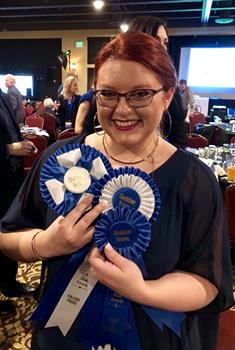
Michelle Rene and her Chanticleer Grand Prize Ribbons
Michelle Rene, the author of this blog post, is a creative advocate and the author of a number of published works of science fiction, historical fiction, humor, and everything in-between.
She has won indie awards for her historical fiction novel,I Once Knew Vincent. Her latest historical novel,Hour Glass, won the Chanticleer International Book Awards Grand Prize for Best Book. It was released on February 20th to rave reviews from Chanticleer, Kirkus and Publishers Weekly. Her experimental novella,Tattoo, was released on March 7th.
When not writing, she is a professional artist and self-described an all-around odd person. She lives as the only female, writing in her little closet, with her husband, son, and ungrateful cat in Dallas, Texas.
A special thanks go out to the authorsSara BaleandJanet Shawgofor contributing their writing expertise to help others.
Chanticleer Editorial Services – when you are ready
Did you know that Chanticleer offers editorial services?We do and have been doing so since 2011.
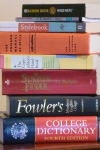
Tools of the Editing Trade
Our professional editors are top-notch and are experts in the Chicago Manual of Style. They have and are working for the top publishing houses (TOR, McMillian, Thomas Mercer, Penguin Random House, Simon Schuster, etc.).
If you would like more information, we invite you to email Kiffer or Sharon at KBrown@ChantiReviews.com or SAnderson@ChantiReviews.com for more information, testimonials, and fees.
We work with a small number of exclusive clients who want to collaborate with our team of top-editors on an on-going basis.Contact us today!
Chanticleer Editorial Services also offers writing craft sessions and masterclasses. Sign up to find out where, when, and how sessions being held.
We are excited to announce the Winners of the Tellables Writing Contest for Halloween “My Box of Chocolates” micro-stories!
Tellables is a new way to experience stories! They leverage the technologies of Alexa and Google Assist to help authors and storytellers engage audiences in new and exciting ways.
As a way of introducing audiences to the new technology, the founders of Tellables held a Halloween contest with CASH prizes for stories to broadcast on “My Box of Chocolates” on Amazon’s Alexa. The story had to be “bite-sized” at 280 words max although sometimes they will do a Part 1 and Part 2. Part 1 and Part 2 are each represented in the virtual ‘box of chocolates; by two pieces of the same type of ‘candy.’ The listener will need to hear both candies in order to get the full story. This is a fun thing to do with children (of all ages).
At Tellables, they often hear authors say they don’t have a smart speaker and/or they don’t trust them. We understand. But smart speakers and voice assistants are growing tremendously popular.
Now’s the time to begin experimenting with the possibilities of this new technology that is enjoying rapid market adaptation and will lead the way for more audiobook sales!
You might have access to an Alexa-enabled device and not even know it. Alexa isn’t only available on an Echo, Echo Dot, or Echo Show. You can access the Alexa voice assistant from most newer model Kindle Fire tablets, from your Fire TV, and from the Amazon Alexa or Amazon Shopping mobile app.
How to listen to the ‘My Box of Chocolates’ stories:
The common requirement is that you need to be logged in with an Amazon account.
If you do have access to Alexa, try out our “My Box of Chocolates” voice app. Ask Alexa to “open My Box of Chocolates.” If that doesn’t work as expected, try saying “Alexa, enable My Box of Chocolates” first.
Tellables invites you to savor this variety assortment, filled with delicious Halloween tales, on any Amazon Alexa-enabled device.
To experience this box of conversational stories, make sure to enable the skill by saying “Alexa, enable my box of chocolates.” After that, you can simply ask Alexa to “open my box of chocolates” whenever you have time to relax and enjoy a bite-sized story and matching virtual candy.
Kiffer’s Directions: Ask your Alexa or Dot or Device: ((Alexa or Computer) Please play “My Box of Chocolates” and then continue to interact with your device’s questions.
The device will say welcome to Chocolates and Stories and then go on to tell you about the Halloween assortment.
These Chanticleer AUTHORS received all TREATS — No Tricks from the current assortment from My Box of Chocolates from Tellables.
1st Place: PJ Devlin – Final Butter Cream – Amber
Amber gets a surprising and disturbing visit from someone who’s just dying for a bite of dark chocolate buttercream. “I turned on the lights and let an elderly woman enter. Her silky gray dress shimmered.“
P.J. Devlin is an award-winning novelist and short-story writer. She lives in Northern Virginia, but her heart and stories are rooted in Philadelphia. Follow her on Facebook at PJ Devlin Author.
2nd Place: Elana A. Mugdan – Encore Dark Chocolate Witch
Opal has a special customer, who ends up with a very special Halloween candy. “The moment she takes a bite, there’s a bright flash.“
Elana A. Mugdan is the author of The Shadow War Saga, a 5-book series of Young Adult fantasy novels. You can find out more about the author and purchase her books from her website at https://www.allentria.com/
3rd Place: Kelly Abell – Coiffed Confection
Candy mourns the loss of her grandmother but gets an unexpected visitation. “A loud bang from the front of the store made me jump.“
Kelly Abell is the author of internationally best-selling romances and romantic suspense. Her characters are filled with passion, power and purpose in predicaments that keep a reader turning the pages. She lives in Florida where she helps other writers by teaching workshops and sharing writing tips on her blog. You can also follow her on Facebook, Twitter, and Instagram.
Judges Nostalgia Award goes to Janet K. Shawgo for Dark Bitter Halloween Joy
A chocolatier gets a ghostly but joyful visit on Halloween night. “He moved around the shop to set a table for two with white linens, and a deepest red rose placed at the guest’s chair.”
Janet K. Shawgo is an author of the award-winning Look for Me series as well as the acclaimed thriller Archidamus. Born and raised in Amarillo Texas, Shawgo calls Galveston home. She has retired after thirty-six years of nursing, most of those in Labor and Delivery. Janet has crossed the United States as a travel nurse for twenty-three of those years. You can learn more about the author at her website. Follow her on Twitter at @JanetShawgo and Instagram at author_janetshawgo.
These authors won cash prizes and promotions from Tellables for their Halloween stories and they are helping to pioneer a whole new way of engaging readers and audiences.
Happy Halloween from all of us at Chanticleer Reviews, Editorial Services, and the Chanticleer Int’l Book Awards!
Join in at the next party…
Tellables next contest (no entry fee) is for their second Holiday 280 Words Writing Contest with cash prizes. Stay tuned for our announcement in early November!
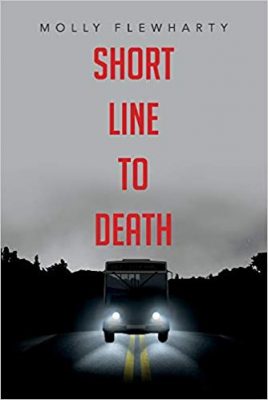
An upcoming divorcee has no idea that her life is about to change when she gets involved in a murder investigation in Molly Flewharty’s, Short Line to Death.
Madeline Williams moves from New York to the small town of Cross Keys, Pennsylvania. She hopes the change will do her good since she’s in the throes of a divorce. Madeline decides to take the bus over driving on the long commute to her Manhattan job. Traveling is lonely since she is the new kid on the block among a group of regulars. That changes when Tom Firemark, the handsome owner of The Opossum, sits next to her during their daily trips.
Madeline and Tom’s growing friendship shifts when they become eyewitnesses to a mysterious murder on the bus, which is the second murder that has occurred in the town over the last few months. Since Police Chief Billy West is over his head trying to solve the first crime, Tom, who has PI experience, takes it upon himself to do his investigations on this newest incident. Because Madeline was an innocent bystander at the scene of the crime, he invokes Madeline to join him in sleuthing.
Teaming together proves to be better than Madeline imagines as the two become more comfortable with each other amid processing a flurry of possible suspects. But as the puzzle pieces begin to fall in place, Madeline finds herself way over her head. Whether or not she can complete the investigation unscathed remains to be seen.
First-time author, Molly Flewharty, spins a host of red herrings in Short Line to Death. She pulls from her own experience commuting from Manhattan to Pennsylvania to create the small-town setting and accompanying atmosphere replete with a well-rounded mix of elusive characters. Top on that chart is Roberta Carlson (whose ultimate demise is shocking yet a welcome to those who were tired of her surly disposition) is at the center of Tom and Madeline’s investigation. Now with the most obnoxious person out of the way, sniffing out the murderous culprit may be tougher than the team anticipates.
Chapters filled with detailed descriptions of various Cross Keys establishments and homes alternate between the police chief’s frustrating search behind the death of the town’s miscreant, Bart Grickly; Tom and Madeline’s investigation; and Madeline’s struggles with her broken marriage and new-found feelings towards Tom.
Flewharty delivers a tension-filled mystery banquet of suspects ranging from ordinary people with personal problems to those we’re sure “did the deed.”
Short Line to Death will have mystery fans lined up to see what’s next from Flewharty. Highly recommended.


 If Jack London had written about hunting fantastic beasts in a fantasy-tinged “Great White North” during a gold rush, instead of real animals in the Klondike, he’d have created a hunter like Keltin Moore and a beast like the Ghost of Lost Tap.




















 Amber gets a surprising and disturbing visit from someone who’s just dying for a bite of dark chocolate buttercream. “I turned on the lights and let an elderly woman enter. Her silky gray dress shimmered.“
 Opal has a special customer, who ends up with a very special Halloween candy. “The moment she takes a bite, there’s a bright flash.“
 Candy mourns the loss of her grandmother but gets an unexpected visitation. “A loud bang from the front of the store made me jump.“
 A chocolatier gets a ghostly but joyful visit on Halloween night. “He moved around the shop to set a table for two with white linens, and a deepest red rose placed at the guest’s chair.”