
Author: S. J. Stanton

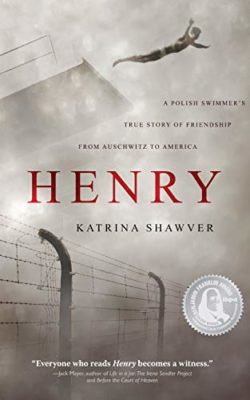
  • HENRY: A Polish Swimmer’s True Story of Friendship from Auschwitz to America by Katrina Shawver – Jewish Holocaust History, Historical German Biographies, Jewish History

    HENRY: A Polish Swimmer’s True Story of Friendship from Auschwitz to America by Katrina Shawver – Jewish Holocaust History, Historical German Biographies, Jewish History

    Katrina Shawver, a journalist for a Phoenix newspaper, was seeking a story for her weekly column. She had heard from a friend that a Holocaust survivor named Henry Zguda and his American wife, Nancy, lived in Phoenix. She called Zguda and was invited to come to his home, only a few blocks from her own. Shawver quickly bonded with both Henry and Nancy. Then she and Henry decided to have a series of weekly interviews, which she would draw on for her column and, later, for a book—this biography.

    The horror story of Henry Zguda, a Catholic Pole born and raised in Krakow, Poland, begins with Henry walking down the street toward the YMCA for swim practice in 1942. A Gestapo car screeches to a stop beside him. Two men leap out, arrest Henry on the spot, throw him into the car, and take him to prison. After several days of torture, a practice used by the Gestapo to obtain information (of which Henry had little), he is taken to the train station and shoved into a cattle car so filled with people that it is impossible to do anything but stand, shoulder to shoulder. The door is slammed shut, and the train pulls out of the station. Henry has no idea what fate awaits him.

    Most of his fellow passengers were Jews, which Henry was not, but under these circumstances, it made no difference. They did what they could to accommodate each other over days of travel, until they reached their final destination, Auschwitz. Many of the Jews would find themselves in the gas chamber in short order. Only those strong enough to work were allowed to live—at least long enough to finish building the camp.

    His story covers more than two years in Auschwitz and Buchenwald. As a young man, he is characterized by his courage and tenacity to live under the most horrendous circumstances and his valor and compassion in helping his fellow prisoners—most of whom he met there, and some who had been childhood friends in Krakow. Somehow, Henry never lost hope, which would have been a death knell…as it was for many prisoners. He characterizes himself as lucky, very lucky.

    Henry tells Shawver about his youth in Krakow. Most of all, his love for swimming. Henry was a member of the swim team at the YMCA founded and built by Americans. Despite the German presence, he had fun with his family and friends.

    It is with some reluctance that he begins to give her details of his years in the concentration camps, but that is what she needs to know. Supporting his memories are photographs obtained after the war as well as official cards recording his Auschwitz registration, train passenger lists, personal effects inventories, and records of money sent to him by his family. These offer interesting details of life in the camps, as do some of Henry’s more pleasant memories. Prisoners participated in theater performances and concerts for the prison staff and their families as audiences.

    As the interviews proceed, Henry intuits when it is time for him to tell Shawver what transpired as the camps’ main objective—killing Jews—was fulfilled. He explains how Jewish prisoners met their fate through such horrible means as being left, still alive, hanging from hooks in dark basements; being lined up in rows and shot to death in view of other prisoners, including family members; being told they must remove their clothing to have showers, only to be herded naked into the gas chambers (their clothing left behind as booty for the guards who led them to their fate); or being tortured to death by nonchalant Germans.

    But in 1944, WWII finally drew to a close. As American forces approached the concentration camps, the Germans fled. The prisoners were free! Some prisoners left on their own, while others awaited the Americans bringing food, clothes, medical care, and the means to go home. Henry returned to Krakow, to spend time with his mother and earn money for her to continue living there and for him to emigrate to America.

    It was difficult for Henry to relate his story, and it is difficult for us to read it. Still, both Henry and Shawver saw in this effort a purpose—to warn all people that they must do everything possible to ensure that the atrocities of WWII never occur again.

    Henry: A Polish Swimmer’s True Story of Friendship from Auschwitz to America won First Place in the CIBA 2018 Journey Awards for Memoir.


     

  • EVERYONE DIES FAMOUS by Len Joy – American Literature, Small Town Saga, Literary

    EVERYONE DIES FAMOUS by Len Joy – American Literature, Small Town Saga, Literary

    Tornadoes and bomber strikes rival one another in the destruction they leave behind, except that bombers have a predefined target, and tornadoes follow an opportunistic path—one that even experts cannot predict. Len Joy deftly shows what happens when a tornado hits the town of Maple Springs, Missouri, on July 18, 2003.

    A vicious whirlwind storm cuts a narrow path of destruction, sometimes turning one side of a street into rubble while leaving the other unscathed. Needless to say, the people of Maple Springs are changed forever in a matter of minutes.

    The stage is set with considerable color and evocative language. Joy breathes life into his characters of all walks of life: land developers, car dealers, teachers, police officers, military veterans, a couple of basket weavers, a tattoo artist, and even a former baseball legend turned jukebox restorer. The kind of people you find in small towns. They all know each other and often help each other. But they also hurt one another. They marry, they divorce, or maybe they don’t bother to divorce, and they gossip. Oh yes, they gossip. In Maple Springs, one can certainly see more than a little flavor of “Peyton Place.” That’s life in the ‘small town.’

    Dancer Stonemason is trying to manage the jukebox restoration business started by his son Clayton, recently killed in a car accident. Having already lost his wife to cancer, Dancer now lives alone in Clayton’s house. His other son, Jim, owns the successful Stonemason Chevrolet dealership and doesn’t find much time to visit, but does find time enough to sell his brother’s house.

    Dancer has to move out—jukeboxes and all, which he is trying to do with the help of a recent Iraq War veteran, Wayne Mesirow, who owns a truck big enough to carry the jukeboxes. No longer living with his wife Anita and their two children, Wayne hopes to join a touring rock group.

    Meanwhile, Anita is dating land developer Ted Landis, who bought an 1880s riverboat that is now docked at Landis Landing on the Caledonia River. Having spent a fortune repairing The Spirit of St. Joseph, Landis is throwing a major party, with music by the Confederate Pirates, the group Wayne hopes to join. But as the townspeople head for the river, thunder and lightning erupt, the clouds taking on an eerie yellow cast. The suspense begins to build.

    Back in town, the Stonemasons are transforming the Chevy showroom into a ballroom for a reception.

    Daughter Kayla is marrying Barry on Monday. With the work almost done, Jim and Paula head home. Minutes later, the wind hits the glass door so hard that Barry can barely close it. He and Kayla head for the parts storeroom, but then hear a banging on the door. People are calling out for help. They return to let a teenage boy and girl in—then go out to help a man and three women reach the showroom.

    Barry sees a “swirling white spiral…hovering over the mall like an alien spacecraft…” It “pinballs down Main Street…chewing up the Tastee-Freeze, leaving chunks of concrete, twisted rebar, pickup-stick configurations of aluminum siding…” The huge Stonemason sign is ripped down. Then a car skids into the drainage ditch. Barry and Kayla know they must help the father holding his young son and the mother with an infant in her arms clambering out of the car.

    Dancer, at home, is surprised when he calls Russell for dinner, and the dog doesn’t come. He finds Russell perched on a log in the river, which is now a torrent of water. Dancer has to rescue Russell; he’s Clayton’s dog. Held by a rope tied to his belt loops, he slides into the river.

    Soon the sun comes out, and the sky is blue once again. The tornado has left town. And this is just the beginning of the book. What happens to the town – and its inhabitants, make this a story you won’t quickly put down. Highly recommended.


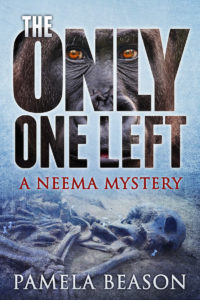
  • The ONLY ONE LEFT (The Neema Mysteries, Book 3) by Pamela Beason – Thriller/Suspense, Animal Cozy, Police Procedural

    The ONLY ONE LEFT (The Neema Mysteries, Book 3) by Pamela Beason – Thriller/Suspense, Animal Cozy, Police Procedural

    While spending some time with his sweetheart, animal behavior scientist Grace McKenna and her adopted family of gorillas, Detective Matthew Finn finally endures a kiss from Neema while keeping an eye on the huge silverback Gumu. He accepts a ‘toy’ from their baby, Kanoni. But upon further inspection, Matt and Grace believe the object might be part of a human finger bone. Where did it come from? How did it get in the gorillas’ remodeled barn? The homicide detective knows he’ll need to investigate, but just then, his cell phone chirps.


    Desk Sergeant Greer of the Evansburg, Washington, Police Department tells Matt to get back on duty and head directly to the Gorge Amphitheatre, where the Sasquatch Festival has just ended. A car belonging to a 17-year-old girl, last seen by her parents in Bellingham, Washington, three days earlier, has been found abandoned next to a tent in the Amphitheatre campground.

    Three days earlier, Darcy Ireland and Mia Valdez had hatched a plan for adventure. They each told their parents that they would be spending the weekend together as volunteer workers for the Ski to Sea race from Mt. Baker to Bellingham. In fact, they would go to the Sasquatch Festival and camp there over the Memorial Day weekend. The only problem is Darcy’s car is still at the venue. Where did the girls go?

    Matt Finn’s sleuthing brain works fast and hard. He doesn’t take it easy on his body, either—missing sleep as well as meals until his growling tummy wakes him up. Little by little, clues begin to emerge, as others who had been at the festival are found and interviewed. One reported that he had seen the girls leave with a couple of dudes on motorcycles midway through the festival, seemingly happy as they rode off for what they had been told would be a picnic. He wondered why they hadn’t returned. Detective Flynn knows from experience that every hour the girls are missing decreases the chance of finding them alive.

    While the law officials and the parents still know nothing about the missing girls’ whereabouts, we readers do. Darcy wakes up the next day, her face scalded red by the glaring sun. Lying in a field in the middle of nowhere, Darcy’s backpack and cell phone are missing. But she’s not alone. The first sound she hears is that of a rattlesnake. Mia awakens to semi-darkness, in a shed with a floor of dirt and a security door locked from the outside. There is more, a lot more, but we’re not about to give any more away!

    With the power of her compelling descriptions and nail-biting suspense, Beason keeps her readers hanging on the edge.

    Pamela Beason continues to keep us turning the pages with her stellar mysteries. Each one seems hard to top until she delivers the next.  Readers unfamiliar with this outstanding thriller author will want to catch up with this series (she has several!), click on the titles to read our reviews: The Only Witness and The Only Clue.

    The Only One Left won First Place in the CIBA 2018 CLUE Awards for Mysteries and Suspense.

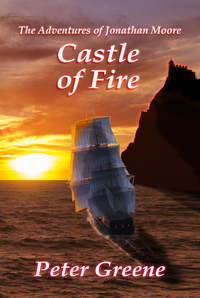
  • CASTLE of FIRE (Book 2 of The Adventures of Jonathan Moore series) by Peter Greene – Sea Adventures Fiction, War & Military Fiction, Children’s Action/Adventure

    CASTLE of FIRE (Book 2 of The Adventures of Jonathan Moore series) by Peter Greene – Sea Adventures Fiction, War & Military Fiction, Children’s Action/Adventure

    Midshipman Jonathan Moore scrambles aboard just in time for the departure of the HMS Doggard (a horrible name, soon replaced with her original name, the Danielle). The latecomer is welcomed by some of his friends from an earlier voyage on the HMS Paladin, including Seaman Sean Flagon, Lieutenant Thomas Harrison, Bosun Steward, and even Captain William Walker.

    Jonathan had not expected to be on this voyage, as he was only recently reunited with his father, Captain (soon to be Admiral) Nathaniel Moore, who had been captured and imprisoned by the French earlier in the Napoleonic Wars. This left Jonathan orphaned on the streets of London until he and Sean were pressed into service on the Paladin. But Captain Moore escaped and returned to England. While loath to see Jonathan leave, he eventually realizes that he must allow his son to follow in his footsteps in the Royal Navy.

    After meeting with Captain Walker, Jonathan finds his quarters in the cockpit, shared with the other midshipmen, a rude Wayne Spears, and his sidekick Timothy Lane. Jonathan thinks he will simply avoid the two and spend time with Sean and his other friends, but when Spears pushes Sean to the floor, enmity ensues.

    The Danielle’s arrival in Nassau brings relief. Delain Dowdeswell, whom Jonathan had befriended on an earlier voyage to Nassau, is spotted rappelling down a cliff overlooking the harbor—the adventurer that Jonathan and friends already know. Delain’s sisters, Rebecca and Penelope, deliver an invitation to Captain Walker from their father, the governor, to dine at the mansion, bringing his officers and Sean. At dinner, Jonathan is paired with Delain, Harrison with Rebecca, and Sean with Penelope, whose company they enjoy even more than the scrumptious food. Lady Dowdeswell asks the captain if her daughters can be accommodated on the ship for its return trip to London, where they are to receive further education—a request happily agreed to by all except Delain, who fears an end to her adventuring.

    On the balcony after dinner, Jonathan gives Delain a silver necklace with a dolphin pendant that he had bought in London for her. Her delight is interrupted by Spears’s intrusion. Harrison approaches, fearing trouble, but Jonathan remains cool. It is Delain who finds revenge by “accidentally” tromping on Spears’s toe with her sharp heel. Spears will not forget this, nor his desire to end Jonathan’s career in the Navy, or perhaps his life altogether.

    Before the Danielle departs in search of pirates, the captain agrees to take Delain and her teacher, along with Jonathan and Sean, to a nearby island where they hope to see turtles hatch and make their run to the sea. They are rowed ashore by marines Hudson and Hicks, who will stay overnight with them until the Danielle returns. Delain and Jonathan arrive in time to help the tiny turtles reach the sea by chasing away the seagulls. Delain is a delightful, resourceful young woman who manages to be at the center of everything that happens. What the trio of Jonathan, Delain, and Sean discover in the ancient “Castle of Fire” and its secrets will have readers holding their breath!

    Peter Greene has done it again—another well-penned, colorful, action-packed tale to be read for pure pleasure. Make sure you don’t miss Books 1, Warship Poseidon and 3, Paladin’s War. Highly recommended!


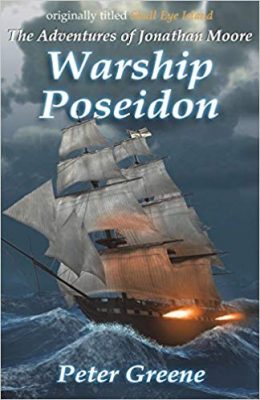
  • WARSHIP POSEIDON (The Adventures of Jonathan Moore, Book 1) by Peter Greene – Coming of Age, Maritime War, Treasure Hunt – Action / Adventure

    WARSHIP POSEIDON (The Adventures of Jonathan Moore, Book 1) by Peter Greene – Coming of Age, Maritime War, Treasure Hunt – Action / Adventure

    Author Peter Greene often read to his two children at bedtime. But one night, the bookshelf held nothing that enticed them. So, as he explains in the Acknowledgements to this book, he decided to tell them a story. The first words that came out of his mouth were: “Twelve-year-old Jonathan Moore lived in a three-sided wooden box at the end of a dark and filthy alley.” Thus was born the title character of The Adventures of Jonathan Moore, who Greene decided should be “as normal and as human as any real child,” whether in the nineteenth or the twenty-first century.

    In England of the early 1800s, help for orphans was the duty of family or church. When twelve-year-old Jonathan Moore’s mother dies, and he hears nothing from his father, a Navy captain, he shuns appealing to either family or church. Thus, he finds himself homeless on the streets of London. Fortunately, he makes friends with a boy of similar age, Irish-born Sean Flagon. Together, the boys manage to sweep enough London chimneys to keep them from starving, until one rainy day when first Sean and then Jonathan are snatched by a group of men and soon find themselves in a cage strapped to a cart headed for the Chatham docks. They’ve been “pressed” into service on one of His Majesty’s warships, the Poseidon, which they soon discover isn’t such a bad lot at all.

    The two boys look in awe at the rows of cannon (cannon being both singular and plural in England). And when shown to the closet of a room that is to be their new quarters, they realize that, though tiny, it’s dry, and there are rope hammocks to sleep in, wrapped in blankets. That certainly beats a leaky wooden box in an alley, with a piece of board for a cover. Better yet, they’re soon sitting at tables on the main deck, where hot fish stew is served for dinner (as it is most days, they soon learn), accompanied by hardtack or softtack (hard bread or rolls). The next morning Jonathan awakes to see huge white sails unfurled in the wind. The Poseidon is underway.

    Much adventure and not a little danger await them, from one side of the North Atlantic to the other. After all, England is at war against France, and Napoleon Bonaparte has many fine French warships. One of them is the Danielle, which the Poseidon and her crew encounter more than as they make way from Lisbon to the Bahamas.

    The aim of both these enemy warships is to search for an ancient Spanish treasure chest, which an equally ancient map indicates is buried on Skull Eye Island. On peaceful days at sea, there are lessons to be learned about being a seaman—taught aboard ship by experienced sailors, junior and senior officers, and even Captain Walker. The boys’ lessons also include fencing and swordsmanship, which stand in good stead when they must battle the French crew aboard the Danielle.

    This thrilling tale of high adventure is not without an element of poignancy, however. Jonathan senses that several on board the Poseidon knew or know about his father, Captain Nathaniel Moore, who the boy had assumed was dead. They seemed to recognize him by name, and they treat him with more caring and respect than the other young boys, including his friend Sean. Yet, they consistently change the subject when he tries to question them.

    Exciting and fast-moving as Warship Poseidon is, the tale is rendered even better by its author’s skill as a storyteller. Greene has thoroughly researched this era—including its shipbuilding, the administrative management of both English and French Navy vessels, the design of the warships themselves, and how their crews lived aboard them and battled from them. The story is presented in infinite detail, painted in vivid color, and written in a literary style. Much care has gone into the characters’ speech—emulating the language of the time while ensuring that it can be understood by its twenty-first-century readers, whether they be young or old—since this tale is one to be read with pleasure by all generations.

    To Peter Greene we would say—in British parlance both then and now—”Huzzah! Huzzah! Huzzah!” So, have great fun reading Warship Poseidon and then proceed without delay to Books Two and Three: Castle of Fire and Paladin’s War. But don’t stop there! Mr. Greene declares there may be a prequel in the works as well as another type of series beginning!


  • LOVE and OTHER CONSOLATION PRIZES: A Novel by Jamie Ford – Family Saga, Asian American Literature & Fiction, Historical Fiction

    LOVE and OTHER CONSOLATION PRIZES: A Novel by Jamie Ford – Family Saga, Asian American Literature & Fiction, Historical Fiction

    In 1902, the year of the Boxer Rebellion in China, five-year-old Yung Kun-ai watches as his mother buries his newborn sister in a tiny grave that she has dug with her fingers. The starving mother hadn’t been able to feed her. She kisses her son and gives him her only possession, a filigreed hairpin, then tells him he must remain in the cemetery until his “uncle” comes to take him to America, to a new life in a new world. “This is my gift to you,” she says as she shuffles away.

    These words, and the poignant story that follows, bring to mind two words from the title of author Jamie Ford’s New York Times bestseller first novel—‘bitter’ and ‘sweet’. This is his third…worthy of equal praise.

    Yung spends that chilly night shivering, in fear of the nearby fighting between rebels and soldiers, and in doubt of his future. But his mother’s gift does indeed come to pass. A voyage of many weeks in the hold of a freighter takes him to Seattle. His early years there are not easy, however. Fathered by a white missionary, he is a half-breed and the brunt of taunting and worse by both his peers and his elders. Nonetheless, he ably gains an education, takes the name of Ernest Young, and begins to earn a living as the twelve-year-old houseboy and driver at a high-class brothel called The Tenderloin in Seattle’s Garment District. The other occupants—servants as well as the ‘working girls’—become the family he has yearned for. Some years later, he has his own family with Gracie, a Japanese immigrant known as Fahn when he met her (for the second time) at The Tenderloin.

    The story hops back and forth between the first and seventh decades of the century, centering on Seattle’s Alaska-Yukon-Pacific (AYP) Expo in 1909 and the city’s World Fair in 1962. A raffle at the former is what brings Ernest to The Tenderloin. During the latter, Ernest and Gracie’s daughter Juju, a journalist, has been asked by her editor to write a then-and-now story of the two fairs, based on interviews with old-timers who have been to both. Her primary interviewee is to be her father, she thinks, but he stalls her, offering only tidbits—nothing that would put her story on the front page. Why is he so reluctant? Is there a tale he doesn’t want to share, not only with the newspaper’s readers but even with his daughter?

    This historical novel is brought to a literary level not only by the author’s expertise with language but also by the extent of his research into the facts around which the story is woven. In an Author’s Note, Ford explains that his inspiration for writing is a “never-ending appetite for lost history—the need to constantly turn over rocks and look at the squishy things underneath.”

    For this novel, one of those rocks was the 1909 Alaska-Yukon-Pacific Exposition. From yellowing newspaper articles relating to the Expo, he learned that both the suffrage movement and “social evils” such as brothels (not only the moral evil but the spread of syphilis) were at their height in Seattle at that time. One article told of a child (named Ernest), who was donated by the Washington Children’s Home Society as a raffle prize at the AYP. Another described a climb up Mount Rainier by Washington suffragettes. Much was written about the plight of East Asian immigrants, economically forced into servitude and prostitution. Jamie Ford drew on these articles and other historical documentation to create this touching story and to bring to life its colorful and accurately drawn characters.

  • The PLACE of QUARANTINE by Vadim Babenko – Astronomy of the Universe, Russian Dramas/Plays, System Theory & Physics, Sci-Fi

    The PLACE of QUARANTINE by Vadim Babenko – Astronomy of the Universe, Russian Dramas/Plays, System Theory & Physics, Sci-Fi

    Theo awakens to a sound, which he likens to that of a trembling copper string. He finds himself midway up a stairway and realizes that the sound emanates from an ordinary fluorescent tube, about to burn out. He climbs to the next floor, where a door is open. A woman introduces herself as Elsa and welcomes him in.

    Not remembering anything, or knowing where he is, Theo asks Elsa. Her answer confounds him. He is in their apartment, in a place called Quarantine. In support of her response, she hands him a laminated paper that reads, “WELCOME. YOU HAVE EXPERIENCED CORPOREAL DEATH FOR THE FIRST TIME. THE DEATH OF THE BODY IS NOT AS SIGNIFICANT AS YOU MIGHT THINK. THERE IS NOTHING TO FEAR.” Really? Theo goes cold. Memories begin to emerge—a gunshot and terrifying pain, a woman in tears, the old streets of Bern. Then it all fades.

    Vadim Babenko, Russian-born physicist and businessman, left his former careers behind to become a writer of fiction—in The Place of Quarantine, thought-provoking fiction that begs us to consider what the reality of life truly is. In this effort, he draws on principles from the work of renowned researchers, such as Italian physicist Giuseppe Vitiello, to support the protagonist, Theo’s work, in particular, his concept of “the application of quantum field theory to the modeling of human memory and intelligence.”

    Yes, science plays a significant role in this book, but it’s a supportive role, a means to an end: our consideration of the possibilities of life beyond that which we experience on Earth, and of the regeneration of our knowledge and memories, and their further development to benefit the inhabitants of the place of a subsequent life. Theo is assigned an advisor/mentor/friend, called Nestor, to help him with the task of reviving the memories of his renowned, but uncompleted research on Earth. His knowledge and intelligence are needed in Quarantine and perhaps beyond. Since the particular vocabulary of physics and metaphysics is not familiar to many of us, a glossary of the terminology is at the reader’s fingertips.

    The science, however, is interwoven with the stories of characters from Theo’s very international first life—in particular, a beautiful young Asian woman, Tina, whom he met and loved in Bangkok and yearns for even in Quarantine; and a Russian businessman named Ivan Brevich, who is consumed with revenging the murder of his beloved wife, Nok. In Quarantine, his roommate Elsa adds a human element to his life, making his breakfast of coffee, fried eggs, and toast, and generally being his companion, although as phantom beings in a world of images. Nestor, who is but a face, with a voice, on the wall screen, is a friend as well as an advisor and research colleague.

    As Theo comes to believe in what his research is telling him, he becomes increasingly obsessed with finding Tina, if not in Quarantine, then in whatever life awaits him next, if indeed one does. Can he be satisfied with continuing his work for the benefit of Quarantine, or must he try to prove his belief by taking the chance to move on?

  • The CRIMINALIST: A Novel of Forensic Science Suspense by John Houde – Thriller/Suspsense, Mystery, Sex-Slave Trade

    The CRIMINALIST: A Novel of Forensic Science Suspense by John Houde – Thriller/Suspsense, Mystery, Sex-Slave Trade

    Beautiful, blond Russian photographic models and half-sisters, Anna and Vika, are excited, but also a bit nervous, as their trans-Atlantic flight reaches its destination of Los Angeles. Vitaly, their photographer in Russia, has sent them at the request of his brother, Mikhail, who will photograph the sisters at beach locations along the Pacific Coast near Santa Barbara.

    Mikhail—a fiftyish-looking bodybuilder with a salt and pepper goatee—meets the sisters, and they are soon heading north, the girls transfixed by the sights of Los Angeles and the California terrain en route to their new venue. Mikhail drops them off at a motel, suggesting that they rest up. This they do, but they awaken to growing needs for a fix—alcohol for Vika, heroin for Anna. Mikhail returns and takes Vika with him to pick up the necessary booze, needles, and drugs. He’ll pick them up in the morning for a shooting day at the beach.

    In this suspense-filled novel, board-certified 25-year veteran criminalist John Houde shares his knowledge in this field—much of it published in the Journal of Forensic Sciences and other professional venues—with both young adult and older readers seeking an exciting tale of crime and murder investigated at crime scenes and in crime labs of California’s police and sheriffs’ departments. Evidence gathered by these organizations comes to be used by the FBI to bring down an international ring of criminals engaged in human trafficking of young women. The crime and mayhem are lightened by a little American-Russian romance and the close relationships that develop among the ‘good’ characters.

    Houde intricately weaves many threads into his story, with parts played by colorfully crafted characters, among them the Russian trio; Santa Barbara Police Department criminalist Paul Connert, who is determined to help Vika find her missing sister; SBPD officer Kyra and her partner, Tina, a University of California-Santa Barbara graduate student, whose thesis involves research on the method of nanoparticle-mediated medication delivery to treat drug and alcohol addiction; and a crime investigator turned criminal right under his coworkers’ noses.

    What makes Houde’s novel most fascinating, however, is his skillful use of accessible language to enable his readers to enter the contemporary world of criminal investigation and see how forensic evidence is collected, examined, and used to solve crimes that might otherwise never be solved. If this book piques your interest in this scientific field, you’ll want to read Houde’s Crime Lab: A Guide for Nonscientists.

    The Criminalist won First Place in the 2017 CLUE Awards.


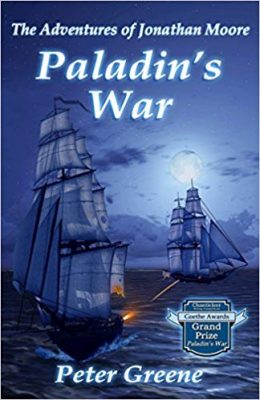
  • PALADIN’S WAR, The Adventures of Jonathan Moore, Book 3 by Peter Greene – Historical Fiction, Y/A Action/Adventure, 19th Century

    PALADIN’S WAR, The Adventures of Jonathan Moore, Book 3 by Peter Greene – Historical Fiction, Y/A Action/Adventure, 19th Century

    Grand Prize Winner for Goethe Awards: Paladin's War by Peter GreeneThe magic of living in 19th century England comes to life in the early chapters of Peter Greene’s delightful, but also exciting, story—with British Navy Midshipman Jonathan Moore and daughter of the Governor of the Bahamas, Delain Dowdeswell, enjoying the fashionable new treat of ice cream, then joining their friends and family members at the boat race in Dover on a beautiful day. Granted, that wasn’t how everyone lived, and even these special few lived daily lives far less comfortable than do most ordinary people today. But they didn’t know that.


    Jonathan is the son of Admiral Nathaniel Moore, who had been imprisoned in France during the Napoleonic wars. This happenstance orphaned the boy, who lived a sorry few years on the streets of London until he was found by his father’s friend, Captain Walker. The admiral was eventually rescued, and he and Jonathan were reunited. Delain and her sisters, Penelope and Rebecca, had been sent by their parents to live with the Walkers, who, with the help of Barbara Thompson, were tasked with teaching the sisters to become ladies. That seems unlikely for the irrepressible, fourteen-year-old adventuress, Delain, who once stowed away on the HMS Poseidon, from which she fired more than one cannon shot in battle!

    Shortly after the race at Dover, however, the young midshipman, also fourteen, boards the HMS Paladin, along with his former street friend Sean Flagon, soon to become a Marine captain, board the HMS Paladin, leaving their friend Delain behind as they head straight into an adventure way beyond their expectations. Not surprisingly, Delain soon finds herself in a spy adventure right in London. And perhaps not so strangely for these three musketeers, their adventures overlap.

    Greene paints not only the scenes in London but those on the Mediterranean, the Adriatic, and even the Black Sea with vivid color and action. He allows us to experience life on the sailing ships of His Majesty’s Royal Navy, telling us what the officers and crew wear, what they eat, where they sleep, how they talk, and especially what they do. As Peter Greene writes in his Acknowledgments, he “hoped to create a series that would capture the excitement and thrill of being on one of His Majesty’s wind-powered warships in the [Lord] Nelson era.”

    The action on the HMS Paladin, as well as her sister ship, the HMS Echo, mostly unbeknownst to each other, rise to a fever pitch as they find themselves engaged in an explosive battle not with the French, but with the Russians and even the Turks! As you might guess from the overall tone of Greene’s story, the British, at least most of them, live to return to England.

    This book was such fun to read. I’m hoping Peter Greene will give us a Book Four. Meanwhile, those who haven’t read Books 1 and 2 of The Adventures of Jonathan Moore, Warship Poseidon, and Castle of Fire, as well as a number of earlier books, will have some good reading to tide them over.

    5 Star Best Book Chanticleer Reviews round silver sticker


  • CATARI: A Novella by Karl G. Larew – Mystery, Psychological, Literary

    CATARI: A Novella by Karl G. Larew – Mystery, Psychological, Literary

    Maxwell Roux introduces us to his story with a Prologue, beginning with a minds-eye picture of a grand house in New Orleans. It is a soft, blossom-scented spring evening. From his hiding place behind a tree, he sees Catari step out on the wrought-iron balcony, fan in hand. Her gown is unbuttoned at the top, revealing her pale complexion glowing in the moonlight, contrasted by her dark-brown eyes and hair. Max had flown down from New York late that afternoon to surprise her, but he chooses to enjoy her beauty from the solitude of the dark garden for a moment before their blissful reunion ensues—marred only by the unpleasant gaze of her step-father.

    This sketch is now a memory of what had been a happy engagement—until Max unforgivably accused Catari of having an ungrateful heart, as Enrico Caruso sang of in “Core n’grato,” a song both of them knew and loved.

    The story begins when Max is called to another grand house, in Fontano, Italy, the home of Catari’s beloved Gran’papa, Il Barone di Fontano. He hears the Requiem Mass sung by a local choir at the funeral of his beloved Catari—only 27 years old—and sees her casket placed in the Fontano Crypt on the grounds of the family villa. It is there that he hears the gossip that Catari was drunk when she fell into the pool at 2:00 AM, as well as the comment by her step-father, Hugh Fontane, that Max, as nothing but an “ex-boyfriend,” has no right to be present. But the Baron had invited him to come, and then to stay at the villa. Later that evening, he and Max talk as friends about their beloved Catari. Max had visited the villa with her several times, and the two men like and trust each other. Finally, fatigue sends them to bed—Max in the room where he had slept before.

    Max awakes at 2:00 AM, somehow urged to go to the pool. He senses Catari’s presence and hears her voice, “I did not want to die. I did not want to die like this.” He hears his own voice, “I’ll find out…how and why, Catari.”

    Thus is this sad love story transformed into a murder mystery, its solution sought by Max, Darlene (Catari’s close friend), and the Baron. Larew’s tale is filled with family history, dating back to the Fontane brothers who fought in Napoleon’s Army in the conquest of Lombardy and were rewarded with the land on which the villa stands; the Fontano brothers who served in the Italian Resistance during WWII; and the Fontano family’s current history in the making. The Three Musketeers, as they decide to call themselves, question the servants and several villagers and search the property inside and out. They engage the help of the family doctor, who had examined the body and found a lesion on the back of Catari’s head. The doctor does not believe that she was drunk. They work with the Chief of Police, who is intrigued when he learns about the pilfering activities of the servants.

    As he has done in previous books of greatly different natures—their characters ranging from WWII military families to Good and Bad vampires—Karl Larew skillfully brings his characters to life. In Catari, he artfully draws not just their natures, but oddities of their physical features, speech, and movement, such as town gossip Madame Cavalli, who finally runs out of words, and the rude and overbearing Hugh Fontane, bursting into the villa declaring that he will have the Baron declared incompetent, thereby revealing his own incompetence. Larew’s knowledge of military history stands him in good stead, as well.

    Max fulfills the poolside promise he made to the ghost of Catari, to “find out…how and why,” but I won’t spoil the how and why for the reader. Nor will I tell you what happens to the Three Musketeers. I’ll say only that, for many reasons, this book offers a good read.