The 2024 JOURNEY Book Awards for Overcoming Adversity Narrative Non-Fiction Long List will be published soon!
The Ozma and Goethe Awards both close at the end of July! Don’t let your History become a Fantasy!
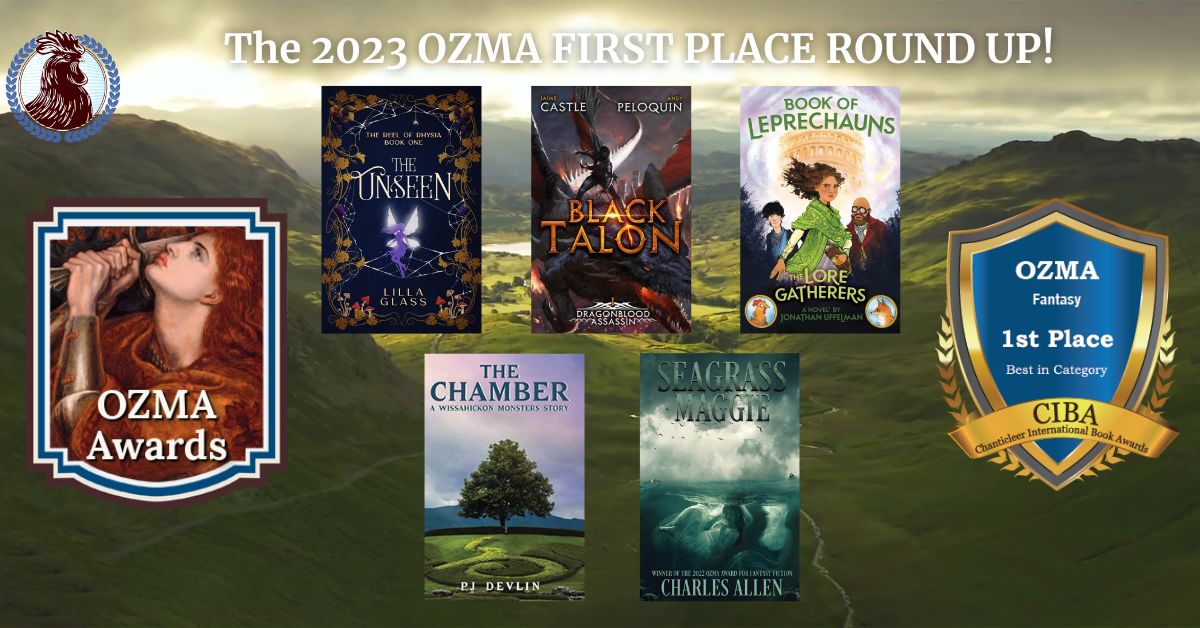
We’re delighted to continue promoting the First Place Winners in our brand new “Round Up Articles” here, and our Grand Prize Winners in the Chanticleer Int’l Book Awards Hall of Fame Articles!
These are the promotions that have come out so far!
We’re committed to maximizing our authors digital footprint through long tail digital marketing. Through our prized Editorial Reviews, we do this with our Chanticleer Under The Hood SEO Boost.
We use the same technology for our CIBA posts combined with reposting. A lot of reposting. Every time an author’s book advances on our list we promote it on our website, social media, and in a newsletter blast. Why?
Your book is worth being discovered!
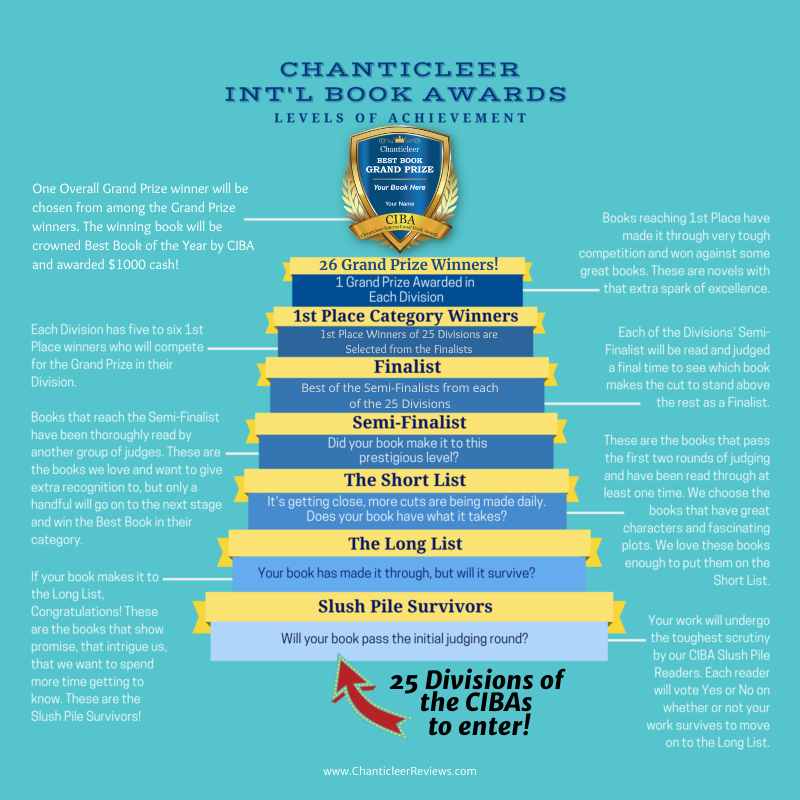
You put in so much work to create this book, we want to treat it with the respect and care it deserves! That’s why we take you through the Levels of Achievement.
Our normal posts tend to have double the response and interaction rate of comparable businesses. The CIBAs posts announcing when work advances in the Book Awards is five times greater than our regular posts and still double that of comparable businesses that run writing competitions. And that is for every Award post that goes out. The way we do this is simple.
First, we give each division breathing room on Social Media, on our high traffic website, and in our Newsletter. The consistent promotion and spaced promotion keeps every post prioritizedinstead of devalued by search engines for over-posting.
We also try to tag each winner on Facebook within their CIBA divisions. Again, the spacing prevents Facebook from devaluing our posts and lowering your exposure.
Under the Hood with SEO
Publishing is the Hub of Technology. There’s a lot great at Chanticleer, but our emphasis on being ahead of the technical curve is something we pride ourselves on. Our Robust SEO system that we use for both our CIBAs and our Editorial Reviews are the cornerstone of using technology paired with promotion.
You can see the article we put together specifically on the All In One Search Engine Optimization Tool (AIOSEO) we use here.
While most SEO tools recommend a score between 60-80, we always strive to exceed that, with many of our Book Award posts receiving a score over 90. We do this through our rigorous attention to detail surrounding the optimization of heading distribution, sentence length, alternative text, key phrases, meta data, tagging, and much more. There’s no replacement for basic elbow grease when it comes to the secret sauce that maximizes our posts so that web crawlers love them and promote our authors’ writings as much as possible. We know from client feedback that it really makes a difference!
Human Beings Make the Difference
A rare photo of the Chanticleer staff all in one place. And, yes, that is a bag pipe under the table.
We are a small business with huge reach that works hard to address every question, email, and comment we receive directly with care, empathy, and expertise. Putting together an internationally attended conference with authors from India, Australia, Portugal, the UK, and other countries takes hours of dedication and careful planning. We bring that same energy and enthusiasm to the CIBAs and promoting the books submitted to us year round
Most of all, the Chanticleer Int’l Book Awards is a labor of love!
Love of Books, love of words, love of storytelling, love of authors,
And love of the writing community!
Thank you to everyone who submitted to the 2023 CIBAs and to the outpouring of submissions that have come in to the 2024 CIBAs already! Every year the quality and intensity of the competition is better than the year before, and we are always blown away by the incredible work you send our way.
Thank you for making Chanticleer possible and trusting us with your work!
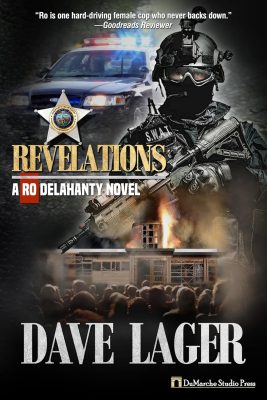
Ro Delahanty bears heavy weights on her shoulders—a decades old conspiracy, the complexities of polyamorous love, and troubling family secrets—all of which she will begin to face in Revelations, book 6 of Dave Lager’s Ro Delahanty series.
The wealthy, powerful Pribyl family is up to something sinister in their new scrap shipment business, Ro is sure of it. But she has to prove it to herself before she can even start to convince anyone else. And as much as she’d like to dive head-first into that mystery, she has many more problems to solve as a Fort Armstrong County Sergeant Deputy.
An unsanctioned party threatens to become a dangerous mob, setting fire to a half-constructed house. Ro’s bold, decisive nature comes under fire from a rival at the Sheriff’s office. Worse, a major change in that office could upend the foundation of Ro’s life and even rob her of the comradery she and her colleagues rely on.
All the while, Ro is troubled by matters of the heart as much as matters of the badge.
She realizes that her arms-distance flings with two charming men have turned into something more—a kind of love. Tag and Foxtrot make her confront these feelings directly as they both test the boundaries of their relationships. Ro must stay true to what she needs, but fears what might happen if she opens more of herself to them.
Soon, Ro learns that she wasn’t the only one in her family with a taste for multiple partners. And when an uncovered secret threatens to tear apart the bonds she’s spent a lifetime building, she, her brother, and her father try to reconcile this revelation with the memory of the woman they all loved.
As the structure of Ro’s life starts to turn on her, she’ll have to rely on those she can trust.
Lager imbues each character with a distinct personality, compelling in their flaws and virtues alike.
This story frequently steps into the past to slowly build up a grand criminal enterprise at the heart of Ro’s mystery. Readers get to see how it was all shaped by the ambitions, fears, connections, and hearts of people across decades. These charming, unique characters engender a real sense of personal history to the setting of Lee’s Landing and make it easy to care about the fates of both heroes and villains.
Ro frequently discovers that her connections to other people are deeper and more complex than she ever could have imagined.
Her struggles with emotional intimacy make her both an effective parallel of some of the characters who define her past, and an endearing protagonist in her own right.
And while Ro’s disdain for petty interpersonal politics makes her relatable and dedicated to the true purpose of her job, those same traits come back to hurt her as people who do play such games garner power over her.
Ro’s determination, bravery, and honest heart will have readers rooting for her no matter how deep the schemes of her enemies go.
Revelations explores the nature of power and wealth, how they shape people’s lives down to even small, personal matters.
Lee’s Landing exists under the thumb of wealthy families like the Pribyls, Randalls, and Prentisses, kept aloft by sinister deals and ruthless small-town politicking. Their plans trickle down to affect nearly every character — especially Ro herself, who has already lost much in her life due to them.
As Ro uncovers more and more secrets, she and those she cares about prepare for major changes in their lives. Whether good, like her brother’s upcoming marriage, or concerning, like the election of a new sheriff, they remind the characters that they can’t simply dwell on the past—there’s always more to do here and now.
Ro knows this better than anyone, especially as this story concludes with a difficult decision, dangerous plan, and ever-more-complex mysteries for her to unravel. Readers will eagerly await the next installment of Ro Delahanty’s story.
Lay Out the Welcome Mat for Productivity and Imagination
Creating an effective writing space is more than just finding a quiet corner with a comfortable chair and a sturdy desk. It’s about creating an environment that nurtures your imagination, enhances focus, and inspires productivity. Whether you’re a seasoned writer or just starting out, the space in which you write plays a crucial role in your overall writing experience.
Having a good writing space is crucial to a writer!
Writers can find a million excuses to put off sitting in the chair and getting some thoughts on paper (well, okay – monitors), but by setting the right environment in your work space you’ll find it’s easier to get started, maintain the flow, and finish faster because a good work space can
Minimizes Distractions: Whether it’s a separate room, a quiet corner, or even a specific coffee shop, having a designated area signals to the mind that it’s time to focus solely on writing.
Boosts Creativity: Personalizing the space with inspiring decor, books, or artwork can stimulate ideas and encourage innovative thinking.
Enhances Comfort and Ergonomics: A well-designed space ensures writers can work for extended periods without discomfort or strain.
Creates a Routine: Having a consistent writing space helps establish a ritual around writing, making it easier to get into the flow and maintain momentum.
Reduces Mental Barriers: When your space is personalized and clutter-free, writers can focus more on their ideas and less on external chaos.
Inspires Discipline: Writers are more likely to stick to their writing goals when they have a dedicated area that reinforces their commitment to the craft.
Creating an effective writing space is a personalized process that balances functionality, comfort, and inspiration.
Here are practical steps to help you design a writing space that enhances your productivity and creativity:
1. Choose the Right Location: Select a quiet area in your home or a favorite spot where you feel comfortable and can focus without interruptions. Natural light is beneficial, so consider proximity to windows if possible.
2. Personalize Your Space: Surround yourself with items that inspire you. Whether it’s motivational quotes, artwork, plants, or personal mementos, these can contribute to a positive and creative atmosphere. However, avoid clutter that could become distracting.
3. Invest in Comfortable Furniture: Your writing desk and chair should be ergonomic and supportive. Ensure your desk height allows for comfortable typing or writing without strain. Consider a chair that promotes good posture and allows you to sit for extended periods without discomfort.
4. Organize Your Supplies: Keep essential writing materials within easy reach. This includes pens, notebooks, reference books, and any other tools you frequently use. A tidy workspace contributes to mental clarity and reduces distractions.
5. Manage Technology Wisely: Minimize digital distractions by organizing your computer desktop and using apps or tools that block social media or other distracting websites during focused writing sessions.
6. Ensure Good Lighting: Proper lighting is essential for reducing eye strain and maintaining alertness. If natural light is insufficient, invest in a desk lamp with adjustable brightness and color temperature.
7. Create a Distraction-Free Zone: Establish boundaries with household members or roommates to respect your writing time and space. Consider noise-canceling headphones or background music if it helps you concentrate.
8.Maintain Cleanliness and Order: Regularly de-clutter and organize your writing space to keep it conducive to creativity and productivity. A clutter-free environment promotes clear thinking and focus.
9. Establish a Ritual: Develop a pre-writing ritual that signals your brain it’s time to write. This could involve making a cup of tea, lighting a candle, or reading a few pages from a favorite book to transition into a focused writing mindset.
10. Evaluate and Adjust: Periodically assess your writing space to ensure it continues to meet your needs. Experiment with changes in layout, decorations, or routines to optimize your productivity and comfort.
Minimize distractions and maximize your writing production by tailoring your writing space to support your workflow and see how your writing space transforms into a sanctuary for inspiration and productivity.
Thank you for joining us for this Writer Toolbox Article
There is so much to learn and do with Chanticleer!
From ourBook Award Programthat has Discovered the Best Books since the early 2010s to our Editorial Book Reviews recognizing and promoting indie and traditional authors, Chanticleer knows your books are worth the effort to market professionally!
When you’re ready,did you know that Chanticleer offers editorial services?We do and have been doing so since 2011.
Our professional editors are top-notch and are experts in the Chicago Manual of Style. They have and are working for the top publishing houses (TOR, McMillian, Thomas Mercer, Penguin Random House, Simon Schuster, etc.).

If you would like more information, we invite you to email us at info@ChantiReviews.com for more information, testimonials, and fees.
We work with a small number of exclusive clients who want to collaborate with our team of top-editors on an on-going basis. Contact us today!
Chanticleer Editorial Services also offers writing craft sessions and masterclasses. Sign up to find out where, when, and how sessions being held.
A great way to get started is with our manuscript evaluation service, with more information available here.
And we do editorial consultations for $75. Learn more here.
On the belief that life isn’t just the random cards one is dealt, A Path to Excellence by Tony Jeton Selimi offers a blueprint—the octagon of excellence—to succeed personally, professionally, and spiritually.

Transcending the pitfalls and spontaneous stumbling blocks along the path of life can open the door to self-actualization and progression. As someone who experienced bullying, sexual abuse, early disability, and homelessness, Selimi sets on to become a beacon of light to the hopeless and marginalized.
Within each soul lies a bud of genius waiting to blossom. This book focuses on purpose, vision, and persistence to clear the way to that fullest potential. Affirming challenges as immutable truths of life, Selimi employs Buddhist teaching and personal anecdotes to encourage a head-on confrontation with one’s struggles and promotes a feeling of gratitude. As a blend of philosophical wisdom and practical experience, the initial chapters help readers acknowledge their current life situation, perceiving challenges as epochs of potential.
The intricate symmetry of the octagon, with roots in historical and cultural contexts, becomes a clear visual framework for this book’s instruction.
Just as the eight corners of the octagon meld to form a combined whole, eight core principles serve as a guiding route to holistic growth. Further sections present true-to-life examples of figures like Elon Musk and Oprah Winfrey, framing them as examples of clear vision and self-belief.
A Path to Excellence ushers one out of the most comfortable route to one scattered with stones and glass, insisting that setbacks are truly catalysts for growth.
Selimi highlights the importance of embracing change, believing in one’s self, and savoring every small success with a mind that persists no matter what.
The theme of karma is a core to this book, exploring its role in one’s mindset and passage of life.
As it emphasizes the concept that every action engenders energy that returns to us sometime in life, the theme touches upon the idea of generating positive karma. This section doesn’t back down from proving the relevance and practicability of karma in modern life through a harmonized connection between karmic cycles and psychological insights.
A Path to Excellence is a rich fabric embroidered with personal anecdotes, philosophical references, scientific insights, and reflective exercises for readers. It caters to every soul that seeks self-improvement and a holistic take on achieving success. But most of all, it is for those believing in the idea of persistence and courage.
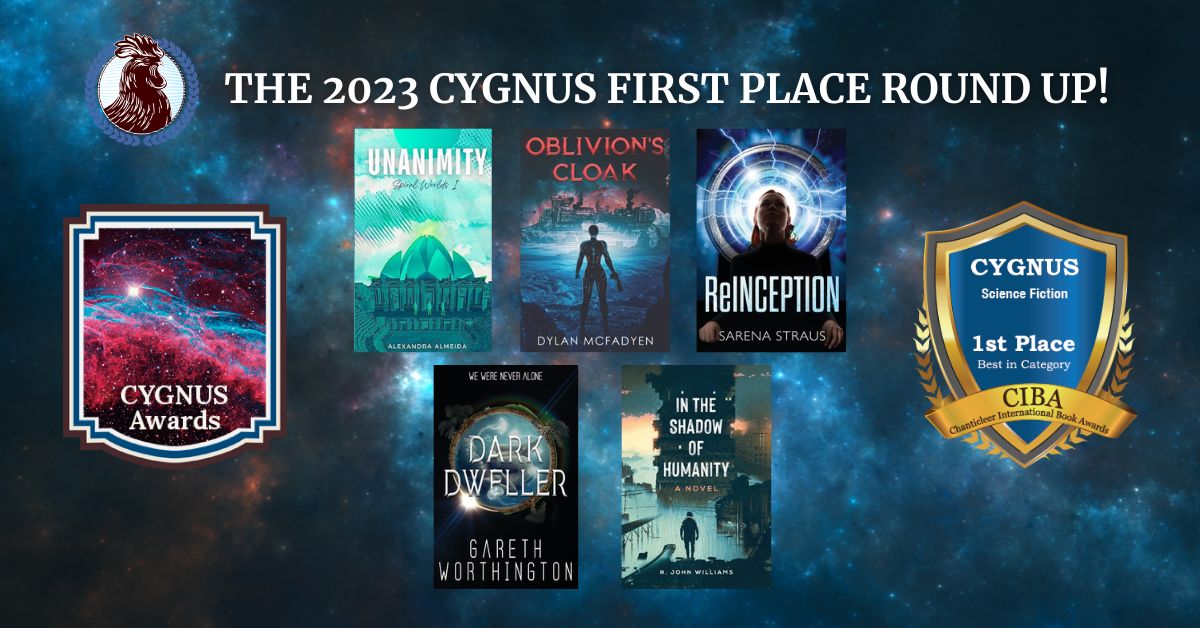
The Cygnus Book Awards recognize emerging new talent and outstanding works in the genre of Science Fiction, Steampunk, Alternative History, and Speculative Fiction. The Cygnus Awards is a genre division of Chanticleer International Book Awards and Novel Competitions (The CIBAs).
Chanticleer International Book Awards is looking for the best books featuring space, time travel, life on other planets, parallel universes, alternate reality, and all the science, technology, major social or environmental changes of the future that author imaginations can dream up for the CYGNUS Book Awards division. Hard Science Fiction, Soft Science Fiction, Apocalyptic Fiction, Cyberpunk, Time Travel, Genetic Modification, Aliens, Super Humans, Interplanetary Travel, Climate-Fiction, and Settlers on the Galactic Frontier, Dystopian, our judges from across North America and the U.K. will put them to the test and choose the best among them.
These titles have moved forward in the first look rounds from all 2024 CYGNUS Science Fiction entries to the 2024 Cygnus Book Awards LONG LIST. These entries are now in competition for the 2024 Cygnus Short List. The Short Listers will compete for the Semi-Finalists positions. FINALISTS will be chosen from the Semi-Finalists and recognized at the Chanticleer Authors Conference, CAC25.
We will announce the 1st Place Category winners and Grand Prize Division Winners at the CIBAs Banquet and Ceremony on Saturday, April 5th, 2025 in beautiful Bellingham, WA at the Four Points by Sheraton sponsored by the 2025Chanticleer Authors Conference.
These titles are in the running for the SHORT LIST of the 2024 Cygnus Book Awards novel competition for Science Fiction!
Join us in cheering on the following authors and their works!
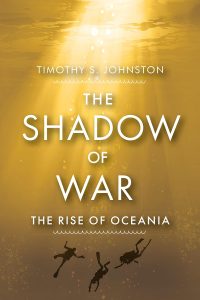
Timothy S. Johnston – A Blanket of Steel
Daniel Lawrence Abrams – Immortality Bytes: Digital Minds Don’t Get Hungry
Janet Post – Vee: Shooting Star
Chris Rasmussen – Upstream
Joseph Anderson – Eden 2b
Neil V. Young – Children of the Stars
David T. Isaak – Tomorrowville
Rod Galindo – Distress Call
D. L. Wilburn Jr. – The God Protocol: Judgment
Jeremy Clift – Born in Space: Unlocking Destiny
C.P. Schaefer – Western Lights
Derek Wachter – The Dark Side of the Moon
Mark Sabbas – The Monarchs
Sean M. Tirman – Hounds of Gaia (The Marrower Saga, Book One)
Don Stuart – Darwin’s Dilemma
Sheri T. Joseph – Edge of the Known World
Alexandru Czimbor – Sentience Hazard
Peter Dingus – Deep Time
Jaime Castle – Purgatory
Alexander Boldizar – The Man Who Saw Seconds
Zach Fortier – Volk’s Bane
I.D. Marie – The Tyrant’s Daughter
Jayson Adams – Ares
Laurie Stevens – The Return
Marc Corwin – The Lasso Unravels: When All Hell Breaks Loose
A. R. Black – No Man’s Land
Nina Munteanu – Thalweg
Jude Berman – The Die
John Be Lane – The Future Lies
Aaron Arsenault – The Climate Diaries: Book One: The Academy
Russell Klyford – Emergent Mars
Liz Cummings – Down the Rabbit Hole
Michael A. Richards – FounderLand
S.G. Blaise – Meddling Mages
PJ Caldas – The Girl from Wudang
Thomas Weaver – Artificial Wisdom
Ellen Ricciutti – One Time or Another
Shami Stovall – The Half-Life Empire
Lynn Yvonne Moon – Journey’s Travels – Mirrors
Good luck to all as your works move on to the next rounds of judging.
PROMOTING OUR AUTHORS!
This post has been posted on the Chanticleer Facebook Page. We try to tag all authors listed here in the Facebook post. However, it is easier for us to tag authors when they have Liked and Followed us on Facebook.
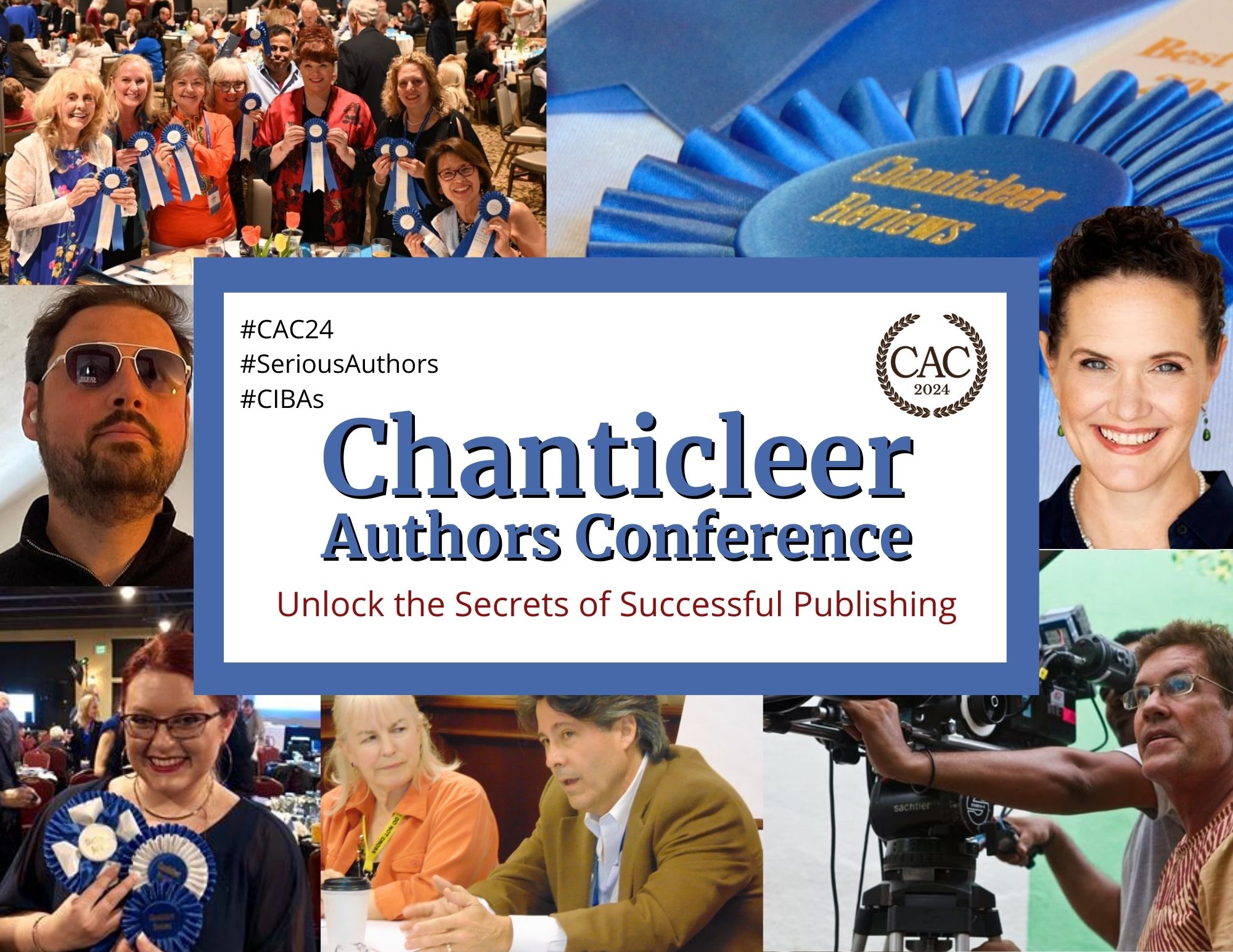
Seating is Limited. The esteemed WRITER Magazine (founded in 1887) has repeatedly recognized the Chanticleer Authors Conference as one of the best conferences to attend and participate in for North America.
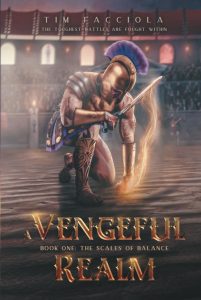
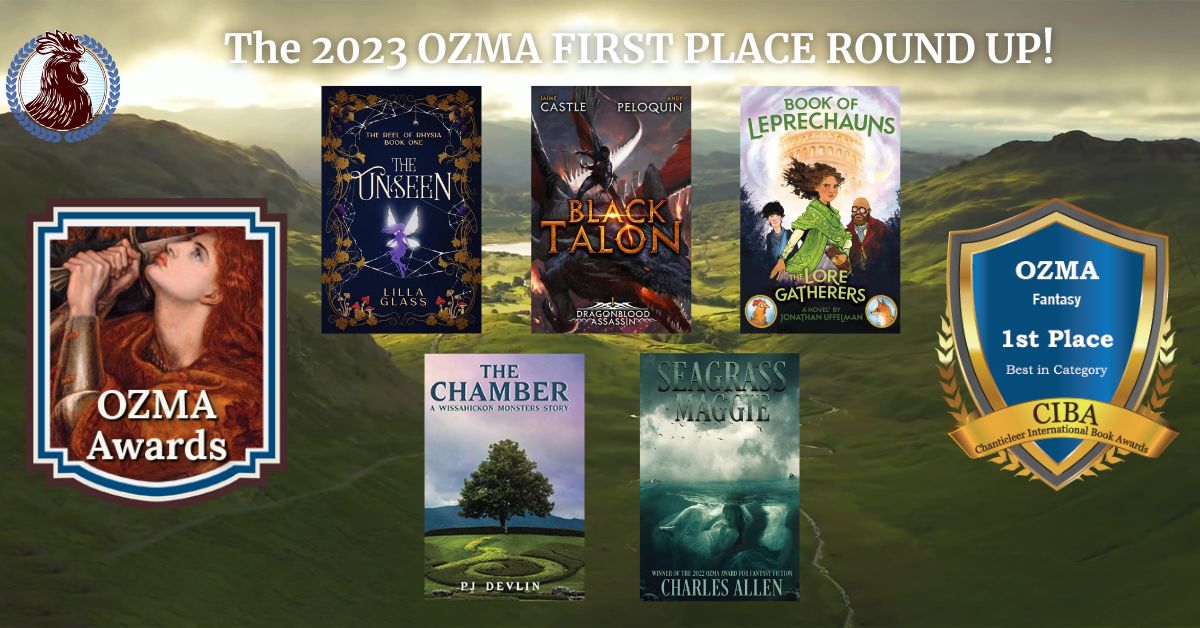
The Ozma Book Awards recognize emerging new talent and outstanding works in the genre of Fantasy Fiction. The Overall Grand Prize Winner, Tim Facciola’s book, A Vengeful Realm will be promoted for years to come in our annual Hall of Fame article, as well as be featured on the Ozma contest page year ’round!
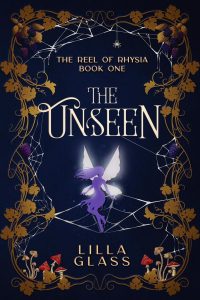
The best part about being a Chanticleer Int’l Book Award Winner is the love and attention you get all year ‘round!
Elwyn is remarkably unremarkable, and she prefers it that way. What more could a thief hope for than to pass through life unseen? Upon fleeing a violent life with her invisible friend-a clever and capricious creature who’s only grown more real with time-she is plunged into an adventure rife with otherworldly beings both beautiful and beastly.
As the Greyscale’ most cutthroat assassin, Brannon has a bone to pick with Elwyn-and several to break. Tasked with hunting down his errant colleague, he soon finds himself in a magic-steeped hamlet where he encounters creatures even more deadly than himself. To survive, he must rely on the very rival he’s been sent to capture.
Little Lydia has a chilling secret, and even she doesn’t know the whole of it. Her unusual appearance has earned her the nickname “monster,” and there may be some truth to the slight. When she caves to the whispers that have slithered through her mind for months, she loses everything she knows and must start anew in the company of criminals.
Bored by his charmed existence, prince Aedyn slips into the lives of these three misfits only to learn of schemes that place both the Mortal and Faerie Realms in peril. If he can help the others work together to thwart the plans of two feuding fiends, they might just manage to save multiple worlds…provided they don’t kill each other first.
Allen is a great world builder and provides complex characters with intricate plots. This story has a little bit of horror, a little fantasy, time travel and heartbreak. Everything had a smooth pace. Now we just need the third book in the series! — Chanticleer
This book is not yet released, but we are very excited to see it come out! It is the sequel to Seagrass Maggie, which also won a First Place Ribbon in the 2022 Ozma Award.
Kullen is the Emperor’s assassin. The sharp hand of justice. The Black Talon.
Gifted a soul-forged bond with his dragon, Umbris, Kullen is tasked with hunting any and all who oppose the Empire.
But when the secretive Crimson Fang murders two noblemen before his very eyes, Kullen must discover the truth of who they are and what they want. What he uncovers is a web of lies and deceit spiraling into the depths of Dimvein.
Natisse, a high-ranking member of the rebellion known as the Crimson Fang, has no greater goal than to rid Dimvein of power-hungry nobles. Haunted by her past, fire, flames, and the death of her parents, she sets out to destroy the dragons and those who wield them as unstoppable weapons of destruction.
Until she too finds herself buried beneath the weight of the revelations her investigations reveal…
A malignant being is hunting Shaun McClanahan and his daughter Molly. When it steals their gold, they are thrust into an epic adventure, hurtling back through time to ancient Rome.
To save themselves, Molly and her father must come to terms with a painful past, heal old wounds, and grapple with the most powerful leprechaun magic ever known to lore gatherers. But even with the help of a poetry-writing fox and a hyper-intelligent chicken, can they save the universe?
Jenesis is a monster. Her odd looks and small stature incite disdain but mask her power — power she must harness to overcome evil, or perish trying.In the year 535 AD, Jenesis, the elfish daughter of a human father and mystical mother, is abandoned under a fairy tree on the west coast of Ireland. Her odd looks earn her the label, monster.
Jenesis has a secret — she’s descended from the magical tribe of Danu. Her destiny to save monsters — children abandoned because of disabilities — leads her to the new world and a hidden chamber along the Wissahickon Creek. Jenesis must protect the chamber from wicked men who want to destroy it, the monsters, and her.
Throughout her interminable life, Jenesis calls on human skills and Danu power to battle evil reincarnated. Will she find a Danu to take her place? Will her journey ever end?This epic tale spans the years 535 AD to 1952, and spins from Ancient Ireland to indigenous America to Philadelphia’s Wissahickon Creek. History and myth, humanity and deity, mundane and magic are masterfully interwoven to create an authentic world populated by mystical and mortal characters. The Chamber is the first Wissahickon Monsters story. This genre-bending tale will appeal to fans of fantasy, historic fiction, and romance who love to enter a story and become part of it. Devlin’s characters seamlessly coexist in the upper world and underworld, all the while protecting the chamber’s secret.
A Song That Never Ends, the first volume of a two part series by Mark A. Gibson, opens a dramatic fictional saga of the Hamilton family from the late 1930s Depression era, to 1967 and the Vietnam conflict. Here against the backdrop of a South Carolina tobacco farm, we come to witness a family in turmoil.
The calm and reserved Walter Hamilton and his rebellious, impulsive wife Maggie strive to build a life and raise a family. But the couple is tested by a series of misfortunes—miscarriages and stillbirths, and Walter’s enlistment during WWII leaving him with guilt-induced PTSD as he deals with the memory of fallen comrades.
At the center of this heartfelt story is James, the middle child, who at the tender age of eight is forced from his home due to a horrific accident and sent to live with a widower uncle.
James proves to be an extremely intelligent and talented youngster who longs for a connection to his family. In the meantime, he learns from his gracious uncle to deal with dire situations and unexpected circumstances in life, as well as the importance of having a charitable heart. Under the tutelage of this kind, caring, and nurturing man, the story begins to evolve into a coming-of-age tale.
Clearly a character driven work, author Gibson aptly weaves themes of love, loss, and resilience throughout.
Though James is unjustly relocated it ultimately proves a positive experience, spending time away from his own dysfunctional family including a depressed mother who drowns her sorrows in vitriol, a ne’er do well, self-centered brother, and a father wrapped up in his own laments. We see how the twists of life shape the character and emotions of these engaging individuals.
While the story prologue opens in 1967, the narrative quickly moves to the 1930s and subsequently keeps a steady pace as chapters move the action ahead in chronological order.
Gibson carefully places the story within its historical context by showcasing details of each passing era. Here readers will witness the struggles to provide and survive during an economic depression, and the feelings of family separation and a husband’s need to serve in WWII. Years later we see a son follow suit and get shipped off to fight an unfavorable conflict in the jungles of Vietnam. In another instance, when enthusiastic teens rebuild an old roadster, Gibson provides a solid history of stock car racing and its roots with the bragging rights of bootleggers.
Gibson keeps his audience invested up until the final moments when the closing page notes “To Be Continued…” It’s the perfect set-up for the second volume to continue with the Hamilton family saga. Whatever Gibson has in store for his readers is sure to be another well-crafted experience rich in both character and detail.
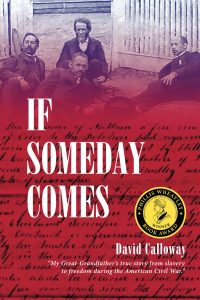
The Goethe Book Awards recognize emerging new talent and outstanding works in the genre of Late Historical (Post 1750s) Fiction. The Grand Prize Winner, David Calloway’s book, If Someday Comes will be promoted for years to come in our annual Hall of Fame article, as well as be featured on the Goethe contest page year ’round!
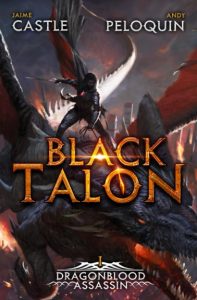
The best part about being a Chanticleer Int’l Book Award Winner is the love and attention you get all year ‘round!
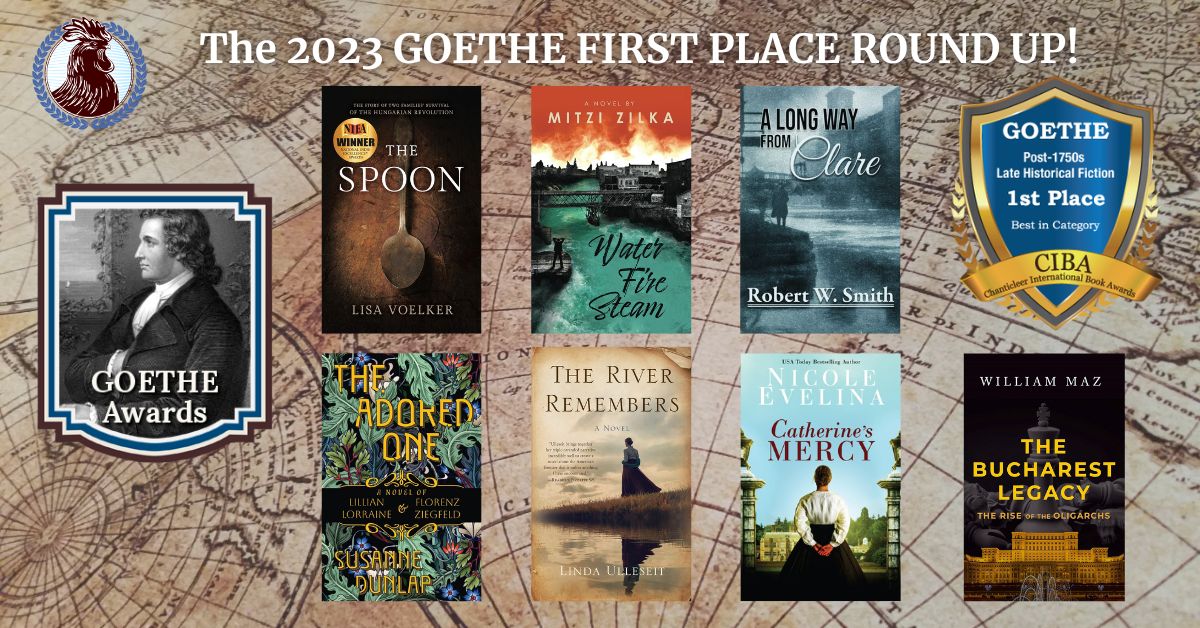
The Spoon is historical fiction based on the personal anecdotes of survivors of what we now know as the 1956 Hungarian Revolution. At the heart of The Spoon is the true story of two people incongruously brought together during the maelstrom of this historic event; a story that is embodied in one small heirloom and remembered and shared through the generations when the family gathers each year for Christmas.
From Chanticleer:
Lisa Voelker’s historical fiction novel, The Spoon, takes us back to the 1950s in Hungary during the daring student uprising, and attempted revolution,. The author weaves historical facts with fiction in the form of family lore that has been handed down for generations.
We follow scores of people whose lives intersected during this uprising of 1956. The revolution was, at its inception, a time of joyous upheaval, but in less than two weeks became one of devastating dissolution. People fled Hungary by the thousands, but not before giving the Soviet Union a taste of their discontent.
Voelker introduces Rebeka, a member of the Varga family with old ties to the bourgeoisie, who lived a life of privilege on a farm. She is contrasted by Peter, a member of the Turea family who attends Budapest Technical University, where students began demonstrating against the Hungarian Government that was under Soviet control.
Conor Dolan, a young Irishman, travels to Chicago in 1903 to visit his older brother; instead, he finds a mystery. His journey sparks a quest to peel away secrets and rediscover a dead sibling he idolized but never really knew as he strives to learn the true meaning of brotherhood.
His search reveals an Irish Republican plot to assassinate a visiting British royal. In the process, he is drawn into an alliance with two women: a mesmerizing Jewish widow and a struggling young Irishwoman. Each teaches Conor existential truths of life and love in her own way.
But the brother he finds may not be the brother he remembers. A Long Way from Clare is a story of Chicago’s early twentieth century immigrants and one man’s struggle with both bigotry and justice in an unforgiving city where no good deed goes unpunished.
From Chanticleer:
Twenty-four-year-old Conor Dolan had intended to surprise his older brother and catch up after years apart. However, what he finds when he arrives in Chicago will spark a harrowing mystery, in A Long Way from Clare by Robert W. Smith.
Kevin, a beat cop in twentieth-century Chicago’s worst neighborhood, was found six weeks before Conor’s visit, in what the police have dubbed a suicide. However, Conor has his doubts. Each time he asks people about Kevin, he is met with resistance and denial. When Conor speaks with Detective Flynn, the man assigned to Kevin’s case, his suspicions become certainties. Flynn’s bizarre behavior, the minimal effort on the police’s part to investigate, and the men following Conor at every turn convince him to stay in Chicago rather than return to his home in Springfield.
Conor’s determination to find answers to Kevin’s death lead him in a dangerous dance with darkness amidst the shadows of Chicago’s underworld.
The year is 1884. Rolla Alan Jones, an ambitious dreamer fresh out of an East Coast engineering school, is commissioned to design and build the first water system in Spokane Falls, Washington, a booming town of twenty-thousand. He is everyone’s golden boy for five years until the city burns down on August 4, 1889. The once-celebrated engineer is scapegoated for the catastrophe alleging his system yielded inadequate water pressure. Asked to resign, betrayed by his friends, shunned by the community, and abandoned by his pregnant wife and three-year-old son, Rolla must find the strength to reinvent himself or return to New York as an abject failure. Based on a true story, Water Fire Steam is a story of forgiveness and redemption for anyone who has ever had to claw their way back from an unwarranted accusation.
Lillian Lorraine was a naive 15-year-old chorine on Broadway when she attracted the notice of the notorious 41-year-old Florenz Ziegfeld. Accustomed to getting what he wanted, Ziegfeld took Lillian under his wing and into his arms, giving her coveted numbers in the Ziegfeld Follies and taking control of her career. But Lillian’s rebellious spirit chafed against him, refusing to play according to his rules, and nearly destroying her own career in the process. The Adored One follows her through rise and fall after rise and fall as she comes of age in a world where her youthful beauty was an asset-and a liability.
From Chanticleer:
Step into the glittering world of fame and betrayal in Susanne Dunlap’s The Adored One. At just four years old, Leleanne de Jacques, aka Lillian Lorraine, began her acting career. After fleeing an abusive husband in San Francisco, Mary Anne, Lillian’s mother, moves to Philadelphia, seeing her daughter’s talent as their potential meal ticket.
Soon after arriving in Philadelphia and changing her daughter’s name, Mary Anne relocates them both again to New York, where she puts Lillian in front of artists who see her potential for print ads. Lillian soon meets Fred McKay, her first talent agent, and she begins performing in Lee Shubert productions.
When Florenz Ziegfeld sees Lillian onstage, he knows he must have her, both in his productions and his bed. At only sixteen, Lillian signs with Broadway’s biggest producer. She begins to spiral soon after. Drinking and partying become a staple in Lillian’s life, and she is soon keeping more secrets than her young heart can handle. Florenz’s obsession, Mary Anne’s domineering, and Lillian’s own need for approval lead her down a dangerous and lonely path. Losing every friend she ever makes as well as a part of herself, Lillian wonders if the prize of fame is really worth the cost.
Samantha Lockwood, Day Sets, and Harriet Robinson come to Fort Snelling from very different backgrounds. It’s 1835 and the world is changing, fast, and they are all struggling to keep up. After she refuses another suitor he’s chosen for her, Samantha’s father banishes her to live in the territory with her brother. He, too, tries to take over her marriage plans—but she is determined to find her own husband, even when her choices go awry.
Day Sets demands that her white husband create a school to educate their daughter, supporting her father’s belief that his people must learn the ways of the white man in order to ensure the tribe’s future. Until events prove her father wrong. Harriet’s life in the territory is more like that of a free person than anywhere she’s lived. She even falls in love with Dred Scott and dreams of a life with him. But they are both enslaved, and she keeps being reminded of how little control she has over her own fate. As their cultures collide, each of these three women must find a way to direct her own future and leave a legacy for her children.
Based on a true story, Catherine’s Mercy brings to life Irish reformer and Sisters of Mercy founder Catherine McAuley.
In 1824, Catherine, a Catholic spinster of 44, unexpectantly inherits millions. However, she doesn’t use it to climb the social ladder or snare a husband; she uses it to fulfill a lifelong dream of building a refuge for the poor and sick of Dublin, Ireland. That an unmarried woman would dare propose such a thing is so scandalous, even her own brother calls it “Kitty’s Folly.” Society turns against her. The Church tries to take over. Catherine must defend her choices or lose not only her inheritance, but her reputation and life’s calling.
One of the first women who seeks Catherine’s help is Margaret, a maid in the house of Lord Montague, the loudest of Catherine’s detractors. Daring to protect herself from his advances and rebel against his maxim of total obedience, Margaret is forced to flee for her life. She desperately approaches Catherine for help, setting off a series of events that haunt Catherine all her days and prompt a rule that holds today, in the real-life Sisters of Mercy.
William Maz – The Bucharest Legacy: The Rise of the Oligarchs
The CIA is rocked to its core when a KGB defector divulges that there is a KGB mole inside the Agency. They learn that the mole’s handler is a KGB agent known as Boris. CIA analyst Bill Hefflin recognizes that name—Boris is the code name of Hefflin’s longtime KGB asset. If the defector is correct, Hefflin realizes Boris must be a triple agent, and his supposed mole has been passing false intel to Hefflin and the CIA. What’s more, this makes Hefflin the prime suspect as the KGB mole inside the Agency.
Hefflin is given a chance to prove his innocence by returning to his city of birth, Bucharest, Romania, to find Boris and track down the identity of the mole. It’s been three years since the bloody revolution, and what he finds is a cauldron of spies, crooked politicians, and a country controlled by the underground and the new oligarchs, all of whom want to find Boris. But Hefflin has a secret that no one else knows—Boris has been dead for over a year.
In The Brisling Code, a fast-paced first installment of her historical thriller series, Oakley weaves a brilliant portrayal of the perils met by the Norwegian Resistance during WWII.
Layered perspectives—from resistance workers, traitors, and even an SS Officer—create a rich world through which readers can understand the sacrifices that were made to free our world from the tyranny of Nazi Germany.
Immersed in volatile Nazi-occupied Bergen, Norway, fearless young intelligence agent Tore Haugland and his team of organizers work tirelessly to protect the essential work of the Norwegian resistance.
Haugland’s task is to uncover the plans for the expansion of the German Uboat base with inside help at a shipyard. Also charged in unveiling the meaning behind a mysterious message sent by his murdered predecessor, Haugland navigates the treacherous waters of Norway—a mere haunting of the beautiful city it once was before Nazi occupation. Readers can “almost taste the danger” as our hero moves from one treacherous predicament to the next. Haugland’s mission risks not only his own life, but the lives of every friend and connection he makes.
The Brisling Code is a multi-faceted novel, interspersing the harsh and secretive political climate of Nazi occupation with the deaf community’s resistance work in Norway and a 1919 Norwegian program called the Wienerbarnkomitten, in which Norwegian families took in and raised German children whose families were impacted by WWI.
These overlapping communities create a heart of tenderness and relational love at the center of the novel, despite the violence and treachery that constantly threatens to break through.
For example, seemingly cold-hearted SS officer Hans Becker—on the hunt to capture Haugland and responsible for torturing and murdering many resistance workers— experiences a deep tenderness for his Norwegian foster mother, admitting that “She is my mamma. Not of my blood, but my heart.” As a result, he is forced to reconsider the motives behind his actions and stand up for her well-being, risking both his position as an officer and his life.
The Brisling Code is filled with these small, deeply sensitivity moments that bring characters to life.
People show warmth in a freezing world with actions like a cup of hot coffee, an embrace, and a smile of welcome. Despite the constant threat of violent death, life goes on in Norway, creating a web of intricate characters whose lives are rich with hopes, fears, and longings. Similarly, characters often reveal their true selves under their heavily-curated exteriors through actions and allegiances. These complicated moments and relationships refuse cut-and-dry judgements, allowing readers to find humanity in unexpected places.
Undercurrents of political tension in The Brisling Code create a rich historical context that puts readers in the shoes of Norwegians in their occupied homeland.
With descriptions of everyday life, readers soon understand the paranoia and surveillance in Norway— the constant fear of separation and harm among families and friends.
An expertly researched and executed novel, The Brisling Code invites readers to see that unexpected tender moments can always be found, opening up the possibilities for resistance in the face of violence.
This year we celebrate the 125th anniversary of the birth of one of America’s most important authors, Ernest Hemingway.
Born on July 21, 1899 in Oak Park, Illinois, the influential American literary icon changed the style of novel writing by creating prose that was straightforward and concise, while not sacrificing the emotional impact and lyrical prose. Hemingway wrote about important and timely topics, such as war and the bloody sport of bullfighting, in an accessible way without losing the underlying meaning or sacrificing the emotional reaction he strove to activate in his readers. For this reason, he continues to be celebrated today. In honor of his 125th birthday, I’ll connect three of his most famous stories with the real-life events that influenced his writing.
A Farewell to Arms – Exploring the Heart of A Young Man in Love and War
After graduating high school, Hemingway became a reporter for the Kansas City Star in Missouri, and the following year he volunteered as an ambulance driver for the Red Cross in Italy duringWorld War I. He was wounded by mortar fire and spent months recuperating under the care of an English nurse, Agnes von Kurowsky, with whom he fell in love and had affair. She was an older woman who eventually broke Hemingway’s heart when she ended the relationship after he returned to the United States.
In A Farewell to Arms, Hemingway’s fictional character Lt. Frederic Henry falls in love with Catherine Barkley, and their relationship explores the emotional, physical, and spiritual connection Hemingway and van Kurowsky shared during the tumult of World War I.
A Moveable Feast – A Writer’s Life in 1920s Paris
Ernest Hemingway chronicled his early years as a strugglingjournalist and writer in Paris during the 1920s in A Moveable Feast. The work mentions Paris’s legendary bars, cafes, and hotels of the era, and gives insight into his relationships with other notable cultural figures of the “Lost Generation,” such as Sylvia Beach, Aleister Crowley, F. Scott Fitzgerald, Ezra Pound, and Gertrude Stein.
One scene in the book offers a moment of reflection for every writer. His first wife, Hadley Richardson, mistakenly throws out the only copy of a book he’d been working on. It’s a heartbreaking scene, but one that adds to the poignancy of the story.
The Old Man and the Sea – The Death of the Writer’s Soul
After a period of frustrating writers block, Hemingway published what would become his last significant work in 1952. “The Old Man and the Sea,” a novella about an aging fisherman in pursuit of a marlin off the coast of Cuba explores how perseverance and dignity are the “weapons” used to battle through a person’s struggles in life and the theme acts as an allegory of the writer’s own struggles to preserve his art in the face of the fame and attention.
Hemingway struggled to produce a major literary work for more than a decade before the “The Old Man and the Sea” debuted, and despite some critics proclaiming it didn’t hold up next to his earlier works, the book was awarded the Pulitzer Prize in 1953 and won the Nobel Prize for literature in 1954.
We will always remember Hemingway
Oftentimes, Ernest Hemingway’s life is told as a series of amazing adventures, mental and physical suffering, lost loves, and a sad and unfortunate ending. Many would say his life was tragic, but that life provided a deep well of stories that propelled Hemingway to produce some of the most important literature in the American cannon. With the skill of a surgeon, Hemingway relied on lessons gained as a reporter to deliver emotionally impactful storytelling in a clear and concise way that many writers continue to turn to for inspiration and learning.
Happy 125th birthday, Ernest Hemingway!
Interested in exploring the times Hemingway experienced through the storytelling of today’s authors? We encourage you to dig into stories written by Chanticleer’s authors who bring to life the early days of the Twentieth Century with the following books.
Passage Home to Meuse By Gail Noble-Sanderson First Prize Winner in the Chatelaine CIBA Division
It’s 1923 and character Marie Durant Chagall is now 27 years old as she tells about her life-altering events inThe Passage Home to Meuse,thanks to author Gayle Noble-Sanderson. This is the second historical novel in the Meuse Trilogy. The world around Marie is still reeling from the devastation of World War I. She and the other characters in the book are learning how to continue living, and perhaps more importantly, wishing to find joy once again in life.
Marie is at home in France, seeking peace within, as well as for those around her. She looks for ways to help others who are in need, and her nursing skills come in handy to help this farming community. Nearby she’s found a sense of belonging with the Sisters at the Chapel, and her friendships continue with Henri and others.
A War in Too Many Worlds By Elizabeth Crowens
Grand Prize Winner in the Cygnus CIBA Division
Musician-turned-time-traveler John Patrick Scott adds spy and saboteur to his resume while undercover in Germany in the final months of World War I, in A War in Too Many Worlds, the third installment of Elizabeth Crowen’s thrilling sci-fi series, The Time Traveler Professor.
Meanwhile, Scott’s once and future collaborator in psychic experiments, Sir Arthur Conan Doyle, is back in Britain sharing real time-travel adventures with the inventor of the fictional time machine, H.G. Wells.
A Week at Surfside Beach By Pierce Koslosky Jr.
Grand Prize Winner in the Shorts CIBA Division
Vacationers from all walks of life converge on Portofino II-317C, South Carolina, a quaint blue beach house, in Pierce Koslosky Jr.’s short story collection, A Week at Surfside Beach.
From May 30th-December 26th each group of people comes to stay one week at a time, to forget their cares of the big city, to work, to celebrate, or to simply get away. Surfside Beach has much to show them, including temperamental weather.
The small town itself offers a charming supermarket where fishing supplies, whoopie pies, and local southern favorites can be found. The Christmas vacationers, the final of the thirteen beach house renters, struggle to find a tree in time; a real tree simply wouldn’t allow enough space for the family to sleep, and the fake tree would cost too much. But they find arts and crafts supplies in town, to fashion a paper Christmas tree during a day of rainy weather.
In The Sower of Black Field, Katherine Koch’s historical fiction novel, Father Viktor Koch— a 67-year-old Catholic priest— presides over a monastery in a small German village, as the Nazi regime sweeps through the country.
The time is April, 1941. Fr. Viktor’s order, the U.S.-based Passionists, built the monastery eight years prior, providing employment for most of the villagers and remaining a symbol of their faith.
Fr. Viktor has lived in Europe for over 20 years, but balances his love of Germany, its land, its mysticism, with his American roots. He will need all his personal and religious resources over the next four years as the Nazis take hold in the village and, later, the Americans come to “de-Nazify” the town and hold its people responsible for the horrors of the Holocaust.
Thank you for joining us in celebrating America’s literary icon, Ernest Hemingway!
Do you have a book that deserves to be discovered? You can always submit your book for an Editorial Review with Chanticleer!Chanticleer Editorial Review Packages are optimized to maximize your digital footprint. Reviews are one of the most powerful tools available to authors to help sell and market their books. Find out what all the buzz is about here.
Is your book an Award Winner?
Submitting to Book Awards is a great way to get your book discovered! Anytime you advance in the Chanticleer Int’l Book Awards, your name and book are promoted right here on our website, through our newsletter, and across social media. One of the best ways to engage in long tail marketing!