Immersed in the nostalgia of classic summer camp experiences, Becoming Jonika is the coming-of-age story of Joni Byrnes, who, after finding herself on the wrong side of the law, receives a second chance at St. Augustine of Hippo’s summer camp in the trouble-ridden summer of 1969.
Set against the backdrop of the Vietnam War and the aftermath of Martin Luther King Jr.’s assassination, Joni Byrnes is just trying to live a normal teenage life. At the cusp of high school, Joni’s parents send her to Redwood Academy, where they believe Joni will become their ideal daughter. In reality, Joni is quickly labeled by her elite classmates as a loser and an outcast, and the only place Joni feels like herself is in a swimming pool.
One day after practice, she meets Ishmael, who used to be on her neighborhood swim team and is now recently returned home after being discharged from the military. Ishmael treats Joni like she is special, and because of her insecurities and desire to be loved and accepted by others, she falls head-over-heels for him and follows him down a dangerous path that lands her in a courtroom at the mercy of a judge.
Instead of sending her to Juvie, the judge gives Joni the opportunity to make amends. She becomes the swimming instructor at a camp for young African-American children. Becoming an outcast yet again as the only white counselor, Joni learns about of her campers’ and co-counselors’ home lives. She sees their courage and perseverance and tries to move on from her own past; becoming her own person in the face of expanding generational and racial divides.
The hand-drawn look of the cover and the journal-like appearance of the interior create a physical representation of Joni’s report to the judge, pulling readers in and immersing them into the story. The descriptions of the inescapable humidity of summer, the coolness of pool water, and the sweetness of bug juice all feel within reach. In addition to the rich descriptions of Joni’s surroundings, PJ Devlin achieves authentic characterization in the development of Joni and those she encounters throughout the novel.
Joni’s feeling of being an outcast and a loser hits her upon arrival to Camp St. Augustine of Hippo, where she is different in every way from the people around her. In a heart-to-heart with Joni, one of the counselors’ is explicit about what being at camp means, “For us, that’s freedom. For you, camp’s a prison. That’s the difference.”
As the summer progresses, Joni is given the name Jonika and finds herself surrounded by people who like her despite their differences. Jonika describes these feelings in her report, “We were different on the outside but not on the inside.” By summer’s end, she’s uncertain about returning to her old life, but takes courage from the powerful lessons she learned at summer camp. She leaves Joni’s problems and insecurities in the past and instead becomes the person she chooses to be — Jonika.
Becoming Jonika by PJ Devlin won 1st Place in the 2017 Dante Rossetti Awards for Young Adult Fiction.
When 17-year-old high school student, Stevie Wales, suddenly blossoms, she and her best friend, the ever-popular Winter, have some adjusting to do. Sometimes, however, adjusting to new information between friends isn’t possible.
In their case, Stevie winds up alienated from Winter and the group in her Puget Sound Island community. She decides to become what she believes they all see – the weird girl. As her oddity status rises, so does her anger. When she takes a job at an equine therapy ranch, tending the horses used in the program, she discovers her unusual ability to take away pain in both animals and humans.
As she begins to feel needed, she lets go of some of that anger, but then, an accident with one of the horses leaves Stevie seriously injured. Her life becomes a twisted version of an already blurry existence as she struggles to find “normal” again.
Stevie embarks on a journey to find her father, a man the world believes dead. She convinces her mother and therapist that she needs to go to Australia, the place where the wreckage of her father’s boat washed ashore. Her search takes her to a strange continent, and though this exploration becomes much, much more, she may find a truth she isn’t ready to accept.
Despite being set in a not-so-distant future, Stevie’s teenage world isn’t so different from now. Mean girls are still mean girls, and the smart, shy students often feel like they don’t belong. So many teenagers, both male and female, may find Stevie’s (partially self-imposed) alienation relatable. Her artistic talents and her empathy for others are endearing traits that help bring Stevie to a culminating awareness. Both of these carry Stevie full-circle to find her version of normal, her definition – not the world’s. Seeing Stevie evolve into a confident young woman through her efforts is nothing short of inspirational.
While Stevie can take away the pain of others, she struggles to keep her gift and the consequences of using it a secret. However, it is only when she stops trying to keep it under wraps, is she able to heal herself as well as those around her.
One of the most engaging parts of the novel is Stevie’s time in Australia. This exotic, culturally diverse continent becomes a character unto itself, drawing Stevie into the adventure of a lifetime while giving her the closure she desperately needs. Pulled into the mysterious murder of a boy she meets, Stevie encounters others who inspire and help her find her father. She learns true contentment by assisting the family of the dead boy all while searching for her own history. Ironically, amid death, she finds life as she navigates a land as wild as her emotions.
Seventeen-year-old mathematical genius Willoughby has the weight of the world on his shoulders ─ literally. As part of a secret time travel organization known as Observations, Inc., Willoughby and his team, usually silent observers in their travels, are tasked with keeping the balance between control and chaos.
Yet after the murder of their friend and mentor H.S. a year ago, Willoughby and his team have sought answers to questions they don’t even know how to ask. Everyone on the team has suffered, and Willoughby can’t help but feel he could have done more to help H.S. and more to keep his team, namely his girlfriend and musical prodigy Sydney, safe.
Willoughby can “see” time code and take advantage of time junctions, he has a natural connection with time and can sometimes even track people throughout the time grid, a skill his nemesis, a man-like creature known as Beelzebub, takes credit for. Unfortunately for the Observations, Inc. crew, Beelzebub can also manipulate time but in a much more advanced way.
Hellbent on finding the Prime Hole Facility, a time hub created by Earth’s historians the otherworldly Atlanteans, Beelzebub wants to recreate history, restructure mankind’s past, and plunge the planet into chaos. He and his Dark Edge Brotherhood will stop at nothing, having already killed Willoughby’s boss and mentor since Willoughby is the key to unlocking a gateway of power, unleashing unlimited control over man. Before he can harness his full potential, he and his team will have to solve millennia old clues while searching for a lost ancient princess and steering clear of the Dark Edge, but very soon, both Willoughby and Sydney will learn the real cost of his power.
A prevailing idea within the novel is self-discovery. The characters often delve deep within themselves to find that hidden spark, that “push a little harder” mentality to solve the issues thrown at them by forces that want nothing more than to drown creativity, thus ridding the world of enlightenment and plunging it back into darkness. The characters have to stop fear’s subjugation and free themselves enough to look inside for the answers that are quietly waiting for daylight. Through that self-discovery comes growth but only when the characters stop looking to the world to define themselves (a lesson most people need). Only by genuinely finding the power within can Willoughby save humanity, but he can’t do that alone.
The bond between the characters is not only the key to survival in this high-stakes time game but is also a strength of the novel. Since Dark Edge Rising is the third in the Cryptic Spaces series, the Observations, Inc. team is firmly established; however, this pre-established bond will not keep the reader from enjoying the character interactions. Each team member has their own unique ability or place on the team in this something-for-everyone narrative. Despite their individualism, the characters’ friendship dominates. Repeatedly, the theme of unity saves the day and keeps the plot rolling steadily along. Each member brings something new to the story, and the alternating point of view keeps the story fresh and the reader engaged.
Cryptic Spaces, Book Three: Dark Edge Rising won First Place in the 2017 CIBAs in the Dante Rossetti Awards for Young Adult novels.
According to the Census Bureau, in 2011 one-third of the United States claimed some sort of Irish heritage. But on St. Patrick’s Day, March 17th, that number shoots up to 100%.
After all, who couldn’t use a wee bit o’ luck of the Irish in their lives?
Growing up here in the United States, we would be in danger of getting pinched by our peers at school if we weren’t wearing green (I’m sure this practice would get children booted from school nowadays…). We would also eat corned beef, potatoes, and cabbage for supper and maybe watch a parade on television. Far from being a national holiday, as it is in Ireland, we would do the best we could at claiming our (supposed) 1/32nd piece of Irish blood.
I must say, the holiday became much more interesting when I was in college…
St. Patrick’s Day conjures images of leprechauns, pots of gold, rainbows, shamrocks, beer, and men in Aran sweaters with charming accents.
So, before you don your green, dig into your colcannon and corned beef, and show your love for all things Irish, we would like to offer our “pot of gold” in the form of our favorite reads that inspire us and captivate our imaginations.
Enjoy Our Selections for St. Patrick’s Day Best Reads!
Romancing the Magic!
– Love stories steeped in contemporary Ireland.
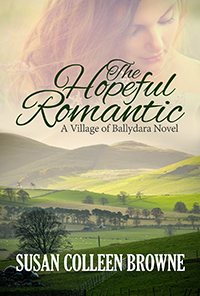
The Hopeful Romantic by Susan Colleen Browneis an old-fashioned love story that takes place in contemporary Ireland; it rings true about rediscovering happiness in what you already have, and to never lose hope
Mother LoveGrainne knows exactly what her perfect man is like, the only problem is, her perfect man is getting married. Set in the Irish village of Ballydara, “Mother Love” is a story of family drama, Irish humor, and healing.
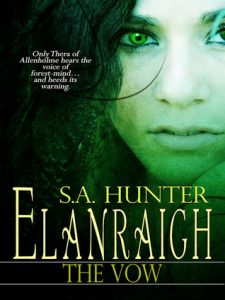
S.A. Hunter‘s Elanraich: The Vowis a high fantasy with a female heroine and women warriors set within a unique story construct where not all is good nor evil.
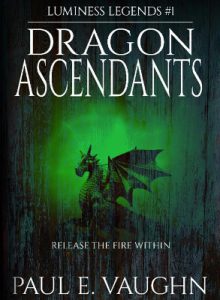
Paul E. Vaughn’s Dragon Ascendants is about a boy comes of age when he learns his true heritage in a magical, mountainous land of dwarves, elves, men, and dragons is threatened by a powerfully malevolent force.
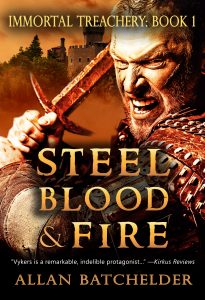
Allan Batchelder cooks it up with Steel Blood & Fire, one of our favorite reads that may or may not have dragons within… but you won’t be sorry you picked it up!
Silver Kings and Sons of Bitches by Michael D. McGranahan is a rough an tumble story taken from historical source materials surrounding the California Gold Rush… all with an Irishman complementing the cast of characters.
Tiffany Brooks‘ s Reality Gold is a Y/A novel where a girl tries to make good in a Reality television show where contestants try to find the buried treasure. Of course, they get way more than they reckoned for when the stakes are raised and the dangers are real.
There are no Snakes in Ireland – except the ones in these mysteries!
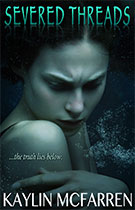
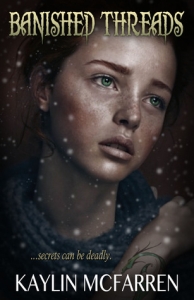
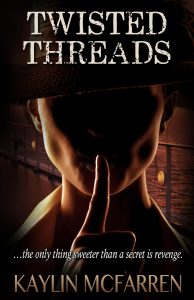
Kaylin McFarren is one of our favorite authors and she has the Irish in her. Please forgive us for the generalization, but like most of her kin, Kaylin can tell a story!
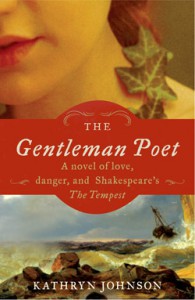
InThe Gentleman Poet, Kathryn Johnson poses an intriguing question: did Shakespeare personally experience a shipwreck before he wroteThe Tempest? Find out!
J.P. Kenna‘s I’ll Take You Home Kathleenis a gripping tome of historical fiction that follows two Irish families who immigrated to the U.S. after Ireland’s Great Famine. A well-researched and well-told story of the social, economic, and political currents of the late 1800s.
Annette Amsel is not on the popular-girl list at her school. She’s obsessed with Fuchsia Fireball, an emo band least liked among her peers, and receives more than her fair share of ridicule, which often leaves her close to tears. It doesn’t matter that Annette consistently knocks out has near straight-A grades and is involved in sports (shot put, discus, and track). It isn’t that she lacks a friend, she has a few, but they are all too preoccupied with their boyfriends to notice her misery. Ugh.
Amid her uncomfortable environs, Annette learns that Fuchsia Fireball will be performing in a sketchy area of Milwaukee. Besides requesting a concert ticket for her upcoming sixteenth birthday, Annette goes through a series of deals (including getting her driver’s license) with her parents so she can attend. One major prerequisite is for her to go with a friend, which is easier said than done. That’s when she turns to a Fuchsia Fireball fan website and begins chatting with a guy who may be a hopeful means to an end. Whether or not he is who he says he is and holds to his word remains to be seen.
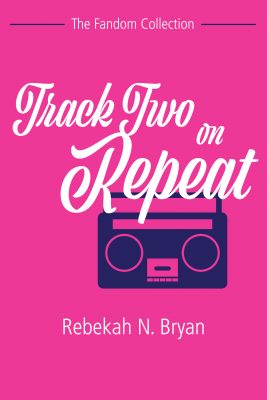
In the next installment of The Fandom Collection award-winning author, Rebekah N. Bryan dishes up a lead character with whom readers will easily relate. Annette is shy, somewhat socially awkward, and just a wee bit introverted. To her, fitting in at school is critical, yet she always seems to be doing the wrong things or liking the wrong bands or, well, whatever. And even though she knows she’s got brains, she doesn’t feel like she measures up to the other girls at school. In other words, Annette is the perfect target for bullies.
Bryan’s plot may sound stereotypical, and that’s what makes the story ring so true. In a world where pressures surrounding today’s young adults lands somewhere in the too-much lane, Annette embodies these struggles, and we get to see if and how she resolves/solves them. Woven with today’s added bonuses of live chat rooms, experimental music, and online-strangers who feel like friends, bullying is the monster it always was. Readers will focus on the narrative’s underdog and follow along on her journey as she strives for self-acceptance. Bryan’s writing style is sure—a harmonious intermingling of story and dialogue (including chat lingo).
Light verbal flirtatious innuendos with Annette’s chatroom “boyfriend” help to break the continual tension as Annette finds herself in a flurry of believable and often frustrating situations that appear to block her chances to enjoy high school social life, but more importantly, attend the Fuchsia Fireball concert.
Track Two on Repeat is an engaging read and a nice addition to Bryan’s collection and won First Place in the 2017 CIBAs, Dante Rossetti, for Young Adult Fiction.
At the tender age fourteen, Thomas Cheke is kidnapped in the dead of night by Barbary pirates from his home on the Isle of Wight. His widowed mother and sister are left behind, but Tom doesn’t know if they survive the surprise attack. During the next six years, his life will take more twists and turns than he could ever have imagined, and the resulting story is one of the most fascinating ever put to page.
Tom addresses the reader directly, and this lends a heightened sense of immediacy and excitement to an already gripping tale. He is the most sympathetic of characters, one with the deck stacked against him, though he uses his innate intelligence and wits most effectively. After the initial night when he fell “into the hands of the Turk,” an event English schoolchildren had been taught to fear, Tom is imprisoned on a corsair ship bound for Algiers where he knows he will be sold as a slave.
Keenly observant and eager to make the best of his situation, Tom helps another lad on the boat who works in the kitchen, and along the way learns much about the running of the ship, the men aboard, prisoners and crew alike, and does what he can to comfort two other children who were also kidnapped from the Isle of Wight. Why these three youngsters were targeted by the pirates is at the heart of an intricate mystery that builds throughout the book. Meanwhile, day to day life on the boat, seen through Tom’s eyes, is fascinating, especially when the crew chases a Spanish galleon laden with silver bullion and battle ensues.
Once in Algiers, Tom maintains his composure while his ankle is chained and manacled and he is sold to Ibrahim Ali, the Grand Treasurer of the city. Many surprises await Tom as he joins the household, including his growing admiration for his Master, a kind and erudite man who arranges for his servant’s learning Arabic and intense study of the Koran. As a trusted servant, Tom runs errands for Ibrahim in cosmopolitan Algiers, the sights and sounds of which are fully brought to life through Munro’s sumptuous and masterful prose. Tom’s time on the corsair ship provided him with information that will prove very useful in his master’s solving a dire financial issue that involves the weakening value of coinage in Algiers.
Key events upend his existence once more, and he finds himself on a ship headed to Malta with a new mentor in Sir Edward Hamilton, a Christian brother and knight of the Order of St. John. With his ankle chain newly removed, Tom adjusts to life as a free man and assists Edward in solving an elaborate cipher, a lengthy message coded with the suits of playing cards. This introduces a riveting subplot concerning Cardinal Richelieu and the attempted assassinations of the Duke of Mantua and the Duke of Buckingham. Computer programmers, as well as anyone interested in code breaking, will find this section of the book enthralling. Warning the intended victims that their lives are in danger requires further travels, including a trip to Venice.
You won’t be able to turn the pages fast enough! Do Tom and Edward prevent the assassinations? Does Tom ever set foot on English soil again? What will become of the young man, twenty years of age at the book’s conclusion, who has lived in Ottoman and Christian worlds as a slave and a free man? Adults and sophisticated young adult readers will find this book exquisitely captivating.
Anyone who’s read and loved Robert Louis Stevenson’s historic adventure, Kidnapped, will no doubt also love Slave to Fortune. The basis of D.J. Munro’s thrilling adventure, Slave to Fortune, is purportedly based on an original memoir by Thomas Cheke, an Englishman who lived during the seventeenth century. In the Endnote, D.J. Munro shares the research he undertook to confirm the events in Tom’s memoir and notes, “I hope that I have done it justice.” The answer, of course, is a resounding, “YES!”
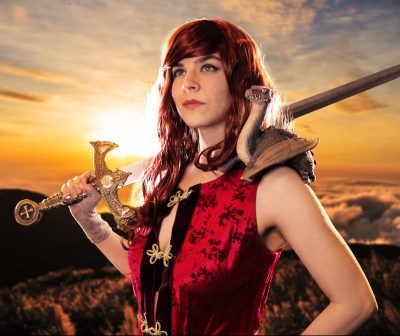
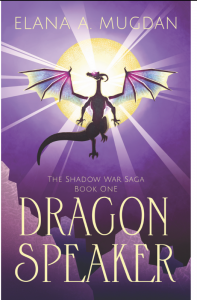
UPDATE: Dragon Speaker WON GRAND PRIZE in the CIBA 2018 OZMA Awards for Fantasy Fiction!
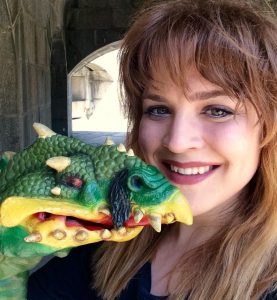
You may have heard of her. Elana Mugdan, author, director, channeler of all things fabulous – and most recently, the winner in Vitamin Water’s Challenge! What you may not know, Elana is also a Chanticleer-ian! We love her work as much as we love her. And we thought you might like a chance to get to know her a little more, as well. Click here to follow the link from the Today Show – Alana explaining how the Vitamin Water Challenge works.
Please enjoy and share our 10 Question Author Interview!
Chanticleer: Tell us a little about yourself: How did you start writing?
Mugdan: I started writing at a very young age. I always had a wild imagination, and there was always a story to tell. Some of my earliest – and fondest – memories are of me dictating epic fantasy adventures to my father, and him typing them out on the old family computer in the basement (while he was supposed to be doing his own work, no less). I actually wrote my first “novel” when I was just five years old. It was a story about a girl and a dragon going on a quest . . . two decades later, the story hasn’t changed. At least I’m consistent!
Chanti: That’s pretty sweet! I bet your family is very proud of you. When did you realize you that you were an author?
Mugdan: Surprisingly, it took me a long time to realize writing was my preferred method of storytelling. I floated through a number of artistic fields when I was younger, including the film industry. I focused my energy on production and worked myself to the bone for years before I realized that every time I stepped foot on someone else’s set, I was really living someone else’s dream. This wasn’t what made my heart beat – I had my own stories to tell. So I redirected my attention to my novels, and that’s when the series really took off. I’m so glad I had that moment of clarity and realized that I wanted to focus on what I truly love, which is writing.
Chanti: What led you to write in this genre?
“Learn the rules like a pro, so you can break them like an artist.” Pablo Picasso
Mugdan: Fantasy. All day, every day. I’ve loved fantasy, magic, and dragons for as long as I can remember. During my formative reading years, all my favorite series were meaty epic fantasy tales. I actually got into the Wheel of Time series even before I discovered Lord of the Rings, and that shaped my style both as a reader and a writer. There’s something beautiful about diving headlong into another world, getting lost there, going on adventures there. Those are the stories I love, and those are the stories I want to tell.
Chanti: Do you find yourself following the rules or do you like to make up your own rules?
Mugdan: I’ve never been one for rules. Picasso said it best: “Learn the rules like a pro, so you can break them like an artist.” Rules exist for good reason, but it’s an artist’s job to think outside the box. If you try too hard to conform to others’ ideas of what your work should be, then you stifle your creativity and your truth. There will always be people who tell you your book is too long, or your vocabulary is too advanced for your readers, or your characters should change for the sake of marketability, or something similarly silly. Some of the best and most magical stories were ones that broke traditional boundaries, and I believe you shouldn’t be afraid to tell your tale the way it deserves to be told.
Chanti: That’s really good advice. How does being an author affect your involvement in your community?
Mugdan: It has given me a great opportunity to get out and meet new people, not only in my immediate community but across the country. I’ve made so many connections by reading excerpts from my books at local open mic nights, giving presentations at schools, and hosting events at indie bookstores and libraries. Just this past December I was lucky enough to have a stand at my town’s Winter Festival, which was an incredible experience. They invited me to read an excerpt on stage, and I met so many bright, inquisitive young readers who spoke to me about my work. I think I made a good impression on them because I actually sold out of books while there!
Chanti: Congratulations! Give us your best marketing tips, what’s worked to sell more books, gain notoriety, and expand your literary footprint.
Mugdan: I wouldn’t call myself a marketing guru by any stretch of the imagination, but I’ve learned a lot on my journey. I think the most important thing an author can do to gain notoriety is to network. Don’t be afraid to contact your local bookstore or library to see if they want to co-host an event with you – chances are they’ll be thrilled! By putting yourself out there, you get to meet new readers and allies. Try things that are beyond your comfort zone, like offering to speak about writing or publishing at a nearby school.
You can connect to young audience members this way, and inspire them to keep reading, writing, and dreaming. If you build your foundation brick by brick, one person at a time, soon you’ll start to see the fruits of your labor.
Of course, once you make these connections, you’ll need to stay in touch! Don’t discount the power of a strong, active social media presence – if people like your work, they want to know what you’re up to. Make sure you have a clean, presentable, informative website and a monthly newsletter to keep your audience up-to-date.
Chanti: I like what you’re saying. Many of us are self-described introverts. It is a challenge to get ourselves out there. But once we do, it’s so easy to let that slide. Thank you for reminding us that followup is key – and newsletters do make a difference! What are you working on now? What can we look forward to seeing next from you?
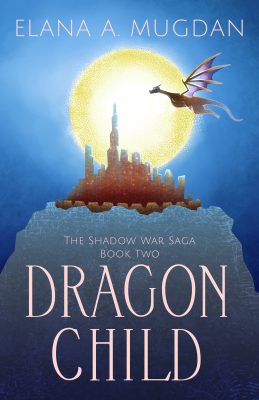
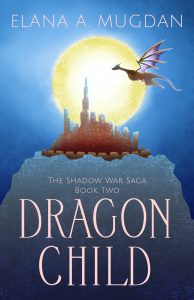
Mugdan: I’m currently putting the finishing touches on Dragon Child, Book II of The Shadow War Saga, so it’s ready for its release on May 21st of this year. Now that it’s so close to being done, I’ve also set my sights on completing the final round of edits for Book III, Dragon Blood, which will be out in February 2020. And of course, once that’s done I’ll be starting a major round of revisions on Book IV, Dragon War (slated for a tentative release date of April 2021).
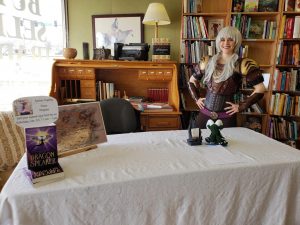
While I’m not writing and editing, I’m organizing my ongoing book tour for my debut novel, Dragon Speaker. So far I’ve held events in Pennsylvania, Vermont, Kansas, Maryland, and my home state of New York. I have a number of events coming up, and I’m hoping that I can continue to gain momentum over the coming months and turn it into a trans-continental adventure!
This is what we had to say about Dragon Speaker “High fantasy that hits all the marks.” Read the review in its entirety here.
Dragon Child, Elana’s newest book due out in May has already been reviewed and ready for pre-orders. Here’s a wee glimpse “Mugdan hooks readers and does not let them go! Fantasy brilliantly told, will delight readers in the second book of The Shadow War Saga.” Read the review right here.
Chanti: Who’s the perfect reader for your book?
Mugdan: I’d recommend my series for anyone who likes epic fantasy and dragons, obviously; but beyond that, anyone who enjoys strong, spirited, and oftentimes deeply flawed characters. One of the things that irks me about traditional fantasy stories is that we see all these beautiful, perfect heroes who effortlessly triumph over their evil foes because they are so Brave and Good. To me, that doesn’t make a relatable – or interesting – character. Our flaws make us interesting, and the way we overcome our flaws is what makes a great story. Many of my characters struggle with self-image, fear, even their own morality. During the course of the series, we see them grow and we see their worldview change as they learn about acceptance, self-love, and forgiveness. These are books for people who love fantasy, but who are tired of the usual fantasy tropes we so often encounter.
Chanti: And that’s exactly why your books are so highly rated! What is the most important thing a reader can do for an author?
Mugdan: The most important thing? Buy our books! Show your support for artists and their art. The second most important thing? Rate and review! Seriously, you don’t know how much of a difference it makes. Even if it’s a short review, just a couple sentences about what you liked (or didn’t like), it helps us in terms of visibility and credibility. Reviews can be the deciding factor when a reader is deciding to take a chance on a new book. Let the world know what you thought, so you can help others discover something wonderful which they otherwise might never have found!
Chanti: Well said! What excites you most about writing?
Mudgan: I love losing myself in my own little world. In writing, you are limited only by your imagination. You can create the most beautiful places and go on the adventures you’ve always wanted to take. If reading is a personal experience, writing is even more so – you pour your heart into your work, and you discover answers to questions you weren’t even aware you’d asked. When things come together and everything in your story finally falls into place, when you finish an action-packed or emotional chapter, or when you unearth a great truth in your writing, then there’s this brilliant moment of clarity. You’re filled with a sense of achievement that you have created something unique and magnificent. And that’s a feeling worth living for.
Chanti: Elana, it’s been a pleasure. Thank you for sharing your journey and wisdom with us!
Now it’s our turn. Do you like what you’ve read? Would you like to follow Elana Mugdan and see how she completes her Vitamin Water Challenge? Or where she’ll be next in her book tour? Please follow these link and sign up for her newsletter.
A young woman with more power than she realizes must confront the greatest evil in her cosmos in this richly conceived fantasy by Elana A. Mugdan.
In Book I of The Shadow War Saga, Dragon Speaker, we met Keriya, a teenage girl who went from being “nameless” by nature of her low social status to being given a new name of high honor – Keriya Soulstar. Book II begins as she and her friends Roxanne and Fletcher and her faithful dragon Thorion are relaxing in a Galantrian infirmary. With the vile shadow demon, Necrovar, destroyed, Keriya and Thorion can play and rest while Roxanne recuperates from her injuries.
Keriya, in fact, has never had it so good. She now has fast friends and allies, is regarded with great adoration by ordinary folk who see her as a magic-wielding warrior and has gained the respect she did not have in her early life. And to make matters even sweeter, there is a handsome young man, Max, who wants to get to know her a little more.
Imagine the surprise when she is summoned to be tried for treason.
Guided with telepathic messages from Thorion, Keriya answers her accusers and is acquitted, putting her archenemy General Tanthflame in the hot seat. It stands to reason, if she has told the truth, he must be the traitor. Now she must go to Noryk to meet with Lady Adelphia to testify in Tanthflame’s trial.
The night before her departure, Keriya has a vision. In it, she meets with Necrovar and the great spirit Shivnath from whom she derived her ability to do battle with the hateful shadow beast. Her vision clearly shows that although Necrovar is weakened, he is by no means eradicated. Keriya must abandon her peaceful niche and join the struggle against this evil once again.
Is she equal to that task? And where is her magic sword? Before her questions can be answered, Thorion is attacked and wounded, and flees, leaving no doubt where Keriya’s duty lies.
Author and filmmaker Mugdan has devoted much of her time since adolescence to constructing this grand tale of dragons, demons and a heroine who scarcely knows or understands her own powers but acts with faith that she can conquer the dark forces besetting her world.
Mugdan’s writing is charming and confident, revealing an expansive and delightful use of language. Also tucked neatly in this volume, Mugdan introduces Valerion of the Unknown Lands who has sworn to destroy Necrovar with a mystical spell and an enchanted sword. A possible love interest? Readers may expect to know more of him and his connection to Keriya in Book III, already planned for release.
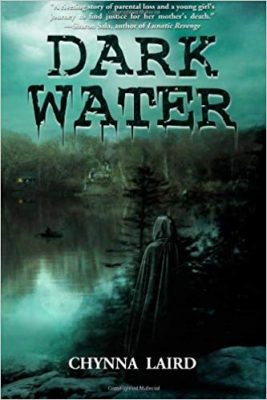
Sixteen-year-old Freesia Worth should be enjoying her summer break, not looking for her missing mother. Almost a year ago, Tamara went missing. Unwilling to admit the likely truth that her mother is deceased, Freesia takes on the mission of finding her.
Having lost her father in a peace-keeping mission in Afghanistan, Freesia is desperate to find her mother, who was last seen at Hawk Lake, the location of the family’s yearly summer retreat and Tamara’s favorite place in the whole world. As a psychologist, Tamara counseled many soldiers who served with James and suffered from PTSD. And with the police getting ready to close their investigation, Freesia understands that if she wants to find any last clues to her mother’s disappearance, the lake is the best place to look.
It isn’t long before her hopes turn to resignation as she uncovers clues that something horrible happened to her mother and that one of the men her father called a friend is likely involved. As Freesia wades deeper into the mystery, she becomes intertwined with a supernatural being and a deadly killer.
The supernatural elements within this novel greatly enhance the mystery. Readers not only get a great “whodunit” but also a paranormal twist in the legend of “The Watcher,” a First Nation man who is the guardian of Hawk Lake and of all those who love it. The Watcher also helps souls seeking retribution, vengeance for the misdeeds of evildoers.
The Watcher leads a mysterious gothic girl to reveal the fragmented clues Freesia needs to unravel the disappearance of her mother. As this girl plants the “seeds” of justice, the more difficult the book is to put down!
Dark Water brings awareness to two important disorders, PTSD and SPD. Several characters within the novel have post-traumatic stress disorder, and the author sympathetically showcases the suffering of these men, haunted by images no one should see. Freesia develops compassion for the often-frightening behavior of the men in her father’s former unit, and here Laird’s strength leads the reader carefully through the torture these men and their families endure.
At the same time, Sage, Freesia’s eight-year-old sister, has been diagnosed with SPD, sensory processing disorder. Sage hasn’t spoken since her mother’s disappearance and only truly connects with Freesia, who must patiently help Sage communicate what she’s seen and heard. Just as Tamara fought for the PTSD soldiers that she counseled, Freesia fights to bring her sister back in order to unlock the secrets buried within her.
A blue sweatshirt, a pair of broken sunglasses, a strange girl, and a mystery worthy of a television drama, Dark Water will captivate and intrigue mystery-lovers and paranormal fans alike.
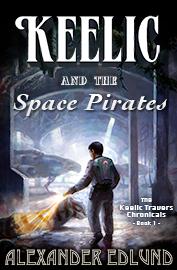
Alexander Edlund’s Keelic and the Space Pirates is a classic coming-of-age in an anything-but-classic environment. Eleven-year-old Keelic Travers wants what most young boys want, adventure and friendship, and he hopes to find both in his new home in Ermol, an “unspoiled oasis.”
Having left his best friend and the overpopulated world-city on Pesfor, Keelic initially finds excitement in the mostly rural world where his family has been sent to work. His award-winning exobiologist father shows Keelic how to properly explore and even allows him to explore on his own, but Keelic’s joy evaporates when he begins attending his new school, where he is constantly bullied. His only refuge is his advanced mathematics classroom, where he is the only student with an instructor who actually listens to him.
He believes he’ll never find a friend until he meets an alien left at his school by military officers. Thotti, a sentient creature who communicates non-verbally with colors and images, becomes Keelic’s constant companion when Keelic’s mother brings the creature home with them. He and Thotti discover a secret hidden deep in the Ermolian forest, a secret which could end up saving the lives of the entire planet.
Keelic is far from perfect. Though extremely smart, his adventurous, impish nature proves his strength and his downfall. Whether collecting specimens for his father or battling imaginary spaceships with Thotti, Keelic loves anything that forces him to use his wits, but at the same time, he’s still the fragile new kid who just wants to be accepted, or better yet, left alone.
This spunky fighter has a heart of gold and begins to question very grown-up concepts like self-awareness and free-will before the novel’s end. Dreaming of a war that occurred over two hundred years ago, Keelic sees only the glory of being a war hero until he must face real death at the arrival of the space pirates. This dynamic protagonist learns that life isn’t a game, and defending yourself often means less than defending others. His emotional growth isn’t linear; he often spins in moral circles, much like the real world.
Hardcore space opera fans of all ages will appreciate how seamlessly the author integrates the technical jargon of the novel. Readers will be fully immersed in a world three-hundred-years in the future, where humans are only one species of many, and small details create a believable environment that is such an intricate part of excellent science fiction.
Please click here to enjoy Keelic and the Space Pirates book trailer.

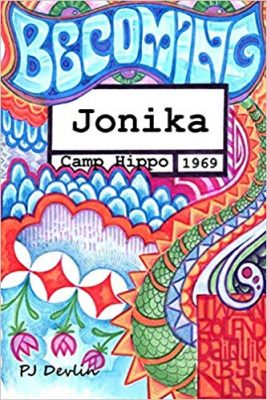
 Immersed in the nostalgia of classic summer camp experiences, Becoming Jonika is the coming-of-age story of Joni Byrnes, who, after finding herself on the wrong side of the law, receives a second chance at St. Augustine of Hippo’s summer camp in the trouble-ridden summer of 1969.














 At the tender age fourteen, Thomas Cheke is kidnapped in the dead of night by Barbary pirates from his home on the Isle of Wight. His widowed mother and sister are left behind, but Tom doesn’t know if they survive the surprise attack. During the next six years, his life will take more twists and turns than he could ever have imagined, and the resulting story is one of the most fascinating ever put to page.