Whispers by Lynn Yvonne Moon explores the issue of incest through the life of twelve-year-old Musetta, whose father has just died. We meet Musetta at her father’s funeral and realize that this girl is dealing with serious issues. Still, more than grief, she’s filled with rage – and relief. And we cannot blame her. Whispers is filled with enough intrigue and family secrets to glue readers’ eyeballs to the page and hug their parents when they reach the end of the tale.
Musetta can’t get the attention of her grieving mother, and she’s not sure who she can turn to for help. Who will believe her story? But she knows what happened to her. After her father’s funeral, she believes the Friday night ritual of rape is over and that the molestation will stop. However, it’s not quite that easy.
First off, there are voices in her bedroom walls – and worse, the molestation continues. Is it her father’s ghost? She can’t go to her mother for help, and she won’t go to the law unless her mother is by her side. Who would believe her over her late father’s reputation as an upstanding citizen and the favorite local judge?
But Musetta isn’t alone. Her friends hear the ghostly voices and soon believe her. As they band together, taking on the role of detectives, they have no way of knowing how much danger lies ahead. But when one of her friends is abducted, then another, it will take all the courage and resourcefulness she has to continue on and to discover precisely who is behind the creepy whispers and the horrible abuse before it’s too late.
Lynn Yvonne Moon develops a protagonist who will search for the truth no matter where it leads, and no matter what, she discovers about her family. Soon, she uncovers the lies of her grandparents.
Her father was a twin? It takes several more visits with her grandparents and a box filled with photos and papers before Musetta has the proof she needs. But will it only get her into more trouble? Of course.
This award-winning, page-turner of a novel reveals the reality that generational secrets have power. Secrets that put Musetta and all of her friends in great peril. Musetta’s determination to put the pieces of her family puzzle together led her further along the path to her family’s undoing. Because what she uncovers will have readers blood running cold.
Lynn Yvonne Moon unravels her complicated plot on this sensitive topic with a deft hand. Careful readers will pick up tiny clues that will keep them turning pages as we root for Musetta in this hair-raising tale of family intrigue and abuse.
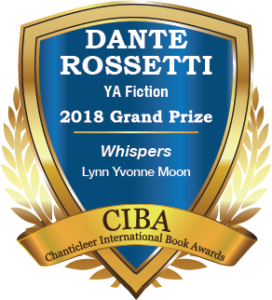
Whispers won the CIBA 2018 DANTE ROSSETTI Award for Young Adult fiction novels.
Do you have a Y/A Fiction manuscript or recently published novel?
Enter it today in the CIBA 2020 DANTE ROSSETTI Awards! Let us decipher the best of the best.
If you know anything about Chanticleer International Book Awards, you know that we never stop sharing the good news and accomplishments of our authors! Never!
What that means is we believe in book promotion, highlighting our winners, standing on our platforms, and telling the known world all about YOUR BOOK!
The Dante Rossetti Awards for Young Adult Fiction are named for the British painter and poet,
Dante Gabriel Rossetti
Chanticleer has chosen Dante Rossetti as the namesake of our young adult fiction awards, because of Rossetti’s strong connection to works of beauty and emotions as swift as the changing seasons. Both aspects embody what it means to be young. We feel that the sentiment expressed by the Pre-Raphaelite movement exemplifies what inspires many authors to pick up their proverbial pens to express their emotions and their observations of the visceral dynamics of living.
Besides, he was a rock star. He founded the Pre-Raphaelite Brotherhood, an exclusive group in the mid-nineteenth century which garnered as much fame and attention as equatable to the Game of Thrones cast today.
The Love Song by Sir Burne-Jones who was mentored and influenced by Dante Gabriel Rossetti
You won’t regret it – Just ask the following authors who did enter, and won!
The 2018 DANTE ROSSETTI Book Awards GRAND PRIZE:
Whispers by Yvonne Moon
WHISPERSbyLynn Yvonne Moon
2018 Dante Rossetti Book Awards for Young Adult Fiction First in Category Winners
Here’s a little more about our Dante Rossetti … (can we claim him as our own?)
Rossetti’s paintings, in particular, were characterized by the long and wavy hair of young women. It is this youthful beauty that has been immortalized in his work and captures the immovable spirit of adolescence which is so fraught with changing emotions. These women he painted are often quite romantic. His wife would often model for the paintings or the wives of his friends in the Brotherhood. It was rumored that Rossetti had several lovers…
Visitors today can view Rossetti’s work at the Louvre or the Met. In addition to painting, he was also a writer. Several of his poems address emotions and feelings in all of their complexity, similar to his painted works.
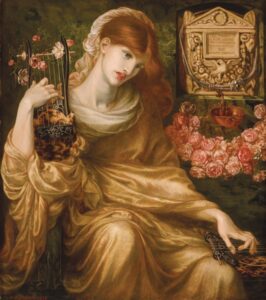
La Viuda Romana, 1874 by our fav guy, Dante Gabriel Rossetti
Leon Martin and the Fantasy Girl by Andre Swartley
Want to be a winner next year? The deadline to submit your book for the Dante Rossetti Awards is June 30, 2020. Enter here!
Do your works have what it takes to make it through the CIBA judging rounds? Submit manuscripts and published works into the Chanticleer International Book Awards – Click here for more information about The CIBAs!
The last day to submit your work is June 30, 2020. We invite you to join us, to tell us your stories, and to find out who will take home the 2019 CIBA prizes at CAC20 in September.
The deadline for 2020 YA submissions is June 30, 2020.Grand Prize and First Place Winners for 2020 will be announced on April 18, 2021.
Any entries received after June 30, 2020, will be entered into the 2021 Dante Rossetti Book Awards Young Adult Fiction. The Grand Prize and First Place for 2021 CIBA winners will be held on April 2022.
As our deadline draws near, don’t miss this opportunity to earn the distinction your work deserves! Enter today!
The DANTE ROSSETTI Book Awards is a division of the Chanticleer International Book Awards – the CIBAs.
The winners will be announced at the 2019 CIBA Awards Ceremony in September 2020, which will take place during the 2020 Chanticleer Authors Conference. All Semi-Finalists and First Place category winners will be recognized, the first-place winners will be whisked up on stage to receive their custom ribbon and wait to see who among them will take home the Grand Prize. It’s an exciting evening of celebrations!
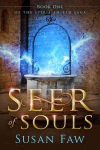
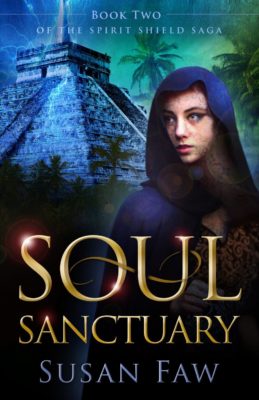
A savage civil war is consuming the Primordial tribes. With heavy losses for both Spirit and Flesh Clans, each side is taking extreme measures to secure Cathair and the mysterious forests and mountains surrounding it. Controlling Avery and Cayden Tiernan would ensure that victory. Born the children of royals from both clans and meant to unify the land, the twins have always been exceptional. It isn’t until much later that they learn they are Spirit Shields, godlings returned to Earth to help mankind and nature.
The twins aren’t the only godlings in the kingdom. Artio, released from her heavenly prison through a blood merging of bear and man, and Helga, Great Mistress of wicked souls, seek to rule man and spirits and take revenge on the twins, whatever the cost to the humans in their path. With Queen Alcina and Marea, spiteful High Priestess whose place has been usurped by Avery, the twins must fight to reunite and save humanity from annihilation at its own hands while fighting their sisters, both with designs on being the sole god of the Primordials.
This second installment of the Saga series has complicated plot twists. From the ever-changing loyalties of godling and man to the emerging backstory of Avery and Cayden, the novel throws the reader into the action and adventure on a non-stop flight through the intrigue and back-stabbing of Cathair. Fantasy readers will love the healing unicorns, fighting phoenixes, helpful werewolves, and bossy pegasusi. A mixture of world mythologies unites the familiar with the innovative, creating an intriguing blend and a truly unique setting.
Susan Faw is a masterful storyteller, and Soul Sanctuary’s strength lies in its multifaceted telling of myths and legends. With alternating points of view showing all perspectives of this battle of souls, the novel encompasses a tale as vast and varied as the kingdom itself. Readers may wish to dip into the first book in the series, Seer of Souls, to settle into this outstanding read.
Whether man or godling, no character is safe from the machinations of others, creating a network of subterfuge. The twins, Avery and Cayden, were born tools of unification but are also the chosen habitat of returning godlings, Alfreda and Caerwyn, who give up immortality for the chance to save the souls of man. Cayden must maintain the Well of Souls where souls reside until rebirth. Avery is the keeper of animal souls meant to pass on and be reborn. Because of their influential positions both as mortals and godlings, everyone seeks them.
The clans are controlled by their high priests, who sacrifice both spiritually and physically at will. Artio herself, a mixture of animal, man, and thunder, is created by the Flesh Clan, who quickly learn controlling her is much harder than it appears. Artio, though, is a slave to her revenge plot against Helga. Helga, trapped within a mountain, controls the souls of the lost and the former human queen, Alcina, but falls victim to her own jealousy of Artio, which led to her captivity. Unable to cut the strings of control and create their own destiny, all of the characters are mere “pieces on a giant chessboard, being pushed to and fro.”
Within this puppet-master world, the characters learn that only their combined strengths will win the day. Nowhere is this more evident than in the duo of Avery and Cayden. Though kept separate by the force of their siblings and the clans’ trickery, twin-power will save the people of this besieged land. But even if the dynamite duo manages to reunite, real success will hinge upon some critical, human and nonhuman characters who help the godlings along the way. Only with the teamwork of man and beast will the souls of all be saved.
Soul Sanctuary: Book Two of the Spirit Shield Saga won First Place in the CIBA 2017 Dante Rossetti Awards for Y/A Fiction.
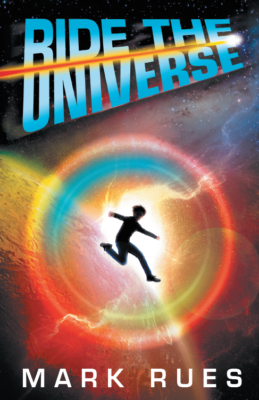
A young boy goes on a journey through the solar system searching for the spirit of his sister, discovers the basics of science and spirituality with the help of a mystic teacher and a super-powered cat.
Teddy DeXue’s ride around the universe begins in the summer of 1963, just as his amazing catch wins the Little League Championship for his team. But it doesn’t really start there. It really began the year before when Teddy’s sister Jean died, and his family fractured into broken, grieving pieces.
Teddy has a secret. He believes that his sister is out there, somewhere, and that the moon, the big, bright full moon that helped him make his game-winning catch, is going to help him find her. With training from a mysterious spiritual master, a bit of scientific knowledge gleaned from his dad and guarded by Henry, his strange and slightly super-powered cat, how can he fail?
While his best friend, Tem, thinks that Teddy’s quest is nothing more than wishful thinking, he goes along for the ride – and what a ride it is!
As Teddy searches through the stars for his sister, his engineer father introduces him to scientific concepts about the nature of the universe; even the many ways that light can be refracted, reflected, and split. In his dreams, Master Fu-Hsi teaches him the spiritual side of what his father’s talking about. It’s up to Teddy to put that knowledge together to make his journey into the stars – and back.
The story and the way it proceeds is reminiscent of the way the best-selling novel, Sophie’s World by Jostein Gaarder introduced young Sophie to the basic concepts and history of philosophy while pulling readers along for the fascinating journey.
There’s also an element of the classic YA SF novel, A Wrinkle in Time by Madeleine L’Engle in Teddy’s search among the stars for his lost sister.
The combination of the two elements draws readers on Teddy’s journey as he finds his way to his sister and back. Along the way, he grows up and learns what it is to love, even as his family finds their way back from heartbreak.
Ride the Universe crosses genres of Sci-Fi, Fantasy, and Philosophy, as it uses those tropes and more than a bit of magical realism to tell its story.
Ride the Universe is a multi-genre novel with heart. Fasten your seatbelt! For those searching for something a bit more outside the box, look no further, Ride the Universe is a magic Thunderbird of a ride – in an actual, honest-to-goodness, T-bird.
The Dante Rossetti Book Awards recognize emerging new talent and outstanding works in Young Adult Fiction. The Dante Rossetti Book Awards is a genre division of the Chanticleer International Book Awards (#CIBAs).
Named in honor of the British poet & painter Dante Gabriel Rossetti who founded the Pre-Ralphaelite Brotherhood in 1848.
Chanticleer International Book Awards is looking for the best books featuring stories of all shapes and sizes written to an audience between the ages of about twelve to eighteen (imaginary or real). Science Fiction, Fantasy, Dystopian, Mystery, Paranormal, Historical, Romance, Literary, we will put them to the test to discover the best.
These titles have moved forward in the judging rounds from SLUSH pile to the 2019 Dante Rossetti Book Awards LONG LIST and now have progressed to the 2019 SHORTLIST.
Congratulations to the 2019 Dante Rossetti Shortlisters!
Navya Sarikonda – The Enchanters’ Child
J.A. Roth – When The Bee Stings
Veronica Myers – Winter’s Progeny
Zachary Ryan – High School Queens
Julieanne Lynch – Beneath the Lighthouse
Jacinta Jade – Change of Darkness
Kelly Watt – The India Diaries: Book One Tiger’s Rock
J. Taylor Baker – The Cardorian Complex
Glen Sobey – No Fences in Alaska
Jan Von Schleh – But Not Forever
Michelle Rene – Manufactured Witches
Nancy Thorne – Victorian Town
Ted Neill – Jamhuri, Njambi & Fighting Zombies
A. Cort Sinnes – Quicksilver
Leslea Wahl – Where You Lead
C.R. Stewart – Britfield and the Lost Crown
Susan Brown – Twelve
J.T. Blossom – The Tunes of Lenore
James M Roberts – The Crossroads of Logan Michaels
Sandra L Rostirolla – Cecilia Futuris
Kristina Bak – Nowever
Zachry Wheeler – Max and the Multiverse
V. A. Givens – Sealed with a Twist
Tom Edwards – The Honourable Catherine
Michael Bialys – The Chronicles of the Virago: Book I The Novus
David Patneaude – Fast Backward
John Middleton – Dillion & The Curse of Arminius
Good luck to all!
Which of these works will move forward in the judging rounds for the 2019 Dante Rossetti Book Awards for Young Adult Fiction?
These entries are now in competition for 2019 Dante Rossetti Semi-Finalists positions. Semi-Finalists will be announced and recognized at the CAC20 banquet and ceremony. The First Place Category Winners, along with the CIBA Division Grand Prize winners, will be selected from the 16 CIBA divisions Semi-Finalists. We will announce the 1st Place Category winners and Grand Prize Division Winners at the CIBAs Banquet and Ceremony on Saturday, April 18th, 2020 at the luxurious Hotel Bellwether in Bellingham, Wash.
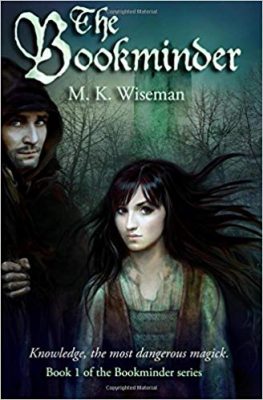
More than anything, Liara just wants to belong. As an orphan “fey” child in the seventeenth century, Liara has been a ward of the Church for ten of her sixteen years. Grateful to be taken in and cared for by Father Phenlick, she knows most of the villagers want her gone.
The product of a rape by a magical creature, Liara is imbued with magic and in many ways is magic itself. The powerful wizard who created the creatures responsible for the attack during the attack on the valley, knows nothing of her existence. Father Phenlick enlisted the help of Nagareth, the wizard of the woods, to shield Liara and the village from further assaults all while outlawing the very power he is secretly trusting.
At St. Sophia, Liara is safe until she steals from the village busybody. When Liara’s extensive hidden stash is discovered in a “magicked” hollow tree, the Venetian soldiers who protect the valley force Father Phenlick to ostracize Liara. Abandoned by even her friends, Liara is taken in by Nagareth, who promises Phenlick that he will not teacher Liara his craft. Liara begs Nagareth for magical instruction, but he only allows her to care for his extensive magical library. Gradually, Nagareth sees great potential in his new ward, but when everyone in Dvigard is killed by a mysterious plague, he begins to fear that he can’t protect her from her powerful creator who will want her powers for his own if she is discovered.
Liara cannot see the danger around her, and as her own magical knowledge grows through her maintenance of Nagareth’s books, her only goal is to exact revenge against her father. As her abilities grow so does her anger and confusion at the only person standing between her and her destruction.
Liara is a complex, dynamic character. Her history gives her more than normal teenage problems. Liara’s mother was driven crazy by the rape and was never able to truly care for or love Liara, leaving Liara to the cruelty of the villagers. Without Father Phenlick, Liara would never have survived, and though he tries to give her a home, he isn’t able to fill the emptiness deep within her. Liara desperately needs something and somewhere of her own, which is why she steals–to fill her life with things that are her own. In creating her hollow-tree hiding place, she creates that place where she isn’t afraid to be herself. Though she is unaware of her own magic, it is as much a part of her as her history.
In the beginning, all Liara wants is to grow that power. She desires the very thing others accuse her of having to give her what she has never had, but it’s a double-edged sword. She is hated for her supposed abilities even before she shows evidence of magic, but when she finds the magic she wants so badly, it will define her. She wants others to see she has feelings and dreams, but in the very thing she wants most, this undeniable power, people will see only that. She limits herself to this magical creature, and that drive quickly becomes an obsession. Only too late does she see Nagarath’s minimal use of magic isn’t a waste. She almost allows her prejudiced idea that magic should be grandiose to cloud the important lesson she learns about living simply, living for love and not power. As she grows through her relationship with Nagareth, she learns what magic should truly be.
The evolving bond between Liara and Nagareth is a beautiful story. Only nine years Liara’s senior, Nagareth sees Liara as a child in the beginning, but over the novel’s development, he begins to see Liara as a true companion. The joy she brings to his life, the peace she makes him feel, even though she annoyingly begs him to teach her magic, becomes invaluable to the lonely wizard.
He wants to make sure she has a life of stability, not fear. As he opens himself up more and more, he becomes her friend. He realizes she has given him more than he has returned and relents in his promise not to teach her. Nagareth grows as much as his precious ward.
The Bookminder won 1st Place in the CIBA 2017 OZMA Awards for Fantasy Fiction.
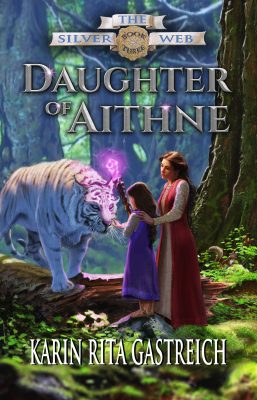
Writer and ecologist Karin Rita Gastreich draws inspiration from her trips to the magical forests of Costa Rica to bring life to the Silver Web series. An unforgettable journey, Daughter of Aithne, isthe finale to the epic story of Queen Eolyn the High Maga, set in a world of seemingly never-ending war where female practitioners of magic (maga) are feared.
Set ten years after the conclusion of Gastreich’s second installment in the series Sword of Shadows, Daughter of Aithne begins during an era of abundant peace. That peace quickly turns to turmoil when a group of Eolyn’s magical progeny commits an act of grave betrayal by kidnapping Princess Elisara, daughter of the former Queen Taesara.
The Mage King Akmael immediately orders all maga to lay down their arms and have their magic bound. For years magas have been prosecuted for having magic and were all but annihilated by the crown. Except for a small amount that managed to escape hoping to one day be able to live their lives of magic according to their beloved culture. Fear of women’s magic is still alive in the kingdom, and the King, wishing only to protect his queen and her daughters, attempts to avoid an outbreak of war by banning all magas use of their craft.
Gastreich uses vivid language to transport readers into the story. An overarching theme of distrust and vying for loyalties in and among kingdoms presented in this third installment of the Silver Web series is reminiscent of other high fantasy series such as George R. R. Martin’s A Song of Ice and Fire. Gastreich masterfully executes an effective use of narrative misdirection throughout the story.
Karin Rita Gastreich has an apparent love for the magic of nature and breathes that into the heart of her books, but she also successfully sets real-world issues at the forefront. She follows a common trope within the Young Adult genre by taking an issue from today and melding it into her narrative. Here, the main element in the Silver Web trilogy is the stark contrast of beliefs and opinions centering around magic and especially female magic welders. Many fear their magic and believe magas are dangerous, but then have little or no issue with male mages.
A triumphant story of adversity, Daughter of Aithne is the exciting conclusion to the Silver Web series. Readers of all ages may hope this is not the last time Gastreich will return to her fantastical world of magic.
Daughter of Aithne won 1st Place in the CIBA 2017 OZMA Awards for Fantasy novels.
Meet Peter Greene, CIBA Award-Winning author of High-Seas Action Adventure novels that appeals to all ages!
If you’ve ever been to a CAC (Chanticleer Authors Conference), you might recognize author Peter Greene. He’s the one that sits on the outside aisle, quiet and unassuming. Well kids, don’t be fooled! Peter has one of the best imaginations I know of—and there is a reason for his works are award-winning! You’ll just have to read on to discover it yourself!
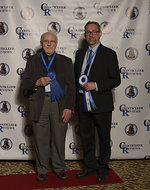
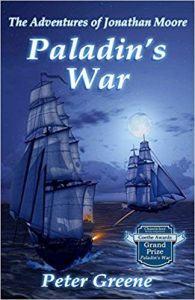
Peter Greene took home the Goethe Book Awards Grand Prize in the 2017 CIBAs for Historical Fiction for Paladin’s War.
CIBA 2017 Goethe Book Awards Winners Joe Vitovic & Peter Greene
Chanticleer: Tell us a little about yourself: How did you start writing?
Greene: My parents were both prolific storytellers, and they were amazingly descriptive, especially my Father. He would act out the voices and mannerisms of all the people. I learned a lot from trying to outdo them. Then in high school, when I took a creative writing class, my teacher, Mrs. Beem, would just yell out something like “a story with lots of movement” or “use the words ‘freedom’ and ‘cheesecake’ in a short story” and I would just go. The other kids sat and struggled, but I already had a plot, characters, and all that in seconds. She gave me A’s all the way through.
Structure: Pantzer or Plotter?
Chanti: That sounds like a great way to be introduced to storytelling!
So just how structured are you in your writing work?
Greene: Very structured, but only in the process, not in the structure of the piece.
I first list “essentials” – just the essential things I want in the story, in no order, and some may make it in there, some may not. This way I get ideas out of my head before they are lost in the ether!
Then comes some basic research, which is ongoing through the process of course, but I just want to make sure I’m building my fiction on a solid, believable foundation.
I then outline like a madman, very detailed at times, sometimes with partial chapters written out, sometimes with crude drawings! These outlines are dozens of pages long, and I print them and literally wallpaper my office with them! The outline for Paladin’s War covered three walls in my office!
Finally, I start the actual writing, usually in chronological order, but that is a rule I break depending on my mood.
When I’m done, I have my wife read the book out loud to me so I can hear the rough spots-that is critical— I find so much that makes me cringe: from unnatural dialogue to foggy descriptions to just clunky passages. I judge a competition and this is the advice that I tell almost every beginning author who enters the contest.
Then, I send to the editor for evaluation. But all of these steps are ‘writing’ to me. And I love all of it.
Authors Who Have Influenced Your Work
Chanti: That’s a good way to approach your writing! I like the Madman Outliner… sounds like the title of your next book! Name five of your favorite authors and describe how they influence your work.
1) Kurt Vonnegut, mostly his later stuff, like Breakfast of Champions because he became so irreverent after his ‘mainstream’ success. He taught me that style can change, and be ANYTHING as long as it has something valuable to say.
2) Erma Bombeck, again showing that style, if it is true, can let you do anything. I would read her columns, and even though I was about twenty-two years old and a single man in Los Angeles when I discovered her, I identified with her message and I laughed. Her writing seems so effortless! I miss her.
4) David McCullough. This is cliché, but he makes history come alive, and his writing voice (as well as his speaking voice), is so crystal clear. No extra stuff, just the best, most important things are covered in a wonderful manner that intrigues us. He never put his opinion in his works, because he doesn’t have to. History is history, and it is interesting enough.
5) J.R.R. Tolkien because he is the best at everything: plot, character, situation, excitement, humanity, emotion, poetry, prose and adventure. I have read the Silmarillion at least ten times and Lord of Rings each year since I was fourteen. I am always amazed at the scope of his stories, and the languages – truly amazing. I have learned from him that no matter how good I think I can be at times, I am no master. He is the true master. I would never try epic fantasy because the bar has been raised so high.
About Dialogue
Chanti: Great insights – and choices! You’ve given us something to chew on. What areas in your writing are you most confident in? What advice would you give someone who is struggling in that area?
Greene: Dialogue is pretty easy and natural for me, maybe because of my theatre training. As far as advice for others who struggle with dialogue, I’d say this: if you are always looking for a witty, snappy, clever, smart ways for your characters to speak, STOP! It will all come out cliché, and no one talks in clichés. It will read like an episode of some seventies, low-budget television series. J.D. Barker said at the last CAC19 that he sits in a Starbucks, has a cup of coffee and listens to what the people around him say, and he types it into his laptop! That is brilliant. It’s natural. I tried it. It was a blast!
JD Barker presented at CAC19!
Expanding Readership and Promoting Literacy
Chanti: Ah, that’s my favorite thing to do! What do you do in your community to improve/promote literacy?
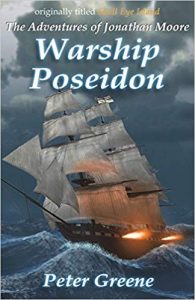
Greene: For the Adventures of Jonathan Moore series, I specifically targeted YA readers. I consciously write each book to graduate the reader from the fourth-fifth grade reading level with Warship Poseidon, to the sixth-seventh grade level with Castle of Fire, then Paladin’s War finishes on the ninth-tenth grade level. If a youngster reads all three, he jumps several reading levels! I also donate books to schools and libraries in the area and have done a few talks to writing classes.
Honestly, my book reviews from Chanticleer after my winning the Goethe award in 2018 and the (Chanticleer) review of Paladin’s War exploded my sales. I increased my sales by over 400%, so that worked for me! – Peter Greene
Marketing and Sales Tips
Chanti: That’s awesome! So, you give away books and present writing classes, what else do you do to market your books? What’s worked to sell more books, gain notoriety, and expand your literary footprint?
Greene: I don’t do enough, but when I learn something, I do it. I enter contests that are legit. Advertising can work, it just depends on finding what works for you. Honestly, my book reviews from Chanticleer after my winning the Goethe award in 2018 and the (Chanticleer) review of Paladin’s War exploded my sales. I increased my sales by over 400%, so that worked for me! You just have to try everything, meet people, and spread the word – without saying “Hey, I wrote this great book, you should read it.” Let others speak for you, and most of all, let your writing speak for you.
Let others speak for you, and most of all, let your writing speak for you. – Peter Greene
How do you separate your books in a crowded marketplace?
Chanti: That is incredible! I love that – especially how Chanticleer Reviews helped to boost your book sales by 400%! I think we need that on a t-shirt…
What is different about your series from other YA books out there?
Greene: Two things: I avoided all magic, superpowers and paranormal material. That’s all fun – but there is too much of it out there already. None of us will ever discover we have wizards or Olympians for parents or have a mystical ability. For this series, I wanted to point out that real heroes do exist, and they have throughout history.
I also decided to take it easy on the terminology and more unsavory aspects of life at sea. I’ve always loved the classic sea stories in Stevenson’s Treasure Island, Forester’s Horatio Hornblower, and O’Brian’sJack Aubrey series, but I couldn’t help thinking that for most of us, unless one had supporting texts and companion guides to get through all the jargon and technicalities, one could easily become lost-and maybe surrender to something easier to read. That would be too bad. And the things you do really need to know, well, wouldn’t it be best to learn that along with the characters? The ones that started out as land-lubbers just like you and your kids?
The Adventures of Jonathan Moore books are about one would-be hero and his friends who try to succeed using only their courage, their wits and industry alone – no magic necessary. And though I will never fill the shoes of Stevenson, Forester or O’Brian, I can attempt to follow in their footsteps.
Chanticleer: That’s great! But you never know…you may be the one to fill their shoes if “Adventures of Jonathan Moore” are any indication!
Now we would really do need to know a little bit more about when did you realize you that you were an author?
Greene: I got my degree in Theatre from Illinois State, and a playwriting professor said I had a “knack for dialogue and physical humor.” That made me continue writing. I wrote screenplays after college, and a studio exec at 20th Century Fox pulled me aside and said “you really can write, keep it up” – then years later, my first novel, Warship Poseidon won the Adventure Writers Competition’s Grandmaster award, and Clive and Dirk Cussler chose the winner. When Clive announced my name, he said “I read your book, you know. Beautifully written.” THAT made me think that maybe I have a little writing ability. So when I write, I always think “maybe Clive and Dirk will read this so it better be my best effort.”
Editor’s Note: Clive Cussler’s books have been published in more than 40 languages in more than 100 countries. They are New York Timesand international bestsellers. He has written 17 books in a row that reached the New York Times’ fiction best selling list. He is of a select group of authors to achieve this status. Cussler has also published more than 50 novels—quite the back list that keeps him on the list of richest authors in the world.
Chanticleer: Holy Moley, man! That’s Clive & Dirk Cussler! I can’t… I just need a moment… Okay then, what led you to write what you write?
Greene: I write a lot of different stuff in different genres, because, why not? The Adventures of Jonathan Moore series is YA historical fiction, and it all happened by accident. One night, as I was putting my children to bed, I realized that I was tired of reading the books available on our bookshelf. Knowing they were crazy about the Pirates of the Caribbean movie, I just said, “Tonight I’m going to tell you a story about twelve-year-old Jonathan Moore who lived in a dark and filthy alley, and how he ended up a hero on a tall sailing ship.” I kept telling a little bit each night, making it up as I went. My wife, who was listening to the stories each night, suggested that I write it as a novel. Ten years later I have three books in the series!
Chanti: And so the magic began… How do you come up with your ideas for a story?
Greene: Good question! Usually, something just clicks that I observe or realize, and off I go. For example, I was thinking about hidden social casts in America and I thought “Wow. People don’t see it, do they?” So BAM! This Sci-Fi idea hits me for a novel, the characters came quickly and then a plot and now the outline is almost finished. I’m starting it now. It’s a strong female character who uses history and propaganda to, well, you will have to read it!
Chanti: A SciFi novel! We can’t wait to read it! Are you going to enter it into the Cynus Book Awards?
Greene: Definitely!
Chanti: Thank you, Peter Greene with an “e,” and we look forward to seeing you at CAC20!
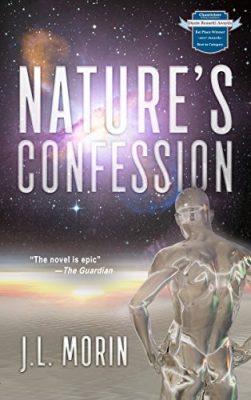
In a dystopian near-future where nobody is safe, the world is ruled by a ruthless capitalist. Humankind’s last hope may be a fourteen-year-old named Boy. Part sci-fi, part diverse love story, Nature’s Confession by J.L. Morin is an ecological coming of age novel that spans the universe.
The story opens with Boy, so-called because he hasn’t reached an age where he will be named yet for security reasons, managing to survive in the dystopian world he calls home. On next year’s earth, humanity is essentially enslaved by a worldwide corporate government, not for the people or by the people, but one that operates to ensure its citizens are brainwashed, downtrodden, and too exhausted to be able to offer any sort of resistance. When Boy stays after school one day, he meets a man who turns out to be his long-time idol—Tyree. Tyree is a member of the resistance and recruits Boy to help him and their cause, believing that Boy may be their last hope.
As the story progresses, readers are introduced to a motley assortment of characters. Valentine, Tyree’s daughter, is a genius whose inventions have the power to change the world. Porter, Boy’s dad, shows up throughout the story as different versions of himself crossing over from other realities and timelines. Eleanor, most often referred to as Mom, leaves her stressful, humdrum life on earth to become a Member of Starliament. A telepathic dog-like hupcha with six tails and the wise, albeit manmade, Any Gynoid lead the crew to befuddle polluters.
Almost every character gets their own chapter devoted to their point of view. Most of these chapters are told in the third person while a few switch to first-person narration. Boy, our hero, gets surprisingly few chapters. Rather than having Boy’s character be the main focus of the novel, Morin instead uses him as a frame for the book—showcasing him at both the beginning and the end. Boy’s journey unfolds through the eyes of those who surround him.
Nature’s Confession—that she might not be able to sustain the human race anymore—will appeal to readers who like their sci-fi broad and far-reaching. This novel continually moves from one plot point to the next, often switching characters to give a broader sense of the story, and never lingers too long on the technicalities. Alien lifeforms, alternative clean energy sources, intergalactic travel as well as time travel, and multiple realities abound in this diverse, multi-cultural love story. Morin does an excellent job using Nature’s Confession as a timely foil for the challenges our society faces regarding climate change, big industry, sustainability, and how the human race will survive. Highly recommended!
Nature’s Confession won 1st Place in the CIBA 2017 Dante Rossetti Awards for Young Adult Fiction.
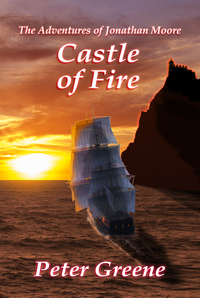
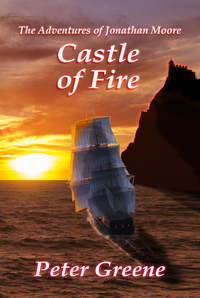
Midshipman Jonathan Moore scrambles aboard just in time for the departure of the HMSDoggard (a horrible name, soon replaced with her original name, the Danielle). The latecomer is welcomed by some of his friends from an earlier voyage on the HMS Paladin, including Seaman Sean Flagon, Lieutenant Thomas Harrison, Bosun Steward, and even Captain William Walker.
Jonathan had not expected to be on this voyage, as he was only recently reunited with his father, Captain (soon to be Admiral) Nathaniel Moore, who had been captured and imprisoned by the French earlier in the Napoleonic Wars. This left Jonathan orphaned on the streets of London until he and Sean were pressed into service on the Paladin. But Captain Moore escaped and returned to England. While loath to see Jonathan leave, he eventually realizes that he must allow his son to follow in his footsteps in the Royal Navy.
After meeting with Captain Walker, Jonathan finds his quarters in the cockpit, shared with the other midshipmen, a rude Wayne Spears, and his sidekick Timothy Lane. Jonathan thinks he will simply avoid the two and spend time with Sean and his other friends, but when Spears pushes Sean to the floor, enmity ensues.
The Danielle’s arrival in Nassau brings relief. Delain Dowdeswell, whom Jonathan had befriended on an earlier voyage to Nassau, is spotted rappelling down a cliff overlooking the harbor—the adventurer that Jonathan and friends already know. Delain’s sisters, Rebecca and Penelope, deliver an invitation to Captain Walker from their father, the governor, to dine at the mansion, bringing his officers and Sean. At dinner, Jonathan is paired with Delain, Harrison with Rebecca, and Sean with Penelope, whose company they enjoy even more than the scrumptious food. Lady Dowdeswell asks the captain if her daughters can be accommodated on the ship for its return trip to London, where they are to receive further education—a request happily agreed to by all except Delain, who fears an end to her adventuring.
On the balcony after dinner, Jonathan gives Delain a silver necklace with a dolphin pendant that he had bought in London for her. Her delight is interrupted by Spears’s intrusion. Harrison approaches, fearing trouble, but Jonathan remains cool. It is Delain who finds revenge by “accidentally” tromping on Spears’s toe with her sharp heel. Spears will not forget this, nor his desire to end Jonathan’s career in the Navy, or perhaps his life altogether.
Before the Danielle departs in search of pirates, the captain agrees to take Delain and her teacher, along with Jonathan and Sean, to a nearby island where they hope to see turtles hatch and make their run to the sea. They are rowed ashore by marines Hudson and Hicks, who will stay overnight with them until the Danielle returns. Delain and Jonathan arrive in time to help the tiny turtles reach the sea by chasing away the seagulls. Delain is a delightful, resourceful young woman who manages to be at the center of everything that happens. What the trio of Jonathan, Delain, and Sean discover in the ancient “Castle of Fire” and its secrets will have readers holding their breath!
Peter Greene has done it again—another well-penned, colorful, action-packed tale to be read for pure pleasure. Make sure you don’t miss Books 1, Warship Poseidon and 3, Paladin’s War. Highly recommended!


 Whispers by Lynn Yvonne Moon explores the issue of incest through the life of twelve-year-old Musetta, whose father has just died. We meet Musetta at her father’s funeral and realize that this girl is dealing with serious issues. Still, more than grief, she’s filled with rage – and relief. And we cannot blame her. Whispers is filled with enough intrigue and family secrets to glue readers’ eyeballs to the page and hug their parents when they reach the end of the tale.







 A savage civil war is consuming the Primordial tribes. With heavy losses for both Spirit and Flesh Clans, each side is taking extreme measures to secure Cathair and the mysterious forests and mountains surrounding it. Controlling Avery and Cayden Tiernan would ensure that victory. Born the children of royals from both clans and meant to unify the land, the twins have always been exceptional. It isn’t until much later that they learn they are Spirit Shields, godlings returned to Earth to help mankind and nature.