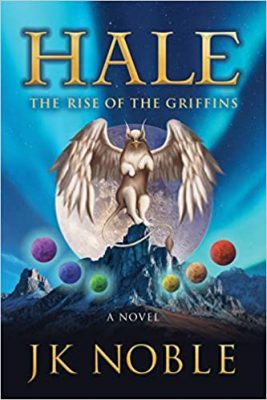
J.K. Noble’s first installment in her new YA series, Hale: The Rise of the Griffins, is a fast-paced adventure through a magical realm full of danger, deception, and mythical beasts.
Sixteen-year-old Hale was orphaned at a young age; his parents both mysteriously killed while on a family camping trip. His older sister, Carly, took him under her wing and raised him, making sure he was safe and that he always wore the amulet given to him by his father. But two years later, when Hale and Carly are both abducted and held captive by a violent man, Hale’s life takes another drastic turn he isn’t expecting. He’s swiftly ushered into a magical realm known as The Extraordinary Division of Malphora – a sister realm to The Human Division of Malphora – where Griffin’s reign supreme and monsters lurk across the lands.
Accompanied by a group of other kids also pulled into The Extraordinary Division of Malphora, Hale learns that he isn’t a simple human boy – he’s a Griffin with the power of Endurance, the strongest of powers among his kind.
Aided by his new friend River, Hale navigates the brutal world of young Griffin training set up by the leader of the Griffins – the powerful and respected Bayo. Except, Bayo isn’t entirely what he seems. He’s hiding a dark secret from Hale that could flip their entire world upside down, and if he’s not careful, Hale could end up bringing about his demise.
Noble crafts an intricate and vast world full of lore that will keep even the most avid fantasy reader engrossed.
The magic system uniquely draws upon many familiar mythological creatures – harpies, nymphs, witches – but offers its own spin, combining these old legends with the modern era’s ingenuity. It is clear that an immense amount of planning and work went into the creation of Malphora, and while some details may feel rushed at times, Noble gives the reader an adventure of a lifetime that they won’t be able to put down.
Not only does Noble’s magic system draw the reader in, but so do her characters.
The emotional ties between the cast are one of the book’s most vital attributes, exploring the trials of friendship, the heartbreak of love, and the dangerous things we’ll do to protect our family. The bond between Hale and Carly provides a solid start to the book. The friendship that forms between Hale and fellow Griffin River keeps the reader invested, not to mention the plethora of other characters and their interesting and often complicated personal ties to one another. Emotions run high in Hale: The Rise of the Griffins, and they will make any reader laugh, cry, and sing Nobel’s praises.
Writing to Dorothy: the importance of Fantasy and the Ozma Awards
As anyone who follows Chanticleer knows, the Ozma Awards for Fantasy Fiction are named after Princess Ozma of Oz, one of Dorothy Gale’s companions in Frank Baum’s Wizard of Oz series.
L. Frank Baum, Author of The Wizard of Oz series
What you may not know is the dedication at the front of that book that reads:
To all the boys and girls who read my stories – and especially to the Dorothys – this book is lovingly dedicated.
As Chanticleer looks for the best Fantasy Fiction featuring magic, the supernatural, imaginary worlds, fantastical creatures, legendary beasts, mythical beings, or inventions of fancy, there’s something beautiful hidden in that dedication. When authors write fantasy, they’re diving into a world beyond science, beyond the realm of understanding.
These are the best parts of escapism in literature. While the worlds may be similar and the struggles and allegories run parallel to our world, the separation of a whole new world of fantastic magic takes us from the mundane into a realm beyond our own.
As always, Masterclass.com has an excellent definition at the ready for us:
Fantasy is a genre of literature that features magical and supernatural elements that do not exist in the real world. Although some writers juxtapose a real-world setting with fantastical elements, many create entirely imaginary universes with their own physical laws and logic and populations of imaginary races and creatures. Speculative in nature, fantasy is not tied to reality or scientific fact.
With all that in mind, think back to the dedication in Ozma of Oz. Who is the Dorothy you write for? That reader who needs to escape from the dreary grays of their world into a reflection of reality that shines beyond all belief. When we bring the reader into this world, we create something truly special and unique, and sharing that brings the magic to life.
To put all this into perspective, L. Frank Baum published the first OZ work in 1900.
Note from Kiffer: If you are writing fantasy, it will be well worth reading Baum’s first three books—if you haven’t already. Learn from the best!
Baum’s OZ series helped to pave the way for fantasy epics such as:
The Lion, the Witch, and the Wardrobeby C. S. Lewis published 1950.
Lord of the Rings by J. R. R. Tolkien was published July 29, 1954. His The Hobbitwas published in 1937.
The Witcher novel series by Andrzej Sapkowski. Published 1986
The Golden Compassby Philip Pullman. Published 9 July 1995
Harry Potter series by J. K. Rowling. First book published June 26, 1997
Twilight Saga by Stephanie Meyer. First book published 2005.
Ozma of Oz: A Record of Her Adventures with Dorothy Gale of Kansas, Billina the Yellow Hen, the Scarecrow, the Tin Woodman, the Cowardly Lion and the Hungry Tiger; Besides Other Good People Too Numerous to Mention Faithfully Recorded Herein,published on July 30, 1907, was the official third book of L. Frank Baum’s Oz series. It was the first in which Baum was clearly intending a series of Oz books. [Peter Glassman, “Afterword,” p 271 L. Frank Baum, Ozma of Oz, ISBN 0-688-06632-1]
Princess Ozma and her Royal Court of Oz are the rulers of the Land of Oz. She does not appear in the first book in the Oz series, but makes a grand entrance in the second of the series, The Marvelous Land of Oz. She is kind, wise, and brave. She was a long lost princess who was hidden away for her own safety when the Wizard of Oz took the throne (the man behind the curtain).
Also, notice that Dorothy is holding Billena, the speaking hen, on the cover. Billena plays an instrumental role in Dorothy’s Hero’s Journey in OZMA of OZ.
Did you know that L. Frank Baum wrote and published 40 Oz books in the series?
If you have a Fantasy book that you know deserves the recognition of a prestigious Chanticleer Int’l Book Award, submit it here by the end of October to be entered into the 2021 CIBAs.
You can see the 2020 Ozma CIBA winners here, and you better believe we have some extra Fantasy reviews to Recommend to you!
Before we dive in, if you haven’t checked out our Ten Question Interview with Elana A. Mugdan, now’s the time to fix that! She’s a marvelous fantasy author and dragon expert.
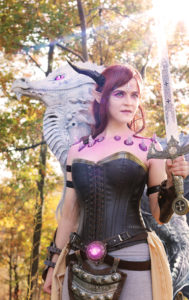
Elana A. Mugdan cosplaying as one of her characters
Without further ado, let’s see some fantasy books, starting with Mugdan!
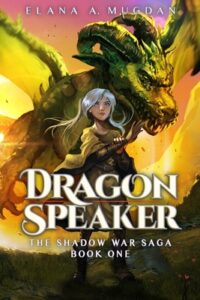
Dragon Speaker (Book 1 in the Shadow War Saga) By Elana A. Mugdan Ozma Grand Prize Winner
A young girl is charged with rescuing a dragon and, ultimately, saves her world in this wide-reaching fantasy conception of love, war, danger, and magic. Massive amounts of magic!
Keriya is a simple girl of no great pedigree who lives in Aeria where everyone except her wields some form of magic. At age 14, she knows she will not be selected to prove herself worthy of a greater destiny in the annual Ceremony of Choice. But she has to try. Even though the consequences of failure will be a life of slavery, she yearns for the opportunity. She approaches the selection committee and begs – no, demands – a chance.
The Sightless City
By Noah Lemelson
Ozma First Place Winner
The city of Huile burns with trouble in Noah Lemelson’s dieselpunk novel The Sightless City.
Four years ago, the United Confederacy of the Citizens Resurgence defeated the Principate in a devastating war. Marcel Talwar lost his leg to that conflict but became a national hero for saving Huile. Now he’s settled down to work as a private detective. However, the schematics to a strange device throw his temporary calm into disarray.
Jade of House Sol has the chance to save her father from the Isle of Dragons, but land, sea, and the guards of her homeland stand between them. Will, her new friends, prove loyal and capable enough to see her journey through, and what will they find on the elusive island?
Carison Sol, betrayed by his fellow nobles, disappears across the sea in the dark of night. Meanwhile, Jade flees the guards chasing her, the leader whom is Kaylen, a former friend. Just as her pursuers close in, a young witch named Miria saves her and offers shelter, but Jade can’t stay still long. Though she doesn’t know much about the Isle of Dragons, Miria and her brother Dan must find their parents, and they offer to join Jade in her quest. Together, the three of them find a dragon who can take them to the magical island. Their journey is full of friends and enemies – and situations that test their mettle and their connection to one another.
Cecelia (Book 1) By Sandra L. Rostirolla Dante Rossetti First Place Winner
Content and happy in a village nestled deep within the forest, eighteen-year-old Cecilia never realized a bigger world existed in Cecilia (The Cecilia Series Book 1) by Sandra L. Rostirolla.
After the Great War, Cecilia’s great ancestor led a small group of followers far away from the destruction left behind. For many years, they lived underground away from the poisonous air until it was safe to begin life above ground again. Now, generations later, Cecilia lives an idyllic life with her mother and two older brothers. One day, a group of dark riders decimates her village, killing every female and old person and taking prisoner all of the males old enough to join their ranks or serve as slaves for Vitus, a city Cecilia never knew existed.
Soul Sacrifice (Book 3 in the Spirit Shield Saga) By Susan Faw Dante Rossetti First Place Winner
Evil has taken hold of Cathair and the surrounding lands, and only the Spirit Shields can save both the living and the dead. Cayden and Avery, human twins housing the spirits of the godling children of Morpheus, have been tasked with stopping their sister Helga. She is hellbent on wiping out humanity and controlling the spirits of both man and beast.
Separated by missions unique to their abilities, Avery and Cayden are frantically searching for a way to defeat Helga. Cayden, the keeper of the Well of Souls, is connected to all spirit life. He can feel the life literally draining from the land but is nearly powerless to stop it because he is Soul Fetched, his mind imprisoned by Helga. He knows he must fight her insidious commands but is weakening mentally and physically. Avery must find a way to commune with their father and beg his help in defeating Helga since only a god’s power can destroy her minion army of Charun, souls of former warriors returned to ethereal bodies. She is also fighting against the Daimon, creatures born of hatred and fire who consume the souls of men before they can return to the river of souls awaiting reincarnation.
And just HOW DOES SHIRLEY TEMPLE fit into all this?
She had a show titled Shirley Temple’s Storybook series made for TV. She hosted and narrated the series that featured adaptations of classic fantasy fiction, fairy tales, and family fiction for children. [1958 – 1961] The Marvelous Land of Oz episode debut was on September 18, 1960.
When you’re ready,did you know that Chanticleer offers editorial services?We do and have been doing so since 2011.
Our professional editors are top-notch and are experts in the Chicago Manual of Style. They have and are working for the top publishing houses (TOR, McMillian, Thomas Mercer, Penguin Random House, Simon Schuster, etc.).
If you would like more information, we invite you to email Kiffer or Sharon at KBrown@ChantiReviews.com or SAnderson@ChantiReviews.com for more information, testimonials, and fees.
We work with a small number of exclusive clients who want to collaborate with our team of top-editors on an on-going basis.Contact us today!
Chanticleer Editorial Services also offers writing craft sessions and masterclasses. Sign up to find out where, when, and how sessions being held.
A great way to get started is with our manuscript evaluation service, with more information availablehere.
And we do editorial consultations for $75. Learn morehere.
If you’re confident in your book, consider submitting it for a Editorial Book Reviewhereor to one of our Chanticleer International Awardshere.
Also remember! Our 10th Anniversary Chanticleer Authors Conference (CAC22) will be April 7-10, 2022, where our 2021 CIBA winners will be announced. Space is limited and seats are already filling up, so sign up today! CAC22 and the CIBA Ceremonies will be hosted at the Hotel Bellwether in Beautiful Bellingham, Wash. Sign up and see the latest updates here!
One of the most frequent questions we hear at Chanticleer is “What division should I submit my story to?” All our divisions are divided by genre and sub-genres. Some can be pretty tricky to parse. For example, is your mystery novel a Not-So-Cozy Mystery, a Thriller, or a Global Thriller?
First a breakdown on our Awards program genres, and then let’s talk about why it’s important for authors to understand their own genre.
The Chanticleer Int’l Book Awards (CIBAs)
We currently have 24 different divisions! Six of those are Non-Fiction, and the other 18 are some flavor of Fiction. You can see all of our Awards Divisions here. We’ll start with a focus more on the general sections on our website which are as follows:
Speculative Fiction
Mystery, Suspense, Thriller
Young Adult or Children’s Literature
Historical Fiction
Literary and Contemporary
Romantic Fiction
And, of course, Non-Fiction
Remember we have the Shorts and Series Awards, too, but both of those focus within these genres above. There’s a huge swath of other genres, hence each of the above categories being broken into at least three different genres, but that’s a good place to start.
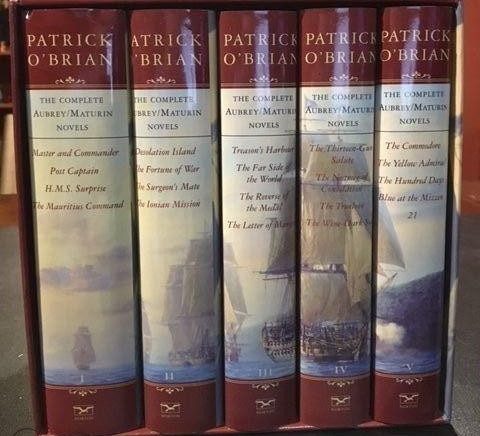
The Complete Aubrey – Maturin Novels Set – 21 complete novels – Kiffer likes how the covers create a scene. And, yes, she has read the complete series.
Patrick O’Brien’s Jack Aubrey and Stephen Maturin series crosses many genres: Historical fiction, action/adventure fiction, romance (yes, romance), military fiction, etc.
The series starts in 1800 with the Napoleonic Wars and carries through to the Battle of Waterloo in late 1815.
Some say Aubrey and Maturin are the inspiration for “inseparable fictional duos” such as Kirk and Spock of the original Star Trek TV series (79 episodes) by Gene Roddenberry, Holmes and Watson sixty stories by Arthur Conan Doyle, Joe Leaphorn and Jim Chee of the award-winning Navajo Nation mystery series by Tony Hillerman, and Walt Longmire and Henry Standing Bear of theLongmire novel series.
Understanding Genre:
When writing in general, it helps to think of your work in terms of different points of view. Often English teachers will refer to this as the Rhetorical Situation of your writing, which comes in the following parts:
Audience: Who will be reading it? This is more than people who buy your book, but also your writing group, beta readers, professional editors you pay, agents, publishing editors, bookstore employees, and then the specific people to who your book will appeal.
Medium: Quite literally what is it written on and how it is delivered. Paper, ebook, audiobook, graphic novels, hybrid.
Message: What it says
Genre: The conventions and context regarding how this information is typically presented
Purpose: The intention of the writing
Naturally, we’re going to focus on Genre here.
Take a moment and consider this question: What is Genre? It may even be worth pausing to write down your thoughts before continuing.
It’s a little more complicated than “Apples and Oranges”
In “Dukes, Deaths, and Dragons: Editing Genre Fiction” from What Editors Do, Tor Executive Editor Diana Gill Diana Gill asks the same question, and she provides her own answer:
“What is genre? Merriam-Webster defines it as ‘a category of artistic, musical, or literary composition characterized by a particular style, form, or content.’ Genres of fiction include mystery, science fiction, romance, fantasy, westerns, erotica, and horror. Genre fiction can be commercial, it can be literary—and it can be both.”
A quick internet search shows that there are typical standards for most genres when it comes to word count, which can help when plotting or editing your work. Let’s look at that genre list from before, but add in word counts:
You can read up on some more of the general rules of genre in this older, but still worthwhile blog from Ruth Harris here.
Standard word counts for different genres are important to keep in mind as knowing how long your novel is affects your storytelling!
Speculative Fiction 90,000-120,000
Mystery 70,000-90,000
Young Adult 50,000-80,000 (much shorter for Early Readers and Middle Grade)
History 100,000
Literary 100,000
Romance, 50,000 + (shorter is usually better for romance)
Non-Fiction is a little too varied to put a fine point on it. George Saunders tells his reader in A Swim in a Pond in the Rain that he received “the Cornfeld Principle” from movie producer Stuart Cornfeld, which states:
“[E]very structural unit needs to do two things: (1) be entertaining in its own right and (2) advance the story in a non-trivial way.”
George Saunders
If your story is excessively long, it may be worth it to look at entire chapters and ask yourself that question. At best, you may find out you have two books, or as we have seen here at Chanticleer, three books instead of one, but no matter what happens your story will probably be stronger for it.
A reminder from Kiffer: Remember each chapter should have its own story arc and should end in such a way that the reader can’t wait to indulge in the next chapter as the story develops its overall arc.
Each story within a series should contain a portion of the overall arc of the series.
This works for whatever genre or genre’s you are working in—even those with fractured time-lines.
What is the point of genre, or, put another way, who uses genre?
This goes back to the question of Audience when we consider a book. Remember who we said might be reading this with an eye toward genre:
Your Writing Circle
Beta Readers
Professional Editors
Agents
Publishing Editors
Bookstore employees
Distributors (the gauntlet of a successful sales strategy)
ISBN – & Cataloging
Library of Congress
Copyright
Your Readers!
While understanding the genre can help you with narrative conventions and writing decisions, writing in a genre also establishes an unspoken contract between you and the reader. If you break the contract, your readers might be a little frustrated with you. That said, common forms of genre blending can be found in Young Adult Fiction, Middle Grade Fiction, and Romance Fiction.
You might be asking why on earth you would need to even bother with a genre when all you want to do is reach your readers directly. Well, there’s a simple answer…
Marketing! Marketing! Marketing!
What will you do to help your book be discovered?
Knowing your genre not only helps you understand the conventions (like length) for what you are writing, but it also helps readers find your book. Think about when you go into a bookstore. Is there a section you automatically beeline for? Do you look to see if they’ve separated out Horror from SciFi and Fantasy instead of putting it all in Speculative Fiction? Are you a frequent peruser of the Local Author shelves? Having clear sections and genres (even more abstract ones like Local Authors) helps to orient your reader to best find your book!
Author Platform = Discoverability
In spite of how having a clear genre can help book sales, we often hear is that someone’s book defies genre, or it can only be described as the most literary fiction around, or it just doesn’t fit one of the 24 Awards divisions we offer. Well, those authors aren’t alone in that feeling.
An interesting example of this is Kazuo Ishiguro’s book The Buried Giant. Ishiguro seemed to be reluctant to call the book fantasy, and indeed you’ll find it in the general fiction section of most book stores. (The same is true for his book Klara and the Sun, which is narrated by a robot, but somehow not science fiction.) Ursula K. LeGuin, a fervent champion of genre fiction, had this to say:
“Familiar folktale and legendary ‘surface elements’ in Mr Ishiguro’s novel are too obvious to blink away, but since he is a very famous novelist, I am sure reviewers who share his prejudice will never suggest that he has polluted his authorial gravitas with the childish whims of fantasy.” (Read the full Guardian article detailing this here)
The Brilliant Ursula K. Le Guin
So What Does Genre Do?
Genre is a form of categorization that helps people sell your books. Ishiguro, as the winner of the Nobel Prize in Literature can sell work on his name alone. And using a genre isn’t so bad! Think about times that you’ve queried for your manuscripts or even when you see people pitching their work on Twitter’s #pitmad event. You see books advertised saying:
The next Harry Potter!
Jack Reacher fans have found their new series!
Friends of Tolkien fantasy will be happy here!
Perfect for Star Trek and Star Wars fans alike!
While these claims may be less original than agents and publishers would like, they get the idea of genre across, and if you’re familiar with those titles you know exactly the kinds of books being described without even reading a summary.
Then there is the advice of J.D. Barker, Master of Suspense
CROSSING GENRES and WHY YOU SHOULD DO IT!
J.D. Barker asked his attendees at his presentation at a Chanticleer Authors Conference session, “What do you write? Thrillers? Mysteries? Paranormal?”
Hands were flying up. Then he asked, “Horror?” Sharon Anderson’s hand flew up. He looked at her for a couple of seconds and said, “I guess you’ll be happy with not making much money, then.”
Say What?
He went on to explain how authors limit their audiences when they use certain words. Horror, it turns out, is one of those words. Many people read thrillers, quite a few read mystery novels, and who doesn’t like a good paranormal? But when you say “horror,” people tend to shy away. Sure, you’ll get your fans. But, as Barker adroitly pointed out, you may not get those readers who love the other genres – and would most likely love what you have to offer, too.
This is important because your horror novel may contain elements of a thriller – why wouldn’t it? Likewise, your novel probably has a storyline that needs solving. The point J.D. was making is this – don’t scare away your readers by telling them your novel is only one thing. Think carefully about your marketing and promote your work in such a way as to garner the largest appeal. (Read the full interview with J.D. in our magazine.)
JD Barker presents at CACs and VCACs.
Having a flexible genre that fits into a more popular one (consider paranormal and horror or paranormal and romance) has the potential to greatly expand your readership.
If you’re having trouble identifying your genre and need another pair of eyes on your work, you can always sign up for one of our Manuscript Overviews here.
Keep an eye out!
Did you enjoy this article? We’re planning on doing a series breaking down the ins and outs of different genres in a series of Genre Deep Dives to help you know if your work is a police procedural or a cozy mystery – or whatever else you might be writing!
Thank you for spending part of your writing day with Chanticleer Reviews!
Chanticleer Editorial Services – when you are ready
Did you know that Chanticleer offers editorial services?We do and have been doing so since 2011.
Tools of the Editing Trade
Our professional editors are top-notch and are experts in the Chicago Manual of Style. They have and are working for the top publishing houses (TOR, McMillian, Thomas Mercer, Penguin Random House, Simon Schuster, etc.).
If you would like more information, we invite you to email Kiffer or Sharon at KBrown@ChantiReviews.com or SAnderson@ChantiReviews.com for more information, testimonials, and fees.
We work with a small number of exclusive clients who want to collaborate with our team of top editors on an ongoing basis.Contact us today!
Chanticleer Editorial Services also offers writing craft sessions and masterclasses. Sign up to find out where, when, and how sessions being held.
Celebrating the 4th of July – Independence Day in the U.S.A.
In July 1776 the United States declared Independence from England. As more than politics heat up, it can be difficult to talk about our Independence Day in a complex and nuanced way.
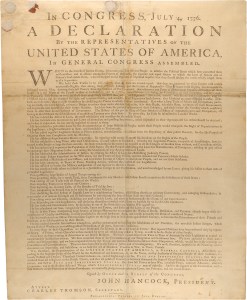
John Dunlap printed copies of the Declaration of Independence in his Philadelphia shop on the night of July 4, 1776. (National Archives Identifier 301682)
Click here for the National Archives Link that will give you a closer look at this historic event.
Since US Independence was declared, the path to voting rights for all has been a long one getting from there to here, and there’s still more work to be done. You can read an abridged history of the journey of voting rights for women and people of color here, with special attention paid to the 19th Amendment.
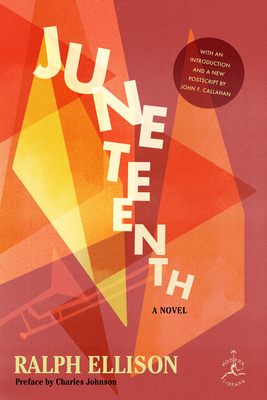
Of course, we also have Juneteenth, which was celebrated as a federal holiday for the first time this year. The holiday celebrates a June 19, 1865 proclamation that freed enslaved peoples in Texas. Texas then, in 1979, became the first state to recognize Juneteenth as an official holiday. You can learn more about Juneteenth here.
Clearly, the US Independence Day has a deep, rich history that still lives on and evolves today. The traditions to celebrate the Fourth of July also continue to change and grow with the world. Here in the Pacific Northwest, as we recover from a heatwave that saw record temperatures in areas without infrastructure like air conditioning to manage it, people are reconsidering fireworks that might contribute to an early fire season—a fifth season that no one is happy about. This doesn’t mean that vaccinated people can’t gather safely now, just that we rethink the best ways to maximize our celebration while being mindful of our community responsibilities.
Here in Bellingham, Wash., there will be a free fireworks display that will be launched from a barge in the middle of our beautiful Bellingham Bay in honor of Independence Day. The fireworks should be visible from multiple viewpoints. Because Bellingham’s sunset is 9:15 p.m. and our twilight continues to 9:57 p.m., the fireworks will start at 10:15 p.m. PST.
It is also a time to remember those who serve and have served to preserve our nation’s independence and democracy.
To that end, we want to recognize some of the wonderful titles that have come up that made us think differently about climate and the environment. We hope you enjoy them as much as we did!
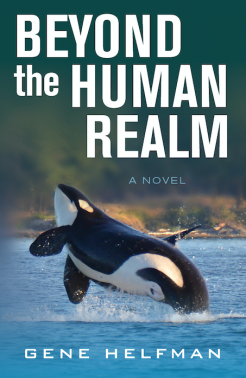
Author Gene Helfman, noted academic expert on aquatic biodiversity, delivers a fictional tale about an orphaned orca (killer whale) named Sam and the humans who seek to change his life in Beyond the Human Realm.
The book opens from Sam’s viewpoint. On display for humans, whom he calls “split-tails” or “logriders,” Sam relies on the humans now for food in his too-small habitat. In exchange, he must perform tricks such as carrying balls and leaping about, actions he performs reluctantly if at all. There’s one split-tail that he likes, though, a female who speaks to him gently. Sam allows her to ride on his back as one of his tricks. When a female companion arrives in his habitat Sam falls in love and the pair produces a baby. All seems blissful until the split-tails take his baby, and his partner dies of grief. Continue Reading here…
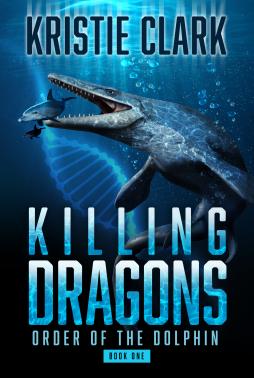
A search for the truth behind Lusca, the legendary sea dragon, leads to areas far more menacing than a mere myth in Kristie Clark’s Killing Dragons: Order of the Dolphin.
Eva Paz is a doctorate-level marine biologist at the Roatan Institute for Marine Sciences (RIMS), performing research on whistle-signature spectrograms. Even though Eva believes she’s close to a breakthrough in dolphin-human communication, her statistics may not be enough to keep the grant she needs to continue her work and support her employment at RIMS. Her connection with a petite Atlantic bottlenose dolphin named Taffy, an animal trained by the Navy, and Taffy’s mate, Finn, go back thirteen years during a horrific time in Eva’s life. Continue Reading here…
KOBEE MANATEE® – Climate Change and the Great Blue Hole Hazard
By Robert Scott Thayer
Author Robert Scott Thayer and illustrator Lauren Gallegos bring to life another beautifully told tale in the fourth book in the series, Kobee Manatee® – Climate Change and the Great Blue Hole Hazard.
In the engaging and increasingly popular Kobee Manatee® children’s book series, the lovable sea cow and friends are off to help Cousin Quinn clean up the plastic that’s littering the ocean area around her new underwater eating establishment. The 500-mile journey across the water turns into an enlightening adventure, as these characters face unexpected challenges and dilemmas, many brought on by the harmful effects of climate change and ocean pollution. Continue Reading here…
Climate Fiction and Thrillers
NATURE’S CONFESSION
By JL Morin
Dante Rossetti First Place Winner
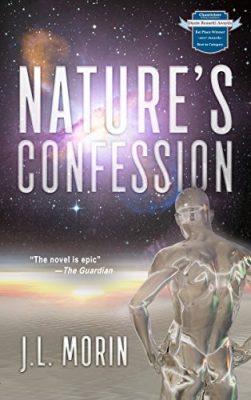
In a dystopian near-future where nobody is safe, the world is ruled by a ruthless capitalist. Humankind’s last hope may be a fourteen-year-old named Boy. Part sci-fi, part diverse love story, Nature’s Confession by J.L. Morin is an ecological coming of age novel that spans the universe.
The story opens with Boy, so-called because he hasn’t reached an age where he will be named yet for security reasons, managing to survive in the dystopian world he calls home. On next year’s earth, humanity is essentially enslaved by a worldwide corporate government, not for the people or by the people; but, one that operates to ensure its citizens are brainwashed, downtrodden, and too exhausted to be able to offer any sort of resistance. When Boy stays after school one day, he meets a man who turns out to be his long-time idol—Tyree. Tyree is a member of the resistance and recruits Boy to help him and their cause, believing that Boy may be their last hope. Continue Reading here…
A DIVINE WIND
By Norman M. Jacobs MD, MS
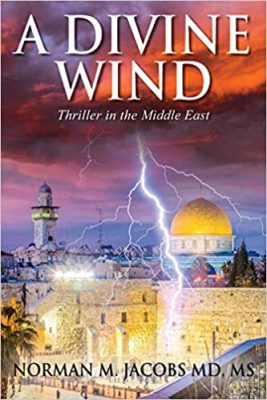
A Divine Wind by Norman M. Jacobs MD, MS is a technothriller that will keep readers glued in their seats until the last page is read.
Working in secret, one government experiments with technology that allows them complete control over the weather. If the user guides the technology with a heavy hand, the weather will strike like a weapon; likewise, if those at the control wield compassion, calm weather that nourishes the land will result. Calculated strategies could deploy storms against one’s foes. Of course, any intentions to channel the weather for good may produce scattered, unintended, and deadly consequences. There’s an old saying, “An ill wind may blow nobody any good.” However, a divine wind may unite people if they don’t kill one another first. Continue Reading here…
OVER
By Sean P. Curley
Over is a sci-fi novel of big ideas: the scourge on the future by today’s environmental negligence, the effects of biological warfare, even the development of a faster-than-light warp drive that opens the door to a future among the stars.
In this dystopian future, humankind must grapple with the repercussions from a technological advancement that essentially imparts immortality: immortality to a very few. Less than 30,000 of the world’s inhabitants, the privileged class, Overs, and the resentment of the billions of people who don’t fit into that category, aptly named, Unders. Continue Reading here…
This Independence Day, we wish you the following:
May your family and loved ones be close and happy. May we share in the benefits of a community that cares for and loves each other.
Happy Fourth of July from Sharon & Kiffer & David and the whole Chanticleer Team!
And Remember! You can join the Chanticleer Family Anytime!
Sign up for our Newsletter here! Join our online community, The Roost, here for discounts and special offers!
Keep an eye out for new information about our 10th Anniversary Conference, CAC2022! More information will be posted here, and until then you’ll be able to see what we did in the past.
VCAC 21 featured Bestselling Crime Author Cathy Ace, J.D. Barker – Master of Suspense, C.C. Humphreys – Historical Fiction with a twist, Jessica Morrell – Top-tiered Developmental Editor, and more!
Check out our Editorial Services here and our Manuscript Overviews here, OR, if your work is already polished to a fine shine, it’s time to submit to our Editorial Reviews here and our Chanticleer International Book Awards (CIBAs) here!
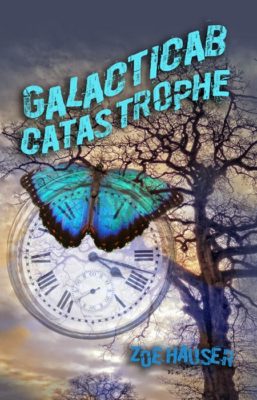
Time travel isn’t just for Dr. Who! When four teens try to solve the puzzle of the mysterious wormhole at their school, friendships are tested, reality is checked, and danger is never far away. Hauser delivers a fast, fun debut novel for the YA crowd.
Something extraordinary is going on at the Cuniculum Performing Arts Middle School. Well beyond the emotions of the artistic kids trying to find their own direction as artists and performers, far beyond the raging hormones of kids falling in, out and through the throes of first love, some other-worldly happenings are making life at the St. Augustine, Florida school more than a bit weird.
For example, circus animals abruptly appear in the school’s hallways. A 17th Century French courtesan, smelling like a skunk, slaps a student in front of the girl’s horrified mother. Let’s not forget the disappearance of the school’s beloved principal. Then, to top it off, the Bubonic Plague sweeping out of the school’s science labs and forcing the school to close for a month to be disinfected.
To four students, Sephie, Zander, Rori and Iggy, the events are not only abnormal but super-normal, a situation that could only be explained as a wrinkle in time, or more appropriately a wormhole, that allows these strange figures from the past to travel in time to their school. Even more exciting, and perhaps a bit disturbing, the students go back in time using one of the wormholes buried in the school. But can they return to the present, or will they be trapped in the past? Will they ever get home?
This Y/A novel is a clever mixture of facts, fantasy, and teenage angst, plus a healthy dollop of Greek mythology. As strange events keep the school on high alert, the four students plus a teacher travel through time. Some loop to the site of a 1942 circus disaster in Cleveland; others are held hostage in a 1915 entrapment by a nefarious group of astrophysicists. The scientists know the students are from the future but want to keep time travel to themselves.
Sephie, short for Persephone, the Greek goddess of the spring, more or less narrates the book, infusing the novel with her deep attachment to mythology. Her personal story ties the book together. It’s complicated by the complexity of her love life—she loves a boy who loves someone else—but even more pressing is her desire to use the wormhole to go back in time and try to prevent her mother’s death.
Y/A readers will admire this book on several levels. One is the sheer audacity of a book that ties puppy love angst with time travel. Another side is the insertion of historical events and an ongoing treatise about the lives of the ancient Greek gods.
Part of the fun in reading this novel is its inventive characters and locations. Many readers will find their Internet browsers heating up as they check out whether certain situations were authentic and characters were real. (Hint: This reviewer especially liked a character named Alfred Ulixes. Look it up!)
Enjoy reading Galacticab Catastrophe – but watch out for the snakes in Morocco.
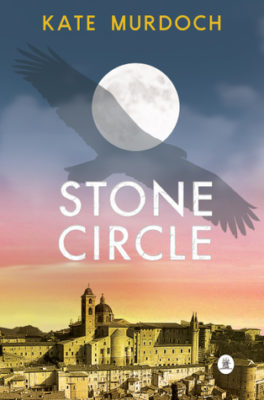
Since his father’s death, seventeen-year-old Antonius Sardi has become the man of the house, keeping up the spirits and providing for his mother, younger sister, and younger brother. When he takes a job in the household of Conte Leonardo Valperga, he works hard to prove useful in hopes of raising his status above that of a lowly servant. Occasionally, Antonius glimpses Savinus di Benevento, a seer of great renown in the medieval town of Pesaro, and a member of the Conte’s household as well. When Savinus advertises for a new apprentice, Antonius knows this is the opportunity for which he has been waiting, a chance to show his abilities to a man who can appreciate rather than fear them.
Antonius can read minds, and as soon as Savinus, also skilled in mind-reading and prophecy, learns of this, he immediately agrees to take on Antonius. However, Antonius isn’t the only young man who wants the position. Nichola, the son of Savinus’s very wealthy and powerful patron, believes himself fit for the job. Savinus has no choice but to take on Nichola, who proves himself treacherous and shallow. Moreover, Nichola is annoyed that Antonius is given the role of the primary apprentice while he is relegated to mundane tasks. To make matters worse, Guilia, Savinus’s daughter, seems interested in Antonius. Nichola takes his jealousy to unbelievable lengths, which ultimately threatens Savinus, Antonius, and Giulia’s lives.
Antonius’s desire to defy the expectations of his class is the most important theme within the novel. He often thinks of his father, a fisherman, who came home exhausted nightly many times after the rest of the family had fallen asleep. On the days he could, he insisted on teaching his children how to read and write even though in their current social status, such skills would be unnecessary. Antonius knows that he has no other option than to fight for the assistant apprenticeship if for no other reason than the memory of his father’s hard work. Less than his best would be a betrayal of his values.
Kate Murdoch weaves a compelling tale of Medieval Italian life in her coming of age historical fantasy. Here’s a novel that will hook readers from the very first page.
Stone Circle won a well-deserved First in Category in the 2018 Chaucer Awards for Early Historical Fiction novels.
Like most fifteen-year-olds, Sonnet McKay loves a good adventure. Still, when she, her siblings, and cousins discover a deserted Victorian mansion in the middle of the woods outside a ghost town near Seattle, they get much more than they bargained for. In an upstairs bedroom, Sonnet inadvertently steps inside a time travel portal and is whisked away to 1895. In her place stands Emma Sweetwine, an identical doppelganger for Sonnet.
Emma’s family was prominent when Monte Cristo was a booming mine town, but life is not what it seems for the oldest of the Sweetwine children. With a mother who seems to despise her and a secret engagement, Emma’s life is oppressive and controlled – a sharp contrast to the spirited, independent Sonnet. With no idea how or why they were switched, Sonnet and Emma must quickly adjust to their new environments and rely only on their closest friends and family. But like any good story, time is running out for the girls as both of their lives rush in opposite directions. They must find a way back to their own times before their chance is gone forever.
Family, both those of birth and those of choice, is a significant theme of this novel. Sonnet has a close familial support system in her twin brother Evan, older sister Jules, cousin Niki, and best friend and cousin Lia. She has been surrounded by a loving family her entire life and spends part of each summer with her Aunt Kate, her father’s sister. Without doubt or hesitation, Evan, Jules, Niki, and Lia spring into action to both cover Sonnet’s absence and find the impossible path back to 1895. Rapp, a boy who has only known Sonnet for a day before her disappearance, is also a seamless part of the rescue brigade. This group instantly takes Emma into their embrace and makes her feel safe and loved, a first in her life. Though Sonnet has little help from Emma’s family, she quickly builds that friendship network she enjoys in her modern life. It is only with the support of the sixteen-year-old Sweetwine family nanny Kerry; Maxwell the teenage family driver; and Tor Emma’s secret betrothed, that Sonnet will hatch an escape plan. Both groups vow to take care of each girl, respectively, and help them keep the faith to make everything possible.
The difference between Sonnet and Emma will highlight the struggle and growth of women in the world. Sonnet isn’t burdened by the many stifling rules, both spoken and unspoken, that Emma must endure. Emma is forced to hide her true self, her true feelings, none so much as those she has for Tor. As an immigrant tasked with a life of menial labor, Tor should never be a part of Emma’s social circle, much less her fiancé. She has no close female friends and must remain docile and meek even when her mother demeans and abuses her. She is stifled by all who should love and support her. Sonnet, with her modern mind and outspoken nature, fights all of those restrictions and leaves Emma’s life better.
Sonnet makes Emma stronger, and Emma teaches Sonnet how to appreciate love in her life. In the very oppression, Sonnet finds the enjoyment of her freedom, and Emma’s liberation will create a connection to Sonnet that she can’t even imagine.
But Not Forever won the CIBA 2019 Grand Prize in the DANTE ROSSETTI Division for Y/A novels.
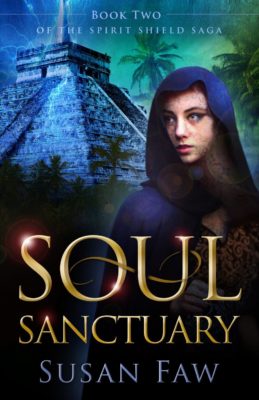
A savage civil war is consuming the Primordial tribes. With heavy losses for both Spirit and Flesh Clans, each side is taking extreme measures to secure Cathair and the mysterious forests and mountains surrounding it. Controlling Avery and Cayden Tiernan would ensure that victory. Born the children of royals from both clans and meant to unify the land, the twins have always been exceptional. It isn’t until much later that they learn they are Spirit Shields, godlings returned to Earth to help mankind and nature.
The twins aren’t the only godlings in the kingdom. Artio, released from her heavenly prison through a blood merging of bear and man, and Helga, Great Mistress of wicked souls, seek to rule man and spirits and take revenge on the twins, whatever the cost to the humans in their path. With Queen Alcina and Marea, spiteful High Priestess whose place has been usurped by Avery, the twins must fight to reunite and save humanity from annihilation at its own hands while fighting their sisters, both with designs on being the sole god of the Primordials.
This second installment of the Saga series has complicated plot twists. From the ever-changing loyalties of godling and man to the emerging backstory of Avery and Cayden, the novel throws the reader into the action and adventure on a non-stop flight through the intrigue and back-stabbing of Cathair. Fantasy readers will love the healing unicorns, fighting phoenixes, helpful werewolves, and bossy pegasusi. A mixture of world mythologies unites the familiar with the innovative, creating an intriguing blend and a truly unique setting.
Susan Faw is a masterful storyteller, and Soul Sanctuary’s strength lies in its multifaceted telling of myths and legends. With alternating points of view showing all perspectives of this battle of souls, the novel encompasses a tale as vast and varied as the kingdom itself. Readers may wish to dip into the first book in the series, Seer of Souls, to settle into this outstanding read.
Whether man or godling, no character is safe from the machinations of others, creating a network of subterfuge. The twins, Avery and Cayden, were born tools of unification but are also the chosen habitat of returning godlings, Alfreda and Caerwyn, who give up immortality for the chance to save the souls of man. Cayden must maintain the Well of Souls where souls reside until rebirth. Avery is the keeper of animal souls meant to pass on and be reborn. Because of their influential positions both as mortals and godlings, everyone seeks them.
The clans are controlled by their high priests, who sacrifice both spiritually and physically at will. Artio herself, a mixture of animal, man, and thunder, is created by the Flesh Clan, who quickly learn controlling her is much harder than it appears. Artio, though, is a slave to her revenge plot against Helga. Helga, trapped within a mountain, controls the souls of the lost and the former human queen, Alcina, but falls victim to her own jealousy of Artio, which led to her captivity. Unable to cut the strings of control and create their own destiny, all of the characters are mere “pieces on a giant chessboard, being pushed to and fro.”
Within this puppet-master world, the characters learn that only their combined strengths will win the day. Nowhere is this more evident than in the duo of Avery and Cayden. Though kept separate by the force of their siblings and the clans’ trickery, twin-power will save the people of this besieged land. But even if the dynamite duo manages to reunite, real success will hinge upon some critical, human and nonhuman characters who help the godlings along the way. Only with the teamwork of man and beast will the souls of all be saved.
Soul Sanctuary: Book Two of the Spirit Shield Saga won First Place in the CIBA 2017 Dante Rossetti Awards for Y/A Fiction.
Full of fun and quirky characters, author Aric Cushing invites readers to join him in a world where Halloween never ends. The tale begins with the prophesied birth of the white-haired Alex Vambarey, who draws the attention of a darkling vampire named The Deleter.
After being saved by all the citizens of Hillock Green, the plot then shoots forward to the eve of Alex’s departure to school. He is an adventurous boy who takes this new chapter in his life in stride, and after saying goodbye to his parents, Alex begins the rather long journey to school. There he meets a whole cast of absurd characters and makes fast friends who help him solve the school riddle.
Creative influences such as any of the Tim Burton films show up strongly in the book’s visual imagery, most notably when Alex travels through a tree and descends a terrifying staircase. Even though the inspiration of Tim Burton is strong, Cushing still creates a unique land of Halloween.
Cushing’s Vampire Boy is also fairly unapologetic about how heavily it is inspired by Harry Potter. Whether that is done on purpose to draw in children who enjoyed that series, or as a way to poke fun at itself is hard to tell. It is good to note that the areas of the story where it diverts from the tropes of Harry Potter are some of its strongest moments.
The narrator of Vampire Boy is somewhat unreliable because they repeatedly interject into the story to hint at a future event, which most of the time does not play out by the end of the book. When thinking about the art of storytelling, this narrative strategy does not necessarily make sense, but it keeps readers on their toes.
It has to be noted that this story ends on a cliffhanger. A lot of the book is spent on Alex getting to school and ends right around the cusp of the story’s climactic moment, and some may find that to be an unsatisfactory ending. Overall there is a lot of humor throughout and this humor is the best quality of Vampire Boy, especially the comedic moments of Alex and his classmates learning about the human world.
Kids who love Halloween, and have active imaginations, will have fun reading Vampire Boy and will laugh as Alex and his friends misunderstand the human world during their quest to crack their school’s riddle.
Vampire Boy won First Place in the 2018 CIBAs, GERTRUDE WARNER Awards for Middle-Grade Fiction.
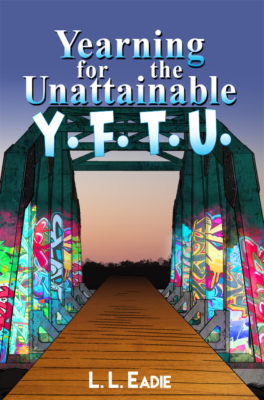
Y.F.T.U.: Shorthand for “yearning for the unattainable.” It’s an ongoing condition in the life of 16-year-old Gentry Wickleham, very much a 21st Century teenager whose life thus far has been a series of shifting sands: a father who can’t seem to hold a job, a mother who disappeared long ago, Rawsom – her obnoxious older brother, a seemingly endless series of Dad’s girlfriends with maternal skills that verge on the non-existent, and a constant life on the move.
“Damn,” she says at one point. “Maybe I’m not sure where I belong. Maybe I don’t.”
So, when Dad and Nikki, his nubile new girlfriend, and Rawsom move to the small town of Wiregrass, Georgia, and move into her great aunt Tom’s decrepit old mansion, Gentry has no expectation of the wild, exuberant ride awaiting her. Who knew that secrets, ghosts, and murder awaited her, along with new friends, a new exciting life, and even love was right around the corner? More specifically, who knew what revelations about her family’s past, as well as her own unique relationship with a dead girl from another time, was happening right upstairs in the attic of the old house.
Yearning for the Unattainable is an enjoyable brew of multiple storylines that keep readers bouncing through Gentry’s life. Central to the story is her near-identical resemblance to Sylvie, her aunt Tom’s daughter, whose early, mysterious death at 16 during the 1960s affected virtually everyone who lived in the small, close-knit town Even today, people are influenced by her suicide – or was it murder? – a half-century ago.
But this is no usual whodunit. We live in Gentry’s sensitive yet yearning skin as she navigates through the rigors of growing up. Is she pretty enough? Can the young man she lusts after, a nearly perfect boy named Legend, even begin noticing her when he’s constantly surrounded by hoards of busty competitors that keep Gentry constantly reassessing her own ability to compete? In her world, if boys are Sirloins and girls are Sirens, then what is she?
It takes skill to tell this kind of tale. There are multiple threads to follow from the dead Sylvie to the mysteries of Aunt Tom’s mansion, to Gentry’s lustful fantasies about Legend and her reluctant development of a relationship with her father’s girlfriend among them. Author, L.L. Eadie effortlessly takes us with her from storyline to storyline in what ultimately is a complex tale. Y.F.T.U. also keeps providing new details about each key character, making it easy to recall who’s who, which allows us to know these people even as the mysteries of Wiregrass reveal themselves all the way to the last page.
The language is often salty. Some might find that offensive, but this is a contemporary book dealing with themes as old as mankind itself. Author L.L. Eadie serves up a Southern Gothic YA novel in a fresh new way and succeeds admirably.























 Since his father’s death, seventeen-year-old Antonius Sardi has become the man of the house, keeping up the spirits and providing for his mother, younger sister, and younger brother. When he takes a job in the household of Conte Leonardo Valperga, he works hard to prove useful in hopes of raising his status above that of a lowly servant. Occasionally, Antonius glimpses Savinus di Benevento, a seer of great renown in the medieval town of Pesaro, and a member of the Conte’s household as well. When Savinus advertises for a new apprentice, Antonius knows this is the opportunity for which he has been waiting, a chance to show his abilities to a man who can appreciate rather than fear them.

 Like most fifteen-year-olds, Sonnet McKay loves a good adventure. Still, when she, her siblings, and cousins discover a deserted Victorian mansion in the middle of the woods outside a ghost town near Seattle, they get much more than they bargained for. In an upstairs bedroom, Sonnet inadvertently steps inside a time travel portal and is whisked away to 1895. In her place stands Emma Sweetwine, an identical doppelganger for Sonnet.
 A savage civil war is consuming the Primordial tribes. With heavy losses for both Spirit and Flesh Clans, each side is taking extreme measures to secure Cathair and the mysterious forests and mountains surrounding it. Controlling Avery and Cayden Tiernan would ensure that victory. Born the children of royals from both clans and meant to unify the land, the twins have always been exceptional. It isn’t until much later that they learn they are Spirit Shields, godlings returned to Earth to help mankind and nature.

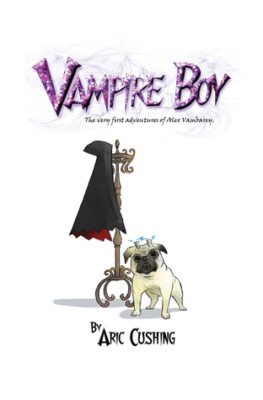
 Full of fun and quirky characters, author Aric Cushing invites readers to join him in a world where Halloween never ends. The tale begins with the prophesied birth of the white-haired Alex Vambarey, who draws the attention of a darkling vampire named The Deleter.