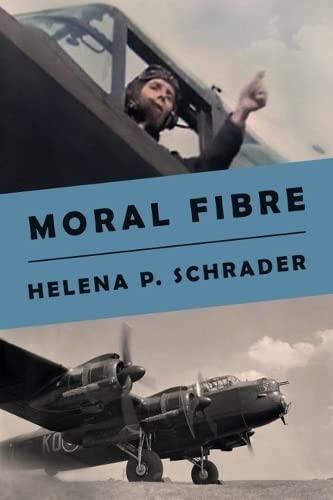
In Moral Fibre: A Bomber Pilot’s Story, Helena P. Schrader takes readers to 1943 England, where deeply held values of honor and bravery mingle with the importance of one’s place in society. It was a time and place where failures of the former could shatter the latter and change a man’s life forever.
Within this psychological landscape, the reader is led to wonder, in the case of RAF pilot Christopher “Kit” Moran, will the war break him?
With thirty-six missions under his belt and as a decorated veteran, Kit suddenly refuses to fly another mission. Although a shock to everyone who knows him, Kit has his reasons. The new assignment comes less than one day on solid ground and two hours of sleep since returning from his most recent bombing sortie over Berlin. In itself a harrowing experience, the mission ended with his best friend, the plane’s skipper, being mortally injured and ultimately dying. The RAF hierarch deems Kit LMF (Lacking Moral Fibre) – a term introduced in 1940 to address those who refused to fly without having a verifiable medical reason. He is sent to a diagnostic center and examined by a psychiatrist.
The psychiatrist understands. Kit is not insane nor lacking in moral fibre. He was simply “wiped out.”
So Kit is declared capable and fit for duty and given the opportunity to train as a pilot. This outcome was a far cry from what he, an experienced flight engineer, expected after the incident that sent his career off track.
The novel really takes off in 1944 when, after completing pilot training in South Africa, Kit returns to England for the final stages of training and ultimately a return to operations. Now he must put his experience and training into practice while sublimating his lingering self-doubt and anxiety about his own resilience. Should he fail, people will die, and his dreams will die with him.
What ensues takes the reader into the English psyche of that time, tapping the depths of human emotions, holding them up to the light, and revealing their concomitant beauty and ugliness in times of fear and crises.
Before the war is over for Kit, he finds his inner strength, finds love, and learns the true meaning of sacrifice.
Meticulously researched and skillfully written, Schrader’s Moral Fibre steps off the pages and comes to life. Her nuanced characters and authentic dialogue also provide a glimpse of Britain’s stratified class-conscious culture during the WWII era.
Schrader picks a critical period during WWII for the setting and, in so doing, educates today’s readers about the horrors of a war that was and what it takes to save a nation – and perhaps the free world.
In Moral Fibre: A Bomber Pilot’s Story, Helena P. Schrader again reaffirms George Santanya’s position, “Those who cannot remember the past are condemned to repeat it.”
Mark’s story is unique and powerful – and his unwavering sense of humor will catch you off guard!
Let’s get to it. Dear Chanticleerians, meet my friend, Award-Winning Author, Mark H. Newhouse.
Chanticleer: Tell us a little about yourself, how did you start writing?
Newhouse: I was born in Germany two years and one day after Mom was freed from Auschwitz and my father from Buchenwald. I lost my grandparents and most of my family in the Holocaust. With my parents struggling as new immigrants and in a terrible marriage, I turned to writing. My pen was a magic wand where I could make the world better. I still think of that as my goal.
Chanticleer: Wow, there’s a lot there to unpack. I cannot imagine the trauma your parents must have gone through during that horrendous time. Ultimately, I believe to have a goal of making the world a better place is the best goal one could possibly have. When did you realize you that you were an author?
Newhouse: I think of myself as a ‘struggling author’ because I learn something new every day. It is the challenge of capturing my thoughts and ideas, and learning something new, that makes this so exciting. I feel like an author when I read reviews that tell me I touched a reader’s heart and soul and made a difference in their lives.
Chanticleer: Well, you certainly touched our souls and made a difference in our lives with your series, The Devil’s Bookkeepers. Your books have won a number of awards and the series as a whole is getting many great reviews. Why did you write this series that is so different than your other work?
Newhouse: My parents never told us about what they suffered during the Holocaust. They were focused on survival as immigrants. Mom gave me a copy of The Chronicle of the Lodz Ghetto published in 1984 by Yale University Press. Reading the anonymous entries, I was shocked by the true events. I realized few people knew about this incredible story and the efforts by its controversial chairman to save the ghetto by brutally forging it into a factory for the Nazis. I had to try and write this story so my children would know what I didn’t.
“My pen was a magic wand where I could make the world better. I still think of that as my goal.” – Mark H. Newhouse
When I read chapters of The Devil’s Bookkeepers to critique clubs, they encouraged me to publish it and enter contests. I was surprised and thrilled when we won. I think the suspense and unique love story keeps people reading. Unlike many Holocaust books, it is not about death and the gas chambers, but about people searching for friendship, love, and survival, in a time of terror. When its protagonist tries to save his loved ones from the tightening Nazi noose, readers ask themselves what they would do. I asked myself that question with every page. It will haunt you.
Chanticleer: I’m glad you told that story. It needs to be told! And you did it beautifully. What do you do when you’re not writing? Tells us a little about your hobbies.
Newhouse: I get in trouble. Actually, I was an elementary school teacher who loved working with my sixth graders. I have more than one thousand of my former students on Facebook with me sharing our lives, some more than 50 years after they left my classroom. I think it says a lot about their ‘crazy’ teacher, but also about them that they still care about me. I love feeling I am helping them and others, so I lead a writing group, write the Writing Bug monthly column mailed to thirty-thousand homes, and am Florida Writers Association’s Youth Chairperson and a Board of Directors member. I keep pretty busy. I also play lousy golf, read, swim, and drive my wife crazy.
Mark and Linda relaxing.
Chanticleer: Mark – that’s just – well, remarkable! The connections you forged with your students, the care and concern you gave them, means a lot. So much that they maintain contact with you! I don’t know of many teachers that have that same influence in their students lives. Good for you! And, dude, it doesn’t look like Linda minds you driving her crazy… How do you come up with your ideas for a story?
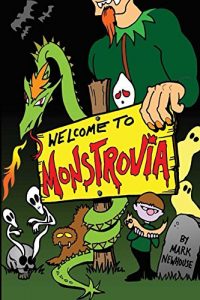
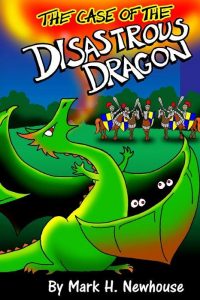
Newhouse: I wish I knew. Ideas drop from the sky—too many–I learned to focus on one at a time. I keep ideas in a file cabinet and carry a pocket notebook to grab ideas as they hit. I get a lot of ideas from news. For example, I read about an elderly woman evicted from her home to build a parking lot and turned it into The Case of the Disastrous Dragon, where a dragon is imprisoned for burning the butts of knights evicting him from his ancestral home. Welcome to Monstrovia, an award-winning comical mystery, started out as a play I wrote for my students. Most of my books started as my way to help my students have fun while learning.
Chanticleer: I love the covers! And who wouldn’t want to read a story about a butt-burning dragon? I know I would! How structured are you in your writing work?
Newhouse: I’m usually at the computer before 6:30 in the morning and work until breakfast. I also like to write after dinner. I’m not a t.v. watcher or video game player. Instead, I sneak into my office whenever my patient wife is busy. My biggest problem is forcing myself to stick to one project at a time. I never thought I had the discipline to finish The Devil’s Bookkeepers trilogy. It was a tough challenge, three years of hard work, but worth it.
“My advice: join a critique group and be willing to learn from and help others.” – Mark H. Newhouse
Chanticleer: I’ll say! It’s important to work on your craft. What do you do to grow your author chops?
Newhouse: When I was young, I thought I had to write by myself, as if in a jail cell. As a teacher, I realized when students worked together, they learned from each other and it was more fun. I join writing groups to improve my work and help others. I attend conferences, read articles. I challenge myself by entering contests such as those offered by Chanticleer. Contest deadlines help break through Writer Block. My advice: join a critique group and be willing to learn from and help others.
Chanticleer: Ah yes, the magical thinking strikes again. Writing is writing. Many authors get wound up in the notion that everything has What do you do in your community to improve/promote literacy?
Newhouse: As an author, especially for children, I work to create positive role models. My heroes are underdogs who solve problems with courage and intelligence, not violence and magic. I try to infuse plots with humor and suspense that make children want to read.
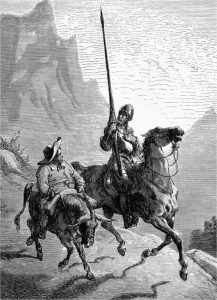
Don Quixote by Miguel de Cervantes
I love visiting schools, libraries, and other institutions to share my message: “Never Give Up.” I do presentations to help people learn about the Holocaust. I want to inspire others to end hate and prejudice as well as to preserve their family histories.
I originated and am ‘Top Cat’ of a club where we collaborate on books we donate to worthy causes. Our latest, SuperBudz, promotes literacy and fights pollution. I am the Florida Writers Association Youth Chairperson and a member of the Board of Directors. We offer clubs, webinars, contests, and a professional conference to help youth writers. I write the monthly Writing Bug column promoting local authors and inspiring writing, mailed to more than 30,000 homes. I’m pretty busy but love it. It keeps me out of mischief.
Chanticleer: You are an amazing man, Mr. Newhouse. You truly are. Tell me, what drives you to write for children?
Newhouse: Being abused and bullied as a child, I want my writing to help others solve problems without violence. I try to empower children, and adults, to face life’s obstacles with hope and faith that they can overcome whatever is thrown at them with courage and intelligence. They don’t need violence and magic to do magical things with their lives.
“I love visiting schools, libraries, and other institutions to share my message: Never Give Up.” – Mark H. Newhouse
Chanticleer: I appreciate that message. Give us your best marketing tips, what’s worked to sell more books, gain notoriety, and expand your literary footprint.
Newhouse: The best advice I give authors is: Don’t sell books, sell yourself. Think of your books as helping others, educating, entertaining, them. Seeing myself as performing a public service, and not just as a book salesman, helped me overcome my marketing phobia. It also steers me to groups and media that may be interested in my contributions.
Most important: make sure your book is the best it can be. Don’t rush to publish until you have tested your work with your critique group, beta (pre-publication) readers, and have it edited. A final test: enter a contest, especially where you get impartial feedback. Nothing hurts book sales worse than a poorly edited book.
Chanticleer:That’s good advice! What are you working on now? What can we look forward to seeing next from you?
Newhouse: I just finished, My Family Secret: The Holocaust, and it won a Silver Medal from the Florida Writers Association, so now I am back writing my multi-award-winning Defenders of Monstrovia comical mysteries. In Book 5, The Case of the Cruel Cyberbullies, a teenage boy and half-human girl face danger when they must solve a tricky case in Monstrovia, a secret sector of the USA where humans are rare. Will the cyberbully get away with murder? That’s the fun of this series. It teaches law in a land of monsters and fictional characters with edge-of-the-seat suspense. I love writing these fun mysteries.
Chanticleer:They sound hysterical! Congratulations on your Silver Medal from FWA. What a treat! I do hope we get to see it in our CIBAs… Who’s the perfect reader for your book?
Newhouse: That’s easy. The perfect readers for my books are children and adults who care. My books deal with things I care about, and I try to create page-turners for people who love humor and mysteries but most importantly, care.
Chanticleer:I’m raising my hand, can you see me? What is the most important thing a reader can do for an author?
Newhouse: Buy our books. Seriously, share your thoughts or endorse our books with your reviews on Amazon, Goodreads, or with your friends. Several years ago, a boy wrote me and said, “Rockhound is my favorite human being.” Rockhound, the hero of the Rockhound Science Mysteries, is a teenage dog detective, so that got a laugh, but the best was yet to come: “I know all authors are rich so can I come and swim in your pool?” I replied, “If I had a pool, I would invite you.” I really would.
Chanticleer:Oh, that’s so sweet. I agree with you – Everyone who picks up a book and reads it needs to review it! Simple as that. Do you ever experience writers block? What do you do to overcome it?
Newhouse: I have tons of ideas waiting for me, but everyone gets WB at some point. When I get it, I enter contests with a theme. I also have a few quick-tricks. I love titles, so I shake up a Boggle or Scrabble set and see if any of the words suggest a great title. I do a ‘blind’ search in a book: flip to any page, close my eyes and see what words my finger lands on. I then form a title and brainstorm a story idea. Goodbye WB. Hey! Not a bad title.
Chanticleer: I have never thought of that. How fun! What excites you most about writing?
Newhouse: Everything. But it is the passion for my story. I care about my subject and my readers. I am excited and proud when readers write about The Devil’s Bookkeepers.
What readers are saying about The Devil’s Bookkeepers: “I could not put it down.” “It kept me reading all night.” “I felt myself choking.” “One of the most powerful books I have ever read.”
When you feel you touched someone’s heart and soul, all the sweat is worth it. I get an amazing high when I hear a child laugh at my creations. I am honored and grateful for the awards and when someone shares how my work made a difference in their life.
Chanticleer:No doubt, that is a tremendous high. I love it! What other goals do you have?
Newhouse: I would love to work with a television/film producer to create a miniseries of The Devil’s Bookkeepers. It is an important and powerful story that needs to be shared so it never happens again to anyone. Readers root for the characters and are haunted by the true events. I can visualize the scenes with powerful performances that could win awards. I know it is a long shot but am going to try and send it to agents. The awards from Chanticleer will help open the door.
Chanticleer: It absolutely will. Thank you, Mark. You are a delight and we are honored to call you friend. You truly do make the world a better place.
Newhouse: Thank you for allowing me to share my journey and books with your readers. My books are available on Amazon/Kindle. The Devil’s Bookkeepers novels are also available as wonderful audiobooks. For more information, please contact me at www.newhousecreativegroup.com.
Mark’s view – nothing short of inspirational!
Chanticleer: Well, you heard the man! Go seek out Mark H. Newhouse’s works, read them and review them. Trust me, you’ll not be sorry!
Mark H. Newhouse, son of German Holocaust survivors, includes the very personal and poignant first-hand sourced materials made available to him by the Yale University Press in his important historical fiction series, The Devil’s Bookkeepers. This inclusion lends a ribbon of humanity and compassion that raise the series to premiere status – a study, if you will, of the immutable human spirit. Newhouses’ series should encourage all who read it that hope is a gift and kindness and understanding is the answer to hate. It is a gripping story of love and survival that will haunt you until it’s shocking climax.
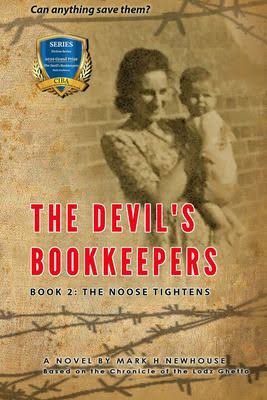
From the first day of 1942, the conditions in the Jewish ghetto of Lodz, Poland, deteriorate. In Mark H. Newhouse’s historical fiction novel, The Devil’s Bookkeepers: Book 2, The Noose Tightens, those who thought their situation would get better now wish to survive and save their loved ones, But can they?
The narrator Bernard Ostrowski, an engineer, should have enjoyed the prime of his life. He married a beautiful young wife, Miriam, who gave birth to their newborn daughter Regina. Ostrowski landed a lucky position in the records office of the ghetto’s leader, Chaim Rumkowski (an actual historical figure drawn by the author in dark, realistic detail). Rumkowki uses brutal force to forge the ghetto prisoners into a manufacturing hub for the Nazis in a still hotly debated effort to save its residents as the Nazi noose inexorably tightens.
Ostrowski’s team includes a young man named Singer. And as the war continues to escalate, Singer urges Ostrowski to escape with his wife and child. Singer even promises to help them do so. However, Singer disappears, leaving an astonishing letter declaring his love for Miriam behind. The letter torments him as he tries to survive and save Miriam and his daughter.
In the meantime, the Nazis begin deporting Jews from Poland – to where, no one knows.
Rumkowski receives news that will shatter the bookkeepers’ faith in his leader’s basic decency. As the Nazis ramp up the expulsion of Jews from the city. Ostrowski, finally realizes that the noose is closing on everyone in the ghetto. Starving and weakened, he and Miriam must attempt to escape.
Newhouse opens each chapter with brief vignettes from the primary sourced materials that will chill the reader.
This book offers truth enmeshed with a well-crafted, imaginative, and credible story that will change and challenge readers. Newhouse wishes that in absorbing it, we may all say, “Never again to anyone.”
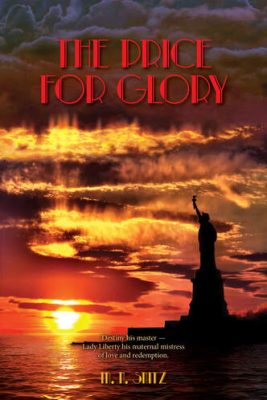
In The Price for Glory, author M.N. Snitz delivers a compelling multi-generational epic tale of warfare and passion with roots in ancient lore.
Abraham Steinnermann grows up in a family dwelling in the same German Black Forest where the great Teutonic warrior, Arminius, held off the incursion of Roman soldiers in the first century. This legacy of war and triumph infuse his destiny, sending him down paths that even he, a somewhat narcissistic young man, could never imagine – until forced to live it.
Bright and handsome, Steinnermann makes up only a few Jews who are accepted at the notably antisemitic Heidelberg University.
As he studies high finance, his talent for numbers becomes evident, landing him a job in Germany’s banking community as Hitler rises to power. Steinnermann admires Hitler’s determination to recoup his nation’s esteem. For several years, even as the war heats up and Jews become the obvious target, the intelligent young banker continues to excel without harm.
Steinnermann’s luck, however, cannot hold in Hitler’s Germany.
One day, two Nazi soldiers come for him. Soon, he struggles to stay alive in the hell of a concentration camp. But Fortune or Fate smiles once again on the young man when a camp guard notices his talent. Steinnermann is offered a job that will lead to his being one of the few survivors.
As the Allies move in, so does the Red Cross.
Steinnermann meets the beautiful Merriam, a Red Cross volunteer, and falls in love. The attraction is mutual. The two maintain a long-distance correspondence when Steinnermann relocates to America. Once there, his perspicacity in finance will land him in a selected, fated role. He sends for and marries the woman he adores. His memories of the war and the many times he dodged death are transmuted to the next generation, within the mind of his son Jack, who must serve in Vietnam.
Snitz, who served in the US Military in Vietnam and was an observer of the Israeli Yom Kippur War, draws together many threads to create his vast tapestry of a multi-generational tale in The Price for Glory.
He successfully creates in his central character a man the reader may “love to hate” – someone whose skills and intelligence are admirable but whose arrogance and boastfulness seem a colossal deficit. As the story progresses though, Snitz’s protagonist wins the reader over by surviving the deep sorrows and immense perils he faces along the way.
Wordsmith Snitz seems at home within his story.
A student of classical literature, who avows writing his first novel in fifth grade, Snitz aptly portrays the feelings of women like Merriam embroiled in a long-distance romance. He depicts the emotions of men like Steinnermann, who are tortured by an insane enemy, and showcases the young Jack who is enmeshed in the terrible duties of warfare.
The Price for Glory is a lengthy saga taking place on three continents and within the minds of those – young and brash, and old and wise – who carry the understanding of that price all too heavily. This novel is highly recommended.
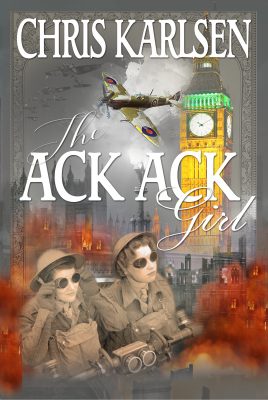
Chris Karlsen’s new work, The Ack-Ack Girl, is the first in her World War II series, Love and War, and serves up plenty of story on both sides of that equation in its portrayal of Ava Armstrong, the “Ack-Ack” girl of the title. And what a story it is!
Bombs are dropping on London in the heat and fire of the infamous Blitz. Shells are falling, as are the buildings that surround them, while fires spring up in the wake of the bombs that never seem to end. But when they finally stop, Ava and her friends are determined to get their loved ones somewhere safe and to find a way to serve up some revenge on the Germans.
The action follows Ava as she enlists in the Auxiliary Territorial Service, the women’s branch of the British Army. She hopes to do more than just “her bit,” but to do it in one of the new ways that become available to women as the men are called to war.
Through Ava’s eyes, we experience her training as one of the “Ack-Ack Girls,” the women who crewed the anti-aircraft batteries placed on the English coasts. In her duties as a spotter, a predictor (calculator), and a gunner, Ava garners respect, pride in her accomplishments and those of her crew – both male and female. One day, love blooms between Ava and an RAF pilot. The new relationship thrills and frightens her at the same time, loving a man who has a dogfight with death every other day.
There are and will be, plenty of World War II stories.
In recent years there has been a plethora of such books featuring the contributions of women to the world-wide war effort, contributions that have frequently gone unsung until now. What makes The Ack-Ack Girl stand out above the crowd is the freshness of its voice and the world as it is seen through the perspective of its titular character.
Ava Armstrong is neither a pampered princess nor a bird in a gilded cage when the story opens. She’s respectably middle-class and has no pretensions. Ava’s doing her best to balance her love and respect for her widowed mother with her strong desire for independence and the need to make something of herself for herself.
The description of the selection and training process for the Ack-Ack crew is both fascinating and delightful because Ava is such a realist. It’s a treat to read about someone who discovers a job, learns they are good at it and is proud of their accomplishments. Nevertheless, Ava struggles over whether to marry or stay in her position where the need could not be greater. Her struggle feels authentic and, therefore, will likely resonate with 21st-century readers.
Chris Karlsen is a master at weaving pulse-pounding action scenes of battle into the heartwarming story of one woman who follows her heart and takes us with her. The Ack-Ack Girl is superb storytelling and one World War II-era novel we highly recommend.
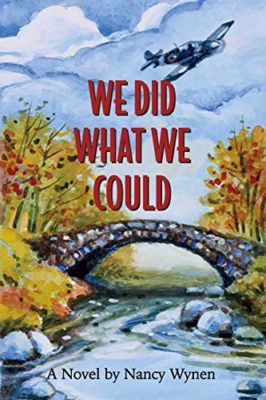
Nancy Wynen’s We Did What We Could is a well-conceived, smart, character-driven novel set across a grand European landscape. Here a formidable trio of young women, groomed for mere social status, demonstrate their strength, endurance, and courage as they move beyond the walls of academia to experience careers. The three must also deal with relationships, family expectations, and life issues amidst the often devastating and upending climate of war.
Lady Archer is a widow from the Great War. As Assistant Head Mistress at St. Martin’s School, she feels girls should receive solid educations and prepare for real professions. With her high level of social ties, Archer looks for “future perfect leaders” within each new graduating class, possessing ideal traits of intelligence and creativity. In May of 1936, Archer sets her sights on three such proteges whose memorable antics foretell their potential for more significant life accomplishments.
In this three-part literary work, Wynen moves the narrative between the interconnected lives of these central characters. In the mind of their individual goals, natural-born leader Maggie Shelford obtains a job at the London Times, Agnes Fletcher heads for nursing school, and creative Ellie DeWever prepares to join the Netherlands foreign services. Ellie’s kindred spirit Gran, another select alumna of St. Martin’s, offers up smart advice to the tune of, “Be prepared, and then you can adjust to whatever happens … Improvise as you go along.”
From royal debutante ceremonies where these three friends sneak an outsider into high society’s ranks to Agnes’ innate ability to bluff her advancement through nursing school, imagination and talent help these women forge ahead. With the continuing influence of Lady Agnes, Maggie finds herself a member of the RAF (Royal Air Force), reporting for the Union Jack, and ultimately a chief press camp officer. Events of the day fill the storyline. With Ellie the first in the group to marry and start a family, Maggie and Agnes begin to contemplate their own destinies and opportunities to find love, romance, and a “real deal” relationship.
As expected, the backdrop of war predominates in a story playing out within a 1936-1945 timeframe. During this uncertain time, life is likened to a ballet where each step was delicate, and “losing one’s balance was costly.” Here towns are destroyed, families are forced from their homes, secrets are buried, and love and loss are intertwined. But the narrative isn’t always frayed with hardship. Wynen aptly weaves humor throughout her work that serves well to balance tension and storyline.
When a significant twist in the plot occurs, Lady Archer’s hard work with her proteges pays off. Here Wynen cleverly brings the story full circle with the re-enactment of an ingenious prank incorporated from their school days. A detailed wrap-up highlights these characters’ futures and leaves Lady Archer hoping for post-war generations instilled with equally creative and indomitable spirits.
For those readers drawn to stories filled with the harsh realities of a war era and the emotional triumphs and tragedies of those involved, We Did What We Could proves a lively and entertaining exploration that showcases the fine art of determination and will power during the best and worst of times.
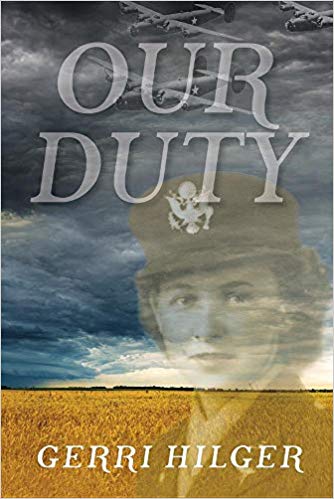
Our Duty opens with a group of nursing students sunbathing on the roof of their apartment. Pauline Garrity, aka Polly, has a little bit of fun and decides to sunbathe sans robes. While this stirs some of the girls up a bit, others know Polly is only being Polly. When a fighter plane does a fly-by on a training mission, Polly has a little more fun.
Here’s a story of World War II with a slightly different bend. Rather than focus on the horrors of what was happening in the trenches, Gerri Hilger centers her novel around Polly and her close-knit group of friends who are attending nursing school together. Our Duty is a novel for fans of lighthearted historical fiction with a sprinkling of cozy romance and a thread of Christianity.
The first part of the novel follows Pauline Garrity, aka Polly, alongside her close friend Aggie and their schoolmates as they navigate their studies and personal lives while attending nursing school in the early 1940s. There are inter-peer rivalries to contend with, gossip that occasionally falls into the mean-spirited category, and the looming presence of the war which begs the question—which of the young women will choose to enlist after graduation?
Polly and friends persevere through nursing school and graduate with their degrees, and then each promptly goes her own way. Aggie enlists in the service while Polly stays in the States and works in a maternity ward, often calling on the Lord to give her strength as she helps new mothers whose husbands have enlisted. Life continues on, however, despite the war, and Polly soon finds herself becoming more and more involved with a charming young man named Johnny.
In Our Duty, Hilger tackles the hefty topic of why some people enlist while others try their hardest to stay home. It should be noted that all of the characters’ reasons for avoiding war have everything to do with family responsibilities and less to do with worrying about whether or not one may die as a result of enlisting.
Our Duty is largely based on the lives of the author’s family and ends with Hilger discussing what happened to the characters after the story’s end as well as her family’s ties to one another and the war. And while the book focuses on the nurses, the war is never out of the minds of our characters, as letters and news come in detailing the horrors and heartaches of life and death on the battlefields of war. In the end, Hilger has gifted us with a WWII historical fiction with a lighthearted side and an enjoyable sweet romance on the side.
Twenty-four-year-old Kitty Charente is trying to put her life back together. Working as a switchboard operator for a perfumer based in New York City, Kitty wants to put the death of her husband, Phillipe, and the miscarriage of her baby behind her and move forward. But when her boss, Jack, gives her the task of wining and dining an out-of-town salesman, Luke Kayenta, Kitty’s world is turned upside down overnight.
Luke isn’t like Jack’s usual salesmen. In fact, Kitty’s certain he’s much more when she secretly watches him perform a strange ceremony on the eighty-sixth floor of the Empire State Building.
Unbeknownst to Kitty, Luke has come for her. Charged with delivering a deathbed letter from Philippe, Luke is drawn to more than Kitty’s grief. Beyond his promise to deliver the smuggled letter, the stories Philippe shared of his beautiful dark-haired wife helped Luke escape his imprisonment in Spain and brought him halfway around the world to find her. Now that he’s found her, he doesn’t want to let her go, despite the danger surrounding him. Kitty follows his reckless path through the twisting, wartime streets of New York, but will their newfound love be able to protect them from Luke’s pursuers?
The rebirth of Luke’s tormented soul is the real jewel in this novel, book two of the Code Talker Chronicles. Luke isn’t a Spaniard as Kitty’s been told but a Navajo code talker, and he’s keeping more secrets than the forbidden letter. Tortured in Spain at the hands of Nazis, Luke has yet to truly escape his persecutors and have his mind released to live–and love–again.
Luke yearns for the simple life of a rancher back in his home state of Arizona. His invaluable work in the intelligence service has cost him more than a pound of flesh, but his chance at love and life with Kitty, his continual inspiration, is built upon a fragile ledge of espionage and the memories of her heroic husband, and now the woman he loves is charged with the task of testing whether his very mind has been compromised.
In a world of half-truths, crooked policemen, spies, and impersonators, the real question is who to trust. Watch Over Me shows a lively caricature of 1940s New York spinning wildly in the madness of espionage, where secrets and sacrifices threaten the bond of love and the hope of family.
Watch Over Me by Eileen Charbonneau won First Place in the 2017 CHATELAINE Awards.
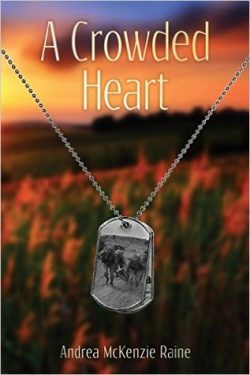
Willis Hancocks survives fighting in Western Europe during World War II but faces continuing battles of the mind at war’s end in Andrea McKenzie Raine’s poignant study of the plight of the former soldier in her historical novel, A Crowded Heart.
Willis decides to remain in London rather than return to his native Canada where his parents and sister live near Vancouver. Eager to put the war behind him, he marries Ellie, an intelligent young woman who has studied art at Cambridge University. Her affluent parents approve of Willis, and her father offers to finance his new son-in-law’s study of law at Cambridge. The newlyweds’ future could not look rosier.
This is, however, the story of a man who is haunted by the terrors of the battlefield. Life cannot proceed smoothly for someone who wakes from sleep in terror, who is plagued by survivor guilt, anxiety, and depression. Willis struggles to find his footing but repeatedly fails as he fights personal battles with alcohol, infidelity, and deception.
Admittedly, these are poor weapons of choice to face the daily struggle of postwar life, and although he has periods of relative calm and sobriety, his sins and regrets continue to multiply. He recognizes his inadequacies as a husband and a father of two sons, one born out of wedlock to a mistress. Although Willis manages to earn his degree in law and launch a practice with his war buddy, Sam, he is never victorious at achieving inner peace.
Raine wisely expands the narrative of the novel to reveal the wide net of war. Willis is not the only victim; the people in his life experience the after-shocks of fighting as well. Ellie is a dutiful wife but she is alone in her marriage, painting in secret because she can’t share her work with her emotionally remote, often absent husband. Willis spends years away from his family in Canada, neglecting them, and returns only when summoned after his mother’s death. He doesn’t engage with either of his sons and arranges to abandon the younger one altogether. It’s clear that the war will leave its mark on the next generation as well.
The ending of the novel is not surprising, but it is powerful and deeply affecting. One is left thinking of all the soldiers who escape death but are nonetheless robbed of their lives. Standing beside them are loving, distraught family members and friends, people who fervently hope for a cure – some miracle that will return traumatized veterans to their former selves. Not to give up on those who have already given up on themselves is the challenge. Raine reminds us that doing so requires a full heart, indeed, a crowded heart.
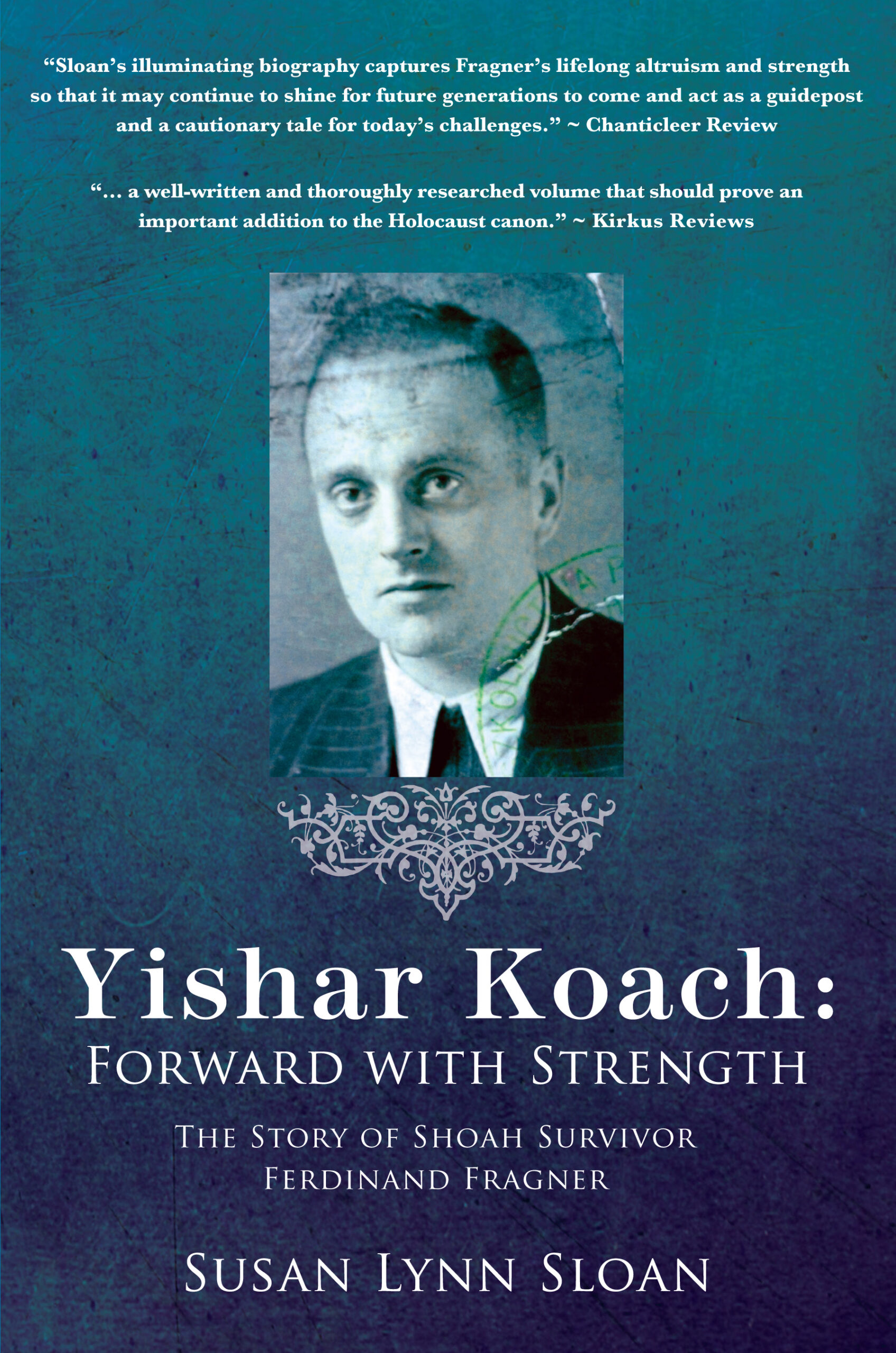
Did you know that only one percent of all Jewish children in World War II Europe survived the war?
YisharKoach:ForwardwithStrength shares the account of a man who was entrusted with inspiring some of these precious few orphans to find strength and hope after experiencing tremendous loss. At Aglasterhausen, a United Nations school for WWII orphans, Fred Fragner took on the mantle of principal and teacher at the school—a daunting responsibility for most, but not for Fragner—a fighter of the Nazi regime who was shot, captured, and interrogated by the Gestapo and then imprisoned for five years in Buchenwald Concentration Camp.
The life of this most remarkable man of integrity and altruism was the inspiration for Susan Sloan to write Fragner’s biography—a five year project that she undertook with great passion after being introduced to him at a café in Bellingham, Washington. Sloan researched transcripts of lectures and speeches made by Fragner, she refers to newspaper clippings and documents about him, listened to audio and video tapes, and interviewed many who knew him as mentor, coach, friend, family member, and teacher. Most importantly, Sloan had access to Fragner’s own scrapbook about Aglasterhausen that vividly tells how “the children gave him his life back” as he tried to help restore theirs.
The author took on this project with the hope that it will inspire others “to understand the importance of persevering even in the midst of the most daunting challenges.” YisharKoach: ForwardwithStrength is a most timely and much needed reminder for today’s unstable times when there are the most people, worldwide, who have been forcibly displaced since WWII. (The United Nations reports 60 million people are currently displaced as refugees from brutal acts of war, political coups, and religious intolerance.)
Sloan’s illuminating biography captures Fragner’s lifelong altruism and strength so that it may continue to shine for future generations to come and act as a guidepost and a cautionary tale for today’s challenges.
~~~~~
A timely and thoughtful work that documents and honors Fred Fragner whose unconditional love, respect of others, and perseverance in the face of insurmountable odds still inspires and heals. YisharKoach: ForwardwithStrength, authored by Susan Sloan, is an illuminating biography of this amazing man who made a difference to so many people throughout his life. Sloan’s biography captures Fragner’s lifelong altruism and strength so that it may continue to shine for future generations to come and provides a guidepost for today’s challenges.



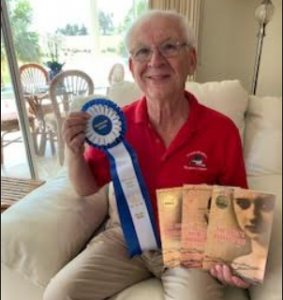 We met Mark H. Newhouse in Florida where he wondered whether or not he should enter his epic historical novel into our CIBAs.