Tag: WWII Historical Fiction

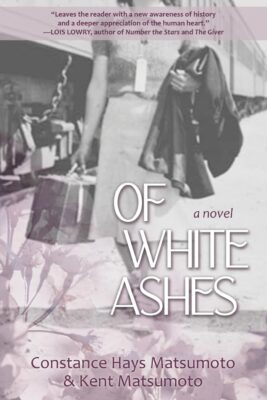
  • OF WHITE ASHES by Constance Hays Matsumoto and Kent Matsumoto – WWII Historical Fiction, Asian American Literature, Romance


    When the world is upended by war, the important pieces of your life fall around you, victims of a swirling wind. This is the story of Of White Ashes by Constance Hays Matsumoto & Kent Matsumoto.

    Just as radioactive ashes smothered Hiroshima after the United States dropped its first atomic bomb on Japan in August 1945, the unimaginable effects of war press down on Ruby and Koji, two kids on opposite sides of the Pacific.

    Ashes caught in swirling wind become a metaphor for the romantic story of these two children. Their mirrored journeys reveal layers of their identities they never knew existed, while the demands of their warring countries reshape their lives.

    Grounded in historical accuracy and part love story, Of White Ashes begins in 1939 with Ruby and Koji both living happily, Ruby in a beachfront Hawaiian town and Koji on his family’s farm near Hiroshima. Both will have their carefree childhoods taken from them after the 1941 attack on Pearl Harbor.

    Ruby and Koji share Japanese heritage and American citizenship, but far divergent attitudes to both.

    Ruby is an all-American girl, only vaguely aware of her heritage, largely from Japanese-American community. Koji, in contrast, only finds out about his American citizenship when he discovers his parents’ secret history of living several years in the U.S. All the while, Japan, the country he calls home, plunges headlong into the war.

    Ruby is ripped from her peaceful life, first by her mother’s sudden death and her father’s quick remarriage, then by forced incarceration due to the United States’ Executive Order 9066.

    Made a prisoner because of her race, Ruby grows embittered about her government’s willingness to persecute rather than protect all U.S. citizens because of its entrenched racism. Her fight is both philosophical and personal, and becomes more extreme when she is told by her father that she must emigrate with him back to Japan after the war. As a child she is powerless to make her own decisions.

    Koji, on the other hand, is curious and fascinated about his American heritage even though he must act like the standard-issue, politically faithful child expected by Japanese government and society.

    He sees his government’s harsh demands for people to scrimp for the war effort, taking every scrap of metal in their households for weaponry, and forcing children to leave school to make rifles in factories. Once the war ends, he manages to immigrate to the U.S. where he learns to speak English, goes to college, and even volunteers to serve in the U.S. Army during the Korean War. Despite the horrors of World War II, and his early life in Japan, he emerges as a proud U.S. citizen.

    Constance Hays Matsumoto and Kent Matsumoto’s Of White Ashes develops a beautifully complex love story through Ruby and Koji dealing with their deeply held differences.

    Their diametrically opposed philosophical stances cause years of heartache and stress after they meet and fall for one another. There is no easy path to pave over their conflicts no matter how many years have passed. However, as they couple, uncouple, and finally find a lasting path together, their story becomes a warm, relatable search for the goodness deep within themselves and each other that makes being together possible.


    Of White Ashes by Constance Hays Matsumoto and Kent Matsumoto won Grand Prize in the 2024 CIBA Hemingway Awards for 20th Century Wartime Fiction.


  • AN EMPTY HOUSE DOESN’T SNEEZE by David Scott Richardson – WWII Historical Fiction, Coming of Age, Pacific Northwest

    In David Scott Richardson’s YA WWII historical novel, An Empty House Doesn’t Sneeze, teenager Scott Johannsen—“Scotty” to his mom and friends—leads us on an adventure through the wartime Ravenna neighborhood in Seattle, Washington.

    Boeing manufactures B-17s, his grandparents and neighbors grow victory gardens, his parents build a bomb shelter in their basement, and mandatory blackouts occur every night. Scotty navigates a chaotic world filled with danger and wonder yet finds security with family and friends in this heartfelt story.

    Scotty runs with his pack—James, Marty, and Burr. We witness what lengths they will go to on a search for chocolate. With Ravenna Park as a backyard and Puget Sound just a short drive away, Scotty’s life is filled with exploration of the natural world. His fishing adventures with his dad in the Sound become an exciting way to supplement his family’s food rations as he dreams about netting a fighting salmon.

    Scotty’s peaceful life evokes a sense of innocence in another time. Readers see the responsibilities average citizens rose to in their attempts to safeguard their neighborhoods and families against a potential attack.

    Richardson masterfully relates the realities of coming of age in WWII America.

    Scotty’s older brother Eric and his younger sister Grace help him navigate this tumultuous time. Gas shortages, young men sent to battle overseas, and the loss suffered by a community when one of their own is killed in battle.

    Richardson also explores the plight of Japanese Americans during WWII. The loss of this part of his community directly impacts Scotty and his family when his friends and neighbors are sent to internment camps—regardless of their citizenship. To Scotty it seems incomprehensible and senseless, but Richardson confronts such an important historical fact directly.

    Yet more troubles intrude on Scotty’s world. We meet his nemesis, Simon Lashbaugh, a bully who lives on the other side of the park.

    He torments and confuses Scotty until he doesn’t know if he can trust his own brother. In his turmoil, Scotty confides in his sister and his buddies to help save his brother from the accusation that he is an arsonist setting fires during the city’s blackouts.

    Richardson brings to life the experiences of an average American kid who loves his hometown of Seattle—fishing with friends, running errands for his mom, and sharing secrets with his siblings.

    Our hero Scotty is not perfect. He’s a teenage boy who constantly thinks about girls, struggles with math, and tries to please his parents. He wants to survive school and adolescence and make sense of the chaos of WWII contrasted against his serene world.

    An Empty House Doesn’t Sneeze grabs readers’ attention with a depiction of the great apprehension and uncertainty experienced by America’s youngest citizens during World War II.

    Richardson’s characters leap off the page and will capture the hearts of all who enjoy a fast-paced historical war story about a struggling family and the boy who helps save his neighborhood.


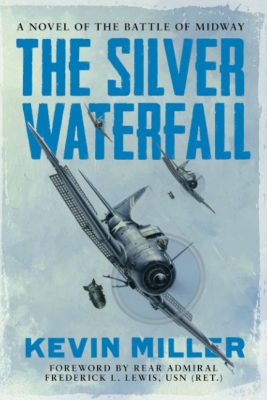
  • THE SILVER WATERFALL: A Novel of the Battle of Midway by Kevin Miller – WWII Historical Fiction, Battle of Midway, Military History


    In The Silver Waterfall, author retired U.S. Navy Captain Kevin Miller reveals the intricate and deadly turns of the Battle of Midway, a combat shaped by transforming warfare, and one that would in turn shape the rest of WWII’s Pacific Theater.
    After their surprise attack on Pearl Harbor, the Japanese Navy seeks to draw American aircraft carriers into an ambush, to secure Japanese power over the Pacific. In a time of great upheaval for warfare technology, aircraft carriers dominated both sea and sky. So, to destroy the USS Enterprise, Yorktown, and Hornet, Chūichi Nagumo— commander of the Japanese First Air Fleet— brings to bear his own four carriers, HIJMS Akagi, Hiryū, Kaga, and Soryu.

    But the Americans had cracked the Japanese communication codes, so as the First Air Fleet launches their provoking attack against the Midway Islands, the American carriers are already steaming into position. From June 4th to June 6th of 1942, planes filled the skies above the remote Pacific waters, both American and Japanese pilots dashing back and forth, knowing that either they sink the enemy’s carriers, or they’ll have none of their own to return to.

    Author Miller, author of the highly-rated Raven One trilogy of contemporary carrier aviation, draws on his experience as a former carrier-based fighter pilot to place the readers into the shoes of commanders, strategists, pilots, and gunners alike.

    Readers get a glimpse into the intricate planning and communication involved with this sort of naval warfare, as each character struggles to glean the information vital to their own success— and survival. This is a warfare of radio, fuel tank ranges, hand-drawn plotting boards, and cloud cover. Characters clash over the right move, knowing that any mistake could cost their lives and more.

    Amidst all this detailed information, however, The Silver Waterfall takes time to shown the humanity of its characters. Though specific moments and personal dynamics are fictional, each character was a real person in the Battle of Midway. Their little conflicts with each other, their moments of bonding, and the lives that they hope against the odds to return to, become palpable. And every bit of personal charm lives under the shadow of their next flight.

    From the bunks of the aircraft carriers to the cockpit of a Devastator torpedo plane, neither characters nor readers can escape an imposing sense of danger, the ever-present possibility that someone’s unique, full life will be snuffed out in a cloud of black smoke.

    The Silver Waterfall takes on a massive amount of information, given the complex nature of real naval warfare.

    Readers will have to pay close attention to understand the events of the battle, as planes take flight time and time again. Thankfully, Miller provides a list of commanders and naval jargon/acronyms, so those unfamiliar with this specific setting will be able to grasp the details. As well, a few helpful diagrams throughout the book keep locations clear— a luxury not afforded to those in the battle itself.

    Though each side pores over their plans, information is precious and incomplete. The Japanese strategist Genda argues with his superiors as they wait for confirmation on the presence of enemy carriers, just as John Waldron— Commanding Officer of Torpedo Eight— pleads for a fighter escort, knowing that death awaits his pilots without one. But even solid plans have fractures and crack apart amidst tracer rounds and enemy pursuit.

    The dynamics between different groups of pilots stand out amongst the chaos, with torpedo planes (“torpeckers”) and bombing squadrons relying on scouts and fighters to bring them into— and more importantly out of— enemy fire. Tensions rise with every miscommunication and bad decision, as everyone must grapple with the fact that they hold someone else’s life in their hands.

    The Battle of Midway is filled with personal weight. Characters on both sides become easy to empathize with.

    The Japanese pilots are much like the American ones— sent to kill and die for the sake of their country. They share the fear of death, the thirst for vengeance as their comrades fall out of the sky or into the flames of a dying carrier, and heartbreaking moments of grief— all the more horrible for the fact that they can’t take but a moment away from the fight.

    Knowing these characters at a personal level makes each flight gripping. Will Taisuke Maruyama somehow escape the storm of anti-aircraft fire from the American ships? Is Bill Evans really going to follow his CO Waldron to his death? Will Lloyd Childers ever get to pay Darce the money he owes him? Or, will these young men be lost? Readers will feel the importance of each answer they receive.

    More than anything, The Silver Waterfall confronts the horrific impact this battle has on the people who wage it.

    Grief turns to rage, the flames fanned by racism, national supremacy, and the unrelenting, unpredictable chance of death. Miller shows that for every kill made in the name of a fallen warrior, a soldier on the other side etches another name into their memory. But to speak of rage and revenge alone wouldn’t do these pilots and gunners justice.

    It takes monumental feats of bravery for these soldiers to get in their planes and fly into danger. Readers sit with them in those terrible seconds of watching a compatriot go down, and the true comradery of the pilots looking out for one another. They yearn for the glory of a hit on an enemy carrier. They act for their cause despite death all around them. And in an ocean of violence and terror, their humanity, their compassion reminds the reader that these are not just soldiers— they’re boys, some no older than nineteen.

    But this story saves its deepest sorrows until the quiet after the battle, as the characters themselves must do the same.

    With pathos and intricate detail, The Silver Waterfall makes for a fulfilling read.

    Fans of historical fiction will appreciate the clear amount of research that went into this novel, which illuminates the back and forth aircraft carrier warfare in one of its earliest and most impactful forms. Readers of all sorts will end the book with a greater understanding of one of WWII’s most pivotal battles— an understanding both factual and emotional.

    The Silver Waterfall by Kevin Miller won Grand Prize in the 2023 CIBA Hemingway Awards for 20th Century Wartime Fiction.


  • SHADOWED BY DEATH by Mary Adler – Mystery, WWII Historical Fiction, Crime Thriller

    In Shadowed by Death, the second novel in writer Mary Adler’s World War II mystery series, we’re taken back to America in the forties, and to a time when human kindness and human soullessness battled for the soul of the world.

    Homicide detective Oliver Wright, a Marine wounded in the Pacific and his service dog, Harley, are back home in the San Francisco Bay area. Despite recovering from a nearly shattered leg, the military calls on Wright to investigate the near-fatal battering of Irina, a young woman found bruised and beaten on a local military base. The assignment leads to an equally complex assignment, protecting Sophia Nirenska, a Polish Jew whose life’s mission is to raise American awareness of the atrocities committed by Russia against her countrymen. She also proselytizes aiding orphaned Jewish children strewn across the world after the war is over.

    Someone is trying to shut her up, at minimum, or kill her. Wright is given the task of protecting her at all costs. It’s not easy. Sophia is a survivor of the Nazi’s unrelenting attacks against Warsaw and a severe critic of Russia’s unacknowledged attacks against her countrymen. She is also uncompromising about being self-sufficient after having survived the horrors of the Warsaw ghetto and the disintegration of her family.

    The question is who wants her dead the most: anti-Semites, Nazis, or Russians? Protecting her is no easy job.

    Harley, Wright’s military-trained service dog, becomes a major player in his master’s twin investigations, both protecting Wright and helping to track down the people who are trying to hurt her.

    More than just a thriller, this novel seemingly has a mission to educate 21st Century readers about some aspects of World War II that few may be familiar with. While the Holocaust is well known, the Russians capture and massacre of thousands of Poles at Katyn is less so. It took modern scholarship to prove Russia did it, not the Nazis. The dogged resistance of the U.S. to take in more Jews during the war years becomes part of the book’s informational side. Readers are given a detailed description of the bureaucratic quagmire that made emigration of European Jews here virtually impossible despite knowledge of the atrocities being committed against them.

    These and other facts are expertly interwoven into the narrative as Wright tries to get to the bottom of who wants Sophia and Irina dead, and why.

    In many ways, Wright becomes a surrogate for most Americans who never experienced the full impact of the war in Europe. As one character says, in part, “We must think of [these refugees] as having brought their own justice system with them, and for the duration, we will suspend ours where they are concerned… The communists who infiltrate the Polish underground inform on them to the Gestapo. The Poles who survive will be killed or imprisoned when Russia takes over Poland. [Those who] betrayed the resistance for years… will be the cause of suffering for even more years to come. We can only imagine how many people were tortured and killed because of [them], and how many more will be.”

    Shadowed by Death is a powerful inventive thriller and a provocative look into some chilling aspects of World War II that have lost none of their relevance in today’s explosive international political climate. Highly recommended.

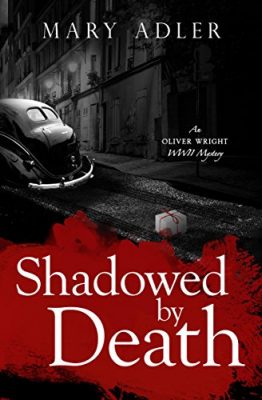
    Shadowed by Death by Mary Adler won 1st Place in the 2019 CIBA Goethe Book Awards for Post-1750 Historical Fiction.


    5 Stars! Best Book Chanticleer Book Reviews


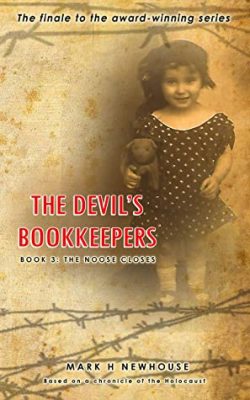
  • The DEVIL’S BOOKKEEPERS: The Noose Closes, Book 3 by Mark H. Newhouse – Jewish Historical Fiction, WWII Historical Fiction, Jewish Literary Fiction

     Blue and Gold Badge for the 2020 Series Grand Prize for Genre Fiction The Devil's Bookkeepers by Mark Newhouse

    In The Noose Closes, book three of the award-winning series, The Devil’s Bookkeepers, author Mark H. Newhouse continues the story of his compelling characters and their difficult predicaments in the closing months of World War II in occupied Lodz, Poland.

    Newhouse is a gifted writer and educator, born in Germany to Holocaust survivors. His series is a fictionalized account of what happened in the Lodz ghetto, a barbed-wire enclosed slum in Poland during the Nazi occupation. As he deftly utilizes the first-hand accounts of those who were there, we witness the ribbon of humanity and compassion woven through each book. This raises the series to premiere status – an exceptional if sobering examination of the immutable human spirit. His series should encourage all who read it that hope is a gift and kindness is the answer.

    Jewish engineer Bernard Ostrowski records the daily events for the ghetto chairperson, whom many call the Devil. Bennie and his small team find the information more terrifying with each passing hour. They compose their reports in a manner that will mollify the infamous ghetto boss, Chairman Rumkowski. Rumkowski and his embattled assistant, Neftalin, must please their Nazi handlers. Rumkowski oversees every aspect of the city and forces its residents into BECOMING factory workers for the German military. He hopes to keep the Nazis from taking control of Lodz by doing so.

    Even Ostrowski and his educated co-workers struggle to comprehend the desperation and death in the place they once called home. The sight of bony children fighting in garbage heaps for anything edible is unfathomable. How can this be happening in their city? Surely Rumkowski will help them.

    Ostrowski doesn’t quite know what to make of the masses of used shoes and other clothing that arrive via trucks, while Lodz Jews are shipped out of the ghetto almost daily. Are the Germans shepherding the Jews out of Lodz to safety from the war, as they and Rumkowski say?

    Rumors begin to slip in. The Jews are being taken to camps where only death awaits.

    The novel continues to weave in the story of Ostrowski’s love for his wife. Nearly defeated by the shocking events in book 2, Ostrowski longs for any news about his wife Miriam and his daughter Regina. The couple had become estranged when Bennie suspected Miriam of having an affair with the young and reckless Singer before the man disappeared.

    When Singer returns, now a resistance fighter, he attempts to enlist Ostrowski into an underground Jewish resistance movement. What follows are acts of bravery and sacrifice readers will remember long after the book is put down.

    Newhouse’s parents were among the 5,000 Jews of more than 200,000 trapped in the Lodz ghetto who survived the Nazi occupation. Will any of the novel’s characters survive as The Noose Closes around them?

    Newhouse utilizes the shocking events described in The Chronicle of The Lodz Ghetto (Yale University Press, 1984), placing sobering quotes from the historical account at the beginning of each chapter. Readers will feel as if they are on the streets of Lodz due to the vividly depicted sights, sounds, and smells during this bleak and desolate time. The Nazis’ wanted to annihilate an entire race of human beings. The incontestable proof became all too clear only as WWII came to a close.

    In The Noose Closes and the other books in The Devil’s Bookkeepers series, Newhouse interjects the ironic humor that brings the epic tale to life, gallows humor, if you like. These people are real – and readers feel it. Newhouse skillfully weaves into the story the profound depth of faith and belief that enabled desperate people to cling to hope, despite their dire circumstances.

    In fact, this bold human spirit enables the residents to find courage in the face of danger that rests at the heart of the series. His characters believe that relying on faith overcomes fear, and above all else, love will always be triumphant. This powerful series reminds us that the more we learn about the Holocaust, the more we remember this time of terror, the more likely it is that we can genuinely say, “Never again – to anyone!”

    The Devil’s Bookkeepers series won Grand Prize in the 2020 CIBA Fiction Series Awards and is a series that is not only timely, but one we highly recommend.

    Please read our reviews of the first two books in The Devil’s Bookkeepers by clicking on their titles, The Noose and The Noose Tightens.


    5 Stars! Best Book Chanticleer Book Reviews


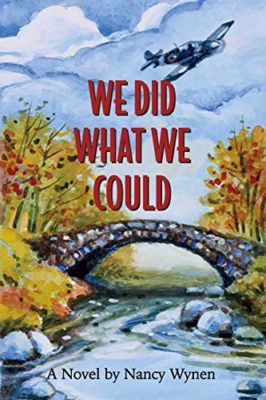
  • WE DID WHAT WE COULD by Nancy H. Wynen – Historical Fiction, WWII Women’s Fiction, Literary Fiction

    WE DID WHAT WE COULD by Nancy H. Wynen – Historical Fiction, WWII Women’s Fiction, Literary Fiction

    Nancy Wynen’s We Did What We Could is a well-conceived, smart, character-driven novel set across a grand European landscape. Here a formidable trio of young women, groomed for mere social status, demonstrate their strength, endurance, and courage as they move beyond the walls of academia to experience careers. The three must also deal with relationships, family expectations, and life issues amidst the often devastating and upending climate of war.

    Lady Archer is a widow from the Great War. As Assistant Head Mistress at St. Martin’s School, she feels girls should receive solid educations and prepare for real professions. With her high level of social ties, Archer looks for “future perfect leaders” within each new graduating class, possessing ideal traits of intelligence and creativity. In May of 1936, Archer sets her sights on three such proteges whose memorable antics foretell their potential for more significant life accomplishments.

    In this three-part literary work, Wynen moves the narrative between the interconnected lives of these central characters. In the mind of their individual goals, natural-born leader Maggie Shelford obtains a job at the London Times, Agnes Fletcher heads for nursing school, and creative Ellie DeWever prepares to join the Netherlands foreign services. Ellie’s kindred spirit Gran, another select alumna of St. Martin’s, offers up smart advice to the tune of, “Be prepared, and then you can adjust to whatever happens … Improvise as you go along.”

    From royal debutante ceremonies where these three friends sneak an outsider into high society’s ranks to Agnes’ innate ability to bluff her advancement through nursing school, imagination and talent help these women forge ahead. With the continuing influence of Lady Agnes, Maggie finds herself a member of the RAF (Royal Air Force), reporting for the Union Jack, and ultimately a chief press camp officer. Events of the day fill the storyline. With Ellie the first in the group to marry and start a family, Maggie and Agnes begin to contemplate their own destinies and opportunities to find love, romance, and a “real deal” relationship.

    As expected, the backdrop of war predominates in a story playing out within a 1936-1945 timeframe. During this uncertain time, life is likened to a ballet where each step was delicate, and “losing one’s balance was costly.” Here towns are destroyed, families are forced from their homes, secrets are buried, and love and loss are intertwined. But the narrative isn’t always frayed with hardship. Wynen aptly weaves humor throughout her work that serves well to balance tension and storyline.

    When a significant twist in the plot occurs, Lady Archer’s hard work with her proteges pays off. Here Wynen cleverly brings the story full circle with the re-enactment of an ingenious prank incorporated from their school days. A detailed wrap-up highlights these characters’ futures and leaves Lady Archer hoping for post-war generations instilled with equally creative and indomitable spirits.

    For those readers drawn to stories filled with the harsh realities of a war era and the emotional triumphs and tragedies of those involved, We Did What We Could proves a lively and entertaining exploration that showcases the fine art of determination and will power during the best and worst of times.