

Tag: WWII Historical

  • HEART of the FEW by Jon Duncan – WWII Historical Fiction, WWII Thriller, 20th Century Romance

    HEART of the FEW by Jon Duncan – WWII Historical Fiction, WWII Thriller, 20th Century Romance

    It is said that all is fair in love and war. In this wartime historical romance, young love is put to the ultimate test, and the love of family is strained to the breaking point. During World War II, the occupants of a ravaged England understand that all can be lost in a moment’s hesitation or in a hasty decision. Here, love is under attack by enemies seen and unseen. It’s the uncommon courage of many and the Heart of the Few that can hope to turn the fate of England during these dark days.

    Passion drives both sides in this wartime mystery/thriller about people who are determined to make a difference in the outcome of World War II. Like all powerful forces, passion has two sides. It’s a wondrous and beautiful emotion when applied to good purpose, but it becomes horrific and deadly when twisted and corrupt. The question author Jon Duncan asks amidst all the turmoil, treachery, death and desolation of war is: can love find a way?

    As the only daughter of the widowed Lord Ashford, Livy Ashford feels compelled to volunteer – a valiant calling of which her father wholeheartedly disapproves. War is too dangerous for a young woman. And, as one of Churchill’s trusted Intelligence officers, he’s well informed about the war news; Ashford knows of what he speaks. He wants Livy to remain protected in the upper echelons of London’s upper-class life.

    Jamie Wallace is a butcher’s son who has trained to become one of the new RAF pilots. He is highly skilled and very nervous about his new profession. Regardless, Jamie vows to contribute to the war effort, especially on behalf of his brother, who is badly injured and fortunate to return home at all.

    One day, Livy and Jamie stumble across each other on the edges of an airfield. Love strikes at first sight. Do they dare to follow their heartfelt feelings at a time when air raid sirens and bombings prove that tomorrow is not promised? There are many barriers to happiness. Even if there was no war, they come from very different backgrounds, and each is painfully aware of that fact. But not all dangers Livy and Jamie face wear the enemy’s uniform. In the heat of battle, class differences, and unwelcome attention, the young couple wrestles with how to make sense of their situation, remain focused on the war effort – and stay alive.

    Author Jon Duncan presents a story with spellbinding, spine-tingling action, with romantic scenes of breathtaking tenderness. Duncan paints a vivid and well-researched picture of England at this critical time in history, packed full of plenty of intrigue. Duncan has a background in the movie and television industry, which is reflected in this novel. Research for this novel enlists many primary sources, including conversations Duncan had with people who lived the history in the time of The Battle of Britain. Some historical romance novels are read, Heart of the Few is one that will live with readers long after the book is put down. Highly recommended.




  • FULL CIRCLE: A Refugee’s Tale by Joe Vitovec – WWII Historical Fiction, Literary Fiction, European WWII Refugee Historical Fiction

    FULL CIRCLE: A Refugee’s Tale by Joe Vitovec – WWII Historical Fiction, Literary Fiction, European WWII Refugee Historical Fiction

    In the prologue of this lucid and gripping novel, Joe Vitovec notes that although Full Circle: A Refugee’s Tale is fiction, he “attempts to acquaint the reader with some of the locales and events that made this period so memorable, and leave a record for those who may one day wish to revisit the past.” He has done an extraordinary job with this literary recreation of the experiences of the “displaced persons” following World War II.


    Vitovec takes the reader on a journey that begins with a boy in 1938 in a small town in Czechoslovakia and ends some fifty years later with that boy, now a middle-aged man, returning to his childhood home. What transpires in the intervening years is the heart of this politically and emotionally complex story, one with which many will be able to relate, while others will learn from and perhaps consider the current global refugee crisis with fresh insights and compassion. It is not a tale any reader will likely forget.

    Jan Neuman is only eight when the men of his village leave for a military encampment and prepare to fight the Nazis who have invaded their lands. They never get the chance. As decreed by the Munich Conference, this area of Czechoslovakia is handed over to Hitler and made a German protectorate. The townspeople feel demoralized and live in constant terror that the Germans will arrest them for showing the slightest loyalty to their ousted leader or native culture. They endure degradations, subsisting on soup bones and potatoes, and Jan’s father, the town’s tailor, is made to sew Nazi uniforms.

    Years pass, and finally, the Allied invasion buoys their spirits and hopes. One miraculous day, there are American soldiers in town, happy to share cigarettes and peanut butter, and make friends with the locals. Jan, a teenager, views the Americans as “bordering on godlike,” as does everyone in the village. This euphoric time is short-lived, however, with the departure of the liberating soldiers and arrival of the Russians, followed by a communist coup. The communists are eager to make arrests, and the townspeople become fearful and distrustful of one another.

    As a student who works on a political newspaper, Jan is brought to the communists’ attention and will likely be arrested. When he hears of a resistance army being formed elsewhere, he stealthily leaves town with his friends. However, just as their fathers were denied the chance to fight, Jan and his friends discover that the resistance military base is in fact a refugee camp in Regensburg. Although it’s technically an American camp, it is run by Germans. He and his friends are told, “As refugees, you have no citizenship status, no rights.” Conditions are harsh, the camp overcrowded with Poles, Russians, Ukrainians, and Czechs. Morale is exceedingly low as people wait to see where they’ll be sent next. Although everyone wants to go to America, there are no fast or direct routes. Indeed, Jan’s refugee life has just begun.

    Like so many others, Jan must attempt to rebuild his life again and again. Over the next two years, he will travel from camp to camp, make an ill attempt to join the French Foreign Legion, experience a devastating low outside the sewers of Paris, fall in love, and finally sail to America where his troubles are far from over.

    Vitovec delivers a riveting story in beautiful and poignant prose, reminding us that the impact of war can be total, even for those who never set foot on a battlefield. Political losses hurt people deeply, but the loss of sense of self is endlessly tragic. Displacement is not just a geographic issue, but a psychological one. How much of our identity is built on where we are from? Who are we if we belong to no country? Imagine, if you can, owning nothing but memories, memories of a time and place, of a people who used to belong to a country and spoke its language. Imagine every identifying detail scrubbed from you, the only thing that motivates you is the instinct to stay alive. For years, the existence of the displaced boiled down to just that – a place to lay their heads at night, bread to keep their stomachs from aching, and perhaps the tiniest glimmer of hope that they were y headed somewhere that wasn’t yet another refugee camp, a place they would one day call home.

    A book for political leaders, teachers, students, and anyone with a desire to not repeat the past. It’s a book that serves to remind us of what we have and what can be taken from us at a moment’s notice.

    Full Circle, A Refugee’s Tale by Joseph Vitovec won First in Category in the CIBAs 2018 Goethe Awards for Late Historical Fiction.


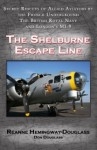
  • THE SHELBURNE ESCAPE LINE by Réanne Hemingway-Douglass

    THE SHELBURNE ESCAPE LINE by Réanne Hemingway-Douglass

    The Shelburne Escape Line begins with MI-9 (British Military Intelligence) announcing “Bonjour tout le monde à la maison d’Alphonse” over the BBC shortwave French language service. The date: January 28, 1944. This announcement was a code for confirming the covert pickup of downed Allied aviators hidden by the French Resistance well within the Nazi occupiers’ patrol range.

    Once you pick up this book by Réanne Hemingway-Douglass, you will not be able to put it down.

    The author attended university in France in 1953. While there, she lived with a French family and heard their amazing stories about the French Resistance.  During subsequent visits, the more accounts were shared with Réanne, the more engrossed she became in the stories about the French Underground with its safe houses for the Allied aviators its members rescued and hid. Réanne also learned of the British Royal Navy’s clandestine pickups of downed airmen, and London’s MI-9 involvement.

    This is not a fictionalized tale of heroics, but one of everyday people who endangered their lives and those of their families, as they answered General Charles De Gaulle’s call to action to regain France and her liberty. And this meant fighting against her occupiers in any way possible. These ordinary people took extraordinary risks in creating an escape organization for the secret evacuation of Allied Forces.

    Escape routes became instrumental as more and more Allied airmen were shot down in Nazi-occupied France. Getting these men back to English soil was more than just humanitarian aid; it was imperative to get these highly trained aviators back into the fight for freedom against the Nazi forces as quickly as possible. We learn that other escape routes had been infiltrated and collapsed due to Nazi-sympathizers.

    The author shares the accounts told to her of the violence committed upon members of the various resistance groups in the Nazi’s effort to infiltrate and destroy them. She tells of the brutal treatment some underwent without revealing their secrets.

    This book is divided into two distinct sections.  Part II deals with a brief history of a small number of World War II French Resistance members and their staggering contributions to the escape and evasion efforts of Allied airmen, as well as the MI-9 agents and French patriots needing to escape to England. The Shelburne Escape Line, although short-lived, was the only such route never infiltrated by the Nazis.

    The author chronicles the selfless giving of assistance by the people who, prior to the war, were bakers, teachers, farmers, and mechanics.  We are reminded of the rationing and scarce food supplies these heroes shared with those they rescued and hid. They did this with the knowledge that, at any moment, their participation in the escape plans could mean their imprisonment in a horrid Gestapo prison camp or their execution as acting as spies for the Allied Forces.

    Part II of the book deals with first person accounts of Allied airmen and their stories of how they were assisted in their escape and repatriation back to England. Several of these stories tell the tale of the airmen from their point of view; about the circumstances of their downing into occupied territory; the hazardous rescues by the French Resistance; the apprehensive time spent in hiding—not knowing if they would be able to escape before being discovered.  The chance of being killed by enemy forces or friendly fire was immeasurable for everyone within the war-torn country.

    We also learn about the harrowing stories of families and children who had their lives turned upside down by the Nazi occupation and the requirements to “work for the fatherland.”  Each of these stories is a well-written account of a small slice of the war and the dangers and hardships, faced and overcome on a daily basis, by average citizens who endured the terrors of war in their own land. These are the unknown and unsung heroes of WWII who were instrumental in securing the freedom we have today.

    As this reviewer stated at the beginning, this is as fast-paced a read as any thriller or suspense novel that I have read. The Shelburne Escape Line: Secret Rescues of the Allied Aviators by the French Underground, the British Royal Navy, and London’s MI-9 is an enthralling and well-researched read about actual events and the real men, women, and children who were involved in them.

    Réanne Hemingway-Douglass has gathered this galvanizing collection of true-accounts, vividly portrayed historical details, and military tactics of these little known, but amazing, slices of WWII history.  Her adept writing reminds the reader of the human elements of war. Highly recommended.

    [fusion_builder_container hundred_percent=”yes” overflow=”visible”][fusion_builder_row][fusion_builder_column type=”1_1″ background_position=”left top” background_color=”” border_size=”” border_color=”” border_style=”solid” spacing=”yes” background_image=”” background_repeat=”no-repeat” padding=”” margin_top=”0px” margin_bottom=”0px” class=”” id=”” animation_type=”” animation_speed=”0.3″ animation_direction=”left” hide_on_mobile=”no” center_content=”no” min_height=”none”][Reviewer’s Note: This book includes:  a documented photo collection, a listing of the author’s interviews and correspondence, a comprehensive bibliography, a glossary of WWII military terms, and pilot accounts of missions flown. It also includes information about the Canadian military war efforts and the French Resistance’s perspectives of WWII. ][/fusion_builder_column][/fusion_builder_row][/fusion_builder_container]

  • An Editorial Review of “Paul, Betty, and Pearl” by Karl Larew

    An Editorial Review of “Paul, Betty, and Pearl” by Karl Larew

    In the summer of 1941, a ship approaches Honolulu. Watching on deck is young Army Lt. Paul Van Vliet, a 1936 graduate of Cornell University who then joined the US Army Signal Corps, in which he was trained in radar and radio/wire communications.

    WWII is well underway in Europe, and Japan has begun its imperial foraging for new territory in the Far East, but where will it stop? Could Japan envision an assault on US territories—or even the United States itself? Stepping up preparedness in Hawaii is underway.

    Karl Larew’s excellent work of historical fiction starts with Paul Van Vliet’s introduction to life and military duty in Hawaii. Paul’s sister Dottie, married to pineapple and sugar plantation owner Sam Lauterbaugh, is delighted to have her younger brother so close and soon invites him to a dinner party.

    Paul is immediately attracted to another guest, Betty Lundstrom, wife of the often absent Navy Lt. Eric Lundstrom. The somewhat melancholy Betty is equally attracted to Paul. However, neither has any intention of a relationship beyond friendship based on a common interest in music and Paul’s offer to give ukulele lessons to six-year-old Rosalie Lundstrom.

    On the duty side, Paul meets his superior officers, Capt. Bascom, as loose with his language as he is with his liquor, and Col. Tothill, very much the diplomat. Paul begins his assigned work—an assessment of what the Army Signal Corps in Hawaii might need to support a war in the Pacific.

    In the months to come, Paul becomes a frequent visitor at the Lundstrom home.  As Rosalie’s lessons progress, however, so does the relationship between Paul and Betty.

    Then, one Sunday morning—to be precise, Dec. 7, 1941—Paul awakes at about 0800 to the sounds of change.  Japan has just hit Pearl Harbor with a disastrous air strike. Soon, the U.S. is at war in both the Pacific and Europe.

    Paul plays a major role in getting radio and wire communications established and coordinated and is promoted to Army Captain. Betty and Rosalie are evacuated—to spend the rest of the war with Betty’s parents in Washington, D.C.

    The story of the “Pearl Harbor surprise attack” and its aftermath is brought to life by its telling through conversation and letters, a technique Larew expertly uses to draw his readers back in time, right into history (and his story). Larew’s personal experience (this book is dedicated to his father, Brigadier General Walter B. Larew [fusion_builder_container hundred_percent=”yes” overflow=”visible”][fusion_builder_row][fusion_builder_column type=”1_1″ background_position=”left top” background_color=”” border_size=”” border_color=”” border_style=”solid” spacing=”yes” background_image=”” background_repeat=”no-repeat” padding=”” margin_top=”0px” margin_bottom=”0px” class=”” id=”” animation_type=”” animation_speed=”0.3″ animation_direction=”left” hide_on_mobile=”no” center_content=”no” min_height=”none”][1904-1973], U.S. Army Signal Corps) greatly enhances his description of Paul’s work, as well as of military communications equipment and operations during WWII.

    When Paul is ordered to Washington, he and Betty cannot resist seeing each other. They become convinced that they are destined to marry. But Paul is sent to Algiers in Sept. 1943, and then to London. Another promotion, to Major, accompanies his assignment to command one of the new JASCO (Joint Assault Signal Company) communications units, destined to land on Omaha Beach on D-Day. Paul’s rising star is assured by his performance on the European front, including during the Battle of the Bulge.

    As we all know, WWII ended in Europe in May 1945 and in the Pacific three months later. But as peace descends on the military fronts, new battles escalate in Washington—between Democrats and Republicans in Congress, as to how (and why?!) Japan was able to approach Pearl Harbor undetected; and between the Army and the Army Air Forces, as to whether the latter should break away to become the U.S. Air Force. Well, that’s history—look it up.

    On the family front, well, that’s Karl Larew’s story of Betty and Paul—read this fascinating and enjoyable book. And don’t stop with “Paul, Betty, and Pearl.” It’s just the first of three.[/fusion_builder_column][/fusion_builder_row][/fusion_builder_container]