Tag: WWII

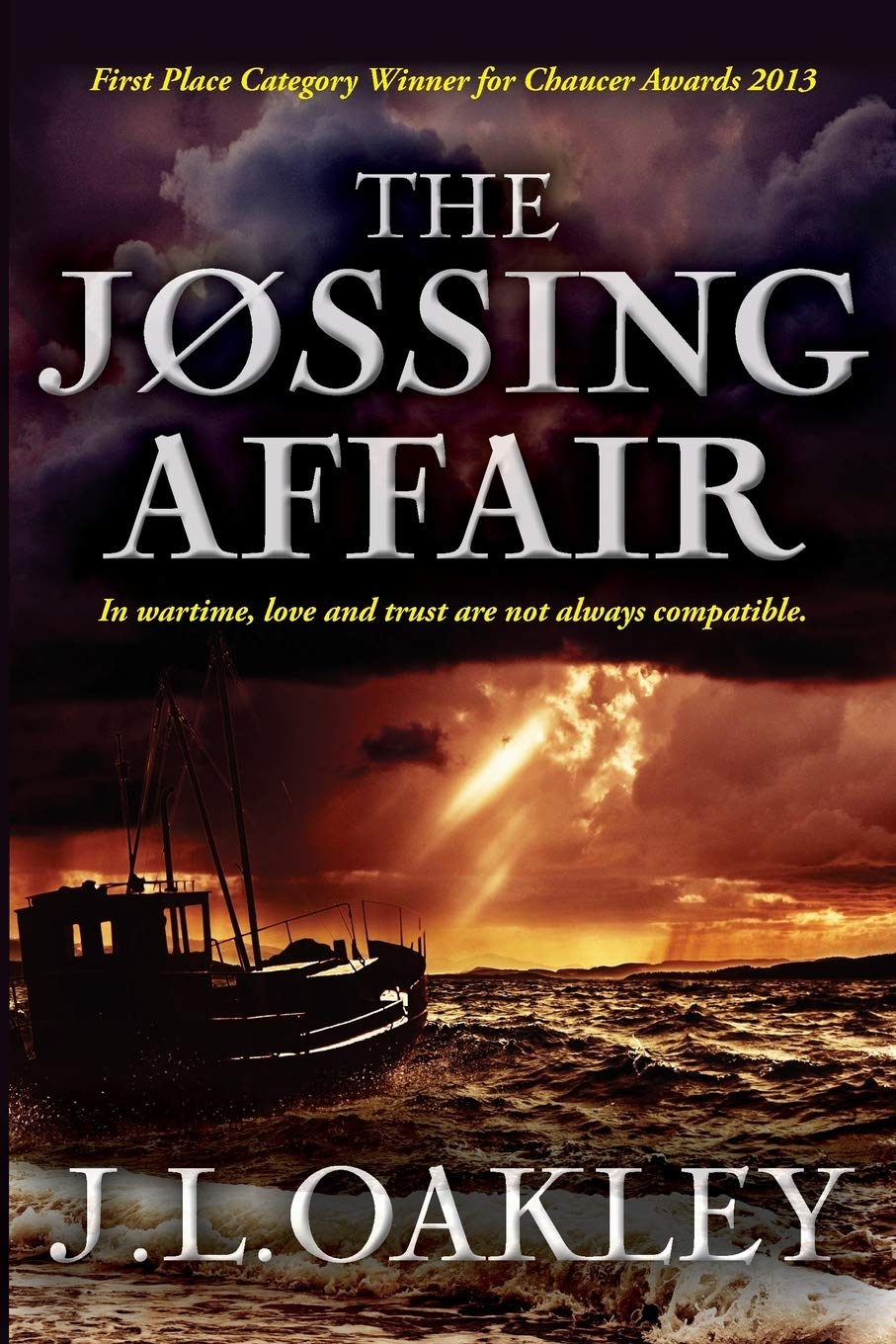
  • THE JØSSING AFFAIR by J.L. Oakley, narrated by Chris Humphreys – Historical Fiction, WWII, Norway


    In The Jøssing Affair, J.L. Oakley shifts the spotlight from the familiar battlefields of World War II to Norway’s brutal occupation, revealing the extraordinary courage of the jøssings—Norwegian resistance fighters who risked everything to oppose Nazi collaboration.

    For every action, there’s an equal and opposite reaction. In The Jøssing Affair by J.L. Oakley, opposition to the Nazi regime and all who collaborated with it is seen in the jøssings, those Norwegians who opposed Nazism and everything it stood for.  Those beleaguered jøssings worked tirelessly in the shadows in whatever way they could, whether by organized resistance, by sabotage, through intelligence operations, providing an escape route for those in immediate danger, or simply, but just as dangerously, by distributing uncensored news from abroad and the contents of rare supply drops from Britain and America.

    A master spy’s double life tests the limits of endurance.

    Tore Haugland lives a precarious double existence as an undercover intelligence agent posing as a deaf fisherman in the coastal village of Fjellstad. As the final desperate year of German occupation unfolds after D-Day, Tore must maintain his cover while building resistance networks. Smuggling arms and protecting his operations from Nazis and Norwegian collaborators – the despised quislings who gave their name to treachery itself.

    Oakley’s tight focus on Tore’s psychological journey creates remarkable intimacy within the vast canvas of war. Years of maintaining deadly secrets have worn down this stalwart operative, and when he finally allows himself to get close to someone in Fjellstad, the consequences threaten everything he’s worked to protect. The author masterfully captures the exhaustion of living perpetually on edge, where a single slip could doom not just Tore but everyone depending on him.

    Chris Humphrey’s exceptional narration brings the Norwegian resistance to life.

    The audiobook version of The Jøssing Affair showcases narrator Chris Humphreys at his absolute finest. Drawing on his Norwegian family heritage and considerable acting experience, Humphreys seamlessly blends his refined British accent with flawless Norwegian pronunciation, creating an authentically immersive listening experience. His nuanced performance captures both Tore’s outward calm as a simple fisherman and his inner turmoil as a resistance operative, while his smooth delivery of Norwegian names and phrases adds remarkable depth to the historical atmosphere.

    Humphreys’ vocal range brings distinct life to each character, from German occupiers to Norwegian collaborators to the brave jøssings themselves. His ability to convey the mounting tension as the German net closes around Tore makes the audiobook version particularly compelling for listeners seeking full immersion in this gripping wartime thriller.

    This vast and absorbing historical saga sets itself apart from other stories of World War II through its unique focus.

    Focused not on Western theater or the British or American home fronts, but on the less explored occupation of Norway, Oakley zeros in on the final year of the brutal German occupation in the desperate months after D-Day when the Allies’ march on Paris gave hope to so many that the war would soon end, even as the German forces in Norway dug in for one last bloody stand.

    By focusing this story on the Norwegian occupation and then tightening the focus to one single man’s experience of that war and the secret work needed to survive and win it, The Jøssing Affair creates an immediacy for the reader that is utterly compelling. WWII is a story that has been told many times over since 1945, and this setting makes all that history feel fresh and alive again.

    This is just the start of an extraordinary story of resistance and bravery.

    For historical fiction enthusiasts seeking fresh perspectives on World War II, The Jøssing Affair delivers compelling characters, meticulous research, and a story that honors the often-overlooked heroes of Norwegian resistance. And for listeners who have the time to invest in the audiobook of this work, the narrator’s flawless pronunciation and smooth inclusion of Norwegian names and simple phrases adds to the deep immersion in an already absorbing story.

    Tore Haugland’s story continues in Oakley’s award-winning series with the prequel, The Brisling Code and the sequel, The Quisling Factor, promising readers more adventures with this unforgettable protagonist.

    The Jøssing Affair by J.L. Oakley won Grand Prize in the 2016 CIBA Goethe Awards for Post-1750s Historical Fiction.


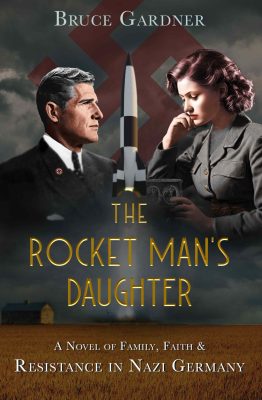
  • THE ROCKET MAN’S DAUGHTER: A Novel of Family, Faith and Resistance in Nazi Germany by Bruce Gardner – Historical Fiction, WWII, Nazi Germany

    The Rocket Man’s Daughter: A Novel of Family, Faith and Resistance in Nazi Germany by Bruce Gardner tells a harrowing story of German life under the Nazi Regime from 1934 to 1945.

    Through the experiences of a young woman whose family is torn by competing loyalties, this riveting tale shines a rarely seen spotlight on some of the most heartwrenching moral dilemmas faced by German civilians and soldiers caught up in the crucible of fascist tyranny and war.

    Klara Neumann is the Rocket Man’s Daughter. She’s only fourteen in 1934 when the Führer, Adolf Hitler, finally eliminates all rivals and consolidates his control of Germany under the Nazi Party.

    Klara’s family represents a microcosm of the country’s middle socio-economic class, working in government-sponsored roles that demand slavish obedience to the Führer and his decrees. Her father, Erich, is the quintessential ‘rocket man’, a university professor dragged into the Nazi war machine to help his friend and colleague Dr. Wernher von Braun develop the deadly new V-2 rockets intended to terrorize Germany’s future enemies. Her mother, meanwhile, strives to be a dutiful Nazi wife, her brother an honorable Wehrmacht army officer, and her elder sister Elke the devoted leader of a female Hitler Youth section.

    Klara—an aspiring nurse—is the philosophical polar opposite of her sister, as Elke is a literal poster girl for the Nazi Party, while Klara does her best to protect her secret Jewish friends from the ever-increasing Nazi persecutions.

    As Germany sinks ever deeper into the morass of world war after 1938, the Neumann family members travel further down their divergent paths.  Gardner describes with chilling, historically accurate detail the horrific Nazi medical experiments that eventually drive Klara to augment her nursing job by secretly joining a Berlin resistance cell led by relatives of Dietrich Bonhoeffer, the charismatic, anti-fascist Lutheran pastor. Brutally intense, emotionally draining scenes of danger and betrayal follow as Klara and her resistance partners struggle to avoid discovery by a powerful, cunning SS police superintendent who has drawn Klara’s father and sister into his dark web of control and manipulation. Through the ordeal, Klara gradually learns to view her personal sacrifices for the resistance effort as an expected cost of true Christian discipleship, as Bonhoeffer had taught her.

    The story moves relentlessly toward its gripping, unforgettable climax in 1945 when Hitler’s V-2 rocket campaign fails to stem the Allied tide and the Soviet Army invades Berlin.

    The reader feels the stark terror along with Klara and her fellow citizens as Russian soldiers invade their hiding places and attempt to satiate their pent-up taste for revenge.  At war’s end, tensions reach their peak as Klara’s father is hunted down by competing Soviet and American intelligence teams attempting to capture and exploit the expertise of Nazi rocket scientists for their own national purposes in the Space Race to come. Will Klara overcome the seemingly insurmountable odds against rescuing her father from a horrible fate? And can she ever forgive her father’s disreputable wartime decisions and actions?

    The defining moral issue, which hangs over everyone involved, is that of responsibility for the terrible crimes of the Nazi regime. On what basis should Nazi-supporting civilians and soldiers be considered war criminals? Were they merely protecting themselves and their families? Were they just following orders? Does that justify their actions?

    The Rocket Man’s Daughter expertly depicts the fractures within the fictitious Neumann family to offer the reader some possible answers to these perplexing questions. It’s left to the reader to finally decide.

    Despite its expected longer length due to the extended time period and epic nature of the story, The Rocket Man’s Daughter by Bruce Gardner absolutely flies along with suspenseful situations and compelling dialogue the entire way.  It’s diverse and vibrant characters raise for the reader many thought-provoking questions about family loyalty, faith, and moral obligation to society under extreme circumstances. In doing so, it proves itself a worthy successor to the author’s previous award-winning novels. The story of Klara Neumann and her family provides yet another example of Gardner’s ability to weave fictional and historical characters into a marvelous portrait of a time and place—one that’s guaranteed to keep readers of wartime historical fiction glued to the page from beginning to end.

    Highly recommended!

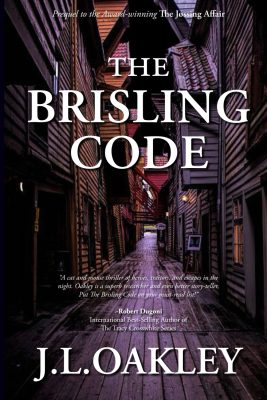
  • THE BRISLING CODE by J.L. Oakley – Historical Fiction, WWII, Norwegian Resistance

    In The Brisling Code, a fast-paced first installment of her historical thriller series, Oakley weaves a brilliant portrayal of the perils met by the Norwegian Resistance during WWII.
    Layered perspectives—from resistance workers, traitors, and even an SS Officer—create a rich world through which readers can understand the sacrifices that were made to free our world from the tyranny of Nazi Germany.

    Immersed in volatile Nazi-occupied Bergen, Norway, fearless young intelligence agent Tore Haugland and his team of organizers work tirelessly to protect the essential work of the Norwegian resistance.

    Haugland’s task is to uncover the plans for the expansion of the German Uboat base with inside help at a shipyard. Also charged in unveiling the meaning behind a mysterious message sent by his murdered predecessor, Haugland navigates the treacherous waters of Norway—a mere haunting of the beautiful city it once was before Nazi occupation. Readers can “almost taste the danger” as our hero moves from one treacherous predicament to the next. Haugland’s mission risks not only his own life, but the lives of every friend and connection he makes.

    The Brisling Code is a multi-faceted novel, interspersing the harsh and secretive political climate of Nazi occupation with the deaf community’s resistance work in Norway and a 1919 Norwegian program called the Wienerbarnkomitten, in which Norwegian families took in and raised German children whose families were impacted by WWI.

    These overlapping communities create a heart of tenderness and relational love at the center of the novel, despite the violence and treachery that constantly threatens to break through.

    For example, seemingly cold-hearted SS officer Hans Becker—on the hunt to capture Haugland and responsible for torturing and murdering many resistance workers— experiences a deep tenderness for his Norwegian foster mother, admitting that “She is my mamma. Not of my blood, but my heart.” As a result, he is forced to reconsider the motives behind his actions and stand up for her well-being, risking both his position as an officer and his life.

    The Brisling Code is filled with these small, deeply sensitivity moments that bring characters to life.

    People show warmth in a freezing world with actions like a cup of hot coffee, an embrace, and a smile of welcome. Despite the constant threat of violent death, life goes on in Norway, creating a web of intricate characters whose lives are rich with hopes, fears, and longings. Similarly, characters often reveal their true selves under their heavily-curated exteriors through actions and allegiances. These complicated moments and relationships refuse cut-and-dry judgements, allowing readers to find humanity in unexpected places.

    Undercurrents of political tension in The Brisling Code create a rich historical context that puts readers in the shoes of Norwegians in their occupied homeland.

    With descriptions of everyday life, readers soon understand the paranoia and surveillance in Norway— the constant fear of separation and harm among families and friends.

    An expertly researched and executed novel, The Brisling Code invites readers to see that unexpected tender moments can always be found, opening up the possibilities for resistance in the face of violence.

    The Brisling Code by J.L. Oakley won First Place in the 2023 CIBA Hemingway Awards for 20th Century Wartime Fiction.


  • The 80th Anniversary of D-Day, Remembering WWII and the Importance of the Past

    D-Day took place June 6, 1944

    The fight against tyranny grips readers and obsesses authors to this day.

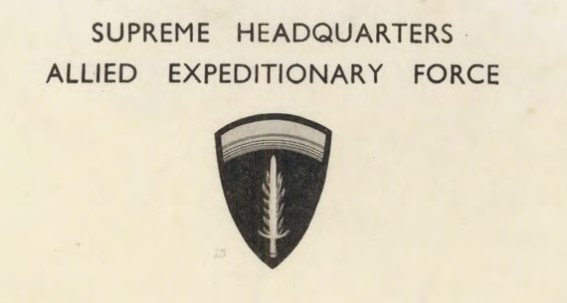
    “Soldiers, Sailors and Airmen of the Allied Expeditionary Force!

    You are about to embark upon the Great Crusade, toward which we have striven these many months. The eyes of the world are upon you. The hopes and prayers of liberty-loving people everywhere march with you. In company with our brave Allies and brothers-in-arms on other Fronts, you will bring about the destrruction of the German war machine, the elimination of Nazi tyranny over the oppressed peoples of Europe, and security for ourselves in a free world.” — Order of the Day from Supreme Headquarters Allied Expeditionary Force given before the Invasion of Normandy

    Chanticleer’s Personal Connection to WWII

    At Chanticleer we often take particular care to honor veterans and those who serve.

    Kiffer’s father retired after 36 years of service in the Unites States Merchant Marines & Marine Corps where he served in the WWII, Korean War, and the Vietnam War. He died in 1981 from one hundred percent service related injuries.

    From left to right we have Kiffer’s brother Tony, her father, and Kiffer herself in Hawaii during the territory days. Her mother, Antha May, is taking the photo

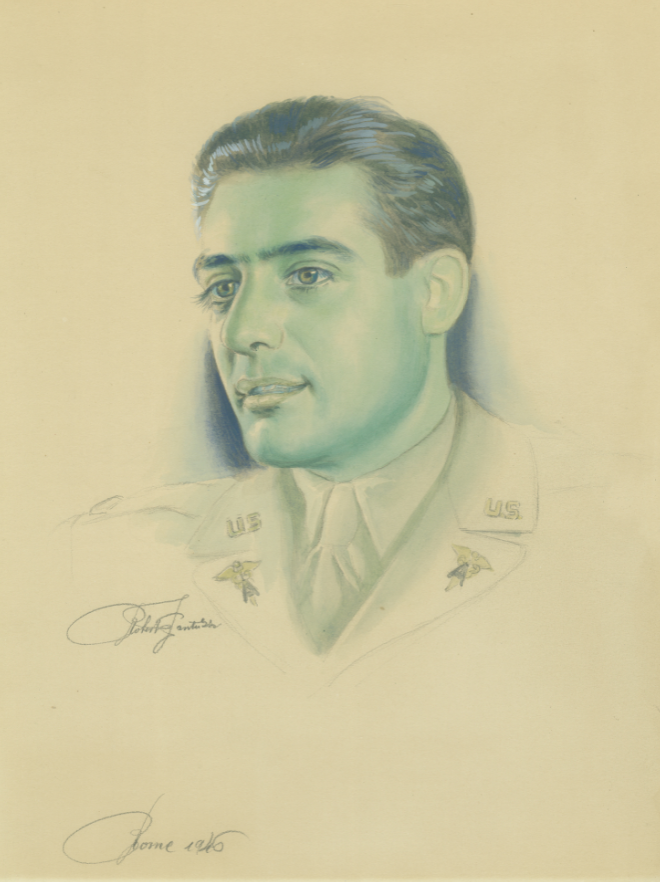
    David’s grandfather also served during WWII, stationed in France as a first generation Quebecois transplant in the United States

    A Green sketch of Robert Gerard Beaumier Sr.
    Robert Gerard Beaumier Sr. who served in WWII

    My father would often tell the story of how his grandfather, Robert, was in France during World War II. At one point a dog came and wouldn’t stop barking at his unit, no matter how much they told it to go away. Finally, Robert said “Va t’en!” and immediately the dog ran off. Everyone was suitably impressed that the dog spoke French! — David

    The National World War II Museum in New Orleans has an excellent summary of the lead up and importance of D-Day which we recommend you read here.

    Most chilling perhaps is the closing of their thoughts that emphasize how important the landing on Normandy was:

    The Normandy invasion was one of great turning points of twentieth-century history. An immense army was placed in Nazi-occupied Europe, never to be dislodged. Germany was threatened that same month by a tremendous Soviet invasion from the east that would reach the gates of Berlin by the following April. The way to appreciate D-Day’s importance is to contemplate what would have happened if it had failed. Another landing would not have been possible for at least a year. This would have given Hitler time to strengthen the Atlantic Wall, harass England with the newly developed V-1 flying bombs and V-2 rockets, continue to develop jet aircraft and other so-called “miracle weapons,” and finish off his killing campaign against ethnic and sexual undesirables.

    We are honored to have two divisions dedicated to stories of those who serve. The Military & Front Line Awards for Non-Fiction and the Hemingway Awards for Fiction.

    The Military Front Line Awards and Hemingway Awards badges
    You can see either of these on our Awards Page

    It is our pleasure to share these wonderful WWII books with you from authors who have written about this time.

    The JøSSING AFFAIR
    By J. L. Oakley

    At a time when true identities are carefully protected and information can get you killed, heroes emerge to fight the evils of Nazi-occupied Norway in J.L. Oakley’s highly suspenseful and beautifully penned historical fiction novel, The Jøssing Affair.

    In a quiet Norwegian fishing village during the Nazi occupation, risk lurks everywhere. Most residents are patriotic members of the resistance, “jøssings,” but there are “quislings,” too. Those who collaborate with the Germans and tout the Nazi propaganda of Nordic brotherhood between the nations. Mistaking the two is a matter of life and death.

    Read the full review of this first book in the series here!

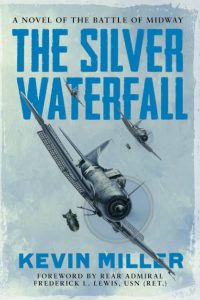
    THE SILVER WATERFALL: A Novel of the Battle of Midway
    By Kevin Miller

    The Silver Waterfall Cover

    In The Silver Waterfall, author retired U.S. Navy Captain Kevin Miller reveals the intricate and deadly turns of the Battle of Midway, a combat shaped by transforming warfare, and one that would in turn shape the rest of WWII’s Pacific Theater.

    After their surprise attack on Pearl Harbor, the Japanese Navy seeks to draw American aircraft carriers into an ambush, to secure Japanese power over the Pacific. In a time of great upheaval for warfare technology, aircraft carriers dominated both sea and sky. So, to destroy the USS Enterprise, Yorktown, and Hornet, Chūichi Nagumo— commander of the Japanese First Air Fleet— brings to bear his own four carriers, HIJMS Akagi, Hiryū, Kaga, and Soryu.

    Read the full review here!

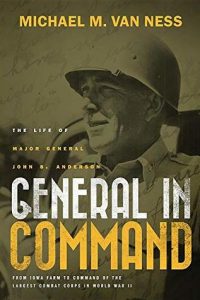
    GENERAL in COMMAND – The Life of Major General John B. Anderson
    By Michael M. Van Ness

    Michael M. Van Ness, the grandson of “the general in command,” has created a remarkable biography chronicling the adventures of a farm boy who rose high rank in the US military and served with distinction in two world wars as a combatant, officer, and sage observer.

    Born in 1891, John Benjamin Anderson must have had considerable intelligence as well as patriotism and grit, since he was accepted at West Point Military Academy at age 19, an honor conferred on only 130 applicants per year—and finished in the top third of his class. He would soon serve under General Pershing in the Mexican War, giving him the experience of combat and coincidentally, his first ride in an automobile. That deployment earned him inclusion in Pershing’s ranks in World War I. It was then his diaries began, and though he protested humorously that “I hate to write,” these personal recollections give readers an up-close picture of the devastation of warfare.

    Read the full review here!

    COLD PEACE: A Novel of the Berlin Airlift, Part 1
    By Helena P. Schrader

    Cold Peace Cover

    Amidst the ruins of Post-WWII, Berlin struggles to rebuild from the ashes, torn apart and facing down the promise of another bloody dictator. A myriad cast, all shaped by that same war, become entwined with the broken city as its hour of need approaches.

    Just as Germany is divided between the Americans, British, French, and Soviets, Berlin has been cut into pieces. But the balance of the occupation powers tips eastward as the Soviet Zone surrounds the city, giving them control of all ways into and out of Berlin – save for the air. The occupation currency is worthless thanks to Soviet over-printing, leaving Berlin on a barter system of cigarettes and black-market trading. In order for Germany to recover, the Western Allies plan to introduce a new currency, even if it angers the Soviet bear.

    Read the full review of the first book in the series here!

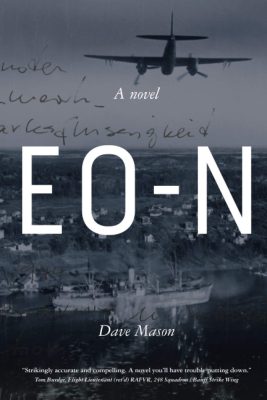
    EO-N
    By Dave Mason

    EO-N Cover

    A young boy in Norway makes a discovery while playing with his dog, opening the mystery of EO-N by Dave Mason, a detective story spanning multiple decades and both sides of the Atlantic, a deep dive into the horrors of Nazi Germany, and a heartfelt love story.

    A small metal fragment leads to the discovery of a downed WWII twin-engine Mosquito fighter-bomber hidden in snow and glacial ice for nearly 75 years. The crash site yields an initial set of clues, one of which finds its way across the world to Alison Wiley, a biotech CEO in Seattle. Having recently lost her mother, and, a few years earlier, her brother in Afghanistan, she finds her days full of despair, but the discovery makes a distant connection to her long-lost grandfather, and she flies to Norway. There, she meets Scott Wilcox, a Canadian researcher assigned to investigate the discovery after his government learned that the crashed aircraft belonged to the Royal Canadian Air Force. Their attraction is both intellectual and emotional, but the quest to uncover the plane’s mysteries and the fate of Alison’s grandfather place any romance to the side.

    Read the full review here!

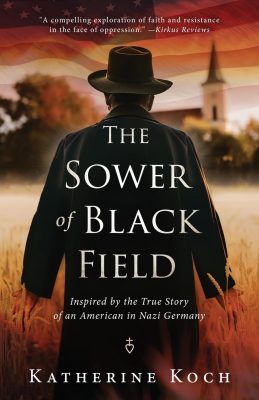
    THE SOWER Of BLACK FIELD
    By Katherine Koch

    The Sower of Black Field Cover

    In The Sower of Black Field, Katherine Koch’s historical fiction novel, Father Viktor Koch— a 67-year-old Catholic priest— presides over a monastery in a small German village, as the Nazi regime sweeps through the country.

    The time is April, 1941. Fr. Viktor’s order, the U.S.-based Passionists, built the monastery eight years prior, providing employment for most of the villagers and remaining a symbol of their faith.

    Read the full review here!

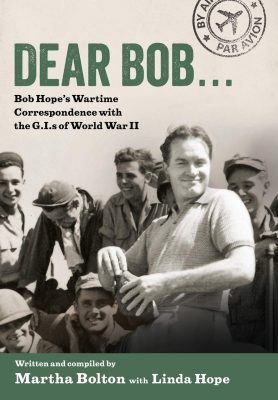
    DEAR BOB: Bob Hope’s Wartime Correspondence with the G.I.s of World War II
    By Martha Bolton with Linda Hope

    Dear Bob Cover

    During World War II, Bob Hope traveled almost ceaselessly to outposts large and small, entertaining US troops – and inspiring them; Martha Bolton brings the extent of this work to light in Dear Bob.

    Writer Martha Bolton worked with and for comedian Bob Hope. Now, with Hope’s daughter Linda, she has gathered and organized the letters written to Bob by the soldiers he helped.

    Hope, English born, and born to entertain, once said he could not retire and go fishing because “Fish don’t applaud.” Among his sizzling lines – and there are hundreds recorded here – he told one audience that he’d gotten a wonderful welcome when he arrived at their camp: “I received a 10-gun salute… They told me on the operating table.”

    Read the full review here!


    Thank you for remembering D-Day with us

    Eighty Years later, and the sacrifices made in WWII still matter and the fight for a more just world continues. Thank you to everyone who has submitted books to us and been a part of our own journey and learning.

    Have a story about WWII?

    Blue button that says Enter a Writing Contest
    Submit Today!

    You can see our full list of Fiction Book Awards here and our Non-Fiction Divisions here! Both the Military & Front Line Awards for Non-Fiction Service to Others and the Hemingway Awards for 20th c. Wartime Fiction close October 31, 2024! We can’t wait to read your work!

    Helpful Links for WWII History and D-Day

    Dwight D. Eisenhower Presidential Library

    The National WWII Museum

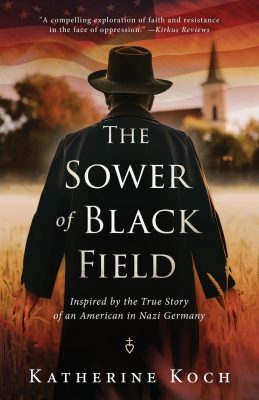
  • THE SOWER Of BLACK FIELD by Katherine Koch – Historical Fiction, WWII, Religion & Community


    In The Sower of Black Field, Katherine Koch’s historical fiction novel, Father Viktor Koch— a 67-year-old Catholic priest— presides over a monastery in a small German village, as the Nazi regime sweeps through the country.

    The time is April, 1941. Fr. Viktor’s order, the U.S.-based Passionists, built the monastery eight years prior, providing employment for most of the villagers and remaining a symbol of their faith.

    Fr. Viktor has lived in Europe for over 20 years, but balances his love of Germany, its land, its mysticism, with his American roots. He will need all his personal and religious resources over the next four years as the Nazis take hold in the village and, later, the Americans come to “de-Nazify” the town and hold its people responsible for the horrors of the Holocaust.

    The village is far more Catholic than Nazi, even as the regime does its best to turn its citizens away from their faith.

    They take over the monastery despite Fr. Viktor’s strenuous efforts to hold onto it. Their next major push is to remove crosses from the schools. That measure is met with a petition from the villagers, a move that threatens to land them in prison.

    We get to meet several villagers who personify the conflict between their way of life and Nazi fanaticism.

    Norbert and his wife and family run the local bakery, a central food supply to the villagers. His anti-Nazi stance threatens his life as well as destroying this important community resource. Helene, a woman who lost her husband who served in Hitler’s army, will do anything to protect her two sons from their forced enrollment in the Nazi youth corps.

    Klaus, her oldest son, endures his militarist, cult-like corps training. Hans, the youngest, remains true to his Catholic faith. This look into the indoctrination of Germany’s children remains one of the most powerful aspects of this novel.

    Among the Nazis, the party official Seiz becomes the lens through which we see even the most dedicated member recoil when he finds out first-hand the horror of the Holocaust— as it reaches deep into the village in a horrifying, unexpected way.

    Faith in God, and the testing of that faith, is interwoven throughout the novel.

    As Nazi horrors close in on the village, the heavily religious community finds itself questioning how a just and merciful God can allow these acts to happen. Even Fr. Viktor must dig deeply into his faith to answer the unknowable “framework” of God’s plan.

    When the war nears its end, the town becomes flooded with refugees from other parts of Germany. Stories of Russian atrocities and rumors of American “gangsters” flood the small, outlying town. When liberty finally comes, the conquerors impose their own set of rigors on the people, further testing the faith of adults and children alike. Fr. Viktor is stressed to his limit as he becomes the village’s voice.

    The Sower of Black Field shows us everyday Germans as peace-loving people of faith trying to survive during WWII, a side of that terrible conflict not often shown.

    A picture emerges from this novel of people caught up in a conflict not of their making, resisting as they can from its evils, and finding strength in the courageous example of their pastor.


  • A SPYING EYE: A Henrietta and Inspector Howard Novel by Michelle Cox – Historical Mystery, Women Sleuths, 20th Century


    The 2022 Overall Grand Prize Winner Badge for Michelle Cox and her book A Spying EyeBrooding Château du Freudeneck, just outside Strasbourg, France has villains in the drawing rooms, stolen art hidden in the cellars, and bats in the belfry – all the best elements for a 19th-century Gothic mystery.



    However, in Michelle Cox’s novel, A Spying Eye it’s the 20th century. The Great War is passed, but the next war already looms on the horizon. The people of Strasbourg feel the growing conflict sharply, at the heart of Alsace-Lorraine, a fertile region that has been contested between France and Germany since time immemorial.

    Which means those bats are in the unfortunate head of the elderly Baron Von Harmon, the current lord and master (as much as he’s still able to be, at least) of the Chateau, while the stolen art is pursued by both the villainous Nazis and the only slightly-less villainous agents of Britain’s MI5.

    Amongst this strife, Clive and Henrietta Howard visit the Chateau, at the behest of both his mother and his country. They’re filled with conflicting hopes about a second honeymoon after their disastrous first attempt in A Promise Given, while conducting a wild goose chase for a missing occult art masterpiece in the home of Henrietta’s long-lost relations.

    The game is afoot from the very first page of this sixth entry in the award-winning series – long before Clive and Henrietta even know that they are being played by both sides, neither of whom intends for them to survive.

    While Inspector Clive Howard is certainly the more experienced investigator of this pair, the focus in A Spying Eye is firmly on Henrietta, particularly in contrast to the trials and tribulations faced back home by her sister Elsie and her sister-in-law Julia.

    The Strasbourg troubles in which Henrietta finds herself mired combines a search for the roots her family left behind generations ago with an utterly riveting and thoroughly researched investigation into the early years of the Nazi movement, Hitler’s seemingly endless search for mystical and mythical artworks to feed his obsession with the occult, and a real-life mystery wrapped around just what happened to the panel of the Ghent Altarpiece that the Howards oh-so-briefly managed to hold in their hands.

    The pace of the story is relentless on both sides of the Atlantic, as Henrietta, Julia, and Elise all face personal, professional, and even criminal crises, in a world marching towards World War II.

    Readers who have fallen in love with the detective duo of Howard and Howard will be in rapture over this latest entry. Fans of the bestselling Maisie Dobbs series by Jacqueline Winspear or the Elena Standish series by the late Anne Perry will find just the kind of character-driven, meticulously researched historical mystery that they are craving, set in the fascinating period between the wars.

    As A Spying Eye ends, Henrietta gets her hat on the way out the door to her next adventure, A Haunting at Linley, scheduled for release in late October 2023.

    A Spying Eye by Michelle Cox won the Overall Grand Prize in the 2022 CIBA Book Awards.


    5 Stars! Best Book Chanticleer Book Reviews

  • COLD PEACE: A Novel of the Berlin Airlift, Part 1 by Helena P. Schrader – Historical Fiction, Post-WWII, Military Aviation Fiction


    Amidst the ruins of Post-WWII, Berlin struggles to rebuild from the ashes, torn apart and facing down the promise of another bloody dictator. A myriad cast, all shaped by that same war, become entwined with the broken city as its hour of need approaches.

    Just as Germany is divided between the Americans, British, French, and Soviets, Berlin has been cut into pieces. But the balance of the occupation powers tips eastward as the Soviet Zone surrounds the city, giving them control of all ways into and out of Berlin – save for the air. The occupation currency is worthless thanks to Soviet over-printing, leaving Berlin on a barter system of cigarettes and black-market trading. In order for Germany to recover, the Western Allies plan to introduce a new currency, even if it angers the Soviet bear.

    To fight over the city with tanks and planes would mean a third world war and a battle for Berlin that the overwhelming Soviet military force would win without question. This fight must be one of resources and diplomacy. But the Soviets have little interest in rebuilding Germany, preferring to loot from, starve, and rape the defeated Berliners as their means of taking ‘reparations.’

    Amidst gridlock in the Allied Control Council and a populace that largely refuses to elect Soviet sympathizers, SMAD (Soviet Military Administration in Germany) tries to push the Western powers out through intimidation and ever-harsher strangling of transit along the streets and railways.

    Berliners and occupation forces alike try to build their own future, while bearing the weight of the city’s future.

    Robert “Robin” Priestman takes a position as Wing Commander in Gatow, a former Luftwaffe airfield now used by the RAF – located in the British Sector of Berlin – that is, deep inside the Soviet Zone of Occupation, which surrounds Berlin. Memories of his time as a POW haunt him, and he doesn’t understand what the purpose of RAF Gatow even is. However, when a Soviet pilot crashes into a British civilian plane, and as SMAD makes greater plays for unilateral power over Berlin, Robin prepares to use his planes and runway to keep Western opposition alive, for the sake of the Berliners.

    David Goldman’s disapproving father weighs him down with a massive inheritance, forcing him out of the RAF and into a business of his own. But heavier on his shoulders are the old properties owned by his aunt and uncle in Germany – before they were murdered by the Nazi regime. David faces a former Nazi officer in the home that holds so many of his childhood memories and resolves to bring the man to justice.

    Charles “Kiwi” Murray, David’s closest living friend, helps him to build an air ambulance business, AAI (Air Ambulance International). Berlin needs such a service desperately, its hospitals hopelessly overwhelmed, and Robin gladly offers them use of Gatow’s runway. Kiwi’s struggle with alcoholism nearly tears this dream – and his friendship with David – apart. But he won’t lay down and let that happen, pushing himself to get their ambulance off the ground, even as David’s own struggles wear him thin.

    Emily Priestman hopes to reconnect with Robin in Gatow as she helps him with his duties. But she’s even less versed in the diplomacy of the rich and powerful than he is, and knows that she needs to find another purpose, for her own sake as much as that of the ruined city around her. That opportunity presents itself through old friends and new, as she joins AAI to fly their ambulance, saving those who had no chance of survival in Berlin.

    Fear and despair hound the people left in WWII’s wake, kept at bay by the hope for a better life tomorrow.

    Charlotte Walmsdorf lost much of her family, and lives in Berlin’s desperation, refusing to even try crossing the Soviet Zone. But her cousin Christian arrives, and though his hope seems naïve to her, she feels a flicker of her own as she teaches Emily Priestman German, joins AAI, and finds herself drawn to David.

    WAAF Galyna Borisenko, whose father was taken from her by the Soviet Union, makes an unlikely connection with Hero of the Soviet Union, Mila Levchenkova. Both Ukrainian women take the considerable risk of meeting with each other, for the chance to speak honestly with someone who understands the pain of life beneath the USSR. Mila’s strength and courage inspire Galyna, as they form a deep and emotionally impactful friendship.

    The City Council of Berlin refuses to back down to the minority Soviet-controlled Socialist Unity Party (SED). Jakob Liebherr, an ardent councilman, holds firm against Soviet misinformation, arguments with his son, and his own terror. He suffered in a concentration camp for his resistance to Nazi power and knows of the tens of thousands kidnapped by the Soviet Union, doomed to a similar fate. His commitment to democracy contrasts the grim state of Berlin with a gripping sense of integrity and determination.

    As Soviet control tightens, each character will have to act with courage and clarity to withstand their grip.

    Helena P. Schrader blends her character’s internal struggles and desires with the traumas of Berlin, creating a powerful and cohesive read.

    WWII left its mark on each of these people, through the ghosts of dead loved ones, injuries that will never leave them, and responsibilities greater than they ever imagined. Some, like Robin and Emily, reckon with the destruction of Berlin as its former enemies. Blackened shells remain where once there were homes, entire stories are missing from those buildings that still stand.

    And yet, restaurants open with only one floor, people make dinner in their kitchens and keep warm beside the stove. Neighbors lend clothes to one another, and even black-market smugglers can be convinced to give away that which they can’t use. Just as Berlin must make life from its ruins, so must all the people within this story.

    Schrader’s attention to detail illuminates a fascinating place and time in history. Her engaging characters and the tense history offers a gripping blend of fiction and reality that makes the complex political/military situation in post-WWII Berlin approachable and clear for readers, regardless of familiarity with it.

    Helena P. Schrader weaves a tapestry of human resilience and courage against the backdrop of post-WWII Berlin. Cold Peace promises to be a captivating journey that will leave readers yearning for the next installment in this important historical-fiction series.


    5 Star Best Book Chanticleer Reviews round silver sticker

  • EO-N by Dave Mason – Historical Fiction, WWII Fiction, Historical Mystery


    A young boy in Norway makes a discovery while playing with his dog, opening the mystery of EO-N by Dave Mason, a detective story spanning multiple decades and both sides of the Atlantic, a deep dive into the horrors of Nazi Germany, and a heartfelt love story.

    A small metal fragment leads to the discovery of a downed WWII twin-engine Mosquito fighter-bomber hidden in snow and glacial ice for nearly 75 years. The crash site yields an initial set of clues, one of which finds its way across the world to Alison Wiley, a biotech CEO in Seattle. Having recently lost her mother, and, a few years earlier, her brother in Afghanistan, she finds her days full of despair, but the discovery makes a distant connection to her long-lost grandfather, and she flies to Norway. There, she meets Scott Wilcox, a Canadian researcher assigned to investigate the discovery after his government learned that the crashed aircraft belonged to the Royal Canadian Air Force. Their attraction is both intellectual and emotional, but the quest to uncover the plane’s mysteries and the fate of Alison’s grandfather place any romance to the side.

    At first, the crash doesn’t appear exceptional, until certain contradictory and confusing clues emerge that make it clear that the circumstances that led to the plane’s fate were anything but simple.

    EO-N’s story is complex, leading the reader from clue to revelation with a sure hand. And it takes a dark secret from the past and develops it into something that might make the world a better place.

    The details are key to the novel’s success. Readers will wonder whether the facts outlined in the book are based on actual history, and while the specifics of the heinous Nazi activities at the center of the story may differ somewhat from reality, the spirit of the revelations rings true.

    This novel is impeccably researched, and the characters are believable, warm, and heartbreaking. Readers won’t be able to put it down until its perfect conclusion.

    EO-N by Dave Mason won the Grand Prize in the 2021 CIBA Hemingway Awards for 20th Century Wartime Fiction.


    5 Star Best Book Chanticleer Reviews round silver sticker

  • DEAR BOB: Bob Hope’s Wartime Correspondence with the G.I.s of World War II by Martha Bolton with Linda Hope – WWII History, Letter Collections, Inspirational

    During World War II, Bob Hope traveled almost ceaselessly to outposts large and small, entertaining US troops – and inspiring them; Martha Bolton brings the extent of this work to light in Dear Bob.

    Writer Martha Bolton worked with and for comedian Bob Hope. Now, with Hope’s daughter Linda, she has gathered and organized the letters written to Bob by the soldiers he helped.

    Hope, English born, and born to entertain, once said he could not retire and go fishing because “Fish don’t applaud.” Among his sizzling lines – and there are hundreds recorded here – he told one audience that he’d gotten a wonderful welcome when he arrived at their camp: “I received a 10-gun salute… They told me on the operating table.”

    His performances could have been forgotten were it not for the letters from soldiers of every stripe, and those soldiers’ families – who did not forget him.

    One such letter recounts to Bob, of his visit to Sicily in 1943, that “It was something more than a show- it seemed to lift us spiritually.” Another soldier tells him, “Your humor leaves a wake behind you which lasts longer than the wake behind a ship.” One man, “merely a lonely Private” sequestered in a hospital after a grenade blew up in his face, heard Bob on his radio show and said that from it he, “derived my only pleasure during my blindness.”

    Hope for his part, responded to as many letters as he could, injecting more of his humor for his admirers: “Give all the boys my best and tell them I’ll take care of the girls until their return.” To the folks back home, he praised the soldiers, “We know them as the finest fighting machine and the finest audience in the world.” He would insist on making as many show stops as possible on every tour, diligently hunting out remote camps far from where he was initially invited.

    Post-war, he continued his mission to present material in honor of these fighters. President Truman gave him a Citation of Thanks, and President Clinton named him as the first Honorary Veteran.

    Hope had indeed served in the armed forces in a way that used his abilities to their best effect. And yet, as many recall, he was also just himself, doing what he knew how to do, and sharing that gift unselfishly with thousands of others.

    Bolton offers an in-depth look at Bob’s shows and the people around him.

    Dear Bob includes a multitude of photographs and written input from others in Bob’s cast, lists of his singular honors, and the names of organizations and people who worked beside him and behind the scenes to keep these memories safely stored away.

    His enthusiastically delivered humor gave hard-working, battle-weary soldiers the few hours of relaxation they needed. Laughter is a medicine, and in that way, Bob Hope was a medic as well as an entertainer. Bolton’s collection will be read by a new generation and by the few fighters left who might have seen him, heard him, and had the impetus to compose a letter beginning with, “Dear Bob…”

    Dear Bob by Martha Bolton won Grand Prize in the 2021 CIBA Military and Front Line Book Awards.


    5 Stars! Best Book Chanticleer Book Reviews

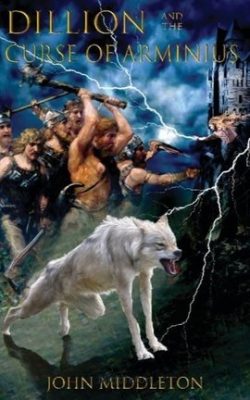
  • DILLION And The CURSE Of ARMINIUS by John Middleton – Historical Fantasy, WWII, Young Adult Fiction

    Hang your disbelief by the door, pull up a chair, and prepare to step back in time to a period of unrest that would forever change the world In Dillion and the Curse of Arminius by John Middleton.

    British and European legends set the stage for ancient warriors with a clarion call to re-awaken to battle—and only the innocents can intervene.

    In 1936, the children of the privileged le Close family pursue their interests and enjoy their lives at their patriarchal home, gifted to the original Baron le Close by King James centuries ago. Since Oakholm Abbey lay on the border of England and Wales, everyone looked to the Baron to protect the surrounding farmlands from Welsh raiders. They would slip down from the wilds of the Welsh hills and valleys just beyond the old monastic estate and do their damage on the population.

    By virtue of their lineage, the youngest generation of the le Close family, Gilbert and Emelia, have certain special abilities. Gilbert is attuned to the animal kingdom—and it to him—and wanders fearlessly into deep forests on the Welsh borderlands where he discovers magical places. These places exude an aura of intense spirituality, bringing Druids and secret ceremonies to mind. On the other hand, Emelia is percipient, although she is only just learning how to understand the meaning of her experiences.

    Unbeknownst to Gilbert and Emelia, trouble brews across the channel.

    They will soon become integral in saving both the lives of their good friends, Axel and Rebecca, German refugees now living in Amsterdam, and in helping good conquer evil in their part of the world.

    Meanwhile, at Schloss Wewelsburg, a centuries old castle in south-western Germany, Heinrich Himmler, the commander of Hitler’s SS, has turned to the occult to realize a dream. He believes in the supernatural and wants to contact and enlist the aid of the fabled Cherusci warriors who conquered the Romans centuries ago to assist in Germany’s attempt to rule Europe.

    Himmler connects with a revenant whose ancestor was second in command to Arminius, the chieftain of the fierce Cherusci tribe that freed the Germanic people of Roman rule.

    What happens next, when the bucolic world of life at Oakmont Abbey collides with the occult, is the stuff of legends.

    Gilbert and Amelia will discover their connections to their ancestral history, and are called upon to fulfill their predestined roles as guardians of a sacred place. They will be sorely tested, and must call upon everything in their beings to survive, to secure the survival of their friends, and to save their way of life.

    In Dillion and the Curse of Arminius, author John Middleton has created a work of fantasy fiction with a plot that will appeal to pre and early teen readers. Much of the writing is lyrical with vivid imagery, creating a mystical mood—set up with a complex storyline and sophisticated language.

    Dillion and the Curse of Arminius won 1st Place in the 2019 CIBA Dante Rossetti Book Awards for Young Adult Fiction.