Spring Cleaning includes Hardware, Software, and Password Management
While many of us look to closets and drawers we store things we never expect to see again, there are few who think about the hidden corners of our technology where dust, dirt, and crummy things (like destructive viruses) can live in wait for their turn to take down our work. We’ll help you with best practices for keeping your passwords and technological life in tip-top shape!
A clean sweep for your computer is a must-do for authors
Every writer should start off the year knowing their work is protected and their work tools are ready and able to take on the job of creating the worlds we imagine. So, in the spirit of getting ready to meet those 2025 writing goals, we offer these tips on the cleaning and maintenance of your equipment.
Your computer needs your loving care, too!
Computers are arguably the most important tool in our toolbox. It stores your intellectual property, aids in transforming words from your brain into little alphabet letters that add up to a story. For most of us, our computers enable us to create what we love most—books and stories!
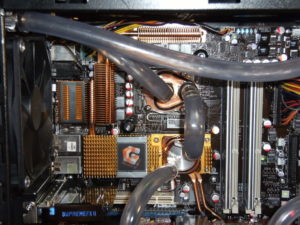
Whether it is a desktop, laptop, pad, or your own Mad Maxx creation of technologies (like Argus’s), your computer deserves a little bit of attention.
Computer Care for Authors and Publishers
We often forget how important it is to maintain a clean computer on the inside and outside, even if our desk and the surrounding area is spotless. Here are a few tips to get you started. And, yes, this is your annual reminder!
1. Clean your keyboard
If you don’t want to be like the person in this XKCD comic, you might want to clean your keyboard. Luckily, this is an easy task you can do once a week. Or at least once a year…
Ewwww!!
Wipe it down with a slightly damp microfiber cloth, dry it with a different cloth, and then use a disinfectant wipe or a cloth just damp with rubbing alcohol to finish it out (do not use bleach!). It is probably best to do this when your computer and keyboard are unplugged because keyboards are actually quite delicate inside.
Gross stuff under the keycaps? Maintenance will prevent your computer keyboard from getting to this state.
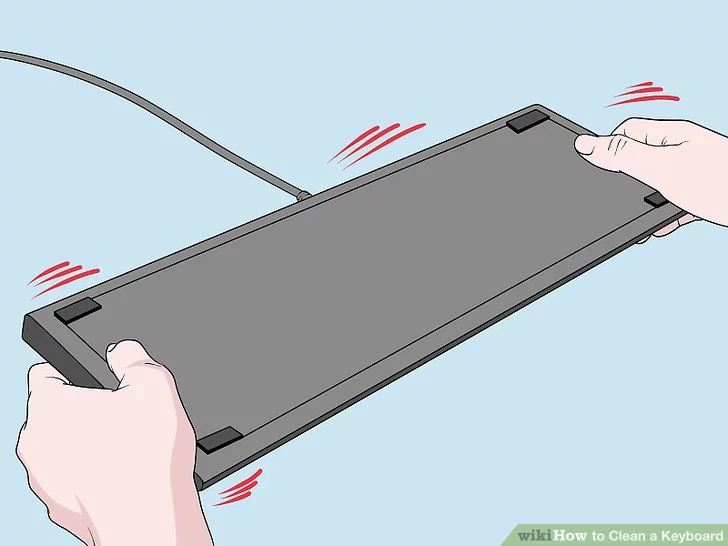
Also, turn your keyboard or laptop upside down and give it a gentle shake or two about once a week. Gentle being the operative word. You may be surprised to see what falls out of it.
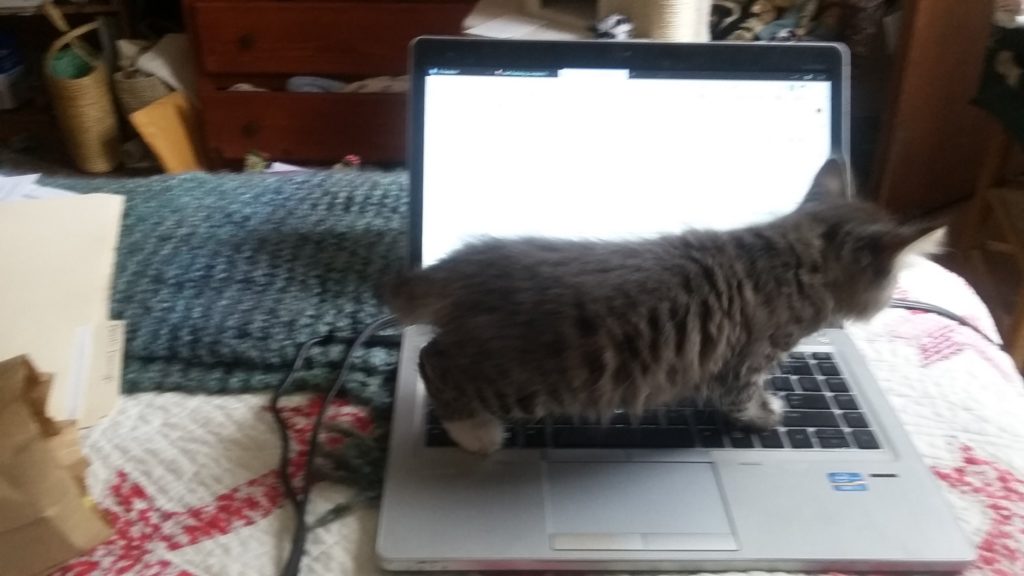
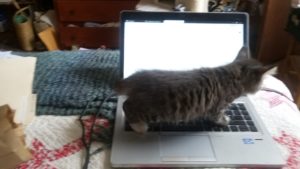
Especially if you have a cat for an intern. Here’s looking at you, Janet Oakley!
Janet’s intern, Kinky Boots, hard at work.
We’ve even seen Argus vacuum his keyboards. But, that is up to you.
Really consider giving this a try. Your keyboard will feel cleaner. All the bits of dust and crumbs of food you’ve learned to ignore will be gone, and it will be such a pleasant experience for your hands.
Clean your screen
We’ve all had that experience of editing and suddenly an errant apostrophe or period appears where there ought not to be one. We click on it to edit it, but something about the way it appears doesn’t quite make sense, and then we can’t delete it from the page. That’s when it clicks. The screen is just dirty.
To clean it, a microfiber cloth is always the recommendation. Always dab any cleaning solution (Windex and/or a little bit of mild soap and water are recommended but check before trying anything else!) onto the cloth, not directly on the screen itself.
Password Management
Over 353 million passwords are hacked in 2023, according to Statista, and this number has continues to grow substantially each year.
The concept of a healthy mind, healthy body can be applied to healthy software, healthy hardware, too. Now that you have a clean machine, make sure you have a good password system. While two-factor authentication (such as when you need to type in a code from your phone or email as well) can seem like a hassle but is also another key factor in security. For reliable password managers, see the following.
We use these here at Chanticleer—but use caution and be prepared!
Using numbers, characters, and upper and lower cases matters when it comes to password security.
Make sure the password you decide on for your managers is something that is memorable to YOU. The only other person who should have it is your estate executor or life partner or someone that you would trust with your bank accounts and credit cards.
If you happen to momentarily forget your master password, because someone was talking to you while you were creating it – you will need to start over. There is no way to recover your account, unless you happen to find the random piece of paper you scribbled your master password on… Experience is a cruel teacher…
IMPORTANT: DO NOT USE THE SAME PASSWORD for your business/work accounts and your personal household accounts or publishing accounts. This is how hackers can take people down by infiltrating a business password—harder to do, but they have access to so many personal accounts because so many people use the same password for home and personal accounts.
After hearing from several authors whose computers were hacked, bank accounts taken over, ransomware remotely installed, and other malicious activity that drained their credit card balances and credit ratings, and stole their intellectual property (as in books – published and unpublished), we suggest you go directly to a password manager. Do not go another day without a password manager!
You can do it! There are several excellent password managers that are FREE or as little as $36 per year.
For more information here are three links to articles about password managers from reliable sources:
Here is a link from CNet on the Best Password Manager companies
[Note from Editor: Do NOT proceed to this step until you have your Password Manager project all sorted out. ]
As we barrel forward into the future, there’s so much in our cache that this has become a bigger and bigger project. Luckily, PC Mag has a great article about how to clear your cache on any browser. While this can be a little tricky to navigate, it can be worth it for the faster computer speed. PC Mag also focuses on the security risks of the cache, but chances are most of us don’t have to worry too much about those.
WHY SHOULD YOU CLEAR YOUR CACHE from COOKIES?
This is called “Browser Hygiene.” Really.
Browsers tend to hold onto information and like a clogged drain, after a while, it will slow down the speed and performance of your computer. Where your browser holds onto this information is in its “cache.”
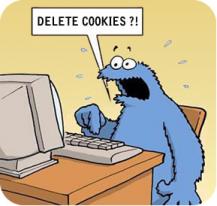
A computer’s cache (pronounced ‘cash’) is also where websites that you visit implement their “cookies”—that bread crumb trail that rambles through the internet linking your computer to the websites you visit. Each and every website uses cookies—even yours is guilty of it. It is the nature of the internet…
Have you ever had this happen to you?
“I don’t see the change. You said you updated on your web page.”
That is because your computer is storing and showing you the previous cache of the website it stored in its cache. You aren’t seeing the latest and greatest of the website you are revisiting, but rather a “shadow” of it.
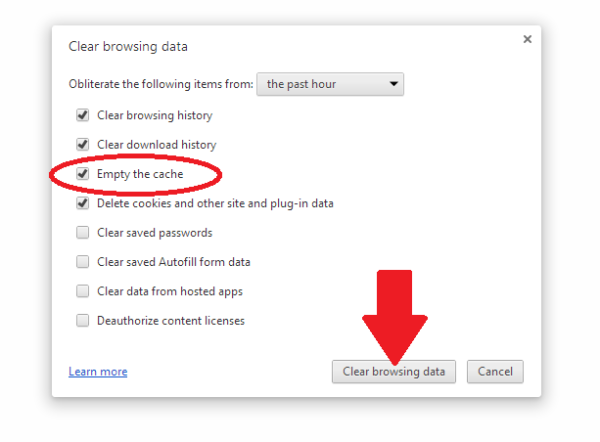
To see the latest version of a website or webpost, you will probably have to clear your computer’s cache, which will delete cookies at the same time.
Each computer and browser has a different system, so we advise you to search on your browser (i.e. Google it) on how to clear the cache for your particular system.
Also, you can decide how much of the cache you want to clear. All of it? Only the cookies? Save the passwords? Clear the passwords? (the reason to do #2 Password Management first). It is probably a good idea to clean the password cache at least once a year. But remember that you will need to do a fresh login for each website that you visit. See #2 Password Management.
We clear our caches here at Chanticleer at least every three months or as needed to access new data from websites that we visit.
More info:
Remember all that fuss about Data Privacy back in May 2018? Cache and Cookies are what that was and is all about. Here is a handy link to Chanticleer’s blog post about it. Are you ready for the GDPR? (General Data Protection Regulation)
Virus Protection
What are the odds of becoming a victim of a cyber attack? One in Five
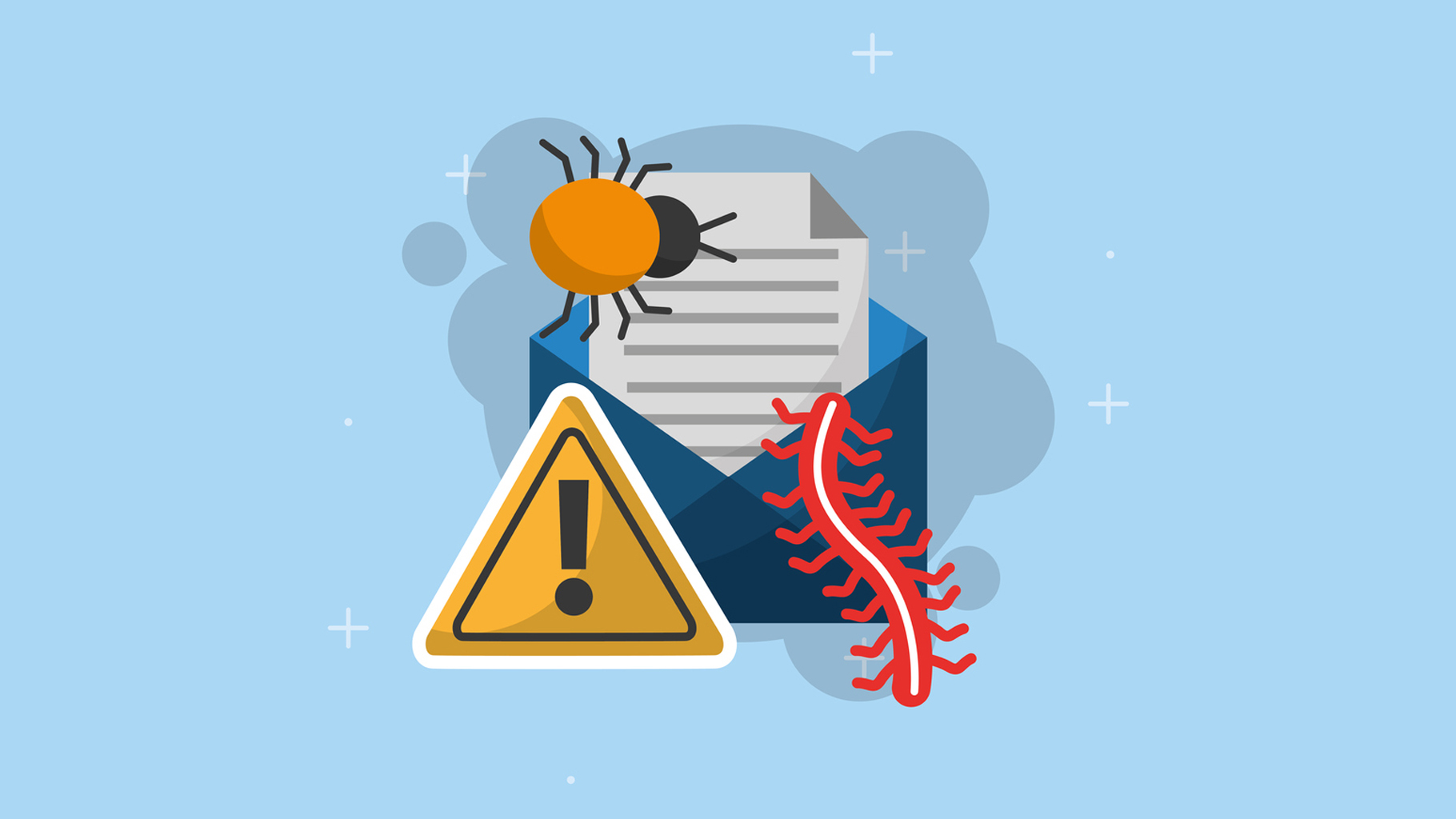
Any highly rated anti-virus and anti-malware program will update itself on a daily basis for latest hacking techniques, Trojan horses, phishing methods, ransomware, adware, spyware, and worms (I shudder to think about this one), and other malicious activity. This is different than updating the program itself. Is your antivirus program a couple of years old? If so, time to do some research.
Again, we’re going to turn to the experts here and look at CNET’s best Windows antivirus Protection. A good antivirus keeps your computer running in top shape, and it keeps your data and writing easy to access for yourself, so you don’t end up like one of the characters in Neal Stephenson’sReamde who end up with all their files locked away by ransomware.
Now for some potentially bad news.Ifmalware has made it into your computer, you will need to have it professionally removed or contact the family and friends computer geek to save your computer and your sanity. If you are computer handy, then you have probably already taken steps to rid your computer of it.
The scary thing about malware is that once it has infiltrated your computer, it may be hard to detect even by anti-virus protection. That is how sneaky and underhanded malware can be.
Some symptoms that your computer may be infected with malware:
Your computer is slowing down
Your computer crashes more often or “locks up”
Your friends and contacts receive strange messages from you
Suddenly you do not have any storage space available
Your homepage changed itself without you changing it.
PUPs show up. These are Potentially Unwanted Programs that have infiltrated your system when you give your consent to install additional tools on your computer. We think “barnacles” would be a better name.
Make sure that your computer (and smart phone) has the latest anti-virus and anti-malware programs protecting it.
Now for some definite good news!
Highly rated by independent and professional reviewers of Anti-Virus and Anti-Malware programs are available from free to $59 a year. A small price for piece of mind.
Don’t think that it can’t happen to your computer. Computer viruses and malware are prevalent and widespread. Once they find a home, they tend to go systemic in a very sly and under-the-radar kind of way. Your screen will not flash or start posting pictures of Moriarty when your computer has been invaded. Today’s hacks tend to be silent but deadly.
That’s what we want you to see! That you are safe!
Back up your files
Anything that you’d have trouble replacing, it’s worth backing up. There are several places like One Drive, Dropbox, or Google Drive that will let you store files for free, up to a certain point. Luckily, external hard drives are getting cheaper all the time, and you can always do both. Whenever one of my free online drives fills up, I move anything I’m not currently using onto my external hard drive. I also make sure to periodically back up my writing.
This is such a great fear of mine that on my fire list (list of things that I need to grab immediately in case of fire) I have my external hard drive above everything else. I’m sure if you aren’t someone who has lost data, you know people who have, and I dearly hope you never have to worry about that.
Cyber Threats STOPS with each of US!
Once your computer and files are all protected, you’ll be free to write without any anxiety hanging over your head. Like cleaning and maintaining most things, a routine means you only need to do a little work when the time comes to get everything squared away.
We hope these were handy reminders. Everybody gets busy and can easily procrastinate about taking care of these mundane but vital tasks. We certainly do!
If there is something we should add to this blog post or you have an experience that you would like to share or a question that you would like to ask about the cleaning and maintenance of your writing tools, please contact us at Chanticleer@ChantiReviews.com
We’d love to hear from you!
Thank you for joining us and please stay tuned for the next Business and Marketing Tools and Tips for Writers Article!
Thank you for joining us for this Writer’s Toolbox Article!
Writer’s Toolbox
Thank you for reading this Chanticleer Writer Resolutions article.
Our Annual Chanticleer Authors Conference (CAC25) will be April 3-6, 2025, where our 2024 CIBA winners will be announced. Space is limited and seats are already filling up, so sign up today! CAC25 and the CIBA Ceremonies will be hosted at the Bellingham Yacht Club Event Center located on the shore of beautiful Squalicum Harbor in Bellingham, WA.
Celebrating the Twelve Days of Christmas – One Day at a Time
On the 9th Day of Christmas…
Some say the Nine Ladies Dancing represent the Nine-Day Novenas. A novena is made up of nine days of prayer and meditation for some thing or some guidance from God. Can you see “dance” in that word “guidance?”
On the Ninth Day of Christmas, Chanticleer brings to me…
Top Tips to keep your Software up to date and Safe!
On the 9th Day of Christmas, we’re taking a step into the digital world—because just like you need a clean workspace and a fresh computer, your software needs attention too. As we head into 2024, it’s the perfect time to ensure that the tools you rely on for your writing are running smoothly and securely. Let’s take a look at some essential software maintenance tasks to help you start the new year on the right foot.
J.L. Oakley’s intern Kinky Boots knows all about software
Password Management: Secure Your Work and Peace of Mind
Let’s start with something crucial: your passwords. Did you know that more than 6 million passwords are hacked every single day? Keeping your passwords secure should be at the top of your list for 2024.
Use a reliable password manager to keep track of all your credentials. Whether you choose LastPass, 1Password, or Bitwarden, a password manager helps protect your accounts and saves you from using the same password for everything — something that could be a major security risk.
Take it a step further by enabling two-factor authentication on your accounts. It may feel like a hassle, but it’s an essential safeguard against unauthorized access.
Clearing Your Cache: Keep Your Browser Running Smoothly
Your browser’s cache might be storing old data that can slow down your computer. It’s time for a little “browser hygiene.”
Clearing your cache regularly helps speed up your browsing experience and ensures that you’re always seeing the latest version of your favorite websites — especially your author platform. While every browser has a different method for clearing the cache, it’s worth doing every few months (or when your browser starts feeling sluggish).
Remember, clearing cookies can also help with privacy. It’s a simple way to protect your data while browsing, so it’s worth adding to your routine maintenance.
NOTE: Before you do this, please be sure to have your passwords secure. Clearing your cache on some browsers can remove any saved passwords you might have.
Anti-Virus and Malware Protection: Stay Safe from Threats
The risk of cyber threats is real, but fortunately, a good anti-virus program can keep you safe. With malware attacks becoming more sophisticated, it’s essential to have a reliable anti-virus program that updates daily to guard against the latest threats. Programs like Norton and Bitdefender are great options to keep your devices secure.
It’s important to regularly update your anti-virus software and run periodic scans to detect any potential threats lurking on your system. If your computer slows down unexpectedly, or if you start receiving strange messages from your contacts, it could be a sign that malware has slipped in.
Backup Your Files: Don’t Let Data Loss Derail Your Year
Writers, don’t let your precious words be vulnerable to data loss. Backing up your files is the most effective way to ensure that your work is protected. Whether you use Google Drive, OneDrive, or an external hard drive, always have a backup plan.
Consider setting up an automatic backup system, so you never forget to save your most recent work. Remember: if it’s important enough to write, it’s important enough to back up.
Update Your Software: Stay Current for Optimal Performance
Last but not least, always keep your software up to date. Software developers release regular updates to patch security vulnerabilities, fix bugs, and improve performance. Make sure your operating system, writing tools (like Scrivener or Word), and any other software you use are running the latest versions.
Outdated software can cause compatibility issues, slow down your computer, and expose you to security risks, so take the time to check for updates.
Get Ready for the New Year of Writing!
By taking a little time to clean up your software and digital space, you’ll be setting yourself up for a successful and productive 2025. These simple steps will help you stay secure, organized, and ready to tackle your writing goals without any digital distractions.
The Ninth Day of Christmas gift of Nine Ladies Dancing are symbolic of the nine life principles: Love, Joy, Peace, Kindness, Goodness, Loyalty, Gentleness, Self-Control, and Patience.
“But Jiminy Crickets, it’s after December 25th! Is it not too late for the 12 Days of Christmas?” you say.
Not to fear, Chanticleerians! The 12 Days of Christmas begins on December 26th! And it continues to the 6th of January – Three Kings Day. The four weeks leading up to Christmas is known as the Advent.
So if you haven’t finished wrapping presents, sending out those cards, and baking cookies—don’t worry—you still have time! Well, four days that is.
Happy Holidays to You from the Chanticleer Team!
On the Ninth day of Christmas, my true love sent to me
Nine Ladies Dancing
Eight Maids A-Milking
Seven Swans A-Swimming
Six Geese A-Laying
Five Golden Rings
Four Calling Birds
Three French Hens (Chanticleer’s favorite #justsaying)
Two Turtle Doves
And a Partridge in a Pear Tree
Happy Holidays to You from the Chanticleer Team!
Stay tuned for the 10th Day of Christmas!
Our favorite part about having the 12 Days of Christmas is that we can have the time we need to celebrate with our loved ones. We have time for wrapping our presents, meeting with friends for hot cocoa, and setting ourselves up in the New Year for publishing success (with Chanticleer Professional Services and the Chanticleer Authors Conference).
Wishing you Happy Holidays from Chanticleer from Kiffer, David, Dena, Scott, Anya, and Argus!
Celebrating the Twelve Days of Christmas – One Day at a Time
On the 8th Day of Christmas…
“But Jiminy Crickets, it is the 2nd of January! Is it not too late for the 12 Days of Christmas?” you say.
Not to fear, Chanticleerians! The 12 Days of Christmas begins on December 26th! And it continues to the 6th of January – Three Kings Day. The four weeks leading up to Christmas is known as the Advent.
So if you haven’t finished wrapping presents, sending out those cards, and baking cookies—don’t worry—you still have time! You have FIVE Days!
Happy Holidays to You from the Chanticleer Team!
On the Eighth day of Christmas, my true love sent to me
Eight Maids A-Milking
Seven Swans A-Swimming
Six Geese A-Laying
Five Golden Rings
Four Calling Birds
Three French Hens (Chanticleer’s favorite #justsaying)
Two Turtle Doves
And a Partridge in a Pear Tree
This lyric represents the common worker. We are so grateful to all those who make the wheels of the world turn who can be so easy to forget! An extra special Happy New Year to all workers!
Happy Holidays to You from the Chanticleer Team!
On the Eighth Day of Christmas, Chanticleer brings to me…
Tips to keep your workspace clean!
On the 8th Day of Christmas, we’re diving into a very important tradition — keeping your space clean and your computer fresh as we head into the new year. Whether you’re writing your next masterpiece, editing your latest project, or just catching up on emails, your computer is one of your most valuable tools as a writer.
But how often do we think about maintaining it?
Just like your workspace, your computer—whether a desktop, laptop, or your trusty tablet—deserves a little TLC. After all, it’s where your creativity comes to life and where your stories begin to unfold. So, let’s take a moment this holiday season to give your computer the attention it deserves with a little cleaning and maintenance to keep it running smoothly in 2024.
The Essential Clean-Up: Get Your Computer Ready for 2025
Clean Your Keyboard, Mice, and Screens
Your keyboard is where the magic happens—but did you know that it can also be a hotspot for dust, crumbs, and all sorts of nastiness? A quick clean-up is a small task with big rewards.
Keyboards: Wipe your keyboard down with a slightly damp microfiber cloth, then dry it with another cloth. Finish with a disinfectant wipe or a cloth dampened with rubbing alcohol to ensure you’re clearing away germs. Don’t forget to give it a gentle shake or tap upside down each week to remove the hidden debris!
Mice & Phones: Just like your keyboard, your mouse and phone need a little love too! Clean them regularly to remove oil and fingerprints, ensuring smooth interaction and a clear screen.
Clear Your Screen for Better Viewing
Editing with a dirty screen is like trying to read through foggy glasses! Let’s avoid that in the new year by cleaning our screens regularly.
Microfiber Cloth: The best way to clean any screen is with a microfiber cloth. Don’t spray cleaner directly on the screen—dab a little onto the cloth and gently wipe the screen in circular motions. You’ll be amazed at how much better everything looks once your screen is spotless!
Specialty Wipes: If you’re looking for a quick fix, consider using electronic wipes. These are great for clearing smudges from tablets, smartphones, and laptops—perfect for when you’re writing on the go or working from a coffee shop!
Boost Your Computer’s Performance with Regular Maintenance
It’s not just about the outside. Keeping your computer in tip-top shape means taking care of its inner workings too.
Clear Your Cache: Over time, your computer stores tons of temporary files. While they help speed up certain processes, they can also slow down your machine. Be sure to clear your browser cache and clean up unnecessary files to make your system run smoother.
Update Your Software: Outdated software can lead to performance issues and security vulnerabilities. Start the new year with the latest updates to your operating system, apps, and programs to ensure everything is running as efficiently as possible.
Don’t Forget Your Other Devices!
While you’re in cleaning mode, take a few minutes to clean your phone, tablet, Kindle, and even your remote controls. These everyday devices gather germs and dust, so a quick wipe-down can make them work better and last longer.
A Fresh Start for a New Year of Writing
Stay tuned for the 8th Day of Christmas!
Our favorite part about having the 12 Days of Christmas is that we can have the time we need to celebrate with our loved ones. We have time for wrapping our presents, meeting with friends for hot cocoa, and setting ourselves up in the New Year for publishing success (with Chanticleer Professional Services and the Chanticleer Authors Conference).
Wishing you Happy Holidays from Chanticleer from Kiffer, David, Dena, Scott, Anya, and Argus!
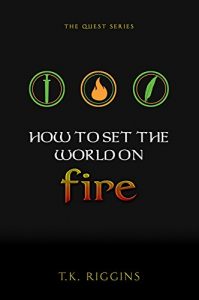
T.K. Riggins, OZMA Grand Prize Winner for “How to Set the World on Fire”
Ten Questions Interview with the OZMA Grand Prize Award Winner, T.K. Riggins, that shares his writing tips and tools with us.
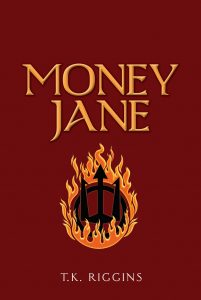
Money Janewon First Place in the 2018 CIBAs OZMA Awards for Fantasy Novels. Congratulations!
I first met T.K. Riggins at CAC18 where his novel, How to Set the World on Fire won Grand Prize in the OZMA Awards. T.K.’s a cool guy. He strikes up conversations with ease and doesn’t really seem to take himself too seriously. Maybe that’s because he started writing on a dare… but I’m getting ahead of myself.
Meet the author, T.K. Riggins!
Chanticleer: Tell us a little about yourself: How did you start writing?
Riggins: I started writing because of a dare. My friend was searching for something new to read, but instead of recommending a book, I decided to write something for her. It was a ten-page short story that was based on a farming event from my past, and I turned it into a tale of fantasy. It was a fun experience, and my friend was so impressed that she wanted to read more, so I just kept going.
Chanticleer: That’s kind of funny! When did you realize you that you were an author?
Riggins: The first time I felt like an author was when a stranger read my work, critiqued it, and told me they wanted to read more. The recognition was nice and gave me the confidence to continue, but the major takeaway was being able to overcome the vulnerability that comes with giving my writing to someone that I didn’t know. It’s one thing to have friends and family read my story because I knew that they’d support me no matter what. It was entirely different to bare my soul to someone who wasn’t as obligated to spare my feelings.
Chanticleer: Yes, check that thin-author-skin in for something a little thicker. I think we can all relate to that. Tell me, do you find yourself following the rules or do you like to make up your own rules?
Riggins: I attended a seminar taught by Larry Brooks, the author of Story Engineering. In part of his lecture, he compared writing a novel to playing the game of football. He stressed how in football, there are certain rules that can’t be changed like the size of the field, how many downs there are, and how many players are on the turf at a time. However, the thing that can be changed is how the players play the game.
Like the game of football, professional novels have elements that can’t be changed like how it’s formatted, where the inciting incident should be, how the story arc relates to the climax, etc. The thing that can be changed is how the writer tells the story.
Football and Writing
So in the end, it ends up being a little bit of both. I follow certain structural elements to make sure that readers easily enjoy the flow of the novel, but what I write about and how the characters evolve ends up following the rules that I make up.
Chanticleer: It seems to be working for you. Hello OZMA Grand Prize! What do you do when you’re not writing? Tells us a little about your hobbies.
Riggins: I’m a big sports fan. I grew up playing basketball, baseball, soccer and hockey. Lately, my focus has been on Crossfit and beach volleyball. Crossfit has a reputation of being a fad workout program, but I love it because it preaches intensity, structure, and competition. Not only does it provide an escape from sitting in front of a computer screen, but it helps me improve both my physical and mental strength in a community filled with others that constantly work on maximizing their skillset.
Chanticleer: I always envy those who can endure a single session of Crossfit. Me? I trip as soon as I walk in the door… Let’s change the subject… How structured are you in your writing work?
Riggins: Because I still work a full-time job as an engineer, most of my writing occurs at night and on weekends, but I don’t worry about setting a certain time limit on the craft. Sometimes I write for fifteen minutes, other times I might go for hours. That’s not to say that I don’t think about my writing constantly. I make notes while at work, at the gym, or even if I wake up from a dream. I feel like it’s easier to sit down and write based on my notes rather than try to sit at a computer and force the words to come out.
On the other hand, it’s useful to have deadlines in mind. I find that sometimes I get stuck trying to find the right words, perfect character names, or minor plot point.
Instead of waiting for that lightning bolt of inspiration, I think it’s useful to push through a few paragraphs that I know are going to require editing later, just to keep the flow of the story going. First drafts are never perfect anyway, so sometimes I sacrifice a few little details in order to reach the broader goal of building the story.
Chanticleer: I hope everyone is paying attention to what you just said. It’s so valuable to just keep writing, to let the creativity flow. Good job. It is important to work on your craft, though, so what do you do to grow your author chops?
Riggins: I read everything. I read non-fiction articles ranging from creating tension in writing to marketing tips for self-published authors. I read fiction stories that are both inside and outside my genre. I read books that my peers recommend, and some that my young nieces and nephews are into.
A lot of the time, my reading doesn’t translate into great ideas for my own writing, but I feel like hearing the voices of other authors helps strengthen my own. Even studying other artists in music and visual art helps inspire my own craft.
Chanticleer: That’s really good. Thank you. Give us your best marketing tips, what’s worked to sell more books, gain notoriety, and expand your literary footprint.
Riggins: The best marketing advice I ever received was to keep things simple. In every area of business, there are mountains of opportunities and strategies that are complex and overwhelming. There are even elements that may work for one business that end up being a complete failure for another. The key is to keep the focus on one thing at a time and try to take advantage of the opportunities that come your way, rather than tackling everything at once. Longevity is the ultimate goal, even when tasks seem quick, small, meaningful or useless.
Chanticleer: I like that, keep it simple. What are you working on now? What can we look forward to seeing next from you?
Riggins: I just released my second novel Money Jane. It’s the sequel to How to Set the World on Fire and is book two in a series of six. I’m currently writing the third book in the series, but I’m also involved with developing an indie video game app to be paired with my book series. It’s going to be really fun, and add another dimension to the How to Set the World on Fire franchise.
Chanticleer: That is such amazing news! Six-book series AND a video game app! (Read our reviews of How to Set the World on Fire and Money Jane.) Who’s the perfect reader for your book?
Riggins: My books are aimed towards middle-grade students, ages 8 – 12. However, I’ve had a lot of great feedback from my millennial friends and their baby boomer parents who enjoy reading my novels. My entire series is really for anyone who wants to feel good and escape into an adventure filled fantasy, where the main characters build relationships, overcome challenges, and live happily ever after.
Chanticleer: What is the most important thing a reader can do for an author?
Riggins: Tell someone about the books you’re reading, especially if it’s something you enjoy. Give it to a friend, family member, or someone you’ve just met. Recommend it at your library, write a review online, or share your thoughts on social media. Be a part of the community rather than just an outside spectator, because we’re all in this together!
Chanticleer: Thank you, T.K., you are the best!
Okay, you know what to do next, right? Go check out T.K. Riggin’s website – take a look at his books, buy them! He’s a vetted award-winning author – and he’s one of our favorite people.
Tension is part curiosity, part unease, part dread or anticipation. It’s linked to every aspect of stories, found on every page, and creates a vivid fictional world that seethes with trouble and obstacles to overcome. Tension prickles readers’ nerves and makes them fret and worry.
Tension, along with suspense, jabs at the reader’s senses with haunting questions and shifting circumstances that must be unraveled.
“Tension is a crucial ingredient that compels readers to keep turning the pages.” – Jessica P. Morrell
Tension is a force field in fiction, or any type of storytelling, that is created on a word-by-word basis that is underlying the story in every scene. Tension is also used to create mood and tone. Mood and tone are important aspects of storytelling often not given their due.
You see, great fiction is designed to cause a reader’s emotions to jangle and his mood to go up and down with every turn of the page. Unlike real life where people usually avoid conflict and misery, in fiction, the best parts of the stories are where the characters are in the worst trouble. Readers love to suffer along with characters, because they’re removed from these miseries, perhaps because they’re escaping their own miseries while comfortable in their homes or airplane seats as characters battle doubts and demons in a fictional world. Tension sometimes helps readers (and listeners) to experience catharsis.
Jessica advises writers to pay particular attention to the words they use to increase tension and impact. These are her tips on how and what to look for when you are wanting to write a page-turner and who would not want to do this?
• Recognize that you’re constantly making choices when you write. Know when you want your words to emphasize an aspect, resonate, slow down, or speed up your story.
• Vary your word choices and respect ‘word territory’—that is, don’t repeat words and phrases, especially those in close proximity, especially with unusual words.
• Vary sentence lengths because they can be numbing when repeated.
• Write tight. Short sentences generally increase tension. Every word in every sentence needs a job. If it doesn’t have a job, fire it.
• Use hard consonant sounds to increase tension. Examples are cowgirl, geek, gimme, trigger, castrate, succor, cackle.
• Use sibilance or a hissing sound to disturb readers and suggest unpleasantness. Examples are: sinister, shyster, sizzle, simper, slice, buzz.
• Insert punchy, muscular verbs whenever they serve your purpose: roil, blurt, thunder, sting, crash, grovel, conjure, hobble, jacked, leer, muzzle.
Most of the time dialogue should be zingy, taut, and to the point.
• Place the most emphatic words at the end of a sentence or paragraph: The door closed with a resounding click, confirming that I was trapped.
“All stories begin with word choice; and word choices will either doom it or set your story apart.” – Jessica P. Morrell
Jessica’s HANDY LIST OF 1,130 words to print out and use for your writing toolbox.
Click here for Jessica’s List of 1,130 words that could add more tension to your story and boost your writing vocabulary.
Jessica Page Morrell
Jessica Page Morrell is a top-tier developmental editor and a contributor to Writer’s Digest magazine, and she teaches Master Writing Craft Classes at the Chanticleer Authors Conference that is held annually along with teaching at Chanticleer writing workshops.
Jessica understands both sides of the editorial desk–as a highly-sought after content development editor and an author. Her work also appears in multiple anthologies and The Writer and Writer’s Digest magazines. She is known for explaining the hows and whys of what makes for excellent writing and for sharing very clear examples that examines the technical aspects of writing that emphases layering and subtext. Her books on writing craft are considered “a must have” for any serious writer’s toolkit. For links for her writing craft books, please click on her name above.
Chanticleer Reviews and OnWord Talks will interview Jessica for more of her writing tips and advice. Stay tuned! ~ Chanticleer
Book Reviews are tools every author can use – wisely!
TYPES OF REVIEWS
Generally speaking, there are four types of reviews you will encounter. Here they are:
Trade/Editorial Reviews – These reviews are written by professionals in the publishing industry – quality matters here.
Peer Reviews – Done by other authors or professional peers
Manuscript Overviews – The professional writer’s first step in the editing process.
Consumer Reviews – These are written by readers – quantity is what counts here search engine operations and algorithms.
Editorial Book Reviews
Each type of review serves a specific purpose, and each type resonates with different kinds of book buyers and serves different purposes.
Editorial Reviews
Editorial Reviews aka Professional Trade Reviews provide useful information for publishing professionals for preparing for book launches.
Post Launch: Traditional Publishers and Book Publicists also know that editorial reviews set the tone for consumer reviews.
Publishing Professionals know that editorial reviews give readers (and consumers) the language and terms to discuss books, thereby, making it easier for readers and fans to write reviews. Because more reviews generate more book buzz and trust me, book buzz is what you want, you will want to make it extremely easy for readers (aka book consumers) to leave a review.
Make sure that blurbs of your book’s editorial reviews are listed in the Editorial Reviews section of your book’s Amazon page. Blurbs from Editorial Reviews are also handy to have when uploading your book’s information in the ISBN forms and in the information upload page of your book on digital platforms. Review blurbs also help Indie bookstores to determine if your book would sell in their stores.
PEER REVIEWS
Peer reviews have run into some problems lately. While it’s tempting to trade review for review with your author friends, be careful where you post them. Some large retailers have caught onto the review-for-review and have subsequently pulled reviews they suspect come from other authors. I’m not saying you shouldn’t review your friends’ books – you should! In fact, you need to be fostering those relationships with other authors. But don’t be surprised if your reviews are pulled from the giant’s webpage. So, when you seek reviews, don’t just seek peer reviews only. Go for a mix!
And remember to get peer reviews, you must give peer reviews. Make it part of your marketing checklist to read your peer writers’ books and then review them. Remember the reviews do not have to be long — 25 -to- 50 words for a consumer review will work and will be just as effective as a 250 -to- 500-word review. Quantity is what counts here.
One hundred consumer reviews are what we hear it takes to get on Amazon’s radar for SEO and algorithms.
A final word of advice regarding consumer reviews: If you do receive an unfavorable review or even a scathing review (it happens to even the most successful authors), do not react or respond especially if they fall into the “troll” category. Never interact with a “troll” — just don’t. No good will come from it. As hard as it may be to do, focus on the positive reviews. If writing craft issues (changing POV, grammatical errors, typos, etc..) are mentioned in the review, address the issues and correct them. In today’s digital world, there is no reason not to.
MANUSCRIPT OVERVIEWS
Manuscript Overviews is dollar for dollar, one of the best writing tools you can utilize. Traditionally published authors receive great editing and feedback from agents and senior editors on early drafts, a benefit that most self-publishing authors never receive. When feedback comes early in a work’s progress it allows the author to not only create a more polished final product but also publish more works and build their backlist.
When working with an agent or publishers, the author works on a rough draft – the early drafts of a novel. He creates the theme, the characters, the setting, the tone, the story, the plot lines, the dialog style, and selects the genre and has an audience in mind (YA or mystery fans, fantasy or Science Fiction readers, etc.). After the author creates the story with a beginning, middle, and end, she then sends this early unedited draft of the story to his editor or agent to read and to get feedback.
Editing a Manuscript
This is exactly what a Chanticleer Manuscript Overview is: An objective evaluation of a story idea that is fully formed with a beginning, middle, and end, but still in an early draft stage. The Manuscript Overview comes before LINE EDITING and COPY EDITING.
CONSUMER REVIEWS
Consumer Reviews are awesome. Don’t we all like to hear what total strangers think of our work? I mean, cringe-worthy as these types of reviews can be, they are important. How do you get them? That’s an interesting question. My statistics show that for every 100 queries you send out to review your book, you may get 8-10 actual reviews in return. I’m talking about sending your books out to bloggers, reviewers and the like. But those reviews do drive the Average-Joe reviews. The more you get of one, the likely you will increase the other. This is where your mailing list comes in handy – a topic for another blog… sorry.
Now that we’ve got the four types of reviews covered, what do you do with
a review once you have it?
After getting your reviews, make sure you are using them effectively. By that, I mean, use them everywhere! Post them on your websites and your book covers. Splatter them all over your social media! Share them with your friends – use snippets of them in your marketing collateral. Use them as a way to introduce your book to your local libraries and brick and mortar stores.
Let’s break it down.
Online retailers (Amazon, Kobo, Apple) have specific places for you to insert editorial review blurbs. Many brick-and-mortar stores will place shelf-talkers with trade review excerpts near your displayed books.
Have a REVIEWS page on your website where you place quotes – or entire reviews. Insert links to the original reviews and always give attribution!
The book cover is the place for trade/editorial and peer review blurbs. (It’s a cover – don’t cram an entire review on there!) Choose the top or bottom of your front cover to place awards, book stickers – some piece of information that draws the book reader to your book. Put the review blurbs on the back cover or if you have a lot of meaningful blurbs, you can use the first couple of pages of your book to place these. Again, don’t overwhelm the reader with the entire review. Be selective. It will pay off.
What’s so different about a Chanticleer Editorial Review?
You may have known I was going to talk about Chanticleer Reviews, right? I mean, that’s what we do…
Here’s the deal, a Chanticleer Editorial Review is professional, unbiased, and fair. We don’t compare cozies to thrillers. We compare the work, put it to the test, and write the review. We always send our authors a “Not for Publication – Awaiting Comments from Author/Publisher” copy. This way the author and publisher can read the review and approve it or kindly ask us to not publish. It’s your choice. Simply put, we are not in the business to embarrass anyone – only help. We love to help authors. It’s what we do.
And one more thing… if you’re in need of a review and you would like to order a Chanticleer Review, here is our special offer for July. I repeat this offer is good until July 31, 2018 – midnight. Here’s what to do:
Share this article THREE TIMES on three different social media sites
Take a screenshot of your shares and post those in the comment section of this article with the phrase “I would like a $50 discount on my next Chanticleer Editorial Review!”
OR tag us using @ChantiReviews on Twitter and Facebook or Instagram!
We will message you with your discount coupon code.
Here is the first half of a two-part series on How to Write a Synopsis. The first part deals with synopsis development and the second part will discuss the mechanics of a synopsis.
Part 1 of Jessica Page Morrell’s Writer’s Toolkit series on How to Write a Synopsis
I’ve got a book in progress now, but I’m planning to write several nonfiction projects, so I’ll be crafting proposals to sell these projects. Now, I’d rather yank out my fingernails one by one or undergo a series of root canals than write a proposal—there’s just something about them that fills me with dread and the worst case of procrastination this side of the Rockies. I know proposals are a top-drawer tool in my toolbox of writing skills, but I still loathe writing them. And I’ve heard this same sort of dread about writing a synopsis from fiction writers, so if you’re fortunate enough to be finishing a novel, here are some ideas for this next crucial step.
First, if you’re not fond of writing a synopsis, this doesn’t strike me as abnormal. After all, you’re summarizing about 400 pages into the briefest possible form while introducing the major players and situation and somehow leaving no questions unanswered, while not disclosing everything that happens in the story. A synopsis is part bare bones of your story (however, not too bare), part pitch, and part illustration of your writing style. And every sentence matters and must push the story forward.
Typically a synopsis completes a sales package that includes your first three chapters and sometimes a letter of introduction. Since at times editors read the synopsis first, it must be comprehensive, comprehensible, and compelling, forcing them to then peruse your chapters. Hopefully, your synopsis will be read not only by an agent and editor but if it passes muster, the marketing and art department will read it too. A synopsis will also be used in the publishing house meetings where decisions are made about what titles will be published in an upcoming season. In your synopsis, these professionals want to see a thoughtful writer at work—one who has crafted an enthralling story, with a gripping main conflict and intriguing motivations in the main players. They also want to understand how the story moves logically from the inciting incident in the opening chapters to the end, with major plot points and turning points along the way.
These days there seems to me no grand consensus on the ideal length of a synopsis. If you’ve written a saga, chances are you might weigh in at 10 pages or more and if you’ve written a fairly simple tale, you might get away with a one-page shortie. Since most agents and editors are notoriously pressed for time and read so much for their jobs, the five-page synopsis is appreciated by most. However, in the past, the wisdom about length went like this: one double-spaced page of synopsis for each 10,000 manuscript words. If you wrote an 80,000-word manuscript you’d write an 8-page synopsis.
If you’re new to the task of synopsis writing you might want to read the back cover copy of your favorite paperback novels and the inside jacket of hardcover novels. Notice how enticing the copy is and how the story question is revealed. Notice also the verbs and the level of specific detail. Then make a list of all the major characters and events that you need to include in your synopsis.
Start your synopsis with a hook—such as in:
When JAMES MALCOLM, an insurance adjustor, awoke in a strange basement wearing women’s clothing, he knows it won’t be an ordinary day, but could scarcely have imagined that the clothes he wore belonged to MELINDA DAVIS who had been recently murdered. Wrongly suspected of her murder, Malcolm is forced to discover who murdered Davis and why and why he was fingered for the crime.
Write in the present tense and the first time you introduce a character, type his or her name in all caps. A synopsis is written in the same order as the novel and is written in the style and tone of the manuscript—a witty, fast-paced novel requires a witty, fast-paced synopsis. If the story is literary, your synopsis will be more serious, but keep in mind that your dazzling prose goes into the manuscript, not the synopsis.
Don’t leave major questions unanswered such as who killed the victim, as well as how Malcolm solves his internal conflict, and how the subplot was resolved after he lost his job when he was arrested. A synopsis keeps the reader’s interest, but it’s not a tease and is not written with cliffhangers and such devices. It’s particularly important to demonstrate that your ending provides a satisfying conclusion to the plot and ties up loose ends.
A synopsis demonstrates that your characters are in jeopardy and what is at stake and why this matters. It introduces your main characters and their conflicts and agendas. It is not a list of characters or character sketches, and it usually does not describe physical attributes of characters, although the main characters are given some sort of tag. For example, you might want to refer to a character as the leading citizen in a small Southern town, or a respected doctor or frustrated novelist. Antagonists are always introduced, but secondary characters are mentioned only if they are involved with the protagonist’s inner or outer conflict. A synopsis is also written with a careful attention to flow—ideas follow each other logically and one paragraph leads to the next. This means that transitions will be important in connecting the dots.
The Part 2 will discuss the mechanics and formatting of a synopsis and her handy checklist (by Jessica Page Morrell).
LINKS
Instructional and Insightful Books by Jessica Page Morrell to add to your Writer’s Toolkit. Click here.







 We clear our caches here at Chanticleer at least every three months or as needed to access new data from websites that we visit.