Tag: writing toolbox

  • WILL YOUR STORY IDEA WORK? Questions to Ask Yourself – from the Editor’s Desk of Jessica Morrell – a Chanticleer Writers Toolbox article.

    WILL YOUR STORY IDEA WORK? Questions to Ask Yourself – from the Editor’s Desk of Jessica Morrell – a Chanticleer Writers Toolbox article.

    Story ideas often come to writers as a fleeting spark of an idea or feeling. Maybe it comes from meeting an interesting stranger. Maybe it comes from a childhood memory or looking back at a life-altering trip. Or perhaps you’re trying to rewrite a difficult situation you’ve always wished you’d handled better. Maybe you spot a person on the street who reminds you of someone from your past. Maybe that person broke your heart.  Or bullied you when you were a kid. Or she/he is the one who got away.

    Perhaps you have no idea where your story idea came from.

    Sometimes a story comes from asking what if. What if dad never left us? What if an adult with a family runs away from home?  What if I never met ___? What if a corpse is discovered missing its fingerprints?  What if someone refused to keep family secrets?

    All these ideas have potential….BUT ideas are the easy part of writing.

    A spark doesn’t always ignite into a flame. A spark doesn’t always equal a plot.

    So you need tools and criteria to judge your ideas. Visual artists have a great advantage over writers because an artist can place his painting in front of a mirror. The mirrored image will be so distinct that the artist will see it anew. Writers, alas, can’t use the mirror trick.

    Your friends or critique group can help you discern weak story concepts versus potent story concepts. But over time you’ll need to find ways to judge your own work.

    With that in mind, ask yourself these questions:

    • Does your idea foment or riot within you?
    • Do your main characters get your heart pumping?
    • Demand to be heard?  Demand to be shaped into a tale?
    • Can you ‘see’ the story in a series of vivid scenes?
    • Can you boil down the story into a few vivid sentences?
    • Can you ‘hear’ the main voice of the story already? Does the voice come naturally or easily as if from some untapped part of you?
    • Does a major twist come to mind?
    • Can you imagine the ending?
    • Can you plot the causality–as in one scene leads to the next, then leads to the next.

    Keep asking yourself questions about what comes next or the protagonist’s core traits or how you can complicate things. Perhaps a false accusation or betrayal might help shape the story. Perhaps a lie or secret lies at the heart of things. And what about the themes?

    • Can you offer fresh insights about human nature?
    • Create characters your reader has never met or imagined, but always wanted to?
    When we learn that Edward the vampire sparkles in the sunlight in “The Twilight Saga” — a new way of imaging vampires…

     If your characters don’t feel, neither will your readers because characters are revealed by their emotions.  And if emotions don’t lead to further actions, then part of fictional chain is missing.

    Character first. Plot is people. 

    (an encore, but worth repeating)

    It’s impossible to write about a main character you don’t care about. And you must care deeply. When I say care, you can actually pity the poor sod {Quoyle in The Shipping News}, or disagree with his morality as when you write an anti-hero like Scarlett O’Hara or Tyrion Lannister of the Game of Thrones series.  Or Lisbeth Salander in Girl  with the Dragon Tattoo. Or Katness Everdeen in the Hunger Games. Many readers find anti-heroes likable or relatable,  but so must the writer/creator. Because fiction writing requires a serious emotional and intimate involvement with the main characters.

    Fiction requires a serious emotional and intimate involvement with the main characters. – Jessica Morrell

    Katniss with her rallying three-fingered salute!

    Ideally you’ll find your protagonist fascinating, indelible, someone you can co-habitat with for at least a year—perhaps longer. Because between first drafts and final revisions it will take at least a year to finish your novel  Naturally this can work for short stories too, but the duration of the relationship  is often shorter.

    And if you are going to commit to a series well, you had better believe that you can go the distance.

    Your protagonists and antagonists should be fun to write or intriguing to the point of distraction.

    I’ve known writers who have fallen out of love with their characters and it ain’t pretty. Especially if they created a series character. Typically they discover their creation feels stale or predictable.

    Similar to a failing relationship in the real world. Like those glum couples you spot in restaurants not speaking to each other; sitting in slumped misery or apathy. I’ve been noticing these miserable pairings for years.

    There is nothing left to say or talk about…

    Of course, because  I’m a writer that makes me nosy and I am apt to spy on my fellow diners and eavesdrop—an occupational hazard so to speak.

    Back to you and your main characters. Think long haul. Lasting commitment, curiosity, or admiration. Think not being judge-y.
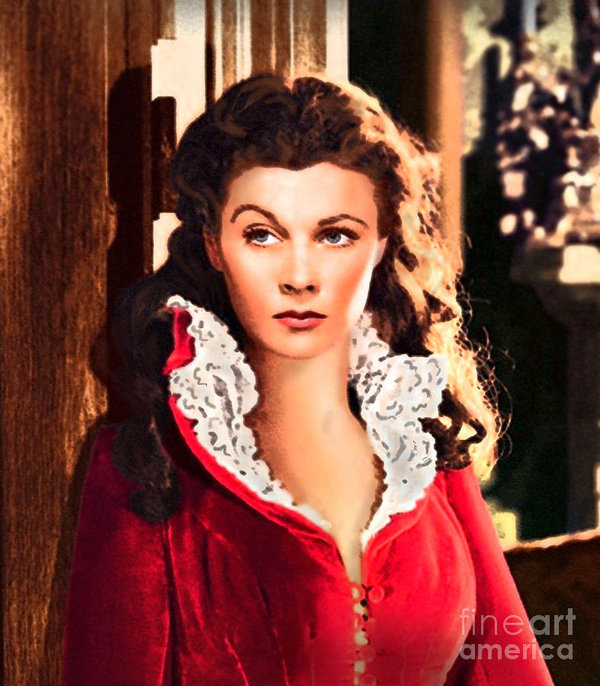
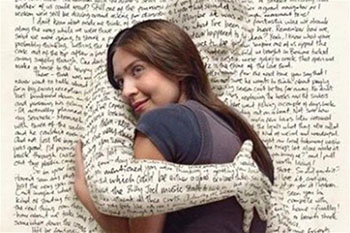
    Is your character your new love? Your best friend that you want to hang out with? The friend that always seems to get you in trouble but you don’t really mind?
    A few suggestions and/or gentle reminders for you:

    • Character first. Plot is people.
    • Create an intricate backstory that will cause motivations.
    • Give it time. It doesn’t need to be an instant attraction or intimacy, but your character should pique your curiosity.
    • Discover what in your character’s nature validates his/her humanity.
    • What about him or her is worthy of your reader’s time.  Some of the best protagonists are not immediately sympathetic or understandable. It can take readers time to understand them. But that’s okay. Because there will be tests along the way that reveal his/her true nature. An example is Strider in Lord of the Rings.
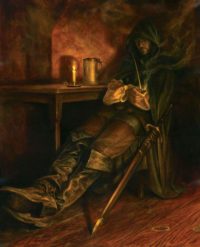
    Strider aka Ranger of the North aka Aragorn crowned King Elessar
    • Your protagonist needs traits you admire, even begrudgingly.
    • Figure in your protagonist’s chief vulnerabilities, then exploit them.
    • Understand how your character’s triggers, reactions or overreactions under duress.
    • Consider working out your demons through your protagonist and antagonist.
      • Is he or she insecure?
      • Will he feel misunderstood? (Professor Snipe in the Harry Potter series)
      • What about rewriting your awkward adolescent years through your character?

     If your characters don’t feel, neither will your readers because characters are revealed by their emotions.  And if emotions don’t lead to further actions, then part of fictional chain is missing.

    Your Homework

    Make a list of who are some of your most favorite and beloved characters and then try to assign traits to them that you find compelling. Conversely, who were their antagonists?

    Keep writing, keep dreaming, have heart. Jessica


    Chanticleer’s next Marketing blog post will address Hashtags and Social Media – Part 4 of How to Increase Online Book Sales.

    Our next Editorial blog post will address Opening Paragraphs and Beginnings.

    So please stay tuned…


    Jessica Page Morrell

    Jessica Page Morrell is a top-tier developmental editor for books and screenplays. Her articles have appeared in Writer’s Digest and The Writer magazines. She is known for explaining the hows and whys of what makes for excellent writing and for sharing very clear examples that examine the technical aspects of writing that emphases layering and subtext. Her books on writing craft are considered “a must have” for any serious writer’s toolkit.

    Jessica will teach the Master Craft Writing Classes at the Chanticleer Authors Conference on Thursday, Sept. 3, 2020  and will present sessions during the conference. She and Kiffer will also host a fun kaffeeklatch for Word Nerds at CAC20.

    Did you know that Chanticleer offers editorial services? We do and have been doing so since 2011.

    Our professional editors are top-notch and are experts in the Chicago Manual of Style. They have and are working for the top publishing houses (TOR, Macmillan, Thomas Mercer, Penguin Random House, etc.) and award-winning independent presses. If you would like more information, we invite you to email Kiffer or Sharon at KBrown@ChantiReviews.com or SAnderson@ChantiReviews.com.

    Click here to read more about our Editorial services: https://www.chantireviews.com/services/Editorial-Services-p85337185

    A great way to get started is with our manuscript evaluation service. Here are some handy links about this tried and true service:

    https://www.chantireviews.com/manuscript-reviews/

    We work with a small number of exclusive clients who want to collaborate with our team of top-editors on an on-going basis. Contact us today!

    Writer’s Toolbox


    Thank you for reading this Chanticleer Writer’s Toolbox article. 

    We encourage you to stay in contact with each other and with us  during this stint of practicing physical distancing to prevent the spread of COVID-19.

    Let us know how you are doing, what is going on where you live, how are you progressing on your writing projects.

    I invite each of you to join us at The Roost – a private online Chanticleer Community for writers and authors and publishing professionals. You are welcome to email me for more info also.

    We are active on Facebook, Twitter, and Instagram. You can find us by using our social media handle @ChantiReviews

    Minimize physical contact! Maximize social connecting!

    Be well. Stay safe. 
  • Villains and Antagonists – Know the Difference and Don’t Confuse Them – Writing Toolbox Series  by Jessica Morrell

    Villains and Antagonists – Know the Difference and Don’t Confuse Them – Writing Toolbox Series by Jessica Morrell

    Antagonists are the main force that shapes the protagonist’s character arc.

    Sometimes the antagonist isn’t as important as the protagonist; in some stories, the antagonist is a threat so potent that he/she shapes the trajectory and tone of the story. 

    But let me clarify before we go further:

    The antagonist isn’t necessarily a bad guy or villain, though he/she can be.

    Is Darth Vader an Antagonist? or a Villain? or Both?

    A villain is a subset within the antagonist role,  identified by his values, morals, and methods, along with direct antipathy toward the protagonist.

    The villain is the most potent threat to the protagonist and perhaps even to the antagonist.

    A villain’s actions will always have huge ramifications and create hardships and danger. A villain in the story means it has a darker tone and aura.

    The antagonist doesn’t have to be a villain in the story.

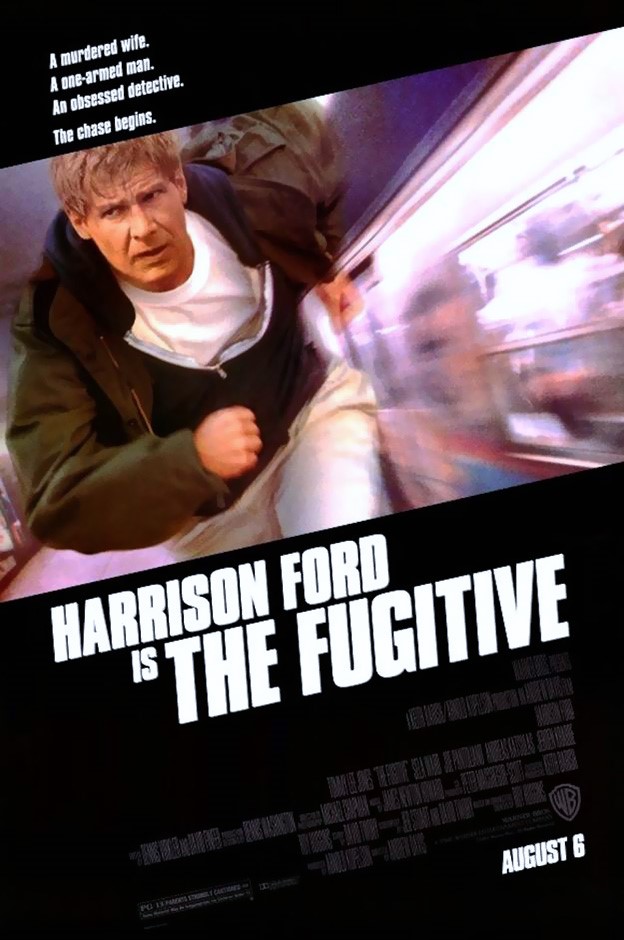
    Editor’s Example: a great example of the statement above are the characters in The Fugitive storyline by author David Twohy starring Harrison Ford and Tommy Lee Jones.

    Richard Kimble, the wrongly accused doctor who was charged with murdering his wife, is the protagonist. He escapes while being transported to prison to receive the death penalty. Kimble believes that he is the only person who can prove his innocence of the crime.

    The protagonist’s antagonist is the unrelenting US Marshall Samual Gerard who is intent on doing his job of tracking down an escape who was convicted for murder. He is relentless in his pursuit of Kimble, but he is not a villain, but he sure makes Kimble’s life a nightmare.

    The villain is the true murderer of Kimble’s wife – the elusive one-armed man named Sykes.

    U.S. Marshall Gerard is not a villain. he is the one that is doing his job and chasing down the escape convicted murderer, Kimble, making Kimble a wanted outlaw fugitive on the run. The villain, Sykes, is always lurking trying to kill Kimble before he is exposed as the murderer of Kimble’s wife (and probably to fulfill his contract). The clock is ticking.

    The Differences between Villains and Antagonists

    The Villain

    The main difference between villains and antagonists is that the villain’s presence in the story will always cause fear and apprehension in the reader. If the reader is not afraid of him/her, then the character is not an effective villain. Fear in humans is much more complex and unsettling than it is in animals. It has many degrees, physical reactions, and can be linked with other emotions that are activated while reading. Fear is unpleasant and yet thrilling, and a villain’s role in the story is to stir these emotions to the boiling point.

    The Antagonist

    The antagonist is the person who forces your protagonist to change in the way he or she most needs to change. Antagonists are the main force that shapes the protagonist’s character arc. They teach the protagonists the lessons needed to grow and they accomplish this via conflict and opposition.

    Here are some suggestions for writing the all-important antagonist:

    Introduce the antagonist with flair. From the first words, this character must be memorable, charismatic, and intriguing.

    The first quarter of your story sets your antagonist in motion. This means his or her first moves create consequences and a messy aftermath. These actions further push the plot rolling along or set up the rising action–events leading up to the climax.

    The antagonist also exists to reveal as much about the protagonist as possible, showcasing the protagonist’s primary traits in events that force him to act in specific ways. So while revealing the protagonist’s flaws and weaknesses, the antics of the antagonist also reveal his strengths and over the course of story events serves as the catalyst that reshapes the protagonist’s self-concept. The main antagonists in the Harry Potter series–Malfoy and Snape—and Voldemort is a villain and an antagonist—are great examples while Voldemort’s death-eaters are villains.

    The antagonist also exists as a contrast to the protagonist, to provide an opposing or at least different morality, viewpoint, and values. When an antagonist starts messing with your main character, then questions arise: Will the protagonist rise to the occasion, muddle through despite doubts and misgivings, falter, or succeed despite flaws and fears?

    The more potent your antagonist, the more you need to know what makes him or her tick. As in backstory, motives, and goals. All need to add up to a seemingly unstoppable, unbeatable force and serious opposition.

    You are setting the stage for a showdown or stand-off between the antagonist and protagonist. This is the major component of rising action.

    You can create more than one antagonist. A good example of this is found in The Fault in our Stars. It has three: cancer and its grim realities, Peter van Houten, an author who has lost his daughter to cancer and wrote a novel about it, and Augustus Waters who shows Hazel how to love and really live with a fatal illness.

    They all force Hazel, the protagonist, to rethink her values, outlook, and concerns. In other words, they force her character arc to unfold.

    Keep writing, keep dreaming, have heart. ~ Jessica

    Jessica Page Morrell
    Jessica Page Morrell

    Jessica Page Morrell is a top-tier developmental editor and a contributor to Writer’s Digest magazine, and she teaches Master Writing Craft Classes at the Chanticleer Authors Conference that is held annually along with teaching at Chanticleer writing workshops.

    Jessica will teach  Master Writing Classes and advanced writing craft sessions at CAC19. Click here to learn more.  

    Jessica understands both sides of the editorial desk. She is known for explaining the hows and whys of what makes for excellent writing and for sharing very clear examples that examines the technical aspects of writing that emphases layering and subtext. Her books on writing craft are considered “a must have” for any serious writer’s toolkit. For links for her writing craft books, please click on here.

    Chanticleer Reviews and OnWord Talks will interview Jessica for more of her writing tips and advice. Stay tuned! ~ Chanticleer (who hails from Chaucer’s Canterbury Tales).


  • Story Prep:  Atmosphere, Overall Tone and Mood by Jessica Morrell – Writing Toolbox  –  Words

    Story Prep: Atmosphere, Overall Tone and Mood by Jessica Morrell – Writing Toolbox – Words

    Plan for an overall tone and mood from the get-go. — Jessica Morrell, editor

    Writing Toolbox Series

    I’m not suggesting you skip plotting or structure, I’m suggesting you plan for an overall tone and mood from the get-go. I’ve rarely given this advice for a first draft before, but then I started reading Dean Koontz’ Jane Hawk series. And I’ve been giving a lot of thought to why the novels are bestsellers, what works and what doesn’t quite work.
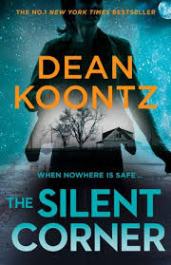
    In this thriller series, Jane Hawk, a rogue FBI agent, takes on government agencies including the FBI and a cabal of villains with a deadly conspiracy. The stories are dark, brutal, and scary.  As you read along, you feel prickly and practically queasy because evil is everywhere.  And the more you read, the more you realize how the author is also inserting real-life horrors into the mix. Because we’re living them in contemporary America.

    Why use atmosphere in your first draft?

    • Because it will affect your mood and approach to your story.
    • It will make you focus on creating unease–a necessary ingredient not always considered in early drafts.
    • Unease contributes to writing a page-turner.
    • Atmosphere underlines themes–even if you don’t have your themes nailed down yet.

    Editor’s Note: Although Jessica is using a thriller as an example, her insightful writing advice may be applied to other genres as well.

    While Jane Hawk spends a lot of time driving across the country searching for answers, a lot of the series is set in California. Now California isn’t exactly Transylvania in the dead of winter, right?  But Koontz is a writer’s writer, and he makes most settings spooksville and dangerous. If Jane reaches a haven or safety, it’s always a look-over-your-shoulder situation and she needs to move on, not rest. And she never ever relaxes. Too much is on the line, including the safety of her beloved 5-year-old Travis.
    The story is set in the near future and the country is sliding into chaos and lawlessness. It opens with a deadly terrorist attack in Pennsylvania as the backdrop and citizens countrywide are uneasy and fearful. Here’s a typical setting description as she’s driving.

    Editor’s Note:  Scott Steindorff, the A-List film producer who presents at the Chanticleer Authors Conference, states that “near-future” is the film industry’s favorite time period. To watch our On WORD Talks with Storytellers 3 minute video with Scott click here. 


    When the wipers swept the blearing stain from the windshield, she saw the nearby Pacific, storm-lashed and misted, rolling toward the shoreless like water and more like a sea of gray smoke pouring off the fires of a nuclear holocaust. The Silent Corner

    Throughout the series, the weather is used in scene after scene, often as bookends. Jane is off the grid so uses public libraries to find information.   From  The Silent Corner before she visits a library: 

    Still, the storm had not broken. The sky over San Diego loomed heavy with midday dark, as if all the water weight and potential thunder stored over distant Alpine had in the last few hours slid unspent toward the city, to add pressure to the coastal deluge that was coming. Sometimes both weather and history broke far too slowly for those who were impatient for what came next.

    In the park adjacent to the library, following a winding path, she saw ahead a fountain surrounded by a reflecting pool, and she walked to it and sat on one of the benches facing the water that flowered up in numerous thin streams, petaling the air with silver droplets.

    This place sounds lovely, doesn’t it? And don’t you wish you’d come up with petaling the air with silver droplets? In case you’re imagining the park as a place or peace or safety, forget about it. Because in fiction it really works to stage danger in benign or lovely settings.

    Let’s check out the same park later when Jane is about to be attacked and run for her life.

    On the flanking streets to the north and south, traffic passed: grumble of engines, swish of tires, hiss of air brakes, rattle of a loosely-fitted manhole cover, the traffic noise seemed curiously muffled, as if the park were encased with insulated dual-pane glass.

    The air remained under pressure, the sky full of iron-dark mountains that would soon collapse in a deluge, the city expectant, the windows of buildings shimmering with light that normally would be faded by the sun at this hour, drivers switching on headlights, the vehicles gliding through the faux dusk like submersibles following undersea lanes.

    Jane had taken only a few steps from the fountain when she detected a buzz like swarming wasps. At first, it seemed to come from above her, and then from behind, but when she turned in a circle and faced again the grove of palms toward which she had been moving, she saw the source hovering twenty feet away: drones.

    Did you notice how the most important word is placed at the end of the paragraph?

    Emulate this. Notice the choice of language: hiss, deluge, collapse, faux dusk, loomed, thunder, grumble, rattle. These words stir the reader’s emotions.

    Remember:

    • Atmosphere underlines themes.
    • Determine the atmosphere of your story: the color, the tone, the mood.
    • Word usage will affect your mood as to how you approach your story.
    • Word usage will affect the mood of your story.

    Stay tuned:  Don’t be afraid of potent backstory (more to come).

    Keep writing. Keep dreaming. Have heart.


    Jessica Page Morrell
    Jessica Page Morrell

    Jessica Page Morrell is a top-tier developmental editor and a contributor to Writer’s Digest magazine, and she teaches Master Writing Craft Classes at the Chanticleer Authors Conference that is held annually along with teaching at Chanticleer writing workshops.

    Jessica has confirmed that she will teach  Master Writing Classes and advanced writing craft sessions at CAC19.

    Jessica understands both sides of the editorial desk. She is known for explaining the hows and whys of what makes for excellent writing and for sharing very clear examples that examines the technical aspects of writing that emphases layering and subtext. Her books on writing craft are considered “a must have” for any serious writer’s toolkit. For links for her writing craft books, please click on here.

    Chanticleer Reviews and OnWord Talks will interview Jessica for more of her writing tips and advice. Stay tuned! ~ Chanticleer (who hails from Chaucer’s Canterbury Tales).


  • Solid Nouns, Words that Resonate, Verbs that Empower – the Tools of Writing by Jessica Morrell – Writing Toolbox

    Solid Nouns, Words that Resonate, Verbs that Empower – the Tools of Writing by Jessica Morrell – Writing Toolbox

    English has always been an adaptive, vital language and was influenced by the King James Bible, the Renaissance which flooded the language with new words, and Shakespeare, who added more than 4,000 words and phrases. Modern English and American English, in particular, resulted from borrowings, gleanings, and adaptations–a mongrel language. That is one reason why you’ll find a list of synonyms for many words in the English language.The English language, or Old English, originated from Germanic tribes in northern Europe who invaded Britain between the fifth and seventh century. It was mostly a spoken language and Britain was populated with Celts though Roman influences still lingered. The Anglo-Saxon impact lasted about 600 years. The Vikings raided and settled in parts of England and brought Old Norse, also a Germanic language, between the eighth and eleventh century.

    The Norman Conquest in 1066 and the conquerors brought William as king and Old French. French is a romance language with roots in Latin and borrowings from the Greeks. It was also called Romance English. Old French began dying out in England and was replaced by Middle English from about 1100 to 1500.

    But words of Anglo-Saxon origin have always been considered more down-to-earth and concrete. These words have also been considered more working class, crude, and simple.  Words of French (and Latin) origin are considered softer, elevated,  elegant and sometimes pompous.

    For example:

    Anglo-Saxon                            French

    1. gut                                         intestine
    2. fire                                         flame
    3. ghost                                     phantom
    4. buy                                        purchase
    5. earthly                                   terrestrial
    6. stench                                   odour
    7. heaven                                  celestial
    8. wild                                       savage


    So how is a writer to choose?

    Generally opt for punchy, potent, and plain diction. Old English makes readers pay attention. It is typically literal as in ‘bone house’ for the human body. Or ‘whale road’ as one word that describes the sea.

    Anglo Saxon words are leaner, single syllable words that are:

    • terse
    • easier to read
    • punchier
    • less formal
    • ‘of the body’

    Examples: blood, sweat, tears, toil, stone, wood, bless, wish

    French and Latin words are usually

    • formal
    • more abstract
    • harder to read
    • multisyllabic
    • ‘of the mind’

    Examples: Excrement, intercourse, cogitate, enquire, imbibe

    You can easily think of the English versions of the above words — definitely, terser, plain words come easily to mind.

    But, and this is an important but; it all depends on voice, tone, and purpose.

    Is your viewpoint character a professor or modern-day Huck Finn? Is your character 55 or 12? Are you writing for kids or adults? Humorous tone or deadly serious?

    Rely on Anglo-Saxon if you’re writing: picture books, YA, humor, adventure, thrillers, fantasy. Use it when you want to reveal emotions and get into your character’s body.

    Rely on French or Latin origin words if you’re writing: romance (cherish, desire, infatuation), nonfiction, science fiction (alien, dystopia, alchemy) technical writing and documents.

    It’s always helpful to know a word’s etymology. And you’d be silly to omit the offerings of Yiddish (chutzpah, glitch, schmooze), Italian ( facade, vista, replica, bizarre) or Old Norse (dazzle, ransack, berzerk). So many treasures, endless tools.

    Keep writing, keep dreaming, collect words. – Jessica

    Bonus: A link to the prose style of George R. R. Martin. (new word combinations, new coinages, +1,000 names of characters – all meaningful and descriptive, and more)

    Fun bonus: From The Guardian, writers on words they love best.  “From plitter to drabbletail: the words we love”

    Click here to access the link to Jessica’s previous article:  AMP UP TENSION WORD by WORD — with a handy list of  1,130 words that you print out and use for your writing toolbox.


    Jessica Page Morrell
    Jessica Page Morrell


    Jessica Page Morrell is a top-tier developmental editor and a contributor to Writer’s Digest magazine, and she teaches Master Writing Craft Classes at the Chanticleer Authors Conference that is held annually along with teaching at Chanticleer writing workshops.

    Jessica has confirmed that she will teach a Master Class and advanced writing craft sessions at CAC19.

    Jessica understands both sides of the editorial desk–as a highly-sought after content development editor and an author. Her work also appears in multiple anthologies and The Writer and Writer’s Digest magazines. She is known for explaining the hows and whys of what makes for excellent writing and for sharing very clear examples that examines the technical aspects of writing that emphases layering and subtext. Her books on writing craft are considered “a must have” for any serious writer’s toolkit. For links for her writing craft books, please click on here.

    Chanticleer Reviews and OnWord Talks will interview Jessica for more of her writing tips and advice. Stay tuned! ~ Chanticleer (who hails from Chaucer’s Canterbury Tales).