While we aren’t actually “Stuck in the Middle” as the Stealers Wheel might say, we can always stand to learn a little more about the genres we write in.
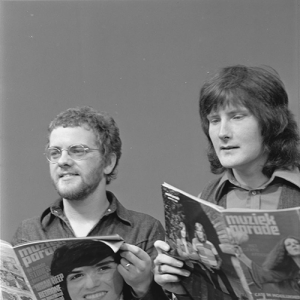
The Stealers Wheel: Decent band? Sure! Middle Grade Authors? Not quite…
As many authors of literature meant for youth know, Middle Grade sits in that small spot between Children’s Literature and Young Adult – quite literally in the middle of these two genres. The target age for this work is 8-12 years old.
We have a couple of key recommendations for creating excellent work that will hold the attention of this tenacious age group.
The Middle Grade Basics
There are guidelines for every genre, and, while they can bend, if you find yourself breaking them regularly, you might need to double-check if you’re actually writing in the genre that’s best for you.
These suggestions will let people know your book fits in the Middle Grade Genre:
Length of 30,000-50,000 words
Content is clean with no profanity or sexual activity (crushes and first kisses are okay)
The age of the main character is close in age to the reader, about 10-14 years old
The story is immediate; characters may have minor interiority, but reactions to the world at large is the most important
The story should feature experiences that the pre-teen and tween has experienced in their own lives even if the story is fantasy (Harry Potter and the Sorcerer’s Stone or Percy Jackson and the Olympians) or real-life (Diary of a Wimpy Kid). Examples are: friendships lost and made, school experiences, family circumstances, and learning about the “wide world outside of oneself.”
Is it a story that the reader (even if older) can place him/her self in? Total immersion.
There are some exceptions to these rules, especially in different genres, like Science Fiction and Fantasy, which both tend to have longer word requirements. However, following the convention of a genre doesn’t just show agents and editors that your work fits with what they can sell, it meets reader expectations.
If you have ever tried to find clothing and or gifts for this “tween” age, you know just how hard it is and how limited the selections are. And how hard it is to find something the tween will like as this is the age when they start to develop their own tastes and preferences.
Treat Your Readers with Respect
No one can spot someone talking down to them better than a Middle Grade Reader. They have a foolproof radar and can tell when authors are overexplaining or, worse, condescending to them.
Don’t put your readers to sleep!
Children ages 8-12 are smart and hungry for excellent writing! They are thoughtful, clever, and it’s worth it to tell them good stories.
This comes to having good beta readers and a solid Manuscript Overview to ensure you have a working plot before you move onto Line Editing and then the final polishing. Respecting your Reader and their time is the golden rule of any writing.
The Story Must Move
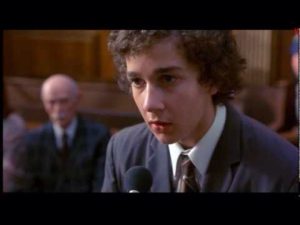
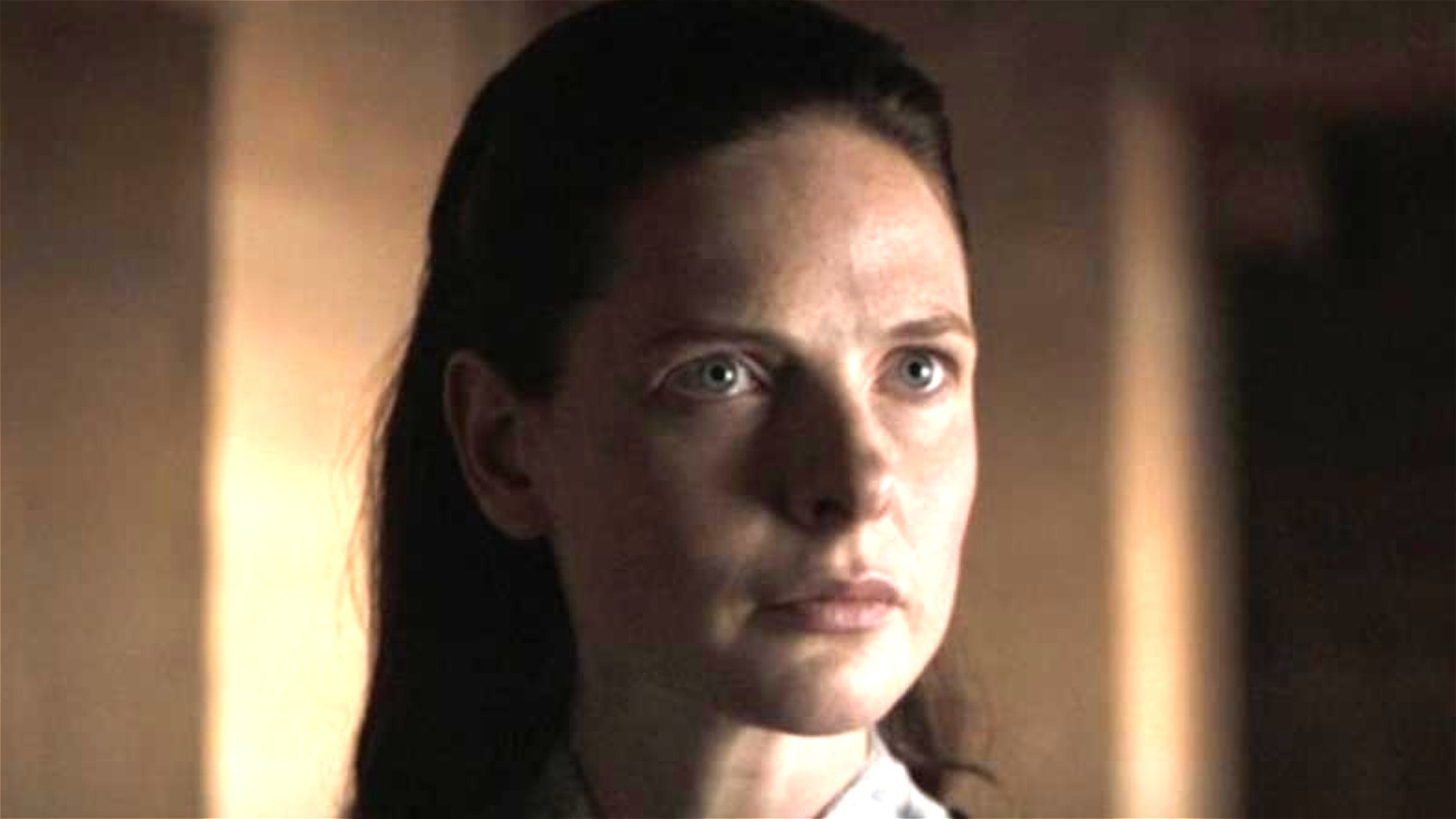
Stanley Yelnats in the movie adaptation of Holes is told he must either choose reform camp or jail for a crime he didn’t commit
That last bullet point in the basics section says the story is immediate.
Younger readers love action – your characters need to react and act in response to the world around them. Publisher’s Weekly quotes Scholastic associate publisher Abby McAden on the topic:
“Middle grade is for truly independent, confident readers, whereas chapter books are all about building that confidence. Stories that often revolve around friendship and deeper exploration of themes and emotions. Kids’ abilities to articulate their inner lives develop over time and are at least somewhat built on experiences they have had or are having. There’s a frame of reference a 10-year-old has that a seven-year-old doesn’t yet. Year over year, kids become ready to look around and explore alternate experiences, and I think middle grade is a giant leap forward in that process.”
And good authors will leap with them as those young readers dive into the larger world.
Read from the Best
The best way to begin and continue to excel in a genre is to read, read, read. Several attendees at the Chanticleer Authors Conference mentioned they had started reading the entire Finalist List for their Division, not just for the pure sake of pleasure, but to better understand what their peers where doing and what the competition really looked like.
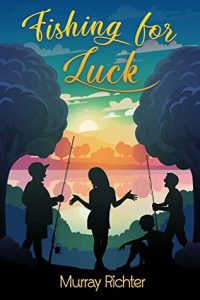
Our 2021 Gertrude Warner Grand Prize Winner for Middle Grade Readers was Murray Richter’s book Fishing For Luck.
Kevin’s awesome life consisted of three things: fantastic fishing, hanging out with his ever-pranking friends, and having fun with the coolest mentor ever. But when the scariest piece of his past resurfaces, his world changes. Will Kevin be able to find his voice and the courage to overcome things too evil to speak of, or will he lose his friends, family, and everything else important to him?
What Chanticleer has to say! Review is forthcoming!
A fast-paced novel of amazing sorts! A great book for young readers that will keep your head spinning and guessing what will happen next!
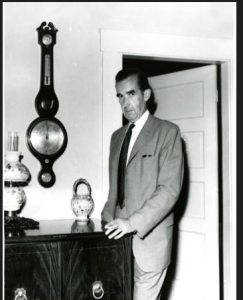
We are getting ready to do some long-awaited (no thanks to Covid) and much needed remodeling on our 100-year-old-plus bungalow. A little known fact of our old home is that Edward R. Murrow’s parents lived here and Mr. Murrow visited them often. Below is a photo of Mr. Murrow visiting his parents in the house that I now live in.
A photo of Edward R. Murrow visiting his parents’ house in Bellingham, Wash.
In moving my office (read: organize boxes of notebooks, composition books, and small pieces of paper), I am compelled to go through them and decide which ones I will toss, which ones I will need to consolidate, and which of the aforementioned I will deem worthy of keeping. While I was flipping through these individual journals, I saw the following snippets of note-taking from leaders and top authors in the publishing industry.
How many of you have these in your writing lair?
Writing Notebooks
Without further ado here are a few of the found gems that I found while going through a few of my notebooks:
Write the slow stuff fast and the fast stuff (aka action scenes) slow to increase tension. In other words, “Tell” the slow stuff and “Show” the Fast Stuff.
When writing you either need to advance the plot or reveal more about a character.
Chapters should have arcs to them and cliffhangers to keep the reader turning pages.
The first and last sentences of each chapter are the most important.
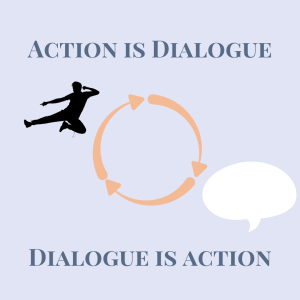
Dialogue is action. Action is dialogue (Robert Dugoni).
Only add backstory in on an as-needed basis. Does it advance the story? If not, don’t add it.
Start scenes with action. End scenes with action.
And, finally, Subplots must be woven in. They are tools for the author to:
Delay the main plot
Distract the protagonist
Heighten mood
Affect pacing
Add foreshadowing
Shows transformations
Ramp up the main plot
After years of attending conferences and living and breathing the writing world, it’s a joy and a gift to come across these treasures from the best in my home office. I hope you find these jottings as helpful as I have.
Now back to trying to beat back chaos in my office. I will do another post about the jottings and notes that I find during my re-organization.
We’d love to hear from you and your notes and jottings!
Keep on Writing! The world needs good books now more than ever! – Kiffer
“Children understand that ‘once upon a time’ refers not only – not even primarily – to the past, but to the impalpable regions of the present, the deeper places inside us where princes and dragons, wizards and talking birds, impassable roads, impossible tasks, and happy endings have always existed, alive and bursting with psychic power.” ~ Stephen Mitchell
From the first must-be-transporting words to the shattering conclusion, readers demand layers of fantastical invention. It all begins with a captivating opening salvo.
“Once upon a time” or “A long, long time ago” makes a promise to your readers. Open these pages and you’ve been wrested from your 21st century sphere. You are about to enter a kind of dream world, encounter wonderment, and find age-old conflicts wearing fantastical guises.
While fantasy is untethered from our current world, as in real life, don’t make promises you cannot keep. You’ve got to deliver an adventure so potent it invades the reader’s senses and alters his or her heartrate. Your adventure needs a diverse cast, a clash of titans, and the wondrous–dragons soaring overhead, ancient spells and curses, night walkers, or battles fought over lands or pride or brute necessity.
Khal Drugo – Game of Thrones
Opening sentences are everything
They start the whole transporting apparatus to assure readers they’ve landed in a faraway time and place. Amid a world of richly embroidered textures, sights, tastes, smells, and sounds all while entanglements with a fascinating cast of characters are underway. A world that has a carefully built history, scenes unfolding in distinct reality replete with atmosphere, tension and mood.
Is Your Opening Delivering:
Characters tossed off balance somehow by a force outside themselves.
A nettling question emerges that demands answers.
Something is amiss. The opening acts typically create threats. Humans are biologically programed to respond to threat, but will go along for the ride anyway. Because, after all, the threat is long ago and far away.
Introduce story people we’ll never meet in the real world. Story people we just can’t quit. People we can follow up close. So close we can hear their laughter or scorn, smell the stink from their terror, or experience what has lit their fierce desires.
Readers need to care about who is threatened. Some aspect of the main characters need to be identifiable, possibly pitiful, worrying, or vexing. Has life already handed your protagonist near-starving rations or brutality? Or has a royal family member longed to escape to an ordinary life?
No matter if dreaded, or later regretted, a choice must be made. {Excuse the almost-rhyme.”}
Note from Kiffer: This is where I paused to reread the opening lines of A Song of Fire and Ice by George R. R. Martin, Pride and Prejudice by Jane Austen, and The Flight Attendant by Chris Bohjalian. Yes, each one delivered!
“Perfect words in perfect places”
Which brings us to oh-so important first lines with those perfect words. Let’s forget about first person or third person for now.
Start with a powerful moment.
Don’t be afraid to startle the reader.
Always create a mood and perhaps a stirring dread.
As in these examples:
“The island of Gont, a single mountain that lifts its peak above the storm-racked Northeast Sea, is famous for wizards.” Ursula K. Leguinn,A Wizard of Earthsea
“Logen plunged through the forest, bare feet slipping and sliding on the wet earth, the slush, the wet pine needles, breath rasping in his chest, blood thumping in his chest. He stumbled and sprawled onto his side, nearly cut his chest open with his own axe, lay there panting, peering through the shadowy forest.” Joe Ambercrombie, The Blade Itself
“The children were playing while Holston climbed to his death; he could hear them squealing as only happy children do.” Hugh Howey, Wool
“Sometimes, I fear I’m not the hero everyone thinks I am.” Brandon Sandborne,Mistborn:The FinalEmpire
“When Lilia was four years old, her mother filled a shallow dish with her blood and fed it to the boars that patrolled the thorned fence.” Kameron Hurley,The Mirror Empire
Something is surely amiss, right? I’m especially struck by the opening ofThe Blade Itselfbecause I’ve hiked many a wet forest living here in the Pacific Northwest. But not barefoot. Never barefoot.
And what is a felling night?Feeding a child’s blood to boars? Shiver. Make that an icy shiver.
I need to know more, don’t you?
Take care. Have heart. Jessica
Jessica Page Morrell
Jessica Morrell is a top-tier developmental editor and a contributor to Chanticleer Reviews Media and to the Writer’s Digest magazine. She teaches Master Writing Craft Classes along with sessions at the Chanticleer Authors Conference that is held annually along with teaching at Chanticleer writing workshops that are held throughout the year.
Jessica Morrell’s Classes and Workshops at CAC22
June 23 – 26, 2022 at the Hotel Bellwether, Bellingham, Wash.
You can register for her Master Writing Class here – Using Film Techniques for Writers
Using Film Techniques for Fiction Writers– Camera angles, method acting for getting into a character’s pov, and creating subtext and tight dialogue
Your Brain on Writing
Captivating Co-Starsthat add depth to your work-in-progress
Just as every dark and stormy night, dinner party, holiday gathering, or bustling office on payday are infused with mood, so are scenes in the best fiction.
Mood affects, resonates, and reinforces the reader’s emotions, aids in understanding key moments, and enhances his or her immersion into the story events.
Mood is the feel or atmosphere or ambience of a story or scene.
ALL writing should evoke a mood.
Miranda at “that” dinner party that takes place in the STATION ELEVEN series. The tension is palpable.
Mood is the Soundtrack of Fiction aka Mood as Backdrop
Mood is omnipresent in the best books much like the soundtracks of notable films. As with movies without a soundtrack, fiction is not complete and captivating without having moods as a backdrop. Mood makes readers worry about heroines stranded in lonely castles and fog-bound moors. It feeds suspense and tension, and is in fact inseparable from them. It is essential to genres like horror, thrillers, and action, but is necessary to every moment in every story where you want a reader to feel a certain way. You can stage your characters in dramatic events but without setting up the proper mood, the characters’ actions will fall short.
Mood is What Readers Feel While Reading Your Story.
Mood is what the reader feels while reading a scene or story. It’s not the reader’s emotions, (though mood is designed to influence them) but the atmosphere (the vibe) of a scene or story. It’s the tornado heading for Dorothy Gale’s Kansas farm. In the film, once the viewers spot that towering tunnel and witness winds lashing the countryside, fear sets in. Will Dorothy make it to cellar in time?
It’s what the reader notices, what gets under his or her skin. Not all readers will experience/perceive the same mood from a scene, although the writer tries to achieve a particular feel common to every reader.
A quick example from everyday life–candlelight is soothing and soft; overhead fluorescent lights are harsh and even irritating.
Tip: Mood should change and vary as the story moves forward. Moods in subplots should vary from the main storyline.
Why Mood?
Deepens the reader’s experience.
Creates cohesion.
Enhances tension and suspense.
Evokes emotions, creates emotional connections to the characters and their situations.
Works with reader’s nervous system.
Underlines themes.
Mood helps fiction become more immersive, alive, lifelike and creates a backdrop for drama.
Mood is Created by a Range of Literary Devices:
Setting
Conflict
Imagery
Sensory Details
Characters Reacting and Responding in Scenes.
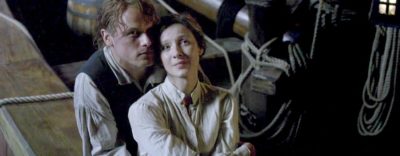
Diana Gabaldon’s Outlander series is an exemplary example of infusing mood into scenes: joy, fear, longing, betrayal, expectation, disappointment, and so on.
Evoking mood in fiction – Outlander by Diana Gabaldon
Use Descriptive Language to Induce Moods
While setting is most commonly used to induce moods, descriptive language is a potent tool and that decreases or amps up tension. In Dean Koontz’s psychological thriller The Face, a horrific storm lashes Los Angeles a few days before Christmas adding a delicious shiver of danger and tension. The weather is referred to in each scene, causes things to happen and creates an ominous, the ‘world-is-askew’ mood. For example, he writes, “In the witches’ cauldron of the sky, late-morning light brewed into a thick gloom more suitable to winter dusk.”
Mood is created on a word-by-word basis by choosing sensory details that stir emotions, but also by orchestrating pacing. Slow down for important moments, places readers need to savor. Pacing naturally speeds up when excitement is high, conflict is intense, action is nonstop. Short sentences and paragraphs communicate excitement, urgency, panic, anger, shock, and violence. Short sentences land a gut punch and demand readers keep zipping through the text.
While most stories, especially short stories, have an overarching atmosphere, the ambience or vibe of a story will change over time and change in intensity.
Mood is linked to tension and suspense and getting under your reader’s skin.
Use mood to foreshadow.
Remember that a vague or pallid setting will create vague and pallid emotions/reactions in your readers. – Jessica Morrell
Example as Mood as Backdrop
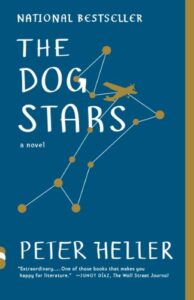
Peter Heller’s brilliant novel The Dog Stars takes place in a future where the world has been ravaged by a pandemic that’s killed off most of the population. If that wasn’t bad enough, the natural world is dying off too. He wrote it in 2012. I’m a sucker for a post-apocalyptic novel, even when they’re shockingly prescient. I cannot recommend enough this beautiful, compelling, heart-wrenching story that invaded my thoughts for days while reading it. This backdrop to the state of affairs the protagonist Hig exists in, is dropped in on page 6.
“In the beginning there was Fear. Not so much the flu by then, by then I walked, I talked. Not so much talked, but of sound body—and of mind, you be the judge. Two straight weeks of fever, three days 104 to105, I know it cooked my brains. Encephalitis or something else. Hot. Thoughts that once belonged, that felt at home with each other, were now discomfited, unsure. Depressed, like those shaggy Norwegian ponies that Russian professor moved to the Siberian Arctic I read about before. He was trying to recreate the Ice Age, a lot of grass and fauna and few people. Had he known what was coming he would have pursued another hobby. Half the ponies died, I think from heartbreak for their Scandinavian forests, half hung out at the research station and were fed grain and still died. That’s how my thoughts are sometimes. When I’m stressed. When something’s bothering me and won’t let go. They’re pretty good, I mean they function, but a lot of times they feel out of place, kinda sad, sometimes wondering if maybe they are supposed to be ten thousand miles from here in a place with a million square miles of cold Norwegian spruce. Sometimes I don’t trust my thoughts not to bolt for the brush. Probably not my brain, probably normal for where we’re at.”
“I don’t want to be confused: we are nine years out. The flu killed almost everybody, then the blood disease killed more. The ones who are left are mostly Not Nice, that is why we live here on the plain, why I patrol every day.”
Example of Mood Setting the Stage
“Stop that you’ll fall.”
A week’s worth of snow has compressed into ice, each day’s danger hidden beneath a nighttime dusting of powder. Every few yards my boots travel farther than my boots intended, and my stomach pitches, braced for a fall. Our progress is slow, and I wished I’d thought to bring Sophia on a sled instead.
Reluctantly, she opens her eyes, swivels her head owllike, away from the shops, to hide her face in her sleeve. I squeeze her gloved hand. She hates the birds that hang in the butcher’s window, their neck iridescent feathers cruelly at odds with the lifeless eyes they embellish.
I hate the birds too.
Adam says I’ve given the phobia to her, like a cold or a piece of unwanted jewelry.
“Where did she get it from them?” he said when I protested turning to an invisible crowd, as if the absence of answer proved his point. “Not me.”
Of course not. Adam doesn’t have weaknesses.
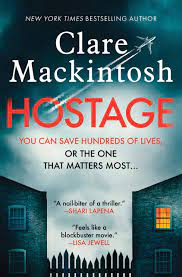
This is the opening salvo for Hostage written by Clare Mackintosh, a ‘locked room’ thriller. The locked room in this story is a London to Sydney flight. It feels like a thriller doesn’t it? Those creepy dead birds, dangerous snow, and the husband-wife conflict signal something bad is going to happen.
Keep writing, keep dreaming, have heart. Jessica
Jessica Page Morrell
Jessica Morrell is a top-tier developmental editor and a contributor to Chanticleer Reviews Media and to the Writer’s Digest magazine. She teaches Master Writing Craft Classes along with sessions at the Chanticleer Authors Conference that is held annually along with teaching at Chanticleer writing workshops that are held throughout the year.
Jessica Morrell’s Classes and Workshops at CAC22
June 23 – 26, 2022 at the Hotel Bellwether, Bellingham, Wash. In Real Life and Virtual!
Using Film Techniques for Fiction Writers– Camera angles, method acting for getting into a character’s pov, and creating subtext and tight dialogue
Your Brain on Writing
Captivating Co-Starsthat add depth to your work-in-progress
The First in a Series of Articles on Writing a Book Series
Writing a series of books and writing a novel are similar processes, though of course the series, as you may expect, is on a much grander scale.
A series is an excellent choice for a writer because you keep your readers! It’s always easier to maintain a connection with people who have already decided to read, not only your book, but a book in the same world!
Let’s begin by talking about different types of Book Series
Two Variations for Book Series
There are essentially two types of book series out there. One is the Finite Series, and the other is the Infinite Series.
Finite Series
These Series have a story arc that expands beyond one book, and each one relates directly to the one before or after it. Examples of this are N.K. Jemisin’s The Broken Earth Series or Jim Butcher’s The Dresden Files. Series can be as short as two books or as many as twenty-three, but the main thing is that the order they come in is highly recommended to best understand the plot.
This is a group of books set in a universe, but where each book can stand alone and be read in any order. Examples are Anne McCaffery’s Dragonriders of Pern or Terry Pratchett’s Discworld series. For the most part, these books will follow the same rules of the universe between volumes, just as a finite series would.
These also are called an anthologized series as I learned in a discussion about writing craft with Chanticleer Editorial Assistant Scott Taylor during our Roost book group meeting discussing Save the Cat! Writes a Novel. They happen often if someone just decides they enjoy continuing to write in an established world with established characters –David
Honorable Mention
Terry Brooks’ Shannara series is both finite and infinite! He has finite quartets and trilogies that all take place in an infinite series universe. You can read each finite mini-series in the universal infinite series in whatever order you want, and they all offer hints about the other books.
Did you know? Series don’t need to be italicized while writing them! Only book titles require it.
The Overlap
Obviously the key here is that both of these are series. A series will always have central themes that overlap across books, and what happens in one book will affect the world at large, even if the books can be read as stand alones. Even in an infinite series, characters will have cameos, such as the character of Death in Pratchett’s Discworld universe.
It’s recommended that in an infinite series each story has a strong, independent story to help it stand apart from the other books set in that universe, but even in a finite series, it’s important that each book avoids being too repetitive. The concern about repetition is important to keep in mind, though many successful series often rely heavily on repetition to help the reader orient themselves to a familiar landscape. For example, in The Dresden Files, almost every book follows this pattern:
Harry hears of a strange mystery that’s way beyond his ability to comprehend
Then he finds a simpler mystery, one he can manage, or so he thinks.
His team assembles slowly over the course of the book, Thomas the vampire, Murphy the cop, Michael the knight, and John the mobster.
The simple mystery turns out to be much bigger. Harry is defeated and ready to give up.
Suddenly Harry understands the bigger mystery by solving a key point in the smaller mystery.
Day is saved.
Hint about how the day wasn’t totally saved.
Paul Blackthorne as Harry Dresden holding Bob the Skull
Likewise, Terry Brooks often follows the character pattern of making sure there’s someone with the fabled Shannara bloodline, that person receives help from someone who is a bit of a nomad, a druid is introduced, and then we have a couple more magical characters who help out the heroes.
When you’re ready,did you know that Chanticleer offers editorial services?We do and have been doing so since 2011.
Our professional editors are top-notch and are experts in the Chicago Manual of Style. They have and are working for the top publishing houses (TOR, McMillian, Thomas Mercer, Penguin Random House, Simon Schuster, etc.).
If you would like more information, we invite you to email Kiffer or Sharon at KBrown@ChantiReviews.com or SAnderson@ChantiReviews.com for more information, testimonials, and fees.
We work with a small number of exclusive clients who want to collaborate with our team of top-editors on an on-going basis.Contact us today!
Chanticleer Editorial Services also offers writing craft sessions and masterclasses. Sign up to find out where, when, and how sessions being held.
A great way to get started is with our manuscript evaluation service, with more information availablehere.
And we do editorial consultations for $75. Learn morehere.
If you’re confident in your book, consider submitting it for a Editorial Book Reviewhereor to one of our Chanticleer International Awardshere.
Our 10th Anniversary Chanticleer Authors Conference (CAC22) will be June 23-26, 2022, where our 2021 CIBA winners will be announced. Space is limited and seats are already filling up, so sign up today! CAC22 and the CIBA Ceremonies will be hosted at the Hotel Bellwether in Beautiful Bellingham, Wash. Sign up and see the latest updates here!
Writer’s Toolbox
Thank you for reading this Chanticleer Writer’s Toolbox article.
The Somerset Awards: Understanding Literary Fiction
Ah yes, literary fiction, often thought of as the highest form of writing. If only people could define exactly what it means.
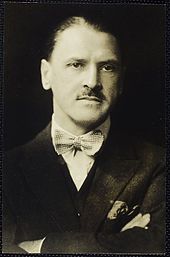
Here are a few of Somerset Maugham’s work that typify literary fiction:
Of Human Bondage
The Razor’s Edge
The Moon and Sixpence
And far too many to list here.
Let’s start with some writing tips from Somerset Maugham himself.
There are three rules for writing a novel. Unfortunately, no one knows what they are.
Every production of an artist should be the expression of an adventure of his soul.
I always find it more difficult to say the things I mean than the things I don’t.
The fact that a great many people believe something is no guarantee of its truth.
To acquire the habit of reading is to construct for yourself a refuge from almost all the miseries of life.
Impropriety is the soul of wit.
When I read a book I seem to read it with my eyes only, but now and then I come across a passage, perhaps only a phrase, which has a meaning for me, and it becomes part of me.
We do not write because we want to; we write because we have to.
I write only when inspiration strikes. Fortunately it strikes every morning at nine o’clock sharp.
If you can tell stories, create characters, devise incidents, and have sincerity and passion, it doesn’t matter a damn how you write.
What a start! We still need to figure out this Literary Fiction business though. Before we dive into that, if you want to read more about Somerset Maugham, consider looking out our previous spotlight here where we discuss him at length!
To read more about the time he wrote in, click here.
So What is Literary Fiction?
The easiest way to attempt to answer this question is to start with what Literary Fiction is being defined in opposition to. Literary Fiction is not Genre Fiction.
So what’s Genre Fiction?
Genre Fiction is written for people to enjoy it generally. It often follows a formula that uses conventional storytelling. The stories are meant to entertain, are plot driven, and they usually have a happy ending. As a result, there’s almost never a question of how to market genre fiction, making it easier to sell.
So, if we take the opposite of all those and apply them to literary fiction, what do we get?
It doesn’t follow a formula
Uses unconventional storytelling
Examines what it means to be human
It can be difficult to read
Character focused (not plot)
Endings vary or can even be uncertain
LIterary Fiction isn’t an exact science
That’s a tough sell! Of course, not all of these elements need to apply
Many literary fiction books are the kinds that stay with us for years after we read them. Chances are the longtime favorite that changed your life is a literary fiction book, or at least possesses some elements of it.
Here’s some contemporary Literary Fiction you may have heard of:
The term “literary fiction” is controversial and for good reason. As more “literary” writers venture into genre fiction, the lines of distinction have blurred. Sometimes, it’s not always clear. Perhaps, it is genre fiction that’s just pushing its own boundaries.
It’s clear that Literary Fiction is a complex genre, worthy of being written and read. We’re happy to say that we’ve done our fair share here at Chanticleer! Check it out below!
HARD CIDER By Barbara Stark-Nemon Grand Prize Winner in Somerset Awards
Abbie Rose Stone is a woman determined to follow her newly discovered dream of producing her own craft hard apple cider while navigating the ups and downs of family life with her grown sons and husband.
Abbie Rose knows how to deal with adversity, and dives headfirst into this new chapter of her life with energy and passion. She describes her early adulthood years of infertility struggles and the hardscrabble way she built her young family through invasive medical procedures, a surrogate attempt, and adoption barriers.
MARTHA By Maggie St. Claire First Place Winner in Somerset Awards
In the unique and compelling voice of an aging woman teetering on the edge of financial ruin, Maggie St. Claire’sdebut novel,Martha,takes the reader from affluent residential areas of Los Angeles to its urban streets of despair, shadowing a 71-year-old, retired bank teller as she comes to grips with the challenges and adversities that threaten her existence.
This is the story of Martha Moore, many years divorced, estranged from her only child, and living a lie, as she enters her golden years. The most important things in her life, outside her pride in her desirable Hancock Park bungalow, are her book club friends. She attends their meetings dressed in her finest, projecting what she hopes is the image of a well-educated, well-to-do, Los Angeles dowager. The three wealthy women who comprise the remainder of the group are her best, perhaps only friends, and sometimes that’s a stretch.
MOURNING DOVE By Claire Fullerton First Place Winner in Somerset Awards
Camille Crossan appears to be living an idyllic life in Claire Fullerton’s poignant, evocative novel,Mourning Dove. Living in a superbly appointed mansion in “magnolia-lined and manicured” Memphis during the 1960s and 1970s, Camille’s family life shimmers with Southern charm. Her mother, Posey, usually outfitted in a Lily Pulitzer shift, Pappagallo shoes, and a signature shade of pink lipstick, is a beauty with the wryest sense of humor and steel determination.
As a young girl, Camille, known as Millie, sees how those in her mother’s social orbit are captivated by her aura, how men are easily seduced by her flirtatious charm. Society is a game played by those who know its rules, and Posey means to win. Every time. She, however, isn’t even the charismatic one in the family – that’s Finley, Millie’s older brother, who brims with intelligence, startling good looks, and messianic magnetism. A peek beneath the shiny surface of gracious Southern living, however, reveals enormous cracks in the foundation of the Crossan family. One of the first things the adult Millie tells us about her brother is that he is dead. She takes the reader back, though, to their childhood and coming of age, a tumultuous journey that both binds and separates the siblings.
Judy Keeslar Santamaria’s skillfully crafted debut novel, Jetty Cat Palace Café, takes the reader from the sophisticated urban areas of Washington state to its remote cranberry coast, accompanying professor Morgen Marín on a life-altering quest.
Like a present-day recipient of a DNA test gone wrong, when 34-year old Morgen, celebrated pianist and music professor, leaves after visiting her elderly grandmother Eleanor, her mind is spinning. Eleanor, preparing for the inevitable, shared family history, documents, and longstanding questions, which blindsided her granddaughter.
JOEL EMMANUEL By J.P. Kenna First Place Winner in Somerset and Clue Awards
Set in the Pacific Northwest in the 1970s, Joel Emmanuel by JP Kenna rewards its readers with the story of a boy coming of age and how he understands the changes around him. Kenna’s style echoes the English novels of the 19th century.
Young Joel Emmanuel Webber, named for a Wobbly executed long ago in 1915, lives with his mother, Nance Raindance, in a cabin on the Skagit River near Seattle before it was a technopolis. Their world is antiquated even for the 1970s and defined by farming, fishing, and basics like a woodburning cookstove, kerosene lamps, and candles. Joel calls his mother by her given name, doesn’t know his father, and lives an open life free of school and, even occasionally, clothing. He is sensitive and easily succumbs to tears.
When you’re ready,did you know that Chanticleer offers editorial services?We do and have been doing so since 2011.
Our professional editors are top-notch and are experts in the Chicago Manual of Style. They have and are working for the top publishing houses (TOR, McMillian, Thomas Mercer, Penguin Random House, Simon Schuster, etc.).
If you would like more information, we invite you to email Kiffer or Sharon at KBrown@ChantiReviews.com or SAnderson@ChantiReviews.com for more information, testimonials, and fees.
We work with a small number of exclusive clients who want to collaborate with our team of top-editors on an on-going basis.Contact us today!
Chanticleer Editorial Services also offers writing craft sessions and masterclasses. Sign up to find out where, when, and how sessions being held.
A great way to get started is with our manuscript evaluation service, with more information availablehere.
And we do editorial consultations for $75. Learn more here.
If you’re confident in your book, consider submitting it for a Editorial Book Reviewhereor to one of our Chanticleer International Awardshere.
And remember! Our 10th Anniversary Chanticleer Authors Conference (CAC22) will be April 7-10, 2022, where our 2021 CIBA winners will be announced. Space is limited and seats are already filling up, so sign up today! CAC22 and the CIBA Ceremonies will be hosted at the Hotel Bellwether in Beautiful Bellingham, Wash. Sign up and see the latest updates here!
Writer’s Toolbox
Thank you for reading this Chanticleer Writer’s Toolbox article.
It might seem odd, but Franz Kafka and his friends reportedly sat around at bars reading excerpts of The Metamorphosis with tears of laughter streaming down their faces.
Franz Kafka (1883-1924)
While he might not seem like a natural pairing with Mark Twain, Kafka certainly had a sense of humor. We may not quite understand his early 1900s thought process that would cause him to need to stop in the middle of reading “The Trial” due to laughing so hard (read more from The Guardian here), but we definitely can still appreciate a healthy dose of humor.
Fun Fact: Franz Kafka’s writing was known to deal with modernism, existentialism, Surrealism, and is considered a precursor to magical realism. Despite his fame, he never finished a single novel (unless you count The Metamorphosis as a short novel).
The Mark Twain Awards, named after the famous satirist, are still a fairly new division of The Chanticleer Int’l Book Awards. You can see a full write up on Mark Twain’s relationship with Bellingham, WA here.
Do you have a book that features Humor, Satire, or Allegory? Submit it here before the end of November to be entered into the 2021 Mark Twain Book Awards!
Let’s do a quick breakdown on the three main categories of Mark Twain books.
Satire: The Dangerous Tool
Probably one of the most difficult genres to write in, Satire can have trouble with rubbing people the wrong way. One of the most commonly known pieces of satire is “A Modest Proposal” by Jonathan Swift, made ubiquitous by English courses teaching it for decades. You can read the full essay here.
Jonathan Swift is best known as the author of Gulliver’s Travels. Above, Gulliver is restrained by the Lilliputians
The essence of it is that Swift proposes eating Irish children instead of feeding them, as it will save more money for England in the long run, and cause less suffering for the kiddos in the long run. This obvious, garish suggestion highlights the ways in which England may as well be eating the children in a way that both shames those who have acted poorly, and serves as a call to action to offer better care to the poor.
Satire in literature is a type of social commentary. Writers use exaggeration, irony, and other devices to poke fun of a particular leader, a social custom or tradition, or any other prevalent social figure or practice that they want to comment on and call into question.
Contemporary writers have used satire to comment on everything from capitalism (like Brett Easton Ellis’s American Psycho, which uses extreme exaggerations of consumption, concern with social status, and masculine anger and violence to skewer American capitalism) to race (Paul Beatty’s The Sellout, for example, features a young black male protagonist in Southern California who ends up before the Supreme Court for trying to reinstate slavery).
As you can see, satire is a sharp tool that must be wielded carefully to avoid cutting yourself on accident. A good rule of thumb when writing satire to always aim at those who are in power. Trying to poke fun or ridicule people who are already disadvantaged or targeted in some way will often leave a bad taste in your audience’s mouth, and that’s the fastest way to have your book closed.
Here are some classic examples of Satire:
Matt Groening – The Simpsons, Futurama
David Sedaris – Naked, Me Talk Pretty One Day
Chuck Palahniuk – Fight Club
Douglas Adams – The Hitchhiker’s Guide to the Galaxy
Kurt Vonnegut – Slaughterhouse-Five
Evelyn Waugh – Brideshead Revisited
“Get outta my sky!”
Now let’s talk allegory.
Allegory: Not Just for Kids!
When you want to talk around something or use a stand in to describe it you might try allegory.
The word “allegory” comes from the Latin “allegoria,” meaning speaking to imply something else. An allegory is a simple story that represents a larger point about society or human nature, whose different characters may represent real-life figures. Sometimes, situations in the story may echo stories from history or modern-day life, without ever explicitly stating this connection.
Allegories are similar to metaphors in that both illustrate an idea by making a comparison to something else. However, allegories are complete stories with characters, while metaphors are brief figures of speech.
Note: We are not affiliated with MasterClass in any way, we simply believe in sharing our sources, and they do great work with genre definitions.
One popular example of allegory is Aesop’s Fables. As you may know, the fables tend to follow animals as they make decisions regarding moral dilemmas, and then face the consequences – whatever those may be. Of course, those moralistic fables directed at children always run the risk of sounding paternalistic. Here are some great examples of allegory:
Allegory examples
Chaucer’s The Canterbury Tales
George Orwell – Animal Farm, 1984
Frank Baum’s – The Wonderful Wizard of Oz
Arthur Miller – The Crucible
C.S. Lewis – The Chronicles of Narnia
Finally, we have Humor.
Humor Writing
The key to humor writing is simple: it should make you laugh! There are countless different takes on what makes something funny – just try watching someone explain humor to the android Data in Star Trek.
Data experiencing laughter for the first time as a gift from the omnipotent being Q
So rather than go on too long, we’ll share our Editorial Reviews of books that make us laugh!
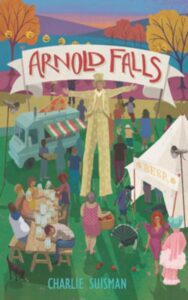
Arnold Falls By Charlie Suisman Grand Prize Winner in Mark Twain Awards
Charlie Suisman’s debut novel is a wonderful escape to a small fictional community in upstate New York. Here a melting pot of quirky residents brings Arnold Falls to life, a town with a unique history and charming inhabitants whose lives are intimately intertwined.
Settled in 1803 by the unscrupulous Hezekiah Hesper, the town for unknown reasons was named after Benedict Arnold. Adding to the oddities, the closest waterfall is twenty miles away. The area is known for sudden bursts of crab apple-size hail pelting the landscape without any scientific explanation. Hence the incentive for “Hail Pail Day,” a neighborly tradition surrounding the distribution of galvanized bucket head-coverings.
Lou Dischler delivers an intricately woven story about one well-meaning boy who tries to make sense of the crazy he’s been born into. Get ready for one belly laugh of an adventure in My Only Sunshine.
Welcome to the Louisiana low country, home of 9-year-old Charlie Boone, a kid growing up in 1962. Charlie, a most unreliable narrator, concerns himself with giant wingless wasps and biting red velvet ants. Combine his critter-concerns with the legend of the giant slugs, the story of his mother taken up by a hurricane, and the episode of the puddle he and his brother dug that grew into a pond, then turned into a lake, and we have one wildly imaginative ride well-worth taking.
A bitingly funny collection of life-stories from Christie Nicholls – stand-up comedian, actor, and writer – made all the more piquant by her repeated insistence that she has no short-term memory. Fortunately for us, her long-term reminiscences more than make up the deficit.
Nicholls has divided the book into four parts. In the first, “A Broad Abroad,” she recalls her experiences of traveling to far-flung places, beginning with a summer in Belém, Brazil as a child. She and her brother, for some reason nicknamed Beluga, slept in hammocks and played in a swimming pool, but much of her cherished time involved a German Shepherd named Ferdinand, from whom she learned dog talk. Raucous family bowling in Bologna, Italy, is contrasted with attendance at a staid English wedding. At a later period, Nicholls and her mother went to Sweden, where the budding comic tried her hand at stand-up in newly acquired Swedish, leading to an amusing mix-up of jargon.
Honey Beaulieu is going to get her man–no matter how many tries it takes. Determined to capture the elusive Boyce McNitt, Honey is off to Deadwood Gulch despite the warnings that the dangerous road is plagued by thieves and natives. But before she can pursue the $500 bounty, she needs to take care of issues at home, including finding a shop for a pregnant seamstress, sixteen-year-old Emma, a home for eight-year-old Myles Cavanaugh, his two younger sisters, and their pregnant mother. Between her do-gooding, denying her blossoming feelings for Deputy US Marshal Sam Lancaster, and a run-in with a herd of escaped pigs determined to destroy Fry Pan Gulch, Honey barely has time to get out of town before she gets trapped by winter. Once on the road, she comes face-to-face with Sean Chaney, the Badger Claw Kid, a bounty worth $400, and is intent on capturing him, as well. With a little otherworldly, albeit not entirely helpful, advice from her ghost guide Roscoe, Honey will have to take down two dangerous fugitives. But, when she runs into a fireball-throwing ghost bent on revenge, her real adventure begins.
Kiffer loves the undercurrent of a Shakespearean slant to Jacquie Rogers’ works. Sublime.
When a banged-up old bus pulls into his family’s driveway, Charlie has no idea that the rattling junker would be his ride to freedom. For years he’d been suffering under the thumb of a cold-hearted mother and a vindictive twin sister, while his father languished behind bars for tax fraud. The only family member with whom the young man held a loving bond was his grandfather, Opa Bill. Since Bill’s recent death, Charlie has been holding it together by listening to the music he and his grandfather loved. That musical thread weaves its way throughout the story as a sort of narrative jukebox.
Now Charlie’s respectable Oma Ruth has careened back into his life in a shocking new incarnation: a freewheeling hippie in kaftan and beads, unafraid to swap barbed words with her appalled daughter, nor to insist that Charlie accompany her on her road trip. He’s dead-set against it – he’d just found his dream job at a record store – and is disgusted when his mother dumps him on her mother without hesitation.
When you’re ready,did you know that Chanticleer offers editorial services?We do and have been doing so since 2011.
Our professional editors are top-notch and are experts in the Chicago Manual of Style. They have and are working for the top publishing houses (TOR, McMillian, Thomas Mercer, Penguin Random House, Simon Schuster, etc.).
If you would like more information, we invite you to email Kiffer or Sharon at KBrown@ChantiReviews.com or SAnderson@ChantiReviews.com for more information, testimonials, and fees.
We work with a small number of exclusive clients who want to collaborate with our team of top-editors on an on-going basis.Contact us today!
Chanticleer Editorial Services also offers writing craft sessions and masterclasses. Sign up to find out where, when, and how sessions being held.
A great way to get started is with our manuscript evaluation service, with more information availablehere.
And we do editorial consultations for $75. Learn morehere.
If you’re confident in your book, consider submitting it for a Editorial Book Reviewhereor to one of our Chanticleer International Awardshere.
Also remember! Our 10th Anniversary Chanticleer Authors Conference (CAC22) will be April 7-10, 2022, where our 2021 CIBA winners will be announced. Space is limited and seats are already filling up, so sign up today! CAC22 and the CIBA Ceremonies will be hosted at the Hotel Bellwether in Beautiful Bellingham, Wash. Sign up and see the latest updates here!
Featuring Cathy Ace and Robert Dugoni!
Writer’s Toolbox
Thank you for reading this Chanticleer Writer’s Toolbox article.
If you are partaking in NaNoWriMo, then you are over a third of the way done! Congratulations!
We hope that this article will provide prompting to spur you on to the finish line.
If you are on your time schedule, we hope this article will help keep you focused and spur you on!
The best fiction touches the deep layers in us. A writer achieves this effect by embedding dozens of techniques into his or her story. — Jessica P. Morrell
Dramatic Question
Compelling fiction is based on a single, powerful question that must be answered by the story climax. This question will be dramatized chiefly via action in a series of events or scenes.
This scene from Miss Fisher’s Mysteries could be powered by several Dramatic Questions
For example, if you are writing a romance, the question always involves whether the couple will resolve their differences and declare their love. Then in a mystery the dramatic question might be will Detective Smith find the serial killer in time to prevent another senseless death? In The Old Man and Sea, the dramatic question is will Santiago catch the big fish and thus restore his pride and reputation?
Consider the following:
What is the dramatic question in Harry Potter and the Sorcerer’s Stone?
What is the dramatic question in Stephanie Myers’ Twilight Saga?
Understanding the dramatic question in other writer’s work can better help you approach your novel. To make it the best we can, let’s turn to world building.
An Intimate, Simmering World
An intimate world isn’t created by merely piling on details. It means your story world has the resonance of childhood memories, the vividness of a dream, and the power of a movie. An intimate, simmering world is filled in with shadows and corners and dogs and ice cubes and the sounds and smells of a dryer humming on wash day and a car blaring past, with pop music shaking the windows. These details lend it authority, potency, and a palpable physical existence.
Diana Gabaldon’s The Outlander Series simmering details make this time-travel, fantasy, horror, science fiction extremely believable and immersive fiction.
Outlander – Diana Gabaldon’s details make for immersive fiction
An intimate story takes us to a specific place and coaxes us to remain there. An intimate story is lifelike and feels as real and complicated as the world the reader inhabits. When he finishes the final pages, and leaves the story world, he should feel the satisfaction of the ending, but also a huge sense of loss. Like a friend has moved to another town just when the friendship had reached a level of closeness and trust. — Jessica P. Morrell
Characters Built from Dominant Traits
Create main characters with dominant and unforgettable traits as a foundation of personality. These traits will be showcased in the story events, will help him achieve or fail at goals, and will make the story person consistent. For example, Sherlock Holmes’ dominant traits are that he is analytical, Bohemian, opinionated and intelligent. These traits are showcased in every story he appears in along with secondary and contrasting traits. When the character first appears in the first scene, he arrives in the story with his dominant traits intact.
Henry Cavill as the Witcher from Andrzej Sapkowski’s series of the same title
Who can forget Henry Cavil’s portrayal of Geralt of Rivia? He enters the scene as a hardened warrior with an iron code of honor. As the series progresses, he becomes softer and allows a few friends to become closer to him, taking responsibility for individuals’ happiness, not just their safety. Even as he grows, his core character elements remain unchanged. The interiority of a character is often one of those elements.
Emotional Need & Significance
The protagonists and main characters are people with baggage and emotional needs stemming from their pasts. These needs, coupled with motivation cause characters to act as they do.
For example, in Silence of the Lambs Clarisse Starling is propelled by childhood traumas to both succeed and heal the wounds caused by the death of her father. Likewise, Robert Dugoni’s Tracy Crosswhite is searching for her sister’s murderer, and Craig Johnson’s Sheriff Walt Longmire is trying to find out who killed his wife. That’s a lot of character baggage.
Motivation Entwined with Backstory
Motivation, the why? of fiction, is at the heart of every scene, fueling your character’s desires and driving him to accomplish goals. This provides a solid foundation for the often complicated reasons for your character’s behaviors choices, actions, and blunders. Motivating factors provide trajectories for character development, as a character’s past inevitably intersects with his present. Your character’s motivations must be in sync with their core personality traits and realistically linked to goals so that readers can take on these goals as their own.
Desire to drive your NaNoWriMo project
Desire is the lifeblood of fictional characters. Not only do your characters want something, but they also must want something badly. You can bestow on your character flaming red hair, an endearing, crooked grin and a penchant for chocolate and noir movies, but if she doesn’t want something badly, she’s merely a prop in your story, not a driving force. But if she wants to win the Miss Florida contest, take over her boss’ job, or become the first female shortstop for the Atlanta Braves, then you’ve got a character who will make things happen and a story that will be propelled by desire.
The Ring from Lord of the Rings is a perfect example of a symbol of desire on so many different levels.
Frodo and The Ring – LOTR by J.R.R. Tolkein
Threat
Fiction is based on a series of threatening changes inflicted on the protagonist. In many stories, these threats force him or her to change or act in ways he or she needs to change or act. Often too, what the protagonist fears most is what is showcased in a novel or short story. It can be fear of losing his family, job, or health with a dreaded outcome. Fear of losing to a threat or threats provide interest, action, and conflict.
“Fear is the Mind Killer” – Rachel Ferguson as The Lady Jessica in the 2021 Dune often repeats this litany against fear
Inner Conflict
A fictional character doesn’t arrive at easy decisions or choices. Instead, they are burdened by difficult or impossible choices, particularly moral choices, that often make them doubt and question their actions. Inner conflict works in tandem with outer conflict – a physical obstacle, villain or antagonist–to make the story more involving, dramatic, and events more meaningful.
Causality
Events in fiction are never random or unconnected. They are always linked by causality with one event causing more events later in the story, which in turn causes complications, which cause more events, which cause bad decisions, etc. Visit our blog post on The Inciting Incident to learn more!
The inciting incident of the Wizard of Oz
Complications
A story builds and deepens by adding complications, twists, reversals, and surprises that add tension and forward motion. Plots don’t follow a straight path. Instead, there are zigzags, dead ends, and sidetracks. Complications create obstacles and conflict, cause decisions to be made, paths to be chosen.
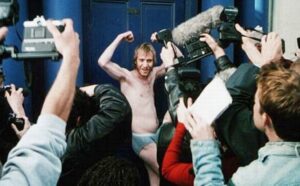
My favorite complication is one from Notting Hill when Spike is standing outside in his underwear strutting around with the paparazzi going wild for a peek at Anna Scott. How could Anna and William ever expect that complication? — Kiffer Brown
A complication from Notting Hill
Midpoint Reversal | A NaNoWriMo Must
The middle of a novel comprises more than half its length. At about the midpoint of most novels, a dramatic reversal occurs. The hunter becomes the hunted; a second murder occurs proving the detective has been wrong in his suspicions; a former lover arrives in town to complicate a budding romance. In Jessica Brody’s Save the Cat! Writes a Novel, she describes the midpoint as either the false victory or the false defeat. No matter what happens, the hero is in for a surprise! This reversal keeps the middle from bogging down and becoming predictable and also breathes new life and often a new direction into the story.
Every story needs an ending that satisfies the reader while concluding the plot. A satisfying ending does not have to be “happy” or victorious or riding off into the sunset. The final scenes, when the tensions are red hot and the character has reached a point of no return, must deliver drama, emotion, yet a logical conclusion. This is not to suggest that every plot ends with a shoot-out or physical confrontation. Some endings are quieter, more thoughtful. Some endings are ambivalent, some a dramatic or a violent clash of wills. However, there is always a sense that all the forces that have been operating in your story world have finally come to a head and the protagonist’s world is forever changed.
We are cheering you on to the NaNoWriMo Finish Line! You can do it!
Jessica Page Morrell
Keep writing, keep dreaming, have heart. Jessica
Jessica Morrell is a top-tier developmental editor and a contributor to Chanticleer Reviews Media and to the Writer’s Digest magazine. She teaches Master Writing Craft Classes at the Chanticleer Authors Conference that is held annually along with teaching at Chanticleer writing workshops that are held throughout the year.
Kiffer Brown
Keep creating magic! Kiffer
Kathryn (Kiffer) Brown is CEO and co-founder of Chanticleer Reviews and Chanticleer Int’l Book Awards (The CIBAs) thatDiscover Today’s Best Books. She founded Chanticleer Reviews in 2010 to help authors to unlock the secrets of successful publishing and to enhance book discoverability. She is also a scout for select literary agencies, publishing houses, and entertainment producers.
When you’re ready, did you know that Chanticleer offers editorial services? We do and have been doing so since 2011.
Our professional editors are top-notch and are experts in the Chicago Manual of Style. They have and are working for the top publishing houses (TOR, McMillian, Thomas Mercer, Penguin Random House, Simon Schuster, etc.).
If you would like more information, we invite you to email Kiffer or Sharon at KBrown@ChantiReviews.com or SAnderson@ChantiReviews.com for more information, testimonials, and fees.
We work with a small number of exclusive clients who want to collaborate with our team of top editors on an on-going basis. Contact us today!
Chanticleer Editorial Services also offers writing craft sessions and masterclasses. Sign up to find out where, when, and how sessions being held.
A great way to get started is with our manuscript evaluation service, with more information available here.
And we do editorial consultations for $75. Learn more here.
If you’re confident in your book, consider submitting it for a Editorial Book Review here or to one of our Chanticleer International Awards here.
Our 10th Anniversary Chanticleer Authors Conference (CAC22) will be April 7-10, 2022, where our 2021 CIBA winners will be announced. Space is limited and seats are already filling up, so sign up today! CAC22 and the CIBA Ceremonies will be hosted at the Hotel Bellwether in Beautiful Bellingham, Wash. Sign up and see the latest updates here!
Writer’s Toolbox
Thank you for reading this Chanticleer Writer’s Toolbox article.
Chanticleer’s new Division for 20th Century Wartime Fiction: The Hemingway Awards
The US fought five wars during the 1900s: World War I, World War II, the Korean War, the Vietnam War, and the Gulf War.
Many of us have deep connections to these wars built into our family trees and history of military service. It’s no surprise that there are so many stories that delve into wartime fiction that we needed to create a new category for it this last year.
Why Hemingway?
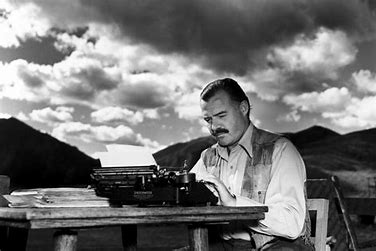
Young Hemingway
Ernest Hemingway was one of the defining voices of his generation, especially in relation to The Great War where so many had to reconcile their lives as they were with the horrors of war they had experienced.
“When you go to war as a boy you have a great illusion of immortality. Other people get killed; not you… Then when you are badly wounded the first time you lose that illusion and you know it can happen to you.” (read more here)
While it’s well-known that Hemingway served in WWI and was honored for his bravery by the Italian government as an American Red Cross worker, it is less known that when Hemingway returned to post-war Europe he became a respected war correspondent. His grandson, Seán Hemingway describes the author’s reporting as “written in a new style of reporting that told the public about every facet of the war, especially, and most important, its effects on the common man, woman, and child.”
For those of you who know little about one of the most prolific war writers on the 20th century, he’s well worth a read, and shockingly modern in his thought. He was an early anti-fascist, being one of the first to decry Benito Mussolini.
For all that Hemingway can dazzle and impress, there is another view of him.
He was selfish and egomaniacal, a faithless husband and a treacherous friend. He drank too much, he brawled and bragged too much, he was a thankless son and, at times, a negligent father. He was also a great writer.
Hemingway’s writing is reported to be the thing that he held above all else. More than his wives or the children he had, his writing and author platform always came first.
Beyond that, his criticism of other works is scalding and harsh, beyond what anyone would reasonably consider helpful. This flies in direct contrast to a quote from LitHub where Hemingway opens up about the experience of being a new author, trying to break into the literary world:
“The rejection slip is very hard to take on an empty stomach,” Hemingway later told a friend. “There were times when I’d sit at that old wooden table and read one of those cold slips that had been attached to a story I had loved and worked on very hard and believed in, and I couldn’t help crying.”
We all know that he was published, many times:
The Torrents of Spring (1926)
The Sun Also Rises (1926)
A Farewell to Arms (1929)
Death in the Afternoon (1932)
Green Hills of Africa (1935)
To Have and Have Not (1937)
For Whom the Bell Tolls (1940)
Across the River and into the Trees (1950)
The Old Man and the Sea (1952)
A Moveable Feast (1964)
Now we’d like to dive into some of the best books we’ve reviewed at Chanticleer with a focus on Wartime Fiction in the 20th Century.
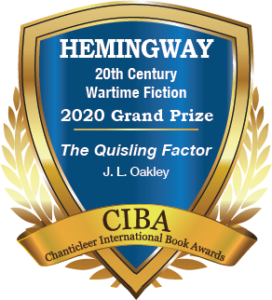
The QUISLING FACTOR By J. L. Oakley Grand Prize Winner in Hemingway Awards
During World War II “quisling” became a byword for a particular type of traitor, one who not only betrays their own country but also actively collaborates with the invaders. The origin of the term was taken from an actual person, a Norwegian named Vidkun Quisling, who didn’t merely cooperate with the Nazis but actually headed a collaborationist regime in his own country.
The Quisling Factor takes place in the immediate post-war period, as the Nuremberg Trials are gearing up in Germany. Norway is conducting its own post-war legal purge of collaborators at all levels of government.
HEART of the FEW By Jon Duncan First Place Winner in Hemingway Awards
It is said that all is fair in love and war. In this wartime historical romance, young love is put to the ultimate test, and the love of family is strained to the breaking point. During World War II, the occupants of a ravaged England understand that all can be lost in a moment’s hesitation or in a hasty decision. Here, love is under attack by enemies seen and unseen. It’s the uncommon courage of many and theHeart of the Fewthat can hope to turn the fate of England during these dark days.
Passion drives both sides in this wartime mystery/thriller about people who are determined to make a difference in the outcome of World War II. Like all powerful forces, passion has two sides. It’s a wondrous and beautiful emotion when applied to good purpose, but it becomes horrific and deadly when twisted and corrupt. The question author Jon Duncan asks amidst all the turmoil, treachery, death and desolation of war is: can love find a way?
The ACK-ACK GIRL (Love and War #1) By Chris Karlsen
Chris Karlsen’s new work,The Ack-Ack Girl, is the first in her World War II series, Love and War, and serves up plenty of story on both sides of that equation in its portrayal of Ava Armstrong, the “Ack-Ack” girl of the title. And what a story it is!
Bombs are dropping on London in the heat and fire of the infamous Blitz. Shells are falling, as are the buildings that surround them, while fires spring up in the wake of the bombs that never seem to end. But when they finally stop, Ava and her friends are determined to get their loved ones somewhere safe and to find a way to serve up some revenge on the Germans.
WHERE EAGLES NEVER FLEW By Helena P. Schrader First Place Winner in Hemingway Awards
The Royal Air Force struggles for control of the British sky, facing down the daunting numbers of Luftwaffe aircraft across the English Channel. At the forefront of these battles, the Royal Air Force’s young pilots fight to survive under mounting pressure and deadly German Messerschmitts.
Where Eagles Never Flew follows the Battle of Britain as squadrons of the RAF must make do with undertrained pilots and little sleep if they want any chance at repelling the Luftwaffe bombing raids that become more and more frequent as the battle rages on. Operations rooms plot and direct the paths of aircraft, with members of the WAAF—Women’s Auxiliary Air Force—fielding waves of communications to and from the skies. Robert “Robin” Priestman flies on the front lines, dedicated to the fight despite weeks of unending tension and the great challenge of keeping his squadron awake and alive despite sortie after sortie.
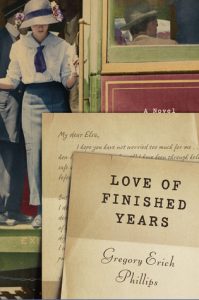
An immigrant’s journey, a forbidden love, a war to end all wars collide on the pages of a beautifully written historical fiction, Love of Finished Years by Gregory Erich Phillips.
At twelve years of age, Elsa Schuller carries no expectations when she reaches Ellis Island in 1905. In fact, she has no idea why her father insists on leaving Germany for this supposed Land of Opportunity. Riddled with nothing less than challenges and hardship working in the sweatshops in lower Manhattan, Elsa’s only ray of hope is learning how to read and write English.
When you’re ready,did you know that Chanticleer offers editorial services?We do and have been doing so since 2011.
Our professional editors are top-notch and are experts in the Chicago Manual of Style. They have and are working for the top publishing houses (TOR, McMillian, Thomas Mercer, Penguin Random House, Simon Schuster, etc.).
If you would like more information, we invite you to email Kiffer or Sharon at KBrown@ChantiReviews.com or SAnderson@ChantiReviews.com for more information, testimonials, and fees.
We work with a small number of exclusive clients who want to collaborate with our team of top-editors on an on-going basis.Contact us today!
Chanticleer Editorial Services also offers writing craft sessions and masterclasses. Sign up to find out where, when, and how sessions being held.
A great way to get started is with our manuscript evaluation service, with more information availablehere.
And we do editorial consultations for $75. Learn more here.
If you’re confident in your book, consider submitting it for a Editorial Book Reviewhereor to one of our Chanticleer International Awardshere.
And remember! Our 10th Anniversary Chanticleer Authors Conference (CAC22) will be April 7-10, 2022, where our 2021 CIBA winners will be announced. Space is limited and seats are already filling up, so sign up today! CAC22 and the CIBA Ceremonies will be hosted at the Hotel Bellwether in Beautiful Bellingham, Wash. Sign up and see the latest updates here!
Writer’s Toolbox
Thank you for reading this Chanticleer Spotlight article.
You’re handing your precious book over to a beta reader to see if it’s worthwhile, ready, perhaps, for a Chanticleer Book Review or to be entered into the Chanticleer Int’l Book Awards. They look at you over the cover that you worked so many long hours on with your designer and say with all the authority of fate: “I just don’t think your main character is very likeable,” they say. “Can’t you make them more likeable? All characters should be likeable.”
Are your grumpy readers right?
Writer, they are wrong
You can of course have an unlikeable main character! If they were only willing to read for ten minutes though, you may have a more difficult problem on your hands than whether or not your character is someone they want to be friends with. Some of the most compelling characters in literature aren’t someone I’d want to share a hotel room with anytime soon.
We can sleep in separate bedrooms. Really, it’s okay.
The key isn’t to worry about whether or not your protagonist is “likeable” (which is a tricky word to define), but about whether or not they are interesting.
Are the actions they take moving the plot forward while engaging the reader at the same time? Those two things must be true of anything that happens in your story.
Manuscript Overviews and Editing
Now, if the majority of your readers are coming back to you and letting you know these early drafts aren’t working, we highly recommend a Manuscript Overview.A manuscript overview (MOV) is a broad overview of your manuscript – what’s working and what isn’t from all aspects of your story: structure, plot, pacing, character development, dialogue, etc. We are here to offer our guidance on what you need next. Save time and money by honing your work before you begin the editorial process.
Here, we’ll go through a few basic checks to make sure that your character is compelling.
On Writing Compelling Characters
There are a few questions you’ll want to ask to see if your complex character is someone who will grab your reader’s attention.
What is the Status Quo your character inhabits?
What is your character’s Desire?
How does the Conflict impede the character’s Desire?
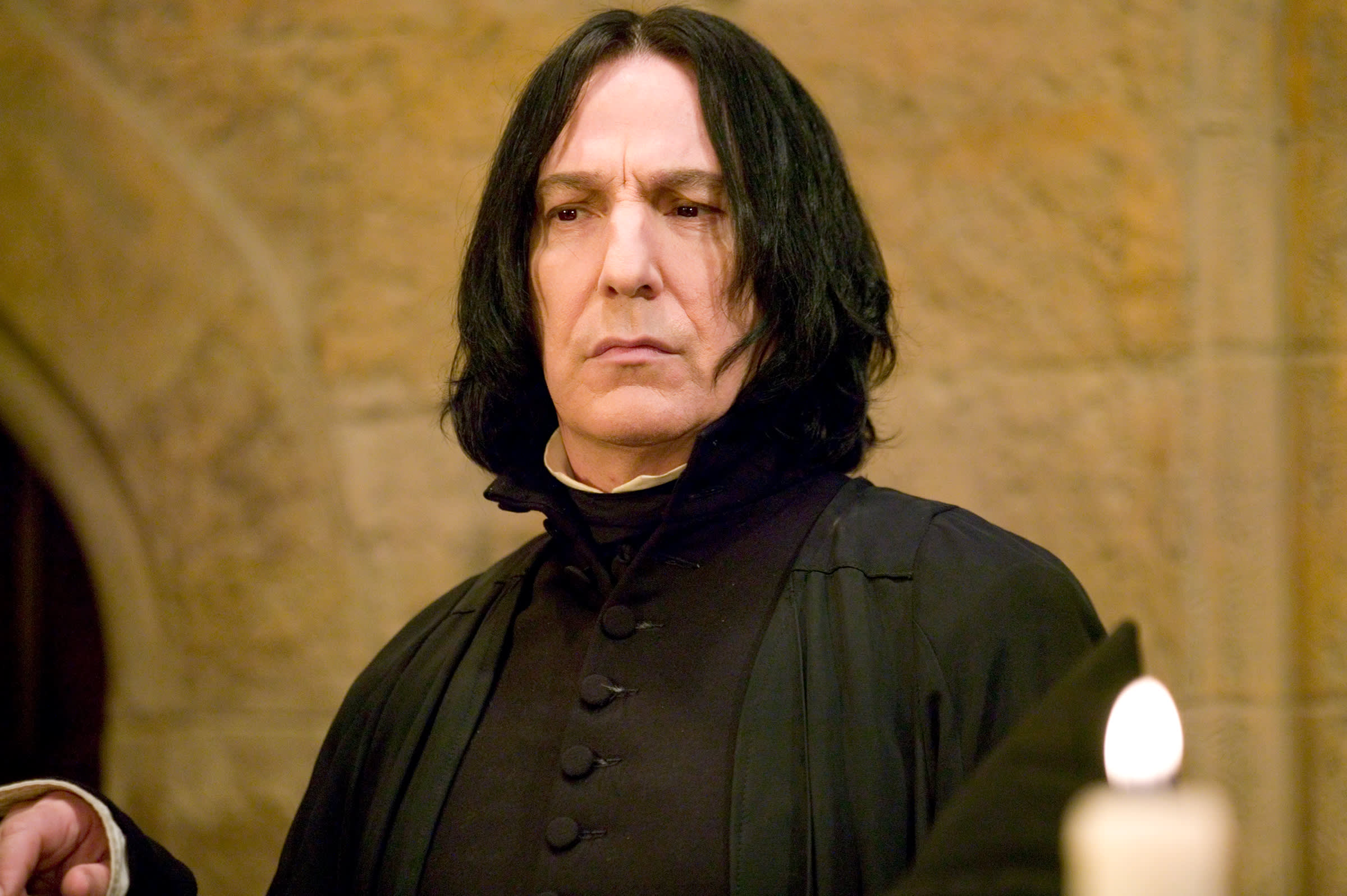
Speaking of Secondary Characters, Severus Snape, Professor of Potions from the Harry Potter series is a prime example of uncompelling compelling character.
Severus Snape
Status Quo
This is the classic way you engage readers with your story. The story is introduced, and something happens to break the status quo. One story where this jumps to mind is Neal Stephenson’s Seveneves. With cannibalism and the end of the world, there’s no lack of unlikeable characters in this book, but all the characters rivet your attention.
Seveneves begins with the moon blowing up. Well, more accurately, with it being split into four pieces. Up until the catalyst (the breaking of the status quo), the four chunks of the moon are a point of fascination, friendly enough to have one chunk named “The Bean.” Then the status quo changes when one of the moon chunks hits another and they start to fragment even more. This gives all the characters a goal to work for: Save the Human Race. Having a strong focus for your characters will help readers empathize with them and want to know what’s happening.
Our favorite editor Jessica Morrell has an excellent article detailing even more ways to stir up trouble for your characters here.
Character Desire
Similar to the breaking of the status quo, your characters will all want something different out of the world you’ve written them in. Of course, like the breaking of the status quo, this problem won’t be easy for them to solve.
Tom Ellis as Lucifer from Netflix
There are two common methods of frustrating your character’s ability to achieve their desire. The first is simply to make it difficult to do. Anything that takes a lot of work and will make them struggle. The other excellent choice is to have them try to solve the wrong thing. So often characters misunderstand what will make them happy or they struggle to find the correct solution to their problem. By having them do the wrong thing, the reader will be able to enjoy a much more interesting story than an unlikeable person succeeding at everything they do and never growing or developing.
Cats
Who doesn’t love cats? We love cats at Chanticleer, that’s for sure!
The newest additions to the Chanticleer family: Tiefen and Biscuit at 15-weeks-old
Now the connection between cats and what to do with your unlikeable character might not be immediately clear, and it might sometimes be a metaphor rather than an actual cat. The tried and true advice is you have a character who might be a little rough around the edges save a cat early on in the story. This shows that, despite their flaws, they do care about the world around them, and they will help a creature in need. Of course, this doesn’t have to be a literal cat, but it’s something sweet the character chooses to do without being pressured.
For those of you in The Roost, Chanticleer’s online community, you know that we have been reading SAVE THE CAT, WRITES a NOVEL by Jessica Brody (based on the screenwriting books by Blake Snyder) in our Writing Craft Book Group. There is even a reading guide by Chanticleer’s David Beaumier uploaded to the activity feed.
The opposite can happen too! In Lower Decks, the irreverent Star Trek cartoon that’s currently playing on Paramount+, Beckett Mariner kills a holographic character to establish herself as the villain in a fantasy program she designed.
Beckett Mariner as Vindicta in “Crisis Point” from Star Trek Lower Decks
It’s fairly easy to flip through the first pages of your book to see if there’s a cat who your narrator can save in the early pages of your work, and then see if you can find a few beta readers to poll on their feelings.
To consider more of the timing and development of plot in relation to your characters, review this article here.
“There’s no such thing as writer’s block or plotter’s block. There’s only perfectionist’s block.” Jessica Brody
Go forth and write!
When you’re ready,did you know that Chanticleer offers editorial services?We do and have been doing so since 2011.
Our professional editors are top-notch and are experts in the Chicago Manual of Style. They have and are working for the top publishing houses (TOR, McMillian, Thomas Mercer, Penguin Random House, Simon Schuster, etc.).
If you would like more information, we invite you to email Kiffer or Sharon at KBrown@ChantiReviews.com or SAnderson@ChantiReviews.com for more information, testimonials, and fees.
We work with a small number of exclusive clients who want to collaborate with our team of top-editors on an on-going basis.Contact us today!
Chanticleer Editorial Services also offers writing craft sessions and masterclasses. Sign up to find out where, when, and how sessions being held.
A great way to get started is with our manuscript evaluation service, with more information availablehere.
And we do editorial consultations for $75. Learn morehere.
If you’re confident in your book, consider submitting it for a Editorial Book Reviewhereor to one of our Chanticleer International Awardshere.
Also remember! Our 10th Anniversary Chanticleer Authors Conference (CAC22) will be April 7-10, 2022, where our 2021 CIBA winners will be announced. Space is limited and seats are already filling up, so sign up today! CAC22 and the CIBA Ceremonies will be hosted at the Hotel Bellwether in Beautiful Bellingham, Wash. Sign up and see the latest updates here!
Writer’s Toolbox
Thank you for reading this Chanticleer Writer’s Toolbox article.