Tag: Writing Protagonists

  • Worthy Protagonists – Some Thoughts from the Editing Desk of Jessica Morrell – A Chanticleer Writer’s Toolbox Post

    Main Character Attributes

    No matter your writing level, your story needs a kickass main character. Now, I don’t mean you need a brawler, a bully, or beast to headline your story–instead, you need someone who readers have never met before. An unforgettable someone who fascinates and captivates.  Someone who readers can care about, empathize with.

    A story person who can carry the weight of your storyline.

    Examples:  Katniss of Hunger Games, Kirsten of Station Eleven, Jay Gatsby in the Great Gatsby, Celie in the Color Purple, Poirot in the Hercule Poirot  series, Arsene Lupin of the Lupin, Gentleman-Burglar series by Maurice Leblanc, Harry Potter of the Harry Potter series.

    You will notice that most of these protagonists can carry the weight of a series. Readers want to spend time with them.

    Hercule Poirot of Agatha Christie’s series

    Create a worthy protagonist: 

    A fictional person who is about to face some of the most interesting events and hardest challenges of his or her life. Elizabeth Bennet of Pride and Prejudice is a good example.

    A protagonist who has skin in the game. Elizabeth’s situation–living with her family because she has no means of support–means she is in an inescapable position.

    A character you can pile on troubles and miseries and he or she won’t topple. Well, maybe topple, but then is capable of rising again to face the challenges of the story events. This means your protagonist can stand up to his or her opposition, enemies, and travails, however difficult.

    Think about the character Kirsten Raymonde in Station Eleven by Emily St. John Mandel. Kirsten is strong, observant, and skilled in protecting herself. She struggles with the violence of the new world and the fact that she has killed other people to survive. She believes in the power of art to make her new brutal life worth living and longs to better understand the world left behind.

    The protagonist, Kirsten Raymonde, of Station Eleven by Emily St. John Mandel

    A character with realistic and possibly relatable flaws. In Pride and Prejudice Lizzie Bennet possesses a sharp tongue that matches her quick wit, but she’s also prone to jump to conclusions {prejudice} and might be prouder than might be good for her.

    A character who is complicated and complex, which in turn leads to inner conflict. This means protagonist battles his/her circumstances hindered by his or her personality, nature, and circumstances. 

    Use characters with significant histories {backstory} that cast a shadow onto the present. Typically this means past traumas or troubles that somehow mess with his/her ability to face the story conflict and hardships. In Pride and Prejudice Elizabeth Bennet’s family is dysfunctional, in that the father is uninvolved and distant, their mother is an ambitious busybody, and her younger sisters will chase any man in a uniform. Which is going to lead to a scandal that the family might not recover from.

    Lizzie’s older sister Jane is typical of a woman of her times–Regency England–who seems to accept society’s norms and has a sweet disposition. Oh, and low expectations. Lizzie, on the other hand, is different from her sisters–a reader, a dreamer and yet a realistic type because she’s aware of her family’s flaws and disapproves of her father. But importantly, she’s a woman who will not marry unless her beloved is a perfect match.

    Smiling in spite of being subject to England’s Inheritance Laws during the Regency Era.- which means they will not inherit land or the family home. Husbands will be required.

    But the ultimate backdrop for this story comes from England’s inheritance laws. The family’s five daughters unable to inherit their family estate because they’re female, which creates a threat that hangs over the story. This is an excellent example of the Regency English era.

    All stories need an overarching threat. Think worst-case scenario.

    Fiction typically, but not always, is told from the protagonist’s viewpoint. The pov character is the reader’s entrée into the story world, the lens we view the story through. The prideful Lizzie provides access into society’s norms and expectations for females. Thus, she serves as a reflection of the story’s themes and premise. {It is a truth universally acknowledged, that a single man in possession of good fortune, must also be in want of a wife.}

    If Pride and Prejudice was told from elder sister Jane’s or Lydia’s viewpoint it would be a far different tale.

    Less complex and involving, since Jane isn’t exactly a firecracker and 15-year-old Lydia’s agenda is all about romance with a dashing soldier, Mr. Wickham. No matter that his agenda is ungentlemanly at best. Then there’s the matriarch, Mrs. Bennet,  who is well aware of the unfairness of inheritance laws and is determined her daughters will be married because that’s all the security they can hope for. While Mrs. Bennet is realistic, it’s doubtful she’d provide an honest perspective.

    Early on in your story development, consider thinking about or perhaps outlining what the narrative would look like from your other character’s perspectives. You may gain an interesting slant to your story line. Kiffer

    Keep writing, keep dreaming, have heart. Jessica

    CAC 22 held on  June 23 – 26, 2022! Register Today!

    Seating is Limited. The  esteemed WRITER Magazine (founded in 1887)  has repeatedly recognized the Chanticleer Authors Conference as one of the best conferences to attend and participate in for North America.

    Join us for our 10th annual conference and discover why!
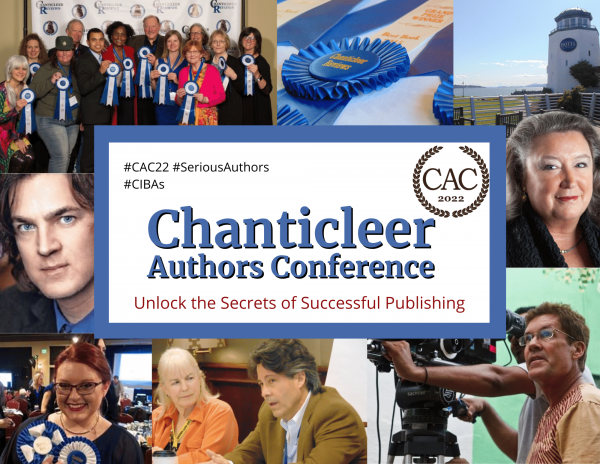
    Various pictures of people at CAC, though Jessica Morrell is not pictured.


    Thank you for joining us! 

    Writer’s Toolbox

    Thank you for reading this Chanticleer The Business of Writing article.

  • WILL YOUR STORY IDEA WORK? Questions to Ask Yourself – from the Editor’s Desk of Jessica Morrell – a Chanticleer Writers Toolbox article.

    WILL YOUR STORY IDEA WORK? Questions to Ask Yourself – from the Editor’s Desk of Jessica Morrell – a Chanticleer Writers Toolbox article.

    Story ideas often come to writers as a fleeting spark of an idea or feeling. Maybe it comes from meeting an interesting stranger. Maybe it comes from a childhood memory or looking back at a life-altering trip. Or perhaps you’re trying to rewrite a difficult situation you’ve always wished you’d handled better. Maybe you spot a person on the street who reminds you of someone from your past. Maybe that person broke your heart.  Or bullied you when you were a kid. Or she/he is the one who got away.

    Perhaps you have no idea where your story idea came from.

    Sometimes a story comes from asking what if. What if dad never left us? What if an adult with a family runs away from home?  What if I never met ___? What if a corpse is discovered missing its fingerprints?  What if someone refused to keep family secrets?

    All these ideas have potential….BUT ideas are the easy part of writing.

    A spark doesn’t always ignite into a flame. A spark doesn’t always equal a plot.

    So you need tools and criteria to judge your ideas. Visual artists have a great advantage over writers because an artist can place his painting in front of a mirror. The mirrored image will be so distinct that the artist will see it anew. Writers, alas, can’t use the mirror trick.

    Your friends or critique group can help you discern weak story concepts versus potent story concepts. But over time you’ll need to find ways to judge your own work.

    With that in mind, ask yourself these questions:

    • Does your idea foment or riot within you?
    • Do your main characters get your heart pumping?
    • Demand to be heard?  Demand to be shaped into a tale?
    • Can you ‘see’ the story in a series of vivid scenes?
    • Can you boil down the story into a few vivid sentences?
    • Can you ‘hear’ the main voice of the story already? Does the voice come naturally or easily as if from some untapped part of you?
    • Does a major twist come to mind?
    • Can you imagine the ending?
    • Can you plot the causality–as in one scene leads to the next, then leads to the next.

    Keep asking yourself questions about what comes next or the protagonist’s core traits or how you can complicate things. Perhaps a false accusation or betrayal might help shape the story. Perhaps a lie or secret lies at the heart of things. And what about the themes?

    • Can you offer fresh insights about human nature?
    • Create characters your reader has never met or imagined, but always wanted to?
    When we learn that Edward the vampire sparkles in the sunlight in “The Twilight Saga” — a new way of imaging vampires…

     If your characters don’t feel, neither will your readers because characters are revealed by their emotions.  And if emotions don’t lead to further actions, then part of fictional chain is missing.

    Character first. Plot is people. 

    (an encore, but worth repeating)

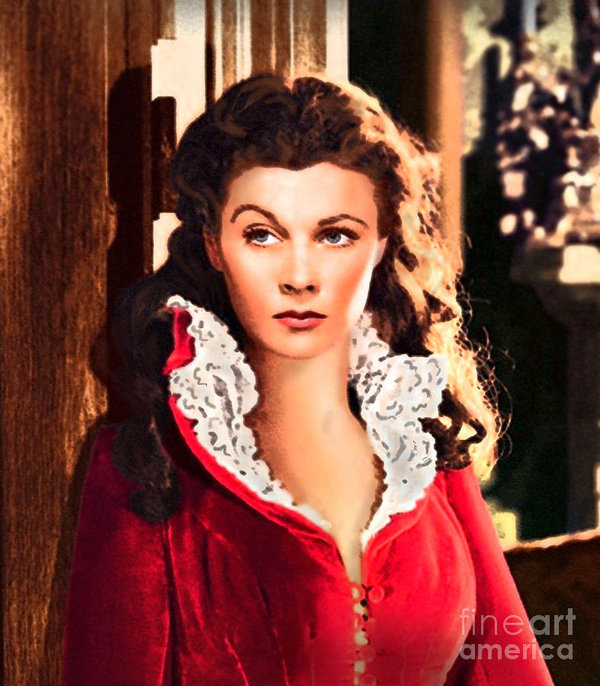
    It’s impossible to write about a main character you don’t care about. And you must care deeply. When I say care, you can actually pity the poor sod {Quoyle in The Shipping News}, or disagree with his morality as when you write an anti-hero like Scarlett O’Hara or Tyrion Lannister of the Game of Thrones series.  Or Lisbeth Salander in Girl  with the Dragon Tattoo. Or Katness Everdeen in the Hunger Games. Many readers find anti-heroes likable or relatable,  but so must the writer/creator. Because fiction writing requires a serious emotional and intimate involvement with the main characters.

    Fiction requires a serious emotional and intimate involvement with the main characters. – Jessica Morrell

    Katniss with her rallying three-fingered salute!

    Ideally you’ll find your protagonist fascinating, indelible, someone you can co-habitat with for at least a year—perhaps longer. Because between first drafts and final revisions it will take at least a year to finish your novel  Naturally this can work for short stories too, but the duration of the relationship  is often shorter.

    And if you are going to commit to a series well, you had better believe that you can go the distance.

    Your protagonists and antagonists should be fun to write or intriguing to the point of distraction.

    I’ve known writers who have fallen out of love with their characters and it ain’t pretty. Especially if they created a series character. Typically they discover their creation feels stale or predictable.

    Similar to a failing relationship in the real world. Like those glum couples you spot in restaurants not speaking to each other; sitting in slumped misery or apathy. I’ve been noticing these miserable pairings for years.

    There is nothing left to say or talk about…

    Of course, because  I’m a writer that makes me nosy and I am apt to spy on my fellow diners and eavesdrop—an occupational hazard so to speak.

    Back to you and your main characters. Think long haul. Lasting commitment, curiosity, or admiration. Think not being judge-y.

    Is your character your new love? Your best friend that you want to hang out with? The friend that always seems to get you in trouble but you don’t really mind?

    A few suggestions and/or gentle reminders for you:

    • Character first. Plot is people.
    • Create an intricate backstory that will cause motivations.
    • Give it time. It doesn’t need to be an instant attraction or intimacy, but your character should pique your curiosity.
    • Discover what in your character’s nature validates his/her humanity.
    • What about him or her is worthy of your reader’s time.  Some of the best protagonists are not immediately sympathetic or understandable. It can take readers time to understand them. But that’s okay. Because there will be tests along the way that reveal his/her true nature. An example is Strider in Lord of the Rings.
    Strider aka Ranger of the North aka Aragorn crowned King Elessar
    • Your protagonist needs traits you admire, even begrudgingly.
    • Figure in your protagonist’s chief vulnerabilities, then exploit them.
    • Understand how your character’s triggers, reactions or overreactions under duress.
    • Consider working out your demons through your protagonist and antagonist.
      • Is he or she insecure?
      • Will he feel misunderstood? (Professor Snipe in the Harry Potter series)
      • What about rewriting your awkward adolescent years through your character?

     If your characters don’t feel, neither will your readers because characters are revealed by their emotions.  And if emotions don’t lead to further actions, then part of fictional chain is missing.

    Your Homework

    Make a list of who are some of your most favorite and beloved characters and then try to assign traits to them that you find compelling. Conversely, who were their antagonists?

    Keep writing, keep dreaming, have heart. Jessica


    Chanticleer’s next Marketing blog post will address Hashtags and Social Media – Part 4 of How to Increase Online Book Sales.

    Our next Editorial blog post will address Opening Paragraphs and Beginnings.

    So please stay tuned…


    Jessica Page Morrell

    Jessica Page Morrell is a top-tier developmental editor for books and screenplays. Her articles have appeared in Writer’s Digest and The Writer magazines. She is known for explaining the hows and whys of what makes for excellent writing and for sharing very clear examples that examine the technical aspects of writing that emphases layering and subtext. Her books on writing craft are considered “a must have” for any serious writer’s toolkit.

    Jessica will teach the Master Craft Writing Classes at the Chanticleer Authors Conference on Thursday, Sept. 3, 2020  and will present sessions during the conference. She and Kiffer will also host a fun kaffeeklatch for Word Nerds at CAC20.


    Did you know that Chanticleer offers editorial services? We do and have been doing so since 2011.

    Our professional editors are top-notch and are experts in the Chicago Manual of Style. They have and are working for the top publishing houses (TOR, Macmillan, Thomas Mercer, Penguin Random House, etc.) and award-winning independent presses. If you would like more information, we invite you to email Kiffer or Sharon at KBrown@ChantiReviews.com or SAnderson@ChantiReviews.com.

    Click here to read more about our Editorial services: https://www.chantireviews.com/services/Editorial-Services-p85337185

    A great way to get started is with our manuscript evaluation service. Here are some handy links about this tried and true service:

    https://www.chantireviews.com/manuscript-reviews/

    We work with a small number of exclusive clients who want to collaborate with our team of top-editors on an on-going basis. Contact us today!

    Writer’s Toolbox


    Thank you for reading this Chanticleer Writer’s Toolbox article. 

    We encourage you to stay in contact with each other and with us  during this stint of practicing physical distancing to prevent the spread of COVID-19.

    Let us know how you are doing, what is going on where you live, how are you progressing on your writing projects.

    I invite each of you to join us at The Roost – a private online Chanticleer Community for writers and authors and publishing professionals. You are welcome to email me for more info also.

    We are active on Facebook, Twitter, and Instagram. You can find us by using our social media handle @ChantiReviews

    Minimize physical contact! Maximize social connecting!

    Be well. Stay safe. 

  • Writing Protagonists – by Jessica Page Morrell – A Chanticleer Writer’s Toolbox post

    Writing Protagonists – by Jessica Page Morrell – A Chanticleer Writer’s Toolbox post

    You need to care deeply about your protagonist – Jessica Page Morrell

    It’s impossible to write about a main character you don’t care about. And care deeply. When I say care, you can actually pity the poor sod (Quoyle in The Shipping News), or disagree with his morality as when you write an anti-hero like Scarlett O’Hara or Tyrion Lannister of the Game of Thrones series. Many readers find anti-heroes likable or relatable, but so must the writer/creator. Because fiction writing requires a serious emotional and intimate involvement.

    Harry Potter of the Harry Potter Book Series by J.K. Rowling

    Ideally you’ll find your protagonist fascinating, indelible, someone you can co-habitate with for at least a year if not longer. Because between first drafts and final revisions, it will take at least a year to finish your novel. This means your main player needs to be interesting to hang out with and interesting to write.

    Miss Celie of The Color Purple by Alice Walker

    I’ve known writers who have fallen out of love with their characters and it ain’t pretty. Especially if they created a series character. Typically they discover their creation feels stale or predictable. Similar to a failing relationship in the real world. Like those glum couples you spot in restaurants not speaking to each other; sitting in slumped misery or apathy. Of course I’m nosy and apt to spy on my fellow diners and I’ve been noticing these miserable pairings for years.

    Douglas Adam’s Hitchhiker’s Guide to the Galaxy’s protagonist – Arthur Dent

    Back to you and your main characters. Think long haul. Lasting commitment, curiosity or admiration. Think not being judgy, but observant and nosy, and perhaps a bit curious.

    Unforgettable or haunting protagonists are the keys to great fiction!

    A few suggestions for you to keep in mind:

    • Character first. Plot is people.
    • Create an intricate backstory that will cause motivations. This does not mean to add all of that backstory to your work.
    • Don’t confuse protagonist with hero. Sometimes the hero saves the day for the protagonist.
    • Sometimes the protagonist is not a “good guy.” Examples are:  Holden Caulfield from The Catcher in the Rye, Michael Corleone from Mario Puzo’s The Godfather, or Arthur Dent in The Hitchhiker’s Guide to the Galaxy by Douglas Adams.
    • Holden Caulfied – The Catcher in the Rye by J.D. Salinger
    • Give it time. It doesn’t need to be an instant attraction or intimacy, but your character should pique your curiosity.
    • Discover what in your character’s nature validates his/her humanity. Makes him or her worthy of your reader’s time.  Some of the best protagonists are not immediately sympathetic or understandable. It can take readers time to understand them. But that’s okay. Because there will be tests along the way that reveal his/her true nature.
    • Your protagonist needs traits you admire, even begrudgingly.
    • Figure in your protagonist’s chief vulnerabilities, then exploit them.
    • Understand how your character’s triggers, reactions or overreactions under duress.
    • Consider working out your demons through your protagonist. Is he or she insecure? Will he feel misunderstood? What about rewriting your awkward adolescent years through your character?
    Frodo of the The Lord of the Rings series by J.R.R. Tolkien

    Oh, and the protagonist should fail, fall on his face at least a few times along the way to the climax. Because your job as the master manipulator (aka author) is to blindside, torment, and thwart your characters. Again and again, so the outcome is in question and your readers are compelled to keep turning the pages.

    Handy Links to other articles featuring Protagonists

    The INCITING INCIDENT: STORY, SETBACKS and SURPRISES for the PROTAGONIST

    Essence of Characters

    Jessica Page Morrell
    Jessica Page Morrell

    Keep writing, keep dreaming, have heart.  – Jessica 

    Jessica Morrell is a top-tier developmental editor and a contributor to Chanticleer Reviews Media and to the Writer’s Digest magazine. She teaches Master Writing Craft Classes at the Chanticleer Authors Conference that is held annually along with teaching at Chanticleer writing workshops that are held throughout the year. 

    Jessica is teaching a Master Class at the Chanticleer Authors Conference along with other sessions. Click here to find out more information or to register. 

    Chanticleer Editorial Services

    Did you know that Chanticleer offers editorial services? We do and have been doing so since 2011.

    Our professional editors are top-notch and are experts in the Chicago Manual of Style. They have and are working for the top publishing houses (TOR, Macmillan, Thomas Mercer, Penguin Random House, Simon Schuster, etc.).

    If you would like more information, we invite you to email Kiffer or Sharon at KBrown@ChantiReviews.com or SAnderson@ChantiReviews.com for more information, testimonials, and fees.

    We work with a small number of exclusive clients who want to collaborate with our team of top-editors on an on-going basis. Contact us today!

    Chanticleer Editorial Services also offers writing craft sessions and masterclasses. Sign up to find out where, when, and how sessions being held.

    A great way to get started is with our manuscript evaluation service. Here are some handy links about this tried and true service:

    https://www.chantireviews.com/manuscript-reviews/

    Writer’s Toolbox

    Thank you for reading this Chanticleer Writer’s Toolbox article.