Tag: Writing Craft

  • How to Write a Potent Action Scene by Jessica Page Morrell – Writing Craft Series

    How to Write a Potent Action Scene by Jessica Page Morrell – Writing Craft Series

    [fusion_builder_container hundred_percent=”no” equal_height_columns=”no” menu_anchor=”” hide_on_mobile=”small-visibility,medium-visibility,large-visibility” class=”” id=”” background_color=”” background_image=”” background_position=”center center” background_repeat=”no-repeat” fade=”no” background_parallax=”none” parallax_speed=”0.3″ video_mp4=”” video_webm=”” video_ogv=”” video_url=”” video_aspect_ratio=”16:9″ video_loop=”yes” video_mute=”yes” overlay_color=”” video_preview_image=”” border_size=”” border_color=”” border_style=”solid” padding_top=”” padding_bottom=”” padding_left=”” padding_right=””][fusion_builder_row][fusion_builder_column type=”1_1″ layout=”1_1″ background_position=”left top” background_color=”” border_size=”” border_color=”” border_style=”solid” border_position=”all” spacing=”yes” background_image=”” background_repeat=”no-repeat” padding_top=”” padding_right=”” padding_bottom=”” padding_left=”” margin_top=”0px” margin_bottom=”0px” class=”” id=”” animation_type=”” animation_speed=”0.3″ animation_direction=”left” hide_on_mobile=”small-visibility,medium-visibility,large-visibility” center_content=”no” last=”no” min_height=”” hover_type=”none” link=””][fusion_text]

    Action is eloquence. William Shakespeare, Coriolanus

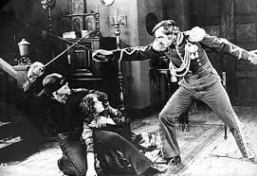
    There are a few techniques it seems like I’m always passing on to my clients: amp up your verbs; use language and details to create more tension, and force scenes to rise. By ‘rise’ I mean writers need to thrust the drama level to a crisis, a confrontation, an explosion. Because in most scenes you’re aiming for the worst outcome.

    Components of an Action Scene

    Characters The main players in the scene with their key traits visible & engaged. Secondary characters need a reason for being.
    Setting The time, place and context in which the scene takes place. The setting is not just a backdrop; stage action scenes for maximum wattage.
    Scene Driver:  The inciting event/change/stimulus/threat.

    The event/stimulus/threat that starts the action rolling in the scene (action can be precipitated before the scene begins)

    Internal response

    External response


    How the main characters react emotionally to actions, threat, choice. How the main characters react physically–dialogue, movement, escape confrontation, fisticuffs. Typically there is a second driver (event or response)that starts the action.
    Goal What the main character decides to do as a reaction to the inciting event or threat.
    Consequence How the main character struggles to accomplish the goal.
    Resolution How the scene goal turns out–win, lose, draw, escape, disaster.
    • Three words to write by—cause and effect.
    • Action scenes are high stakes.
    • The action needs to build to a full boil crisis.
    • Whenever possible structure action scenes with a midpoint which is also a reversal.
    • Use all your tools to create a character’s emotional responses including, subtext, posture, facial expressions, gestures, mannerisms, eye movements, and voice quality. Voice includes pitch, the rate of speech (does the character talk fast when nervous?), and intonation.
    • As you write, imagine you’re holding a camera catching the action blow-by-blow.
    • With intense action, use short sentences to pick up the pace. Action scenes usually have a minimal amount of description unless it contributes to the scene. The scent of blood. The sound of a gun cocking, or the creak of a floorboard. This is not the place for describing the scenery or the characters.
    • Action scenes feature choppy and incomplete sentences. Such as, “What was that noise?” “What the . . .”
    • If the setting is complex and the action intricate, sketch out a map. Place coins or placeholders to mark your players, define the sight lines, scene’s boundaries (how far can a character reach?), and how long it might take to walk, run (or sneak) from point A to point B.
    • If the action is complicated, ask friends or family members to act it out so you can verify the sequence and reactions.
    • Read your dialogue out loud.
    • Use simple past tense verbs such as “kicked” or “punched” rather than those pesky ‘ing’ participles such as “kicking” or “punching.”
    • Your protagonist has skills, strengths, and weaknesses you can exploit and showcase. Foreshadow those traits throughout the story so when the reader reaches the action scene, he is expecting complications and credibility.
    • Scenes are never random events—they all need a logical connection to the storyline and to create ramifications.
    • Pay special attention to endings—they need weight, potency, and to reveal consequences.
    • Pacing is key but should be controlled by the scenes that come before and after. These will typically be slower to set up and react to the fight/conflict.
    • When writing fight scenes or violence, pack these scenes with an emotional punch too.
    • Read screenplays to digest the moment-to-moment breakdowns.
    • When you watch films study the reaction shots.
    • Some emotions in an action scene will be brief or fleeting.
    • When a gunshot is fired nobody has time to think. However, the body’s chemistry shifts to handle lethal threats, allowing the brain to process far more information in a shorter period of time.
    • Keep in mind that action scenes happen at several levels and much of the fight needs to be about internal changes, the inner world of the protagonist.
    • During revisions fine tune character’s emotional reactions so they’re unique, fresh, and individual. This aspect of revision can be difficult, but it is crucial.
    • Make certain you can justify carnage and bloodshed.
    • Don’t bog down the sequence with too much technical description. Show who has the upper hand, rack up the tension to the nines and tap into the motivations of the character readers root for. And if someone gets punched or shot or knocked to the ground, readers should feel it too.
    • Utilize all the senses and never rely solely on the physical description.

    The next article from Jessica Page Morrell will include an example of screenplay action from Air Force One by Andrew Marlowe.

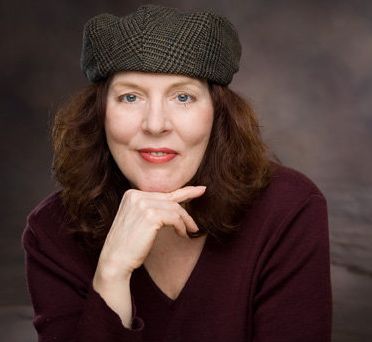
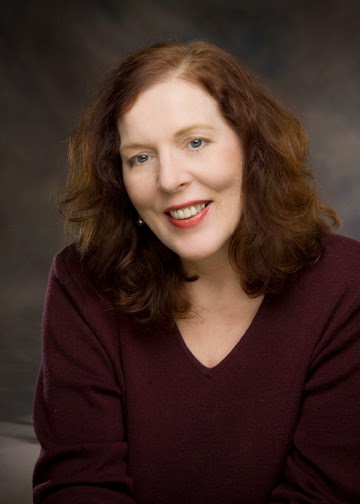
    Jessica Page Morrell is a top-tier developmental editor and a contributor to Writer’s Digest magazine,  and she teaches Master Writing Craft Classes at the Chanticleer Authors Conference that is held annually.
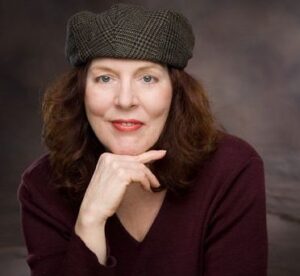
    Jessica Page Morrell
    Jessica Page Morrell

    Jessica understands both sides of the editorial desk–as a highly-sought after content development editor and an author. Her work also appears in multiple anthologies and The Writer and Writer’s Digest magazines.  She is known for explaining the hows and whys of what makes for excellent writing and for sharing very clear examples that examines the technical aspects of writing that emphases layering and subtext. Her books on writing craft are considered “a must have” for any serious writer’s toolkit. For links for her writing craft books, please click on her above. 

    Chanticleer Reviews and OnWord Talks will interview Jessica for more of her writing tips and advice. Stay tuned! ~ Chanticleer

    We are planning a writing craft workshop soon that will be taught by Jessica.[/fusion_text][/fusion_builder_column][/fusion_builder_row][/fusion_builder_container]
  • LEARNING FROM THE GREATS with #CAC18 Speaker, JESSICA MORRELL – CAC18, Writing Workshops, Author Development

    LEARNING FROM THE GREATS with #CAC18 Speaker, JESSICA MORRELL – CAC18, Writing Workshops, Author Development

    Jessica Page Morrell
    Jessica Page Morrell
    Chanticleer: Give me a little bit about your background – Who is Jessica Morrell? 
    Jessica Morrell:  I’m the author of six traditionally-published books, five which teach authors how to write. I’ve written hundreds of columns, articles, blog posts, and my work appears in 8 anthologies about writing. I’ve been teaching writers for more than 25 years and work as a developmental editor. This means a writer or author sends me a manuscript and I dissect it and then help him or her put it back together so it’s publishable. I bring a discriminating, ruthless eye to manuscripts, and fix plot holes and wayward dialogue and everything in between. I learn each time I work on a manuscript and some days my brain feels close to bursting. I love what I do.
    Chanticleer: Tell me a little bit about the Master Class you will be offering next Sunday during #CAC18, Learning from the Greats. Who would benefit most from taking this class?
    Jessica Morrell: Any fiction writer can benefit from this workshop.  Writers have 2 main tasks: writing whenever possible and reading often. But reading as a writer requires a special focus and analysis. You need to understand why authors make choices and decisions along the way; why their details are important, how the ending resonates or doesn’t quite satisfy. Close reading teaches us narrative and scene structure, how to create authentic dialogue, how to insert tension and subtext, and how themes underscore drama.
    Chanticleer: This is going to be an important class for all authors. Tell me, what’s the best way to prepare for this class?
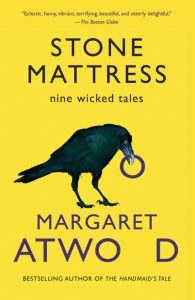
    Jessica Morrell: The workshop will open by outlining the many techniques that writers have at their disposable. From there we’ll be discussing Harper Lee’s To Kill a Mockingbird and 3 contemporary short stories (Silver Water, Amy Bloom,  For Something to Do, Elmore Leonard, and Stone Mattress, Margaret Atwood.)
    Chanticleer: At the end of this article, Jessica has provided us with titles and links to these stories. It would be wise to familiarize yourself with these works before class next Sunday. So, Jessica, why these authors? Why these books? 
    Jessica Morrell: Mockingbird, also a film, has remained a beloved American classic over the decades. We’re going to dissect why it’s so esteemed and memorable. The other authors Elmore Leonard, Amy Bloom, and Margaret Atwood are simply fabulous writers with techniques we can all emulate. Or at least try to.
    Chanticleer: Jessica, our attendees will learn so much from your workshops. Your classes are unlike any other I’ve seen. You really do put authors to work – and the payoff is exponential!

    Jessica Morrell:  To paraphrase Stephen King, reading is your job. Or a big part of your job. If you breeze through stories without thought or analysis, you’re missing both the joys of insider knowledge and the lessons you’ll always need. Reading inspires and is a cheap, private pleasure. And because writers never stop learning.

    Learning from the Greats 

    A Master Writing Craft Class taught by Jessica Morrell

    To succeed as a writer you need to write a lot and read from a writer’s perspective. Without this level of analysis writers simply don’t have all the tools at their disposal. In this workshop, we’ll work together to uncover the secrets of great authors, reveal the intricacies of craft, and trace authors’ influences and habits. We’ll further analyze how great authors reflect their time period and find fresh ways to manipulate language.

    Texts to be discussed: 

    Silver Water, Amy Bloom  http://producer.csi.edu/cdraney/2011/175/etexts/Bloom_Silver-Water.pdf

    Amy Bloom has been a fresh, urgent voice in American fiction since her first collection of short stories;   Come to Me was published in 1998.  Bloom is also a novelist, but her short stories are particularly insightful in their brevity and often track marginalized people and uncomfortable issues like sexual identity and mental illness. A former psychotherapist, she brings keen insights into her characters, imbuing them with tiny, yet penetrating brushstrokes that nail their struggles and psyches. Writers can learn her art of compression, her authentic character voices, featuring flawed but fascinating characters.


    To Kill a Mockingbird, Harper Lee

    https://cleveracademy.vn/wp-content/uploads/2016/10/To-Kill-a-Mockingbird.pdf

    An American classic, To Kill a Mockingbird is the story of a Southern family and small-town embroiled in a racially-charged scandal and trial.  Readers can learn so much from the story—a searing history lesson, how to teach your kids valuable life lessons, how outsiders and kids see society. Through analysis, writers can learn how to capture a child’s sensibility, how to teach morality without being preachy or gooey, and how to stage a surprise ending. Other techniques we’ll study: the role of the narrator POV, writing a compelling static character, and how coming-of-age meets character arc with young characters.


    For Something to Do, Elmore Leonard

    https://harpers.org/archive/2015/05/for-something-to-do/

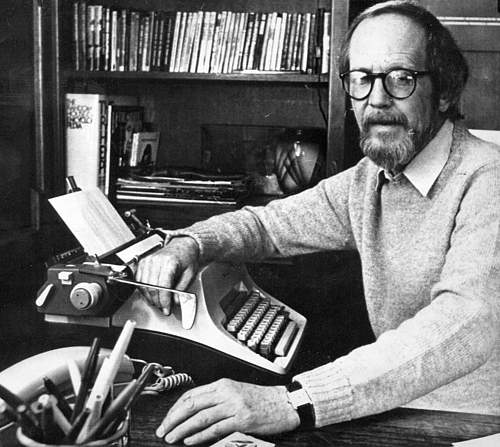
    Elmore Leonard was a wildly popular writer who wrote more than 40 novels,  dozens of short stories, movie adaptations, and a popular TV series including, Justified. Stephen King called him, “The great American writer,” and The New York Times called him, “The greatest crime writer of his time, perhaps ever.”  He’s known for tightrope tension, crackling, realistic dialogue, and memorable, bad ass characters up to their ears in serious trouble. But a closer look reveals other techniques worthy of emulating: how to depict pathos in a character, how honor and morality can found in unexpected places, how subtext works in a dialogue scene, how to stage twists, and how conflict is layered and always simmering.


    Stone Mattress, Margaret Atwood

    https://www.newyorker.com/magazine/2011/12/19/stone-mattress

    Besides her many novels, some now turned into televisions series, Atwood is a prolific short story writer. In this story, a woman meets an old friend 50 years after their high school days, she plots his murder. Or will she go through with it?  We’re going to analyze this story for its delicious use of details, suspense, and subtext, along with her deft inclusion of backstory, and an overall tone of disquiet. We’ll discuss how Atwood pulls us in from the first sentence: “From the onset, Verna never intended to murder anyone. What she had in mind was a vacation, pure and simple.”

    More links to blog posts by Jessica Morrell
  • What Acquisition Editors and Agents Notice When Evaluating a Manuscript – A Handy Checklist by Jessica Page Morrell

    Jessica Page Morrell
    Jessica Page Morrell, Developmental Editor for Books and Screenplays

    Jessica Page Morrell is a top-tier developmental editor for books and screenplays. Her articles have appeared in Writer’s Digest and The Writer magazines. She is known for explaining the hows and whys of what makes for excellent writing and for sharing very clear examples that examine the technical aspects of writing that emphases layering and subtext. Her books on writing craft are considered “a must have” for any serious writer’s toolkit.

    Jessica will teach the Master Craft Writing Classes at the Chanticleer Authors Conference on Sunday, April 21st, and will present sessions during the conference.

    She is sharing her handy Writing Craft Checklist with us because we all can use reminders. We advise that you make sure that your manuscripts do not have any of the following issues prior to submitting them to agents and acquisition editors.  If you are too close to a work to evaluate it, you may want to consider having an objective and unbiased manuscript overview to catch these issues.

    Editors and agents are word people, most were English majors in college and have a great love and respect for the written word. They will notice your level of craft within the first sentences, so your efforts must be polished, vivid and exceptional.


    Jessica Page Morrell’s Handy Writing Craft Reminders Checklist


    • Your manuscript lives or dies on your opening sentences and each word must be perfect, precise, and weighted with meaning.
    • Editors notice and are turned off by passive voice and wimpy verbs.
    • Editors notice when the viewpoint jumps or shifts within a scene.
    • Editors notice too much telling (reporting or summary) and not enough showing in all types of writing including essays and memoir.
    • Editors notice when emotions are announced instead of dramatized.
    • Editors notice frequent use of names in dialogue. Generally, leave out names.
    • An editor notices sloppy punctuation such as the excess use of exclamation points, quote marks around inner thoughts, improper use of semicolons and ellipsis.
    • Editors notice protagonists who are not proactive, heroic in some way, and bigger than life.
    • Editors notice characters with a limited emotional range and expression.
    • Editors notice large and small inaccuracies and inconsistencies—when the character has blue eyes on page 23 and green eyes on page 57; when a character drives an old, beat-up, pick-up truck that is inexplicably equipped with airbags; when an animal, plant, or species of any sort is misnamed or shows up in the wrong region of the country.
    • Editors notice when technical details don’t ring true—such as in a mystery when police don’t follow standard arrest procedure; when a yacht sinks from a single bullet hole; or explosive materials are used haphazardly.
    • Editors notice vague descriptions (plant instead of ivy, tree instead of oak) and generalities instead of details that bring the reader into a specific time and place.
    • Editors notice when writers don’t write for all the senses, especially leaving out smells.
    • Editors notice small confusions such as misusing it’s and its, that and which, affect and effect, compliment and complement, lay and lie.
    • Editors notice overly long paragraphs and a general lack of white space. Generally, paragraphs are five or six sentences long and as taught in grade school introduce a topic, develop a topic, then conclude or lead on to the next paragraph.
    • Editors notice a lack of transitions—the words and phrases that announce a change in mood or emotion, time, and place so the reader can easily follow. They also know excess transitions as when you follow your characters across every room and along every sidewalk.
    • Editors notice excess modifiers, purple prose, and too much description. The best writing is lean and economical and every word in every sentence has a job to do.
    • Editors notice a voice that is flat, inappropriate, or boring. Voice, whether it is the writer’s voice in an essay or the viewpoint character or narrator in fiction, must breathe life into the piece and hint at the person behind the words.

    CAC18 Writing Craft Sessions and Workshops presented by Jessica Page Morrell to take your writing craft to the next level. #SeriousAuthors

    Click here to read more in-depth descriptions of the sessions.

    • Learning from the Greats – Sunday Master Morning Writing Craft  Class – Intermediate to Advanced Levels
    • The Anchor Scenes of Fiction – Sunday Afternoon Master Writing Class – Fiction, Film
    • How High Concept Really Works – Regular Session – Friday Regular Session – Fiction, Film
    • Subtext: The Quiet River Beneath the Story – 1.5 hours Regular Session on Saturday – Writing Craft
    • KaffeeKlatch Session – What’s in a Title? – Book Promotion Tools & Tips
  • Jessica Page Morrell – Top Tier Developmental Editor & Author to Present at CAC18

    #CAC18 Story. Production. Beyond.   #SeriousAuthors

    Jessica Page Morrell


    Each year we offer writing craft sessions from the best editors and authors in the publishing industry.

    This year we are excited to announce that we have Jessica Page Morrell as the teacher of the Master Writing  Craft Sessions.

    Jessica understands both sides of the editorial desk–as a highly-sought after developmental editor and an author. Her work also appears in multiple anthologies and The Writer and Writer’s Digest magazines.  She is known for explaining the hows and whys of what makes for excellent writing and for sharing very clear examples that examine the technical aspects of writing that emphases layering and subtext. Her books on writing craft are considered “a must have” for any serious writer’s toolkit.


    CAC18 Writing Craft Sessions and Workshops presented by Jessica Page Morrell

    If you are not registered for CAC18, you may register for only the Master Classes taught by Ms. Morrell by clicking here.

    • Learning from the Greats – Sunday Morning Writing Craft Master Class 9:30 – 12:30, April 22, 2018

    Although writers can feel inundated by all the writing advice available in our current times; dissecting, reflecting, and even emulating great writers can be a powerful tool. It’s especially helpful to study the best in the genre you write in. This workshop teaches writers how to deconstruct and analyze elements of craft. It will demonstrate how to study the balance of narrative and dialogue; how POV shifts in an ensemble cast; how figurative and descriptive language are used in varying kinds of scenes; how pace and action are entwined; the benefits of first and third-person viewpoint, and the subtle variations of each. In this workshop, we’ll discuss the techniques used by a variety of authors including Alice Munro, Raymond Carver, Ernest Hemingway, Elmore Leonard, Marilyn Robinson, Ray Bradbury, Anne Patchett, and others. We’ll also cover work habits, language, and sentence potency, and we’ll synthesize the best commandments on writing from the best and brightest.

    • The Anchor Scenes of Fiction – Sunday Afternoon Writing Craft Master Class 1:30 – 4:30, April 22, 2018

    The task of a novelist or screenwriter is to tell a story so riveting that it will hold a reader’s attention for hundreds of pages or a viewer’s attention for several hours in a theater. This requires an intimate knowledge of your characters and thorough understanding of plot, the sequence of events that take readers from beginning to end.  Your structure will reveal the protagonist’s struggles to solve problems and achieve goals. This, in turn, brings emotions to life and explains the importance of what a character is trying to achieve and what stands in his way.

    These events won’t hang together without a compelling structure that underlies the whole—the essential scenes that every story needs to create drive, tension, conflict, climax, and resolution.  We’ll illustrate and come to understand the anchor scenes needed in fiction and film: Inciting Incident, First Plot Point, and Mid-point Reversal, Point of No Return, Darknight of the Soul, Climax, and Resolution.  We’ll discuss how the protagonist stars in these scenes, how they’re emotionally-charged, build the plot, and illustrate character growth.

    • Subtext: The Quiet River Beneath the Story – 1.5 hours Regular Session

    For most writers subtext is the most elusive of all writing techniques. However, life is often lived between the lines, and scenes often simmer with the unspoken beneath dialogue and action. In this workshop, subtext will be explained with examples from various genres. We’ll also discuss nonverbal communication and how to render it onto the page and how to hint at lies and secrets in scenes so that dialogue scenes are enhanced. We’ll cover how metaphor and visual clues create subtext.  Mostly we’ll investigate all the ways to insert subtext—the unspoken, innuendo, gestures, pauses, misdirection, colors, clothing, setting details—in other words, the nuanced moments that are not directly represented.


      • KaffeeKlatch Session – an informal session where we discuss Q & A – Simple Steps to Solve Story Problems. Ballroom Saturday, (9 – 9:50)

      Click here for more information about the 2018 Chanticleer Authors Conference

    • Michael Hurley presents “The Literary Author in the Age of ‘Fifty Shades of Grey’” at CAC

      OLYMPUS DIGITAL CAMERAAvid sailor and acclaimed author Michael Hurley will present “The Literary Author in the Age of ‘Fifty Shades of Grey’” at the Chanticleer Authors Conference 2014.


      Hailing from Charleston, S.C. , Michael is an avid sailor who solo sailed 2,200 miles in a two-year voyage that ended with the loss of his boat, the Gypsy Moon. It was that voyage that inspired him to set sail on a new adventure: writing his memoir. Hachette Book Group published Once Upon a Gypsy Moon in 2013.

       His debut novel, The Prodigal, has received numerous accolades in the trade press and will be coming out soon as a film. His next novel is titled The Vineyard and is scheduled to be released in December 2014.  Michael Hurley is a member of the Bar in North Carolina and Texas and has been in trial practice since 1984.

      We invite you to meet other members of the Chanticleer International Community of Authors at this fun and informative three day event featuring:

      • CBR Awards Banquet – You don’t have to be a CBR winner to attend this exciting event.
      • Sessions, workshops, and panel discussions
      • Keynote Speakers: Shari Stauch, Tyler Bird, and Diane Isaacs
      • Networking opportunities
      • Prizes and drawings
      • Books By the Bay Bookfair

      Join us at the elegant  Hotel Bellwether on beautiful Bellingham Bay. Register today! 

      banner