Tag: Writing Craft

  • HOW to DEEPEN PLOTS from the Editor’s Desk of Jessica Morrell – A Chanticleer Writers Toolbox article

    HOW to DEEPEN PLOTS from the Editor’s Desk of Jessica Morrell – A Chanticleer Writers Toolbox article

    Fiction is about the cost of things.

    The plot should always somehow scar or wound the protagonist and put something valuable at risk.

    Protagonists suffer. Period. Paying heavy costs make characters relatable. I swear by these statements. Jessica Morrell

    Making protagonists suffer in storytelling creates stakes, motivation, and tension.

    Jon Snow – Game of Thrones

    Remember that fictional characters must take more risks than ordinary humans. But as in real life, not all risks pay off, but the cost should always be much higher in fiction.  Along the way friendships, allies, freedom or safety might be lost. Such is the cost of fiction.

    Even in comedies and cozy mysteries…
    How much will the protagonist suffer?  Sacrifice? Regret?

    Before I go further, it’s important to point out this doesn’t mean your protagonist will always be a martyr or your story ends in tragedy. But everything can be on the line in the fictional universe: friendships and allies, family, love, prestige, honor, trust, hope, money. Betrayals might happen. Long-held secrets revealed.  Obviously these possibilities create emotional distress.

    The Harry Potter novel series is a prime example of making your protagonist suffer from getting used mixed match socks for his birthday to betrayals to long-held secrets revealed.

    Just How Much Trouble Can this Kid Get Into?

    Not to mention to physical costs like  pain, injuries, and body parts. Think Katness fighting for her life in The Hunger Games and going deaf in one ear. Then she’s forced to fight for Peeta’s life because he’s been badly injured. (In the book, not the film series, he loses a leg)

    Speaking of body parts: remember the suffering doled out by psychotic fan Annie Wilkes in Misery by Stephen King?

    Gulp.
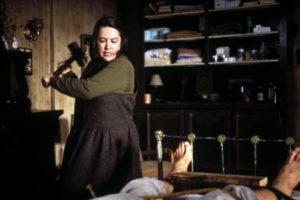
    Misery by Stephen KingBecause bad things happen to our favorite characters. Really bad things. Your character’s suffering will always reveal his or her depths and strengths. Suffering always advances the plot. If it doesn’t, leave it out of your story.  Allow me to say it slightly different: any suffering, sacrifice, regret, betrayal, pain, or loss must advance the plot. 

    Let’s look at some examples:

    Jem Finch loses his innocence when he realizes the depth of racism in his small town in To Kill a Mockingbird.  

    Rocky Balboa is brutally beaten and loses to Apollo Creed. But he goes the distance and wins love.

    Juno MacGuff not only gives up her baby, but learns that the adoptive father-to-be is a man-child. She’s forced to risk giving her baby to a single mom instead of the stable couple she’d hoped for.

    Woody of the Toy Story series loses friends, risks his pride, leadership role,and life, battles greed and heartlessness. All these costs bring him maturity and wisdom.

    Woody of Toy Story

    In The Godfather the Corleone family loses their oldest son in the mob war that breaks out. Unfortunately it was Sonny’s impetuousness that started the war. The inciting incident, or catalyst in the story is a meeting between the Corleone family and are representative for the Tattaglia family. This issue on the table is investing a million dollars to get into heroin-trafficking business. Sonny, going against protocol, reveals his interest in the money-making scheme.

    After an attempt on the godfather’s life, and with the body count rising,  Michael, the youngest son, commits murder and is forced into hiding. The story follows his profound character arc from war hero and college graduate to cold-hearted mob boss. He loses his humanity with each power move and act of revenge.

    Michael Corleone and the Godfather

    Bad decisions often make things worse. Because fictional characters screw up a lot. Which brings on more misery, self-doubt, and need for more risks.

    Questions to consider when plotting:

    • Is the cost justified?
    • Will readers realize the cost or sacrifice is too great before the protagonist will?
    • Does the protagonist understand the cost involved or is he or she naive? Untested?
    • Can you make the toll affect several aspects of the protagonist’s life? Can the plot exact physical, emotional, financial tolls?
    • Will the cost involve another character? A vulnerable character?
    • Will the protagonist be exposed, peeled bare while paying the cost?
    • Will other characters try to dissuade the protagonist from paying the price?
    • Can you make the cost or sacrifice or pain visceral and believable?

    Moral Dilemmas to consider when plotting:

    • Principled choices and decisions will always create actions and consequences. They always drive the story forward.
    • Unprincipled choices and decisions typically cause chaos, pain, and also propel the story ahead. An example from Jurassic Park happens when the park employee-computer whiz leaves the grounds to sell off dinosaur DNA. His actions, taken during a horrendous storm, opens a Pandora’s box of disasters and life-and-death consequences.
    • The ramifications from all important decisions should be long lasting.
    • The higher the stakes, the higher the drama.
    • The choices often underline the genre type. A suspense story is often based on finding justice so decisions will hold a lot of weight and consequences.
    • Don’t provide characters easy answers. Corner them, stress them out, push them past their limits.
    • Know your fictional casts’ moral codes.

    Search out the important dilemmas in stories, noticing the enormous variety and possibilities. Are there shades in right from wrong? Is the crime story about sorting real justice from mob justice; truth from lies? Are actions based on loyalties,  faith, science, passion? 

    Homework

    Your homework this week:  Can you identify the cost in stories you read and films you watch?

    Keep writing, keep dreaming, have heart. Jessica


    Our  next marketing posts will be on SOCIAL MEDIA and PROMOTION TIPS for Selling Books ONLINE and New Selling Platforms.

    Our next editorial posts will be on Character Development.  So, please stay tuned…


    Jessica Page Morrell

    Jessica Page Morrell is a top-tier developmental editor for books and screenplays. Her articles have appeared in Writer’s Digest and The Writer magazines. She is known for explaining the hows and whys of what makes for excellent writing and for sharing very clear examples that examine the technical aspects of writing that emphases layering and subtext. Her books on writing craft are considered “a must have” for any serious writer’s toolkit.

    Jessica will teach the Master Craft Writing Classes at the Chanticleer Authors Conference on Thursday, Sept. 3, 2020  and will present sessions during the conference. She and Kiffer will also host a fun kaffeeklatch for Word Nerds at CAC20.

    Did you know that Chanticleer offers editorial services? We do and have been doing so since 2011.

    And that our professional editors are top-notch and are experts in the Chicago Manual of Style. They have and are working for the top publishing houses (TOR, Macmillan, Thomas Mercer, Penguin Random House, etc.) and award-winning independent presses. If you would like more information, we invite you to email Kiffer or Sharon at KBrown@ChantiReviews.com or SAnderson@ChantiReviews.com.

    Click here to read more about our Editorial services: https://www.chantireviews.com/services/Editorial-Services-p85337185

    A great way to get started is with our manuscript evaluation service. Here are some handy links about this tried and true service:

    https://www.chantireviews.com/manuscript-reviews/

    We work with a small number of exclusive clients who want to collaborate with our team of top-editors on an on-going basis. Contact us today!

    Writer’s Toolbox


    Thank you for reading this Chanticleer Writer’s Toolbox article. 

    We encourage you to stay in contact with each other and with us  during this stint of practicing physical distancing to prevent the spread of COVID-19.

    Let us know how you are doing, what is going on where you live, how are you progressing on your writing projects.

    I invite each of you to join us at The Roost – a private online Chanticleer Community for writers and authors and publishing professionals. You are welcome to email me for more info also.

    We are active on Facebook, Twitter, and Instagram. You can find us by using our social media handle @ChantiReviews

    Minimize physical contact! Maximize social connecting!

  • 15 Self-Editing Tips from the Editor’s Desk of Jessica Morrell – Chanticleer Writers Toolbox

    15 Self-Editing Tips from the Editor’s Desk of Jessica Morrell – Chanticleer Writers Toolbox

    Refresh your writing with these Self-Editing Tips

    It is time to Spring Clean our writing habits with precise, fresh language. Jessica Morrell suggests searching for these culprits that can easily sneak into our writing.

    Declutter Your Sentences by Eliminating These Junk Words

    1. Breathingdeep breathsbarely breathinginhalingexhaling, and other lung movements.  Many writers of all levels reveal their characters’ emotions and reactions using their breath, lack of breath, breathlessness, or as their main method of reacting and showing emotion. “I took a deep breath” is a phrase I’ve seen so often it’s a cliche.  Unless a character has the breath knocked out of him or is in the midst of childbirth, avoid focusing on breathing as your main means to create emotion. Instead collect a variety of mannerisms, reactions, gestures, and body language individual to each character.
    2. Said exclamations: Today’s readers are sophisticated and understand when characters are talking and that at times the character’s voices and emotions change. The notion is the ‘he said, she said’ parts of fiction appear invisible. Readers understand that a character might sound shrill by the circumstances and dialogue spoken so you don’t need to proclaim, Mary Ellen shrieked shrilly. Never write Jason emoted, pleaded, bantered, snarked, smirked, blasted, bleated, peeped, groused. Now occasionally in the midst of a horror story, you might want to underline how terrified a character is, but consider dabbing these attributions in only for the most terrifying or surprising moments.
    3. Down or up. As in Rachel sat down. Now Rachel can collapse into a chair, or sidle into an empty seat in a dark theater, or ease onto a sofa, or flump onto a bed. Sit and sat means a person is lowering himself or herself.  As in down. More accurately sit means supporting your weight on your buttocks.  Question your use of up. It seems so innocent, doesn’t it? Blithe stood up. Stood means up because standing means a person is upright, supporting himself on his feet.  Denzel stood, joining the screaming fans. Also, do not write grabbed up; grabbed suffices. Avoid appending up to spoke, hurry, lift, climb, and rose.
    4. Towards, backwards, forwards, upwards, downwards.  Replace with toward, backward, forward, upward, downward.
    5. ClichésOh how, I hate thee. Eliminate all your I took a deep breath. Ditto for eyes widened, out of the corner of my eye, jaw dropped, raven locks, and steely blue eyes. Then there is:  Each and every, knife to my heart, piece of cake, fire in the belly, he/she took my breath away. And before you write about your characters staring into each other’s eyes, think about how often it happens in real life and how often it happens in your stories.
    6. Mind matters, especially in the first person. You don’t need to report on how the character is reviewing things in his/her mind because this distances the reader and reminds her there is a narrator instead of the reader living amid the story world. So eliminate ‘mind raced‘ ‘thoughts raced‘ ‘mind’s eye‘ (a truly lame term), and ‘searching her mind.’
    7. Really. I mean really? Do you need it? Is the weather really cold or is it frigid or dangerously cold?
    8. I saw. If you’re writing in close first person you don’t need the I saw or I looked part of the sentence. Example: I saw ahead of me three leprechauns frolicking merrily in the grass. Instead: Ahead three leprechauns frolicked merrily in the grass. Why? The reader wants to pretend that he or she is spotting the leprechauns along with the character. Also describing the leprechauns implies the narrator or character is seeing or observing. No need to state it.
    9. Literally means exactly as described or in a literal or strict sense. It does not mean quite, actually or really. Wrong: I was so mad I was literally shaking like a leaf and red-faced. Or, I was so terrified I literally jumped out of my skin. Or, Her death literally brought me to my knees.  Better: The playoffs were watched by literally millions of fans.
    10. Basically, essentially, obviously, basically, totally. Hint: question every adverb you use with an -ly ending because many are so overused they’ve become meaningless. However, the larger issue is many people sow these words into their stories without understanding their correct meanings mostly to maximize or intensify. Over time many adverbs have become meaningless. Basically means at a basic level or fundamental sense, not almost or mostly. Essentially means the essence of something or in an essential manner, not almost or often.  Practically means in a practical manner not almost or mostly. Totally means completely, in every part, not really.
    11. Moments. I’ve read manuscripts where characters pause or think or kiss for only a moment hundreds of times throughout the story. There are plenty of ways to describe brief actions or thoughts.
    12. Suddenly. Because if you’re reading fiction you assume that actions, twists, and surprises will happen abruptly. They are devices used to increase tension and suspense. No need to announce it.
    13. That. If a sentence works without that, ditch it. Easy, right?
    14. Just. No, I’m not just kidding. Too many of us (guilt-hand raised) use this one out of habit. 
    15. Prepositional phrases. Prepositions are the carbohydrates of language. Of course, we need them for clarity but use with care. Instead of a book of poetry, use poetry book. Instead of a tower of flames, use towering flames.

    Kiffer’s Note:  So here’s the trick: When writing your first draft, write it. Don’t worry about the trees—words. Concentrate on the forest—the story. Then, when you are editing fix these issues. Replace dullards with the perfect words that will move your story forward, increase tension, enhance the atmosphere, add depth to your characters, make your dialogue pop, and immerse your reader into the world that you have created.

     A handy tool to help you recognize if these egregious junk words have infiltrated your manuscript is the “Find and Replace” tool that  can be found in WORD or other word processors. This tool finds and highlights specific words so that you can replace if needed to insure that every word counts. Click on this link, if you would like more information and how this tool works:  https://support.office.com/en-us/article/find-and-replace-text-c6728c16-469e-43cd-afe4-7708c6c779b7

    Don’t always use the first word or phrase that pops into your head because you might be using rusty, old clichés. Or fix these dullards when you edit. Like stock still, fast asleep, choking back tears, stirred up a hornet’s nest, did a double take, under the radar, and never in her wildest dreams.

    You are welcome to copy and paste this article into a document and print it for your writing craft and tools notebook for ease of access while you are editing you work-in-progress.


    Jessica Page Morrell

    Jessica Page Morrell is a top-tier developmental editor for books and screenplays. Her articles have appeared in Writer’s Digest and The Writer magazines. She is known for explaining the hows and whys of what makes for excellent writing and for sharing very clear examples that examine the technical aspects of writing that emphases layering and subtext. Her books on writing craft are considered “a must have” for any serious writer’s toolkit.

    Jessica will teach the Master Craft Writing Classes at the Chanticleer Authors Conference on Thursday, Sept. 3, 2020  and will present sessions during the conference. She and Kiffer will also host a fun kaffeeklatch for Word Nerds at CAC20.

    Did you know that Chanticleer offers editorial services? We do and have been doing so since 2011.

    And that our professional editors are top-notch and are experts in the Chicago Manual of Style. They have and are working for the top publishing houses (TOR, Macmillan, Thomas Mercer, Penguin Random House, etc.) and award-winning independent presses. If you would like more information, we invite you to email Kiffer or Sharon at KBrown@ChantiReviews.com or SAnderson@ChantiReviews.com.

    Click here to read more about our Editorial services: https://www.chantireviews.com/services/Editorial-Services-p85337185

    A great way to get started is with our manuscript evaluation service. Here are some handy links about this tried and true service:

    https://www.chantireviews.com/manuscript-reviews/

    We work with a small number of exclusive clients who want to collaborate with our team of top-editors on an on-going basis. Contact us today!

    Writer’s Toolbox

    Thank you for reading this Chanticleer Writer’s Toolbox article. 

  • WORDCRAFT – HOW to MAKE IT HAPPEN – from Jessica Morrell’s Editing Desk – a Chanticleer Writer’s Toolbox post

    WORDCRAFT – HOW to MAKE IT HAPPEN – from Jessica Morrell’s Editing Desk – a Chanticleer Writer’s Toolbox post

    How Does Wordcraft Happen? by Jessica Morrell

    Focus on Language

    There are so many mechanics of writing style I could write about columns on the topic for years. Come to think of it, I have.

    Let’s focus on layering language into a story with care so that it adds to overall meaning and effect.

    This means making careful choices so that you don’t distract the reader from your narrative. As a writer, search for precise words and comparisons to satisfy your reader. The problem of finding the perfect word or imagery, instead of the almost perfect word, is no small matter.

    Denotation or Connotation – Know the Difference

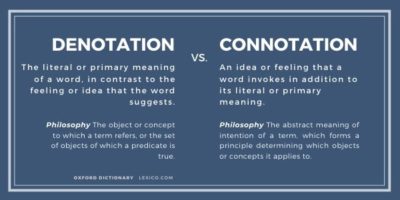
    While the literal or explicit meaning of a word or phrase is its denotation, the suggestive or associative implication of a word or phrase is its connotation. Thus you’re always making choices about meaning and language.

    Merriam -Webster says: “What’s the difference between connotation and denotation?

    While each of these two words has several possible meanings, they are notably distinct from each other in all senses. Denotation is concerned with explicit meaning, and connotation tends to be concerned with implicit meaning. The word home, for instance, has a denotation of “the place (such as a house or apartment) where a person lives,” but it may additionally have many connotations (such as “warmth,” “security,” or “childhood”) for some people.

    Examples of denotation in a Sentence
    The word has one literal denotation but several different connotations.
    The definition provides the word’s denotation.

    We all need a practical, sort of workday vocabulary that is consistent with our voice, and then we also need a vocabulary that’s the writer’s version of the Taj Mahal. Or, as another example, sometimes the style needs to be basic like bread pudding, sometime it needs to be more like a seven-layer wedding cake. Sometimes the best words are clear and simple, and sometimes they need to soar like a heron aloft on an air current. Sometimes stories work well in the style we’ve come to associate with Hemingway—terse, journalistic and economical. And sometimes a story needs all the embroidery and bombast of a stylist like John Updike.

    Obviously there are writing styles that are too gorgeous, too painterly. The same for a style that is too ‘out there,’ too odd to grasp—as if wooly mammoths populate the page.

    For example, boisterous and unexpected adjectives such as claxon or tessellated or the unforgivable boustrophedonic (all used by John Updike)—stop the flow of narrative. Instead of the reader remaining involved in the scene, he steps aside and engages his intellect. Choosing surprising yet apt modifiers is vital, but it’s not a task to be undertaken frivolously.  Playwright David Hare says, “Style is the art of getting yourself out of the way, not putting yourself in it.”  

    Choosing surprising yet apt modifiers is vital. – Jessica Morrell

    Anchoring the Story

    When it comes to figurative language, you want to demonstrate an imaginative range, while remembering figurative language adds layers of meaning while also concentrating the flow of ideas. We use figurative language because it mates images and likenesses, connects with the reader’s associative right brain, and helps anchor the story. With figurative language, you want to demonstrate with freshness and verve. However, don’t range too far with your images or the story becomes tangled and obscure. Wordcraft that makes us shiver is delicious. Wordcraft that exists merely to show off is pointless.

    Analogy and Metaphor

    Analogy and metaphor are always subservient to the viewpoint, yet always take us deeper into the subject or moment as when Truman Capote described Elizabeth Taylor’s “eyes so liquid with life” and “the face, with those lilac eyes, is a prisoner’s dream, a secretary’s self-fantasy; unreal, non-obtainable…” Don’t you wish you’d woven together “a prisoner’s dream” to describe an indescribable beauty? Notice how it makes you feel the allure of Taylor?

    Don’t Try to Do This in Your First Draft

    In your editing process, it’s okay if your first draft is unpretentious, just as it is okay if your first draft is blowsy and lumbering. But then, as you refine later drafts, ask yourself if the writing needs to lift off the page a bit. If it is clean, or simply stark. If lush prose is necessary, or stripped down prose is needed.

    Intensity of Language and the Potency of the Circumstance

    Pay attention to the intensity of language which can range from mild to inflammatory. Match intensity of language to the potency of the circumstance, the sentence, the scene. Note the places in the story where the reader needs to linger and feel emotions and tension. In these passages it’s important to make precise choices, to examine your sentences, and listen hard to what you must say.

    Clichés

    The next thing to ask yourself as you’re revising is ‘have I heard this before?’

    Clichés and trite expressions are often an editor’s first tip off that you’re a lazy or unimaginative writer. “Clichés are the old coins of language: phrases that once made a striking impression but have since been rubbed smooth by repeated handling.”

    In Conclusion

    If the writing seems thin, keep asking yourself a simple question: what does this remind me of?

    Perhaps you’ve written about time running out (always a juicy element) and in the story your character is desperate because a deadline is looming as his kidnapped girlfriend is buried alive in a tunnel under the New York subways. It is mid-February, a blizzard is raging, temperatures are dropping to the lowest in a century, and travel is almost impossible. Your reader needs to be practically digging his nails into his palms; as if the harsh cold is seeping into his joints while turning the pages.

    If the writing doesn’t illustrate those glacial temperatures, the reader won’t be feeling the danger. And will not harbor visions of frostbite or worse, of her frozen body  like a soldier left behind on the Russian Front during World War II. You don’t need to  conjure an analogy or metaphor for every passage, but you’ll need sensory details, until the reader is shivering and the cold has ripped through him.

    You may be interested in reading the Glissando and Wordcraft post. Click here for the link:  https://www.chantireviews.com/2020/02/21/glissando-and-wordcraft-from-jessica-morrells-editors-desk-a-chanticleer-writers-toolbox-blog-post/


    Jessica Page Morrell

    Jessica Page Morrell is a top-tier developmental editor for books and screenplays. Her articles have appeared in Writer’s Digest and The Writer magazines. She is known for explaining the hows and whys of what makes for excellent writing and for sharing very clear examples that examine the technical aspects of writing that emphases layering and subtext. Her books on writing craft are considered “a must have” for any serious writer’s toolkit.

    Jessica will teach the Master Craft Writing Classes at the Chanticleer Authors Conference on Thursday, Sept. 3, 2020  and will present sessions during the conference weekend.

    Did you know that Chanticleer offers editorial services? We do and have been doing so since 2011.

    And that our professional editors are top-notch and are experts in the Chicago Manual of Style. They have and are working for the top publishing houses (TOR, Macmillan, Thomas Mercer, Penguin Random House, etc.). If you would like more information, we invite you to email Kiffer or Sharon at KBrown@ChantiReviews.com or SAnderson@ChantiReviews.com.

    Click here to read more about our Editorial services: https://www.chantireviews.com/services/Editorial-Services-p85337185

    A great way to get started is with our manuscript evaluation service. Here are some handy links about this tried and true service:

    https://www.chantireviews.com/manuscript-reviews/

    We work with a small number of exclusive clients who want to collaborate with our team of top-editors on an on-going basis. Contact us today!

    Writer’s Toolbox

    Thank you for reading this Chanticleer Writer’s Toolbox article. 

  • WRITING a SERIES PRIMER by award-winning author Wendy Delaney – a Chanticleer Writer’s Toolbox article

    WRITING a SERIES PRIMER by award-winning author Wendy Delaney – a Chanticleer Writer’s Toolbox article

    “I think I could develop this into a series.”

    That was what an author colleague of mine said to me shortly after I helped her brainstorm what came to be her first published book.

    She had created a unique story world in which there was a problem (a danger element driving the plot) that could not be resolved in the short time-span of her book. Since this author knew I wrote a mystery series, she wanted my opinion or at least a nudge from someone who’s “been there” that she should take the plunge and commit to writing a series.

    At the time, this seemed like a no-brainer. If the story arc needs two or three (or more) books, write them. Solve the over-arching story problem, giving the reader a satisfying ending, not just to each book but to the series itself.

    Kiffer’s Note: Wendy Delaney is the author of the Working Stiffs awarding-winning cozy mystery series that is set in the fictional town of Port Merritt, Washington, across the Sound from Seattle, where Wendy lives. There are seven published titles in the series and counting. I always look forward to reading what kind of trouble Char, the truth-wizard sleuth, is going to find herself in.

    The first book in her series, Trudy, Madly, Deeply, has garnered more than 582 reviews on Amazon with the rest of the mysteries bringing in hundreds of stellar Amazon consumer reviews.

    But there’s a larger question to be asked when considering writing a series: What does the reader want? That’s a very loaded question, and the answer sure isn’t one size fits all. There are all sorts of variables as to why some books shoot to the top of the charts and others don’t, also why some series have staying power while others lose their momentum. It’s totally dependent upon the preferences of the reader, the genre or subgenre, the curb appeal of the cover, and what’s “hot,” as well as the series decisions the author makes.

    Developing a Sustainable Series

    EXAMPLES & INTERESTING TO NOTE

    • Looking at some genre fiction series with wide appeal, there’s a reason why Sue Grafton’s Kinsey Millhone series spanned almost all 26 letters of the alphabet and why there are over 30 Stephanie Plum novels: huge readership that got hooked on the continuing, well-written stories.
    • Of the ten top-selling ebooks on Amazon for 2019, three of them were part of a series—one of them a fabulously successful series: Harry Potter. This information comes as no surprise to this author and avid reader. I get hooked on certain series and can’t wait for the next book to be released, especially when there is a cliffhanger like in the last mystery/suspense I read. Oy!

    Books with engaging characters and continuing storylines that capture our imaginations have great potential in the ever-growing sea of genre fiction. Those waters can be quite crowded, especially now in this digital publishing age, but don’t be disheartened. There’s an even vaster sea of voracious readers searching to binge on that next, new-to-them, entertaining series. That series could be yours.

    Want to enhance the potential of that happening? This is something that continuity editor extraordinaire, Diane Garland, and I will be discussing in depth at the 2020 Chanticleer Authors Conference, but in a nutshell …

    In short, go into this venture with a plan.

    Assuming that you’ve been pursuing your publishing goals for a while and you know your craft, I would recommend that you research the market to make sure that there will be reader interest in your werecat Dystopian space opera/legal thriller hybrid (if you’re not aiming at a currently, well-established genre fiction category), and then, and only then, invest the time and effort into developing your series. You may not want to sink two or three years worth of hard work into a series of books if they can’t find an audience.

    Do your research, make sure you have enough story for a series, think about the details of your fictional world and who you will be populating it with. Give yourself some “think time” before diving in.

    Take it from me, a planner. I thought I had a plan. I had pages and pages of notes. Beyond the basic plot for Trudy, Madly, Deeply (book 1 of my Working Stiffs Mystery series), I had some ideas for future story situations and book titles. I knew that I was going to loosely base my story world on a real place not far away from where I live, Port Townsend. I did my research and everything was coming together beautifully, I thought as I wrote book 1 and set up what would become two continuing series subplots.

    I sold that book to a small press publisher and believed that I was good to go. My series was well on its way. As it turned out, a somewhat bumpy way.

    Make a plan. Develop a long range strategy.

    What I Didn’t Have

    What I didn’t have was a Plan with a capital P because one book into this multiple book series, I had established an abundance of story details … many only in my head—not the most reliable place to store the descriptive detail that I made up along the way, as I discovered when Diane alerted me of a continuity error in book two. I also hadn’t considered how much time I wanted to pass between events in the series before I started writing Sex, Lies, and Snickerdoodles (book 2). I was able to make it work, but having a well thought-out Plan would have saved me from introducing a little timing problem I had to rewrite my way out of.

    Pantzer or Planner

    The bottom line: Even if you’re a pantser—a fly-by-the-seat-of-your-pants writer—if you want to write a series of connected stories that will intrigue and satisfy readers for the life of that series while avoiding writing yourself into problematic corners, unless you’re a super-human with perfect recall, it’s going to take a bit of planning.

    For example: You may need a map of your story world so that you as the author know how far a favorite restaurant (or series “watering hole”) is from your protagonist’s house, or you may need a story bible that lists the distance as ten minutes away, so that the time factor to get there is the same in book one as it is in book ten.

    Inconsistency is usually the kiss of death in a series. Our readers may expect our main characters to grow and change, but if a recurring character who is six feet tall with brown eyes when we first meet him becomes six-three with blue eyes several books later, that’s a problem! Whatever speech pattern or language unique to your characters, once established, needs to travel with them throughout the series. The continuity of all the details you provide about your story people, places, and things is key. So develop a plan to record those details—at least the basic details at the outset of your series—and keep track of them in a series bible as your story universe expands with every book you add to it.

    The Time Element

    Do what I didn’t do before I started in on book two of my series: As you plan the path you want your series to take, consider how you will use the element of time.

    • How many months or years will your series span?
    • Do you want your characters to age? Get married or divorced? Have children?
    • Experience the death of an aging loved one?

    The things we experience over time in our lives can provide tremendous fodder for a lengthy series of books.

    How much time passes between your books is a choice you as the writer need to make, especially if (like me with my cozy mystery series) you will be regularly killing off characters in a community that is not densely populated. Murder mysteries obviously require a murder to be solved, but if your sleuth is called upon to solve a murder on a monthly basis and your setting isn’t an urban one, your reader might think that there’s something in the water in your small town world!

    On the subject of time, don’t shortchange yourself as you plan your series. Spend time mapping out your future books with a multi-year calendar. What do you want to have happen when? Maybe a certain story idea would play out best in Winter, when it’s darker and the days are short, or in the Summer when it’s hot and there is an undercurrent in your story that you want to bring to a boil. Maybe a secondary character is pregnant. Do you want her to have the baby before, during, or after the time period of the next book?

    Decisions, decisions. Make them with a focus on the critical details that will guide the path of your series.

    Develop that Plan with a capital P. Then, you don’t have to wonder if you can develop your story into a series, you will know that you can.


    Wendy Delaney is the author of the award-winning Working Stiffs Mystery series. With over twenty years in the business of being an author, Wendy speaks at regional writers’ conferences and has coached writers to help them map out their stories as well as their author goals. As a veteran of both the traditionally published and indie author worlds, she has a wealth of experience she loves to share with other writers.

    Wendy is presenting with Diane Garland, long-time continuity editor and founder of Your WorldKeeper, at the 2020 Chanticleer Authors Conference, they will do a deep dive into the essential information for authors to know before writing book one of a multiple book series.

    Don’t Delay. Register Today! 


    Did you know that Chanticleer offers editorial services? We do and have been doing so since 2011.

    And that our professional editors are top-notch and are experts in the Chicago Manual of Style. They have and are working for the top publishing houses (TOR, McMillan, Thomas Mercer, Penguin Random House, etc.). If you would like more information, we invite you to email Kiffer or Sharon at KBrown@ChantiReviews.com or SAnderson@ChantiReviews.com.

    A great way to get started is with our manuscript evaluation service. Here are some handy links about this tried and true service:

    https://www.chantireviews.com/manuscript-reviews/

    We work with a small number of exclusive clients who want to collaborate with our team of top-editors on an on-going basis. Contact us today!

    Writer’s Toolbox

    Thank you for reading this Chanticleer Writer’s Toolbox article. 

  • GLISSANDO and WORDCRAFT from Jessica Morrell’s Editors Desk – A Chanticleer Writer’s Toolbox blog post

    GLISSANDO and WORDCRAFT from Jessica Morrell’s Editors Desk – A Chanticleer Writer’s Toolbox blog post

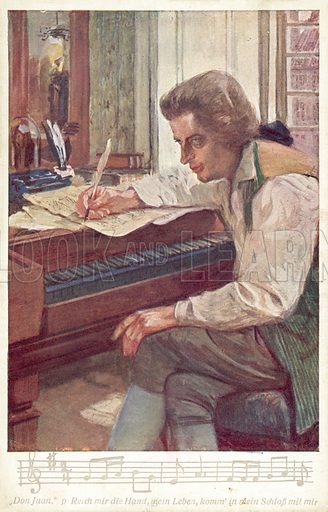
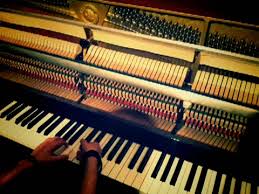
    Glissando is a term from music meaning sliding or gliding over keys.

    When glissando is applied to wordcraft, it means paying attention to the sound and flow of language.  Sounds arrest the reader’s attention. Even if your words are not read out loud, the reader hears them with her/his inner ear.

    All language has sound and sound communicates meaning, emotion, mood and tone. Language is also embedded with deeply appealing rhythms that, like drum beats or heart beats, that slip into the reader’s consciousness and enhance the experience of reading.

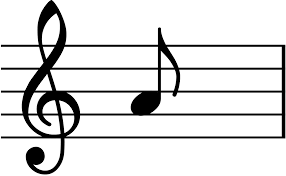
    In all writing, every word exists for a reason, every sentence builds the scene or idea. Each word is a note. Sometimes you want sound to lull a reader before you slap him with a heated argument or stage a bombshell scene. Sometimes you want him to pause at the end of a string of words. Sometimes you want to march along briskly as you dispense information.

    When sound is emphasized a narrative becomes poetic. When sound is deliberately employed, sentences, paragraphs and scenes have clout. Writing without themes, purpose and music is only typing and writing without paying attention to sound is flat and empty.

    Sound can add or subtract to the flow of writing.  Like other writing devices, flow is a nearly invisible factor, but when it’s employed, your writing will be seamless and will reflect the mood and ambiance of a particular point in a story.

    A note from Kiffer:  Think of a symphony.

    Think of symphonies and the myriad of moods that they evoke.

    A few examples:

    • Stravinsky’s riotous Rite of Spring
    • Gershwin’s sultry jazzy and brash exuberant Rhapsody in Blue
    • Bernstein’s fresh and challenging West Side Story
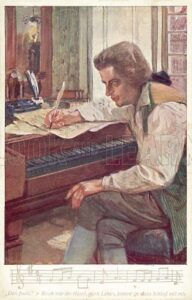
    • Mozart’s complex and exhilarating Jupiter 
    • Aaron Copland’s stirring and nostalgic Symphony for the Common Man
    • Bear McCreary’s Symphony for Battlestar Galactica  (a side note: Bear is from Bellingham)

    Each symphony is written with the same twelve notes, one note at a time. Each novel, each written work, is written one word at a time.

    Flow

    Flow happens when ideas and stories have fluidity, connectivity, and cohesion.  Flow is consciously applied as a courtesy to the reader because readers deeply resent being lost of confused when amidst a page or story. Readers also hate to be jolted or to dangle, or feel a sense of disorientation.  Flow provides the map, flow connects the dots, flow grants readers firm footing. Flow aids the internal logic needed to make your ideas comprehensible.  Flow will move the reader from sentence to sentence, paragraph to paragraph, idea to idea, scene to scene, and chapter to chapter with grace and ease.

    Transitions

    An essential technique that creates flow is transitions and it’s shocking how often writers neglect to use them.  Transitions are the words, phrases, sentences or paragraphs used to bridge what has been said with what is going to be said. Simple transitions are generally, but not always, a subordinate clause placed in the beginning of a sentence or paragraph and used as a road sign indicating a change. Probably the most famous transition in writing is “meanwhile, back at the ranch.” It provides an easy shorthand and the reader knows, Ah, we’ve changed locales; we’re at the ranch again. Wonder how Jane is getting along since Luke has been on the cattle drive for three months now.

    Transitions are handy devices because they can accomplish so much in only a few words. Their jobs are to signal: a change in time, a change in place, a shift in mood or tone, or a shift in point of view. Transitions also clarify relationships, emphasize, contrast or compare things, conclude actions or thoughts, and create associations.

    Here are a few tips for writing with wordcraft.

    • When in doubt, understate. Often the most painful, emotional, or violent moments in writing works best by using a minimalist approach.
    • Write about subjects that mean something to you, emotionally and intellectually; that force you to question your beliefs and values.
    • Save lush passages for choice moments in the story, especially decisions, revelations, and reversals. If you use heightened prose every time your character feels an emotion the whole will become contrived.
    • Omit redundancies like grotesquely ugly, grim reminders, complete surprise, and happy coincidence.
    • Make certain every sentence adds something new.
    • Generally avoid heightened prose for endings—often the best endings are concrete or understated.
    • Respect word territory. If you feature an unusual word in a sentence (effervescent, rococo, unremunerated, infelicity) then don’t repeat it again in a nearby paragraph or better yet, use it only once.

    Don’t forget to keep asking yourself, what does this remind me of?  As you lay out sentences and scenes, but also as go through your days, look around you with an artist’s curiosity.  It’s a simple question, and leads to wizardry.

    Keep writing, keep dreaming, have heart. Jessica


    Jessica Page Morrell

    Jessica Page Morrell is a top-tier developmental editor for books and screenplays. Her articles have appeared in Writer’s Digest and The Writer magazines. She is known for explaining the hows and whys of what makes for excellent writing and for sharing very clear examples that examine the technical aspects of writing that emphases layering and subtext. Her books on writing craft are considered “a must have” for any serious writer’s toolkit.

    Jessica will teach the Master Craft Writing Classes at the Chanticleer Authors Conference on Thursday, Sept. 3, 2020  and will present sessions during the conference.


    Did you know that Chanticleer offers editorial services? We do and have been doing so since 2011.

    And that our professional editors are top-notch and are experts in the Chicago Manual of Style. They have and are working for the top publishing houses (TOR, McMillian, Thomas Mercer, Penguin Random House, etc.). If you would like more information, we invite you to email Kiffer or Sharon at KBrown@ChantiReviews.com or SAnderson@ChantiReviews.com.

    A great way to get started is with our manuscript evaluation service. Here are some handy links about this tried and true service:

    https://www.chantireviews.com/manuscript-reviews/

    We work with a small number of exclusive clients who want to collaborate with our team of top-editors on an on-going basis. Contact us today!

    Writer’s Toolbox

    Thank you for reading this Chanticleer Writer’s Toolbox article. 

  • Writing Protagonists – by Jessica Page Morrell – A Chanticleer Writer’s Toolbox post

    Writing Protagonists – by Jessica Page Morrell – A Chanticleer Writer’s Toolbox post

    You need to care deeply about your protagonist – Jessica Page Morrell

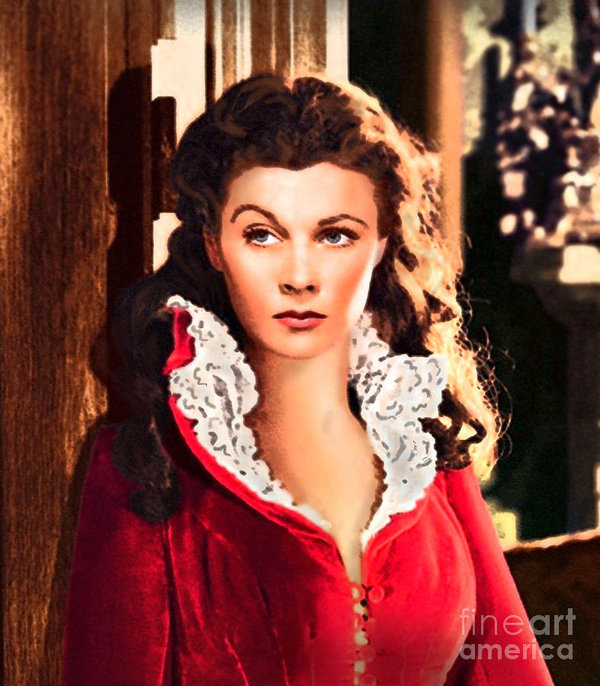
    It’s impossible to write about a main character you don’t care about. And care deeply. When I say care, you can actually pity the poor sod (Quoyle in The Shipping News), or disagree with his morality as when you write an anti-hero like Scarlett O’Hara or Tyrion Lannister of the Game of Thrones series. Many readers find anti-heroes likable or relatable, but so must the writer/creator. Because fiction writing requires a serious emotional and intimate involvement.

    Harry Potter of the Harry Potter Book Series by J.K. Rowling

    Ideally you’ll find your protagonist fascinating, indelible, someone you can co-habitate with for at least a year if not longer. Because between first drafts and final revisions, it will take at least a year to finish your novel. This means your main player needs to be interesting to hang out with and interesting to write.

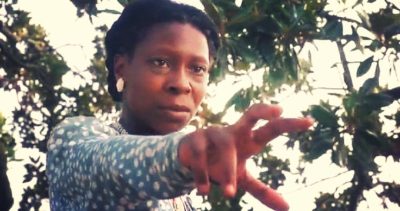
    Miss Celie of The Color Purple by Alice Walker

    I’ve known writers who have fallen out of love with their characters and it ain’t pretty. Especially if they created a series character. Typically they discover their creation feels stale or predictable. Similar to a failing relationship in the real world. Like those glum couples you spot in restaurants not speaking to each other; sitting in slumped misery or apathy. Of course I’m nosy and apt to spy on my fellow diners and I’ve been noticing these miserable pairings for years.

    Douglas Adam’s Hitchhiker’s Guide to the Galaxy’s protagonist – Arthur Dent

    Back to you and your main characters. Think long haul. Lasting commitment, curiosity or admiration. Think not being judgy, but observant and nosy, and perhaps a bit curious.

    Unforgettable or haunting protagonists are the keys to great fiction!

    A few suggestions for you to keep in mind:

    • Character first. Plot is people.
    • Create an intricate backstory that will cause motivations. This does not mean to add all of that backstory to your work.
    • Don’t confuse protagonist with hero. Sometimes the hero saves the day for the protagonist.
    • Sometimes the protagonist is not a “good guy.” Examples are:  Holden Caulfield from The Catcher in the Rye, Michael Corleone from Mario Puzo’s The Godfather, or Arthur Dent in The Hitchhiker’s Guide to the Galaxy by Douglas Adams.
    • Holden Caulfied – The Catcher in the Rye by J.D. Salinger
    • Give it time. It doesn’t need to be an instant attraction or intimacy, but your character should pique your curiosity.
    • Discover what in your character’s nature validates his/her humanity. Makes him or her worthy of your reader’s time.  Some of the best protagonists are not immediately sympathetic or understandable. It can take readers time to understand them. But that’s okay. Because there will be tests along the way that reveal his/her true nature.
    • Your protagonist needs traits you admire, even begrudgingly.
    • Figure in your protagonist’s chief vulnerabilities, then exploit them.
    • Understand how your character’s triggers, reactions or overreactions under duress.
    • Consider working out your demons through your protagonist. Is he or she insecure? Will he feel misunderstood? What about rewriting your awkward adolescent years through your character?
    Frodo of the The Lord of the Rings series by J.R.R. Tolkien

    Oh, and the protagonist should fail, fall on his face at least a few times along the way to the climax. Because your job as the master manipulator (aka author) is to blindside, torment, and thwart your characters. Again and again, so the outcome is in question and your readers are compelled to keep turning the pages.

    Handy Links to other articles featuring Protagonists

    The INCITING INCIDENT: STORY, SETBACKS and SURPRISES for the PROTAGONIST

    Essence of Characters

    Jessica Page Morrell
    Jessica Page Morrell

    Keep writing, keep dreaming, have heart.  – Jessica 

    Jessica Morrell is a top-tier developmental editor and a contributor to Chanticleer Reviews Media and to the Writer’s Digest magazine. She teaches Master Writing Craft Classes at the Chanticleer Authors Conference that is held annually along with teaching at Chanticleer writing workshops that are held throughout the year. 

    Jessica is teaching a Master Class at the Chanticleer Authors Conference along with other sessions. Click here to find out more information or to register. 

    Chanticleer Editorial Services

    Did you know that Chanticleer offers editorial services? We do and have been doing so since 2011.

    Our professional editors are top-notch and are experts in the Chicago Manual of Style. They have and are working for the top publishing houses (TOR, Macmillan, Thomas Mercer, Penguin Random House, Simon Schuster, etc.).

    If you would like more information, we invite you to email Kiffer or Sharon at KBrown@ChantiReviews.com or SAnderson@ChantiReviews.com for more information, testimonials, and fees.

    We work with a small number of exclusive clients who want to collaborate with our team of top-editors on an on-going basis. Contact us today!

    Chanticleer Editorial Services also offers writing craft sessions and masterclasses. Sign up to find out where, when, and how sessions being held.

    A great way to get started is with our manuscript evaluation service. Here are some handy links about this tried and true service:

    https://www.chantireviews.com/manuscript-reviews/

    Writer’s Toolbox

    Thank you for reading this Chanticleer Writer’s Toolbox article.

  • Elements of Successful Fiction to Keep Your Novel Writing Schedule on Track or NaNoWriMo Prompts from Jessica Morrell and Kiffer Brown-Writer’s Toolbox Series The Writing Toolbox

    Elements of Successful Fiction

    If you are partaking in NaNoWriMo, then you have made past the halfway mark by now. Congratulations!
    We hope that this article will provide prompting to spur you on to the finish line!

    The best fiction touches the deep layers in us. A writer achieves this effect by embedding dozens of techniques into his or her story. – Jessica P. Morrell

    Dramatic Question

    • Compelling fiction is based on a single, powerful question that must be answered by the story climax. 
    • This question will be dramatized chiefly via action in a series of events or scenes.
      • Examples:
        • If you are writing a romance, the question always involves whether the couple will resolve their differences and declare their love.
        • In a mystery the dramatic question might be will Detective Smith find the serial killer in time to prevent another senseless death?
        • In The Old Man and Sea, the dramatic question is will Santiago catch the big fish and thus restore his pride and reputation?
      • Assignments:

    An Intimate, Simmering World

    • An intimate world isn’t created by merely piling on details.
    • It means your story world has the resonance of childhood memories, the vividness of a dream, and the power of a movie. 
    • An intimate, simmering world is filled in with shadows and corners and dogs and ice cubes and the sounds and smells of a dryer humming on wash day and a car blaring past, with pop music shaking the windows. These details lend it authority, potency, and a palpable physical existence.
      • Diana Gabaldon’s The Outlander Series simmering details make this time-travel, fantasy, horror, science fiction extremely believable and immersive fiction.
    Outlander — Diana Gabaldon’s details make for immersive fiction

    An intimate story takes us to a specific place and coaxes us to remain there. An intimate story is lifelike and feels as real and complicated as the world the reader inhabits. When he finishes the final pages, and leaves the story world, he should feel the satisfaction of the ending, but also a huge sense of loss. Like a friend has moved to another town just when the friendship had reached a level of closeness and trust. – Jessica P. Morrell

    Characters Built from Dominant Traits

    • Create main characters with dominant and unforgettable traits as a foundation of personality.
    • These traits will be showcased in the story events, will help him achieve or fail at goals, and will make the story person consistent. 
      • For example, Sherlock Holmes’ dominant traits are that he is analytical, Bohemian, opinionated and intelligent. These traits are showcased in every story he appears in along with secondary and contrasting traits. When the character first appears in the first scene, he arrives in the story with his dominant traits intact.
      • Outlander’s Claire and Jamie.
      • Lord of the Rings‘ Gandolf
      • Lisa Wingate’s Before We Were Yours’ villain Georgia Tann
    The Witcher by Andrzej Sapkowski

    Emotional Need

    • The protagonists and main characters are people with baggage and emotional needs stemming from their pasts. These needs, coupled with motivation cause characters to act as they do.
      • For example, in Silence of the Lambs Clarisse Starling is propelled by childhood traumas to both succeed and heal the wounds caused by the death of her father.
      • Robert Dugoni’s Tracy Crosswhite in his The Tracy Crosswhite series.

    Significance

    • The storyline focuses on the most significant events in the protagonist’s life.
      • Example: Robert Dugoni’s Tracy Crosswhite searches for the killer of her sister in his The Tracy Crosswhite series.
      • Craig Johnson’s Longmire series – Sheriff Walt Longmire whose wife was murdered.

    Motivation Entwined with Backstory

    • Motivation, the why? of fiction, is at the heart of every scene, fueling your character’s desires and driving him to accomplish goals. 
    • Motivation provides a solid foundation for the often complicated reasons for your character’s behaviors choices, actions,  and blunders. 
    • Motivating factors provide trajectories for character development, as a character’s past inevitably intersects with his present.
    • Your character’s motivations must be in sync with his core personality traits and realistically linked to goals so that readers can take on these goals as their own.

    Desire

    • Desire is the lifeblood of fictional characters. 
    • Not only do your characters want something, but they also must want something badly.
      • You can bestow on your character flaming red hair, an endearing, crooked grin and a penchant for chocolate and noir movies, but if she doesn’t want something badly, she’s merely a prop in your story, not a driving force. But if she wants to win the Miss Florida contest, take over her boss’ job, or become the first female shortstop for the Atlanta Braves, then you’ve got a character who will make things happen and a story that will be propelled by desire.
      • The Ring from Lord of the Rings is a perfect example of a symbol of desire on so many different levels.
    Frodo and The Ring – LOTR by J.R.R. Tolkein

    Threat

    • Fiction is based on a series of threatening changes inflicted on the protagonist.
    • In many stories, these threats force him or her to change or act in ways he or she needs to change or act.
    • Often too, what the protagonist fears most is what is showcased in a novel or short story. It can be fear of losing his family, job, or health with a dreaded outcome.
    • Fear of losing to a threat or threats provide interest, action, and conflict.

    Causality

    Events in fiction are never random or unconnected. They are always linked by causality with one event causing more events later in the story, which in turn causes complications, which cause more events, which cause bad decisions, etc.

    Please visit our blog post on The Inciting Incident.

    The inciting incident of the Wizard of Oz

    Inner Conflict

    • A fictional character doesn’t arrive at easy decisions or choices.
    • Instead, he is burdened by difficult or impossible choices, particularly moral choices, that often make him doubt himself and question his actions.
    • Inner conflict works in tandem with outer conflict—a physical obstacle, villain or antagonist–to make the story more involving, dramatic, and events more meaningful.

    Complications

    • A story builds and deepens by adding complications, twists, reversals, and surprises that add tension and forward motion.
    • Plots don’t follow a straight path. Instead, there are zigzags, dead ends, and sidetracks.
    • Complications create obstacles and conflict, cause decisions to be made, paths to be chosen.
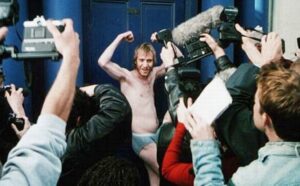
      • My favorite complication is one from Notting Hill when Spike is standing outside in his underwear strutting around with the paparazzi going wild for a peek at Anna Scott. How could Anna and William ever expect that complication?
    A complication from Notting Hill – the film.

    Midpoint Reversal

    • The middle of a novel comprises more than half its length.
    • At about the midpoint of most novels, a dramatic reversal occurs. The hunter becomes the hunted; a second murder occurs proving the detective has been wrong in his suspicions; a former lover arrives in town to complicate a budding romance.
    • This reversal keeps the middle from bogging down and becoming predictable and also breathes new life and often a new direction into the story.

    Satisfying Ending

    • Every story needs an ending that satisfies the reader while concluding the plot.
    • A satisfying ending does not have to be “happy” or victorious or riding off into the sunset.
    • The final scenes, when the tensions are red hot and the character has reached a point of no return, must deliver drama, emotion, yet a logical conclusion.
    • This is not to suggest that every plot ends with a shoot-out or physical confrontation.
    • Some endings are quieter, more thoughtful. Some endings are ambivalent, some a dramatic or a violent clash of wills.
    • However, there is always a sense that all the forces that have been operating in your story world have finally come to a head and the protagonist’s world is forever changed.

    We are cheering you on to the Finish Line!  You can do it!


    Jessica Page Morrell

    Keep writing, keep dreaming, have heart. Jessica

    Jessica Morrell is a top-tier developmental editor and a contributor to Chanticleer Reviews Media and to the Writer’s Digest magazine. She teaches Master Writing Craft Classes at the Chanticleer Authors Conference that is held annually along with teaching at Chanticleer writing workshops that are held throughout the year. 

    Kiffer Brown

    Keep creating magic! Kiffer 

    Kathryn (Kiffer) Brown is CEO and co-founder of Chanticleer Reviews and Chanticleer Int’l Book Awards (The CIBAs) that Discover Today’s Best Books. She founded Chanticleer Reviews in 2010 to help authors to unlock the secrets of successful publishing and to enhance book discoverability. She is also a scout for select literary agencies, publishing houses, and entertainment producers.


    Chanticleer Editorial Services – when you are ready

    Did you know that Chanticleer offers editorial services? We do and have been doing so since 2011.

    Tools of the Editing Trade

    Our professional editors are top-notch and are experts in the Chicago Manual of Style. They have and are working for the top publishing houses (TOR, McMillian, Thomas Mercer, Penguin Random House, Simon Schuster, etc.).

    If you would like more information, we invite you to email Kiffer or Sharon at KBrown@ChantiReviews.com or SAnderson@ChantiReviews.com for more information, testimonials, and fees.

    We work with a small number of exclusive clients who want to collaborate with our team of top-editors on an on-going basis.Contact us today!

    Chanticleer Editorial Services also offers writing craft sessions and masterclasses. Sign up to find out where, when, and how sessions being held.


    A great way to get started is with our manuscript evaluation service. Here are some handy links about this tried and true service: https://www.chantireviews.com/manuscript-reviews/

    Writer’s Toolbox

    Thank you for reading this Chanticleer Writer’s Toolbox article.


  • ESSENCE of CHARACTERS – Part One – From the Jessica Morrell’s Editor’s Desk – Writer’s Toolbox Series

    ESSENCE of CHARACTERS – Part One – From the Jessica Morrell’s Editor’s Desk – Writer’s Toolbox Series

    When a character is introduced in a story he or she needs to make a strong impression. (Walk-on and minor characters are sometimes the exceptions.) This means when you create characters after you make decisions about physical appearance and their essential role in the story, then start refining his or her essence and key personality traits. Some of the decisions about your character will happen without you making decisions because characters have a way of emerging and evolving in our deeper consciousness.

    • Fiction equals characters.
    • Characters make us care, worry, empathize.
    • Characters need to be knowable.

    No matter your process, it’s crucial to nail a character’s humanity and complexity on the page. And to nail his or her essence from the first breath he/she takes in your story.

    Senua’s Sacrifice: Hellblade

    Within the personality spectrum, there are endless possibilities. There are also layers to one’s personality, and it seems to me that the inner layers are a character’s essence.

    Let’s list some possibilities: quiet, serious, boisterous, buoyant, innocent, worldly, full of laughter, cautious, always ready for adventure. Let’s consider other options: practical, frivolous, introverted, extroverted, questioning, plays by the rules, respects the status quo, rebellious, rigid, creative, uptight, light-hearted.

    Samwise Gamgee – LOTR

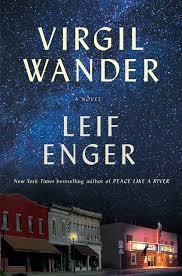
    Virgil Wander

    I recently read Leif Enger latest beautiful novel, Virgil WanderIt’s now number one on my Top 10 Favorite Novels of All-time list. One thing I like best about Enger’s stories is that he creates fascinating and sometimes oddball characters you’ve never met before and will never forget. He toes the line between creating ordinary-extraordinary story people you want to spend a lifetime with. 

    And while complicated, they’re knowable  They typically face uncommon, vexing problems and dilemmas and seem as human as my next-door neighbor. Virgil Wander, the protagonist of this wending tale, is no exception. I don’t want to give away too much, but he starts the story with a head injury and owns a failing theater in a small town. 

    The failing town is perched on the ever-changing and blustery Lake Superior and skies, wind, and storms play a big role in the story. If you’ve never visited Lake Superior, the largest body of fresh water on the planet, it’s a primal, massive inland sea.

    One of the many moods of Lake Superior

    Toss in a pipe-smoking, kite-flying Norwegian, a mysterious prodigal son millionaire, a missing baseball player, several boys who need a father, and a local handyman on a downward arc. The setting is tightly woven into all aspects of the tale, but it’s the characters who will live in me forever.

    Here’s an example of how Enger introduces a character, the aforementioned missing ballplayer, while capturing his essence and adding to the mystery of his disappearance: Most people knew about Alec Sandstrom, or thought they knew, could be traced to a silken Sports Illustrated article published on the anniversary of his death.

    The magazine’s expenditure of four thousand words on a failed minor-league pitcher testifies to Alec’s magnetism. In two seasons of small-time baseball, Alec was often compared to eccentric Detroit phenom Mark Fyrich, who is remembered for speaking aloud to the ball itself as though recommending a flight path. Alec didn’t talk to baseballs–his quirk adored by fans of the Duluth-Superior Dukes, was to break out laughing during games. Anything could set him off: an elegant nab by the second baseman, a plastic bag wobbling like a jellyfish across the diamond, a clever heckle directed at himself. His merriment was unhitched from his success. Sometimes he laughed softly while leaning in for signs. His fastball was a blur, its location rarely predictable even to himself. Sprinting on-field to start the game, limbs flailing inelegantly, Alec always seemed sure his time had arrived. 

    “Reality wasn’t strictly his deal,” Beeman recalled. “My God he was fun to watch.”

    Engaging as Alec could be, he’d never have received the elegiac Sports Illustrated treatment had he not strapped himself into a small plane at dawn, lifted off in a light westerly, and banked over Lake Superior never to return.  

    Untethered from his success. Sigh. Pardon me while I indulge in writer’s envy. As you can tell, Alec is an original. And notice how his essence is joyful?  Stay tuned, I’m going to reveal a few more of his characters’ essence in an upcoming post.

    Keep writing, keep dreaming, have heart. Jessica

    Jessica Page Morrell


    Jessica Morrell is a top-tier developmental editor and a contributor to Chanticleer Reviews Media and to the Writer’s Digest magazine. She teaches Master Writing Craft Classes at the Chanticleer Authors Conference that is held annually along with teaching at Chanticleer writing workshops that are held throughout the year. 

    Did you know that Chanticleer offers editorial services? We do and have been doing so since 2011.

    And our professional editors are top-notch and are experts in the Chicago Manual of Style. They have and are working for the top publishing houses (TOR, McMillian, Thomas Mercer, Penguin Random House, etc.) and elite indie presses.

    We work with a small number of exclusive clients who want to collaborate with top-editors on an on-going basis.

    Contact us today! If you would like more information, we invite you to email Kiffer or Sharon at KBrown@ChantiReviews.com or SAnderson@ChantiReviews.com


    A Chanticleer Reviews – Writer’s Toolbox blog post on Character Development by Jessica Page Morrell    

    Writer’s Toolbox

  • Solid Nouns, Words that Resonate, Verbs that Empower – the Tools of Writing by Jessica Morrell – Writing Toolbox

    Solid Nouns, Words that Resonate, Verbs that Empower – the Tools of Writing by Jessica Morrell – Writing Toolbox

    English has always been an adaptive, vital language and was influenced by the King James Bible, the Renaissance which flooded the language with new words, and Shakespeare, who added more than 4,000 words and phrases. Modern English and American English, in particular, resulted from borrowings, gleanings, and adaptations–a mongrel language. That is one reason why you’ll find a list of synonyms for many words in the English language.The English language, or Old English, originated from Germanic tribes in northern Europe who invaded Britain between the fifth and seventh century. It was mostly a spoken language and Britain was populated with Celts though Roman influences still lingered. The Anglo-Saxon impact lasted about 600 years. The Vikings raided and settled in parts of England and brought Old Norse, also a Germanic language, between the eighth and eleventh century.


    The Norman Conquest in 1066 and the conquerors brought William as king and Old French. French is a romance language with roots in Latin and borrowings from the Greeks. It was also called Romance English. Old French began dying out in England and was replaced by Middle English from about 1100 to 1500.

    But words of Anglo-Saxon origin have always been considered more down-to-earth and concrete. These words have also been considered more working class, crude, and simple.  Words of French (and Latin) origin are considered softer, elevated,  elegant and sometimes pompous.

    For example:

    Anglo-Saxon                            French

    1. gut                                         intestine
    2. fire                                         flame
    3. ghost                                     phantom
    4. buy                                        purchase
    5. earthly                                   terrestrial
    6. stench                                   odour
    7. heaven                                  celestial
    8. wild                                       savage


    So how is a writer to choose?

    Generally opt for punchy, potent, and plain diction. Old English makes readers pay attention. It is typically literal as in ‘bone house’ for the human body. Or ‘whale road’ as one word that describes the sea.

    Anglo Saxon words are leaner, single syllable words that are:

    • terse
    • easier to read
    • punchier
    • less formal
    • ‘of the body’

    Examples: blood, sweat, tears, toil, stone, wood, bless, wish

    French and Latin words are usually

    • formal
    • more abstract
    • harder to read
    • multisyllabic
    • ‘of the mind’

    Examples: Excrement, intercourse, cogitate, enquire, imbibe

    You can easily think of the English versions of the above words — definitely, terser, plain words come easily to mind.

    But, and this is an important but; it all depends on voice, tone, and purpose.

    Is your viewpoint character a professor or modern-day Huck Finn? Is your character 55 or 12? Are you writing for kids or adults? Humorous tone or deadly serious?

    Rely on Anglo-Saxon if you’re writing: picture books, YA, humor, adventure, thrillers, fantasy. Use it when you want to reveal emotions and get into your character’s body.

    Rely on French or Latin origin words if you’re writing: romance (cherish, desire, infatuation), nonfiction, science fiction (alien, dystopia, alchemy) technical writing and documents.

    It’s always helpful to know a word’s etymology. And you’d be silly to omit the offerings of Yiddish (chutzpah, glitch, schmooze), Italian ( facade, vista, replica, bizarre) or Old Norse (dazzle, ransack, berzerk). So many treasures, endless tools.

    Keep writing, keep dreaming, collect words. – Jessica

    Bonus: A link to the prose style of George R. R. Martin. (new word combinations, new coinages, +1,000 names of characters – all meaningful and descriptive, and more)

    Fun bonus: From The Guardian, writers on words they love best.  “From plitter to drabbletail: the words we love”

    Click here to access the link to Jessica’s previous article:  AMP UP TENSION WORD by WORD — with a handy list of  1,130 words that you print out and use for your writing toolbox.


    Jessica Page Morrell
    Jessica Page Morrell


    Jessica Page Morrell is a top-tier developmental editor and a contributor to Writer’s Digest magazine, and she teaches Master Writing Craft Classes at the Chanticleer Authors Conference that is held annually along with teaching at Chanticleer writing workshops.

    Jessica has confirmed that she will teach a Master Class and advanced writing craft sessions at CAC19.

    Jessica understands both sides of the editorial desk–as a highly-sought after content development editor and an author. Her work also appears in multiple anthologies and The Writer and Writer’s Digest magazines. She is known for explaining the hows and whys of what makes for excellent writing and for sharing very clear examples that examines the technical aspects of writing that emphases layering and subtext. Her books on writing craft are considered “a must have” for any serious writer’s toolkit. For links for her writing craft books, please click on here.

    Chanticleer Reviews and OnWord Talks will interview Jessica for more of her writing tips and advice. Stay tuned! ~ Chanticleer (who hails from Chaucer’s Canterbury Tales).


  • How to Write Potent Action Scenes – Part 2 by Jessica Page Morrell – Writing Craft Series

    How to Write Potent Action Scenes – Part 2 by Jessica Page Morrell – Writing Craft Series

     A few years back, above the sparkling Pacific, the prolific and talented  Chelsea Cain talked to writers about what she’d learned from writing bestsellers. One piece of her advice always stuck with me: Write the bare bones version of the scene first using mostly dialogue, and then move on and in the second draft flesh out the scenes with description and action.

    In other words, an early draft might look more like a screenplay than a novel.

    Fiction and memoir writers need to be omnivorous–searching out classics and bestsellers, prizewinners and Goodreads favorites–reading widely, and analyzing with an eye for structure and arcs. And they need to analyze movies and read screenplays for storytelling techniques. All screenplays reveal the underlying acts and key events and there’s a lot to be learned from what screenwriters leave out.

    …there is a lot to learn from what screenwriters leave out.

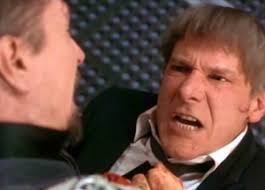
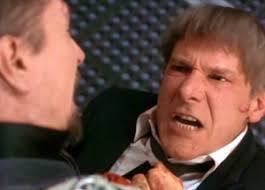
    Below I’ve pasted the opening or set up in the thriller Air Force One written by Andrew Marlow. If you write action or thriller novels, what did this story teach you? For example, notice how the protagonist has a lot to lose. Air Force One is hijacked while the president and the first family are on board.  Smart writers insert sky-high stakes by using vulnerable characters and complicated motives. In the opening, the president makes comments about not bargaining with terrorists. And the first two acts set up a deadly showdown and the memorable dialogue “Get off my plane.”

    (I listed two screen writing resources at the end of this post – JPM)

    Tip for Writing Action Scenes:  READ SCREENPLAYS!

    Here is the excellent sample from top screenplay writer, Andrew Marlow, the opening from Air Force One. 

    Like most action films, Air Force One begins without prelude:

    Air Force One
    
                       Andrew Marlow 
    
    FADE IN:
    INT. C-130 HERCULES TURBO-PROP - NIGHT
    
    Eighteen combat-ready special forces, wearing 
    assault black, jump packs and combat gear,stare down
    the deep end of a greasy ramp into the night sky. 
    Village lights flicker 19,000 feet below.
    
    The STRIKE FORCE LEADER signals to his team.
    
    Without a moment's hesitation, they dive into the
    darkness and plummet toward earth.
    
    EXT. MANSION - NIGHT
    
    A military GUARD, old Soviet-style uniform,rounds 
    the corner of the large estate toting an AK-47.
    
    A red laser dot appears briefly on his forehead and
    after a beat, the red dot seems to bleed.The Guard
    collapses dead.Two other GUARDS are dispatched with
    single, silenced shots.
    
    A Strike Team member at a junction box awaits a signal.
    
    Through infra-red binoculars the strike Force Leader 
    watches his assault troops as they take positions.
    
                        STRIKE FORCE LEADER
                (into headset/in Russian) (Russian)
                             GO!
    
    On the estate - as the power goes out.The team on the 
    mansion's front porch pops the door and pours in.
    
    INT. MANSION - NIGHT
    
    FOLLOWING - the FIVE TEAM MEMBERS as they rush a 
    stairway in phalanx formation. They nearly knock 
    over an old lady, who in turn lets out a blood
    curdling scream.
    
    UPSTAIRS CORRIDOR -
    
    The team kicks open a door.  Rushes into the room.
    
    INT. BEDROOM -
    
    Assault weapons pointed at the bed. The soldiers 
    yank back bedsheets to reveal IVAN STRAVANAVITCH, a
    middle-aged man and his half-naked 18-year-old 
    concubine.
    
                         SOLDIER
                       (in Russian)
                      Get up, now!  Up!
    
    The soldiers pull Stravanavitch to his feet and haul
    him out of the room.
    
    FOLLOWING -  As they push down the hallway.
    
    MANSION SECURITY GUARDS rally with haphazard gunfire.
    
    Out come the strike force's flash-bang grenades.
    Exploding everywhere, disorienting Stravanavitch's 
    men.
    
    EXT. FIELD - NIGHT
    
    Signal flares burn as a helicopter descends on the 
    position. The Strike Team evacuates across the field 
    and forces a struggling Stravanavitch into the low-
    hovering copter.
    
    The commandos swiftly board the craft as a handful of 
    Stravanavitch's guards break into the clearing.They
    open fire.
    
    And the mounted machine guns on the helicopter 
    return.
    
    One of the Strike Team members takes a bullet to the
    neck. He's pulled by his comrades into the chopper as
    it lifts into the sky, its guns spitting lead...
    
                   STRIKE FORCE LEADER (V.0.)
    
                  Archangel, this is Restitution.
    
                  Archangel, this is Restitution.The 
                  package is wrapped.  
                  Over.
    
                       VOICE (V.0. RADIO)
                  Roger, Restitution.  We are standing 
                  by for delivery.
    
                      FADE TO BLACK
    The SOUNDS of a dinner banquet.  
    Forks clanking against plates and 
    the din of a hundred conversations, 
    broken by...
    
    The DING, DING, DING of a SPOON tapping against a wine glass.
    SUPER TITLE:   "MOSCOW - THREE WEEKS LATER
    FADE IN:
    
    INT. BANQUET ROOM - NIGHT
    
    Hundreds of men and women in formal evening wear sit 
    at round banquet tables. A HUSH falls over the guests 
    as the DINGING continues.  All attention turns to the 
    front table.
    
    A rotund, silver haired-man in his late sixties 
    rises and sidles past U.S.and Russian flags up to the podium 
    microphone.  He is STOLI PETROV, President of Russia.
    
                              PETROV
                           (in Russian)
              Thank you for joining us this evening.
    
              Petrov's harsh Russian issues through the 
              room.  But over it we hear a young woman's
              voice translating.
    
                         TRANSLATOR (V.0.)
              Tonight we are honored to have with 
              us a man of remarkable courage, who, 
              despite strong international 
              criticism...
    
    AT THE FRONT TABLE -
    
    A translator's words ring in the earpiece of a 
    handsome man in his mid-forties.  Worry lines crease 
    his forehead and the touch of gray at his temples 
    attest to three very difficult years in office.
    
    This man is JAMES MARSHALL, and he is the PRESIDENT of the 
    UNITED STATES OF AMERICA.  He busily makes last 
    minute changes to his speech.
    
                          TRANSLATOR
                        (V.0. earpiece)
               Has chosen to join our fight against 
               tyranny in forging a new world 
               community.  Ladies and gentlemen, I 
               give you the President of the United 
               States of America...
    
               Mr. President.
    
    Thunderous applause as Marshall rises and approaches
    the podium.
    
    At the back of the room, DOHERTY, a senior policy 
    adviser whispers to the President's Chief of Staff 
    ED SHEPHERD...
    
                               DOHERTY
                 Maybe we should consider running him 
                 for re-election instead of the U.S.
    The applause dies as Marshall begins to speak.
    
                             MARSHALL
                   (in Russian with subtitles)
                 Good evening and thank you.  First I 
                 would ask you to join me in a moment 
                 of silence for the victims of the 
                 Turkmenistan massacres.
    
    The room remains silent a few beats.  Most guests 
    respectfully bow their heads.
    
    Marshall begins again, but this time in English. The young 
    woman translates simultaneously for the Russian audience.
    
                          MARSHALL
              As you know, three weeks ago American 
              Special Forces, in cooperation with 
              the Russian Republican Army, secured 
              the arrest of Turkmenistan's self-
              proclaimed dictator, General Ivan 
              Stravanavitch, whose brutal sadistic 
              reign had given new meaning to the 
              word horror.  I am proud to say our 
              operation was a success.
    
    Applause from the audience.  Marshall turns the page
    on his speech.
    
                          MARSHALL
              And now, yesterday's biggest threat 
              to world peace... today awaits trial 
              for crimes against humanity.
    
    During the applause, Marshall pulls a page from the
    speech, folds it and slides it into his pocket.  He 
    removes his glasses and looks out into the crowd. 
    His tone becomes more personal.
    
    He's not reciting the speech anymore.
    
                            MARSHALL
               What we did here was important.  We 
               finally pulled our heads out of the 
               sand, we finally stood up to the 
               brutality and said "We've had enough.  
               Every time we ignore these atrocities-- 
               the rapes, the death squads, the 
               genocides- every time we negotiate 
               with these, these thugs to keep them 
               out of gig country and away from gig 
               families, every time we do this 
               we legitimize terror.
    
               Terror is not a legitimate system of 
               government.  And to those who commit the 
               atrocities I say, we will no longer 
               tolerate, we will no longer negotiate, and we will no longer 
               be afraid.  It's your turn to be afraid.
    
    Applause rolls through the crowd.
    
    EXT. MOSCOW INTERNATIONAL AIRPORT - NIGHT
    
    Sprawling terminals spread out to runways like 
    tentacles.
    
    ON THE TARMAC -
    
    Bathed in floodlights, perched majestically on the 
    runway, dwarfing nearby commuter and military jets, 
    stands...
    
                            AIR FORCE ONE
             The President's own Boeing 747-200, 
             dubbed "the flying White House".  
             The distinctive royal blue stripe 
             over a thin gold line tapers to a 
             tail adorned with the American flag 
             and the Presidential Seal Secret 
             Service agents and Marines stand 
             guard at the aircraft's perimeter.
    
    A RUSSIAN NEWS VAN emerges from the darkness and 
    pulls to a stop by a Secret Service barricade.
    
             SPECIAL AGENT GIBBS greets the Russian news
             team that emerges.
    
                              GIBBS
              Gentlemen, welcome to Air Force One.
    
              Please present your equipment to Special 
              Walters for inspection.
    
     The news team's segment producer, a crusty old 
     Russian named KORSHUNOV raises his big bushy eyebrows.
    
                         KORSHUNOV
               We've already been inspected.
    
                         GIBBS
              Sir, this plane carries the President 
                             of the United States.
    
             Though we wish to extend your press service
             every courtesy, you will comply with our 
             security measures to the letter.
    
                              KORSHUNOV
             Of course.  I'm sorry.
    
    Korshunov and the FIVE MEMBERS of his news crew 
    present their video cameras, sound equipment and 
    supplies to Special Agent WALTERS for inspection.
    Secret Service DOGS sniff through the baggage.
    
                                GIBBS
                Please place your thumbs on the ID 
                pad.
    
    Korshunov puts his thumb on the ID pad of a portable
    computer.
    
    The computer matches up his thumbprint with his 
    dossier and photograph. "CLEARED" flashes on the
    computer screen.
    
    
    INT. HALLWAY - NIGHT
    
    The President, walking with his entourage.
    
                          SHEPHERD
               CBS said they'll 
               give us four minutes.  They thought 
               the Russian was a nice touch.
    
                          MARSHALL
               I always wondered if my freshman 
               Russian class would come in handy.
    
                          DOHERTY
               Sir, you threw out page two.
    
                          MARSHALL
               Goddamn right I did.  I asked for a 
               tough-as-nails speech and you gave 
               me diplomatic bullshit.  What's the 
               point in having a speech if I have 
               to ad-lib?
    
                           DOHERTY
               It was a good ad-lib, sir.
    
                           MARSHALL
               Thanks.  Wrote it last night.
    
    The President exits the building and enters his 
    limousine.
    
    EXT. TARMAC - AIR FORCE ONE - NIGHT
    
    Walters hands the bags back to the Russians.
    
                       WALTERS
              Equipment checks out.
    
    A striking woman in her early thirties descends Air
    Force One's stairway.  MARIA MITCHELL.
    
                            GIBBS
              Gentlemen, this is Maria Mitchell.
    
              Press Relations for the Presidential Flight Office.  She'll 
              take you from here.
    
                          KORSHUNOV
              Ms.  Mitchell.  So nice to finally 
              meet you in person.
    
                        MITCHELL
              The President and I were delighted 
              that we could accommodate you.  Now 
              if you're all cleared?
                       (Gibbs nods)
              You can follow me then.
    
    They ascend into the belly of Air Force One.
    
                        MITCHELL
              I'll be giving 
              you a brief tour, then during the 
              flight, two members of your crew 
              will be allowed out of the press 
              area at a time for filming.  You 
              will have exactly ten minutes with 
              the President and twenty with the 


    Screenplay Resources from Jessica Page Morrell:
    You can find thousands of screenplays online to read.
    Here’s a good resource for screenplays: SIMPLYSCRIPTS.com where you can read the scripts from
    3 Kings, The Fifth Element, An American Werewolf in Paris, and more!

    And here is a screenwriting informational website titled Go Into the Story 

    Click here to read Part One of How to Write a Potent Action Scene by Jessica Page Morrell.


    Jessica Page Morrell is a top-tier developmental editor and a contributor to Writer’s Digest magazine,  and she teaches Master Writing Craft Classes at the Chanticleer Authors Conference that is held annually.

    Jessica Page Morrell

    Jessica Page Morrell

    Jessica understands both sides of the editorial desk–as a highly-sought after content development editor and an author. Her work also appears in multiple anthologies and The Writer and Writer’s Digest magazines.  She is known for explaining the hows and whys of what makes for excellent writing and for sharing very clear examples that examines the technical aspects of writing that emphases layering and subtext. Her books on writing craft are considered “a must have” for any serious writer’s toolkit. For links for her writing craft books, please click on her above. 

    Chanticleer Reviews and OnWord Talks will interview Jessica for more of her writing tips and advice. Stay tuned! ~ Chanticleer

    We are planning a writing craft workshop soon that will be taught by Jessica.