Tag: Writing Craft

  • Character Development, Dialogue, and Beats, a Chanticleer Writers Toolbox Article by David Beaumier

    Character Development, Dialogue, and Beats, a Chanticleer Writers Toolbox Article by David Beaumier

    Understanding What Makes Good Character Development

    Character Development is a tricky matter. In this article we’ll go through the basics of setting up what your character does and how you describe them, coupled with the idea of beats in dialogue.

    A character sketch model covered in paint
    Artists all over use character models!

    Consider the following excerpt from a recent work in progress from a friend of Chanticleer:

    In the guest room we have spider plants that have often refused to die in the past. They grow everywhere and propagate like mad, their white and green spear-like leaves overflowing any pot we put them into. We keep them trimmed back carefully, letting them give us plenty of fresh oxygen while at the same time making sure our space isn’t entirely overrun.

    This description comes in the middle of getting something for another character, and there are 4 paragraphs of plant and room descriptions. Four! That’s too much narrative description that adds little to the story and does nothing to build tension. Now look at the revision of all those paragraphs:

    I head out to the kitchen. I don’t see Mom, but this is the week we’re supposed to water the plants, so I fill up our yellow watering pail with a comically long spout that aids in watering closer to the base on the plants. The red and green leafed crotons in the kitchen next to the sink are first, then the fishtail palm in the bathroom that always wants more water despite the wetness of its location, the spider plants in the office, my kalanchoe was watered last week, and then I finish with the lemon tree. The lemon trees petals are almost all gone, which means we’ll have meyer lemons soon, but any sweet smell it had recently is gone.

    Red and Green Succulent Plant

    Now, in addition to understanding that the character is looking for their mother. The plants appear in a flash, coupled with the action of being watered, and we end on the lemon tree, which promises something good, but right now seems rather lackluster, which mirrors the mood of the overall scene. This quick summary helps the story move from prolonged description that will make the reader’s eyes glaze over, and instead moves us from one point to the next.

    Interested more in secondary characters? Learn more about them from the one and only Jessica Morrell here. For more that focuses on general background characters, try this article from Skip Ferderber here.

    So when do we put in a little summary for the character?

    Renni Browne and Dave King say the following in their book Self-Editing for Fiction Writers:

    If your characters actually act the way your summaries say they will, the summaries aren’t needed. If they don’t, the summaries are misleading. Either way, your fiction is likely to be more much effective without the character summary

    In terms of time progression in a story summary is a way of storytelling where a little is described to cover a large period of time. It helps to have it balanced with scenes where action and time are equivalent, or moments of interiority where a lot happens in almost always a slow point in the narrative. However you choose to do it, make sure there’s a good balance in terms of time in your work, and that scene is often the driving force.

    A balance scale holding two question marks.

    Looking for tips to streamline your dialogue? Make it more potent with tips from Jessica Morrell here.

    Unobtrusive ways to develop Character

    • Learn their history so that when you write them it will come out intuitively
    • Show how other characters react to them directly.
    • Show how the world interacts with them as they move through it.

    That’s well and good, but how do you measure your character development? Well, we’re glad you asked:

    • How much time do you spend describing characters?
    • Are you telling us characteristics that will show up later in dialogue and action?
    • How much of the character’s history have you explored with the reader? Does the reader need all of that information, or does the story read well without it? If so, when do they need to know it

    Dialogue Mechanics

    A famous author once called dialogue the purest form of scene.

    Dialogue bubble, Photo booth props free printables

    Obviously there are moments where this is wrong, such as when the dialogue is done as a form of telling.

    “Hi Joe, I haven’t seen you since the divorce with June after you came back from the war!”

    A person answering the phone in a friendly manner
    You may remember plays where it starts out with someone answering the phone and setting up the plot by responding to the person on the other end.

    However, the idea of telling that sneaks its way most prominently into dialogue mechanics is the dialogue tag, often accompanied by an adverb. Consider Newgate Callander of The New York Times Book Review take on the wildly successful Bourne Ultimatum series:

    Mr. Ludlum has other peculiarities. For example, he hates the “he said” locution and avoids it as much as possible. Characters in “The Bourne Ultimatum” seldom “say” anything. Instead, they cry, interject, interrupt, muse, state, counter, conclude, mumble, whisper (Mr. Ludlum is great on whispers), intone, roar, exclaim, fume, explode, mutter. There is one especially unforgettable tautology “‘I repeat,’ repeated Alex.’

    The book may sell in the millions, but it’s still junk.

    Let’s take it further and look at even more examples of redundant or overemphasized dialogue tags:

    • “I’ll kill your whole family,” he hissed maliciously.
    • “You can’t be serious,” she said in astonishment.
    • “Give it to me,” she demanded
    • “Here it is,” he offered.
    • “Is it loaded?” she inquired?

    These all share one thing—they fear the use of “said.” Sure, sometimes a word other than “said” will help break things up for variety’s sake, but “said” is almost always proper and good to use.

    “Said” is essentially a punctuation mark for readers. It serves the purpose of helping them track who said what in a dialogue.

    See what Peter Greene says about realistic dialogue in his interview here.

    Adverbs: Friend or Foe

    2016-2017 Psychic Yes Or No Oracle - Get Accurate Answers
    To be or not to be

    Adverbs are the enemy much of the time in dialogue. There is almost always a better word to use. Putting in a prop like the dreaded -ly will make your dialogue seem weak, even if it isn’t.

    The only real exception to the rule is with the dialogue tag “said” because it’s so ubiquitous that it can allow for some extra description on occasion. Remember, the dialogue will often do the work of setting the tone for you.

    Gabriel García Márquez would eliminate all adverbs from his writing, choosing instead to use the word in another form.

    For example, instead of “he said softly” I would write “he said, his voice soft”

    A few general tips:

    • Pronoun substitutions are fine
    • Renaming the character can be wonky. Dave, Mr. Winchester, The Sheriff, the officer, the lawman, CHOOSE!
    • New speaker/new action means a new paragraph!
    • Ending with a dialogue tag uses a comma. Ending with an action uses a period. Ex: “Hey there,” he said. vs “Hey there.” He scratched his chin.
    • This indicates interruption: “Now wait just—”
    • This indicates trailing off: “Now wait just a second…”

    Again, consider how you measure these things.

    • Check your dialogue for explanations. Consider bringing a highlighter for this job.
    • Cut the explanations and reread your dialogue. If it reads worse, you may need to rewrite your dialogue.
    • Mark every adverb related to dialogue. How many of them are based on adjectives describing emotion? Which ones can you cut?

    Woman student highlighting with text marker in document

    Beats in Character Development

    Let’s pause here to talk a little bit about beats and figure out how to us them to balance out dialogue. Again, using an example from Self-Editing:

    “But didn’t you promise…” Jessie said.

    “I did nothing of the sort,’ Tyrone said.

    “Now, look, you two—” Dudley said.

    You stay out of this,” Tryon said.

    VS.

    “But didn’t you promise…” Jessie said.

    “I did nothing of the sort,’ Tyrone said.

    Dudley stepped between them and held up his hands. “Now, look, you two—”

    Tyrone spun on him. “You stay out of this.”

    Just like the saids, there can be too many beats, so be careful how you balance it.

    Think about white space in a sketch for a painting. All the lines that make up the body of the work are the dialogue of your piece–it gives the plot, characters, and conflict a structure to work within. The beats are the color the fill it in, showing the reader a complete picture of what’s taking place. As you write, ask yourself if you’re better at overwriting and then trimming back or underwriting and fleshing out. Play to your strengths for your first draft, and then come back ready to adjust for any areas you know you’ll be weak.

    Glass Painting : 10 Steps (with Pictures) - Instructables

    The beats tie your dialogue together. Map them by marking the descriptions you have interspersed within your dialogue.

    Make your beats sing by seeing what Margie Lawson has to say about rhythm and cadence here.


    Chanticleer Editorial Services – when you are ready

    Did you know that Chanticleer offers editorial services? We do and have been doing so since 2011.

    Tools of the Editing Trade

    Our professional editors are top-notch and are experts in the Chicago Manual of Style. They have and are working for the top publishing houses (TOR, McMillian, Thomas Mercer, Penguin Random House, Simon Schuster, etc.).

    If you would like more information, we invite you to email Kiffer or Sharon at KBrown@ChantiReviews.com or SAnderson@ChantiReviews.com for more information, testimonials, and fees.

    We work with a small number of exclusive clients who want to collaborate with our team of top-editors on an on-going basis. Contact us today!

    Chanticleer Editorial Services also offers writing craft sessions and masterclasses. Sign up to find out where, when, and how sessions being held.

    A great way to get started is with our manuscript evaluation service. Here are some handy links about this tried and true service: https://www.chantireviews.com/manuscript-reviews/

    And we do editorial consultations. for $75.  https://www.chantireviews.com/services/Editorial-Services-p85337185

    Writer’s Toolbox

    Thank you for reading this Chanticleer Writer’s Toolbox article.

    Writers Toolbox Helpful Links: 

    Supporting Cast – Taking Risks with Your Secondary Characters – From the Editor’s Desk of Jessica Morrell

    Putting More Character into Your Characters – by Skip Ferderber

    How He Increased Book Sales, Writes Realistic Dialogue, and Structures His Writing — Award-winning Author Peter Greene Shares His Tips and Tools

    TIPS for POTENT DIALOGUE by Jessica Morrell

    Rhythm and Cadence and Beats, Oh Yes! by Margie Lawson

    The traditional publishing tool that indie authors can use to propel their writing careers to new levels?  https://www.chantireviews.com/2016/05/15/the-seven-must-haves-for-authors-unlocking-the-secrets-of-successful-publishing-series-by-kiffer-brown/
  • The Eyes Have It – From the Editor’s Desk of Jessica Morrell – a Chanticleer Writer’s Toolbox blog post

    The Eyes Have It – From the Editor’s Desk of Jessica Morrell – a Chanticleer Writer’s Toolbox blog post

    Into every writer’s life problems rear their snaggley heads.

    At times we lapse into dullness, we lean on crutch words, we make typos and gaffs. We write with clichés.

    Punch Almanack 1885

    Our plots wander, our characters confuse, and our endings fall flat.

    Because writing is hard. Yep.

    And writers are at a natural disadvantage  because we use computers and the familiarity of our words on the screen breeds a kind of blindness. Sometimes the more often you read your own words, the less you’re able to identify their strengths and weaknesses.

    With that in mind, I want to call your attention to a simple technique in writing fiction:

    Using characters’ eyes to reveal emotion and  meaning.

    This is a reminder to  pay more attention to how your characters look, stare, and express emotions. If eyes are the windows to the soul, then match your characters’ expressions  to the exact emotion or reaction needed. – Jessica Morrell

    Here are some suggestions for getting your characters’ eyes to reveal emotion and meaning:

    1. Figure out your crutch phrases and go-to moves. A few that appear too often  are eyes widening, teary eyed, blank stares,  blurred vision, stared straight ahead, watched like a hawk, she looked him straight in the eye, eyes darting, piercing stares, blinking back tears, eyes narrowing, smoldering looks, deep-set eyes, and steely-eyed. Avoid also cliched colors like baby blue, emerald, and chocolate.
    2. Make certain that the character’s eyes are appropriate to the scene. Too often characters gaze down at the floor or at their hands. Now, these gestures typically indicate discomfort or avoidance, but sometimes writers just sow them into a scene when that’s not the intended effect.
    3. Don’t. Feature. All. Your. Characters. Reacting. The. Same. Way.
    4. Avoid strangeness and viewpoint slips such as His eyes smiled at me or Her face fought against tears. Three words to keep in mind – POINT OF VIEW.
    5. Ditch the hobbit staring. Hobbit staring is a term I learned from a movie buff friend. He coined it from the Lord of the Rings films when the camera lingers too long on stares between two characters as if that demonstrates some deep meaning or message. Because often it does not. We’ve all seen this in films. Imagine how this will have your readers skimming the pages.
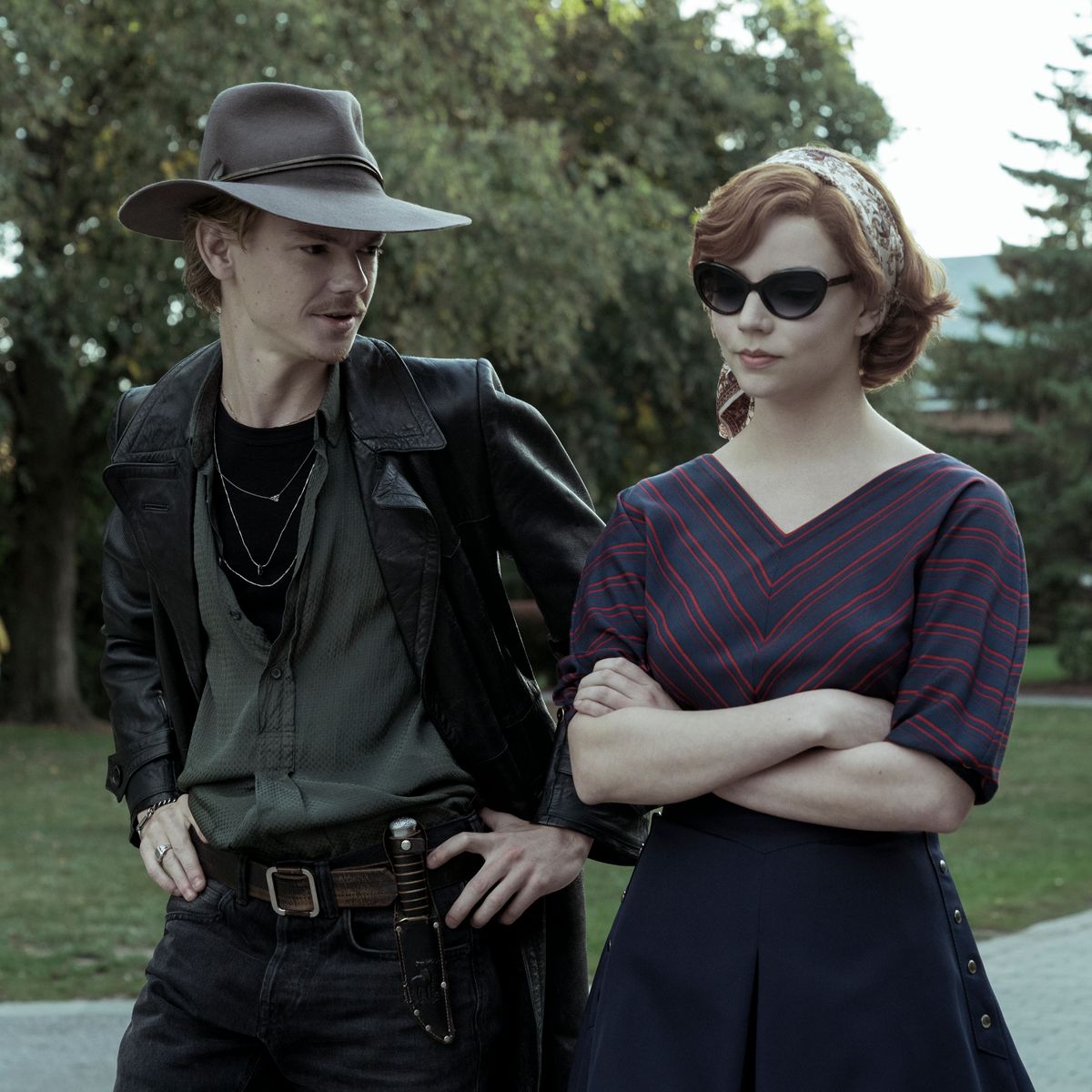
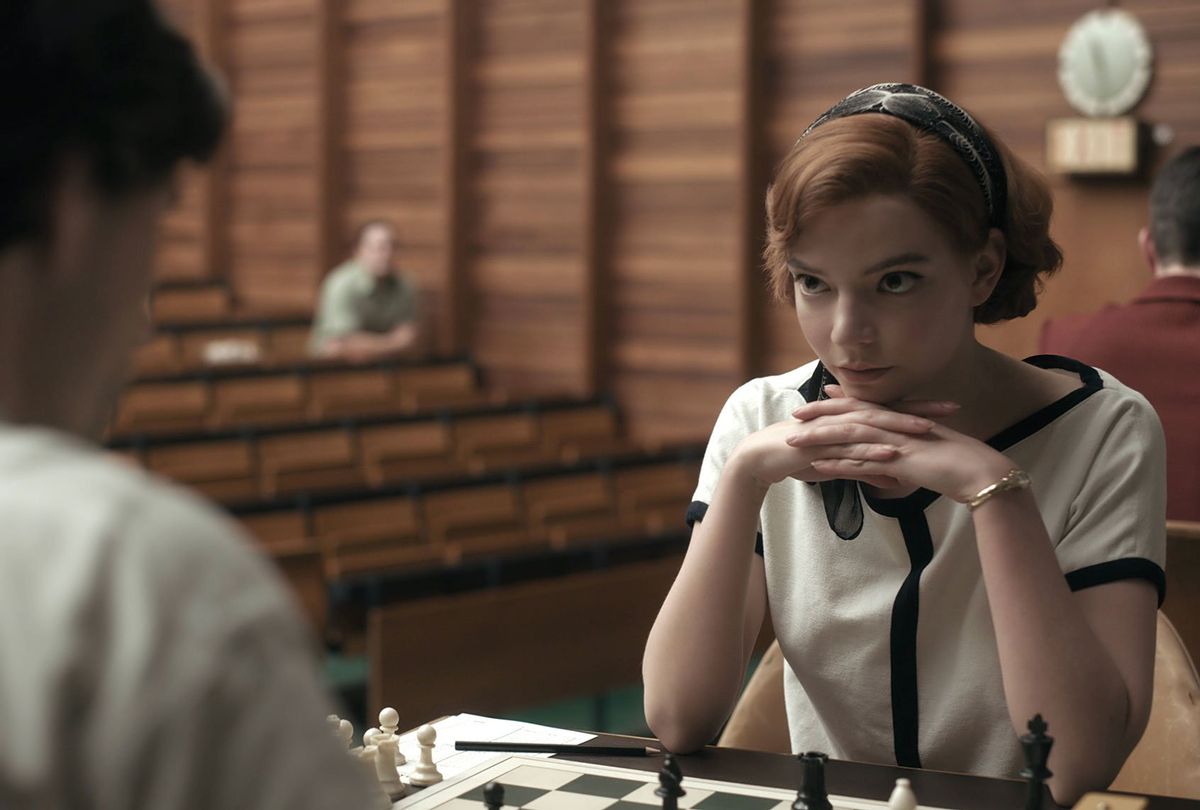
    6. If you’ve watched the delightful and deservedly popular series The Queens Gambit you’ll notice characters staring at each other a lot. Because it’s appropriate.
      THE QUEEN’S GAMBIT (L to R) MATTHEW DENNIS LEWIS as MATT and ANYA TAYLOR-JOY as BETH HARMON in episode 102 of THE QUEEN’S GAMBIT Cr. PHIL BRAY/NETFLIX © 2020

      Because they’re seated a few feet across from each other in earnest and sometimes excruciating combat.  Because they’re often trying to psych each other out. And the onlookers are staring intently at the board trying to guess the next moves of the two players.

    7.  Question every tear. I sometimes ask writers to count every scene where a character ends up weeping, wet-eyed, or with tears leaking down wet cheeks. This request comes from noticing how weeping and sobbing are overused resulting in melodrama, excess sentimentality, or depicting a character as too emotional for her own good. And the good of the story. Too much weeping and the story gets soggy and dull. And please, just forget single tears. Please.
    8.  Mix it up. Often a writer’s most used crutch words are look and see. However, in real life people gape, squint, spot, gander, gawk, ogle, stare, gaze, study, inspect, scan, scout, spy, study, inspect, notice, note,  peek, peep, peer, and rubberneck.
    9. Expand  your repertoire of descriptions: haunting, beckoning, steady, stormy, mocking, mournful, lifeless, sultry, goopy, teasing, pitiless, glassy.
    10. Stir in a little weirdness. Many people have mismatched eyes. Then there are droopy eyes, people with different colored eyes, bloodshot eyes, Rasputin eyes, lazy eyes, buggy eyes, one working eye, wandering eyes, piggy and close-set eyes.
    11.  Study how and when successful authors use close-ups. If you never focus the camera lens on a character’s face during an emotionally-charged scene, then readers cannot enter the moment and feel what the characters are feeling.
    12. Study actors. Notice how their eyelids raise a bit to show interest or droop to indicate the lack of interest. Note how they leer, seduce, flash anger, hide their true feelings.
    Beth Harmon knows she will win several moves out in this scene of Queen’s Gambit

    If you’re serious about writing, you must notice subtext and how to convey it. And that often begins with the eyes.

    Keep writing, keep dreaming, have heart. Jessica

    Jessica Page Morrell

    Jessica Page Morrell

    Jessica Morrell is a top-tier developmental editor and a contributor to Chanticleer Reviews Media and to the Writer’s Digest magazine. She teaches Master Writing Craft Classes along with sessions at the Chanticleer Authors Conference that is held annually along with teaching at Chanticleer writing workshops that are held throughout the year. 

    Don’t delay. Register today!

    This year the CAC21 will be held virtually. Registration will include access to video recordings of the conference.

    April 21- 25, 2021.   Multichannel Marketing for Authors and Intermediate and Advanced Writing Craft


    Chanticleer Editorial Services – when you are ready

    Did you know that Chanticleer offers editorial services? We do and have been doing so since 2011.

    Tools of the Editing Trade

    Our professional editors are top-notch and are experts in the Chicago Manual of Style. They have and are working for the top publishing houses (TOR, McMillian, Thomas Mercer, Penguin Random House, Simon Schuster, etc.).

    If you would like more information, we invite you to email Kiffer or Sharon at KBrown@ChantiReviews.com or SAnderson@ChantiReviews.com for more information, testimonials, and fees.

    We work with a small number of exclusive clients who want to collaborate with our team of top-editors on an on-going basis. Contact us today!

    Chanticleer Editorial Services also offers writing craft sessions and masterclasses. Sign up to find out where, when, and how sessions being held.

    A great way to get started is with our manuscript evaluation service. Here are some handy links about this tried and true service: https://www.chantireviews.com/manuscript-reviews/

    And we do editorial consultations. for $75.  https://www.chantireviews.com/services/Editorial-Services-p85337185

    Writer’s Toolbox

    Thank you for reading this Chanticleer Writer’s Toolbox article.

    Writers Toolbox Helpful Links: 

    The INCITING INCIDENT: STORY, SETBACKS and SURPRISES for the PROTAGONIST – A Writer’s Toolbox Series from Jessica Morrell’s Editor’s Desk

    ESSENCE of CHARACTERS – Part One – From the Jessica Morrell’s Editor’s Desk – Writer’s Toolbox Series  

  • Supporting Cast – Taking Risks with Your Secondary Characters – From the Editor’s Desk of Jessica Morrell – A Chanticleer Writers Toolbox Post

    Supporting Cast – Taking Risks with Your Secondary Characters – From the Editor’s Desk of Jessica Morrell – A Chanticleer Writers Toolbox Post

    Character, not plot, is what chiefly interests the reader because he translates and feels the character’s actions, desires, and passions from his own data bank of experiences and emotions. – Jessica Morrell

    Long after the intricacies of a fictional plot fade from a reader’s memory, the characters linger with an almost physical presence, a twinkle of personality, unforgettable actions, and their happy or sad fates. Fictional characters whisper their secrets, allow us to witness their most intimate moments and sorrows, and trust us with their messy emotions, bad decisions, and longings. They penetrate our aloneness, populate our imagination by starring in our inner cinema, and slip their hands in ours and transport us to another place, another time. And while all this is going on, often they teach us what it means to be human complete with all the troubles, heartaches, and mysteries.

    Benny, the unforgettable secondary character in “The Queen’s Gambit” by Walter Tevis

    Characters that leave a lasting footprint in our memory range the gamut from stuck-on-themselves divas and difficult drama queens, to aging Italian billionaires and lonely singletons, along with knights and spies and waifs and dwarfs. It’s simple reallyCharacter, not plot, is what chiefly interests the reader because he translates and feels the character’s actions, desires, and passions from his own data bank of experiences and emotions.

    This is the opening to my book Bullies, Bastards & Bitches: How to Write the Bad Guys in Fiction. 

    However, the book isn’t only about ‘bad guys’. It covers character roles and types including protagonists, heroes, unlikable protagonists, unreliable narrators, and a slew of information to add to your understanding.

    I’ve been thinking about my book and all I’ve learned since I wrote it, because I’m creating a presentation on secondary characters for a virtual workshop I’m teaching  at the Chanticleer Author’s Conference.  Before I delve into techniques for creating secondary characters, I’m explaining the roles, hierarchy, development, and purposes of fictional players. Because the more you know about the many uses for characters –the enormous scope and weight they can bring to a story–the more tools you wield when playing God.

    When I wrote my Bullies book as I sometimes call it, my main objective was to urge writers to take risks with their characters. To use shills and scapegoats and flamboyant loudmouths. Demon lovers, homicidal stalkers, criminal politicians. Stir in trolls, punks, bad asses, weirder-than-weird nerds, smarter-than-smart geeks, callous grifters, hard-to-believe they’re so foul-mouthed not-so-sweet old ladies.

    A not-so-sweet old lady – Chrisjen Avasarla, UN Secretary – General of The EXPANSE SciFi series. She is always full of surprises.

    Bring it on.

    The same is true for your supporting cast. Sure you’ll add bit players, stock players, and archetypal players. Royals, innocents, mentors, warriors, and confidants. Burned-out cops, cranks, frenemies, crappy stepparents, and obnoxious neighbors. Familiar types with many valid, solid uses in storytelling.

    And who could forget SPIKE from Notting Hill (1999) 

    It is said that the screenplay by Richard Curtis is funnier than the movie and more charming — if that is possible. -kb

    Creating co-stars can be one of the great joys of storytelling. They can be outrageous, hilarious, freaky, maddening, sex-driven, drug-addled, and vapid. They can lie, steal, betray, enchant, and embolden. They sometimes get the best lines, spout the best snark. Give the best shade. They can drive their co-stars crazy and they can also drive the plot. They can star in their own subplots and often support the protagonist’s goals. Or thwart the protagonist’s goals. Or lie about supporting the protagonist while actually backstabbing the poor sod.

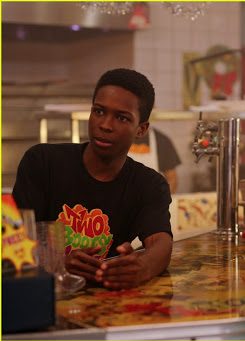
    Boomer of “Dash and Lily’s Book Dares” – as acted by Dante Brown in the Christmas Mini-Series DASH and LILY BOOK of DARES

    But like protagonists and antagonists, they can never be dull or commonplace. Never a pale footnote. Never thinly sketched unless the character has a walk-on part. But even bit players can possess physical characteristics. A lisp. A limp. An arresting voice. Inappropriate wardrobe choices and whisky breath.

    I’m having a lot of fun thinking about this topic. Does it show?

    Keep writing, keep dreaming, have heart. Jessica

    Jessica Page Morrell
    Jessica Page Morrell

    Jessica Morrell is a top-tier developmental editor and a contributor to Chanticleer Reviews Media and to the Writer’s Digest magazine. She teaches Master Writing Craft Classes at the Chanticleer Authors Conference that is held annually along with teaching at Chanticleer writing workshops that are held throughout the year. 


    Chanticleer Editorial Services – when you are ready

    Did you know that Chanticleer offers editorial services? We do and have been doing so since 2011.

    Tools of the Editing Trade

    Our professional editors are top-notch and are experts in the Chicago Manual of Style. They have and are working for the top publishing houses (TOR, McMillian, Thomas Mercer, Penguin Random House, Simon Schuster, etc.).

    If you would like more information, we invite you to email Kiffer or Sharon at KBrown@ChantiReviews.com or SAnderson@ChantiReviews.com for more information, testimonials, and fees.

    We work with a small number of exclusive clients who want to collaborate with our team of top-editors on an on-going basis. Contact us today!

    Chanticleer Editorial Services also offers writing craft sessions and masterclasses. Sign up to find out where, when, and how sessions being held.

    A great way to get started is with our manuscript evaluation service. Here are some handy links about this tried and true service: https://www.chantireviews.com/manuscript-reviews/

    And we do editorial consultations. for $75.  https://www.chantireviews.com/services/Editorial-Services-p85337185

    Writer’s Toolbox

    Thank you for reading this Chanticleer Writer’s Toolbox article.

    Writers Toolbox Helpful Links: 

    The INCITING INCIDENT: STORY, SETBACKS and SURPRISES for the PROTAGONIST – A Writer’s Toolbox Series from Jessica Morrell’s Editor’s Desk

    ESSENCE of CHARACTERS – Part One – From the Jessica Morrell’s Editor’s Desk – Writer’s Toolbox Series  

  • You’ve Finished Your Work In Progress or NaNoWriMo or Perhaps Not – That is Okay by David Beaumier

    You’ve Finished Your Work In Progress or NaNoWriMo or Perhaps Not – That is Okay by David Beaumier

    You’ve finished NaNoWriMo!

    Or perhaps not — that is okay! 

    You have more words than you did at the beginning of November. Congratulations!

    Or perhaps you are one of the ones who will do February or June Writing Month. If so, bookmark this post for future use.

    Or, you are creating your work-in-progress? This post may be of particular interest to you.

    The first thing to do is to take a deep breath, maybe take an Epsom salt bath, massage your wrists, roll out those shoulders, and maybe let out a primordial scream into the darkness. You know, whatever helps you relax.

    Finish, Celebrate, Plan

    Now, let’s say you haven’t quite finished— Give yourself some time to relax, and brainstorm the ways you’re going to now fit writing into your life. For me, having a daily word goal of 1667 is great for short periods, but really what I need is time boxes to get the work down. I usually tell myself that I can shut myself away for at least twenty minutes a day writing until I finish, with the only rule being I write. Even if I need to struggle through something and get really meta in the writing process, I know that will come out later. Don’t forget to reward yourself, maybe with a day off, that fancy mocha you never spring for, or chocolate.

    So, whether you NaNoWriMo or not, if you are writing, be sure to reward yourself!

    Treat Yourself!

    Edit, Space, Edit

    Once you’ve finished your novel on your new schedule (or maybe you skipped that last paragraph because you’re so gosh darn prolific), the next stage will be editing. You know yourself better than I do, so if you need space from your writing, take that space.

    Before you hide it away though, consider taking the time to write what you know to be true about it now. Note down what parts mean a lot to you that you don’t want to change later, explain to yourself where you know you’ve decided you want to expand things, and then make a quick list of items that you know will need to be fixed (for me, I always need to fix the fact that my characters have very little interiority, so the reader doesn’t know why they do what they do.

    My other big struggle is setting, (everyone just exists in an empty void where their heads can talk). Leave yourself these notes and then get some space by taking Stephen King’s advice and hiding your work in a drawer or somewhere out of sight for at least six weeks.

    Meanwhile, start conjuring your next writing creation.

    Allowing your work to “rise” in a drawer while you start your next project.

    David’s Self-Editing “Trick” — He shares it with you, dear Chanticleerians.

    When the six-plus-weeks of letting your work “rise or proof” in a drawer somewhere is up, David offers this advice:

    For the next editing step, I treat myself like I would any other editorial client. I take the first ten pages of my work, and then skip ahead to the middle and grab ten pages from there. For many of us, the start and end of the book already appear clearly in our mind, and for something like NaNoWriMo, we start out fresh and excited to get the job done. So you can notice what you do well in your first ten pages, and if anything pops up that you know you need to fix, write those down as well. Then, in the section from the middle of your book, look at what parts that worked well in the beginning are still there, and what maybe fell out as the story weighed itself down in the middle of the month, heavy from the expectations and reaching that week three or week four point of exhaustion.

    We imagine this is David

    Having taken notes one what worked and didn’t work at the beginning and middle, I write myself a letter explaining what I should watch out for as I move through my own work, and how I recommend shoring up the strengths and how I can correct any weak points. For me, again, this usually means taking time to give every setting and character a unique description, and then to make sure that I use my strengths, like dialogue, especially if I notice there’s a section where I skipped over dialogue in favor of narrative description.

    Then, I connect this letter with the note I left for myself when the story was still fresh in my mind, and I buckle down and do my first read through and selection of edits.

    Manuscript Overview or Peer Review, Rewrite, Repeat

    Now it’s time to get some other eyes on your work. This may be the time to have a manuscript overview if you are serious about publishing your work. Do this before you get into editing (line or copy editing). Click here if you would like to read more about this process:

    https://www.chantireviews.com/manuscript-reviews/

    If you are undecided about whether or not to publish your work-in-progress, this might be a good time to bring in a few Beta Readers for their general impressions—how do they see the structure of the story? What do they think of my character development? And what do they see as the heart of the story? That last question nets me some really interesting answers that help me better understand the themes of the story that maybe weren’t clear to me initially. Then I compile these notes into another letter of sorts to myself, and go through the entire book again. I would recommend doing this one more time, and this time asking for more specific feedback on theme, plot, characterization, dialogue, structure, world building (as applicable), and then just anything that just stands out as a hold up for the reader.

    Remember, when receiving peer review or manuscript overview, you are the author and no one else can force you to make changes. Even if a suggestion really bothers you and gets under your skin, reframing it as a question of why the reviewer gave you that feedback can always help. For example if someone hates your character, Beth, because “she just doesn’t seem real.” Ask yourself what you’ve done to develop Beth as a character. Read her dialogue aloud. Figure out why you love Beth (even if she’s actually awful—which is often a reason we back away from loving our bad characters), and put that love into her character. She can still be unsympathetic, but at least now she’ll draw your reader in.

    What should you do if you are not wanting to proceed with your w-i-p. Our suggestion here at Chanticleer is to print it and file it away. Also, save it digitally in at least two other places such as your computer or a USB stick plus some place off premise such as in the “cloud.” Never throw any writing away…just squirrel it away because you never know…

    Squirrel away your cuts and works that you are not moving forward on. Don’t toss them away.

    Let’s get Professional – You’ve Decided that You Want to Publish Your Work-In-Progress 

    At this point, if you still want to move forward with your story, which I’m imaging is quite good, it’s time to bring in a professional. Chanticleer can provide you with a Manuscript Overview, which is a great first step, and then you can work on finding an editor who understands your vision and whose style matches with the way you respond to feedback. Go through it with your editor, and then proceed with the editorial and cover design process. Remember, your cover has the greatest influence on whether or not a potential reader will choose your book to to consider.

    Line editing, copy editing (you can save $$ by creating and developing your own Style Guide and Story Bible).

    Here is a link about creating your Story Bible/ Story Guide by Continuity Editor Diane Garland.

    SERIES or Not to Series 

    In the process that you’ve been going through with your Work-In-Progress (w-i-p), are you considering turning it into a series? Indie Booksellers, Entertainment Producers, Literary Agents, etc. and especially READERS, enjoy book series.

    Do you need to reconsider your story structure in order to sustain a book series? 

    You may want to read this blogpost by mystery series award-winning author Wendy Delaney. https://www.chantireviews.com/2020/02/29/writing-a-series-primer-by-award-winning-author-wendy-delaney-a-chanticleer-writers-toolbox-article/

    To Series or Not to Series– What is Your Strategy?

    Publication? 

    This, for many people is seen as the big goal, and it deserves an article all on its own for the different facets of self-publishing versus traditional publishing, how to market, what to do about cover design, contests, book reviews, and so much more. At this point, the important thing to realize is that you are entering a period of extraordinary fine-tuning and a different kind of work with your book, from making it come to life to putting it in people’s hands. Good luck!

    On a final note, don’t forget about the COVER!

    THE COVER – The Number One Marketing Tool to Sell More Books – Don’t Sell Yourself Short. Start on your cover design as soon as you are serious that you want to publish your story then start working on the cover and the brand (Stories are products!)

    Here is link for you to take a look at on Five Essential Book Cover Elements by Kiffer Brown

  • RULE #1 of Writing a Novel – Unspooling the Story in Your Brain Onto the Page –  Links included-Chanticleer Writers Tool Kit

    RULE #1 of Writing a Novel – Unspooling the Story in Your Brain Onto the Page – Links included-Chanticleer Writers Tool Kit

    The FIRST RULE of Writing Your Next Book

    (From top editor Jessica Morrell and Chanticleer’s own Kiffer Brown along with advice from Stephen King, Chelsea Cain, Ernest Hemingway, Robert Dugoni, J.D. Barker,  and many more bestselling authors).

    The Secret to Successful Publishing

    Don’t edit your first draft as you write it!

    Writing your first draft should be a mad dash to get your story out of your brain. Jessica calls it “unspooling your story thread.”

    Don’t hinder it by worrying about each little detail. There will be time for that later. NaNoWriMo or not.

    Not taking our word for that piece of advice?

    Chelsea Cain, a bestselling thriller author (with a TV series to her credit),  gives this piece of advice:

    Write the bare-bones version of the scene first using mostly dialogue, and then move on and in the second draft flesh out the scenes with description and action.

    Action is dialogue. Dialogue is action. – Robert Dugoni, Amazon Bestselling Author

    What is YOUR STORY?

    Story is essentially a problem that needs solving for the protagonist. – Jessica Morrell

    • What is your protagonist’s problem that must be solved—or else?
    • What is the worst thing that can happen next to your protagonist?
    • Remember that it is not your problem. It is your protagonist’s problem, obstacle, impossible dream.
    • Start at least one subplot. This subplot(s) should also complicate the protagonist’s goals.

    No matter when the problem begins (it’s always in Act One) the problem is weighty and vexing, perhaps insurmountable. If the problem is not immediately personal, it should become so that it will create a bond (connection) between the protagonist and antagonist. (A classic example is the connection between Sherlock Holmes and Jim Moriarty).

    Sherlock Holmes and James Moriarty

    What is the inciting event or threat? 

    The inciting incident might lead to the problem. This event will disrupt the status quo, demand response, and set actions in motion. It’s a threat that unbalances the story world and creates dilemmas that must be dealt with.

     These excerpts above are from The Inciting Incident blogpost


    Environment (internal and external)

    • Remember you want to send your protagonist into new emotional territory with new challenges and pressures.
    • And at the same time, she will need to deal with new physical territories such as a new school (Footloose) or a different culture (Dances with Wolves) or a different legal society with different norms (Handmaid’s Tale) or a new environment (Deadwood)  or a different time (Outlander) or galaxy (Farscape).
    • Don’t be afraid to stage danger in benign or lovely settings or conversely gentle scenes in dangerous and gruesome settings.

    Atmosphere

    • Allow the overall atmosphere and mood to imbue your writing from the get-go.
    • The atmosphere lends itself to the overall tone and mood of a work. Allow it to permeate your work as you write.

    Why use atmosphere in your first draft? (or during NaNoWriMo)? 

    • Because it will affect your mood and approach to your story.
    • It will make you focus on creating unease–a necessary ingredient not always considered in early drafts.
    • Unease contributes to writing a page-turner.
    • Atmosphere underlines themes–even if you don’t have your themes nailed down yet.

    Here is the link to our Writer’s Toolbox article on Atmosphere

    Emotional Baggage

    • Know your protagonist’s main emotional wound, sometimes called baggage in real life. How is it going to affect his or her ability to solve the story problem? (See the questions below to jumpstart creativity.)

    Remember that Writers (that is you) should carry a notebook everywhere you go. You never know when a brilliant solution is going to appear. Jessica Morrell

      If I could offer a single piece of advice about creating characters it would be this (Jessica Morrell):

      • Take risks with your main characters.
      • Make them stand out from the myriads of fiction published each year.
      • And don’t be afraid to allow eccentricities, quirks, and oddball ways of seeing reality.

      More questions for your protagonist from Jessica Morrell—these are guaranteed to get your creative wheels turning:

      First, ask yourself these questions and then “ask” your protagonist. Have your protagonist go into depth. Find out what your protagonist’s iceberg under the waterline is all about.

                                                                                      Photo taken in Greenland’s waters.

      Kiffer suggests that you take a walk when you are considering these questions. Be sure to either take notes or record your thoughts on your smartphone while you explore your protagonist’s emotional baggage. Walk a mile in your protagonist’s shoes. 

      J.D. Barker stated at the Chanticleer Authors Conference 2019 that he knows which rides his main characters would go on at Disney Land, the type of beer that he/she would order, and favorite toys that he/she played with as a child. He may not use this info in his manuscript but knowing  this information gives his characters subtext and undercurrents that make his novels international bestsellers.

      Jessica Morrell suggests that you ask your protagonist these questions?

      • What’s the most embarrassing thing that has ever happened to you?
      • What is your biggest regret?
      • What is your superpower?
      • Who do you cherish most in the world?
      • If you could change one thing about your world, what would it be?
      • What is your average day or schedule?
      • What 5-6 words sum up your values?
      • What do you do after a really bad day?
      • How do you celebrate?
      • The secret you’d never tell your significant other? Your mother? Your sibling?
      • What reminds you of home?
      • What item must you always take along when traveling?
      • Favorite drink?
      • Secret vice?
      • Pizza or tacos? Cookies or tequila?
      • Favorite climate?
      • Reading or television to unwind?
      • Breakfast or coffee only?

      We hope that we helping you, Dear Writer, to arm and prep yourself to get down to the writing of your next work—the reckoning.


      Ernest Hemingway:  There is nothing to writing. All you do is sit down at a typewriter and bleed.

      Unspooling the Thread of Your Story

      Stay tuned for more Writing and NaNoWriMo Tips

      Link to Part One of our Annual NaNoWriMo Writing Tips Series


      Chanticleer Editorial Services – when you are ready

      Did you know that Chanticleer offers editorial services? We do and have been doing so since 2011.

      Tools of the Editing Trade

      Our professional editors are top-notch and are experts in the Chicago Manual of Style. They have and are working for the top publishing houses (TOR, McMillian, Thomas Mercer, Penguin Random House, Simon Schuster, etc.).

      If you would like more information, we invite you to email Kiffer or Sharon at KBrown@ChantiReviews.com or SAnderson@ChantiReviews.com for more information, testimonials, and fees.

      We work with a small number of exclusive clients who want to collaborate with our team of top-editors on an on-going basis. Contact us today!

      Chanticleer Editorial Services also offers writing craft sessions and masterclasses. Sign up to find out where, when, and how sessions being held.

      A great way to get started is with our manuscript evaluation service. Here are some handy links about this tried and true service: https://www.chantireviews.com/manuscript-reviews/

      And we do editorial consultations. for $75.  https://www.chantireviews.com/services/Editorial-Services-p85337185

      Writer’s Toolbox

      Thank you for reading this Chanticleer Writer’s Toolbox article.

      Writers Toolbox Helpful Links: 

      The INCITING INCIDENT: STORY, SETBACKS and SURPRISES for the PROTAGONIST – A Writer’s Toolbox Series from Jessica Morrell’s Editor’s Desk

      ESSENCE of CHARACTERS – Part One – From the Jessica Morrell’s Editor’s Desk – Writer’s Toolbox Series  

      Keep writing, keep dreaming, have heart. Jessica

      Jessica Morrell is a top-tier developmental editor and a contributor to Chanticleer Reviews Media and to the Writer’s Digest magazine. She teaches Master Writing Craft Classes at the Chanticleer Authors Conference that is held annually along with teaching at Chanticleer writing workshops that are held throughout the year. 


      Keep creating magic! Kiffer 

      Kathryn (Kiffer) Brown is CEO and co-founder of Chanticleer Reviews and Chanticleer Int’l Book Awards (The CIBAs) that Discover Today’s Best Books. She founded Chanticleer Reviews in 2010 to help authors to unlock the secrets of successful publishing and to enhance book discoverability. She is also a scout for select literary agencies, publishing houses, and entertainment producers.


    • NaNoWriMo or Not – Great TIPS  for WRITING Your Next Work by Jessica Morrell and Kiffer Brown

      NaNoWriMo or Not – Great TIPS for WRITING Your Next Work by Jessica Morrell and Kiffer Brown

      Whether or not you are participating in NaNoWriMo, these BRAINSTORMING TIPS from Jessica Morrell with help jump start your next work of fiction.

      NaNoWriMo what?  NaNoWriMo is short for National November Writing Month. There is a tradition in the writing community around the world that writers hunker down and promise to write 50,000 words for one work during the month of November. Some writers flourish under the deadline. Others, well let’s just say there is much gnashing of teeth and fretting to meet the deadline. Some writers believe that NaNoWriMo has forced them to bang out their best work. Others look back on their month of NaNo-ing and see gibberish.

      As for me and others, November just isn’t the month to join in annual since Thanksgiving and the winter holidays are just around the corner. A few of us speak almost treasonously about doing it at a different time such as February. NaFebWriMo.

      But whatever your take on NaNoWriMo is, I believe that you will find Jessica’s suggestions and tips on How to Your Brainstorm Next Work will be useful additions to your writer’s toolbox. Kiffer Brown

      UnSpooling the Story Thread in Your Brain – Jessica Morrell

      With the end of October here that has NaNoWriMo looming just around the corner, I recommend that you get acquainted with your protagonist before you plunge into writing a new novel.

      It’s simple really; if you get acquainted with him or her beforehand, the story will unspool with more ease and speed. Because what the protagonist wants/desires and fears the most (the dreaded alternative) will be at stake in the story.

      Now, it’s likely that the protagonist’s needs and goals will shift and grow throughout the story, but you need a starting point of need and imbalance. If you begin with basic dynamics of storytelling now, then by the time the conflict heats up and things are really hairy, you’ll understand your protag’s reactions and next steps.

      In fiction, needs and motivations create goals.

      The protagonist’s goals will meet with opposition from the antagonist or another force. The protagonist will struggle to overcome the obstacles. These struggles create conflict and conflict fuels the whole shebang.

      Goals matter. Goals define fictional characters from Woody from Toy Story to Dorothy Gale in the Wizard of Oz to Atticus Finch in To Kill a Mockingbird.

      Goals are tied to dramatic structure and prevent your characters from being merely reactive.

      Fictional characters don’t give up even though goals are hard to achieve.

      Goals provide action, drive stories.

      CHARACTERS

      HUNGER GAMES by Susanne Collins

      Katniss Everdeen: Her path to greatness began the day of the Reaping when she steps in to save/protect her sister Primrose from taking part in the annual and deadly Hunger Games. Leaving home with Peeta, the other Tribute from District 12, she plans to somehow stay alive because if she dies her mother and sister will not be able to survive without her. Along the way, she trains, forms an alliance with Peeta, collects allies and enemies, and ultimately fights to protect Peeta’s life too. By story’s end, their examples show how remaining true to your principles is most important of all.

      The Fault in Our Stars by John Green

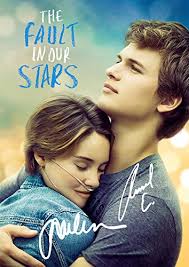
      Hazel Lancaster in The Fault in Our Stars: Teenaged Hazel has been dealt a lousy hand, thyroid cancer that has metastasized into lung cancer. Her first goal, to please her mother, is accomplished when she attends a support group for kids with cancer. At this meeting, she makes friends with Augustus Waters who becomes her first love. She introduces Augustus to her favorite novel about a girl with terminal cancer and explains she wants to meet the author and understand what really happened to his family. You see, the motivation that drives Hazel is that she needs to believe her parents will be okay after she dies. (spoiler alert) Along the way Hazel and Augustus travel to Amsterdam and meet the author, lose their virginity, and Hazel realizes how much she wants to live. But Augustus has been hiding a horrible truth: his cancer has returned and he has little time left. Quite a plot twist, isn’t it? Now Hazel needs to somehow support him, cherish their last days together, then handle her grief all the while coping with her own terminal diagnosis. She comes to understand what being a survivor means and that life has meaning no matter what stage you’re at. And she comes to feel more peace about her parents, especially after she learns her mother has been getting a degree in social work.

      Star Wars by George Lucas

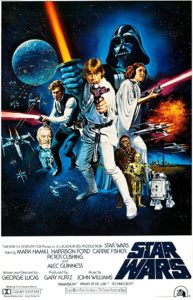
      Luke Skywalker: Skywalker is a freedom fighter from humble beginnings. His path (and character arc) begins with a restless need to escape his dead-end existence on his uncle’s barren farm. He learns that Princess Leia is leading a rebellion against the Empire and wants to join. He longs to become a Jedi Knight, or fighter pilot especially after Obi-Wan Ben Kenobi, a desert hermit, informs him that his father was a Jedi fighter and he has the ability to harness the Force. Still reluctant to leave his family, his mind is made up for him when Imperial stormtroopers savagely murder his aunt and uncle. He’s all in now. Skywalker begins training with Hans Solo, then learns the princess has been captured. His next goal is to rescue the princess, which he accomplishes with more than a few swashbuckling moves. This sets up his final, seemingly hopeless goal of taking out the Death Star and ultimately saving the Rebel alliance.

      TAKEAWAYS

      Notice how the protagonists’ goals powered the story?

      Getting to know you….getting to know all about you…

      So how are you going to get acquainted with your protagonist? There are lots of questionnaires available online to create a physical presence and backstory.

      Walk a mile in their shoes…

      However, it seems to me that walking along or imagining characters as if they’re with you, their creator, can be one of these best methods of getting to know someone. Especially if you want to learn what makes them tick. Or in fiction speak, their motivations. Motivations stem from a character’s past, basic nature and personality, and compelling circumstances.

      Let’s repeat: Motivations create needs which create goals which fuel conflict = story.

      Just try it. Step outdoors and plan to walk for at least a mile with your invisible pal at your side.

      • What would your character notice or remark on?
      • How does he/she hold his/her body?
      • Fast walker? Ambler? Quiet?
      • Hates exercise? Feels most alive when moving?
      • What’s on his or her mind? Distracted? Preoccupied? Impatient?

      Do you remember those moments in life when you’re walking along with a friend and a profound truth slips into the conversation? Maybe it’s a tidbit or a bombshell or sharing a long-ago memory. We all have wounds and they’re often twined to a character’s internal goals and secrets. Those are the moments, the gold you’re searching for.

      And although time is short with November looming, how about a short road trip with your character riding shotgun? Or can he or she tag along when you’re running errands or chauffeuring the kids? Have you ever noticed how some people are a delight to travel with and some people are a nightmare? Which one is your protagonist? A nervous, watchful traveler? Open to adventure? Afraid of the unknown? Chatty? Reticent?

      Shaping your protagonist’s goals

      What’s wrong or not working in his/her current situation?

      What about emotional needs from the past? In other words, what’s screwing up your character?

      What first, clear-cut action step can the protagonist take toward his/her goal?

      Remember, a protagonist’s goals work best if they’re relatable, visible, and barely achievable. Side note: some of a character’s goals will remain ‘invisible’ since they are inner, emotional, personal growth goals.

      INCITING INCIDENTS

      What is the impetus to push your protagonist toward that goal?

      The inciting incident such as Prim begin chosen to participate in the Hunger Games? The first plot point when Hazel meets Augustus at the support group? Dorothy’s inciting incident? Luke Skywalkers’ inciting incident?

      What is your protagonist’s inciting incident? 

      Stay tuned for more NaNoWriMo Tips // Jump Start Your Novel Tips

      Jessica Page Morrell

      Keep writing, keep dreaming, have heart. Jessica

      Jessica Morrell is a top-tier developmental editor and a contributor to Chanticleer Reviews Media and to the Writer’s Digest magazine. She teaches Master Writing Craft Classes at the Chanticleer Authors Conference that is held annually along with teaching at Chanticleer writing workshops that are held throughout the year. 


      Chanticleer Editorial Services

      Did you know that Chanticleer offers editorial services? We do and have been doing so since 2011.

      Our professional editors are top-notch and are experts in the Chicago Manual of Style. They have and are working for the top publishing houses (TOR, McMillian, Thomas Mercer, Penguin Random House, Simon Schuster, etc.).

      If you would like more information, we invite you to email Kiffer or Sharon at KBrown@ChantiReviews.com or SAnderson@ChantiReviews.com for more information, testimonials, and fees.

      We work with a small number of exclusive clients who want to collaborate with our team of top-editors on an on-going basis. Contact us today!

      Chanticleer Editorial Services also offers writing craft sessions and masterclasses. Sign up to find out where, when, and how sessions being held.

      A great way to get started is with our manuscript evaluation service. Here are some handy links about this tried and true service:

      https://www.chantireviews.com/manuscript-reviews/

      Writer’s Toolbox

      Thank you for reading this Chanticleer Writer’s Toolbox article.

      Writers Toolbox Helpful Links: 

      The INCITING INCIDENT: STORY, SETBACKS and SURPRISES for the PROTAGONIST – A Writer’s Toolbox Series from Jessica Morrell’s Editor’s Desk

      ESSENCE of CHARACTERS – Part One – From the Jessica Morrell’s Editor’s Desk – Writer’s Toolbox Series  


    • COMPONENT LAYERS of SUCCESSFUL FICTION – A Chanticleer Writer’s Toolbox blog post by Jessica Morrell

      COMPONENT LAYERS of SUCCESSFUL FICTION – A Chanticleer Writer’s Toolbox blog post by Jessica Morrell

      Elements of successful fiction layer and fold back in on each other to create resonance, nuance, subtext, and undercurrents of great storytelling. – Kiffer Brown

      In this enlightening and instructional blog post by top-tiered editor and one of Chanticleer’s exceptional Master Writing Craft teachers, Jessica Morrell, will expand on the following components of exceptional fiction.

      Elements of Successful Fiction

      • The Dramatic Question
      • An Intimate Simmering World
      • Characters Built from Dominant Traits
      • Emotional Needs
      • Significance
      • Motivation Entwined with Backstory
      • Desire
      • Threat
      • Causality
      • Inner Conflict
      • Midpoint Reversal
      • Satisfying Ending

      Dramatic Question 

      Compelling fiction is based on a single, powerful question that must be answered by the story climax. This question will be dramatized chiefly via action in a series of events or scenes. If you are writing a romance, the question always involves whether the couple will resolve their differences and declare their love. In a mystery the dramatic question might be will Detective Smith find the serial killer in time to prevent another senseless death? In The Old Man and Seathe dramatic question is will Santiago catch the big fish and thus restore his pride and reputation?

      An Intimate, Simmering World 

      An intimate world isn’t created by merely piling on details. It means your story world has the resonance of childhood memories, the vividness of a dream, and the power of a movie. It’s filled in with shadows and corners and dogs and ice cubes and the sounds and smells of a dryer humming on wash day and a car blaring past, rock and roll music shaking the windows. Details lend your story authority, potency, and a palpable physical existence.

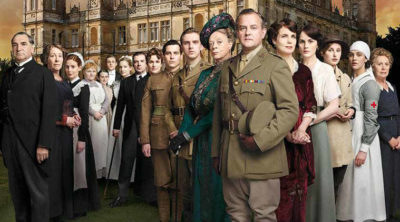
      Downton Abbey by Julian Fellowes — definitely an “intimate simmering world”

      An intimate story takes us to a specific place and coaxes us to remain there. An intimate story is lifelike and feels as real and complicated as the world the reader inhabits. When a reader finishes the final pages and leaves the story world, the reader should feel the satisfaction of the ending, but also a huge sense of loss. Much like a friend has moved to another town just when the friendship had reached a level of closeness and trust.

      Characters Built from Dominant Traits

      Create main characters with dominant and unforgettable traits as a foundation of personality. These traits will be showcased in the story events, will help him achieve or fail at goals, and will make the story person consistent. For example, Sherlock Holmes’ dominant traits are that he is analytical, Bohemian, opinionated, and intelligent. These traits are showcased in every story he appears in along with secondary and contrasting traits. When the character first appears in the first scene, the character should arrive in the story with dominant traits intact.

      Sherlock Holmes and Jim Moriaty – enduring characters since 1892.

      Emotional Needs

      Protagonists and the main characters are people with baggage and emotional needs stemming from their pasts. These needs, coupled with motivation, cause characters to act as they do. For example, in Silence of the Lambs Clarisse  Starling is propelled by childhood traumas to both succeed and heal the wounds caused by the death of her father.

      The EXPANSE by James S.A. Corey went from a Sci-Fi book series to one of Amazon’s top video series. One reason is that the characters have some major emotional baggage.

      Significance 

      The storyline focuses on the most significant events in the protagonist’s life.

      Kiffer’s Note: As we were taught in journalism school, this is the “So what?” that our professors would continuously ask us. What were, are, and will be the significant events? Your story will show the “why and how.” Make your readers care. Make your readers interested and keep them caring.

      Crazy Rich Asians by Kevin Kwan  –  3 Perspectives Cubed makes for a complex story.

      Motivation Entwined with Backstory 

      Motivation, the why? of fiction, is at the heart of every scene, fueling your character’s desires and driving him to accomplish goals. It provides a solid foundation for the often complicated reasons for your character’s behaviors choices, actions,  and blunders.  Motivating factors provide trajectories for character development, as a character’s past inevitably intersects with his present. Your character’s motivations must be in sync with his core personality traits and realistically linked to goals so that readers can take on these goals as their own.

      See The Expanse SciFi series above. It said to be the current Game of Thrones of TV series streaming.

      Names convey emotional baggage and foreshadowing

      Desire 

      Desire is the lifeblood of fictional characters. Not only do your characters want something, but they also want something badly. Santiago, in The Old Man and the Sea desperately wants to restore his reputation and also wants his friendship and partnership with the boy to resume. And in the lonely hours when he is far out at sea, desperately struggling to hang on to the fish and fighting off sharks, we see his fierce desire acted out and the price he pays for it.

      The classic A League of Their Own – to be rebooted on Amazon 2021

      Here is a fun link to: 25 Things You Might Not Know About A League of Their Own 

      You can bestow on your character flaming red hair, an endearing, crooked grin, and a penchant for chocolate and noir movies, but if she doesn’t want something badly, she’s merely a prop in your story, not a driving force. But if she wants to win the Miss Florida contest, take over her boss’ job, or become the first female shortstop for the Atlanta Braves, then you’ve got a character who will make things happen and a story that will be propelled by desire.

      Threat

      Fiction is based on a series of threatening changes inflicted on the protagonist. In many stories, these threats force him or her to change or act in ways he or she needs to change or act. Often too, what the protagonist fears most is what is showcased in a novel or short story. It can be fear of losing his family, job, or health with this dreaded outcome providing interest, action, and conflict.

      The Martian by Andy Weir – one big ticking clock on so many different levels.

      Causality 

      Events in fiction are never random or unconnected. They are always linked by causality with one event causing more events later in the story, which in turn causes complications, which cause more events, which cause bad decisions, etc.

      Causality – the physics of writing

      Inner Conflict 

      A fictional character doesn’t arrive at easy decisions or choices. Instead, he is burdened by difficult or impossible choices, particularly moral choices, that often make him doubt himself and question his actions. Inner conflict works in tandem with outer conflict—a physical obstacle, villain, or antagonist–to make the story more involving, dramatic, and events more meaningful.

       Complications   A story builds and deepens by adding complications, twists, reversals, and surprises that add tension and forward motion. Plots don’t follow a straight path, instead, there are zigzags, dead ends, and sidetracks. Complications create obstacles and conflict, cause decisions to be made, paths to be chosen.

      12 Years A Slave – based on the memoir of Solomon Northrup, published in 1854

       Midpoint Reversal 

      The middle of a novel comprises more than half its length. At about the midpoint of most novels, a dramatic reversal occurs. The hunter becomes the hunted; a second murder occurs proving the detective has been wrong in his suspicions; a former lover arrives in town to complicate a budding romance. This reversal keeps the middle from bogging down and becoming predictable and also breathes new life and often a new direction into the story.

      Mid-point Reversal of Bride and Prejudice, an adaptation of Jane Austen’s Pride and Prejudice. Published in 1813, it is still relevant.

      Satisfying Ending 

      Every story needs an ending that satisfies the reader while concluding the plot. The final scenes, when the tensions are red hot and the character has reached a point of no return, must deliver drama, emotion, yet a logical conclusion. This is not to suggest that every plot ends with a shoot-out or physical confrontation because some endings are quieter, more thoughtful. Some endings are ambivalent, some a dramatic or a violent clash of wills. But there is always a sense that all the forces that have been operating in your story world have finally come to a head and the protagonist’s world is forever changed.

      Below is a scene from The Martian that heralds that maybe—just maybe—our protagonist may make it home—alive. It is a fun and creatively acted scene.  What a scene stealer! – Kiffer Brown

      A reversal of fortune in The Martian by Andy Weir

      The end is just the beginning…

      A Note from the Editor: A satisfying ending is one of the top, if not the top, reasons why books go viral and what will make your reader want to read your next work. Make sure that the you put as much effort in to a satisfying ending as you do into your opening hook. Kiffer Brown

      I hope that you found the visual examples enlightening. Determining and then searching for my favorite ones was fun! – Kiffer


      Jessica Page Morrell

      Jessica Page Morrell is a top-tier developmental editor for books and screenplays. Her articles have appeared in Writer’s Digest and The Writer magazines. She is known for explaining the hows and whys of what makes for excellent writing and for sharing very clear examples that examine the technical aspects of writing that emphasizes layering and subtext. Her books on writing craft are considered “a must have” for any serious writer’s toolkit.

      Jessica will teach Master Craft Writing Classes at the Chanticleer Authors Conference VIRTUAL Conference that will be held from Tuesday, Sept 8 – Sunday, Sept. 13, 2020. She will present sessions and Master Classes on September 17, & 18,  2020 in conjunction with the virtual conference. She and Kiffer will also host a fun kaffeeklatch for Word Nerds at VCAC20.

      Did you know that Chanticleer offers editorial services? We do and have been doing so since 2011.

      And that our professional editors are top-notch and are experts in the Chicago Manual of Style. They have and are working for the top publishing houses (TOR, Macmillan, Thomas Mercer, Penguin Random House, etc.) and award-winning independent presses. If you would like more information, we invite you to email Kiffer or Sharon at KBrown@ChantiReviews.com or SAnderson@ChantiReviews.com.

      Click here to read more about our Editorial services: https://www.chantireviews.com/services/Editorial-Services-p85337185

      A great way to get started is with our manuscript evaluation service. Here are some handy links about this tried and true service:

      https://www.chantireviews.com/manuscript-reviews/

      We work with a small number of exclusive clients who want to collaborate with our team of top-editors on an on-going basis. Contact us today!

      Writer’s Toolbox

      Thank you for reading this Chanticleer Writer’s Toolbox encore edition article. 

      We encourage you to stay in contact with each other and with us  during this stint of practicing physical distancing to prevent the spread of COVID-19 — especially at this time of re-opening.

      Let us know how you are doing, what is going on where you live, how are you progressing on your writing projects.

      I invite each of you to join us at The Roost – a private online Chanticleer Community for writers and authors and publishing professionals. You are welcome to email me for more info also.

      We are active on Facebook, Twitter, and Instagram. You can find us by using our social media handle @ChantiReviews

      Minimize physical contact! Maximize social connecting!

      Be well. Stay safe. Keep writing! Keep Creating! Kiffer 

    • CHARACTER NAMES are SIGNIFICANT in FICTION – Part Three: LANGUAGE and NAME-CRAFT in WRITING FICTION – a Chanticleer Writers Toolbox Blogpost by Jessica Morrell

      CHARACTER NAMES are SIGNIFICANT in FICTION – Part Three: LANGUAGE and NAME-CRAFT in WRITING FICTION – a Chanticleer Writers Toolbox Blogpost by Jessica Morrell

      I once taught a workshop when a writer proudly announced that he’d written an entire novel where none of the characters had names. It’s a story I never want to read. All plants, animals, objects, places and people have names that identify them.

      Naming people and things in fiction has a practical purpose because it appeals to the reader’s logic, imagination, and memory. We name characters to differentiate them, to suggest their age, social standing and personality, to make them solid and distinctive, and signal readers that the story person is worth noting.

      Jessica Page Morrell
      Jessica Page Morrell

      Since the reader will encounter your characters’ names again and again, bestow names  with care, and add subtle layers of meaning to a story via their names. Generally, the more complicated your character, the more distinct his or her name should be, (think Ebenezer Scrooge or Hannibal Lector) keeping in mind that names, like characters evoke a response in readers.

      Toolbox Tip:

      • All fiction writes need to collect names in a writer’s notebook or story bible, starting with the standard methods of gathering names by perusing phone books, obituaries, and baby name books.

      Be especially careful with a villain’s name, and don’t choose a name that works against type. You wouldn’t select a name for an arch villain that suggests a softie, nor would you give a good guy a name that has dark connotation.

      Kiffer’s Note:  Although, one of my favorite Firefly characters is named Jayne. He is a bad-ass, no-neck, muscular guy who named his favorite weapon in his arsenal Vera. No one would dare make fun of his name to his face and live to tell about it. Also he wore (proudly) an absurd orange knit cap  with ear flaps, that his mother made for him. And speaking of names, the ship he served on was named Serenity. Life was anything but serene on Serenity.

      Jayne’s favorite hat
      Jayne was good to have on your side in a fight.

      If your story has a true villain, his name should reflect menace, coldness, and/or strength. You might consider using hard consonants and sounds to suggest menace or other characteristics. For example in Stephen King’s The Dark Half, a writer’s villainous alter ego is named George Stark.  Then there is Tolkien’s Gollum and Ian Fleming’s Auric Goldfinger.  Conversely, good guys will have names that suggest goodness, or perhaps strength, such as Tolkein’s characters Frodo, Sam, Merry, and Pippin.

      The best names reflect the genre and suggest the character’s traits such as Voldemort in the Harry Potter series.  On the other hand, the head master is Albus Dumbledore. Albus is from the Latin word alba, white, and his last name is Old English for bumblebee. So the headmaster’s name suggests honor and a hard-working nature. Sirius Black is Harry’s godfather. His first name is the dog star, appropriate for a wizard who can transform into a black dog.

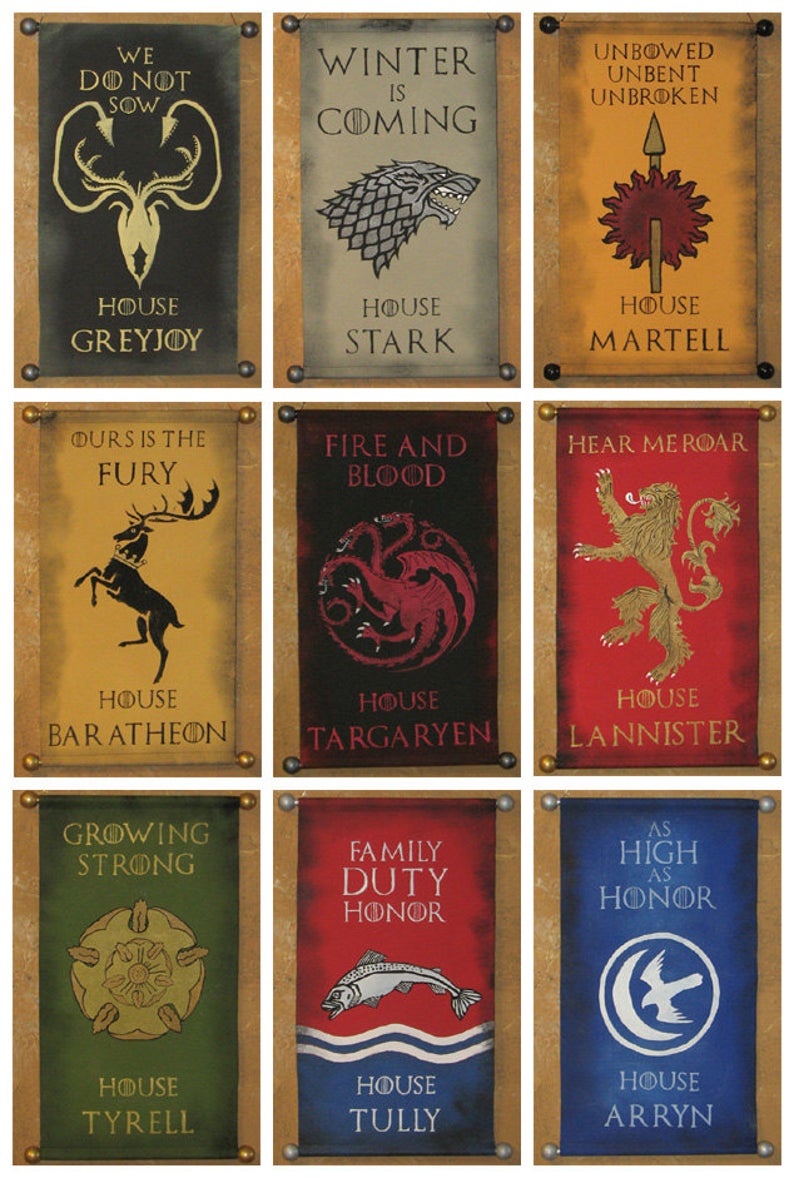
      George R.R. Martin’s fantasy series A Song of Ice and Fire is replete with terrific and memorable names: Mance Rayder, Tywin Lannister, Walder Frey and Jon  Snow. In fact, the series has such a crowded cast it comes with an appendix cataloging names. One royal family is also named Stark. The family is from a kingdom of the north, Winterfell and the Starks are tough and cunning and hardened, with a lower hall filled with the bones of their ancestors.

      It often works best to give tough, plain spoken, or unsentimental types, equally unsentimental names. Thus, your straight-shooting, beer-loving cop likely wouldn’t be named Julian or Florian, (no offense to the Julians and Florians of the world) but instead might be Jake or Jesse or Max. An alpha type needs an alpha-sounding name as does James (Jamie) Fraser in Diana Gabaldon’s Outlander series.  Of course this works for women too as shown in Ma Joad of The Grapes of Wrath. Many writers use names that are suggestive such as Romeo suggesting romance, Holly Golightly suggesting a light hearted nature, and Scarlett O’Hara a beautiful flirt.

      In Dean Koontz’s Forever Odd he gets the names just right and the villainess is called Datura which reflects her kinkiness, coldness, and cruelty. However, Koontz cleverly has chosen a name with layers of meaning, something fiction writers are always striving for. Datura is a flowering plant that is also called Devil’s Trumpets and Angel’s Trumpet. The Datura species, which has beautiful trumpet-like flowers exudes a narcotic-like scent, especially at night and is considered a sacred visionary plant. Datura plants have been used in many regions and by many cultures for medicinal and spiritual reasons, especially by shamans who use it for its clairvoyant powers. It is also interesting to note that all the Datura species contain potent alkoids which when taken in sufficient quantity have the power to kill.

      Of course, like all parts of fiction sometimes writers go awry when naming characters. One problem is that they take this technique too far. Examples are naming a macho private eye Rod Magnum or Sam Blaster or naming a seductress Jezebel Flower.

      Choose a character name that is age-appropriate and don’t make the mistake of choosing a name that is popular now for an adult character but wasn’t popular at the time of the character’s birth. To research the etymology and history of first names go to www.behindthename.com. If you’re writing historical fiction, it’s crucial that your names are historically accurate. Thus you wouldn’t name a 16th century character Tiffany or Shawna. But Geoffrey, Humphrey, and Giles have an authentic ring as do Eleanor, Phillipa, and Thomasina. And while Hester Prynne works for moniker of the scarlet woman of seventeenth century, her name wouldn’t work for a contemporary woman.

      Kiffer’s Note: In The Twilight series by Stephanie Meyer, naming characters had its own special conundrums. The characters exist in contemporary U.S.A. but may be from the 1918 such as Edward Cullen or Carlisle Cullen who was born in the 1640s. Meyer wanted the names to appropriate for the time period when they were born and that would not seem weird in contemporary America. Cullen is the name that Carlisle gave his Olympic coven.

      Edward Cullen, born 1901
      Carlisle Cullen, born 1640

      What to avoid in naming

      Another problem is featuring a story with too many names that sound alike—Jana, Jen, Jed, and Janine. Or names that rhyme like Ted and Ned. Or names that share the same vowels sounds like Sean and Dawn.  So you want your cast names to have contrast and variety. Other problems are naming a character after a real person as in William Washington Clinton, Prime Minister of the Federated Territories.

      Avoid also cutesy spellings or the alphabet soup syndrome most often found in science fiction or fantasy where the reader is left wondering how to pronounce oddball names like Aarghe or Zyyxr or T’muhra.   You might try combining two contemporary names or twisting a contemporary name to change it somewhat, or use mythological names or simply ones that are easy to pronounce like Bilbo Baggins from Lord of the Rings.

      Other TIPS:

      • Avoid androgynous names (unless that is part of your story)
      • Do pair unusual first names with simpler last names (Clark Bartholomew)
      • Or simple last names with complex first names (Reginald Clark)
      • Don’t use a name where the last letter of the first name is the first letter of the last name (Thomas Sinclair)
      • The more populated the story, the more the names should differ. (GOT examples – Jon Snow, Daeneys, Arya Stark, Cersei Lannister, Tormund Giantsbane…)
      • Avoid pairing characters with obvious names such as a bad guy named Damon or Rafe and a sweet heroine named Angela.

      Names are a terrific way to anchor a story with authenticity as Mario Puzo did in The Godfather with the Sicilian immigrant Don Vito Corleone and his sons, the tough quick-tempered one is Santino, Frederico is the weaker son, and Michael, the good son. Well, at least he starts out the story as the good son. Then there was Lucca Brazi who ended up sleeping with the fishes and Johnny Fontane, the singer whose name suggests the era.

      It’s also helpful to know how your character feels about his name. Many people don’t like their names, don’t believe their names suit them, or shorten or change their names—James is called Jim, Margaret shorten end to Meg, Jerome to Jerry. And that in itself can lend sub-context to your story.

      TITLES — that is an entirely different subject… Just imagine if the Twilight Saga kept its working title Forks. So stay tuned. If you haven’t subscribed, we invite you to do so! 

      Keep writing, keep dreaming, have heart. Jessica

      Keep creating magic! Kiffer 


      HANDY LINKS to Other Chanticleer Writers Toolbox blog-posts on Character Names and Language in Fiction. 

      Language and Names in Writing Fiction Part 1

      Language and Name Craft in Writing Fiction Part 2


      Jessica Page Morrell

      Jessica Page Morrell is a top-tier developmental editor for books and screenplays. Her articles have appeared in Writer’s Digest and The Writer magazines. She is known for explaining the hows and whys of what makes for excellent writing and for sharing very clear examples that examine the technical aspects of writing that emphases layering and subtext. Her books on writing craft are considered “a must have” for any serious writer’s toolkit.

      Jessica will teach the Master Craft Writing Classes at the Chanticleer Authors Conference VIRTUAL Conference that will be held from Tuesday, Sept 8 – Sunday, Sept. 13, 2020. She will present sessions and Master Classes during the conference. She and Kiffer will also host a fun kaffeeklatch for Word Nerds at CAC20.

      Did you know that Chanticleer offers editorial services? We do and have been doing so since 2011.

      And that our professional editors are top-notch and are experts in the Chicago Manual of Style. They have and are working for the top publishing houses (TOR, Macmillan, Thomas Mercer, Penguin Random House, etc.) and award-winning independent presses. If you would like more information, we invite you to email Kiffer or Sharon at KBrown@ChantiReviews.com or SAnderson@ChantiReviews.com.

      Click here to read more about our Editorial services: https://www.chantireviews.com/services/Editorial-Services-p85337185

      A great way to get started is with our manuscript evaluation service. Here are some handy links about this tried and true service:

      https://www.chantireviews.com/manuscript-reviews/

      We work with a small number of exclusive clients who want to collaborate with our team of top-editors on an on-going basis. Contact us today!

      Writer’s Toolbox

      Thank you for reading this Chanticleer Writer’s Toolbox article. 

      We encourage you to stay in contact with each other and with us  during this stint of practicing physical distancing to prevent the spread of COVID-19 — especially at this time of re-opening.

      Let us know how you are doing, what is going on where you live, how are you progressing on your writing projects.

      I invite each of you to join us at The Roost – a private online Chanticleer Community for writers and authors and publishing professionals. You are welcome to email me for more info also.

      We are active on Facebook, Twitter, and Instagram. You can find us by using our social media handle @ChantiReviews

      Minimize physical contact! Maximize social connecting!

      Be well. Stay safe. Keep writing! Keep Creating! 

    • Part Two: LANGUAGE and NAME-CRAFT in WRITING FICTION – a Chanticleer Writers Toolbox Blogpost – Jessica Morrell and Kiffer Brown

      Part Two: LANGUAGE and NAME-CRAFT in WRITING FICTION – a Chanticleer Writers Toolbox Blogpost – Jessica Morrell and Kiffer Brown

      Using names as foreshadowing clues and smart plotting devices is indicative of finely honed writing craft.

      Picking up an author’s or director’s foreshadowing clues can be a fun exercise when you read and watch films or TV series. It can also distinguish smart plotting from hack plotting. In fact, I’ve written a whole chapter on the hows and whys of foreshadowing in my book Between the Lines. It’s necessary so the character’s actions, especially those in Act 3, are credible. Foreshadowing is part of creating a character arc and defining personality traits. It’s also the necessary set-up for the biggest events of your stories.

      Think of the names that are now part of dinner conversations and social media memes.

      As a Game of Thrones fan, (more the books than the HBO series) I could have warned parents not to name their daughters Daenerys. Unlike many people, she was my least favorite character, but there was also a great deal of foreshadowing from the get-go indicating she was damaged, unstable, and blood-thirsty. And, of course, her father Aeyrus II Targaryen was called the Mad King. Hint. Hint.  Oh, and his wife Rhaella, was also his sister.

      The name Daenerys broken down into its parts is ‘Daen’ (Hebrew for god is my judge (and no other human is) and the Greek ‘Eris’ – goddess of discord and destruction…

      Here is a link to George RR Martin’s Symbolic Character Name Choices by Jamie Adair http://history-behind-game-of-thrones.com/characters/grrm-symbol-names

      Two clever examples of George R.R. Martin’s name-craft prowess:

      Cersei/Circe — in Greek mythology, Circe was a sorceress who fed men wine and then changed them into pigs (which Cersei certainly did with Jaime). And she was instrumental in having her husband, King Robert Baratheon, killed by a wild boar on a hunting trip when he was induced to drink too much wine while participating in the dangerous sport by one of her agents.

      Bran is Welsh for raven and a Bran was crowned king over the island (Britain) in Celtic mythology. And here is another link to go down the proverbial rabbit hole about ravens and Celtic mythology:  https://druidry.org/resources/bran-the-sleeping-guardian

      The list of names with their subtext and foreshadowing goes on. The best character names are suggestive and indelible. They have weight and suffuse the character’s identity with meaning. When writers choose a character’s name its the readers first impression of the character and comes with associations and impact. The best character names have weight and meaning. 

      Here are some more examples of excellent name-craft in fiction.

      • Star Wars by George Lucas:  Luke Skywalker, Darth Vader, Han Solo

      • Breakfast at Tiffany’s by Truman Capote: Holly Golightly, Cat, Rust Trawler, Emily Eustace Failenson

      • James Bond series originated by Ian Fleming: James Bond, M, Auric Goldfinger, Pussy Galore, Oddjob, Q, Honey Ryder

      • Harry Potter series by J.K. Rowling: Severus Snape, Hermione Granger, Belatrix Lestrange, Draco Malfoy

      • Where the Crawdads Sing by Delia Owens:  Kya, Chase Andrews, Jumpin’ , Mabel, Miss Pancy Price, Sunday Justice, Rodney Horn

      Character names deepen the world of the story, lending it authority and verve. I’ve recently read a manuscript where characters born in the early 21st century, all had names made popular in the 1940s and 1950s. When I pointed this out to the writer, he hadn’t thought of the implications or accuracy of these names. – JM

      In Stephanie Meyer’s Twilight Series, Meyers had to make sure that the vampires who were originally born anywhere from 1640 into the late 1800s, had appropriate names, but not enough to be distracting. Hence, the names Edward Cullen, Esme Cullen, Alice Cullen. And could Bella Swan’s name be anything else besides Bella Swan?

      Can your characters’ names add subtext to your work-in-progress? 

      To circle back around…

      Language sets the tone and creates the author’s voice.

      Names make characters memorable.

      Historical words allows for the cadence of past times to emerge.

      New words transport you to a different place and time.

      Nouns create time and place.


      Handy Reference Links

      Part One of Language and Name-Craft in Writing Fiction

      A website that focuses on language diversity with a Language Planisphere:  Soroscoro: So the languages of the world may live on!  

      And just for fun, here’s a link to a glossary list of sci-fi terms from  Writers Write website.

      A Game of Tongues: Why George R.R. Martin is a Linquist After All by WordJazz  (very insightful and interesting article with 20 points).

      How many languages are there in the world? Linguistic Society of America

      Here is a link to George RR Martin’s Symbolic Character Name Choices by Jamie Adair http://history-behind-game-of-thrones.com/characters/grrm-symbol-names


      Our Next Posts

      Chanticleer’s next Marketing blog post will address a more deep dive into Hashtags and Social Media (How to Expand Your Social Media Reach to Increase Online Book Sales).

      Our next Editorial blog post will address creating potent beginnings by Jessica Morrell.

      So please stay tuned…


      Jessica Page Morrell is a top-tier developmental editor for books and screenplays. Her articles have appeared in Writer’s Digest and The Writer magazines. She is known for explaining the hows and whys of what makes for excellent writing and for sharing very clear examples that examine the technical aspects of writing that emphases layering and subtext. Her books on writing craft are considered “a must have” for any serious writer’s toolkit.

      Jessica will teach the Master Craft Writing Classes at the Chanticleer Authors Conference on Thursday, Sept. 3, 2020  and will present sessions during the conference. She and Kiffer will also host a fun kaffeeklatch for Word Nerds at CAC20.


      Did you know that Chanticleer offers editorial services? We do and have been doing so since 2011.

      Our professional editors are top-notch and are experts in the Chicago Manual of Style. They have and are working for the top publishing houses (TOR, Macmillan, Thomas Mercer, Penguin Random House, etc.) and award-winning independent presses. If you would like more information, we invite you to email Kiffer or Sharon at KBrown@ChantiReviews.com or SAnderson@ChantiReviews.com.

      Click here to read more about our Editorial services: https://www.chantireviews.com/services/Editorial-Services-p85337185

      A great way to get started is with our manuscript evaluation service. Here are some handy links about this tried and true service:

      https://www.chantireviews.com/manuscript-reviews/

      We work with a small number of exclusive clients who want to collaborate with our team of top-editors on an on-going basis. Contact us today!

      Writer’s Toolbox


      Thank you for reading this Chanticleer Writer’s Toolbox article. 

      We encourage you to stay in contact with each other and with us  during this stint of practicing physical distancing to prevent the spread of COVID-19 — especially at this time of re-opening.

      Let us know how you are doing, what is going on where you live, how are you progressing on your writing projects.

      I invite each of you to join us at The Roost – a private online Chanticleer Community for writers and authors and publishing professionals. You are welcome to email me for more info also.

      We are active on Facebook, Twitter, and Instagram. You can find us by using our social media handle @ChantiReviews

      Minimize physical contact! Maximize social connecting!

      Be well. Stay safe. Keep writing! Keep Creating! 

    • WILL YOUR STORY IDEA WORK? Questions to Ask Yourself – from the Editor’s Desk of Jessica Morrell – a Chanticleer Writers Toolbox article.

      WILL YOUR STORY IDEA WORK? Questions to Ask Yourself – from the Editor’s Desk of Jessica Morrell – a Chanticleer Writers Toolbox article.

      Story ideas often come to writers as a fleeting spark of an idea or feeling. Maybe it comes from meeting an interesting stranger. Maybe it comes from a childhood memory or looking back at a life-altering trip. Or perhaps you’re trying to rewrite a difficult situation you’ve always wished you’d handled better. Maybe you spot a person on the street who reminds you of someone from your past. Maybe that person broke your heart.  Or bullied you when you were a kid. Or she/he is the one who got away.

      Perhaps you have no idea where your story idea came from.

      Sometimes a story comes from asking what if. What if dad never left us? What if an adult with a family runs away from home?  What if I never met ___? What if a corpse is discovered missing its fingerprints?  What if someone refused to keep family secrets?

      All these ideas have potential….BUT ideas are the easy part of writing.

      A spark doesn’t always ignite into a flame. A spark doesn’t always equal a plot.

      So you need tools and criteria to judge your ideas. Visual artists have a great advantage over writers because an artist can place his painting in front of a mirror. The mirrored image will be so distinct that the artist will see it anew. Writers, alas, can’t use the mirror trick.

      Your friends or critique group can help you discern weak story concepts versus potent story concepts. But over time you’ll need to find ways to judge your own work.

      With that in mind, ask yourself these questions:

      • Does your idea foment or riot within you?
      • Do your main characters get your heart pumping?
      • Demand to be heard?  Demand to be shaped into a tale?
      • Can you ‘see’ the story in a series of vivid scenes?
      • Can you boil down the story into a few vivid sentences?
      • Can you ‘hear’ the main voice of the story already? Does the voice come naturally or easily as if from some untapped part of you?
      • Does a major twist come to mind?
      • Can you imagine the ending?
      • Can you plot the causality–as in one scene leads to the next, then leads to the next.

      Keep asking yourself questions about what comes next or the protagonist’s core traits or how you can complicate things. Perhaps a false accusation or betrayal might help shape the story. Perhaps a lie or secret lies at the heart of things. And what about the themes?

      • Can you offer fresh insights about human nature?
      • Create characters your reader has never met or imagined, but always wanted to?
      When we learn that Edward the vampire sparkles in the sunlight in “The Twilight Saga” — a new way of imaging vampires…

       If your characters don’t feel, neither will your readers because characters are revealed by their emotions.  And if emotions don’t lead to further actions, then part of fictional chain is missing.

      Character first. Plot is people. 

      (an encore, but worth repeating)

      It’s impossible to write about a main character you don’t care about. And you must care deeply. When I say care, you can actually pity the poor sod {Quoyle in The Shipping News}, or disagree with his morality as when you write an anti-hero like Scarlett O’Hara or Tyrion Lannister of the Game of Thrones series.  Or Lisbeth Salander in Girl  with the Dragon Tattoo. Or Katness Everdeen in the Hunger Games. Many readers find anti-heroes likable or relatable,  but so must the writer/creator. Because fiction writing requires a serious emotional and intimate involvement with the main characters.

      Fiction requires a serious emotional and intimate involvement with the main characters. – Jessica Morrell

      Katniss with her rallying three-fingered salute!

      Ideally you’ll find your protagonist fascinating, indelible, someone you can co-habitat with for at least a year—perhaps longer. Because between first drafts and final revisions it will take at least a year to finish your novel  Naturally this can work for short stories too, but the duration of the relationship  is often shorter.

      And if you are going to commit to a series well, you had better believe that you can go the distance.

      Your protagonists and antagonists should be fun to write or intriguing to the point of distraction.

      I’ve known writers who have fallen out of love with their characters and it ain’t pretty. Especially if they created a series character. Typically they discover their creation feels stale or predictable.

      Similar to a failing relationship in the real world. Like those glum couples you spot in restaurants not speaking to each other; sitting in slumped misery or apathy. I’ve been noticing these miserable pairings for years.

      There is nothing left to say or talk about…

      Of course, because  I’m a writer that makes me nosy and I am apt to spy on my fellow diners and eavesdrop—an occupational hazard so to speak.

      Back to you and your main characters. Think long haul. Lasting commitment, curiosity, or admiration. Think not being judge-y.

      Is your character your new love? Your best friend that you want to hang out with? The friend that always seems to get you in trouble but you don’t really mind?

      A few suggestions and/or gentle reminders for you:

      • Character first. Plot is people.
      • Create an intricate backstory that will cause motivations.
      • Give it time. It doesn’t need to be an instant attraction or intimacy, but your character should pique your curiosity.
      • Discover what in your character’s nature validates his/her humanity.
      • What about him or her is worthy of your reader’s time.  Some of the best protagonists are not immediately sympathetic or understandable. It can take readers time to understand them. But that’s okay. Because there will be tests along the way that reveal his/her true nature. An example is Strider in Lord of the Rings.
      Strider aka Ranger of the North aka Aragorn crowned King Elessar
      • Your protagonist needs traits you admire, even begrudgingly.
      • Figure in your protagonist’s chief vulnerabilities, then exploit them.
      • Understand how your character’s triggers, reactions or overreactions under duress.
      • Consider working out your demons through your protagonist and antagonist.
        • Is he or she insecure?
        • Will he feel misunderstood? (Professor Snipe in the Harry Potter series)
        • What about rewriting your awkward adolescent years through your character?

       If your characters don’t feel, neither will your readers because characters are revealed by their emotions.  And if emotions don’t lead to further actions, then part of fictional chain is missing.

      Your Homework

      Make a list of who are some of your most favorite and beloved characters and then try to assign traits to them that you find compelling. Conversely, who were their antagonists?

      Keep writing, keep dreaming, have heart. Jessica


      Chanticleer’s next Marketing blog post will address Hashtags and Social Media – Part 4 of How to Increase Online Book Sales.

      Our next Editorial blog post will address Opening Paragraphs and Beginnings.

      So please stay tuned…


      Jessica Page Morrell

      Jessica Page Morrell is a top-tier developmental editor for books and screenplays. Her articles have appeared in Writer’s Digest and The Writer magazines. She is known for explaining the hows and whys of what makes for excellent writing and for sharing very clear examples that examine the technical aspects of writing that emphases layering and subtext. Her books on writing craft are considered “a must have” for any serious writer’s toolkit.

      Jessica will teach the Master Craft Writing Classes at the Chanticleer Authors Conference on Thursday, Sept. 3, 2020  and will present sessions during the conference. She and Kiffer will also host a fun kaffeeklatch for Word Nerds at CAC20.


      Did you know that Chanticleer offers editorial services? We do and have been doing so since 2011.

      Our professional editors are top-notch and are experts in the Chicago Manual of Style. They have and are working for the top publishing houses (TOR, Macmillan, Thomas Mercer, Penguin Random House, etc.) and award-winning independent presses. If you would like more information, we invite you to email Kiffer or Sharon at KBrown@ChantiReviews.com or SAnderson@ChantiReviews.com.

      Click here to read more about our Editorial services: https://www.chantireviews.com/services/Editorial-Services-p85337185

      A great way to get started is with our manuscript evaluation service. Here are some handy links about this tried and true service:

      https://www.chantireviews.com/manuscript-reviews/

      We work with a small number of exclusive clients who want to collaborate with our team of top-editors on an on-going basis. Contact us today!

      Writer’s Toolbox


      Thank you for reading this Chanticleer Writer’s Toolbox article. 

      We encourage you to stay in contact with each other and with us  during this stint of practicing physical distancing to prevent the spread of COVID-19.

      Let us know how you are doing, what is going on where you live, how are you progressing on your writing projects.

      I invite each of you to join us at The Roost – a private online Chanticleer Community for writers and authors and publishing professionals. You are welcome to email me for more info also.

      We are active on Facebook, Twitter, and Instagram. You can find us by using our social media handle @ChantiReviews

      Minimize physical contact! Maximize social connecting!

      Be well. Stay safe.