Tag: Writing Craft Tips

  • COMMON FICTION ERRORS – a Checklist from Jessica Morrell’s Editor’s Desk and Kiffer Brown – a Chanticleer Writer’s Toolbox post

    COMMON FICTION ERRORS – a Checklist from Jessica Morrell’s Editor’s Desk and Kiffer Brown – a Chanticleer Writer’s Toolbox post

    Sometimes knowing what not to do is helpful in writing your work-in-progress.

    Jessica Morrell, top-tiered developmental editor, and Kiffer Brown share with us on what to keep in mind as you create your work with this handy list.

    • Not knowing your ending as you write.
      • This lack of  direction not only makes the process more difficult, but results in missed opportunities to insert foreshadowing and clues.
    • Hooks: The opening hook does not raise a compelling question and relate to the whole.
      • Do the individual chapters contain their own hooks to compel the reader to turn the page?
    • Inciting Incident. Not having a catalyst for your story. What is yours?

      Your readers waiting for the inciting incident.
    • Flat Characters. Not understanding your main character, especially how he or  she is  shaped by the past, and using these factors from the past along with motivations as the basis for the plot. Causality.
      • Not giving your main character tangible goals and motivations.
      • Are your characters introduce
    • Lack of Tension. Not making the stakes high enough.
      • Without high stakes, the reader won’t care.
    • Smooth Sailing—does not make for great storytelling. Not creating obstacles for the character to struggle against.
      • Without obstacles, the story will not have enough tension or suspense—even it is a light-hearted romance or a humorous piece.
    • Whatever. Not involving your readers emotionally.
      • It’s important that the reader take on the character’s goals while entertaining them with the events of the story.

    • Yada Yada Yada. Adding needless flashbacks. Dumping backstory.
      • Use flashbacks only if they add drama and reveal information that cannot be told through present action.
      • Are the first 40 pages for your benefit and not the reader’s?
    • Dialogue: Do your characters all sound alike?
      • Dialogue is generally too long, mundane or  stilted. Do your characters tend to give speeches? Don’t let this happen.
      • Remember, most dialogue exchanges should contain conflict. As Robert Dugoni states: “Dialogue is Action. Action is Dialogue.”
    • Development: Not understanding that fiction requires introducing change throughout the story.
      • Insert enough complications, surprises, reversals, and new elements to create tension, suspense, and to force the reader to discover how these complications turn out.
    • Saggy Middle? Not inserting a major complication or reversal in the middle of the story to push the plot into a fresh direction and increase the reader’s interest. Just when you your reader thinks she knows what happens next, the unthinkable happens.
    • White Room Syndrome. Not writing enough setting details  to create a vivid, real world.
    • Lack of Atmosphere. Not realizing that  setting can interact with plot and character and affect the mood and tone.
    • Dearth of Causality. (Yes, again) Do not forget that causality is a prime factor in plotting.
      • A plot is not a series of random scenes, but connected through a chain of causal, interrelated events.
    • Unsatisfactory ending. Does  your conclusion fail to offer a big pay off.
      • As the plot concludes, tensions are unbearable, and a point of no return is reached. The conflicting forces should meet in a face-to-face contest that resolves the issues, reveals a winner, or at least changes how things look. The ending does not have to be happy, but it does need to be satisfying—even if there is more story to come and more plot questions to answer.

    The best fiction touches the deep layers in us. A writer achieves this effect by embedding dozens of techniques into his or her story. An intimate story takes us to a specific place and coaxes us to remain there. An intimate story is lifelike and feels as real and complicated as the world the reader inhabits. When he finishes the final pages, and leaves the story world, he should feel the satisfaction of the ending, but also a huge sense of loss. Like a friend has moved to another town just when the friendship had reached a level of closeness and trust. — Jessica P. Morrell


    Jessica Page Morrell

    Keep writing, keep dreaming, have heart. Jessica

    Jessica Morrell is a top-tier developmental editor and a contributor to Chanticleer Reviews Media and to the Writer’s Digest magazine. She teaches Master Writing Craft Classes at the Chanticleer Authors Conference that is held annually along with teaching at Chanticleer writing workshops that are held throughout the year. 


    Kiffer Brown

    Keep creating magic! Kiffer 

    Kathryn (Kiffer) Brown is CEO and co-founder of Chanticleer Reviews and Chanticleer Int’l Book Awards (The CIBAs) that Discover Today’s Best Books. She founded Chanticleer Reviews in 2010 to help authors to unlock the secrets of successful publishing and to enhance book discoverability. She is also a scout for select literary agencies, publishing houses, and entertainment producers.


    When you’re ready, did you know that Chanticleer offers editorial services? We do and have been doing so since 2011.

    Our professional editors are top-notch and are experts in the Chicago Manual of Style. They have and are working for the top publishing houses (TOR, McMillian, Thomas Mercer, Penguin Random House, Simon Schuster, etc.).

    If you would like more information, we invite you to email Kiffer or Sharon at KBrown@ChantiReviews.com or SAnderson@ChantiReviews.com for more information, testimonials, and fees.

    We work with a small number of exclusive clients who want to collaborate with our team of top editors on an on-going basis. Contact us today!

    Chanticleer Editorial Services also offers writing craft sessions and masterclasses. Sign up to find out where, when, and how sessions being held.

    A great way to get started is with our manuscript evaluation service, with more information available here.

    And we do editorial consultations for $75. Learn more here.

    If you’re confident in your book, consider submitting it for a Editorial Book Review here or to one of our Chanticleer International Awards here.

    Our 10th Anniversary Chanticleer Authors Conference (CAC22) will be April 7-10, 2022, where our 2021 CIBA winners will be announced. Space is limited and seats are already filling up, so sign up today!  CAC22 and the CIBA Ceremonies will be hosted at the Hotel Bellwether in Beautiful Bellingham, Wash. Sign up and see the latest updates here!

    Robert Dugoni
    Robert Dugoni is one of our most popular speakers

    Writer’s Toolbox

    Thank you for reading this Chanticleer Writer’s Toolbox article.

    Writers Toolbox Helpful Links: 

    At Its Core, the ‘Twilight’ Saga Is a Story About ________

    The INCITING INCIDENT: STORY, SETBACKS and SURPRISES for the PROTAGONIST

    BEATS & CONFLICT: The Engine for Your Book

  • AMPLIFY, MAGNIFY, & STIR UP TROUBLE for Your Main Characters – by Jessica Morrell – A Chanticleer Writer’s Toolbox Blog Post

    AMPLIFY, MAGNIFY, & STIR UP TROUBLE for Your Main Characters – by Jessica Morrell – A Chanticleer Writer’s Toolbox Blog Post

    —Readers Want to Spend Time Immersed in Other Permeable Realities

    Add Fuel to Your Characters’ Fires

    Always know the forces that shaped your main characters. And then give them inner demons to overcome, such as intense abandonment fears, or a lie they’ve been telling themselves. While many stories are fueled chiefly by external conflict,  when internal conflicts are staged alongside external conflict mucking up things, the whole story gets more realistic and deeper.

    Top-ranking fictional characters need to be uncomfortable most of the time. Better yet, miserable. Now, of course, your story can’t be a waterfall of tears and teeth-gnashing angst in every scene. That could lead to melodrama. But varying levels of misery should be trickling through causing tension, conflict, and uncertainty. And characters can be rattled, twitchy, discombobulated, awkward, uneasy, troubled and disturbed.

    Tips and Tricks for Shaping Your Protagonists

    One trick to increase tension is to keep track of the number of  your scenes, then track how many feature your protagonist in some kind of discomfort. Aim for high percentages. Make your protagonist worry and fear the worst.  

    Misery can be writ large–he loves me; he loves me not. It can happen in high-stakes battles or life and death circumstances, royal rivalries, ugly divorces, or the murder of a loved one. Your character can be lonely, unloved, and unappreciated. And whenever possible, in over his or her head.

    Years ago I studied psychology and sociology in college because I was planning to go into law and I wanted to understand why people turned out the way they did.  It took a few years to realize that I needed to return to my first love, stories, poetry, and all things writing.  But in one sociology class an instructor mentioned it’s likely that at least one out of three people won’t like you. This insight, true or not, stuck with me.

    Growing up and feeling pretty insecure much of the time, I wanted people to like me and was easily hurt when they didn’t. With age that’s diminished, but of course, it’s not fun if someone dislikes you for no good reason, or a perceived hurt that didn’t happen, or for the many reasons humans just don’t get along.

    In fiction, this is magnified to create conflict, pain, and troubles. ~ Jessica Morrell

    Amplify

    A few more tips.

    Small miseries amplify larger ones. Protagonists cannot always be in top form, primed for the next challenge. Sap their strength, will, confidence, and resources thus creating more uncertainty. Shape obstacles that wear down and weaken characters.

    Create insecurity–immigrants struggling to survive in their new country, business owners striving against impossible odds, a farm family trying to endure during years of drought, an unstable and volatile home life, grinding poverty that seems inescapable. Often these stories will showcase the protagonist’s main personality traits and growth.

    Stir in emotional hardships. These typically come from your character’s connective tissue to his or her past. If your main characters don’t have baggage, they’re flat. Typically, your character’s fears or weaknesses will stem from trauma, failure, or a troubled or difficult past. And whatever the baggage, it must be relatable.

    A few more ideas for your stories:

    Create situational troubles. Coming-of-age stories generally focus on the main character’s emotional growth, typically moving into adulthood. However, growth is never easy, and the character is often forced into challenges beyond his or her maturity levels. And the lessons learned will always be hard, harsh, or scary. The Finch siblings in To Kill a Mockingbird are a good example of this.

    Adult characters can be coping with bitchy, hormonal teenagers going through a bad phase, demanding, uncaring bosses, impossible deadlines, a bad news relative showing up on your protagonist’s doorstep looking for a place to crash—with a grimy, pathetic-looking toddler and an aggressive dog.

    Classic Plot Devices

    Classic plot devices can be the perfect setup for this. An example is a character moving into a new place–the new kid in school {Harry Potter and the Sorcerer’s Stone}, or the newly hired personal assistant {The Devil Wears Prada}, boss, police chief {Robert Parker’s Jesse Stone series} or sheriff.

    Offred (known as June before she was captured trying to escape into Canada) in The Handmaid’s Tale by Margaret Atwood

    Women are to be silent and are not allowed to read or be taught to read or write (only the Aunts are taught but only to keep control over the handmaids.)

    Even the “blue Gilead wives” are not allowed to read or write.

    Same for the ‘fish out of water’ scenario–the device the Back to the Future franchise exploited as Marty McFly moves around in time. So-called ‘fishes’ don’t know the rules or standards or the pecking order in the new environment. And definitely poor Arthur Dent of The Hitchhiker’s Guide to the Galaxy by Douglas Adams.

    Hitchhiker’s Guide to the Galaxy protagonist, the last known Earthling – Arthur Dent

    Your story might center around a Florida native taking a district attorney job in Alaska or a small town girl moving to Paris. Your character will always have a lot to prove and master, so naturally he or she can get off on the wrong foot and things can go downhill from there.

    Which is where antagonists and secondary characters come into the picture to stir up trouble. It’s pretty simple: fictional characters shouldn’t get along. In fact they should clash. Often. The mayor doesn’t trust the new sheriff, the cop who’s been with the force for ten years and wanted the chief of police job is sabotaging the new guy, and the 911 dispatcher just doesn’t care for him because he’s a dead ringer for a best-forgotten ex. Now, of course, protagonists need friends and allies, but if he or she doesn’t have frenemies and backstabbers, lying witnesses, out-for-revenge enemies, and other antagonists you’re overlooking a major source of conflict. The story will flatten and fizzle without these folks.

    Can you imagine Harry Potter without Draco Malfoy? Or Lord (He Who Shall Not be Named) Voldemort

    The Character Draco Malfoy preparing to duel Harry Potter
    Draco Malfoy of the Harry Potter Series – He enjoyed making Harry’s life miserable.

    At the same time don’t overlook piling on smaller, everyday, annoying, makes-life-harder miseries. And never overlook the potency of physical hardships to boost tension: Sleepless nights or a shocking homicide case so there’s no time to sleep. Headaches, hangovers, thirst, hunger, sweltering heat waves, freezing temperatures, aching backs, old injuries acting up. Stir in claustrophobia, fear of heights, and never been comfortable in the dark. Pile it on.

    And  Handy Links on Immersive Writing Craft:

    https://www.chantireviews.com/2021/05/19/crafting-words-and-lassoing-jottings-writing-advice-from-jessica-page-morrell-a-chanticleer-writers-toolbox-post/

    https://www.chantireviews.com/2019/02/02/immersive-fiction-a-different-perspective-by-jessica-morrell-and-kiffer-brown-writing-toolbox/


    Jessica Page Morrell
    Jessica Page Morrell

    Jessica Morrell is a top-tier developmental editor and a contributor to Chanticleer Reviews Media and to the Writer’s Digest magazine. She teaches Master Writing Craft Classes at the Chanticleer Authors Conference that is held annually along with teaching at Chanticleer writing workshops that are held throughout the year.

     

    Keep writing, keep dreaming, have heart. ~ Jessica


    Chanticleer Editorial Services – when you are ready

    Did you know that Chanticleer offers editorial services? We do and have been doing so since 2011.

    Tools of the Editing Trade

    Our professional editors are top-notch and are experts in the Chicago Manual of Style. They have and are working for the top publishing houses (TOR, McMillian, Thomas Mercer, Penguin Random House, Simon Schuster, etc.).

    If you would like more information, we invite you to email Kiffer or Sharon at KBrown@ChantiReviews.com or SAnderson@ChantiReviews.com for more information, testimonials, and fees.

    We work with a small number of exclusive clients who want to collaborate with our team of top-editors on an on-going basis. Contact us today!

    Chanticleer Editorial Services also offers writing craft sessions and masterclasses. Sign up to find out where, when, and how sessions being held.

    A great way to get started is with our manuscript evaluation service. Here are some handy links about this tried and true service: https://www.chantireviews.com/manuscript-reviews/

    And we do editorial consultations. for $75.  https://www.chantireviews.com/services/Editorial-Services-p85337185

    Writer’s Toolbox

    Thank you for reading this Chanticleer Writer’s Toolbox article.

    Writers Toolbox  a few more Helpful Links: 

    The INCITING INCIDENT: STORY, SETBACKS and SURPRISES for the PROTAGONIST – A Writer’s Toolbox Series from Jessica Morrell’s Editor’s Desk

    ESSENCE of CHARACTERS – Part One – From the Jessica Morrell’s Editor’s Desk – Writer’s Toolbox Series  


  • First Draft in Thirty Days? No Tricks! Award-Winning Author Michelle Rene Shares How She Does It!

    First Draft in Thirty Days? No Tricks! Award-Winning Author Michelle Rene Shares How She Does It!

    Strangely, there is a raw emotion that comes from writing something so fast you don’t have time to noodle it to death.

    How excited are you when you first start fleshing out a story? How amazing does it feel to start naming your characters and setting up their scenes in your mind? Fan-freaking-tastic!

    This is because you are in the beginning of a book affair.

    Writing a book is like having a relationship. In the beginning, it’s like a honeymoon! You feel all the emotions. Love and pain and excitement and lust. Well, okay. Maybe not lust. Paper cuts hurt, so let’s not go there.

    “Writing a book is like starting a new relationship.” Michelle Rene

    The point is the first draft should be all elation and honeymoon.

    Leave the nitty-gritty for your fifteenth edited draft. You don’t want to be sitting in a rocking chair with your first draft complaining about how much he snores before you even get to edit.

    The Thrill is Gone… Do not let this happen to your story!

    Taking years to write that first draft can land you in complacency town before you cross the finish line. Pour your heart and soul into the rough draft with reckless abandon.

    “Pour your heart and soul into the rough draft with reckless abandon.” – Michelle Rene

    “But nothing good can come from my sloppy first draft if I write it in a few weeks,” says the nebulous reader voice in my head that’s starting to sound whiny.

    The PROOF 

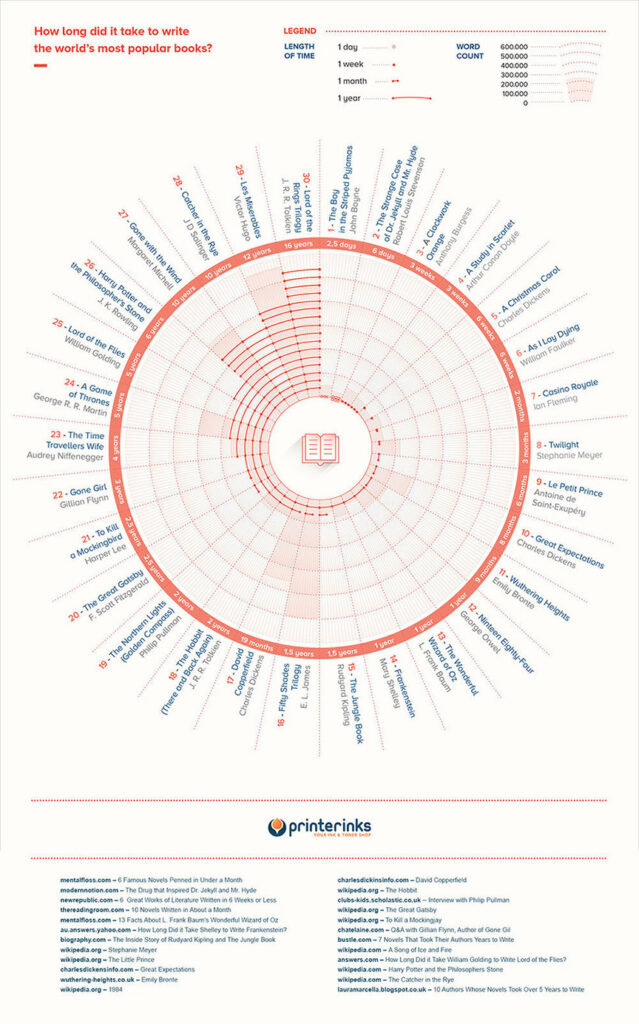
    Please refer to the infographic below. It lists some of the most popular books and how long it took the writer to finish them. While Lord of The Rings took a whopping sixteen years to complete (no shocker there), I’d like to direct your attention to roughly a quarter of the chart that indicates books written under three months. If the Boy in the Striped Pajamas was written in two and a half days, you can write something of quality in four weeks.

    Editor’s Note:  This is an awesome chart. I’d say awesome enough to print it and display it in your writer’s lair to spur you on. Michelle’s post continues after the graphic below.

    Why Write This Fast?

    Nothing kills a book faster than never finishing that initial draft. A malaise sets in, often slowing a writer down to a crawl while they chip away over a long time and often give up entirely.

    “Will I ever finish this book?” the writer asks, (fists raised to the sky for dramatic effect).

    Maybe. Maybe not. That first draft is possible if you pick yourself up by your metaphorical bootstraps and do the work every day, but a large percentage of writers never cross the finish line. What a shame that is!

    To reiterate: Strangely, there is a raw emotion that comes from writing something so fast you don’t have time to noodle it to death.

    How Do I Start?

    Let’s begin with talking about the snarky, three-hundred-pound elephant in the back of your mind.

    Your inner editor.

    We are going to bind and gag that jerk, and it may take fifty shades worth of rope because it’s three-hundred pounds and takes up a lot of headspace.

    Sarah Bale, an extremely prolific romance writer, has similar advice for your would-be-elephant editor.

    “I think the biggest mistake an author makes when writing a rough draft is stopping and rereading/editing their work. The key is to keep moving forward and get the whole story out. Know the beginning and the ending. If you have those elements, the rest is easy.”

    Sarah Bale


    “The key is to keep moving forward and get the whole story out.”  Sarah Bale


    The passionate ideas come when the critic in our mind is silenced. Allow yourself to fall head over heels in love with your story.

    Fall Head Over Heels in Love with YOUR STORY!

    Build your characters. Plot the story fast and loose. Fall in love with your story. Get down and dirty in that honeymoon phase…but not literally because remember the paper cuts. We talked about that. If not, we will.

    And finally, outline!

    For the love of all that is holy, outline your story! Do not do this flying by the seat of your pants. That is a sure-fire way to crash and burn. It doesn’t need to be an in-depth outline. On the contrary, keep that pretty loosey-goosey, too.

    My outlines are often little more than a few sentences for each chapter.

    The Middle Stick

    It’s right around the 30,000-word mark that this happens. The Middle Stick is what I call the point where your initial enthusiasm begins to wane, and your progress gets sluggish. What began as “yay, I’m writing a book” turns into “I don’t know if I can do this.” It happens to everyone.

    This is where participating in programs like NaNoWriMo can be helpful. Having other writers in the same place can be encouraging, and they can hold you accountable. If you aren’t doing NaNoWriMo, I suggest getting a group of like-minded author friends to do this together. This is also where writing ahead of your minimum word count helps because The Middle Stick will almost certainly slow you down.

    Here are two  helpful tips for when you are in the “saggy middle”

    • Go out of your comfort zone and experience something related to your book. For example, if you are writing a western, go see a rodeo. Get away from your computer.  (Or in Covid days, watch YouTube videos specific to your story or go for a walk or take a hike or try a new recipe that your protagonist would enjoy. – Kiffer)

      Multi-award winning author, Janet Shawgo, has this to say about immersing yourself in your research outside the page when she was researching her book, Look For Me, set in the Civil War. “What helped me was putting feet on the ground at Gettysburg to get a feel of the area, what my characters saw, what they heard. To try on costumes true to that era. I walked some of the roads soldiers did in Virginia. If at all possible, put yourself there.”

    • Switch up your chapters. This is where outlining really helps you. If you are hitting a wall writing chapter thirteen, jump forward and write chapter twenty. Sure, you’ll have to go back to that chapter eventually, but this helps you jump over that block and continue to get your word count in.

    I wrote Tattoo entirely this way. It’s made of seven parts of a story told chronologically backward. I didn’t write any of those parts in order. Not one. Yet, I still managed to piece them together in the end.

    Just keep moving. The momentum will pick back up. You can do this.

    PICTURE SELF in the FUTURE with a Completed First Draft! 

    Hurray! You Did It!

    Go celebrate. Treat yourself to a fancy dinner. Toast your deed with some friends. Eat a whole chocolate cake. I don’t care. Party it up because you managed to do what the vast majority of humans on this planet cannot do. Most people never dream about writing a book. Fewer attempt it. Only a small fraction actually finish a draft.

    You are spectacular.

    WHAT NEXT?

    Now, put the book aside for at least a month (more like two). You will eventually go back and edit. You will fill in those empty brackets.

    You will allow that annoying three-hundred-pound editor elephant back into your life. But not right now. That’s for another day.

    STAY TUNED for Michelle’s Next Chanticleer Writer’s Toolbox blog post on:

    • Time Management
    • From Snail to Sprint
    • 90 second exercise to keep you on track
    • How to Not Fall into the Black Hole of the Internet While Writing Your First Draft
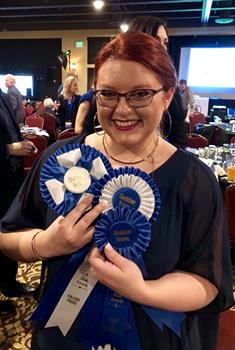
    Michelle Rene and her Chanticleer Grand Prize Ribbons

    Michelle Rene, the author of this blog post,  is a creative advocate and the author of a number of published works of science fiction, historical fiction, humor, and everything in-between.

    She has won indie awards for her historical fiction novel, I Once Knew Vincent. Her latest historical novel, Hour Glass, won the Chanticleer International Book Awards Grand Prize for Best Book. It was released on February 20th to rave reviews from Chanticleer,  Kirkus and Publishers Weekly. Her experimental novella, Tattoo, was released on March 7th.

    When not writing, she is a professional artist and self-described an all-around odd person. She lives as the only female, writing in her little closet, with her husband, son, and ungrateful cat in Dallas, Texas.

    A special thanks go out to the authors Sarah Bale and Janet Shawgo for contributing their writing expertise to help others.


    Chanticleer Editorial Services – when you are ready

    Did you know that Chanticleer offers editorial services? We do and have been doing so since 2011.

    Tools of the Editing Trade

    Our professional editors are top-notch and are experts in the Chicago Manual of Style. They have and are working for the top publishing houses (TOR, McMillian, Thomas Mercer, Penguin Random House, Simon Schuster, etc.).

    If you would like more information, we invite you to email Kiffer or Sharon at KBrown@ChantiReviews.com or SAnderson@ChantiReviews.com for more information, testimonials, and fees.

    We work with a small number of exclusive clients who want to collaborate with our team of top-editors on an on-going basis. Contact us today!

    Chanticleer Editorial Services also offers writing craft sessions and masterclasses. Sign up to find out where, when, and how sessions being held.

    A great way to get started is with our manuscript evaluation service. Here are some handy links about this tried and true service: https://www.chantireviews.com/manuscript-reviews/

    Writer’s Toolbox

    Thank you for reading this Chanticleer Writer’s Toolbox article.


  • Putting More Character into Your Characters – by Skip Ferderber – a Chanticleer Writer’s Toolbox Post

    Putting More Character into Your Characters – by Skip Ferderber – a Chanticleer Writer’s Toolbox Post

    Maybe it’s just me, but I often find myself lost when it comes to keeping track of multiple characters in a book I’m reading.

    Sometimes I’ll find myself about two-thirds through a novel when someone named Betty or Steve pops up in a conversation with my protagonist with an important piece of detail about the plot or a character development. Instead of taking in that information and using it to hurtle further into my novel, I find myself wondering who that character was, whether I’d seen him or her before and feeling a bit inadequate and frustrated that I can’t remember anything at all about the character.

    What I should consider instead is getting annoyed at the writer for not making the character memorable enough.

    Not every character in a book carries the same weight. You have your protagonists, your supporting cast, and possibly a boatload of tertiary characters. When it comes to the first two groups, you probably labor hard at making them distinguishable. But what about those pesky extras, the ones who are roughly the equivalent of chair-fillers in a night club in a ‘30s movie? You can’t waste your precious words on giving everyone a character workup . . . or can you?

    Consider this a good rule of thumb when you write about any character, large or small: If they’re in your book, you’ve got to know them well enough to tell your readers about them.

    “If you’re going to have a character appear in a story long enough to sell a newspaper, he’d better be real enough that you can smell his breath.” ~ Ford Madox Ford

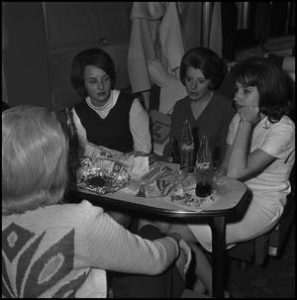
    In an otherwise excellent novel I read recently, a career woman in her late 30s is talking at lunch to three girlfriends from her high school years. It was clearly meant as exposition about the woman, her struggles as a high-school non-entity to her present-day role as a prominent society all-star with three people from her past giving some much-needed context to that transition. But the author uses them as props. She might as well have been talking to three empty chairs.

    She might has well been talking to three empty chairs…

    If one of them had looked disbelieving at their friend, exchanged glances with each other, hastily taken a sip of wine, idly played with her silverware, etc., the scene would have had greater weight. If the central character had noted any physical differences from each or any of her friends, had an intense one-on-one exchange with any of them, turned that small discussion into a more personalized exchange, I would have known more about how the protagonist functioned.

    All I can recall in retrospect is that four women had lunch.

    So much can be done with characterization to make even the smallest “extra” memorable. One of my favorite examples comes from Daphne du Maurier’s “My Cousin Rachel.” As Philip travels to Tuscany to visit Ambrose, his troubled benefactor, he sees Italy not as a festive but as a sad, decaying land.

    He sees a young woman with a baby in her arms, apparently a beggar. Instead of using her clothes to show her situation, du Maurier writes,

    “She was young, not more than nineteen or so, but the expression on her face was ageless, haunting, as though she possessed in her lithe body an old soul that could not die; centuries in time looked out from those two eyes, she had contemplated life so long it had become indifferent to her.”

    Then she is gone. Poof!  But that brief moment on which she appears on du Maurier’s stage is a memorable detail in moving the story and its dark mood forward.

    One way to think about how you enhance your characters, large and small, is to consider the direct and indirect tools every writer has at hand.

    Direct tools are the most obvious: a person’s looks, clothes, their home, their family, their choice of music, books, the food they eat, etc. Indirect tools may include the way they look at someone (e.g., eyes narrow or open in pleasure or dismay), how they wipe their mouth after eating, a speech characteristic such as a small pause or a stutter. Their speech, how they approach their read, listen to music or watch movies, the way they sit, awkwardly gesture, lightly tighten their lips when they hear something they don’t like, a distracting memory . . .

    Your implementation of these tools will be important as you develop your story. It will help you elevate even the most mundane tale and make for a more enjoyable experience and hopefully increase your readership.

    It’s always worth your while to read the works of well known writers to see what characterization tricks they employ. But beware the trap of depending on them as a substitute for your own imagination. The maxim about writing itself being the only way to learn writing must be your truth. Try, fail and rise again. It’s the job, isn’t it.


    About Skip Ferderber 

    We are honored and proud that Skip is vital member of the Chanticleer Team of Professional Reviewers.  He has been a staff writer  for The Los Angeles Times, editor at Millimeter —a magazine that specialized in motion picture and television post-production, and has worked at several LA magazines during his career.  He is also a contributor to Geekwire, Puget Sound Business Journal, Sound Publications, and other Seattle-based media outlets.

    When not reviewing for Chanticleer Reviews & Media, Skip works on his second novel. He is an avid and intrepid traveler who has visited more than 20 countries including mainland China, Nepal, and Brazil with a journalistic eye for detail and subtext.


    HANDY LINKS to CHARACTER DEVELOPMENT Articles in the Chanticleer Writers Toolbox Series:

    ESSENCE of CHARACTERS – Part One – From the Jessica Morrell’s Editor’s Desk – Writer’s Toolbox Series

    CREATING UNFORGETTABLE SECONDARY CHARACTERS – Part Two of ESSENCE of CHARACTERS from Jessica Morrell’s Editor’s Desk – Writer’s Toolbox Series

    MINOR CHARACTERS – the SPICE of FICTION – Part One – From Jessica Morrell’s Editor’s Desk – Writers’ Toolbox Series

    MINOR CHARACTERS – the SPICE of FICTION – Part 2 From Jessica Morrell’s Editor’s Desk – Writers Toolbox Series

    CHARACTER NAMES are SIGNIFICANT in FICTION – Part Three: LANGUAGE and NAME-CRAFT in WRITING FICTION – a Chanticleer Writers Toolbox Blogpost by Jessica Morrell

    Did you know that Chanticleer offers editorial services? We do and have been doing so since 2011.

    And that our professional editors are top-notch and are experts in the Chicago Manual of Style. They have and are working for the top publishing houses (TOR, Macmillan, Thomas Mercer, Penguin Random House, etc.) and award-winning independent presses. If you would like more information, we invite you to email Kiffer or Sharon at KBrown@ChantiReviews.com or SAnderson@ChantiReviews.com.

    Click here to read more about our Editorial services: https://www.chantireviews.com/services/Editorial-Services-p85337185

    A great way to get started is with our manuscript evaluation service. Here are some handy links about this tried and true service:

    https://www.chantireviews.com/manuscript-reviews/

    We work with a small number of exclusive clients who want to collaborate with our team of top-editors on an on-going basis. Contact us today!

    Writer’s Toolbox

    Thank you for reading this Chanticleer Writer’s Toolbox article. 

    We encourage you to stay in contact with each other and with us  during this stint of practicing physical distancing to prevent the spread of COVID-19 — especially at this time of re-opening.

    Let us know how you are doing, what is going on where you live, how are you progressing on your writing projects.

    I invite each of you to join us at The Roost – a private online Chanticleer Community for writers and authors and publishing professionals. You are welcome to email me for more info also.

    We are active on Facebook, Twitter, and Instagram. You can find us by using our social media handle @ChantiReviews

    Minimize physical contact! Maximize social connecting!

    Be well. Stay safe. Keep writing! Keep Creating! 

  • Jump Start Your Novel – Brainstorming Tips for NaNoWriMo Season from the Editor’s Desk of Jessica Morrell – Chanticleer Writer’s Toolbox Series

    Jump Start Your Novel – Brainstorming Tips for NaNoWriMo Season from the Editor’s Desk of Jessica Morrell – Chanticleer Writer’s Toolbox Series

    To NaNoWriMo or Not NaNoWriMo – These Tips will help to Jump Start Your Novel

    Here are brainstorming tips from the desk of Jessica Morrell that will help to JUMP START Your Novel whether or not you are one of the thousands of writers participating in NaNoWriMo.

    For the uninitiated, NaNoWriMo is an annual mad sprint, penning 50,000 words of a story at a frenzied speed while part of a writing community. Writers are divided about the effectiveness of NaNoWriMo. Some swear by it. Others swear that it is a distraction.

    But whatever your take on NaNoWriMo is, I believe that you will find Jessica’s brainstorming tips useful additions to your writer’s toolbox. Kiffer Brown

    Prepping for NaNoWriMo–start with character…oh and food.

    If you’re making plans to take part in NaNoWriMo you will be wise to prepare. I recommend a deep house or apartment cleaning and stocking the pantry and freezer. Stock plenty of protein-rich dishes ready for the days ahead. The kind you can simply thaw or nuke. What else keeps you going? Perhaps chocolate, apples, snacks, coffee, tea, bottled water, and rewards like decent wine for milestones achieved.

    Buckle Up

    But with the end of October here, I also recommend that you get acquainted with your protagonist before you plunge into writing a new novel.

    It’s simple really; if you get acquainted with him or her beforehand, the story will unspool with more ease and speed. Because what the protagonist wants/desires and fears the most (the dreaded alternative) will be at stake in the story.

    Now, it’s likely that the protagonist’s needs and goals will shift and grow throughout the story, but you need a starting point of need and imbalance. If you begin with basic dynamics of storytelling now, then by the time the conflict heats up and things are really hairy, you’ll understand your protag’s reactions and next steps.

    In fiction, needs and motivations create goals.

    The protagonist’s goals will meet with opposition from the antagonist or another force. The protagonist will struggle to overcome the obstacles. These struggles create conflict and conflict fuels the whole shebang.

    Goals matter. Goals define fictional characters from Woody from Toy Story to Dorothy Gale in the Wizard of Oz to Atticus Finch in To Kill a Mockingbird.

    Goals are tied to dramatic structure and prevent your characters from being merely reactive.

    Fictional characters don’t give up even though goals are hard to achieve.

    Goals provide action, drive stories.

    CHARACTERS

    HUNGER GAMES by Susanne Collins

    Katniss Everdeen: Her path to greatness began the day of the Reaping when she steps in to save/protect her sister Primrose from taking part in the annual and deadly Hunger Games. Leaving home with Peeta, the other Tribute from District 12, she plans to somehow stay alive because if she dies her mother and sister will not be able to survive without her. Along the way, she trains, forms an alliance with Peeta, collects allies and enemies, and ultimately fights to protect Peeta’s life too. By story’s end, their examples show how remaining true to your principles is most important of all.

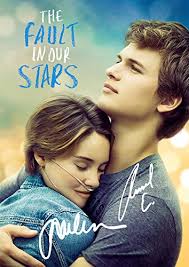
    The Fault in Our Stars by John Green

    Hazel Lancaster in The Fault in Our Stars: Teenaged Hazel has been dealt a lousy hand, thyroid cancer that has metastasized into lung cancer. Her first goal, to please her mother, is accomplished when she attends a support group for kids with cancer. At this meeting, she makes friends with Augustus Waters who becomes her first love. She introduces Augustus to her favorite novel about a girl with terminal cancer and explains she wants to meet the author and understand what really happened to his family. You see, the motivation that drives Hazel is that she needs to believe her parents will be okay after she dies. (spoiler alert) Along the way Hazel and Augustus travel to Amsterdam and meet the author, lose their virginity, and Hazel realizes how much she wants to live. But Augustus has been hiding a horrible truth: his cancer has returned and he has little time left. Quite a plot twist, isn’t it? Now Hazel needs to somehow support him, cherish their last days together, then handle her grief all the while coping with her own terminal diagnosis. She comes to understand what being a survivor means and that life has meaning no matter what stage you’re at. And she comes to feel more peace about her parents, especially after she learns her mother has been getting a degree in social work.

    Star Wars by George Lucas

    Luke Skywalker: Skywalker is a freedom fighter from humble beginnings. His path (and character arc) begins with a restless need to escape his dead-end existence on his uncle’s barren farm. He learns that Princess Leia is leading a rebellion against the Empire and wants to join. He longs to become a Jedi Knight, or fighter pilot especially after Obi-Wan Ben Kenobi, a desert hermit, informs him that his father was a Jedi fighter and he has the ability to harness the Force. Still reluctant to leave his family, his mind is made up for him when Imperial stormtroopers savagely murder his aunt and uncle. He’s all in now. Skywalker begins training with Hans Solo, then learns the princess has been captured. His next goal is to rescue the princess, which he accomplishes with more than a few swashbuckling moves. This sets up his final, seemingly hopeless goal of taking out the Death Star and ultimately saving the Rebel alliance.

    TAKEAWAYS

    Notice how the protagonists’ goals powered the story?

    Getting to know you….getting to know all about you…

    So how are you going to get acquainted with your protagonist? There are lots of questionnaires available online to create a physical presence and backstory. My Character Cheat Sheet link is at the end of this article.

    Walk a mile in their shoes…

    However, it seems to me that walking along or imagining characters as if they’re with you, their creator, can be one of these best methods of getting to know someone. Especially if you want to learn what makes them tick. Or in fiction speak, their motivations. Motivations stem from a character’s past, basic nature and personality, and compelling circumstances.

    Let’s repeat: Motivations create needs which create goals which fuel conflict = story.

    Just try it. Step outdoors and plan to walk for at least a mile with your invisible pal at your side.

    • What would your character notice or remark on?
    • How does he/she hold his/her body?
    • Fast walker? Ambler? Quiet?
    • Hates exercise? Feels most alive when moving?
    • What’s on his or her mind? Distracted? Preoccupied? Impatient?

    Do you remember those moments in life when you’re walking along with a friend and a profound truth slips into the conversation? Maybe it’s a tidbit or a bombshell or sharing a long-ago memory. We all have wounds and they’re often twined to a character’s internal goals and secrets. Those are the moments, the gold you’re searching for.

    And although time is short with November looming, how about a short road trip with your character riding shotgun? Or can he or she tag along when you’re running errands or chauffeuring the kids? Have you ever noticed how some people are a delight to travel with and some people are a nightmare? Which one is your protagonist? A nervous, watchful traveler? Open to adventure? Afraid of the unknown? Chatty? Reticent?

    Shaping your protagonist’s goals

    What’s wrong or not working in his/her current situation?

    What about emotional needs from the past? In other words, what’s screwing up your character?

    What first, clear-cut action step can the protagonist take toward his/her goal?

    Remember, a protagonist’s goals work best if they’re relatable, visible, and barely achievable. Side note: some of a character’s goals will remain ‘invisible’ since they are inner, emotional, personal growth goals.

    INCITING INCIDENTS

    What is the impetus to push your protagonist toward that goal?

    The inciting incident such as Prim begin chosen to participate in the Hunger Games? The first plot point when Hazel meets Augustus at the support group? Dorothy’s inciting incident? Luke Skywalkers’ inciting incident?

    What is your protagonist’s inciting incident? 

    Stay tuned for more NaNoWriMo Tips // Jump Start Your Novel Tips

    Jessica Page Morrell

    Keep writing, keep dreaming, have heart. Jessica

    Jessica Morrell is a top-tier developmental editor and a contributor to Chanticleer Reviews Media and to the Writer’s Digest magazine. She teaches Master Writing Craft Classes at the Chanticleer Authors Conference that is held annually along with teaching at Chanticleer writing workshops that are held throughout the year. 


    Chanticleer Editorial Services

    Did you know that Chanticleer offers editorial services? We do and have been doing so since 2011.

    Our professional editors are top-notch and are experts in the Chicago Manual of Style. They have and are working for the top publishing houses (TOR, McMillian, Thomas Mercer, Penguin Random House, Simon Schuster, etc.).

    If you would like more information, we invite you to email Kiffer or Sharon at KBrown@ChantiReviews.com or SAnderson@ChantiReviews.com for more information, testimonials, and fees.

    We work with a small number of exclusive clients who want to collaborate with our team of top-editors on an on-going basis. Contact us today!

    Chanticleer Editorial Services also offers writing craft sessions and masterclasses. Sign up to find out where, when, and how sessions being held.

    A great way to get started is with our manuscript evaluation service. Here are some handy links about this tried and true service:

    https://www.chantireviews.com/manuscript-reviews/

    Writer’s Toolbox

    Thank you for reading this Chanticleer Writer’s Toolbox article.

    Writers Toolbox Helpful Links: 

    The INCITING INCIDENT: STORY, SETBACKS and SURPRISES for the PROTAGONIST – A Writer’s Toolbox Series from Jessica Morrell’s Editor’s Desk

    ESSENCE of CHARACTERS – Part One – From the Jessica Morrell’s Editor’s Desk – Writer’s Toolbox Series  

    http://jessicamorrell.com/?page_id=174

  • What Literary Agencies and Acquisition Editors are Seeking in Manuscripts – Refreshing your Writer’s Toolbox from Jessica Morrell’s Editor’s Desk

    What Literary Agencies and Acquisition Editors are Seeking in Manuscripts – Refreshing your Writer’s Toolbox from Jessica Morrell’s Editor’s Desk

    What is it about a particular manuscript that makes it interesting to a literary agent (or the agent’s slush pile reader), acquisition editor, or professional reviewer?

    While it may take more than a crystal ball to figure out exactly what lit agents and publishing houses acquisition departments want and let alone reviewers, guidance can be had.  Line editors do understand what these gatekeepers want to see and, perhaps more importantly, what they do not want to see in a manuscript.

    Advice from line editors can be an author’s first line of defense in climbing out of the slush pile to gaining a gatekeeper’s interest. No crystal ball required.

    Jessica Morrell, a top-tier developmental editor for major authors and publishing houses, knows what these gatekeepers are seeking along with what makes them cringe.

    Editors, agents, and reviewers are word people, most were English or journalism majors in college and have a great love and respect for the written word. They will notice your level of craft within the first sentences, so your efforts must be polished, vivid and exceptional.

    Craft Tips & Techniques by Jessica Morrell, Editor

    (with Added Comments, from Kiffer Brown, publisher of Chanticleer Reviews magazine)

    • Your manuscript lives or dies on your opening sentences and each word must be perfect, precise, and weighted with meaning. 
      • (Most slushers (who work for agents and acquisition departments) do not read past the few pages of a manuscript. Don’t blame them for not reading more of your manuscript. Slushers have more works than they can possibly read in a month but have to slush in a given day. It is the writer’s job, neigh duty, to keep the slusher engaged. Slushers are professional readers who are panning for “gold and gems in the raw.”  This system is by design, btw.) 
    • Editors notice and are turned off by passive voice and wimpy verbs.
      • (Enough said.) 
    • Editors notice when the viewpoint jumps or shifts within a scene.
      • (This is a pet peeve of professional reviewers—an indication of lack of writing craft and skills.)
    • Editors notice too much telling (reporting or summary) and not enough showing in all types of writing including essays and memoir.
      • (A line editor can help with too much telling with comments and questions.) 
    • Editors notice when emotions are announced instead of dramatized.
      • (Reviewers call this “lazy writing.”)
    • Editors notice the frequent use of names in dialogue. Generally, leave out names.
      • (Multiple names, especially names that are similar, are irritating to reviewers. When the reviewer has to make notes about who is whom it had better be for furthering the plot significantly.) 
    • An editor notices sloppy punctuation such as excessive use of exclamation points, quote marks around inner thoughts, improper use of semicolons and ellipsis.
      • (Reviewers see this as the author not being professional about the work  (or his or her writing career) to have it professionally proofed – the most basic type of editing.) 
    • Editors notice protagonists who are not proactive, heroic in some way, and bigger than life. (
      • Reviewer’s Mantra – Novels are depictions of life without the boring bits.) 
    • Editors notice characters with a limited emotional range and expression.
      • (One-dimensional character and cardboard characters are uninteresting.) 
    • Editors notice large and small inaccuracies and inconsistencies—when the character has blue eyes on page 23 and green eyes on page 57; when a character drives an old, beat-up, pick-up truck that is inexplicably equipped with airbags; when an animal, plant, or species of any sort is misnamed or shows up in the wrong region of the country.
      • (Did the author care enough to do the background research for the work? These technical details’ correctness can make or break the construct of a story.)
    • Editors notice when technical details don’t ring true—such as in a mystery when police don’t follow standard arrest procedure; or when a yacht sinks from a single bullet hole; or explosive materials are used haphazardly.                  (See comment above.)
    • Editors notice vague descriptions (plant instead of ivy, a tree instead of oak) and generalities instead of details that bring the reader into a specific time and place.
      • (Vague descriptions are perceived as lazy writing which is not a reputation that an author would want to be known for.) 
    • Editors notice when writers don’t write for all the senses, especially leaving out smells.
      • (This is called the white room syndrome and it makes a manuscript about as boring to read as an old school telephone book.)
    • Editors notice small confusions such as misusing it’s and its, that and which, affect and effect, compliment and complement, lay and lie.
      • (With tools (apps) such as Grammarly and Grammar Girl, there is no reason for these misuses to occur. Additionally, these basics are covered thoroughly in The Elements of Style, a slim tome that is indispensable writers.) 
    • Editors notice overly long paragraphs and a general lack of white space. Generally, paragraphs are five or six sentences long and as taught in grade school introduce a topic, develop a topic, then conclude or lead on to the next paragraph.
      • (Edit, delete, cut your word count—as Stephen King says, “Kill your darlings.” The rule of thumb is that most manuscripts can be cut by 20 percent.)
    • Editors notice a lack of transitions—the words and phrases that announce a change in mood or emotion, time, and place so the reader can easily follow. They also know excess transitions as when you follow your characters across every room and along every sidewalk.
      • (Use transitions as you would salt and pepper—just enough but not too much. The correct amount of transitional phrases are the hallmark of solid writing.)  
    • Editors notice excess modifiers, purple prose, and too much description. The best writing is lean and economical and every word in every sentence has a job to do.
      • (Yes! Every word must move the story forward.) 
    • Editors notice a voice that is flat, inappropriate, or boring. Voice, whether it is the writer’s voice in an essay or the viewpoint character or narrator in fiction, must breathe life into the piece and hint at the person behind the words.
      • (Writing styles can mimick the guests at a cocktail party. There is always the bore who goes on and on and usually in too much detail also. The bore is the one guest who is the least tolerated even more so than the boisterous, the chatty, the tipsy, and even the know-it-all. But everyone loves the one who can tell a good story, or the who has a bit a mystery, and the one who is interested in others and respects others is always invited back. Respect your readers with your writing and your writing will earn respect.)


    Chanticleer Editorial Services

    Did you know that Chanticleer offers editorial services? We do and have been doing so since 2011.

    Our professional editors are top-notch and are experts in the Chicago Manual of Style. They have and are working for the top publishing houses (TOR, McMillian, Thomas Mercer, Penguin Random House, etc.). If you would like more information, we invite you to email Kiffer or Sharon at KBrown@ChantiReviews.com or SAnderson@ChantiReviews.com for more information, testimonials, and fees.

    We work with a small number of exclusive clients who want to collaborate with our team of top-editors on an on-going basis. Contact us today!

    Chanticleer Editorial Services also offers writing craft sessions and masterclasses. Sign up to find out where, when, and how sessions being held.

    Writer’s Toolbox


    Thank you for reading this Chanticleer Writer’s Toolbox article.

    Keep writing, keep dreaming, have heart. Jessica

    Keep on creating magic! Kiffer

  • MINOR CHARACTERS – the SPICE of FICTION – Part 2 From Jessica Morrell’s Editor’s Desk – Writers Toolbox Series

    MINOR CHARACTERS – the SPICE of FICTION – Part 2 From Jessica Morrell’s Editor’s Desk – Writers Toolbox Series

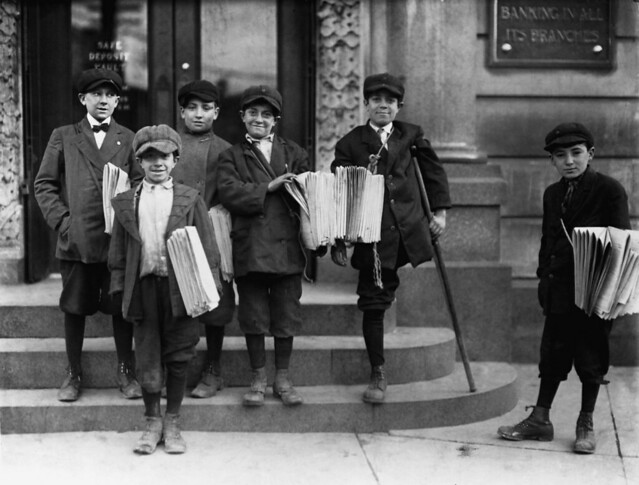
    “If you’re going to have a character appear in a story long enough to sell a newspaper, he’d better be real enough that you can smell his breath.” ~ Ford Madox Ford

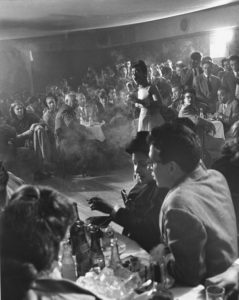
    Newspaper Boys – New Jersey

    Minor characters are too often faceless walk-ons in fiction. But that means the writer has missed a chance to create reality and complexity. ~Jessica Morrell

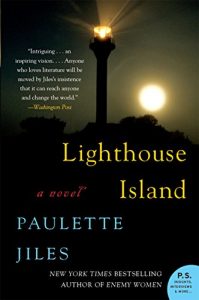
    Here’s how it’s done in Paulette Jiles dystopian novel Lighthouse Island that takes place in the Pacific Northwest. This scene features two minor characters her protagonist Nadia Stepan is about to meet. Problem is, she’s on the lam in a hideous, nightmare society and the authorities are searching for her. And she’s an outlaw in a desiccated, chaotic world where danger lurks everywhere and the underclass people are perishing from thirst and deprivation. The government is a diabolical network of agencies that inflict senseless cruelty on most of its citizens while the one percent live in luxury.

    The first character Nadia will meet for only a few minutes, the second one actually saves her and she spends maybe 5 minutes with him. Nadia’s trying to bluff her way out of capture–something she’s good at. At least so far.

    Notice how Jiles instills them with just enough realism to underline their purpose. Notice how she manages this trick with only a few economical words.

    Okay. The officer had tissue-engineered jaws square as a brick and eyes of two different colors and a scorpion tattoo on his neck. She saw him hesitate and so she turned and walked away down the narrow street and the biscuit-colored buildings of concrete whose dim and broken windows stared at each other across the pavement.

    A hand shut on her elbow and shoved her forward. Nadia turned. A stout Forensics officer stared straight ahead and pushed her on. His gray hair shone short and clean under an old-fashioned watch cap with a bill and his body smelled of sweat and hot uniform cloth. She started to say something, to invent an objection and a story but he said Shut up. He was not much taller than she was but there was something about him of that proctor in high school so long ago but more unwavering and quiet.

    Here are some tips for making minor characters count:

    •  Anchor them to a time and place–a street cop, a waitress, a lounge singer, a Wall Street executive.
    •  Give them at least one memorable characteristic. Mismatched eyes. Purple hair. A synthetic smile. Nasty yellow teeth. Vomit breath.
    •  Create an interaction, however brief–a taxi ride, an insult or accusation, asking for directions, buying a coffee.

    Nadia sneaks into the Ritz Carlton and makes it to the elevator. A guard came up. His uniform was sweaty and the hem of his pants legs were leaking threads like a fringe. He smiled at her.

    All right, all right, he said. What floor?

    •  Don’t worry about introducing them–they can simply appear.

    Emergency workers in orange coveralls came running through the dust scrim and shouted at her to go back but she walked on toward them. The telephone poles were down and electrical wires curled in the rubble.

    • Imbue them with meaning to your protagonist. In Nadia’s world—guards, troops, cops are the enemy. And they’re everywhere.
    • Give them a voice if possible.

    In a crowd of people who had lined up for something she saw a woman with a toddler in one arm.

    Cute kid! Nadia said and slipped the badge into the toddler’s baggy pants.

    The woman glared at her. Get one of your own, she said.

    Jessica suggests:

    • Pretend that you’re walking into a room and seeing your character for the first time.
    • What are your first impressions? 
    •  Can you feel the force of his or her personality? Does he or she remind you of a celebrity? Or someone you know?
    • It’s not all about the specifics of appearances—some people arrive on the scene full of confidence, some are hesitant or nervous. Why? Some people stand erect, some slouch. Some have lovely voice qualities, some people bray. Some wear too much cologne, some smell of fresh air or machine oil.  Use clothes, setting, and possessions, including large possessions such as cars to reveal characters.

    What to AVOID! 

    Avoid thumbnail sketches or police blotter descriptions whenever a new character steps into your book.

    (The suspect was a Latino male, 6 feet, medium build, scar on the left cheek, a tattoo of a snake on the right shoulder,  wearing a black jacket, jeans, and sneakers).

    This technique tends to feel contrived especially if used too often. 

    Also, a character doesn’t need to be described all at once, you can layer his or her appearance into the story in increments.

    Avoid heavy-handed effects and characterizations. You want enough nuance to make the reader pay close attention and to enjoy discerning subtle clues. Find ways to insert subtext—the unspoken, between-the-lines innuendo.

    Avoid piling it on. Here is an example of what not to do:

    “Allison, a 30-something, 5 foot 8 redhead, with heavily-mascaraed blue eyes and legs for days strolled into the restaurant her green eyes flashing. Her hair was shoulder-length, her figure striking, her fingernails painted a garish purple. She wore what looked like a real mink jacket over a tight, black dress and teetered on dangerously high heels.”

    Kate Pierson of the B52s

    A character doesn’t need to be described all at once. Instead, try to layer details in throughout the story in increments—as one might adjust the seasonings while cooking. It is better to err on the side of less than too much. You can always add a little more “spice” if needed…

    Here is the link to Part One of MINOR CHARACTERS – the SPICE of FICTION

    https://www.chantireviews.com/2019/06/24/minor-characters-the-spice-of-fiction-part-one-from-jessica-morrells-editors-desk-writers-toolbox-series/

    Keep writing, keep dreaming, have heart. Jessica


    Jessica Morrell is a top-tier developmental editor and a contributor to Chanticleer Reviews Media and to the Writer’s Digest magazine. She teaches Master Writing Craft Classes at the Chanticleer Authors Conference that is held annually along with teaching at Chanticleer writing workshops that are held throughout the year. 


    Did you know that Chanticleer offers editorial services? We do and have been doing so since 2011.

    And that our professional editors are top-notch and are experts in the Chicago Manual of Style. They have and are working for the top publishing houses (TOR, McMillian, Thomas Mercer, Penguin Random House, etc.). If you would like more information, we invite you to email Kiffer or Sharon at KBrown@ChantiReviews.com or SAnderson@ChantiReviews.com.

    We work with a small number of exclusive clients who want to collaborate with our team of top-editors on an on-going basis. Contact us today!