Tag: Writing Craft Books

  • Chanticleer 10 Question Interview Series with Science Fiction Author Jayson Adams – Grand Prize Award-winning Author of Ares

    CHANTICLEER 10 QUESTION AUTHOR INTERVIEW SERIES

    with Award-Winning Author, Jayson Adams

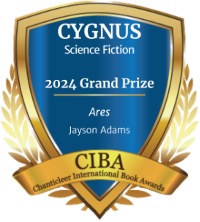
    Author of the 2024 Cygnus Grand Prize Winner Ares
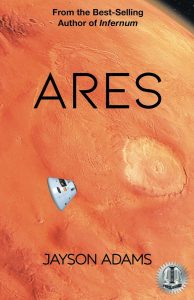
    Ares Cover

    Blue, Gold, Badge, CIBA

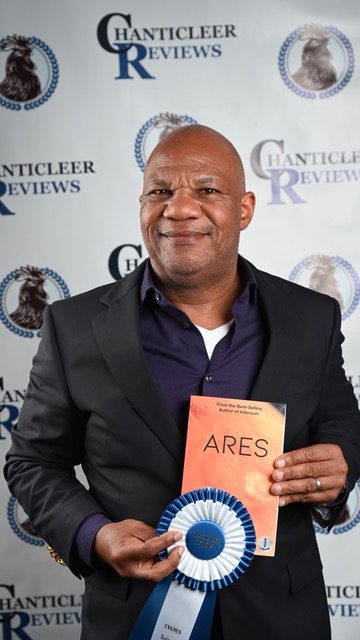
    Hello friends! We have another wonderful interview for you today, with author Jayson Adams! His book Ares took home the Chanticleer 2024 CIBA Grand Prize Award in the Cygnus Division, and we are excited to share with you the steps he took to becoming an award-winning author and what he’s planning next.

    Take a minute or two and get familiar with Jayson and his incredible journey to becoming award-winning author!
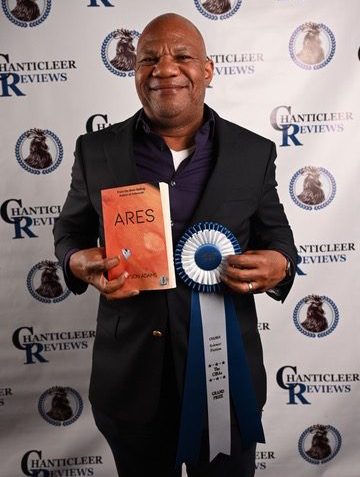
     

    man, ribbon, bald, blazer, book, ares, ciba, award

    Chanti: Jayson, let’s start with your background. Tell us a little about yourself—have you always dreamed of being a novelist, or did writing come into your life in a different way?

    Adams: I’ve been a science fiction fan since I was kid, but I had never really imagined myself writing novels. My passion leaned more toward computers. Even though they’re deeply technical, I saw the computer screen as a blank canvas—it was my creative outlet. I started several software companies and had the freedom to build whatever I could imagine.

    About ten years ago, I joined Google as an engineer on the Chrome browser. Over time, I grew frustrated with the division of labor in that space: product marketers decided what the product should do, designers decided how it would look and feel, and engineers were expected to bring it all to life—no questions asked. A few years in, I realized I needed a new creative outlet and turned to writing. I figured that with enough practice and a relentless drive to learn the craft, I could eventually become a decent writer.

    Chanti: We’ve definitely seen the shift from tech to writing frequently. That need for a creative outlet is undeniable. When it comes to the strengths you brought from your previous jobs to your new skills as a writer, can you talk about where you feel most confident and maybe offer some advice to anyone who struggles with that?

    Adams: Coming up with interesting plot twists. My advice to anyone who struggles in that area is the same lesson I find myself relearning from time to time: just write. When I get stuck wondering what should happen next, if I force myself to sit down and write what I do know, the ideas start to flow. And more often than not, they’re ideas I never would’ve discovered if I hadn’t put something on the page.

    Chanti: That’s such practical advice about pushing through the uncertainty! Your novel Ares has received incredible recognition. When did it really hit you that you’d become an author—not just someone who writes, but truly an author?

    Adams: It really sank in after I published my second novel, Ares. My first novel, Infernum, was well received, but who could say if that was just a fluke. With Ares earning similar acclaim, I can’t deny it anymore: I’m a writer.
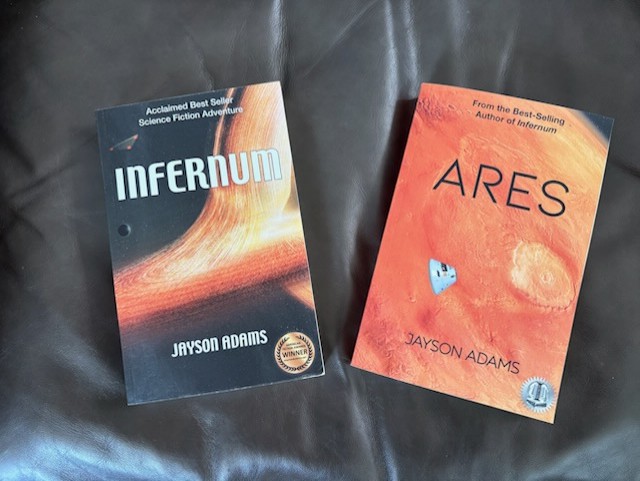
    Man, blazer, bald, book

    Chanti: Two successful novels definitely prove it wasn’t beginner’s luck! You’ve established yourself firmly in science fiction. Is that where you plan to stay, or do you explore other genres as well?

    Adams: Broadly speaking, I write science fiction, but after publishing my second novel, I realized I’m straddling two sub-genres. Infernum is a space opera set a few hundred years in the future, while Ares is grounded sci-fi rooted in the near future. The tricky part is that fans of one don’t always enjoy the other. The novels I’m working on now lean toward grounded sci-fi, but I’ll likely return to space opera before long.

    Chanti: Managing reader expectations across subgenres is a challenge! When it comes to your writing approach, are you someone who follows established storytelling conventions, or do you prefer to break the rules and forge your own path?

    Adams: I follow the rules. They’re an unspoken set of agreements between author and reader that allow the reader to relax into a story. They signal what kind of world they’re entering, what matters, and what to expect. If I hand them something I’m calling a novel, they know it won’t fizzle out at 30,000 words. If I say it’s a mystery, they know there’ll be resolution. Following the rules doesn’t make you predicable, it makes you trustworthy.

    I once read The Hollow Man by Dan Simmons. The bulk of the book was the main character drifting from one random situation to the next. I kept waiting for a through line—some deeper meaning or connection to emerge. But all those events turned out to be filler, just killing time until the ending, which was probably the whole reason Simmons wrote the book. He broke the rule that says everything in the story should matter. When events don’t connect or build toward something, the reader feels tricked. I was so frustrated, I actually threw the book away.

    Chanti: That’s a compelling argument for honoring the reader contract! When you’re not crafting these intricate sci-fi worlds, how do you spend your time? What are your hobbies and interests outside of writing?

    Adams: Outside of reading, most of my time goes into writing software. I’m currently building out an app idea, though my long-term goal is to leave the tech world behind and focus entirely on writing. I’m also an artist and plan to return to life drawing, something I’ve missed.
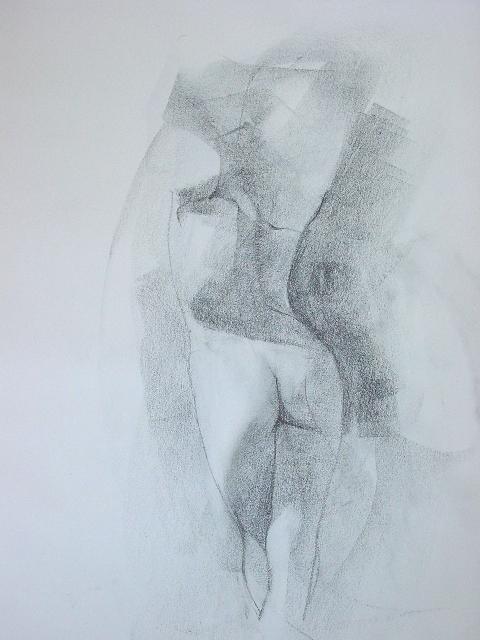
    Jayson Adams, figure drawing, pencil sketch
    Copyright © 2000 Jayson Adams. All rights reserved.

    Chanti: It sounds like creativity flows through everything you do! Writing is definitely a craft that requires constant learning. Which books on the craft of writing have been most helpful to you?

    Adams: Understanding Show, Don’t Tell, by Janice Hardy. Before I read this book, I had a general understanding of show vs. tell. This book was fantastic as far as explaining all the different ways telling can creep into a section of prose.

    I also love The Emotional Craft of Fiction by Donald Maass. Maass says that readers may not remember every plot point, but they’ll remember how a story made them feel. This is the power of emotionally resonant fiction. He does a great job of explaining how to tap into it on the page.
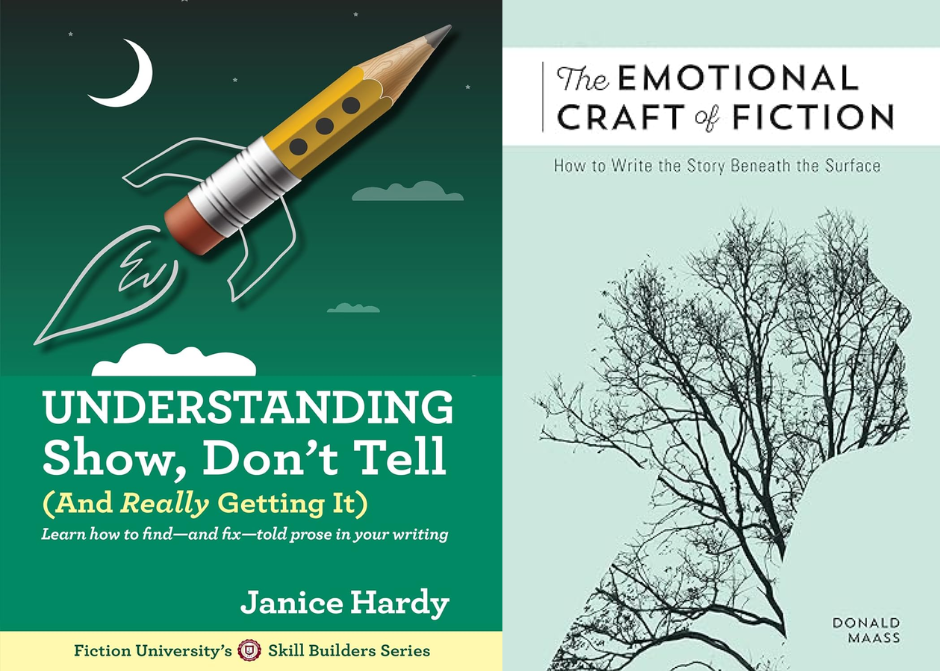
    Show don't tell, book, green, pencil

    Chanti: Both of those sound incredibly valuable! Marketing can be one of the trickiest aspects of being an author. What strategies have you found most effective for selling books and building your readership?

    Adams: A well-performing BookBub ad is incredibly valuable, but can be tricky to build. Ares has been out for awhile now, so Amazon lists about 100 other titles that readers also bought. I used ChatGPT to turn that list into a spreadsheet, with info like author, summary, and more, and then fed it back into ChatGPT to identify recurring themes and tropes that define an Ares reader.

    From there, I built ad copy around four tropes that resonated the most. I also had ChatGPT identify authors from that list whose work aligned with each trope. Then I created BookBub ads for each trope that targeted fans of the corresponding authors. That approach was far more effective than my earlier “try this headline” style of experimentation.

    Another thing I’ve explored is using negative reviews as a marketing tool—not to win over critics, but to help misaligned readers recognize the book may not be for them. I took screenshots of all my 1-, 2-, and 3-star reviews and fed them into ChatGPT, then asked it to gently distill the criticisms. (Screenshots let me avoid even glancing at what might be painful feedback, while still giving the AI everything it needed.) My goal was to add a line to the book description that would help readers who probably wouldn’t like the book self-select out.

    From that effort, I learned that many of Ares’s low-star reviews came from people who expected hard sci-fi and were disappointed to get something that leaned more toward mystery/thriller instead. ChatGPT crafted a short blurb that lets potential readers know that if they’re looking for hard sci-fi, Ares may not be the book for them.

    Jayson Adams, office chair, office, desk, window, computer, couch

    Chanti: That’s a genius use of AI for market research! I’m going to have to try that out! Looking ahead, what projects are you working on now? What can your readers look forward to next?

    Adams: I started working on a sequel to Ares, called King of the Moon. It follows Commander Praviraj Anand and Lieutenant Jack Bremmer from the moonbase featured in that story. But along the way, I found myself pulled into a new, unrelated novel called The Quantum Mirror, which centers on a rescue mission to a decrepit Russian space station. I plan to finish both, though The Quantum Mirror will likely arrive first.
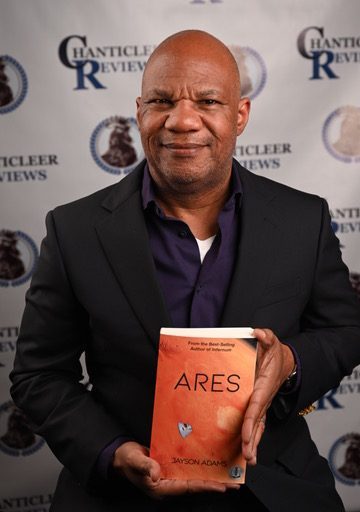
    jayson Adams, Ares, book, Chanticleer

    Chanti: We can’t wait for either of them! Ares was such a treat, and we can’t wait to read more! As we wrap this up, we’d love to end with some advice for readers: What’s the single most important thing a reader can do to support an author they enjoy?

    Adams: If they enjoy a book, please, please, PLEASE leave a rating for it wherever they bought it. As a reader, I always look at the average rating, the number of star ratings, and the release date (how long it took to earn those star ratings). That alone tells you so much about a book’s appeal. Ratings may seem like a small thing, but they make a huge difference.

    Thank you, Jayson, for sharing your writing journey with us and for creating thought-provoking, thrilling science fiction! 
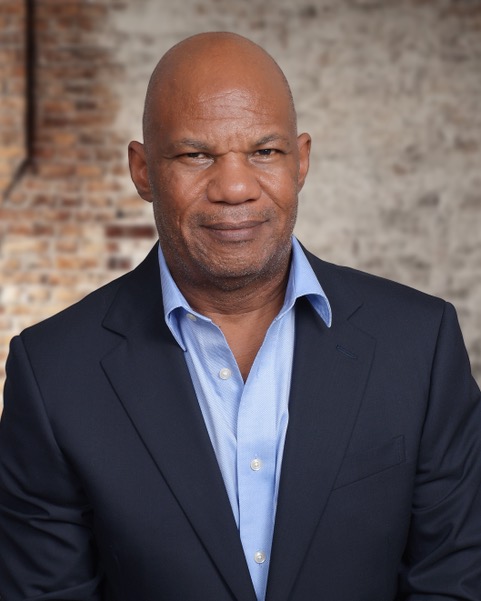

    blazer, blue, shirt, bald, man


    Jayson Adams began his career as a tech entrepreneur, achieving his dream of starting a software company, which he did at the age of 24, and retiring by the age of 30. He has worked for notable figures like Steve Jobs and has founded several successful startups, including one sold to Netscape. After a successful career in technology, he transitioned to writing science fiction around 2018, finding a new creative outlet in storytelling.

    After traveling through Europe and taking up music, he returned to computers with another start-up. He is currently working on a sequel to his award-winning novel, Ares.

  • Understanding Story Structure — A Chanticleer Toolbox Primer Article by David Beaumier

    Understanding Story Structure — A Chanticleer Toolbox Primer Article by David Beaumier

    Start with the Heart 

    Henry Cavill responds to 'Enola Holmes' copyright lawsuit
    Henry Cavill stealing our hearts as Sherlock in the movie Enola Holmes. He definitely stole Kiffer’s.

    When we look at writing craft, it can help to start general and then move on to specifics. Start with questions to help orient yourself toward how you will edit the work:

    • What do you see as the genre?
    • What is the climax?
    • How do you imagine the story’s structure?
    • What is the heart of the story?

    The heart of the story can be more generally understood as theme, but it really boils down to where does the blood flow in the veins of the writing. I make sure that is always in my mind when editing for an author, and I recommend it for any writer who is working on a piece.

    Write down the heart of your story somewhere you can always look at it—on a sticky note near your writing area, at the bottom of the document you’re working in, anywhere you can see it. Having the heart of the piece as an easy reference point lets us keep an eye on the destination as we write or edit toward the end.

    The Evolving Nature of Structure 

    Get ready for book recommendations! In terms of structure, David recommends Jane Alison’s Meander, Spiral, Explode, which sets the bar for how we can reimagine the shape of our books. Most stories won’t tell their author what their structure is supposed to look like until they are nearly finished. 

    Meander, Spiral, Explode: Design and Pattern in Narrative by Jane Alis – Catapult

    Most of the time when we think of the structure of a story, we think of the Aristotelian spear. But story structure can look like anything! A spiral, a flower, a canoe, an inverted spear. Of course, there’s nothing wrong if your story structure does fall into this classic description, but keep in mind that doesn’t mean we close ourselves off to all other structures.  

    A Writer's Cheatsheet to Plot and Structure
    Aristotelian Spear story structure

     Alison takes the idea of seeing the structure literally, recommending that writers draw out the shape of the story. To do this, she recommends visualizing summary like this “__” a scene like this “–” and a still spot (interiority or a moment where the narrator pauses and explains events) as “·”. This is the example of the structure she sees when blocking out a section of Vikram Chandra’s “Shakti”

    __ __ __ __ — — — · —   

    You can see the pattern beginning to form, four moments of summary, followed by three scenes, a still spot, and then finishing with a scene. What do your own stories look like?

     Again, usually this structure becomes visible as the story reaches completion, allowing the author to see the images and metaphors that really shape it.  

     Narration in Four Parts 

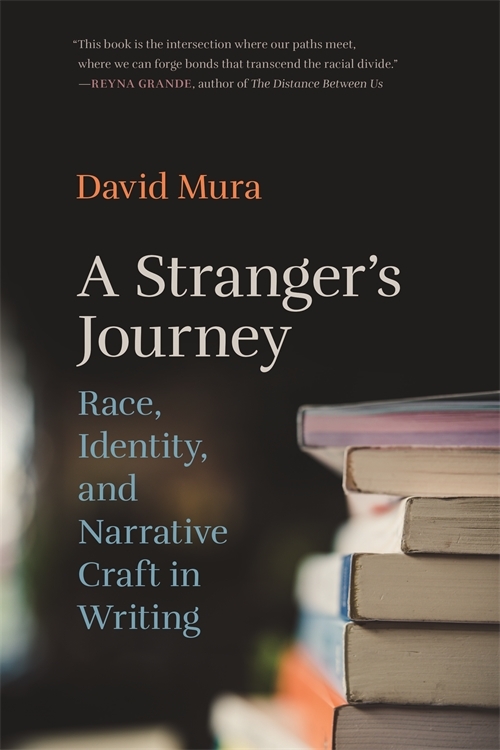
    A Stranger's Journey

    The next section here owes much to David Mura’s Book A Stranger’s Journey. At the start of his chapter “Four Questions Concerning the Narrator” Mura simply asks: 

    1. Who is the narrator?
    2. Whom is the narrator telling her story to?
    3. Where is the narrator telling the story?
    4. Why is the narrator telling the story?

    These simple questions open up most stories in wonderful ways that surprise and delight their authors. It changes the idea of the narrator just being the main character in their present (if so, is the narration in present first person, and does the reader only get information the main character knows?). Or perhaps the narrator is you, the author; remember you are a living, breathing, ever changing being, while your narrator becomes fixed in time the moment you put down your pen and stop the editing process. Understanding this allows the writer to slow down and understand the perspective of narration in their story.  

    Why did Drax say, “Why is Gamora”? - Quora
    From Avengers: Infinity War

    Let’s look at a short story attributed to Ernest Hemingway to better understand these questions of narrator. The story is as follows:

    For sale: baby shoes, never worn

    • Who is the narrator? We could say a newspaper or even the person who wrote the advertisement, possibly the parent of this child. We could also say that Hemingway is telling the story since he was asked to write a six word story.
    • Who is the narrator speaking to? Anyone who might want to buy baby shoes. If Hemingway is the narrator, then it’s also with the secondary desire to make the reader sad since the tragedy implied by baby shoes that have never been worn weighs heavily on us.
    • Where is the narrator telling the story? In the newspaper? A sign in a window?
    • Why is the narrator telling the story? Hard question. Maybe honestly just to sell the baby shoes. Maybe to find closure and remove the last reminders of their loss. Maybe in the hopes that someone will reach out.

    In examining the narrator and understanding the relationship the narrator has with the reader, we create work with richer tone, voice, and a better understanding of what information needs to be shared.  

    All in Good Measure 

    Amazon.com: Self-Editing for Fiction Writers, Second Edition: How to Edit Yourself Into Print (9780060545697): Browne, Renni, King, Dave: Books

    The next book recommendation is Renni Browne and Dave King’s Self-Editing for Fiction Writers. While many of their chapters are excellent, their fourth one, “Proportion” stands out among many craft books as a unique topic. The quickest way to say this is to simply ask the writer to say what they mean to say, and then move on without spending too much time repeating the point. Often, this repetition breaks the sense of proportion needed for the story, leaving the weakest repeat to carry the weight of the scene in which it appears.

    An example of this would be if the sunset was described as two Polaroids being jammed together to make the sky and land, and then describing again how the rocky cliffs were at odds with the soft clouds of sunset. Remember, choose which one seems stronger and cut the weaker one. 

    Most craft books touch on this as the idea of trusting the reader. Write the best story you can imagine writing, and then, after showing it to readers, you’ll understand if the way you wrote it made sense or not. Taking too much time to belabor your point will make it seem overwrought and overwritten to the point that the reader might lose interest (something I always fear when writing about proportion).  

     All Together

    So, the key parts of craft I’m looking at here are: Heart, Structure, Narration, and Proportion. Of course, there are the traditional ones that we hear about everywhere:

    • Dialogue
    • Character
    • Plot
    • Voice
    • Beat
    • The ever present struggle between show and tell.

    Of course it’s important to have a good grasp of the basics, you can’t have the four elements above without them! But understanding how you’ll put it all together in the end is what makes a work really sing.


    When we finish our first draft our work suddenly transforms into a behemoth that’s impossible to approach. We’ll give you some great advice here, though if you’re at the point where you’ve done all this the next step is to find some extra eyes for your work. For an unbiased evaluation  that will help you better understand what works and what needs to be improved in your book, check out our Manuscript Overviews editorial service here. Remember Kiffer’s advice to have a manuscript assessment prior to beginning line editing or copy editing. A manuscript overview/evaluation will save you time, money, and will improve your work-in-progress.

    The CIBAs – Discovering Today’s Best Books and Authors

    If you’ve read through this and think “I’ve done all this, and I’m ready for the next step!” Congratulations! We would recommend putting some positive attention on your book at this point. You can enter it in a Chanticleer International Book Award Contest here or submit it for a professional Editorial Review here. And remember, it never hurts to do both.

    Looking for more story structure? You can find many articles here from a search of our site. 


    Chanticleer Editorial Services – when you are ready

    Did you know that Chanticleer offers editorial services? We do and have been doing so since 2011.

    Tools of the Editing Trade

    Our professional editors are top-notch and are experts in the Chicago Manual of Style. They have and are working for the top publishing houses (TOR, McMillian, Thomas Mercer, Penguin Random House, Simon Schuster, etc.).

    If you would like more information, we invite you to email Kiffer or Sharon at KBrown@ChantiReviews.com or SAnderson@ChantiReviews.com for more information, testimonials, and fees.

    We work with a small number of exclusive clients who want to collaborate with our team of top-editors on an on-going basis. Contact us today!

    Chanticleer Editorial Services also offers writing craft sessions and masterclasses. Sign up to find out where, when, and how sessions being held.

    A great way to get started is with our manuscript evaluation service. Here are some handy links about this tried and true service: https://www.chantireviews.com/manuscript-reviews/

    And we do editorial consultations. for $75.  https://www.chantireviews.com/services/Editorial-Services-p85337185

    Writer’s Toolbox

    Thank you for reading this Chanticleer Writer’s Toolbox article.

    The traditional publishing tool that indie authors can use to propel their writing careers to new levels?  https://www.chantireviews.com/2016/05/15/the-seven-must-haves-for-authors-unlocking-the-secrets-of-successful-publishing-series-by-kiffer-brown/