Tag: Writing Community

  • The Writer’s Life: Author Interview with DIANA FORBES – Chatelaine 1st Place Winner, Historical Romance, The Guilded Age

    The Writer’s Life: Author Interview with DIANA FORBES – Chatelaine 1st Place Winner, Historical Romance, The Guilded Age

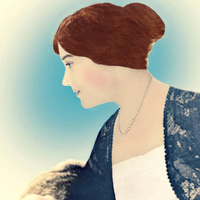
    Diana Forbes writes romantic historical fiction. Her debut novel, Mistress Suffragette is easy to pick up and hard to put down. Recently, I had the opportunity to interview this author and I think you’ll enjoy what she had to say…
     

    Chanticleer: Tell us a little about yourself: How did you start writing?

    Forbes: I started writing when I was 6 years old. First I wrote poetry. Then I wrote diary entries, heavily influenced by Harriet the Spy. After that, I wrote articles for my school paper. Then I wrote restaurant reviews for the school paper. In college, I wrote features for the college paper.

    Chanticleer: So, basically as soon as you could form cohesive sentences, you were off to the races! Nice job, Diana. But when did you realize that you were an author?

    Forbes: I met with a career coach in 2003 and I told him, “I want to be a writer.” He said, “Why don’t we just say you are a writer since writing is in the doing?”

    Chanticleer: Smart – writing is an active verb… Let’s chat about genre. What genre best describes your work?

    Forbes: Mistress Suffragette, my debut novel, is best described as a romance. It’s historical, so sometimes it’s described as cross-genre: historical-romance. It also has a lot of humor in it.

    Chanti: Cross-genre sweet spot – best of both worlds. What inspired you to write historical/romance? 

    Forbes: I take two writing classes a week in Manhattan where I live, and one of my writing teachers used to tell me, “Don’t worry about the genre. A debut novel is what it is. Just write it.” But, I basically wrote the story I wanted to read. It’s a romance against a very interesting historical backdrop – the late 19th century or Gilded Age.

    Chanti: I love the fact that you continue to work on your craft by taking writing classes. That’s such an important thing to do! Do you find yourself following the rules or do you like to make up your own rules?

    Forbes: I like to break rules selectively. In other words, I love to know what the rules are, then break them if there is a very good reason.

    Chanti: Good. Know the rules, so you know when, why, and how to break them. What do you do when you’re not writing? Tells us a little about your hobbies.

    Forbes: I am an art buff. I like to go to museums and galleries and look around. Recently I have also started going to plays and musicals in Manhattan. I like to poke around antique stores and fairs, too. I have a great respect for history, so if I can learn a little history while I am having fun, that’s even better.

    Chanti: You’re in the perfect place to do all that! Tell us a little about how you structure your writing day.
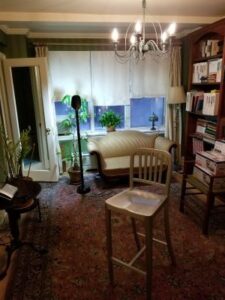
    Forbes: I am very structured. I am fortunate to have an office that is separate from where I live. I roll into the office at 9 a.m., trying to get in one full hour of reading before the day officially starts, so from 7:30 a.m.-8:30 a.m. Then I write from 9 a.m. until 3:30 p.m., trying to stay off social media and email completely. At 3:30 or so, I return all my emails and hop on social media. After that, I work till between 7 p.m. and 8 p.m. on marketing Mistress Suffragette.

    Chanti: That’s a fantastically structured day! What has been the most helpful marketing tool you’ve used so far?

    Forbes: I really like awards shows. They offer the chance to have the work receive a little recognition as well as a great marketing push. Award shows can also help introduce the work to new readers.

    Chanti: What areas of your writing are you most confident in? What advice would you give someone who is struggling in that area?

    Forbes: Readers often tell me that my strengths are my research, the setting, and the voice. I love stories that whisk me away, and that’s what I aimed for with Mistress Suffragette. I also want to tell untold stories. Some of the things I learned while researching M. Suffragette, I had never ever heard before – even in Political Science classes at my university. Anything I discovered that was really new and really interesting about the time period I made sure to include in the novel.

    Chanti: That’s pretty cool. So, we know that you take two writing classes a week, what other things do you do to grow your author chops?

    Forbes: My writing classes in Manhattan require that I turn in 20 pages at a time to early readers (my classmates) who give me feedback. One of the classes concentrates more on the craft of writing. I also read books about writing. In addition, I look for award show contests that provide feedback, so that I can learn and grow and my writing can improve before I show my work to an agent or editor.

    Chanti: This is how we discovered each other! We’re thrilled you entered your novel into the Chatelaine Awards. What are you working on now? What can we look forward to seeing next from you?
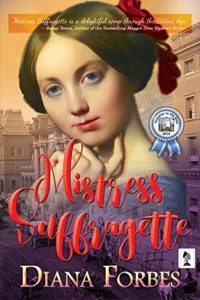
    Forbes: I am working on the sequel to Mistress Suffragette. I see the story as a trilogy. I am not sure when the sequel publication date will be. I write many drafts of my novels before I show them to my agent and editor, so I am somewhere in the revision process.

    Chanti: I certainly hope we get to see the sequels of Mistress Suffragette. Thank you for stopping in! 

    If you love romance (and who doesn’t?) and the Gilded Age, you know what to do! Check out Diana’s website and follow the links to purchase her book, Mistress Suffragette.

    Like her Facebook page and follow her. Trust me, there is more to come from Forbes, and you’ll not want to miss out.


  • Interview with Grand Prize CHATELAINE AWARD Winner, Mary Ann Clarke Scott by Sharon E. Anderson

    Interview with Grand Prize CHATELAINE AWARD Winner, Mary Ann Clarke Scott by Sharon E. Anderson

    Author Spotlight Series focuses on M.A. Clarke Scott, an Award-Winning Women’s Lit Author

    Mary Ann Clarke Scott took home the Grand Prize ribbon for the Chatelaine Book Awards in 2016. She not only writes women’s fiction – but sci-fi and fantasy, too! Who knew? I had a chance to catch up with Mary Ann recently to chat about writing and reading and life. Here’s what she had to say. Enjoy!

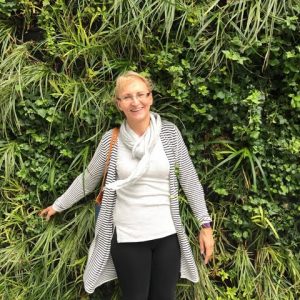
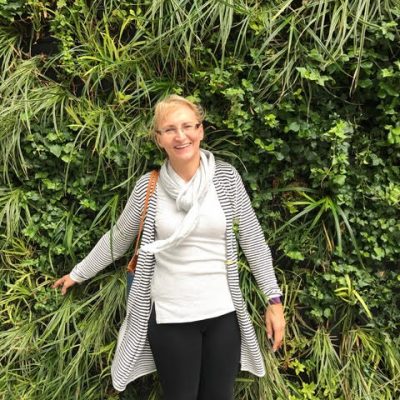
    Mary Ann Clarke Scott

    Chanticleer: Tell us a little about yourself: How did you start writing?

    Clarke Scott: I was always an avid reader and a daydreamer. There were voices in my head, alternate realities playing out in my imagination, and I’ve always loved words. I tried to write my first novel at the age of nine, but abandoned it for other pursuits until 2005, once my son was in preschool and I’d pretty thoroughly given up on architecture as a career. Then I started seriously to learn to write, with purpose and discipline.

    Chanticleer: Oh, that sounds so familiar! You either talk to yourself or talk to your characters… it makes more sense to talk to your characters! So, Mary, what do you do when you’re not putting words on the page?

    Clarke Scott: I like to hike on mountain trails and I do Pilates and yoga. These things keep me limber and healthy, but also centered. I read a great deal. As I’ve got older I’ve become a bit indifferent to things I used to love, like gardening and cooking, but that may be because my focus is on writing. I still enjoy those things. I love to travel, and I love art and history and metaphysics. Recently we were in Europe for the summer, so I had my fill of museums for a while, but I never really tire of that. I aspire to be a visual artist, but never prioritize it with regard to time. It’s for ‘someday’.

    Chanti: How do you come up with your ideas for a story?

    Clarke Scott: Stories come to me primarily via character, but also through place and, what I guess I’d call ‘situation’ as a starting point. I put these elements together and the story grows up out of them, out of necessity, logically, as a response to what the character needs to grow.

    Chanti: Do you find yourself following the rules or do you like to make up your own?

    Clarke Scott: Both, I guess, but mostly I’m a rebel. I’m an Aquarian, and we tend to be rule-breakers. I’ve never been a conformist with regard to story or genre, but at the same time, I’m quite passionate about universal story structure. But I don’t see that as rules so much as patterns, and I love patterns. I think they have meaning.

    Chanti: I totally agree with you! How structured are you in your writing work?

    Clarke Scott: The stories are structured; my workflow is not. I work organically, which is to say, often

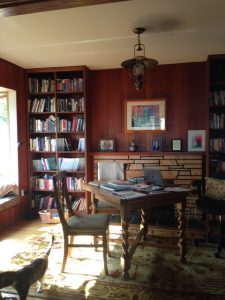
    Mary Ann’s writing room.

    chaotically and in an undisciplined, random way. I procrastinate. I binge. I don’t recommend it!

    Chanti: I’m so glad to hear you say that – as I am the same way…. So, how do you approach your writing day?

    Clarke Scott: I don’t have writing days, per se. I have a writing life. I know coffee is involved, though. I’m trying to incorporate meditation and visualizations into my process, to get a bit of control and rhythm. I’m also experimenting with dictation. It might not work because I rather enjoy touching my keyboard. But we’ll see.

    Chanti: Name five of your favorite authors and describe how they have influenced your work.

    Clarke Scott: Only five! I’m a great fan of Barbara O’Neal. I love the way she builds and paces a story gradually, and layers in so many strands of character and relationship, history and mystery. Nothing is wasted or gratuitous. She makes excellent use of the objective correlative. I admire her use of colour as symbol and leitmotif and the way she weaves vaguely spiritual and mystical elements into her stories, as an element of psychology almost, more than ideology, or anything overtly paranormal. For similar reasons, I’m a huge fan of Canadian author Susanna Kearsley, although the magical elements are often more explicit in her work. I love Georgette Heyer, and Mary Balogh, for their rich and well-researched Regency romances, populated by very believable characters. Classically, I adore Jane Austen, for the same reasons. The way they all paint a universal picture of humanity in a very singular social, political and economic context. I admire British authors Freya North and JoJo Moyes I think because they both take vulnerable, flawed protagonists and build them up through adversity, but make it all very ordinary and relatable (Oh, you poor thing…. Uh oh, don’t do that… Fight back, damn you!) and yet extraordinary in terms of character growth, pushing the readers’ emotional boundaries.

    Chanti: I can see that. Good choices, M.A.! How does being an author influence your

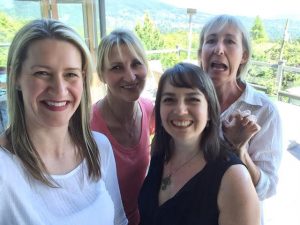
    Mary Ann with her critique group.

    involvement in your community?

    Clark Scott: I think a lot of writers are introverts. But publishing means you must build a platform and build an author presence, both online and in the physical, local community. It’s forced me to embrace who I am, what I create and be willing to advocate for that. Becoming more comfortable online has also made me less shy in person. I’m also able to share my knowledge with other writers and support them because I know how hard it is, and that we need each other. Writers are an incredibly warm, generous and supportive community, so it’s easy to feel a sense of belonging. It’s hard to find that anywhere else.

    Chanti: I agree, it’s so important to find your tribe! What areas in your writing are you most confident in? What advice would you give someone who is struggling in that area?

    Clarke Scott: I suppose my strengths would be story structure, character arc and description of setting. It’s hard to give advice. Those are just things that come more naturally to me. I struggle with other things. About description I’d say, use your senses. Creative visualization helps. It also helps to keep the description filtered through the point of view character and limit what you describe to what is important to them and to the story. I’ve had to learn to do this, to limit my description from ‘everything.’ I think my training and work as an architect made me very observant, but perhaps too much so. So filter it. Story structure is something that comes through study and analysis, reading, but also interest and desire. And about character arc, I’d say, study archetypes, and use the structure of stories to make sure your characters go where they need to go, but that you challenge them enough to change them.

    Chanti: Give us your best marketing tips, what’s worked to sell more books, gain notoriety, and expand your literary footprint.

    Clarke Scott: Well I’m pretty active on social media, and continue to build a community and an online brand that way. I’ve entered and won a few contests (like the Chanticleer Chatelaine!), and I think that helps build familiarity and credibility with readers as well as a presence in the writer’s community. I’ve taken a two-pronged approach to marketing my books: the first is to follow all the advisors and use loss leaders (freebies, giveaways, etc.) to build my email list – although my efforts in this area are in their infancy – and as yet I’m not very good at newsletters and blogging; and secondly, creating an author profile and posting samples of work on reader sites such as Bublish, iAuthor and Goodreads. I think my approach so far has been: try everything! At the moment I believe publishing more books to build my backlist is pretty important to build my credibility as an author, and leverage what marketing I do, so that’s what I’m focused on.

    Chanti: Backlist is so important. Thank you for mentioning that. #tryeverything I think we can make that a thing! Speaking of building a backlist, what are you working on now? What’s next?

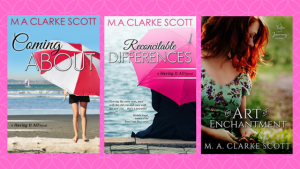
    Clarke Scott: The WIP I’m focused on right now is called Coming About (although I’m still searching for a better title), and it’s Book 2 in my Having it All series. It’s been 75-80% complete for several years, so I’ve been working on finishing and releasing it in 2017. After that, I have two virtually complete books in the Life is a Journey series that need a little attention before they’re ready to publish. One thing at a time. Life interferes a fair bit.

    Chanti: Life does interfere! Who’s the perfect reader for your book?

    Clarke Scott: I think I write primarily for women, though men who’ve read my books say they enjoy them a lot. My audience ranges from quite young women to older women. Readers who are looking for experiences that are a little deeper and more thoughtful, rather than glossy, glamourous or action-packed dangerous fictional situations. There are no murderers or spies in my stories (not yet, anyway) and I’m not drawn to psychological thrillers. I write about real life, real people, and real relationships and hope that my stories are engaging at an emotional, psychological and maybe even a philosophical level. My stories are romantic and entertaining but also hopefully channel healing and personal growth. I believe the human heart is really the last frontier. Fiction is a powerful tool that enables learning and empathy, and therefore can help people reexamine their lives, and the lives of people they know, and hopefully understand that everyone suffers in their own way, and that human beings can always change, grow and move toward enlightenment, contentment, fulfillment and love no matter what lies they were told, what pain they’ve suffered, no matter their handicaps. I’m not writing self-help or how-to books. But I’ve always processed life through narrative and I believe others do, too. It’s in our DNA. So I think I’m looking for readers who aren’t afraid of this conversation.

    Chanti: What is the most important thing a reader can do for an author?

    Clarke Scott: Review and rate their books on Amazon and Goodreads and other sites. Such a tiny percentage of readers actually leave reviews, something like 1%, it’s extremely difficult for authors, even with excellent books, to build up social proof. And yet this is a significant part of what book buyers use to make their choices. And of course, if you admire an author’s work, tell other people about her! Obscurity is the curse of most authors in today’s overcrowded marketplace.

    Chanti: Look for Mary Ann Clarke Scott’s books at Powell’s, Indigo, Barnes & Noble, AbeBooks, IndieBound, Blackwell’s, TheBookDespository, and even Amazon!