Tag: Writer’s Toolbox

  • Elements of Successful Fiction to Keep Your Novel Writing Schedule on Track or NaNoWriMo Prompts from Jessica Morrell and Kiffer Brown-Writer’s Toolbox Series The Writing Toolbox

    Elements of Successful Fiction

    If you are partaking in NaNoWriMo, then you have made past the halfway mark by now. Congratulations!

    We hope that this article will provide prompting to spur you on to the finish line!

    The best fiction touches the deep layers in us. A writer achieves this effect by embedding dozens of techniques into his or her story. – Jessica P. Morrell

    Dramatic Question

    • Compelling fiction is based on a single, powerful question that must be answered by the story climax. 
    • This question will be dramatized chiefly via action in a series of events or scenes.
      • Examples:
        • If you are writing a romance, the question always involves whether the couple will resolve their differences and declare their love.
        • In a mystery the dramatic question might be will Detective Smith find the serial killer in time to prevent another senseless death?
        • In The Old Man and Sea, the dramatic question is will Santiago catch the big fish and thus restore his pride and reputation?
      • Assignments:

    An Intimate, Simmering World

    • An intimate world isn’t created by merely piling on details.
    • It means your story world has the resonance of childhood memories, the vividness of a dream, and the power of a movie. 
    • An intimate, simmering world is filled in with shadows and corners and dogs and ice cubes and the sounds and smells of a dryer humming on wash day and a car blaring past, with pop music shaking the windows. These details lend it authority, potency, and a palpable physical existence.
      • Diana Gabaldon’s The Outlander Series simmering details make this time-travel, fantasy, horror, science fiction extremely believable and immersive fiction.

    Outlander — Diana Gabaldon’s details make for immersive fiction

    An intimate story takes us to a specific place and coaxes us to remain there. An intimate story is lifelike and feels as real and complicated as the world the reader inhabits. When he finishes the final pages, and leaves the story world, he should feel the satisfaction of the ending, but also a huge sense of loss. Like a friend has moved to another town just when the friendship had reached a level of closeness and trust. – Jessica P. Morrell

    Characters Built from Dominant Traits

    • Create main characters with dominant and unforgettable traits as a foundation of personality.
    • These traits will be showcased in the story events, will help him achieve or fail at goals, and will make the story person consistent. 
      • For example, Sherlock Holmes’ dominant traits are that he is analytical, Bohemian, opinionated and intelligent. These traits are showcased in every story he appears in along with secondary and contrasting traits. When the character first appears in the first scene, he arrives in the story with his dominant traits intact.
      • Outlander’s Claire and Jamie.
      • Lord of the Rings‘ Gandolf
      • Lisa Wingate’s Before We Were Yours’ villain Georgia Tann
    The Witcher by Andrzej Sapkowski

    Emotional Need

    • The protagonists and main characters are people with baggage and emotional needs stemming from their pasts. These needs, coupled with motivation cause characters to act as they do.
      • For example, in Silence of the Lambs Clarisse Starling is propelled by childhood traumas to both succeed and heal the wounds caused by the death of her father.
      • Robert Dugoni’s Tracy Crosswhite in his The Tracy Crosswhite series.

    Significance

    • The storyline focuses on the most significant events in the protagonist’s life.
      • Example: Robert Dugoni’s Tracy Crosswhite searches for the killer of her sister in his The Tracy Crosswhite series.
      • Craig Johnson’s Longmire series – Sheriff Walt Longmire whose wife was murdered.

    Motivation Entwined with Backstory

    • Motivation, the why? of fiction, is at the heart of every scene, fueling your character’s desires and driving him to accomplish goals. 
    • Motivation provides a solid foundation for the often complicated reasons for your character’s behaviors choices, actions,  and blunders. 
    • Motivating factors provide trajectories for character development, as a character’s past inevitably intersects with his present.
    • Your character’s motivations must be in sync with his core personality traits and realistically linked to goals so that readers can take on these goals as their own.

    Desire

    • Desire is the lifeblood of fictional characters. 
    • Not only do your characters want something, but they also must want something badly.
      • You can bestow on your character flaming red hair, an endearing, crooked grin and a penchant for chocolate and noir movies, but if she doesn’t want something badly, she’s merely a prop in your story, not a driving force. But if she wants to win the Miss Florida contest, take over her boss’ job, or become the first female shortstop for the Atlanta Braves, then you’ve got a character who will make things happen and a story that will be propelled by desire.
      • The Ring from Lord of the Rings is a perfect example of a symbol of desire on so many different levels.
    Frodo and The Ring – LOTR by J.R.R. Tolkein

    Threat

    • Fiction is based on a series of threatening changes inflicted on the protagonist.
    • In many stories, these threats force him or her to change or act in ways he or she needs to change or act.
    • Often too, what the protagonist fears most is what is showcased in a novel or short story. It can be fear of losing his family, job, or health with a dreaded outcome.
    • Fear of losing to a threat or threats provide interest, action, and conflict.

    Causality

    Events in fiction are never random or unconnected. They are always linked by causality with one event causing more events later in the story, which in turn causes complications, which cause more events, which cause bad decisions, etc.

    Please visit our blog post on The Inciting Incident.

    The inciting incident of the Wizard of Oz

    Inner Conflict

    • A fictional character doesn’t arrive at easy decisions or choices.
    • Instead, he is burdened by difficult or impossible choices, particularly moral choices, that often make him doubt himself and question his actions.
    • Inner conflict works in tandem with outer conflict—a physical obstacle, villain or antagonist–to make the story more involving, dramatic, and events more meaningful.

    Complications

    • A story builds and deepens by adding complications, twists, reversals, and surprises that add tension and forward motion.
    • Plots don’t follow a straight path. Instead, there are zigzags, dead ends, and sidetracks.
    • Complications create obstacles and conflict, cause decisions to be made, paths to be chosen.
      • My favorite complication is one from Notting Hill when Spike is standing outside in his underwear strutting around with the paparazzi going wild for a peek at Anna Scott. How could Anna and William ever expect that complication?

    A complication from Notting Hill – the film.

    Midpoint Reversal

    • The middle of a novel comprises more than half its length.
    • At about the midpoint of most novels, a dramatic reversal occurs. The hunter becomes the hunted; a second murder occurs proving the detective has been wrong in his suspicions; a former lover arrives in town to complicate a budding romance.
    • This reversal keeps the middle from bogging down and becoming predictable and also breathes new life and often a new direction into the story.

    Satisfying Ending

    • Every story needs an ending that satisfies the reader while concluding the plot.
    • A satisfying ending does not have to be “happy” or victorious or riding off into the sunset.
    • The final scenes, when the tensions are red hot and the character has reached a point of no return, must deliver drama, emotion, yet a logical conclusion.
    • This is not to suggest that every plot ends with a shoot-out or physical confrontation.
    • Some endings are quieter, more thoughtful. Some endings are ambivalent, some a dramatic or a violent clash of wills.
    • However, there is always a sense that all the forces that have been operating in your story world have finally come to a head and the protagonist’s world is forever changed.

    We are cheering you on to the Finish Line!  You can do it!


    Jessica Page Morrell

    Keep writing, keep dreaming, have heart. Jessica

    Jessica Morrell is a top-tier developmental editor and a contributor to Chanticleer Reviews Media and to the Writer’s Digest magazine. She teaches Master Writing Craft Classes at the Chanticleer Authors Conference that is held annually along with teaching at Chanticleer writing workshops that are held throughout the year. 

    Kiffer Brown

    Keep creating magic! Kiffer 

    Kathryn (Kiffer) Brown is CEO and co-founder of Chanticleer Reviews and Chanticleer Int’l Book Awards (The CIBAs) that Discover Today’s Best Books. She founded Chanticleer Reviews in 2010 to help authors to unlock the secrets of successful publishing and to enhance book discoverability. She is also a scout for select literary agencies, publishing houses, and entertainment producers.


    Chanticleer Editorial Services – when you are ready

    Did you know that Chanticleer offers editorial services? We do and have been doing so since 2011.

    Tools of the Editing Trade

    Our professional editors are top-notch and are experts in the Chicago Manual of Style. They have and are working for the top publishing houses (TOR, McMillian, Thomas Mercer, Penguin Random House, Simon Schuster, etc.).

    If you would like more information, we invite you to email Kiffer or Sharon at KBrown@ChantiReviews.com or SAnderson@ChantiReviews.com for more information, testimonials, and fees.

    We work with a small number of exclusive clients who want to collaborate with our team of top-editors on an on-going basis.Contact us today!

    Chanticleer Editorial Services also offers writing craft sessions and masterclasses. Sign up to find out where, when, and how sessions being held.


    A great way to get started is with our manuscript evaluation service. Here are some handy links about this tried and true service: https://www.chantireviews.com/manuscript-reviews/

    Writer’s Toolbox

    Thank you for reading this Chanticleer Writer’s Toolbox article.
     

  • MINOR CHARACTERS – the SPICE of FICTION – Part 2 From Jessica Morrell’s Editor’s Desk – Writers Toolbox Series

    MINOR CHARACTERS – the SPICE of FICTION – Part 2 From Jessica Morrell’s Editor’s Desk – Writers Toolbox Series

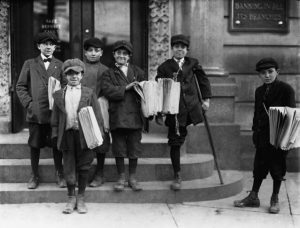
    “If you’re going to have a character appear in a story long enough to sell a newspaper, he’d better be real enough that you can smell his breath.” ~ Ford Madox Ford

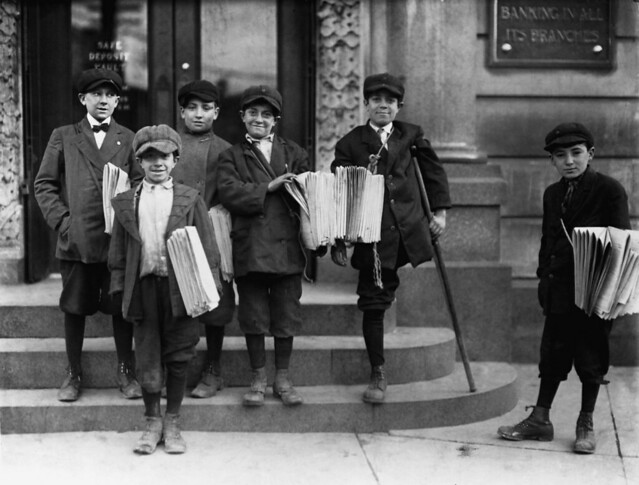
    Newspaper Boys – New Jersey

    Minor characters are too often faceless walk-ons in fiction. But that means the writer has missed a chance to create reality and complexity. ~Jessica Morrell

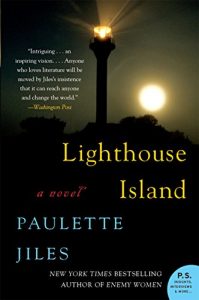
    Here’s how it’s done in Paulette Jiles dystopian novel Lighthouse Island that takes place in the Pacific Northwest. This scene features two minor characters her protagonist Nadia Stepan is about to meet. Problem is, she’s on the lam in a hideous, nightmare society and the authorities are searching for her. And she’s an outlaw in a desiccated, chaotic world where danger lurks everywhere and the underclass people are perishing from thirst and deprivation. The government is a diabolical network of agencies that inflict senseless cruelty on most of its citizens while the one percent live in luxury.

    The first character Nadia will meet for only a few minutes, the second one actually saves her and she spends maybe 5 minutes with him. Nadia’s trying to bluff her way out of capture–something she’s good at. At least so far.

    Notice how Jiles instills them with just enough realism to underline their purpose. Notice how she manages this trick with only a few economical words.

    Okay. The officer had tissue-engineered jaws square as a brick and eyes of two different colors and a scorpion tattoo on his neck. She saw him hesitate and so she turned and walked away down the narrow street and the biscuit-colored buildings of concrete whose dim and broken windows stared at each other across the pavement.

    A hand shut on her elbow and shoved her forward. Nadia turned. A stout Forensics officer stared straight ahead and pushed her on. His gray hair shone short and clean under an old-fashioned watch cap with a bill and his body smelled of sweat and hot uniform cloth. She started to say something, to invent an objection and a story but he said Shut up. He was not much taller than she was but there was something about him of that proctor in high school so long ago but more unwavering and quiet.

    Here are some tips for making minor characters count:

    •  Anchor them to a time and place–a street cop, a waitress, a lounge singer, a Wall Street executive.
    •  Give them at least one memorable characteristic. Mismatched eyes. Purple hair. A synthetic smile. Nasty yellow teeth. Vomit breath.
    •  Create an interaction, however brief–a taxi ride, an insult or accusation, asking for directions, buying a coffee.

    Nadia sneaks into the Ritz Carlton and makes it to the elevator. A guard came up. His uniform was sweaty and the hem of his pants legs were leaking threads like a fringe. He smiled at her.

    All right, all right, he said. What floor?

    •  Don’t worry about introducing them–they can simply appear.

    Emergency workers in orange coveralls came running through the dust scrim and shouted at her to go back but she walked on toward them. The telephone poles were down and electrical wires curled in the rubble.

    • Imbue them with meaning to your protagonist. In Nadia’s world—guards, troops, cops are the enemy. And they’re everywhere.
    • Give them a voice if possible.

    In a crowd of people who had lined up for something she saw a woman with a toddler in one arm.

    Cute kid! Nadia said and slipped the badge into the toddler’s baggy pants.

    The woman glared at her. Get one of your own, she said.

    Jessica suggests:

    • Pretend that you’re walking into a room and seeing your character for the first time.
    • What are your first impressions? 
    •  Can you feel the force of his or her personality? Does he or she remind you of a celebrity? Or someone you know?
    • It’s not all about the specifics of appearances—some people arrive on the scene full of confidence, some are hesitant or nervous. Why? Some people stand erect, some slouch. Some have lovely voice qualities, some people bray. Some wear too much cologne, some smell of fresh air or machine oil.  Use clothes, setting, and possessions, including large possessions such as cars to reveal characters.

    What to AVOID! 

    Avoid thumbnail sketches or police blotter descriptions whenever a new character steps into your book.

    (The suspect was a Latino male, 6 feet, medium build, scar on the left cheek, a tattoo of a snake on the right shoulder,  wearing a black jacket, jeans, and sneakers).

    This technique tends to feel contrived especially if used too often. 

    Also, a character doesn’t need to be described all at once, you can layer his or her appearance into the story in increments.

    Avoid heavy-handed effects and characterizations. You want enough nuance to make the reader pay close attention and to enjoy discerning subtle clues. Find ways to insert subtext—the unspoken, between-the-lines innuendo.

    Avoid piling it on. Here is an example of what not to do:

    “Allison, a 30-something, 5 foot 8 redhead, with heavily-mascaraed blue eyes and legs for days strolled into the restaurant her green eyes flashing. Her hair was shoulder-length, her figure striking, her fingernails painted a garish purple. She wore what looked like a real mink jacket over a tight, black dress and teetered on dangerously high heels.”

    Kate Pierson of the B52s

    A character doesn’t need to be described all at once. Instead, try to layer details in throughout the story in increments—as one might adjust the seasonings while cooking. It is better to err on the side of less than too much. You can always add a little more “spice” if needed…

    Here is the link to Part One of MINOR CHARACTERS – the SPICE of FICTION

    https://www.chantireviews.com/2019/06/24/minor-characters-the-spice-of-fiction-part-one-from-jessica-morrells-editors-desk-writers-toolbox-series/

    Keep writing, keep dreaming, have heart. Jessica


    Jessica Morrell is a top-tier developmental editor and a contributor to Chanticleer Reviews Media and to the Writer’s Digest magazine. She teaches Master Writing Craft Classes at the Chanticleer Authors Conference that is held annually along with teaching at Chanticleer writing workshops that are held throughout the year. 


    Did you know that Chanticleer offers editorial services? We do and have been doing so since 2011.

    And that our professional editors are top-notch and are experts in the Chicago Manual of Style. They have and are working for the top publishing houses (TOR, McMillian, Thomas Mercer, Penguin Random House, etc.). If you would like more information, we invite you to email Kiffer or Sharon at KBrown@ChantiReviews.com or SAnderson@ChantiReviews.com.

    We work with a small number of exclusive clients who want to collaborate with our team of top-editors on an on-going basis. Contact us today!

  • ESSENCE of CHARACTERS – Part One – From the Jessica Morrell’s Editor’s Desk – Writer’s Toolbox Series

    ESSENCE of CHARACTERS – Part One – From the Jessica Morrell’s Editor’s Desk – Writer’s Toolbox Series

    When a character is introduced in a story he or she needs to make a strong impression. (Walk-on and minor characters are sometimes the exceptions.) This means when you create characters after you make decisions about physical appearance and their essential role in the story, then start refining his or her essence and key personality traits. Some of the decisions about your character will happen without you making decisions because characters have a way of emerging and evolving in our deeper consciousness.

    • Fiction equals characters.
    • Characters make us care, worry, empathize.
    • Characters need to be knowable.

    No matter your process, it’s crucial to nail a character’s humanity and complexity on the page. And to nail his or her essence from the first breath he/she takes in your story.

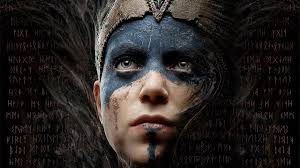
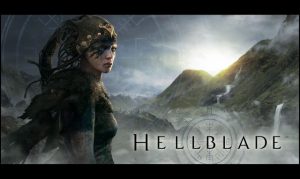
    Senua’s Sacrifice: Hellblade

    Within the personality spectrum, there are endless possibilities. There are also layers to one’s personality, and it seems to me that the inner layers are a character’s essence.

    Let’s list some possibilities: quiet, serious, boisterous, buoyant, innocent, worldly, full of laughter, cautious, always ready for adventure. Let’s consider other options: practical, frivolous, introverted, extroverted, questioning, plays by the rules, respects the status quo, rebellious, rigid, creative, uptight, light-hearted.

    Samwise Gamgee – LOTR

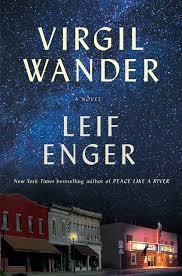
    Virgil Wander

    I recently read Leif Enger latest beautiful novel, Virgil WanderIt’s now number one on my Top 10 Favorite Novels of All-time list. One thing I like best about Enger’s stories is that he creates fascinating and sometimes oddball characters you’ve never met before and will never forget. He toes the line between creating ordinary-extraordinary story people you want to spend a lifetime with. 

    And while complicated, they’re knowable  They typically face uncommon, vexing problems and dilemmas and seem as human as my next-door neighbor. Virgil Wander, the protagonist of this wending tale, is no exception. I don’t want to give away too much, but he starts the story with a head injury and owns a failing theater in a small town. 

    The failing town is perched on the ever-changing and blustery Lake Superior and skies, wind, and storms play a big role in the story. If you’ve never visited Lake Superior, the largest body of fresh water on the planet, it’s a primal, massive inland sea.

    One of the many moods of Lake Superior

    Toss in a pipe-smoking, kite-flying Norwegian, a mysterious prodigal son millionaire, a missing baseball player, several boys who need a father, and a local handyman on a downward arc. The setting is tightly woven into all aspects of the tale, but it’s the characters who will live in me forever.

    Here’s an example of how Enger introduces a character, the aforementioned missing ballplayer, while capturing his essence and adding to the mystery of his disappearance: Most people knew about Alec Sandstrom, or thought they knew, could be traced to a silken Sports Illustrated article published on the anniversary of his death.

    The magazine’s expenditure of four thousand words on a failed minor-league pitcher testifies to Alec’s magnetism. In two seasons of small-time baseball, Alec was often compared to eccentric Detroit phenom Mark Fyrich, who is remembered for speaking aloud to the ball itself as though recommending a flight path. Alec didn’t talk to baseballs–his quirk adored by fans of the Duluth-Superior Dukes, was to break out laughing during games. Anything could set him off: an elegant nab by the second baseman, a plastic bag wobbling like a jellyfish across the diamond, a clever heckle directed at himself. His merriment was unhitched from his success. Sometimes he laughed softly while leaning in for signs. His fastball was a blur, its location rarely predictable even to himself. Sprinting on-field to start the game, limbs flailing inelegantly, Alec always seemed sure his time had arrived. 

    “Reality wasn’t strictly his deal,” Beeman recalled. “My God he was fun to watch.”

    Engaging as Alec could be, he’d never have received the elegiac Sports Illustrated treatment had he not strapped himself into a small plane at dawn, lifted off in a light westerly, and banked over Lake Superior never to return.  

    Untethered from his success. Sigh. Pardon me while I indulge in writer’s envy. As you can tell, Alec is an original. And notice how his essence is joyful?  Stay tuned, I’m going to reveal a few more of his characters’ essence in an upcoming post.

    Keep writing, keep dreaming, have heart. Jessica

    Jessica Page Morrell


    Jessica Morrell is a top-tier developmental editor and a contributor to Chanticleer Reviews Media and to the Writer’s Digest magazine. She teaches Master Writing Craft Classes at the Chanticleer Authors Conference that is held annually along with teaching at Chanticleer writing workshops that are held throughout the year. 

    Did you know that Chanticleer offers editorial services? We do and have been doing so since 2011.

    And our professional editors are top-notch and are experts in the Chicago Manual of Style. They have and are working for the top publishing houses (TOR, McMillian, Thomas Mercer, Penguin Random House, etc.) and elite indie presses.

    We work with a small number of exclusive clients who want to collaborate with top-editors on an on-going basis.

    Contact us today! If you would like more information, we invite you to email Kiffer or Sharon at KBrown@ChantiReviews.com or SAnderson@ChantiReviews.com


    A Chanticleer Reviews – Writer’s Toolbox blog post on Character Development by Jessica Page Morrell    

    Writer’s Toolbox

  • DECLUTTERING SENTENCES by ELIMINATING JUNK WORDS – from Jessica Morrell’s Editor’s Desk – Writing Toolbox Series

    DECLUTTERING SENTENCES by ELIMINATING JUNK WORDS – from Jessica Morrell’s Editor’s Desk – Writing Toolbox Series

    Declutttering sentences give me the same thrill that Marie Kondo (author of The Life Changing Magic of Tidying Up) experiences when she organizes sock drawers or attacks a kitchen’s junk drawer. I believe she calls this feeling “sparking joy.” Not only do I want sentences to be grammatically correct, but I want to make sure that every word counts toward moving the story forward. And that definitely sparks joy in me.  

    The Ubiquitous Junk Drawer

    Most of us use go-to words that aren’t necessary to tell the story. We use them out of habit or laziness, or because no one has pointed out that you don’t need them. In the spirit of writing clean, crisp, and intelligently here’s a reminder about words you usually don’t need.

    Declutter Your Sentences by Eliminating These Junk Words

    Breathingdeep breathsbarely breathinginhalingexhaling, and other lung movements.  Many writers of all levels reveal their characters’ emotions and reactions using their breath, lack of breath, breathlessness, or as their main method of reacting and showing emotion. “I took a deep breath” is a phrase I’ve seen so often it’s a cliche.  Unless a character has the breath knocked out of him or is in the midst of childbirth, avoid focusing on breathing as your main means to create emotion. Instead collect a variety of mannerisms, reactions, gestures, and body language individual to each character.

    Down or up. As in Rachel sat down. Now Rachel can collapse into a chair, or sidle into an empty seat in a dark theater, or ease onto a sofa, or flump onto a bed. Sit and sat means a person is lowering himself or herself.  As in down. More accurately sit means supporting your weight on your buttocks.

    Question your use of up. It seems so innocent, doesn’t it? Blithe stood up. Stood means up because standing means a person is upright, supporting himself on his feet.  Denzel stood, joining the screaming fans. Also, do not write grabbed up; grabbed suffices. Avoid appending up to spoke, hurry, lift, climb, and rose.


    Really. I mean really? Do you need it? Is the weather really cold or is it frigid or dangerously cold?

    Really?

    Literally means exactly as described or in a literal or strict sense. It does not mean quite, actually or really. Wrong: I was so mad I was literally shaking like a leaf and red-faced. Or, I was so terrified I literally jumped out of my skin. Or, Her death literally brought me to my knees.  Better: The playoffs were watched by literally millions of fans.

    Basically, essentially, obviously, basically, totally. Hint: question every adverb you use with an -ly ending because many are so overused they’ve become meaningless. However, the larger issue is many people sow these words into their stories without understanding their correct meanings mostly to maximize or intensify. Over time many adverbs have become meaningless. Basically means at a basic level or fundamental sense, not almost or mostly. Essentially means the essence of something or in an essential manner, not almost or often.  Practically means in a practical manner not almost or mostly. Totally means completely, in every part, not really.

    Just. No, I’m not just kidding. Too many of us (guilt-hand raised) use this one out of habit.

    Moments. I’ve read manuscripts where characters pause or think or kiss for only a moment hundreds of times throughout the story. There are plenty of ways to describe brief actions or thoughts.

    That. If a sentence works without that, ditch it. Easy, right?

    Suddenly. Because if you’re reading fiction you assume that actions, twists, and surprises will happen abruptly. They are devices used to increase tension and suspense. No need to announce it.

    Hopefully doesn’t mean ‘I hope.’ But it might convince an editor you’re not the wordnik he or she wants to work with.

    Bleeding Manuscript

    Towards, backwards, forwards, upwards, downwards.  Replace with toward, backward, forward, upward, downward.

    A note from Kiffer: A handy tool to help you recognize if these egregious junk words have infiltrated your manuscript is the “Find and Replace” tool that  can be found in WORD or other word processors. This tool finds and highlights specific words so that you can replace if needed to insure that every word counts.

    Chanticleer’s Writer’s Toolbox Series


    Jessica Page Morrell
    Jessica Page Morrell

    Jessica Morrell is a top-tier developmental editor and a contributor to Writer’s Digest magazine, and she teaches Master Writing Craft Classes at the Chanticleer Authors Conference that is held annually along with teaching at Chanticleer writing workshops.

    Keep writing, keep dreaming, have heart. Jessica Morrell

  • Spring Cleaning Reminders – Writing Tips by Jessica Morrell, Senior Editor

    Spring Cleaning Reminders – Writing Tips by Jessica Morrell, Senior Editor

    We all, probably, know these writing tips, but if you are like me, I can always use a reminder to rid my writing of “spiderwebs,”  “dust bunnies,” and the “clutter” that can gradually accumulate in my writing.

    It is time to Spring Clean our writing habits with precise, fresh language. Jessica Morrell suggests searching for these culprits that can easily sneak into our writing.

    Add this checklist to your Writer’s Toolbox. 

    1. Said exclamations: Today’s readers are sophisticated and understand when characters are talking and that at times the character’s voices and emotions change. The notion is the ‘he said, she said’ parts of fiction appear invisible. Readers understand that a character might sound shrill by the circumstances and dialogue spoken so you don’t need to proclaim, Mary Ellen shrieked shrilly. Never write Jason emoted, pleaded, bantered, snarked, smirked, blasted, bleated, peeped, groused. Now occasionally in the midst of a horror story, you might want to underline how terrified a character is, but consider dabbing these attributions in only for the most terrifying or surprising moments.
    2. ClichésOh how, I hate thee. Eliminate all your I took a deep breath. Ditto for eyes widened, out of the corner of my eye, jaw dropped, raven locks, and steely blue eyes. Then there is:  Each and every, knife to my heart, piece of cake, fire in the belly, he/she took my breath away. And before you write about your characters staring into each other’s eyes, think about how often it happens in real life and how often it happens in your stories.
    3. Mind matters, especially in the first person. You don’t need to report on how the character is reviewing things in his/her mind because this distances the reader and reminds her there is a narrator instead of the reader living amid the story world. So eliminate ‘mind raced‘ ‘thoughts raced‘ ‘mind’s eye‘ (a truly lame term), and ‘searching her mind.
    4. I saw. If you’re writing in close first person you don’t need the I saw or I looked part of the sentence. Example: I saw ahead of me three leprechauns frolicking merrily in the grass. Instead: Ahead three leprechauns frolicked merrily in the grass. Why? The reader wants to pretend that he or she is spotting the leprechauns along with the character. Also describing the leprechauns implies the narrator or character is seeing or observing. No need to state it.
    5. Prepositional phrases. Prepositions are the carbohydrates of language. Of course, we need them for clarity but use with care. Instead of a book of poetry, use poetry book. Instead of a tower of flames, use towering flames.

    So here’s the trick: Don’t always use the first word or phrase that pops into your head because you might be using rusty, old clichés. Or fix these dullards when you edit. Like stock still, fast asleep, choking back tears, stirred up a hornet’s nest, did a double take, under the radar, and never in her wildest dreams.

    Keep writing, keep dreaming, have heart. Jessica Morrell


    Jessica Page Morrell
    Jessica Page Morrell


    Jessica Morrell is a top-tier developmental editor and a contributor to Writer’s Digest magazine, and she teaches Master Writing Craft Classes at the Chanticleer Authors Conference that is held annually along with teaching at Chanticleer writing workshops.

    Jessica will teach a Master Class and advanced writing craft sessions at CAC19

    There are a few more seats available for her Master Class on Thursday, April 25.


    Master Class: Revision & Editing: Secrets of The Dark Arts

    Jessica P. Morrell ©

    Once you’ve finished a draft of your novel it’s time to buckle down. Because writers need to learn how to revise and edit themselves. Period. Revision skills are what separate amateur writers from polished and publishable writers.

    It’s not easy, and yes it can seem daunting. But then, it’s a learned skill like many others, so we’re going to dig in with a four-step program. Why four steps you ask? You cannot work effectively at all levels of a novel or memoir at the same time. You need to work first with the structure and straighten out the big problems, then move down to the next level. It’s pointless to become preoccupied with single paragraphs or sentences if the whole structure is shaky. After all, some of those paragraphs you’re obsessing over might not make it to the final draft. In fiction, you’re assuring that each of the three acts—intro or set up, adding complications, resolving the conflict, all exist in the right proportion and contain the appropriate twists and reversals. In the same way, you need to tackle each chapter, section, subsection, paragraph, and sentences.

    This workshop is designed for fiction writers and memoirists to refine your first draft in thoughtful, organized steps.

    Workshops and Sessions Jessica will teach at the 2019 Chanticleer Authors Conference: 

    During the Conference:

    Immersive Fiction in 3 Sessions:

    Writing Fiction so Readers Land Amid Your Story and Don’t Want to Leave. Ever.

    We live in a clattering, distracting world that pulls at readers’ attention and senses. To compete your fiction needs be immersive, as in an alternate reality that your reader can enter into. Thus your readers are experiencing it, not simply reading it. An immersive story is an intimate, sensory story. It takes place in a world that a reader can see, smell, feel, and hear and it’s based on characters readers come to know and care deeply about. With the opening pages, readers are swept into a world that is so resoundingly real and intricately constructed that they leave their ordinary lives to venture forth and live daily along with the characters.

    Immersive Fiction Part 1:  Atmospherics

    Readers want to feel as if they’re part of a story world interacting with viewpoint characters. Fictional worlds that are immersive are nuanced, intricate, and alive with significant details. We’ll sort through what makes details significant and necessary. Plan to delve into atmosphere and tone, often under-appreciated techniques in a writer’s toolbox, yet they can be so effective to heighten suspense, create reality, and underline emotions and key moments. We’ll highlight how to use weather, lighting, interiors, unsafe places, and what I call “surround sound.” Finally, we’ll also discuss the key elements needed of world build in realistic genre fiction such as historical, sci-fi, and fantasy, and to make your stories memorable and immersive.

    Immersive Fiction Part 2: Your Sometimes Heart-breaking, Sometimes Messed-up, Sometimes Heroic Fictional Cast

    For many writers, the most fun of creating a story is fleshing out characters who battle, grow, and plop into heaps of trouble. Because readers need relatable, yet irksome, yet potent story people to follow and fret over. Their flaws and mistakes drive us crazy, their choices and moral dilemmas worry us sick, their triumphs feel as sweet as our own.
    Characters first need to be intriguing and readers need to meet them at a pivotal, irreversible moment. From there they’ll tread where we dare not, fall in love with losers and sometimes winners, and take on monsters when we’d be cowering. But still characters, including secondary characters, need a vivid essence and need to be bigger than life. And by story’s end they need to grow, also called an arc. This workshop will delve into the more intricate aspects of character building and creating arcs, the art of creating characters who will live in the reader’s heart and memory.

    Immersive Fiction Part 3: Stakes and Motivations

    One major reason that people ‘buy into’ storytelling of all types is that there are serious stakes involved. Readers need to feel as if they also have a stake in the story. Stakes create tension, but most of all dread in a story because a character’s happiness, perhaps even his life, depends on them. The stakes might mean saving a vulnerable child snatched by a creepy predator, or saving the galaxy, or defeating Voldemort and his Deatheater.

    Motivations are the reason characters attempt any action in a story. You’ll learn that motivations are deeply felt, drive a story, and will require a character’s chief personality traits to fulfill. We’ll discuss how motivations reveal backstory and a character’s inner world, create goals, and will exact a cost as the story progresses. We’ll discuss a variety of stakes, motivations, and goals so that you’ll learn clear examples of how all are entwined with plot and character.

    If you would like to learn more about the sessions and Master Writing Craft Workshops please click on this link that goes to https://www.chantireviews.com/chanticleer-conference/

  • TAPPING the EXPERTS – Researching for Your Works in Progress by Carol M. Cram

    TAPPING the EXPERTS – Researching for Your Works in Progress by Carol M. Cram

    Guidelines for Connecting with Sources and Experts While Researching Novels

    Editor’s Note: Whether or not you write Thrillers, Science Fiction, Mysteries, Contemporary Social Themes, YA,  Historical, or any genre, these guidelines for connecting with sources and tapping experts will come in handy.

    One of the questions I get asked frequently when people discover I like to write historical novels is “How do you do your research?” I don’t have a pat answer (I wish I did!). The reality is that I “do my research” as I’m writing a novel and that, for me, it’s my least favorite part of the process. There, I said it!

    I know many historical novelists who adore research, who like it even more than writing, but I’m not one of them. I like research. I enjoy prowling through dusty libraries and doing endless Internet searches and reading stacks of books, but most of the time I’d rather be writing my story.

    That said, I have picked up some techniques over the past few years that I’ll share in this blog to help you find your feet when you’re researching and writing a novel set in the past. Getting the facts right is very important. You discover that the first time a reader finds a mistake (and tells you about it).

    In my novel set in early 19th Century London, I had a character refer to the third season of the year as “Fall.” A British reader set me straight, in no uncertain terms. Thank goodness she was a Beta reader and I was able to catch the error before the novel was published!

    Books are great, the Internet can’t be beaten for looking up and verifying facts quickly, and libraries are awesome. But even better are the academics who write all those books and articles. In other words, the experts. Many experts are happy and eager to share what they know with you. And many go well beyond just answering questions.

    Following are some tips and advice for reaching out and working with subject matter experts.

    Do your homework before contacting a subject matter expert. You don’t want to waste an expert’s time asking questions that you could easily answer yourself with a bit of reading. Consult books and articles to become as conversant as you can with the subject and then prepare a list of specific questions to focus the discussion. Experts who see that you’ve made an effort to understand their field are usually very generous with their time and interested to hear about your Work in Progress.

    Keep the number of questions reasonable. A half-hour interview is about right, although if your expert wants to go on longer, sit back and enjoy! You never know what great information you’ll get—often on a subject you weren’t looking for but that will fit beautifully into some part of your story. Experts are often fascinated by the creative process and may suggest plot ideas based on their more in-depth understanding of the period. When an expert says something like “What if you have your character do such and such…”, listen up!

    Experts care a great deal about their fields of expertise and as a result, most welcome the opportunity to work with a novelist to bring their knowledge to a wider audience. An academic I consulted for The Muse of Fire told me how thrilled he was that someone apart from his students was interested in early 19th Century British theater.

    Make sure you end an interview with a request for additional book and research recommendations. Most experts are happy to provide you with more references than you’ll probably have time to read.

    Find experts by looking up faculty lists at universities, consulting bibliographies, conducting searches for specialist groups, and asking for recommendations. You can click the Ask a Librarian link on any Library website to get all sorts of academic questions answered. Before contacting experts—generally by email—familiarize yourself with their credentials and read at least some of their articles and books. When you take the time to read their writing, you’re more likely to ask intelligent questions.

    Photo Credit: Myrabella / Wikimedia Commons
    Soldiers in front of the wood of Hougoumont during the reenactment of the battle of Waterloo (1815)

    Another place to find experts, particularly in specific historical eras, is to seek out re-enactment groups and themed events such as Renaissance Fairs. Here you’ll find experts who have really steeped themselves in your period and are eager to share what they know.

    Approach experts with a polite email that includes a short description of your Work in Progress and a few sample chapters. In my experience, experts are most eager to help when I give them an opportunity to first read my work. Many want to be sure they are associating their names with writing that they personally like.

    For all three of my novels, I’ve been fortunate to have experts give me advice during the writing process and then to read drafts of my novel to catch stray errors. Several of them became almost as invested in the accuracy of my novel as I was and are now fans!

    In your introductory email to an expert, make sure you include your own web address in your signature line and a short summary of your own background and credentials. I know that several of the experts I’ve reached out to told me they checked out my website before replying to my request. They understandably wanted to verify my background and learn about my books before connecting with me.

    Thank experts in your acknowledgments. I always include historical notes at the end of my novels to cite books I consulted while writing. I also personally thank experts with whom I’ve connected personally. Everyone appreciates being thanked.

    Send complimentary copies of your novels to experts who have provided you with significant help. I think it’s money well spent to let the people who have helped me know how much I appreciate them.

    We are incredibly fortunate as novelists to be able to easily connect worldwide with experts in a dizzying array of subjects. I’ve visited with the curator of the Narrenturm—an anatomical museum housed in Europe’s first insane asylum in Vienna; taken tea in London with an expert on 19th Century women composers; become good friends with a professor of medieval art history, and connected with several wonderful specialists in early 19th Century British theater. Each of them did much more than just answer my questions. They actively contributed ideas about plot and character motivation appropriate to the era I was writing in and inspired me to explore all sorts of new ideas.

    You never know what might come from your interactions with experts once you get the nerve to approach them – respectfully and after having done your homework.

    And then all you need to do is weave what you’ve learned into a compelling novel that people will not want to put down. Easy, right?


    Carol M. Cram, CIBA Award-Winning Author (both Goethe and Chaucer Historical Book Awards) for these outstanding novels:

    Carol M. Cram will announce the new CHAUCER Book Awards winners on Saturday, April 27, 2019, at the Chanticleer International Book Awards ceremony. She is also presenting at the sixth annual Chanticleer Authors Conference. Her award-winning historical fiction books will be available in the CAC19 Books By the Bay Book Fair hosted by Village Books on April 27 & 28, 2019.


  • ELEMENTS of SUCCESSFUL FICTION – Writing Fiction Guidelines by Jessica Morrell – Writers Toolbox Series

    ELEMENTS of SUCCESSFUL FICTION – Writing Fiction Guidelines by Jessica Morrell – Writers Toolbox Series

    The best fiction touches the deep layers in us. A writer achieves this effect by embedding dozens of techniques into his or her story. – Jessica Page Morrell

    Dramatic Question 

    Compelling fiction is based on a single, powerful question that must be answered by the story climax. This question will be dramatized chiefly via action in a series of events or scenes. If you are writing a romance, the question always involves whether the couple will resolve their differences and declare their love. In a mystery the dramatic question might be will Detective Smith find the serial killer in time to prevent another senseless death? In The Old Man and Seathe dramatic question is will Santiago catch the big fish and thus restore his pride and reputation?

    An Intimate, Simmering World 

    An intimate world isn’t created by merely piling on details. It means your story world has the resonance of childhood memories, the vividness of a dream, and the power of a movie. It’s filled in with shadows and corners and dogs and ice cubes and the sounds and smells of a dryer humming on wash day and a car blaring past, rap music shaking the windows. These details lend it authority, potency, and a palpable physical existence.

    An intimate story takes us to a specific place and coaxes us to remain there. An intimate story is lifelike and feels as real and complicated as the world the reader inhabits. When he finishes the final pages and leaves the story world, he should feel the satisfaction of the ending, but also a huge sense of loss. Like a friend has moved to another town just when the friendship had reached a level of closeness and trust.

    Characters Built from Dominant Traits

    Create main characters with dominant and unforgettable traits as a foundation of personality. These traits will be showcased in the story events, will help him achieve or fail at goals, and will make the story person consistent. For example, Sherlock Holmes’ dominant traits are that he is analytical, Bohemian, opinionated and intelligent. These traits are showcased in every story he appears in along with secondary and contrasting traits. When the character first appears in the first scene, he arrives in the story with his dominant traits intact.

    Emotional Needs

    Protagonists and the main characters are people with baggage and emotional needs stemming from their pasts. These needs, coupled with motivation cause characters to act as they do. For example, in Silence of the Lambs Clarisse  Starling is propelled by childhood traumas to both succeed and heal the wounds caused by the death of her father.

    Significance 

    The storyline focuses on the most significant events in the protagonist’s life.

    Motivation Entwined with Backstory 

    Motivation, the why? of fiction, is at the heart of every scene, fueling your character’s desires and driving him to accomplish goals. It provides a solid foundation for the often complicated reasons for your character’s behaviors choices, actions,  and blunders.  Motivating factors provide trajectories for character development, as a character’s past inevitably intersects with his present. Your character’s motivations must be in sync with his core personality traits and realistically linked to goals so that readers can take on these goals as their own.

    Desire 

    Desire is the lifeblood of fictional characters. Not only do your characters want something, but they also want something badly. Santiago, in The Old Man and the Sea desperately wants to restore his reputation and also wants his friendship and partnership with the boy to resume. And in the lonely hours when he is far out at sea, desperately struggling to hang on to the fish and fighting off sharks, we see his fierce desire acted out and the price he pays for it.

    You can bestow on your character flaming red hair, an endearing, crooked grin and a penchant for chocolate and noir movies, but if she doesn’t want something badly, she’s merely a prop in your story, not a driving force. But if she wants to win the Miss Florida contest, take over her boss’ job, or become the first female shortstop for the Atlanta Braves, then you’ve got a character who will make things happen and a story that will be propelled by desire.

    Threat

    Fiction is based on a series of threatening changes inflicted on the protagonist. In many stories, these threats force him or her to change or act in ways he or she needs to change or act. Often too, what the protagonist fears most is what is showcased in a novel or short story. It can be fear of losing his family, job, or health with this dreaded outcome providing interest, action, and conflict.

    Causality 

    Events in fiction are never random or unconnected. They are always linked by causality with one event causing more events later in the story, which in turn causes complications, which cause more events, which cause bad decisions, etc.

    Inner Conflict 

    A fictional character doesn’t arrive at easy decisions or choices. Instead, he is burdened by difficult or impossible choices, particularly moral choices, that often make him doubt himself and question his actions. Inner conflict works in tandem with outer conflict—an physical obstacle, villain or antagonist–to make the story more involving, dramatic, and events more meaningful.

     Complications   A story builds and deepens by adding complications, twists, reversals, and surprises that add tension and forward motion. Plots don’t follow a straight path, instead, there are zigzags, dead ends, and sidetracks. Complications create obstacles and conflict, cause decisions to be made, paths to be chosen.

     Midpoint Reversal 

    The middle of a novel comprises more than half its length. At about the midpoint of most novels, a dramatic reversal occurs. The hunter becomes the hunted; a second murder occurs proving the detective has been wrong in his suspicions; a former lover arrives in town to complicate a budding romance. This reversal keeps the middle from bogging down and becoming predictable and also breathes new life and often a new direction into the story.

    Satisfying Ending 

    every story needs an ending that satisfies the reader while concluding the plot. The final scenes, when the tensions are red hot and the character has reached a point of no return, must deliver drama, emotion, yet a logical conclusion. This is not to suggest that every plot ends with a shoot-out or physical confrontation because some endings are quieter, more thoughtful. Some endings are ambivalent, some a dramatic or a violent clash of wills. But there is always a sense that all the forces that have been operating in your story world have finally come to a head and the protagonist’s world is forever changed.

    The end is just the beginning…

    A Note from the Editor: A satisfying ending is one of the top, if not the top, reasons why books go viral and what will make your reader want to read your next work. Make sure that the you put as much effort in to a satisfying ending as you do into your opening hook—if not more. Kiffer Brown

    Jessica Morrell is a top-tier developmental editor and a contributor to Writer’s Digest magazine, and she teaches Master Writing Craft Classes at the Chanticleer Authors Conference that is held annually along with teaching at Chanticleer writing workshops.

    Jessica Page Morrell

    Jessica will teach a Master Class and advanced writing craft sessions at CAC19

    Workshops and Sessions Jessica will teach at the 2019 Chanticleer Authors Conference: 

    Immersive Fiction: Writing Fiction so Readers Land Amid Your Story and Don’t Want to Leave. Ever.


    We live in a clattering, distracting world that pulls at readers’ attention and senses. To compete your fiction needs be immersive, as in an alternate reality that your reader can enter into. Thus your readers are experiencing it, not simply reading it. An immersive story is an intimate, sensory story. It takes place in a world that a reader can see, smell, feel, and hear and it’s based on characters readers come to know and care deeply about. With the opening pages, readers are swept into a world that is so resoundingly real and intricately constructed that they leave their ordinary lives to venture forth and live daily along with the characters.

    Immersive Fiction Part 1:  Atmospherics

    Readers want to feel as if they’re part of a story world interacting with viewpoint characters. Fictional worlds that are immersive are nuanced, intricate, and alive with significant details. We’ll sort through what makes details significant and necessary. Plan to delve into atmosphere and tone, often under-appreciated techniques in a writer’s toolbox, yet they can be so effective to heighten suspense, create reality, and underline emotions and key moments. We’ll highlight how to use weather, lighting, interiors, unsafe places, and what I call “surround sound.” Finally, we’ll also discuss the key elements needed of world build in realistic genre fiction such as historical, sci-fi, and fantasy, and to make your stories memorable and immersive.

    Immersive Fiction Part 2: Your Sometimes Heart-breaking, Sometimes Messed-up, Sometimes Heroic Fictional Cast

    For many writers, the most fun of creating a story is fleshing out characters who battle, grow, and plop into heaps of trouble. Because readers need relatable, yet irksome, yet potent story people to follow and fret over. Their flaws and mistakes drive us crazy, their choices and moral dilemmas worry us sick, their triumphs feel as sweet as our own.
    Characters first need to be intriguing and readers need to meet them at a pivotal, irreversible moment. From there they’ll tread where we dare not, fall in love with losers and sometimes winners, and take on monsters when we’d be cowering. But still characters, including secondary characters, need a vivid essence and need to be bigger than life. And by story’s end they need to grow, also called an arc. This workshop will delve into the more intricate aspects of character building and creating arcs, the art of creating characters who will live in the reader’s heart and memory.

    Immersive Fiction Part 3: Stakes and Motivations

    One major reason that people ‘buy into’ storytelling of all types is that there are serious stakes involved. Readers need to feel as if they also have a stake in the story. Stakes create tension, but most of all dread in a story because a character’s happiness, perhaps even his life, depends on them. The stakes might mean saving a vulnerable child snatched by a creepy predator, or saving the galaxy, or defeating Voldemort and his Deatheater.

    Motivations are the reason characters attempt any action in a story. You’ll learn that motivations are deeply felt, drive a story, and will require a character’s chief personality traits to fulfill. We’ll discuss how motivations reveal backstory and a character’s inner world, create goals, and will exact a cost as the story progresses. We’ll discuss a variety of stakes, motivations, and goals so that you’ll learn clear examples of how all are entwined with plot and character.

    If you would like to learn more about the sessions and Master Writing Craft Workshops please click on this link that goes to https://www.chantireviews.com/chanticleer-conference/

  • TIPS for POTENT DIALOGUE by Jessica Morrell – a Writer’s Toolbox Series

    TIPS for POTENT DIALOGUE by Jessica Morrell – a Writer’s Toolbox Series

    “Dialogue is Action. Action is Dialogue. ” – Robert Dugoni, Amazon Bestselling Author

    Make sure that yours sizzles! 


    Dialogue electrifies and ignites fiction. It brings characters and conflicts into focus, especially when characters argue, coerce, and threaten. Here are a few reminders about how to keep dialogue sizzling:

    Skip the throat clearing, greetings, and pleasantries.

    Don’t warm up; jump right in.

    Ditch the names.

    Write dialogue that creates consequences.

    If there are no consequences, question why you’re including it.

    Justify every repetition. 

    Dialogue Reveals Characterization 

    Dialogue reveals the inner person. Distinguish your characters from each other by nailing their primary personality traits and bearing before you sketch the scene. Distinguished, serious type? Witty? Argumentative?  Shy? Eccentric? Commanding presence? Their word choices will reflect this.

    Dialogue reveals the characters’ emotions, even when characters try to hide them. Know where they stand on the topic before, during and after the exchange. Some examples: defensive, guarded, nervous, furious, torn.

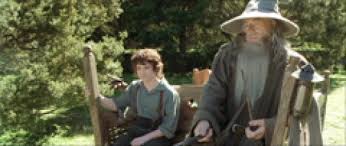
    LOTR setting the relationship between Gandalf and Frodo.

    Subtext

    Speaking of topics up for discussion, don’t be afraid to allow the convo to shift directions or uncover hidden motives–the real reason they’re talking.

    Dialogue works best if at least one character is uncomfortable, off-balance, guarded, or unsure.

    Subtext is part of dialogue. A particularly powerful subtext trick is for a character to hedge, avoid answering, try to change the subject.

    Typically dialogue is adversarial; it’s about characters vying for power, dominance, or control. Give at least one character an agenda.

    If you’re not using dialogue to reveal the truth of relationships, you might want to analyze writers who do.

    Dialogue zings when characters are saying no to each other.

    Know the dynamic that exists between the characters. 

    Sometimes just nailing the essence or context of an exchange makes it easier to write. Ask yourself what lies beneath the scene. A refusal? Subterfuge? Prying or demanding answers? Explaining a situation? Asking for something that’s hard to ask for? Is this a power play?

    As in real life sometimes characters interrupt.

    Take Care with Beats

    Take care with beats–the small inclusions of gestures, actions, reactions. Too many eye rolls, gazing off in the distance, gazing into each other’s eyes, fighting back tears and the like, can annoy the reader. You want readers to imagine many of these reactions.

    Be Aware of the “White Room” Syndrome

    Add small actions or activities for a natural flow–fixing dinner, washing dishes, walking, shopping, getting dressed.  In my editing gig, I’ve seen too many characters sitting across from each other staring unblinkingly into each other’s eyes far too often. It’s not the way most of us talk most of the time.

    Know When to Break “The Rules” 

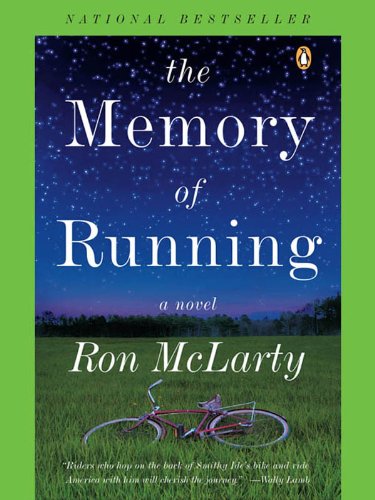
    Don’t be afraid to include weird or inappropriate dialogue if it makes sense for the overall plot. Ron McLarty’s The Memory of Running is one of my favorite novels. It’s essentially the story of a family who is forced to cope with a daughter and sister’s mental illness–schizophrenia. It’s a sad, hilarious, and poignant story with one of the best character arcs around for Smithy Ide the protagonist. The absurdity of Smithy’s uncle’s comments and jokes help balance out the bleakness and unpredictability of Bethany’s illness. Uncle Count is the kind of guy who always has a dirty, racist, or offensive joke no matter the occasion and is clueless about how inappropriate he is, how unwelcome his jokes are. He usually starts with, “Have you heard the one about the two priests who walked into a bar?”

    If you’re staging an argument it needs to escalate. Words need to land like blows. – Jessica Morrell


    The BASICS

    Avoid lengthy answers, exchanges to keep the pace perking along. The whole conversation can go on for several pages, but keep each of your characters’ back-and-forths to 3 sentences (or so) or under.

    Keep tags simple. The she said, he said parts of fiction should appear invisible or natural.

    Say no to chortles, rejoinders, retorts, and demands. Allow the dialogue to inform the reader about the speaker’s tone.

    I’m going to be adding examples of effective dialogue here, so stop back.

    In case you haven’t read this beautiful book,  The Memory of Running. I cannot recommend it enough. And yes, I realize I’ve recommended it before.

    Editor’s Note: The Memory of Running by Ron McLarty was first published as an Indie by the author because it was rejected repeatedly by agents and publishing houses. It went on to get picked up by Penguin  and became a national bestseller.


    Writer’s Toolbox


    POTENT DIALOGUE TIPS by Jessica Morrell – a Chanticleer Writer’s Toolbox Series post


    Jessica Page Morrell
    Jessica Page Morrell

    Jessica Morrell is a top-tier developmental editor and a contributor to Writer’s Digest magazine, and she teaches Master Writing Craft Classes at the Chanticleer Authors Conference that is held annually along with teaching at Chanticleer writing workshops.

    Jessica will teach a Writing Master Class and advanced writing craft sessions at CAC19.

    Keep writing, Keep dreaming, Have heart. – Jessica


    Jessica understands both sides of the editorial desk–as a highly-sought after content development editor and an author. Her work also appears in multiple anthologies and The Writer and Writer’s Digest magazines. She is known for explaining the hows and whys of what makes for excellent writing and for sharing very clear examples that examines the technical aspects of writing that emphases layering and subtext. Her books on writing craft are considered “a must have” for any serious writer’s toolkit. For links for her writing craft books, please click on here.

    Chanticleer Reviews and OnWord Talks will interview Jessica for more of her writing tips and advice. Stay tuned! ~ Chanticleer (who hails from Chaucer’s Canterbury Tales).


  • Immersive Fiction – a Different Perspective by Jessica Morrell and Kiffer Brown – Writing Toolbox

    Immersive Fiction – a Different Perspective by Jessica Morrell and Kiffer Brown – Writing Toolbox

    One day when Jessica was driving during the holidays she heard a show on NPR discussing how Americans play virtual reality games. It was reported that almost 70% of our fellow citizens play every day.

    We were both shocked by the number.

    United States Census Bureau (great source of information) states that as of July 1, 2018 the population estimate is 327,167,434 people. So according to the NPR report, the amount of the US population that play “video games” daily would be approximately 229 million people (who are gaming and not reading, by the way).

    Now back to Jessica…

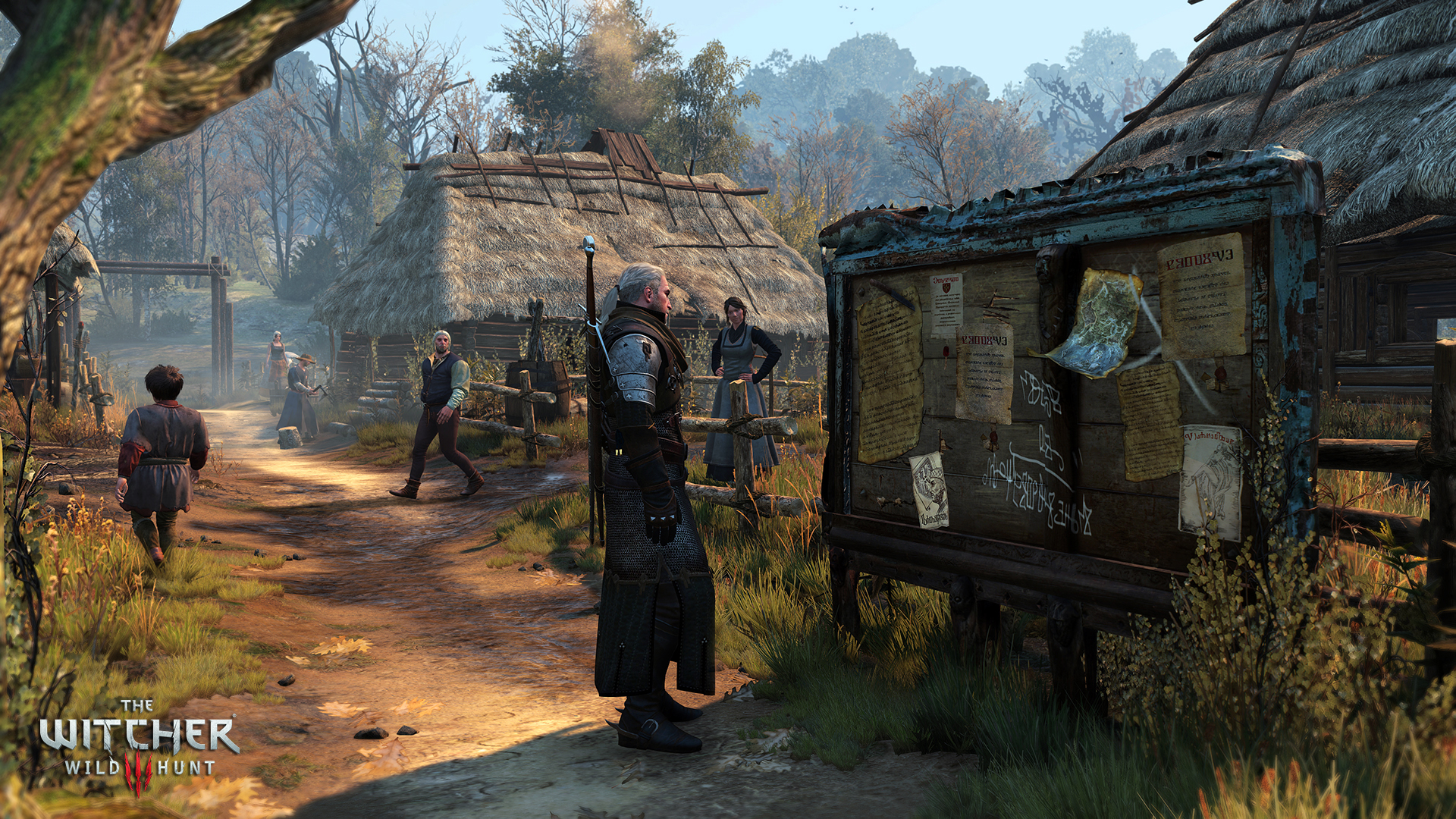
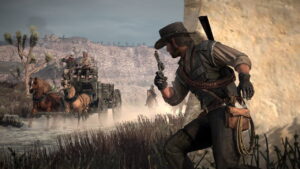
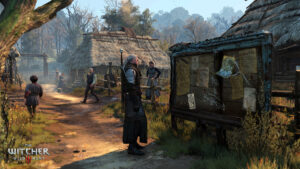
    The people calling into the show to join the discussion were game developers, writers, and gamers. And the term ‘immersive’ kept coming up in the conversation, as in players felt like they were living amid the game universe that they were gaming in. One could experience Mars (Doom), The Old West (Red Dead Redemption). A World War II battlefield (Call of Duty), Sword & Sorcery (Witcher), automobile racing (Forza Horizon), Ancient Nordic/ Norse Times (Hellblade: Senua’s Sacrifice), and other imaginary worlds.

    Witcher 

    In a distracting world, your stories need to feel similarly immersive. Your story settings must be nuanced, intricate, and alive with significant details, intriguing characters, and most of all, trouble. Bad trouble. Soul-sucking problems that need solving. In fact, a large portion of games is about survival, the rawer and scarier the better.

    Think about it: millions of people are spending millions of hours in other permeable realities.

    Readers also want to feel as if they’re part of a world as if they’re navigating layers of complexity as they interact via viewpoint characters.

    So we thought it would advantageous to do a little research about how game developers create the “immersive experience.” This article, of course, just scratches the surface, but it is a starting point.

    Point of View Guidelines Apply to Video Games Also and Help to Create What is Known as “Gameplay.”

    According to Altug Isigan’s classic article Three Types of Point-of-View in Video Games, there are: (Isigan goes into more detail in his post. We will have a link to it at the end of these excerpts.)

    Perceptual Point of View (what our mind’s eye sees, thinks, hears, and desires equates to feeling) = First Person

    “The efforts of the designer and artist (think – you the writer) in the visual constrution of this rendering must achieve that we think of this image as if it were the moment-to-moment perceptions of a perceiver. This is in particular important if the designers and artists (writers) want us to assume this perceptual construct as our own view.”   

    Ideological Point of View (World or Ideological View)

    “The second definition of POV takes seeing rather in the metaphorical sense and implies not only a view, but a worldview.Hence the term ideological. Here, a second lense is applied to the lense that sees: thoughts, beliefs, and feelings. What we call point-of-view has gained another dimension and is no longer only the perceived sense-data… Not only are we presented a view of, but also a view on the event that is presented. It’s not only perception anymore, but also cognition; not mere sight, but vision.”

    Point-of-View of Interest (when our actual interests conflict with what we believe our interests are or should be).

    “In other words, we may not be aware of our actual interests, or blinded by our beliefs to a degree at which we can’t perceive them thorougly. Interest, is  therefore not about perception or ideology, but rather about an awareness in regard to the consequences of events.” 

    “This can create interesting situations. For example a character may be aware of the negative consequences of a particular choice, but he may still chose to face that consequence due to his beliefs (ideology) as is the case in situations that involve sacrifice. Or sometimes a character may find himself in a dilemma: He may not be able to decide whether to follow his belief or his interests.”

    In conclusion

    For more information and to read the complete article by Insigan, click here to visit The Ludosphere where the article was published.

    His conclusion states, “…An interesting point to consider here is that what we usually call “the gameplay” has a lot to do with these intertwinings of different POV-types. It could be a good idea to make use of these concepts in order to refine our notion of gameplay, and also realize how close it is related to storytelling methods.  I believe that an awareness of the existence of various POV-types can only improve a narrative designer’s ability to create compelling and immersive gameplay experiences.” (Altug Isigan)


    The Wall – Game of Thrones from George RR Martin’s A Song of Ice and Fire

    So how do you coax readers to have similar experiences?

    By placing them in the action, with a stake in shaping outcomes. By creating circumstances that require decision-making and problem-solving as characters tackle moral dilemmas and a stacked deck. By setting up difficult-to-obtain outcomes. By tossing in bad luck, screw-ups, and sometimes poor judgment. By making the outcome really matter to characters we come to understand and care about.

    Hellblade: Senua’s Sacrifice

    This means writers build a fictional world detail by detail, from a complex social matrix to a government and history. Harry Potter’s wizarding world is a good example as is George R. R. Martin’s The Known World from his A Song of Ice and Fire series.

    Red Dead Redemption

    Maybe your story world is a ravaged, lawless hellhole. Intriguing concept, but readers need to understand how the lawlessness came about. This means you’ll be establishing the ‘rules’ for your universe. And keep the pressure coming by creating a breathing, weather-plagued, climate-influenced place. Well, I guess that weather could be balmy and calm, but what’s the fun in that?

    Keep writing, keep dreaming, have heart. – Jessica


    Chanticleer Editorial Services  Writer’s Toolbox Series

    Jessica is focusing on immersive writing throughout this year, so keep checking back here for more information and writing tips and tools for your writer’s toolbox and consider registering for her Master Class at CAC19 and Summer Workshops with Chanticleer.


    Jessica Page MorrellJessica Morrell is a top-tier developmental editor and a contributor to Writer’s Digest magazine, and she teaches Master Writing Craft Classes at the Chanticleer Authors Conference that is held annually along with teaching at Chanticleer writing workshops.

    Jessica will teach a Master Class and advanced writing craft sessions at CAC19

    Jessica understands both sides of the editorial desk–as a highly-sought after content development editor and an author. Her work also appears in multiple anthologies and The Writer and Writer’s Digest magazines. She is known for explaining the hows and whys of what makes for excellent writing and for sharing very clear examples that examines the technical aspects of writing that emphases layering and subtext. Her books on writing craft are considered “a must have” for any serious writer’s toolkit. For links for her writing craft books, please click on here.

    Chanticleer Reviews and OnWord Talks will interview Jessica for more of her writing tips and advice. Stay tuned! ~ Chanticleer (who hails from Chaucer’s Canterbury Tales).

    Please contact Sharon or Kiffer if you would like more information about Chanticleer’s Editorial Services at KBrown@ChantiReviews.com or SAnderson@ChantiReviews.com.

  • An Editor’s Checklist for Manuscript Evaluations of Fiction by Jessica Page Morrell Part Two of the Writing Fiction Guidelines by Jessica Page Morrell

    Writer’s Toolbox

    Fiction Checklist for Deep Editing

    A Chanticleer Editorial Services Writing Toolbox Series

    While rules and techniques are not written in stone, most of the basic guidelines of fiction stem from logic and an understanding of dramatic structure. Don’t break the rules until you know them, or better yet, until your first novels have sold. – Jessica Morrell


    The Developemental Editing  Checklist by Jessica Morrell

    VOICE

    From the opening paragraphs, is there a clear, distinct and engaging voice? The writer’s voice should have authenticity, individuality, or originality. 

    Log-Line aka Elevator Pitch

    Is there a single, simple conflict that drives the action? Can your plot be summed up in a single sentence? (Log-line aka The Elevator Pitch). Keep your log-line visible and in plain sight whenever you are editing your work-in-progress to remind you of your story’s focus. 

    Opening – is it grabbing? 

    Does the story begin with a change or threat in the protagonist’s life? Or the loss of something important? Or an action happening that should be prevented. 

    The opening should contain a hook or inciting incident that creates stress, unease, questions, or opens a can of worms. The story needs to start in the first sentence. 

    Is the story driven? 

    Does each scene provide a sense of momentum, or narrative drive pushing the story forward? Does each description? Or are the words there for the writer? 

    Is the story immersive? 

    Is the story highly visual? Can your reader imagine “seeing it” while reading or listening to it? 

    Ticking Clock? 

    Is there a sense of time running out or another driving factor that creates tension? Even light-hearted or humorous stories should have tension. 

    Weather or Atmosphere

    Does the story contain weather? What is the environment or the atmosphere like? Make sure that your story doesn’t have the “empty room” syndrome. 

    Is Backstory on a need to know basis? 

    Have you worked at weaving data, description and backstory into the narrative so that it doesn’t interrupt the forward movement of the story?

    Did You SHOW and TELL? 

    Have you dramatized the action in scenes or have you summarized?

    “Show, don’t tell” is a useful guideline for writers, but fiction is actually ‘told’ and ‘shown.’ A combination of both techniques creates the most effective fiction.

    Scenes are most effective when you’re revealing complicated interactions between characters and emotions change via the scene.

    Exposition is most effective when you’re filling in background information or moving quickly between two scenes. Too much showing or too many scenes make the story too drawn out just as too much exposition makes it static.

    Setting

    Are the settings interesting, unique, memorable?

    Does the setting have the potential to teach readers about a place, a profession, a way of life?

    Or does it overshadow the story?

    Conflict

    Is the conflict weak or boring or not enough to sustain a manuscript of a particular length?

    Or does the conflict seems contrived?

    Or begins too far into the story? This happens far too often.

    Pacing

    Often writers apply the same level of speed or word count to everything in the story from a major heartbreak or ride across town. Sagging middle is another pacing problem so that the reader feels like it takes too long to reach the end.

    Other times, the story plods along only to barrel past the most interesting moments in the story.

    Do the chapter endings make your reader want to keep reading? 

    Have you ended scenes (chapters) with thrusters, surprises or cliffhangers?

    Readers need a reason to keep turning the page and all stories need growing intensity until the climax or resolution. 

    Flashbacks

    Have you relied on flashbacks to relate to the protagonist’s backstory? If so, is the information necessary and do the flashbacks disrupt the momentum of the story?

    Are your characters recognizable? 

    Have you repeated some physical characteristics, descriptions of the characters throughout the story so the reader is reminded of their physical attributes and personality?

    Is each character consistent? Are his or her dominant traits in evidence throughout the story?

    Transitions

    Are your transitions brisk and do they serve to keep the reader moving through time,  space and mood?

    Do you quickly slip in and out of scenes?

    Story Arc

    Are there a series of setbacks, mini-crisis, and complications along the way?

    Does the protagonist have a goal in each scene? Or something that will affect the protagonist is taking place?

    Have you added unexpected events midway in the story?

    Have you deftly handled your theme and premise, or are you on a soapbox preaching or shouting at the reader with an overreaching message pushing an agenda? This happens more often than one would think.

    Dialogue

    When you read the dialogue out loud, does it sound natural?

    Do you trip over words when you read the dialogue out loud?

    Does the dialogue contain tension?

    Does each character sound distinctive?

    Be aware of these problems: overly long exchanges; characters giving speeches, or the dialogue contains no tension or conflict. 

    Does each character sound distinct?

    The Ending

    Is the protagonist the person in the story most involved in the action, most likely to be changed by events in the story?

    Does the ending provide the most emotional and dramatic scenes?

    Does the ending tie up most of the subplots?

    Does the ending deliver? Does it satisfy?

     The best endings are not contrived or convenient. They are the logical and highly dramatic culmination of the proceeding events. The climax is the highest emotional pitch of your story, a decision, a collision of forces, and settling of scores.  Also in this category are too many loose ends and subplots dangling, and questions unanswered.

    The ending is what makes your work “go viral.” Take special care with the ending. –Kiffer

    RULE #1 from Jessica 

    While rules and techniques are not written in stone, most of the basic guidelines of fiction stem from logic and an understanding of dramatic structure. Don’t break the rules until you know them, or better yet, until your first novels have sold.


    Editor’s Note: Often it is hard for the author to objectively read her or his work for the above issues. Authors often “hear and see” their story in their minds’ eyes. The trick is to have someone else hear and see the story from words on the page from outside of the author’s mind. This is where the author’s agent or the publisher’s editor comes into play by doing a close read of the work for these top-level issues before editing begins.

    We, at Chanticleer Reviews Editorial Services, see that it is at the point where authors make the mistake to start copyediting their works when they should have their manuscript evaluated by an editor, agent, or publisher.

    The power of a manuscript overview makes it one of the best tools that traditional publishing houses and literary agents make available to their authors.

    Best-selling authors receive great editing and feedback from agents and senior editors on early drafts, which most self-publishing authors never receive. When feedback comes early in a work’s progress it allows the author to not only create a more polished final product, but also publish more works.

    It can be very difficult for the author  to discern the above issues because it takes fresh eyes and perspective to evaluate the manuscript aka work-in-progress. The entire manuscript should be read and then commented on and evaluated. To learn more about Chanticleer’s Manuscript Overview and Evaluation Service can save you time and money, please click here.


    Click here to download the handy WORD file that you can print out of the above points on Developmental Editing.


    Jessica Page Morrell
    Jessica Page Morrell

    Jessica Morrell is a top-tier developmental editor and a contributor to Writer’s Digest magazine, and she teaches Master Writing Craft Classes at the Chanticleer Authors Conference that is held annually along with teaching at Chanticleer writing workshops.

    Jessica will teach a Master Class and advanced writing craft sessions at CAC19.

    Jessica understands both sides of the editorial desk–as a highly-sought after content development editor and an author. Her work also appears in multiple anthologies and The Writer and Writer’s Digest magazines. She is known for explaining the hows and whys of what makes for excellent writing and for sharing very clear examples that examines the technical aspects of writing that emphases layering and subtext. Her books on writing craft are considered “a must have” for any serious writer’s toolkit. For links for her writing craft books, please click on here.

    Chanticleer Reviews and OnWord Talks will interview Jessica for more of her writing tips and advice. Stay tuned! ~ Chanticleer (who hails from Chaucer’s Canterbury Tales).

    Click here for more information about the 2019 Chanticleer Authors Conference!