
Tag: Writers tool Kit

  • CREATING UNFORGETTABLE SECONDARY CHARACTERS – Part Two of ESSENCE of CHARACTERS from Jessica Morrell’s Editor’s Desk – Writer’s Toolbox Series

    CREATING UNFORGETTABLE SECONDARY CHARACTERS – Part Two of ESSENCE of CHARACTERS from Jessica Morrell’s Editor’s Desk – Writer’s Toolbox Series

    Many writers struggle to create vibrant and complex secondary characters. After all, complicated main characters are hard enough to create. Memorable secondary characters, however, can make or break a story.  Think about Yoda (Star Wars), Pippin (LOTR), Jane Bennet (Pride and Prejudice), Thomas Pullings (the Aubrey – Maturin series by Patrick O’Brian), and …


    Jane Bennet – Pride and Prejudice
    Thomas Pullings of the Aubrey-Maturin Patrick O’ Brian series

    I always view secondary characters as a measuring stick for a writer’s prowess. Jessica
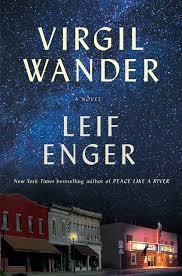
     

    Here’s a vivid example of a memorable secondary character from Leif Enger’s beautiful Virgil Wander

    His name is Rune–so here’s a simple trick, give your characters resonant names.

    In this case, rune has mystical, mysterious associations. The day after the protagonist Virgil survives a car accident in the opening moments of the story he walks to the waterfront of the forbidding, ever-changing Lake Superior. Enger is introducing an oft-used device: a mysterious Stranger comes to town.


    I ended up at the waterfront. It’s not as though there’s any other destination in Greenstone. The truth is that I moved here largely because of the inland sea. I’d always felt peaceful around it–a naive response give it fearsome temper, but who could resist that wide throw of horizon, the columns of morning steam? And the sound of a continual tectonic bass line. In a northeast gale this pounding adds a layer of friction to every conversation in town.

    At the foot of the city pier stood a threadbare stranger.  He had eight-day whiskers and fisherman hands, a pipe in his mouth like a mariner in a fable, and a question in his eyes. A rolled-up paper kite was tucked under his arm–I could see bold swatches of paint on it.

    There was always a kite in the picture with Rune, as it turned out.

    He watched me. He carried an atmosphere of dispersing confusion, as though he were coming awake. “Do you live in this place?” he inquired.

    I nodded.

    “Is there are motor hotel? There used to be a motor hotel. I don’t  remember where.”

    His voice was high, with a rhythmic inflection like short smooth waves. For some reason it gave me a lift. He had a hundred merry crinkles at his eyes and long-haul sadness in his shoulders.

    “Not anymore–not exactly.” If I’d had more words, I’d have described Greenstone’s last operational motel, the Voyageur, a peeling L-shaped heap with scraggy whirlwinds of litter roaming the parking lot. Though technically “open,”  the Voyageur is always full, its rooms permanently occupied by the ower’s grown children who failed to rise on the outside.

    “Oh well,” he said,shaking himself like a terrier. He peered round at the Slake International taconite plant, a looming vast trapezoid which had signified bustling growth in the 1950s and lingering decline ever since. Its few tiny windows were whitewashed or broken; its majestic ore dock rose out of the water on eighty-foot pilings and cast a black-boned reflection across the harbor. No ship had loaded her in so long that saplings and ferns grew wild on the planking. We had a little forest up there. I looked at the  kite scrolled under his arm. He’d picked the wrong day for that, be then he looked like a man who could wait.

    He said, “You here a long time?”

    “Twenty-five years.”

    At this something changed in him. He acquired an edge. Before I’d have said he looked like many a good-natured pensioner making do without a pension. Now in front of my eyes he seemed to intensify.

    “Twenty-five years? Perhaps you knew my son. He lived here. Right in this town,” he added looking round himself, as though giving structure to a still-new idea.

    “Is that right. What’s his name?”

    The old man ignored the question. He pulled a kitchen match from his pocket, thumbnailed it, and relit his pipe, which let me tell you held the most fragrant tobacco–brisk autumn cedar and coffee and orange peel. A few sharp puffs brought it crackling and he held it up to watch smoke drift off the bowl. The smoke ghosted straight up and hung there undecided.


     

    Writer’s Toolbox

    Did you notice how this small scene multi-tasks? 

    Techniques to borrow:

    • Sharply observed first impressions (carried an atmosphere of dispersing confusion as though coming awake, a good-natured pensioner making do without a pension, looked like a man who could wait)
    • Props (kite and tobacco, kitchen match, pipe)
    • Smells (tobacco)
    • Iconic or mythic comparisons (rune, mariner in a fable)
    • Indelible physical features: (fisherman’s hands, question in his eyes, a hundred merry crinkles as this eyes and a long-haul sadness to his shoulders)

    Here’s a tip: When you need to describe a character or objects or setting ask yourself what does this remind me of?

    As you walk around your world, really notice your surroundings and ask yourself the same question.

    The next post will be about noticing and nurturing your imaginings with paying attention to small details with a novelist’s eye.

    Here is the link to Part One of the Essence of Characters series: https://www.chantireviews.com/2019/06/01/essence-of-characters-part-one-from-the-jessica-morrells-editors-desk-writers-toolbox-series/


    Until then, Keep writing, keep dreaming, have heart.  Jessica

    Jessica Morrell is a top-tier developmental editor and a contributor to Chanticleer Reviews Media and to the Writer’s Digest magazine. She teaches Master Writing Craft Classes at the Chanticleer Authors Conference that is held annually along with teaching at Chanticleer writing workshops that are held throughout the year. 


    A Chanticleer Reviews – Writer’s Toolbox blog post on Character Development by Jessica Page Morrell

    Did you know that Chanticleer offers editorial services? We do and have been doing so since 2011.

    And our professional editors are top-notch and are experts in the Chicago Manual of Style. They have and are working for the top publishing houses (TOR, McMillian, Thomas Mercer, Penguin Random House, etc.) and elite indie presses.

    We work with a small number of exclusive clients who want to collaborate with top-editors on an on-going basis.

    Contact us today! If you would like more information, we invite you to email Kiffer or Sharon at KBrown@ChantiReviews.com or SAnderson@ChantiReviews.com


     

  • ELEMENTS of SUCCESSFUL FICTION – Writing Fiction Guidelines by Jessica Morrell – Writers Toolbox Series

    ELEMENTS of SUCCESSFUL FICTION – Writing Fiction Guidelines by Jessica Morrell – Writers Toolbox Series

    The best fiction touches the deep layers in us. A writer achieves this effect by embedding dozens of techniques into his or her story. – Jessica Page Morrell

    Dramatic Question 

    Compelling fiction is based on a single, powerful question that must be answered by the story climax. This question will be dramatized chiefly via action in a series of events or scenes. If you are writing a romance, the question always involves whether the couple will resolve their differences and declare their love. In a mystery the dramatic question might be will Detective Smith find the serial killer in time to prevent another senseless death? In The Old Man and Seathe dramatic question is will Santiago catch the big fish and thus restore his pride and reputation?

    An Intimate, Simmering World 

    An intimate world isn’t created by merely piling on details. It means your story world has the resonance of childhood memories, the vividness of a dream, and the power of a movie. It’s filled in with shadows and corners and dogs and ice cubes and the sounds and smells of a dryer humming on wash day and a car blaring past, rap music shaking the windows. These details lend it authority, potency, and a palpable physical existence.

    An intimate story takes us to a specific place and coaxes us to remain there. An intimate story is lifelike and feels as real and complicated as the world the reader inhabits. When he finishes the final pages and leaves the story world, he should feel the satisfaction of the ending, but also a huge sense of loss. Like a friend has moved to another town just when the friendship had reached a level of closeness and trust.

    Characters Built from Dominant Traits

    Create main characters with dominant and unforgettable traits as a foundation of personality. These traits will be showcased in the story events, will help him achieve or fail at goals, and will make the story person consistent. For example, Sherlock Holmes’ dominant traits are that he is analytical, Bohemian, opinionated and intelligent. These traits are showcased in every story he appears in along with secondary and contrasting traits. When the character first appears in the first scene, he arrives in the story with his dominant traits intact.

    Emotional Needs

    Protagonists and the main characters are people with baggage and emotional needs stemming from their pasts. These needs, coupled with motivation cause characters to act as they do. For example, in Silence of the Lambs Clarisse  Starling is propelled by childhood traumas to both succeed and heal the wounds caused by the death of her father.

    Significance 

    The storyline focuses on the most significant events in the protagonist’s life.

    Motivation Entwined with Backstory 

    Motivation, the why? of fiction, is at the heart of every scene, fueling your character’s desires and driving him to accomplish goals. It provides a solid foundation for the often complicated reasons for your character’s behaviors choices, actions,  and blunders.  Motivating factors provide trajectories for character development, as a character’s past inevitably intersects with his present. Your character’s motivations must be in sync with his core personality traits and realistically linked to goals so that readers can take on these goals as their own.

    Desire 

    Desire is the lifeblood of fictional characters. Not only do your characters want something, but they also want something badly. Santiago, in The Old Man and the Sea desperately wants to restore his reputation and also wants his friendship and partnership with the boy to resume. And in the lonely hours when he is far out at sea, desperately struggling to hang on to the fish and fighting off sharks, we see his fierce desire acted out and the price he pays for it.

    You can bestow on your character flaming red hair, an endearing, crooked grin and a penchant for chocolate and noir movies, but if she doesn’t want something badly, she’s merely a prop in your story, not a driving force. But if she wants to win the Miss Florida contest, take over her boss’ job, or become the first female shortstop for the Atlanta Braves, then you’ve got a character who will make things happen and a story that will be propelled by desire.

    Threat

    Fiction is based on a series of threatening changes inflicted on the protagonist. In many stories, these threats force him or her to change or act in ways he or she needs to change or act. Often too, what the protagonist fears most is what is showcased in a novel or short story. It can be fear of losing his family, job, or health with this dreaded outcome providing interest, action, and conflict.

    Causality 

    Events in fiction are never random or unconnected. They are always linked by causality with one event causing more events later in the story, which in turn causes complications, which cause more events, which cause bad decisions, etc.

    Inner Conflict 

    A fictional character doesn’t arrive at easy decisions or choices. Instead, he is burdened by difficult or impossible choices, particularly moral choices, that often make him doubt himself and question his actions. Inner conflict works in tandem with outer conflict—an physical obstacle, villain or antagonist–to make the story more involving, dramatic, and events more meaningful.

     Complications   A story builds and deepens by adding complications, twists, reversals, and surprises that add tension and forward motion. Plots don’t follow a straight path, instead, there are zigzags, dead ends, and sidetracks. Complications create obstacles and conflict, cause decisions to be made, paths to be chosen.

     Midpoint Reversal 

    The middle of a novel comprises more than half its length. At about the midpoint of most novels, a dramatic reversal occurs. The hunter becomes the hunted; a second murder occurs proving the detective has been wrong in his suspicions; a former lover arrives in town to complicate a budding romance. This reversal keeps the middle from bogging down and becoming predictable and also breathes new life and often a new direction into the story.

    Satisfying Ending 

    every story needs an ending that satisfies the reader while concluding the plot. The final scenes, when the tensions are red hot and the character has reached a point of no return, must deliver drama, emotion, yet a logical conclusion. This is not to suggest that every plot ends with a shoot-out or physical confrontation because some endings are quieter, more thoughtful. Some endings are ambivalent, some a dramatic or a violent clash of wills. But there is always a sense that all the forces that have been operating in your story world have finally come to a head and the protagonist’s world is forever changed.

    The end is just the beginning…

    A Note from the Editor: A satisfying ending is one of the top, if not the top, reasons why books go viral and what will make your reader want to read your next work. Make sure that the you put as much effort in to a satisfying ending as you do into your opening hook—if not more. Kiffer Brown

    Jessica Morrell is a top-tier developmental editor and a contributor to Writer’s Digest magazine, and she teaches Master Writing Craft Classes at the Chanticleer Authors Conference that is held annually along with teaching at Chanticleer writing workshops.

    Jessica Page Morrell

    Jessica will teach a Master Class and advanced writing craft sessions at CAC19

    Workshops and Sessions Jessica will teach at the 2019 Chanticleer Authors Conference: 

    Immersive Fiction: Writing Fiction so Readers Land Amid Your Story and Don’t Want to Leave. Ever.


    We live in a clattering, distracting world that pulls at readers’ attention and senses. To compete your fiction needs be immersive, as in an alternate reality that your reader can enter into. Thus your readers are experiencing it, not simply reading it. An immersive story is an intimate, sensory story. It takes place in a world that a reader can see, smell, feel, and hear and it’s based on characters readers come to know and care deeply about. With the opening pages, readers are swept into a world that is so resoundingly real and intricately constructed that they leave their ordinary lives to venture forth and live daily along with the characters.

    Immersive Fiction Part 1:  Atmospherics

    Readers want to feel as if they’re part of a story world interacting with viewpoint characters. Fictional worlds that are immersive are nuanced, intricate, and alive with significant details. We’ll sort through what makes details significant and necessary. Plan to delve into atmosphere and tone, often under-appreciated techniques in a writer’s toolbox, yet they can be so effective to heighten suspense, create reality, and underline emotions and key moments. We’ll highlight how to use weather, lighting, interiors, unsafe places, and what I call “surround sound.” Finally, we’ll also discuss the key elements needed of world build in realistic genre fiction such as historical, sci-fi, and fantasy, and to make your stories memorable and immersive.

    Immersive Fiction Part 2: Your Sometimes Heart-breaking, Sometimes Messed-up, Sometimes Heroic Fictional Cast

    For many writers, the most fun of creating a story is fleshing out characters who battle, grow, and plop into heaps of trouble. Because readers need relatable, yet irksome, yet potent story people to follow and fret over. Their flaws and mistakes drive us crazy, their choices and moral dilemmas worry us sick, their triumphs feel as sweet as our own.
    Characters first need to be intriguing and readers need to meet them at a pivotal, irreversible moment. From there they’ll tread where we dare not, fall in love with losers and sometimes winners, and take on monsters when we’d be cowering. But still characters, including secondary characters, need a vivid essence and need to be bigger than life. And by story’s end they need to grow, also called an arc. This workshop will delve into the more intricate aspects of character building and creating arcs, the art of creating characters who will live in the reader’s heart and memory.

    Immersive Fiction Part 3: Stakes and Motivations

    One major reason that people ‘buy into’ storytelling of all types is that there are serious stakes involved. Readers need to feel as if they also have a stake in the story. Stakes create tension, but most of all dread in a story because a character’s happiness, perhaps even his life, depends on them. The stakes might mean saving a vulnerable child snatched by a creepy predator, or saving the galaxy, or defeating Voldemort and his Deatheater.

    Motivations are the reason characters attempt any action in a story. You’ll learn that motivations are deeply felt, drive a story, and will require a character’s chief personality traits to fulfill. We’ll discuss how motivations reveal backstory and a character’s inner world, create goals, and will exact a cost as the story progresses. We’ll discuss a variety of stakes, motivations, and goals so that you’ll learn clear examples of how all are entwined with plot and character.

    If you would like to learn more about the sessions and Master Writing Craft Workshops please click on this link that goes to https://www.chantireviews.com/chanticleer-conference/

  • Synopsis Writing Tools Checklist by Jessica Page Morrell

    Synopsis Writing Tools Checklist by Jessica Page Morrell

    Jessica Page Morrell
    Jessica Page Morrell

    SYNOPSIS Tools Checklist by Jessica Page Morrell  Part 2 of a Two-Part Blog Post

    Jessica is a top-tier developmental editor. Jessica is teaching the Master Writing Classes at the Chanticleer Authors Conference on Sunday, April 22, 2018. 

    Here is the second half of a two-part series on How to Write a Synopsis. The first Synopsispart deals with synopsis development and the second part will discuss the mechanics of a synopsis.

    Here is the link to Part 1:

    Part 1 of Jessica Page Morrell’s Writer’s  Toolkit series on How to Write a Synopsis

    A quick recap of Part One: 

    A Synopsis Is:

    • Part Bare Bones  Story Recap (but not too bare)
    • Part Pitch
    • Part Illustration of Your Writing Style

    Every sentence matters and pushes your story forward. 

    Typically a synopsis completes a sales package that includes your first three chapters and sometimes a letter of introduction. Since at times editors read the synopsis first, it must be comprehensive, comprehensible, and compelling, forcing them to then peruse your chapters. Hopefully, your synopsis will be read not only by an agent and editor but if it passes muster, the marketing and art department will read it too. A synopsis will also be used in the publishing house meetings where decisions are made about what titles will be published in an upcoming season.

    SYNOPSIS CHECKLIST 

    A synopsis is written in the same order as the novel and is written in the style and tone of the manuscript—a witty, fast-paced novel requires a witty, fast-paced synopsis. If the story is literary, your synopsis will be more serious, but keep in mind that your dazzling prose goes into the manuscript, not the synopsis. Don’t leave major questions unanswered such as who killed the victim, as well as how Malcolm solves his internal conflict, and how the subplot was resolved after he lost his job when he was arrested. A synopsis keeps the reader’s interest, but it’s not a tease and is not written with cliffhangers and such devices. It’s particularly important to demonstrate that your ending provides a satisfying conclusion to the plot and ties up loose ends.

    A synopsis demonstrates that your characters are in jeopardy and what is at stake and why this matters. It introduces your main characters and their conflicts and agendas. It is not a list of characters or character sketches, and it usually does not describe physical attributes of characters, although the main characters are given some sort of tag. For example, you might want to refer to a character as the leading citizen in a small Southern town, or a respected doctor or frustrated novelist. Antagonists are always introduced, but secondary characters are mentioned only if they are involved with the protagonist’s inner or outer conflict.  A synopsis is also written with a careful attention to flow—ideas follow each other logically and one paragraph leads to the next. This means that transitions will be important in connecting the dots.

    Is or Does Your Synopsis Questions:

    • Is it reflective of a thoughtful writer at work?
    • Is it reflective of the mood and tone of the manuscript submitted?
    • Does it portray an enthralling story?
    • Does it highlight a gripping main conflict?
    • Does it highlight the intriguing motivations of the main players?
    • Does it lead the reader logically from inciting incident to end with:
      • major plot points along the way?
      • turning points along the way?
    • Does it provide a satisfying conclusion to the plot and ties up loose ends?
    • Does it connect the dots and progress logically?

    Mechanics

    • Write the synopsis in the present tense
    • The first time you introduce a character, type his or her name in ALL CAPS
    • The synopsis should be written in the same order as the novel
    • The synopsis should be written in the same style, tone, and pace of the manuscript

    HEADER  PAGE should be single-line spaced

    • On the first page in the upper-right hand corner write Synopsis
    • The next line should state the type of Genre
    • The next line should state the Word Count
    • The left-hand margin first line should state your name followed by your contact information (digital, voice, and delivery address)
    • Do not number your first page

    TITLE PAGE 

    Don’t number your first page, but scroll down to about one-third of the page and center your title in ALL CAPS. Then leave four lines after the title and begin with your hook. 

    BODY of MANUSCRIPT FORMATTING

    • Use 1-inch margins
    • Do not justify the right margin
    • After the first page use a header (or slug line) on the upper left-hand corner that looks like this: MORRELL/DOOMED FOR DEATH/Synopsis
    • The page number goes on the same line as the header
    • Do not use fancy fonts
    • Remember that you are summarizing, not copying
    • Begin a new paragraph if you are introducing a new scene or plot twist
    • You may want to note one or two short dialogue exchanges to illustrate a point
    • Rule of thumb for spacing: over two-pages, double-spaced is preferred; if it’s one or two pages, single space

    LENGTH 

    Since most agents and editors are notoriously pressed for time and read so much for their jobs, the five-page synopsis is appreciated by most. However, in the past, the wisdom about length went like this: one double-spaced page of synopsis for each 10,000 manuscript words. If you wrote an 80,000-word manuscript you’d write an 8-page synopsis.


    Finally, here’s a checklist that you might want to use to verify that you’ve covered all these points:


    • Have you printed it out and then edited it for spelling, grammar and punctuation mistakes?
    • Does the opening paragraph contain a hook that raises a question and forces the reader to keep reading?
    • Does the synopsis prove that the story is based around a single, dramatic question?
    • Have you shown the protagonist taking charge of events, making choices and decisions, but also stumbling and dealing with internal conflict?
    • Have you introduced your main characters and defined their conflicts, desires, and motivations? Are the protagonist’s dominant traits demonstrated?
    • Have you covered the major scenes and plot points?
    • Are reversals, twists, and surprises depicted?
    • Is the setting and timeframe of the story clear?
    • Does the synopsis include the places in the story where the protagonist changes? If your characters are changing, are you briefly explaining why?
    • Have you shown the protagonist’s darkest moment that comes near the end of the story? Does he or she hit bottom or is there a moment of truth? Are emotional or internal changes evident during this dark moment?
    • Is the ending revealed and does it clarify how the main conflicts are resolved? Have you briefly explain what the protagonist has won or lost?

    Resources:   Jack and Glenda Neff and Don Prues, authors of Formatting & Submitting Your Manuscript, suggest double spacing. 

    LINKS and other INFO

    Instructional and Insightful Books by Jessica Page Morrell to add to your Writer’s Toolkit. Click here. 

    Click here if you would like more information about Jessica Morrell’s Master Writing Classes that will be held on Sunday, April 22, 2018, Bellingham, Wash.

    Click here for information about the 2018 Chanticleer Authors Conference. 

    Click here for Jessica Page Morrell’s website.