Tag: Women’s Historical Fiction

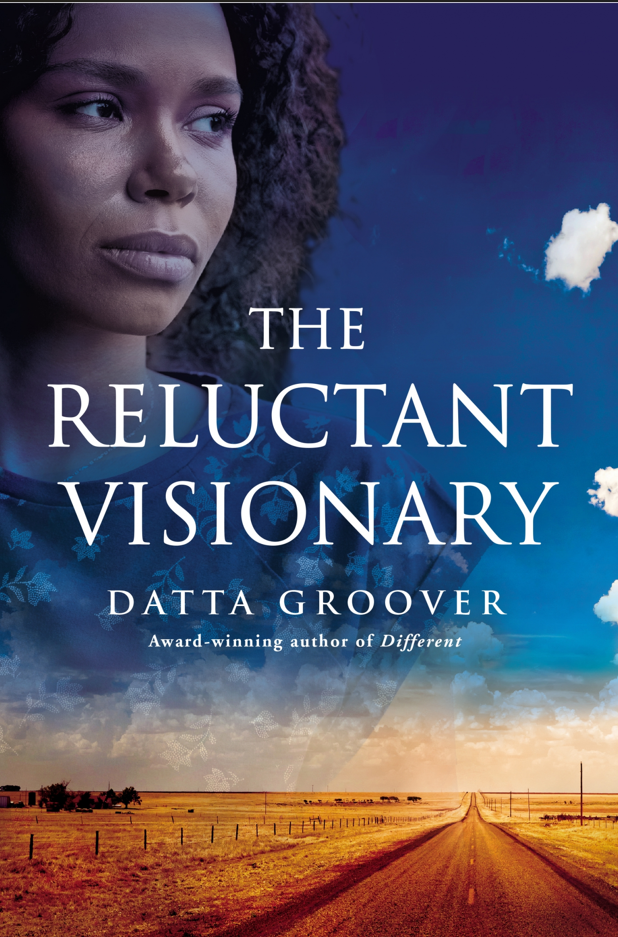
  • THE RELUCTANT VISIONARY by Datta Groover – Magical Realism, Historical Fiction, Multi-Generational Fiction


    Visions of the future swirl, unclear and contradictory, giving dire warnings of lives soon to be cut short, in Datta Groover’s The Reluctant Visionary.

    Three women, Anna Mae, Kat, and Jess each confess to being the visionary of her era.  They never asked for the ability to glimpse danger ahead, to have the opportunity to save others from a terrifying destiny. It’s a heavy burden when people refuse to believe them, and the dangerous consequences of their visions lay in wait. The best of intentions lead the ladies further into a dire struggle. Can they survive all that life throws their way, and learn how to reshape the future? Or will they lose their way in the blur of chilling prophecy?

    Jess is in her mid-twenties, a resident of a rural town in contemporary Texas. She works hard with her family to hold on to the ranch that’s been with them for generations.

    No matter what they try, they continue to experience misfortune and lose more money. As they slip further and further into debt, they wonder what is the root of all their bad luck. Jess juggles this financial struggle with her visions of the future, just like her mother, Kat, did. Visions of violent and heart-wrenching crimes haunt Jess and drive her to act defiantly and protect the innocent victims.

    As she delves into a criminal mystery, she has no idea the danger she’ll face along with her family, and the secrets she’ll uncover in her mission to change the future. She partners with the lone law enforcement officer who believes in her and her visions, but can she resist his charms?

    In the 1960s, an entrancing story set in rural Tennessee plays out parallel to Jess’.

    Anna Mae has just turned eighteen and lives at home with her abusive parents. Her visions of the future are met with anger and fear from the people she’s trying to help, and someone even reports her to the police when her attempt to save a child in danger is deliberately misinterpreted. Anna Mae seeks a tranquil and happy life but her disturbing visions make that wish impossible.

    She finds herself in the middle of an investigation when the police accuse and arrest the wrong person for a crime. She’s determined to save him. In the midst of the chaos, Anna Mae falls in love with the wrong man and is faced with a drastic, life-altering decision. Will she find a wise path forward in her visions?

    Author Datta Groover tells a story of three generations of strong female protagonists.

    These women show how a determination to light a hopeful way forward ignites courage despite threats of desperation and peril. Their contrasting struggles, inherent to different decades and settings, leap off the page, relatable and emotionally vivid. And just as in real life, the ending of the story is filled with unexpected surprises, even for these visionaries.

    Available for Pre-Order Now! Comes out 9/6/23!

     

    5 Stars! Best Book Chanticleer Book Reviews

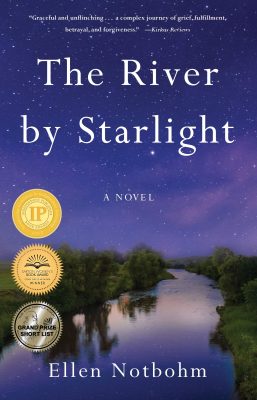
  • THE RIVER By STARLIGHT by Ellen Notbohm – Historical Fiction, Family Fiction, Homestead Era


    Set in the early twentieth century, The River by Starlight by Ellen Notbohm follows Annie (Analiese) Rushton, a woman struggling against her lot in life.

    After a messy divorce leaves her separated from her only child, Annie returns home to her emotionally unavailable and dying mother. A betrayal of Annie’s own mind destroyed her marriage and took away any hope of seeing her daughter again. When she finds a letter from her oldest brother hidden in a drawer by her mother, she decides to join him on his homestead in Montana. Once settled into her new life, she soon forms a whirlwind romance with local business owner Adam Fielding.

    After they marry, Annie wants nothing more than another child, despite the certain risk of her postpartum psychosis returning.

    A string of losses and sickness keeps the passionate couple from their dream of a family until the stress drives them apart. After a jarring separation, Annie gives birth to and loses custody of a little girl she names Nora. Once Annie becomes a member of society again, she works hard to get Nora back from the orphanage and builds a life where they can be together.

    The River by Starlight is historical fiction at its finest. Parenthood and mental health frame this contrast of love and loss.  Throughout the story, Annie is asked how she can just forget the past and move on so easily. The reality is that she does not forget, she must move on to survive. The pain of the past is a character of its own in the story. Its presence and weight are held between Annie, those she loves, and those who love her. Annie struggles to swim her way through troubled waters in a world that believes it would be better off if she drowned. She embodies strength against all odds and the power of love that never dies.

    The River by Starlight by Ellen Notbohm won First Place in the 2018 CIBA Goethe Awards for Post-1750s Historical Fiction.


    5 Stars! Best Book Chanticleer Book Reviews

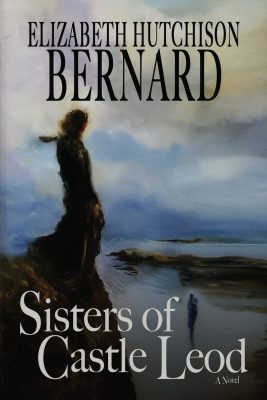
  • SISTERS Of CASTLE LEOD by Elizabeth Hutchison Bernard – Historical Fiction, Sisterhood, Women’s Biographies


    Sisters of Castle Leod by Elizabeth Hutchison Bernard tells the story of Lady Sibell Mackenzie, Countess of Cromartie by her own rights, and the implacable, lifelong sibling rivalry between Lady Sibell and her younger sister Constance, in a fictionalized biography.

    The two sisters became equally famous – if not equally wealthy or respected – in early 20th century Britain in entirely separate spheres while sniping at each other all along the way. As their story moves from their childhood rivalries to the adult consequences of their actions, the sisters grow further apart and more resentful of each other. Or so it seems. The story is told entirely from Sibell’s point of view. The reader never learns Constance’s true motives, only what Sibell believed they were.

    They were opposites in every way.

    Sibell was a serious intellectual who took her many responsibilities – including those to her younger sister – equally seriously. While Constance seemed to be a person of action without thought to consequence. It seems the younger sister expected someone else to always take responsibility for her actions – her father when they were children, and her sister now that they are adults.

    Their divide was exacerbated by the conflict between Constance’s inability to believe in anything that she couldn’t see or touch while Sibell held a deep and abiding respect for spiritualism. Sibell pursued her beliefs ardently, shaping the course of her life. When their story comes to an end, the best hope that Sibell has for reconciliation with her often estranged sister lay only in the next life.

    The most fascinating part of this story of sibling rivalry is that, at its heart, it’s all true.

    Sibell and Constance Mackenzie were not only real people, but they truly were famous in their day, if in opposite ways, for the historical events told in Sisters of Castle Leod.

    While there are brief periods of rapprochement, Sibell and Constance are too different in nearly every aspect of their personalities to overcome the initial rivalry over who held the most of their father’s affection. Each believed it was the other and never moved on from that belief.

    The reader’s sympathies lie with Lady Sibell, as hers are the eyes through which the story is told. At the same time, Lady Constance is a much more vivid and active character, but because Lady Sibell sees all of her sister’s actions and motivations through the lens of their long-held resentments, the reader never knows whether Constance was quite the villain her sister made her out to be.

    Many of Sibell’s thoughts, motivations, time, and attention are paid to her spiritualist beliefs.

    She was certain that the spiritual world influenced the material world around her. Readers who share her beliefs or who are open-minded about spiritualism may find her digressions compelling. However, readers who, like Constance, confine their beliefs to the pragmatic aspects of the world may wish that the story had focused more on the world as Sibell actually saw it than the world that she believed was unseen but revealed only to her.

    In either case, the story of the Sisters of Castle Leod presents a compelling portrait of two very real women in the early years of the 20th century who were famous – not on account of who they married but because of what they, themselves thought, believed, and did. Even if, in spite of their sisterhood, they never did manage to believe in each other.

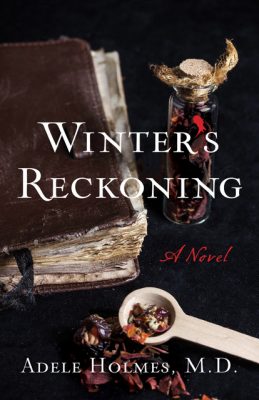
  • WINTER’s RECKONING by Adele Holmes – Southern United States Fiction, Women’s Historical Fiction,


    In Winter’s Reckoning by Adele Holmes, a mercurial new pastor in town threatens the families of two women. 

    Welcome to 1917. A time of suspenders for men and, in the cities, bloomers for women. Horse-drawn wagons range the landscape, stoves burn wood, and people have to use outdoor facilities. A time of few vaccines and no antibiotics. People understood little of most diseases. Germ theory still had ground to cover. Women routinely died in childbirth. Life could vanish in a moment. 

    In rural Jamesville, a Southern Appalachian town, Madeline Fairbanks does what she can to make the lives of friends and neighbors more comfortable. She works as the healer in this community – and has for the past quarter of a century. Madeline eases the passage into and out of life, treating aches and pains in between.

    Maddie comes from a long line of healers. Her grandmother taught her, and she’ll pass along what she knows to her granddaughter in turn. Hannah already has the inclination. The time has almost come to give her the ancestral box, which holds herbal remedy recipes and sketches and notes. That box contains all the learning from the women in their family who came before them.

    Maddie has also trained an apprentice, Renetta Morgan, who is just about ready to begin working in the community, her own community, alone.

    Maddie is white. Renetta is Black. They walk through town together, brazenly traversing from North Main (the white section of town) to South Main (the Black) and back again. Sometimes they go to tend the sick. Sometimes, to the fields and hillsides, gathering the healing flowers and roots and herbs. Other times, they work in Maddie’s cabin, creating tinctures, potions, and ointments. When Renetta learns enough, the two of them must no longer work together.

    The long-promised railroad has recently bypassed the town, spelling a slow death for the community, cut off now from the lifeline of the new transportation. With their Main Street shops shutting down, the townsfolk face hard times. In the South, rigid segregation, Jim Crow laws, black codes, and the Klan divide the community. In Jamesville, the pointy hat boys haven’t been active in recent memory, but that’s about to change. Not everyone turns a blind eye to the flagrant close fraternizing of Maddie and Ren, two uppity women who don’t seem to know their place. Tempers are fraying.

    Into this small town closing in on itself rides a lone horseman one day, who, after a brief look around, announces that he’s the new pastor. Reverend Carl Howard is the match to the powder keg.

    As the town adjusts to this new pastor in their midst, and Reverend Howard takes his measure of the place, we will watch events unfold from the vantage point of three characters, all of whom have secrets to keep. Secrets that could be their undoing.

    With the loss of the railroad, another potential casualty looms – one of education.

    The town is divided on whether to invest in secondary education or not. Currently, only the primary school offers its young charges the most rudimentary learning. Nothing to build on. With more education, Maddie thinks, real change might be possible. Greater equality between peoples, despite their gender or skin color. Greater freedom for women. Or at least a good step in that direction.

    The theme of education and what it can bring – more profound understanding, greater personal freedom and fulfillment, and economic opportunities – underlies the struggle of those for and against keeping women and Blacks “in their place.” One side looks forward to what could be; the other looks back to what has been. The balance of power always tilts in favor of those who have always held it. As the tension mounts, where words fail, violence threatens.

    When a severe winter storm hits, everyone’s lives are suspended.

    As they wait out the freeze, rationing their supplies and tearing up the porch for firewood, Maddie and Ren will come to know things about each other and themselves. And Hannah will grow up a little.

    Set in the brooding rural South, and for a good portion of the novel in the challenging and crystalline world of a deep snowstorm, Winter’s Reckoning is rich in storyline and character with plenty of mystery woven throughout. Simply put, here’s a story that takes on issues whose harm remains with us today. With a climactic pulpit scene that’s not to be missed – and one novel we can highly recommend!

    Winter’s Reckoning was a First Place Winner in the 2021 Goethe Awards.

    5 Stars! Best Book Chanticleer Book Reviews

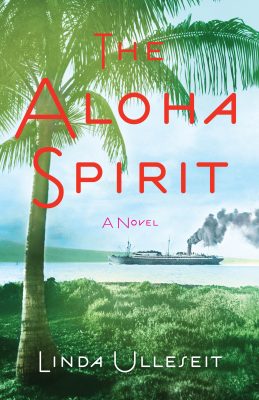
  • THE ALOHA SPIRIT by Linda Ulleseit – Hawaiian Cultural Fiction, World War II Historical Fiction, Women’s Divorce Fiction

    THE ALOHA SPIRIT by Linda Ulleseit – Hawaiian Cultural Fiction, World War II Historical Fiction, Women’s Divorce Fiction


    A blue and gold badge for the 2020 Grand Prize Winner for Goethe Post-1750s The Aloha Spirit by Linda Ulleseit

    In Linda Ulleseit’s novel The Aloha Spirit, we meet the plucky heroine, Dolores, as her father leaves her.

    “Dolores’s father deemed her useless when she was seven. Neither he nor her older brother, Pablo, ever said that, but every detail of their leaving told her so. Papa had tried to explain the Hawaiian custom of hānai to her. All she understood was the giving away, leaving her to live with a family not her own.”

    Her story starts in 1922; the place, multiethnic, multilingual Hawaii. Papa, a sugar cane cutter from Spain who worked in Hawaii, decides to take his son Pablo with him to seek his fortune in California. His wife died five years earlier. He leaves 7-year-old Dolores with a large family on Oahu in an arrangement called hānai, an informal adoption. Dolores doesn’t know the family well. She feels abandoned, with no idea when or if her father will send for her or return.

    There follow years of drudgery in which she works as an adult, laundering clothes for many people at least six days a week as part of her hānai arrangement. The hard-working couple she lives with struggles to survive. Befriended by Maria, an older hānai girl, Dolores escapes her situation when Maria leaves to marry Peter. Dolores goes to live with them, to help Maria through her pregnancy, and for a while, she gets to share their happy family and have some things of her own.

    At age 16, Dolores marries Manolo Medeiros, a boy she met on the beach and barely knows.

    She becomes part of his large, extended Portuguese family, which includes Alberto, a nephew four years younger than Dolores. She hopes the Medeiroses will be the family she always wished for. When she met him on the beach, Manolo gave his interpretation of the aloha spirit: “Aloha begins with love.”… “Love yourself first.”… “Love the land.”… “Love the people.”… “Aloha is the joyous sharing of life’s energy.”

    Dolores has her first child at age 17. But Manolo’s serious drinking problem, anger, and physical abuse of Dolores estranges him from her and the family, forcing her to take more control of her own life and protect her daughters. As Manolo’s behavior worsens, Alberto steps up to support Dolores, and they fall in love. But as part of a devout Catholic family, Dolores can’t possibly divorce Manolo.

    Novelist Ulleseit gives us a vivid picture of the life of a hard-working Hawaiian woman and her community in the early decades of the 20th century.

    Anyone interested in the history of Hawaii or in women’s history will enjoy this book. This book centers on abuse, overwork, and alcoholism as major themes, described in a matter-of-fact way. Dolores lives through interesting times, including the bombing of Pearl Harbor and the United States’ entry into the war, rationing, and the removal of Japanese Americans from Hawaii. Dolores goes to California and visits the World’s Fair, so we get to see the fair through her eyes. A glossary at the end of the book provides translations and a pronunciation guide for the many Hawaiian and Spanish words.

    Linda Ulleseit was born and raised in Saratoga, California, and taught elementary school in San José. In addition to The Aloha Spirit, she wrote Under the Almond Trees, another historical novel, which takes place in California starting in 1896. She has also written a series of Flying Horse books, young adult fantasy books set in medieval Wales. She has an MFA in writing from Lindenwood University, serves as marketing chair of Women Writing the West, and is a founding member of Paper Lantern Writers.

    Linda Ulleseit’s The Aloha Spirit won Grand Prize in the 2020 CIBA Goethe Book Awards for post-1750s Historical Novels.

    5 Star Best Book Chanticleer Reviews round silver sticker

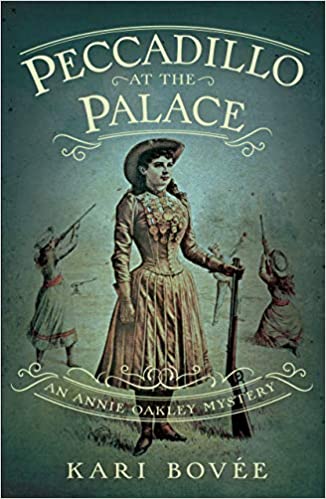
  • PECCADILLO at the PALACE: An Annie Oakley Mystery by Kari Bovée – Historical Thrillers, Women’s Historical Fiction, Biographical Fiction

    PECCADILLO at the PALACE: An Annie Oakley Mystery by Kari Bovée – Historical Thrillers, Women’s Historical Fiction, Biographical Fiction

      Kari Bovée’s Peccadillo at the Palace, the second book in the Annie Oakley Mystery series, is a historical, mystery thriller extraordinaire. Fans of both genres will thrill at Bovée’s complex plot that keeps us guessing from its action-packed beginning to the satisfying reveal at the end.

      The book opens with the Honorable Colonel Buffalo Bill Cody’s Wild West Show to England on a voyage to perform for Queen Victoria. They are not on the high seas long, when Annie’s beloved horse, Buck, jumps overboard. Her husband and the Queen’s loyal servant, Mr. Bhakta, jump in to save the horse, or was Mr. Bhakta already dead before he reached the water? Thus, begins the mystery of who killed Mr. Bhakta, leaving all to wonder, is the Queen safe?

      Someone wanted the Queen’s man dead, and he is, but was it a matter of racism, intrigue, or an accident? Annie’s search for clues points her in several directions, but is it the doctor, or the woman dressed in rags with the posh accent, or the crass American businessman and his floozy wife? All have motive.  Even Annie’s husband has motive with his Irish background and ties to the Fenians and the Irish Republican Army (IRA).

      Annie rushes through her days, trying to find clues and care for her husband who fell ill on the voyage and isn’t recovering. Is her husband’s illness seasickness, flu, or something else? Her husband forbids her to search for clues, fearing that Annie will get herself in over her head, but “Little Miss Sure shot” has no fear – as long as she’s packing her pistols.

      Annie follows her leads from the ship, the State of Nebraska, to the show’s camp at the Earl’s Court, the market, and the Queen’s court. In a sea of suspects, everyone looks guilty. But, are Annie’s hunches always right?

      This wild romp through England’s royal court is sure to thrill readers as tantalizing clues lead us astray; even as the body count rises and suspects are murdered.

      Peccadillo at the Palace by Kari Bovée is a page-turner from beginning to end, so much so, that Bovée took home the Grand Prize in the CIBA 2019 GOETHE Awards for Historical Fiction. Readers will burn the midnight oil with this one. Highly recommended.

      A marvelous, riveting whodunit with a complicated hero in Annie Oakley at the helm. A perfect read for mystery lovers and one we love. Highly recommended.


    • Thieving Forest by Martha Conway – Women’s Historical Fiction

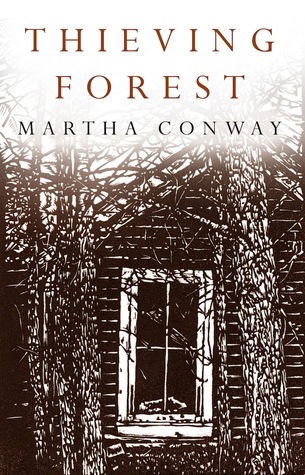
      The story is set in 1806 and follows five sisters who are on their own after the recent passing of their parents. The five are faced with the choice to remain and run the family store in the tiny settlement along the edge of Ohio’s Great Black Swamp or pull up stakes and join the youngest sister living with their aunt in Philadelphia.

      By the banks of the Great Black Swamp, one woman fights to save her sisters caught between two cultures in Martha Conway’s tale, Thieving Forest.

      The world is filled with such events that when the right author develops characters and plunges them into a real-world timeline, history comes alive. Martha Conway has succeeded in doing this in her debut novel, Thieving Forest.

      Conway turns the story up a notch early as four of the older girls are kidnapped by a band of Potawatomi Indians who raid their home. Seventeen-year-old Susanna is left behind, and though shaken deeply, quickly comes to her senses and determines to rescue her siblings.

      Trust is the theme as the story unfolds. The kidnapping is somewhat of an unexpected occurrence as the family had good relations with the natives. The issue is complex and Susanna finds herself questioning who she can trust along with the sad realization that sometimes people are not always who they claim to be. The sisters are eventually reunited, but as is true in real life, things can never be the same.

      Martha Conway paints a stunning portrait of life in the early days of the United States expansion into the West. She has done her research, and it shows as she delves into Native American tribes and the relationship they have with the European settlers.

      Detailed descriptions of day-to-day life, including the hardships experienced, are fleshed out with complex and engaging characters. A tale of self-discovery, personal growth, romance, family ties, loyalty and more in this book readers will find hard to put down.

      5 Star Best Book Chanticleer Reviews round silver sticker