Tag: Women’s Hisotrical Fiction

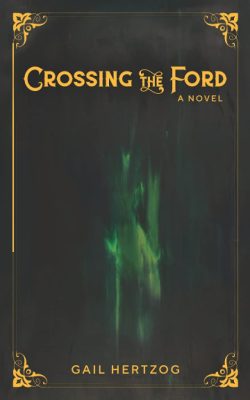
  • CROSSING The FORD by Gail Hertzog – Historical Fiction, Magical Realism, Old West


    Laramie Western Fiction 1st Place Best in Category CIBA Blue and Gold BadgeCrossing the Ford by Gail Hertzog opens in classic Western fashion: a train rolls in, carrying a stranger. Twenty-five-year-old Ruby knows, when she sees “that little lady” get off the train, that life in her rural Nevada town will never be the same.

    Until this moment, Ruby’s children and her no-good husband have claimed most of her time and energy. But she gets to know Kenna, the red-headed stranger — and finds herself irrevocably changed in the process.

    Hertzog weaves a rich tapestry of the post-Civil War West. Her characters inhabit a world that’s lush and bleak by turns, vivid with details of a landscape that shifts with the seasons, from giving to unforgiving. A thread of magical realism creeps in so subtly readers may hardly notice it at first. By the end, though, this book stands as a testament to how mystical and inscrutable the twists and turns of life can be.

    The book is punctuated with vintage-style illustrations and even recipes, which tie in nicely with the plot and help readers immerse themselves in the moment in history.

    Kenna soon introduces Ruby to new ways of looking at the world: ideals of feminine independence, the joy of luxury, and even using magic to bend life to your will.

    Kenna comes from privilege and mystique, with a Scottish Highland heritage steeped in witchcraft – a stark contrast to Ruby’s bleak past. By turns, Ruby finds Kenna intimidating, frustrating, and awe-inspiring. They strike up a close friendship as the seasons turn.

    The novel’s intrigue grows from early on, as Ruby and Kenna hold secrets from each other while holding each other dear. And then there’s Valentine: the local man that Kenna captivates, and Ruby desires from afar (and sometimes, from too close). With the addition of Ruby’s wayward, abusive husband, a tense love square emerges, and it’s not always clear what shape the characters’ lives will end up in. Even Valentine has secrets of his own.

    As Crossing the Ford progresses, everyone’s secrets start to catch up to them, while every event is tinted with Kenna’s magic and mythology.

    The mood sways from joyful to tragic and back again, from sensitive and compelling depictions of the abuse Ruby endures from her husband, to the life she builds in spite of it with Kenna and Valentine’s help.

    This story maintains a confessional quality, as Ruby speaks directly to the mysterious character introduced in the prologue, setting up a satisfying reveal at the end. Over time, Ruby goes from passive observer to active anti-heroine, working to determine her own fate (and sometimes others’ too.) Readers get a deep look at the challenges she’s faced in life, so that when she starts making choices that seem brutal, we can understand her reasons. The action slows for a bit in the middle, but it’s a brief pause, carried by a strong sense of place and Ruby’s compelling voice. You can hear her accent in every word, that of a poorly-educated woman in the rural West, set against the fine and proper language of her best friend Kenna.

    Crossing the Ford makes deft use of moral gray areas, as those areas seem to grow bigger with each page.

    At first, the narrative raises questions about good motherhood and marital loyalty, but later, ponders questions of life and death. Ruby finds herself forced to answer: Is it ever justifiable to kill? Is it ever justifiable to forgive a killer? These issues ring of truth, as Hertzog paints a clear picture of the perils and quandaries faced by folks in the harsh landscape of the post-Civil War West. In the end, it turns out that everyone has something to run from, but not everyone will escape their fate.

    This book is an excellent choice for lovers of historical fiction, complex female characters, and anything with a witchy bent. It shies away from easy answers, instead crafting a portrait of people and places whose outward beauty belies flaws, threats, and hard secrets. The ending is so tragic that it almost feels unsatisfying at first. Hertzog has given us such relatable, compelling characters that readers are left wanting more for them. Yet there’s a deeper truth to this narrative: magic may be real, but it doesn’t always work in one’s favor.

    The characters in Crossing the Ford may not get the ending they want, but they just might get the ending they deserve.

    Crossing the Ford by Gail Hertzog won 1st Place in the 2022 CIBA Goethe Awards for Late Historical Fiction, and 2022 CIBA Laramie Awards for Americana Fiction.

     

    5 Star Best Book Chanticleer Reviews round silver sticker

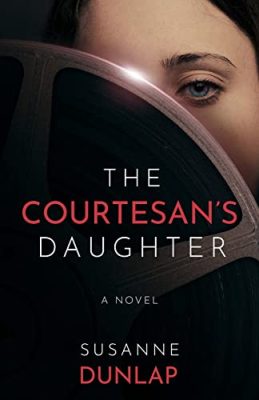
  • THE COURTESAN’S DAUGHTER by Susanne Dunlap – Historical Fiction, 20th Century, Family Life Fiction


    The Courtesan’s Daughter is a blisteringly smart novel of resilience and the pursuit of one’s dreams, the latest offering by Author Susanne Dunlap.

    The year is 1910, New York. It has been ten years since Justine, a French immigrant, fled from her home country with her daughter Sylvie to seek refuge in the United States. As a seventeen-year-old, Sylvie has passionate dreams: to be a star in the new moving pictures just like the Vitagraph girl she admires. However, her mother hopes that she will become a teacher and pull them out of their impoverished life. As Justine ekes out a living as a seamstress on the Lower East Side, Sylvie discreetly weaves a plan to follow her dreams after meeting an Italian boy, Paulo, who encourages her to follow her ambitions.

    A man from Justine’s past tries to shatter her hope for a comfortable life.

    He haunts her with threats of spilling a secret that involves her previous work as a courtesan, and the crime that forced her to flee. Justine knows that such delicate information could see her sent to prison and even tear apart the fabric of Sylvie’s life.

    When Sylvie finds out about her mother’s supposed betrayal, she runs away from home believing it is no longer safe. The glassy perfection and quiet reserve she had long held of her mother is shattered into a million pieces. Endurance, determination, and unusual pacts take center stage in Justine and Sylvie’s lives as they fight for love, which comes at a precious cost.

    Susanne Dunlap weaves an impressive duality between two different women and their journey as a family.

    Justine’s and Sylvie’s emotional odysseys become progressively aligned, bridging the past and the present. Dunlap offers a bird’s eye view of her two protagonists, showing their thoughts, emotions, and the consequences of their decisions. The book’s neat and lucid prose creates a sense of poise and shows off Dunlap’s mastery as a wordsmith.

    At turns poignant and bleak, and at other times pleasant and vibrant, The Courtesan’s Daughter is a triumph both in its construction and content.

    The author deftly presents a unique period through rich and vivid descriptions, evoking the mood and atmosphere of this time. She adds an extra repast across the pages that informs in striking ways. Powerful and imaginative, Dunlap’s work is one of optimism that reveals the fortitude of humans to stay afloat even in the starkest circumstances.

    The Courtesan’s Daughter draws readers in from the first page with its beguiling beginning. As it hurtles ahead, it holds you rapt up to the last page. Undoubtedly, this story is a tour de force from an author with absolute command of the genre.


    5 Stars! Best Book Chanticleer Book Reviews

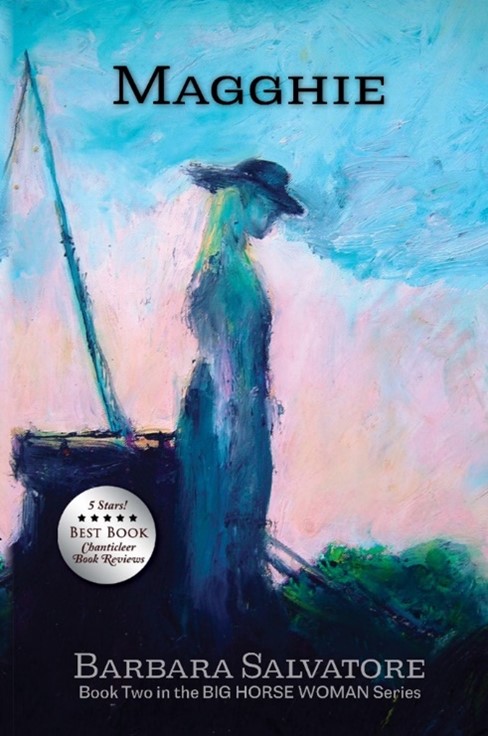
  • MAGGHIE: Big Horse Series by Barbara Salvatore – U.S. Historical Fiction, Women’s Historical Fiction, Horse Fiction


    Laramie Book AwardsAward-winning author Barbara Salvatore brings human foibles, horse traits, and herbal lore together through a young teenage girl’s eyes in her historical fiction novel, Magghie.

    Magghie Wilder has much to cope with, much to learn. She grows up as the only child of Hans and Maye, immigrants from Germany. They make a home in Pennsylvania, in the expanding United States. Hans talks too much, expounding on the simplest issues in grandiose German. He seems to have little time for listening to his curious but often distracted daughter.

    But Hans does teach Magghie how to train and handle the big draft horses needed for heavy hauling and farm work. He encourages her to drive her own team and learn the habits of each one. Maye, by contrast, dreams in quiet and calm, and from her, Magghie learns by watching. Maye understands plant lore deeply and elicits in Magghie the revelation that every green growing thing can be helpful and significant.

    The three live on a successful large farm in relative isolation. Neither religion nor socializing play a role in their routine.

    Things change when Braun, a blacksmith, and his lanky adolescent son, Karl, appear and are kept on as help with horses and farm. Magghie learns a smattering of English from the more worldly-wise visitors. Then, the somewhat chaotic but friendly incursion of a Mormon family follows. Magghie meets the husband, children, and two wives, one of which is pregnant. Maye, recalling the sorrows of losing more than one infant, helps Dora in childbirth. Magghie will watch and come to comprehend why Maye has always seemed so self-enclosed. From the Mormons, Magghie learns something else her parents had resolved never to tell her – the existence of God and the place of religion in human lives.

    Salvatore sets her scene, and the plotlines seem poised for positive outcomes. Until someone brings a life-threatening disease to the valley, creating havoc and despair.

    Salvatore’s current work includes teaching and consulting in Plant Medicine and Horse Care. Since she was thirteen, she has kept a “Dream Journal” and envisions her Big Horse series as a set of four novels, with Magghie being the second book. Her own interests shine clearly through every page of her story, which she tells in a cozy mix of prose and poetry.

    She has appended a lengthy section for her readers, offering further elucidation of the subject matter. This includes the history of Pennsylvania’s settlement, German language usages, extensive notations regarding the Percheron horses used on Wilder’s farm, and further facts about the Mormons’ epic cross-country pilgrimage.

    Salvatore’s Magghie has definite cinematic potential. The story ends with an open invitation to the sequel, promised by the author. That’s good news! 

    Magghie by Barbara Salvatore placed as a Finalist in the CIBAs Laramie Book Awards honoring Americana Fiction, and comes highly recommended!

    5 Stars! Best Book Chanticleer Book Reviews