Tag: Women in History

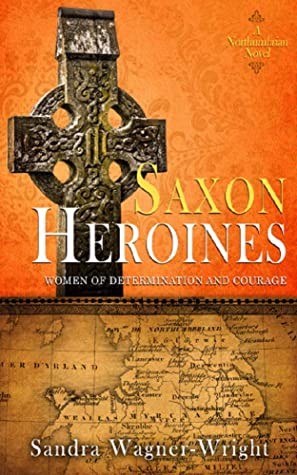
  • SAXON HEROINES: A Northumbrian Novel (Women of Determination and Courage) by Sandra Wagner-Wright – British and Irish Biographical Literature, Historical Biographical Fiction, Women in Irish History

    SAXON HEROINES: A Northumbrian Novel (Women of Determination and Courage) by Sandra Wagner-Wright – British and Irish Biographical Literature, Historical Biographical Fiction, Women in Irish History

    Sandra Wagner-Wright’s Saxon Heroines: A Northumbrian Novel is a rich history of four women many centuries ago. 

    During a time of constant shifts in power across Northumbria and what would later become England, Christianity begins taking over as the religion of choice in the region. Kings from the area renounce Woden and embrace the new faith, which gives them the divine right to rule.

    Part of a series that tells of lesser-known women in history, Saxon Heroines concerns itself with the stories of four women in seventh century Northumbria. The novel splits into three parts, each part focusing on a different woman (women) of early Saxon history. First is Ethelberga of Kent, who becomes the new Queen of Northumbria in 624 and must convert the king to Christianity. The story shifts to Ethelberga’s daughter, Enfleda, in the second part; Enfleda’s daughter, Elfleda, in the third. Throughout the book, we witness Hildeburg’s role in King Edwin’s court to her holy life as the Abbess of Streoneshalh. Each of these women lived and died long ago, but they arguably changed the world. 

    Wagner-Wright transports her readers to a much more challenging way of life. 

    With few detailed historical records of seventh-century Northumbria, Wagner-Wright does the impossible task of fleshing out the little-known stories contained in the historical record. She takes what the ancient historians have recorded about these four women and tells their stories as accurately as possible. The women were, as Wagner-Wright writes, “present but not visible,” thus, the only things recorded about them were their titles, who they married, and who their children were. With these few facts, Ethelberga, Enfleda, Elfleda, and Hildeburg have unique voices – ones that have been silent for far too many years. 

    In her author’s note, Wagner-Wright adds historical context to the story’s events and reveals what happens in the years following the last chapter. Readers will do themselves a favor by reading through the front and back matter before digging into the meat. Just as important as the story itself, these portions will aid in the overall understanding of the text. A tale like Saxon Heroines based in history needs added material for readers to reference. 

    For lovers of historical and Christian fiction (and non-fiction), Saxon Heroines: A Northumbrian Novel could be the perfect book. Set in a time in which Christianity was taking hold across the region, the women of Saxon Heroines each play a pivotal role in the making of history.  
     

  • TWO COINS: A Biographical Novel by Sandra Wagner-Wright – Biographies & Memoirs, Women in History, European History

    TWO COINS: A Biographical Novel by Sandra Wagner-Wright – Biographies & Memoirs, Women in History, European History

    Author Sandra Wagner-Wright brings to life a story rife with “politics, power struggles, and patriarchy” in her newest historical novel Two Coins.

    Mary Pigot is Lady Superintendent of the Ladies’ Association Female Mission in Calcutta, India. Born and raised in Calcutta, Mary is well acquainted with the climate, culture, and customs of the locals. Her diligence to faithfully spread God’s Word to the peoples of India while showing respect to their traditions places her in high esteem among the Ladies’ Association in Scotland.

    In walks William Hastie, the new principal of the Scottish College, ten years into Mary’s position. His mission is to “restore harmony” between the Scottish College and the Female Mission. The only problem is that his definition of “restoring harmony” has to reflect Scottish principles. William realizes from the get-go that he has significant work to do when he recognizes Mary’s relaxed and unorthodox ways. As a result, friction immediately builds between the two.

    While Mary continually contends with William’s nitpickiness, things grow from bad to worse when querulous Georgiana Smail comes on board as Mary’s assistant. Unbeknownst to Mary, Georgiana makes a detailed account of Mary’s faults and sends her findings in a report to the Ladies’ Association in Scotland. Mary returns to Scotland to defend her good name. More issues brew, this time involving her worst enemy, William Hastie. In the process of finding a solution to her ever-rising problems, the last thing she expects is to take William to court for libel.

    Award-winning author Sandra Wagner-Wright brings to life an unprecedented event of the latter half of the 19th century. Based on actual events, Two Coins grew to fruition when she got wind of the case of Pigot vs. Hastie amid her research on missionary work in India. Original sources proved Mary Pigot to be a woman ahead of her time as marked by her professional accomplishments and tenacity for upholding her rights.

    Building a plot from first and secondary sources is nothing to sneeze at, especially when details need to be presented in a way that identifies a novel as historical fiction. To Wagner-Wright’s credit is her ability not only to collect details but also breathe life into them. One of the most notable aspects of Two Coins is that it is written in present tense, which allows readers to feel as though they are experiencing a past event in real time.

    Wagner-Wright takes her story one step further by designing her narrative in the first person and then alternates it between viewpoints from Mary and William (mainly), and (periodically) James Wilson, a close associate, and friend of Mary’s. The constant shifting while following a steady timetable allows the narrative to flow freely from one chapter into the next.

    Two Coins keeps to the vernacular of the era with all of its patriarchally-laced social norms. Here the author includes a well-developed cast of primary and secondary characters that are mostly, though not exclusively, composed of historical figures. Scenes are a lively mix of engaging dialogue delicately balanced with a backset of nuances befitting British India—extreme temperatures (heat to monsoons), food, living conditions, adaptations due to climate (i.e., mosquito netting, nutshell-filled mattresses to keep away rodents), and Hindi terminology.

    Tension (sprinkled with sarcastically comedic moments) rises with the court proceedings that are intertwined with unexpected plot twists. Two Coins, with its overtones to women’s rights, is nothing less than a stellar and ageless novel.