Tag: Western Fiction

  • Short Listers for the LARAMIE 2017 Book Awards for Western, Civil War, and Prairie Fiction

    Short Listers for the LARAMIE 2017 Book Awards for Western, Civil War, and Prairie Fiction

    Western Pioneeer Civil War Fiction Award

    The Laramie Book Awards FIRST IN CATEGORY sub-genres  are: Western Romance, Adventure/Caper, Classic, Civil War, Contemporary, Western YA, Drama, & Prairie.


    The following titles will compete for the FIRST IN CATEGORY Positions and Book Awards Packages for the 2017 Laramie Book Awards.

    NOTE: This is the Official List of the Laramie 2017 SHORT LIST.

    The Finalists Authors and Titles of Works that have made it to the highly competitive Short-List (aka The Semi-Finalists) of the Laramie 2017 Book Awards are:

    • Kiki Watkins – Grasshoppers at Dusk
    • David Watts – The Guns of Pecos County
    • J.L. Oakley – Mist-chi-mus: A Novel of Captivity 
    • J.D.R. Hawkins – A Rebel Among Us
    • John Simons/David Simons – Sacrificial Lions
    • Michelle Rene – Hour Glass 
    • Jerry E. Bustin – Arizona Lawmen, Renegades, and Prickly Pear Jam
    • Nick K. Adams – Away at War: A Civil War Story of the Family Left Behind 
    • John Hansen – A Bad Place To Be
    • T.K. Conklin – Threads of Passion
    • John C. Horst – Roosevelt’s Boys
    • Michael Aloysius O’Reilly – Desertion
    • Heather Starsong – The Purest Gold 
    • Frank S. Johnson – Recapturing Lisdoonvarna
    • Bruce Wilson – Death in the Black Patch
    • Sharon Shipley – Sary’s Gold

    The 2017 Laramie Short Listers will compete for the Laramie First-In-Category Positions, which consists of Seven Judging Rounds.  First Place Category Award winners will automatically be entered into the LARAMIE GRAND PRIZE AWARD competition.  The CBR Grand Prize Genre Winners will compete for the CBR Overall Grand Prize for Best Book and its $1,000 purse.

    All Short Listers will receive high visibility along with special badges to wear during the Chanticleer Authors Conference and Awards Gala.

    As always, please do not hesitate to contact us with any questions, concerns, or suggestions at Info@ChantiReviews.com. 

    Congratulations to the Short Listers in this fiercely competitive contest! 

    Good Luck to each of you as your works compete for the Laramie Awards  First Class Category Positions. 

    The Laramie Grand Prize Winner and the Five First Place Category Position award winners along with all Short Listers in attendance will be announced at the April 21st, 2018 Chanticleer Book Awards Annual Awards Gala, which takes place at the Chanticleer Authors Conference that will be held in Bellingham, Wash. 

    Sara Dahmen awarded Laramie Grand Prize for DR. KINNEY’S HOUSEKEEPER

    We are now accepting submissions into the 2018 Laramie Book Awards writing competition. The deadline for submissions is March 31st, 2018. Please click here for more information. 

  • HEART-SCARRED by Theo Czuk – Literary Western, Coming of Age

    HEART-SCARRED by Theo Czuk – Literary Western, Coming of Age

    Author Theo Czuk provides a refreshing wave of storytelling in his award-winning literary Western debut novel, Heart-Scarred.

    Rory Casso works as a shotgun freighter with the Pinkerton Detective Agency alongside his partner, Juke Bauque, running capital (i.e., money, furs, gold) up and down the Platte for the Reynolds Savings and Loan payroll. Because bandits lay traps along the way, the partners travel separately. Rory, who lived among the Hunkpapa Indian tribe when he was a boy, uses his skill of trail scouting to keep away from the gang. Juke may be part Native American, but he isn’t familiar with indigenous skills since he was “privately tutored and socially cultured.”

    Enter Bronwyn Mason, a childhood friend of Rory’s who plans to open the first one-room school house in Rawlings. Although she hasn’t seen Rory in years, Bronwyn is relieved to meet Rory’s partner, Juke so that she can hire him to be one of her drivers to transport three wagon loads of school material. Bronwyn’s joy about establishing a school house quickly turns to sorrow when she hears that the Thompson gang murdered her father, the esteemed Marshal Isham Mason. Even though she is grief-stricken, she is determined to fulfill her mission. Bronwyn’s traveling band faces various calamities en route, especially when they get held up by Indian warriors. What she doesn’t expect is that the person who comes to the rescue is none other than Rory. Romance blooms between the childhood friends and all appears to go well until the Thompson gang catches up with them.

    Western enthusiasts in search of a refreshing take on their favorite genre have much to look forward to in Czuk’s award-winning novel. Czuk adds verisimilitude to his story by incorporating a host of realistic characters. Veering away from stereotypes, Czuk presents protagonists that mimic the educational and societal waves taking place during the mid to late 1800s.

    Czuk creates three different people from three different educational backgrounds. Rory is a white man whose comes from a dysfunctional home but finds stability living among Native Americans. Juke, who is half black and half Native American, is brought up in the cultural surroundings of Boston—the antithesis of what would traditionally come out of western tribes. Bronwyn—who learned everything she needed to know about life through her father—in many respects reflects an “Annie Oakley” figure, but much more feminine.

    There is more to the Old West than being chock-full of rough and tough characters. Much of the gruff personas came from merely surviving day to day. Czuk aptly weaves in plenty of historical information that shines a light on the differences of what life was like between the eastern and western territories. While pointing out Native American history (including connections with Ireland during the Great Potato Famine), Czuk gives attention to education, or the lack thereof, especially in the West, and thus Bronwyn’s desire to develop a one-room schoolhouse.

    Czuk offers a well-balanced mix of storytelling, history, engaging dialogue, and thought-provoking themes that go beyond the good, bad and the ugly in his novel, “Heart-Scarred.”

  • INTERVIEW with Grand Prize LARAMIE AWARD-WINNER, JACQUIE ROGERS!

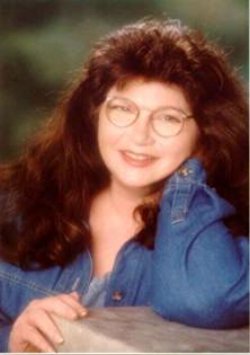
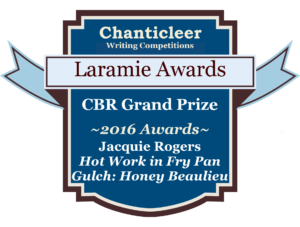
    In honor of the Laramie Awards month, we decided to interview one of our very favorite authors, Jacquie Rogers. It should come as no surprise that Jacquie won the Laramie Grand Prize in 2016 for her rip-roaring, shooting, tooting, humorous Western that features Honey Beaulieu, Man Hunter!

    Jacquie Rogers is a regular contributor for the Western Fictioneers blog. She presents at RWA conferences and workshops, Chanticleer Authors Conferences, and  Western Writers of America. Her works are known for their hilarity, adventure, mistaken identities, and romance. Rogers’ books are  a hit for anyone who has a penchant for classic Westerns and Shakespearean comedies. She lassos the genres together in a most enjoyable way making her tales a true pleasure to read. From saddles sores and thorns from the trail, to finally being able to breathe when the last binding on the corset is released, even the most die hard Western readers will be impressed with Roger’s knowledge and expertise she portrays as she takes you back in time to the Old West.
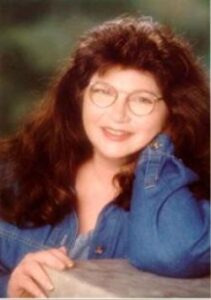
    Jacquie Rogers: Thanks for inviting me to the Chanticleer blog.  I’ve been privileged to be part of the Chanticleer family right from the get-go, so that makes it extra special for me to be here.  I had help, though—the folks at the Pickle Barrel Bar and Books on Facebook choose my questions, so here we go!

    Chanticleer: We’re so glad you have some time to spend with us. Let’s jump right in…What areas in your writing are you most confident in? What advice would you give someone who is struggling in that area?

    Rogers: Dialogue and chaos.  For dialogue, the advice is easy—listen to people talk.  Two nuances I’ve noticed is they rarely speak in complete sentences and seldom use the other person’s name.  More specifically, listen to people who are similar to your characters.  In the case of Honey Beaulieu, I draw strength from the old Missourians in our family, and mix in a little Owyhee County speak.  As for chaos scenes, the main thing to remember is that the first thing you think of is also the first thing the reader will expect, so turn left when expected to turn right.

    Chanticleer: That’s really good advice, Jacquie. How do you keep track of all the… left turns? Do you work with a storyboard? 

    Rogers: When a character turns left and it’s a better idea than what you’d planned, then it’s best to go with them.  However, that does cause a ripple effect on that particular thread, and sometimes several or all threads.  I try to veer into position so I don’t have to go back and change things, but very often that simply can’t happen.  Either way,  from the turn-left point forward, the whole plot needs to be tweaked.  I’m happy to take the fun route to the end, but I do have to know where and how the story is going to end, and all the characters need to be in the right spot for that to happen, and all (or most, in the case of a serial type series such as Honey Beaulieu – Man Hunter) threads need to be tied in a neat bow.  So it’s a matter of connecting the dots in a logical but relatively unpredictable manner that allows the reader to play along with you.  Because books are really a group activity—the interaction of characters, readers, and the author.

    Even with all that, continuity errors can and do occur.  My first line of defense is Your WorldKeeper, Diane Garland.  She has an eagle eye for continuity and can take me all the way through the thread so I can see what needs fixing  Or sometimes it can’t be fixed (e.g., in a previously published book), and we have to come up with a logical explanation for how things are in the current book.  I work with her as I’m writing, so she usually nails my hide to the wall before even the editor sees the story.

    Rogers: An author can’t keep writing unless readers buy the books—simple economics.  Books are expensive to produce.  So telling others about the author’s books is absolutely gold.  There are a variety of ways to do this, including sharing the author’s posts on social media, reviews (many advertising sites require a certain number of reviews before the author can purchase ads), and telling all your friends in real life to buy the book.  Visibility is the name of the game.  And keep reading!  Your enjoyment is a gift to me.

    Chanticleer: Thank you for mentioning the social media aspects and sharing. Very important. What are you working on now? What can we look forward to seeing next from you?

    Rogers:  My next book will be Hearts of Owyhee #6, Much Ado About Mail-Order Brides.  If you’ve read the third and fifth books of the series, you’re acquainted with the McKinnon brothers.  This book will be Bram’s book.  He’s the oldest brother and the hardest to place because he’s perfect.  Flawed heroes are much, much easier to write.  But since he’s perfect, he has to end up in an impossible situation, and I’ve definitely got him in a big to-do.  Believe me, he has a lot more help than he wants.  I’ll start writing next week and hope to have the book done by the end of the year.

    Chanti: Oh, we’ll be looking forward to that! We love it when characters get knocked around! Let’s move on to craft… It’s important to work on your craft. What do you do to grow your author chops?

    Rogers: I try new techniques.  For instance, I wrote I Heard the Brides on Christmas Day in four points of view—and it’s only a 15,000-word story.  I think I pulled it off but believe me, I won’t be doing that again!  Also, the Honey Beaulieu series is in first person point of view, and the narrative is written in Honey’s vernacular just as if she were actually speaking.  I did this because we think the way we talk, so the narrative can’t be in modern correct grammar.  My Hearts of Owyhee series is in the third person.  So I’m always switching back and forth, writing one book in first and one in third.  That gives me the opportunity to remember the strengths in each and apply them in both series.

    When I first started writing, I read a ton of craft books.  I was so hung up on the rules that I couldn’t write a word for nearly a year, so I tossed it all out and decided the only way to write is to let my hair down and go for it.  Then I heard an interview with Johnny Depp where he remarked that actors had to be brave enough to look stupid (paraphrasing).  I think that goes for writers, too.

    Chanti: We love that you were naturally brave enough to follow your gut on this one. And we love that Johnny Depp backed you up on this one… because, you know, Johnny Depp! Let’s switch gears a bit – give us your best marketing tips, what’s worked to sell more books, gain notoriety, and expand your literary footprint.
    Western Pioneeer Civil War Fiction Award

    Rogers: Depends on what year, month, time of day.  This business is changing fast.  When MySpace was king, I had a strong presence there.  I’ve never had much success on Twitter and only go there because I feel like I should.  Facebook is the place to be right now, which isn’t to say that it’ll still be popular next year.  It’s important to have a presence on social media that is personable (notice I didn’t say “personal”), where people see you and want to be your friend.  This is what marketing is all about these days—the personal touch.  Frankly, I think we’re moving on from social media to real people in the real world contact.  The pendulum is swinging back.  That’s why I put on the Silver City event every year, and try to get out as much as possible to meet my readers.

    I also think it’s important to hang out with other industry professionals—reviewers, publishers, and other authors.  Getting a Chanticleer review and entering the Chanticleer contest is great for raising the discoverability of your books.  Attend the conference and blast pictures all over social media.   The added bonus is that these conferences are lots of fun as well as informative.


    Chanticleer: Talk a little more about the Silver City event… What was that like? Who came? How did you set it up – C’mon, Jacquie! Spill the beans!

    Rogers: I enjoy getting together with my readers and fellow book lovers, and I had this bright idea that it would be fun to meet where the Hearts of Owyhee series is set, which is in Owyhee County, Idaho.  (Owyhee is pronounced oh-WYE-hee, and is the original anglicized spelling of Hawaii.)  Most of the books in the series have scenes in Silver City, and two of them are set there for most of the story.  Silver City is a treasure that few people know about.  It’s a genuine Old West town that still exists as it did in the 19thCentury.  There’s no power or telephones—although they did have telephones in the early 1880s.  The Idaho Hotel is a gem and staying there is like spending the weekend in a living museum, although it’s a soft landing because they did install flush toilets and showers.  The hotel restaurant has always been known for its fine cuisine and believe me, the current owners are living up to the historical standards.  Jerri Nelson’s pies are simply divine.

    There’s a lot more to say about the place, but I’ll go on to the event.  Keep in mind that Silver City is not a tourist town.  You won’t find staged shoot-outs or slot machines (that work).  People there live like folks did in the 1800s.  So visitors live like that, too.  What does it mean?  It means that whatever we do, we have to create ourselves.  If we want music, then we need to play it.  I can’t play anything so I enlisted the aid of fiddler Daria Paxton and her dad, Matt Paxton, who plays guitar and sings.  They’re both talented musicians and old family friends—my dad and Matt’s parents were in the same class.  Relationships were everything in the old days, and there, they still are today.

    The event in Silver City is for everyone, young and old.  In the olden days, families would come to a dance.  The musicians would play and everyone would dance, including the kids.  Then the kids would play and dance until they got tired, and the parents would put them to bed on the pile of coats while they continued to party into the night.  That’s the feeling I wanted to create at our event and we succeeded.  Wildly.  Some of us dressed in costume, others didn’t.  No one really cared because we all were there to have a rip-snortin’ good time.  Which we did.

    Poet Roberta Whittemore joined me at the book signing and that was fun.  Everyone raved about the melodrama, billed as the worst melodrama in history, which had a terrible script (I wrote it), and bad actors (except for Ichabod—he was great, and so were Curtain Rod #1 and Curtain Rod #2).  But the audience participated and had a great time.  The cool thing was that half the audience were walk-ins, not part of the event, and they loved it.  After that, we had an auction for charity.  Sherry Walker chaired the auction with Ken Walker as the auctioneer.  The gals in the kitchen soon learned not to bang pans or he’d call their bid.  We raised over $300 for the Children’s Tumor Foundation to find a cure for neurofibromatosis.

    So I’d like to invite everyone to join us next year.  The tentative date is July 20-21, 2018.  Information will be on my website at http://www.jacquierogers.com/silvercityevent.html.

    Chanticleer: What a terrific event! Thank you for letting us in on Silver City! What do you do when you’re not writing? Tells us a little about your hobbies.

    Rogers: Reading is my first love, make no mistake about it.  I was a reader long before I ever wrote a single word of fiction.  Other than that, I like rodeo, cooking (but not doing the dishes), and baseball.

    Chanticleer: Tell us more! What’s your favorite rodeo event? If we came to your house for dinner, what would you cook? and Who’s your favorite baseball team? 

    Rogers: Favorite rodeo event—well, that would be hard to pick.  Of course, I love the bull-riding but all of the events are fun to watch.  I like all the rough stock events, but then I’m amazed at the ropers, too.  And I know how hard it is to run the barrels without knocking one over.  I also look forward to the specialty acts they bring in.  At the Snake River Stampede, they had the Stampeders—a horseback drill team that performs in the dark so all you see is the lights on the horses and rides.  It’s pretty spectacular.

    If you came to my house for dinner, you’d get down home cookin’.  I cook everything from scratch—even yogurt and salad dressing.  I do buy mayonnaise, though, because we eat too much of it when I make it myself.  So what’s on the menu?  How about homemade bread bowls filled with genuine Idaho potato soup, salad with ranch dressing, and strawberry shortcake (with real shortcakes hot out of the oven) for dessert?  Or maybe you’d like Thai fried rice, spring rolls, and bok choy stir fry.  I’m willing to give just about anything a go.

    As for baseball, I’m a Mariners fan, unfortunately.  Go M’s!

    Chanticleer:  That all sounds good! What led you to write in the western humor genre?

    Rogers: Writing westerns was a simple choice—I grew up where the Old West is still alive so I didn’t have much to research.  Also, in light of the urbanization of our country and the vast change in communications, I want to do my part to keep the culture in people’s awareness.  It’s hard to explain to someone how people lived in the late 1800s without television and cell phones, and that’s why we have so much fun at the Silver City event.  We’re not connected, so we have to create our own entertainment and [gasp] actually visit with one another face to face.

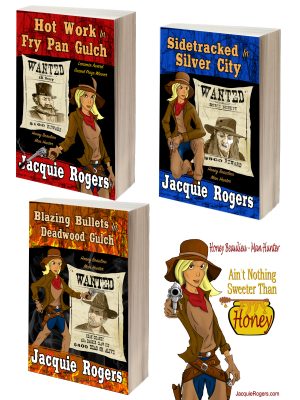
    Humor?  I don’t actually write humor.  Every time I do, no one laughs.  There’s one line in Blazing Bullets in Deadwood Gulch (Honey Beaulieu #3) that absolutely cracked me up, but not one person has laughed or even noticed it. [Update: one person finally got it!  Made my day.]

    Chanticleer: Really, no humor? Well, certainly situational, character driven humor. We love your books and love how you put your characters in situations they can’t possibly imagine! How structured are you in your writing work?
    Rogers: Horribly unstructured and unfocused.  My marbles are rattling around somewhere and they’re not even in the same room, or house, or state.  How I ever manage to finish a book is beyond me.  But when the deadline looms, I do hunker down and git ’er done.

    However, my approach to writing a novel is quite structured.  I don’t write a single word until I know the main and secondary characters inside and out.  The better I know the characters, the easier it is to throw obstacles in their way (that’s also called plotting).  I always have one scene in mind for the opener.  But I confess that the opening scene very rarely stays the opening scene.  The first scene I wrote in the Honey Beaulieu series will be in book #5.  The first scene I wrote in Much Ado About Miners is now in chapter 7.  I always start too far in, probably because I have little tolerance for backstory and I want to get on with things.

    Chanticleer: We appreciate that, Jacquie. How do you approach your writing day?

    Rogers: I always try to leave off in the middle of a scene so I don’t have to figure out what I’m going to write.  So after that scene is finished, then I check with my plot bones chart to see if I’m on track.  If not, I turn left.  Actually, I turn left a lot because sometimes things happen on the page that are too fun to throw out, so then I have to make it work with the rest of the story.  An example is Louie Lewie in Blazing Bullets in Deadwood Gulch.  He was supposed to be a throwaway character, but he kept coming into the story, so I resigned myself that he’s now part of it.  In fact, he’ll probably be in the next book, too.  So a lot of my day is thinking and while I’m thinking, the best way to come up with new ideas is to bake bread.  My extended family gets a lot of bread.

    Once everything’s figured out for the day, I fire up my laptop and use speech recognition to rough out a scene.  Believe me, “rough” is the right word considering when I said “bustier” it typed “buzzard ears.”  I end up with about 90% dialogue.  Then I send the scene to my desktop computer and edit using the keyboard.  If the scene starts out at 500 words, it’ll be 1,000 by the time I’m done adding the narrative.  A side note: I detest description and always skip it when I’m reading for pleasure, which means I have to make an extra effort to make sure I’ve created a picture for the reader.  This is by far my weakest area.

    Chanticleer: Ah, bread. Here’s the part where we wish we lived closer! The idea of using speech recognition software is pure genius – and time-saving, too. How do you come up with your ideas for a story?

    Rogers: I actually don’t know.  Usually, some phrase, prank, or predicament makes me laugh.  Then I put characters to it and voila! We have the concept for a new book.  Honey helps me out because I know that if I dig a hole big enough, she’ll keep me entertained.

    My entertainment is the determiner as to whether I use an idea or not.  If I’m entertained, then I hope the readers are, too.  But on the other hand, if I get bored writing, then you can bet that readers will also be yawning.
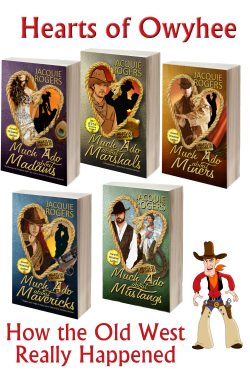
    A few of my ideas for books are identifiable, though.  In Sleight of Heart, I wanted to write a heroine who was as good at math as Aunt Grace, and I always wondered how she’d get along with Maverick.  So Lexie Campbell and Burke O’Shaughnessy were born.  The idea for Much Ado about Mustangs came from an article I read in The Owyhee Avalanche about the local theater group booking a national star to headline their local production.  Hence, we have Lady Pearl Montford and local rancher Josh McKinnon, whose heart’s desire was to raise Friesians.

    The next book I’m going to write, Hearts of Owyhee #6: Much Ado About Mail-Order Brides, came from the fact that the hero, Bram McKinnon, is perfect.  Perfect is boring.  Perfect makes for no conflict.  Unless he’s put in a situation where there’s absolutely no solution.  Bwahahaha.  Naughty me.

    As for Honey Beaulieu, what happens isn’t much of a surprise.  What’s interesting about her is the journey, so I’m always on the lookout for incidents that aren’t exactly your usual bill of fare.  Honey obliges by reacting in ways that surprise me every time.  Of course, she constantly changes the plot, too, which can get frustrating.  But I learned just to go along for the ride and let Honey take me with her.  We get along much better that way.

    Chanticleer: And what a ride! Thank you, Jacquie, for being our first interview of the year! We love what you do and love how you do it.

    Rogers: Thanks again for inviting me here today!

     

  • Sidetracked in Silver City by Jacquie Rogers – Humorous Western

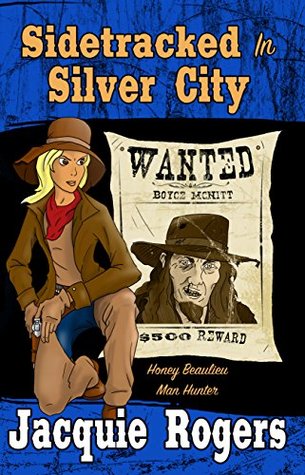
    Sidetracked in Silver City by Jacquie Rogers – Humorous Western

    Stuffed with memorable characters, including a mule named Pickles and a donkey named Sassy, our heroine Honey Beaulieu navigates the difficult path of being a female bounty hunter in the Western territories, circa mid-1879.

    As one might expect, all kinds of men get in Honey’s way, but it isn’t just Pickles who can show a stubborn streak. Jacquie Rogers’ newest release, Sidetracked in Silver City, is as full of humor and colorful western dialogue as any saddle bruising, gun-toting tale could be.

    The story begins in crisis and with a familiar sense of frustration, as Honey Beaulieu, intent on leaving town as soon as possible and catching her next bounty, is confronted with problem after problem rooting her in place. Rogers is talented in keeping the dialogue moving, even as Honey is often lost in her own thoughts or speaking to a ghost that only she can see, named Roscoe who hangs out with a with a three-legged ghost horse named Luther, naturally.

    Honey’s big heart is on every page as she strives to make enough money to buy a future for herself and others. Talking to her animal companions as if they are humans isn’t all that peculiar for Honey – especially when a racing mule, a bonnet-wearing donkey, a surprise goat, and more than one horse all seem to understand. And while carrying multiple guns and knowing darn well how to shoot them builds the tough outer layer the world sees when they look upon Honey, her aim is to never have to use them. It takes her big, handsome admirer, Sam Lancaster, to see that soft inside of her soul.

    From Silver City to Fry Pan Gulch, Honey wrestles with being in the right place at the right time, whether it’s missing the morning train or being there in time to hold her sister’s hand when she gives birth. For anyone who has ever fought the clock and lost the battle, Honey’s exasperation is palpable. We want her to “get her man” no matter what it takes, and Rogers is quite good at building the dramatic tension with the many characters that both complicate Honey’s plans and endear us to her in this wild, wild west she calls home.

    5 Star Best Book Chanticleer Reviews round silver sticker

  • Thieving Forest by Martha Conway – Women’s Historical Fiction

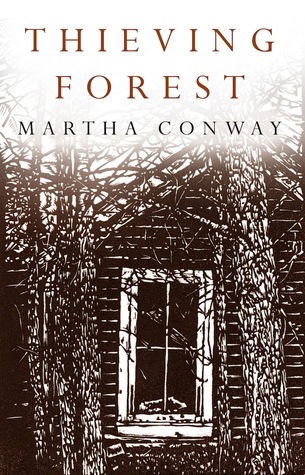
    The story is set in 1806 and follows five sisters who are on their own after the recent passing of their parents. The five are faced with the choice to remain and run the family store in the tiny settlement along the edge of Ohio’s Great Black Swamp or pull up stakes and join the youngest sister living with their aunt in Philadelphia.

    By the banks of the Great Black Swamp, one woman fights to save her sisters caught between two cultures in Martha Conway’s tale, Thieving Forest.

    The world is filled with such events that when the right author develops characters and plunges them into a real-world timeline, history comes alive. Martha Conway has succeeded in doing this in her debut novel, Thieving Forest.

    Conway turns the story up a notch early as four of the older girls are kidnapped by a band of Potawatomi Indians who raid their home. Seventeen-year-old Susanna is left behind, and though shaken deeply, quickly comes to her senses and determines to rescue her siblings.

    Trust is the theme as the story unfolds. The kidnapping is somewhat of an unexpected occurrence as the family had good relations with the natives. The issue is complex and Susanna finds herself questioning who she can trust along with the sad realization that sometimes people are not always who they claim to be. The sisters are eventually reunited, but as is true in real life, things can never be the same.

    Martha Conway paints a stunning portrait of life in the early days of the United States expansion into the West. She has done her research, and it shows as she delves into Native American tribes and the relationship they have with the European settlers.

    Detailed descriptions of day-to-day life, including the hardships experienced, are fleshed out with complex and engaging characters. A tale of self-discovery, personal growth, romance, family ties, loyalty and more in this book readers will find hard to put down.

    5 Star Best Book Chanticleer Reviews round silver sticker

  • Western Fiction SHORT LIST for the 2016 LARAMIE AWARDS

    Western Fiction SHORT LIST for the 2016 LARAMIE AWARDS

    Western Pioneeer Civil War Fiction AwardThe LARAMIE Awards Writing Competition recognizes emerging new talent and outstanding works in the genres of  Western Fiction, Prairie & Pioneer Fiction, and Civil War Fiction. The Laramie Awards is a division of Chanticleer International Novel Writing Competitions.
    More than $30,000.00 dollars worth of cash and prizes will be awarded to Chanticleer Book Reviews 2016 writing competition winners at the Chanticleer Authors Conference April 1, 2017!

    The Laramie Awards FIRST IN CATEGORY sub-genres  are:

    • Western Romance
    • Adventure/Caper
    • Classic
    • Civil War/Prairie/Pioneer
    • Contemporary Western
    • Western Young Adult

    This is the OFFICIAL LIST of Semi-Finalists Authors and their  Titles of Works that have made it to the SHORT LIST for Laramie 2016 Novel Writing Contest.

    The following titles will compete for the 2016 Laramie First Place Category Positions:

    • T.M. Hinton – The Judas Steer
    • Dorothy Wiley – Frontier Gift of Love
    • Jacquie Rogers – Hot Work in Fry Pan Gulch (Honey Beaulieu – Man Hunter #1)
    • Sara Dahmen – Becoming Doctor Kinney
    • Barbara Salvatore – Big Horse Woman
    • Scott Eldon Swapp – Clevenger Gold: The True Story of Murder and Unfound Treasure
    • Harlan Hague – A Place for Mei Lin
    • Ken Farmer & Buck Stienke – Bass and the Lady
    • David Selcer – Lincoln’s Hat
    • Ashley E Sweeney – Eliza Waite
    • Jared McVay – Stranger On A Black Stallion
    • Jeffrey Price – Improbable Fortunes
    • Lynda J Cox – Seize the Flame
    • Ronald E. Yates – Finding Billy Battles
    • Miantae Metcalf McConnell – Deliverance, Mary Fields, First African American Woman Star Route Mail Carrier in the United State
    • Julia Robb – The Captive Boy
    • Juliette Douglas – Perfume, Powder, and Lead: Holy Sisters
    • Bert Entwistle – The Taylor Legacy
    • David G. Rasmussen – The Man Who Moiled for Gold

    The Laramie Semi-Finalists will compete for the First In Category Positions. First Place Category Book Award winners will automatically be entered into the Laramie GRAND PRIZE AWARD competition, which has a cash prize of $200 dollars. The CBR Grand Prize Genre Winners will compete for the CBR Overall Grand Prize for Best Book and its $1,000 purse.   

    • All Short Listers will receive high visibility along with special badges to wear during the Chanticleer Authors Conference and Awards Gala.

    As always, please do not hesitate to contact us with any questions, concerns, or suggestions at Info@ChantiReviews.com. 

    Congratulations to the Finalists in this fiercely competitive contest! 

    Good Luck to all of the Laramie Semi-Finalists as they compete for the coveted First Place Category  positions.

    The Laramie Grand Prize Winner and the First Place Category winners will be announced and recognized at the April 1, 2017 Chanticleer Writing Contests Annual Awards Gala, which takes place on the last evening of the Chanticleer Authors Conference that will be held in Bellingham, Wash. 

    We are now accepting submissions into the 2017 Laramie Awards writing competitions for Western Fiction. Please click here for more information or to enter the contests.

  • Robbing the Pillars by Kalen Vaughan Johnson – Historical Fiction

    Robbing the Pillars by Kalen Vaughan Johnson – Historical Fiction

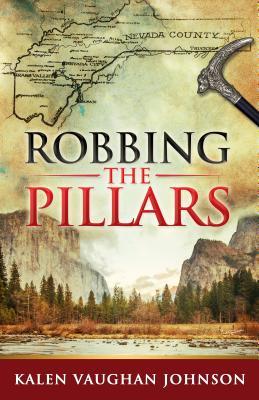
    When James MacLaren flees his native Scotland, he leaves a body behind – but not his hatred of the upper class. In England, he meets and weds Emma, but will the skeletons in their shared past remain silent?

    Robbing the Pillars crosses the Atlantic and lands in Nevada City, California at the beginning of the Gold Rush, amidst the discovery of seemingly endless supplies of the precious mineral. James and Emma, now with their young daughter Charlotte, come out to California by wagon train accompanied by Emma’s best friend, Althea and her son Justin.

    Along the way and upon arrival in the region, they meet friends and ruffians including an entrepreneurial chancer with a conscience, an inveterate loser with a taste for alcohol and his eye fixed on Althea, and a Mexican who finds that MacLaren is the first white man he can trust.

    MacLaren involves himself in mining, engineering, and homesteading while Emma and Althea get a taste of town life and community activism. Their children meanwhile are growing up with a sense of true freedom that their European-born parents could never have known. In pursuit of his personal quest, Justin will come up against Althea’s past; and the beautiful, willful Charlotte and her father must learn to live with the pangs of lost love.

    Meanwhile, the territory is changing rapidly. Big men with big ideas are taking an interest in the fate of the new state and move to monopolize its resources. Into this mix, author Vaughan Johnson has expertly interwoven both fictional characters and real “empire barons” such as Leland Stanford, Collis Huntington, and Mark Hopkins into her epic tale.

    This first part of a planned series ends with the rumbling of war that splits the nation and brings about a sad parting that begs for a reunion in a later volume.

    Author Kalen Vaughan Johnson has created a large canvas; her knowledge of the region – its history, the mix of cultures, the lilt of varied accents, even the cuisine – highlights her obvious talent for creating richly detailed historical fiction. The title, for example, references an arcane aspect of mining in which, as the miners retreat from a played out vein, they risk dislodging the roof pillars as they go, endangering their lives by ferreting out every last flake of gold. Johnson depicts with equal verve and realism the lives of the rich, the wannabes, and those at the bottom struggling upward.

    A sweeping look at personal idealism and autonomy pitted against the forces of greed and manipulation, Robbing the Pillars is an emotive family saga solidly rooted in the American dream.

    5 Star Best Book Chanticleer Reviews round silver sticker


  • Uzumati: The Tale of the Yosemite by Edmond G. Addeo – Historical Fiction

    Uzumati: The Tale of the Yosemite by Edmond G. Addeo – Historical Fiction

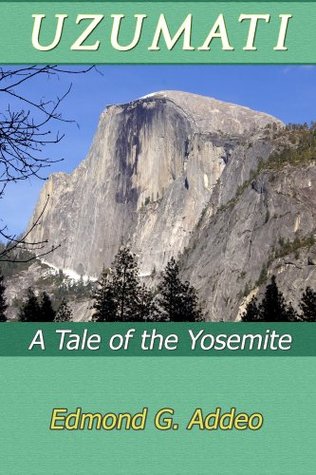
    Three thousand years of epic historical reach, Edmond G. Addeo presents Uzumati: A Tale of the Yosemite, an exceptionally well-crafted novel. The author’s enthusiasm and deep love for his subject matter pay off in a big way.

    Edmund G. Addeo is a master storyteller, talented in weaving historical figures with fictional and displaying the vast stage of the Yosemite Valley for all to enjoy. Readers will be both captivated and entertained by this fascinating story brimming with memorable characters.

    Uzumati is the name given by the Indians 1,200 years ago to the area commonly known as the Yosemite Valley. The book details how the valley was discovered by the Native Americans and then re-discovered by white settlers in the 19th century. This valley, striking in its beauty, proved to be a safe and plentiful site for those fortunate enough to find it and settle there.

    Although Addeo’s story focuses on a time period spanning 3,000 years, his skill as a storyteller is evident. Uzumati is both engaging and easy to read, especially when one considers the amount of time and work invested into bringing this story to print. Addeo spent 50 years researching animals, plants, Native American oral history, and news reports from the later years of the era to ensure the story’s accuracy.

    The book focuses on Choluk, “the discoverer” and his family tree which includes Chief Tenaya who plays an important role. Another memorable player is Major Jim Savage, of the US Army. As the story reaches its climactic conclusion, both Tenaya and Savage are well aware that tensions between the Native American inhabitants and the settlers will likely end in conflict. Readers will find it a struggle to choose a side, and in the end, witness a breathtaking conclusion of betrayal and political treachery.

    Heartbreaking and beautiful, Uzumati: The Tale of the Yosemite is a novel any reader will find hard to put down.

  • WALLS for the WIND by Alethea Williams – The Orphan Trains of Hell on Wheels

    WALLS for the WIND by Alethea Williams – The Orphan Trains of Hell on Wheels

    A poignant tale set in the post-Civil War era of the United States in the rough-and-tumble boomtowns that follow the transcontinental railway as it was being built. The author focuses heavily on the often-forgotten plight of orphaned and immigrant children from the crowded cities of the East where they disembarked from the “coffin ships.” Many were packed on “orphan trains” heading west. The book leads off in New York City and eventually heads to Dakota Territory as readers learn about the plight of these orphans.

    Several children’s welfare movements began to deal with the thousands of homeless children of indentured servants and impoverished immigrants. One of these programs was a welfare program that transported orphaned and homeless children from the highly populated Eastern cities and placed them in foster homes located throughout the rural Midwest. These trains operated from 1854 to 1929 and relocated some 200,000 orphaned, abandoned or homeless children. Their plight is the core of Alethea Williams’ historical fiction titled Walls for the Wind.

    Kit Calhoun’s character, the protagonist, was created to portray one youngster among the estimated 34,000 children roaming the streets of New York City, enmeshed in despair and hopelessness in the 1850s. Kit eventually finds herself in the care of the influential Reverend Howe, founder, and director of the Immigrant Children’s Asylum. Kit is fortunate as she is given education and training as a young ward. As time passes and Kit grows older, she takes a job as assistant to the elderly director, Rev. Howe. Having felt the genuine love and care from a person to redirect the course of her own life, Kit passionately goes about the task of rescuing other homeless children.

    Kit finds the work empowering and important, but she also faces an inner struggle at times that the author, Alethea Williams, expertly develops. The author is adept at weaving historical fact, vivid descriptions of the times, and an engrossing plot-line through a young woman’s perspective in this male dominated time.

    The pace of the novel picks up when Kit heads west on an orphan train to help place children with farm families on the frontier. Obviously, Kit would like to see the children adopted by loving parents, but what she quickly discovers is the families the children are being placed with, treat the children as little more than indentured servants who are forced to pay for their room and board as farmhands and laborers with little nurturing or no time for education.

    Not being able to accept this fate for four particular children, Kit decides to adopt them herself when the Orphan Train reaches its destination in Colorado.

    Though her actions are noble, supporting her newly adopted children is a struggle. They live out of a tent and Kit must take in laundry to earn money. But it’s never enough. To make matters worse, she is assaulted by a gambler. At this point, Kit has total disdain for men as she has come to the belief that all men are users and want women for only one thing. When she finally encounters a man that breaks this mold she openly struggles with trust issues.

    A vivid and multi-layered take on the turbulent post-Civil War times that examines with wide open eyes the Wild West environs and the human cost of the “Manifest Destiny” that lead to Transcontinental railway and the U.S. expansion west.

    Author Alethea Williams’ characters portray the difficulties and challenges of these hard scrabble times with a refreshing perspective from a young woman who is trying to make her way. The closing chapters of this powerful tale play out this struggle in breathtaking fashion. An enlightening and informative read of the United States’ not so distant past.


  • DOCTOR KINNEY’S HOUSEKEEPER by Sara Dahmen — The LARAMIE Grand Prize winner – captivating and heartwarming

    DOCTOR KINNEY’S HOUSEKEEPER by Sara Dahmen — The LARAMIE Grand Prize winner – captivating and heartwarming

    A timeless and heartwarming romantic historical fiction amidst a dramatically painted panorama of pioneer life in America’s heartland.

    Recently widowed, easterner Jane Weber hopes for a secure, quiet position as a housekeeper to a physician in the newly forming Dakota Territory, never imagining the many turns that life has in store for her.

    Dr. Patrick Kinney welcomes Jane’s application because she did simple nursing chores during her late husband’s illness. Arriving in Flats Junction she is met by the auburn-haired doctor, the independent and rather acerbic general store proprietress Kate, and an enigmatic Sioux landlady, Widow Hawks.

    Each evening when she leaves the doctor’s house after their companionable supper, a cowboy named Bern walks her to Widow Hawk’s strange dwelling. To the doctor’s delight, Jane displays talents as a cook, gardener, and secretary. But, still depressed after a dutiful marriage and sudden widowhood, she cannot fathom that the Doctor would show an interest in her as a woman, believing instead that he is courting Kate.

    Soon she begins to perceive some fault lines in the pleasant exterior of Flats Junction, notably the violent prejudice of some people, including Bern, against Native Americans like her newfound confidante, Widow Hawks. And soon, too, Jane will have to reveal that she is pregnant with a child conceived shortly before the death of her husband.

    After a series of traumatic events force Jane to acknowledge her strong feelings for Patrick, she resolves to leave Flats Junction and start her life over yet again. But she doesn’t reckon on the good doctor’s equally strong feelings or the lengths he will go to in winning her over.

    Author Sara Dahmen has clearly researched the era, vernacular and settings of her richly complex story. She brings into focus the joys and deprivations of life on the American frontier, the rigid proprieties that pertained in relations between the sexes, and the cutting edge of racial hatred that rankled towards the local displaced and marginalized American Indians.

    She sheds light on fascinating small details of everyday life in 1881—cookery, clothing and medical care. Dahmen also conveys a keen awareness of the sometimes desperate needs of a woman’s heart, as her heroine wavers between her unexpected passion for Patrick and the possibility of a respectable, but unexciting, match with someone else.

    Captivating and vividly portrayed, “Doctor Kinney’s Housekeeper, ” is a delightful read that is refreshing and original as it is entertaining.