The Goethe Book Awards recognize emerging new talent and outstanding works in post-1750s Historical Fiction. The Goethe Book Awards is a division of the Chanticleer International Book Awards (The CIBAs).
The Goethe Book Awards competition is named for Johann Wolfgang von Goethe who was born at the dawn of the new era of enlightenment on August 28, 1749.
Chanticleer International Book Awards is looking for the best books featuring Late Period Historical Fiction. Regency, Victorian, 18th Century, 19th Century, 20th Century, World and other wars before the 20th century, history of non-western cultures, set after the 1750s, we will put them to the test and choose the best among them.
The other three Historical Fiction Genres are the Laramie Awards for Americana Fiction, the Chaucer Awards for Early Historical Fiction, and the Hemingway Awards for 20th c. Wartime Fiction.
The 2021 GOETHE Book Awards First Place Category Winners and the GOETHE Grand Prize Winner were announced by David Beaumier on Saturday, June 25, 2022 at the Hotel Bellwether and broadcast via ZOOM webinar.
This is the OFFICIAL 2021 LIST of the GOETHE BOOK AWARDS First Place Category Winners and the GOETHE Grand Prize Winner.
Join us in celebrating the following authors and their works in the 2021 CIBAs.
Ron Singerton – The Refused
Drema Drudge – Victorine
Lee Hutch – Molly’s Song
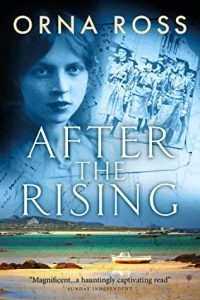
Orna Ross – After the Rising
Adele Holmes, M.D. – Winter’s Reckoning
Mike Jordan – The Freedom Song
Michelle Rene – Maud’s Circus
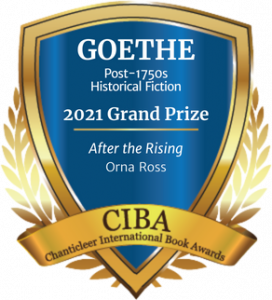
The Grand Prize Winner for the CIBA 2021 GOETHE Awards is:
After the Rising by Orna Ross
PROMOTING OUR AUTHORS
Attn CIBA Winners: More goodies and prizes will be coming your way along with promotion in our magazine, website, and advertisements in Chanticleer Int’l Book Awards long-tail marketing strategy. Welcome to the CIBA Hall of Fame for Award Winners!
This post has been posted on the Chanticleer Facebook Page. We try to tag all authors listed here in the Facebook post. However, for Facebookto allow us to tag an author, that author must LIKE our page and Follow Chanticleer Reviews.
Additionally, we also post on Twitter. Chanticleer Twitter’s handle is @ChantiReviews
Or click here to go directly to Chanticleer’s Twitter feed.
The 2022 GOETHE Book Awards winners will be announced at CAC23 on April 29, 2023. Save the date for CAC23, scheduled April 27-30, 2023, our 10 year Conference Anniversary!
Submissions for the 2022 GOETHE Book Awards are open until the end of July. Enter here!
A Note to ALL the WINNERS: The coveted CIBA Blue Ribbons will be mailed out starting in August. We will contact you with an email to verify your mailing address and other items. We thank you for participating in the 2021 Chanticleer International Book Awards!
The Goethe Book Awards recognize emerging new talent and outstanding works in post-1750s Historical Fiction. The Goethe Book Awards is a division of the Chanticleer International Book Awards (The CIBAs).
The Goethe Book Awards competition is named for Johann Wolfgang von Goethe who was born at the dawn of the new era of enlightenment on August 28, 1749.
Chanticleer International Book Awards is looking for the best books featuring Late Period Historical Fiction. Regency, Victorian, 18th Century, 19th Century, 20th Century, World and other wars before the 20th century, history of non-western cultures, set after the 1750s, we will put them to the test and choose the best among them. For 20th century Wartime Fiction, see our new Hemingway Awards here.
These titles have moved forward in the judging rounds from all 2021 Goethe Late Historical Fiction Semi-Finalists to the 2021 Goethe Book Awards Finalists.All FINALISTS will be announced and recognized at the Chanticleer Authors Conference (CAC22).
The First Place Category Winners, along with the CIBA Division Grand Prize winners, will be selected from the 24 CIBA divisions’ Finalists.
We will announce the 1st Place Category winners and Grand Prize Division Winners at the CIBAs Banquet and Ceremony on Saturday, June 25th, 2022 at the luxurious Hotel Bellwether in Bellingham, Wash. sponsored by the 2022 Chanticleer Authors Conference.
These titles are the Finalists of the 2021 Goethe Book Awards novel competition for Post-1750s Historical Fiction!
Join us in cheering on the following authors and their works in the 2021 CIBAs.
Andrew Schafer, M.D. –Unclean Hands
Margaret Rodenberg –Finding Napoleon: A Novel
Margaret Porter –The Limits of Limelight
Paula Butterfield –The Goddesses of Tenth Street
Adele Holmes, M.D. –Winter’s Reckoning
Tammy Pasterick –Beneath the Veil of Smoke and Ash
Ron Singerton –The Refused
Alice McVeigh –Susan: A Jane Austen Prequel
Jodi Lea Stewart –Triumph, a Novel of the Human Spirit
Drema Drudge –Victorine
Lorelei Brush –Chasing the American Dream
Lee Hutch –Molly’s Song
Orna Ross –After the Rising
Glen Craney –The Cotillion Brigade: A Novel of the Civil War and the Most Famous Female Militia in American History
Pamela Hamilton –Lady Be Good
Lori McMullen –Among the Beautiful Beasts
Mike Jordan –The Freedom Song
Florence Reiss Kraut –How to Make a Life: a novel
Kathleen Williams Renk –Vindicated: A Novel of Mary Shelley
Michelle Rene –Maud’s Circus
Good Luck to All in the next rounds that will determine the which titles advance to the FINALISTS Level.
A few entries have been moved to the 2021 Laramie Book Awards as per judges recommendations for Americana, Prairie, and Western literature division.
MORE PROMOTION!
This post has been posted on the Chanticleer Facebook Page. We try to tag all authors listed here in the FB post. However, for FB to allow us to tag an author, that author must LIKE our page and Follow Chanticleer Reviews. FB rules — not ours.
We are now accepting submissions into the 2022 Goethe Book Awards for Post-1750s Historical Fiction. The 2022 CIBA winners will be announced at CAC 2023.
FLEXIBLE REGISTRATIONS ARE AVAILABLE for these challenging times.
Seating is Limited. The esteemed WRITER Magazine (founded in 1887) has repeatedly recognized the Chanticleer Authors Conference as one of the best conferences to attend and participate in for North America.
Hello Chanticleerians and we hope you are enjoying your Three Day Weekend for Labor Day!
For many of us who write, it’s a full time job on top of the day job we already have. And, as writing is a full time business, we deserve a little recognition for all the work we put in on top of any other labor we already do. Let’s look at the history of Labor Day and some stories that remind us how far we’ve come, and others that show us possibly how far we may be able to go!
First off, while Grover Cleveland officially signed Labor Day into law in 1894, people aren’t sure if it was Peter McGuire or Matthew Maguire, the cofounder of the American Federation of Labor and a secretary of the Central Labor Union respectively, who actually began the holiday. While there are more Maguires there than in the new Spiderman movie, there is no confusion on why Labor Day started. You can learn more from the Department of Labor here.
While Tobey Maguire was a great Spiderman, that’s not who were talking about here.
Labor Day is a celebration of the achievements, both social and economic, of workers in the United States. The holiday recognizes the contributions these workers make to the nation’s prosperity and well-being. Now, more than ever, it’s clear that our essential workers deserve recognition, celebration, and a thriving wage.
In describing the need for Labor Day, History.com says:
People of all ages, particularly the very poor and recent immigrants, often faced extremely unsafe working conditions, with insufficient access to fresh air, sanitary facilities and breaks.
Remembering Labor Day is a great way to remind ourselves that conditions can always be better for workers across the board.
The Ferengi Rom facing down his brother Quark and forming a union in Star Trek: Deep Space Nine’s episode “Bar Association”
When we think of the history of labor in this country, ways people can make a difference right now, and where we might be going, there’s a whole world of books that opens up to us! Here are just a few that we recommend!
Working Fiction
Infants of the Brush By A.M. Watson
A little boy is sold into an apprenticeship as a chimney sweep in eighteenth-century London, and soon learns the horrors of that profession.
Six-year-old Egan lost his father from an accident at sea, and now, may lose his little sister from illness. The only way his penniless mother can save her daughter is to sell Egan into an apprenticeship in order to purchase medicine. As a small boy, he will make an ideal “broomer;” a businessman named Armory gladly takes Egan into the fold. Under Armory’s absolute dictatorship he will sleep with other wretched boys on soot sacks, eat gruel, get bloody beatings for the slightest infraction, and risk his life almost daily.
The Selah Branch By Ted Neill
First Place Winner in Cygnus Awards
The Selah Branchcombines two surprising stories into one enthralling whole.
It begins with a ripped from the headlines feel, diving deeply into issues of race, class, poverty, and hopelessness in Selah Branch, WV. A town whose brighter future of uplift, integration, opportunity, and prosperity was wiped out one summer night in 1953 when a chemical explosion destroyed the promising university town and replaced it with a hazardous waste site. Like Chernobyl, only with a smaller footprint and chemical residue substituting for nuclear waste. But just as deadly.
The story views Selah Branch through the eyes of Kenia Dezy, an African-American public health student on a summer practicum. She’s to determine if a simple app can steer people towards healthier food choices and better health outcomes in a town empty of jobs, filled with poverty and hopelessness, marooned in the middle of a food desert.
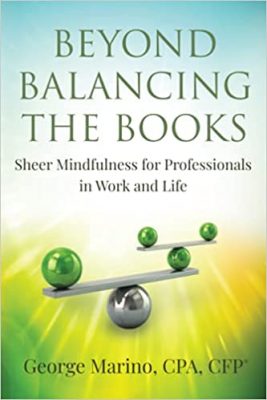
Beyond Balancing the Books By George Marino, CPA, CFP
George Marino, a practicing CPA and Mindfulness Coach, explores the possibilities for sustainable positivity in one’s work-life through mindfulness principles and practices in his new book,Beyond Balancing the Books: Sheer Mindfulness for Professionals in Work and Life.
It would be difficult to find a profession more fraught with detail, deadlines, and distress than a typical CPA. Applying to that particular realm the idea of mindful meditation is a challenge that author Marino has taken on because it is a process he has lived. He opens his book by comparing two CPAs and their approaches to life and work-life.
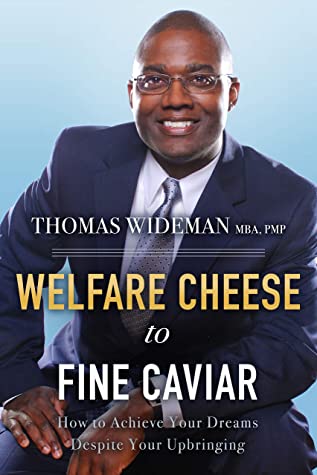
Thomas Wideman, the author of this dynamic self-help manual,Welfare Cheese to Fine Caviar: How to Achieve Your Dreams Despite Your Upbringing, rose from poverty and dismay to a life of security and personal achievement through techniques he shares with readers who can incorporate them into their own life plans.
Wideman came from an impoverished African American family wracked by confusion, chaos, and, at times, criminality. His mother had three sons by three fathers, and he would come to know his own father only peripherally, eventually learning that the man murdered people and subsequently died in prison. The boy grew up in tough neighborhoods and ate “welfare cheese” (a block of pre-sliced heavy American cheese that supposedly melted well). Every month, making ends meet became more and more difficult. In an early chapter of this finely woven chronology, we see him taking food from trains parked along the railroad tracks and running from the authorities. In this, as in each new chapter, he speaks of confronting severe issues and finding ways to resolve them. In the case of the theft and other childhood incidents of fighting, experiencing bullies, and battling racism, he speaks of making up his mind that “my circumstances need not be my limitation.”
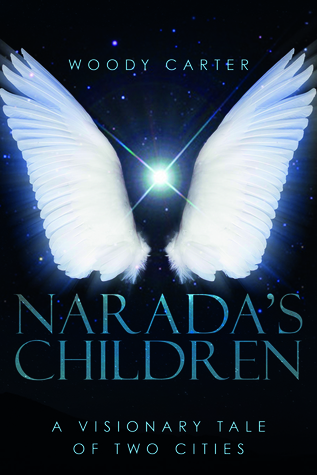
A colorful fable resonates with contrasting modalities of mysticism and social action, exploring how culture and religion can separate us or bind us together.
Narada is a traveler and a stranger when he first meets the lovely Hohete and her people in the ancient city of Ja’Usu. Given water, food, and shelter by Hohete’s family, Narada is sharply questioned by village elders who are stymied by his forthright statement that he is a representative of a deity named The Great Mystery. So they conspire to remake him as a storyteller, to reduce his power and profit from his talent for spinning yarns by selling refreshments to his audience.
Have a great story about workers and overcoming adversity?
When you’re ready,did you know that Chanticleer offers editorial services?We do and have been doing so since 2011.
Our professional editors are top-notch and are experts in the Chicago Manual of Style. They have and are working for the top publishing houses (TOR, McMillian, Thomas Mercer, Penguin Random House, Simon Schuster, etc.).
If you would like more information, we invite you to email Kiffer or Sharon at KBrown@ChantiReviews.com or SAnderson@ChantiReviews.com for more information, testimonials, and fees.
We work with a small number of exclusive clients who want to collaborate with our team of top-editors on an on-going basis.Contact us today!
Chanticleer Editorial Services also offers writing craft sessions and masterclasses. Sign up to find out where, when, and how sessions being held.
A great way to get started is with our manuscript evaluation service, with more information availablehere.
And we do editorial consultations for $75. Learn morehere.
If you’re confident in your book, consider submitting it for a Editorial Book Reviewhereor to one of our Chanticleer International Awardshere.
Also remember! Our 10th Anniversary Chanticleer Authors Conference (CAC22) will be April 7-10, 2022, where our 2021 CIBA winners will be announced. CAC22 and the CIBA Ceremonies will be hosted at the Hotel Bellwether in Beautiful Bellingham, Wash. See the latest updates here!
“Return now to those thrilling days of yesteryear,” may sound familiar. It’s the opening for the radio version of The Lone Ranger.
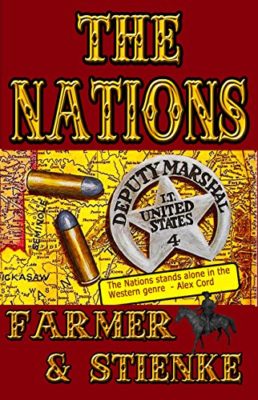
It’s also an appropriate introduction to The Nations by Ken Farmer and Buck Steinke and not just because the dialog will ring in the reader’s ear as very reminiscent of plenty of classic TV and movie Westerns. But also, because the hero of The Nations, Deputy U.S. Marshal Bass Reeves, may have been the inspiration for the Lone Ranger himself.
Reeves, born in slavery, was the first black Deputy U.S. Marshal west of the Mississippi. He was also one of the most successful Deputy Marshals of his own or any subsequent era, arresting over 3,000 felons during his long career, but was never wounded by any of the desperate criminals he brought to justice.
But this story, the first in a 10-book series – at least so far – fictionalizes Reeves’ exploits into something that will be savored by readers looking for the kind of story that Louis L’Amour, Zane Grey and Elmer Kelton used to write – and that William Johnstone still does.
This adventure pits Reeves and his partner, Deputy U.S. Marshal Jack McGann, against a gang of outlaws known as the Larson Brothers’ gang after its leaders Wesley and Ben Larson. The brothers typify different stereotypes of outlaws, with Wesley as the leader and voice of reason who is in it for the money, while his younger brother Ben is a killer because that seems to be how he gets his kicks.
The story begins with Wesley and the gang rescuing Ben from the clutches of the law after Ben gets himself captured – yet again – by being overconfident and disobeying his brother’s orders.
That escape begins a cat and mouse game between Reeves and McGann and the Larson gang, as Ben is captured again, his brother helps him escape, and the lawmen become even more determined to bring them in.
The Nations reads like a classic western tale of the school of Louis L’Amour and Zane Grey. The lawmen are always on the side of angels, and the outlaws are forever threatening the towns, laws, and lawmen. There’s no question about which side represents the “good guys.”
And there’s no question that compassionate, professional Reeves is the star of this story. What makes this story shine – is Reeves truly was as good a lawman as the story makes him out to be, a good tracker, an excellent marksman, good at disguises, kind but fair to those he captured – and always riding a white stallion. If any of the above sounds familiar, it’s all part of the reason that some believe Reeves was the inspiration for The Lone Ranger.
The Nations, and the entire series that follows it, will be loved by readers of those classic westerns and is recommended for that audience.
Simultaneously, there are welcome differences from the typical stories of those “thrilling days of yesteryear.” Bass Reeves is the hero of this otherwise classic western who hands out evenhanded treatment of all the characters despite the color of their skin.
Even the female characters are a bit more well-rounded than is usual for the genre, again on both sides of the law. But this story still centers on the male characters – who spend more time with their horses than they do with the women in their lives.
This story’s grounding is in real history, not just in the characters of Reeves and McGann, but also in the background character of “Hanging Judge” Isaac Parker, who sent the Marshals out to retrieve criminals to be tried and frequently executed. That portrait of life in the American West in its heyday will appeal to readers who are fascinated with that period – and they are legion.
The Nations won First Place in the CIBA 2014 Laramie Awards for American Western Fiction.
Set in the chaotic era of the American Civil War, Lincoln’s Hat provides an intelligent look at the many streams of thought that make up our political framework today, and how they may clash in times of upheaval.
Harlan Pomeroy is a young Kentuckian setting off for college in 1855 when he encounters Sally Hairston, a free black girl who will later bear him a child. Pomeroy never forgets her. He will use his education to become a journalist, joining a political movement known as the “Know- Nothings,” a group that despises President Lincoln in part because of his loose immigration policies that draw Germans, Irish, Jews and atheists into the country. When the Know-Nothings attempt to assassinate Lincoln, they end up with his hat, which they give to Pomeroy for examination. Tucked in it he finds a letter of support to Lincoln from the author of the Communist Manifesto, Karl Marx. This adds further fodder to Pomeroy’s hatred of the President whom he now sees as a supporter of socialism, an ideology he believes will “rot the country from within.”
Pomeroy has allies who share his views and plot yet another assassination attempt that also fails. Leading a new movement called The Enlightened Americans, or TEA party, Pomeroy joins forces with actor John Wilkes Booth in a scheme to kidnap Lincoln. But after Booth’s bold assassination of Lincoln, Pomeroy will become a target for the Pinkerton agency and flees west to escape their investigations.
Lincoln’s Hat captures the imagination while presenting a character, fully believing in the rightness of his actions, yet unable – or unwilling – to fully contemplate the consequences of them; a problem that always makes for good story-telling. The Know-Nothings anti-immigration stance demonstrates their sense of nationalism, even though some understand their propaganda as racially motivated. Pomeroy and his friends little realize that their “exaltation of the rights of individuals,” as Selcer puts it, will result in endangering the general good.
In driving home these points, Selcer makes use of long, complicated conversations among his central characters and a blend of real and imagined events relevant to the story. His behind-the-scenes depiction of Lincoln as both high-minded and no-nonsense are an engaging addition to his story. Selcer has done extensive research on the historical period during and following Lincoln’s presidency which is admirable.
With a fast-moving plot and political intrigue, Lincoln’s Hat gives us history with a human face.
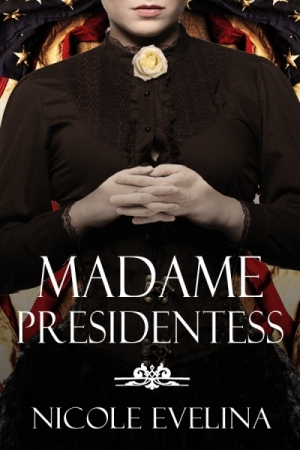
The mysterious, mystical Victoria Woodhull, a free-thinking woman well ahead of her time, is the narrator in this fictional treatment of her intriguing, at times incredible adventures.
Woodhull was the first woman to run for president of the United States, at a time when, with the full support of the law, most American men did not even regard their mothers, wives and daughters as citizens.
Born to a rag-tag band of “healers” whose medicines included dope and alcohol, and whose methods included blackmail and theft, Victoria was married off at the age of fifteen to a so-called doctor who beat her almost as badly as had her parents, and regularly consorted with prostitutes.
She and her sister Tennessee, or Tennie, went from their father’s business in spiritualist scamming (though both women would later claim genuine psychic powers), to promoting supernatural healing in the brothels of New York City, to getting into the parlors and pockets of such Wall Street magnates as Cornelius Vanderbilt.
Vanderbilt at one point had Victoria telling him what stocks to buy and sell, profiting mightily from her seemingly prescient advice, and Tennie acting as his mistress. Woodhull’s second husband, Col. James Blood, treated her far better than her first, and together they forged her rise to radical suffragette prominence.
She touted the rights of women to vote and also to step outside the bounds of marriage as freely as men. In 1872 she mounted her famous run for the presidency, named former slave Frederick Douglass as her veep, fell afoul of the powerful preaching Beecher clan, and saw one of her most disturbing personal prophecies come true.
Award-winning author Nicole velina has created Madame Presidentess following her earlier examination of another controversial female leader, Queen Guinevere. Victoria Woodhull’s life is a goldmine of material for any author; Evelina’s fascination with the psychic-turned-politician does not waver as she weaves together the stranger-than-fiction history of her heroine with threads of imaginative speculation.
The extent of her research is obvious throughout, but never burdens the plot. She details this process in her Author’s Notes, and offers a short bibliography. Evelina has done an admirable juggling act, presenting Woodhull as highly intelligent and strong-minded but also capable of self-examination and self-blame.
Madame Presidentess successfully brings a lesser-known early radical feminist vividly to life, revealing her meteoric move from rags to riches, from subservience and humiliation to personal power and admirable achievement. A highly entertaining and informative read.







 “Return now to those thrilling days of yesteryear,” may sound familiar. It’s the opening for the radio version of The Lone Ranger.

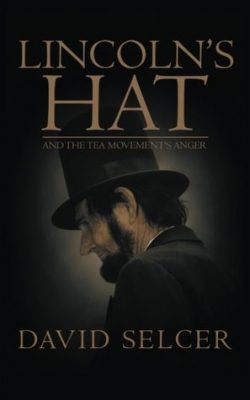
 Set in the chaotic era of the American Civil War, Lincoln’s Hat provides an intelligent look at the many streams of thought that make up our political framework today, and how they may clash in times of upheaval.