Tag: US History

  • The 2024 Goethe Book Awards Short List for Late Historical Fiction

    The 2024 Goethe Book Awards Short List for Late Historical Fiction

    Post 1750s Historical Fiction AwardThe Goethe Book Awards recognize emerging new talent and outstanding works in the genre of Post 1750 Historical Fiction. The Goethe Awards is a genre division of Chanticleer International Book Awards and Novel Competitions (The CIBAs).

    Chanticleer International Book Awards is looking for the best books featuring Victorian, Georgian, Regency, International History, 20th Century, and all the possible historical topics that an authors imagination can dream up for the Goethe Book Awards division. Our judges from across North America and the U.K. will put them to the test and choose the best among them.

    These titles have moved forward from the 2024 Goethe Late Historical Fiction LONG LIST to the 2024 Goethe Book Awards SHORT LIST. These entries are now in competition for the 2024 Goethe Semi-Finalists. FINALISTS will be chosen from the Semi-Finalists and recognized at the Chanticleer Authors Conference, CAC25.

    We will announce the 1st Place Category winners and Grand Prize Division Winners at the CIBAs Banquet and Ceremony on Saturday, April 5th, 2025 in beautiful Bellingham, WA sponsored by the 2025 Chanticleer Authors Conference

    A Wreath with the words "CAC 2025" on it to celebrate the Chanticleer Author's Conference!

    These titles are in the running for the SEMI-FINALISTS of the 2024 Goethe Book Awards novel competition for Late Historical Fiction!

    Join us in cheering on the following authors and their works!

    • Tessa Floreano – Murder & Matrimony in the Castello
    • Janis Robinson Daly – The Path Beneath Her Feet
    • Kim Gottlieb-Walker – Lenswoman in Love
    • Jeanne Gehret – Secrets to the Wind
    • Donna Russo – Vincent’s Women: The Untold Story of the Loves of Vincent van Gogh
    • William Robert Reeves – The In-House Politician
    • Louis Trubiano – What Once Was Promised
    • Katherine Koch – The Sower of Black Field: Inspired by the True Story of an American in Nazi Germany
    • Sandra Wagner-Wright – Sea Tigers & Merchants: A New American Generation
    • Gail Noble-Sanderson – A Cup of Revenge
    • J.R. Holland – Vigilante Love Song
    • Susan Higginbotham – The Queen of the Platform: A Novel of Women’s Rights Activist Ernestine Rose
    • Brook Allen – West of Santillane
    • James Conroyd Martin – Napoleon’s Shadow Wife: A Novel of Countess Marie Walewska
    • Sean James – The Vengeful Kind
    • Georgina Hogue – Cloud Cap
    • Linda Ulleseit – Innocents at Home
    • Florence Reiss Kraut – Street Corner Dreams, A Novel
    • Paula Butterfield – Missing Mr. Moonlight
    • Reenita M. Hora – Vermilion Harvest – Playtime at the Bagh
    • Carolyn Summer Quinn – Until the Stars Align
    • Leo Daughtry – Talmadge Farm
    • Jeza Belle – Blood Rouge
    • John David Graham – Running As Fast As I Can
    • R. W. Meek – The Dream Collector, Book II “Sabrine & Vincent van Gogh”
    • Annette Gagliardi – Ponderosa Pines: Days of the – Deadwood Forest Fire
    • Sherry V. Ostroff – The Wall at the Sugar Factory
    • Alina Rubin – A Girl with a Knife
    • Alina Rubin – Abigail’s Song
    • M. B. Zucker – The Middle Generation: A Novel of John Quincy Adams and the Monroe Doctrine
    • Heather Miller – Yellow Bird’s Song
    • João Cerqueira – Perestroika
    • Adrienne Stevenson – Mirrors & Smoke
    • Gail Ward Olmsted – Katharine’s Remarkable Road Trip
    • C.M. Huddleston – Esther
    • Karen Lynne Klink – At What Cost, Silence? Book 1 of The Texian Trilogy
    • Diane Byington – Louise and Vincent
    • Jerry Madden – Steel Valley: Coming of Age in the Ohio Valley in the 1960s

    Good luck to all as your works move on to the next rounds of judging.

    PROMOTING OUR AUTHORS! 

    This post has been posted on the Chanticleer Facebook Page. We try to tag all authors listed here in the Facebook post. However, it is easier for us to tag authors when they have Liked and Followed us on Facebook.

    Please click here to visit our page to LIKE, COMMENT, and SHARE on Facebook.

    We will also be promoting this list in our Newsletter, which you can sign up for here!

    Congratulations once more to the 2023 Goethe Grand Prize Winner

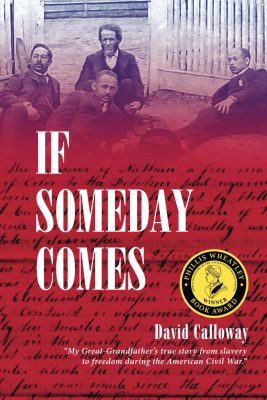
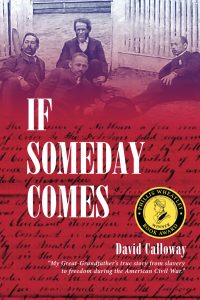
    If Someday Comes

    By David Calloway

    If Someday Comes Cover

    blue and gold badge recognizing If Someday Comes by David Calloway for winning the 2023 Goethe Grand Prize

    Click here to see the full list of 2023 GOETHE Book Award Winners for Late Historical Fiction.

    We are now accepting submissions into the 2025 Goethe Book Awards for Late Historical Fiction.

    Please click here for more information.

    Winners will be announced at the 2024 CIBA Awards Ceremony that is sponsored by the 2025 Chanticleer Authors Conference.
    April 3 – 6, 2025! Save the Date for Registration!

    Seating is Limited. The esteemed WRITER Magazine (founded in 1887)  has repeatedly recognized the Chanticleer Authors Conference as one of the best conferences to attend and participate in for North America.

    Join us for our annual conference as we enter our second decade and discover why!


  • Chanticleer 10-Question Author Interview Series with David Calloway – Historical Fiction, African American History, Slavery & the Civil War

    CHANTICLEER 10-QUESTION AUTHOR INTERVIEW SERIES

    with Award-Winning Author, David Calloway

    Hello friends, we have another fabulous interview for you today.

    In 2024, David Calloway took home the 2023 Chanticleer Grand Prize in the Goethe Awards division for his fascinating novel, If Someday Comes. Here, he tells us how he was inspired by his own family’s history to write If Someday Comes and the subsequent heights it is now reaching! Take a minute or two and get familiar with David to learn more about his ancestors’ amazing story. You won’t be sorry!

    Chanti: Your writing is very personal. What drove you to tell your family’s history?

    Calloway: The heart of my wish to write and to tell my family’s story was to record for the coming generations the stories I heard from the old folks as I was growing up. I wanted to preserve the struggles, hardships, and triumphs of my ancestors’ American lives.

    I think I always wanted to write, but put no real effort into it early in my life, as I was filled with self-doubts about my ability. Eventually I would overcome my inertia through the feedback and encouragement of close friends and family. In my professional life, I was in the motion picture and TV business, first as a cinematographer, then as a director, and then a producer. From day one, I read every screenplay – all revisions – and watched the words come to life on the screen.

    Slowly, I learned what worked to tell stories economically, so some story sense came by osmosis, some by study, some by practice. I took story structure classes, studied Robert McGee. I read Bird by Bird by Ann Lamott and On Writing by Stephen King. I talked with working writers about series and story arcs, plotting, character, and foreshadowing. I also attended writer workshops, retreats, and read other successful novelists.

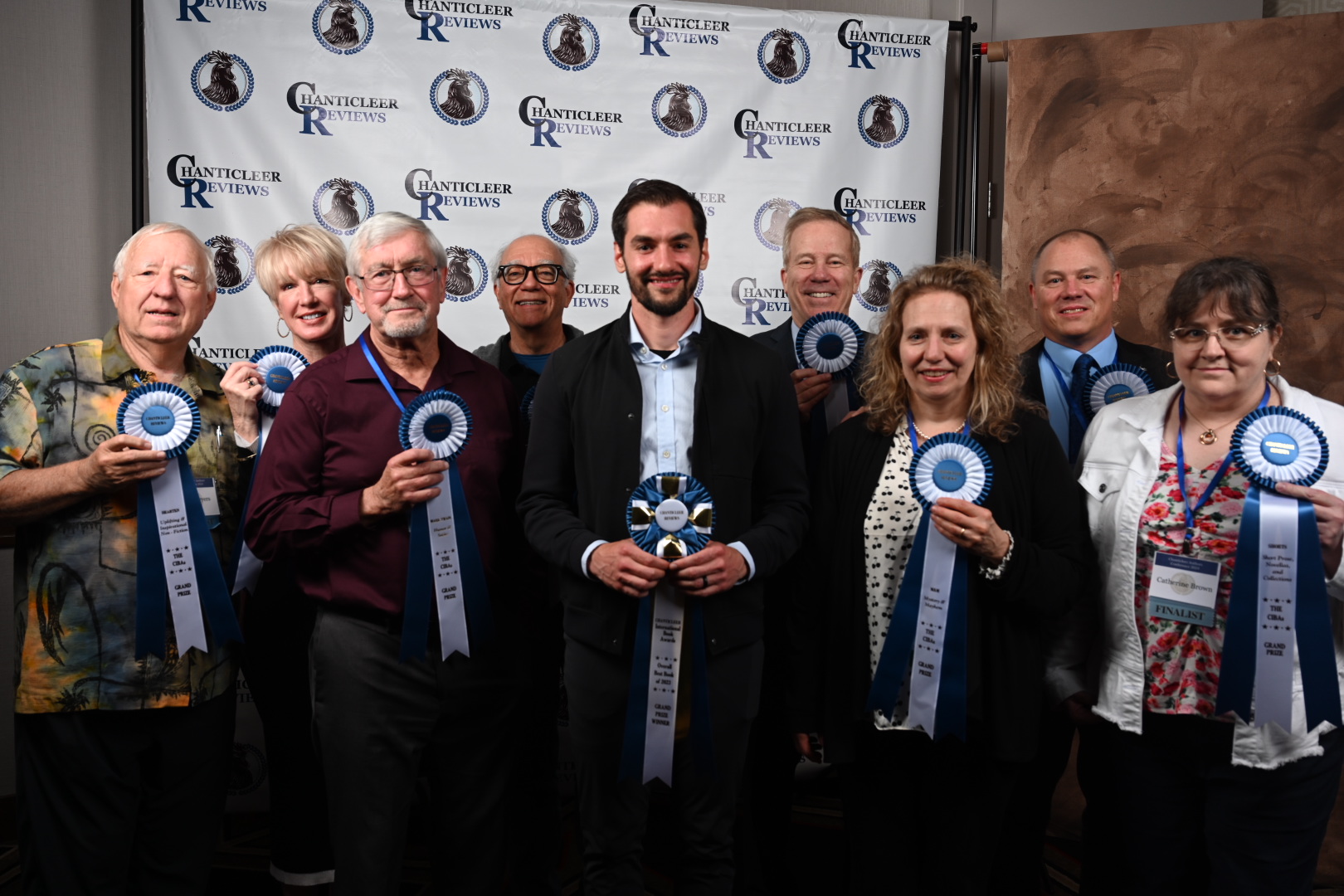
    CIBA award, Grey sweater, David Calloway, black shirt, conference, awards banquet

    Chanti: When did you finally feel you were an author and add that to your extensive resume?

    Calloway: The day I opened the box that brought the proof copy of If Someday Comes! Up to that point, there were many moving parts, the manuscript, the proof reading, the cover art, the endless formatting. Here in my hand was a real book, something anyone might buy. Unbelievably, it had my name as writer on it. It’s been published for many months, and I still find it hard to introduce myself as an author.

    Chanti: Your ancestor’s story is so compelling. What genre best describes your book?

    Calloway: If Someday Comes is historical fiction, closely based on the true story of my great-grandfather’s life during the American Civil War. I grew up knowing where people were during that period, but their exact relationships were lost in time, so I filled out the characters and created the tone of the plot as I went. Comments from the old folks like “he was a nice man” are not enough. It’s hard to avoid retroactively applied values to those times, and I’m sure some of my twenty-first century “I have judgement” slipped in there somewhere, but the goal of getting his story into a book was my true goal.

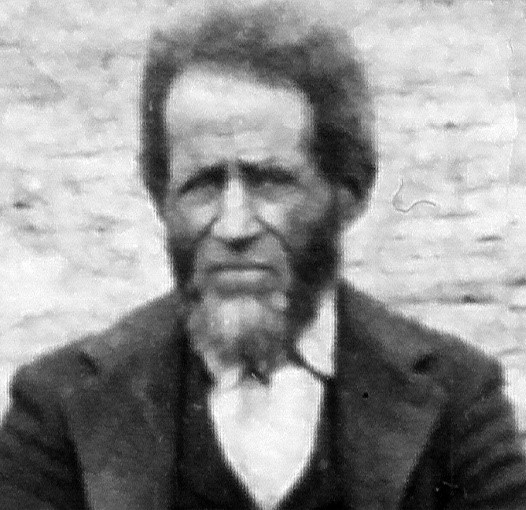
    Old photograph, African America, slavery, beard
    George Calloway

    Chanti: How did find the information you used to fill in the background of the story?

    Calloway: I read historical accounts of the period and subject, then added in my family’s tales of the past. I also created an outline of events for the story, and I used incidents I read about in books, letters, and newspapers for inspiration. The motivations of people never change for as far back as written history will allow us to see. Well-worn are the old trials of the human condition, and how often do we quote the Romans and Greeks on sex, greed, love, and jealousy. And of course, my own feelings on the same subjects.

    Chanti: That’s a rich way to develop both character and story! How do you approach your writing day? What is your routine?

    Calloway: “Sporadic” is my routine. I’ll write for several days, then none, then return to the page, then realize I need input, then read more history and other people’s work, stare at the blank screen, castigate my own procrastination, remind myself that no one is going to read this if I decide to cut it-so don’t worry. Then I despair that none will read the book anyway, convince myself that I’m hungry and a snack will get me going. I’ll check my email, take my dog for a walk, and then have lunch with old friends whom I’ve convinced my book is going great.

    Ad infinitum.

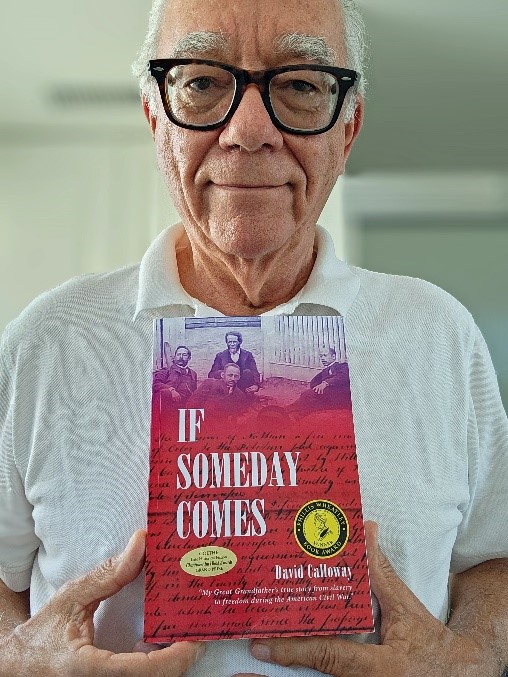
    David Calloway, If Someday Comes, White shirt, black glasses

    Chanti: What about writer’s block? How do you handle it when the words just won’t come to you?

    Calloway: Staring at an empty page with no ideas popping is tough. I write whatever comes to mind. It may have nothing to do with the book, or it may have a connection later on in the story. Some days are two sentence days, some are two-page days. I concentrate on my rights as an editor and will change or eliminate any thoughts, so I just jump right in.

    If I’m really stuck, taking a walk helps. I leave the phone at home, as I find stepping away from it resets the brain. Sometimes I imagine your main character with walking with me. And the phrase “I’ve got to sleep on it” is a maxim I refer to often, because problems are solved and ideas are generated by whatever part of the brain is working at night. It’s an approach that work for me… sometimes.

    Chanti: Those are great pieces of advice for breaking out of a block. Beyond writing, what sort of marketing tips do you have for authors?

    Calloway: Online ads are the only strategy that has worked for me. Spending lots of money in trade magazines has been a complete bust. I advertise on Amazon and Facebook. Set a budget and see how it works for you. Even so, It’s a struggle. Contacting public libraries, local papers, community clubs (Rotary, Elks, Chamber of Commerce) help – they always need luncheon speakers. I also make a point of being available for online book clubs and chats, and I have a website that has book reviews, awards, and links to other websites. www.IfSomedayComes.com. And I always encourage readers to write reviews online. It really helps others to decide to read the book.

    David Calloway, water, cap, grey, sky, land

    Chanti: What is your next project? Another story about a member of your family?

    Calloway: Yes! I am working on my Grandfather James’ story as historical fiction. He was born a slave in 1860, and grew up to become a surveyor and farmer. James and his brothers – all graduates of Fisk University – worked for and with Booker T. Washington in the building of Tuskegee Institute. James ran the farms and also taught farming. He was Tuskegee’s representative sent to Washington, DC to lobby for land grants to help finance the school. Later, James was hired by the German government and traveled to Togo to teach cotton farming.

    Chanti: Who are the perfect readers for If Someday Comes?

    Calloway: The book is a story of family, both before and during the Civil War. It highlights the close relationships between owner and slave, and as was so often the case, is about one large family separated by race and class.

    The story includes the good stuff, like love, courage, ingenuity, as well as the bad stuff of violence, cruelty, famine. Everyone suffered during the war; but remarkably, George (my Great Grandfather) kept everyone alive on both sides of the color line.

    It will be a book for anyone interested in the Civil War, the experience of slavery in East Tennessee, and the relationship of whites and blacks in the South.


    man, hat, yellow shirt, water, land, sky, David Calloway David Calloway was born in Chicago and grew up in Palo Alto and Berkeley. Calloway holds an MFA from UCLA in Film Production. His first job was as an Editor, progressing to Cinematographer, then a Producer of features and television. He is a member of the Producer’s Guild, the Director’s Guild, and the Academy of Television Arts and Sciences.

    Calloway is a Director on the board of the Angel’s Gate Cultural Center and on the board of the Offshore Racing Outreach Foundation.

    Calloway lives and works in Los Angeles, California. You can find out more about David Calloway’s writing on his website.

    If Someday Comes available on Amazon in print and Kindle, and as an Audible book.

  • The 2024 Goethe Book Awards Long List for Late Historical Fiction

    The 2024 Goethe Book Awards Long List for Late Historical Fiction

    Post 1750s Historical Fiction AwardThe Goethe Book Awards recognize emerging new talent and outstanding works in the genre of Post 1750 Historical Fiction. The Goethe Awards is a genre division of Chanticleer International Book Awards and Novel Competitions (The CIBAs).

    Chanticleer International Book Awards is looking for the best books featuring Victorian, Georgian, Regency, International History, 20th Century, and all the possible historical topics that an authors imagination can dream up for the Goethe Book Awards division. Our judges from across North America and the U.K. will put them to the test and choose the best among them.

    These titles have moved forward in the first look rounds from all 2024 Goethe Late Historical Fiction entries to the 2024 Goethe Book Awards LONG LIST. These entries are now in competition for the 2024 Goethe Short List. The Short Listers will compete for the Semi-Finalists positions. FINALISTS will be chosen from the Semi-Finalists and recognized at the Chanticleer Authors Conference, CAC25.

    We will announce the 1st Place Category winners and Grand Prize Division Winners at the CIBAs Banquet and Ceremony on Saturday, April 5th, 2025 in beautiful Bellingham, WA sponsored by the 2025 Chanticleer Authors Conference

    A Wreath with the words "CAC 2025" on it to celebrate the Chanticleer Author's Conference!

    These titles are in the running for the SHORT LIST of the 2024 Goethe Book Awards novel competition for Late Historical Fiction!

    Join us in cheering on the following authors and their works!

    • Tessa Floreano – Murder & Matrimony in the Castello
    • Nancy Burkhalter – Mesmer: The Tale of a Medical Maverick
    • Nancy Burkhalter – The Education of Delhomme: Chopin, Sand, and La France
    • Benjamin Kwakye – Seasons of Four Faces
    • Janis Robinson Daly – The Path Beneath Her Feet
    • Kim Gottlieb-Walker – Lenswoman in Love
    • Jeanne Gehret – Secrets to the Wind
    • Donna Russo – Vincent’s Women: The Untold Story of the Loves of Vincent van Gogh
    • William Robert Reeves – The In-House Politician
    • Louis Trubiano – What Once Was Promised
    • Katherine Koch – The Sower of Black Field: Inspired by the True Story of an American in Nazi Germany
    • Sandra Wagner-Wright – Sea Tigers & Merchants: A New American Generation
    • Mark Kraver – Janszoon: In the Pursuit of Love, Family, and an Enduring Legacy
    • Gail Noble-Sanderson – A Cup of Revenge
    • Robert Brighton – The Phantom of Forest Lawn: Romance and Redemption in the City of the Dead
    • J.R. Holland – Vigilante Love Song
    • Teri M Brown – Daughters of Green Mountain Gap
    • Susan Higginbotham – The Queen of the Platform: A Novel of Women’s Rights Activist Ernestine Rose
    • Brook Allen – West of Santillane
    • James Conroyd Martin – Napoleon’s Shadow Wife: A Novel of Countess Marie Walewska
    • Don Jacobson – In Westminster’s Halls: A Pride and Prejudice Variation
    • Sean James – The Vengeful Kind
    • Georgina Hogue – Cloud Cap
    • Linda Ulleseit – Innocents at Home
    • Florence Reiss Kraut – Street Corner Dreams, A Novel
    • Paula Butterfield – Missing Mr. Moonlight
    • Reenita M. Hora – Vermilion Harvest – Playtime at the Bagh
    • Carolyn Summer Quinn – Until the Stars Align
    • Diana Lee – The Breaking Room
    • Leo Daughtry – Talmadge Farm
    • Susan McGuirk – Missing Friends
    • Jeza Belle – Blood Rouge
    • John David Graham – Running As Fast As I Can
    • Jude Berman – The Vow: A Novel
    • R. W. Meek – The Dream Collector, Book II “Sabrine & Vincent van Gogh”
    • Annette Gagliardi – Ponderosa Pines: Days of the – Deadwood Forest Fire
    • DL Fowler – Lincoln’s Angel: the Rebecca Pomroy Story
    • Florence Reiss Kraut – Street Corner Dreams
    • Sherry V. Ostroff – The Wall at the Sugar Factory
    • Alina Rubin – A Girl with a Knife
    • Alina Rubin – Abigail’s Song
    • M. B. Zucker – The Middle Generation: A Novel of John Quincy Adams and the Monroe Doctrine
    • Heather Miller – Yellow Bird’s Song
    • João Cerqueira – Perestroika
    • Adrienne Stevenson – Mirrors & Smoke
    • Gail Ward Olmsted – Katharine’s Remarkable Road Trip
    • C.M. Huddleston – Esther
    • Karen Lynne Klink – At What Cost, Silence? Book 1 of The Texian Trilogy
    • Diane Byington – Louise and Vincent
    • Tim Piper – The Powell Expeditions
    • Janice Sebring – Fearful Breakers
    • Jerry Madden – Steel Valley: Coming of Age in the Ohio Valley in the 1960s
    • Vicky Oliver – Firebrands

    Good luck to all as your works move on to the next rounds of judging.

    PROMOTING OUR AUTHORS! 

    This post has been posted on the Chanticleer Facebook Page. We try to tag all authors listed here in the Facebook post. However, it is easier for us to tag authors when they have Liked and Followed us on Facebook.

    Please click here to visit our page to LIKE, COMMENT, and SHARE on Facebook.

    We will also be promoting this list in our Newsletter, which you can sign up for here!

    Congratulations once more to the 2023 Goethe Grand Prize Winner

    If Someday Comes

    By David Calloway
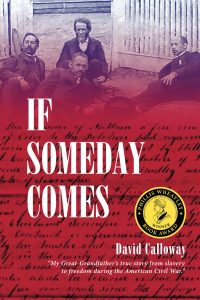
    If Someday Comes Cover

    blue and gold badge recognizing If Someday Comes by David Calloway for winning the 2023 Goethe Grand Prize

    Click here to see the full list of 2023 GOETHE Book Award Winners for Late Historical Fiction.

    We are now accepting submissions into the 2025 Goethe Book Awards for Late Historical Fiction.

    Please click here for more information.

    Winners will be announced at the 2024 CIBA Awards Ceremony that is sponsored by the 2025 Chanticleer Authors Conference.

    April 3 – 6, 2025! Save the Date for Registration!

    Seating is Limited. The esteemed WRITER Magazine (founded in 1887)  has repeatedly recognized the Chanticleer Authors Conference as one of the best conferences to attend and participate in for North America.

    Join us for our annual conference as we enter our second decade and discover why!
     

  • IF SOMEDAY COMES: A Slave’s Story of Freedom by David Calloway – Historical Fiction, African American History, Slavery & the Civil War

    blue and gold badge recognizing If Someday Comes by David Calloway for winning the 2023 Goethe Grand PrizeDavid Calloway’s moving historical fiction, If Someday Comes: A Slave’s Story of Freedom, tells the true story of his great-grandfather George Calloway, born into slavery on January 8, 1829. in Cleveland, Tennessee.

    It is a tale of determination, perseverance, and achievement before and during the Civil War. If Someday Comes covers George’s final years in slavery; detailed accounts of the Civil War and its impacts on George and his family, both Black and White.

    It is a family saga of survival and endurance.

    The story begins in Cleveland, Tennessee, March 6th, 1857. We meet George and his family, his wife Elizabeth, their infant daughter Baby Caroline, and the stratified world of slavery in which they live. Thomas Howard Calloway (Marsa Thom), is their White owner who owns the East Tennessee and Georgia Railroad, the South’s only copper mines, and the local bank. He is one of Cleveland’s prominent town leaders.

    Lincoln wins the 1860 election and the White community reacts fearfully. Fort Sumter is attacked, the War begins. The families of East Tennessee are mainly pro union, including Thomas Calloway.  Cleveland is ‘occupied’ by the Confederate Army. The Union men flee to join the US Army or hide out in the nearby hills.

    George and his family begin to help ‘runaway’ slaves escape north, eventually helping White men to escape to the Union Army. The Confederates take all the guns and food from the Union families.

    Times get desperate: Marsa Thom is stripped of all his properties and must go into hiding among the caves in the mountains. George risks his life making repeated trips to the caves to take food and clean clothes to Marsa Thom for the duration of the war. Without the protection of Marsa Thom, George’s family is in constant danger of cruel punishments, violence, and exploitation.

    Union and Reb troops fight over the tiny town and vital rail line, with control passing back and forth between the two sides. Treachery and desperation add to the suffering of both the White Calloways and the Black Calloways.

    George becomes the undeclared head of both the White and Black families. With grit and determination, he provides for all, protecting them throughout the war.

    “I found that to understand America, you must first understand the Civil War. George was then, and remains, a hero of our family.” – David Calloway

    This account honestly and vividly depicts an era in history that should never be forgotten.

    Those that love the history of the Civil War will be fascinated by this retelling.

    David Calloway expresses his hope for the day when America will rise beyond the racist heritage that the founding fathers left behind. This award-winning historical masterpiece, If Someday Comes, combines the author’s relatives’ direct experiences and extensive, meticulous historical research to deliver a story that readers will appreciate through to the very end.

    If Someday Comes: A Slave’s Story of Freedom by David Calloway won Grand Prize in the 2023 CIBA Goethe Awards for Late Historical Fiction.


  • 8 days left to submit three Historical Book Awards in the CIBAs!

    Eight Divisions close in September!

    Eight excellent divisions close at the end of September!

    Don’t let your book miss out!

    Only 8 days left to submit your books to these prestigious CIBA Divisions and embark on an extraordinary journey to success. With over $30,000 in prizes awarded annually, now is the time to make your mark!

    The Chaucer Awards for Early Historical Fiction, The Goethe Awards for Late Historical Fiction, and the Laramie Awards for Western and Americana Fiction are still open!

    Best Book Grand Prize for the Chanticleer Int'l Book AwardsCongratulations to the Winners of the 2023 Chaucer Award for Historical Fiction!

    The Chaucer Awards for Historical Novels

    • Gina Buonaguro – The Virgins of Venice
    • Griffin Brady – The Hussar’s Duty
    • Robert S Phillips – Elodia’s Knife
    • Rozsa Gaston – Margaret of Austria
    • Rebecca Kightlinger – The Lady of the Cliffs: The Bury Down Chronicles, Book Two
    • C.V. Lee – Token of Betrayal 

    And a huge round of applause for the 2023 Chaucer Grand Prize Winner:

    The Merchant from Sepharad by James Hutson-Wiley

    A Gold Ribbon dividing this section from the next

    Congratulations to the Winners of the 2023 Goethe Awards!

    Post 1750s Historical Fiction Award

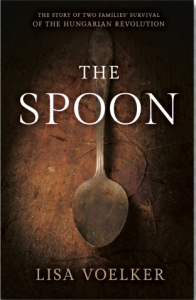
    • Lisa Voelker – The Spoon
    • Robert W Smith – A Long Way from Clare
    • Mitzi Zilka – Water Fire Steam
    • Susanne Dunlap – The Adored One
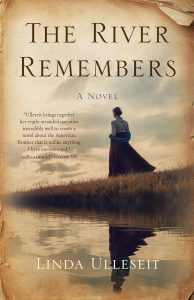
    • Linda Ulleseit – The River Remembers
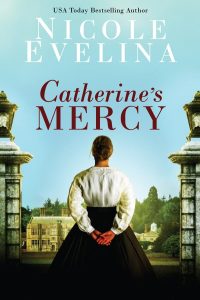
    • Nicole Evelina – Catherine’s Mercy
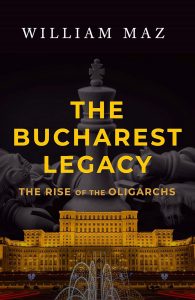
    • William Maz – Bucharest Legacy: The Rise of the Oligarchs

    And a huge round of applause for the 2023 Goethe Awards Grand Prize Winner:

    If Someday Comes by David Calloway

    If Someday Comes Cover

    A Gold Ribbon dividing this section from the next

    Congratulations to the 2023 Winners of the Laramie Awards!

    Western Pioneeer Civil War Fiction Award

    • Barbara Salvatore – The Trail to Niobrara
    • T.K. Conklin – Promise of Spring
    • Elizabeth Woolsey – The Travels of Dr. Rebecca Harper A Matter of Time
    • Daniel Greene – Northern Dawn (Northern Wolf Series Book 4)
    • K.S. Jones – Tastefully Texas

    And a huge round of applause for the 2023 Laramie Grand Prize Winner:

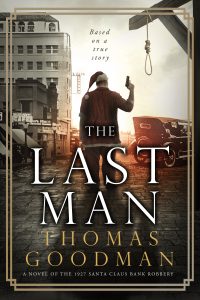
    The Last Man: A Novel of the 1927 Santa Claus Bank Robbery by Thomas Goodman

    A Gold Ribbon dividing this section from the next

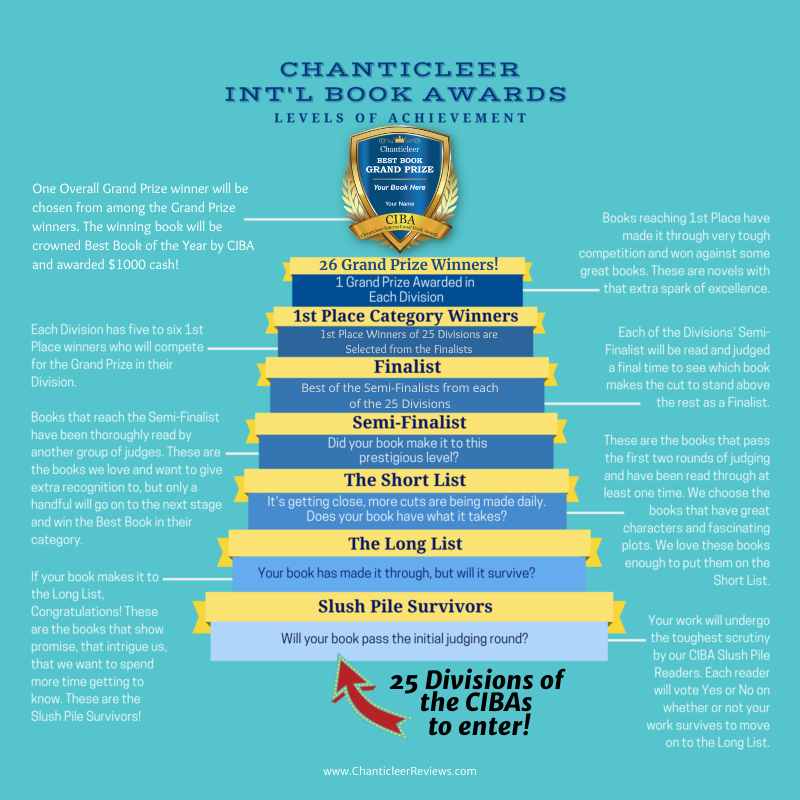
    The CIBAs offer more than just recognition — they provide a ladder to success with a range of achievement tiers and expert long tail marketing strategies. From the highly anticipated Long List to the prestigious Overall Grand Prize Winner, the CIBA lists energize both authors and readers, maximizing your digital footprint and expanding your fan base.

    The tiers of achievement for the CIBAs (Chanticleer Int'l Book Awards)

    We are always eager to support the Best Books through the CIBAs. Join the ranks of celebrated authors who have already taken this critical step in their publishing.

    Your book deserves to be discovered, celebrated, and shared with the world. Don’t miss the chance to showcase your talent and gain valuable exposure at the Chanticleer Authors Conference (April 3-6, 2025) where Winners from all 25 Book Award Divisions will be announced and honored.

    In a world hungry for good books, your story deserves to be heard. Submit now and leave a lasting impression.

    Let’s celebrate exceptional storytelling together!

    Don’t Delay! Enter Today!

    The Chaucer Awards, The Laramie Awards, and The Goethe Awards

    Your book deserves to be discovered

  • Happy Birthday Goethe! Extending the 2024 Goethe Awards for Late Historical Fiction

    Happy Birthday Goethe!

    We’re delighted to celebrate Johann Wolfgang von Goethe’s birthday! Check out these awesome events that happened during Goethe’s Lifetime!

    • 1750 – The Industrial Revolution began in England
    • 1756 – Wolfgang Amadeus Mozart was born in Salzburg, Austria
    • 1761 – The problem of calculating longitude while at sea was solved by John Harrison
    • 1765 – James Watts perfects the steam engine
    • 1770 – Ludwig van Beethoven was born in Bonn, Germany
    • 1774 – Goethe’s romantic novel, The Sorrows of Young Werther, propels him into European fame
    • 1774 – Goethe’s play Gotz von Berlichingen, a definitive work of Sturm und Drang premiers in Berlin
    • 1776 –  America’s 13 Colonies declare independence from England. Battles ensue.
    • 1776 – Adam Smith publishes the Wealth of Nations (the foundation of the modern theory of economics)
    • 1776 –  The Boulton and Watt steam engines were put to use ushering in the Industrial Revolution
    • 1783 – The Hot Air Balloon was invented by the Montgolfier brothers in France.
    • 1786 – Le Nozze di Figaro by Mozart premiered in Vienna
    • 1789 – George Washington is elected the first president of the United States of America
    • 1780 – Antoine Lavoisier discovers the Law of Conservation of Mass
    • 1789 – The French Revolution started in Bastille
    • 1791 – Thomas Paine publishes The Rights of Man
    • 1792 – Napoleon begins his march to conquer Europe
    • 1799 – Rosetta Stone discovered in Egypt
    • 1802 – Beethoven created and performed The Moonlight Sonata
    • 1802 – A child’s workday is limited to twelve hours per day by the British parliament when they pass their first Factory Act
    • 1804 – Napoleon has himself proclaimed Emperor of France
    • 1808 – Atomic Theory paper published by John Dalton
    • 1811 –  Italian chemist Amedeo Avogadro publishes a hypothesis, about the number of molecules in gases, that becomes known as Avogadro’s Law
    • 1811 – Jane Austen’s Sense and Sensibility was published anonymously. It was critically well-received
    • 1814 – Steam driven printing press was invented which allowed newspapers to become more common
    • 1818 – Mary Shelley publishes Frankenstein
    • 1832 – Goethe’s Faust, Parts 1 & 2 are published posthumously (March 22, 1832)

    You asked, we listened

    We tend to be a little more high tech at Chanticleer

    New Deadline for the Goethe Awards: September 30, 2024

    At the request of both our Authors and our Readers we have moved the closing date of the Goethe Awards to September 30, 2024!

    This pairs it with its Historical Fiction partner the Chaucer Award. As we settle into this new schedule, we’re hearing great feedback from authors regarding the best times for them to submit their work. This depends on conferences and workshops (many of which are genre specific) where they can regularly receive feedback and writing retreats that allow them to finish their manuscripts.

    Thank you to everyone who reaches out and makes our Awards a success every year!

    Post 1750s Historical Fiction Award
    September is right around the corner! Don’t miss out!

    Chaucer is the older brother of sorts to the other Historical Fiction divisions. Awhile back we got so many submissions to Chaucer, we had to split them up to judge them all properly. So now, Chaucer is Pre-1750 and Goethe is Post-1750.

    Why do we like Johann Wolfgang von Goethe so very much? It’s simple! He’s the guy who wrapped up everything we believe in with this simple sentence:

    “Whatever you can do or dream, you can begin it. Boldness has genius, power, and magic in it.” – Goethe

    A great mantra for writers, don’t you think!

    Why 1750?

    Well, many historians see that time as the start of the Early Modern Age. With Revolutions the world over, and Governmental Changes moving away from Monarchies and constitutions giving the normal people rights, not just the wealthy. And at the same time, the Industrial Revolution and Age of Enlightenment.

    The Goethe Award is named for Johann Wolfgang Von Goethe, famed German writer, scientist and polymath. Seen on the badge for this award, in a portrait of him in around 1775

    Goethe in 1828, painted by Joseph Karl Stieler

    We chose Goethe as the namesake for this award not only because we are fans of his writing. Born in 1749, his lifetime saw some of the biggest events and technological advances. Both the American and French Revolutions, the start of the Industrial Revolution in England (which started in about 1750), the invention of Steam Engines, and some of the most influential written works of history. As such, he embodies the era of Historical Fiction this award covers and beyond.
    Here are some great books set during the time of the Goethe Awards!

    THE SPOON: The Story of Two Families’ Survival of the Hungarian Revolution
    By Lisa Voelker
    Goethe Awards First Place Winner

    The Spoon Lisa Voelker

    Lisa Voelker’s historical fiction novel, The Spoon, takes us back to the 1950s in Hungary during the daring student uprising, and attempted revolution, in Buda and Pest. The author weaves historical facts with fiction in the form of family lore that has been handed down for generations.

    We follow scores of people whose lives intersected during this uprising of 1956. The revolution was, at its inception, a time of joyous upheaval, but in less than two weeks became one of devastating dissolution. People fled Hungary by the thousands, but not before giving the Soviet Union a taste of their discontent.

    Voelker introduces Rebeka, a member of the Varga family with old ties to the bourgeoisie, who lived a life of privilege on a farm east of Buda and Pest. As well as Peter, a member of the Turea family who attends Budapest Technical University, where students began demonstrating against the Hungarian Government that was under Soviet control.

    Read more here!

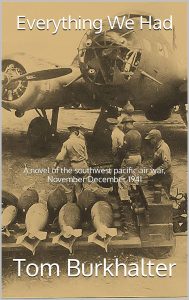
    EVERYTHING WE HAD: No Merciful War Book 1
    By Tom Burkhalter
    Series Awards First Place

    Everything We Had Cover

    Everything We Had, book one of Tom Burkhalter’s No Merciful War series is an inexorable thrill that will grip readers tight. It starts with a poker game, through which a main character’s luck soon becomes evident. But will that luck hold out?

    Jack—the poker player—and Charlie—Jack’s older brother—have been separated by war, even though that war has yet to be declared. Everything We Had focuses more on the machinations leading up to US involvement in World War II than on actual combat. The gears of war that have so many young men caught in them move with gradual but inevitable force, and so Everything We Had takes a more thoughtful approach to a historic moment in time.

    Connecting with the characters is a gradual process as you get to know the intricacies that make up their individual personalities. This sets the reader up to feel the emotions of the characters as they face an uncertain fate, and throughout the book the author’s clear and methodical research shines with details such as specific views, locations, and—most notably—comprehensive descriptions of the airplanes Jack and Charlie pilot. This allows the reader to become deeply familiar with the motivations of the characters and the capabilities of the airplanes they fly.
    Read more here!

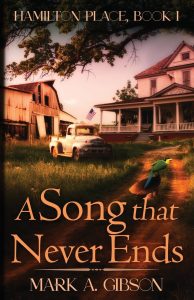
    A SONG THAT NEVER ENDS: Hamilton Place Book 1
    By Mark A. Gibson
    Series Awards First Place

    A Song that Never Ends Cover

    A Song That Never Ends, the first volume of a two part series by Mark A. Gibson, opens a dramatic fictional saga of the Hamilton family from the late 1930s Depression era, to 1967 and the Vietnam conflict. Here against the backdrop of a South Carolina tobacco farm, we come to witness a family in turmoil.

    The calm and reserved Walter Hamilton and his rebellious, impulsive wife Maggie strive to build a life and raise a family. But the couple is tested by a series of misfortunes—miscarriages and stillbirths, and Walter’s enlistment during WWII leaving him with guilt-induced PTSD as he deals with the memory of fallen comrades.
    At the center of this heartfelt story is James, the middle child, who at the tender age of eight is forced from his home due to a horrific accident and sent to live with a widower uncle.

    Read more here!

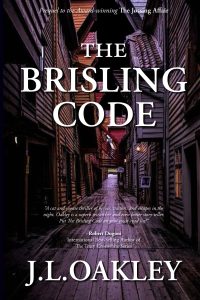
    THE BRISLING CODE
    By J.L. Oakley
    Hemingway First Place Winner

    The Brisling Code Cover

    In The Brisling Code, a fast-paced first installment of her historical thriller series, Oakley weaves a brilliant portrayal of the perils met by the Norwegian Resistance during WWII.

    Layered perspectives—from resistance workers, traitors, and even an SS Officer—create a rich world through which readers can understand the sacrifices that were made to free our world from the tyranny of Nazi Germany.

    Immersed in volatile Nazi-occupied Bergen, Norway, fearless young intelligence agent Tore Haugland and his team of organizers work tirelessly to protect the essential work of the Norwegian resistance.

    Read more here!


    Thank you to everyone who has entered the CIBAs, with a special recognition  to those who keep the past alive! Good books for young people matter!

    The winners of the Dante Rossetti Awards will be announced during the 2024 Chanticleer Authors Conference. First-place winners receive the coveted Chanticleer Blue Ribbon, and the Grand Prize laureate commands the spotlight, epitomizing the exceptional YA Fiction genre talent.

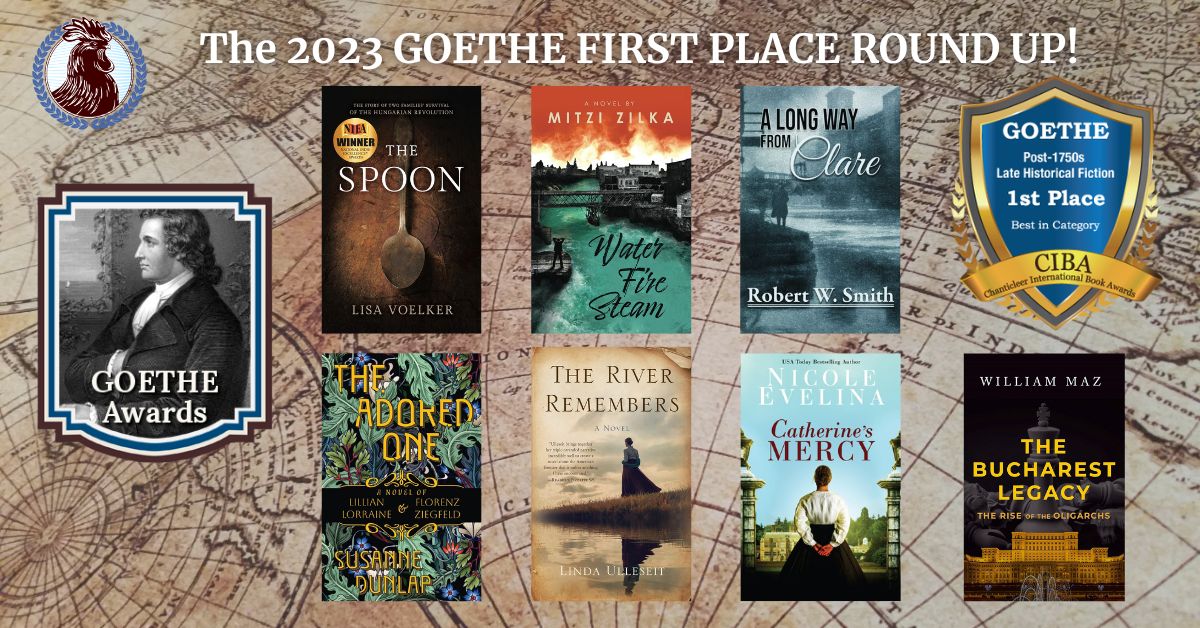
  • The Goethe Late Historical Awards Fiction Round Up for the 2023 First Place Winners!

    Post 1750s Historical Fiction AwardThe Goethe Book Awards recognize emerging new talent and outstanding works in the genre of Late Historical (Post 1750s) Fiction. The Grand Prize Winner, David Calloway’s book, If Someday Comes will be promoted for years to come in our annual Hall of Fame article, as well as be featured on the Goethe contest page year ’round!

    The best part about being a Chanticleer Int’l Book Award Winner is the love and attention you get all year ‘round!

    The 2023 Goethe Winners were announced at the 2024 Chanticleer Authors Conference in April, and you can see the official winners post here!

    Join us in celebrating the 2023 First Place Goethe Winners!

    Lisa Voelker The Spoon

    The Spoon Lisa Voelker


    The Spoon is historical fiction based on the personal anecdotes of survivors of what we now know as the 1956 Hungarian Revolution. At the heart of The Spoon is the true story of two people incongruously brought together during the maelstrom of this historic event; a story that is embodied in one small heirloom and remembered and shared through the generations when the family gathers each year for Christmas.

    From Chanticleer:

    Lisa Voelker’s historical fiction novel, The Spoon, takes us back to the 1950s in Hungary during the daring student uprising, and attempted revolution,. The author weaves historical facts with fiction in the form of family lore that has been handed down for generations.

    We follow scores of people whose lives intersected during this uprising of 1956. The revolution was, at its inception, a time of joyous upheaval, but in less than two weeks became one of devastating dissolution. People fled Hungary by the thousands, but not before giving the Soviet Union a taste of their discontent.

    Voelker introduces Rebeka, a member of the Varga family with old ties to the bourgeoisie, who lived a life of privilege on a farm. She is contrasted by Peter, a member of the Turea family who attends Budapest Technical University, where students began demonstrating against the Hungarian Government that was under Soviet control.

    Read more here!

    Find it Locally and on Amazon

    A Gold Ribbon dividing this section from the next

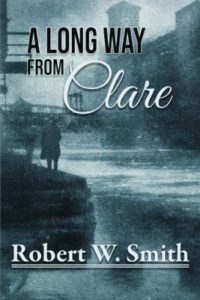
    Robert W Smith – A Long Way From Clare

    A Long Way From Clare Cover

    Conor Dolan, a young Irishman, travels to Chicago in 1903 to visit his older brother; instead, he finds a mystery. His journey sparks a quest to peel away secrets and rediscover a dead sibling he idolized but never really knew as he strives to learn the true meaning of brotherhood.

    His search reveals an Irish Republican plot to assassinate a visiting British royal. In the process, he is drawn into an alliance with two women: a mesmerizing Jewish widow and a struggling young Irishwoman. Each teaches Conor existential truths of life and love in her own way.

    But the brother he finds may not be the brother he remembers. A Long Way from Clare is a story of Chicago’s early twentieth century immigrants and one man’s struggle with both bigotry and justice in an unforgiving city where no good deed goes unpunished.

    From Chanticleer:

    Twenty-four-year-old Conor Dolan had intended to surprise his older brother and catch up after years apart. However, what he finds when he arrives in Chicago will spark a harrowing mystery, in A Long Way from Clare by Robert W. Smith.

    Kevin, a beat cop in twentieth-century Chicago’s worst neighborhood, was found six weeks before Conor’s visit, in what the police have dubbed a suicide. However, Conor has his doubts. Each time he asks people about Kevin, he is met with resistance and denial. When Conor speaks with Detective Flynn, the man assigned to Kevin’s case, his suspicions become certainties. Flynn’s bizarre behavior, the minimal effort on the police’s part to investigate, and the men following Conor at every turn convince him to stay in Chicago rather than return to his home in Springfield.

    Conor’s determination to find answers to Kevin’s death lead him in a dangerous dance with darkness amidst the shadows of Chicago’s underworld.

    Read more here!

    Find it Locally and on Amazon

    A Gold Ribbon dividing this section from the next

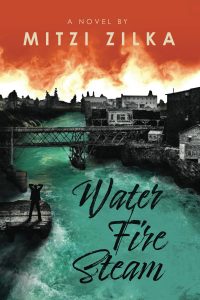
    Mitzi Zilka – Water Fire Steam

    The year is 1884. Rolla Alan Jones, an ambitious dreamer fresh out of an East Coast engineering school, is commissioned to design and build the first water system in Spokane Falls, Washington, a booming town of twenty-thousand. He is everyone’s golden boy for five years until the city burns down on August 4, 1889. The once-celebrated engineer is scapegoated for the catastrophe alleging his system yielded inadequate water pressure. Asked to resign, betrayed by his friends, shunned by the community, and abandoned by his pregnant wife and three-year-old son, Rolla must find the strength to reinvent himself or return to New York as an abject failure. Based on a true story, Water Fire Steam is a story of forgiveness and redemption for anyone who has ever had to claw their way back from an unwarranted accusation.

    Find it Locally and on Amazon

    A Gold Ribbon dividing this section from the next

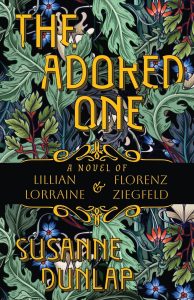
    Susanne Dunlap – The Adored One

    Lillian Lorraine was a naive 15-year-old chorine on Broadway when she attracted the notice of the notorious 41-year-old Florenz Ziegfeld. Accustomed to getting what he wanted, Ziegfeld took Lillian under his wing and into his arms, giving her coveted numbers in the Ziegfeld Follies and taking control of her career. But Lillian’s rebellious spirit chafed against him, refusing to play according to his rules, and nearly destroying her own career in the process. The Adored One follows her through rise and fall after rise and fall as she comes of age in a world where her youthful beauty was an asset-and a liability.

    From Chanticleer:

    Step into the glittering world of fame and betrayal in Susanne Dunlap’s The Adored One. At just four years old, Leleanne de Jacques, aka Lillian Lorraine, began her acting career. After fleeing an abusive husband in San Francisco, Mary Anne, Lillian’s mother, moves to Philadelphia, seeing her daughter’s talent as their potential meal ticket.

    Soon after arriving in Philadelphia and changing her daughter’s name, Mary Anne relocates them both again to New York, where she puts Lillian in front of artists who see her potential for print ads. Lillian soon meets Fred McKay, her first talent agent, and she begins performing in Lee Shubert productions.

    When Florenz Ziegfeld sees Lillian onstage, he knows he must have her, both in his productions and his bed. At only sixteen, Lillian signs with Broadway’s biggest producer. She begins to spiral soon after. Drinking and partying become a staple in Lillian’s life, and she is soon keeping more secrets than her young heart can handle. Florenz’s obsession, Mary Anne’s domineering, and Lillian’s own need for approval lead her down a dangerous and lonely path. Losing every friend she ever makes as well as a part of herself, Lillian wonders if the prize of fame is really worth the cost.

    Read more here!

    Find it Locally and on Amazon

    A Gold Ribbon dividing this section from the next

    Linda Ulleseit – The River Remembers

    Samantha Lockwood, Day Sets, and Harriet Robinson come to Fort Snelling from very different backgrounds. It’s 1835 and the world is changing, fast, and they are all struggling to keep up. After she refuses another suitor he’s chosen for her, Samantha’s father banishes her to live in the territory with her brother. He, too, tries to take over her marriage plans—but she is determined to find her own husband, even when her choices go awry.

    Day Sets demands that her white husband create a school to educate their daughter, supporting her father’s belief that his people must learn the ways of the white man in order to ensure the tribe’s future. Until events prove her father wrong. Harriet’s life in the territory is more like that of a free person than anywhere she’s lived. She even falls in love with Dred Scott and dreams of a life with him. But they are both enslaved, and she keeps being reminded of how little control she has over her own fate. As their cultures collide, each of these three women must find a way to direct her own future and leave a legacy for her children.

    Find it Locally and on Amazon

    A Gold Ribbon dividing this section from the next

    Nicole Evelina Catherine’s Mercy

    Based on a true story, Catherine’s Mercy brings to life Irish reformer and Sisters of Mercy founder Catherine McAuley.

    In 1824, Catherine, a Catholic spinster of 44, unexpectantly inherits millions. However, she doesn’t use it to climb the social ladder or snare a husband; she uses it to fulfill a lifelong dream of building a refuge for the poor and sick of Dublin, Ireland. That an unmarried woman would dare propose such a thing is so scandalous, even her own brother calls it “Kitty’s Folly.” Society turns against her. The Church tries to take over. Catherine must defend her choices or lose not only her inheritance, but her reputation and life’s calling.

    One of the first women who seeks Catherine’s help is Margaret, a maid in the house of Lord Montague, the loudest of Catherine’s detractors. Daring to protect herself from his advances and rebel against his maxim of total obedience, Margaret is forced to flee for her life. She desperately approaches Catherine for help, setting off a series of events that haunt Catherine all her days and prompt a rule that holds today, in the real-life Sisters of Mercy.

    Find it Locally and on Amazon

    A Gold Ribbon dividing this section from the next

    William MazThe Bucharest Legacy: The Rise of the Oligarchs

    The CIA is rocked to its core when a KGB defector divulges that there is a KGB mole inside the Agency. They learn that the mole’s handler is a KGB agent known as Boris. CIA analyst Bill Hefflin recognizes that name—Boris is the code name of Hefflin’s longtime KGB asset. If the defector is correct, Hefflin realizes Boris must be a triple agent, and his supposed mole has been passing false intel to Hefflin and the CIA. What’s more, this makes Hefflin the prime suspect as the KGB mole inside the Agency.

    Hefflin is given a chance to prove his innocence by returning to his city of birth, Bucharest, Romania, to find Boris and track down the identity of the mole. It’s been three years since the bloody revolution, and what he finds is a cauldron of spies, crooked politicians, and a country controlled by the underground and the new oligarchs, all of whom want to find Boris. But Hefflin has a secret that no one else knows—Boris has been dead for over a year.

    Find it Locally or on Amazon


    Thank you for joining us to celebrate the 2023 Goethe First Place Winners!

    Post 1750s Historical Fiction Award

    You can see our Hall of Fame on the Goethe Grand Prize Winners, including David Calloway’s incredible book If Someday Comes here.

    Your book can join the Tiers of Achievement, but only if you submit to the Goethe Awards!

    The tiers of achievement for the CIBAs

    Got a great Historical Fiction Story?

    The 2024 Goethe Book Awards are open through the end of June!

    Blue button that says Enter a Writing Contest
    Submit to the Goethe Awards Today!
  • 10 Days Left! The 2024 Ozma and Goethe Awards Close at the End of July!

    The Fantasy is soon to be History!

    The Ozma and Goethe Awards both close at the end of July! Don’t let your History become a Fantasy!

    The Ozma Award for Fantasy Fiction and The Goethe Award for Post-1750 Historical Fiction close submissions on JULY 31st.

    You can’t win if you don’t submit!

    Blue button that says Enter a Writing Contest
    Submit to the CIBAs Today!

    Only 10 days left to submit your books to the prestigious CIBAs and embark on an extraordinary journey to success. With over $30,000 in prizes awarded annually, now is the time to make your mark!

    The Ozma Awards for Fantasy and The Goethe Awards for Late Historical Fiction are still open until JULY 31st!

    Best Book Grand Prize for the Chanticleer Int'l Book Awards

    Congratulations to the Winners of the 2023 Ozma Awards!

    • Lilla Glass – The Unseen
    • Charles Allen – The Order of the Red God
    • Jaime Castle & Andy Peloquin – Black Talon
    • Jonathan UffelmanBook of Leprechauns: The Lore Gatherers
    • PJ Devlin – The Chamber

    And a huge round of applause to this years Overall Grand Prize, and Division Grand Prize for OZMA

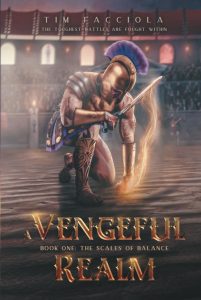
    A Vengeful Realm by Tim Facciola!

    A Gold Ribbon dividing this section from the next

    Congratulations to the Winners of the 2023 Goethe Awards!

    And a huge round of applause to this years 2023 Goethe Grand Prize Winner- If Someday Comes by David Calloway

    A Gold Ribbon dividing this section from the next

    The CIBAs offer more than just recognition — they provide a ladder to success with a range of achievement tiers and expert long tail marketing strategies. From the highly anticipated Long List to the prestigious Overall Grand Prize Winner, the CIBA lists energize both authors and readers, maximizing your digital footprint and expanding your fan base.

    The tiers of achievement for the CIBAs (Chanticleer Int'l Book Awards)

    We are always eager to support the Best Books through the CIBAs. Join the ranks of celebrated authors who have already taken this critical step in their publishing.

    Your book deserves to be discovered, celebrated, and shared with the world. Don’t miss the chance to showcase your talent and gain valuable exposure at the Chanticleer Authors Conference (April 3-6, 2025) where Winners from all 25 Book Award Divisions will be announced and honored.

    In a world hungry for good books, your story deserves to be heard. Submit now and leave a lasting impression.

    Let’s celebrate exceptional storytelling together!

  • The 2024 Goethe Hall of Fame – Celebrating the Grand Prize Winners of one of our most popular Divisions!

    The Goethe Hall of Fame

    Celebrating the Best Late Historical Fiction with the Goethe Awards!

    Goethe as the badge for the Post 1750s Historical Fiction Awards

    **Send Us Your Story by the end of July!**

    One of our many Historical Fiction Categories, Named after German Writer, Scientist and Playwright Johan Wolfgang Van Goethe (1749-1832), Considered to be one of the most Influential and Greatest Writers of the German Language.

    This Award Division covers anything after 1750, so there can be anything from The American Revolution, to the 1930s.

    For our other Historical Fiction Divisions, See the Chaucer Award for Pre-1750, Hemingway for 20th Century Wartime and Laramie for Western and Americana

    Let’s take a look at some of our Grand Prize Winners and Discover your next great read!

    If Someday Comes
    By David Calloway

    This is the true story of my Great-Grandfather George Calloway, a slave in Cleveland, Tennessee, before and during the Civil War. It is written as historical fiction, based on George’s life, and stories I heard growing up. It is a tale of determination, perseverance, and achievement.

    George protected his family through war, famine, and plague; he risked his life repeatedly to protect his owner’s family, and thus his own wife and children.

    More fact than fiction, George’s story has also been my journey, grappling with the humiliation of slavery; sorting through the many myths and false modern-day narratives, and discovering a long lost relative, I found that to understand America, you must first understand the Civil War. George was then, and remains, a hero of our family.

    • Winner, the 2023 Phillis Wheatley Historical Fiction Prize
    • Grand Prize Winner, 2023 Goethe award for Historical Fiction
    • Winner, The 2023 Next Generation Indie Book Awards African American Fiction Award
    • Finalist, the 2023 Eric Hoffer Montaigne Medal
    • 5 Stars Award, Reader’s Favorite 2023

    A Chanticleer Review is forthcoming! In the meantime, visit David Calloway’s website here!

    After The Rising & Before The Fall
    By Orna Ross

    After the Rising and Before the Fall Cover


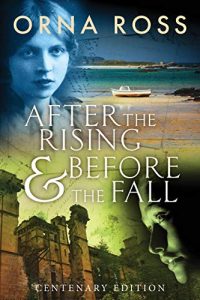
    Award-winning Irish author Orna Ross has created a volume comprising the first two novels of The Irish Trilogy, drawing from her Irish birth and upbringing for a special grasp of the country’s history, how its wars and political strivings have affected its people directly, personally, over multiple generations.

    Her two books take on a span of time rooted in the early 1920s and delve deeply into the interlocking fate of the extended family and ancestry of Jo Devereux. Jo, the book’s central narrator, leaves Ireland in her twenties, only returning in her forties in 1995 when she learns that her mother is near death.

    The journey back will draw her into the family’s complex relationships, and reacquaint her with Rory, her former, and perhaps only, true love.

    Read More Here

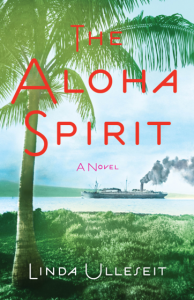
    The Aloha Spirit
    By Linda Ulleseit

    Cover of The Aloha Spirit by Linda Ulleseit

    In Linda Ulleseit’s novel The Aloha Spirit, we meet the plucky heroine, Dolores, as her father leaves her.

    “Dolores’s father deemed her useless when she was seven. Neither he nor her older brother, Pablo, ever said that, but every detail of their leaving told her so. Papa had tried to explain the Hawaiian custom of hānai to her. All she understood was the giving away, leaving her to live with a family not her own.”

    Her story starts in 1922; the place, multi-ethnic, multilingual Hawaii. Papa, a sugar cane cutter from Spain who worked in Hawaii, decides to take his son Pablo with him to seek his fortune in California. His wife died five years earlier. He leaves 7-year-old Dolores with a large family on Oahu in an arrangement called hānai, an informal adoption. Dolores doesn’t know the family well. She feels abandoned, with no idea when or if her father will send for her or return.

    Read More Here

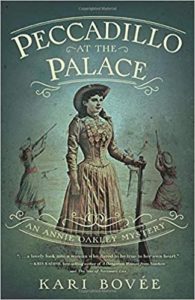
    Peccadillo At The Palace: An Annie Oakley Mystery
    By Kari Bovee

    Kari Bovée’s Peccadillo at the Palace, the second book in the Annie Oakley Mystery series, is a historical, mystery thriller extraordinaire. Fans of both genres will thrill at Bovée’s complex plot that keeps us guessing from its action-packed beginning to the satisfying reveal at the end.

    The book opens with the Honorable Colonel Buffalo Bill Cody’s Wild West Show to England on a voyage to perform for Queen Victoria. They are not on the high seas long, when Annie’s beloved horse, Buck, jumps overboard. Her husband and the Queen’s loyal servant, Mr. Bhakta, jump in to save the horse, or was Mr. Bhakta already dead before he reached the water? Thus, begins the mystery of who killed Mr. Bhakta, leaving all to wonder, is the Queen safe?

    Someone wanted the Queen’s man dead, and he is, but was it a matter of racism, intrigue, or an accident? Annie’s search for clues points her in several directions, but is it the doctor, or the woman dressed in rags with the posh accent, or the crass American businessman and his floozy wife? All have motive.  Even Annie’s husband has motive with his Irish background and ties to the Fenians and the Irish Republican Army (IRA).

    Read More Here

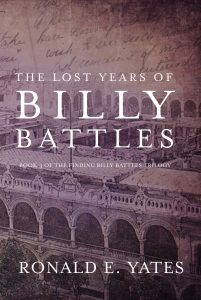
    The Lost Years of Billy Battles
    By Ronald E. Yates

    (2018 Overall Grand Prize Winner)

    For those not familiar with the series, Yates presents his books as works of “faction,” a story “based in part on fact” but also “augmented by narrative fiction.” The protagonist, William Fitzroy Raglan Battles, born in Kansas in 1860, lives a full 100 years and takes part in some of the most significant events of his time. He encounters key figures of the day (Bat Masterson, Wyatt Earp, President Wilson, Francisco “Pancho” Villa, among others), gives us their backstories, and quietly appraises them.

    Yates, a journalist with a keen eye for nuance and subtlety, has created a protagonist with superb critical thinking skills. William, a journalist, and occasional soldier examines people and transactions from every angle. Just as at ease in a Kansas saloon as he is at the captain’s table on a grand ocean liner on the Pacific, Billy Battles is also ruthlessly honest about his shortcomings and feels tremendous guilt when he acts impulsively or inadvertently causes harm to others. Yates has crafted a fully human character who is easy to admire, perhaps because he is admirably cognizant of his own flaws.

    Read More Here

    Reviewer’s Note:

    I’ve begun few books as eagerly as I did this one. Having read the first two volumes of Ronald E. Yates’ extraordinary trilogy, Finding Billy Battles, I couldn’t wait to continue his story in the final volume, The Lost Years of Billy Battles. The third installment lived up to the exceedingly high standard set in the first two volumes. Billy Battles is as dear and fascinating a literary friend as I have ever encountered. I learned much about American and international history, and you will too if you read any or all of the books. Each is an independent work, but if read in relation to the others, the reader experiences that all too rare sense of complete transport to another world, one fully realized in these pages because the storytelling is so skillful and thoroughly captivating. Trust me; you’ll want to read all three volumes.


    Thank you for celebrating our Goethe Hall of Fame Winners with us!

    Remember to add your next reads to your StoryGraph or Goodreads account! Now that you’re set on your next five reads, what are you waiting for? The only way to join this amazing list of Journey Winners is to submit today! 

    Those who submit and advance will have the chance to win the Overall Grand Prize of the CIBAs and $1000!

    Are you a Chanticleer Author who has some good news to share? Let us know! We’re always looking for a reason to crow about Chanticleerians! Here are some recent achievements from our authors:

    Reach out with your news to info@ChantiReviews.com

    The Best Books Grand Prize Book Award Badge
    You know you want it…

    If you have a great Post 1750 Historical Fiction Story, submit it to us before the end of July to enter the 2024 CIBAs!


  • The 2024 Goethe Spotlight! What happens when you’re on the edge?

     The Goethe Awards are here!

    and we want your Historical Fiction!

    Submissions Deadline for the 2024 Goethe Book Awards for Post-1750s Historical Fiction is July 31st! 

    Named after Johann Wolfgang Von Goethe (1749-1832), Considered one of the most influential writers in the German Language, The Goethe Award covers Historical Fiction from the Time Period of His lifetime and afterwards, 1750-20th Century.

    Why do we like Johann Wolfgang von Goethe so very much? It’s simple! He’s the guy who wrapped up everything we believe in with this simple sentence:

    “Whatever you can do or dream, you can begin it. Boldness has genius, power, and magic in it.” – Goethe

    In his lifetime, he saw the beginning of the Industrial Revolution in 1750 through Mary Shelley’s publishing of Frankenstein in 1818 – and everything in between! Check out the list of what happened during those nearly seventy decades at the end of this post – you will be A-MAZED!

    The tiers of achievement for the CIBAs
    The CIBAs Levels of Achievements. Books are promoted each time they advance!

    The Categories in the Goethe Awards are:

    • Regency, Edwardian, Georgian
    • Turn of the Century
    • 20th Century
    • World/International History Post 1750s
    • U.S. History
    • 1830s – 1900s Victorian Era

    As you may have noticed, some of the Goethe Awards categories extend even a little beyond our chosen Time Period. Lets take a look!

    The Georgian Era and Regency covers the reigns of four King Georges of Great Britain.

    A very handsome King George I

    While the period starts in 1714 when the German King George I began his Reign, we don’t get into the 1750s until George III began his reign in 1760. You may have seen a version of his early reign in the recent Netflix show and Bridgerton spinoff Queen Charlotte, or as a character in the award-winning Broadway musical Hamilton.

    Corey Mylchreest as Young King George in Bridgerton.

    George IVs reign is more often called the Regency, as he was acting as Prince Regent from 1811 until his father’s death in 1820, and he continued as king until his own death in 1830.

    At which point we get to the Victorian and Edwardian eras. Queen Victoria took the throne in 1832 until her death in 1901, and the Edwardian covers her sons reign in the early 1900s until WW1.

    This award division covers time periods anywhere from the American Revolution, the Industrial Revolution beginning in the late 1700s, and can go all the way to the Dust Bowl of the 1930s. American, European and The Rest of the World are all covered. (See the list of 27 Events that Happened During Goethe’s Lifetime at the end of this post.)

    Note: While the Goethe Awards categories have some leeway, the question we often return to when discussing with authors who have work on the edge of this time period is “does it mostly take place here?” and “does it fit with the feel and style of Late Historical genres?”

    There are three other historical divisions in addition to the Goethe Awards:

    Post 1750s Historical Fiction Award
    And the Goethe Awards close in July! Don’t miss your chance to submit today!

    Now for a bit more on Goethe himself.

    Theater Director of Frankfurt for decades, Playwright, Scientist, Novelist, Politician and more. One of his best works is a posthumously published play named Faust.

    Faust is a German legend based on a real man, Renaissance alchemist and astrologer Johann Georg Faust. Supposedly selling his soul to the Devil for power and knowledge, his is a story that has been told many times over. As plays by Goethe, Christopher Marlowe (Although some believe Marlowe’s was actually written by his friend William Shakespeare), and Gertrude Stein.

    The legend of Faust continues today as a short story by Washington Irving, in Oscar Wilde’s The Picture of Dorian Grey, one of Terry Pratchett’s Discworld novels, and an inspiration behind Queen’s hit song, Bohemian Rhapsody.

    Goethe’s own works inspired many things, musical pieces from Beethoven (who rather admired Goethe), Schubert and Liszt, and multiple films, including one by Nosferatu director FW Murnau.

    Goethe in general was a fascinating person. Meeting some of the most famous people of his time, Like a meeting with Napoleon in 1808 where Napoleon revealed one of his favorite books to be Goethe’s Sorrows of Young Werther. And even though he rather disliked the Romanticism movement, Romantic artists and writers are the people he influenced the most.

    Fast Forward to more Modern Times: The Grand Prize Winner of the 2023 Goethe Award!

    If Someday Comes
    By David Calloway

    blue and gold badge recognizing If Someday Comes by David Calloway for winning the 2023 Goethe Grand Prize

    While a full review is forthcoming, here’s what early readers are saying:

    A book you need right now. Sentence structure, character, and scene development are fully unpacked here. Excellent pacing with a great inclusion of the facts around the civil war, slavery, and presidential figures. The reading is driven forward by the story coupled with the simple rich historical depth.

    Visit the Author’s Website today to learn more and buy it here on Amazon!

    Got a great read? Submit to the CIBAs today!

    Blue button that says Enter a Writing Contest
    Submit to the Goethe Awards here!

    Some events that occurred during  Goethe’s lifetime:

    1750 – The Industrial Revolution began in England
    1756 – Wolfgang Amadeus Mozart was born in Salzburg Austria
    1761 – The problem of calculating longitude while at sea  was solved by John Harrison
    1765 – James Watts perfects the steam engine
    1770 – Ludwig van Beethoven was born in Bonn, Germany
    1774 – Goethe’s romantic novel, The Sorrows of Young Werther, propels him into European fame
    1774 – Goethe’s play Gotz von Berlichingen, a definitive work of Sturm und Drang premiers in Berlin
    1776 –  America’s 13 Colonies declare independence from England. Battles ensue.
    1776 – Adam Smith publishes the Wealth of Nations (the foundation of the modern theory of economics)
    1776 –  The Boulton and Watt steam engines were put to use ushering in the Industrial Revolution
    1783 – The Hot Air Balloon was invented by the Montgolfier brothers in France.
    1786 – Le Nozze di Figaro by Mozart premiered in Vienna
    1789 – George Washington is elected the first president of the United States of America
    1780 – Antoine Lavoisier discovers the Law of Conservation of Mass
    1789 – The French Revolution started in Bastille
    1791 – Thomas Paine publishesThe Rights of Man
    1792 – Napoleon begins his march to conquer Europe
    1799 – Rosetta Stone discovered in Egypt
    1802 – Beethoven created and performed The Moonlight Sonata
    1802 – A child’s workday is limited to twelve hours per day by the British parliament when they pass their first Factory Act
    1804 – Napoleon has himself proclaimed Emperor of France
    1808 – Atomic Theory paper published by John Dalton
    1811 –  Italian chemist Amedeo Avogadro publishes a hypothesis, about the number of molecules in gases, that becomes known as Avogadro’s Law
    1811 – Jane Austen’s Sense and Sensibility was published anonymously. It was critically well-received.
    1814 – Steam-driven printing press was invented which allowed newspapers to become more common
    1818 – Mary Shelley publishes Frankenstein
    1832 – Goethe’s Faust, Parts 1 & 2 are published posthumously (March 22, 1832)

    Resources 

    *Britannica Encyclopedia 

    ** Oxford Reference

    ***New Yorker Magazine