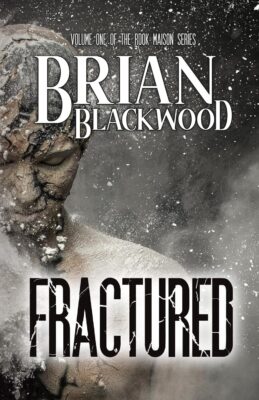
A genre defying debut, Fractured by Brian Blackwood tells the story of Rook Maison, who sustains his life by ripping out peoples’ souls to steal their bodies for himself. This unique ability comes with one cataclysmic side effect. Each time Rook replaces a soul, those souls—and Rook’s own—become increasingly fractured.
The forces of Heaven and Hell rely on a carefully maintained balance, and Rook has pushed that balance to a breaking point.
Originally a Catholic monk during the emergence and upheaval of Lutheranism, Rook has become increasingly disillusioned towards his religion and the purpose of his endless mercurial life. As the centuries passed by, Rook became a shell of who he once was, doing anything and taking whatever bodies necessary to continue his existence.
Rook grew hellbent on finding every scrap of information about his mysterious origins. But now, with a target on his back, Rook must decide if finding the truth is worth destroying the worlds of the living and the dead.
Fractured will entice those who root for the morally grey and antiheroes, as Rook Maison is a deeply interesting example.
Readers experience him in many different forms, from his devout beginnings and guilt-ridden conscience at having to take soul to a villainous disregard for the lives of others in favor of selfish survival. The plot jumps around in time as it reveals Rook’s backstory, building a sense of mystery and foreboding.
Some chapters focus on the perspective of the Angels, a fascinating angle on the story as they join with Hell to stop the fabric of the universe from being destroyed.
Placing Fractured within one genre would not do it justice. Its blend of urban fantasy, historical fiction, horror, and religion creates something unique and exciting for a variety of readers.
Brian Blackwood’s background in theory and screenwriting shines through his cinematic prose.
Illustrations at the beginning of each chapter set the tone for the pages that follow and piques interest in the central mystery that is Rook Maison.
A thought-provoking wild ride, Brian Blackwood’s Fractured is not to be missed. It asks complex questions through a well-developed character while providing the entertainment of a time-traveling adventure. An excellent choice for fans of urban fantasy, historical thrillers, and gothic religious horror. Rook Maison is one hell of a force to be reckoned with.
Shami Stovall’s Time-Marked Warlock rewinds urban fantasy with fresh magic.
Adair Finch is the world’s most powerful warlock – and he’s done with it all. In Time-Marked Warlock, Shami Stovall crafts a brilliant urban fantasy that feels like Groundhogs Day meets Harry Dresden, delivering a take on magical investigation that will leave readers spellbound from the first page.
A reluctant mentor meets his match in a twelve-year-old witch.
After losing his brother in a case gone wrong, Finch has sworn off the paranormal world entirely. But when young Bree Blackstone pounds on his door in the middle of the night – her mother murdered, her father kidnapped – Finch wades back into the magical chaos he’d tried to escape. What starts as a favor for an old friend becomes a twisting mystery that threatens everything he thought he knew about his world.
Stovall excels at creating an unlikely partnership, one crackling with energy and humor. Bree isn’t your typical helpless child in need of rescue – she’s a young witch with questions, opinions, and magical abilities that complement Finch’s considerable power. Their banter and growing mentor-student relationship provides both emotional depth and genuine laughs throughout the investigation.
Time magic creates a game-changing twist on fantastical investigation.
The real genius of Time-Marked Warlock lies in Finch’s unique ability to rewind time and witness events as they actually happened. When someone tries to kill both Finch and Bree, his ability to see the attack unfold adds layers of complexity that keep readers guessing right alongside the characters.
Stovall uses this temporal element not as a gimmick but as a sophisticated plot device that deepens the mystery while raising the stakes. Each revelation through time manipulation reveals another clue towards conspiracy, transforming what appears to be a straightforward murder case into something even more sinister and far-reaching.
A standout series launch that reinvents urban fantasy tropes.
Time-Marked Warlock succeeds because of the originality it infuses into familiar urban fantasy elements – powerful warlocks, magical investigations, supernatural threats. The world-building feels both lived-in and vivacious, populated with complex characters whose flaws make them more compelling than perfect heroes ever could be.
Stovall’s writing sparkles with wit and energy, moving at breakneck pace while never sacrificing character development. Finch’s journey from bitter retirement to reluctant heroism feels earned, while the emotional resonance of Bree’s evolution from terrified child to capable young witch elevates the entire narrative.
As the opening volume of The Chronos Chronicles trilogy, Time-Marked Warlock establishes a magical world readers will want to revisit again and again. Fans of Jim Butcher’s Dresden Files and Kevin Hearne’s Iron Druid Chronicles will find their new favorite series in Stovall’s perfect combination of urban fantasy adventure and time-bending mystery.
Fantasy isn’t just elves and magic—there are so many possibilities for a Fantasy tale, and we love that! From epic quests to urban magic, from steampunk adventures to mythical retellings, the Ozma Awards celebrate the boundless imagination that fantasy fiction offers.
Let’s Dive into the Categories!
Magic, Heroes and Villains is the great variety of books that involve big archetypes and adventures like Six of Crows or The Fourth Wing.
Coming of Age Fantasy typically looks at someone coming into their own, like Harry Potter discovering his magical heritage, but it can also be aimed at a younger audience. For YA Fantasy, check out the Dante Rossetti Awards, and for Middle Grade Fantasy, explore the Gertrude Warner Awards!
Steampunk/Dieselpunk/Gaslight Fantasy are types of Alternative History and Counterculture. Steampunk features Victorian-era sci-fi or fantasy with an emphasis on steam-powered technology and historical fashions. Dieselpunk has more of an industrial Art Deco, Film Noir aesthetic with elements from the World Wars and Early Cold War—think Bioshock or Blade Runner.
Modern and Urban Fantasy is exactly what it sounds like—Jim Butcher’s The Dresden Files is a perfect example. Fantasy elements in realistic, contemporary settings.
Myths and Legends and Fairy Tales feature classic Fantasy elements: fairies, King Arthur, folktale-type stories that have enchanted readers for generations.
Fantasy – Classic is High Fantasy like Lord of the Rings—epic battles between good and evil in richly imagined worlds.
Historical Fantasy is history with magic, where dark sorcerers move in ancient Viking battles or Nazis attempt to secure the Holy Grail.
Celebrating Our 2024 Grand Prize Winner!
After months of reviewing hundreds of entries, we are delighted to announce that Erin Lark Maples claimed the 2024 Ozma Grand Prize with her extraordinary novel A Circle of Stars! Throughout last year’s Ozma Book Awards, we’ve had the pleasure of promoting nearly 60 books as they advanced through our competition tiers.
Erin Lark Maples’s reluctant hero, compelling narrative, and richly layered world that exemplifies the innovative fantasy storytelling we seek to recognize. In addition to all the featured posts that have already gone out for the Ozma Awards, A Circle of Stars will be regularly promoted throughout the year on the Ozma Awards page and for the next five years in our upcoming Hall of Fame post. Erin Lark Maples will also be invited to participate in a Chanticleer 10-Question Interview, and you can read the Chanticleer Editorial Review for A Circle of Stars here!
Looking for Your Next Fantasy Read?
Check out some of these incredible books we’ve reviewed recently that showcase the amazing diversity of fantasy fiction!
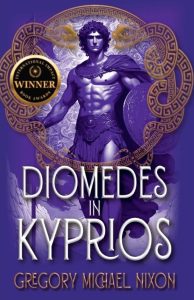
DIOMEDES In KYPRIOS: Diomedia Series Book 2 By Gregory Michael Nixon
Gregory Michael Nixon’s Diomedes in Kyprios, book 2 in the Diomedeia Series, continues the adventures of the godlike yet all too human hero, Diomedes of Tiryns, as he seeks to discover a meaningful destiny in the chaos of the Bronze Age Collapse.
We begin after the fall of the Hittite Empire, four years after the destruction of Troy. He emerges from the dark river that runs through the underworld where the sacrifice of the Hittite Great King has just occurred, and he has rescued the Hittite Queen from certain death. Nearly drowned but still alive, he recalls only that he had vowed to reunite with the former Queen of the Hittites, the woman he loves named Lieia, at Paphos on the island of Kyprios (ancient Cyprus).
Lieia must undergo her own “odyssey” to get to Paphos to meet Diomedes. She depends on her band of protectors, but they pay for fare aboard a ship with evil men who cannot be trusted.
THE WINTER HEIR: Fractured Kingdoms Book 2
By J.A. Nielsen
Dante Rossetti First Place Winner
The Winter Heir, thesecond book in J.A. Nielsen’sFractured Kingdomsseries, picks up where the first book,The Claiming, leaves off—with its protagonists struggling under the weight of a vital bargain.
Lady Dew Drop, Dewy to her friends—and her frenemies—is languishing in the court of the Winter Fae, a summer princess nearly frozen in both heart and spirit as she does her best to fulfill the pact she made with the Winter King. Meanwhile, the man who got her into this mess, the human mage and illegitimate princeling of Telridge—Spence Ferrous—tries to fulfill the deal for her.
But the story is much bigger than these two young lovers. The Winter King is dying without a legitimate heir. And it’s his own proud, arrogant fault. As much as both the humans and the Summer Fae would be willing to let him suffer the consequences of his own actions—he’s not the only one who will.
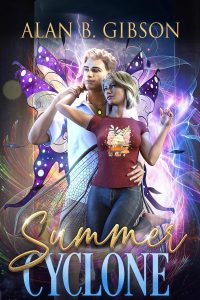
SUMMER CYCLONE: Magic at Myers Beach Book 4 By Alan B. Gibson
The citizens of the three fairy kingdoms clash, forced to live shoulder-to-shoulder alongside ungoverned Outliers. In Summer Cyclone, fourth book of Alan B. Gibson’s Magic at Myers Beach series, unassuming tea-shop manager Stefán tries to find love while keeping all of fairy society from fracturing.
The three fairy kings, Theos, Zsombor, and Christophe, evacuate their people to Myers Beach. It’s only here that they have any chance of recreating fairy dust after their old sources had been poisoned, and saving every fairy life. They take in the Outliers, remnants of a fallen kingdom, and at first find good will between the groups. But with thousands of fairies moving in, they have to keep everyone on a short leash or else risk humans catching wind of their new neighbors. Resentment of these strange Outliers builds.
Stefán, a close confidant to Theos, struggles to keep anti-Outlier sentiment at bay with the help of some enigmatic and knowledgeable new friends. Rumors of him giving the Outliers special treatment grow stronger as some fairies begin to suspect that he’s actually one of them.
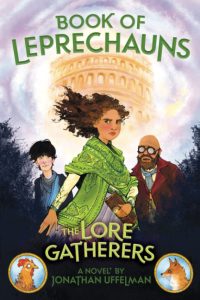
BOOK Of LEPRECHAUNS: The Lore Gatherers By Jonathan Uffelman Ozma First Place Winner
Three leprechauns, Molly, Shaun, and Dorker, have their lives turned upside down when a sinister figure returns to their peaceful village with greed and revenge on his mind. In Jonathan Uffelman’s middle-grade fantasy, Book of Leprechauns: The Lore Gatherers, they embark on a treacherous journey to recover their lost home.
Shaun McClanahan struggles to support his daughter Molly as she fails a crucial test for young Lore Gatherers—a subculture of Leprechauns who respect the power of stories. Though he’s weighed down by his responsibilities as the protector of his village’s communal gold stash, Shaun tries to overcome his worrying nature by trusting Molly to check on the gold by herself, hopeful that she can prove her worth to the village.
But when Molly follows her father’s magical instructions to the letter, she discovers with horror that the treasure is missing, save one ancient Roman coin.
These reviews represent just a glimpse of the fantastic worlds waiting to be discovered in today’s fantasy fiction.
See the Chanticleer Difference for Yourself!
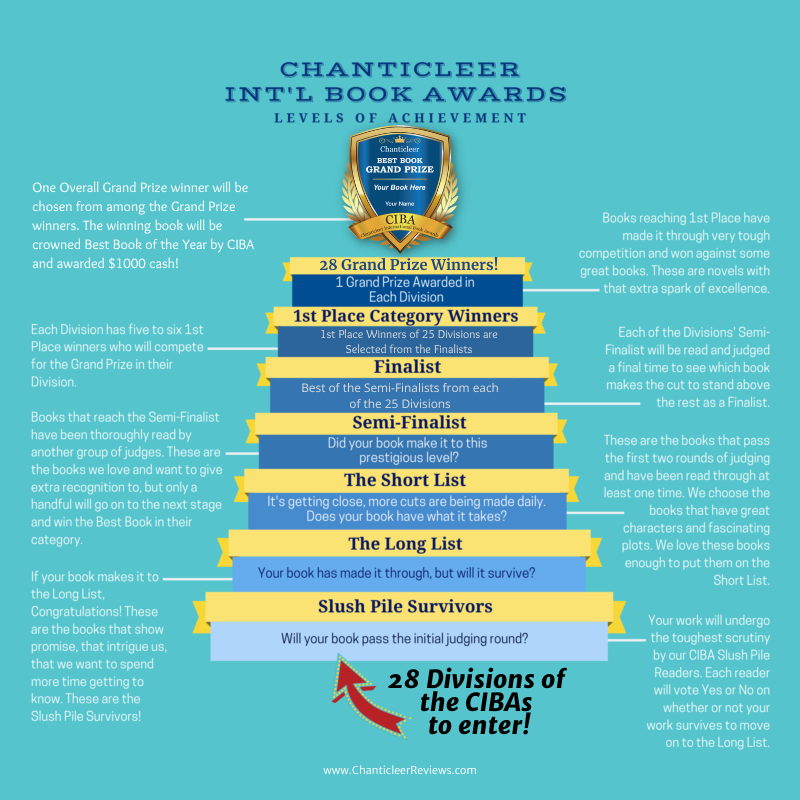
We’re so excited about all the great books we receive every year for both the CIBAs and for our Editorial Reviews. The Chanticleer International Book Awards offers an incredible $30,000 in cash, prizes, and promotion across all divisions!
This is the journey from beginning to end for the CIBAs! Every list you make means more promotion for you and your work as each advancement tier is posted right here on our website, on our social media, and also out in our newsletter! Your book deserves to be discovered.
The magic of storytelling lies in sharing your vision with the world. Whether your fantasy features dragons soaring over ancient kingdoms or witches working spells in modern cities, the Ozma Awards are your gateway to recognition and readership.
Fantasy has the power to transport readers beyond the mundane into realms of infinite possibility. Don’t let your story remain hidden in an enchanted vault—submit to the Ozma Awards today and join the ranks of celebrated fantasy authors who’ve found their audience through Chanticleer!
There’s a darkness rising from the Otherworld in Lydia M. Hawke’s Becoming Crone, and only the Morrigan’s Crones can send it back. But For Claire Emerson, her first challenge is accepting the fact that she is a Crone.
On Claire’s sixtieth, friends and family come to celebrate her milestone birthday. But with her daughter-in-law Natalie giving out advice more suitable for an 80-year-old, her neighbor Jeanne’s annual gifting of a garden gnome, and her best friend Edie cracking wise and irreverent, Claire’s milestone is more like a millstone around her neck. Fresh off a divorce, in a funk, and seeking purpose in her life, her day is only brightened by her grandson Braden gifting her an antique pendant.
The owner of the antique shop, her neighbor Gilbert, wants to buy it back. Claire refuses for Braden’s sake and finds the pendant proves to have a value stranger than money. Other strange occurrences happen as well, including a strange, angry man, and protective crows. Determined to resolve this new mystery, Claire sets out to find the address.
And find it she does, after a long trek down a disused, heavily wooded, bramble-entangled road.
It’s a stone cottage, guarded by two beings destined to teach and protect her: a female gargoyle named Keven, and Lucan the rather charming werewolf. After much resistance—not to mention an attempt on her life—Claire agrees to stay the night.
At this point Claire is chalking up her fantastical experiences to a seemingly sudden onset of dementia. Despite her disbelief, Claire is sharp and likable, with an engaging voice and a gift for wry witticisms. “Not quite what I’d envisioned as a retirement plan,” she tells herself when she finally agrees to learn magick from Keven.
And she needs to learn magick fast! When the mages attack, the stakes become astronomic.
Claire collects her cat and moves into the cottage to begin her lessons. She finds her long-ago dabbling in Wiccan spells proves she already has the magick in her, but she needs to learn to control it. To Claire’s and Keven’s surprise, she finds she can tap into Air, Fire, Earth, and Water magick. Each Crone controls only one element, which means that Claire is the fifth and ultimate Crone, the Crone of Spirit.
As her training continues, she learns the evil she’s seen began in Arthurian times, when a Slavic god named Morok possessed the wizard Merlin and began disseminating darkness and deceit upon the world. Only the Morrigan and her Crones are capable of stopping him. But each time they try to rid themselves of him, a little of the world also falls with him.
Hawke ties this god of deceit to the lies and disinformation our world experiences today—a quiet reality check that helps ground the story. Morok’s mages even use bots to crawl the internet in search of the five pendants that, when used together, would destroy him forever.
Becoming Crone takes its time getting through Claire’s misgivings about turning sixty before it sets her on her true path, but Hawke has created such a lively cast of characters within a fluid and vivid environment, and the story never fails to intrigue.
Claire’s attraction to Lucan, and Edie’s disappearance, leave unanswered questions, and readers can look forward to both characters returning in the second installment of The Crone Wars series – A Gathering of Crones.
Women readers in particular will enjoy Becoming Crone for its dynamic representation of older female characters. After all, as Keven tells Claire, “All women are witches. Or at least, they have the capacity to be so.”
The citizens of the three fairy kingdoms clash, forced to live shoulder-to-shoulder alongside ungoverned Outliers. In Summer Cyclone, fourth book of Alan B. Gibson’s Magic at Myers Beach series, unassuming tea-shop manager Stefán tries to find love while keeping all of fairy society from fracturing.
The three fairy kings, Theos, Zsombor, and Christophe, evacuate their people to Myers Beach. It’s only here that they have any chance of recreating fairy dust after their old sources had been poisoned, and saving every fairy life. They take in the Outliers, remnants of a fallen kingdom, and at first find good will between the groups. But with thousands of fairies moving in, they have to keep everyone on a short leash or else risk humans catching wind of their new neighbors. Resentment of these strange Outliers builds.
Stefán, a close confidant to Theos, struggles to keep anti-Outlier sentiment at bay with the help of some enigmatic and knowledgeable new friends. Rumors of him giving the Outliers special treatment grow stronger as some fairies begin to suspect that he’s actually one of them.
As an orphan of asylum-seeking parents, Stefán doesn’t even know his true ancestry.
But though his responsibilities weigh heavy on him, Stefán finds a bright spot in his life. He falls for Julie, the human woman who—even as a relative stranger—offered him kindness and support while he watched over Christophe’s recently-possessed sister, Princess Zoë.
Julie herself hesitates to be honest about her feelings, a recent failed relationship fresh in her mind. They tip-toe around each other, but draw gradually closer. Stefán makes her morning coffee and teaches her to cook. Julie shares her love of skateboarding, and the adventures she and Christophe had while travelling together the past few months. And at first, they bond as they help Zoë recover despite having lost her magic and wings to the witch possessing her body.
Julie worries, however, that Stefán and Zoë are getting too close. And with nearly all of her friends now fairies, it’s easy for her to feel like she has no lasting place in their world.
All the while, a murderous figure from the past—the very man who poisoned the old fairy dust—returns to take advantage of the weakened kingdoms.
Cross-kingdom tension builds beneath the surface until the fairies are nearly erupting. Agitators push greater and greater anger at the Outliers, empowered by the fear of a ticking clock. The royals only have a few weeks left to find the final ingredient to fairy dust before their people starve.
Each time Stefán and his friends think they have a solution to one of their pressing issues, it leads to greater outcry from the populace and more opportunity for sinister forces to take control. The patience of their people wears thin, and eventually, so does the patience they have for each other. Even a loving group of friends can be made to turn on each other with the right combination of fear and magic.
But with his willingness to tackle impossible tasks, and his deep desire to understand himself, Stefán opposes the destruction of his world while easily pulling readers into his shoes.
He and Julie are both outsiders among the people they love. But neither of them lets that stand in the way when their friends need help, proving that even if they don’t have the title of fairy royalty, they have no shortage of strength or nobility.
As it brings together both old friends and old foes from across the series, Summer Cyclone explores meaningful emotional threads.
Myers Beach shines with the return of characters from previous installments, particularly the fairy royals Theos, Lily, Zsombor, and Greta. Their distinct personalities weave together and clash now that they’re a team with the weight of fairy society on their shoulders.
Julie’s just happy to have her best friends back in her life, especially as Lily and Greta reveal that she’s going to be godmother to their future fairy children. But as a human, Julie’s as far from fairy royalty as someone can be. She has no magic. No authority. And as matters of state become overwhelming, she fears she’ll be left out of her friends’ lives once again.
Stefán’s easy friendship with Theos and Alias—nearly his adoptive brothers—is tested by the conflicting demands of royalty. While they all want the same peace between the different fairy peoples, Stefán will have to learn how to navigate changing dynamics of power.
Personal relationships blend into societal strife with dire stakes. Stefán and Julie lift each other up even as they struggle with their insecurities. And as the fairy kingdoms approach a vital choice in how their way of life will change—unity or division—Summer Cyclone delivers on the promises of its preceding books with a suspenseful whirlwind romance.
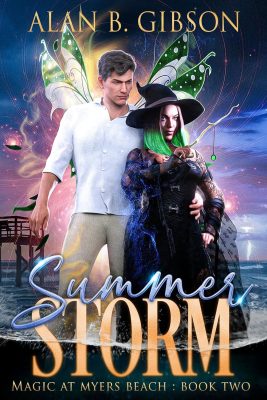
In Summer Storm, the second book of Alan B. Gibson’s Magic at Myers Beach series, local business owner Greta the Witch has a chance at fame, fortune, and fairytale love—if she can keep it all from being stolen first.
Picking up cleanly after Summer Thunder (Book 1 in the series), this story opens with Greta worrying about her social life. Her best friend Lily has left on an extended honeymoon with her husband Theos the King. Fortunately, her acquaintance, Julie, moves back to town, and while they soon develop a close friendship, things get awkward when she learns that Julia received a massive financial gift from Lily and Theos, and she was left with nothing.
Greta can at least focus on her business, the Witch’s Cauldron, and being the star of a reality show that’s planning to film her daily life. And when Greta meets a mysterious and charming man—Zsombor, or “Dos” to his friends—she finds herself rocketed to a level of stardom she couldn’t have imagined. She attends an opening gala for the renovated Fairy Kingdom tea house, and after a mixture of disastrous and fabulous public appearances she becomes Myers Beach’s rising influencer star.
Summer Storm paints a cheeky but emotionally resonant portrait of stardom in the modern, fickle internet age.
Greta’s sudden fame brings incredible business success and access to a world of fashion, connections, and glamor that dazzles her. But the internet audience constantly demands more posts and more of Greta’s witchy brand. She relies on Julie for her social media expertise, especially as the adoration of fans threatens to overwhelm her.
Fame is a double-edged sword. And while Greta indulges in so many adoring eyes, that fame distances her from the people she truly wants to connect with. Her online persona dominates her presence among professional peers, and with all the time that her media presence takes to maintain, Greta falters in some of the most important relationships in her real life—most worryingly, her growing romance with the otherworldly Dos.
When a major scandal break over Greta’s head, she faces an even darker side to notoriety. An accusation of murder, no matter how quickly proven false, staggers Greta’s image and sets her up for a much more focused, malevolent force.
Greta meets unique, fantastical characters along her journey—friend and foe alike.
Dos, despite his strangeness, proves himself capable of the seemingly impossible, as he charms Greta by connecting with the soul of the woods, bringing magic to her singing performances at a local retirement home, and even helping her fund her charity.
Greta befriends the similarly magical Alias, who proves to be much more than the handsome beach bum she first imagines him to be. He and Dos maintain a sense of mystique and unpredictability, all while showing Greta a world of wonders and good fortune—before she even learns that they’re actually fairies.
With yet more characters like the gossip star Rona Divine, skateboard prodigy Christophe, and of course the multi-talented Julie, Summer Storm fills its setting with a vibrant and exciting cast.
But as Greta’s good fortune starts to turn, and the cruel sorceress Zsa Zsa Hajdu intrudes on her life, she struggles to hold onto her important connections.
Greta’s idyllic adventure of romance and fame begins to unravel. Zsa Zsa wields great and terrible influence in both her personal and public worlds, and by the time Greta realizes the danger she’s up against, the true witch might be impossible to stop.
Greta turns to her friends in the tug-of-war for Dos’s heart, but she’ll need to embrace her own strengths and authentic passions to stand up against supernatural danger.
Readers will love Greta for her drive and fears alike.
She becomes caught in the difficult questions of what truly matters to her in life, and what she’s willing to do or give up for it. Her layered, realistic personality plays well off when matched with Dos’s fantastical attitude, creating a romance that feels genuinely transformative for both characters.
Ending with a sharp cliffhanger, Summer Storm will set readers up eagerly for the next installment of the series, Summer Lightning, with conflicts of the fairy kingdoms stepping into the spotlight.
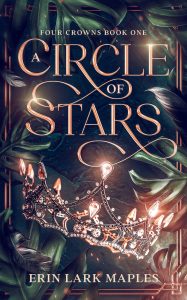
If you’re looking for a beach read with supernatural intrigue, A Circle of Stars by Erin Lark Maples will draw you in from page one. Ember “EJ” James, a newly-arrived stranger in the strange land of Prescott, AZ, immediately begins navigating unfamiliar territory, both physically and metaphysically.
Forty-something EJ doesn’t know it yet, but when she agreed to take over her deceased uncle Hollis’s shop in Prescott, she stumbled into a world of magical realism. The plant shop, as it turns out, is more than just that—it hides secret access to other realms, which supernatural beings will go to great lengths to access. Much like the plants in the shop, this tale is dark, tangled, and intriguing beyond belief.
Anyone else may have felt helpless. But EJ remains upbeat, charmingly self-deprecating, and resourceful to the end. There’s a great joy in seeing how she works through her new surroundings, unfazed by (almost) everything they throw her way.
Erin Lark Maples builds suspense quickly as the narrative unwinds, blending modern popular fiction with classic fantasy worldbuilding.
There’s a rather fantastical number of attractive men, but it is fiction, after all, and Maples quickly subverts reader expectations. What at first seems to be shaping into a classic fantasy romance gets turned on its head as would-be suitors become anti-heroes, even antagonists. The question soon changes from “Who will EJ choose?” to “How will she get out of this mess?”
As the plot thickens, EJ and the reader alike have much to keep up with: many names and complex rules of the fantasy world EJ’s just discovering. It has portals, pathways, history, artifacts—all the markers of a well-built world. Since readers see it through EJ’s very confused eyes, it’s easy to feel lost, but the real-world details help keep things grounded.
Much of the action takes place indoors, as EJ figures out how to run a plant shop-slash-supernatural meeting place. The plants themselves serve as a clear metaphor: they begin as overwhelming responsibilities but become friendly forces as EJ finds her way. Detailed descriptions of plants, moths, and even food become excellent foreshadowing.
Though it employs timeless fantasy elements, this is undoubtedly a text of the information age. Maples has the subtle yet admirable ability to give her characters modern tech—smartphones, online forums—without breaking her world’s spell.
Specific pop culture references further cement ACircle of Stars as a thoughtfully modern book. EJ herself is no stranger to contemporary issues: divorce, single parenting, planning events for terrible customers at her old job. But as she finds her path in Prescott, those issues fall away. Now, she’s instead confronted with unthinkable enemies and her own emerging supernatural power. Yet, these supernatural struggles ultimately help her come to terms with her real-world challenges.
Soon, EJ starts learning to merge her two worlds. She’s an experienced event planner, after all, and don’t her supernaturally-gifted neighbors still need events planned? She starts working toward her first big event in Prescott: an opening bash for the revived plant shop.
Her party-planning keeps the suspense aflame as we wait to see how things go down. Not all the invited guests are amicable, and many have dangerous abilities.
As chaos ensues and the stakes grow higher, it’s not always easy to tell who’s doing what and why, especially with so many magical abilities and clandestine connections at play. Like EJ, the reader often discovers what’s really going on a bit after the fact. However, the occasionally-campy banter in some scenes helps shed light on the details. It’s all in keeping with the book’s tone: a none-too-serious journey through magical possibilities. One of Maples’s best qualities as an author is her ability to show that magic can mean superhuman abilities and real-world serendipity, all at once.
This book is a great choice for lovers of smart beach reads, unbreakable women, and modern magical realism. At first, the novel’s resolution risks feeling a bit too easy. Yet there’s a surprising shift in perspectives just before the end, sending a quick signal that the story is far from over—we might see more through a different character’s eyes. This is Maples reminding us that A Circle of Stars is only the first book in her Four Crowns series. Though EJ’s world may seem settled for now, readers will be hungry for a sequel, to find out what she does with her newfound power.
Lily struggles to keep her business, her son, and her home. But in Summer Thunder, first book of the Magic at Myers Beach series by Alan B. Gibson, Lily’s luck begins to turn as she connects with the enigmatic beach king Theos.
With the help of her friend and fellow business owner Greta “the Witch,” Lily tries to revitalize her fairy-themed decoration and figurine store. Her divorce from her abusive ex-husband Kelly is pending, and she must present a calm and reliable home to ensure full custody of her son Jamie. But when her kindly landlord, Ms. Coffey, passes away, she’s confronted with two options: lose her prime business location and upstairs apartment, or somehow make enough money to buy the building herself.
Enter Theos, a kitesurfing champion with adoring fans. He shows true appreciation for Lily’s fairy figurines, bringing her many more sales. But more importantly, Theos becomes deeply interested in Lily herself. Their romance begins on rocky footing, as Theos has a strange air about him and seems to vanish whenever a storm comes into town. But when he begins modelling for a new fairy figurine– aptly named Theos, the King– the two are drawn inevitably closer.
Though she succeeds at turns, Lily confronts ever-growing problems, testing her determination.
She must keep Kelly from influencing her son and jeopardizing Lily’s chance at a happy family. And as Theos becomes a more serious figure in her life, Lily will have to decide how much of a leap of faith she’s willing to take–who she’ll end up becoming.
Meanwhile, the town of Myers Beach is facing change of its own.
This story keeps a tongue-in-cheek attitude as it tackles real-world issues. Powerful national banks sweep up local institutions, bullies wield the term ‘fairy’ against boys like Jamie who don’t follow their standards of masculinity, and the lives of people like Lily risk being seriously upended for the sake of someone else’s real-estate investments. While Summer Thunder keeps a lighter tone, it doesn’t shy away from serious topics.
The two perspectives, Lily and Theos, create an engaging balance of information for the reader.
While Lily tries to shape her own life, Theos shoulders an even more dire burden–the lives of his people. As crown prince of a true fairy kingdom, Theos deals with the aftermath of their most vital resource–fairy dust–being poisoned. He must find a new source of its core components, but thankfully, he’s already noticed a few in Myers Beach.
He works to set up a home for sick fairies around the town, while courting Lily and debating when–and how–to reveal his true nature. Often, readers will see the disconnect in Theos and Lily’s understanding of the world. Neither fully knows the other, especially as Theos presents such a larger-than-life persona, giving space for conflict to grow between them. Will they be able to overcome their differences, and truly connect as themselves?
This story shines with a charming setting and lively cast of characters.
Gibson’s descriptions place readers in the cool spray of kitesurfing and the quaint boardwalk of Myers Beach. Lily lives in a town of friendships and rivalries, with vibrant and unique characters to flesh out the story around her. While the prose sometimes explains more than it should, and dramatic threads don’t always have enough time spent building tension, the characters are driven and will pull readers easily into their schemes.
For those interested in urban fantasy, beach-side romance, and the adventures of plucky local fairies, Summer Thunder will be a strong opening to the Magic at Myers Beach series.
In Summer Lightning, the third book in Alan B. Gibson’s Magic at Myers Beach series, fairy prince Alias shoulders the weight of his people’s prejudice, but also their very lives.
Someone has poisoned the natural reserves of fairy dust ingredients, lacing it with deadly iron. With many of his people already dead, and others terribly ill, King Theos relies on his younger brother Alias to devise the lost recipe with ingredients found at Myers Beach, a small human town. Alias helps house the sick in Myers Beach, and dedicates himself to his research, he loses much of his own comfort.
Alias lives with his boyfriend, Christophe, a hero of the Third Kingdom– one of his own kingdom’s allies. He and Christophe can walk together freely in the human world, still Alias must worry about how his people see their prince. And now, with so many fairy eyes in his little town, he can’t even hold Christophe’s hand in public without the danger of being found out.
As Alias worries about fairy eyes on him, humans catch sight of the mystical beings in their midst.
Though Alias has created a functional fairy dust with only some of the ingredients, it leaves his peoples’ magical disguises unreliable. When famed actress and Alias’s childhood teacher, Dame Gabor, is found in her true form by a little girl, a media frenzy unleashes on the small town.
Summer Lightning shines a satirical light on the fads of modern mass-media, with an online group, Friends of the Fairies, arriving in town to find evidence for their various blogs and podcasts. The story morphs from one of a fairy, to a small bird, to a seven-foot monster, all with opportunistic tour guides and business owners looking to cash in on the town’s tourists.
More pressing than even keeping the true fairies hidden, however, is figuring out who poisoned the original dust.
Calling back to earlier books in the series, Summer Lightning menaces the protagonists with hints of their old villain, a powerful and vengeful witch. But, more personally, Alias has to face the traumatic memories of his old tutor–from the days he spent growing up in the Third Kingdom. Though he’s certain he’s seen the last of the man, Györfi, who tried to molest him as a teenager and outed his forbidden relationship with the young Third King, Alias begins to discover possible connections between Györfi and the current trouble.
Alias’s emotional journey will pull readers in, with his struggle between responsibility, personal connections, and the shadows of the past.
His relationship with Christophe takes center stage as they deal with homophobia from both human and fairy society. Christophe tries to bridge the gap between them, but Alias doesn’t dare make his relationship public, especially with so much attention already on him as the only hope for his people’s survival. In this story, the word ‘fairy’ pulls double-duty, both as the name for Alias’s people, and one of the slurs thrown at him by bigots.
Summer Lightning doesn’t shy away from darker subject matter, and as the story continues, readers will delve deeper into Alias’s memories of the cruelty he’s suffered–all while his old traumas resurface in new and dangerous forms.
But he and Christophe aren’t alone, with characters like Dame Gabor standing as a staunch ally both to their relationship and Alias’s work. And though the fights between Alias and Christophe can feel a bit rushed, their connection remains heartwarming and empowering in the face of adversity.
With a well-balanced mixture of comedy, intrigue, drama, and satire, Summer Lightning brings these magical characters to major crossroads as they try to keep up with the sinister forces ensnaring their homelands.
Imprisoned in a boys’ institution for a crime he did not commit, Curtis Jefferson must again face his nemesis, Harvey Huish. In Courses of the Cursed, the second installment of Vince Bailey’s paranormal Curtis Jefferson series, the fight comes with much higher stakes.
Estranged from his constant companion, Randy, Curtis continues his training alone, bewildered as to why Randy believes Harvey to be more than a vicious bully. But as Curtis’s strange visions and dreams increase, he needs Randy more than ever. He begins to question whether Randy has been preparing him for an encounter beyond the violence between boys.
Unbeknownst to Curtis, he isn’t the only one being tortured by the evil of Fort Grant. A local artist, Ray Cienfuegos, has his own date with destiny. As the last male descendant of his family, Ray’s fate is tied to the massacre that occurred near the fort almost one hundred years ago.
Two young men, one a savior and one a sacrifice, will be tested by the wicked power of the sacred land. But who will survive the encounter?
This complex work twists its way through a maze of interconnected storylines and characters who each, in their own way, embody the age-old battle between good and evil.
Ezra, an old Apache shaman, embodies something horrible and ancient. Whether he is Satan or some malicious pagan entity, he facilitates the cruelty done to the characters in the novel. However, upon closer examination, Ezra’s “evil” becomes much more complicated. While he tortures Ray and sometimes takes the form of an enormous would-be rapist were-coyote, he is also the voice of a long-dead, long-forgotten people, innocents slaughtered in a sick game of commerce.
Ezra does unforgivable harm, but he does so in the name of justice, begging the question of whether justice can be achieved through bloody vengeance.
The idea of justice defines many characters, including Lieutenant Roy, the cavalry commander who refused to serve out the original retribution for which Ezra fights. In opposition to Ezra’s malignancy stands Isabel Cienfuegos, Ray’s aunt. She serves as foil to all that Ezra represents and becomes an avenging angel, toting a 12-gauge instead of a fiery sword.
Numerous other characters strive to do good in the world around them.
Vince, the narrator, admits that his faith is the very reason he must tell the story. Leon and Georgy, fellow inmates of Curtis, drag him to church to pray for guidance and courage for what lay ahead, leading the reader to question if Curtis’s actions are divine justice, or if he is merely a pawn in Ezra’s plan.
The symbology of fire frames this story.
If Ezra is – or is in league with – the devil, the use of fire is a pointed reference to the retribution forced upon those who have done wrong in life. However, when Ray receives his blood money from Ezra, Isabel throws it into a fire to rid them of the thing that led to Ray’s abduction and torture. The fort’s original inhabitants were complacent in the massacre of the tribe, so when it partially burns down, the flames cleanse part of that history. Ray uses fire as a healer, to help him rehabilitate after his disfigurement at Ezra’s hands.
But fire takes its most questionable form when a beloved character, a “knight” in search of justice, is set ablaze by Ezra. Fire here is only a punishment, wrought on someone who has done nothing to deserve it. The role of fire, just like that of good and evil, is a complicated one with a multitude of interpretations.
Courses of the Cursed asks what sort of justice can come from vengeance, and what really will bring peace to the past. A thrilling paranormal adventure that we highly recommend!



 Shami Stovall’s Time-Marked Warlock rewinds urban fantasy with fresh magic.



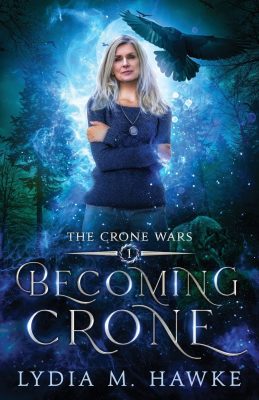
 There’s a darkness rising from the Otherworld in Lydia M. Hawke’s Becoming Crone, and only the Morrigan’s Crones can send it back. But For Claire Emerson, her first challenge is accepting the fact that she is a Crone.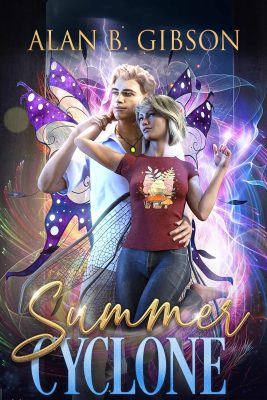
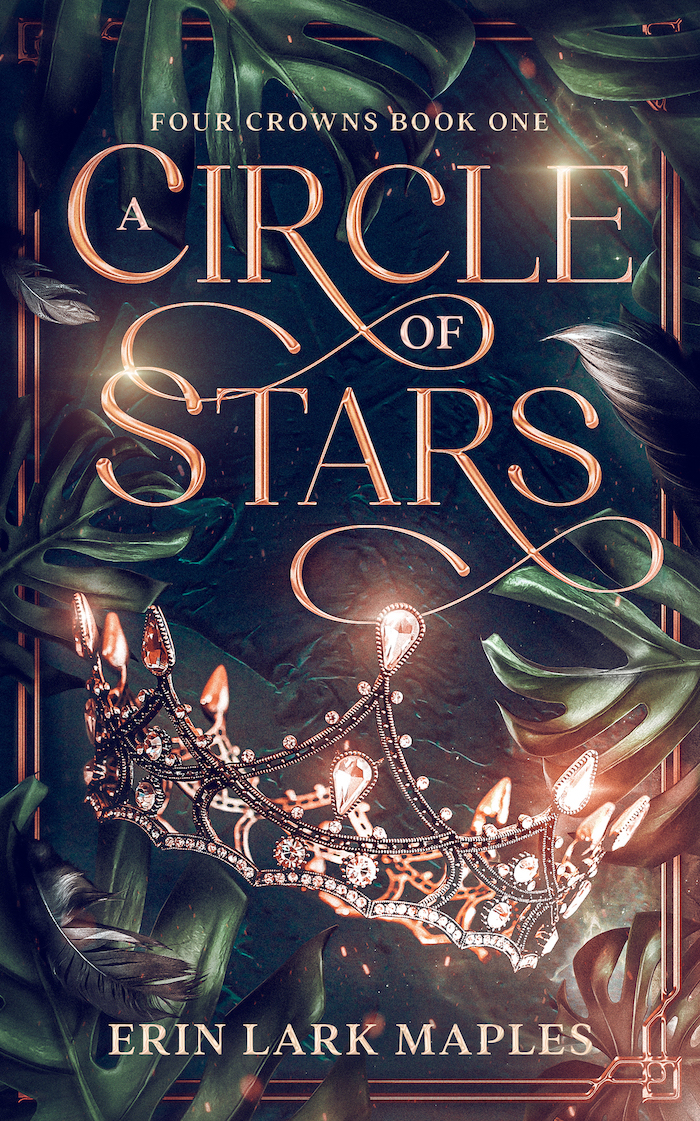
 If you’re looking for a beach read with supernatural intrigue, A Circle of Stars by Erin Lark Maples will draw you in from page one. Ember “EJ” James, a newly-arrived stranger in the strange land of Prescott, AZ, immediately begins navigating unfamiliar territory, both physically and metaphysically.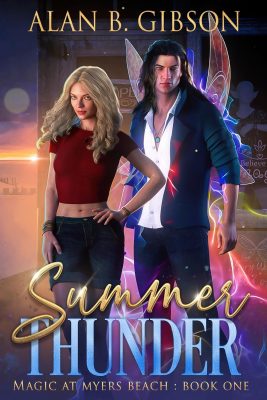

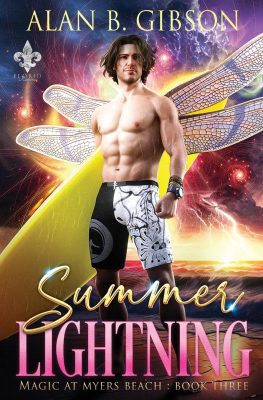
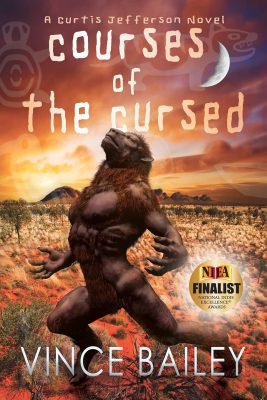
 Imprisoned in a boys’ institution for a crime he did not commit, Curtis Jefferson must again face his nemesis, Harvey Huish. In Courses of the Cursed, the second installment of Vince Bailey’s paranormal Curtis Jefferson series, the fight comes with much higher stakes.