CHANTICLEER 10 QUESTION AUTHOR INTERVIEW SERIES with Award-Winning Author, Kathryn Caraway
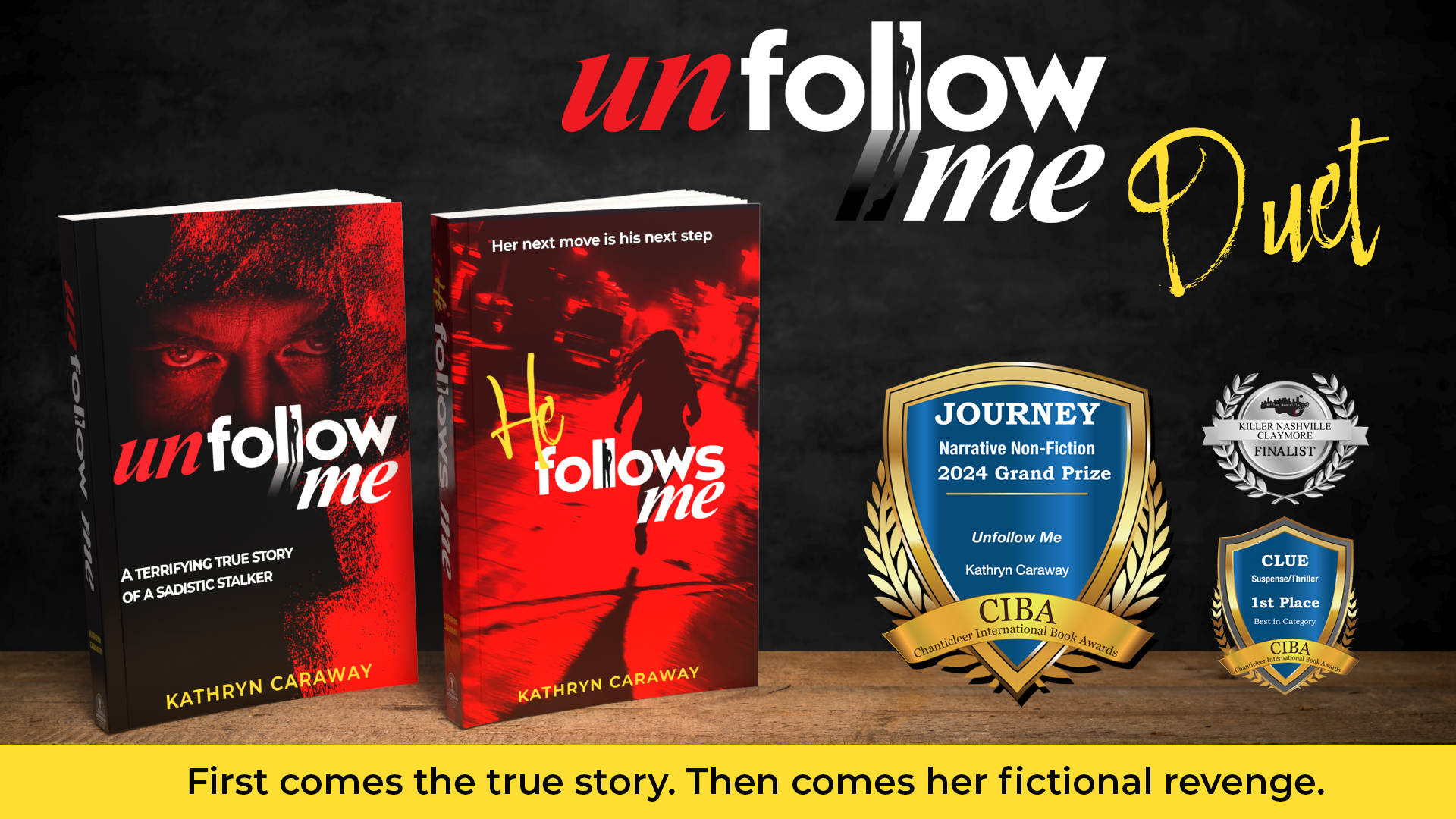
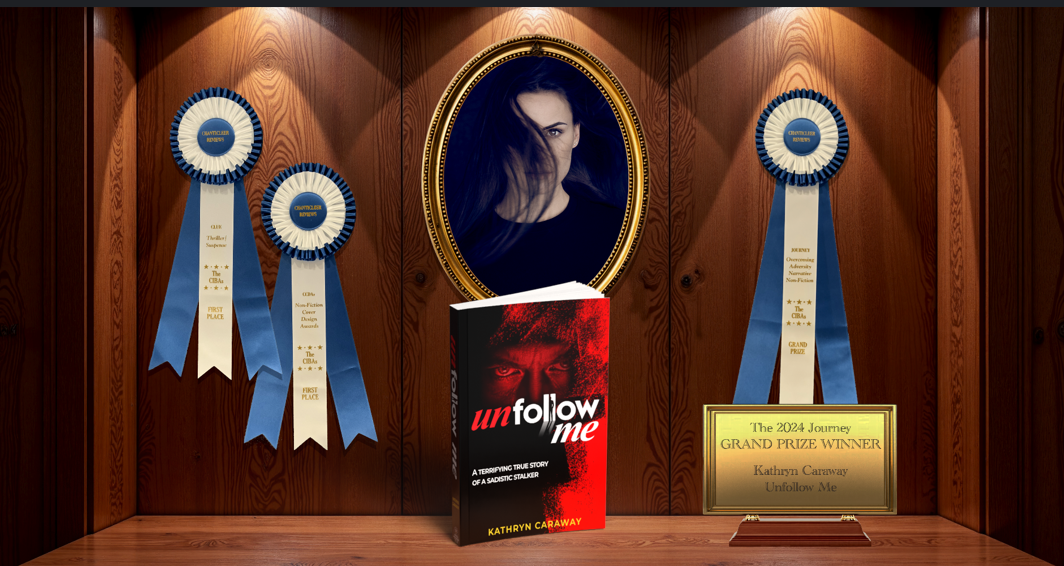
Hello friends, we have another fabulous interview for you today, with author Kathryn Caraway! Her book Unfollow Me took home the Chanticleer 2024 CIBA Grand Prize Award in the Journey Division and we were excited to learn more about what inspired her to write her true crime novel and what she’s planning next. Take a minute or two and get familiar with Kathryn and her incredible journey to becoming award-winning author!
Chanti: Hi Kathryn, and thank you for making the time for this. Let’s start with the basics. How would you describe the genre you write in, and what drew you to it in the first place?
Caraway: I write exclusively in the thriller genre. My dad loved reading Stephen King novels, but I wasn’t allowed. Instead, I snuck them off the bookshelf once he finished the book and read it at night under the covers with a flashlight. I became addicted to the pulse pounding, page turning, can’t-wait-to-read-the-next-chapter hallmarks of the thriller genre that drew me in as a reader and now, challenges me as a writer.
Chanti: Something feels so right about the image of sneakily reading Stephen King under the covers. Like King, your writing is deeply compelling. Can you talk about where you draw inspiration from for you ideas?
Caraway: Aside from the nonfiction and its companion fictional sequel, I create stories rooted in experience. After writing the first two books, I was so emotionally taxed that I wasn’t sure I would write again. But ideas came at random. For example, while driving down the interstate, a sign captured my attention and planted the seeds for my third book. Five months later, the first draft was written.
Chanti: Inspiration really can strike anywhere! When it comes to actually sitting down to write, how structured is your approach?
Caraway: Not structured at all, especially if I’m writing a first draft. If I need to think through a particular scene, I’ll do laundry. If I’m trying to figure out a plot point, I’ll clean the bathroom or do the dishes. I’m also easily distracted by my pup. I don’t pay attention to the technical elements of writing (character arc, story arc, etc.) during a first draft. I bounce between different parts of my manuscript so much that I once broke the wheel on my mouse!
Chanti: Ha! You definitely give your mouse and computer quite a workout! Speaking of influences, every writer has their literary heroes. Which authors do you turn to for inspiration, and how have they shaped your work?
Caraway:
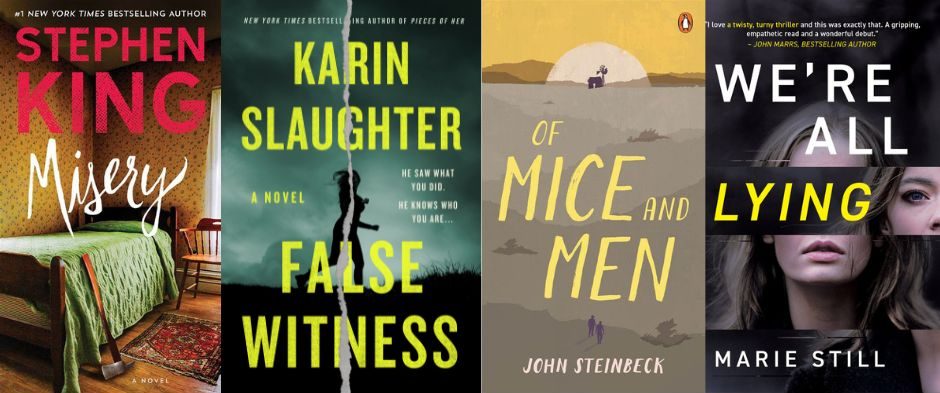
Stephen King: You never forget the first book that wowed you and I always turn back to how I felt reading his books. This has been a big influence on me because I work hard to create those pulse pounding scenes that makes readers want to inhale the words and turn the page.
Karin Slaughter: I binged a series she wrote many years before I started writing. I fell in love with the way she framed scenes that felt real, like I was living in the book with her characters. And that’s what I strive for in my writing.
John Steinbeck: Of Mice and Men was required reading when I was in school. We had to annotate each chapter as we read. I still have the original book which, for many years, was my go-to on the nightstand when I couldn’t sleep. His use of short chapters makes time spent reading feel irrelevant and the story moving forward at a quick pace. This is something I keep in mind when I’m organizing chapters, harnessing that tempo that will appeal to readers.
Marie Still: This is a newer author on the market that I had the good fortune to meet at a conference. She gifted me her book, We’re All Lying, and I devoured it. What captivated me was the way I connected with her main character because of my own life experiences. Since I was new at writing, I spent hours breaking down this character to understand the construction behind it. This is the experience I want to provide readers of Unfollow Me. While Marie’s character is fictional, I am the main character in Unfollow Me, so this meant I also had to get comfortable with revealing uncomfortable stuff to my readers.
Chanti: What a diverse group of influences! Every writer has their strengths. What aspect of writing do you feel most confident about, and what advice would you give to someone struggling in that same area?
Caraway: I feel the most confident in writing characters. I don’t really develop them until the second draft—once I have a big picture idea of their place in the story. One of the tricks I use is signs of the Zodiac. There’s so much information on each sign and the related personality that I give my characters birthdays. Before I write about them, I’ll read their horoscope and sometimes even get ideas from there. This method is especially helpful when I have multiple works in progress. If you’re struggling with a character, give them a birthday and read their horoscope!
Chanti: That’s a great idea! Do you have any other ways to work on your writing? How do you grow your author chops?
Caraway: Read, read, read! I read mostly in the thriller genre, but sometimes I need a break and will read something totally different. But it’s not just books you have to read, it’s reviews. To grow as an author, you have to understand your audience—what they want, what they’re looking for, what they’re turned off by. I’m not suggesting authors read their reviews, but I read the reviews of bestsellers in my genre to study the competition.
Chanti: Smart strategy for understanding your market! When you think about your ideal reader—the person who would absolutely love Unfollow Me—who comes to mind?
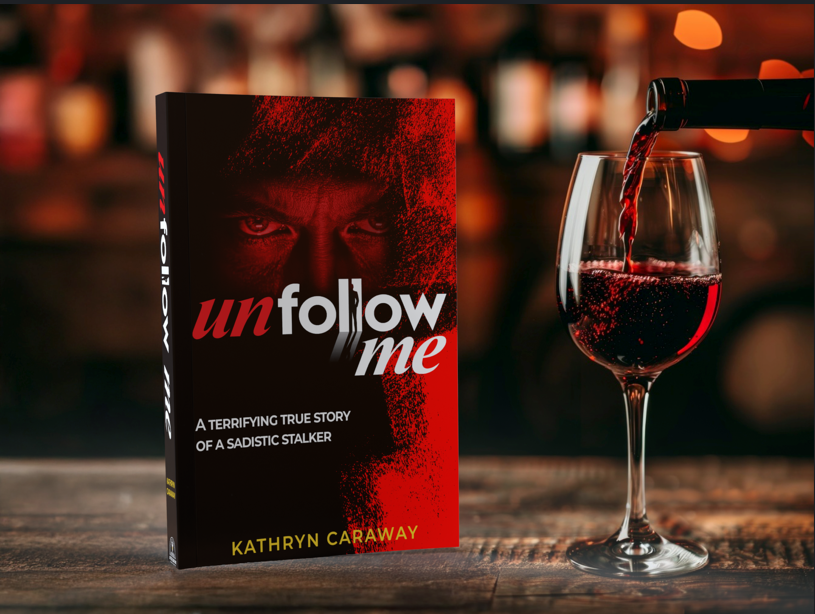
Caraway: Fans of true crime, as well as suspense/thriller fiction readers would be the best fit for my book. It is creative nonfiction which means it’s a true story written to read like fiction.
Chanti: The combination of true crime and thriller elements is certainly a natural one. What’s next on the horizon for you? What can your readers look forward to?
Caraway: Getting the Unfollow Me Duet out has been the sole focus on my daily activities. I have two other books fully written in draft form that I will eventually turn back to. Stay tuned!
Chanti: Exciting! Changing gears a little bit back to the mechanics of getting the work done—do you ever hit those dreaded writer’s block moments? And if so, what’s your secret for getting unstuck?
Caraway: Funny you should ask! The same question recently came up with a group of young writers in the Hey, Young Writers group.
Several years ago, when I first started writing, a friend of mine sent me an avatar that I named Pat/Patrick/Patricia. It’s framed and sits on my desk to represent my readers. When I get stuck, I think of what Pat/Patrick/Patricia might want to happen next and sometimes I even talk it out with the frame (yes, with an inanimate object). It doesn’t matter if it’s a silly idea because those often lead to the BEST ideas. The important thing I have to remind myself is not to force an idea to come. It always seems like when I push it from my mind, that’s when ideas on how to get unstuck hit me. Like, wham!

Chanti: I love the idea of having a reader avatar! Finally, writing can be emotionally intense work, especially given the nature of your stories. How do you unwind and recharge when you’re not writing?
Caraway: I am an avid scuba diver with quite a few dive certifications. I love to travel, dive, and experience new ecosystems. I love that when I’m underwater, nothing else in the world matters. And, of course, reading—especially on a rainy day.
If you would like to support Kathryn’s work, and get a pre-release copy of Unfollow Me and its sequel He Follows Me, her Kickstarter project is running through the end of June. Unfollow Me Duet Kickstarter

Kathryn Caraway has lived the life she now writes about. Targeted by a stalker, she’s traveled through the justice system seeking help, protection, and the conviction of the man who turned her world upside down. After he received only a short sentence for three separate charges, and added two probation violations to his record, Caraway chose to erase her presence from public view. She quit her job, changed her name, relocated, and deleted all her social media profiles, only to find out that he continued to violate the protective order by attempting to locate her.
To deal with the stress of the situation, Caraway turned to her education, a Bachelor of Arts in the English degree family, and began to write about her experience. She’s always been an avid reader and has been writing stories as a hobby since she was fourteen. With a new name, in a strange place and no job, writing her story quickly became her passion. In 2022, she wrote her true crime memoir, Unfollow Me, and later that year she followed it up with a fictional alternate ending to the same story. The thrill of writing plot twists with characters developed from her imagination became a thrill, and, after writing the first book, she created the pseudonym “Kathryn Caraway” and decided to venture down the dark, scary path of publishing.
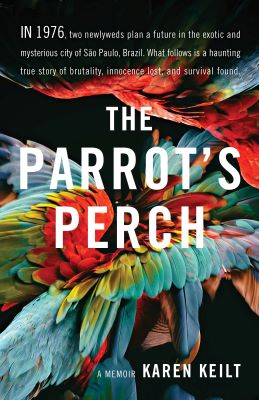
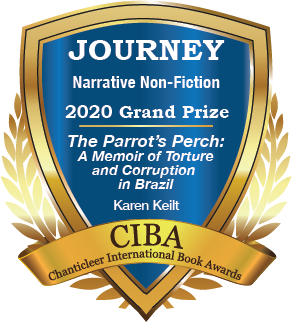 Karen Keilt led a life of privilege, a life that most of us only dream of, but she turns the dream upside down in her memoir The Parrot’s Perch: A Memoir of Torture and Corruption in Brazil, where she exposes the seamy underside of that life and the corrupt government under which she lived. Keilt takes us from her childhood filled with the horses she loved, to her marriage to a man she adored, to the fatal incident that destroyed the world she knew.