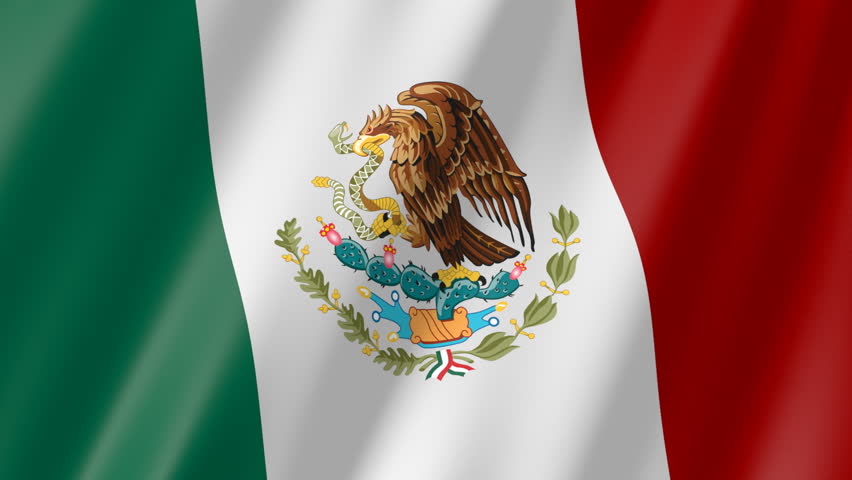
Cinco de Mayo is coming up soon, dear readers, and we are happy to celebrate with our neighbors to the south, but how much do you really know about Cinco de Mayo?
Mexican Independence Day?

While many in the US believe May 5 to be Mexico’s Independence Day, it’s actually September 16th—starting in 1810, over 50 years before 1862 when Cinco de Mayo was commemorated.
Why the confusion?
Many Mexican immigrants in the United States brought Cinco de Mayo with them as a way to celebrate their culture, and it hit the mainstream when US companies decided to capitalize specifically on boozy drinks associated with Mexico like margaritas. As is often the case in US history, emphasizing a culture just to drink didn’t always land well with actual Mexican Americans (see our article on St Patrick’s Day covering a similar issue here). The holiday is a much bigger deal here than in Mexico. Dia de la Independence or Anniversario de la Independence, September 16, Dia de la Independence or Anniversario de la Independence, September 16, commemorates Mexico’s independence from Spain and is the most important patriotic statutory holiday.

So What is Cinco de Mayo?
Cinco de Mayo is the anniversary of the Battle of Puebla against the French troops serving under Napoleon III. The victory there has long stood as a symbol of Mexican resistance to domination, and is still widely celebrated in that city and region, though not so much throughout the rest of The United States of Mexico.

If you happen to be in Puebla de Zaaragoza during Cinco de Mayo, you can visit the original battlefield, museums, hear speeches, and even see re-enactments of the historic conflict!
Informative Links:
- 6 Unconventional Ways to Celebrate Cinco de Mayo
- Cinco de Mayo Facts, Meaning, and Celebration
- What is Cinco de Mayo – New York Times
Mexican American or Chicanx Literature
The word Chicano is often used to refer to someone who is Mexican American, though it can also be heavily connotated as a political identity. Chicano is a catchall word with the masculine ending “o” while Chicana refers specifically to women who identify as Mexican American. The terms Chicanx or Chicane are often used as gender neutral terms, though the ending “x” does not naturally occur in Spanish and is considered an anglicization of the language. Any writer worth their salt knows they have to explain why they choose to use which version of Chicano/a/x/e rather than typing out the endless slash marks, and as an academic in the US who speaks Spanish, but whose native language is English, I am most comfortable with Chicanx.
Chicanx literature often stands out with strong themes near and dear to the author’s heart, as well as pushing the edge of literary excellence through a rich tradition of reading and writing that goes back further than the English language tradition.
Here are some examples:


- Borderlands/La Frontera by Gloria Anzuldúa is a marvelous book of theory, non-fiction, and poetry, blended together in a way that stands up for the power of community and connection, while examining the open wound on the border.
- Their Dogs Came With Them by Helena Maria Viramontes is a brilliant story of being young in East Los Angeles when the highway system is destroying barrios. The book takes a hard look at identity through a brilliant postmodern lens.
- Forgetting the Alamo, or Blood Memory by Emma Pérez follows the dramatic journey and transformation of a Mexican American through the Old West.
- So Far From God by Ana Castillo tells the story about a family of women and their many struggles in a small border town. Heaven and Hell lurk in the background as one mother and her daughters work to carve out a place where they fit in the world.
15 Books by Mexican, Mexican-American, and Chicanx Authors to Add to Your Reading List
Related Books From Chanticleer
These are books that are related to Spanish language or Mexico from Chanticleer:

A Quest for Tears
by Seán Dwyer
A Quest for Tears by Seán Dwyer is a captivating memoir written four years after the author suffered a Traumatic Brain Injury (TBI) as the result of a rear-end car collision.
While such casualties often foster long-term, unpredictable damage and seem a medical mystery, here Dwyer’s goal is to share his unique roadmap of struggles and experiences, while also advocating for fellow TBI survivors.
At age fifty-four, Dwyer was a college educator, fluent in Spanish, and a creative writer who had authored two novels and a work of nonfiction. A prolific songwriter, he was also blessed with an excellent memory, supportive of the talent of colleagues, and was always able to display his emotions easily. But in the aftermath of his January 29, 2015 accident, life changed.
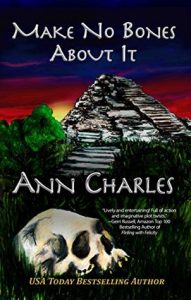
Make No Bones About It
By Ann Charles
Ann Charles has another true winner on her hands as she reunites the intrepid band of archeologists led by Angélica García for the second installment of her crackerjack series A Dig Site Mystery. From the very first sentence, Make No Bones About It is an entertaining thrill ride of the first order.
Top-notch archaeologist, Angélica García, admits that after her divorce she “suffered from trust issues—as having no faith in her own ability to judge character.” She leaves her university teaching job for a change of pace and heads to Mexico where she is hired by the National Institute of Anthropology and History to clean up and prepare derelict dig sites (ruins) for the current tourism boon— archaeo-tourism.
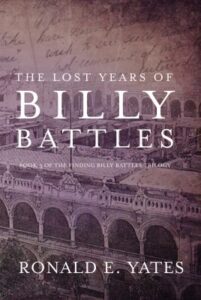
The Lost Years of Billy Bates
By Ronald E. Yates
For those not familiar with the series, Yates presents his books as works of “faction,” a story “based in part on fact” but also “augmented by narrative fiction.” The protagonist, William Fitzroy Raglan Battles, born in Kansas in 1860, lives a full 100 years and takes part in some of the most significant events of his time. He encounters key figures of the day (Bat Masterson Wyatt Earp, President Wilson, Francisco “Pancho” Villa, among others), gives us their backstories, and quietly appraises them.
Yates, a journalist with a keen eye for nuance and subtlety, has created a protagonist with superb critical thinking skills. William, a journalist, and occasional soldier examines people and transactions from every angle. Just as at ease in a Kansas saloon as he is at the captain’s table on a grand ocean liner on the Pacific, Billy Battles is also ruthlessly honest about his shortcomings and feels tremendous guilt when he acts impulsively or inadvertently causes harm to others. Yates has crafted a fully human character who is easy to admire, perhaps because he is admirably cognizant of his own flaws.
Do You Have an Amazing Chicanx Book or are you a Chicanx Author?
Submit it today for an Award or an Editorial Review!
Also remember! We’re hosting our 2020 CIBA Ceremonies for First Place Category and Grand Prize Winners June 5th at the Hotel Bellwether in Beautiful Bellingham, Wash. Attending the June 5, 2021 VIRTUAL Ceremonies for the 2020 CIBAs is Free. However, registration is required. We will have the link posted on our website after the Finalists are announced.

 For those not familiar with the series, Yates presents his books as works of “faction,” a story “based in part on fact” but also “augmented by narrative fiction.” The protagonist, William Fitzroy Raglan Battles, born in Kansas in 1860, lives a full 100 years and takes part in some of the most significant events of his time. He encounters key figures of the day (Bat Masterson Wyatt Earp, President Wilson, Francisco “Pancho” Villa, among others), gives us their backstories, and quietly appraises them.