
Kiffer Brown’s Fall Cleaning Finds Writing Tips!
Found Notes from the Home of Kiffer Brown
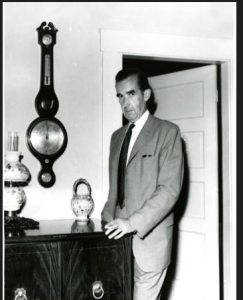
We are getting ready to do some long-awaited (no thanks to Covid) and much needed remodeling on our 100-year-old-plus bungalow. A little known fact of our old home is that Edward R. Murrow’s parents lived here and Mr. Murrow visited them often. Below is a photo of Mr. Murrow visiting his parents in the house that I now live in.
In moving my office (read: organize boxes of notebooks, composition books, and small pieces of paper), I am compelled to go through them and decide which ones I will toss, which ones I will need to consolidate, and which of the aforementioned I will deem worthy of keeping. While I was flipping through these individual journals, I saw the following snippets of note-taking from leaders and top authors in the publishing industry.
How many of you have these in your writing lair?

Without further ado here are a few of the found gems that I found while going through a few of my notebooks:
- Write the slow stuff fast and the fast stuff (aka action scenes) slow to increase tension. In other words, “Tell” the slow stuff and “Show” the Fast Stuff.
- When writing you either need to advance the plot or reveal more about a character.
- Chapters should have arcs to them and cliffhangers to keep the reader turning pages.
- The first and last sentences of each chapter are the most important.
- Dialogue is action. Action is dialogue (Robert Dugoni).

- Only add backstory in on an as-needed basis. Does it advance the story? If not, don’t add it.
- Start scenes with action. End scenes with action.

And, finally, Subplots must be woven in. They are tools for the author to:
- Delay the main plot
- Distract the protagonist
- Heighten mood
- Affect pacing
- Add foreshadowing
- Shows transformations
- Ramp up the main plot
After years of attending conferences and living and breathing the writing world, it’s a joy and a gift to come across these treasures from the best in my home office. I hope you find these jottings as helpful as I have.
Now back to trying to beat back chaos in my office. I will do another post about the jottings and notes that I find during my re-organization.
We’d love to hear from you and your notes and jottings!
Keep on Writing! The world needs good books now more than ever! – Kiffer