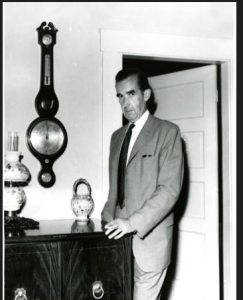
We are getting ready to do some long-awaited (no thanks to Covid) and much needed remodeling on our 100-year-old-plus bungalow. A little known fact of our old home is that Edward R. Murrow’s parents lived here and Mr. Murrow visited them often. Below is a photo of Mr. Murrow visiting his parents in the house that I now live in.
A photo of Edward R. Murrow visiting his parents’ house in Bellingham, Wash.
In moving my office (read: organize boxes of notebooks, composition books, and small pieces of paper), I am compelled to go through them and decide which ones I will toss, which ones I will need to consolidate, and which of the aforementioned I will deem worthy of keeping. While I was flipping through these individual journals, I saw the following snippets of note-taking from leaders and top authors in the publishing industry.
How many of you have these in your writing lair?
Writing Notebooks
Without further ado here are a few of the found gems that I found while going through a few of my notebooks:
Write the slow stuff fast and the fast stuff (aka action scenes) slow to increase tension. In other words, “Tell” the slow stuff and “Show” the Fast Stuff.
When writing you either need to advance the plot or reveal more about a character.
Chapters should have arcs to them and cliffhangers to keep the reader turning pages.
The first and last sentences of each chapter are the most important.
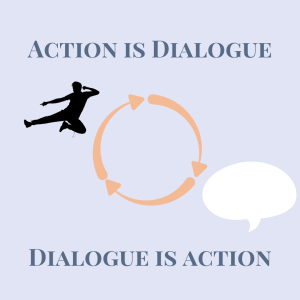
Dialogue is action. Action is dialogue (Robert Dugoni).
Only add backstory in on an as-needed basis. Does it advance the story? If not, don’t add it.
Start scenes with action. End scenes with action.
And, finally, Subplots must be woven in. They are tools for the author to:
Delay the main plot
Distract the protagonist
Heighten mood
Affect pacing
Add foreshadowing
Shows transformations
Ramp up the main plot
After years of attending conferences and living and breathing the writing world, it’s a joy and a gift to come across these treasures from the best in my home office. I hope you find these jottings as helpful as I have.
Now back to trying to beat back chaos in my office. I will do another post about the jottings and notes that I find during my re-organization.
We’d love to hear from you and your notes and jottings!
Keep on Writing! The world needs good books now more than ever! – Kiffer
Henry Cavill stealing our hearts as Sherlock in the movie Enola Holmes. He definitely stole Kiffer’s.
When we look at writing craft, it can help to start general and then move on to specifics. Start with questions to help orient yourself toward how you will edit the work:
What do you see as the genre?
What is the climax?
How do you imagine the story’s structure?
What is the heart of the story?
The heart of the story can be more generally understood as theme, but it really boils down to where does the blood flow in the veins of the writing. I make sure that is always in my mind when editing for an author, and I recommend it for any writer who is working on a piece.
Write down the heart of your story somewhere you can always look at it—on a sticky note near your writing area, at the bottom of the document you’re working in, anywhere you can see it. Having the heart of the piece as an easy reference point lets us keep an eye on the destination as we write or edit toward the end.
The Evolving Nature of Structure
Get ready for book recommendations! In terms of structure, David recommends Jane Alison’sMeander, Spiral, Explode, whichsets the bar for how we can reimagine the shape of our books. Most stories won’t tell their author what their structure is supposed to look like until they are nearly finished.
Most of the time when we think of the structure of a story, we think of the Aristotelian spear. But story structure can look like anything! A spiral, a flower, a canoe, an inverted spear. Of course, there’s nothing wrong if your story structure does fall into this classic description, but keep in mind that doesn’t mean we close ourselves off to all other structures.
Aristotelian Spear story structure
Alison takes the idea of seeing the structure literally, recommending that writers draw out the shape of the story. To do this, she recommends visualizing summary like this “__” a scene like this “–” and a still spot (interiority or a moment where the narrator pauses and explains events) as “·”. This is the example of the structure she sees when blocking out a section of Vikram Chandra’s “Shakti”
__ __ __ __ — — — · —
You can see the pattern beginning to form, four moments of summary, followed by three scenes, a still spot, and then finishing with a scene. What do your own stories look like?
Again, usually this structure becomes visible as the story reaches completion, allowing the author to see the images and metaphors that really shape it.
Narration in Four Parts
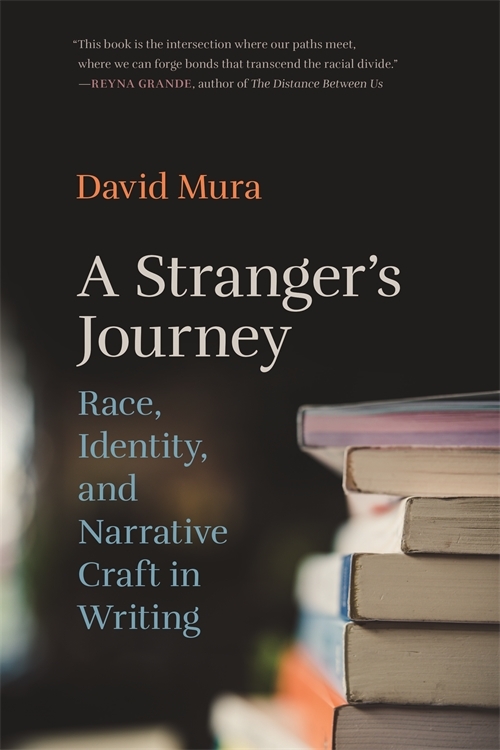
The next section here owes much to David Mura’s Book A Stranger’s Journey. At the start of his chapter “Four Questions Concerning the Narrator” Mura simply asks:
Who is the narrator?
Whom is the narrator telling her story to?
Where is the narrator telling the story?
Why is the narrator telling the story?
These simple questions open up most stories in wonderful ways that surprise and delight their authors. It changes the idea of the narrator just being the main character in their present (if so, is the narration in present first person, and does the reader only get information the main character knows?). Or perhaps the narrator is you, the author; remember you are a living, breathing, ever changing being, while your narrator becomes fixed in time the moment you put down your pen and stop the editing process. Understanding this allows the writer to slow down and understand the perspective of narration in their story.
From Avengers: Infinity War
Let’s look at a short story attributed to Ernest Hemingway to better understand these questions of narrator. The story is as follows:
For sale: baby shoes, never worn
Who is the narrator? We could say a newspaper or even the person who wrote the advertisement, possibly the parent of this child. We could also say that Hemingway is telling the story since he was asked to write a six word story.
Who is the narrator speaking to? Anyone who might want to buy baby shoes. If Hemingway is the narrator, then it’s also with the secondary desire to make the reader sad since the tragedy implied by baby shoes that have never been worn weighs heavily on us.
Where is the narrator telling the story? In the newspaper? A sign in a window?
Why is the narrator telling the story? Hard question. Maybe honestly just to sell the baby shoes. Maybe to find closure and remove the last reminders of their loss. Maybe in the hopes that someone will reach out.
In examining the narrator and understanding the relationship the narrator has with the reader, we create work with richer tone, voice, and a better understanding of what information needs to be shared.
All in Good Measure
The next book recommendation is Renni Browne and Dave King’s Self-Editing for Fiction Writers. While many of their chapters are excellent, their fourth one, “Proportion” stands out among many craft books as a unique topic. The quickest way to say this is to simply ask the writer to say what they mean to say, and then move on without spending too much time repeating the point. Often, this repetition breaks the sense of proportion needed for the story, leaving the weakest repeat to carry the weight of the scene in which it appears.
An example of this would be if the sunset was described as two Polaroids being jammed together to make the sky and land, and then describing again how the rocky cliffs were at odds with the soft clouds of sunset. Remember, choose which one seems stronger and cut the weaker one.
Most craft books touch on this as the idea of trusting the reader. Write the best story you can imagine writing, and then, after showing it to readers, you’ll understand if the way you wrote it made sense or not. Taking too much time to belabor your point will make it seem overwrought and overwritten to the point that the reader might lose interest (something I always fear when writing about proportion).
All Together
So, the key parts of craft I’m looking at here are: Heart, Structure, Narration, and Proportion. Of course, there are the traditional ones that we hear about everywhere:
Dialogue
Character
Plot
Voice
Beat
The ever present struggle between show and tell.
Of course it’s important to have a good grasp of the basics, you can’t have the four elements above without them! But understanding how you’ll put it all together in the end is what makes a work really sing.
When we finish our first draft our work suddenly transforms into a behemoth that’s impossible to approach. We’ll give you some great advice here, though if you’re at the point where you’ve done all this the next step is to find some extra eyes for your work. For an unbiased evaluation that will help you better understand what works and what needs to be improved in your book, check out our Manuscript Overviews editorial service here. Remember Kiffer’s advice to have a manuscript assessment prior to beginning line editing or copy editing. A manuscript overview/evaluation will save you time, money, and will improve your work-in-progress.
The CIBAs – Discovering Today’s Best Books and Authors
If you’ve read through this and think “I’ve done all this, and I’m ready for the next step!” Congratulations! We would recommend putting some positive attention on your book at this point. You can enter it in a Chanticleer International Book Award Contest here or submit it for a professional Editorial Review here. And remember, it never hurts to do both.
Looking for more story structure? You can find many articles here from a search of our site.
Chanticleer Editorial Services – when you are ready
Did you know that Chanticleer offers editorial services?We do and have been doing so since 2011.
Tools of the Editing Trade
Our professional editors are top-notch and are experts in the Chicago Manual of Style. They have and are working for the top publishing houses (TOR, McMillian, Thomas Mercer, Penguin Random House, Simon Schuster, etc.).
If you would like more information, we invite you to email Kiffer or Sharon at KBrown@ChantiReviews.com or SAnderson@ChantiReviews.com for more information, testimonials, and fees.
We work with a small number of exclusive clients who want to collaborate with our team of top-editors on an on-going basis.Contact us today!
Chanticleer Editorial Services also offers writing craft sessions and masterclasses. Sign up to find out where, when, and how sessions being held.