Tag: Somerset Awards

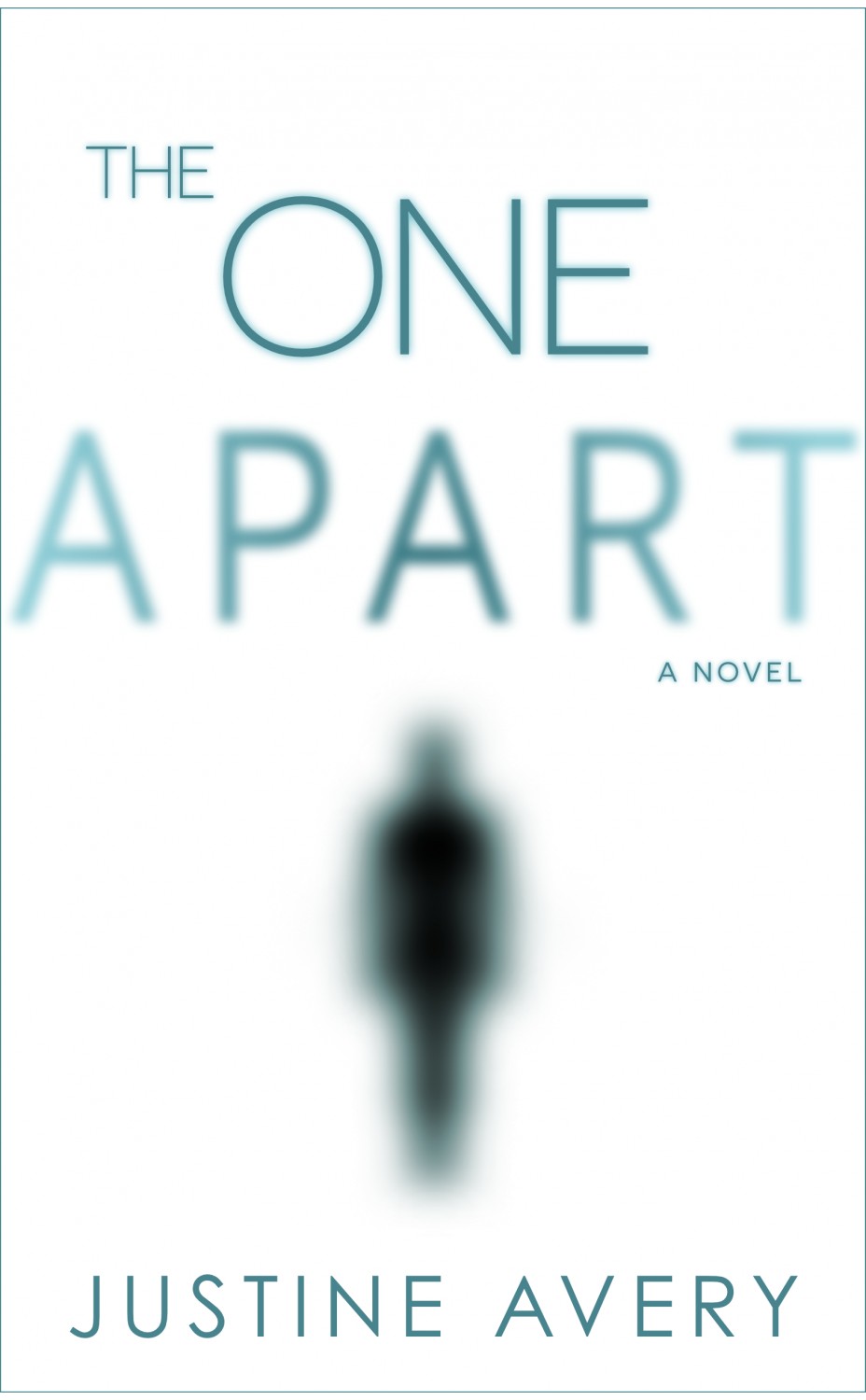
  • The ONE APART by Justine Avery – Family Saga, Fantasy, Metaphysical/Visionary

    The ONE APART by Justine Avery – Family Saga, Fantasy, Metaphysical/Visionary

    A perfect blend of realism, fantasy, and deep spirituality awaits those who open Justine Avery’s novel, The One Apart. It is what readers bring to the novel – faiths, belief systems, philosophical dilemmas – that will influence and shape their perceptions of this fascinating and compelling read. Avery’s book, like life, is full of instruction for those who want to be fully aware.

    Aware of what?

    Everything—including awareness itself.

    This is certainly the case for the main character, Aaron, a remarkable boy who lives with his mother, Sancha, and his grandmother, Maria. Although she’d planned to give Aaron up for adoption, Sancha bonds so deeply with her son at birth that she can’t fathom life without him. His grandmother realizes his uniqueness, too, as the newborn communicates with her through blinking his eyes. He makes astonishing progress through developmental milestones, walking and reading within the first months of life.

    As a toddler, he speaks with the wisdom of a timeless soul. Maria suspects that these physical and mental feats indicate that her grandson is chosen for a special purpose, but she hopes he’ll live as normal a life as possible. He’s distracted, however, by a malevolence that only he can see.  As Aaron comes of age, he strives to act normal and blend in, but his very few close friends and girlfriend notice his preoccupation, his never being fully present in this world.

    There’s a reason for Aaron’s constant distraction, for his never feeling a part of this life; he is connected to “the Apart,” the other-worldly dimension that is both removed from human existence, “corporeality,” but ever at hand. Since childhood, he has sensed that his true name is Tres and that his existence as Aaron is somewhat play-acting. His hyper-awareness alerts him to his “OnLooker,” a sort of guardian angel who’s a liaison between Aaron and the sagacious luminary beings of the Apart that consult and advise on Aaron’s tutelage.

    Much of the book involves Aaron learning, with the instruction of his OnLooker, how to fully experience awareness, to understand that every moment is this moment despite previous lives and the variety of life’s experiences. At a critical juncture in the novel, Aaron is given a choice, one that will impact his own existence dramatically but also that of all other beings. The author adroitly merges Aaron’s worldly existence and his relation to the realm of the Apart in a poignant and satisfying conclusion to the novel.

    This is a quiet book, one that allows the reader the time and space to experience life with its main characters. The stillness is at times deeply peaceful, at other times eerie and ominous. The novel illustrates the power of compassion and empathy, but also the chilling consequences when power is exercised for self-serving purposes.

    While the character of Aaron has similarities to various religious and mythic figures, the author has also imbued him with a uniqueness and a relevance to our times. This book will stay with you long after you finish it, a hallmark of excellent literature. Justine Avery’s The One Apart inspires deep contemplation of self, community, and individual and collective purpose.


    The One Apart won First Place in both
    OZMA and SOMERSET Awards in 2017!


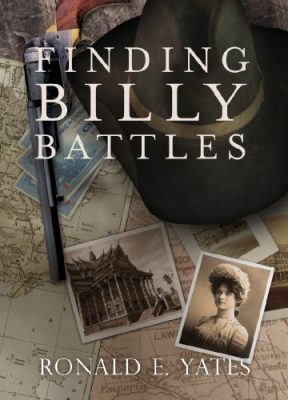
  • The LOST YEARS of BILLY BATTLES, Book 3 in the Finding Billy Battles Trilogy by Ronald E. Yates – Historical Fiction, Literary, Action/Adventure

    The LOST YEARS of BILLY BATTLES, Book 3 in the Finding Billy Battles Trilogy by Ronald E. Yates – Historical Fiction, Literary, Action/Adventure


    Congratulations to Ronald E. Yates for winning the 2018 CIBAs

    OVERALL GRAND PRIZE – BEST BOOK of the YEAR

    for The Lost Years of Billy Battles!



    Reviewer’s Note: I’ve begun few books as eagerly as I did this one. Having read the first two volumes of Ronald E. Yates’ extraordinary trilogy, Finding Billy Battles, I couldn’t wait to continue his story in the final volume, The Lost Years of Billy Battles. The third installment lived up to the exceedingly high standard set in the first two volumes. Billy Battles is as dear and fascinating a literary friend as I have ever encountered. I learned much about American and international history, and you will too if you read any or all of the books. Each is an independent work, but if read in relation to the others, the reader experiences that all too rare sense of complete transport to another world, one fully realized in these pages because the storytelling is so skillful and thoroughly captivating. Trust me; you’ll want to read all three volumes.

     

    Overall Grand Prize Best Book Award for The Lost Years of Billy BattlesFor those not familiar with the series, Yates presents his books as works of “faction,” a story “based in part on fact” but also “augmented by narrative fiction.” The protagonist, William Fitzroy Raglan Battles, born in Kansas in 1860, lives a full 100 years and takes part in some of the most significant events of his time. He encounters key figures of the day (Bat Masterson Wyatt Earp, President Wilson, Francisco “Pancho” Villa, among others), gives us their backstories, and quietly appraises them.

    Yates, a journalist with a keen eye for nuance and subtlety, has created a protagonist with superb critical thinking skills. William, a journalist, and occasional soldier examines people and transactions from every angle. Just as at ease in a Kansas saloon as he is at the captain’s table on a grand ocean liner on the Pacific, Billy Battles is also ruthlessly honest about his shortcomings and feels tremendous guilt when he acts impulsively or inadvertently causes harm to others. Yates has crafted a fully human character who is easy to admire, perhaps because he is admirably cognizant of his own flaws.

    This installment of the trilogy opens with William enjoying middle age in Chicago with his second wife, his beloved Katharina, a former German baroness, and his daughter, Anna Marie, now a student at Northwestern University. It is 1914 and World War I is raging in Europe. Germany, late to the spoils of colonialism, is seeking to make up for lost time with its policy of Weltpolitik that advocates for imperialist expansion.

    When William is contacted by his friend and former military associate, General Freddy Funston, who informs him that a German merchant ship is bound to Mexico to deliver arms and munitions to its dictator, General Victoriano Huerta, William and Katharina travel to Mexico and pose as tourists while trying to find out as much as possible about the shipment. They learn that in addition to weapons, the ship is carrying a fortune in gold and silver bars. Further investigations reveal that Germany hopes to convince Mexico to engage in skirmishes along the U.S. border, creating enough havoc that America will sit out the war in Europe and thus allow Germany expansionist gains there.

    Although in Mexico at the behest of the U.S. military, William and Katharina readily understand why Mexicans feel hostile to Americans; a significant portion of the Southwest used to belong to Mexico. However, President Wilson does not recognize Huerta and is all too eager to engage in big stick diplomacy when he chooses. Also, many Mexicans are desperately poor, the Campesinos working as virtual slaves on haciendas for no pay. It’s not surprising that they cheer on Venustiano Carranza, leader of the Northern opposition Constitutionalists charismatic lieutenants, the intense, intelligent Zapata who yearns to bring about land reform for the poor, and the wild but charismatic Pancho Villa who sparks outrage when his men murder 17 Texas mining engineers.

    The U.S. military decides to intervene and, once again, William is impressed into service, this time with General Pershing and the General’s aide-de-camp, George S. Patton. While the U.S. Army has the latest in weaponry and travels with motorized vehicles and untrustworthy aircraft, the new technology causes a lot of noise, making it difficult to sneak up on Villa and his light-footed army, one that’s thoroughly familiar with the terrain and beloved by the people. William’s observations and reporting on all of this for his Chicago newspaper are riveting and wryly amusing.

    Following this Mexican adventure, William barely has time to catch his breath when his past once again catches up with him. Mason Bledsoe, the son of the man William killed due to complex circumstances when he was just nineteen, abducts Katharina. With the help of his cousin, William determines his wife’s whereabouts and attempts to free her, as well as seek vengeance on those who kidnapped her. The results of his actions necessitate his leaving the country for his safety and, more importantly in his mind, the safety of his family. Over the next decades, he will spend time in the Philippines and Indochina, where he will again grapple with the blatant injustices of colonialism, aggrieved by the plight of native men working 16-hour days on French rubber plantations in intense heat, their flesh bitten and eaten by mosquitoes, oxflies, and army ants.

    While abroad, William’s personal life takes some shocking turns that motivates him to return to the U.S. in 1936. His final years in Kansas, his birthplace, are the quietest of his life. Billy often muses on all he has seen and experienced. When he meets his great-grandson, Ted Sayles, he decides to bequeath him his guns, uniforms, journals, and correspondence. In the Epilogue, Ted addresses the reader and shares his thoughts about some shocking surprises he finds amongst William’s papers. It’s a most satisfying conclusion to an extraordinary trilogy.

    At his behest, William’s grave includes the simple statement, “He did his best.” The same is undoubtedly true of the author, Ronald E. Yates. The research involved in putting William’s story on the page had to have been immense. In addition to a careful plotting of history, the details he weaves into his prose regarding fashion, food, weather, social class, and technology make this the richest account of a life imaginable.

    Ronald E. Yates won 1st Place in the SOMERSET Awards for The Improbable Journeys of Billy Battles: Book 2, Finding Billy Battles Trilogy of this extraordinary series.

    5 Stars! Best Book Chanticleer Book Reviews

  • SOME KIND of ENDING by Conon Parks – Literary, Contemporary, Pacific Northwest

    SOME KIND of ENDING by Conon Parks – Literary, Contemporary, Pacific Northwest

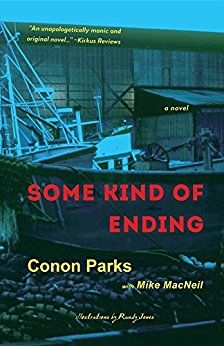
    Blue and Gold Somerset First Place Winner Badge for Best in CategoryIf you were 18 or older in 1984, if you were from or migrated to Seattle in the latter half of the 20th Century, if you used far too many drugs, drank too much alcohol, thought Alaska was the Promised Land, thumbed your nose at the conventional American culture of the ‘80s, explored life aboard fishing boats, had too much sex, and had madcap adventures in global hotspots from Honduras to Cambodia, then you are the right audience for Some Kind of Ending by Conon Parks.

    Calling this book an experimental novel is appropriate; there is little approximating a cohesive narrative. But that’s not a bad thing. It’s the tale of several drunken, chemically dependent people—not the kind you would take home to Mother—who converge on Seattle in 1984, wind up on a variety of fishing boats bound to Alaska in search of great fortunes to be made from the fishing industry and return to Seattle. More specifically the dives and women of Seattle’s Ballard seafaring community. Nothing in common seems to draw them together except the desire to live according to their Rabelaisian taste for life.

    There are at least two explosions—one breaking out a colleague from a mental hospital, the other blowing up a submarine that may have rammed a Greenpeace sailing vessel and in turn, was blown up by another boat carrying an inordinate amount of military ordnance. There are fights galore, long meditations on the Foreign Legion, Gurdjieff, the Iran-Contra hearings, and disparaging comments about “Hanoi Jane” Fonda.

    The closest to recognizable characters may be Andre, a literate college drop-out with at least one prison sentence in his past; and Doug, an idealist from the Midwest. But even identifying those names gives no sense of the swirl of characters and stories that circle through this picaresque novel. Characters pop up like moles in a garden, or more appropriately, whack-a-moles.

    What is the book about? It’s a question not easily answered except to call it a diary, a 20th Century Samuel Pepys observation of a particular 1980s-based time and space. “Diatribe” is an equally applicable description. At one point, Andre reminisces about all the many images he has witnessed in his life, “from riots in Barcelona, to martial laws and Gestapo goons after the Kurds he was runnin’ within Istanbul, to Guatemalan guerillas and Mayan Indios, to Easy St. Louis hoods, to Israel and the West Bank, to Wounded Knee, to polio victims hobbling about with their knees above their ears.”

    Stream-of-consciousness at its best, Some Kind of Ending drives readers on a colorful, and somewhat perplexing journey of absurdism. Recommended.

    Parks won First Place in the 2017 SOMERSET Book Awards for Contemporary and Literary Fiction Novels for Some Kind of Ending.

  • LOVE OF FINISHED YEARS by Gregory Erich Phillips – Historical Fiction, Literary, WWI

    LOVE OF FINISHED YEARS by Gregory Erich Phillips – Historical Fiction, Literary, WWI

    Overall Grand Prize Badge for Gregory Phillips's book The Love of Finished YearsAn immigrant’s journey, a forbidden love, a war to end all wars collide on the pages of a beautifully written historical fiction, Love of Finished Years by Gregory Erich Phillips.

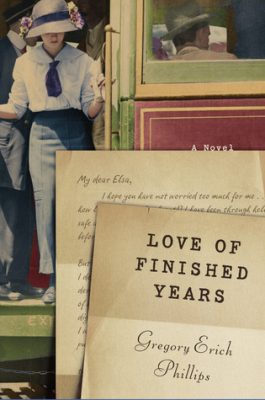
    At twelve years of age, Elsa Schuller carries no expectations when she reaches Ellis Island in 1905. In fact, she has no idea why her father insists on leaving Germany for this supposed Land of Opportunity. Riddled with nothing less than challenges and hardship working in the sweatshops in lower Manhattan, Elsa’s only ray of hope is learning how to read and write English.

    Her studying pays off when she’s hired seven years later to work as a maid and translator for an upper-middle-class family, the Grahams, on Long Island. For the first time, Elsa begins to dream of something more than the ragged gray life she and her family have lived thus far.

    Elsa is not quite sure what to make of Dafne, the Grahams’ ebullient yet impulsive seventeen-year-old daughter, who disregards class distinction and is fascinated by Elsa. After a time, the maid and her mistress become good friends. A few years later, Dafne becomes engaged to a close friend to both Dafne and Elsa, Glenn Streppy.

    Unfortunately, their engagement is overshadowed by the war that is brewing. And to Dafne’s disappointment, Glenn enlists in the army. It doesn’t help that he unexpectedly catches her with his best friend when he tries to visit her while on leave from his military responsibilities.

    Glenn cuts off all contact with Dafne, which saddens Elsa as she misses his friendship. In a daring move, Elsa visits him at his stationing post just before his transfer to Europe. It is during this short visit she realizes that she is in love with him. Moreover, Glenn reciprocates her adoration. While Dafne successfully snubbed the social mores of the day, Elsa cannot. She is still just an immigrant from a poor family—a poor German family—and has no right to fall in love with a man of standing.

    While guarding her emotions, Elsa has something even worse to consider: the reality that this encounter may very well mark the last time she’ll ever see her dear friend, Glenn, alive.

    Award-winning author Gregory Erich Phillips produces a poignant early 20th-century plot. So much more than your typical love story, Love of Finished Years raises readers’ consciences and invites them to consider the realities of a time not too long ago (and in some ways, still relevant in today’s discourses on immigration) when people were divided not only by language but by the social mores and their class in American society, but also between rich and poor, “citizen” and “immigrant,” male and female.

    Incorporating various themes into his absorbing plot, Phillips highlights the importance of workers’ rights (Triangle Shirtwaist Factory) the Women’s Suffrage movement; and the plight of immigrants, especially during The Great War. Some examples include the use of propaganda against the American Germans (via Liberty Bonds); again, the use of propaganda to boost American support, and the immorality of war.

    Laced with a well-defined cast, Love of Finished Years opens at a critical moment in Elsa’s life before taking readers back in time to her arrival to America followed by a chronological lead up to her relationship with Glenn and Dafne. Key to Phillips four-part story line is his use of genteel dialogue—typical of that era—to build emotional tension not only between his primary characters but secondary characters as well.

    From the riveting opening that takes place in NYC’s Lower East Side’s sweatshops until its gripping conclusion, this enthralling novel vividly portrays the desperate times of German immigrants landing at Ellis Island in 1905 in search of a better life. A timely read, illuminating the issues we are still experiencing a century later, Phillips reminds us that love, light, and perseverance can help us find a way to overcome almost any obstacle.

    Love of Finished Years is destined to claim a spot alongside our favorite reads. Love of Finished Years was awarded the Chanticleer Grand Prize while still in manuscript form. It has since been published and is highly recommended!

    5 Stars! Best Book Chanticleer Book Reviews

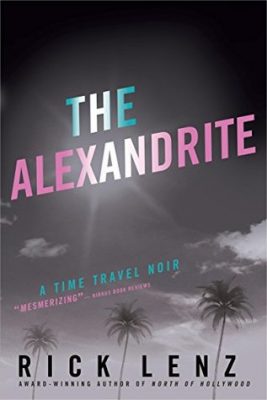
  • The ALEXANDRITE: A HOLLYWOOD TIME-TRAVEL NOIR by Rick Lenz – Magic Realism, Hollywood, Time Travel

    The ALEXANDRITE: A HOLLYWOOD TIME-TRAVEL NOIR by Rick Lenz – Magic Realism, Hollywood, Time Travel

    Time-travel Noir becomes High Art with a wicked sense of humor in this fast-paced novel that offers up alternate views of Hollywood’s past and present.

    Washed-out and with the doors of opportunity slamming shut on all sides, actor Jack Cade is the poster boy for the “bad things happen in threes” mantra. Getting cut from a crappy, no-pay play was just the tip of his career-crushing iceberg. His agent, who lost faith in Jack way back in another epoch, manages to dig up a temporary life preserver – an audition for a part that has Jack written all over it. An audition he misses. And Jack’s wife, no longer able to stay afloat in his sinkhole of alcohol and “bleeding actor’s ego,” jumps ship.

    Just when it starts looking like it’s lights-out for Jack, an anonymous envelope lands in his mailbox. Inside is a pawn ticket that leads him to an Alexandrite ring and a psycho-physicist who claims to hold the secret of time travel. With Jack’s personal and professional lives collapsing in on him like a black hole, he walks out of 1996 and into the heyday of mid-Century Hollywood. He also walks into another man’s shoes, not to mention the scene of his recurring nightmare. Armed with “fore-knowledge” Jack has a chance to make things right in two different time periods. The only question is, how many times will he have to jump across the spectrum of an alternate reality to get it right?

    Drawing from his extensive experience in the entertainment industry, author Rick Lenz delivers a stellar and believable cast of characters. From Jack Cade, whose love-hate relationship with the movie industry keeps him on the razor’s edge of failure, to Jack’s 1956 incarnation – or possibly alter-ego – Richard Blake, a movie-star handsome gemologist, whose an angry alcoholic wife and sultry, mentally impaired sister-in-law set the stage for their own rendition of a sweaty Tennessee Williams play. And there’s the incomparably complex, multi-faceted Marilyn Monroe, at the peak of her career—the golden thread that weaves everyone’s story together.

    Steeped in Hollywood history and culture, The Alexandrite  entices the reader with snippets of iconic set locations, facades, meeting places, studios, and stars. But the novel is more than a torch song to the movie industry. It is also a paean to hard-working actors whose careers, like Jack’s, straddle a razor.

    Somerset Grand Prize award winner for Literary and Contemporary Fiction along with multiple other literary awards, The Alexandrite by Rick Lenz playfully challenges the reader to ask questions about a world that exists outside of the four dimensions in which we live. A must-read for anyone and everyone who has been touched by the magic of Hollywood.

    5 Star Best Book Chanticleer Reviews round silver sticker