Tag: Social Media

  • How to Market Your Works Like a Book Publicist – a Primer by Kiffer Brown

    First, let’s address the question of

    “How is Book Publicity Different than Book Marketing?”
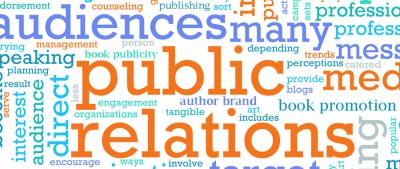
    Generally speaking, marketing involves spending dollars for ads, promotions, events, swag, etc. where publicity is trying to connect people with the author.

    If something organic works publicity-wise, then perhaps consider spending marketing dollars (and time) to amplify the results.

    MARKETING is about CONVERSIONS.

    PUBLICITY is about EXPOSURE and BUILDING CREDIBILITY.

    Another way to think of the difference is that publicity is more like hashtags in social media while marketing would be more like purchasing ad directed toward people/platforms that using those hashtags.

    Publicity helps marketing direct campaign dollars. Publicity should help you target your marketing dollars.

    Authors should try to zero in on what their potential readers could look like and which outlets are the best for reaching those targets. Sometimes (more often than not), going in deep (some say guerilla marketing) towards a specific target audience for podcasts, blogging, and events (publicity) and then expanding the spheres if a strategy that works (marketing).

    Marketing campaigns can happen at any time for almost any product (books are products).

    However, publicity campaigns cannot. Publicity campaigns need to be news worthy! And your book’s most newsworthy event is its launch.

    Create a solid PLATFORM from which to LAUNCH

    1. A Website that echoes your branding along with how to connect and contact you.
    2. Branding – your author brand for the genre that you are writing in
    3. Social Media – again, posts and backgrounds should echo your author brand and book storyline. Give social media posts time to percolate. It takes time to build transaction. Keep at it! Be sure to use hashtags and tagging for cross-promotion.
    4. Pre-launch book reviews (the cornerstone of your marketing & publicity strategies
    5. Pre-launch book blurbs from peer authors and authors up the “food chain” from you.
    6. Business cards – that projects your brand along with website address, social media handles, email address, and any other means of connecting with you.

      NOTE: Make sure that you reserve a different email address for your one-to-one business correspondence that you can make known after initial contacts to avoid SPAM. For business cards, perhaps: Author@BestBookEver.com instead of LastName@BestBookEver.com

    7. Press & Media kits – for those entities that want to promote your book! A media kit is a collection of materials that you can send to journalists, bloggers, and other media outlets, and even other author’s newsletters. It should include your book’s cover, blurb, author bio, and any other relevant information.
    8. Determine the best SEO, Meta-Data, Targeting, ISBNs, etc. for your book to be discovered digitally and on the global market. * See Item 4 Book Reviews.

    Launching – Probably the Most Useful Tactic to Create Book Buzz

    Are Launch Dates Important?  A resounding YES! 

    Launch dates hold immense potential in creating a buzz around your book. Here’s how to make  your book’s  launch effective:

    • Designate a launch date at least six months before publication. It takes time to coordinate:
      • Launch parties (and, yes, you may have more than one). Consider having launch parties in bookstores, local book clubs, private parties, events that your potential readers might attend, clubs, and organizations. Consider your sphere on influence.
      • Also, launch digital, print, audio, omnibuses, and foreign releases separately. However, the first launch party is main event.
      • Signings, targeted events, refining your website, develop branding, obtain advanced reviews with ARCs, build excitement via podcasts, blogs, virtual events, etc.
      • Enter your work into award programs
      • Send out invitations to all the events, create social media events, ZOOM events, In Real Life Events.
    • There are certain promotions, that can only happen before a book is published. New books and book launches are newsworthy only if promoted before publication date.  There is only so much even a professional book publicist can do after the book has been published.
    • Be selective with your launch date(s). Make sure that they don’t conflict with major holidays or busy seasons. Is your work a beach read? Or a cozy fall mystery? A chilling Nordic thriller? Or a romance? Or historical fiction (release on an important date related perhaps). New Year reads for Self-Improvement? My rule of thumb is try not to release/debut books from November 1 until December 31st. Even if you book is only six weeks old, it will be considered a year-old in the upcoming new year by most of the publishing and book industries.

    Food for Thought: Think how you would react to a “wedding invitation” versus a “wedding announcement.” One is inviting you to share in the celebration itself. Sometimes with a “Save the Date” announcement to build excitement and to help people with scheduling time to take part. Think about how special the invitation and the “Save the Date” announcements make you feel. Remember, the last time one of your author friends invite you at the last minute – day of or the day before – to join them at a book event, but you already had made plans. A wedding announcement (akin to you telling people about your book being published) is a “has been” event.

    Collaboration takes time.

    Just because your work is ready to publish, doesn’t mean that you should. My advice (and that of book publicists and traditional publishers) is to wait until you have your launch date and preparations underway.

    Snowflakes and Books

    • Book publicity campaigns are like snowflakes. No two are ever alike.
    • Promoting a children’s book is different than promoting a young adult book, or a How-To or Self-Help Guide, or a cozy mystery, or science fiction.
    • This circles back around to identify and then knowing and understanding your targeted readers for your book. And, no, it isn’t “everybody” will want to read my book.
    • Collaborate and Follow Other Authors in Your Book’s Genre. Discover what they are doing to promote their books.

    READERS

    Identify Who your readers are, which can be different than Who makes the purchase. For an example: Children’s books are not purchased by children. Or would your books make a great gift? Or those who are rabid fans of a genre (Sci-Fi, Fantasy, etc.) looking for the next series.

    Then discover Where They Hang Out (Facebook? TikTok? Instagram?  Podcasts?  YouTube? Magazines? Hobby Hangouts? etc.)

    When are the times when purchases are made for your books? Is it a summer read? A hunker down Fall & Winter read? A holiday read? Gail Noble-Sanderson’s Lavender Series (historical fiction) books sell exceedingly well during lavender season. I read Michelle Cox’s “A Spying Eye” novel based in Strasbourg in the Henrietta and Inspector Clive series while on vacation in Strasbourg. How fun was that!

    INFLUENCERS

    • Who are the influencers of your genre?
    • Who are the top ten authors in your genre?
    • Who are the non-book influencers of your genre? (Book clubs? Bloggers? Reviewers? Book-Tok?)
    • Who are you considering to request book blurbs and peer reviews from?

    CORNERSTONES – A Review

    • Author Branding across all media (website, social media, in-person events, podcasts, Zoom calls, book clubs)
    • Reviews:
    • Compelling Website – that is dedicated to your author brand/books. Remember all digital roads (social media campaigns, blogs, podcasts, etc.) should lead back to YOUR website – not Amazon.
      • Collect emails so you can stay in contact with your potential readers and fans.
      • Links to selling platforms?
      • Newsletter, blog, information sharing (where people can connect with you – at conferences, conventions, author signings, wine tastings, presentations, etc.) Where you have been and where are you going.
    • ENGAGE!  Blogging? Newsletters? Book Clubs? Author Events? How are you going to interact with potential readers?
    • How is a best-seller in your genre marketed? Not that you need to copy, but to become more aware of different strategies.

    Tips and Reminders for Generating Publicity for Your Book

    If you’re an author, you know that getting your book noticed can be tough. But there are a few things you can do to increase your chances of success. One of the most effective ways to generate publicity for your book is to use a simple, direct, and conversational writing style.

    Here are a few tips for using this writing style to generate publicity for your book:

    • Start early. The best time to start generating publicity for your book is as soon as you finish writing it. This will give you plenty of time to build excitement and anticipation for your book’s release.
    • Create a media kit. A media kit is a collection of materials that you can send to journalists, bloggers, and other media outlets. It should include your book’s cover, blurb, author bio, headshot and photo reflecting your author brand, along with any other relevant information, affiliations, and events.
    • Reach out to influencers. Influencers are people who have a large following on social media or in their industry. They can be a great way to get the word out about your book.
    • Host events. Hosting events, such as book signings or launch parties, is a great way to connect with potential readers in person.
    • Use social media. Social media is a powerful tool that you can use to promote your book. Make sure to post regularly about your book, and interact with your followers.
    • Enter Book Awards for accolades along with  third-party validation and promotional opportunities that you can cross-promote.
    • Be patient. It takes time to generate publicity for your book. Don’t get discouraged if you don’t see results immediately. Keep at it, and eventually you’ll start to see your book gain traction.

    Every reader counts. Each and every review counts. You only get one launch per book. Make it count! 

    As a company frequently used by book publicists, Chanticleer has an insider’s view of the industry to discover expert tips that will help set your book up for success!

    More that 2,000 new titles are published in the English language each and every day. However, most authors will not make the time or effort to effectively publicize and market their works. Make your work standout in a crowded field. It can be done!

    Keep on writing. Kiffer 
     

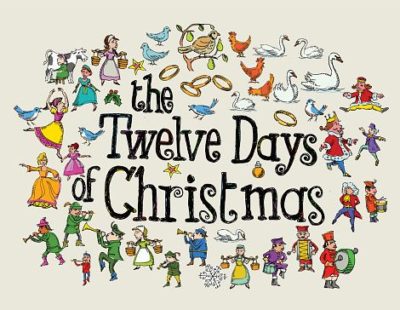
  • The Twelve Days of Christmas! On the Eighth Day, Chanticleer Brings to me…

    Celebrating the Twelve Days of Christmas – One Day at a Time

    “But Jiminy Crickets, it’s after December 25th! Is it not too late for the 12 Days of Christmas?” you say.

    Not to fear, Chanticleerians! The 12 Days of Christmas begins on December 26th! And it continues to the 6th of January – Three Kings Day. The four weeks leading up to Christmas are known as Advent.

    Some say that December 25th is the first day of Christmas, but we are going with the medieval date of the 26th because revelry could not take place on the 25th as it was a holy day. And the Twelve Days of Christmas is about revelry!

    So if you haven’t finished wrapping presents, sending out those cards, and baking cookies—don’t worry—you’ve got an extra 12 days!

    Happy Holidays to You from the Chanticleer Team! 

    On the Eighth day of Christmas, my true love sent to me

    Eight Maids A-Milking

    Seven Swans A-Swimming

    Six Geese A-Laying

    Five Golden Rings

    Four Calling Birds

    Three French hens (Chanticleer’s favorite #justsaying)

    Two turtle doves

    And a partridge in a pear tree 

    On the Eighth Day of Christmas, Chanticleer brings to me…

    Eight Writing Craft Books

    On The Roost we’ve started a Writing Craft Book Group that reads and discusses books specifically on writing craft. While the information from book to book can repeat a little bit, the conversation is always excellent.

    A rough estimate of the number of writing craft books available

    Let us know if you have a book group that helps inform your writing life!


  • The Twelve Days of Christmas! On the Seventh Day, Chanticleer Brings to me…

    Celebrating the Twelve Days of Christmas – One Day at a Time

    “But Jiminy Crickets, it’s after December 25th! Is it not too late for the 12 Days of Christmas?” you say.

    Not to fear, Chanticleerians! The 12 Days of Christmas begins on December 26th! And it continues to the 6th of January – Three Kings Day. The four weeks leading up to Christmas are known as Advent.

    Some say that December 25th is the first day of Christmas, but we are going with the medieval date of the 26th because revelry could not take place on the 25th as it was a holy day. And the Twelve Days of Christmas are about revelry!

    So if you haven’t finished wrapping presents, sending out those cards, and baking cookies—don’t worry—you’ve got an extra 5 days!

    Happy Holidays to You from the Chanticleer Team! 

    On the seventh day of Christmas, my true love sent to me

    Seven Swans A-Swimming

    Six Geese A-Laying

    Five Golden Rings

    Four Calling Birds

    Three French hens (Chanticleer’s favorite #justsaying)

    Two turtle doves

    And a partridge in a pear tree 


    Seven Swans A-Swimming by Carolyn Bell

    International Holiday Traditions – The Seventh Day of Christmas is also known as New Year’s Day!

    Kiffer’s family tradition (Southern U.S.) is to eat Hoppin’ John on New Year’s Day. Eating black-eyed peas, pork, greens (kale or spinach), and cornbread

    for good luck, health, peace, and prosperity in the new year. 

    In Japan, people welcome the new year with a bowl of soba noodles made from buckwheat. The noodles symbolize longevity and the buckwheat resilience.

    In Italy, people wear red underwear on the first day of the new year to bring good luck. 

    Walloon (Belgium) and Flemish (Netherlands) farmers wish their livestock a happy new year along with extra feed or treats. 

    And people go for a dip in freezing cold water around the world —brrrrrr—polar bear plunges! 

    What do you do to celebrate New Year’s Day? 

    On the Seventh Day of Christmas, Chanticleer brings to me…

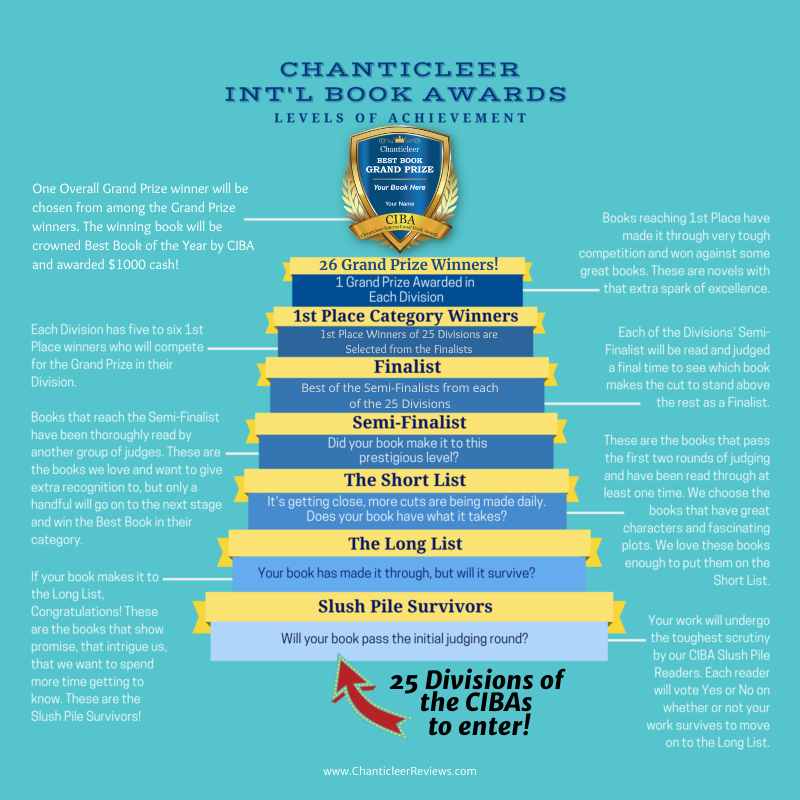
    Seven Tiers of Achievement

    While winning an Award always feels amazing, one of the best parts about signing up for a Book Award Program is the long-tail digital marketing that comes with it. What do we mean by that?

    Every time your book advances in our Awards, we post about it on our website, on our social media, and in our newsletter. This puts your name and your book out in front of thousands of people, and it tells search engines that you’re doing something right. Being discoverable is key as more and more books are published every year. You can see our Book Awards Program here and submit today!

    The tiers of achievement for the CIBAs


  • Twitter Tips for Authors and What’s Elon Musk Up To? — A Chanticleer Toolbox Article by David Beaumier

    Tweets, Character Limits, & Hashtags, oh my!

    A face covered in white makeup with red hashtags drawn on
    You will not look like this by the end of this artilce…probably

    While everyone has questions about social media, one of the big ones for writers is often Twitter. Founded in March of 2006, Twitter is now one of the go-to places for hot takes, cold takes, pitching agents, and generally trying to go viral on just about anything.

    Plus, what on earth is Elon Musk doing on there, and what’s our number one piece of advice for social media?

    One of the first things agents and publishers will do while researching an author is check to see if they have any sort of social media presence. Author platform comes first in the majority of cases, rather than an author being discovered and then being set up with an incredible platform by people who believe in their book. And a digital presence is work.

    So, how do you establish a following on Twitter?

    Set yourself up for success

    To begin with, you’ll want a profile picture and cover photo that fits with your author brand. Your author brand should be in line with the genre of your books. This means it puts your readers in mind of what you write when they visit your site. If you’re a Non-Fiction author who focuses on social justice and journalism, you want readers interested in social justice to think of you when they think about your genre.

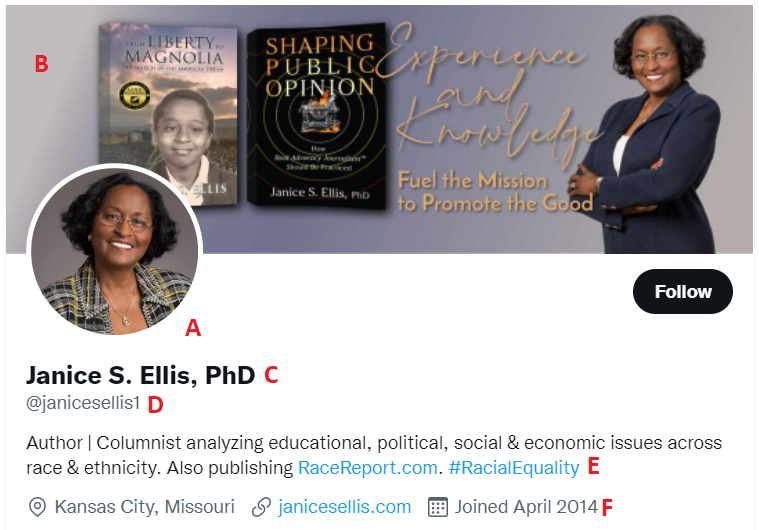
    Of course, we’re thinking of someone specific. Check out the homepage for Dr. Janice Ellis’s Twitter profile.

    Twitter profile of Dr. Janice Ellis

    We’ve added some letters to the image to help us better understand and discuss what she’s doing here.

    A. Ellis is a professional journalist with a PhD, and her picture reflects that level of expertise.

    B. Here we have Dr. Ellis standing next to covers of her book. The background color we can see was drawn in part from the color of her Chanticleer Nellie Bly Grand Prize winner From Liberty to Magnolia. This helps tie the whole image together. She even includes a personal mission statement: “Experience and Knowledge Fuel the Mission to Promote the Good”

    C. You can search everywhere for Janice S. Ellis, PhD, and find that her name is consistent across platforms.

    D. This is her Twitter handle. You can see that it clearly links to her name that appears, which is good because you want to be as easy to find as possible.

    E. Here Dr. Ellis has been clever by including a website where she is frequently published and a hashtag that attaches to what she’s known for. We’ll talk more about hashtags later on.

    F. Here the key is that Dr. Ellis has included her own website. Having your own personal site independent from social media is always an important component of any author platform.

    Sell yourself, not your book

    While this might seem counter-intuitive, it makes sense when you realize people want to follow a human being, not an inanimate object. On Twitter, you can do the following things:

    • Follow: Like many social media platforms, you should follow who you want to follow. Ideally, keep in mind your brand and author platform as you do this.
    • Tweet: Regular posting at least once a day is ideal. Mix it up with pictures, videos, whatever strikes your fancy.
    • Retweet: This reposts someone else’s Tweet to your timeline
    • Quote Tweet: This reposts someone else’s Tweet to your timeline, and you can comment on it. This is a great way to start a conversation or answer a fun question
    • Comment: This is simply commenting and responding to people who have either created their own post, responded to a post, or responded to your post.
    • Direct Message (DM): This one should only be done with explicit permission. You can ask to DM someone, or they may say “DMs open” – otherwise you should always leave a public comment.
    The word options in the middle of a maze
    You have a lot of choices on how to handle Twitter

    The big questions that come up here are how to interact with agents and publishers on Twitter. Follow the ones who you think might be interested in your work, but as mentioned above, don’t DM them unless you have permission to do so. Interact with them like a human being, and keep an eye out for when they’re open to submissions.

    One thing agents and small presses talk about on Twitter is that they appreciate it when someone continues to submit to them. This is confirmed in Jane Friedman’s The Business of Being a Writer:

    “‘Getting rejected by a magazine repeatedly and then, finally, getting work accepted is, actually, fairly normal. It’s a little frustrating for an editor,’ she said, ‘when a writer submits to us five times and then just stops, and we never get a chance to read the writer’s work again.’” (78)

    Persistence pays off in more ways than one.

    So When can I sell my Book?

    Generally posting once a week about your book is plenty. During releases, or if you’re participating in Book Awards like the CIBAs or receiving a Review, then you can post more. Just make sure there’s a reason you’re posting about it beyond “buy my book!”

    Hashtags and Pitch Wars

    One thing to keep in mind anytime you read something (this included) about social media is that what you’re reading is already out of date. For example, while the idea of #PitchWars is still going, #PitMad, the original founding idea, appears to be defunct as of this year. What are these programs?

    You can get a thorough rundown with hashtag suggestions for #PitchWars from The Writing Cooperative here, but the short version is they’re opportunities to promote your work on Twitter directly to agents who are interested in what you have to sell. Usually the rules are you post hashtags appropriate to the pitch day, and then you go and support your friends by Retweeting their posts. Be careful not to Like any posts, because that is an action reserved for Agents, and indicates they are open to being contacted about reviewing their work. If you do Like one of these Tweets by mistake, you’re likely to receive a polite DM asking you to Retweet instead, which isn’t a tragedy, but it can feel a little embarrassing to make a faux pas like that.

    What about more commonly used hashtags outside of special events?

    Well, the following are pretty common:

    • #WritingCommunity
    • #AmWriting
    • #AmQuerying
    • #WritersLift
    A writer floating as she tries to type
    Note: Physical lifting is uncommon in a #WritersLift

    All of those can be used in fairly self-explanatory ways, except for #WritersLift. A #WritersLift comes with an invitation for authors to put links to their work on your post, and then there is the expectation that you will follow them on Twitter, and they will follow you back. Making a #WritersLift post can be a quick and easy way to boost your Twitter following and maybe make new friends!

    Other hashtags that are genre specific can be used fairly easily, such as #Fantasy or #Journalism. If you have a hashtag based on your book such as #TFioS (The Fault in our Stars by John Green, pronounces “tif-ee-oh-s”) those are great to use, but always pair them with more popular hashtags.

    How 'the Fault in Our Stars' Became a Box-Office Phenomenon
    Hazel Grace and Augustus Waters snuggling up in the movie “The Fault in Our Stars”

    Another great time to use Hashtags is anytime your book wins an award or receives a review. Big milestones like that can make a huge difference when it comes to getting noticed, so if your book because a finalist in the CIBAs or receives a Chanticleer Book Review, tell your friends and followers all about it!

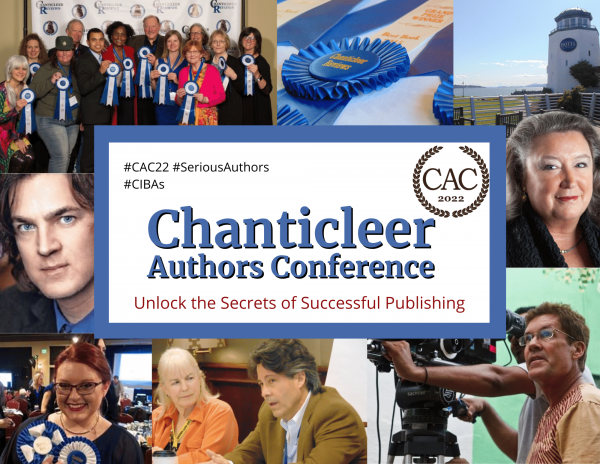
    Note: Conferences and Writing Events often have a specific tag like #CAC and #CIBAs (for Chanticleer Authors Conference and Chanticleer Int’l Book Awards). Using those specific tags can be a great way to have the organization notice you.

    Blocking

    It’s always good to talk about blocking people on any social media platform. On Twitter, blocking someone is often an act of self-love. Rather than getting into a fight with a stranger on the internet, just click that block button and don’t worry about talking to them ever again. Your mental health isn’t worth trying to reach someone who just wants to be mean.

    So what’s Elon Musk got to do with all of this?

    Elon Musk giving a sideways thumbs up
    Billionaire and would-be-Twitter-Owner Elon Musk

    Recently it came out that Musk has invested enough to own 9.2% of Twitter. If you really want to dive into this, you can check out this article from CNET here, but these are the highlights. In addition to owning a substantial share of Twitter, Musk has now offered to buy the company. If Twitter says no, he could divest his stock and drive the price of Twitter down, harming the platform. If they say yes, he’s sure to transform the platform into something quite different from what it is now. Should we be worried?

    Well, probably not.

    There might be a bit of an upset, but it’s more likely things will continue as they have for Twitter, and Musk might just try to make his own social media website. However, this brings us back to the importance of having your own author website. Companies like Twitter and Meta (that’s Facebook and Instagram) are eventually going to go the way of MySpace, and then we’ll all have to collectively jump onto a new social network. If all our eggs are in the basket that ends up losing popularity or shutting down, then we lose our entire author platform at one go. So, keeping your website as a hub that tells people who you are, and directs folks to your social media makes your position much more stable.

    Our best advice for social media?

    Chalkboard that reads "No act of kindness, no matter how small, is ever wasted --Aesop

    This might seem obvious, but always be polite. Being rude on social media is a great way to get blocked. As we tell kids, the internet is forever. When a person explodes or swears at someone online, that sort of thing has a way of making it onto Watch Dog sites like Writer Beware, ALLi, or Absolute Write. These spaces can mean the difference between someone deciding to work with an author or not, which can have huge consequences when it comes to sales.

    A few words from Kiffer.

    Be kind. If you don’t have anything nice to say, don’t post anything at all.

    And be sure not to hi-jack someone else’s post. This is just plain rude. IF someone tries to hi-jack your post, you can choose 1) not to respond – at all  2) delete the comment if it is egregious or 3) if someone is trying to sell their book on your social platform — well, that is just plain out tacky! If the person doing this persists (we all make blunders – and I would like to think most of the time unintentionally), then you may have to block that particular person. Facebook and Twitter do NOT notify the person that they have been blocked. You just won’t have to see their comments on your posts anymore. On Twitter, this is called “thread-jacking” — someone interjecting in a discussion in order to divert it in a different direction.

    My advice for social media is Be kind. If you don’t have anything nice to say, don’t post anything at all. 

    What is posted on the internet is there forever and for everyone. – Kiffer

    Post note:  Keep in mind, that the publishing world is a small one.


    Thank you for joining us for this Writer’s Toolbox Article, and good luck out there on the web!

    Writer’s Toolbox

    Writer Toolbox Helpful Links: 

    The Business of Being a Writer website

    Your Guide to Twitter Pitch Events in 2022

    Elon Musk Offers to Buy Twitter: Everything You Need to Know

    The traditional publishing tool that indie authors can use to propel their writing careers to new levels? Read The Seven Must-Haves for Authors – Unlocking the Secrets of Successful Publishing Series by Kiffer Brown

    Looking for more quality time with us?

    VIRTUAL and IN-Person –  June 23 – 26, 2022! Register Today!

    FLEXIBLE REGISTRATIONS ARE AVAILABLE for these challenging times.

    Seating is Limited. The  esteemed WRITER Magazine (founded in 1887)  has repeatedly recognized the Chanticleer Authors Conference as one of the best conferences to attend and participate in for North America.

    Join us for our 10th annual conference and discover why!

    Featuring: International Best Selling Authors: Cathy Ace along with A+ list film producer Scott Steindorff.

  • Making Social Media Easier for Authors — A Chanticleer Toolbox Primer Article by David Beaumier

    Making Social Media Easier for Authors — A Chanticleer Toolbox Primer Article by David Beaumier

    Social media can feel like a scary thing, but if you work on a schedule and promise yourself a little time on it each week, it’ll grow before you know it.

    Go from this>

    Blue Monster Free Stock Photo - Public Domain Pictures


    To This>

    YES, YOU CAN!

    Social media and marketing can feel like such a pain, but remember, writing is essentially starting your own business, which means you have to manage your product and its image accordingly.

    Most writers don’t write to market, but write because we are artists, yet, without doing some marketing, we miss out on big audience interactions.

    The main thing here is that it isn’t a mystery, and it isn’t a secret. Social media is a long term place to be, so this will take start up energy, but, like Isaac Newton says, an object in motion stays in motion. Once you’re up and running, social media will be easier to manage, and the results only grow over time. The goal is to be authentic and a human being while keeping to some sort of schedule.

    Note from Kiffer:  Digital Marketing is all about “long-tail” strategy. Consumers no longer watch shows or read books the day they launch. We are all too busy. But eventually, we do get around to viewing the Netflix series that everyone is talking about or reading that book that intrigued you with its cover that you saw on your social media platform. Social Media posting is a corner stone of any book promotion strategy. Social Media helps to build awareness of your brand and titles.

    Rinse and Repeat

    Want more marketing tips? Check out this article written by Kiffer Brown and David Beaumier here!

    1. Who are you Writing for?

    By the point you start marketing your book you should hopefully know who your audience is. Young Adult readers? Mystery lovers? Nature enthusiasts? This will all determine the kind of content you want to be sharing on social media. Elana A. Mugdan does a great job of this focusing her Twitter toward fantasy.

    You can’t scroll through five posts without seeing a dragon! She also advertises to the Ace Community who, you guessed it, loves dragons! All that’s missing is cake!

    Elana A. Mugdan

    The next question to ask yourself is how many copies of this do you want to sell? If you’re looking for a smaller print run, maybe your focus on selling will only come in brief bursts rather than be something you link to regularly, and then once you’re out of books, you let your feed return to normal. But we at Chanticleer imagine you’re in this writing business for multiple books.

    Once you figure out who you write for and how many people you hope to reach, that information will help guide what you put in your profile. Like your book cover, readers should be able to tell at a glance if your social media platform will appeal to them or not, so make sure you make it clear who your audience is.

    2. Find a Consistent Voice and Theme

    It helps if the voice for your social media matches or at least is adjacent to how you write for your novels.

    If you are a fantasy writer it makes sense to share information about fantasy topics and images. Maybe you have faerie circle Sundays where you share beautiful photos of mushrooms. Whatever it is, go with it and let your work inform how you post. We’ll look at Avanti Centrae a little more later in this post, but you can see her posts Twitter here is a great example of keeping the focus on global thrillers. This will be important in all the following suggestions. The next thing to keep in mind is…

    3. Keep a Social Media Calendar

    2020 Calendar Printable Free Template - Lovely Planner

    Like any business, you want to have a schedule of some sort. The current top media organizations (it will change) are Twitter, Facebook, Instagram, and TikTok. Here are some good rules of thumb:

    • Twitter: post once a day with a focus on text and sometimes media.
    • Facebook: post twice a week with a balance between text and media.
    • Instagram: post twice a week with a focus on media. Even if you just want to do text, make it an image somehow.

    the text "make in an image" over a background of blue waves

    • TikTok: This one deserves to be separated out because it’s so easy to cross post onto other media platforms. It seems like posting twice a day, three times a week is probably a good starter for TikTok. Vary your video lengths, but remember, you want to keep people who approach your social media content focused on the reason that social media exists. TikTok is meant to be entertaining!

    Since TikTok is the fastest growing social media platform and a significant number of Indie authorsWe have scheduled several sessions on TikTok for CAC 22.

    This level of posting also fits well for the amount of attention the users for these sites give to their respective styles of media.  Your posts don’t have to be radically different across platforms, but they should be tailored to the feel of each, Twitter being more of a slice of life, Facebook being a little more thoughtful and engaging, Instagram more focused on visual media, and TikTok focused on video.

    Consider doing themed days, such as Selfie Saturday, Superhero Month, whatever will fit in with the voice and theme you believe will appeal to your audience. A theme also takes away some of the work of needing to decide what to post about from square one every day.

    And be sure to use hashtags for your themes to expand your audience reach. Click here for our article on #Hashtags. Kiffer

    Hashtags

    Now, if none of these platforms work for you, there are plenty of others with their own recommendations to be researched. TikTok is the newest and shiniest, while Tumblr can work better for people who are more content driven and discomforted by Facebook and Twitter. We count Patreon as a social media since you can use it to connect with other creators, and it can be a good way to generate some passive income (though making a living on it is a whole other level). Likewise, YouTube can be a wonderful platform if you make videos. You can always “Go Live” on the original platforms mentioned, and we’ll talk about that later in this post.

    4. Be a Human Being

    Robot photos, royalty-free images, graphics, vectors & videos | Adobe Stock
    Don’t be mistaken for a robot or a “bot”

    The main goal of social media is to connect with other people. Don’t be afraid to be yourself. You can post pictures of yourself, your life, your pets (please post pet pictures), and even thoughts that are generally on your mind. Do you have any life questions you’ve been considering? Holiday plans that you want to share in order to hear about the plans other people have?

    Going along with the idea of holidays, it’s okay to take social media breaks. Let your followers know when you step away, so they know not to expect a response. That also shows you’re a person and not a bot programmed to send out canned content.

    One of our favorite authors who really puts herself into her posts is Janice Ellis, PhD. You can see her Twitter here, and you can see how her own work and passions are entangled throughout her posts. She does a great job sharing more content about her life than selling her work, which is a great way to reach people. No one wants to follow a one person advertising company that only tries to get you to buy their product.

    Janice Ellis, Ph.D.

    Take a little time, after your posting, the scroll through and be social with people. Scrolling to comment and react to people’s content only needs to last ten minutes at most. A little goes a long way, and with a few comments on posts that interest you, your friends and followers will remember that they’re in your thoughts, and then you’ll be in theirs. If some of their content really speaks to you, share it! And speaking of sharing…

    5. Recommend Material

    When you find something you love spread the joy! I still gush about Rob Slater’s Deserted Land series five years after reading it because I was so carried away by the way he brought a dystopian YA to life in a city I know and love, which I had never seen before. Whenever one of those “Post only 7 Titles of Books you Love” posts goes around, you can bet I share my favorite Chanticleer authors first and foremost.

    Robert Slater author of ALL IS SILENCE
    Rob Slater

    When you share material you like that’s in the genre you write, you’re also re-emphasizing the voice of your social media and letting that author’s audience know that they might like your work, too.

    And it goes beyond just books. Products, photos, memes, these are all fun posts that let people see who you are and get to know you a little better. It helps clue people in to the world you are passionate about.

    6. Create Shareable Content

    This one can be a little tricky of all the suggestions so far because it’s not always clear what will do well. Here are a few examples:

    • Make a meme. These are images with text superimposed, usually with some relevant pop culture reference
    • Send out an author Newsletter
    • Write blogposts, either on your own website, on Medium, or for a friend’s website. Anything to increase your name recognition out on the web.
    • Create giveaways for your book
    • Announce a cover reveal for your book

    Fundraisers can be great, too, but those typically work best only once you’ve already developed a solid platform. You want people to give you the greatest gift they have to offer: Their attention.

    This content will ideally speak to your audience and be an effective way for you to communicate and interact with them. Think creatively about what you can share because chances are, you already have a good candidate. When it comes to shareable content and interviews, check out Avanti Centrae whose Twitter you can find here.

    Avanti Centrae

    7. #Hashtags

    Another difficult concept to grasp is the mystery of hashtags. While we’ve all felt #blessed at some point, the important thing is to use hashtags that will actually stand out to your audience. The trickiest hashtags are the ones that you want to convey a sense of what you’re doing, for example #amwriting has over 2 million Google results while #writeratwork has just over ten thousand. It’s clear which one will find more engagement and will be searched more often.

    A face covered in white makeup with red hashtags drawn on

    If you aren’t sure what hashtag to use, look up a few of your favorite authors in your genre and make a list of what they’re using, and then check what’s most popular.

    The easy side of hashtags is when you’re attending a specific event with a readymade hashtag. At the Chanticleer Author’s Conference, we use variations on #CAC followed by the year. This was #VCAC21 and next year will be #CAC22 because we are so hopeful that we will be able to have an in-person conference next year! Hashtags should be simple and easy to use. Our 10th Anniversary Chanticleer Authors Conference (CAC22) will happen LIVE at the Hotel Bellwether in beautiful Bellingham, Wash, April 7-10, 2022.

    8. Be Live

    Interact with people and let them into your life. Consider launching polls for your readers to be able to respond directly to you. These can be related to titles or what should happen next with a character. You are an active writer, and that means people can actively participate with you.

    A white woman and man sit on a couch with a bowl of popcorn

    You can also “Go live” and post video of you interacting with readers in real time. Things you can do when you are live:

    • A Q&A session about your work, writing process, and the research that goes into your writing.
    • Introduce people to your pets
    • Read some of your work
    • Read someone else’s work that you recommend
    • Promote your books
    • Run a fundraiser or giveaway
    • Raise awareness about a subject you are passionate about.

    John Green, Author of The Fault in Our Stars and many other books, even goes live when he signs the pages that are to be inserted in his upcoming books. He just chats casually with the camera to help the time pass.

    9. Where Chanticleer Fits

    When you have a victory, especially related to one of your books, you should crow about it! A Blue Ribbon for a First Place Category or Grand Prize win in one of our 24 contest divisions you can enter here? A positive Editorial Review which you can sign up for here? Digital badges from both of those? All of it can be posted on social media and your website to highlight the progress and recognition your book has earned.

    There are millions of books being published, and you can take all of these steps and still get missed. But if you participate in a writing community with international reach and gain recognition with it, that can be one more step to better sales.

    Remember, social media takes some up front work, but once it’s set and you’re on a schedule, it’s just another part of the writing career. You can make it work by putting in less than an hour a week once all the pieces are in place. Set your schedule and keep at it!


    Writer’s Toolbox

    Thank you for reading this Chanticleer Writer’s Toolbox article.

    Remember! The Chanticleer Author’s Conference is coming up, April 7-10, 2022! Don’t miss out, register here!

    Writers Toolbox Helpful Links: 

    10 Questions with ELANA MUGDAN

    JANICE ELLIS, Ph.D. 10 Question Interview

    The traditional publishing tool that indie authors can use to propel their writing careers to new levels?  https://www.chantireviews.com/2016/05/15/the-seven-must-haves-for-authors-unlocking-the-secrets-of-successful-publishing-series-by-kiffer-brown/

  • Amanda Hagarty will present “Wattpad Wonderful” and “Social Shenanigans” at CAC14

    Amanda2Amanda Hagarty will present “WattPad Wonderful” and “Social Shenanigans”  at the Chanticleer Authors Conference 2014.


    “WattPad Wonderful” will answer the question, “What is Wattpad?” Wattpad is a social media platform just for readers and writers and has surpassed sites like Goodreads, reddit, and even Tumblr in the number of people in the US who visit the site each month.

    It is still a relatively unknown entity. But this is changing quickly. The news is getting out (in August Wired ran an article about an author who garnered over 800 million reads of her trilogy and 300 million comments), and more writers are wondering how they can use Wattpad to drive discoverability.

    Amanda Hagarty has published nearly 30 chapters on Wattpad and hit the top 200 list of both Fantasy and Adventure with her story on numerous occasion. The story has earned over 2500 reads, nearly 300 votes and over 300 comments in that time. In this session she will share a few of the tricks and good practices she has learned on Wattpad that have helped her find a small but dedicated and growing group of fans for her work.

    Amanda will also present two other sessions at the Chanticleer Authors Conference. Social Shenanigans on Friday will focus on author specific activities you can get up to on social media to both have fun and boost your discoverability.  Tired of just posting “buy my book” or not sure what to do? Come and get creative ideas that will spice up your platform with a little variety and make the chore of social media something you can enjoy.

    Amanda Hagarty’s second session on Saturday is entitled What is a Good Web Presence? In this session you will learn how to make the most of each component of your web presence, find your strengths, fill in the gaps, and bring it all together.

    Amanda started building websites and doing online promotion in 1995. Social media marketing and promotion are a passion-turned-business for her.

    Helping other writers learn how to use the Internet and social media to build their author’s platform and market their books was just a natural extension of her passion for marketing and her passion for writing.

    We invite you to meet other members of the Chanticleer International Community of Authors at this fun and informative three day event featuring:


    • CBR Awards Banquet – You don’t have to be a CBR winner to attend this exciting event.
    • Sessions, workshops, and panel discussions
    • Keynote Speakers: Shari Stauch, Tyler Bird, and Diane Isaacs
    • Networking opportunities
    • Prizes and drawings
    • Books By the Bay Bookfair


    Join us at the elegant  Hotel Bellwether on beautiful Bellingham Bay. Register today! 

    banner


  • PNWA Presentation – Why Authors Should Use Google+

    PNWA Presentation – Why Authors Should Use Google+

    whygoogleIt is a big universe out there, so as an author you should consider incorporating Google+ Advantage  into your marketing strategy as a discover-ability tool.


    Google+ should be a pillar in every author’s platform to amplify networking efforts and build relationships with readers.

    We help good books get Discovered!


    This is a copy of the slides that Kiffer Brown presented at the PNWA’s 2014 writers conference. Just click here to see the presentation:  Google Slides
     

  • How and Why Authors Should Use Google+ by Kiffer Brown

    How and Why Authors Should Use Google+ by Kiffer Brown

    This presentation will shine a spotlight on what Google+ is and why authors and aspiring writers need to embrace this fastest growing social media platform that exists in the Internet Universe.

    google_plus_2
    The link below will take you to our Google “Power Point-like presentation” with slides that you can take your time to read  through for an overview of what G+ is and how it compares to Facebook and Twitter. The presentation will also touch on a powerful Google tool called “Google Authorship”

    Click here for Kiffer’s G+ Presentation

    We will also continue posting and publishing more tips on how to use Google + along with updates. Please keep in mind that Google+ continuously updates the platform.

    “Google+ aims to make sharing on the web more like sharing in real life.”

    [fusion_builder_container hundred_percent=”yes” overflow=”visible”][fusion_builder_row][fusion_builder_column type=”1_1″ background_position=”left top” background_color=”” border_size=”” border_color=”” border_style=”solid” spacing=”yes” background_image=”” background_repeat=”no-repeat” padding=”” margin_top=”0px” margin_bottom=”0px” class=”” id=”” animation_type=”” animation_speed=”0.3″ animation_direction=”left” hide_on_mobile=”no” center_content=”no” min_height=”none”]

    Kiffer Brown with Google+ overview presentation

    Kiffer Brown with Google+ overview presentation

    CBR will have more bite-sized information on Circles, Events and Hangouts.  We also begin listing links to helpful sites and posts.

    Please leave a comment! And be sure to Circle +Chanticleer Book Reviews and +Kiffer Brown on Google+   THANKS!

     [/fusion_builder_column][/fusion_builder_row][/fusion_builder_container]