Tag: Social Media for Authors

  • Making Social Media Easier for Authors — A Chanticleer Toolbox Primer Article by David Beaumier

    Making Social Media Easier for Authors — A Chanticleer Toolbox Primer Article by David Beaumier

    Social media can feel like a scary thing, but if you work on a schedule and promise yourself a little time on it each week, it’ll grow before you know it.

    Go from this>

    Blue Monster Free Stock Photo - Public Domain Pictures


    To This>

    YES, YOU CAN!

    Social media and marketing can feel like such a pain, but remember, writing is essentially starting your own business, which means you have to manage your product and its image accordingly.

    Most writers don’t write to market, but write because we are artists, yet, without doing some marketing, we miss out on big audience interactions.

    The main thing here is that it isn’t a mystery, and it isn’t a secret. Social media is a long term place to be, so this will take start up energy, but, like Isaac Newton says, an object in motion stays in motion. Once you’re up and running, social media will be easier to manage, and the results only grow over time. The goal is to be authentic and a human being while keeping to some sort of schedule.

    Note from Kiffer:  Digital Marketing is all about “long-tail” strategy. Consumers no longer watch shows or read books the day they launch. We are all too busy. But eventually, we do get around to viewing the Netflix series that everyone is talking about or reading that book that intrigued you with its cover that you saw on your social media platform. Social Media posting is a corner stone of any book promotion strategy. Social Media helps to build awareness of your brand and titles.

    Rinse and Repeat

    Want more marketing tips? Check out this article written by Kiffer Brown and David Beaumier here!

    1. Who are you Writing for?

    By the point you start marketing your book you should hopefully know who your audience is. Young Adult readers? Mystery lovers? Nature enthusiasts? This will all determine the kind of content you want to be sharing on social media. Elana A. Mugdan does a great job of this focusing her Twitter toward fantasy.

    You can’t scroll through five posts without seeing a dragon! She also advertises to the Ace Community who, you guessed it, loves dragons! All that’s missing is cake!

    Elana A. Mugdan

    The next question to ask yourself is how many copies of this do you want to sell? If you’re looking for a smaller print run, maybe your focus on selling will only come in brief bursts rather than be something you link to regularly, and then once you’re out of books, you let your feed return to normal. But we at Chanticleer imagine you’re in this writing business for multiple books.

    Once you figure out who you write for and how many people you hope to reach, that information will help guide what you put in your profile. Like your book cover, readers should be able to tell at a glance if your social media platform will appeal to them or not, so make sure you make it clear who your audience is.

    2. Find a Consistent Voice and Theme

    It helps if the voice for your social media matches or at least is adjacent to how you write for your novels.

    If you are a fantasy writer it makes sense to share information about fantasy topics and images. Maybe you have faerie circle Sundays where you share beautiful photos of mushrooms. Whatever it is, go with it and let your work inform how you post. We’ll look at Avanti Centrae a little more later in this post, but you can see her posts Twitter here is a great example of keeping the focus on global thrillers. This will be important in all the following suggestions. The next thing to keep in mind is…

    3. Keep a Social Media Calendar

    2020 Calendar Printable Free Template - Lovely Planner

    Like any business, you want to have a schedule of some sort. The current top media organizations (it will change) are Twitter, Facebook, Instagram, and TikTok. Here are some good rules of thumb:

    • Twitter: post once a day with a focus on text and sometimes media.
    • Facebook: post twice a week with a balance between text and media.
    • Instagram: post twice a week with a focus on media. Even if you just want to do text, make it an image somehow.

    the text "make in an image" over a background of blue waves

    • TikTok: This one deserves to be separated out because it’s so easy to cross post onto other media platforms. It seems like posting twice a day, three times a week is probably a good starter for TikTok. Vary your video lengths, but remember, you want to keep people who approach your social media content focused on the reason that social media exists. TikTok is meant to be entertaining!

    Since TikTok is the fastest growing social media platform and a significant number of Indie authorsWe have scheduled several sessions on TikTok for CAC 22.

    This level of posting also fits well for the amount of attention the users for these sites give to their respective styles of media.  Your posts don’t have to be radically different across platforms, but they should be tailored to the feel of each, Twitter being more of a slice of life, Facebook being a little more thoughtful and engaging, Instagram more focused on visual media, and TikTok focused on video.

    Consider doing themed days, such as Selfie Saturday, Superhero Month, whatever will fit in with the voice and theme you believe will appeal to your audience. A theme also takes away some of the work of needing to decide what to post about from square one every day.

    And be sure to use hashtags for your themes to expand your audience reach. Click here for our article on #Hashtags. Kiffer

    Hashtags

    Now, if none of these platforms work for you, there are plenty of others with their own recommendations to be researched. TikTok is the newest and shiniest, while Tumblr can work better for people who are more content driven and discomforted by Facebook and Twitter. We count Patreon as a social media since you can use it to connect with other creators, and it can be a good way to generate some passive income (though making a living on it is a whole other level). Likewise, YouTube can be a wonderful platform if you make videos. You can always “Go Live” on the original platforms mentioned, and we’ll talk about that later in this post.

    4. Be a Human Being

    Robot photos, royalty-free images, graphics, vectors & videos | Adobe Stock
    Don’t be mistaken for a robot or a “bot”

    The main goal of social media is to connect with other people. Don’t be afraid to be yourself. You can post pictures of yourself, your life, your pets (please post pet pictures), and even thoughts that are generally on your mind. Do you have any life questions you’ve been considering? Holiday plans that you want to share in order to hear about the plans other people have?

    Going along with the idea of holidays, it’s okay to take social media breaks. Let your followers know when you step away, so they know not to expect a response. That also shows you’re a person and not a bot programmed to send out canned content.

    One of our favorite authors who really puts herself into her posts is Janice Ellis, PhD. You can see her Twitter here, and you can see how her own work and passions are entangled throughout her posts. She does a great job sharing more content about her life than selling her work, which is a great way to reach people. No one wants to follow a one person advertising company that only tries to get you to buy their product.

    Janice Ellis, Ph.D.

    Take a little time, after your posting, the scroll through and be social with people. Scrolling to comment and react to people’s content only needs to last ten minutes at most. A little goes a long way, and with a few comments on posts that interest you, your friends and followers will remember that they’re in your thoughts, and then you’ll be in theirs. If some of their content really speaks to you, share it! And speaking of sharing…

    5. Recommend Material

    When you find something you love spread the joy! I still gush about Rob Slater’s Deserted Land series five years after reading it because I was so carried away by the way he brought a dystopian YA to life in a city I know and love, which I had never seen before. Whenever one of those “Post only 7 Titles of Books you Love” posts goes around, you can bet I share my favorite Chanticleer authors first and foremost.

    Robert Slater author of ALL IS SILENCE
    Rob Slater

    When you share material you like that’s in the genre you write, you’re also re-emphasizing the voice of your social media and letting that author’s audience know that they might like your work, too.

    And it goes beyond just books. Products, photos, memes, these are all fun posts that let people see who you are and get to know you a little better. It helps clue people in to the world you are passionate about.

    6. Create Shareable Content

    This one can be a little tricky of all the suggestions so far because it’s not always clear what will do well. Here are a few examples:

    • Make a meme. These are images with text superimposed, usually with some relevant pop culture reference
    • Send out an author Newsletter
    • Write blogposts, either on your own website, on Medium, or for a friend’s website. Anything to increase your name recognition out on the web.
    • Create giveaways for your book
    • Announce a cover reveal for your book

    Fundraisers can be great, too, but those typically work best only once you’ve already developed a solid platform. You want people to give you the greatest gift they have to offer: Their attention.

    This content will ideally speak to your audience and be an effective way for you to communicate and interact with them. Think creatively about what you can share because chances are, you already have a good candidate. When it comes to shareable content and interviews, check out Avanti Centrae whose Twitter you can find here.

    Avanti Centrae

    7. #Hashtags

    Another difficult concept to grasp is the mystery of hashtags. While we’ve all felt #blessed at some point, the important thing is to use hashtags that will actually stand out to your audience. The trickiest hashtags are the ones that you want to convey a sense of what you’re doing, for example #amwriting has over 2 million Google results while #writeratwork has just over ten thousand. It’s clear which one will find more engagement and will be searched more often.

    A face covered in white makeup with red hashtags drawn on

    If you aren’t sure what hashtag to use, look up a few of your favorite authors in your genre and make a list of what they’re using, and then check what’s most popular.

    The easy side of hashtags is when you’re attending a specific event with a readymade hashtag. At the Chanticleer Author’s Conference, we use variations on #CAC followed by the year. This was #VCAC21 and next year will be #CAC22 because we are so hopeful that we will be able to have an in-person conference next year! Hashtags should be simple and easy to use. Our 10th Anniversary Chanticleer Authors Conference (CAC22) will happen LIVE at the Hotel Bellwether in beautiful Bellingham, Wash, April 7-10, 2022.
    8. Be Live

    Interact with people and let them into your life. Consider launching polls for your readers to be able to respond directly to you. These can be related to titles or what should happen next with a character. You are an active writer, and that means people can actively participate with you.

    A white woman and man sit on a couch with a bowl of popcorn

    You can also “Go live” and post video of you interacting with readers in real time. Things you can do when you are live:

    • A Q&A session about your work, writing process, and the research that goes into your writing.
    • Introduce people to your pets
    • Read some of your work
    • Read someone else’s work that you recommend
    • Promote your books
    • Run a fundraiser or giveaway
    • Raise awareness about a subject you are passionate about.

    John Green, Author of The Fault in Our Stars and many other books, even goes live when he signs the pages that are to be inserted in his upcoming books. He just chats casually with the camera to help the time pass.

    9. Where Chanticleer Fits

    When you have a victory, especially related to one of your books, you should crow about it! A Blue Ribbon for a First Place Category or Grand Prize win in one of our 24 contest divisions you can enter here? A positive Editorial Review which you can sign up for here? Digital badges from both of those? All of it can be posted on social media and your website to highlight the progress and recognition your book has earned.

    There are millions of books being published, and you can take all of these steps and still get missed. But if you participate in a writing community with international reach and gain recognition with it, that can be one more step to better sales.

    Remember, social media takes some up front work, but once it’s set and you’re on a schedule, it’s just another part of the writing career. You can make it work by putting in less than an hour a week once all the pieces are in place. Set your schedule and keep at it!


    Writer’s Toolbox

    Thank you for reading this Chanticleer Writer’s Toolbox article.

    Remember! The Chanticleer Author’s Conference is coming up, April 7-10, 2022! Don’t miss out, register here!

    Writers Toolbox Helpful Links: 

    10 Questions with ELANA MUGDAN

    JANICE ELLIS, Ph.D. 10 Question Interview

    The traditional publishing tool that indie authors can use to propel their writing careers to new levels?  https://www.chantireviews.com/2016/05/15/the-seven-must-haves-for-authors-unlocking-the-secrets-of-successful-publishing-series-by-kiffer-brown/

  • HOW to INCREASE ONLINE BOOK SALES – Part 2 by Kiffer Brown

    HOW to INCREASE ONLINE BOOK SALES – Part 2 by Kiffer Brown

    How to Increase Online Book Sales – Part 2 by Kiffer Brown

    I receive several emails a week from authors wanting to know if there is one thing that they can do to increase book sales. Many confess that they despise spending time that they could be writing on “marketing tasks” and abhor the idea of “wasting time” on social media.

    The Attack of Social Media – sometimes I feel this way…

    I get it. I truly do.

    However, as with any product, your books must have a marketing and promotional strategy if you are going to increase sales. Participating in social media is a must in just about any product marketing strategy.

    J.D. Barker, master of suspense and international best-selling thriller author and whose books are under contract for TV series and movies, reminded us at the Chanticleer Authors Conference,

    “Books are products—products to be sold.” – J.D. Barker

    If you want to make a living as an author,  never forget those simple words from J.D.

    At CAC 19, J.D. shared with us his very structured plan that he developed for launching his first novel. We hope to have him back soon.

    JD Barker presented at CAC19

    A successful marketing and promotion plan is part data driven, part art, and part luck. And you know the old saying that, “Luck is Opportunity meeting Preparation and Planning.” Your job is to write the best work possible, promote it like an expert guerrilla marketeer, and, of course, build your brand as an author. Easy Peasy. Well, no. But if you do, and one day the stars align, and those days do happen, you will be ready. And remember your plan doesn’t have to be perfect. Every little bit helps and builds.

    The main thing is to get started as another one of my favorite authors says.

    Whatever you can do or dream you can, begin it. Boldness has genius, power, and magic in it.  ~Goethe

    Your brand and book marketing strategy should be a multi-pronged approach that is consistent and plans for at least three years into the future. You can always pivot if needed.

    Remember that Budweiser, Pringle Potato Chips, Heinz ketchup, Reese’s Peanut Butter Cups,  and others pay the  $5.6 million dollars for a 30-second ad in the 2020 Superbowl just to keep their brands in your Top-of-Mind associations.

    Your marketing and promotion strategy is to keep your brand (author name) and products (books) promoted with  magazine articles, interviews, blog posts, social media posts, old-school marketing materials, graphics and visual images, etc. on a consistent basis with a few “major event promotions” throughout the year for content and P/R generation.

    Keep that $5.6 million dollars per 30-seconds in mind the next time you think that you are wasting time promoting your brand and your work on social media. And like the Superbowl ads, your social media posts must be compelling to stand out in a crowded field.

    Whether or not you are aiming to go the traditional publishing route or self-publish, building your brand and book promotion strategy is key to have a successful writing career.  Having a brand and marketing strategy will open many more possibilities and doors for you.

    Here is an all-too-familiar scenario that I have heard again and again from literary agents (mostly when we are having drinks together in the evening after book expos or trade shows):

    The conversation from the lit agent (no pun intended) generally goes something like this:

    I just read this compelling manuscript. I thought that it might have potential (as in commercial potential because that is what pays the bills). So, I got online to see what kind of digital footprint the author has. Crickets. The website’s last blog post was eighteen months ago. I clicked on the Facebook page–no fan-base or street team. Twitter was just re-posting of posts that have nothing to do with other authors in her genre or of interest to potential readers…and Instagram was the same. So, I guess I will have to give this manuscript a pass. It seems to me that the author just isn’t serious about having a writing career and I don’t have  the time to get her social media platform up to speed  while shopping the manuscript. 

    As opposed to this rare excited version of a lit agent discovering the magical gem of great writing and serious promotional efforts that I did have the opportunity to hear (and drink a celebratory glass of champagne with):

    Oh my god! I just read this compelling manuscript. I thought that it might have potential. So, I got online and JACKPOT! This author is doing everything right to reach her target market. Her marketing strategy will make it so much more easier for me to sell the book to _______ (insert publisher here). She has a lively website that is current and up-to-date. I saw a lot of consistent activity on her author Facebook page. Her Instagram posts are subtlety promotional. Perfect! And I see that she has a calendar full of scheduled events. It is so rare to find this combination of talent and business sense. 

    Now I understand that some of you will say, “Au contraire, mon ami!  If I self-publish, I will be the bane of literary agents. Lit agents will not touch self-published authors.”  I hear you mumble to yourself.

    As for the disbelievers who think that self-publishing makes you untouchable to literary agents, I will use J.D. Barker as one of the tried and true examples of disproving that is old advice from before 2010. What a difference a decade makes.

    J.D. Barker successfully published his debut novel as an indie and sold enough copies to land on the radar of the traditional publishers in a BIG way including seven-figure advances, two feature films, and a television series. 

    For now, please bear with me as I go off-topic for a bit… for those who are familiar with me, you probably have come to expect this wandering around bit on my part.

    SHORTS – (a prelude to Part Two — How to Increase Online Sales) 

    Even if you are planning on going  the traditional publishing route and not self-publishing, you will have to create a social media platform and a brand. Remember the book and the film Julie and Julia by Julie Powell. She is an inspiration to bloggers everywhere. Her book was basically a compilation of her blog posts.

    Julie Powell–inspiring bloggers everywhere!

    Hugh Howey self-published the science fiction blockbuster short story Wool – and Simon and Schuster picked up his omnibus of short stories. Howey is now sailing around in the South Pacific on his custom yacht as I write this. (I did have a chance to meet him several times before he embarked– he is a really nice guy.) Of course, everyone thinks that Howey  was an overnight success. It only took him ten years of writing consistently for one short story to take off and create a fandom for all of his works.

    Hugh Howey, author of WOOL

    Andy Weir self-published his debut novel, The Martian. He said I was writing all sorts of stories. I had three different serials going, and random short stories that I would post. I just kind of wrote whatever I wanted, and ‘The Martian’ was just one of the serials, but it was the one that the readers clearly liked the best, and so that helped encourage me to write it more than the others,” Weir told Recode.

    It took Weir a long time to get his writing career off the ground. He even took several years of as software programmer to work on his writing, but then had to go back to programming until The Martian took root and agents were contacting him about publishing deals and movie deals.

    As Jerry Macquire said, “Show me the money.”  In the publishing industry that equates to copies sold and your author brand.


    CIBA SHORTS

    We became so excited about Short Stories from writing this blog post that we decided to finally offer a CIBA Book Awards division. We have received many requests for an awards program for  just for short stories, novelettes, and novella. So without further ado… The CIBA Shorts!

    Anthologies and Collections are accepted along with solitary works. Click on this link to learn more https://www.chantireviews.com/contests/


    Back to the point of Part Two – as I circle back around to:  How to Sell More Books Online!

    Link to Part One of How to Increase Book Sales 

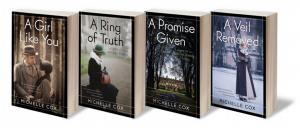
    Michelle Cox, a Mystery & Mayhem Grand Prize Winner, shares her strategy for promoting  her well-received Henrietta and Inspector Howard mystery novel series.

    Michelle says, “I spend five to seven hours a day doing marketing and PR—anything from writing the blog or the newsletter or articles or interviews, taping podcasts, setting up events, answering email, attending to social media, etc.  It’s really a full-time job, though, sadly, the actual writing, the part I love, is the part I get to spend the least on.”

    Award-winning mystery author, Michelle Cox

    Michelle continues:

    All marketing is pretty elusive, isn’t it?  It’s a constant process of throwing things at the wall and seeing what sticks.  It’s also important to remember that what works for one person, might not work for everyone.  It’s not an exact science.  If it were, we’d all be rich!

    But, in general, here are some good marketing tips that I have found to work:

    • Try to figure out where your readers are. Most of my readers, for example, are on Facebook, so that’s where I spend most of my social media time.
    • Think of yourself as a brand and try to match your posts accordingly. I post things about myself or the book or writing, but mostly old recipes, period drama news, or old stories from the past (which constitute my blog).
    • Also, I’m very careful never to post anything religious or political.  This is a business, and the more you see yourself that way and follow basic business protocols, the more successful you’ll be.
    • Try to build your newsletter list by offering a freebie (such as free story, writing tips, a webinar, a prequel). Personally, I do it by running contests with really big prize packages. I make sure to state that the contest winner will be picked only from my newsletter subscribers.  I pay a designer to create a beautiful graphic of the prizes, post it on Facebook, and then boost the post.  Not only does this get me a lot of new subscribers (sometimes up to 1,000!), but it exposes the series to new readers as well!
    • Build your network. Join online author groups (I am part of a fabulous private FB group organized by my publisher, She Writes Press. We all share ideas, marketing tips, and offer support and advice, especially to the newer authors just coming on board.  It’s a collective wealth of information.) or real-world groups in your area.  Don’t be jealous of the success of others, but help each other as much as possible. As my publisher, Brooke Warner has said, “There’s room for everyone at the table.”
    • Show up at other authors events, write reviews, help promote whenever possible.  Go to conferences to meet not just readers, but other authors who can potentially help you.  Remember that you are a business, and you need to do work within your community to begin standing out.

    Read more of Michelle Cox’s Marketing Tips that she shared with us by clicking this link. 

    You can discover more Book Marketing and Promotion Gems by reading Sharon E. Anderson’s 10 Question Interviews blog posts series  that can be found on the Chanticleer Reviews website.  

    The latest interview is with the CYGNUS Grand Prize winner, J.I. Rogers. Rogers discusses her marketing tips and her Patreon marketing strategy. Click here to read. 

    Please stay tuned for Part Three of How to Increase Online Book Sales by Kiffer Brown

    HANDY LINKS – Chanticleer Reviews Tool Box Series 

    Below are links to blog posts on the Chanticleer website that have more information on the above points: 

    How to Increase Book Sales Online – Part One

    BISAC CODES – Not Just Alphabet Soup

    Hashtag Primer 

    Book Reviews – 4 Types and Why You Need All Four

    Social Media and Creating and Keeping Top of Mind Association with Readers


    Chanticleer Writer’s Toolbox

    Thank you for reading this Chanticleer Writer’s Toolbox post on Marketing and Book Promotion to Increase Online Book Sales.

    We do a post (SOON) about book selling and distribution platforms – increasing your target market globally.

    Also, we will continue to post the 2019 CIBA Finalists, so please stay tuned.

    And, we will have new writing craft posts from top editors coming your way to keep you writing and editing during these unprecedented times.


    We encourage you to stay in contact with each other and with us  during this stint of practicing physical distancing to prevent the spread of COVID-19.

    Let us know how you are doing, what is going on where you live, how are you progressing on your writing projects.

    I invite each of you to join us at The Roost – a private online Chanticleer Community for writers and authors and publishing professionals. You are welcome to email me for more info also.

    We are active on Facebook, Twitter, and Instagram. You can find us by using our social media handle @ChantiReviews

    Minimize physical contact! Maximize social connecting!

    Here are our contact emails:  

    General information:  Chanticleer@ChantiReviews.com

    Editorial:  BookEditor@ChantiReviews.com

    Reviews: Sanderson@ChantiReviews.com

    Me:  KBrown@ChantiReviews.com

    Take care, be safe.

    Keep writing and creating magic! 

    Kiffer and Sharon & Entire Team Chanticleer 


  • Building Your Readership Community – Not Just for YA Authors

    Building Your Readership Community – Not Just for YA Authors

    #SocializingWithInternetStrangersForTheWin

    Dear YA Writer,

    You know that moment right before you hit “Post”? The seconds seem to still, like a roller coaster summiting a steep incline. Click. Movement. A loading bar appears. Aaaaand, plunge. Self-promotion rockets into cyberspace on the wings of a WiFi prayer to the cat gods of the interwebs.

    Then the wait.

    Refresh! And still no notification. Doubt creeps in and whispers error messages from your social media past. But you’ve changed. You no longer join the horde of desperate town criers who scream into the void “buy my book!” with every tweet. Your contribution is now a diverse portfolio of hooks and calls to action with appropriate yet ironic hashtags.  

    A notification pops up. Someone has engaged! Impressions increase.

    Inhale relief. You did it! Exhale negativity. Whew, you spelled there/their/they’re right.


    Yeah, that moment.

    Lather. Rinse. Repeat.

    This is authordom. This is #amwriting about #writerslife and #writerproblems. Because, let’s face it. For all our word-slinging bravado, marketing via social media is not our best use of wordsmithery. OK, some of you are seriously boss when it comes to online engagement. Most of us, though, are introverted, please-dear-god-don’t-make-me-have-small-talk-with-strangers types who require naps to recharge our social anxiety batteries. Shooting proverbial fish in a cyberspace barrel cuts into our writing time. <<inserts angry eyebrows>>

    So what do we do? We sin against the Internet by cluttering newsfeeds with our amateur attempts at marketing. Why talk with strangers when we can talk at them?

    No, YA Writer. Just, no. Better to not Internet at all.

    I know, I know, I know… You’ve changed. A reformed self-promotion junkie. I believe you. But revision is the theme song of writing, amirite? And when it comes to engaging young adult readers, one thing is critical.

    Socializing.

    Yeah, you read correctly. I said socializing. Some of you just cringed. Sorry-not-sorry. Strange as it may sound, social media is designed for community and relationship building, not marketing. The kind of place where you talk with people, not at them. YA readers (especially actual YA-aged YA readers) are sensitive to this online phenomenon, too.   

    Get to know your readers and potential readers. Ask them questions about what they like. Be silly. Be serious. Be everything in-between. Share strange but true tidbits about you.

    While plunking away at this blog, shoulders hunched and face pinched with all the feels, my elbow bumped a book stack where an unsuspecting gummy cinnamon bear rolled off the edge and met an untimely end in a cup of tea. Not bad. I think I just found my new favorite sweetener. #RIP #GummyBear2017 #NeverForget

    What is the strangest thing you’ve drank in your coffee or tea?

    What is the strangest thing you've drank in your coffee or tea?
    What is the strangest thing you’ve drank in your coffee or tea?

    See what I did there?

    Did I mention my books? Nope.

    Did I direct someone to my website or Amazon page? Negatory.

    Did I ask them to comment? You betcha.

    But I chose a safe topic. Neutral ground. No sales pressure here. Instead, I’m building a community for my followers and establishing a thread of conversation. Interact with comments. Like, heart, wow, and laugh. Weep with your followers when they give you a piece of their troubled heart. Be outraged when they describe crimes against humanity.

    Be you.

    Socializing.

    You totally got this.

    True confession: I don’t always post like a saint. Sometimes I sin against the Internet with shameless plugs and yadda-yadda-yadda about my product rather than engaging my community. Sometimes this is necessary. Sometimes it’s too much, and my followers show me by ignoring my attempts for attention.

    The best combo is 75% community building and 25% self-promotion.

    Hey, don’t worry. I’m still learning this, too. We’ll do this social media thing together.

    First, a cautionary tale: Please, for the love of cat GIFs, don’t bore your followers with business details. Your readers don’t care. Your younger readers care even less. Authordom is not the Dow Jones Industrial Average, and readers are not brokers waving money and shouting at machines with fluctuating values. OK, so they sorta are, and the giant AI that is Amazon oscillates prices like Oprah. Here’s a saving for you. And a saving for you. Savings for everyone! You get the gist. They don’t need the gritty details of your sales or the publishing industry. <yawns> Plus, people notice when other people stop looking at them as fellow humans and blink $$$ instead.

    Don’t be that author.

    Join the resistance! I’ll stand beside you fellow #YAlit writer as we lift our keyboards and Smart tech in solidarity to reclaim our followers and engagement!

    Click.

    Plunge.

    #SocializingWithInternetStrangersForTheWin

    Sincerely,

    Me


    P.S. Pssst. This isn’t goodbye. Oh, no. You’re stuck with me for a few more blog conversations. So stay tuned!

    P.P.S. Many of us have day jobs or other duties outside of writing. Since we’re getting to know each other here: Using only GIFs, comment on what you do for a living.


    A note from Chanticleer: 

    Many thanks to Jesikah Sundin for sharing her effective and fun social media techniques with us!

    Two words could describe Jesikah: books and coffee. She pours a cup of dark roast writer’s ambrosia before approaching her keyboard. And the forest is her happy place.

    Jesikah invites you to socialize with her on her website and social media pages (visit her website for direct links).

    Jesikah Sundin is the award-winning author of the Biodome Chronicles. 

    Biodome Chronicles

    Short Description of Legacy: Book One

    Siblings born and raised inside an earth-based experimental Mars biodome have only known a rustic medieval life rich in traditions and chivalry. Groomed by The Code, they have built a sustainable community devoid of Outsider interference––until the unthinkable happens.

    Cultures clash when the high technology of the Anime Tech Movement collides with the Middle Ages in a quest for truth, unfolding a story rich in mystery, betrayal and love.