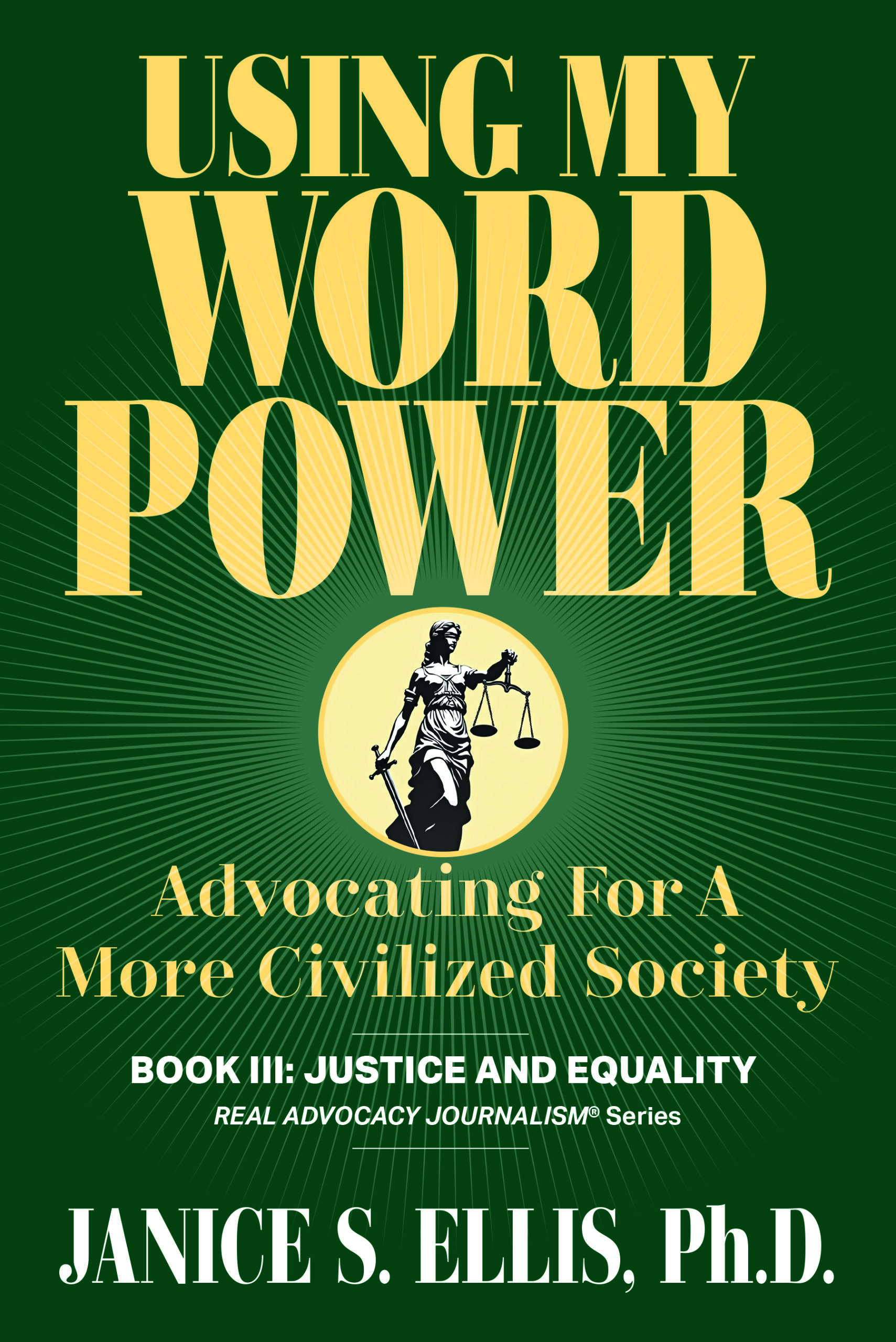
Janice S. Ellis, Ph.D’s USING MY WORD POWER: Advocating For A More Civilized Society, Book III: Justice and Equalitychronicles America’s social history and asserts that every society can change the course of their destiny with conscious humanitarian efforts rather than letting the unchallenged tide of political inertia drag vulnerable people down.
Justice and Equality, Book III in the Real Advocacy Journalism® series, roots itself as memoir and manifesto, blending the author’s struggles for civil rights with her responsibility as a journalist. Real advocacy journalism here serves as a tool for fact-based writing, balancing support for a cause with dedication to fact and direct accounts, an antidote to the venom of propaganda media.
Dr. Ellis’s unrelenting voice fills Justice and Equality with the real-world basis for her advocacy. Her experiences as a black woman fighting for civil rights in Mississippi reverberate across the text. All that she witnesses fuels both her personal resilience and a broader call for justice.
Across four parts, Justice and Equality weaves a vision of America’s moral and social future.
The first part covers women’s struggles and intersectionality, tracing from the Equal Rights Amendment (ERA) to #MeToo; this section underscores the stubborn nature of gender inequality that is reinforced by institutional resistance to change.
Part two exposes racism and systemic discrimination, where education becomes ground zero for cycles of privilege and deprivation. This part presents the cases of Trayvon Martin and Michael Brown as testimony to the larger structural nature of police brutality and racial profiling.
The third part covers children, framing their treatment as a litmus test of a society’s humanity and character. This part impels urgent attention, lest domestic violence, mass shootings, healthcare crises, and educational inequality become the new ‘normal.’
Part four argues that education is the great equalizer. It shows how censorship like book banning and history denial snatch away the chances for dialogue and learning, threatening democracy.
The message of the book is sharp and urgent: America must confront the ugly underbelly of racism, sexism, classism, and censorship.
Dr. Ellis’s language presents these injustices in a graspable narrative, avoiding heavy statistics. She doesn’t shy away from the darkness of her subject matter, but rather than leaving readers in hopeless despair, her writing impels one to stand up and motivate change.
Articles included from the 1970s feel evergreen, fitting perfectly in a contemporary context. Dr. Ellis diagnoses these issues affecting the American body politic as chronic diseases—the symptoms of which keep appearing as the underlying illness is never cured. This perspective calls for foundational changes to the systems that marginalize people, rather than mere treatments for their impacts.
Justice and Equality is for readers interested in a reflective approach to the bigger inequities of society.
For students and young adults, it helps in understanding the systemic inequalities and social justice movements around them. For teachers and guardians, Justice and Equality encourages deep reflection on the flaws in the education system. Most of all, it extends a practical lens to activists and social workers, who can relate America’s complex institutional injustices to the context of their own advocacy.
Janice S. Ellis, Ph.D’s USING MY WORD POWER: Advocating For A More Civilized Society, Book III: Justice and Equality calls upon every individual to see that ignoring the real essence of society’s ills means running away from responsibility to one’s nation and humanity. The book aligns with Martin Luther King Jr.’s quote, “Injustice anywhere is a threat to justice everywhere,” resonating beyond the context of America’s problems to remind us that these issues in discussion are universal. The intention is clear: there is no room for complacency in the pursuit of justice and equality for all.
Janice S. Ellis, Ph.D., is the Nellie Bly Book Awards (CIBA) for Investigative and Long Form Journalism Works Grand Prize winner and the Journey Book Awards for Overcoming Adversity (CIBA). Her works address political, racial, educational, and socioeconomic news and issues.
Dr. Ellis has been an author for more than thirty years and writes for columns for newspapers along with broadcasting on radio and streaming services. We are honored that she has submitted and received Chanticleer International Book Awards and Chanticleer five-starred book reviews, for the following books, that have also received other prestigious awards and stellar reviews from Kirkus and Midwest Book Reviews.
We saw that Dr. Ellis’s column for MLK Day was published in the Missouri Independent this morning, along with publications across the country that have picked it up. We always love to crow about the successes of Chanticleerians!
Here is a blurb from Dr. Ellis’ article (published with her permission) and the links below where you may click on it to read it in its entirety.
It is an inspirational and thought-provoking article to honor Martin Luther King, Jr. today. And timely!
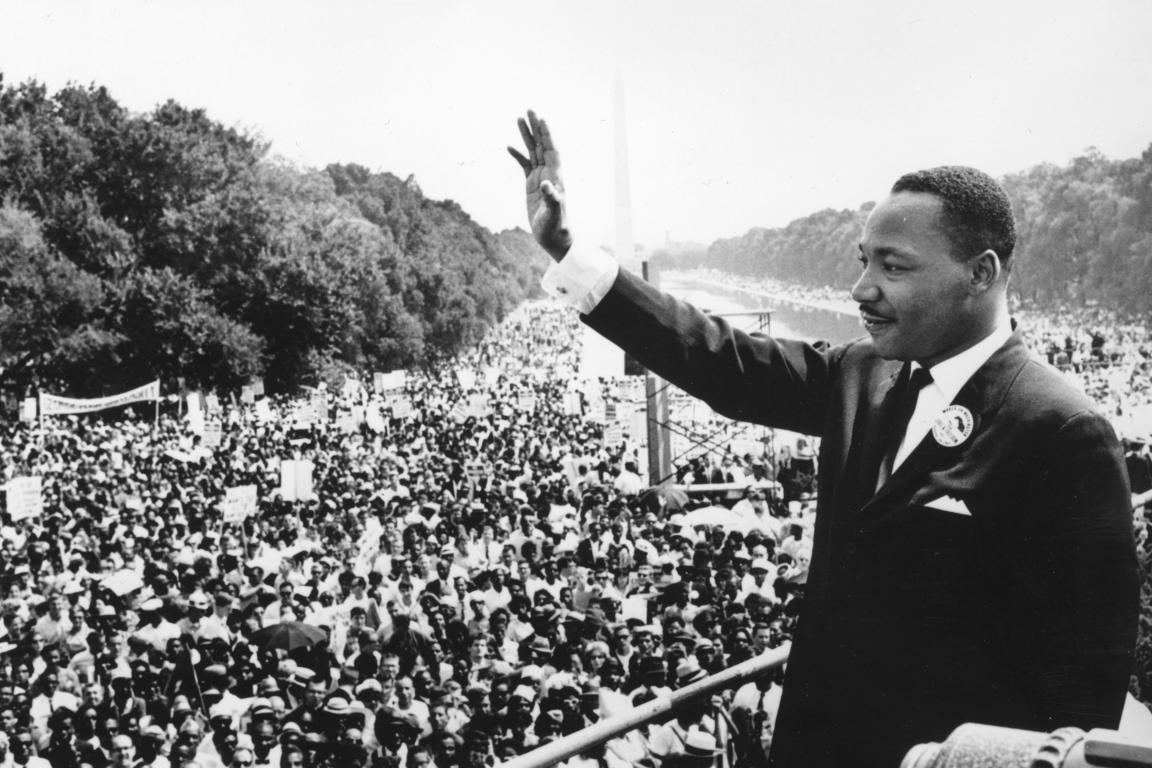
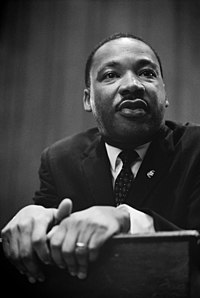
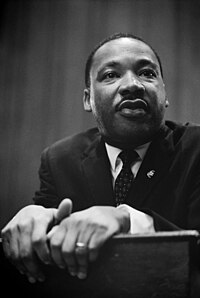
Photo of Martin Luther King, Jr. at his famous “I Have a Dream” speech at the U.S.A. Capitol on August 28, 1963. Photo from the National Museum of African American History & Culture, Smithsonian
King began his fight to gain equal rights for Blacks, poor Whites and other disenfranchised groups years before the March on Washington. He continued the fight until his assassination in 1968 at the young age of 39.
We will never know how long he would have stayed the course, working for equal justice, equal opportunity, equality in housing, employment and education to become standard practice, ingrained in the fabric of American life.
But he let us know how deeply his beliefs and faith ran: “I say to you today, my friends, so even though we face the difficulties of today and tomorrow, I still have a dream. It is a dream deeply rooted in the American dream. I have a dream that one day this nation will rise up and live out the true meaning of its creed: “We hold these truths to be self-evident: that all men are created equal.” – Janice Ellis, Ph.D.
Below is the growing list of 20+ publications (so far) that have picked up this important opinion piece by Dr. Ellis where you may read the article in its entirety:
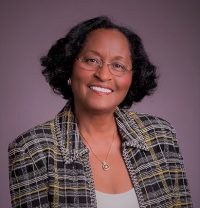
Janice S. Ellis, M.A., M.A., Ph.D., a native daughter of Mississippi, grew up and came of age during the height of the Civil Rights Movement and the Women’s Liberation Movement.
Dr. Ellis has been an executive throughout her career, first in government, then in a large pharmaceutical company, and later as a president and CEO of a marketing firm and a bi-state non-profit child advocacy agency. In addition to those positions, she has been writing columns for more than four decades on race, politics, education, and other social issues for newspapers, radio, and online. Her commentary can be found atjanicesellis.com.
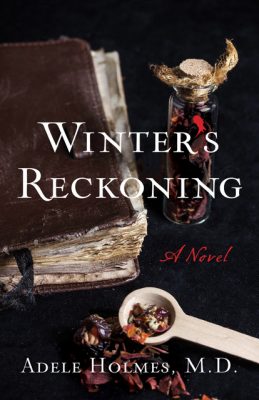
In Winter’s Reckoning by Adele Holmes, a mercurial new pastor in town threatens the families of two women.
Welcome to 1917. A time of suspenders for men and, in the cities, bloomers for women. Horse-drawn wagons range the landscape, stoves burn wood, and people have to use outdoor facilities. A time of few vaccines and no antibiotics. People understood little of most diseases. Germ theory still had ground to cover. Women routinely died in childbirth. Life could vanish in a moment.
In rural Jamesville, a Southern Appalachian town, Madeline Fairbanks does what she can to make the lives of friends and neighbors more comfortable. She works as the healer in this community – and has for the past quarter of a century. Madeline eases the passage into and out of life, treating aches and pains in between.
Maddie comes from a long line of healers. Her grandmother taught her, and she’ll pass along what she knows to her granddaughter in turn. Hannah already has the inclination. The time has almost come to give her the ancestral box, which holds herbal remedy recipes and sketches and notes. That box contains all the learning from the women in their family who came before them.
Maddie has also trained an apprentice, Renetta Morgan, who is just about ready to begin working in the community, her own community, alone.
Maddie is white. Renetta is Black. They walk through town together, brazenly traversing from North Main (the white section of town) to South Main (the Black) and back again. Sometimes they go to tend the sick. Sometimes, to the fields and hillsides, gathering the healing flowers and roots and herbs. Other times, they work in Maddie’s cabin, creating tinctures, potions, and ointments. When Renetta learns enough, the two of them must no longer work together.
The long-promised railroad has recently bypassed the town, spelling a slow death for the community, cut off now from the lifeline of the new transportation. With their Main Street shops shutting down, the townsfolk face hard times. In the South, rigid segregation, Jim Crow laws, black codes, and the Klan divide the community. In Jamesville, the pointy hat boys haven’t been active in recent memory, but that’s about to change. Not everyone turns a blind eye to the flagrant close fraternizing of Maddie and Ren, two uppity women who don’t seem to know their place. Tempers are fraying.
Into this small town closing in on itself rides a lone horseman one day, who, after a brief look around, announces that he’s the new pastor. Reverend Carl Howard is the match to the powder keg.
As the town adjusts to this new pastor in their midst, and Reverend Howard takes his measure of the place, we will watch events unfold from the vantage point of three characters, all of whom have secrets to keep. Secrets that could be their undoing.
With the loss of the railroad, another potential casualty looms – one of education.
The town is divided on whether to invest in secondary education or not. Currently, only the primary school offers its young charges the most rudimentary learning. Nothing to build on. With more education, Maddie thinks, real change might be possible. Greater equality between peoples, despite their gender or skin color. Greater freedom for women. Or at least a good step in that direction.
The theme of education and what it can bring – more profound understanding, greater personal freedom and fulfillment, and economic opportunities – underlies the struggle of those for and against keeping women and Blacks “in their place.” One side looks forward to what could be; the other looks back to what has been. The balance of power always tilts in favor of those who have always held it. As the tension mounts, where words fail, violence threatens.
When a severe winter storm hits, everyone’s lives are suspended.
As they wait out the freeze, rationing their supplies and tearing up the porch for firewood, Maddie and Ren will come to know things about each other and themselves. And Hannah will grow up a little.
Set in the brooding rural South, and for a good portion of the novel in the challenging and crystalline world of a deep snowstorm, Winter’s Reckoning is rich in storyline and character with plenty of mystery woven throughout. Simply put, here’s a story that takes on issues whose harm remains with us today. With a climactic pulpit scene that’s not to be missed – and one novel we can highly recommend!
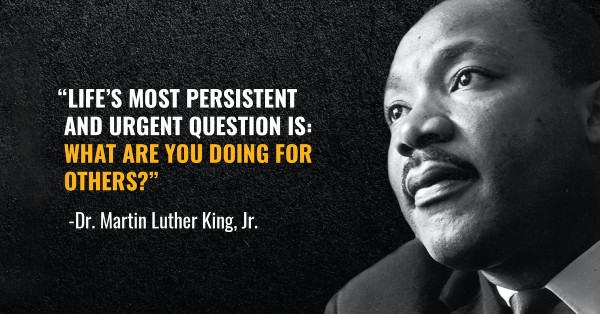
The third Monday in January in the U.S.A. honors the American clergyman, activist, and leader of the Civil Rights Movement, Dr. Martin Luther King, Jr., on his birthday. The first observance on a national level was in 1986. Dr. King gave his last speech on April 4, 1967, the night before he was assassinated. He was just 39-years-old.
“Darkness cannot drive out darkness; only light can do that.
Hate cannot drive out hate; only love can do that.” Martin Luther King, Jr.
Martin Luther King, Jr. 1965
Life of Martin Luther King, Jr. Is An Example We Should Never Forget by Janice S. Ellis, PhD.
If you ever doubt that one person can make a difference, the life of Martin Luther King, Jr. as an example that we should never forget. Too often, we see a problem, an injustice, a need of any kind and feel we are helpless to do anything about it.
When confronted with a situation that needs a voice or action, we allow those feelings of helplessness and doubt to take over. We are besieged by questions like: Who am I? What can I do? Too often, we conclude we are powerless to do anything.
The life of Martin Luther King, Jr. is an example of how not to let those feelings of doubt and helplessness deter you. In the face of fear and constant threats of harm and death, Martin Luther King, Jr. refused to be deterred from his work to achieve racial and social justice.
As we reflect on thelife of Martin Luther King, Jr., we should be inspired to become engaged and involved with whatever issues or conditions concern us. As we pause to commemorate the birthday of King, the only question is: Do we care as much as he did? This is a question we should ask ourselves every day, at every opportunity.
There is no greater force or power than that of the human will. We see it all around. We see it in extraordinary athletic achievements in sports. We see it in the awesome achievements of those with physical or mental disabilities.
And then, there are those who have achieved incredible gains for others who have suffered physical oppression, social inequality, economic and judicial injustices, across generations for centuries. The life of Martin Luther King, Jr. is an example of one of those giants.
It should be noted that King was a teenager when he became interested in getting rid of racial injustice in America. It was an interest that turned into a mission—a mission that he pursued during his entire short life, a mission that costs him his life. Had he not died at the hand of an assassin and lived, we would be celebrating his 92ndbirthday!
When he felt compelled to fight to improve the plight of the oppressed, he did not know all the things he would confront. But, during the days, weeks, months and years, he stayed the course despite constant obstacles, threats, persecution, and physical and emotional abuse.
The life of Martin Luther King, Jr. is an example, which shows if you care enough, are bold enough, courageous enough, and believe enough,you can make a difference.
As we pause to commemorate Dr. King, each of us can give serious thought about how we can apply our efforts to make things betterwhereverwe can, as Martin Luther King, Jr. did.
“As we pause to commemorate the legacy of Martin Luther King, Jr., we seem further away from the goals for which he worked and gave his life: Freedom, Justice, and Equal Rights for All! This is most evident in the growing racial discord and the threat to suppress the very basic right to vote. Again! Like Dr. King, we as individuals can work in our community, our city, our state to ensure that all of our citizens will be treated equally and with respect. One specific way we can do that, right now, is to work to ensure eligible citizens are able to cast their vote in the 2022 mid-term elections. There are many other things we can do, as individuals, to keep working to achieve a better world for those around us and all of our fellow human beings. What is the area where you can work to make a difference? Dr. King’s work is an example of the many areas where our involvement is still sorely needed.” Janice S. Ellis, PhD
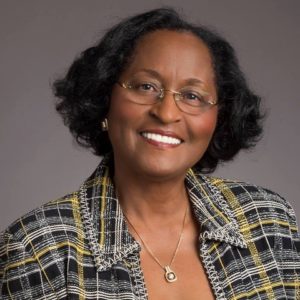
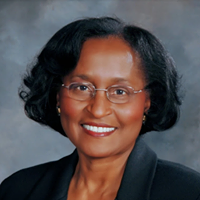
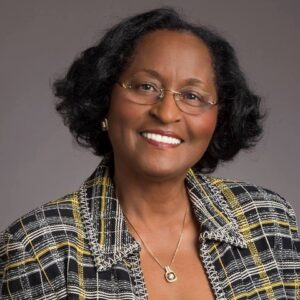
Dr. Janice S. Ellis
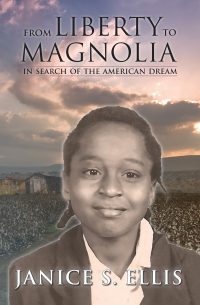
For four decades, Janice Ellis has analyzed educational, political, social, and economic issues across race, ethnicity, age, and socio-economic status. Dr. Ellis holds a Ph.D. in Communication Arts, and two Master of Arts degrees, one in Communications Arts and a second in Political Science, all from the University of Wisconsin, Madison, Wisconsin. Her memoir,From Liberty to Magnolia: In Search of the American Dreamwon Journey Book Awards Grand Prize (CIBAs) along with national and international awards.
Her new book,Shaping Public Opinion: How Real Advocacy Journalism™ Should be Practiced, won the Nellie Bly Nonfiction Journalism Award. Restoring honesty and civility must be the priority among journalists and commentators if we are to serve a dependent and vulnerable public and safeguard a fundamental tenet of our Democracy–that is the focus of the book.
Both books have received and continue to receive great editorial reviews and endorsements as well as customer reviews.
Janice Ellis, a native daughter of Mississippi, grew up and came of age during the height of the Civil Rights Movement during the 1960s. Born and reared on a small cotton farm, she was influenced by two converging forces that would set the course of her life. The first was the fear and terror felt by blacks because of their seeking to exercise the right to vote along with other rights and privileges afforded to whites. The second was her love of books, the power of words, and her exposure to renowned columnists, Eric Sevareid and Walter Lippmann, whose work solidified her belief that the wise use of words is what advances the good society.
Janice Ellis became determined to take a stand, and not accept and allow the conditions of that farm life, or the strictures of oppressive racial segregation and entrenched sexism limit what she could become. She became determined to use whatever talents God had blessed her with and the power of words to help improve the human condition.
We thank Janice S. Ellis, PhD. for contributing today’s article in honor of Dr. Martin Luther King, Jr.
CHANTICLEER 10 Question Author Interview Series with
Dr. Janice Ellis
Dr. Ellis has written columns for newspapers, magazines, radio commentary, presented internationally across the U.S., and now online. For the past 30 years she analyzes educational, political, social and economic issues across race, ethnicity, age and socio-economic status. She continues her important work in these challenging times.
Dr. Janice Ellis, columnist, author, journalist, radio commentator, and advocate of social justice and Women’s Rights.
Dr. Janice Ellis entered her book From Liberty to Magnolia In Search of the American Dreaminto the 2018 Journey Book Awards for Narrative Non-fiction, a division of the Chanticleer International Book Awards (CIBAs). Her stellar memoir was awarded the 2018 Journey Book Awards Grand Prize. The award winning memoir is a truly remarkable book telling what it is like to be Black in America.
We are honored that Dr. Ellis presented The Critical Role Authors Play in Fostering a Better Society at Chanticleer’s first virtual conference, VCAC20. Her presentation was inspirational and thought provoking. Janice S. Ellis has been an author for over 30 years and has written a column for newspapers and radio throughout her career about education, politics, race and socioeconomics. Janice Ellis holds a Ph.D. in Communication Arts, and two Master of Arts degrees, one in Communications Arts and a second in Political Science, all from the University of Wisconsin, Madison, Wisconsin.
Dr. Ellis is one of our favorite authors—and truly a joy to get to know. She reminds us that the pen is mightier than the sword!
Now, let’s get better acquainted with Dr. Janice Ellis.
Chanticleer: Tell us a little about yourself: How did you start writing?
Dr. Ellis: A native daughter of Mississippi, I grew up and came of age during the height of the Civil Rights Movement and the Women’s Liberation Movement. Born and reared on a small cotton farm, I was influenced by two converging forces that would set the course of my life. The first was the fear and terror felt by blacks because of their seeking to exercise the right to vote along with other rights and privileges afforded whites. The second was my love of books, the power of words.
I began writing as a radio commentator for a large radio station right out of graduate school and continued to write commentary for newspapers and radio throughout my career. I also published articles professionally in trade journals. I began writing because I thought the need was great for a good political columnist to help the public better understand those issues that affected their daily lives. A good columnist can impact policy and help shape public opinion to support what Aristotle calls the “greater good.”
Chanticleer: When did you realize that you were an author?
Dr. Ellis: I gave it a fleeting thought when I was exempted from an English composition course as a freshman in College after writing some essays during a summer program. But the desire to become an author became more compelling in graduate school in my preparations to become a columnist/commentator. Personal and professional experiences inspired me to become an author of books. From Liberty to Magnolia: In Search of the American Dream is my first book.
Chanticleer: That book has won quite a few awards! In fact, it took home the CIBA 2018 Grand Prize in the Journey Awards for Memoir and Narrative Non-Fiction, From Liberty to Magnolia: In Search of the American Dream. I hear it is collecting other awards, as well. Congratulations!
Dr. Ellis: I wrote my book because there are lessons from my life journey through poverty, racism, sexism, and sexual harassment that I believe can directly benefit girls and women, blacks, and other minorities. It addresses many of the issues around racial and gender inequality that America continues to grapple with.
Chanticleer: Thank you for being a graceful and astute voice of authenticity in our world today. We need you! Do you find yourself following the rules or do you like to make up your own rules?
Dr. Ellis: I basically follow the rules. I have a strong sense of wanting to do the right thing. When that becomes difficult, I still figure out, follow my own path to achieve goals and desired results.
Chanticleer: What do you do when you’re not writing? Tells us a little about your hobbies.
Dr. Ellis: I love reading the Bible and religious commentary, and political and historical nonfiction. When not reading I like to play scrabble and other word games. I also enjoy watching cable news, dramas, thrillers, espionage and action films, some romance and comedy shows. Walking, gardening and fishing are rejuvenating hobbies that I find very fulfilling and satisfying.
Helpful Sources from Dr. Ellis:
* Dr. Ellis writes about her life experiences and enjoys sharing about how she navigated common challenges.
* The writing craft books that have helped her the most are William Zinsser, On Writing Well and Writing About Yourself * The books about the business of writing that have been most beneficial are Writer’s Digest, Literary Agents, How to Write a Book Proposal, and How to Market Your Book
Chanticleer: What are you working on now? What can we look forward to seeing next from you?
Dr. Ellis: I am working on two shorter books, Realizing Your Dream: A Handbook Based on Experience, and Overcoming Racism and Sexism During Your Lifetime. Hopefully, one of the above books to be released later this year.
Chanticleer Aside: Dr. Ellis won the Nellie Bly Grand Prize for her upcoming journalistic book, Shaping How Public Opinion: How Real Advocacy Journalism Should be Practiced.
Chanticleer: How structured are you in your writing work?
Dr. Ellis: I have always wanted to be able to write something every day but have yet to achieve that goal. The need to write fresh content on my website has helped the frequency of writing short pieces. In working on books, I usually write until I cannot write anymore, sometimes for 10-14 hours segments. What I have learned that if I stop in mid-sentence, it is easy for me to resume when I begin again.
Chanticleer: J.D. Barker does that, too. It’s good advice. How do you approach your writing day?
Dr. Ellis: For a long time, I would begin writing as soon as I awaken and get a cup of coffee. Happily, now, I write anytime during the day. I sit at my computer and open to a blank page, if I am beginning a new article or chapter, it motivates me to begin putting my thoughts down. If I am in the middle of a piece, I pick up where the incomplete sentence stops.
Chanticleer: Name five of your favorite authors and describe how they influence your work.
Dr. Ellis: Former President, Jimmy Carter. The simplicity, yet elegant way he writes about his life, his work, and his values in making things better for humanity. Former President, Barack Obama. His vivid way of writing about his life and the American experience and his vision, hope, and optimism for a better America. Maya Angelou. Her cinematic description and compelling call of attention to the not-so-flattering aspects of humanity and highlighting the need for us to change and move toward our higher selves. Robert Ludlum. His command of the intrigue and complexity of characters and storyline. Kings Solomon and David. For the power, poetry, and wisdom in their books of Proverbs, Ecclesiastes, and Psalms.
Chanticleer: Great choices! What areas in your writing are you most confident in? What advice would you give someone who is struggling in that area?
Dr. Ellis: I think I am most confident in my ability to analyze and assess a situation and put forth a thoughtful perspective; and the ability to help the reader see, feel, and experience what I am writing about as if they are there with me.
“You must love the craft of writing. It is a craft. You must be dedicated and believe that what you have to say will make a difference. Be willing to write, re-write, and re-write again and again until your words convey the meaning that is intended.” – Dr. Ellis
Chanticleer: Do you ever experience writer’s block? What do you do to overcome it?
Dr. Ellis: Yes, usually a few days after I have completed a writing project. If I must begin a new article or chapter, I pull up a blank page. Sooner or later, I feel compelled to fill the page with words that make sense, that are impactful. Sometimes, I do some activity totally unrelated to writing and find that something occurs to make me begin writing.
Chanticleer: What excites you most about writing?
Dr. Ellis: Sharing thoughts, ideas, experiences, and hopefully solutions that will enlighten, inspire, enable, and encourage someone.
Chanticleer: I admire how your motives are outward – helping others understand their world and how to navigate it. Well done! What do you do in your community to improve/promote literacy?
Dr. Ellis: I donate copies of my book to libraries, and give signed copies to individuals. I speak about the power of reading and try to encourage children and young people within my sphere of influence to read, encouraging them to read to others at every opportunity.
Chanticleer: I love that answer. Give us your best marketing tips, what’s worked to sell more books, gain notoriety, and expand your literary footprint.
Dr. Ellis: I think each author should do a book tour, with TV and radio appearances, if possible. Even if you cannot physically travel from city to city, technology today can allow you to do a lot from our home our local studios.
Also, make use of social media. Posting frequently on Facebook, Twitter, Instagram, and blog posts are a must. Speaking engagements are great to keep your book relevant.
Chanticleer: Especially true today in the face of a global pandemic. What are you working on now? What can we look forward to seeing next from you?
Dr. Ellis: I am working on two shorter books, Realizing Your Dream: A Handbook Based on Experience, and Overcoming Racism and Sexism During Your Lifetime. Hopefully, one of the above books to be released later this year.
Chanticleer: We will be looking for those! Who’s the perfect reader for your book?
Dr. Ellis: Teenage girls, women, minorities who are trying to navigate racism and sexism in reaching and fulfilling their purpose, goals, and dreams in life. And, for all who are concerned about America’s future and who want America’s children of all colors to realize their full potential. It will inform the racists and non-racists, the sexists and non-sexists. It will inspire and empower men and women who are in positions that can make a difference and have the will to do so—parents, teachers, policymakers, social and human rights activists, journalists, business leaders, faith leaders, and many others. Caring Americans, working together, can break the chains of racism and sexism that keep America bound.
Chanticleer: I believe it! What is the most important thing a reader can do for an author?
Dr. Ellis: Write a review and express what the book means to them. Recommend the book to family, friends, and colleagues.
Chanticleer: As always, it is a pleasure spending some time with you today. Be well and keep the good work coming!
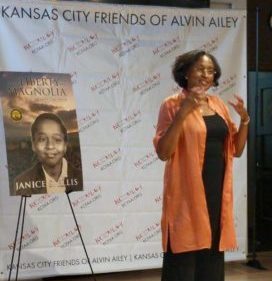
If you would like to know more about Dr. Janice Ellis – make sure you pick up her memoir, From Liberty to Magnolia: In Search of the American Dream and her soon to be published ground- breaking work Shaping Public Opinion: How Real Advocacy Journalism Should Be Practiced at your local book store – or other retailers
Also, be sure to like and follow Dr. Ellis on her social media sites:



 In
In 





 Dr. Ellis: I donate copies of my book to libraries, and give signed copies to individuals. I speak about the power of reading and try to encourage children and young people within my sphere of influence to read, encouraging them to read to others at every opportunity.