Tag: Social Issues

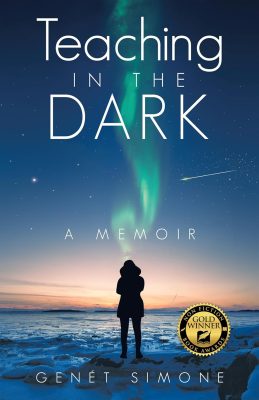
  • TEACHING In The DARK by Genét Simone – Teacher Memoirs, Native Alaskan Culture, Social Issues

    How does place shape who we are—and who we’ll become? In this memoir, Teaching in the Dark, Genét Simone puts that question to the test by recounting her first year as a teacher.

    The initial year of teaching is never an easy feat, but for Simone it was especially challenging, and transformative. She spent it with Native students in the remote island village of Shishmaref, on the Arctic edge of Alaska—no small wonder the school year became an unforgettable one.

    Today, Simone has decades of teaching experience to draw upon. Yet, in this memoir she rarely employs her present voice to reflect on the past. Instead, the narrator remains in the moment: a young and inexperienced Simone, who only knows that she feels destined to be a teacher. When she signs up for the Shishmaref teaching job, she doesn’t even realize that it’s on an island.

    Equipped with snow boots and passion, she arrives on the island only to realize just how unprepared she is.

    She must navigate unfamiliar terrain on the windswept land before the school year even starts. Conveniences that are common elsewhere, from stores to flushing toilets, are hard to come by in Shishmaref. Simone narrates these early days with vigor and levity, allowing readers permission to laugh alongside her at the mishaps. Simone even lets us in on the time she tipped a snowmobile over while trying to plow through a pair of snowdrifts, spilling the garbage she was hauling across the road.

    This lighthearted book is also laced through with necessary moments of seriousness. Simone finds herself confronting questions about herself and her place in the world. Many of the questions are too big for her to answer, but the reflections are still welcome. Though this isn’t an instructive book, she teaches through example, inspiring readers to think deeply about interactions with people from other cultures.

    As the school year begins, she learns the Native people of Shishmaref are grappling with the recent and ongoing impacts of colonialism.

    They’d rather be speaking their Native language, picking berries, and hunting than sitting at a desk and speaking English. The Western-style school where she teaches runs counter to their culture, and the students often struggle with tasks like reading, math, and attendance. Yet Simone starts to find ways to connect with them. The student newspaper she helps run is a great success, because it becomes an outlet for her students’ passion about their community and culture. She keeps looking for more ways to understand her pupils better while also keeping her spirits up, as lesson plans fail, and the darkness of winter grows longer each day.

    In spite of the many surprises and mishaps Simone experiences, a sense of tediousness starts to creep into the school year. For a long time, the snow and the dark days seem endless.

    Some of the brightest parts of the book come when Simone steps out of the classroom, such as her alcohol-fueled Thanksgiving trip with fellow teachers. (Though it’s not terribly raucous, the getaway provides palpable relief from teaching’s monotony.) But the most touching moments come from interactions with her students outside the classroom. She sees them at their best when they’re able to express their culture and the love they have for their land. Simone has one such experience when she takes her students to a ski meet, watching as they rise to surmount unexpected challenges.

    Simone paints a wonderful picture of nearby areas, both in their natural splendor and their importance to humans.

    She visits the remote and rocky Little Diomede Island. There, a village with a brand-new school is perched on the island’s steep, icy cliff overlooking the sea. While Little Diomede is part of the US, its sister island, Big Diomede, sits on the other side of the Russian border—an artificial division that’s long separated Native families living on these islands. Yet, as in Shishmaref, Little Diomede’s traditions persist in spite of colonialism’s influence. In one visceral scene, Simone watches local men pull an immense Alaskan king crab from the ice, before the shifting ice floes force everyone to evacuate. Such danger and challenge is part of life for the people of Little Diomede.

    Back in Shishmaref, spring is beginning to emerge, and Simone struggles to make sense of the year’s experiences.

    What does it mean to try to improve students’ lives through education, while also representing the culture that oppresses them? Although she doesn’t answer questions like this conclusively, her pondering is touching and necessary. She even begins to doubt whether she’s made a real difference in these students’ lives. As the school year ends, she’s forced to ask herself whether she is able to help them more by staying, or by leaving.

    Readers are left to wonder where Simone’s teaching career took her next, and whether she ever found answers to the hard questions of Shishmaref. The book’s remote location and narrative surprises make this story a page-turner. Though it may be cold and snowy on every village street, it’s still enticing to see what’s around the corner.

    This is a tale of finding joy, appreciation, and acceptance in every unexpected moment, offering lessons of respect and supporting others that readers can take back even to warmer and sunnier climes.

     

  • THE FARAWAY MOUNTAINS by Radu Guiaşu – Historical Fiction, Communist Romania, Social Issues


    The Faraway Mountains by Radu Guiaşu is a fascinating blend of fiction and autobiography that brings to light the restrictive nature of the Communist Era in Romania and throughout the Eastern European Bloc. Experienced through the eyes of a group of friends, their persistence to find their friend perfectly illustrates the importance of human connection, even within the cold confines of a communist country.

    Guiaşu begins his story as a chronicle of the entwined lives of childhood friends Victor, Dan, and Alex—who embark on a quest to find their lost comrade, Gabriel. Along their journey, they debate the important issues of their day.

    Their discussions reveal the intricacies of daily life from the broad, to the particular. Topics like the oppressive regime in the country, the egregious ineptitude of some high-ranking officials, the deterioration of living conditions, and the recent and shameful destruction of numerous architectural gems are discussed right alongside the possibility of the national football championship game being another sham, the rising cost of foreign blue jeans on the black market, and the record heat wave they left behind in the capital.

    This work pays homage to those exceptional individuals who, in spite of the harsh conditions their government forced on them, retained their moral rectitude, bravery, and irreverent sense of humor. It is also a condemnation of everyone who worked in tandem with these oppressive systems.

    In the second part of the book, Guiaşu depicts the mutual desire of two close friends to explore the bright promise of the West.

    He goes into great detail about the complexities of obtaining permission to leave the repressive country of his origin. During his quest to weave his way through the red tape, he demonstrates the various ways in which officials took advantage of the situation to preach to the populace about the superiority of communist society and the inevitable, rapid collapse of the West.

    As the story portrays, citizens were forced to stand up for a corrupt system where those in power took unjust privileges at the expense of those below them. Through the characters’ conversations we come to understand how the elite’s hatred for the less advantaged populous was fueled by the knowledge that many escaped their control to a less restrictive and more comfortable part of the world.

    This novel goes deep into the subject of communism to present a realistic picture of what it is like to live under such an authoritarian form of government.

    Guiaşu conveys the catalyst and motivation behind the regime’s blatant deceptions, indoctrination, repeated defeats, and continuous repression by deftly blending his personal experiences with fiction. He expands the story beyond the direct scope of a single person.

    This work offers a fresh perspective on the value of freedom and independence while showing the brutal grip of a power that seeks to crush the characters’ last hopes of escaping.

    Guiasu’s The Faraway Mountains is a novel that masterfully balances intellectual depth, emotional relevance, and creative perfection during brutally oppressive times.

    Readers are fully drawn into the book as its vivid imagery and rhythmic language demystifies complex communist concepts and issues. Clever depictions of the many characters and their variety of reactions show how people deal with ambiguity and look for purpose when faced with hardship.


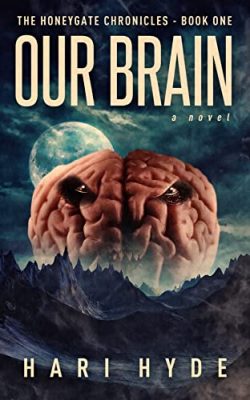
  • OUR BRAIN by Hari Hyde – Satire, Absurdist Fiction, Adventure


    Our Brain, the first in a three-volume series, is an epic fantasy adventure in a bizarre, allegorical world.

    This world is ruled by Our Brain, also known as The Guv’ner, a huge pinkish mass seated in a mountain range that came about through the collective will of its people. It leaped into reality from the realm of thought. And the particular thoughts that birthed Our Brain were, in the novel’s language, to “ever grow and strengthen the righteous power of government to control our lives for the common good.”

    The people that benefit from this collective thinking are the Soose. Yes, pigs, but a mutated form that, while still loving mud baths, walk on their hind legs, go to college, and carry “snappers” or what we might call personal computers. Their opposite numbers are the Nags, descended from horses, who champion individualism and want to wipe out the collective sentiments of the ruling tribe.

    Four Nags hatch a plan to change the direction of Our Brain and create a world of their liking.

    The hero of the book, a Soose named Hennie Honeygate, sets out to discover their plan and, to his great surprise, finds himself following them inside the fleshy mass of Our Brain. Hennie and the Nags embark on a picaresque adventure.

    Be prepared to have an illustrated anatomy source at hand as Honeygate chases the villains through the neurological pathways. Portions of the brain take on personalities of their own, such as a demon named Obex, labeled here as the “fabled ruler of hell” in the mythology of the Soose. The obex, in anatomy, is a canal-like structure in the upper part of the brainstem that connects the fourth ventricle to the third.

    Our Brain offers political thought, social satire, and sheer nuttiness.

    This story will likely appeal to those with conservative political views. Readers will find fantasy adventure mingling with satire such as that of Orwell’s Animal Farm, Swift’s Gulliver’s Travels, and traces of George Will, Michael Crichton, and Terry Gilliam in these pages.

  • COGNITION by Jacques St-Malo – Technothrillers, Philosophical Fiction, Genetic Manipulation

    Cygnus Science Fiction 1st Place Blue and Gold CIBA Badge

    A scientific thriller by Jacques St-Malo, Cognition draws from a variety of sources – from Middle East royals to Asians, corporate tycoons from the US and UK to the Chinese and US administrations – to create a canvas as broad and fascinating as the philosophical and moral speculations it presents.

    Cognition moves along in the span of a few decades, with its many facets of people in search of the child entrusted with the full capability of germinal-choice technology – to finish off the exclusive child before its countrymen could claim the genius mind for themselves. Meanwhile, an agitation based on the rage of those denied this germline manipulation is being waged against the richly endowed children of the privileged. The tug-of-war between the several factions throughout the book, each with their own set of interests and ideologies, creates numerous opportunities for philosophical debates among these genetically engineered children, educating the reader on the many ramifications of genetic manipulation that results in mental and physical enhancement.

    Upon the fall of the last monarch’s regime in Turkey, the royal child prince is taken away to a foreign land to live with his mother’s maidservant for safety of life.

    The Chinese Code Seagull is under operation to locate the child entrusted with the full Prometheus module —alpha and beta complement. Ethan, the sought-after child, is growing up away from his regal life and knowledge of real identity as a housekeeper’s son in the home of billionaire business mogul Bruce Taylor. Valerie Taylor, Bruce’s daughter, is another ‘extra somatic’ or genetically tailored child whose fate intersects with Ethan’s. Their course is eventually altered by the gap in their familial genealogy.

    Driven by resentment against privileged for the lack of opportunities, Connor Dashaw becomes a rolling force in populist Aamon Wade’s political party fighting against germ line-treatment, which is only affordable by the rich.

    All the big players in the novel – political, business, and administration – enact a cat-and mouse game to get grip of a clue puzzle to gain greater power. The collision of many motives results in a chain reaction that consumes everyone in its radar – those seeking a countermeasure to humanity’s predetermined DNA on the one hand, and arbitrariness on the other.

    The novel explores, through the psyches of three children, the feeling of estrangement.

    Ethan and Connor, in their own ways, embody the estrangement: one is a prince who is oblivious of his identity, while the other is socially deprived of prospects. Ethan feels at ease in the peaceful seclusion of tycoon Taylor’s historic palace-like property. However, his position as a servant’s son stings him, and he considers it humiliating to spend his life “tending to another’s leisure.” Connor, on the other hand, becomes a staunch supporter of political ideology against extrasomatics. The feeling of not belonging returns to Ethan, along with genetically modified Valerie, when they do not find friends or partners who share their “eccentric” views.

    Each chapter of the story begins with a quote and introspection about the topic of the chapter.

    The author’s tone is upbeat and open about his various philosophies as well as current technologies, which demonstrates his extensive knowledge and necessitates thought. A subtle critical tone accompanies the ardent tone: there is an occasional commentary on the human urge to exert control over others and his own fate, however unethical it may be.

    Cognition mixes a wealth of material – from science and technology to business and philosophy, and politics – to create an enthralling fiction about modern evolution. A heavy-read that requires time and consideration, Cognition will especially appeal to tech nerds due to the abundance of scientific discussion that it presents.

    Cognition by Jacques St-Malo won 1st Place in the CIBA 2019 Cygnus Book Awards for Science Fiction.


    Chanticleer Book Reviews 4 star silver foil book sticker

    Cygnus 1st Place gold foil book sticker image


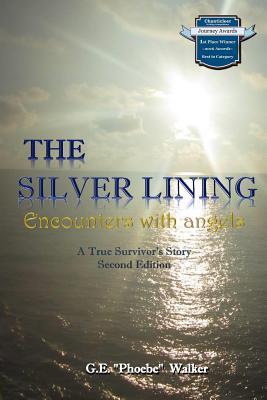
  • The SILVER LINING: ENCOUNTERS WITH ANGELS by Phoebe Walker – Memoir

    The SILVER LINING: ENCOUNTERS WITH ANGELS by Phoebe Walker – Memoir

    Imagine a crisp autumn afternoon, taking a walk with a favorite companion on a country lane. You share stories about life’s ups and downs; you both laugh and cry. When you get to your destination, you give each other a goodbye hug and part separate ways with a smile, feeling a sense of strength in your friendship.

    Meandering through the pages of Phoebe Walker’s, The Silver Lining Encounters with Angels, is like a walk down this country lane, leaving us with warmth and hope.

    Admittedly, Walker’s book is a tough read – a story rife with abuse, her parent’s divorce at a young age, a suicide attempt, battling Multiple Sclerosis (MS) and other health concerns, and a near-death experience. It’s a lot to handle, for both the author and reader, but Walker makes the story accessible and down to earth with her conversational tone. Flipping through the pages is like a fireside chat.

    In one early and instrumental memory, Walker recalls how she was introduced to God. In 1989, her friend Christi said, “speaking to Jesus was just like talking to your best friend.” Accepting Christi’s advice, Walker became convinced that certain people in her life were placed there by God as “silver linings.” “God provides the crutches,” Walker says in her memoir.

    And so it went in Walker’s life, assigning silver linings to people who helped during dark days, including her loving husband Chip. The memoir is engaging and heartfelt, a recommended read for anyone wishing optimism and hope amid adversity.

    Not only do we learn that Walker survived incredibly tough times, but also she thrived, earning a college degree, having children, and living a full life, later without vision due to MS.

    A theme of revelation is what led her to write and share her story. She says: “By allowing myself to become fully exposed, I’m confident that not only will I continue on my journey of healing, but that it will offer hope, peace, and perhaps even direction to others. That makes sharing my story fully worth [it].” Today, she maintains a website displaying her art and ways she helps others through a life coaching business.

    While Walker’s book takes us on an emotional rollercoaster, even to the edge of despair, she holds our hand with thoughtfulness and humor. She avoids lecturing and being preachy by staying in her own story, ultimately showing how her deep faith has healed her during life’s challenges.

    5 Star Best Book Chanticleer Reviews round silver sticker


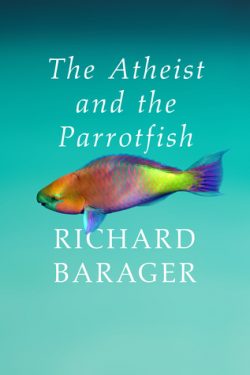
  • The Atheist and the Parrotfish by Richard Barager – Religious/Spiritual Fiction/Literary/Medical

    The Atheist and the Parrotfish by Richard Barager – Religious/Spiritual Fiction/Literary/Medical

    Can the souls of the departed live on in their transplanted organs? Read Richard Barager’s edgy novel, The Atheist and the Parrotfish, and find out!

    Dr. Cullen Brodie receives word that a donor is available for one of his patients, Ennis, a sixty-three-year-old cross-dresser desperately in need of a new heart and kidney. Cullen learns that the donor happens to be his boss’s daughter-in-law, Carla, who never recovered from a car accident.

    At his three-month follow-up appointment, Ennis declares that his donor came to him in a dream and that Carla’s organs have exerted influences on him “beyond their intended bodily functions,” such as unexplained sweating and flushing, chattiness, a love for jazz as well as beets.

    The possibility of Carla’s transmigration (passage of a soul into a living body) sends chills through Cullen. How can this be?

    The uncanny “spiritual” experiences in Ennis’s life spark religious questions within Cullen’s mind, particularly ones directed toward an unresolved conflict embedded in his past.

    Ennis has some other issues, as well. But his (or more correctly, Carla’s) take shape in an obsession with locating the donor’s family. When he does, however, that familial connection stirs up personality clashes between Ennis and Elaine (Ennis’s feminine side), and Carla.

    Amid the turmoil, Ennis is aware of Carla desperately trying to relay a critical life-changing message to her family, but he needs Cullen’s help to deliver it. The real trick will be whether or not Ennis can convince Cullen before Carla destroys Ennis altogether.

    Coming-out-of-the-closet late produces in Ennis a multitude of inner struggles and unsettling childhood memories. In the midst of his personal chaos, Ennis has amazing moments of clarity (with the help of Carla) to see through people and their faults.

    Cullen, on the other hand, finds himself between a rock and a hard place dealing with Ennis’s ongoing commentary about Carla. “When all else fails, listen to your patient” is Cullen’s default motto to identify patients’ diagnoses. With Ennis however, Cullen finds this motto difficult to live by, especially since it is both extremely unusual and disconcerting for Cullen to even consider the possibility of life after death – or the very existence of a soul. As a result, Cullen’s attempt to apply reason to an unreasonable situation leads him to revisit conflicts from his own past.

    Contradiction is a key narrative theme in this work. One story coiled within another builds while Barager slowly and masterfully weaves the two seemingly opposing accounts together. Chapters alternate between characters dealing with past and present situations, and scenes that include shocking, and at times, heart-stopping endings.

    Pages are replete with rich descriptions of religious and ethical conundrums, philosophy, and theological ambiguities. The latter, readers may not recognize until much later in the story.

    Rising author Richard Barager pulls from his daytime job experience as a nephrologist to create a gripping human-interest account packed with complex characters and spiritual paradoxes.

    “A fascinating story, The Atheist and the Parrotfish, which merges age-old spiritual questions with the latest in modern medicine, is replete with complex characters and riveting pages that brim with religious and ethical conundrums, making Richard Barager’s novel a thought-provoking top-of-the-line read.”  – Chanticleer Reviews


    5 Star Best Book Chanticleer Reviews round silver sticker

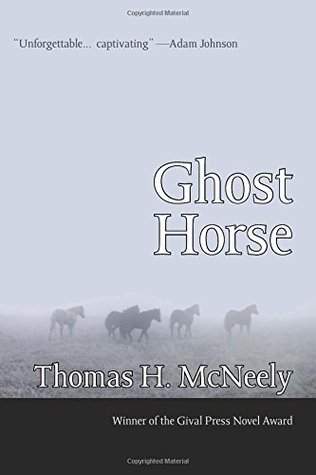
  • Ghost Horse by Thomas McNeely – Literary Fiction

    Ghost Horse by Thomas McNeely – Literary Fiction

    With a firm sense of place and time, Thomas McNeely creates a tableau of class and race segregation juxtaposed with the frailty of youth: One young boy exists in the tormenting forces of his own personal hurricane of a broken family and a broken society that throws him down and swirls him around without regard to their tragic effect on him.

    Eleven-year-old Buddy Turner’s understanding of what it means to be normal hangs in the balance. He’s facing the trials of growing up and a family unit in shambles and his whole world is about to change. It’s the 1970s, Houston, and most kids don’t expect to be thrown into the nasty realities of a broken home. However, this is Buddy’s reality in Thomas McNeely’s debut novel, Ghost Horse.

    Buddy’s mother spends much of her time working in a hospital laboratory while his absentee father comes back to town leaving Buddy with a fresh set of empty promises and his mother with a request for a divorce.

    Buddy’s only escape is working on an animated film with his best friend, Alex Torres. Together, the boys create a film about a ghost horse. Entering into the work helps Buddy avoid the painful realities at home and serves as a buffer for his heartache. Indeed, the movie the boys create is a metaphor for the upheaval Buddy is experiencing in the real world.

    McNeely expertly weaves an intricate and darkly complex story of a boy trying to gain a foothold in a world–a raw, and sometimes, painful coming-of-age story. The book took ten years to pen through the author’s own turbulent waters and his father’s untimely death and at points the reader can see his internal battle emerging in his writing in this heart-rending coming-of-age tale set in the turbulent  1970s.

    In the broader spectrum of the novel, McNeely unleashes his questions about class and racial prejudices, and how adult behavior informs children who are expected to follow suit. Ultimately, however, McNeely’s storytelling is rich with texture and the soulful portrayal of a lost boy, who is un-moored by those whom should care for him the most. Ghost Horse has the weighted emotional cache and heartfelt pertinence that enables the tale to tug at the reader for a very long time.

    5 Star Best Book Chanticleer Reviews round silver sticker

  • WAITING FOR LOVE by Alexandra Maria Proca – Collection of YA Short Stories on Contemporary Issues

    WAITING FOR LOVE by Alexandra Maria Proca – Collection of YA Short Stories on Contemporary Issues

    Waiting for Love is a collection of brief short stories by 16 year-old Alexandra Maria Proca. All told, there are eleven short stories, most about two pages, that cover topics ranging from war to Alzheimer’s disease. No matter the subject matter, Proca’s varied stories told from creative perspectives and are very original. The central theme for the collection is that the stories follow a similar pattern and end with a series of rhetorical, thought-provoking questions.

    A standout story is The Rules, a tale of a man with amnesia in a dangerous wilderness and the lengths he must go to in order to survive. There is some nice writing throughout, particularly description, as when Proca describes, “His innocent voice melts into my heart like as the soft bread rolls would sizzle with butter during our Sunday family gatherings.” Proca’s one longer story, the collection-ending The Fight, introduces more dialogue and delves into character with greater depth.

    Proca tackles these subjects with the fervor, but the brevity of her stories does not allow for much depth. Several of the stories have real potential and could be served well by a deeper exploration of their themes at greater length. The subjects she tackles are ones of such complexity that they cannot possibly be addressed satisfactorily in only a few pages. Perhaps these short stories are studies for longer works? Let us hope so. In particular, Forgotten, already heartfelt, feels ripe for a longer story. “Arms,” a very original story told from the perspective of the bars in a prison, demonstrates Proca’s ability to write from varying and creative perspectives. A longer piece from a similarly offbeat perspective could be incredibly interesting.

    Proca has an innate sensitivity that will serve her well in the future. Her stories demonstrate a keen observational awareness of the world around her. Perhaps Proca’s developing writing voice would be better served writing about subject matter more familiar to her—a day in the life of a teenager can be just as powerful as an insight into world issues if it is told with authenticity and heart. Introspective insights into the minds of today’s young people could make for a formidable collection–one that would be appreciated by teens and adults alike. Her empathy and awareness would make for a powerful voice.

    Overall, Proca’s effort displays heart and a passion for the written word. While the stories are clearly those of a 16 year-old, they are well written and show a passion for writing craft. Proca’s determination and follow through necessary to finish and publish a polished collection of short stories indicates that this is only the beginning for the young writer.