Tag: SEO

  • Casting the SEO Net for Readers: How Search Engine Optimization Attracts Online Followers

    SEO – Search Engine Optimization: Cast a Wider Net for Your Readers

    The cyber world is a vast and active ocean of readers, and it’s not always easy to catch your target audience when casting out your book marketing net online.

    Your content is great, but it’s struggling to reach an audience. By reinforcing the effectiveness of your efforts with strong search engine optimization (SEO), you’ll create a virtual fishing net that will catch readers who love your genre and widen your pool to an even larger audience of “fish in the sea!”

    Fishing, sunrise, water, net, fisherman

    Having a strong online presence is crucial for any author. Whether you are traditionally or self-published, your success often hinges on visibility—how easily potential readers can find your work.

    What is SEO and Why Does It Matter for Authors?

    SEO is the practice of optimizing your online content, so it becomes more visible and understandable to search engines like Google, Bing, and others. These search engines use sophisticated algorithms and digital ‘crawlers’ that scan websites to understand their content and relevance. By strategically using keywords, creating quality content, and improving your site’s technical aspects, you help these digital gatekeepers better understand what your content is about and who might find it valuable.

    Imagine a reader searching for “thriller novels about art heists” or “greatest baseball games.” If your books are optimized with keywords related to your story, they are more likely to show up in search results and get in front of new readers who may not have found you otherwise.
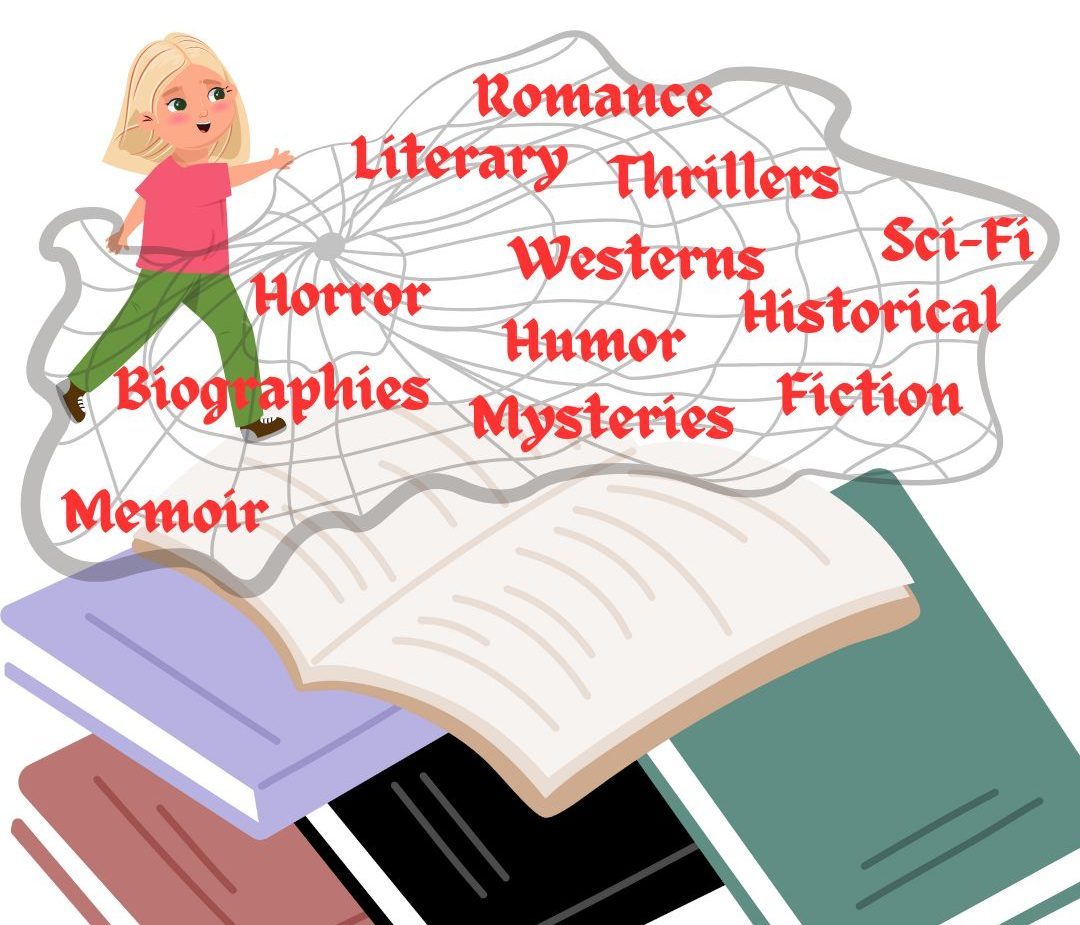
    net, woman, books

    Why SEO is Crucial for Authors

    Shining a Spotlight on Your Work and Yourself

    One of the primary reasons SEO is important for authors is visibility. With millions of books available online, offering a great story just isn’t enough. By using SEO techniques on your author website, book descriptions, and blog posts, you increase your chances of those marketing tools appearing in search results when potential readers are looking for books in your genre.

    Employing effective SEO isn’t only about increased visibility for your book. It’s also about building your author brand. A strong SEO strategy allows readers to learn more about you, your writing process, and your publications. By regularly posting SEO-optimized content, such as blog posts, articles, social media posts, and interviews, you are giving readers insight into your writing and establishing yourself as a trusted voice in the literary world.

    Spreading the Net Wide with Organic Traffic

    Organic traffic refers to visitors who come to your website through unpaid search results. SEO helps you attract that organic traffic by offering the keywords you’ve put into your online text as if it were a little worm on the hook. This means more readers will discover your work without the need for expensive ads. With the right keywords, you’ll find your author website or blog is a well-optimized, powerful tool you can use to build a sustainable online presence that continually attracts your target audience.

    Signing, book, pen, grey

    Better Book Sales

    By making your books more visible on platforms like Amazon, Goodreads, or your own author website, you’ll be gaining more power in the online bookstores where authors compete to find readers. By optimizing your books’ descriptions with relevant keywords, such as genre-specific or popular theme words, you will improve the chances of attracting new readers who purchase or research books online.

    Connecting with Your Audience

    SEO also gives you a boost in attracting the right audience. By strategically using keywords related to your book’s genre, style, or themes, you have a better chance of reaching the readers most likely to be interested in your books. For example, a romance writer could target keywords like “new in town love stories,” while a science fiction author might optimize for terms like “space operas” or “first contact adventures.” Understanding your audience’s reading preferences helps you tailor your SEO strategy to catch just the right readers.
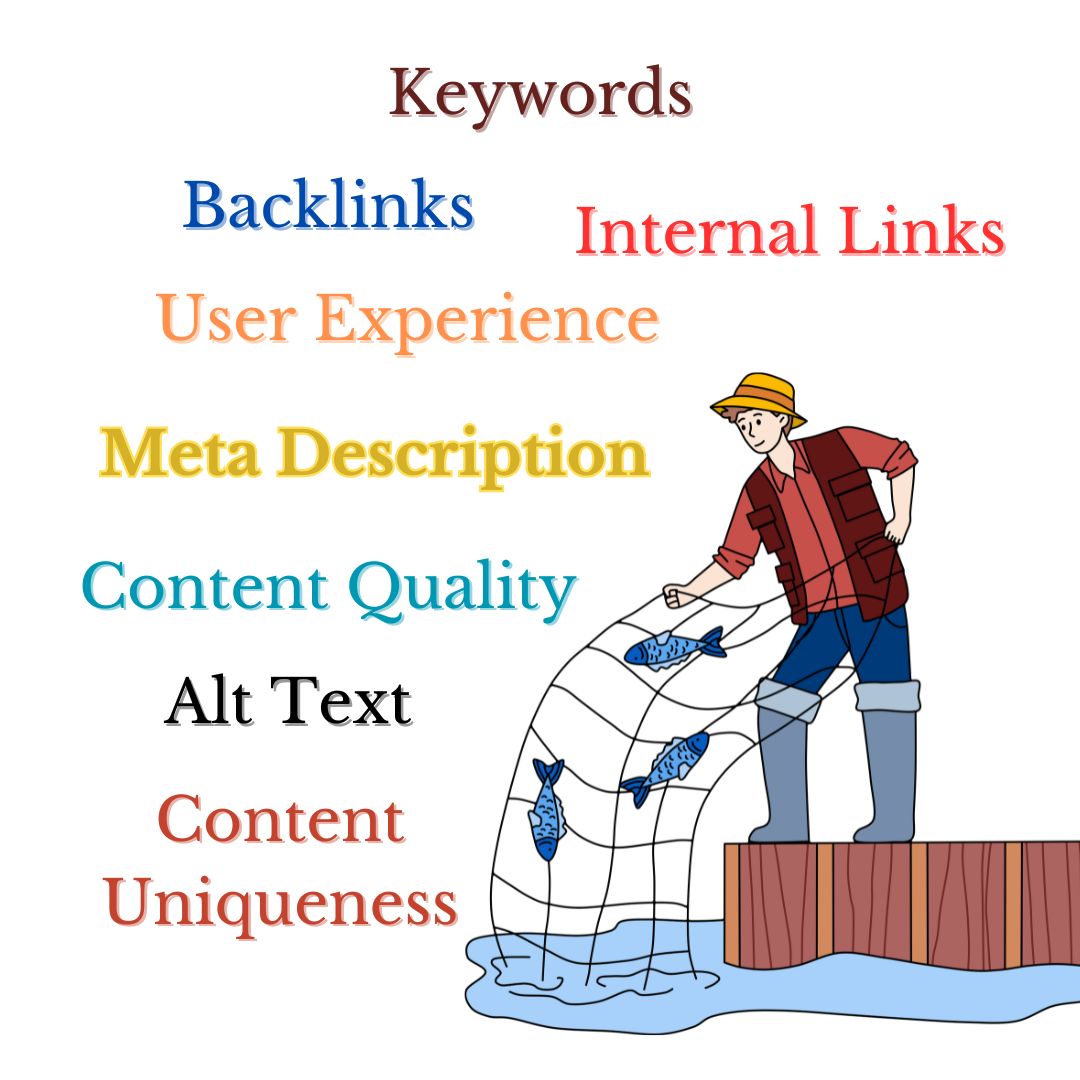
    Fishing, net, fish, man

    Enhance Discoverability with Chanticleer Editorial Reviews and Book Awards

    Beyond basic SEO strategies, authors can significantly boost their discoverability through Chanticleer’s Editorial Book Reviews and Book Awards. These professional validations don’t just enhance your book’s credibility—they create additional pathways for readers to find your work.

    The Editorial Book Review

    Chanticleer Editorial Book Reviews are specifically crafted with SEO in mind. Our reviewers are trained to optimize everything from title keywords to sentence length, ensuring that when your review is published, it’s designed to catch the attention of both search engines and human readers. These reviews create quality content that search engines value, especially when featured on your website or in your book’s metadata. The strategic keyword placement in our reviews helps your book appear in searches relevant to your genre and themes. We even wrote an article explaining the ins and outs of how we do that, so you can too! 

    The Book Award Program

    Similarly, Chanticleer Int’l Book Awards – CIBAs – create multiple touchpoints for discovery. When your book receives an award or makes a shortlist, it generates announcements, listings, and social media mentions—all containing relevant keywords that improve your SEO footprint. Our award posts are specifically designed to catch just the right readers for each genre division. We frequently hear from readers that they purchase every book on our Finalist lists just to enjoy a variety of new authors in their favorite genres. This creates an immediate audience expansion for authors who make these prestigious lists. You can see the culmination of this with our celebration of the 2024 Grand Prize Winners that went our recently here. 

    These professional validations work in tandem with your SEO efforts, creating a stronger, more expansive net to catch interested readers. At industry events like Women in Publishing, Author Nation, and the San Francisco Writers Conference, authors regularly approach our team to share how Chanticleer’s posts and promotions have significantly improved their marketing efforts, given them a sales bump, and expanded their readership.

    Key SEO Strategies for Authors

    So, where do you begin? It may sound complicated, but empowering your SEO isn’t magic. Taking a few simple steps—both now and each time you update your website—will get you in the right position to pull in those readers.

    1. Optimize Your Author Website

    Your author website is your digital home base. Make sure it’s well-optimized to increase visibility. Use relevant keywords in the title tags, meta descriptions, and headers. For instance, if you’re a mystery novelist, use keywords like “mysteries,” “detectives in literature,” or “suspense plots.” When someone inputs these terms into a search engine, they are more likely to see your website as a result.

    Don’t forget the technical aspects of SEO that affect how readers experience your site. Ensure your website loads quickly, works well on mobile devices, and has a clear navigation structure. Search engines prioritize sites that offer a good user experience for your audience.

    2. Use Keywords in Book Descriptions

    On platforms like Amazon, your book description is a vital part of how your book will rank in search results. Use targeted keywords your readers will likely use when searching for a new book. It must accurately describe your book, since it won’t benefit you to mislead the reader. For instance, a reader looking for a book about a historical figure might include terms like “biographical fiction” or “historical biography” in their search, so those are great keywords to use in your descriptions.

    fish, blogging, water, goldfish, keyboard

    3. Start a Blog

    Blogging is a powerful tool for authors to connect with their audience while boosting their SEO efforts. Regularly posting articles that engage your target audience helps establish your authority and increases your site’s traffic. You could write about topics like writing tips, industry trends, book recommendations, or personal stories about your writing journey. Understanding your audience’s interests helps you create content that not only ranks well but genuinely connects with potential readers.

    4. Claim and Optimize Your Author Profile on Amazon and Goodreads

    Amazon and Goodreads are the go-to platforms for book discovery, and ensuring your author profile is fully optimized can help you get more visibility. Use relevant keywords in your author bio, list all your books clearly, and encourage readers to leave reviews. The more activity you have on these platforms, the more likely it is that your books will appear in searches and reach new readers interested in your genre.

    SEO, Computer, fingers, holding

    5. Leverage Social Media and External Content

    SEO isn’t just about what happens on your website. Google also takes social media activity into account when ranking websites. Share your blog posts, articles, and updates on your social media channels (Bluesky, Instagram, Facebook, etc.) with appropriate hashtags and links to your website. Effective book marketing extends beyond your website to social platforms where your readers are already active. The more you share and the more engagement your posts receive, the more likely it is that search engines will take notice.

    6. Focus on Local SEO

    If you’re an author attending book events, readings, or speaking engagements in your area, local SEO is vital. Optimizing your website and author profile for local searches will help you connect with fans in your region. Include your city and relevant location-based keywords in your website’s content, like “author in [city]” or “book events near [city].” This helps readers find not just your books but opportunities to meet you in person, creating a stronger connection with your audience.

    blue, green, wave, fish

    Track Your SEO Success

    Implementing SEO strategies is only half the battle—you also need to know if they’re working. Use tools like Google Analytics to track your website traffic, see which pages are performing well, and understand where your audience is coming from. This data helps you refine your approach and focus on the book marketing tactics that bring the most readers to your work.

    Look for patterns in how readers find and interact with your content. Are certain blog topics attracting more visitors? Do specific keywords drive more traffic? Understanding these patterns helps you tailor your content to better meet your audience’s interests and search habits.

    You’re ready to set your SEO Net for More Readers

    In an increasingly competitive digital landscape, authors need the very best lures they can get to stand out online. SEO offers an accessible and cost-effective way to increase visibility, connect with readers, and ultimately boost book sales. Using these strategic SEO approaches on your author website, in book descriptions, and in your online content can ensure your books reach the right audience.

    Remember, SEO is an ongoing process, not a one-time fix. It requires consistency, strategy, and a deep understanding of what your readers are searching for. By optimizing your online presence, you increase your chances of building a long-term, sustainable writing career—one where your books are not just published, but discovered and celebrated by the readers who want them most.

    With a little SEO know-how, you’ll be well on your way to netting more readers, building your brand, and boosting your success as an author! The digital ocean is full of potential readers waiting to discover their next favorite book—yours.

    Now go out and catch the Big Fish!

    Fish, book, glasses, orange, blue


    Thank you for joining us for this Writer Toolbox Article

    A red toolbox with the words "What's in your toolbox

    There is so much to learn and do with Chanticleer!

    From our Book Award Program that has Discovered the Best Books since the early 2010s to our Editorial Book Reviews recognizing and promoting indie and traditional authors, Chanticleer knows your books are worth the effort to market professionally!

    Helpful Toolbox Articles:

    Ready to Strengthen Your Book Marketing Net?

    If you’re ready to enhance your book’s visibility and reach more readers, Chanticleer offers professional services designed specifically for authors who are serious about their writing careers:

    Chanticleer Editorial Book Reviews: Our professionally crafted, SEO-optimized reviews give your book the visibility boost it deserves. Each review is strategically written to improve your book’s discoverability while providing the credibility that comes from a respected third-party assessment. Learn more about our Editorial Review service here.

    Chanticleer International Book Awards (CIBAs): Join the ranks of authors who’ve seen significant visibility boosts after participating in our prestigious book awards. The CIBAs create multiple opportunities for your book to be discovered by new readers who trust our curated selections. When you submit your book, you’re not just entering a contest—you’re joining a community of authors committed to excellence. Submit your book to the CIBAs today!

    Don’t let your great book remain hidden in the vast digital ocean. With Chanticleer’s professional services working alongside your SEO efforts, you’ll cast a wider net and catch more readers than ever before.

  • Where are the 2023 CIBA Winner Posts?

    Dude, Where’s my List?

    Two white guys looking for a car outside of tow service.
    Ashton Kutcher and Seann William Scott in the 2000 film Dude, Where’s my Car?

    A Frequently Asked Question

    With the 2023 CIBAs all wrapped up and the winners having been announced at the Four Points by Sheraton in beautiful Bellingham, WA on April 20, 2024, many people have the very reasonable question: Where are the official announcements, and why didn’t they all come out on that Saturday or on Sunday-the next day? (We are staffing the Books By the Bay Book Fair on Sunday).

    First off, you can see all CIBA Winner Lists as they come out on our website here!

    On our home page, these are all under the top center section labeled Book Awards News – CIBAs.

    Playing the Social Media Game

    While a PDF with a list of the winners could easily be posted, that wouldn’t uphold our promise to help with long-tail marketing and increasing our authors’ digital footprints. We are committed to maximizing promotion for authors.

    How do we maximize your promotion?

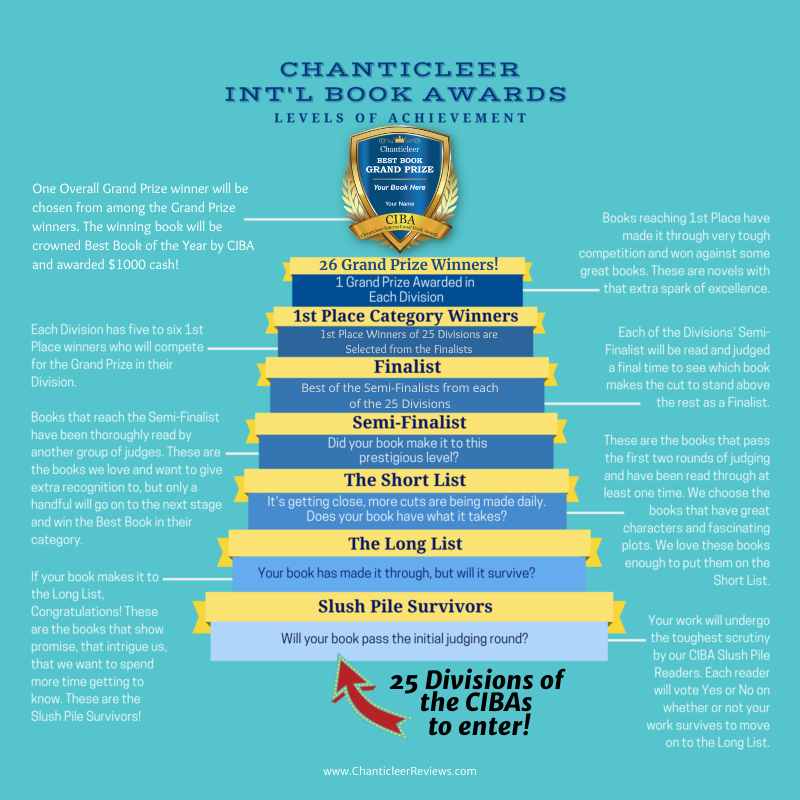
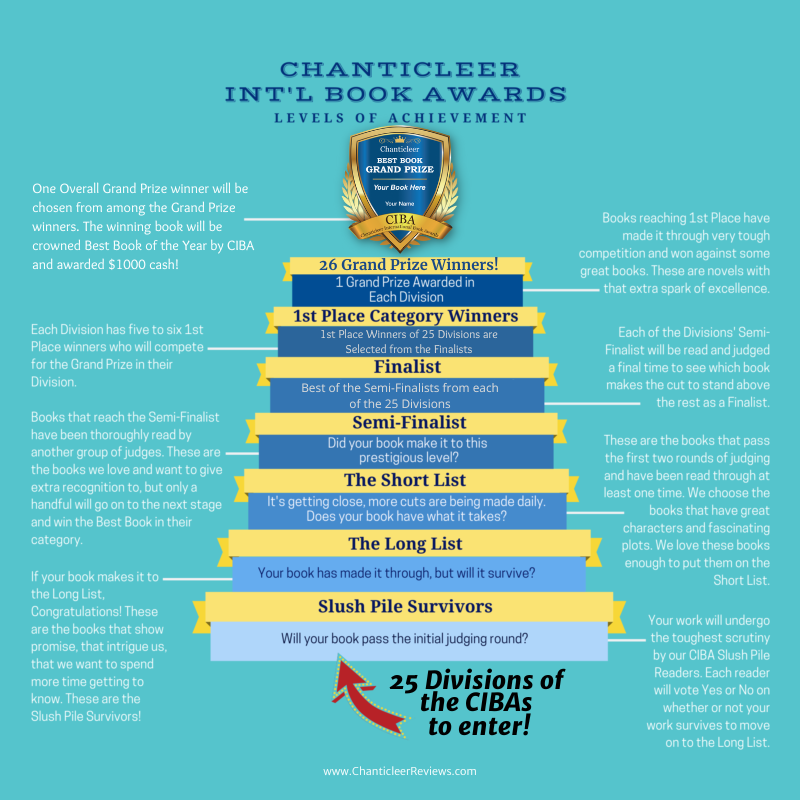
    The tiers of achievement for the CIBAs


    Our normal posts, when not during our conference season, tend to have double the response and interaction rate of comparable businesses. During the Chanticleer Int’l Book Awards, these rates rise to seven times the standard engagement of those other posts, and is still double the posts during similarly busy times at other companies. And that is for each Awards post that goes out. The way we do this is simple.

    First, we give each division breathing room on Social Media, on our high traffic Website, and our e-Newsletter in our flurry of daily email blasts that are sent out until all the lists have been posted. The consistent promotion over the course of two weeks allows for each set of winners to have their moment in the sun, and it keeps every post prioritized instead of being devalued by search engines for over-posting.

    We also try to tag each winner on Facebook per CIBA division. Again, if we post more than three posts per day, FB devalues the posts which means less exposure.

    Under the Hood with SEO


    One of the best parts of Chanticleer is our emphasis on being ahead of the technological curve. The main way we do this is through a robust SEO package that we usually talk about with regards to our Editorial Reviews, but we use all those same tools to promote the authors who advance in our Book Awards as well.

    You can see the article we put out specifically about the All In One Search Engine Optimization tool (AIOSEO) we use here.

    Argus Brown and David Beaumier presented a coffee klatch on this at CAC24 to help explain the ins and outs of promotion, specifically looking at different author websites and giving feedback right there in the moment!

    While most SEO tools recommend a score between 60-80, we always strive to exceed that, with many of our Book Award posts receiving a AIOSEO score above 90. We do this through our usual rigorous attention to detail surrounding the optimization of heading distribution, sentence length, alternative text, key phrases, meta data, tagging, and much more. There’s no replacement for basic elbow grease (or clicking away?) when it comes to maximizing our posts so that web crawlers love them and promote our authors writing as much as possible. We know from client feedback that it really makes a difference!

    Human Beings at Work

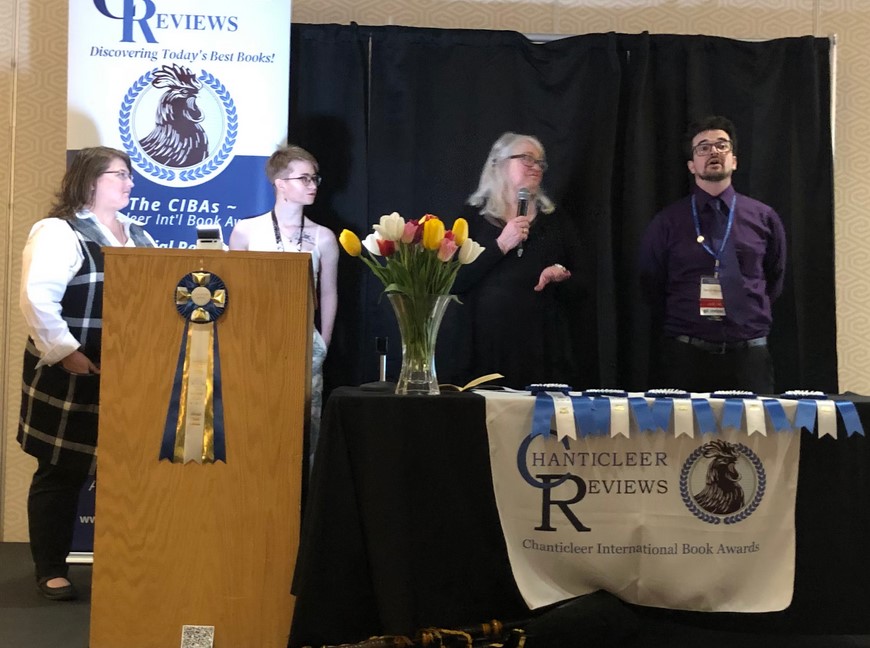
    A rare photo of the Chanticleer staff all in one place and, yes, that is a bagpipe under the Chanticleer table’s banner.

    Of course, it’s important to remember that we are a small business with huge reach that works hard to address every question, email, and comment we receive directly with care, empathy, and expertise. Putting together an internationally attended conference with authors from India, Australia, and the UK takes hours of dedication and careful planning. As we move into the follow up phase, we are just as determined to provide the excellent service that is a hallmark of Chanticleer. We double-check our work before putting the lists out, maximizing SEO, looking to see that names and titles are written correctly, and scheduling out posts to have the strongest online impact.

    Then, we promote all the CIBA winners again with our Overall Posts for the CIBA Fiction Book Awards, the CIBA Non-Fiction Book Awards, and the SERIES, SHORTS, and COLLECTIONS Awards.

    And then, the CIBA lists are kept on the HOMEPAGE of the Chanticleer Website for  a year with all those links!

    And then, we recognize the Division Winners in periodic SPOTLIGHT posts with links!

    And then, well we could go on, but I think you are getting the picture.

    Most of all the Chanticleer International Book Awards is a labor of love!

    Love of books, love of words, love of storytelling, love of authors,

    and love of the writing community! 

    We are passionate about what we do! 

    Finally, Thank You

    Thank you so much to everyone who submitted to the 2023 CIBAs and to the hundreds who have already submitted to the 2024 CIBAs. Every year, the quality and intensity of the competition is better than the year before, and we are always blown away by the incredible work you send our way. We will do everything we can to wrap up the 2023 CIBAs in the best way possible and get the ribbons and rewards out to all the winners before we dive into another year of Discovering Today’s Best Books.

    Thank you for making Chanticleer possible and for trusting us with your work!

    Team Chanticleer!

  • On the 8th Day of Christmas, Chanticleer Brings to me… | 12 Days of Christmas 2023

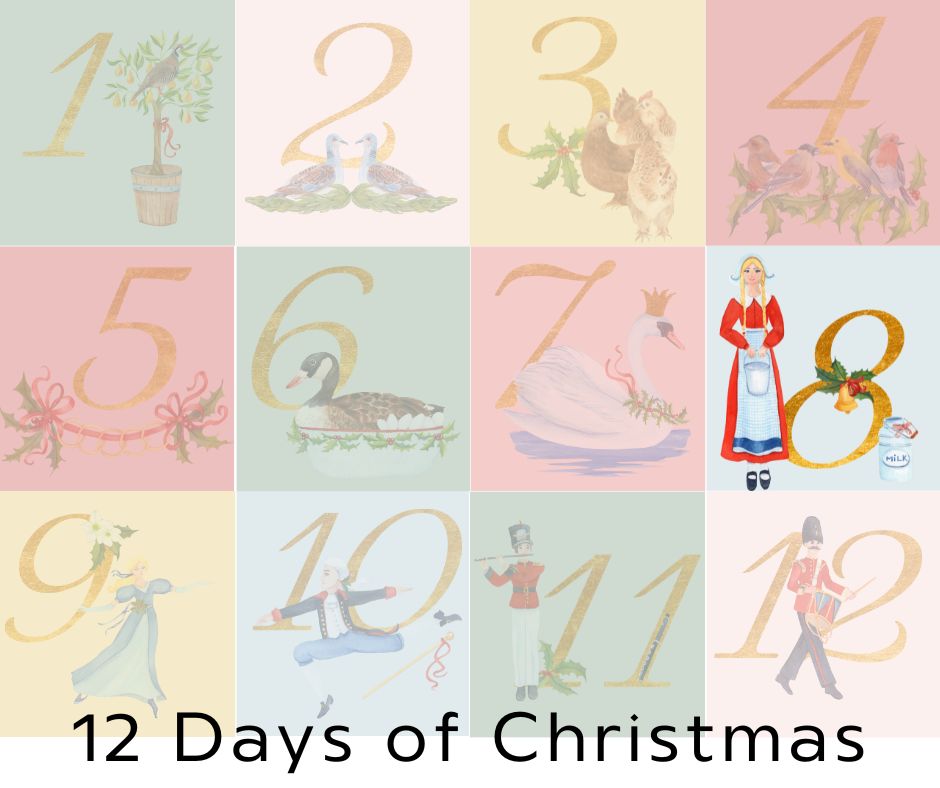
    Celebrating the Twelve Days of Christmas – One Day at a Time

    On the 8th Day of Christmas…

    The Eighth day of Christmas is the celebration of Mary as the Mother of Jesus, which can be traced back to as early as 431 AD.

    “But Jiminy Crickets, it is the 2nd of January! Is it not too late for the 12 Days of Christmas?” you say.

    Not to fear, Chanticleerians! The 12 Days of Christmas begins on December 26th! And it continues to the 6th of January – Three Kings Day. The four weeks leading up to Christmas is known as the Advent.

    So if you haven’t finished wrapping presents, sending out those cards, and baking cookies—don’t worry—you still have time! You have FIVE Days! 

    Happy Holidays to You from the Chanticleer Team! 

                 On the Eighth day of Christmas, my true love sent to me

                 Eight Maids A-Milking

                 Seven Swans A-Swimming

                 Six Geese A-Laying

                Five Golden Rings

                Four Calling Birds

                Three French Hens (Chanticleer’s favorite #justsaying)

                Two Turtle Doves

                And a Partridge in a Pear Tree 

    This lyric represents the common worker. We are so grateful to all those who make the wheels of the world turn who can be so easy to forget! An extra special Happy New Year to all workers!

    Happy Holidays to You from the Chanticleer Team! 

    On the Eighth Day of Christmas, Chanticleer brings to me…

    Image by Tumisu from Pixabay

    Eight SEO Boosts  (at least!) with each Chanticleer Book Review Package

    SEO stands for Search Engine Optimization. When you purchase an Editorial Review from Chanticleer, we do our best to keep up with all the latest trends and under-the-hood data technologies that ensure your book is picked up by search engines like Google, Bing, Yahoo, and others.

    1. Key Phrase Optimization: We choose a word or phrase that is most likely to lead to your book, usually your title.
    2. Title Optimization for the length of our review title as it appears in search engines.
    3. Heading Optimization: We use our blurbs to stand out in describing your book while also showing search engines what’s most important to pick up.
    4. Sentence Optimization: We make sure all reviews use the appropriate number of words to best improve their Flesch reading score.
    5. Optimization that utilizes your keywords.
    6. Tagging and Categorizing for web crawlers.
    7. Links! Links to the Author’s website, links to the Publisher’s website, links to the book’s Amazon Sales Page, links to other Chanticleer Reviews in the series (if applicable), and Links to our Local Village Books’ sale page for your book if it’s available through Ingram. We are currently working on linking to Barnes & Noble. The more links the better in the Internet of Things!
    8. AISEO PRO SEO Booster app with Meta Descriptions, Cornerstone Content, Focused Key Phrases

    In addition, all Chanticleer Reviews are promoted in our e-newsletter, website, Social Media platforms, and the Chanticleer magazine.

     Chanticleer’s AISEO Boosts continuously work for your books long-tail marketing strategy and to make your works more discoverable.

    Editorial Reviews are powerful tools that are only limited by imagination! Don’t let your book go undiscovered!

    For more detailed  information about how a Chanticleer Review with its exclusive AISEO PRO booster app, click here>>   You can learn more about SEO here.

    Image by Gerd Altmann from Pixabay


    We would like to invite you to join our curated online community The Roost!

    We are so proud the community we have on The Roost!  It is great perch to hang out on for writers and publishers to hang out in and connect.

    We host weekly write-ins, discussions of writing craft books, and advice on the author’s journey. With authors in all stages of the writing process joining us, there is always something to learn on this independent PRIVATE social media site.

    Writing may seem like a solitary activity, but stories are told in community. Whether you find that on The Roost or elsewhere, we’re happy that you are a part of our community here at Chanticleer.

    Limited Time Only! Join The Roost during the 12 Days at a discounted holiday price.

    Sign up now for $9.99 a month or $99.99 a year.

    Valid until January 6th.

    Follow this link to find out more information. 

    And just for fun: 

    We now have: 

    • Eight Partridges and Eight Pear Trees
    • Fourteen Turtle Doves
    • Eighteen French Hens
    • Twenty-four Calling Birds
    • Twenty Golden Rings 
    • Eighteen Geese-a-Laying 
    • Fourteen Swans-a-Swimming 
    • Eight Maids a-Milking

    The Chaicleer Rooster logo wearing a santa hat

    Our favorite part about having the 12 Days of Christmas is that we can have the time we need to celebrate with our loved ones. We have time for wrapping presents, meeting with friends for hot cocoa, and continuing to prepare the Chanticleer Authors Conference and the 2023 CIBA Banquet and Ceremony.

    Wishing you Happy New Year from Chanticleer! from Kiffer, Sharon, David, Dena, Vilina, Scott, Anya, and Argus!

    Stay tuned for the 9th Day of Christmas!


  • Pitching : Practical and Real-World Advice Along with an Intro to Flywheel Marketing Strategy by Kiffer Brown

    Pitching

    I learned a very long time ago in business school that “nothing happens until someone sells something.” [Henry Ford]

    Selling is meant to create a chain reaction.

    Pitching is the act of trying to sell something.

    Selling (pitching) your book(s) is part of being a professional writer.

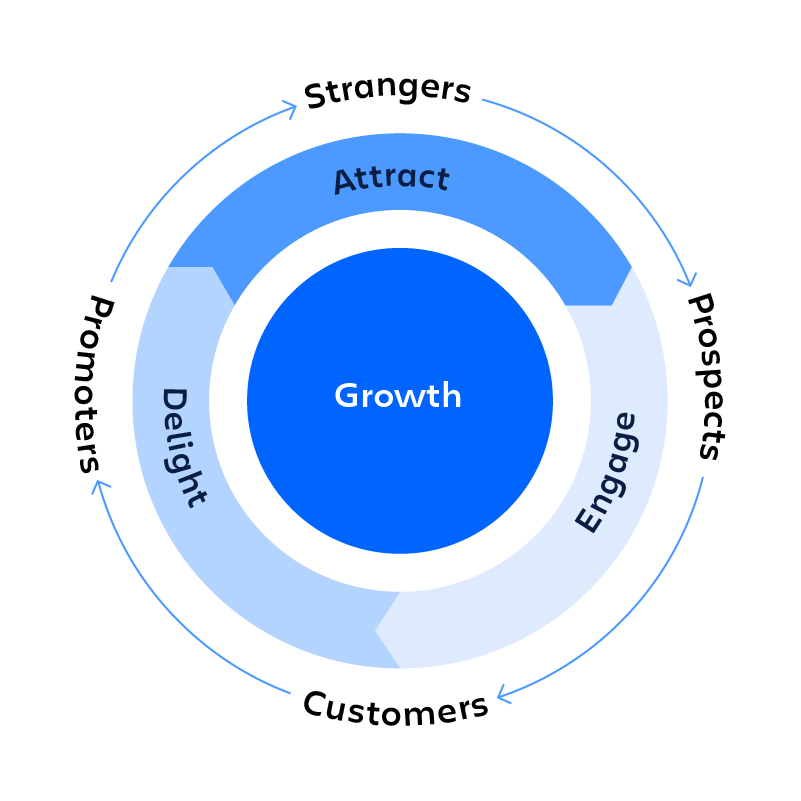
    Pitching your book should put another spin on your book’s marketing flywheel to gain momentum for your book sales. The flywheel strategy creates a cyclical business pattern of success.

    The idea is that a flywheel takes a lot of effort at the start, but once it gets spinning, it continues to quickly gain momentum and spin faster. This is similar to the snowball effect, where a snowball gets pushed down a hill as it progressively gets bigger and bigger until it is nearly impossible to stop before it reaches the bottom of the hill. The difference is that a flywheel never has to stop.

    Amazon has a very intentional flywheel strategy. And, yes, it was written by Jeff Bezos on a paper napkin in 2001.

    Flywheel summary for marketing, strangers lead to prospects, lead to customers, lead to promoters. You attract, engage, and delight them to create growth. ATTRACT. ENGAGE. DELIGHT/ENTERTAIN

    Elegantly simple.

    The FLYWHEEL SUMMARY

    • The flywheel effect occurs when small wins (acquiring readers one at a time) accumulate over time, creating momentum that keeps your business growing (increasing your readership).
    • The concept is based on mechanical flywheels that power rowing machines and other devices.
    • Achieving the flywheel effect requires removing friction and applying force. In business terms, that means creating a self-serve purchase flow and applying “forces” to make the wheel spin faster, e.g., SEO, Meta-Data, and nurture campaigns.
    • A flywheel go-to-market model is well suited for selling books — easily replicated products such as books, e-pubs, audio-books, games, etc.

    Flywheels attract and engage customers 24 hours a day – they’re literally working while you sleep. See SEO above.

    Stay tuned for future posts on FLYWHEELS and how to create yours.

    A Tiny Bit of Publishing History

    We will circle back around to pitching. Please bear with me.

    Amazon shifted the book-selling business by selling print books on July 16, 1995 and is now considered having the world’s largest collection of books. The first books were sold out of Jeff Bezos rented home’s garage. Remember that Bezos drew Amazon’s flywheel on a napkin in 2001. The rest is history.

    E-books have been around since late 1990s, but it wasn’t until Amazon released the Kindle book reader in 2007 that e-books (digital books) caught the general public’s attention and dollars.

    Selling books online – digital books requires a very different approach – one that sells directly to the reader and works to make the work discoverable by potential readers/purchasers.

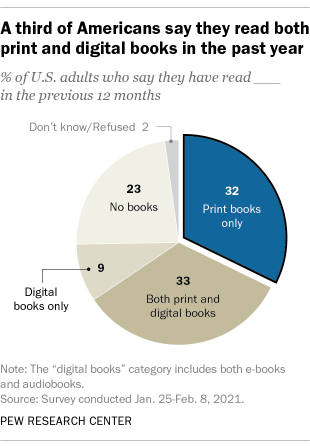
    The Pew Research Center states that as of April 4, 2012 that only one-fifth (21%) of Americans have read an e-book.

    As of now, 30% of Americans have read an e-book. This number has remained consistent since 2019 according to PEW Research.

    The typical American reads five books a year (median – symmetric distribution) while the average (mean – includes outliers) is about 14 books per year per person.

    A pie chart showing that a third of Americans say they read both print and digital books in the past year

    Most Americans only have eight hours of free time per week. This is the window when reading a book (e-book or print book) for pleasure/leisure would take place. People could watch TV, play video games, play pickleball, golf, swim, etc. instead of reading during these rare free hours. Hence, this is why audio-books sales are increasing! Busy people can listen to books while they commute, knit, wash laundry, load the dishwasher, or rake the autumn leaves.

    The point is “what is in your bag to sell?” If you are self-published, are your works available on a wide variety of platforms to reach your readers?

    Audiobooks Hands-Free Reading

    Now to circle back to PITCHING!

    Whether or not you are pitching your work to a literary agent, a publishing acquisitions editor, bookstore staff, or, most importantly, a potential reader, you will need to know how to pitch your works.

    Your literary agent will need to know how to pitch your book to publishers. They do not get paid until your book is under contract (and purchased).

    The publishing house (you or a traditional publishing house) will pitch your books  to “the trade” – booksellers, libraries, online selling platforms, and other brick & mortar outlets.

    Most writers first exposure to pitching to agents is at writing conferences that offer “Pitch Blocks” or “Pitch Slams” where the conference host is paid (again, not the literary agent) a fee for hosting a session with a roster of agents who will listen to pitches. PNWA and Writer’s Digest offer these for a fee per block (WD $179 PNWA $100 per block). Pitch time is anywhere from five minutes to eight minutes per attendee and are on a strict time schedule with one pitch being delivered after another.  There are different schools of thought of whether pitch sessions are helpful or not in obtaining a literary agent, but that is another topic.

    How to Pitch at Conference Pitch Sessions

    While it is normal to feel nervous when you are pitching your works, it behooves you to remember that:

    • You paid for this pitch session.
    • The clock is ticking.
    • There are many others pitching to the same agent.
    • Agents only want pitches on completed manuscripts or polished non-fiction book proposals.
    • Do your homework ahead of –make sure that you are pitching to an agent who is representing your genre. Visit their websites to see other books that they are representing.

    First, most agents are forgiving of nervousness. It happens a lot and all that anxiousness will not help  your pitch to stand out. Don’t spend your time apologizing for being nervous or explaining why you are not prepared. Doing so is wasting precious time. Rambling does not make a good impression. You want them to have your pitch echoing in their brains. 

    Come prepared. Over prepare. Have a prepared, polished pitch. Write it on a note card. Carry the card with you. Memorize your pitch. Read off from it if you need to. Believe me, the agent will appreciate this more than you hearing you hemming and hawing and umming.

    “Or is your name Sir ‘Um’?”  Knight’s Tale

    They also do NOT want to hear about your ‘dreams and passions’ about writing. Everyone that is pitching to them is passionate about their writing. Agents are about salability. They have mortgages to pay, food to by, and their own dreams of vacations and income from discovering that next break-out Hunger Games. See “nothing happens until someone sells something” above.

    Keep your pitch short. Have questions to ask the agent-your conduit to the world of publishing-about if there was something that appealed to them. What did not appeal to them or what was missing. Try to let the agent guide the feedback. This is your chance to get professional feedback, to listen and learn.

    Also, keep in mind that agents are also seeking to represent writers who are open to feedback and pleasant to work with along with understanding the process of the publishing industry (that it takes time and effort).

    Remember to bring your business card with your website and contact information. Say hello. Introduce yourself. Give your pitch early on so that the agent will have time to give you feedback on it. Ask questions instead of “explaining” your manuscript to the agent so that she will give you feedback.

    When your session is over (Some are as short as three minutes. Eight minutes is considered to be a long session.). Thank them for their time and leave. The next person to pitch is waiting to take your spot.

    If the agent does have interest, be sure to have your synopsis ready (printed) with your contact information in case she asks for it.

    Less than 1 percent of writers at a pitch session will gain representation. It is about the same as cold querying (another post is coming on that — stay tuned). So, keep on writing, editing, refining. The main objective is for the agent at the pitch sessions to think that you are open and understand the business and marketing side of being a writer.

    Most agents also understand that it’s a busy world and will allow simultaneous submissions. If they don’t, they might not be a good general fit for most writers.

    Chanticleer Authors Conferences do not offer “pitch sessions.” However, we do offer sessions on developing pitches. We do have opportunities to make excellent connections with film agents, directors, publishing house acquisitions, literary agencies, and other professional connections in the content industry such as Maggie Marr, Legal (Film and Book Representation) and Scott Steindorff, President of Stone Village Film Productions

    Mariners pitching prospect Bryce Miller gets his first start of spring — against team he grew up watching | The Seattle Times
    Mariners pitching prospect Bryce Miller gets his first start of spring — against team he grew up watching | The Seattle Times

    What is a PITCH and/or LOGLINE?

    Your story reduced to less than 33 descriptive words. EACH. WORD. COUNTS.

    Brand your story with a compact package of words that will astonish and entertain. It’s a craft of its own! Continue to refine and refine your pitch to a concise sound bite.

    A PITCH is NOT

    • A meandering description about the story
    • The opening scene
    • Side stories
    • Character names
    • Flash forwards
    • Psychological thinking
    • Don’t confuse platitudes for story – avoid them!
    • Get your ‘self’ (looking at you Writer) out of the way of your story
    • Never give away the ending

    A PITCH consists of the following:

    • Identifying the main character (protagonist) using descriptive words — tonality – leverage your language/voice
    • Describe the world that character lives in (Fantasy? Dystopian? Barbie Land? Future? Stone Age? Future in a galaxy far away?
    • What sets the story in motion — the inciting event
    • The goal of the protagonist — central conflict — choice — action
    • What stands in the protagonist way – what is the conflict or who is antagonist?
    • The best loglines have a sense of irony. (There’s the conflict again!)

    Answer all of the above in 33 words or less. Perfect words. Use active and visual language. This is where you should show off your word craft abilities.

    The equation is as follows:

    Central Conflict + Inciting Incident + Protagonist Goal + Protagonist = PITCH

    The order of the components can be mixed up.

    How are loglines/pitches different than taglines? Pitches are descriptive. Taglines are provocative and are used for marketing. Don’t confuse the two.

    Here is a classic example of a logline/pitch and tagline:

    Back to the Future:

    • Logline: “A young man is transported to the past, where he must reunite his parents before he and his future cease to exist.”
    • Tagline: 17-year-old Marty McFly got home early last night—30 years early.  (Notice that this tagline gives the tonality and targets the market for the work/film.)

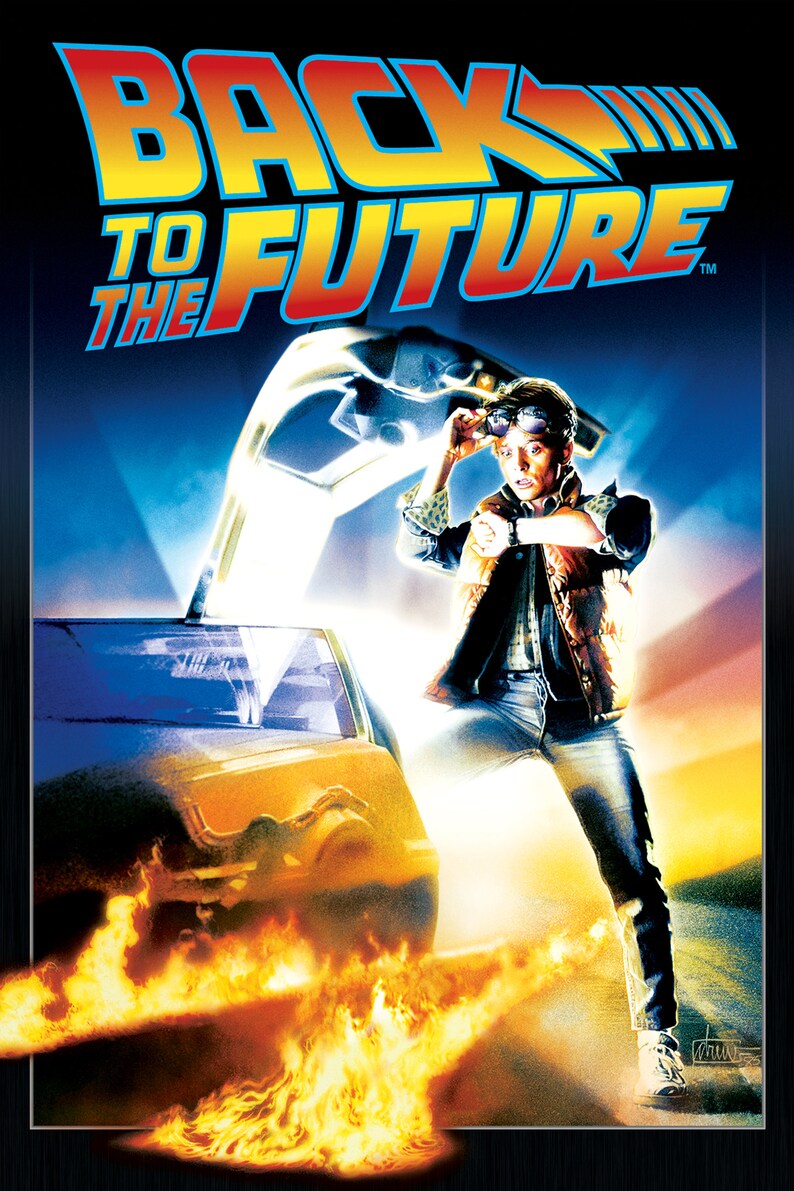
    Back to the Future Movie Poster Michael J. Fox Christopher image 1

    In closing: The whole idea of pitching is to entice an extremely busy person to making time to read your work! 

    Next step:  write a 50 word summary of your story. Bring it on your stationary along with your pitch on a notecard to your pitch session. Just in case! I’d even work on a tagline to give a visual!

    An effective, evocative, compelling logline/pitch can propel your writing career forward and open doors and lead to conversations with industry professionals.

    Keep on Writing, Kiffer

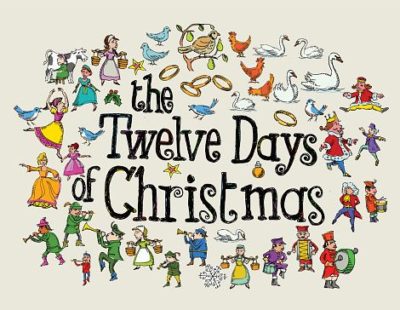
  • The Twelve Days of Christmas! On the Ninth Day, Chanticleer Brings to me…

    Celebrating the Twelve Days of Christmas – One Day at a Time

    “But Jiminy Crickets, it’s after December 25th! Is it not too late for the 12 Days of Christmas?” you say.

    Not to fear, Chanticleerians! The 12 Days of Christmas begins on December 26th! And it continues to the 6th of January – Three Kings Day. The four weeks leading up to Christmas are known as Advent.

    Some say that December 25th is the first day of Christmas, but we are going with the medieval date of the 26th because revelry could not take place on the 25th as it was a holy day. And the Twelve Days of Christmas is about revelry!

    So if you haven’t finished wrapping presents, sending out those cards, and baking cookies—don’t worry—you’ve got an extra 12 days!

    Happy Holidays to You from the Chanticleer Team! 

    On the ninth day of Christmas, my true love sent to me

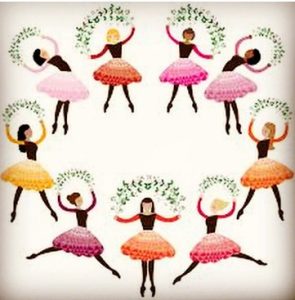
    Nine Ladies Dancing

    Eight Maids A-Milking

    Seven Swans A-Swimming

    Six Geese A-Laying

    Five Golden Rings

    Four Calling Birds

    Three French hens (Chanticleer’s favorite #justsaying)

    Two turtle doves

    And a partridge in a pear tree 


    On the Ninth Day of Christmas, Chanticleer brings to me…

    Nine SEO Boosts!

    SEO stands for Search Engine Optimization. When you purchase an Editorial Review from Chanticleer, we do our best to keep up with all the latest trends that ensure your book is picked up by search engines like Google.

    Why AIOSEO is important

    1. Key Word Optimization: We choose a word or phrase that is most likely to lead to your book, usually your title.
    2. Excerpt Optimization that utilizes your keyword.
    3. Title Optimization for the length of our review title as it appears in search engines.
    4. Promoted in our Newsletter and Social Media.
    5. Sentence Optimization: We make sure all reviews use the appropriate number of words to best improve their Flesch reading score.
    6. Use of transitions between thoughts.
    7. Heading Optimization: We use our blurbs to stand out in describing your book while also showing search engines what’s most important to pick up.
    8. Tagging.
    9. Links to the Author’s website, an Amazon Sales Page, and to our Local Village Books’ sale page for your book if it’s available through Ingram.

    The Power of Reviews

    Editorial Reviews are powerful tools that are only limited by imagination! Don’t let your book go undiscovered! You can learn more about SEO here.

  • MailChimp 101: Level Up Your Mailing List from the Desk of Rochelle Parry

    An Introduction to MailChimp

    MailChimp may be no Rooster, but it’s a great way to start email marketing. With a very low barrier to entry (free!), you can build your audience before your book is published!

    Why Use MailChimp?

    Your personal email is great for sending messages to a small group of people, but once you get a higher volume of recipients, limits will apply. For instance, Gmail will only allow 100 contacts per outgoing email, with a limit of 2000 emails per day (source). Your email account can be suspended if you go over their limits.

    Signing Up

    To sign up, just go to MailChimp.com. Of course, there are paid plans, but assuming you’re starting out with fewer than 500 contacts, free will work! They also offer free email support for the first 30 days, so make sure to get your questions in early. Paid accounts can provide 24/7 technical support, add additional users to your account, and would allow more than 500 subscribers (source).

    To sign up, create an account with your email, and be prepared to verify. A surprise for most users is that to sign up you have to provide a physical address. This address will appear at the bottom of every email! Make sure it’s not going to give away your location if you’re working from home and are concerned about safety and privacy. Read up on MailChimp’s ideas to provide a less personal address here.

    I’ve signed up, now what?

    Once you’re in the Mailchimp site, you’ll see a dizzying array of choices. If you have a website, you’ll want to create a signup form. Click the “create” icon, and select “embedded form.” The form includes name and email by default, but other fields are available too.

    Newsletter Button Sign up
    You can see our Newsletter sign-up as an example here

    Once you’re happy with your form fields, hit ‘continue’ and you can copy the code and place it directly into your website. If this is all Greek to you, consider working with a webmaster to get the form to appear correctly. They also have a pop-up form option. If you create a pop-up form, you’ll need to provide your website address to connect it, then add some provided code to your site’s header, which MailChimp explains here.

    Your Audience

    A group of people applauding at a rock concert
    Get your audience excited!

    Once people sign up, they’ll be added to your Audience. “Audience” is where you manage your contacts. If you already have a list of emails you want to market to through Mailchimp, you can add them manually or by uploading a spreadsheet. Make sure you have the email owner’s permission first! The anti-spam laws can work against you if you get a lot of people marking your email as spam (learn about the importance of permission here). If they sign up via your form, they’ve given their consent!

    Campaigns

    Four People Playing a Board Game
    Marketing Campaigns rather than D&D Campaigns

    Your outgoing emails are called “Campaigns” in MailChimp. You create your campaign to go out to your audience or to a section of your audience. MailChimp’s design tools are a bit rudimentary, but they do provide templates to help you get started. You can use uploaded images, different fonts, texts and links, and style it to be consistent with your brand. While designing your email to send, you can send test emails to yourself and others to see how it appears in your inbox. Just remember that once it’s finalized, you can no longer make edits. Once sent to your designated audience, you’ll be able to see how many people opened your email in your dashboard via Campaign Reports. You can learn more about Campaigns in Mailchimp directly here.


    Thank you for joining us for this Writer’s Toolbox Article, and good luck out there on the web!

    Writer’s Toolbox

    Writer Toolbox Helpful Links: 

    Gmail sending limits in Google Workspace

    MailChimp Website

    Pricing Options for MailChimp

    Alternative Physical Address Ideas

    How to Add a Pop-Up Signup Form to Your Website

    Email Consent and The Importance of Permission

    Getting Started with MailChimp Campaigns

    Rochelle Parry – Creative Director

    Rochelle Parry helps authors and small business owners with their digital marketing efforts by creating custom websites, setting up social media, and publishing print and online materials including magazines and art books. You can learn more at her website: www.megabite.com

    Web Design | Megabite | WordPress Websites | Bellingham, WA Logo


    I hope you enjoyed this quick introduction to using MailChimp and found some useful tips! There is much more to this service, and hopefully this is enough to get you past the blank white page and into creating some fantastic emails! — Rochelle

    Looking for more quality time with Chanticleer?

    a Wreath surrounds CAC 2023 for the Chanticleer Authors Conference


    Take Your Publishing Career to the Next Level –  April 27 – 30, 2023! Register Today!
    Seating is Limited. The  esteemed WRITER Magazine (founded in 1887)  has repeatedly recognized the Chanticleer Authors Conference as one of the best conferences to attend and participate in for North America.

    Join us for our 11th annual conference and discover why!


  • The 2nd Blogpost of 2022 | Author Websites, Your Connection to the World and to Your Readers — Chanticleer Business of Writing Tools and Tips

    Every Author Needs an Effective Website, But What Should You Do to Manage Yours?

    Now is the time to freshen your website or seriously consider creating one dedicated to your author brand.

    The internet is confusing enough without having to look at the back end of a webpage that’s supposed to draw others in. For many authors, their website will be the first thing online readers will come across, and it should represent the best parts of you and your work.

    AUTHOR BRAND – Your website your reflects your author brand

    Like a Resume, the Author Website should highlight what’s special about you

    If your book receives a positive review or award, crow about it on your website. You can see Nancy Thorne doing that on her site here for her book Victorian Town, which won a First Place blue ribbon in the Dante Rossetti Awards. Having that digital badge can be the difference between someone purchasing your book and passing on it.

    Where else will people find information about you?

    Aside from your author website, most readers will find out about you from bookstores, social media, through your publisher, or through Reviews and Awards as described above.

    The only place you fully control is your Author Website


    The Bones (wireframe) of Your Website

    These are the key subjects your author website should touch on for readers:

    • Your AUTHOR BRANDING –  this will be a blogpost to itself – please see links at the end of this article,
    • What do you write – Fantasy? Historical Fiction? Non-Fiction? Children’s Books?
      • Do you have an elevator pitch for each of your works? If so, this is where you put it. Then drill down with more info.
    • What information or services you provide?
      • Are you available to present?
      • Are you available for Book Clubs? (You do have a Book Club page—right?)
      • Do you promote/support any causes? Humane Society? Autism?  Wildlife? Lover of Libraries? Board Games?
      • Schedule of where people can meet you? Author Events, Wine Tastings/Lavender Days,  Comic-Cons?
    • Products (books) to sell
      • Can they be purchased directly from your website?
      • Can they be purchased from your fav Indie bookseller? Amazon? Barnes and Noble? Bookchain?
      • Kudos given your works
      • Digital badges, links to awards and accolades
    • Access to your Blog – it should be easily available AND with at least once a week posts.
      • Blogposts do not have to be long – a short paragraph will do to keep it fresh and earning “browser love” i.e. ranking on search engines
      • An outdated blog suggests that you are not interested in what you are doing (writing/written).
    • BIO – why readers should READ your books rather than another author’s works in the same genre
      • Please have easily downloadable photos, short and snappy bio with an invitation to contact you (see below) if a more in-depth one is needed, and graphics of your book covers available for those who want to promote you and your work. For example – you are going to do a book signing at your local bookseller – they will want to be able to create posters, social media posts, mailings, etc. and will need this basic info easily and readily available.
      • Also, have links or a listing to where you have presented, been interviewed, and/or published, accolades and awards
    • Contact info – Social Media Links, a secure way of contacting you, and a place to subscribe to your newsletter .
      • Social media links – especially LinkedIn and Twitter
      • Subscribe to your newsletter (yes, you read that correctly)
      • Secure way of contacting you while allowing for your privacy


    See our deep dive into social media here!

    However you go about making your website, the first thing to check is that it’s presented cleanly. Simple is going to be better than an over complicated landing page with too many buttons to look at. There should be a natural progression to your website to help visitors navigate it with ease.

    Also, it’s worth mentioning that Chanticleerian Rochelle Parry does a deep dive into this subject here here.

    1. Communicating What you Write

    Readers should automatically know what genre you write in when they look at your website. Ideally this is done with design and by saying it directly. Consider what images are important to the work you do and how you describe the genre of your work. Both should be front and center. Again, the design doesn’t need to be over the top or fancy, but rather focused on communicating directly to the reader to let them know if they’ve landed in the right space. For example, these are the first big buttons anyone who comes to ChantiReviews.com sees:

    Obviously we consider our Newsletter, Awards, and Reviews to be fairly important. Ask yourself what the main purpose of your website is—selling books? Selling copyediting services? Providing reviews? Whatever that is, it needs to be the main focus.

    2. About Page

    This is where you’ll want a professional head shot and a little bit about you and your story. You can ease up on the advertising here, and talk more about why you’re passionate about the subjects you write about.

    We’re all about giving this rooster some love here.

    An author page that puts the author front and center is Janice S Ellis, PhD’s website here. You get a good sense of who Dr. Ellis is and the reason that she is a reliable authority for her books. A different route is to be a website that primarily highlights your book, like Avanti Centrae’s website here. You can see the difference in focus, especially since Dr. Ellis’s work tends to have a wider range of subjects, while Centrae’s focuses exclusively on VanOps novels and thriller series.

    3. Books

    Your books will undoubtedly be an important part of your author website. If you’ve won any awards, such as from our Chanticleer International Book Awards (CIBAs), you should include your digital badge to help the book stand out to those who visit your site. Likewise, if you’ve received a good Editorial Book Review from us, you’ll want to make a note of that and link to the review.

    The goal is to show readers that your book stands out, and that it’s well connected enough to receive widespread recognition.

    One of the biggest things we see with author websites is they forget to list those awards. Your website is a storefront among millions of digital storefronts, and something needs to be there to make your product stand out beyond what other authors have.

    4. Contact

    The Contact page is where you have a chance to let your audience reach out to you. It’s a great spot for people to request your presence at their book club, writing group, author’s conference, or upcoming Awards Ceremonies.

    For example, the Chanticleer Authors Conference is coming up June 23-26, 2022 at the Hotel Bellwether in Beautiful Bellingham, WA. It’s a great place to make connections and expand your network to learn more skills to be a successful author!

    Your Contact page is also an excellent place to gather information for your Newsletter. Your Newsletter lets you speak directly to your audience, cutting through the algorithms of social media and the whims of the internet to land directly in their inbox. Make sure you share information that’s fun and to the point of what might interest an audience.

    5. Interact

    If you have a blog and people interact with it, take a little bit of time to respond to them. Likewise, if you have emails from you contact page or responses from your Newsletter, you can take the time to let people know you heard them and respond in a positive way.

    Your interactions may not be this cute

    This is part of the business side of being a writer, so set up some dedicated time each week to deal with it rather than letting it bother you a little bit every day. Schedules can be the best way to avoid the death of a thousand cuts.

    One of the big ways we promote interaction is through The Roost. The Roost is our personally curated social media site that allows authors to network and ask each other questions, while at the same time taking advantage of some extraordinary discounts. Learn more about The Roost here.

    6. Avoid Sales Resistance

    Sales Resistance is when the design of your website prevents readers from following you or buying your products. This is a huge personal pet peeve of Kiffer herself. To avoid this double check all your buttons and links, and even consider setting up multiple buttons for one product that your visitor can click on to buy your work. It can help here to have a friend explore your website and test it out. A second pair of eyes (or more) can’t hurt!

    Manage Sales Resistance - Kinder Brothers International Group, Inc.

    Hand in hand with that, share your brand! Promote your new book, promote new merchandise, and remind people of the services you offer If you have a new book? Advertise it! Win a new Award or receive a good review? Advertise it! Make sure it’s clear how to contact you, and that your SEO is up to date. What’s SEO you ask?

    7. SEO and Publishing Alphabet Soup  (How you and your works are found in the Internet of Things) 

    Possibly the most confusing element to the world wide web is the idea of Search Engine Optimization (SEO). Tags and Keywords are the first start to this. Rather than go with the first idea that comes to mind, so a little bit of searching. The word “raffle” has nearly 90 million searches on Google while “giveaway” has 335 million. Generally, you’ll want to focus on the one that’s more common. The exception to this rule is what makes you shine should be a keyword more unique to you. You can read more about SEO here.

    SEO is all about driving traffic back to your website, and you can do this by referencing your website frequently and generously. Have it ready when people ask where to find you on podcasts or guest blogs, and double check to make sure that information is posted to send their audience back to you.

    8. Social Media

    Links to your social media help so much, because that’s a good way to stay in your reader’s mind throughout the day. You can link individually to your Twitter, Facebook, Instagram, and anything else, but what happens when you need to link to multiple sites (including your author website) from a space like Instagram?

    No need to fear Social Media!

    At the recent Chanticleer Authors Conference, VCAC21, Chelsea Bennett of LuLu and Alexa Bigwarfe talked about different ways to put up multiple links using Linktree and Shopify.

    The big difference between the two is that Linktree is just for sharing links, whereas Shopify also doubles as a storefront, much like Squarespace, but it’s an all in one paid tool. If navigating multiple platforms is a challenge for you, Shopify may be worth the expense.

    8. Newsletter

    Your Newsletter is one of the best ways to connect with readers. Unlike social media, which is always filtered through automatic algorithms, people have signed up for and chosen to receive your newsletter. You don’t have to pay extra for it, just send it out to regularly tell your readers that you’re thinking of them, and to let them know how best to support you!

    Newsletters can seem overwhelming, but you can break them down into a few simple steps. Here are a few possible choices:

    • Recent Publications
    • Status of Current Works in Progress
    • What You’re Reading
    • Writing Thoughts
    • Links to your Social Media

    You know yourself best, so choose what works best. The other big question with a Newsletter is how often to send one out. Luckily, the answer is you can send it out as little as twice a year. While there should always be a way for your readers to support you in the letter, it’s important that the main thrust of it is in connecting with them.

    Your newsletter is a chance to give your books a big hug

    What is the Author Website, in the end?

    Your website is the hub of your part of the community of writers you’ve joined. It’s like a small inn where you invite readers in and can provide resources and support to your fellow authors. Be kind and excellent to each other.

    Thank you for joining us and please stay tuned for the next Chanticleer’s Business of Writing Tools and Tips Article!

    A Clock and a Book with the words "2022 is coming... Are you ready? Chanticleer can help you prepare -- Conferences, Deadlines, Reviews


    Save the Dates! June 23 – 26, 2022! Register Today!
    Seating is Limited. The  esteemed WRITER Magazine (founded in 1887)  has repeatedly recognized the Chanticleer Authors Conference as one of the best conferences to attend and participate in for North America.

    Join us for our 10th annual conference and discover why!

     

    Thank you for joining us! 

    Writer’s Toolbox

    Thank you for reading this Chanticleer The Business of Writing article.

    Writer Toolbox Helpful Links: 

    Making Social Media Easier for Authors

    Five Things Every Author’s Web Site Needs

    AIOSEO – More than Alphabet Soup – Getting the MOST TRAFFIC out of your Website


    The traditional publishing tool that indie authors can use to propel their writing careers to new levels? Read The Seven Must-Haves for Authors – Unlocking the Secrets of Successful Publishing Series by Kiffer Brown