Tag: Self help

  • WELFARE CHEESE to FINE CAVIAR: How to Achieve Your Dreams Despite Your Upbringing by Thomas Wideman, MBA, PMP – Self-Help Manual, Personal Transformation, Goal Setting

    WELFARE CHEESE to FINE CAVIAR: How to Achieve Your Dreams Despite Your Upbringing by Thomas Wideman, MBA, PMP – Self-Help Manual, Personal Transformation, Goal Setting

    Thomas Wideman, the author of this dynamic self-help manual, Welfare Cheese to Fine Caviar: How to Achieve Your Dreams Despite Your Upbringing, rose from poverty and dismay to a life of security and personal achievement through techniques he shares with readers who can incorporate them into their own life plans.

    Wideman came from an impoverished African American family wracked by confusion, chaos, and, at times, criminality. His mother had three sons by three fathers, and he would come to know his own father only peripherally, eventually learning that the man murdered people and subsequently died in prison. The boy grew up in tough neighborhoods and ate “welfare cheese” (a block of pre-sliced heavy American cheese that supposedly melted well). Every month, making ends meet became more and more difficult. In an early chapter of this finely woven chronology, we see him taking food from trains parked along the railroad tracks and running from the authorities. In this, as in each new chapter, he speaks of confronting severe issues and finding ways to resolve them. In the case of the theft and other childhood incidents of fighting, experiencing bullies, and battling racism, he speaks of making up his mind that “my circumstances need not be my limitation.”

    A math whiz, Wideman found his strengths through schoolwork, striving for A’s instead of merely accepting B’s.

    He excelled academically and attained many honors by the time he graduated from high school. After joining the military, Wideman realized that if the military machine could not break him, nothing could. He met and cautiously courted his sweetheart, and with her and their two sons, established a happy home life, a sensible financial plan, and new dreams for the future. He can afford to eat caviar now – though he doesn’t choose to.

    Each section of his book comprises a personal recollection, frank and realistically drawn, followed by a “Reflection” to help the reader examine feelings and reactions related to their own, comparable experiences. Wideman helps his readers by following up with an “Application” section. Wisdom gleaned by experience seems to stick the best. Wideman ends with a section cleverly termed “Caviar Time,” in which readers talk to themselves in a mirror, giving creative, inspiring advice and encouragement based on the guidance contained in the segment. Wideman’s well-organized, intelligent parables cover a wide range of issues: family stresses, drug and alcohol abuse, racial divisiveness, financial planning, and complex situations faced in the workplace.

    Wideman’s Welfare Cheese to Fine Caviar offers hope and realistic, replicable strategies to anyone who, like himself at earlier phases of his life, faces what seems like insurmountable barriers. His general message focuses on positives: do your best, and keep meaningful goals for success always in sight. Highly recommended.

    Welfare Cheese to Fine Caviar won First Place in the 2021 Harvey Chute Book Awards.

    5 Star Best Book Chanticleer Reviews round silver sticker


  • The YOU BEYOND YOU The Knowledge of the Willing by Ramzi Najjar – Personal Transformation, Motivational, Spiritual Growth Self-Help

    The YOU BEYOND YOU The Knowledge of the Willing by Ramzi Najjar – Personal Transformation, Motivational, Spiritual Growth Self-Help

    In The YOU beyond you – The knowledge of the willing, Ramzi Najjar addresses his audience with the contemplative calm of a mystic guru and the fervor of an old-time evangelist, in a how-to guide to good health, happiness, and inner peace as a personal philosophic treatise addressing the physical and spiritual quality of life in the 21st century.

    In the Preface, Najjar quickly captures readers’ attention with the question, “In a chaotic world, and a life of prevalent restlessness, how can we make sense of the non-sensical [sic]?”

    Who doesn’t relate to that?

    In seeking an answer to that question, rather than asking the who, what, when and whys of traditional philosophy, Najjar accepts that negative and “nonsensical” life conditions are a given and asks the question how.

    How can one change the negative impacts of these conditions upon one’s own being?

    Najjar contends, “… you become what you perceive … and what you permit to enter your body…,” and this is the underlying premise upon which the book is based.

    The author developed the rationale for his guide from personal experience, learning, observations, and understandings, along with widely accepted, common-sense information, uncited hypotheses, and research from various disciplines. In addition to ideas borrowed from areas of psychology, metaphysics, and epistemology, the author includes some concepts found in Eastern religions. The author weaves these bits and pieces together to create a new paradigm for 21st-century spiritual enlightenment.

    At 137 pages, The YOU beyond you is not a long book or a difficult read.

    Ramzi Najjar provides detailed explanations, relevant metaphors, and personal anecdotes to support his conclusions. Along with a preface, lengthy forward, and conclusion, he presents his ideas in six chapters: “Body Pollution; Mind Pollution; Restoring our body and mind; Getting imprinted with the correct memory; The Source and how to access it; and, Letting the right Memory run our life.”

    The first three chapters are relatively short and provide a fairly comprehensive review of the benefits of common-sense behaviors and choices, and of proven healthy practices that can pave the way to personal transformation. The latter chapters dip into metaphysics and spiritualism integrated with historical and current scientific thought regarding genetic memory found in contemporary neuroscience, energy medicine, and integrative physiology. If one follows the suggestions in Najjar’s latest guide, there is no doubt the outcome will lead to motivational and spiritual growth.

    The YOU beyond you may appeal to a varied audience. While at times verbose and loquacious, the intensity of Najjar’s arguments keeps the reader engaged. Many readers will relate to his friendly sometimes pedagogical, first-person voice and will find the book motivating and inspirational. All in all, The YOU beyond you is an interesting and provocative read.


    5 Star Best Book Chanticleer Reviews round silver sticker

  • SOULSTROLLER: Experiencing the weight, whispers, & wings of the world by Kayce Stevens Hughlett – Women’s Biographies, Personal Transformations, Self-Help

    SOULSTROLLER: Experiencing the weight, whispers, & wings of the world by Kayce Stevens Hughlett – Women’s Biographies, Personal Transformations, Self-Help

    In a creative blend of existential memoir and artful travel journal, Kayce Stevens Hughlett’s SoulStroller takes readers along on an adventurous journey of self-discovery. Reminiscent of Elizabeth Gilbert’s popular Eat, Pray, Love, Hughlett focuses on family issues, ancestral memories, and dreams explored within the context of personal travels, focusing on the importance of moving beyond our comfort zones.

    Here we come to learn that a SoulStroller is a term used for an individual who ventures into the fullest version of their true selves. Guided by intuition and spiritual essence, they stroll through life with a feeling of curiosity, compassion, contentment, and gratitude. Like a pilgrim on a quest, they follow their heart, rather than move ahead with a tourist mentality of set goals and to-do lists.

    Raised with the traditional expectations of the “good girl,” Hughlett lived the first 30 years of her life within 150 miles of Oklahoma City, an area of white, middle-class, conservatives. The blinders came off when she moved to Seattle. Divorced, and remarried with two children, Hughlett indicates that when everything is FINE, sometimes that refers to the acronym for “fucked up, insecure, neurotic, and exhausted.”

    It is during a trip to Mexico in search of a therapeutic boarding school for her troubled son that she finds a sense of peace and a firm idea of place as she falls in love with the desert landscape. With the outstretched arms of the saguaro cactus offering a sense of peace, it is in this moment that everything changes.

    Hughlett’s journeys go far beyond visits to the likes of the Eiffel Tower and Louvre. Whether enjoying the delicacy of an eggplant and cheese sandwich on the banks of the Seine or meeting a charmingly eccentric and her poodle, Hughlett learns to distinguish the essential rhythms of her own life.

    Hughlett writes with a comfortable conversational voice that invites readers into her world view; one that she approaches with both exuberance and trepidation. The overall narrative unfolds in a generally chronological sequence, though journal entries and recollections can at times reflect past memories or events.

    Insightful words from several authors, poets, scholars, and artists are used to grace the opening of each chapter, including contributions as varied as those of Roald Dahl, Thich Nhat Hanh, Gloria Steinem, and Henry Miller. Mark Twain’s quote seems to epitomize the central “SoulStroller” sentiment in “Sail away from the safe harbor. Catch the trade winds in your sails. Explore. Dream. Discover.”

    Each section of the book concludes with a simple practicum highlighting suggestions for readers to venture into their own SoulStrolling mindset. Exercises range from quiet meditation and writing prompts, to practicing self-kindness and ideas for travels off the beaten path.

    While Hughlett considers that her story may be too personal or esoteric for some readers, her work speaks to her positive growth, as her travels and experiences have allowed her to trust her own voice and value the lessons of her own journey. This is a book that strings together individual pearls of wisdom that have universal appeal.

    SoulStroller by Kayce Stevens Hughlett won 1st Place in the CIBA 2018 Journey Awards for Narrative Non-Fiction.


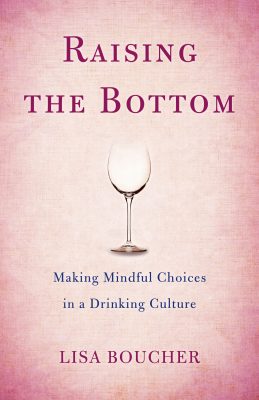
  • RAISING the BOTTOM: Making Mindful Choices in a Drinking Culture by Lisa Boucher – Alcoholism Recovery, Self-Help, Parenting & Relationships

    RAISING the BOTTOM: Making Mindful Choices in a Drinking Culture by Lisa Boucher – Alcoholism Recovery, Self-Help, Parenting & Relationships

    A mother’s wish for her daughter brought this guidebook into being; in it, author Lisa Boucher recounts her struggles and conquest of alcoholism, with specific advice for women trapped in the clutches of the disease.

    Boucher provides ample autobiographical proof of her addiction. When growing up, her mother was “drowning in booze” and many childhood memories center on her mother wrecking the car, burning the supper, or just being nonfunctional. Her father reacted by acting the tyrant, using fear tactics in hopes that he could control his wife’s drinking. By the time she was twelve, Boucher was smoking, using pot, and drinking. Her first early marriage ended in divorce.

    Most alcoholics begin slowly, perhaps drinking only on weekends, using booze as a reward, imagining the warm glow that the drink can provide and gradually spreading weekends out to include the entire week. It took Boucher years, and a dedicated, disciplined adherence to the 12 Step program, to realize that she was better off without drinking.

    Ultimately, she says, alcoholics have a thinking problem – distortion, delusion, and denial constantly crowd in, and drinking suppresses those negative feelings. Her book focuses on women with alcohol addiction, and the first story in her collection of sobriety is perhaps the most poignant: her mother’s account of her years of alcoholism and road to recovery. After a rewarding phase of sobriety and dedication to helping others, her mother began to urge Boucher to chronicle her own experiences on the path up from the bottom.

    Boucher’s work provides direct advice delivered in an accessible manner by someone who has walked the walk to recovery and is well qualified to talk the talk. She understands, for example, that some people can control their drinking, but she offers many clues as to how that perception can also be a deception. She urges a realistic approach: to quit drinking; you have to prepare yourself for the possibility of “losing friends, maybe losing your marriage, maybe losing everything.” Thus far, she has enjoyed nearly 30 years of sobriety spent in a professional and personal quest to assist other women who are carrying the burden of alcoholism. Her journey has led her to present ten stories from other women like herself, whose lives are peppered with violence, arrests, loss of jobs, partners and self-esteem, who now can proudly announce a “sobriety date” and a recovered existence.

    Boucher examines the particular problems of women in the struggle against alcoholism, though her book would have realistic outreach for men also. She writes from hard experience that will be recognizable to anyone who has flirted with or entirely fallen for the false promise of the bottle. Her book can and should be read by women in the throes of the disease as well as those who seek to counsel and assist their sisters in need.


  • TWELVE SECULAR STEPS: AN ADDICTION RECOVERY GUIDE by Bill W. – Twelve-Step Program, Addiction/Recovery, Self-Help

    TWELVE SECULAR STEPS: AN ADDICTION RECOVERY GUIDE by Bill W. – Twelve-Step Program, Addiction/Recovery, Self-Help

    If you’re familiar with Alcoholics Anonymous, then you’ve heard the phrase, “One day at a time,” “Keep it simple,” and “This too shall pass” – slogans designed to help the alcoholic resist the urge to drink. Borrowing another popular AA slogan, “Take what you need and leave the rest,” alcoholic Bill W. (not the co-founder of AA) lays out his version of the AA steps in Twelve Secular Steps: An Addiction Recovery Guide.

    A biologist with a Ph.D. and 20 years in research and education, Bill W. knew he needed help with his addictions. He followed the AA program but was uncomfortable with the “God” language, so he created his own path, rejiggering the steps as a secular version shifting the focus from a “Higher Power” to himself. In Chapter 1, he explains his critical moment: “I froze when I looked into the mirror, for I didn’t recognize the face looking back. The veil of denial was lifted, and I saw clearly what I had become: a pathetic addict, slowly killing myself day by day. I realized that the problem, truly, was ME.”

    Unfortunately, some folks who enter “the rooms” of AA or other 12-Step recovery programs are turned off by the spiritual connection required. In this thought-provoking and well-designed guide, Bill W. tries to show that by altering the faith-based language of the traditional AA steps, there is incredible value for anyone wanting to get a grip on their addiction. The latter part of the book is devoted to the design and implementation of such a plan, getting the addict or alcoholic to build 90 days of sobriety.

    Twelve-Step recovery was introduced in 1939 when Bill Wilson published a primary text Alcoholics Anonymous, often called “The Big Book.” Of course, detractors have argued that the secular version is not considered the AA program, but Bill W. (author of this book) knew the value of the work as he was surrounded by alcoholics and addicts who desired a non-religious version or pre-existing relationship with God.

    Drawing from his science and medical background too, Bill W. devotes an entire chapter to the Biology of Addiction, showing an illustration of how dopamine affects the brain and explaining how the brain’s limbic system and frontal cortex change significantly during an addiction spiral.

    The conversational tone peppered with personal anecdotes from the author’s life makes for an easy read. After reviewing the 90-day plan and how to work the traditional steps with a secular flair, this reviewer had hoped the author might supply a final word of encouragement. Instead, Twelve Secular Steps ends with a challenge, which when all is said and done, is appropriate.

    This book is intended for anyone uncomfortable with the religious aspect of AA’s fundamentals yet ready to take personal responsibility for their recovery. Bill W. assures his readers that the three ingredients to successful recovery are adhering to a “One day at a time” attitude, following the steps and leaning on a support network of family and friends.

    Twelve Secular Steps is an alternative path rooted in the individual rather than God, and has been helpful for some recovering addicts assembling a recovery toolbox. Friends and family members with a loved one suffering from addiction can also benefit greatly by learning how gut-wrenching yet wonderful the lifelong path of recovery can be.

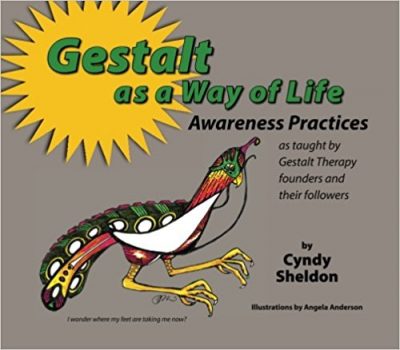
  • GESTALT as a WAY of LIFE: Awareness Practices as Taught by Gestalt Therapy Founders and Their Followers by Cyndy Sheldon – Gestalt, Self-Help, Psychotherapy, TA & NLP

    GESTALT as a WAY of LIFE: Awareness Practices as Taught by Gestalt Therapy Founders and Their Followers by Cyndy Sheldon – Gestalt, Self-Help, Psychotherapy, TA & NLP

    Word of warning: I’m a bit of a self-help junkie, so Cyndy Sheldon’s Gestalt as a Way of Life is right up my alley. As one of the movement’s founders, Ms. Sheldon provides a valuable and instantly useable advice in this approachable introduction to Gestalt Therapy.


    The word Gestalt derives from the German word for “form.”  The group’s antecedents intended to create a holistic way of attending to human potential by, in Sheldon’s words, “… attending to the whole human being, including the physical, emotional, mental and intuitive or spiritual aspects.”

    The book came out of a series of seminars that the writer had been offering beginning in 2007 in the Pacific Northwest. It became clear to her that recording the information and making it available to a wider audience would allow not increase exposure to the ideas, but would allow people to refer back to sections of value as needed.

    Ms. Sheldon’s time spent among the Navajo Tribe, over ten years, clearly impacted the work. The overlap between Buddhist teachings, Navajo spiritualism, and Gestalt practices make an intriguing mix. The varying influences appear to really ground the suggested exercises or “experiments” as the author refers to them. Those experiments are intended to help the reader fully realize the benefits of the program as if one had attended the seminars as a participant. It’s in the experiments where the book shines, offering real-world practices the reader can revisit.

    The book is broken up into six sections with letter identifiers A through F: Awareness, Growing Up, Get Out of Your Head, Authenticity, The Magic and Sacred in Gestalt, and Final Thoughts. I found the section on Authenticity (D) particularly apropos. As the reigning Queen of Conflict Avoidance (Ask my friends! Okay you can ask absolutely anyone who has ever met me!), the exercises intended to assist with becoming more direct in interactions with other people target my style of using nearly any tactic to prevent trouble from brewing – even if it leaves me furious, frustrated, angry and resentful. The sample experiment below helped me recognize some of my favorite dodging language, used when trying to avoid hurt feelings at the cost of being clear:

    EXPERIMENTS (p. 83)

    1. Watch people in restaurants, in parks, wherever you can hear them, and listen for their qualifiers.
    2. Listen for your own. Exaggerate using qualifiers with good friends—see if they notice. Then experiment with not using them.
    3. What other ways do you use to be indirect? Exaggerate these, which will help you become more aware of doing this…
    4. Now be direct and clear without judging.

    That last instruction alone proved so valuable. Being clear without indulging in a knee-jerk urge to start a self-shame-athon (at my deplorable display of selfishness) helped increase my awareness of the automatic pilot way my mind works when trying to avoid hurting others’ feelings.

    Like most books of the genre, you benefit to the extent you are willing to engage in the suggested experiments. Gestalt as a Way of Life delivers on two levels: it provides a fine introduction to the Gestalt movement and a gentle method for applying it in your life.

    5 Stars! Best Book Chanticleer Book Reviews


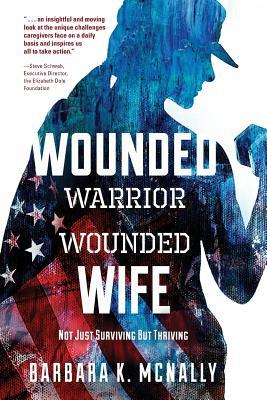
  • WOUNDED WARRIOR, WOUNDED WIFE: NOT JUST SURVIVING, BUT THRIVING – by Barbara McNally — a ground-breaking initiative

    WOUNDED WARRIOR, WOUNDED WIFE: NOT JUST SURVIVING, BUT THRIVING – by Barbara McNally — a ground-breaking initiative

    The critical issues surrounding post-traumatic stress among America’s wounded warriors is expanded here to include the challenges and concerns of military wives and families.

    Barbara McNally was working as a physical therapist when she watched helplessly as a man jumped off a bridge to his death. Feeling involved in his tragedy, she learned he was a wounded veteran. The experience spurred her to find out more about PTS and its effects on those who have participated in war.

    Gradually her attention focused on the plight of the wives of these wounded military survivors. This led to the creation of the Barbara McNally Foundation, dedicated to developing helpful strategies for those women she calls Fighters, who may never have been in the military, never been outside the US, but who struggle to bring a depressed, angry, and/or physically debilitated veteran back to a semblance of normal functioning, back to the role of parent, partner and lover.

    Her treatment plan, called SPA (Support, Purpose, Appreciation) brings these women together for a day or two of pampering—relaxation, massage, and a chance to talk with others in their same situation. For some, a SPA retreat is their first day away from the caregiver role in months or even years since their wounded partner returned.

    As women were able to vent with one another in the SPA atmosphere, their stories surfaced, some with happy endings, others still unresolved. These stories comprise much of McNally’s book, grouped in terms of the different ways that PTS can present itself: anger, coldness, and guilt are major emotional signs; in cases of physical injury, there are the pains and fears associated with prosthetic limbs, and the agonizingly slow recovery from traumatic brain injury. One wife had to deal with her husband’s increasing bouts of anger that grew into an alcohol addiction and finally into a suicide attempt. Another recounts waking up as her husband tried to strangle her, though he denied it later. Some stories highlight women’s efforts to recoup a sensual, satisfying sex life with a husband who, for physical or psychological reasons, does not feel able.

    The author says that the most important aspect of SPA is “self-care.” While the returned warrior may be offered various therapies, caregivers rarely have this choice, yet they need and indeed deserve time and attention for themselves. She also urges women to consider their options—to pursue their own careers, to leave or stay in a violent situation—objectively, without guilt.

    Along with the stories, McNally has assembled a substantial appendix offering lists of governmental, nonprofit and charitable agencies that help wounded warriors. There is also a study guide with questions relating to phases of PTS, making this book an excellent educational resource for individuals or groups. The author’s sincere wish is that the information she has gathered will be useful to the “wounded wives” and “hidden helpers” of those who have been injured mentally or physically while serving in the military.

    A ground-breaking initiative, Wounded Warrior, Wounded Wife, by Barbara McNally, offers advice and hope to those who are trying to understand and cope with war’s many aftershocks.


  • THE COMPASSIONATE CONSPIRACY by Dr. Phil Johnson, a practical guide to connect the world

    THE COMPASSIONATE CONSPIRACY by Dr. Phil Johnson, a practical guide to connect the world

    With all of the texting, tweeting, and tapping we do on our smartphones, it’s easy to get distracted from life’s true meaning. Thankfully, to help us find our way, Dr. Phil Johnson has published, The Compassionate Conspiracy: A Field Guide to Changing the World – an inspirational guide to a purposeful existence.

    A lovely mix of his personal stories, along with well-known song lyrics, quotes, and research on world poverty and hunger, the book helps us answer the age-old question: “Why am I here?” Dr. Johnson also includes writing exercises and quizzes for reflection.

    The impetus for the book came from childhood. With a “calm wisdom” and realist world view, Dr. Johnson’s mother, who coordinated a food pantry for families in need, would spin a globe and pose, “Philip, where shall we go today?” As he took “voyages” around the world to places like Bolivia, Brazil, and Greenland, Philip soon realized he was most fascinated by Africa. Eventually in 2005, he traveled with his wife to Kenya where he contracted malaria and typhoid fever. Fortunately, he was quickly cured, but witnessing thousands of Africans suffering from famine and illness, he asked: “What can I do to make a difference?”

    The Compassionate Conspiracy is his answer to helping us all discover our passions and develop a personal plan to help those less fortunate. Dr. Johnson crafted this practical guide to connect the world. Did you know that the Latin origin of “conspiracy” is conspirare, which means “to breathe together.” He wanted to write a book so people could help others by “learning to breathe together for the common good, to breathe life into a suffocating world.”

    In the Conclusion, he states: “My singular purpose in writing The Compassionate Conspiracy is to spark a movement to achieve that compelling vision. At the beginning of the twenty-first century, I believe we have the wealth, the wisdom, and the will to breathe hope into the global family.”

    With more than 40 years working with corporations like Ford and IBM and with nonprofits like the United Way and the Juvenile Diabetes Research Foundation, Dr. Johnson is no stranger to helping people around the world. On top of that, he is an ordained minister and practicing pastor at the New Day Community Church in Grand Rapids, Michigan. Dr. Johnson participated in major international events, including the United Nations World Peace Conference in Israel in 1999.

    You will see the book is organized into four parts: 1) Our World is in Critical Condition, 2) The Compassionate Conspiracy, 3) the Compassionate Conspirators, 4)  and A Guide to Becoming a Compassionate Conspirator.

    The foreword, aptly written by Dr. Nido Qubein, a motivational speaker, author, and chairman of the Great Harvest Bread Co., starts us off:

    “Remember, life is about choices. Decide here and now that you want to make the world a better place, and build a plan that will take you there!”

    Qubein is also President of High Point University in North Carolina. It would be difficult to put the book down at this point.

    As the author of six previous books, Dr. Johnson is familiar with writing and publishing,  so be sure to get The Compassionate Conspiracy on your bookshelf too.

    Dr. Johnson’s other titles include: Time-Out! Restoring Your Passion for Life, Love and Work (Stoddart, 1992); Celebrating the Seasons with Children (Pilgrim Press, 1984); More Celebrating the Seasons with Children (Pilgrim Press, 1985); And More Celebrating the Seasons with Children (Pilgrim Press, 1986); Goodbye Mom, Goodbye (Welch Publishing, 1987); and The Great Canadian Alphabet Book (Hounslow Press, 1981).

  • MERRY CHRISTMAS AND A HAPPY PTSD by Christopher Oelerich, a guide for PTSD sufferers

    MERRY CHRISTMAS AND A HAPPY PTSD by Christopher Oelerich, a guide for PTSD sufferers

    “I went away to war one person and came back another, and in my wildest dreams would never have chosen to be the one who came back.” – Christopher Oelerich

    Thus begins this heartfelt discussion of Post Traumatic Stress Disorder by a military veteran who has spent his life helping others deal with the debilitating symptoms associated with the disorder. Christopher Oelerich relates his own personal history, beginning from when he was drafted into the military during the Vietnam War, and continuing through his return to civilian life and his own rocky road to recovery.

    Oelerich eschews political correctness in favor of blunt talk mixed with detailed, empowering strategies that have worked for him, as well as for the military veterans and homeless he has helped over the years.

    PTSD is defined as an anxiety disorder that can be brought on by various types of traumatic events, such as combat in war, extreme natural disasters (hurricanes, tsunamis) or terrorist attacks, the psychological aftermath of which manifests in a range of symptoms—nightmares and flashbacks, alcoholism, drug use, and phantom pain, to name only a few.  Because of these varied symptoms, Oelerich points out that the disorder can easily be—and often is—misdiagnosed by physicians. PTSD also affects women at twice the rate of men, a fact little understood by the general public.

    Oelerich believes that the most important, brutal truth he has learned over the years is that if you are suffering from PTSD, and don’t care to help yourself, no one else will either. Once you accept that underlying truth, he advocates that you must also be willing to employ the discipline and mental toughness required to get through the long process of healing.

    He shares strategies that he has used and also ones that he has implemented in his work with vets and the homeless to deal with PTSD in the hope they will be able to  lead more  productive and meaningful lives. Mixing discipline, advice about dealing with problems one at a time, the healing power of prayer, and many of the tenets employed in drug and alcohol abuse programs, the author crafts a comprehensive program to effectively survive and deal with the disorder.

    The author has given PTSD sufferers a gift by providing an honest account of his own struggles, as well as what he did to eventually overcome them. For those who suffer from PTSD, understanding that they are not alone and that they can help themselves is a huge step toward embracing a recovery program. Oelerich, who has experienced combat and traumatic events, wrote this book as a “How To” guide for combat soldiers, like himself, who suffer from PTSD.

    Merry Christmas and a Happy PTSD by Chris Oelerich is highly recommended for those who suffer from PTSD, for the family members and friends of those who suffer, and for those who are simply interested in having a greater understanding beyond what is reported in the popular press about this debilitating disorder. Oelerich’s methods to overcome PTSD are plain-spoken and practical, with an  overall message of optimism for those with PTSD.

    This is a very personal, no-holds-barred, yet ultimately, empowering discussion of PTSD and its effects on those who suffer from it. The author hopes that Merry Christmas and a Happy PTSD will be used as a tool to reduce PTSD symptoms in others who suffer from it so that they, too, can live healthier and happier lives.

  • PATHWAYS to HOPE by Harish Malhotra, M.D.

    PATHWAYS to HOPE by Harish Malhotra, M.D.

    Pathways to Hope is a wealth of practical advice and  positive messages presented in an easy to digest manner. It is a slightly more analytic approach to metaphor as a healing technique than Dr. Harish Malhotra’s earlier book, Metaphors of Healing. However, Pathways is still an accessible and powerful tool to help those with personal difficulties on a self-help basis, and yet comprehensive enough to be a guide to those professionals who want to add new methods and techniques to their patient communication skills.

    Dr. Malhotra proposes 23 essential pathways, all with playful titles, ranging from “Go on with Your Best Face,” “Leave Nothing Unturned” to “Change the Storm into a Breeze.” As the titles imply, the author employs ordinary experience to deal with extraordinary issues that afflict humans.  Again, Dr. Malhotra offers a simple, but brilliant, idea: Use the healing language of metaphor as a therapeutic strategy and a curative approach for daily life. What do these pathways of hope offer therapists and patients?

    He advises, that first, therapists should not depend on a single approach to solving problems, such as depending exclusively on standard psychotherapy or behavioral techniques. Dr. Malhotra believes in adjusting the style to fit the person, regardless of the type of therapy. For example:  If a patient has hallucinations that tell him to cut himself, his behavior is unlikely to change by telling him to look at the origins of the behavior.  He offers that instead of taking the “origin’s route” that the therapist shifting his patient’s attention to what voice the patient is actually listening to, and then guide the patient to determine  whether that voice is using  good judgment. This pathway may enable the patient to “deny the voice that is only loud thoughts” in his mind.

    Second, Dr. Malhotra advises us to highlight the positives—thought, word and deed—so that we may “put different highlights in our life book.”  How can one counsel a lonely patient, one who seeks but has no hope of meeting people?  The author shows that by connecting to the social media, hundreds of different opportunities present themselves. We strike up friendships through slight measures: small talk, shaking hands, smiling and just paying attention to a person.  A simple recipe: Grow a social network by taking small positive steps whenever and wherever you can.

    Whether you are a therapist, patient or truth seeker, what can be learned from this book?  We can summarize some major markers. Pathway l, “Go with Your Best Face,” emphasizes that we focus on our strengths, not our weaknesses. Pathway 8, “Search for the Silver Lining,” encourages the reader to pay attention to the joys of living rather than the fear of dying. Pathway 11, “Make Yourself a Happy Person,” clarifies that we all have choices, and that “happiness is an inside job.” One more illustration of metaphor, Pathway 12, “Leave Nothing Unturned,” focuses on good habits that inspire positive attitudes and healthy lifestyles—“neither of which require a copyright.”  Ordinary people can live extraordinary lives by considering new pathways, by hearing new stories, by learning by metaphor.

    Pathways of Hope and Metaphors of Healing are not theoretical psychotherapy books. As Dr. Malhotra makes clear, these are lighthearted stories to provide innovative insights and language to enhance our everyday lives. He seeks to empower readers with his decades of experience in helping people transform their lives and improve difficult situations in their daily lives.

    As with Metaphors of Healing, this is not a book to be read in one sitting or all at once. It is one that the reader will find herself/himself picking up again and again taking in a chapter or a metaphor to ponder and, perhaps, adapt. It will become a gentle companion that guides and inspires. One will find, on reflection and on rereading, that these simple stories contain deep insight and wisdom. Clinicians and those seeking to increase their understanding of themselves and their fellow humans would benefit immensely from reading Dr. Malhotra’s gentle, healing stories.