Tag: Search Engine Optimization

  • Casting the SEO Net for Readers: How Search Engine Optimization Attracts Online Followers

    SEO – Search Engine Optimization: Cast a Wider Net for Your Readers

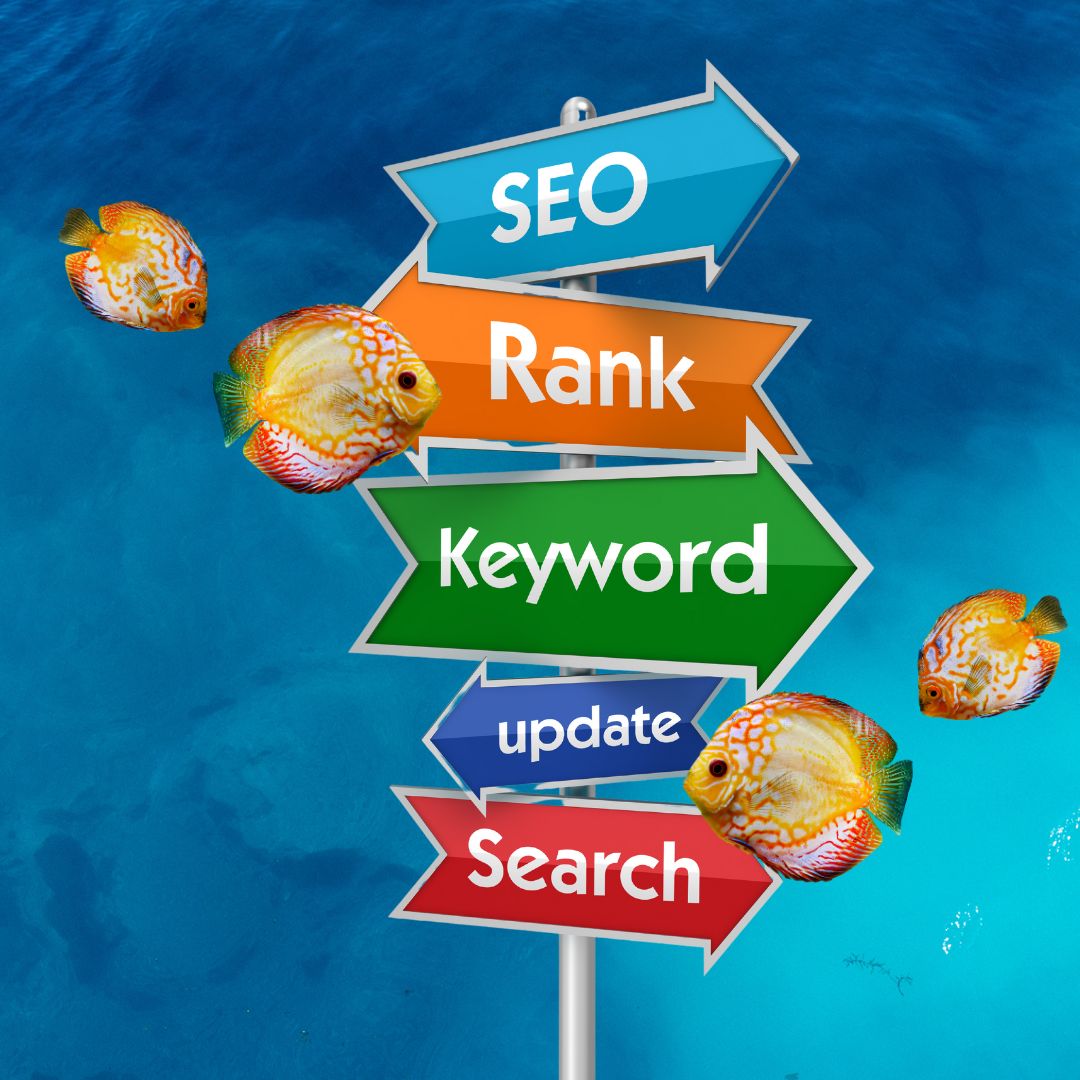
    The cyber world is a vast and active ocean of readers, and it’s not always easy to catch your target audience when casting out your book marketing net online.

    Your content is great, but it’s struggling to reach an audience. By reinforcing the effectiveness of your efforts with strong search engine optimization (SEO), you’ll create a virtual fishing net that will catch readers who love your genre and widen your pool to an even larger audience of “fish in the sea!”

    Fishing, sunrise, water, net, fisherman

    Having a strong online presence is crucial for any author. Whether you are traditionally or self-published, your success often hinges on visibility—how easily potential readers can find your work.

    What is SEO and Why Does It Matter for Authors?

    SEO is the practice of optimizing your online content, so it becomes more visible and understandable to search engines like Google, Bing, and others. These search engines use sophisticated algorithms and digital ‘crawlers’ that scan websites to understand their content and relevance. By strategically using keywords, creating quality content, and improving your site’s technical aspects, you help these digital gatekeepers better understand what your content is about and who might find it valuable.

    Imagine a reader searching for “thriller novels about art heists” or “greatest baseball games.” If your books are optimized with keywords related to your story, they are more likely to show up in search results and get in front of new readers who may not have found you otherwise.
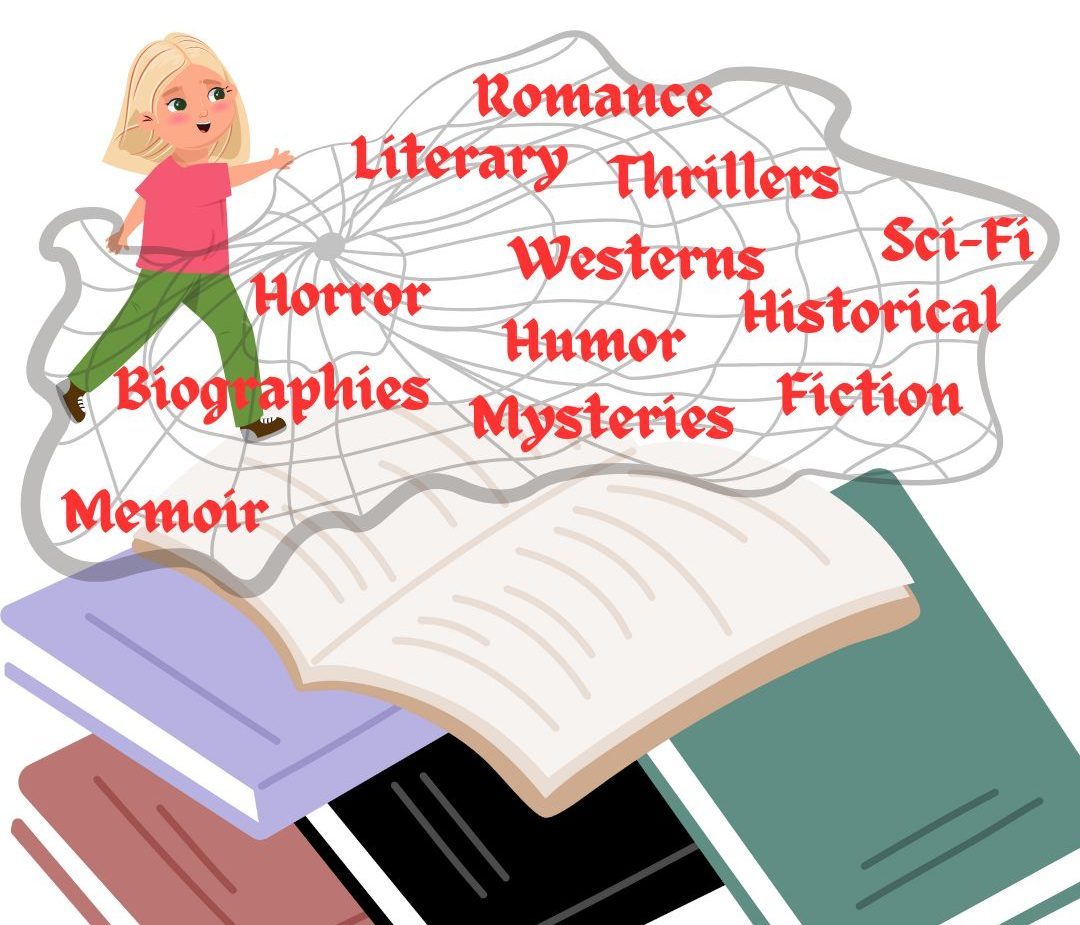
    net, woman, books

    Why SEO is Crucial for Authors

    Shining a Spotlight on Your Work and Yourself

    One of the primary reasons SEO is important for authors is visibility. With millions of books available online, offering a great story just isn’t enough. By using SEO techniques on your author website, book descriptions, and blog posts, you increase your chances of those marketing tools appearing in search results when potential readers are looking for books in your genre.

    Employing effective SEO isn’t only about increased visibility for your book. It’s also about building your author brand. A strong SEO strategy allows readers to learn more about you, your writing process, and your publications. By regularly posting SEO-optimized content, such as blog posts, articles, social media posts, and interviews, you are giving readers insight into your writing and establishing yourself as a trusted voice in the literary world.

    Spreading the Net Wide with Organic Traffic

    Organic traffic refers to visitors who come to your website through unpaid search results. SEO helps you attract that organic traffic by offering the keywords you’ve put into your online text as if it were a little worm on the hook. This means more readers will discover your work without the need for expensive ads. With the right keywords, you’ll find your author website or blog is a well-optimized, powerful tool you can use to build a sustainable online presence that continually attracts your target audience.

    Signing, book, pen, grey

    Better Book Sales

    By making your books more visible on platforms like Amazon, Goodreads, or your own author website, you’ll be gaining more power in the online bookstores where authors compete to find readers. By optimizing your books’ descriptions with relevant keywords, such as genre-specific or popular theme words, you will improve the chances of attracting new readers who purchase or research books online.

    Connecting with Your Audience

    SEO also gives you a boost in attracting the right audience. By strategically using keywords related to your book’s genre, style, or themes, you have a better chance of reaching the readers most likely to be interested in your books. For example, a romance writer could target keywords like “new in town love stories,” while a science fiction author might optimize for terms like “space operas” or “first contact adventures.” Understanding your audience’s reading preferences helps you tailor your SEO strategy to catch just the right readers.
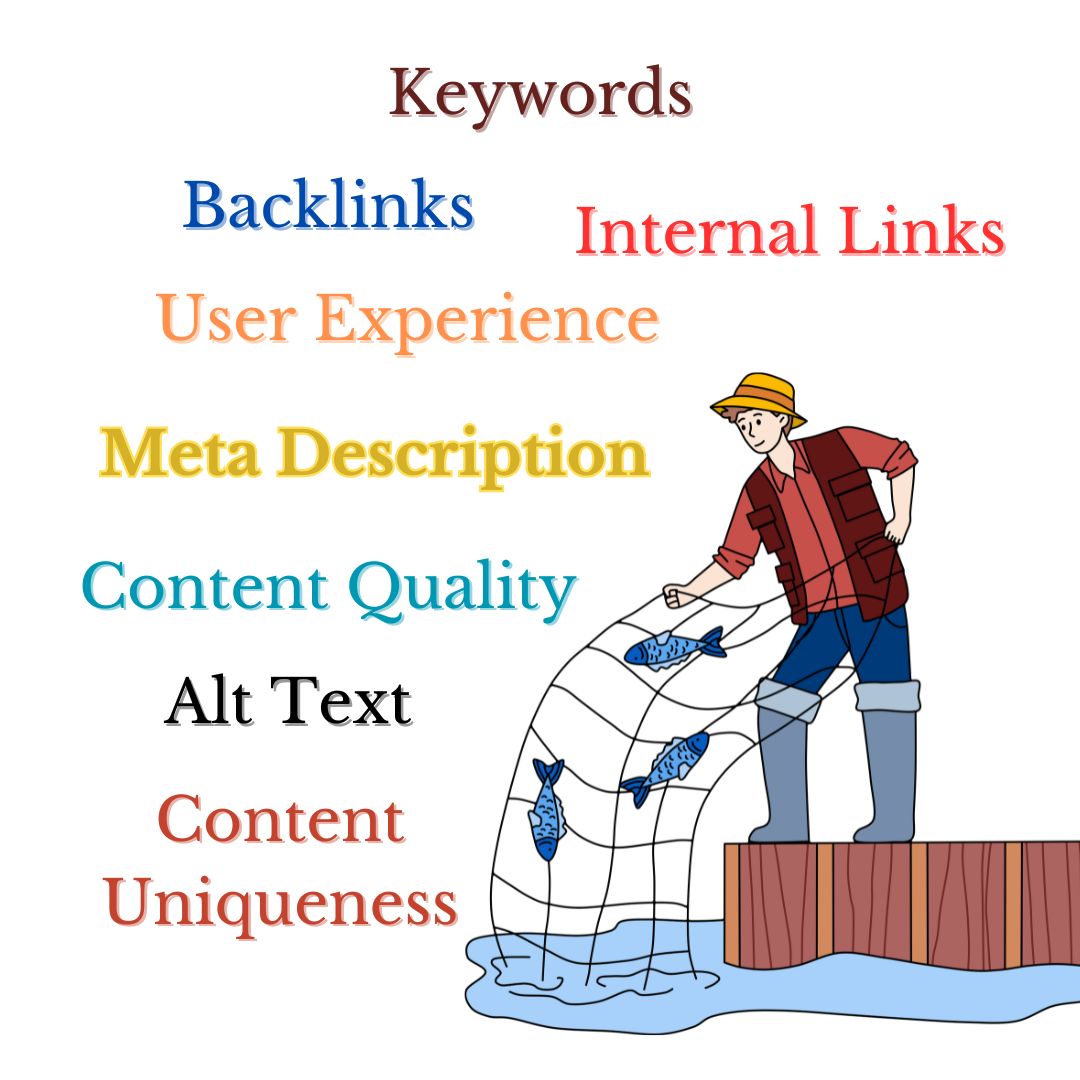
    Fishing, net, fish, man

    Enhance Discoverability with Chanticleer Editorial Reviews and Book Awards

    Beyond basic SEO strategies, authors can significantly boost their discoverability through Chanticleer’s Editorial Book Reviews and Book Awards. These professional validations don’t just enhance your book’s credibility—they create additional pathways for readers to find your work.

    The Editorial Book Review

    Chanticleer Editorial Book Reviews are specifically crafted with SEO in mind. Our reviewers are trained to optimize everything from title keywords to sentence length, ensuring that when your review is published, it’s designed to catch the attention of both search engines and human readers. These reviews create quality content that search engines value, especially when featured on your website or in your book’s metadata. The strategic keyword placement in our reviews helps your book appear in searches relevant to your genre and themes. We even wrote an article explaining the ins and outs of how we do that, so you can too! 

    The Book Award Program

    Similarly, Chanticleer Int’l Book Awards – CIBAs – create multiple touchpoints for discovery. When your book receives an award or makes a shortlist, it generates announcements, listings, and social media mentions—all containing relevant keywords that improve your SEO footprint. Our award posts are specifically designed to catch just the right readers for each genre division. We frequently hear from readers that they purchase every book on our Finalist lists just to enjoy a variety of new authors in their favorite genres. This creates an immediate audience expansion for authors who make these prestigious lists. You can see the culmination of this with our celebration of the 2024 Grand Prize Winners that went our recently here. 

    These professional validations work in tandem with your SEO efforts, creating a stronger, more expansive net to catch interested readers. At industry events like Women in Publishing, Author Nation, and the San Francisco Writers Conference, authors regularly approach our team to share how Chanticleer’s posts and promotions have significantly improved their marketing efforts, given them a sales bump, and expanded their readership.

    Key SEO Strategies for Authors

    So, where do you begin? It may sound complicated, but empowering your SEO isn’t magic. Taking a few simple steps—both now and each time you update your website—will get you in the right position to pull in those readers.

    1. Optimize Your Author Website

    Your author website is your digital home base. Make sure it’s well-optimized to increase visibility. Use relevant keywords in the title tags, meta descriptions, and headers. For instance, if you’re a mystery novelist, use keywords like “mysteries,” “detectives in literature,” or “suspense plots.” When someone inputs these terms into a search engine, they are more likely to see your website as a result.

    Don’t forget the technical aspects of SEO that affect how readers experience your site. Ensure your website loads quickly, works well on mobile devices, and has a clear navigation structure. Search engines prioritize sites that offer a good user experience for your audience.

    2. Use Keywords in Book Descriptions

    On platforms like Amazon, your book description is a vital part of how your book will rank in search results. Use targeted keywords your readers will likely use when searching for a new book. It must accurately describe your book, since it won’t benefit you to mislead the reader. For instance, a reader looking for a book about a historical figure might include terms like “biographical fiction” or “historical biography” in their search, so those are great keywords to use in your descriptions.

    fish, blogging, water, goldfish, keyboard

    3. Start a Blog

    Blogging is a powerful tool for authors to connect with their audience while boosting their SEO efforts. Regularly posting articles that engage your target audience helps establish your authority and increases your site’s traffic. You could write about topics like writing tips, industry trends, book recommendations, or personal stories about your writing journey. Understanding your audience’s interests helps you create content that not only ranks well but genuinely connects with potential readers.

    4. Claim and Optimize Your Author Profile on Amazon and Goodreads

    Amazon and Goodreads are the go-to platforms for book discovery, and ensuring your author profile is fully optimized can help you get more visibility. Use relevant keywords in your author bio, list all your books clearly, and encourage readers to leave reviews. The more activity you have on these platforms, the more likely it is that your books will appear in searches and reach new readers interested in your genre.

    SEO, Computer, fingers, holding

    5. Leverage Social Media and External Content

    SEO isn’t just about what happens on your website. Google also takes social media activity into account when ranking websites. Share your blog posts, articles, and updates on your social media channels (Bluesky, Instagram, Facebook, etc.) with appropriate hashtags and links to your website. Effective book marketing extends beyond your website to social platforms where your readers are already active. The more you share and the more engagement your posts receive, the more likely it is that search engines will take notice.

    6. Focus on Local SEO

    If you’re an author attending book events, readings, or speaking engagements in your area, local SEO is vital. Optimizing your website and author profile for local searches will help you connect with fans in your region. Include your city and relevant location-based keywords in your website’s content, like “author in [city]” or “book events near [city].” This helps readers find not just your books but opportunities to meet you in person, creating a stronger connection with your audience.

    blue, green, wave, fish

    Track Your SEO Success

    Implementing SEO strategies is only half the battle—you also need to know if they’re working. Use tools like Google Analytics to track your website traffic, see which pages are performing well, and understand where your audience is coming from. This data helps you refine your approach and focus on the book marketing tactics that bring the most readers to your work.

    Look for patterns in how readers find and interact with your content. Are certain blog topics attracting more visitors? Do specific keywords drive more traffic? Understanding these patterns helps you tailor your content to better meet your audience’s interests and search habits.

    You’re ready to set your SEO Net for More Readers

    In an increasingly competitive digital landscape, authors need the very best lures they can get to stand out online. SEO offers an accessible and cost-effective way to increase visibility, connect with readers, and ultimately boost book sales. Using these strategic SEO approaches on your author website, in book descriptions, and in your online content can ensure your books reach the right audience.

    Remember, SEO is an ongoing process, not a one-time fix. It requires consistency, strategy, and a deep understanding of what your readers are searching for. By optimizing your online presence, you increase your chances of building a long-term, sustainable writing career—one where your books are not just published, but discovered and celebrated by the readers who want them most.

    With a little SEO know-how, you’ll be well on your way to netting more readers, building your brand, and boosting your success as an author! The digital ocean is full of potential readers waiting to discover their next favorite book—yours.

    Now go out and catch the Big Fish!

    Fish, book, glasses, orange, blue


    Thank you for joining us for this Writer Toolbox Article

    A red toolbox with the words "What's in your toolbox

    There is so much to learn and do with Chanticleer!

    From our Book Award Program that has Discovered the Best Books since the early 2010s to our Editorial Book Reviews recognizing and promoting indie and traditional authors, Chanticleer knows your books are worth the effort to market professionally!

    Helpful Toolbox Articles:

    Ready to Strengthen Your Book Marketing Net?

    If you’re ready to enhance your book’s visibility and reach more readers, Chanticleer offers professional services designed specifically for authors who are serious about their writing careers:

    Chanticleer Editorial Book Reviews: Our professionally crafted, SEO-optimized reviews give your book the visibility boost it deserves. Each review is strategically written to improve your book’s discoverability while providing the credibility that comes from a respected third-party assessment. Learn more about our Editorial Review service here.

    Chanticleer International Book Awards (CIBAs): Join the ranks of authors who’ve seen significant visibility boosts after participating in our prestigious book awards. The CIBAs create multiple opportunities for your book to be discovered by new readers who trust our curated selections. When you submit your book, you’re not just entering a contest—you’re joining a community of authors committed to excellence. Submit your book to the CIBAs today!

    Don’t let your great book remain hidden in the vast digital ocean. With Chanticleer’s professional services working alongside your SEO efforts, you’ll cast a wider net and catch more readers than ever before.

  • Where are the 2023 CIBA Winner Posts?

    Dude, Where’s my List?

    Two white guys looking for a car outside of tow service.
    Ashton Kutcher and Seann William Scott in the 2000 film Dude, Where’s my Car?

    A Frequently Asked Question

    With the 2023 CIBAs all wrapped up and the winners having been announced at the Four Points by Sheraton in beautiful Bellingham, WA on April 20, 2024, many people have the very reasonable question: Where are the official announcements, and why didn’t they all come out on that Saturday or on Sunday-the next day? (We are staffing the Books By the Bay Book Fair on Sunday).

    First off, you can see all CIBA Winner Lists as they come out on our website here!

    On our home page, these are all under the top center section labeled Book Awards News – CIBAs.

    Playing the Social Media Game

    While a PDF with a list of the winners could easily be posted, that wouldn’t uphold our promise to help with long-tail marketing and increasing our authors’ digital footprints. We are committed to maximizing promotion for authors.

    How do we maximize your promotion?

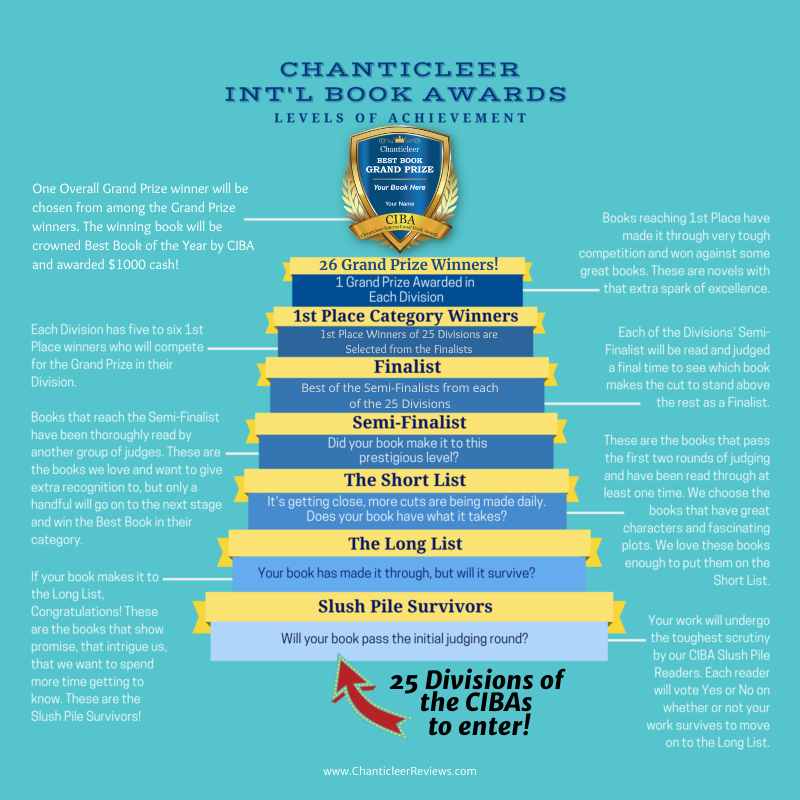
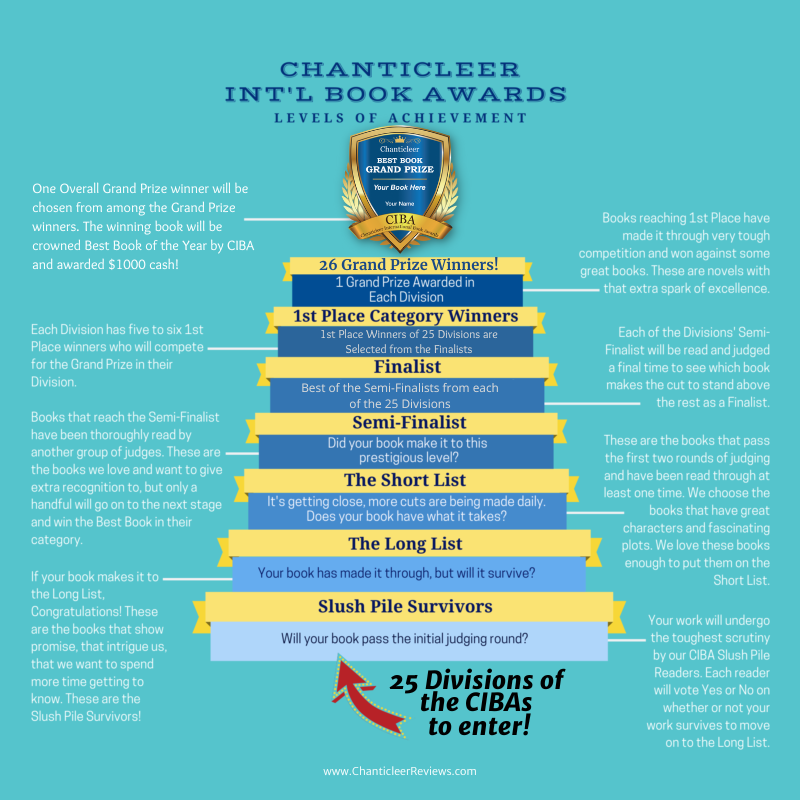
    The tiers of achievement for the CIBAs


    Our normal posts, when not during our conference season, tend to have double the response and interaction rate of comparable businesses. During the Chanticleer Int’l Book Awards, these rates rise to seven times the standard engagement of those other posts, and is still double the posts during similarly busy times at other companies. And that is for each Awards post that goes out. The way we do this is simple.

    First, we give each division breathing room on Social Media, on our high traffic Website, and our e-Newsletter in our flurry of daily email blasts that are sent out until all the lists have been posted. The consistent promotion over the course of two weeks allows for each set of winners to have their moment in the sun, and it keeps every post prioritized instead of being devalued by search engines for over-posting.

    We also try to tag each winner on Facebook per CIBA division. Again, if we post more than three posts per day, FB devalues the posts which means less exposure.

    Under the Hood with SEO


    One of the best parts of Chanticleer is our emphasis on being ahead of the technological curve. The main way we do this is through a robust SEO package that we usually talk about with regards to our Editorial Reviews, but we use all those same tools to promote the authors who advance in our Book Awards as well.

    You can see the article we put out specifically about the All In One Search Engine Optimization tool (AIOSEO) we use here.

    Argus Brown and David Beaumier presented a coffee klatch on this at CAC24 to help explain the ins and outs of promotion, specifically looking at different author websites and giving feedback right there in the moment!

    While most SEO tools recommend a score between 60-80, we always strive to exceed that, with many of our Book Award posts receiving a AIOSEO score above 90. We do this through our usual rigorous attention to detail surrounding the optimization of heading distribution, sentence length, alternative text, key phrases, meta data, tagging, and much more. There’s no replacement for basic elbow grease (or clicking away?) when it comes to maximizing our posts so that web crawlers love them and promote our authors writing as much as possible. We know from client feedback that it really makes a difference!

    Human Beings at Work

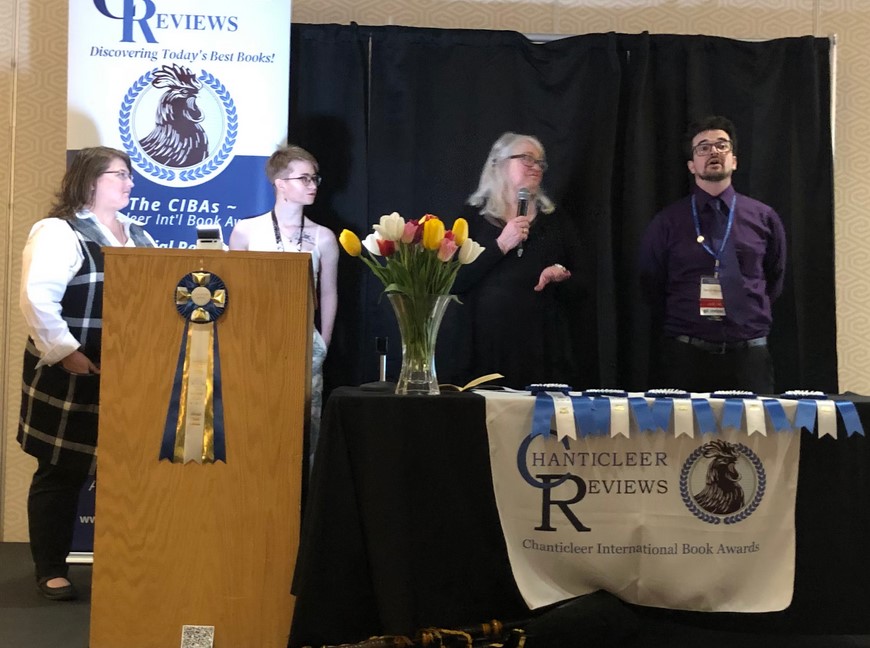
    A rare photo of the Chanticleer staff all in one place and, yes, that is a bagpipe under the Chanticleer table’s banner.

    Of course, it’s important to remember that we are a small business with huge reach that works hard to address every question, email, and comment we receive directly with care, empathy, and expertise. Putting together an internationally attended conference with authors from India, Australia, and the UK takes hours of dedication and careful planning. As we move into the follow up phase, we are just as determined to provide the excellent service that is a hallmark of Chanticleer. We double-check our work before putting the lists out, maximizing SEO, looking to see that names and titles are written correctly, and scheduling out posts to have the strongest online impact.

    Then, we promote all the CIBA winners again with our Overall Posts for the CIBA Fiction Book Awards, the CIBA Non-Fiction Book Awards, and the SERIES, SHORTS, and COLLECTIONS Awards.

    And then, the CIBA lists are kept on the HOMEPAGE of the Chanticleer Website for  a year with all those links!

    And then, we recognize the Division Winners in periodic SPOTLIGHT posts with links!

    And then, well we could go on, but I think you are getting the picture.

    Most of all the Chanticleer International Book Awards is a labor of love!

    Love of books, love of words, love of storytelling, love of authors,

    and love of the writing community! 

    We are passionate about what we do! 

    Finally, Thank You

    Thank you so much to everyone who submitted to the 2023 CIBAs and to the hundreds who have already submitted to the 2024 CIBAs. Every year, the quality and intensity of the competition is better than the year before, and we are always blown away by the incredible work you send our way. We will do everything we can to wrap up the 2023 CIBAs in the best way possible and get the ribbons and rewards out to all the winners before we dive into another year of Discovering Today’s Best Books.

    Thank you for making Chanticleer possible and for trusting us with your work!

    Team Chanticleer!

  • The 2nd Blogpost of 2022 | Author Websites, Your Connection to the World and to Your Readers — Chanticleer Business of Writing Tools and Tips

    Every Author Needs an Effective Website, But What Should You Do to Manage Yours?

    Now is the time to freshen your website or seriously consider creating one dedicated to your author brand.

    The internet is confusing enough without having to look at the back end of a webpage that’s supposed to draw others in. For many authors, their website will be the first thing online readers will come across, and it should represent the best parts of you and your work.

    AUTHOR BRAND – Your website your reflects your author brand

    Like a Resume, the Author Website should highlight what’s special about you

    If your book receives a positive review or award, crow about it on your website. You can see Nancy Thorne doing that on her site here for her book Victorian Town, which won a First Place blue ribbon in the Dante Rossetti Awards. Having that digital badge can be the difference between someone purchasing your book and passing on it.

    Where else will people find information about you?

    Aside from your author website, most readers will find out about you from bookstores, social media, through your publisher, or through Reviews and Awards as described above.

    The only place you fully control is your Author Website


    The Bones (wireframe) of Your Website

    These are the key subjects your author website should touch on for readers:

    • Your AUTHOR BRANDING –  this will be a blogpost to itself – please see links at the end of this article,
    • What do you write – Fantasy? Historical Fiction? Non-Fiction? Children’s Books?
      • Do you have an elevator pitch for each of your works? If so, this is where you put it. Then drill down with more info.
    • What information or services you provide?
      • Are you available to present?
      • Are you available for Book Clubs? (You do have a Book Club page—right?)
      • Do you promote/support any causes? Humane Society? Autism?  Wildlife? Lover of Libraries? Board Games?
      • Schedule of where people can meet you? Author Events, Wine Tastings/Lavender Days,  Comic-Cons?
    • Products (books) to sell
      • Can they be purchased directly from your website?
      • Can they be purchased from your fav Indie bookseller? Amazon? Barnes and Noble? Bookchain?
      • Kudos given your works
      • Digital badges, links to awards and accolades
    • Access to your Blog – it should be easily available AND with at least once a week posts.
      • Blogposts do not have to be long – a short paragraph will do to keep it fresh and earning “browser love” i.e. ranking on search engines
      • An outdated blog suggests that you are not interested in what you are doing (writing/written).
    • BIO – why readers should READ your books rather than another author’s works in the same genre
      • Please have easily downloadable photos, short and snappy bio with an invitation to contact you (see below) if a more in-depth one is needed, and graphics of your book covers available for those who want to promote you and your work. For example – you are going to do a book signing at your local bookseller – they will want to be able to create posters, social media posts, mailings, etc. and will need this basic info easily and readily available.
      • Also, have links or a listing to where you have presented, been interviewed, and/or published, accolades and awards
    • Contact info – Social Media Links, a secure way of contacting you, and a place to subscribe to your newsletter .
      • Social media links – especially LinkedIn and Twitter
      • Subscribe to your newsletter (yes, you read that correctly)
      • Secure way of contacting you while allowing for your privacy


    See our deep dive into social media here!

    However you go about making your website, the first thing to check is that it’s presented cleanly. Simple is going to be better than an over complicated landing page with too many buttons to look at. There should be a natural progression to your website to help visitors navigate it with ease.

    Also, it’s worth mentioning that Chanticleerian Rochelle Parry does a deep dive into this subject here here.

    1. Communicating What you Write

    Readers should automatically know what genre you write in when they look at your website. Ideally this is done with design and by saying it directly. Consider what images are important to the work you do and how you describe the genre of your work. Both should be front and center. Again, the design doesn’t need to be over the top or fancy, but rather focused on communicating directly to the reader to let them know if they’ve landed in the right space. For example, these are the first big buttons anyone who comes to ChantiReviews.com sees:

    Obviously we consider our Newsletter, Awards, and Reviews to be fairly important. Ask yourself what the main purpose of your website is—selling books? Selling copyediting services? Providing reviews? Whatever that is, it needs to be the main focus.

    2. About Page

    This is where you’ll want a professional head shot and a little bit about you and your story. You can ease up on the advertising here, and talk more about why you’re passionate about the subjects you write about.

    We’re all about giving this rooster some love here.

    An author page that puts the author front and center is Janice S Ellis, PhD’s website here. You get a good sense of who Dr. Ellis is and the reason that she is a reliable authority for her books. A different route is to be a website that primarily highlights your book, like Avanti Centrae’s website here. You can see the difference in focus, especially since Dr. Ellis’s work tends to have a wider range of subjects, while Centrae’s focuses exclusively on VanOps novels and thriller series.

    3. Books

    Your books will undoubtedly be an important part of your author website. If you’ve won any awards, such as from our Chanticleer International Book Awards (CIBAs), you should include your digital badge to help the book stand out to those who visit your site. Likewise, if you’ve received a good Editorial Book Review from us, you’ll want to make a note of that and link to the review.

    The goal is to show readers that your book stands out, and that it’s well connected enough to receive widespread recognition.

    One of the biggest things we see with author websites is they forget to list those awards. Your website is a storefront among millions of digital storefronts, and something needs to be there to make your product stand out beyond what other authors have.

    4. Contact

    The Contact page is where you have a chance to let your audience reach out to you. It’s a great spot for people to request your presence at their book club, writing group, author’s conference, or upcoming Awards Ceremonies.

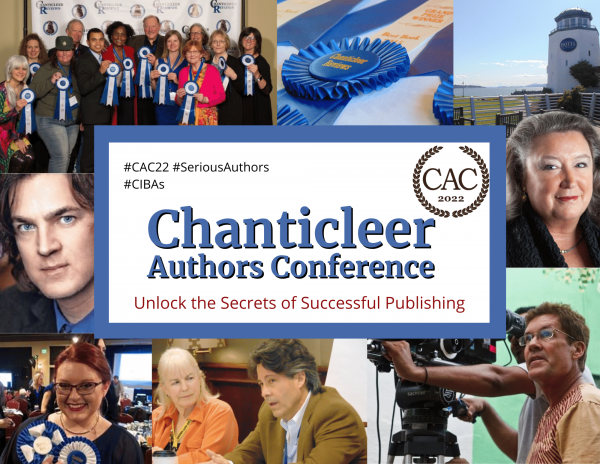
    For example, the Chanticleer Authors Conference is coming up June 23-26, 2022 at the Hotel Bellwether in Beautiful Bellingham, WA. It’s a great place to make connections and expand your network to learn more skills to be a successful author!

    Your Contact page is also an excellent place to gather information for your Newsletter. Your Newsletter lets you speak directly to your audience, cutting through the algorithms of social media and the whims of the internet to land directly in their inbox. Make sure you share information that’s fun and to the point of what might interest an audience.

    5. Interact

    If you have a blog and people interact with it, take a little bit of time to respond to them. Likewise, if you have emails from you contact page or responses from your Newsletter, you can take the time to let people know you heard them and respond in a positive way.

    Your interactions may not be this cute

    This is part of the business side of being a writer, so set up some dedicated time each week to deal with it rather than letting it bother you a little bit every day. Schedules can be the best way to avoid the death of a thousand cuts.

    One of the big ways we promote interaction is through The Roost. The Roost is our personally curated social media site that allows authors to network and ask each other questions, while at the same time taking advantage of some extraordinary discounts. Learn more about The Roost here.

    6. Avoid Sales Resistance

    Sales Resistance is when the design of your website prevents readers from following you or buying your products. This is a huge personal pet peeve of Kiffer herself. To avoid this double check all your buttons and links, and even consider setting up multiple buttons for one product that your visitor can click on to buy your work. It can help here to have a friend explore your website and test it out. A second pair of eyes (or more) can’t hurt!

    Manage Sales Resistance - Kinder Brothers International Group, Inc.

    Hand in hand with that, share your brand! Promote your new book, promote new merchandise, and remind people of the services you offer If you have a new book? Advertise it! Win a new Award or receive a good review? Advertise it! Make sure it’s clear how to contact you, and that your SEO is up to date. What’s SEO you ask?

    7. SEO and Publishing Alphabet Soup  (How you and your works are found in the Internet of Things) 

    Possibly the most confusing element to the world wide web is the idea of Search Engine Optimization (SEO). Tags and Keywords are the first start to this. Rather than go with the first idea that comes to mind, so a little bit of searching. The word “raffle” has nearly 90 million searches on Google while “giveaway” has 335 million. Generally, you’ll want to focus on the one that’s more common. The exception to this rule is what makes you shine should be a keyword more unique to you. You can read more about SEO here.

    SEO is all about driving traffic back to your website, and you can do this by referencing your website frequently and generously. Have it ready when people ask where to find you on podcasts or guest blogs, and double check to make sure that information is posted to send their audience back to you.

    8. Social Media

    Links to your social media help so much, because that’s a good way to stay in your reader’s mind throughout the day. You can link individually to your Twitter, Facebook, Instagram, and anything else, but what happens when you need to link to multiple sites (including your author website) from a space like Instagram?

    No need to fear Social Media!

    At the recent Chanticleer Authors Conference, VCAC21, Chelsea Bennett of LuLu and Alexa Bigwarfe talked about different ways to put up multiple links using Linktree and Shopify.

    The big difference between the two is that Linktree is just for sharing links, whereas Shopify also doubles as a storefront, much like Squarespace, but it’s an all in one paid tool. If navigating multiple platforms is a challenge for you, Shopify may be worth the expense.

    8. Newsletter

    Your Newsletter is one of the best ways to connect with readers. Unlike social media, which is always filtered through automatic algorithms, people have signed up for and chosen to receive your newsletter. You don’t have to pay extra for it, just send it out to regularly tell your readers that you’re thinking of them, and to let them know how best to support you!

    Newsletters can seem overwhelming, but you can break them down into a few simple steps. Here are a few possible choices:

    • Recent Publications
    • Status of Current Works in Progress
    • What You’re Reading
    • Writing Thoughts
    • Links to your Social Media

    You know yourself best, so choose what works best. The other big question with a Newsletter is how often to send one out. Luckily, the answer is you can send it out as little as twice a year. While there should always be a way for your readers to support you in the letter, it’s important that the main thrust of it is in connecting with them.

    Your newsletter is a chance to give your books a big hug

    What is the Author Website, in the end?

    Your website is the hub of your part of the community of writers you’ve joined. It’s like a small inn where you invite readers in and can provide resources and support to your fellow authors. Be kind and excellent to each other.

    Thank you for joining us and please stay tuned for the next Chanticleer’s Business of Writing Tools and Tips Article!

    A Clock and a Book with the words "2022 is coming... Are you ready? Chanticleer can help you prepare -- Conferences, Deadlines, Reviews


    Save the Dates! June 23 – 26, 2022! Register Today!

    Seating is Limited. The  esteemed WRITER Magazine (founded in 1887)  has repeatedly recognized the Chanticleer Authors Conference as one of the best conferences to attend and participate in for North America.

    Join us for our 10th annual conference and discover why!


    Thank you for joining us! 

    Writer’s Toolbox

    Thank you for reading this Chanticleer The Business of Writing article.

    Writer Toolbox Helpful Links: 

    Making Social Media Easier for Authors

    Five Things Every Author’s Web Site Needs

    AIOSEO – More than Alphabet Soup – Getting the MOST TRAFFIC out of your Website


    The traditional publishing tool that indie authors can use to propel their writing careers to new levels? Read The Seven Must-Haves for Authors – Unlocking the Secrets of Successful Publishing Series by Kiffer Brown