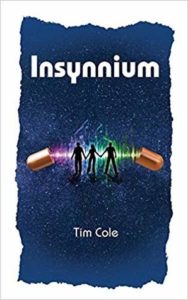
The dramatic premise explored in a new novel, Insynnium, is a wild, immersive leap into a world-changing (but fictional) drug. In other hands, what could be a dystopian thriller goes one step further in author Tim Cole’s capable hands. He focuses on the humans who first discover and use the drug and weaves his story with a devilish charm.
This is somewhat Bill Murray/“Groundhog Day” territory, a film exploring one man’s reliving a day in his life over and over until he learned new behaviors, new skills, and came out of it a better man. Unlike “Groundhog,” Max McVista takes multiple doses of the drug against all advice, then somehow expands time itself in what he calls an “AUE” or “Alternative Universe Experience,” enabling him to spend months and sometimes years becoming or experiencing whatever he wishes. When returning to real-time, he’s only missed a day or two. (For E=MC squared fans, it’s basically reverse engineering of Einsteinian physics.)
From a man with few basic skills, a drunk who all but abandons his wife and sons, he returns to his family with outsized skills as a musician, entrepreneur, carpenter, medical savant, and pilot. Skills he could not have learned in any traditional manner. He lies about how he learned everything, tracing it back to an accident, choosing to bury his drug-induced years of time-traveling across the world, spending concentrated periods exploring whatever he fancies with no time “penalty” in the real world.
Of course, it’s not all happy stories and roses for those who take the Insynnium drug. What fun would that be?
A large cast of characters populates this book, including Max’s beleaguered psychic Native American wife Rachel, Duncan, a Lenny Kravitz look-like who is Max’s best friend, their families, the oddballs responsible for introducing Insynnium to the public. And, of course, the multiple storylines and subplots enrich the already fertile premise of the life and multiple times of Max McVista.
Appropriate to a novel about time travel, there is considerable time-shifting from chapter to chapter that will require readers to stay on their toes as they work through this 500-page novel. And like any skilled author who plants clues neatly in the text – clues that are keys to resolving the overarching mysteries in the book – Cole does the same. What can we say? Here’s an impressive novel by a major new talent, and one we highly recommend keeping an eye on.
Kronos Deucarrion is dead. The Director of the League of One, Supreme Commander of the Alliance of Stars, Supreme Pontiff of the Galactic Sanctuary (and a few other titles) lies dead in a pool of blood, his throat sliced from ear to ear. His ward and mistress, General Kelahya Devona, herself, one of the most powerful people in the galaxy, runs from the Alliance. In her mind, she sees Kronos lying dead at her feet, his eyes fixed on her. Her mind screams at her, “Murderer!”
So begins Ascension – Kelahya Unbound, a space opera in the grand style of the 30s and 40s where one skilled enough can rule the galaxy, fleets of space ships roam the universe, whole planets can be destroyed in an instant on a whim, and palace intrigue runs deep. This novel gives the familiar trope a fresh look by embedding a murder mystery at its heart and using it to delve deeply into its central character’s mind. Kelahya must ask herself whether she did, in fact, commit the murder of the most powerful man in the universe or whether her mind is playing tricks on her.
In the era of this novel, minds are critical to the life of the empire. Evolution has developed to the point where a few people can read the minds of various species on many planets. Kronos, the supreme commander, has this ability, and so does Kelahya, the daughter of a key Kronos ally who was murdered when she was a child. Her mother and father’s death, places Kelahya in the hands of Kronos, who sees in her the potential to join him at the top of the planetary pyramid.
From the time she is a child until she becomes a full-grown woman, she is trained to be a Minder, the highest class of the mind’s abilities, master of military maneuvers and leadership techniques, and to be the consort of Kronos. Even as he seats her next to him at the empire’s most important occasions, he keeps her somewhat at arm’s distance until she is an adult. The sexual tension between the two takes its time to develop.
But all is not what it seems. There are deep secrets held by virtually every major character that is slowly and most carefully unlocked. The credibility of everyone and every deeply held belief is called into question. Past and present collide in the life of Kelahya as she finds herself on the run from a murder she may or may not have committed and finds herself captured by the empire’s most insidious enemies.
The level of detail in the novel is remarkable, very much in the spirit of Isaac Asimov’s famed Foundation trilogy, even to the invention of an extraordinary chronicle that precedes every chapter and acts as a Greek chorus to introduce the empire’s history, culture, and mores. In other words, a space opera that sci-fi fans will devour. Readers will undoubtedly fall for Kelahya, and her struggle to find out the truth of what happened to her: some of which may change her life. It’s science fiction with heart, and one we highly recommend!
Congratulations to the First Place Category Winners and the Grand Prize winner of the CYGNUS Book Awards for all forms of Science Fiction, a division of the 2019 CIBAs
Chanticleer International Book Book Awards celebrates the best books featuring space, time travel, life on other planets, parallel universes, alternate reality, and all the science, technology, major social or environmental changes of the future that author imaginations can dream up. Hard sci-fi, soft sci-fi, apocalyptic, cyberpunk, time travel, genetic modification, aliens, super-humans, Interplanetary travel, dystopian, and settlers on the Galactic Frontier.
The 2019 CYGNUS BOOK Awards First Place Category Winners and the CYGNUS Grand Prize Winner were announced on Tuesday, September 8, 2020 at the Virtual Chanticleer Authors Conference that was broadcast on the VCAC20 ZOOM webinar.
Elana Mugdan, the OZMA Grand Prize Winner for Fantasy Fiction for her novel, Dragon Speaker, announced the 2019 CYGNUS Award Winners.
It is our privilege and profound honor to announce the 1st in Category winners of the 2019 CYGNUS Awards, a division of the 2019 CIBAs.
This is the OFFICIAL 2019 LIST of the CYGNUS BOOK AWARDS First Place Category Winners and the CYGNUS Grand Prize Winner. Congratulations to all!
Alternate History / Time Travel: Tim Cole – Insynnium
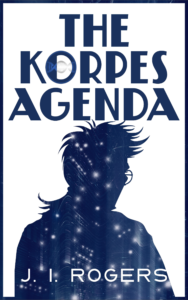
Apocalyptic/Dystopian: J. I. Rogers – The Korpes Agenda
Hard Science Fiction: Jacques St-Malo – Cognition
Space Opera: Shami Stovall – Star Marque Rising
Soft Sci-Fi/Young Adult – Rey Clark – Titan Code Series: Dawn of Genesis
Speculative Fiction: Paul Werner – Mustang Bettie
Science Fiction: Robert M. Kerns –It Ain’t Over…
Honorable Mentions:
Andrew Lucas McIlroy – Earthling
William X. Adams – Intelligent Things
Sandra J. Jackson – Playing in the Rain
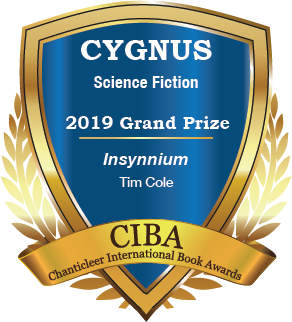
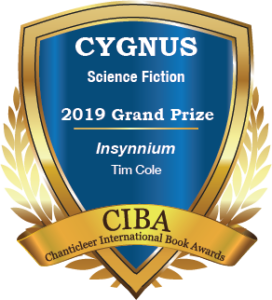
The Grand Prize Winner for the Chanticleer International Book Awards, 2019 CYGNUS Division is
Tim Cole
Insynnium
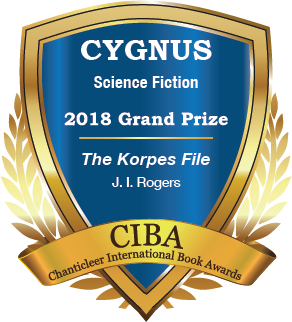
The CYGNUS Grand Prize Badge is customized for the 2019 Award Winner.
A Note to ALL the WINNERS: The coveted CIBA Blue Ribbons will be mailed out starting in October. We will contact you with an email to verify your mailing address and other items. We thank you for your patience and understanding.
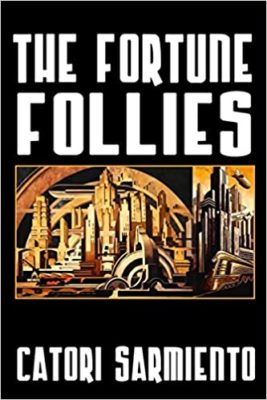
In a dystopian future, two young women struggle for livelihood, love, and a better future in the very altered city of Seattle.
Sarah Igarashi came to Seattle out of desperation in 1949. World War II has ended, but not as described in our history books. It was won through the invasion of Japan by American military aided by metal robots known as Iron Boys, an invention of a manufacturing genius, Robert Sinclair. Sarah sees in the lights and new transportation systems of Seattle while she attempts to reunite with her cousin Penelope.
Both young women survived the internment camps during the war, but Penny, receiving the bulk of the family inheritance, lives in a large house shared by other relatives – a luxury compared to anything Sarah has ever known. She will have to work and pay rent to Penelope, which will mean long, dreary shifts in a Sinclair factory for pennies a day.
As Sarah begins to see what America has become, she longs for something better. Forced out on her own, she discovers that immigrants like herself are targets of violence and oppression. But a group calling itself the Patriots is quietly initiating a rumble of rebellion, speaking out for equality in a society that has become increasingly stratified. Sarah is gradually drawn to them despite the danger of involvement and the over-reaching power of the Sinclair-dominated system.
Awarding winning author Sarmiento was raised in the Pacific Northwest and has lived in Japan, so the settings and the diverse cultures of this fascinating fantasy are well within her ken. The most curious and attractive feature of her novel is that the plot is based around family failings and restarts, with the futuristic twists serving more as background and color for the personalities and their clashes and reconciliations. Instead of being “about” the new technologies that have changed the world for better or worse, as is generally the case in future fiction, The Fortune Follies is about people seeking comfort, safety, and some hope of success in an unpromising atmosphere of gloom and overarching avarice.
Japanese speech, characters, and culture provide a further layer of interest. The reader will see Penny’s search for love, slowly warming her cold, arrogant exterior, while Sarah’s determination to stop the greed machine will overcome her need for personal security. Though their differences are notable and a source of constant tension, both women find solace in music.
Sarmiento’s broad vision makes this novel work, with careful and smart details as the treatment of immigrants and the poor still rankle in today’s real America. The reader could envision a sequel involving a war between people and machines, but that, of course, if up to the author.
The Fortune Follies won First Place in the CIBA 2018 CYGNUS Awards for Science Fiction novels.
In a world once nearly obliterated by war, mankind has been put under the control of powerful religious forces. However, not all humans are convinced of the beneficence of their rulers. A young man named Axel is destined to combat the evil that pervades his realm.
Axel is an introspective young man, partner to Val, his beautiful true love, with whom he shares many secrets from childhood. He questions the meaning of life, the mysteries of the cosmos, even the works of God. His nemesis Lucinder is the offspring of a mother raped and savagely beaten by his priest father, leaving him with no feelings of love or compassion, only hatred underpinned by a deep cynicism. Now known as the Serpent Priest, Lucinder and his goddess-like lover Shira hold thousands in thrall, promulgating rigid religious doctrine. When Axel learns that Lucinder is planning a global upheaval, he knows he must act before Lucinder has a chance to exact his wrath.
First, Axel urges his little band of loyal companions to retreat by entering the Enchanted Forest.
The forest is seen as a mysterious, dangerous place, but Axel reveals that he spent time in the forest as a child and that there are forces of good within its shadows. From a Buddha-like human figure and heavenly visions, Axel will learn why he has been chosen and what sacrifices he will make in an epic battle against evil.
In this engaging debut fantasy, Anthony Allaway writes with an undeniable flair for the genre with tropes reminiscent of Tolkien and C. S. Lewis.
He uses Biblical lore, European mythology, and ancient folklore in his story, though all are clothed in illusion and metaphor. One example is the fruit tree that stands in the middle of the Enchanted Forest, the tree from which Axel and Val eat the fruit. As a consequence of taking and eating the fruit, the children are banished from the Temples of Avalon, where the monks reside. But from the fruit, in Allaway’s mystical depiction, Axel is given revelations about the powerful secret of the moon.
The author has created vibrant characters: innocent children; nefarious priests; memorable females like the generous-hearted Grace and the nasty-minded Shira; and angelic beings who seem a cross between the pure spoken of in religious literature and the all-seeing but humanly flawed celestial overseers described in Greek mythology.
The blend of heady philosophy and an action-packed plot forms a colorful, page-turner-of-a novel. Allaway’s story is the stuff dreams are born out of, easily envisioned in cinematic images that will appeal to all imaginative readers.
Get ready for an uproarious galactic adventure in Patricia Crumpler’s Death and Disorder: A Vivian Wexler Galactic Mystery. The titular character Vivian Wexler gets to the bottom of every mystery that comes her way. The adventure starts with Vivian in transit to the planet Sorasol, home to a peaceful species that has recently seen a string of murders and suicides.
Aboard the transportation ship, she runs into her old school flame Douglas (Dee) heading to the same planet as a translator, but after Vivian masterfully solves the case, all is not as well as it seems. A talent-enhancing parasite, lurking inside Vivian’s bosom, feeds off of what humans and many other species in the galaxy crave, coffee. Who could blame them? When Vivian is offered a position as a Galactic Agent, can she keep the coffee hungry creature at bay long enough to solve the mystery at hand?
The cover design of Death and Disorder suggests that the story will be a wild space adventure, and it does not disappoint. Patricia Crumpler establishes the world quickly within the first chapter through descriptive details of all the sights, sounds, and smells that Vivian is experiencing, which will make the reader feel like they are right alongside for the ride. Humor is also another thing that Crumpler does well. There is a lot of humor and even laugh out loud moments sprinkled throughout the novel, which keeps the tone of the book more fun and adventurous.
Crumpler packs a lot of story into this short novel, and that leaves a few things unexplored. The plot takes a sharp right turn, and the story-telling prowess of Crumpler will have readers happily following along. The sudden shift in the plot makes Death and Disorder feel like a collection of interlocking short stories featuring the same character put together rather than a start-to-finish novel. That being said, the story holds and does a fantastic job keeping its humor and sense of adventure strong until the end. Death and Disorder is sufficiently wrapped up by the closing page but leaves just enough unsaid and unanswered things to suggest Vivian Wexler’s series of galactic shenanigans will continue. And we are so glad they will!
A space opera that never really takes itself too seriously Patricia Crumpler’s Death and Disorder is a fun, action-packed adventure across the galaxy absolutely worth going on.
STAZR The World of Z: The Dawn of Athir, is the opening of a grand quest into the origin of this world, the history it has suppressed, and most important of all, a journey to open the legendary gates that will lead its people back out into the wider galaxy. Or at least that’s what the powers that be in the city of Trebarad believe when they uncover a prophecy about a “Chozen One” who can open the gate at the heart of the town.
The story begins with the finding of that Chosen One, the scholar Radatat Lael, living in self-imposed isolation far from the city – or anywhere else. Lael seems to be unique among the people of this world. He was born on Arisam and did not merely arrive, adult and ignorant, from the other side of the world. What also makes him unique is he actually had and remembers his childhood. This perspective will give him the insight required to open the mysterious and mystical “gates.”
Lael’s isolation has also given him a sense of wonder about the world that he has explored in books but never seen, as well as a bit of an overinflated sense of his own intelligence and consequence.
On his journey to Treebarad, he experiences wonders and dangers that he’s dreamed about, only to face decisions that mirror his visionary dreams. Disturbing visionary dreams – and far more dangerous.
This story is only the beginning of Radatat Lael’s story. As this opening volume in the series ends, Lael and his companions are on the cusp of moving out into the greater universe – but only after learning that much of what they believed about their world is not entirely true.
Lael’s story is a mix of science fiction and fantasy. Lael’s dreams of the STAZR Maiden, his visions that come true, the prophecy that sets the story in motion, and the saarum that gives the “Greats” of this world power – all read as fantasy. Lael’s journey itself reads like mythmaking and legend – although the legend being created is about himself and told from his first-person perspective. And Lael is just a bit full of himself much of the time.
But this is just the beginning of the STAZR world. Author, Dr. Anay Ayarovu a former Russian national is starting something new, building something rather admirable. She’s inviting all who feel they don’t belong (because, as she says, they are meant to create new ways of being) to contribute art in all forms to add to the expansive universe called Stazr. The book is just the foundation from which gaming, television series, and movies may spring. Authors of all skill levels are also invited to submit their short stories about the STAZR universe for consideration to be included in the series.
STAZR The World of Z: The Dawn of Athir as a whole is a bit of a tease. In Lael’s journey and the people and beings he meets, the reader gets the sense of a fascinating world just waiting to be discovered. Readers should know that this first installment is a chewy read. It takes patience and opens the gates of creativity and development within the reader. In short, the STAZR universe has the very real potential of becoming something far greater than what we see at this moment in time. There is a long list of questions about the fundamentals of this world as the story draws to a close, and given the author’s mission, this perhaps is a very good thing.
A new way of storytelling opens the doors for those with vision and drive to dive in. And what a brilliant way of going about it! Artists and authors alike will want to dig into this universe and explore the possibilities.
Let me introduce you to J.I. Rogers, one of our favorite authors here at Chanticleer Reviews!
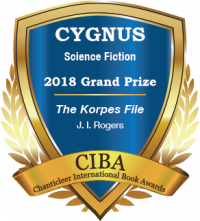
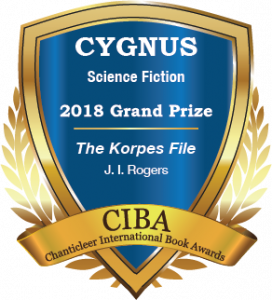
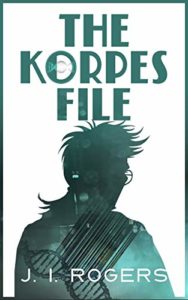
In 2019, J.I. Rogers was awarded the 2018 GRAND PRIZE in the Chanticleer International Book Awards for CYNUS – our Science-Fiction Division for her Space Opera, The Korpes Files, a cyber-punk sci-fi, dystopian space opera, and nothing has been the same since.
We asked J.I. Rogers to take part in our 10-Question Author Interview series to share with us her journey of becoming a CYGNUS Grand Prize winner.
Chanticleer: Tell us a little about yourself, how did you start writing?
Rogers: Well, the biography on my website starts off like this: I am a green-eyed, ginger-haired, caffeine addict who is currently working on The Korpes File Series.
When not acting as a conduit for the voices in my head or pursuing something artistic, I’m a poster child for Generation X and the Queen of most boondoggles that lead to eye-strain and tinnitus.
Ancient History: I’ve always had a love of science fiction, mythological, and fantasy themes. I attended Emily Carr Institute of Art and Design back in the 80s, studying film animation when it was still a college, and I have been working as a professional artist for over thirty years. My love of writing dates back just as far as my artistic ventures. I even had a small Fantasy APA/Fanzine called “Northwest Passages.”
Recent History: The Korpes File Series is my first foray into writing science fiction. The core concept for the series came to me thirty years ago, and it was then that I began the process of world-building. In that time the idea behind my series has shifted from being hard science fiction to space opera, to finally come to rest in the middle as a hybrid between dystopian and science fiction.
How did I start writing? In 2012, I was working as a concept wrangler for a couple of game design studios and was put in charge of world development for one of the projects. I wrote two cut-scenes based on situations that the players would encounter as an experiment. When that project concluded, the short stories were released back to me, and the encouragement I received was what prompted me to continue writing. I decided to expand on what I’d created and that’s when the Muse struck. NaNoWriMo followed a week later, and at the end of that November I had enough core material to know where I was going with my story.
Chanticleer: Rock on #NaNoWriMo! When did you realize that you were an author?
Rogers: Honestly? The first time it sank in was when someone had purchased a paperback copy of The Korpes File then traveled to meet me and asked if I would sign it.
Chanti: That always feels good, right? And now, you have the second in series! Please tell us more about the genre shifts that your work has made and what led you to write in this genre?
Rogers: The closest definition I could come up with for The Korpes File Series would be that it’s a blend of dystopian and science fiction elements. As I said earlier, the series began as hardcore science fiction then transitioned to Space Opera and then into what is now dystopian with science fiction elements with a healthy dollop of space opera mixed in as well. I’m a fan of character-driven plot. What led me to write in this genre? My Muse kept sending me love notes in the form of characters quotes and world-building concepts.
Chanti: I love it when that happens. Do you find yourself following the rules or do you like to make up your own rules?
Rogers: Life rules? I’m unconventional, but I’ve managed to get away with things thus far by waving the ‘eccentric artist’ banner over my head. In writing? I follow the rules in non-dialogue portions of my writing, mostly (I do use Oxford commas, adjectives, and past tense when appropriate). The only place you’ll see me play fast and loose is in dialogue; this flexibility allows characters to sound unique.
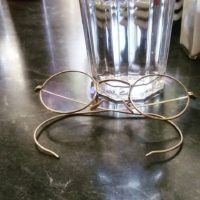
Nash’s glasses
Chanti: How do you come up with your ideas for a story?
Rogers: I find inspiration via many portals. I’ve discovered that downtempo psy-bient electronica, industrial, and angsty bands from the late 90s and early 2000s inspire my dystopian Muse. My Pinterest folder is bursting with images on everything from flora and fauna to human culture, science, geology, tech, space… You get the idea. I also save links to new and emerging technology there. Even the characters in my story have suggested elements to me… when they go off-road.
(Chanti: I think Pyewacket and Tannith have to take some credit here, too, don’t you?!)
Chanti: Name five of your favorite authors and describe how they influence your work.
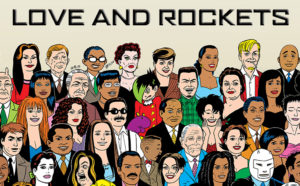
Rogers: My list is eclectic and includes artists: Jaime Hernandez – I’ve been a fan of Jaime for over thirty years. He and his brothers have demonstrated time and time again that you can tell a provocative, epic story with dimensional characters using both words and images. Love & Rockets is a masterpiece and I aspire to create something as beautiful.
Winner of the 2014 LA Times Book Prize! Image from the Publisher.
Barbara Hambly – While her storylines are great it was Barbara’s characters that spoke to me, and they grounded me into every event in the plot. I have re-read certain books just to re-experience these ‘old friends.’ When I finally decided to write, I made a point of finding the personality touchstones in all of my protagonists and antagonists.
Neil Gaiman – There’s a definite ‘other-worldly’ quality to his work; it’s like he exists somewhere between here and the twilight realm of Faerie and can translate that experience back. While I was designing aspects of Tamyrh and the aliens that hide in plain sight, I reflected on Mr. Gaiman’s “Sandman” series and allowed the ambiance to run its course.
James S.A. Corey – He recently displaced my favorite go-to for science fiction for the simple reason that he’s created a modern dystopian sci-fi epic that hasn’t fallen into the usual pitfalls of mocking itself or weighing itself down with unnecessary angst. If I want to escape my world but stay in the mood to write, I read Mr. Corey’s work or catch an episode of “The Expanse.” I don’t know if I’d call him an influence, rather a reminder that dystopian sci-fi can be done well.
Philip K. Dick – Our styles are different, but we definitely gravitate toward the same themes; his work lit a fire under my Muse back in high school. I’d like to add something about film here. I read Do Androids Dream of Electric Sheep before I saw the film Blade Runner, but the latter was what firmly cemented the love of noir, dystopian sci-fi in my soul. It was one of the first sci-fi films I’d seen that didn’t inject ‘comic relief buffoonery’ or ‘cute fuzzy creatures’ in order to expand its appeal. Alien, Logan’s Run, and 2001: A Space Odyssey are other fine examples that inspire.
Chanti: Give us your best marketing tips, what’s worked to sell more books, gain notoriety, and expand your literary footprint.
Rogers: Honestly, I haven’t reached the point where I’m selling millions of books; part of that may be due to my advertising budget, which is microscopic. This advice is aimed at those like me. I maintain an active presence on social media (the usual free ones – Facebook, Instagram, and Twitter) and I operate a Patreon page, where potential readers and fans can find out what I’m up to, ask me questions, get special offers and swag, etc. My Patreon page is now at the point where it covers my website fees as well as the production costs of book-related items like the limited-run character sketchbook.
I owe my modest notoriety as an author to the fantastic people who interact with me, both online and in real life. They have acted as my ‘street team’ and encouraged their friends to buy my books. I estimate that 70% of my sales are due to their efforts and I’m very grateful… now to find a way to get everyone to leave reviews too.
If you’re on a tight budget like me, my advice is:
Share posts with other authors and leave comments
Support your creative community
Create engaging content
Leave reviews
Shamelessly promote others
Chat with fans, and
Be positive without looking for direct evidence of karmic return. In other words, treat people the way you’d like to be treated. This seems to be working for me.
Also – treat your author time on social media like a job or it’ll become a time sink and you’ll not get any writing done.
Chanti: That’s great advice! What is the most important thing a reader can do for an author?
Rogers: I have two answers to this question.
A). If they enjoyed the book, then I’d encourage them to leave a review saying so. B) If they didn’t like the book, I’d ask that they offer some feedback via the author’s website. Simply saying it was bad isn’t helpful; no one improves without constructive criticism.
Chanti: Do you ever experience writers’ block? What do you do to overcome it?
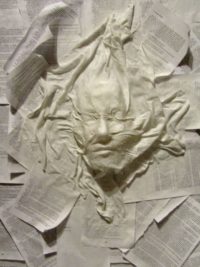
“Emerging Words” (which is a 18″ x 24″ artwork made from a mold of my face, silk, and pages from the proof copy of The Korpes File).
Rogers: My writing Muse sometimes takes an impromptu vacation and leaves me home, staring at the screen. When that happens, I’ll swap over to another project – usually art. Right now, I’ve got two illustration commissions on the go as well as Patreon projects. If that fails, there’s always gardening or my secret vice… MMORPGs like World of Warcraft.
Chanti: I think dialogue is where it’s at as far as character development – for sure. What do you do when you’re not writing? Tells us a little about your hobbies.
Rogers: I think my hubby would argue that I’m always writing as my ‘office’ pins down territory around the house depending on my mood. I draw, paint, sculpt, and garden (weather dependent on that last one – we get a lot of snow in the winter).
Chanti: Thank you, J.I. Rogers, for sharing your author journey with us. I am looking forward to seeing you at the next Chanticleer Authors Conference.
J. I. Rogers won the CYGNUS 2018 Grand Prize because The Korpes Files rock! And also, because she dared to enter the work into the CYGNUS division of the Chanticleer International Book Awards…
In other words, if you don’t enter, you will never know how your work stacks up against the other entries.
If you want a shot at the HONOR of CYGNUS SciFi Book Awards for 2020, don’t delay, enter the CYGNUS B00k Awards today!
The Cygnus Book Awards recognize emerging new talent and outstanding works in the genre of Science Fiction, Steampunk, Alternative History, and Speculative Fiction. The Cygnus Awards is a genre division of Chanticleer International Book Awards (The CIBAs).
Chanticleer International Book Awards is looking for the best books featuring space, time travel, life on other planets, parallel universes, alternate reality, and all the science, technology, major social or environmental changes of the future that author imaginations can dream up for the CYGNUS Book Awards division. Hard Science Fiction, Soft Science Fiction, Apocalyptic Fiction, Cyberpunk, Time Travel, Genetic Modification, Aliens, Super Humans, Interplanetary Travel, and Settlers on the Galactic Frontier, Dystopian, our judges from across North America and the U.K. will put them to the test and choose the best among them.
Chanticleer Book Reviews & Media, L.L.C. retains the right to not declare “default winners.” Winning works are decided upon merit only. Please visit our Contest Details page for more information about our writing contest guidelines.
CBR’s rigorous writing competition standards are why literary agencies seek out our winning manuscripts and self-published novels. Our high standards are also why our reviews are trusted among booksellers and book distributors.
Please do not hesitate to contact Info@ChantiReviews.com about any questions, concerns, or suggestions about the Chanticleer International Book Awards. Your input and suggestions are important to us.
Click here for more information about the Chanticleer Book Reviews International Book Awards.
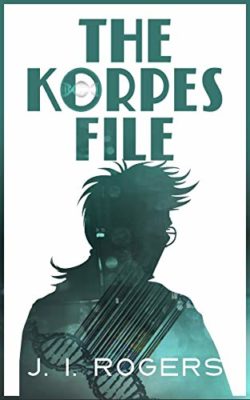
Set in a world that is ridden with lethal radiation from a cataclysmic event, J. I. Rogers’s debut novel and the first novel of her 942 series is a definitive addition to the science fiction genre.
Life in The Korpes File is lived almost entirely indoors and relies highly on the advancement of technology to support life on a planet that is no friend to the living. Technician Nash Korpes is a member of the Diasporan people, who face harsh discrimination from the Korlo people of Korlune, where this saga is set. Nash is a genetic anomaly that gives him the appearance of his ancestors long ago. Because of this, he is recruited as an official subject within the government research organization KMR & D.
Nash has his reasons for signing over his life; his mental state is deteriorating, and his growing medicine regime are becoming too much and even dangerous, he decides he has to find a way out.
Spanning ten years of rising tensions across Korlune and within Nash’s mind, The Korpes File is packed with a large cast of characters told from numerous points of view. The interlocking plotlines can be hard at times to keep track of, but Rogers kindly includes a handy character index and map for reference, and they’ll need it. Readers are immersed straight into Nash’s world of unquestioned conformity and strict societal expectations. Still, the story itself is unapologetic to readers and rarely takes the time to explain itself, which, in a way, is its defining quality.
The truth is hidden deep, and J. I. Rogers scatters little details calling back to earlier points that help to unravel the overarching mystery. In a way, there are two mysteries. One within Nash’s mind and the nature of his condition and subsequent treatment, whereas the other is of a resurfacing war of destruction that will change life in Korlune forever. For both these mysteries, Rogers’s narrative style involves abrupt changes throughout the novel that are frankly disruptive. Still, they are useful in creating a sense of chaos one would face in a world of rising tensions and competing realities.
When presented with a large number of characters, it may seem like a daunting task to achieve necessary amounts of character development, and Rogers does just that, again and again. Just as attachments begin to form, the chaos prevalent in the novel tears them away from the forefront. Nash himself is present throughout the story but becomes a very different person from the beginning of because of all the mental, emotional, and physical trails he goes through spanning the ten-year passage of time. The story is only just beginning, however, and Nash’s story is far from over.
The Korpes File is a dynamic debut from J. I. Rogers that is sure to delight any die-hard science fiction fan looking for something new. The second novel of the 942 series was published this past March and continues the trials and tribulations of Technician Nash Korpes trying to find his way in a turbulent and dangerous world.
The Korpes File won Grand Prize in the CIBA 2018 Cygnus Awards for Speculative Science Fiction.
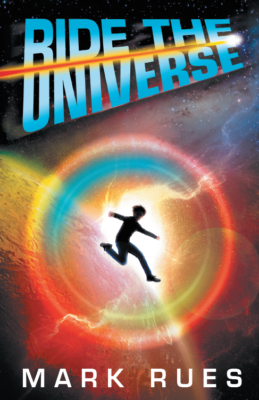
A young boy goes on a journey through the solar system searching for the spirit of his sister, discovers the basics of science and spirituality with the help of a mystic teacher and a super-powered cat.
Teddy DeXue’s ride around the universe begins in the summer of 1963, just as his amazing catch wins the Little League Championship for his team. But it doesn’t really start there. It really began the year before when Teddy’s sister Jean died, and his family fractured into broken, grieving pieces.
Teddy has a secret. He believes that his sister is out there, somewhere, and that the moon, the big, bright full moon that helped him make his game-winning catch, is going to help him find her. With training from a mysterious spiritual master, a bit of scientific knowledge gleaned from his dad and guarded by Henry, his strange and slightly super-powered cat, how can he fail?
While his best friend, Tem, thinks that Teddy’s quest is nothing more than wishful thinking, he goes along for the ride – and what a ride it is!
As Teddy searches through the stars for his sister, his engineer father introduces him to scientific concepts about the nature of the universe; even the many ways that light can be refracted, reflected, and split. In his dreams, Master Fu-Hsi teaches him the spiritual side of what his father’s talking about. It’s up to Teddy to put that knowledge together to make his journey into the stars – and back.
The story and the way it proceeds is reminiscent of the way the best-selling novel, Sophie’s World by Jostein Gaarder introduced young Sophie to the basic concepts and history of philosophy while pulling readers along for the fascinating journey.
There’s also an element of the classic YA SF novel, A Wrinkle in Time by Madeleine L’Engle in Teddy’s search among the stars for his lost sister.
The combination of the two elements draws readers on Teddy’s journey as he finds his way to his sister and back. Along the way, he grows up and learns what it is to love, even as his family finds their way back from heartbreak.
Ride the Universe crosses genres of Sci-Fi, Fantasy, and Philosophy, as it uses those tropes and more than a bit of magical realism to tell its story.
Ride the Universe is a multi-genre novel with heart. Fasten your seatbelt! For those searching for something a bit more outside the box, look no further, Ride the Universe is a magic Thunderbird of a ride – in an actual, honest-to-goodness, T-bird.

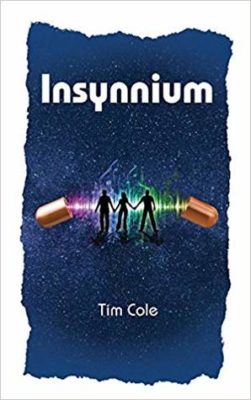
 The dramatic premise explored in a new novel, Insynnium, is a wild, immersive leap into a world-changing (but fictional) drug. In other hands, what could be a dystopian thriller goes one step further in author Tim Cole’s capable hands. He focuses on the humans who first discover and use the drug and weaves his story with a devilish charm.

 The 2019 CYGNUS BOOK Awards First Place Category Winners and the CYGNUS Grand Prize Winner were announced on Tuesday, September 8, 2020 at the Virtual Chanticleer Authors Conference that was broadcast on the VCAC20 ZOOM webinar.